
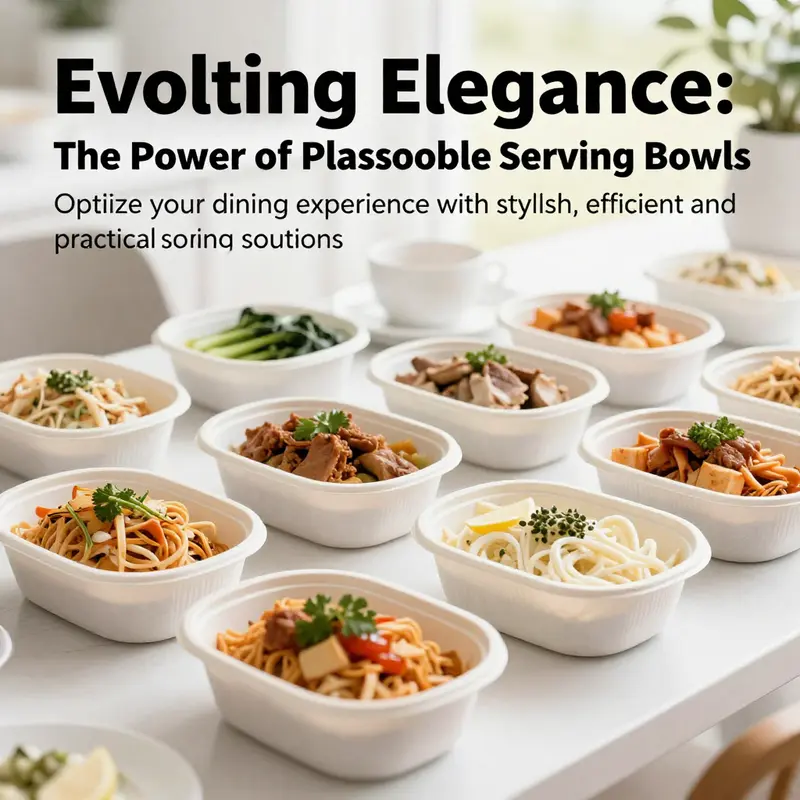
Plastic oval disposable serving bowls have emerged as staple solutions for various sectors like bubble tea shops, restaurants, and catering services. These versatile bowls enhance any dining experience, catering to both casual and formal occasions. Their durability and aesthetic appeal make them ideal for events of any scale, where presentation meets functionality. In the chapters that follow, we will explore the functional benefits that set these bowls apart, the diverse size and design options available to meet various needs, and the environmental considerations that can influence your choice. Understanding these aspects will empower businesses to make informed decisions that elevate their service while being responsible stewards of the environment.
The Oval Edge: Function, Form, and Service in Plastic Oval Disposable Serving Bowls
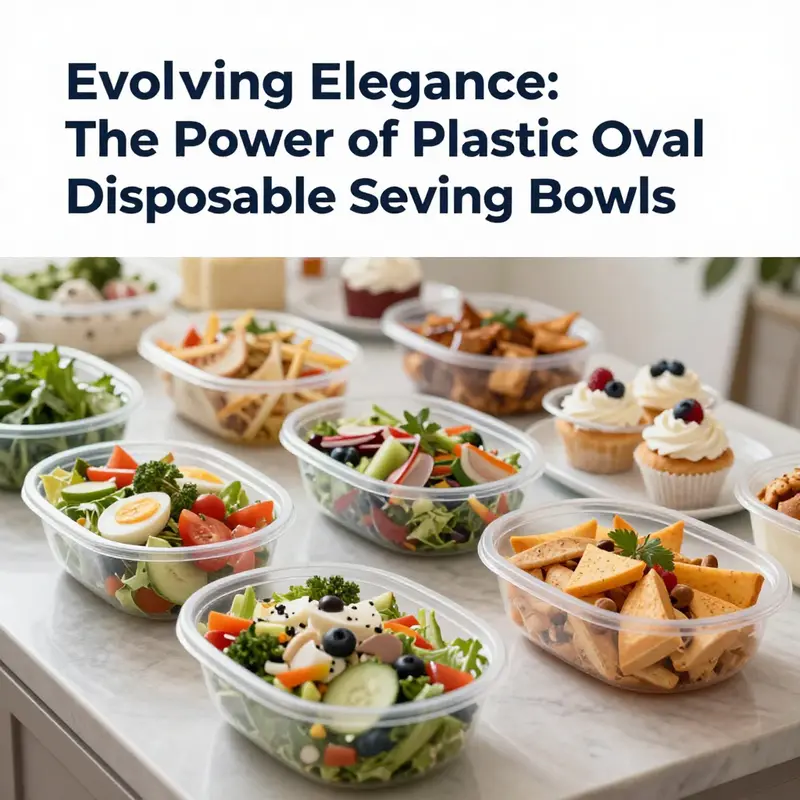
In the rhythm of a well-orchestrated event, the shape of serving ware often matters as much as what is served. Plastic oval disposable serving bowls, with their elongated silhouette and clean lines, offer a subtle but powerful set of advantages that designers and operators have come to rely on. They are not just vessels for food; they are tools that influence spacing, flow, and guest perception. The oval form creates a natural line along the buffet or table, guiding guests toward the spread with a sense of motion that is both orderly and inviting. This is more than aesthetic; it translates into practical benefits for service speed and accuracy. When a line moves efficiently, guests experience less confusion and waste, and staff can maintain a focused rhythm that preserves food temperature and presentation. The result is a buffet that feels deliberate rather than chaotic, a quality that matters whether the gathering is a casual family dinner or a formal reception. The oval bowl’s shape gently accommodates a variety of foods—from leafy salads and layered desserts to fruit platters and tapas-style appetizers—without insisting on the rigid symmetry of round bowls. Because the rim runs longer, the surface area available for scooping becomes a more forgiving canvas for serving utensils, reducing the risk of crowding and spillage that can disrupt a line or tabletop layout. In practical terms, this translates into a more stable serving tableau where guests can scoop or portion with confidence, even when the foods are heavier or distributed unevenly. The stable profile is especially valuable on buffet tables, where the dynamics of movement and crowding sometimes push the edge of what a portable, disposable vessel can handle. The oval shape distributes weight differently than a circular form, and that distribution helps keep the vessel from tipping when a spoon or tongs leaves a portion unbalanced. It is a seemingly modest design choice, yet it builds a foundation for a safer, cleaner, and more predictable service experience. And when the bowls are filled with dense items like casseroles, creamy salads, or fruit compotes, that stability becomes a real practical advantage. Guests instinctively trust what they can easily see and access, and the elongated silhouette tends to curtain the contents in a way that reduces accidental tipping from passing hands or table tremors during transport. This sense of control is not only comforting; it reduces the likelihood of spills that can complicate sanitation efforts or create hazards on busy service floors. In short, the oval design is an instrument of order, enabling smoother service and a calmer atmosphere around the food. Behind that order lies a strategic use of space. The elongated form makes it possible to align several bowls in close proximity, a feature that is particularly valuable in constrained environments. In compact kitchens, catering stations, or outdoor setups where every inch of table real estate matters, the ability to nest or sit flush against neighboring vessels maximizes the usable surface area. This spatial efficiency matters not only for the guests who approach the platters but also for the staff who must transport, stage, and replenish items throughout an event. A well-planned arrangement, with bowls that sit side by side without crowding, helps maintain clean sightlines for guests and keeps the focus on the food rather than on the containers themselves. The shape’s contribution to space efficiency also extends to storage. Bowls designed with stackability in mind reduce the volume required to move and store them between events, a practical advantage for caterers and venues that juggle multiple service lines across a single day. In many cases, the rim design supports stable nesting while preserving the integrity of the vessel’s sides; sturdy stacking translates into fewer trips to transport and fewer crumpled lids or misshaped bowls at the end of a service. The practical benefits of the oval form compound as one considers the load-bearing capacity of these bowls. When a piece of food occupies more surface area along the rim, the bowl can experience a different pressure profile than a round alternative. High-quality plastic oval bowls are engineered to maintain stiffness and structural integrity under substantial loads. Materials such as thick, food-safe polymers offer a reassuring degree of rigidity; they resist bending or flexing as heaviness increases or as guests scoop generously. In a 48-ounce clear design, for instance, the emphasis on durable construction enables serving a generous portion of a hearty dish without compromising the vessel’s shape. The result is reliable performance across a spectrum of foods—from dense potato salads to layered desserts—where the expectation is not just that the bowl holds up, but that it preserves presentation. The clear design also enhances the dining narrative by letting guests visually evaluate the contents before they scoop. Transparency is a powerful tool in food service: it invites curiosity, signals freshness, and eliminates guesswork about what is inside. A guest can immediately gauge a salad’s abundance, a dessert’s color, or a topping’s distribution, and that quick recognition often translates into a more confident selection. The visual clarity of these bowls elevates the overall impression of the spread, especially in buffet lines and dessert tables, where the artistry of arrangement matters as much as the food’s flavor. Yet there is a balance to strike between transparency and presentation. The same clarity that highlights food can also reveal minor imperfections in presentation or in the serving environment. For some events, a crystal-like finish or subtle edge detailing raises the perceived value and aligns with a more formal aesthetic without sacrificing practicality. In other contexts, a simple, no-nonsense clear finish communicates efficiency and cleanliness, which can be equally important when speed and turnover are priorities. The choice of finish, then, becomes a statement about the event’s tone and the host’s priorities. In terms of versatility, the oval bowl is remarkably adaptable across different presentation contexts. Restaurants, caterers, event planners, and home hosts alike can lean on this form to craft tailored experiences—from elegant salad displays and antipasti platters to snack stations and dessert arrays. The elongated shape provides a contrasting line against more common round bowls, creating visual interest that helps guests navigate a table without feeling overwhelmed by uniformity. The tiered effect of an assortment of oval bowls—varying sizes and heights—can also lend a dynamic rhythm to a service line, guiding the eye along the spread in a natural, organized progression. This versatility is amplified by the bowls’ compatibility with a wide range of lids and sealing options, when present. The ability to seal or partially cover portions protects food during transport and keeps items fresh in transit or at a self-service station. Practical features like leak resistance and scratch resistance add to a sense of reliability that customers come to expect in disposable serving ware. A product designed with these attributes in mind reduces the need for constant replacement during an event and supports a smoother, more predictable service flow. Beyond functionality, these bowls speak to a broader conversation about waste, labor, and environmental responsibility in contemporary food service. The disposable nature of the ware dramatically reduces labor costs, cleanup times, and water usage, which are significant considerations for any operation. The trade-off is environmental impact, which has driven manufacturers and buyers to emphasize recyclability and, where possible, biodegradability. For those who weigh this balance, it becomes critical to select designs that are not only functional and visually appealing but also oriented toward sustainable end-of-life choices. Recyclability is a defining attribute in many high-quality plastic oval bowls, a feature that aligns with broader industry and consumer expectations for responsible waste management. When these bowls are disposed of properly, the plastic can re-enter the materials stream for new products, rather than accumulating in landfills. This is a complex topic, as recycling depends on local infrastructure, acceptance of certain resins, and the availability of processing facilities. It is therefore wise for event planners and venues to cooperate with reputable waste partners to ensure the chosen ware is diverted from waste streams when possible. In practice, the life cycle of a disposable oval bowl begins with the initial manufacturing choice of a food-grade plastic that can withstand heat and heavy foods while maintaining structural integrity. The design then reflects a careful balance between stiffness and pliability, so the bowl can be stacked securely and handled easily during setup and breakdown. The finishing options—whether crystal-like or pristine clear—contribute to the table’s aesthetic while maintaining practicality under hot lights or bright buffet aisles. For those who want to broaden the material conversation beyond plastic, there are alternative packaging families worth considering. One such option, presented here as a practical reference point, is a disposable kraft paper bowl designed for food packaging with a lid. It offers comparable convenience in a different material family, providing a clean, recyclable profile that can blend with more natural or rustic table themes. For more on that option, see the disposable kraft paper bowl for food package with lid. As the industry continues to evolve, the oval serving bowl remains a touchstone for what a well-made disposable vessel should deliver: stability, resilience, visual clarity, and an invitation to generous portioning without compromising the flow of service. Its geometry makes logical sense for service lines where speed, order, and visibility matter, and its production standards reflect a commitment to safety and reliability in food contact materials. Even with the growing interest in sustainable packaging, the oval bowl holds its place by offering tangible advantages that translate into real-world gains: fewer spills, more efficient use of space on crowded tables, and a straightforward path from kitchen to guest without the burdens of glassware or heavier, reusable dishes. In this light, the oval bowl becomes more than a container; it is a structured partner in hospitality, capable of elevating a spread with its quiet elegance and steadfast practicality. External resource: https://www.epa.gov/recycle
From Petite Dips to Grand Salads: Navigating Size, Shape, and Finish in Plastic Oval Disposable Serving Bowls
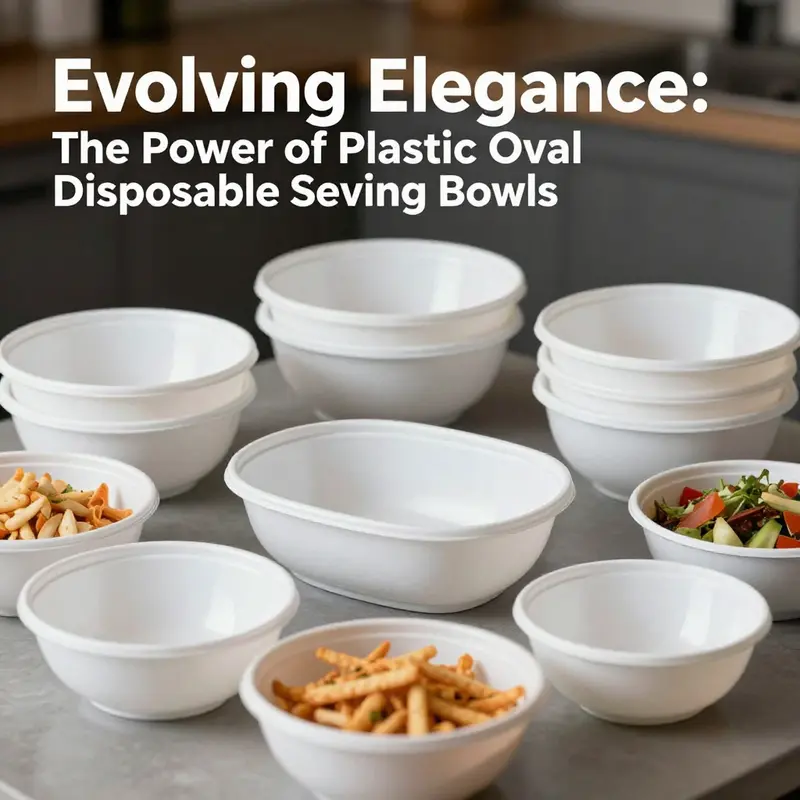
Size and shape determine how plastic oval disposable serving bowls perform in the field, from buffet lines to intimate gatherings. The elongated form provides more surface area for scooping and arranging foods, guiding guest flow along a natural line of sight. Smaller bowls (16-24 oz) are ideal for dips, tasting portions, and garnish items, while midrange bowls (32-48 oz) handle salads and larger sides, and the largest options (up to 72 oz) support central salads, bulk chips, or dessert arrays. This tiered sizing allows planners to choreograph service with rhythm, scale across events, and reduce refills by matching capacity to expected portions. The oval profile also influences perception: a wider mouth aids scooping for textures and prevents food from feeling cramped on the plate. The table becomes a curated display rather than a jumble of vessels, with the eye guided along the length of the bowl, creating a sense of abundance with order.
Material choices reinforce these benefits. PET is widely used for its clarity, strength, and light weight, helping foods look appetizing and keeping handling effortless for staff. While most PET bowls are suitable for cold and room-temperature foods, always check heat tolerances for specific lines to prevent warping or distortion. Color options—from clear to white, black, or glitter finishes—offer ways to align presentation with branding or theme. Clarity is especially valuable in buffets where the appearance of the food drives guest choice. In addition to aesthetics, practical features matter: nesting capability for efficient transport, a comfortable rim for easy handling, and a dependable seal that helps contain sauces during service.
The broader value lies in scalability and operational efficiency. A single oval format can cover a range of applications from small tastings to large-service events, reducing SKU proliferation and simplifying inventory. For eco-conscious contexts, consider recyclable or compostable variants and pairing disposables with thoughtful post-event disposal plans. The universal considerations—size, shape, stability, and presentation—remain transferable across materials, so hosts can balance practicality with style. In short, the right plastic oval bowl harmonizes ease of use, visual appeal, and service flow, leaving guests with a polished impression of a well-run event.
The Footprint of Convenience: Environmental Realities and Pathways for Plastic Oval Disposable Serving Bowls
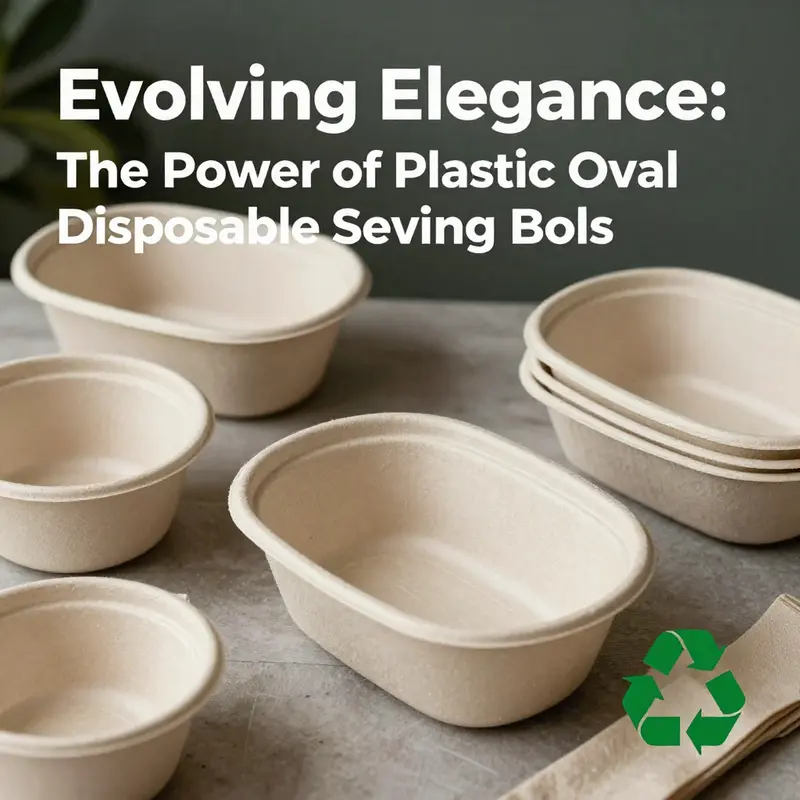
When a serving bowl is chosen for a gathering, the decision often hinges on convenience, presentation, and the pace of service. Plastic oval disposable serving bowls have become a familiar fixture in both casual and formal settings because they offer immediate benefits: they are sturdy enough to hold salads, desserts, and appetizers; their elongated shape optimizes table space for buffet lines and platters; and their light weight makes transport and disposal simpler for hosts and caterers alike. Yet behind the ease of use lies a chain of environmental implications that ripple far beyond a single event. To understand the full story of these bowls is to recognize a tension between immediate practicality and longer-term consequences for ecosystems, waste streams, and resource use. It is a tension that invites reflection on materials, production, disposal practices, and the evolving landscape of sustainability in modern food service. The core issue centers on material composition. These bowls are typically made from polystyrene (PS), polypropylene (PP), or polyethylene terephthalate (PET). Each of these plastics draws from fossil fuels and, in their conventional forms, is not biodegradable. The result is a durable container that resists decomposition for decades, if not centuries, when it escapes the waste system. In the moment of service, diners may notice a clean, crystal-like or translucent appearance. The visual appeal enhances the presentation of food, enabling guests to identify contents at a glance, which is particularly valuable in buffet setups where multiple dishes compete for attention. The glassy clarity is achieved without heavy processing, aligning with a desire for sleek, modern aesthetics. From a business perspective, this clarity also translates into predictable consumer experiences: food appears as it should, portions can be visually assessed, and the bowls maintain their shape under modestly heavy loads, all while remaining disposable. The logistical advantages are equally compelling. For event planners and hospitality teams facing tight schedules and high guest turnover, the ability to set tables quickly, minimize cleanup, and reduce labor costs matters as much as the flavor of the food. In many cases, the use of disposable oval bowls allows staff to plate, serve, and replenish with minimal interruption to guest flow. That practicality aligns with the realities of large gatherings, where seconds count and the margin for error in clean-up windows can be slim. In such contexts, the environmental calculus—often secondary to time, money, and guest experience—can become a quiet, underappreciated factor in decision making. The environmental dimension begins with production. The extraction of raw materials for PS, PP, and PET begins with fossil fuels, a finite resource base whose extraction, refinement, and processing carry energy costs and emissions. The manufacturing phase emits greenhouse gases, consumes water, and generates industrial byproducts that require careful handling. Once manufactured, shipping adds transportation-related emissions, a factor that scales with the distance between production sites and event venues. Some bowls travel across regions or even countries to reach event spaces that rely on compact packaging and standard-sized serving ware. At the point of use, the environmental narrative continues through waste generation. If the bowls are discarded after a single use, they contribute to the rising tide of non-biodegradable waste. In landfills, plastics can persist for long periods, occupying space and posing long-term management challenges. In the natural environment, mismanaged waste can fragment into microplastics, tiny particles that infiltrate soils and waterways. Microplastics are of particular concern because they can be ingested by wildlife and potentially enter the food chain, raising questions about ecological health and human exposure through the consumption of contaminated organisms. This potential exposure underscores the intimate connection between consumer choices at a catered event and broader environmental and public health considerations. The challenges extend into recycling. While recycling is an essential component of a circular economy, plastic oval bowls often fall short of ideal recyclability in municipal programs. A number of factors contribute to this gap. Not all facilities accept PS, PP, or PET in the same streams, and contamination from food residues can render otherwise recyclable material unrecoverable. The geometry of oval bowls, with tight rims and certain embossments, may also complicate sorting and processing in some recycling systems. The result is a situation where a portion of these bowls ends up in landfills, while another portion may be misdirected into litter, incurring additional environmental costs. Even when recycling is technically feasible, efficiency and throughput are critical constraints. The sheer volume of disposable items generated at large events can overwhelm existing recycling infrastructure. Low-density, bulky items are more challenging to collect, sort, and transport to reprocessing facilities. These realities can drive up the per-unit environmental impact of single-use disposables, particularly in regions where recycling capacity is limited or where composting options are not readily available. Contamination from food remains another persistent obstacle. Residual food waste complicates the recycling value chain, increasing processing requirements and reducing the purity of recyclates. In practice, this means that even bowls designed for recyclability may fail to yield high-quality recycled material if proper rinsing and separation do not occur prior to collection. The environmental argument then increasingly points toward the broader lifecycle and the system within which these bowls exist. If a facility lacks robust composting infrastructure for compostable alternatives or reliable municipal collection for recyclables, the practical options for reducing waste burdens shrink. In this context, the concept of sustainability evolves from a singular action—reuse or recycle—to a system-level practice that integrates product design, consumer behavior, infrastructure, and policy. On the design front, there is growing emphasis on materials and configurations that facilitate end-of-life recovery. Some suppliers are experimenting with mono-material constructions, enabling easier sorting and higher-quality recyclates. Others are pursuing thin-walled designs that maintain structural integrity while reducing material use. Yet such design shifts are not without trade-offs. Thinner walls can affect heat retention, rigidity, and the ability to handle certain foods safely, creating a balance between performance and environmental performance. The move toward recyclable or compostable forms reflects a broader trend in food-service packaging toward what is sometimes called a circular economy: products designed with recovery, reuse, or safe degradation in mind. In practice, this translates into a spectrum of options that vary by region, facility capabilities, and regulatory frameworks. For some operators, the most responsible choice is to pivot toward reusable dishware or to partner with services that manage dish return and washing at scale. Reusable systems, when properly implemented, significantly reduce waste by enabling multiple uses per item, lowering per-use environmental impact compared with single-use containers. This approach, however, demands a reliable logistics model: coordinated collection, on-site cleaning, and rigorous quality control to ensure hygiene and safety. It also requires careful consideration of product durability, rack space, and transport emissions. Where a fully reusable system is impractical, compostable alternatives become more attractive. Compostable bowls, often marketed as an eco-friendly substitute, are designed to break down in industrial composting facilities. The reality, however, is uneven. Availability of industrial composting varies by region, and in many locales, such facilities are scarce or nonexistent. In those contexts, compostable options may still end up in landfills or undergo slow decomposition, offering benefits in theory that are not always realized in practice. This mismatch between intention and outcome highlights a recurring theme in sustainability discourse: the best option is the one that aligns with local infrastructure and consumer behavior. From a consumer perspective, choices at the point of use matter. The ability to minimize waste starts with moderation and mindful serving. Packing food neatly, avoiding oversized servings, and ensuring proper cleanup can influence how much material becomes waste. A pragmatic approach is to pair the right container with the right service model. For example, smaller portion sizes in disposable bowls may reduce overall waste while still meeting guest expectations for variety and abundance. In the same moment, venues and caterers can adopt waste reduction practices such as pre-event forecasting to flatten overproduction, strategic placement of collection bins, and clear signage that directs guests toward proper disposal streams. Education plays a critical role here. When guests are informed about how to dispose of items correctly, and when staff are trained to guide guests respectfully, the likelihood of contamination and mis-tossing declines. These behavioral nudges—simple reminders about rinsing bowls or separating recyclables—can meaningfully improve the efficiency of post-consumer processing. The broader regulatory and market context also shapes the trajectory of plastic oval bowls. Policymakers in various regions are introducing or tightening restrictions on single-use plastics, with implications for the availability, cost, and design of disposable serving ware. Businesses respond to these shifts by adopting alternative materials, investing in more durable disposables, or embracing circular economy strategies that emphasize reuse and reclamation. At a market level, consumer demand increasingly favors sustainability, even in the realm of event hospitality. This shift manifests in both services and products: a growing expectation that packaging choices reflect environmental stewardship, a willingness to pay for more responsible options, and a readiness to support brands that demonstrate transparent lifecycle information. The complexity of the issue means there is no single answer that fits all contexts. In some environments, the most responsible option may be to use reusable dishware with professional dishwashing support. In others, carefully managed recyclable or compostable options may offer a practical bridge between performance and environmental responsibility. What remains clear is the interconnectedness of consumer behavior, material science, infrastructure, and policy. Each facet informs the others, creating a pathway toward more sustainable serving ware that preserves the convenience that makes these bowls appealing while reducing their ecological footprint. As researchers and practitioners continue to explore improvements, several guiding principles emerge. First, design for recyclability or compostability within the target ecosystem. This means selecting materials and geometries that facilitate sorting, reducing contamination, and enabling efficient processing. Second, keep waste streams clean by minimizing food residue and encouraging proper disposal practices. Third, invest in infrastructure where possible—whether through robust recycling programs, industrial composting facilities, or reusable dishware systems that align with logistical capabilities. Fourth, embrace transparency. Providing clear information about material composition, end-of-life options, and environmental footprints empowers consumers to make informed choices. Fifth, measure and report. Organizations can benchmark their packaging footprints, track improvements from material shifts or process changes, and communicate progress to stakeholders in a credible way. From a strategic standpoint, the environmental narrative around plastic oval bowls is not about vilifying one material or another, but about aligning product choices with the realities of waste systems and ecological limits. It is about recognizing that convenience does not exist in a vacuum. It depends on a wider set of conditions that determine whether an option ultimately reduces or exacerbates environmental impact. For event planners and operators who want to balance guest experience with responsibility, the question shifts from “Can we make this work?” to “What will this choice do in the life cycle of the event and beyond?” In practical terms, this means integrating environmental considerations into purchasing rationales, supplier negotiations, and service design. It means asking questions about whether the bowls will be reused, whether they can be returned for cleaning, whether an industrial composting partner can handle the volume, and whether contamination control practices will protect recycling streams. It also means acknowledging regional realities. In some regions, the best available choice may be recycled plastic options that align with local collection streams and have proven market value for recyclates. In others, compostable or reusable pathways may offer more durable environmental benefits, provided that infrastructure supports their end-of-life management. The narrative, then, is a call for systemic thinking. It asks stakeholders to recognize that packaging choices, while seemingly small, feed into a complex network of waste management, energy use, and ecological health. This awareness does not negate the value of convenience; it elevates it by ensuring that convenience is paired with responsibility. For those seeking tangible alternatives that balance form, function, and environmental considerations, exploring the landscape of packaging options becomes essential. A practical step is to consider a broader family of serving ware that can still deliver the same visual appeal and service precision while offering improvements in sustainability. This can include recyclable or compostable bowls made from paper, plant fibers, or other materials engineered for regional waste streams. It can also involve designing event layouts that reduce spill risk and enable more efficient collection of used wares. As this narrative moves forward, it invites readers to reflect on how a simple serving bowl can embody a broader environmental conversation. The choices made in the hours before a reception, buffet, or banquet can echo through the waste stream long after the last guest has departed. By embracing lifecycle thinking and aligning offerings with local capabilities, the industry can retain the advantages of oval disposable bowls while diminishing their footprint. The path ahead involves collaboration among manufacturers, venues, waste managers, and consumers. It requires shared metrics, consistent labeling, and flexible solutions that adapt to diverse settings. It also invites ongoing innovation in materials science, packaging design, and service models. In this sense, the environmental considerations of plastic oval disposable serving bowls are not a static hurdle but a dynamic invitation to reimagine how convenience can coexist with stewardship. For readers seeking a concrete bridge to related sustainable packaging options, consider the disposable kraft paper bowl as a viable alternative in appropriate regions, and explore how such options can be integrated into planning and procurement processes through supplier partnerships and waste-management programs. This approach keeps the focus on the core topic—plastic oval disposable serving bowls—while expanding the conversation to include viable, regionally appropriate strategies that reduce environmental impact without sacrificing the efficiency and presentation that events demand. Internal resources can provide practical examples and insights into how smaller changes accumulate into meaningful improvements over time. For example, look to options that emphasize recyclability, safer end-of-life handling, and transparent material disclosures, which collectively support a more resilient and sustainable approach to serving ware. To illustrate how a careful choice can influence overall outcomes, note that sourcing decisions, even for seemingly minor items like a serving bowl, ripple through supply chains, waste streams, and community disposal practices. The result is a more resilient hospitality system that respects guest expectations and ecological limits. As event contexts evolve and networks of sustainability mature, the chapter moves toward a practical horizon where informed choices, collaboration, and innovation converge to shape a more sustainable practice in food service. For readers who want a concrete bridge to related sustainable packaging options, consider the disposable kraft paper bowl as a viable alternative in appropriate regions, and explore how such options can be integrated into planning and procurement processes through supplier partnerships and waste-management programs. This approach keeps the focus on the core topic—plastic oval disposable serving bowls—while expanding the conversation to include viable, regionally appropriate strategies that reduce environmental impact without sacrificing the efficiency and presentation that events demand. External resource: EPA Plastic Waste. For further practical context on sustainable packaging alternatives, you may also explore materials designed for regional composting and recycling capabilities, which can guide decisions in ways that align with local waste-management infrastructure. The chapter’s aim is to equip readers with a framework to assess environmental trade-offs and to pursue solutions that honor both hospitality objectives and environmental integrity. The dialogue between convenience and stewardship continues in every procurement choice, every event design, and every conversation about waste management. The next chapter expands on specific design considerations for packaging that facilitate end-of-life recovery, including how mono-material approaches and simplified geometries can ease recycling and reduce contamination, while still delivering the reliability and aesthetic appeal that guests expect. The journey toward sustainable serving ware is incremental and collaborative, but the gains are tangible whenever organizations choose to prioritize lifecycle thinking and to align their operations with the realities of local waste systems. The chapter ends with an invitation to act: engage with suppliers who communicate clearly about end-of-life options, invest in staff training for proper disposal, and advocate for community waste-management improvements that enable more effective recovery of packaging materials. In that spirit, the environmental considerations of plastic oval disposable serving bowls become a catalyst for broader improvements across the food-service ecosystem, turning a simple bowl into a driver of lasting change. This perspective keeps the chapter tightly connected to the overarching topic while opening a pathway to practical, implementable strategies rooted in an informed, forward-looking approach.
Final thoughts
In summary, plastic oval disposable serving bowls offer a unique blend of functionality, style, and convenience that enhances the dining experience across multiple sectors. Their practical design optimizes table space, while diverse size and design options allow for creative food presentation that captivates guests. Furthermore, the growing emphasis on sustainability offers businesses an opportunity to choose environmentally friendly options, ensuring they not only meet customer demands but also minimize their ecological footprint. By leveraging these qualities, organizations can elevate their service offerings and create memorable dining experiences.