
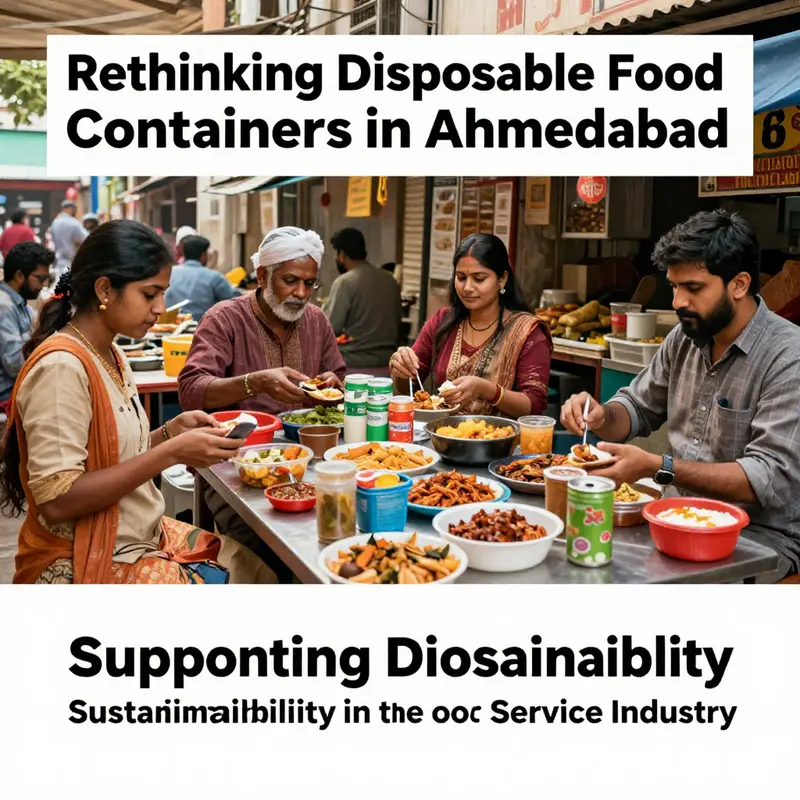
As environmental challenges grow in Ahmedabad, the increasing reliance on disposable food containers raises pressing concerns. The food service industry, encompassing bubble tea shops, restaurants, food trucks, and event planners, has a vital role in addressing these concerns. The rise of pollution and improper waste management associated with single-use plastics prompts us to explore sustainable alternatives. This article will delve into the environmental impact of disposable food containers, government regulations aimed at mitigating plastic use, exciting trends toward sustainable packaging, and opportunities with local suppliers and startups. Together, we can navigate a path toward greener solutions that benefit businesses and our beloved city.
From Streets to Sustainability: Ahmedabad’s Quiet Shift in Disposable Packaging
Ahmedabad carries the scent of street food and the rhythm of late night deliveries.
Beneath the bustle, a quiet reckoning about disposable packaging is taking shape.
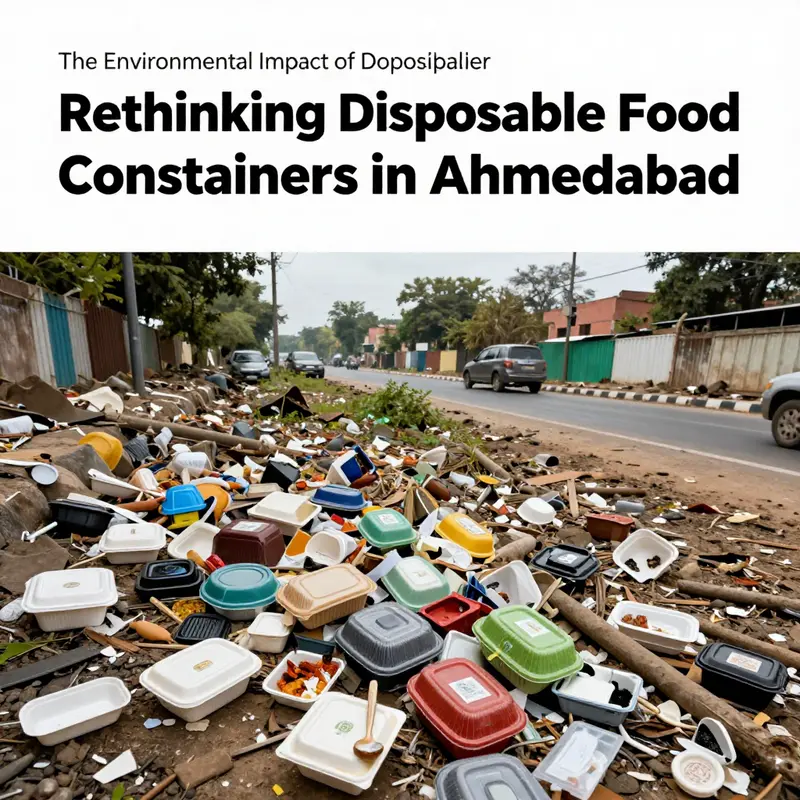
The city, known for quick meals and pocket friendly bites, is confronting the long shadow of plastics, polystyrene, and single use containers that clutter streets and strain recycling streams.
Local authorities and vendors are exploring greener options, from molded fiber and bagasse trays to plant based materials that can be composted where facilities exist.
The shift is supported by policy pushes from the AMC and a growing network of regional producers who understand local supply chains.
Costs and logistics are real considerations, but many operators see a market demand for sustainable packaging and a chance to differentiate their brands.
For consumers, awareness is growing that packaging is part of the city’s future, encouraging responsible disposal, reuse programs, and a preference for vendors who demonstrate environmental stewardship.
From Bans to Biodegradables: Regulating Disposable Food Containers in Ahmedabad
Ahmedabad sits at a crossroads where a thriving street-food culture and a growing awareness of plastic pollution meet a tightening web of national regulations. The city’s kitchens, stalls, and delivery hubs have long relied on disposable containers for quick service and clean handoffs, a practical system that keeps lines moving and meals hot. Yet the environmental and waste-management costs of single-use packaging are increasingly visible, from clogged drains after the monsoon to crowded landfills beyond the city’s rim. To address these pressures, national authorities have begun translating concern into policy, signaling a broader shift in how food contact materials are produced, used, and disposed of. In Ahmedabad, this means aligning everyday packaging choices with standards that govern what can touch food, how it is manufactured, and what happens to it after use. The regulatory conversation, still evolving, echoes across kitchens and storefronts, pushing both suppliers and operators to think not just about convenience but about safety, recyclability, and lifecycle impact.
A pivotal moment in the regulatory landscape is unfolding around the year 2025, when a proposal for the Food Safety and Standards (Packaging) Amendment Regulations was notified. Although still in the draft stage at the time of the latest updates, the draft outlines two core prohibitions that would reshape the materials permissible for food contact. First, the use of PFAS—per- and polyfluoroalkyl substances—would be banned in the manufacture of food-contact materials. PFAS compounds have drawn attention for their persistence and potential health concerns, and a prohibition signals a deliberate move away from packaging that can leave traces of these substances in food. Second, the draft requires that materials made from polycarbonate and epoxy resins be free of BPA, and of its derivatives, thereby reducing exposure risks associated with this widely used, but controversial, chemical. The combination of these provisions is designed to raise safety margins while nudging manufacturers toward safer, more transparent compositions. The proposed amendments were opened for public consultation, a step intended to gather input from industry, consumer groups, and other stakeholders before final rules are adopted. The duration of that consultation and the anticipated effective date reflect a careful balancing act: enough time for compliance planning, while maintaining momentum toward safer packaging. In Ahmedabad, this regulatory tempo translates into practical adjustments for vendors, restaurateurs, and delivery operators who must verify that their packaging choices meet the evolving standards, even as supply chains adapt to new material categories.
If one looks beyond the letter of the law, the regulatory trajectory also reveals a broader public-health philosophy. Food safety regimes increasingly recognize that the safety of a meal begins with the container that holds it. The regulations are as much about preventing chemical migration and contamination as they are about reducing environmental harm. In Ahmedabad, several municipal and state actors have already begun to emphasize compliance with the national framework, using it as a reference point for local practice. The Ahmedabad Municipal Corporation (AMC) has, in recent years, enforced stricter controls on plastic usage, with targeted restrictions in certain zones to curb non-biodegradable disposable items. The intent is not merely to punish non-compliance but to foster a marketplace where greener options are more accessible and visibly preferred by customers. In practical terms, this means that vendors operating in high-traffic zones or within clusters of eateries may find it easier to source compostable or recyclable packaging than to rely on conventional plastics, particularly when those plastics do not demonstrate end-of-life viability in the city’s waste streams. The regulatory guidance thus becomes a lever for market transformation, encouraging suppliers to expand inventories of safer, more sustainable packaging while nudging consumers toward greener choices when they select a meal.
From a materials perspective, the regulatory discourse intersects with real-world packaging evolution. The research landscape in Ahmedabad highlights a growing interest in biodegradable and compostable alternatives that can perform under typical restaurant conditions—hot foods, sauces, and microwavable reheating—without compromising safety or consumer experience. Molded fiber, produced from agricultural waste, has emerged as one of the viable options. It offers a balance of strength, heat tolerance, and compostability that aligns with both FSSAI objectives and city-level waste-management capabilities. In various pockets of the city, including areas with dense student populations and fast-paced street-food corridors, eco-conscious eateries are experimenting with paper-based or plant-derived containers that degrade more readily than plastic variants. The trend is not a mere reaction to regulations but a response to a growing consumer appetite for responsible packaging. People increasingly ask not only what is inside a package but how it got there and what happens to it afterward. This shift creates a feedback loop where regulatory signals, market availability, and consumer expectations reinforce one another, gradually shaping standard practice.
The move toward greener packaging in Ahmedabad is reinforced by the availability of alternatives that can meet the practical demands of a busy urban food economy. For example, bagasse-based containers, bamboo fibers, and compostable polymers are finding footholds in neighborhoods such as Vastrapur, Navrangpura, and Satellite, where dining-out and delivery culture coexist with a more adventurous approach to packaging. The shift is also aided by startups and small enterprises that are deliberately positioning themselves to serve both compliance and convenience. These ventures are not just supplying packaging; they are reconfiguring the supply chain to include safer materials, better labeling, and clearer information about end-of-life options. The regulatory push, therefore, catalyzes a broader transformation: it prompts vendors to diversify their packaging options, producers to optimize formulations for safety and compostability, and service platforms to present customers with choices that align with both health and environmental goals.
The practical implications of the evolving regulatory framework extend to labeling and traceability, as well. A crucial part of reducing risk is ensuring that packaging materials clearly communicate content safety properties to both regulators and consumers. Labels may need to indicate whether a container is BPA-free, whether it is suitable for hot foods, and whether it is compostable or recyclable within the city’s waste management system. This information helps restaurants and delivery services make informed procurement decisions and helps customers understand the lifecycle of their meals after consumption. Vendors face the challenge of verifying the safety profiles of their packaging across batches and suppliers, a process that can involve audits, documentation, and supplier certifications. The net effect is a more transparent marketplace where the chain of custody for packaging is visible and verifiable, aligning with both national expectations and local ambitions for cleaner streets and waterways.
In Ahmedabad, the regulatory conversation also intersects with consumer education and demand shaping. As authorities emphasize safer materials, the public becomes more attuned to packaging choices. Customers may begin to associate certain packaging types with responsible business practices and preferentially patronize outlets that adopt eco-friendly options, even if those options come at a modest price premium. This consumer-facing dimension supports a virtuous cycle: as demand for safer, greener packaging grows, more suppliers explore and scale these options, and restaurants integrate them into their standard operating procedures. The cumulative effect is a city that gradually internalizes the costs and benefits of packaging choices, recognizing that the impact of a disposable container extends well beyond the moment of purchase. While the path to full alignment with the draft regulations is ongoing, Ahmedabad demonstrates how policy, business practice, and public sentiment can converge to accelerate sustainable transitions.
For readers seeking explicit exemplars of the packaging options that are increasingly compatible with regulatory expectations, one can explore a range of durable, compostable designs that balance performance with end-of-life considerations. For instance, some operators are turning to molded-fiber and paper-based formats that can withstand typical meal temperatures and residues while offering better disposal outcomes than traditional plastics. A practical case in point involves the use of the disposable octagonal box for kraft paper packaging, a design feature that addresses portion control, stackability, and heat retention, while aligning with compostability goals. These containers can be found through sources that emphasize sustainable, plant-derived packaging solutions, and they illustrate how form and function can evolve in step with policy. disposable octagonal box for kraft paper packaging
Looking ahead, the regulatory trajectory remains a work in progress, with final rules anticipated to crystallize once public feedback has been integrated. Even as the precise provisions take shape, Ahmedabad’s food and packaging ecosystems are already adapting to a framework that prizes safety, recyclability, and reduced chemical exposure. Businesses can prepare by auditing their current packaging mixes, identifying where PFAS or BPA-related concerns might arise, and exploring alternative suppliers that can meet upcoming standards. Municipal authorities can further support this transition by providing clear guidance on end-of-life pathways, including local composting capabilities, recycling streams, and recommended labeling practices. For consumers, the empowerment lies in informed choices, knowing that the packaging holding their next meal is not only a vehicle for taste but a small, everyday decision that can influence public health and environmental quality. The interplay of policy clarity, market adaptation, and consumer participation will determine how quickly and comprehensively Ahmedabad can realize a future where disposable packaging supports convenience without compromising safety or the city’s ecological burdens.
External resource for broader regulatory context: For formal regulatory framework details and updates on the packaging amendments, refer to the FSSAI draft 2025 Regulations.
From Plastic to Purpose: Building Ahmedabad’s Sustainable Food-Container Future
Ahmedabad’s food culture is a tapestry of fast-break meals, street-side snacks, and an evolving appetite for responsible choices. The city’s lanes hum with sizzling kebabs, savory farsan, and the comforting steam of chaai that punctuate long conversations. All of this is inseparable from packaging — disposable containers that carry flavor, heat, and convenience from seller to consumer. Yet the visual footprint of a city that feeds millions has become increasingly unsustainable. Plastic and polystyrene, once convenient, linger in streets and waterways, challenging waste collection systems and long-term ecological health. In response, a broader shift is taking shape, one that reimagines the everyday act of takeout and dine-in packaging as a choice that aligns with the city’s values and its future. The transition is not a single policy or a marketing trend; it is a steady reengineering of supply chains, consumer expectations, and municipal infrastructure toward materials that can truly close the loop rather than merely pass from hand to landfill.
Regulatory pressure has sharpened the sense of urgency. The Ahmedabad Municipal Corporation has rolled out stricter controls on non-biodegradable disposable items in targeted zones and is expanding oversight as green packaging becomes a baseline expectation for food service. The effect is twofold: vendors must adjust their practices to avoid penalties, and customers begin to associate sustainability with quality and reliability. This regulatory stir has not only redirected how containers are chosen but also how businesses think about cost and capacity over the lifespan of a product. In practical terms, the city’s markets, cafes, and eateries in areas such as Vastrapur, Navrangpura, and Satellite are experimenting with packaging that can withstand hot foods, travel well, and, crucially, break down in a responsible end-of-life scenario. The visible shift is gradual and pragmatic. It’s not a rejection of convenience but a redefinition of it, where convenience also means less waste and cleaner streets.
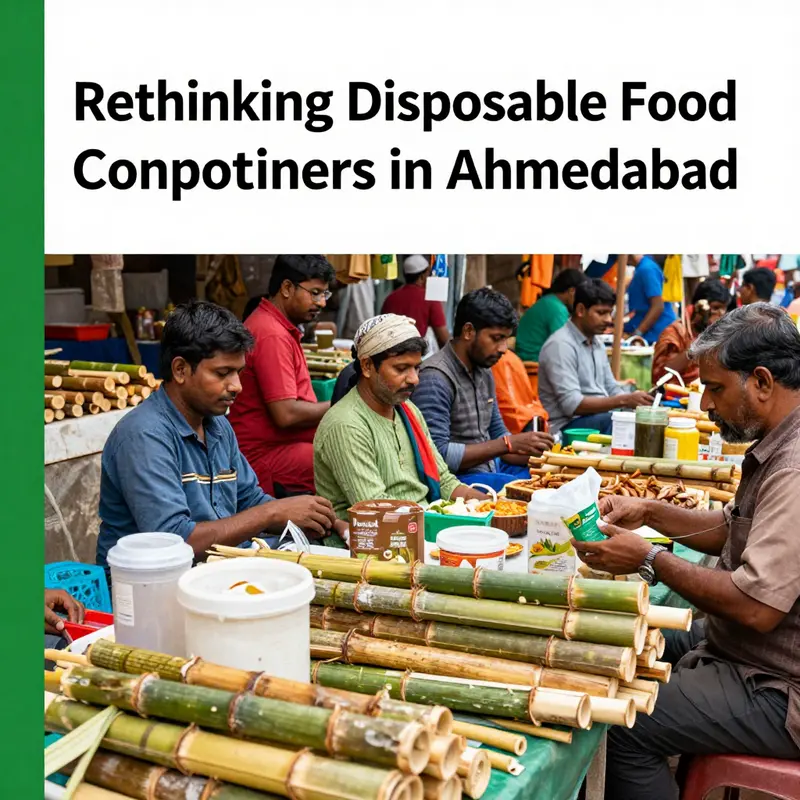
The materials landscape in Ahmedabad’s sustainable packaging scene reflects a convergence of science, local abundance, and urban circularity. Bagasse, the fibrous residue left after extracting juice from sugarcane, is turning up in cups, bowls, and trays, celebrated for its compostability and its resilience to heat. Molded fiber—often produced from agricultural or post-consumer waste—offers an unexpected blend of strength and biodegradability, making it suitable for both hot and cold items without the risk of leaks. For vendors who prioritize performance, cornstarch-based bioplastics and plant-based polymers likewise present viable routes, particularly for items that must resist moisture and maintain form during brief, high-traffic service. The appeal is not solely ecological; these materials typically require fewer fossil fuel inputs over their lifecycles and tend to decompose in industrial composting streams, thereby reducing the long tail of plastic pollution that haunts urban landscapes.
Inside this material spectrum, a practical narrative unfolds. Bagasse-based containers, for instance, are increasingly favored by local kitchens because they can hold steaming curries and piping hot chais without deforming. They also travel well for delivery, a service mode that has grown in tandem with the rise of online ordering and doorstep service. Likewise, molded pulp—generated from agricultural waste—offers a sturdy, heat-tolerant alternative that aligns with the city’s agricultural rhythms and waste reduction aims. A useful way to think about these options is not just as substitutes for plastic but as components of a broader design ethos: containers that support the integrity of the food, minimize post-use harm, and ultimately yield to composting cycles that return nutrients to the soil.
Alongside these innovations, the packaging market in Ahmedabad is witnessing the emergence of cellulose-based trays and PLA (polylactic acid) bio-based packaging. These materials are frequently certified to international standards such as ASTM D6400 or EN 13432, signaling to buyers and regulators that they are designed to behave responsibly in industrial composting facilities. The certifications matter, because they are indicators of performance under real-world conditions as well as of end-of-life behavior. Local manufacturers have begun adopting these technologies with the backing of government programs that promote waste reduction and circular economy models. The result is a packaging ecosystem that can be scaled to meet the demands of a city famous for its street-food culture while still supporting waste management objectives that keep neighborhoods cleaner and healthier.
In practice, this means a shift in how food-service operators evaluate packaging options. It’s no longer enough to ask whether a container is leak-proof or heat-resistant; operators are increasingly seeking responsibility along the entire lifecycle. They want to know how the material is sourced, what happens after use, and how easily the product can be integrated into local composting streams. Consumer expectations are also evolving. Patrons now ask about compostability cues, labeling, and whether the packaging aligns with the values of the business. For many restaurateurs and street vendors, this translates into a negotiation: a modest premium in the short term for long-term benefits in waste reduction, brand reputation, and alignment with municipal waste infrastructure.
A practical question for decision-makers is how to translate these ideals into reliable procurement and practical operations. The supply chain for sustainable containers in Ahmedabad is becoming more robust, with local startups and small manufacturers multiplying to address varied needs—from lightweight bowls for sidewalk kiosks to sturdy, sealable containers for heat-radiating meals. The growth of online marketplaces and regional distributors has begun to flatten cost barriers and improve access to alternative materials. Yet there are still hurdles. Availability can be uneven, depending on the season and the scale of demand. Per-unit costs remain higher than conventional plastics in many cases, and businesses must balance upfront investment with projected waste-management savings and customer goodwill. Education plays a critical role in this balancing act: staff training on proper use, storage, and disposal; clear labeling so customers understand end-of-life options; and transparent communication about why a greener container matters for the city’s air, waterways, and neighborhoods.
Crucially, the end-of-life story cannot be ignored. Compostability claims must be grounded in the realities of local waste infrastructure. In Ahmedabad, industrial composting facilities exist, but their capacity is not unlimited. This makes it essential for operators to align their packaging choices with the facilities most likely to process them. Home composting, while a nice-sounding option, often fails to deliver the same performance in urban contexts where household composting is not widely practiced at scale. The upshot is a collective responsibility: manufacturers, vendors, municipal agencies, and consumers must work together to ensure that a compostable container actually returns nutrients to the soil rather than to a landfill or the city’s drainage system. In this sense, the transition to sustainable containers becomes a shared project of design, logistics, and community engagement.
From a business and policy perspective, the transition also signals a move toward transparency and accountability. Certifications and third-party verifications provide a framework for comparing options and avoiding greenwashing. For food-service operators, there is merit in selecting packaging solutions that come with clear documentation about material composition, end-of-life pathways, and compliance with local regulations. For customers, clear labeling and accessible disposal instructions empower responsible choices and reinforce the social contract that a cleaner city is a shared achievement. In short, sustainable packaging in Ahmedabad is evolving into a civic practice as well as a business strategy.
For readers seeking practical pathways to sourcing options without getting lost in hype, a closer look at the packaging landscape reveals scalable models that fit the city’s tempo. The evolution is not about eliminating disposable containers overnight; it is about replacing what is wasteful with what is recoverable and returnable, and about building a city where convenience and care coexist. To explore a range of supplier options, consider the notion of kraft paper packaging solutions as a starting point for concrete, credible choices that respect both the appetite for efficiency and the imperative for stewardship. kraft paper packaging solutions
As Ahmedabad continues to grow and refine its approach to disposable containers, the focus remains on outcomes that matter to people who live and work here: cleaner streets, healthier waterways, and a food economy that rewards innovation without compromising the city’s future. The path forward is iterative, collaborative, and marked by small, steady gains. Each restaurant, street vendor, and delivery service that chooses a compostable container contributes to a broader culture of responsibility. Each neighborhood that supports waste separation and proper collection adds a layer of resilience to the system. And each policy adjustment that incentives sustainable packaging nudges the market toward a more circular model where materials cycle rather than accumulate as waste. The chapter ahead will further explore how these threads connect with broader regional practices and what they portend for other Indian cities facing similar challenges. In the meantime, Ahmedabad’s story of sustainable food containers stands as a case study in turning desire for convenience into a design-forward, ecologically grounded habit.
External resource: https://www.indiamart.com
Market Currents and Green Shifts: The Evolution of Disposable Food Containers in Ahmedabad
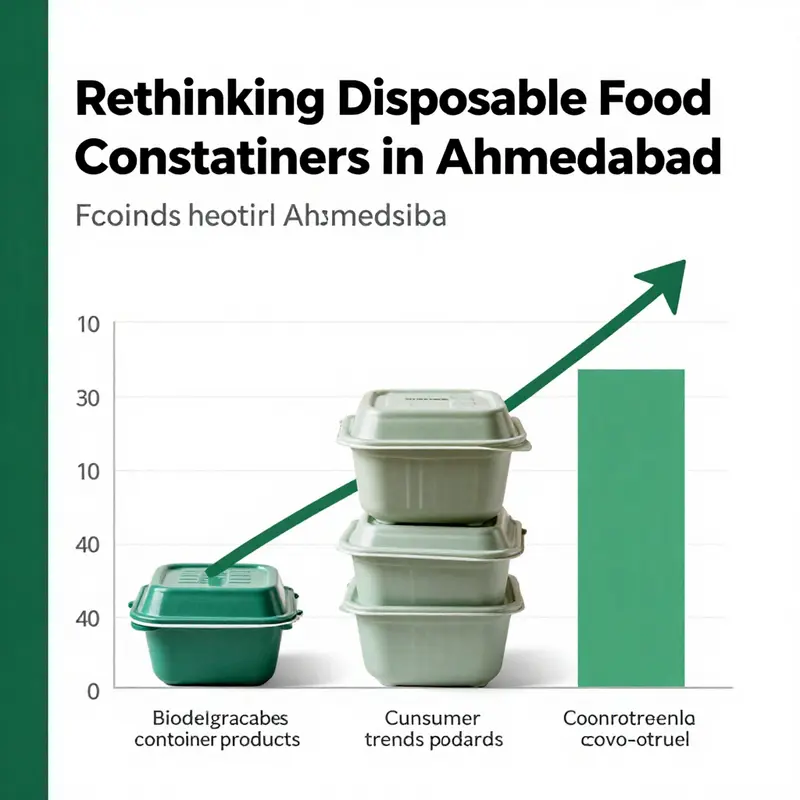
Ahmedabad sits at the crossroads of rapid food-service growth and enduring waste-management challenges. The city’s streets teem with vendors and a rising number of quick-service restaurants, cafés, and delivery hubs that rely on disposable containers to keep food safe, hygienic, and portable. This practical necessity—especially for take-away and home-delivery meals—has helped propel a vibrant yet under-scrutinized market. The same market that enables a bustling street-food culture also exposes the city to long-term waste-management costs. The challenge is not merely disposing of packaging after a meal; it is aligning convenience with a cleaner urban future.
The most salient material trend centers on polypropylene, or PP, which dominates because it meets practical demands: heat-resistance, lightness, and durability to handle hot curries, oily sauces, or chilled desserts without deforming. PP containers support a wide range of sizes and shapes. This flexibility is crucial in a city where vendors offer rotating menus and delivery networks serve neighborhoods with varying climates. The market’s reliance on PP balances performance, manufacturability, and cost. PP’s resilience also translates into easy stacking and warehousing, reducing breakage and speeding packing and dispatch.
Yet growing awareness about environmental footprints nudges the market toward greener options within the PP family and beyond. Many manufacturers offer food-grade PP containers with higher recyclable content. The shift reflects regulatory push and consumer demand for lower environmental burden. Ahmedabad’s producers refine processes to keep recyclable pathways accessible for vendors and end consumers. Beyond PP, there is rising interest in molded-fiber derived from agricultural waste and other biodegradable or compostable options. While not universal, this marks a directional cue: the packaging ecosystem is expanding to accommodate competitive, lower-impact options. For brands balancing aesthetics and sustainability, offering recyclable or compostable containers becomes a differentiator.
Policy intersects with sustainability. The Ahmedabad Municipal Corporation has begun enforcing stricter plastic-use rules, including restrictions in certain zones that ban non-biodegradable disposable items. This regulatory backdrop creates practical incentives to shift toward greener packaging, complemented by guidance and incentives for alternatives. In districts like Vastrapur, Navrangpura, and Satellite, some eateries experiment with molded-fiber containers and other compostable options. The result is a market-driven shift rather than forced transition: vendors see waste-reduction cost savings, merchants gain branding benefits, and customers enjoy convenient meals without sacrificing quality. The trend also resonates with consumer awareness that waste mismanagement costs communities through congestion and landfill pressure.
Design and functionality are focal points. The modern disposable container is evaluated for logistics compatibility, branding, and micro-matters such as microwave safety or leak resistance. Innovations include leak-proof lids, containers that withstand brief microwave reheating, and stackable configurations that save storage and reduce fleet footprint. The design language supports branding through color, printing, and shape, helping operators differentiate themselves. The ability to signal sustainability through packaging has emerged as a meaningful differentiator in Ahmedabad.
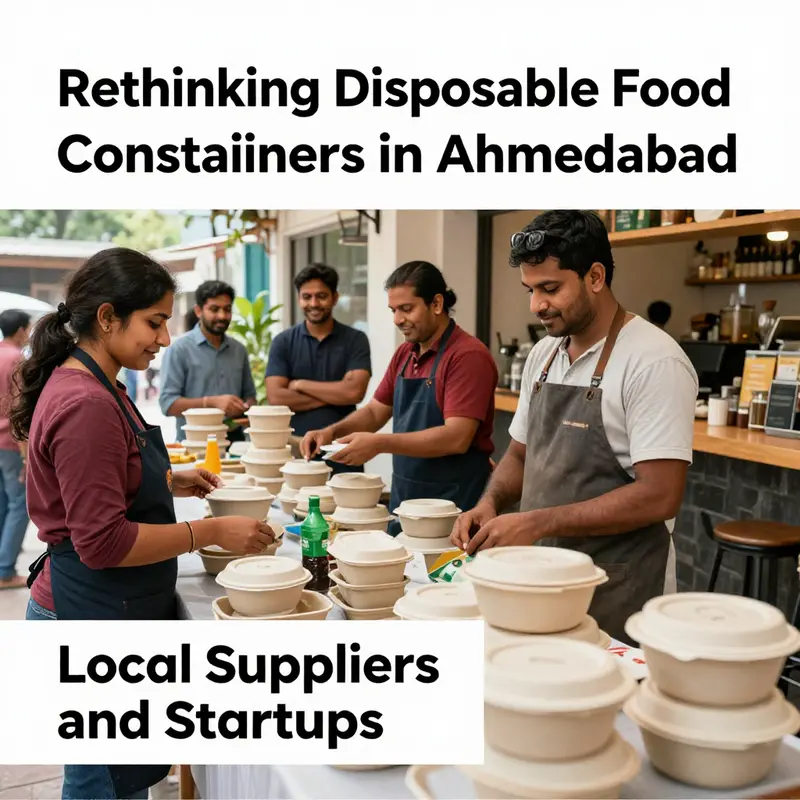
For professionals, partnerships with compliant manufacturers and scalable supply chains are essential. When choosing packaging suppliers, businesses seek reliability, clear labeling, and compatibility with local waste-management practices. The push toward sustainable PP-based options that maintain performance and cost-effectiveness highlights an ongoing balancing act: meeting short-term price pressures while investing in greener solutions. A broader ecosystem of local startups, established manufacturers, and logistics partners plays a crucial role. Sourcing reusable and compostable containers locally reduces lead times and supports circular economy goals, benefiting vendors during peak seasons or festival periods.
Online platforms have accelerated access to greener packaging by widening supplier pools and enabling smaller operators to test new formats with limited risk. A shop might pilot molded-fiber options or recyclable PP alternatives for a subset of its menu, then expand if performance and consumer reception are favorable. This incremental adoption aligns with Ahmedabad’s realities: a diverse mix of outlets, delivery networks, and a regulatory landscape that rewards waste-reducing innovation. As operators experiment with materials and designs that perform in real-world conditions while aligning with waste-management capabilities, the market begins to influence consumer behavior toward responsible packaging choices.
The social and economic dimensions matter. Local manufacturers and startups contribute to an ecosystem that creates jobs, spurs small-scale innovation, and fosters collaboration among food-service players, waste-management entities, and policymakers. This collaborative dynamic is crucial for making sustainable options accessible and affordable to a broad cross-section of operators, from high-volume restaurants to street-vending setups. The outcome is a socially inclusive transition that preserves convenience and hygiene while embracing packaging solutions aligned with environmental realities. Ahmedabad’s packaging choices are becoming a reflection of its values—compact, efficient, and mindful of long-term health of streets, markets, and neighborhoods.
For readers exploring disposable containers in Ahmedabad, the market is not a single force. It is a tapestry of materials, regulations, and user needs evolving in concert. PP remains a backbone due to its practical strengths, but a growing segment is accelerating toward alternatives that minimize ecological impact without sacrificing safety or convenience. The resulting landscape is layered: tradition meeting innovation, and policy nudging industry toward greener pathways while maintaining reliability customers expect in a bustling, food-forward city. Those who navigate this space successfully will shape the city’s waste streams for tomorrow.
A practical reference point can illuminate the path ahead: disposable-octagonal-box-restaurant-food-kraft-paper-packaging. This example underscores how form, function, and sustainability converge in a single packaging solution, illustrating design thinking shaping Ahmedabad’s disposable container market. Looking ahead, continued collaboration among vendors, regulators, and consumers will determine the trajectory of packaging choices.
External reference: For a deeper look into the composition, properties, and applications relevant to professionals navigating this space in Ahmedabad, see this external reference: https://www.b2bmarketplace.com/ahmedabad-pp-bags-manufacturers
null
null
Final thoughts
Navigating the landscape of disposable food containers in Ahmedabad requires a collective effort from food service providers to embrace sustainability. By understanding the environmental impact, adhering to government regulations, exploring alternative materials, and supporting local suppliers, businesses can make informed choices that reduce ecological footprints. The opportunity for positive change is ripe, encouraging collaboration between all stakeholders to ensure a greener future for Ahmedabad. Together, we can redefine how we approach food packaging and support initiatives that safeguard our environment.