
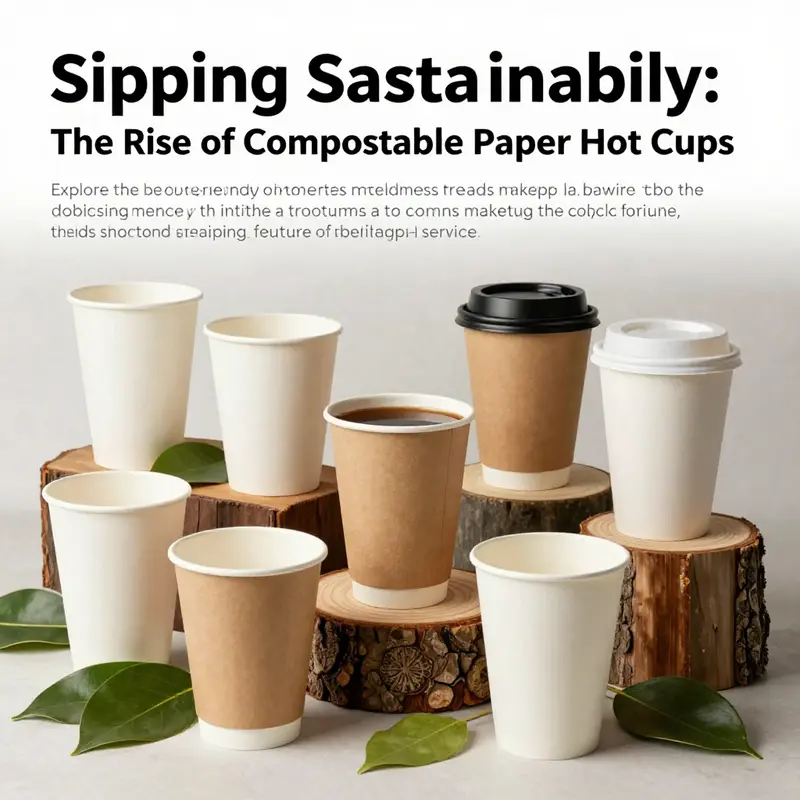
As businesses strive to reduce their environmental impact, compostable paper hot cups have emerged as a leading alternative to traditional plastic-lined cups. Not only do these cups aid in waste management, but they also enhance brand image by reflecting a commitment to sustainability. From cafes and restaurants to food trucks and corporate events, adopting compostable options is becoming essential. This article delves into the environmental benefits of these cups, their material composition and temperature tolerance, and the market trends impacting sourcing decisions. By understanding these elements, businesses can make informed choices that align with their sustainability goals and customer expectations.
From Cup to Compost: Tracing the Environmental Footprint of Compostable Paper Hot Cups
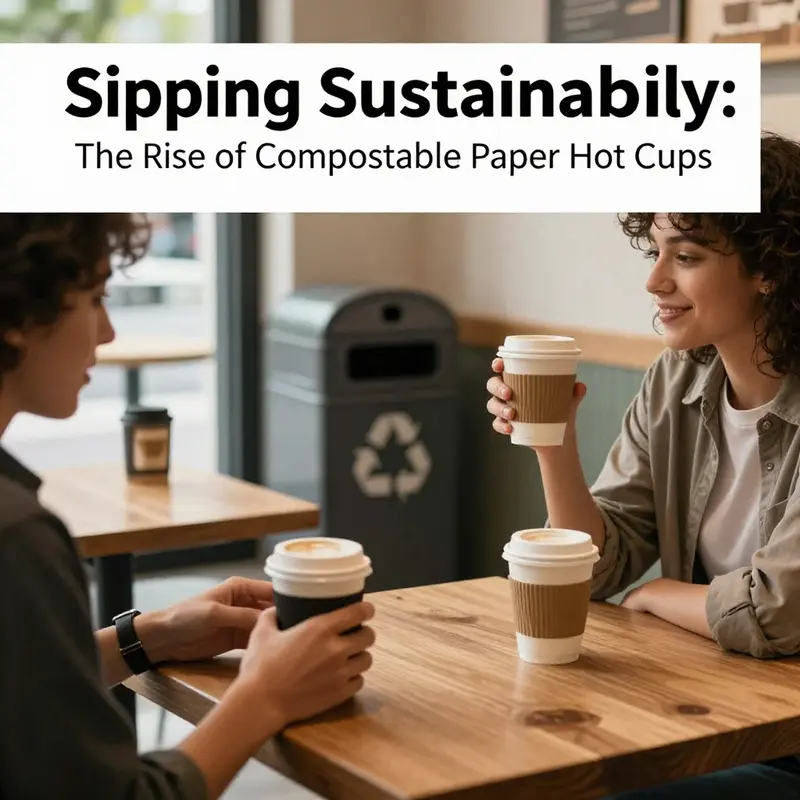
The move away from plastic-lined, single-use beverage cups toward compostable paper hot cups represents more than a material swap. It is a deliberate shift in how the lifecycle of everyday packaging is imagined, measured, and managed. At their core, compostable paper hot cups promise a cleaner end-of-life story: a package that can return to the soil through industrial composting facilities, rather than languish in landfills for decades. The appeal is straightforward: use renewable, tree-based paperboard that carries a plant-based coating to resist grease and liquids, then discard it in a system designed to turn that feedstock into organic matter. Yet the full cradle-to-cradle arc is nuanced when the fabric of the system is examined.
The environmental benefits hinge on a web of interactions among material composition, manufacturing energy and inputs, automation of waste streams, and the availability of appropriate composting infrastructure. When these elements align, compostable cups can meaningfully reduce waste from coffee culture and fast-paced concessions. When they do not, gains can be muted by disposal inefficiencies, energy use, or agricultural impacts in production. This is not a call for uncritical optimism but a prompt to understand how such cups fit into broader waste-management systems and climate strategies.
The material core is designed to be renewable and safe for contact with hot liquids. They are typically fashioned from 100% food-grade paperboard, a substrate from managed forest resources or other plant-based fiber sources. The distinguishing feature is a coating that substitutes for traditional petroleum-derived plastics: a plant-based polylactic acid, or PLA, lining. This PLA layer provides the essential grease and liquid resistance that keeps a hot beverage contained and minimizes leaks or soggy interiors. PLA is widely described as compostable under industrial conditions, and that designation anchors the environmental argument for these cups. The coating’s plant-based roots also align with consumer expectations around renewable inputs.
Certifications play a central role in validating these claims. A number of manufacturers emphasize that their cups meet standards for industrial compostability, with connections to recognized frameworks such as ASTM D6400 in the United States or EN 13432 in Europe. Beyond compostability, compliance with food-safety rules is essential; many cups emphasize FDA-related compliance to reassure buyers that the materials in contact with beverages are suitable for food contact. This certification scaffolding is not superficial paperwork. It translates into a shared language that cafes, event organizers, and retail partners can rely on when selecting packaging for campaigns that aim to minimize waste. It also shapes expectations for waste-management facilities that receive these cups, since industrial composting operators need to know the material can move through their systems without introducing contaminants or adherence issues that would complicate processing.
From use-case perspectives, these cups appeal to spaces that prioritize waste reduction and sustainability messaging. Coffee shops, outdoor events, food trucks, schools, and similar environments often seek packaging that reflects a broader environmental commitment. In such settings, compostable cups serve a dual purpose: they fulfill functional needs—holding hot drinks without premature breakdown or leakage—and they signal a conscious stance toward resource stewardship. The branding possibilities are another dimension, as flexo printing and other customization options enable venues to communicate their sustainability ethos clearly with graphics and messaging. Yet the appeal must be matched with practical considerations, including supply reliability, cost, and the local waste-management landscape. When a venue has easy access to industrial composting facilities and an established chain of custody for compostable streams, the cups can perform as intended; otherwise the benefits can degrade toward conventional disposables.
A key dimension of the environmental profile is the life-cycle analysis that researchers and decision-makers rely on to compare compostable cups with alternative packaging. Decomposition rate is a central variable: under industrial composting conditions, these cups are designed to break down at rates faster than conventional plastics. In practice, the presence of a PLA lining does not automatically guarantee rapid decomposition unless the material enters a facility that can maintain the specific temperature, moisture, and microbial conditions required for optimal breakdown. The promise of accelerated degradation is meaningful because it can shorten the residence time of waste in landfills and contribute to the feedstock for compost that enriches soils rather than accumulating as inert matter. However, this benefit is not universal. The environmental calculations must account for agricultural inputs that underpin the paperboard and PLA production, which can be substantial.
This tension accentuates the importance of disposal infrastructure. The environmental advantages of compostable cups are most pronounced when a reliable, well-functioning industrial composting network exists. Without such infrastructure, the cups may be diverted to landfills, where anaerobic conditions and lack of moisture and temperature can slow any potential decomposition. In landfills, methane is produced as organic material breaks down, and while some facilities capture and utilize that gas, not all do. The net climate impact then depends on the relative allocation of processing energy, transportation, and the degree to which composting facilities operate efficiently and at scale. These realities reinforce a pragmatic view: compostable cups offer meaningful environmental benefits when they live within a waste-management ecosystem that can handle them properly.
The broader planetary health considerations are twofold. Replacing petroleum-based coatings with plant-based alternatives reduces fossil fuel dependency, but agricultural inputs carry ecological footprints, including soil erosion, water use, and fertilizer runoff. These inputs accumulate across billions of cups. The lifecycle reality is a spectrum of possible outcomes that depend on sourcing, manufacturing, transport, and disposal. Researchers encourage cautious optimism: the benefits are real and tangible but contingent on disciplined waste management, continuous improvement in farming practices, and an investment in infrastructure that makes composting practical at scale.
The practical implications for organizations adopting compostable cups extend beyond environmental metrics. Cost considerations, lead times, and customization options interact with sustainability goals in meaningful ways. Some producers advertise sizeable minimum orders and longer lead times for first orders, a reality that matters when budgeting. The possibility of receiving samples with postage covered by the buyer may help testing, but it is essential to weigh the total cost of ownership, including the price premium over traditional cups, the logistical costs of supply chain management, and potential savings realized through waste-reduction programs if industrial composting is broadly accessible. Customization remains a valuable tool for brand alignment, and the opportunity to tailor cup sizes, branding, and messaging can help businesses communicate their environmental commitments. The balance lies in aligning procurement decisions with local waste realities and with an overarching sustainability strategy that contemplates not only materials but the entire system.
To make sense of these dynamics, many sustainability-focused teams turn to credible sources of research and case studies that examine the full chain of impacts. A comprehensive resource discusses the nuanced interplay of material choice, facility infrastructure, and policy context in the environmental performance of compostable packaging. It situates the conversation within a larger body of evidence and points to practical realities that must accompany any claims of circularity. The honest takeaway is that compostable cups can be a meaningful part of a more sustainable packaging ecosystem, but they are not a silver bullet. Their success rests on coordinated action across supply chains, city and regional waste-management systems, and consumer participation in proper disposal streams.
The chapter’s broader takeaway is clear: the environmental benefits of compostable paper hot cups are real and compelling when deployed thoughtfully. They hinge on three pillars: material design – renewable paperboard with a plant-based coating; industry standards and certifications; and, crucially, the surrounding waste-management infrastructure. Industrial composting facilities, efficient collection systems, and policies that incentivize correct disposal shape whether the cups become soil-building compost or misdirected fragments. When these elements come in place, a coffee cup can complete a short journey—from the cafe into a thriving compost pile that returns nutrients to soil, closes a loop, and reduces the net demand for virgin materials.
The environmental narrative around compostable cups invites pragmatic optimism. It encourages dialogue among beverage providers, waste-management operators, policymakers, and researchers about how to optimize each link in the chain. It also invites continued innovation: improving agricultural practices to reduce water and chemical use, refining the composting process to handle a wider array of materials, and developing better supply-chain logistics that minimize energy use and emissions from transport.
Within this context, integration matters: compostable cups work best when embedded in a broader sustainability program that favors renewable inputs, partnerships that strengthen composting capabilities, and consumer education about disposal. When these elements come together, compostable paper hot cups can contribute to reducing landfill volumes, lowering greenhouse-gas emissions, and supporting soil health through compost that feeds future crops.
For readers seeking related topics beyond cups alone, pathways to complementary packaging solutions can provide a broader view of sustainable material options. A representative avenue is eco-friendly, custom paper coffee cups with lids as an extension of the same sustainability principles into branded experiences. External research and industry analyses can enrich understanding, providing evidence-based decisions that align with regulatory expectations and consumer expectations alike.
For a deeper dive into the broader literature, see the external resource linked at the chapter’s end: Lifecycle Analysis of Compostable Packaging. This reference grounds the discussion in lifecycle-based insights and robust comparative analyses.
Between Fiber and Film: Material Make-Up and Temperature Tolerance of Compostable Paper Hot Cups
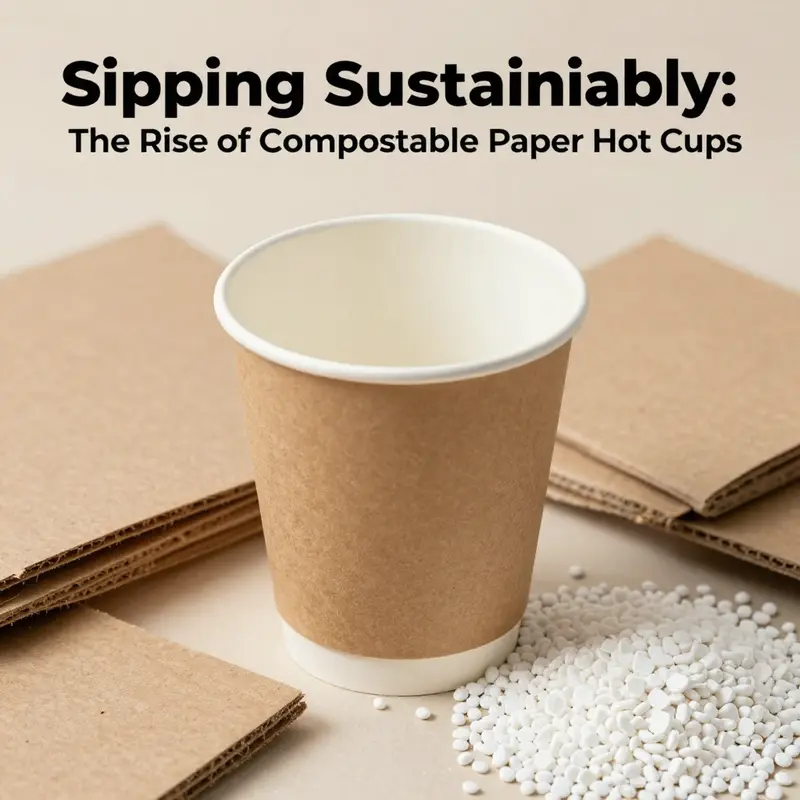
The moment a cup leaves the heat of the café’s counter and finds its way into a sleeve, the real engineering story begins. It is a story written in the language of materials science, in the quiet governance of heat, moisture, and time. Compostable paper hot cups are not merely paper with a coating; they are carefully layered architectures that balance two seemingly opposing demands: the rigidity and form required to hold a hot drink, and the softness, even vulnerability, of a material planned for eventual biological decay. The core idea is both simple and nuanced. A sturdy paperboard forms the shell. Inside, a thin lining makes the difference between a cup that merely contains liquid and one that confidently carries a steaming beverage without leaking, without collapsing, and without betraying its compostable promise at the end of life. The way these components join, how they interact under heat, and what happens when the cup is finally composted—these are the threads that tie material composition, temperature tolerance, and sustainability into a practical reality for cafés, events, and retail environments seeking to reduce their environmental footprint.
At the heart of the cup is food-grade paperboard. This is the structural backbone, a panel of fibers pressed into a stable form that can resist the daily handling of a busy barista, the slight bending when handed to a customer, and the mass of a liquid inside. The paperboard’s job is to provide sufficient strength to keep its shape as heat migrates from the liquid to the cup’s walls. But paper alone would falter under the demands of hot liquids. That is where the biodegradable lining comes in. A thin layer on the interior surface serves as both a barrier and a performance enhancer. The most prevalent choice for this lining is polylactic acid, or PLA, a thermoplastic derived from fermented plant sugars, typically cornstarch. PLA offers a clear, glossy finish that mimics the familiar translucence and sheen of traditional plastic coatings. It creates a smooth surface that resists grease and liquid, reduces seepage through the paper, and preserves the cup’s ability to showcase branding and color through printing on the exterior. Yet PLA is not an inert glaze; it is a functional polymer with a lifespan that aligns with composting ethics when managed in the right industrial environment.
The rationale for choosing PLA is rooted in processing practicality and end-of-life performance. PLA’s processing characteristics fit well with standard coffee-cup manufacturing lines, enabling consistent coating, good adhesion to the paperboard, and a predictable barrier performance. The coating also confers a high degree of opacity and gloss, which helps brands present their designs in a way that resonates with customers. When the cup is collected in an industrial composting stream, PLA has the potential to break down into compost alongside the organic contents, given the conditions of temperature, moisture, and microbial activity that prevail in those facilities. This alignment of supply chain feasibility and compostability is a major reason why PLA dominates the lining landscape for compostable paper hot cups.
That said, PLA is not the only biodegradable option on the table, and the field continues to explore alternatives. Some advanced formulations incorporate other compostable materials such as polyhydroxyalkanoates, or PHAs, which are also derived from biological sources and exhibit different processing and barrier properties. Others experiment with cellulose-based films that can be engineered to provide moisture resistance while remaining compatible with composting streams. These options reflect a broader impulse in sustainable packaging: to diversify the material toolkit so that suppliers can optimize performance for specific beverages, temperatures, and local composting infrastructure. Yet among the alternatives, PLA remains the most widely adopted because of its favorable processing characteristics, its well-documented performance, and the maturity of the supply chain around it.
Temperature tolerance is a defining spec for compostable cups. The common target for PLA-lined paper hot cups is to withstand the temperature of hot liquids up to about 100°C (212°F). This boundary is not a hard, inviolable wall but a practical guideline that reflects both material science and real-world usage. In everyday service, a cup filled with coffee or tea will reach near-boiling temperatures during pour or immediately after, and the steam can be intense during the initial sips. In that moment, the PLA lining and the paperboard work together to prevent seepage and to retain a comfortable grip for the consumer. They also need to avoid surface damage that would compromise barrier properties or structural integrity. The short-term tolerance is what matters for a typical café service, where drinks are consumed within minutes rather than hours. The reality, however, is more nuanced: prolonged exposure to very hot liquids can challenge the coating, softening the polymer layer or gradually weakening the barrier properties. In other words, a cup is designed to handle hot beverages in the moment of service, not as a vessel that stays hot for extended periods in a customer’s hand or in a receptacle exposed to sustained heat.
That nuance is often overlooked in quick reads of sustainability claims. The degree to which the cup maintains its integrity depends on several factors beyond the baseline material specification. The thickness of the PLA layer, the quality of the bond between the coating and the paperboard, and the uniformity of the coating across every inch of the interior all affect performance. Even the geometry of the cup—its rim diameter, its wall thickness, and the curvature—can influence how heat and liquid interact with the lining. In practice, manufacturers optimize these parameters to create a reliable product for typical serving temperatures, while also designing for the occasional worst-case scenario, such as a cup left to sit for a short period in a hot venue or during a busy service window when the cup may be jostled and stressed. The interplay between material selection and geometric design thus becomes a holistic approach to ensure a practical, dependable cup for everyday use.
There are clear usage guidelines that accompany these designs. The cups are engineered for single-use applications, with disposal into industrial composting facilities as the intended end-of-life pathway. They are not meant for microwaving or dishwashing. Microwaving can elevate temperatures in ways that exacerbate the risk of coating degradation or delamination, and high moisture exposure in a dishwasher can challenge the integrity of the compostable lining. These cautions are not merely procedural; they reflect the underlying material dynamics. The PLA lining is stable under regular service conditions, but its behavior shifts when subjected to the repeated, extreme heat and moisture cycles of a household appliance. The goal of the design is to balance the customer’s experience of hot, refreshing beverages with a sustainable, predictable end-of-life trajectory.
End-of-life considerations are central to the discourse around compostable cups. Industrial composting facilities operate under specific environmental conditions—temperatures often above 55°C (131°F) and a steady supply of microbial activity—that enable the breakdown of the materials in a timescale aligned with municipal composting programs. In this context, PLA is expected to break down along with the paperboard and other organics. Certification schemes, such as ASTM D6400 or EN 13432, provide the framework that claims of industrial compostability must meet. These standards specify criteria for biodegradation, disintegration, and the absence of toxic residues, aiming to ensure a lifecycle that closes the loop from consumption to compost. However, the reality of industrial composting is not uniform across all regions. Some facilities are optimized for different feedstocks or chemical compositions, and not all promise home compostability. This distinction matters for brands and buyers who want to ensure that the cups will actually reach a composting stream that honors their eco-intentions.
In practice, the certification language and the facility’s capabilities matter as much as the material composition. A cup might be advertised as compostable, but if a local facility cannot process PLA-based coatings or if contamination from non-compostable components disrupts the stream, the environmental benefits can be diminished. For this reason, sustainable sourcing often emphasizes transparency and verification. Buyers should confirm compostability claims against local facility capabilities, and suppliers frequently provide documentation, including certifications and test results, to support those claims. The interplay of material science with regulatory and processing realities is a reminder that sustainability is a system, not a single material choice.
Beyond the chemistry, there is a human and logistical dimension. The choice of a compostable cup is part of a broader decision about how a business communicates its environmental stance. Customization and branding play a role here. A cup is not just a utilitarian vessel; it is a surface for storytelling, a mobile ambassador for a cafe’s values. The exterior can be printed with branding, imagery, and messages that reinforce a commitment to sustainability. Flexo printing is a common method for adding such branding with efficiency and precision. The result can be a striking product that customers are proud to handle and recycle. For brands exploring this route, there are practical examples of customization paths that align with packaging ethics. For instance, a customizable takeaway cup design can be explored through dedicated suppliers who offer logo options, color matching, and lid compatibility. An illustrative example of the branding approach—without naming specific products here—can be found in the customizable take-away cup option: disposable-takeaway-paper-cup-custom-logo-kraft-coffee-cup-with-lid. This link demonstrates how printing, material choice, and end-use fit into a coherent packaging strategy that reinforces sustainability while supporting brand identity.
In the broader context of packaging ecosystems, these cups exist within a constellation of decisions about waste, recycling, and the boundaries between compostable and recyclable streams. The paperboard core is a renewable resource, and the PLA lining represents a compostable alternative to conventional plastic coatings. Yet the full environmental performance hinges on downstream processing: whether the cups are directed to industrial composting facilities, whether facilities accept PLA-coated paper, and whether consumers and businesses properly separate compostables from other waste streams. Education and coordination between producers, distributors, and compost facilities are essential to realize the promised environmental benefits. In many ways, the choice of a compostable cup is a commitment to a more integrated waste management approach, one that requires consistent infrastructure and informed consumer behavior to fulfill its potential.
As with any engineered material system, the record of performance is not a single datum but a tapestry of interwoven specifications, facility capabilities, consumer practices, and geographic variation. The material composition—paperboard with a PLA or other compostable lining—gives a clear signal about intent and capability. The temperature tolerance—centered around the practical 100°C mark—defines the cup’s comfort zone for coffee and tea and informs how it should be used and disposed of. The end-of-life pathway—industrial composting, with appropriate certifications—frames the promise in a regulatory and logistical context. The narratives around these cups thus weave together chemistry, process engineering, environmental policy, and consumer behavior into a coherent whole. This complexity is not a barrier but a guide to better design, smarter procurement, and clearer communication with customers about what happens after the last sip.
The future of compostable paper hot cups will likely involve continued refinement of lining materials and barrier strategies. Material scientists and packaging engineers are exploring coatings that can deliver even stronger liquid resistance without compromising compostability, or coatings that could enable broader home compostability under certain conditions. At the same time, manufacturers are experimenting with layer architecture to optimize heat retention, reduce material usage, and minimize energy inputs in production. The convergence of performance, cost, and end-of-life clarity will shape which solutions gain traction in different markets. As buyers and specifiers, the most effective approach is to examine the total lifecycle: material composition, processing compatibility, real-world temperature exposure, facility capabilities, and consumer education. Only by looking across this spectrum can a business honestly claim a reduced environmental footprint while ensuring a reliable, enjoyable experience for customers.
In closing this exploration of composition and temperature, the cups’ inner lining stands as a practical exemplar of how sustainability and usability can align in packaging design. The PLA or alternative compostable layers are not merely coatings; they are active participants in a lifecycle that starts at the point of service and ends in a composting facility. The strength of the cup under heat, the barrier it provides to liquids, and its ability to decompose in the right environment all rest on the careful orchestration of materials, processing, and policy. The broader lesson extends beyond any single product: sustainable packaging is a system in which material science, manufacturing realities, consumer behavior, and waste management infrastructure must work in concert. As the article moves forward to examine lifecycle considerations, disposal pathways, and branding opportunities, the next chapters will continue to reveal how compostable cups fit into a resilient, responsible, and visually engaging packaging ecosystem. While no single cup can solve every environmental challenge, understanding its material DNA helps designers and businesses make informed, responsible choices that align with the circular economy aspirations of modern commerce.
External resource: For a broader technical perspective on compostable materials standards, see The Plastics Institute’s overview of compostable material standards and performance criteria at https://www.plasticsinstitute.org/compostable-materials-standards.
From Material to Market: The Lifecycle of Compostable Paper Cups
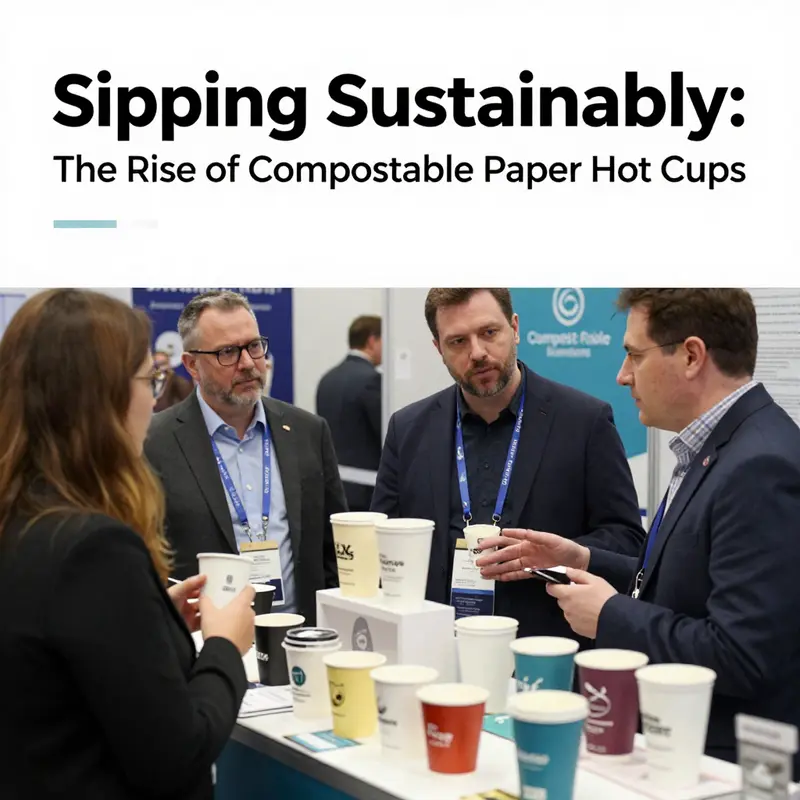
A growing emphasis on sustainability is reshaping the packaging of hot beverages. Compostable paper cups sit at the intersection of consumer demand for lower environmental impact, regulatory scrutiny, and practical end-of-life outcomes. These cups are typically built from 100% food-grade paperboard with a plant-based coating such as PLA, which provides liquid and grease resistance without relying on petroleum-based plastics. When processed in appropriate industrial facilities, the coating and fiber can break down into usable organic matter, a pathway not always available to traditional polyethylene lined cups. It is important to note that home composting is rarely sufficient; industrial streams provide the controlled conditions needed to achieve reliable decomposition and avoid contamination of compost facilities. This distinction shapes how brands and waste partners design collection and processing programs.\n\nCertifications form the backbone of trust in compostable cups. Food-contact safety standards align with FDA requirements, while industrial compostability benchmarks such as ASTM D6400 and EN 13432 establish conditions under which products are expected to break down in composting operations. For buyers, these standards reduce risk by offering verifiable evidence of performance and end-of-life behavior. For facilities, certifications translate consumer claims into measurable criteria that can be audited during manufacturing, packaging, and waste processing.\n\nIn practice, performance innovations continue to balance heat resistance with compostability. Cups are engineered to withstand hot liquids up to around 100°C (212°F) while offering insulation through double-wall or ripple-wall geometries that minimize heat transfer to the hand without introducing non-compostable components. Designers strive to maximize fiber content, optimize geometry, and maintain barrier properties so that cups remain compatible with standard industrial composting streams and do not compromise safety or shelf life.\n\nSourcing and supply chain discipline are essential as demand grows. Production hubs in Asia with automated cup forming, rim rolling, and inline printing can achieve high scales of output, enabling competitive pricing and shorter lead times. Buyers often balance domestic or regional production for faster restocking with overseas partnerships that leverage cost efficiencies. A disciplined supplier evaluation—focusing on operational reliability, responsiveness, and transparent traceability—reduces risk and supports large, multi-site rollouts. Lead times for first orders commonly range from a couple of weeks to a month, with express options available for urgent campaigns.\n\nUltimately, end-to-end success depends on a holistic packaging strategy. Brands and waste partners must align on responsible sourcing of raw materials, rigorous quality checks, and a well understood end-of-life pathway that includes clear waste management instructions for customers. By integrating design choices, certifications, and reliable logistics into a coherent value chain, compostable cups can scale without sacrificing safety or performance, contributing to a circular economy for disposable packaging.
Final thoughts
Compostable paper hot cups are reshaping the way food and beverage businesses approach sustainability. By integrating these eco-friendly options into your service, you not only reduce landfill waste but also meet evolving consumer preferences for responsible packaging solutions. The commitment to sustainability can be a powerful differentiator in a competitive market, contributing to a better planet and a brighter brand image. As the industry continues to evolve, staying informed about material developments and sourcing trends will be crucial for businesses looking to lead in environmental responsibility.