
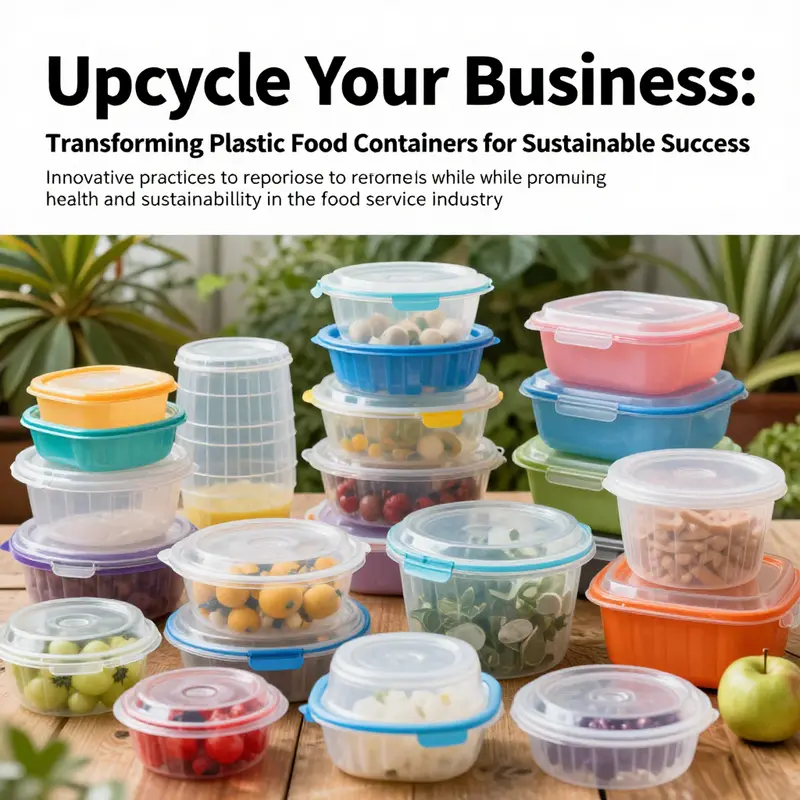
The increasing focus on sustainability in the food service industry has created an opportunity for businesses to reimagine how they handle waste, particularly plastic food containers. Upcycling these containers is not only a responsible practice but can also yield creative solutions for organizing supplies and managing costs. This article will explore best practices for upcycling plastic food containers, critical health and safety considerations, inspiring ideas for home organization, the economic benefits that can lead to significant cost savings, and the environmental impact of upcycling versus traditional recycling methods. Each chapter aims to provide actionable insights that can be immediately implemented in your operations, paving the way for an eco-friendlier approach to managing waste.
Reimagining Waste: Best Practices for Upcycling Plastic Food Containers into a Circular Kitchen
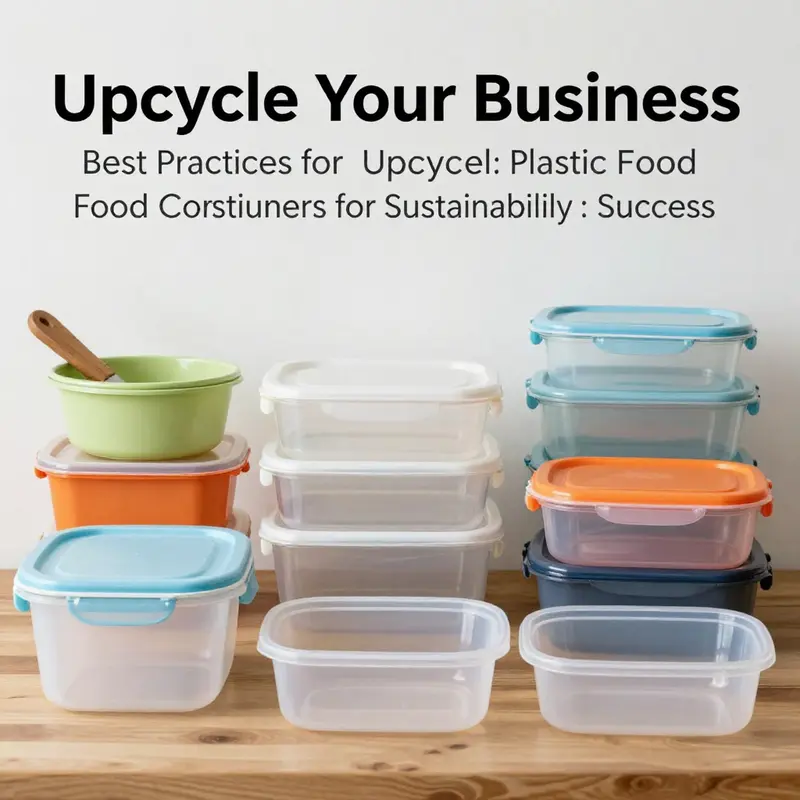
Upcycling plastic food containers is a practical, tangible path toward a more circular kitchen and a cleaner planet. It rests on the same principle that guides many sustainability efforts: extend the useful life of a material, reduce the burden on landfills, and keep resources circulating. But the reality is not a perfect loop. PET and HDPE, the polymers most common in food packaging, bring both opportunity and limitation. They’re lightweight, moisture resistant, and versatile, attributes that make them excellent candidates for repurposing. Yet they also face degradation and contamination challenges that can complicate reuse. Even as municipal recycling programs exist for codes #1 (PET) and #2 (HDPE), typical recovery rates lag behind ambition. Contamination from food residues, labels, or mixed-plastic streams can derail mechanical recycling, while repeated washing and processing wear down polymer chains. Upcycling—where containers find new life in non-food uses or in higher-value applications—offers a practical, scalable bridge between waste and value, especially when enacted with thoughtful design and systemic collaboration.
The safety dimension deserves sober attention. Plastic’s interaction with heat, light, and food matters. Reusing a container for hot liquids or fatty foods can drive accelerated migration of substances, particularly if the container has any aging, warping, or prior damage. The risks grow when containers are subjected to ultraviolet exposure or rough handling. For this reason, the most conscientious upcyclers treat plastic containers as best suited for non-food applications after their first life ends: organizers for craft spaces, storage for hardware, planters for indoor greenery, or components in modular storage systems. The aim is to preserve both health and material integrity, minimizing potential leaching while still extracting value from the material’s existing energy and embodied carbon. When in doubt, choosing a clean, undamaged container and reserving it for non-food uses reduces risk while keeping it out of the waste stream.
A careful starter is selecting containers made with materials known for stability and safety. Where possible, seeking BPA-free plastics and avoiding containers with visible cracks or deep scratches helps. A thorough cleansing is essential—washing to remove residual oils and adhesives from labels, drying completely, and inspecting for warping or haze before deciding its next life path. This commitment to pre-upcycling hygiene helps ensure that the next phase of the container’s journey remains both safe and useful. Once these checks are complete, the container can be repurposed into a host of practical, aesthetically pleasing secondary products that align with a home or business’s organizational needs. In many households, such transitions reinforce a broader behavioral shift: a habit of thoughtful reuse rather than impulsive disposal.
Beyond the micro-level decision of what to reuse, the chapter must acknowledge the larger ecological math. Upcycling does not erase the fact that plastic is plastic. It remains, by many measures, less sustainable than glass or other materials when one accounts for energy use, refrains on process emissions, and long-term recyclability. Yet upcycling moves us away from the linear path of single-use consumption toward a circular trajectory where waste becomes input and value is preserved. The most successful strategies blend technical innovation with robust design and broad cultural participation. They also turn individual acts into collective outcomes by building supply chains that farmers, manufacturers, retailers, and households can trust and participate in.
One of the most promising avenues in this space is technological innovation that enables more flexible material recovery. Enzymatic approaches to plastic depolymerization, for example, hold the potential to convert used containers back into their basic building blocks. In controlled settings, enzyme-driven processes can break down common plastics like PET and HDPE into monomers that can be repurposed to produce new plastics or biodegradable bioplastics. This chemical recycling pathway can operate as a closed loop, where the end-of-life material re-enters the production cycle with minimal quality loss. The European research landscape has highlighted projects that demonstrate how enzyme-enabled depolymerization can transform mixed or contaminated plastic streams into feedstocks suitable for high-value bioplastics. While this remains an area under development and scale-up, the concept broadens the horizon for upcycling plastic waste beyond traditional mechanical methods. It signals a future where “waste” becomes a reliable input for material streams rather than a disposal problem.
Mechanical recycling continues to play a central role in upcycling practice. This approach involves cleaning, shredding, and reprocessing plastics into new materials. The key to success lies in rigorous sorting and meticulous quality control. When inputs are carefully separated by resin type and free of contamination, post-consumer recycled (PCR) plastics can be engineered into durable, food-safe packaging or other durable goods through standardized testing and certification. The strength of mechanical recycling lies in its accessibility: many communities already have the infrastructure to handle clean, sorted plastics. The challenge is to reduce contamination, improve cleaning standards, and ensure that outputs meet safety requirements for their new applications. This is where design for upcycling becomes essential, shaping products from the outset to simplify recovery and reprocessing at end of life.
Design for upcycling shifts the lifecycle mindset from “use and toss” to “plan for recovery.” It starts with material choices that favor mono-material designs, minimizing blends or multilayer configurations that complicate separation. It also means avoiding additives or coatings that hinder later processing, and providing clear markings about recyclability and end-of-life pathways. A design-for-disassembly mindset makes it easier to pull components apart for sorting, cleaning, and reprocessing—an approach that dramatically improves the viability of upcycling projects. Moreover, companies can bolster recovery by creating take-back schemes that incentivize consumers to return used containers for professional upcycling. Such programs can help establish a reliable input stream, enabling more predictable processing and better integration with downstream recycling or upcycling partners. In practice, a well-designed container marks its own future—easy to clean, easy to sort, and easy to repurpose in a way that preserves value rather than creating waste.
Cross-sector collaboration ties these threads together. The upcycling ecosystem thrives when governments, manufacturers, retailers, and consumers operate with shared standards, dependable infrastructure, and clear expectations. Standards for material streams, safety certifications, labeling, and traceability help reduce friction and accelerate adoption. Public-private collaboration can unlock financing for take-back programs and support for pilot projects that demonstrate scalable models of input supply and processing capacity. When policy aligns with innovation, the pathway from a used container to a recovered product becomes clearer, more efficient, and more accountable. In this sense, sustainability in action is not only about clever technologies; it is about building systems that make responsible choices both easy and economical for everyone involved.
The consumer plays a pivotal role in this system. Clear, accessible guidance on how to upcycle and what to avoid when reusing containers can empower households to participate meaningfully. Education around safe reuse practices—recognizing when a container is suitable for non-food uses, how to clean it effectively, and when to dispose of it—reduces risk and builds confidence. Color-coded or clearly labeled bins and simple take-back instructions can demystify the process, turning a solitary act of cleaning or repurposing into a community practice. As households engage more deeply, the public’s collective behavior reinforces business models that prize durable design, responsible sourcing, and transparent communication about end-of-life options. It is in the daily decisions of millions of individuals that the momentum for a circular plastics economy gains critical mass.
The practical rhythm of upcycling plastic containers can be illustrated through a few core patterns. First, begin with a rigorous assessment of the container’s material and condition. If it’s cracked, warped, or deeply scratched, it is often wiser to repurpose it for non-food uses or to retire it from the food-contact stream altogether. Second, implement a simple, repeatable cleaning protocol that removes residues and ensures the object is ready for a new life—whether as a storage jar, a planter, or a craft organizer. Third, pair mechanical recycling with careful design choices that anticipate recovery. A mono-material container made of a single polymer, with minimal labeling and no hazardous coatings, is far easier to disassemble and recycle than a complex, multi-layer packaging system. Fourth, invest in or participate in take-back and repair initiatives that create predictable supply chains for input materials. When a company or community cultivates such programs, the economics of upcycling improve, making it a more attractive option for households and businesses alike.
To illustrate an alternative pathway within the same sustainability conversation, households can explore packaging options that align with the principles of durability, reuse, and end-of-life clarity. A practical example example involves transitioning some packaging needs to sturdy, reusable, paper-based alternatives for certain products, which can simplify downstream processing and reduce overall plastic exposure in the waste stream. See the Kraft paper cup page for a concrete embodiment of this shift: disposable-kraft-thick-paper-cup-for-hot-drinks. Although not a silver bullet, these options broaden the palette of design choices that support a more circular economy and demonstrate that sustainable packaging can take many forms while maintaining consumer convenience.
While upcycling can be a powerful lever for reducing plastic waste, it is not a substitute for reducing reliance on single-use plastics altogether. The long-term goal remains a robust system of reduce, reuse, and recycle that minimizes virgin-plastic production and maximizes the value captured from what already exists. This is the essence of a circular economy in practice: use what you have wisely, design for recovery, and invest in processes that keep materials circulating. For policymakers and practitioners, the challenge is to align incentives, standards, and infrastructures that make upcycling an appealing, scalable, and safe option for producers, retailers, and consumers alike. The research frontier continues to widen—with enzymatic depolymerization signaling a future in which even contaminated streams can be reborn as high-value materials—while mechanical recycling and design-for-upcycling provide immediate, actionable pathways that communities can begin implementing today. For further reading on enzyme-driven recycling, see the external resource linked at the end of this chapter.
External resource: https://cordis.europa.eu/article/id/487926-upcycling-plastics-for-biodegradable-food-packaging
In sum, upcycling plastic food containers is a holistic practice that blends science, design, consumer behavior, and policy. It requires disciplined attention to material safety, rigorous cleaning and sorting, and a willingness to rethink packaging as a resource rather than a disposable endpoint. When these elements converge, upcycling emerges not as a fringe tactic but as a core strategy of sustainability in action—one that respects the material’s limits while maximizing its opportunities. The chapter’s synthesis is not about a single technique but about an ecosystem of methods that, together, extend the life of containers and contribute to a more resilient, less wasteful food system.
Safe Second Lives: Health-Minded Practices for Upcycling Plastic Food Containers
Safe Second Lives: Health-Minded Practices for Upcycling Plastic Food Containers
Upcycling plastic food containers is an appealing way to reduce waste, but safety must guide every decision. Plastics used for food storage—commonly PET, HDPE, and polypropylene—were formulated to meet food-contact standards when new. That initial safety, however, is conditional. With wear, heat, and exposure, plastic chemistry and structure can change. Understanding those changes and taking practical steps protects your health while still giving containers useful second lives.
Begin by assessing the container itself. Look for recycling codes and labeling: numbers 1 (PET), 2 (HDPE), and 5 (PP) are generally more stable for reuse. Also verify any “BPA-free” designation. Even BPA-free does not guarantee permanent safety; aging and physical damage can alter performance. Inspect for cracks, deep scratches, cloudiness, discoloration, or warping. These defects matter because they increase surface area where residues and microbes collect and create sites where polymer chains break down more easily under stress. If a container shows visible damage, set it aside for non-contact uses only—planters, tool organizers, or craft bins—rather than anything that touches food or drink.
Cleaning practices are the next critical consideration. Residues from acidic or fatty foods speed polymer degradation and can be hard to remove completely. For safe upcycling into any food-contact role, clean thoroughly with hot, soapy water and a scrub brush that reaches corners and threads. Avoid abrasive scouring pads on thin plastics; they can create micro-scratches. After washing, sanitize: boiling for a few minutes works for sturdier plastics, while chemical sanitizers or UV sanitation are alternatives for items that cannot tolerate high heat. Note that repeated thermal sanitization accelerates aging; reserve high-heat methods for containers you intend to use sparingly for food, not as long-term kitchen storage.
Temperature exposure is one of the most important safety constraints. Plastics vary in heat resistance. Repeated microwaving or dishwasher cycles can soften or warp containers and encourage chemical migration. Unless the container is clearly labeled microwave-safe and in excellent condition, avoid exposing it to direct heat. That means no reheating leftovers in the original plastic unless the label permits it and the piece shows no signs of wear. For upcycled food use, restrict containers to cold or room-temperature storage and short-term transport of dry goods. If you need a container for hot items, choose a different material designed for heat.
Chemical safety deserves explicit attention. When plastics break down, additives and residual monomers can migrate into contents. These substances may include plasticizers and stabilizers that were once considered safe in controlled amounts. Over time and with stress, their behavior changes. Vulnerable scenarios include storing high-fat foods, acidic sauces, alcohol-based items, and prolonged contact with oily residues. Avoid repurposing containers that previously held such contents into new food-storage roles. Likewise, avoid painting or sealing interiors with unknown coatings; these treatments can introduce toxicants or flake into stored items.
Microbial contamination is a practical risk that is often underestimated. Scratches and seams harbor bacteria and mold. Even visually clean containers can carry low-level contamination if not dried thoroughly before storage. For containers you plan to use for food, ensure they fully dry after cleaning. Store them inverted to allow air circulation. If a previously used container smells faintly of food or has persistent stains that won’t lift, discard it from food-contact use. For non-food uses, however, those same containers can still serve well as storage for dry craft supplies, small tools, or sealed seed-starting trays where direct ingestion is not an issue.
When considering upcycling roles, match the intended use to the container’s remaining capability. Safe upcycling for household use includes dry storage of non-perishables, organizing small hardware, housing plant cuttings, or temporary coverings. For indoor planting, ensure drainage and use liners if you anticipate direct soil contact with degraded plastic. If you choose to use an upcycled container for seedlings or herbs, avoid planting edible crops destined for frequent consumption in containers with unknown histories. Treat such upcycled planters as decorative or for non-edible plants instead.
Regulatory guidance and technical standards offer useful benchmarks. Recent technical trade measures emphasize that food-contact plastics must withstand deformation at elevated temperatures and show low levels of migration. When repurposing, use these standards as a checklist: no visible deformation under normal use, no persistent odors, and no cloudy or brittle areas. If a container cannot meet these criteria, restrict it to non-food roles. For those who repurpose at scale or for gifts, consider simple testing: fill the container with warm (not boiling) water and leave for several hours. Smell and inspect the water; if it develops an unusual odor or residue, avoid food use.
Material choice matters for longevity. HDPE and polypropylene are among the most durable and chemically resistant common food plastics. PET is lighter but more prone to stress cracking over repetitive use. Containers manufactured from mixed plastics or with painted or metallic finishes are harder to evaluate and are best used for decorative or non-contact purposes. Seek out containers that were originally designed for reuse, such as sturdy lunch boxes or storage tubs, as their thicker walls and better closures maintain integrity longer.
When safety concerns rule out food reuse, embrace creative non-food uses that still reduce waste. Sorted and labeled storage solutions are essential in workshops and craft rooms. Clear plastics make great organizers for screws, beads, and small parts. Opaque but clean containers can become seed trays, cable holders, or small drainage trays for potted plants. If you need single-use or heat-resistant alternatives for serving or taking-out foods, consider switching to certified compostable or recyclable paper-based options that handle hot items better; for example, eco-friendly kraft paper cups provide a safer route for hot beverages than repurposed plastic. See kraft paper cup alternatives here for options suited to hot drinks.
Finally, adopt a conservative mindset when safety is uncertain. The environmental benefit of upcycling should not outweigh basic health precautions. Prioritize reducing the creation of new single-use plastics in the long term. Where possible, shift to durable, clearly labeled containers made for long service and reuse. When you do upcycle, document the container’s new role, date it, and retire items sooner rather than later if they show wear. This small habit keeps safety front of mind and prevents accidental misuse.
For readers who want to align practical upcycling with formal standards, consult relevant technical notices and trade measures that outline testing and migration limits for food-contact plastics. These documents provide measurable criteria that help decide whether a container is fit for continued food-related use or better suited to a non-food second life. Practical, cautious choices ensure that upcycling remains a responsible and health-conscious component of reducing plastic waste.
Source: Technical Trade Measures Bulletin 2026, Issue 2 – China’s National Standards on Food Contact Plastics: https://www.mofcom.gov.cn/article/bdt/202601/20260103587485.shtml
Second Life, Smarter Storage: A Cohesive View of Upcycling Plastic Food Containers for Home Organization
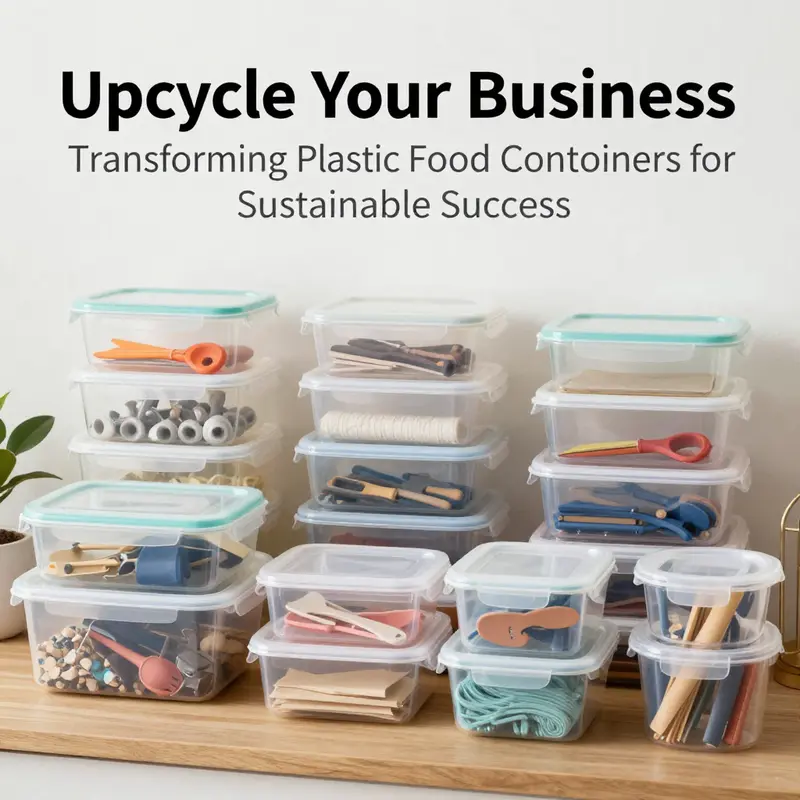
A quiet, practical transformation unfolds when households start treating plastic food containers not as disposable objects but as material for organization with a conscience. The idea rests on a straightforward premise: extend the life of what we already own, reduce the waste that ends up in landfills, and reimagine everyday corners of the home as functional spaces. Yet the reality comes with nuance. PET and HDPE containers—common in takeout, dairy, and beverage packaging—carry both promise and constraints. They are lightweight, moisture resistant, and versatile, traits that make them attractive for repurposing. They are also limited by how the plastics themselves age and by how we handle them once they leave the kitchen. This chapter threads together the practical craft of upcycling with a broader, more mindful view of sustainable living, showing how small, creative choices at home can ripple outward into a quieter, more deliberate approach to consumption and waste.
The first thread in this narrative is the material reality of upcycling plastic containers. PET and HDPE are designed for repeat use and ease of cleaning, yet repeated exposure to heat, sunlight, or heavy wear can lead to microfractures, discoloration, and, in some cases, leaching. The risk is most pronounced when containers are reused for hot foods or liquids, or when labels and residues invite contamination. Because of these factors, the most reliable rule is to reserve upcycled plastic containers for nonfood uses. A strong design mindset then emerges: choose containers that are BPA-free and inspect them for cracks, warping, or any lingering odors before you embark on a repurposing project. Simple, unobtrusive repairs—like sanding rough edges after cutting a hole or smoothing a rim with a quick pass of a lighter (used cautiously) to seal sharp edges—make the upcycling safer and more durable. The goal is not to return plastic to a perfect, new state but to give it a second life that is suited to the new role it will play in the home.
A practical frame for this work is to imagine the home as a system of small storage zones, each with a clear, easily achieved function. In the kitchen itself, a wall-mounted trash bag dispenser repurposed from a sturdy takeout container can streamline waste management. The design is simple: cut a circular hole on the side, smooth the edge, roll bags into a tight cylinder, and mount near the sink or under the counter. The beauty lies in its universality: the same container can be adapted with a different orientation to hold extra bags for guests, or transformed into a compact roll-holder for the mop bucket in a utility room. The principle is consistency—use one or two reliable shapes, a few basic tools, and you can scale the approach across various storage needs without needing a dedicated cabinet or expensive organizers. This is the kind of craft that leverages habit into habit-forming efficiency: a tidy kitchen that costs little and travels far in terms of waste reduction.
Another straightforward upcycling idea centers on damp environments. A DIY drying rack for dish cloths and sponges can emerge from a takeout container by removing a bottom section to create a drain path, securing the piece to the counter with a strong adhesive, and using the resulting lip to sit inside the sink. Water drains away through the cutouts, leaving sponges and cloths drier between uses. The routine becomes almost automatic: after rinsing dishes, you place textiles in the container, and the moisture is directed toward the sink rather than pooling on the counter. The effect is subtle but meaningful, preserving hygiene and reducing the energy and materials spent on more elaborate drying systems. It is also a gentle reminder that the simplest shapes often offer the most effective organization when paired with a steady routine.
When space looks small and surfaces look busy, a wall-mounted paper towel holder can emerge from the same fundamental concept: make a small, vertical container into the backbone of a daily convenience. Two holes drilled into opposite sides allow a dowel to pass through, turning the container into a sleek, compact holder. Mounted on a wall, the roll rests on the dowel, and sheets can be pulled with one hand. The visual appeal is clean lines and accessible practicality, but the usefulness runs deeper: it demonstrates how a single, adaptable construct can replace clumsy, multi-part organizers with fewer things that take up less space. This kind of minimalism is not deprivation; it is deliberate design. It makes it easier to maintain order because the system itself is intuitive, not because it is expensive or elaborate.
In seeking longer-term storage solutions, it is worth looking at larger containers or repurposed milk jugs and beverage bottles as sturdy bins for bulk dry goods, tools, or craft supplies. A large container with a secure lid can take on the role of a compact pantry or a workshop bin. If you need to organize under-sink items or garage odds and ends, a stackable, robust container can be titled as a modular piece of your storage architecture. Even small plants can find a home in upcycled containers that offer stability, drainage, and aesthetics in one package. The central idea is to design around how you actually use space, not how a product is marketed. The container becomes a spatial unit that you can learn to move and adapt as routines shift, rather than a fixed fixture in a room.
A more personal project is to craft a desk organizer or pen holder. Cutting the top off a bottle or container and standing it upright yields a simple vessel that can hold pens, scissors, and small tools. A coat of paint or fabric can customize the piece while preserving its essential function. This is where upcycling merges with creativity, offering a sense of ownership and agency—the sense that your home reflects your values, one small, practical object at a time. For those who enjoy bolder experimentation, multiple containers can be glued into a single, larger form to create a unique furniture base, such as a coffee-table understructure or the frame of a small seat. The result is not just a recycler’s curiosity; it is a tactile reminder that sustainability can be tactile and aesthetic, not merely theoretical. It also invites an important caveat: elaborate furniture projects can be rewarding, but they require careful planning for stability, weight distribution, and user safety. The aim remains clear—upcycling should enhance daily life, not complicate it.
Beyond the individual hacks, there is a larger ethical thread to consider. Upcycling is not a license to ignore the underlying materials or the total life cycle of consumer plastics. It is a bridge toward a more responsible behavior: reducing reliance on single-use plastics, choosing containers and packaging with longer lifespans, and cleaning up debris from the environment as much as from the home. The EPA guidance on reducing plastic waste emphasizes science-based, actionable steps that complement the home crafts described here. The practical takeaway is simple: turn waste into organized space, and then translate that spirit into daily choices that prevent new waste from forming in the first place. In that sense, upcycling becomes part of a broader habit—one that aligns the joy of making with the discipline of stewardship. It is not a perfect solution, but it is a meaningful one, especially when practiced consistently over time.
To keep this approach tangible, it helps to anchor creativity in a small, repeatable workflow: inspect containers for damage, rinse and dry, choose a non-food use aligned with a real need, and document the result so you can replicate or tweak it later. A simple inventory of projects such as a wall shelf, a bottle-basket, or a tiny plant pot can prevent projects from becoming endless experiments. As confidence grows, you’ll find yourself looking for the next suitable container, recognizing that limitations can spur clever design rather than frustration. This mindset—the blend of practicality, safety, and sustainability—transforms a box of leftovers into a system of organization, and it invites others to see plastic not as a line item to discard but as a material to reimagine. The long arc of upcycling, then, is not about a single clever hack but about cultivating habits that slow the tide of waste while enhancing the space we inhabit every day.
For readers seeking additional inspiration that ties neatly into broader packaging and waste-reduction practices, see the eco-friendly resource linked here: https://greendispopack.com/product/eco-friendly-printed-logo-single-wall-paper-cup-with-lid/. And for further science-based, actionable guidance on reducing plastic waste, consult the EPA overview of fifty practical steps to curb plastic use: https://www.epa.gov/sustainable-management-plastics/50-ways-reduce-plastic-waste.
Turning Containers into Capital: The Economic Case for Upcycling Plastic Food Containers
Turning Containers into Capital: The Economic Case for Upcycling Plastic Food Containers
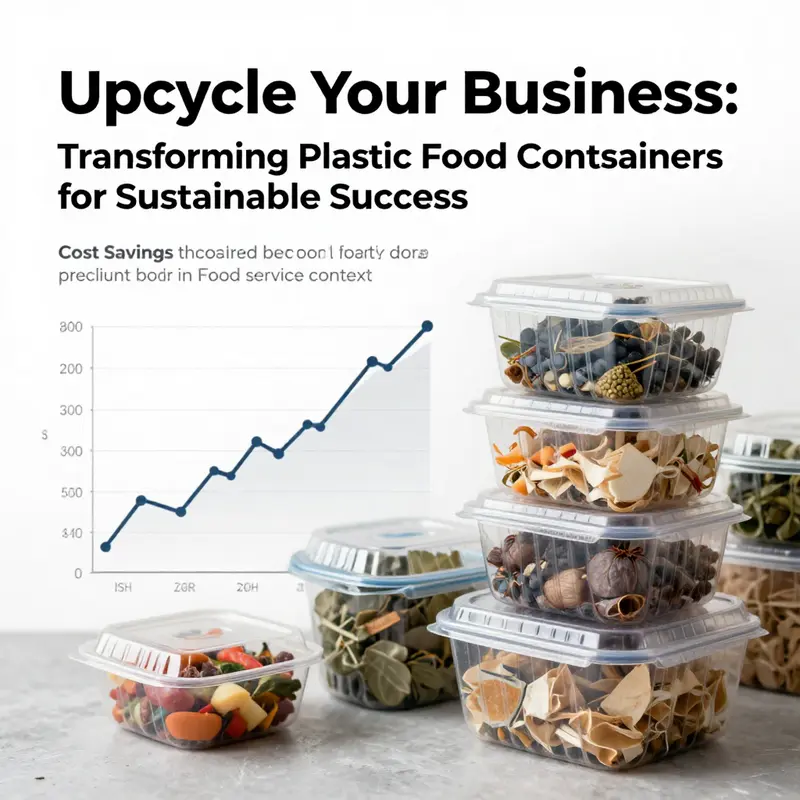
Upcycling plastic food containers transforms a disposal problem into an economic opportunity. When households, food-service businesses, and municipalities shift items from the waste stream into value-adding uses, they cut costs associated with purchasing, waste handling, and raw material supply. This is not merely an environmental gesture; it is a practical resource-management strategy that improves margins, reduces exposure to commodity price swings, and stimulates local economic activity. The financial benefits become clear when you examine the flows most organizations manage daily: procurement, waste disposal, labor, and regulatory compliance.
At the procurement level, upcycling reduces demand for new items. Instead of buying new storage tubs, small planters, or organizers, a business can reconfigure used food containers into durable in-store solutions. For restaurants and catering services, carefully selected and inspected containers can serve as organizational trays, ingredient bins, or packaging for non-food retail items. The cost per unit falls significantly because the baseline expense—obtaining the container—is already sunk. Over time, repurposed containers amortize at a near-zero cost, and when they last multiple seasons, they beat the alternatives on unit cost, even when factoring in minor refurbishment like cleaning, labeling, or heat-stabilizing.
Waste management is another clear area of savings. Disposal and recycling fees are a line-item many organizations underestimate. Municipalities and private collectors charge by volume or weight; therefore, reducing the volume of single-use containers lowers hauling frequency and landfill charges. For businesses producing large quantities of discarded containers, a simple on-site upcycling program can shrink the waste stream and reduce tipping fees. Beyond direct savings, organizations that visibly reduce waste can qualify for grants, tax benefits, or reduced municipal charges tied to diversion rates. Early adopters can benefit from evolving regulatory frameworks that reward reduced landfill input.
Upcycling also insulates organizations against volatile raw material markets. Virgin plastic prices follow crude oil and petrochemical feedstock trends. When fossil fuel prices spike, so does the cost of newly manufactured plastic goods. An upcycling approach substitutes existing polymer stocks for new material. By keeping polymer value in circulation, businesses reduce sensitivity to feedstock price hikes. The financial model shifts from repeated purchases to investments in labor, light processing, and design adaptation. Those investments often have quicker payback periods than repeated procurement of new items.
Beyond direct cost avoidance, upcycling can unlock revenue streams. Small manufacturers and social enterprises can collect, sanitize, and reconfigure containers into higher-value goods—planters, seed-starting kits, modular storage systems, or craft kits. Because upcycling often yields products with a compelling story—locally remade, waste diverted—these goods can command a premium in certain markets. Retailers and online sellers benefit from consumer willingness to pay more for sustainably sourced, upcycled items. When scaled, these ventures create jobs in collection, sorting, cleaning, and finishing. Localized manufacturing retains economic value within communities rather than exporting it to centralized production centers.
Investing in infrastructure for upcycling yields multiplier effects. A collection program requires logistics, quality control, and light manufacturing. Each function needs labor and tools, and often these programs partner with vocational training initiatives or community organizations. The result is a modest but real boost to local employment. Municipalities that support community upcycling hubs reduce the cost of waste management while growing local capacity to produce goods. This creates a resilient loop: community members supply feedstock, local workshops produce items for sale or reuse, and revenues help sustain the program.
Measuring economic benefit requires clear metrics. Track the number of containers diverted, the operating cost of the upcycling program, savings in procurement and disposal, and any revenue from upcycled goods. A simple cost–benefit analysis compares total program cost to avoided purchase and landfill fees plus revenue. When estimating life-cycle impacts, include labor and energy used in cleaning and minor processing. Often, even conservative models demonstrate positive returns within a year for small-scale commercial operations and within a few years for municipal programs that scale.
The circular economy lens offers a helpful framing. Instead of linear use-and-dispose, upcycling preserves materials’ embedded energy and manufacturing cost. Where traditional recycling requires energy-intensive melting and remanufacturing, many upcycling approaches bypass these steps. Creative reuse maintains higher value per unit of material because the container often requires only modest transformation to serve a new function. This higher-value retention translates to better economic outcomes than downcycling or low-value recycling streams.
Risk management is essential for economic durability. Plastics degrade with heat and UV exposure, and some containers are unsafe for direct food reuse after long service. Upcycling programs must implement quality-control checks to ensure safety and performance. Designing non-food end-uses—organizers, seed trays, art supplies—eliminates potential health liability. For organizations that must maintain food-contact standards, consider pairing upcycling with purchasing safer, BPA-free containers to extend safe reuse. Clear labeling and simple refurbishing protocols (cleaning, inspection, replacing lids) protect both users and the program’s economic prospects.
Marketing and branding multiply the economic upside. Businesses that publicize their upcycling practices improve customer perception and can increase loyalty. A clear narrative—explaining how containers were diverted and transformed—adds perceived value. For community programs, local retailers might stock upcycled goods or include them in promotional campaigns, converting environmental activity into sales channels. Public recognition can also spur partnerships with institutions seeking to meet sustainability goals, unlocking new contracts and steady revenue.
Strategic partnerships reduce barriers to entry. Food-service enterprises can partner with civic bodies, waste haulers, or nonprofit workshops to share responsibilities. Retailers may offer collection points in exchange for co-branded upcycled products. Shared logistics reduce per-unit costs, while shared expertise improves product quality. These collaborations lower capital needs for each partner, accelerating program launch and increasing economic efficiency.
While upcycling is economically attractive, it should not be framed as an alternative to reducing overall plastic use. The most sustainable economic model begins with reduction: choosing compostable or reusable alternatives where appropriate. Upcycling performs best as part of a layered strategy—reduce where possible, reuse when safe, upcycle materials that would otherwise be discarded, and recycle when upcycling is impractical. This hierarchy optimizes both financial and environmental outcomes.
For businesses considering implementation, start with a pilot. Identify a steady stream of containers, design simple reuse applications, and measure costs and benefits closely. Keep processes simple: a cleaning station, inspection checklist, basic labeling, and a sales channel or internal deployment plan. Use the pilot to refine labor estimates, product designs, and messaging. Successful pilots often scale naturally because they prove both savings and market interest.
When scaled thoughtfully, upcycling plastic food containers becomes more than waste diversion. It is a pragmatic economic strategy that reduces procurement and disposal costs, builds local capacity, and generates new revenue paths. The key to durability lies in combining clear safety standards, measured financial tracking, and partnerships that distribute costs and expertise. Upcycling does not eliminate the need to reduce single-use plastic production, but it does reclaim value from the materials already in circulation and converts potential waste into tangible economic benefit.
For a deeper look at the economics of reusable food-system components and cost–benefit frameworks relevant to upcycling, see this detailed analysis: https://www.sciencedirect.com/science/article/pii/S0959652623001748
For an alternative to single-use plastic containers, consider exploring biodegradable kraft paper bowl options as part of a broader material-reduction strategy: https://greendispopack.com/product/biodegradable-eco-friendly-take-away-odm-oem-round-kraft-paper-bowl/
Weighing Waste: Environmental Trade-Offs of Upcycling Plastic Food Containers vs. Recycling
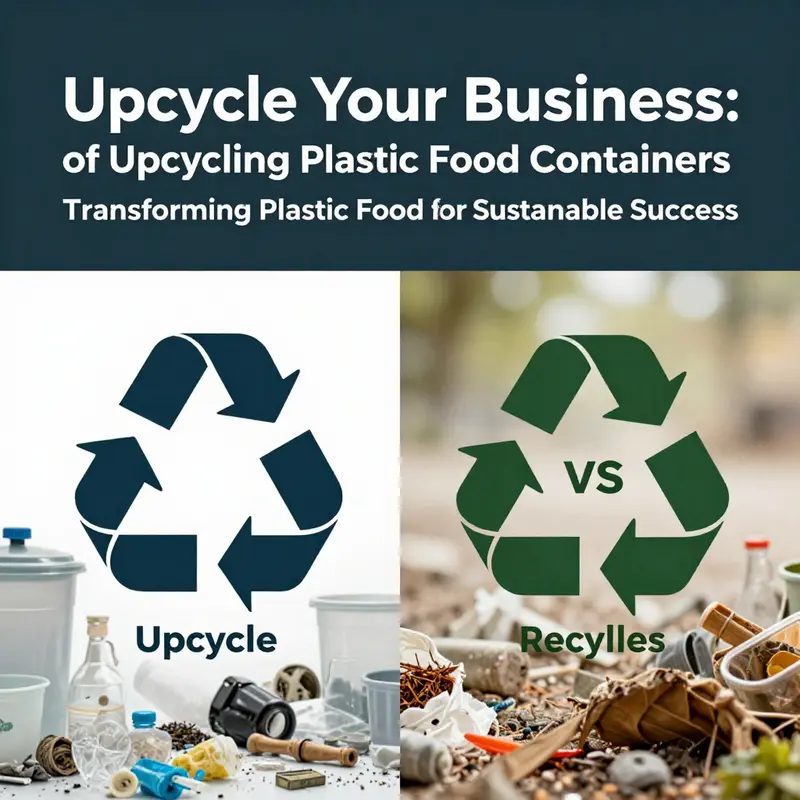
Upcycling plastic food containers offers a tangible, hands-on way to keep plastics out of landfill. It turns single-use items into planters, storage tubs, or craft bases. That immediate extension of useful life feels practical and responsible. Yet the environmental calculus behind upcycling is more complex than it first appears. To make informed choices about what to keep, toss, recycle, or upcycle, it helps to understand the trade-offs in resource use, pollution risk, scalability, and long-term systems change.
At the household level, upcycling has clear strengths. Repurposing delays disposal and reduces the short-term demand for waste collection and processing. Every container reused for storage or decoration is one fewer item needing sorting, transport, or potential incineration. This small-scale conservation also conserves embodied resources: the oil, energy, and water used to manufacture the container in the first place. For people who craft or organize, upcycling is a way to extract more value from an item that would otherwise be a cost to manage.
However, plastic’s chemistry constrains what upcycling can realistically achieve. Most food containers are made from PET (#1) or HDPE (#2), and some are polystyrene or mixed polymers. These materials respond differently to heat, sunlight, and stress. Over time, plastics can degrade, becoming brittle or leaching additives when heated or exposed to UV radiation. That limits safe reuse for food or drink and narrows applications to non-food uses: seed-starting, tool organization, or art projects. If upcycled containers are used beyond their safe lifetime, they can pose health and environmental risks that erase some benefits of reuse.
Beyond material limits, upcycling faces a scalability problem. It works well when engaged individuals repurpose items creatively. But the vast volume of single-use plastic generated globally overwhelms what households and small makers can manage. Upcycling is inherently manual and heterogeneous: each repurposed object may require different cleaning, cutting, or reinforcement steps. That labor intensity means upcycling will never replace industrial waste management at scale. In other words, upcycling is a meaningful complement to, not a substitute for, systemic solutions.
Contrast this with recycling, which aims to recover material at scale. When collected, sorted, cleaned, and reprocessed properly, recycled plastics can displace virgin material. That displacing reduces the need for fossil feedstocks and lowers greenhouse gas emissions associated with producing new plastic. Recycling systems also centralize processing, which can capture large volumes that individuals cannot upcycle.
Recycling is not without its own limits. Contamination—food residue, mixed polymers, or non-recyclable labels—can render entire batches of collected material unusable. The economics of recycling are also fragile. Reprocessing plastics consumes energy and often requires downcycling: turning a bottle into lower-grade flakes that are less likely to be recycled again. Mechanical recycling degrades polymer chains, so many plastics can only be recycled a limited number of times. These technical and economic constraints contribute to low overall recycling rates. Recent assessments indicate a very small fraction of all plastic ever produced has been recycled into equivalent materials, underscoring systemic bottlenecks.
When deciding whether to upcycle or recycle, consider the lifecycle impact of each choice. Upcycling postpones disposal and avoids immediate processing emissions. It can be highly efficient when a container is turned into a high-value, long-lived object—say, a durable storage solution that reduces purchases of new plastic bins. Recycling, by contrast, enables material recovery at scale and can feed industrial loops that reduce virgin production. The environmental winner depends on the subsequent use: a one-time craft project that soon ends in landfill provides less benefit than recycling that yields durable secondary material. Conversely, converting a container into a reusable storage solution that remains in service for years can deliver greater environmental returns than low-quality recycling.
Quality and safety also matter. Upcycled plastics should be evaluated for health risks, especially if used near food or children. Heat, sunlight, and wear increase the risk of additive migration. Choosing BPA-free containers and steering clear of warped or damaged plastics reduces risk, but does not eliminate it. For many households, a practical rule is to limit upcycled plastics to non-food storage, indoor gardening, and workshops. That minimizes exposure and preserves the material’s value without creating additional health hazards.
A broader perspective points to the most effective environmental strategy: reducing plastic production and shifting to reusable, durable materials. Research comparing material footprints shows that durable reusables—glass, stainless steel, or well-designed multi-use systems—often outperform single-use plastics when used sufficiently. That finding highlights a hierarchy of waste prevention: avoid, reduce, reuse, recycle, and then recover. Upcycling fits within the ‘reuse’ rung and has an important role, but it does not replace the primary need to reduce reliance on single-use items.
Practical guidance flows from this hierarchy. First, minimize generation by choosing reusable containers from the start. Second, when single-use plastic containers do enter your home, prioritize those that are clean, undamaged, and made from identifiable, widely recyclable materials if you intend to recycle. Third, use upcycling for applications where the container’s limitations are acceptable: storage that never sees heat, planters for indoor seedlings, or art that keeps the piece in use for years. Fourth, if a container is no longer usable, recycle it through local programs when possible and appropriate. Finally, engage with community solutions: sharing, repairing, or bulk-buying can reduce the number of single-use containers entering the stream.
There is also room for creative blends of upcycling and recycling. For example, community programs can collect clean, intact containers and channel them into maker spaces that transform them into durable goods. That approach brings some scale to upcycling by consolidating labor and creating higher-value outputs. Municipal or business partnerships that prioritize clean collection, simple designs for disassembly, and education can help shift materials from low-value waste to usable feedstocks—either through local upcycling projects or more efficient recycling streams.
In practice, making better choices means being strategic about which containers to keep and which to pass to recycling. Favor containers that are structurally sound and made from single polymers. Keep them for uses that match their safety profiles. Recycle those that are heavily contaminated, damaged, or composed of mixed materials that will not perform well in long-term applications. When uncertain, check local recycling guidelines or consult authoritative resources to understand what your local system accepts and how it processes plastic waste.
Upcycling brings immediate, visible benefits at the household level and reinforces an ethic of resourcefulness. Recycling offers systemic recovery potential but is hindered by technical and economic realities. The optimal path integrates both: reduce consumption, reuse and upcycle thoughtfully, and recycle what cannot be repurposed. That integrated approach reduces environmental impact more effectively than relying solely on one tactic.
For readers seeking practical ways to replace single-use plastic containers, consider alternatives from compostable or recyclable paper-based food packaging that perform the same job without persistent plastic waste—options include sturdy paper bowls and food packaging designed for reuse or recycling. One relevant example of a recyclable paper option is the disposable kraft paper bowl for food package with lid, which balances convenience with improved end-of-life performance. For data and policy context about national recycling rates and plastic waste management, consult the U.S. Environmental Protection Agency’s overview of plastic waste and recycling (https://www.epa.gov/facts-and-figures-about-materials-waste-and-recycling/plastic-waste).
Final thoughts
Implementing effective upcycling practices for plastic food containers is not just a sustainable choice; it can also foster creativity and resource efficiency within your business. By embracing this approach, food service businesses—from restaurants and food trucks to catering companies—can significantly reduce waste, enhance operational cost efficiency, and positively contribute to environmental health. Prioritizing health and safety while exploring innovative use cases further allows teams to create organizational solutions that are both functional and environmentally friendly. Making upcycling a part of your operation can transform the way your business interacts with materials, encouraging a cycle of sustainability that supports both your bottom line and the planet.