
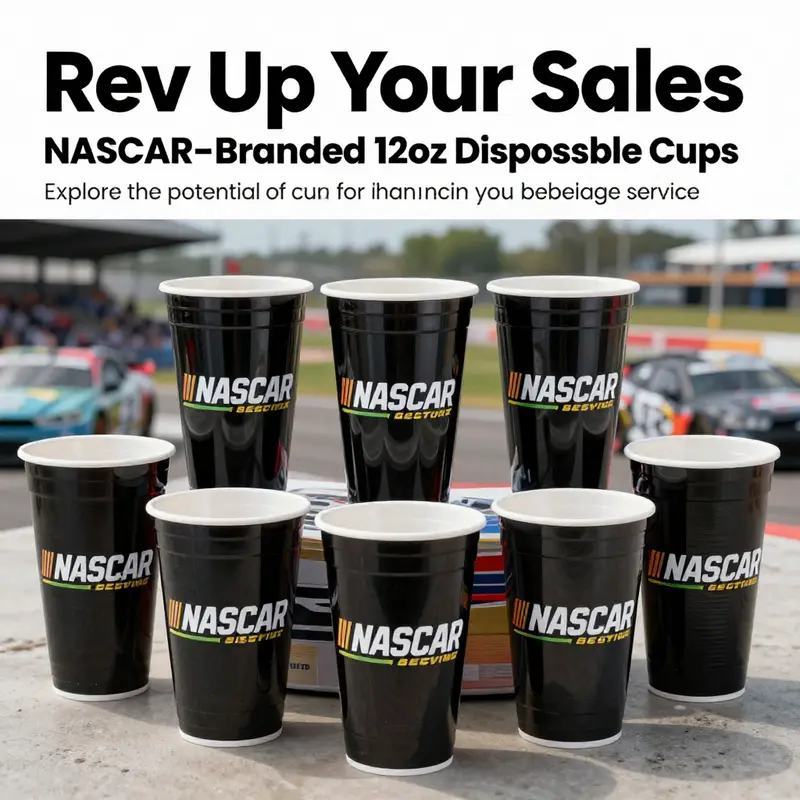
12oz disposable plastic cups featuring the iconic NASCAR logo are more than just a drinkware solution; they are a unique branding opportunity that taps into a passionate fanbase. In the competitive landscape of beverage retail, from bubble tea shops to food trucks, these cups can elevate your service and connect with customers on an emotional level. This article delves into the current marketplace for these products, their branding impact, production materials and manufacturing processes, economic implications, and the demographics of the consumers who cherish them. Each chapter will help you grasp the integral facets of integrating NASCAR logo cups into your offering, setting the stage for increased engagement and sales.
Racing Logos on 12oz Cups: A Cohesive Look at Marketplaces, Branding Power, and Fan Engagement
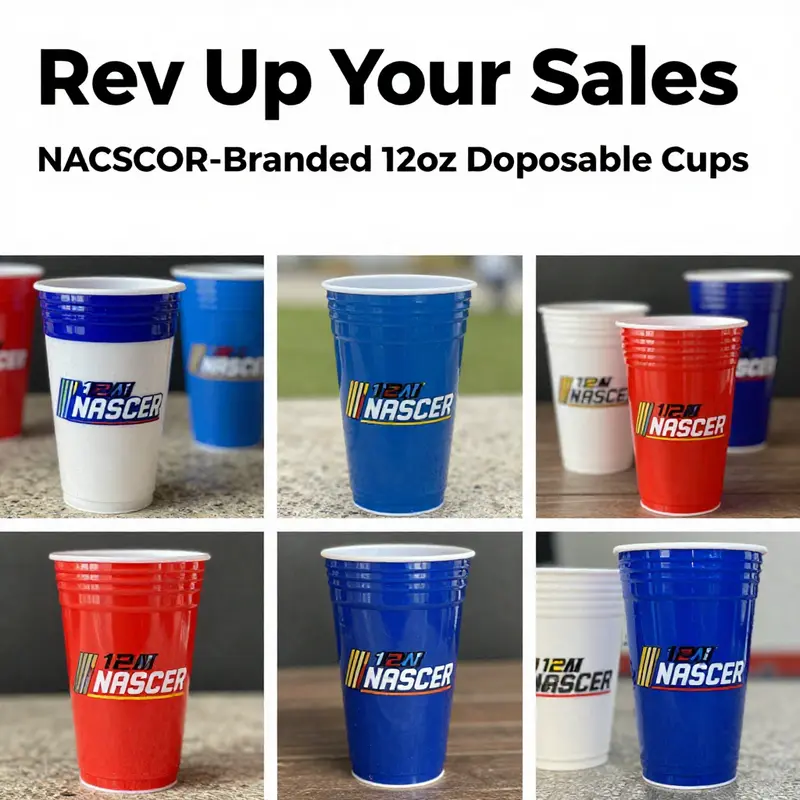
Cupware has always walked the line between utility and spectacle, and 12-ounce disposable cups bearing racing logos exemplify how branding can turn a simple daily ritual into a mobile billboard and a collectible keepsake. In marketplaces around the world, these cups are not just vessels for beverages; they are part of a broader strategy that blends event marketing, fan engagement, and scalable manufacturing. The dynamic is straightforward at first glance: a compact cup, a familiar serving size, and a logo that sparks recognition long after the drink is gone. Yet the reality behind these branded cups is a carefully choreographed ecosystem where design cues, safety standards, and distribution logistics come together to deliver a product that serves both hosts and fans in mutually reinforcing ways. What emerges is a narrative of promotional potential that stretches beyond the moment of a single race or event and into the ongoing relationship between a sport’s culture and the everyday experiences of its supporters.
The marketplaces that host these offerings function as the connective tissue of this ecosystem. They provide the surface where brands and organizers imagine scale. A typical listing promises a combination of promotional utility and collectible appeal. The cups are described as food-safe, BPA-free plastics, crafted for single-use convenience, and suitable for large-scale events where speed, cost, and branding must converge. The market leans heavily on bulk production, with minimum order quantities commonly pushing into the thousands. The appeal here is not only the price per unit but the ability to tailor the product to a particular event, city, or campaign. In many cases, suppliers highlight a spectrum of customization options—from logos and color palettes to finishes and even shape variations—so the same basic item can be repurposed for different races, different campaigns, or different fan zones. The driving force is the opportunity to create a tangible memory for fans, a keepsake that fits into a broader merchandising and hospitality strategy.
Pricing structures in this segment reveal a balance between accessibility for large organizers and the economics of mass production. Descriptions often emphasize price points starting from modest per-unit costs, with the obvious caveat of volume. The economics are straightforward: the lower the unit cost, the more feasible it is to extend branding across a larger portion of the racetrack footprint—concession stands, fan zones, souvenir shops, and even competitor areas. The practical implication is that teams and event organizers can deploy branded cups across multiple touchpoints, maximizing every sip as a touchpoint with the branding narrative. Beyond the price, buyers look for assurances of reliability and safety. Suppliers frequently highlight certifications that signal food safety compliance—ISO, HACCP, and sometimes BRC—alongside claims of BPA-free construction. These credentials become a part of the purchasing calculus, especially for organizers who must demonstrate due diligence to public health officials and partners, while also meeting consumer expectations for safer, cleaner products.
The design language of these cups is revealing. The logo dominates, but the surrounding design cues matter just as much. Popular motifs include bold color schemes, high-contrast branding, and classic racing motifs such as checkered patterns that cue celebration and victory. The aesthetic work is not only about catching the eye; it is about legibility and recall at speed. A concession line in a bustling venue is rarely the place for intricate detail, so the most effective designs favor strong silhouettes, high visibility under warm lighting, and a color hierarchy that makes branding legible from a distance. Finishes—ranging from matte to glossy, and sometimes more premium touches like metallic or gradient effects—convert a purely functional item into a branded artifact. The result is a disposable cup that carries the energy of a racing environment into the hands of fans who may savor it as a souvenir later, or display it briefly on a shelf as a tiny, portable emblem of a beloved moment.
However, this merchandising edge sits in tension with evolving expectations around sustainability and waste. The sheer volume of disposable drinkware used at large-scale events raises questions about environmental impact. Market participants respond with a mix of strategies: some emphasize the disposability of the cup as a practical feature for high-volume service, while others propose more sustainable pathways, including recyclable materials and compostable formats. The discourse reflects broader consumer and regulatory trends toward responsible waste management, making sustainability a legitimate line item in the cost and design equation. In practice, buyers weigh the branding benefits against the environmental footprint, sometimes opting for branded cups that can be recycled in concert with trackside recycling streams or, increasingly, for hybrid approaches that blend branding impact with sustainable material choices. The conversation around sustainability also shapes supplier messaging, as producers showcase certifications and partnerships that align with hospitality standards and food-service best practices. The tall order for manufacturers is to deliver a product that remains visually compelling and logistically straightforward while reconciling branding ambitions with environmental responsibilities.
Brand strategy in this space also hinges on the logistical realities of large-scale events and the broader fan ecosystem. The cups function as portable marketing, but they are also an extension of venue experience. In practical terms, event marketers use these cups to maintain a cohesive brand presence across venues, from concession stands to merchandise kiosks and sponsor corners. And in the hands of fans, the cups travel beyond the stadium, turning into collectible mementos that fans share through photos and social stories, reinforcing the brand narrative outside the in-person experience. This dual utility—serving beverages while amplifying the brand—explains why the category has attracted a steady stream of suppliers and buyers looking to tap into the recurring demand that accompanies major racing cycles and associated fan events. The market’s vibrancy also reflects a broader consumer appetite for themed, disposable drinkware that blends entertainment with practicality. The trend shows that branded cups can be more than a service accessory; they can be a consistent feature of a fan’s interaction with the sport’s culture.
From a supply-chain perspective, the category benefits from the global reach of plastic manufacturing and the efficiency of bulk production. East Asian manufacturing hubs, with their established plastic-processing capabilities, appear frequently in supplier catalogs, offering economies of scale that are essential for event planners who must stock tens of thousands of cups for a single event. Buyers often leverage the breadth of options available to secure a balance between price, lead time, and customization flexibility. This includes negotiating with suppliers on minimum order quantities, production timelines, and the exact specifications of the plastic compound to guarantee food safety and performance during service. The emphasis on BPA-free plastics is common, reflecting a broader consumer preference for safer materials in everyday consumables. The packaging and logistics are choreographed to ensure that the cups arrive in time for setup, run smoothly through the service lines, and still look crisp when fans pocket or photograph them for posts and memorabilia.
Customization is the true engine of value in this market. The ability to tailor a single cup to a particular event, city, or sponsor can multiply the perceived value of the cup. Buyers may request unique colorways that align with a campaign’s palette, or specific finishes to elevate the perceived quality of the souvenir. The capacity for color branding and logo fidelity matters here because it directly influences brand recognition and the likelihood of resale or reuse as a keepsake. The options extend beyond the logo to include choices in tone, texture, and even the presence of finishing touches like metallic rims or gradient hues. In turn, this flexibility invites buyers to treat the cup as part of a multi-channel branding initiative, coordinating with other branded items—like signage, coasters, and merch—to craft a holistic memory-based engagement. Yet these customization possibilities come with tangible production considerations: longer lead times, higher unit costs, and the need for precise color matching under event lighting. The practical mathematics of design versus cost drives a lot of conversations in procurement rooms, especially for events that rely on a consistent, high-visibility branding program.
The broader takeaway from these market dynamics is that 12oz disposable cups with racing logos sit at the intersection of fast-moving consumer culture and high-stakes event marketing. They embody an approach to drinkware that treats the cup as a vehicle for branding, a source of fan joy, and a logistical piece of event infrastructure. The materials, safety certifications, production capacity, and design language all play necessary roles in delivering a product that satisfies both operational needs and fan expectations. In this sense, the cups become a microcosm of how modern sports marketing negotiates speed, scale, and sentiment. They show how a simple object can travel from the production line to the hands of fans, carrying with it a compact story about a sport’s identity and its ability to mobilize supporters through everyday moments of consumption.
For readers curious about adjacent categories and how branded drinkware fits into a broader packaging strategy, consider this related page on disposable single-wall cups with lids. It showcases how a similar product class can be harnessed for branding while accommodating practical needs of takeaway service: disposable single-wall paper cup 12oz-16oz with lid. This example illustrates how the same branding principles translate across materials and formats, reinforcing the idea that the celebrity of a logo travels as far as the cup itself can carry it.
External resources provide the larger context for these market dynamics, including a broad overview of the customization options and safety standards that buyers and suppliers rely on. For a deeper dive into the sourcing and certification landscape that underpins these products, see the bulk listings and specification sheets linked on major supplier platforms. External resource: https://www.alibaba.com/wholesale/12oz-coffee-cup-lid_29.html
Fuel, Foam, and Fan Frenzy: The Branding Power of 12oz Disposable Cups in Motorsports
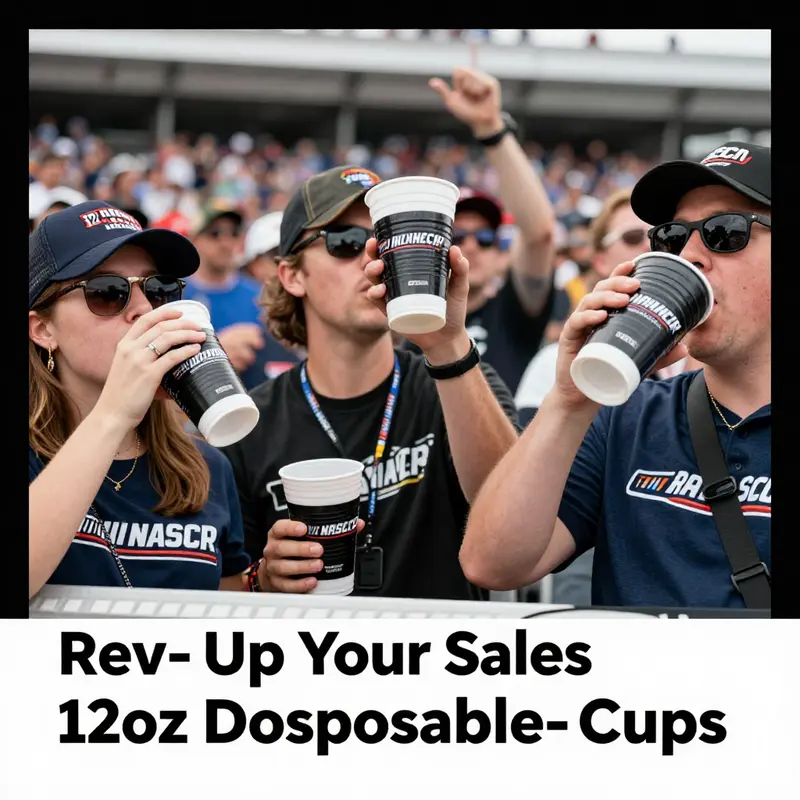
In the hush before the roar, a disposable cup becomes more than a beverage container. It is a small stage where branding, memory, and the live energy of a race meet. The 12-ounce cup, a standard size on track concourses, travels from vendor to fan with a logo that does more than advertise. It timestamps a moment: the color of the sleeve, the shape of the cup, the way the logo curves around the straw lid. That simple object carries the feel of hot asphalt, the hiss of a cold drink, and the collective breath of a crowd that has gathered to witness speed. The relationship between beverages and racing has grown into a durable marketing ecosystem, one built not only on the thrill of competition but on the ritual of sharing a drink.
The historical arc that shapes this ritual begins with the broad partnership between a major beverage sponsor and the sport’s premier racing platform. The sponsor’s long-running use of a racing-flavored branding approach turned the idea of a “racing family” into a tangible, recognizable identity fans could carry home. The cups became artifacts within this marketing machinery: not mere containers, but portable billboards that fans could hold during the event and later keep as keepsakes. Even without naming specific brands in every instance, it is clear that this approach succeeded because it merged two powerful sources of loyalty—beverage branding and race-fan culture—into a single, repeatable moment: the receipt of a cold drink in a cup that bears the sport’s mark. The cup’s journey mirrors the arc of sponsorship itself: it travels from the concession stand to a fan’s kitchen shelf, carrying a fragment of the event into everyday life.
Promotional use at the track is where the cup reveals its true utility. It functions as a micro-event in itself. Vendors distribute it during key moments—perhaps as part of a fan appreciation day, perhaps as a limited-edition run tied to a specific weekend. In each case, the cup acts as a bridge: it links the sensory experience of the beverage with the emotional memory of seeing a team color sprint past the grandstands. Design work is where the cup’s impact often lies. A bold red-and-white palette, a script-style branding treatment, and the official marks around the surface combine in a compact canvas that signals affiliation with the sport, the team, and the sponsor. These elements are not random; they are carefully chosen to stay legible from a distance, readable in photos, and easy to recall in future moments of nostalgia. The 12-ounce size matters here too. It is large enough to feel substantial when held on a crowded concourse, yet small enough to be managed with one hand while scanning a schedule or catching a moment on the big screen.
The collectibility of these cups adds a layer of cultural texture to the story. Vintage examples from the 1990s, in particular, have found a second life beyond the stadium shelves. Collectors seek them in online marketplaces that preserve condition details and provenance, sometimes discovering a cup that traveled through a season-long narrative or a specific race weekend. The value lies not just in the branding but in the memory ecology that surrounds the item: a cup that accompanied a fan through a rainy afternoon, a sold-out sprint, or a gathering of friends who stayed until the final lap. The market for these cups reflects a broader interest in memorabilia that captures a moment when sports branding and consumer goods intersected in a way that felt both accessible and aspirational. The same forces are still at work today, though the surface we encounter has shifted. Modern promotional cups continue to appear with custom logos, corporate partnerships, and event-specific designs, while the conversation around material choices evolves toward sustainability and reusability. The cup remains a reliable vessel for collecting moments, while the branding around it evolves with changing consumer expectations about waste, recyclability, and responsible production.
From a design perspective, the cup is a small, highly legible billboard. The color choices, typography, and logo treatment are tuned for instant recognition. In a stadium or on a couch, a two-second glance should convey affiliation, energy, and a sense of belonging to a wider community of fans. The branding on these cups often includes not only a corporate emblem but also the racing property’s own marks—an alignment that signals authenticity and endorsement. The 12-ounce cup’s geometry supports a straightforward printing strategy: a clean cylindrical surface that can accommodate a bold central motif and a secondary graphic around the rim or the base. This kind of packaging is less about novelty and more about reliability. It’s a familiar, comfortable object that fans recognize as part of the race-day ritual—an artifact that travels from hot concession stand to cool-down corners, from car-park to memory.
Another layer of meaning emerges when considering the shift toward eco-conscious materials and production methods. The broader market’s response to environmental concerns has pushed brands to explore polypropylene, biodegradable options, and other recyclable fibers for single-use drinkware. In the context of race-weekend promotions, this tension between branding impact and sustainability creates a challenging but fertile ground. Brands that want to maintain immediacy and collectibility must negotiate durability, readability, and lifecycle considerations. For some campaigns, this has meant adopting upgrade options—co-branded, paper-based cups that still project the race-ready energy but in a format that feels gentler to the environment. The conversation around cups is, in this sense, a mirror of the larger conversation around sports marketing: how to preserve fan immersion while reducing the environmental footprint of live events. The gradual adoption of recyclable and compostable materials signals a broader shift in expectations from fans who want to participate in experiences that feel responsible and forward-thinking while remaining vivid and memorable.
The narrative of these cups also intersects with the broader culture of collecting and sharing. Fans photograph cups at signature moments—the moment of a victory, the moment of a comeback, the moment of a last-lap pass. They post images to social feeds, tag the sponsors, and scatter the cups among friends as keepsakes of an experience that blends speed with sociability. In this sense, a 12-ounce disposable cup becomes a micro-memorial, a tangible reminder that a fleeting, high-energy sport can leave behind durable objects capable of speaking across years. The enduring appeal lies in the feeling of being part of something bigger than a single race—the sense that your cup carries you, your seat, and your memory into tomorrow.
For teams and organizers, the cup is more than memento; it’s a strategic touchpoint. Its production runs concurrent with the event calendar, its distribution aligns with concession patterns, and its design aspirations are mapped to the audience’s demographics. The cup’s reach extends beyond the stadium, into kitchens, offices, and social spaces, where fans continue the conversation about the race long after the last engine note fades. When a brand commissions a cup with a bespoke logo, it also commissions a moment of recognition. The object prompts a conversation about loyalty, identity, and shared experience—an especially potent mix when the audience is young, digitally connected, and highly attuned to branding cues. The 12-ounce format, by virtue of its ubiquity, becomes a common language across fans who may come from different regions, languages, and backgrounds, yet share in the ritual of taking a drink while watching a race.
In the end, the popularity of 12-ounce disposable cups with integrated racing branding reveals a deeper truth about contemporary sports marketing. It is less about a single emblem and more about a ritualized, portable brand experience. The cup travels with the fan, circulates in the stadium economy, and even travels across generations as a piece of cultural memory. It stands at the intersection of utility and sentiment, where a practical item becomes a vessel for belonging. And as the industry continues to test new materials, designs, and digital touchpoints, that simple cup remains a reliable conduit for engagement—proof that the smallest object can carry proportionally large meaning in the story of modern racing culture.
For readers who want to explore continuing developments in the world of disposable items with logo-driven branding, a related example of eco-conscious, logo-forward beverage ware can be found here: disposable-custom-logo-kraft-coffee-cup-with-lid. This link provides a contemporary contrast to the vintage memory described above, showing how the same forces of branding, fan connection, and practical use adapt when materials and design priorities shift.
External resource: For a broader sense of memorabilia and the collecting context around beverage-sponsor branding in racing, see the Sports Collectors Digest guide on racing sponsor memorabilia. https://www.sportscollectorsdigest.com/coca-cola-racing-family-memorabilia/
Racing Graphics on a Practical Canvas: Materials, Manufacturing, and Branding of 12 oz Logo Cups
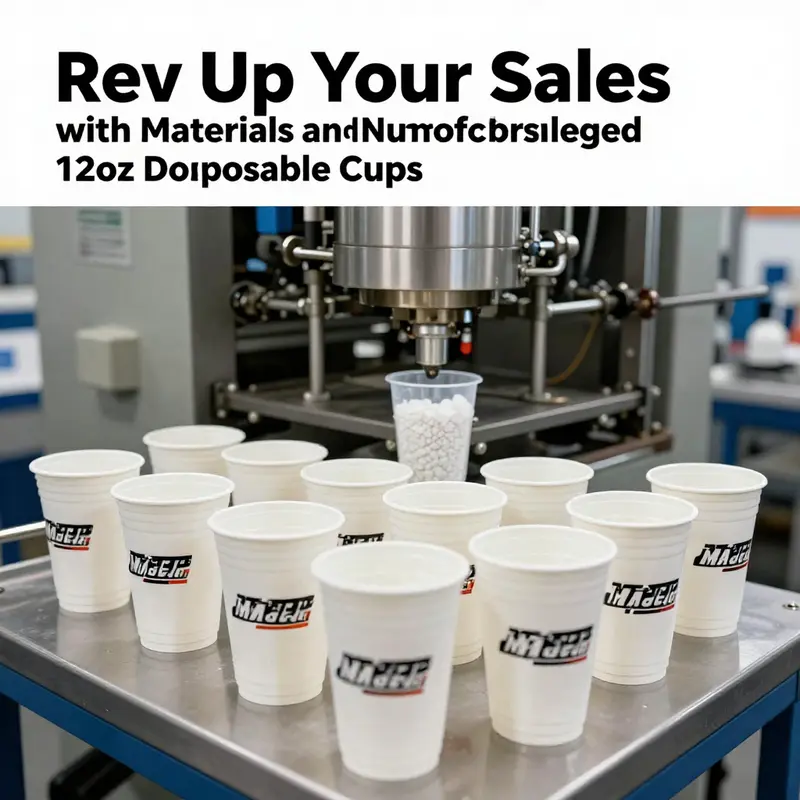
A 12 oz disposable plastic cup bearing a racing branding is more than a container. It sits at the intersection of material science, production engineering, and consumer psychology. The cup must perform under field conditions—from a crowded concourse to a casual workstation—while delivering a logo that communicates speed, heritage, and energy in a tiny, curved canvas. Understanding how this single-use object comes to life reveals a balanced triad: the polymer that forms the cup, the manufacturing method that shapes it, and the branding technique that renders a logo legible, durable, and marketable through a thousand hands. The result is a convergence of form and function where speed is in the design as much as in the product name itself, even if the public never pauses to name the engineering behind it. In this space, the 12 oz cup becomes a portable billboard, a practical vessel, and a fleeting piece of sports culture rolled into one pocketable object. The science behind it starts with material choice, moves through the precision of shaping, and culminates in branding that endures through handling, moisture, and everyday abrasion.
The dominant material for these cups is polypropylene, a versatile thermoplastic known for its light weight and toughness. Polypropylene brings a rare combination of stiffness and flexibility, which is essential when walls must be thin enough to save material cost but sturdy enough to resist deformation when gripped, stacked, or knocked against a tray. This polymer handles beverages that range from ice water and soda to hotter refreshments, thanks to its heat resistance and chemical stability. The surface can be glossy or slightly opaque, and it accepts inks and coatings without easily delaminating. From a sustainability perspective, polypropylene is widely recyclable, but the actual end-of-life fate of a single 12 oz cup depends on local recycling stream capabilities and the presence of inks or labels that might complicate processing. These considerations influence not only the design but also the branding choice, because a logo that looks sharp in a display bin at a merchandise stand might fade or peel after a few cycles of condensation and handling if the ink system is not chosen with care.
In practice, the cup’s journey from raw resin to finished product unfolds through two main family of manufacturing techniques: injection molding and blow molding. Injection molding is prized for precision and control. Molten polypropylene is injected into a mold that defines the cup’s overall geometry, including the rim, wall thickness, and the interior bottom texture that helps with grip and spill resistance. This method excels when the company needs tight tolerances and repeatable wall thickness, ensuring that a 12 oz cup feels consistent in the hand and stacks securely for transport and display. The process is efficient in high-volume runs, and its accuracy supports high-fidelity branding, where fine lines and sharp color edges must align across thousands of units. Blow molding, on the other hand, is a robust approach for creating hollow cups in larger quantities when the geometry favors a seamless, continuous surface and lighter wall structures. In this technique, a preform is shaped and then blown into a hollow form within a mold. The result is a lightweight cup with smooth curves that can reduce material usage while maintaining stiffness in the vertical direction. Each method has its own cost curve, throughput profile, and implications for downstream branding methods. The choice between injection and blow molding, or a combination of both, is driven by production scale, the desired wall thickness, and the specific features of the final design.
Branding on a 12 oz cup is where art and engineering meet practical constraints. Logos and graphics are applied through several techniques, each with its own durability, color fidelity, and cost profile. Screen printing has long been a staple for curved surfaces. It can render multi-color designs and metallic accents with reliable adhesion, yet the curvature of a cup can pose alignment challenges. The screens must be matched to the cup’s shape, and multiple passes may be needed for a full color range. Label application offers versatility. A pre-printed decal can carry a vibrant artwork without the need for extensive on-cup printing, which can reduce the risk of misregistration. Labels can be changed quickly between events or seasons, allowing a vendor to refresh the branding without retooling molds. Direct mold imprinting is the most integrated approach, embedding the logo into the mold so that the graphic is a permanent part of the cup surface. This route offers extraordinary durability, resisting wear from repeated handling and condensation, but it requires a mold that can accommodate multi-color logos or metallic effects through additional processes like multi-shot molds or in-mold labeling. The choice among these methods depends on a balance of durability, color depth, and cost, especially in settings where the logo must survive the rough-and-tumble of event logistics, including stacking, boxing, and reuse across different venues.
Beyond the printing technique, the graphic design itself must account for the consumer journey. A racing branding typically emphasizes motion, momentum, and team identity. The design must remain legible as the cup leaves a line at a concession stand, travels through a crowd, and ends up in a bag with condensation beads forming on the surface. Ink adhesion to polypropylene is robust but not unlimited; inks must withstand moisture, cold temperatures from chilled beverages, and occasional touches by gloved hands or sleeves. The color palette should be chosen with pop in mind but with longevity in mind too. Dark cores paired with lighter highlights can maintain readability under fluorescent lighting and in outdoor daylight. The brand narrative conveyed by the logo—speed, teamwork, and competition—carries into the packaging strategy. A well-executed logo on a durable surface can become a recognizable signal during a game day, reinforcing a moment of connection between fans, vendors, and the sport itself. To illustrate the practical side of branding on such a cup, consider the broader category of disposable cups with logos and how a single design choice can ripple through production—altering ink formulation, curing times, and even the choice of protective overcoats or laminate layers that shield the print during handling and washing.
It is also important to recognize how branding intersects with safety and recyclability. Food contact compliance is non-negotiable; inks and coatings must meet regulatory standards for migration limits to the beverage. The choice of adhesive labels or direct imprint techniques should be compatible with the polypropylene substrate and should resist removal during typical use. A robust design considers not only the moment of purchase but the post-use environment, particularly when the cup enters recycling streams. Labels and inks can introduce contaminants that complicate processing, so many manufacturers optimize for clean separation of print from the resin or use printing systems designed for easy integration with recycling infrastructure. The end-of-life story of a branded 12 oz cup is therefore not just about how it looks on the shelf but how it enters and leaves the waste equation. In this context, the branding strategy should align with broader sustainability goals while preserving the visual impact that fans associate with high-energy moments on race day.
The consumer experience is the final, most visible link in the chain. A logo that reads clearly at the moment of purchase becomes a memory cue that travels home with the buyer. The same cup may end up in a carry bag, on a desk, or at a tailgate, where condensation and handheld heat tests try the ink and surface finish. The greater the confidence in the branding method, the more resilient the visual identity becomes. This resilience matters because the cup is a moving screen, a micro-billboard in the hands of thousands of fans, spectators, and service staff. The material choice, the molding technique, and the branding method all converge to determine how well the cup performs in real-world conditions and how effectively the logo endures across environments, temperatures, and repeated use in circulation. To connect this discussion to a tangible example of branding versatility, a related resource demonstrates how logos can be applied to disposable cups with lids, offering a practical glimpse into customization options that go beyond a single sport or event; see this reference for a deeper look at logo integration on disposable cups with a lid: disposable custom-logo paper cup with lid.
From a workflow perspective, suppliers must balance throughput, quality control, and the branding workflow. The production line must accommodate different print runs, varying logo scales, and occasional color changes without sacrificing cycle times. Drying, curing, and post-press handling require careful timing to ensure that every cup meets color accuracy and durability targets before it moves to the pack-out area. The result is a highly optimized sequence where the material, the mold, and the branding scheme are synchronized to deliver a consistent product at scale. This integration is not just about making a single cup; it is about creating a repeatable system that can support a brand’s presence in venues of different sizes, climates, and crowd dynamics. The 12 oz size is especially strategic because it is a widely used standard across beverage channels, so the volume, price point, and branding impact must align across multiple distribution channels. The engineering teams that design these cups work closely with branding teams to ensure that the identity is legible, iconic, and durable enough to withstand the life cycle of the cup—from the moment it is filled and handed to a customer to the final moment when it is recycled or discarded.
For readers who want to explore related packaging categories while staying mindful of the realities of printed branding on single-use items, a related source on packaging materials provides broader context on performance, safety, and end-of-life considerations. In the broader conversation about plastics in disposable cups, the Plastics Industry Association offers a detailed overview of materials and manufacturing practices that underpin these products. This external reference can serve as a gateway to understanding standards, quality control, and the evolving landscape of recyclable plastics in consumer packaging: https://www.plasticsindustry.org/.
Branded in a Disposable Moment: The Economic Web of 12oz Cups in Motorsport
When a 12-ounce disposable cup carries a premier motorsport emblem, it becomes more than a vessel. It acts as a portable billboard that links production, licensing, and fan experience. The economics hinge on raw materials, manufacturing efficiency, and the value added by licensing royalties that flow from league to supplier, team, and venue. The result is a layered cost structure where base materials meet royalty streams, pushing per cup value and enabling higher spend per visitor. The cup thus helps monetize attention and sustains event budgets while navigating environmental scrutiny.\n\nRetail and concession environments show how branded cups influence perception and willingness to pay. A cup bearing a league emblem, paired with a sponsor or beverage brand, can elevate value perception and support premium pricing. This dynamic often improves margins and drives higher average orders during race weekends. Fans may also collect or reuse cups, extending the brand experience beyond the concession counter and fueling social sharing.\n\nThe licensing gallery behind the cup reinforces brand stewardship. Each cup becomes a touchpoint for consistent logo usage, quality, and fan trust. For leagues, this means broader visibility, more frequent attendance, and stronger merchandise ecosystems that feed back into venues and teams. In this loop, stronger branding and fan engagement help attract investment in facilities, fan zones, and sustainability programs that align with broader industry goals.\n\nAs the sector evolves, sustainability pressures shape new business models. Reusable or recyclable cup programs, alternative materials, and better packaging reduce waste while preserving the branding impact. The eco dimension does not merely impose costs; it spurs innovation that can sustain revenue streams and enhance the fan experience. The practical takeaway is that logo branded cups remain a strategic node where licensing, consumer behavior, and sustainability intersect, with the next chapters exploring how these forces reshape merchandising and event economics.
Racing the Demographics: Who Buys 12oz NASCAR-Logo Disposable Cups and Why They Matter
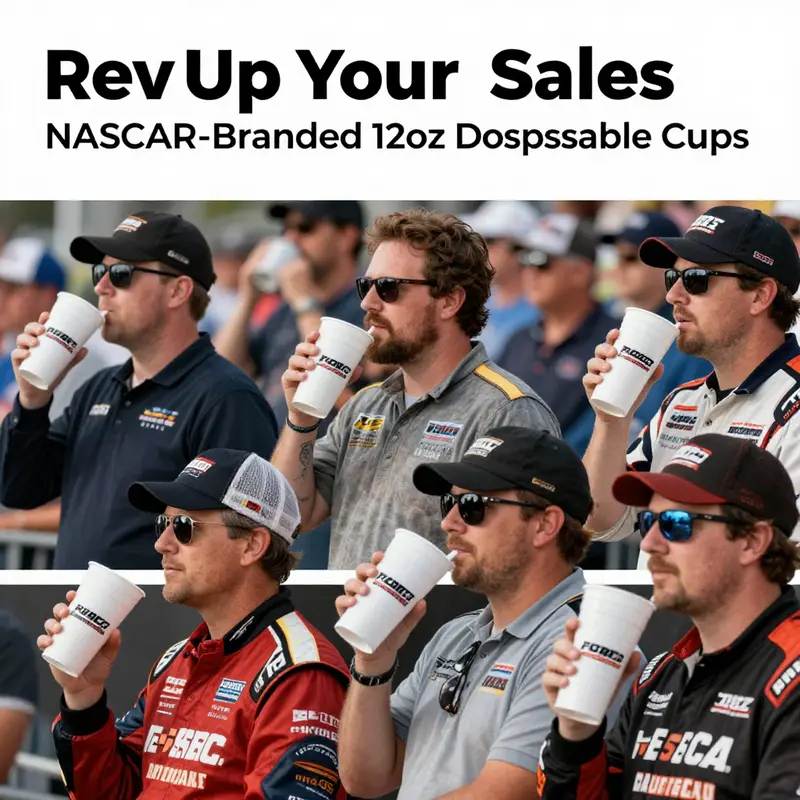
A 12-ounce disposable plastic cup branded with a NASCAR motif sits at an unusual crossroads. It is at once a practical vessel and a portable billboard, a piece of packaging that travels from concession line to tailgate and back into a recycling stream with a fleeting afterlife. The chapter that follows treats this object not as a single product, but as a lens on fan communities, event economics, and the subtle art of turning fleeting moments into lasting impressions. It is a lens that looks at who buys such cups, how they are used, and what their brief lives reveal about the broader landscape of sports-branded disposable goods. In the absence of precise demographic studies focused solely on NASCAR-logo disposable cups, we can still trace a coherent narrative by weaving together assumptions about sports merchandise audiences, behavior at mass events, and the practical constraints of licensing-driven product design. The result is a nuanced portrait of the cup’s audience, the setting in which it circulates, and the considerations that shape its form and function on race days and beyond. First, consider the setting. A 12-ounce cup is a natural fit for standard beverage servings at stadium concessions, fan zones, and sponsor kiosks. It balances portability with capacity, allowing a fan to carry a cooling beverage through a long, often crowded weekend of racing activities. The NASCAR branding on the cup functions as a social cue, signaling belonging to a particular community and, in many cases, a time-honored form of ritual consumption: fans sip, cheer, collect, and sometimes swap cups as a way of extending the shared memory of a race. The cup’s life is brief, but the imprint it leaves is meaningful—an opportunity for momentary identification that can ripple into longer-term brand recall and loyalty, even among casual attendees who might not own race-day memorabilia beyond a cup they purchased during a visit. Delving into demographics, the research landscape for this exact product type is not exhaustive. The knowledge base available does not isolate demographic traits for buyers of NASCAR-logo 12-ounce disposable cups, yet several patterns emerge when we align what is known about sports merchandise, event-based purchases, and promotional drinkware. First, there is a core fan segment who routinely engages with race weekends, fan meetups, and team-focused events. They are attracted to branding elements that reinforce a sense of shared identity. For them, a cup becomes more than a utility; it is a wearable memory of a day spent in the stands or in a tailgate circle. The emotional payoff is modest but cumulative, with each cup serving as a tangible token of a day’s experience that can be displayed, photographed, and remembered. Second, there are casual attendees and families. Not every race-day attendee has a lifelong connection to the sport. Many visitors are newcomers who attend with friends or family, are curious about the spectacle, and use branded cups as symbols of participation. The 12-ounce size is convenient for families and casual fans who want a manageable cup for younger participants and a quick refueling moment during a busy day. In mass-event economics, the cup often works as a low-cost entry point to a broader brand experience—the kind of item that helps convert an impulse purchase into a memory that can be prodded later via merchandise or social media shares. Third, there are promotional buyers within corporate or organizational contexts. Sponsors, teams, and promotional partners frequently see disposable cups as a means to extend their visibility across multiple touchpoints in a single event. In this frame, the cup is less about individual fandom and more about sponsorship visibility, reach, and the potential for brand alignment with the sport’s values and energy. The design process for such cups must balance eye-catching graphics with legibility under bright arena lights and in the varied lighting of outdoor races. The shape must accommodate lids and straws, and the artwork must scale well from arm’s-length visibility to shelf-level display in promotional booths and online catalogs. In all these scenarios, the cup’s value is amplified when it works as a portable advertisement, a fleeting piece of spectacle that travels with the consumer and aligns with the sponsor’s broader marketing narrative. From a design standpoint, the demographic story interacts with practical constraints. The most successful NASCAR-logo cups tend to feature bold contrasts, clear typography, and mascot-like graphic cues that resonate with fans of all ages. The intended audience influences color choices, the density of the artwork, and the placement of licensing marks. The cups must stand out in a sea of competing graphics at the concessions counter or the tailgate table, yet they should not overwhelm the beverage inside. Color psychology plays a subtle but important role here. High-energy hues and contrasting backgrounds signal excitement and speed, attributes fans associate with the sport, while the graphic composition remains legible even when viewed from a distance or in a fast-moving line. The expectation of durability is modest; the cups are disposable, and any premium features—such as a secure straw-lid combination or a spill-resistant profile—are balanced against cost and the speed of service at busy venues. The conversation around demographics also intersects with sustainability considerations. The broader literature on disposable dinnerware suggests that eco-friendly attributes can be important to a segment of consumers who attend events with a conscious or aspirational environmental stance. In the context of branded cups, this tension is real: promotions want maximum visibility and fan engagement, yet events increasingly face scrutiny over litter and waste. The research results indicate a general consumer interest in eco-friendly attributes for disposable ware, even if data on NASCAR-logo cups specifically is sparse. For teams and sponsors, this creates a design challenge: how to maintain a vivid, instantly recognizable brand image while exploring recyclable materials, or at least clearly mark the cup as recyclable and properly disposed of at the venue. The result is an evolving product category where licensing, materials science, and event operations must align. Fans may not always foreground sustainability in the moment of purchase, but the cumulative effect of venue waste, recycling rates, and public messaging shapes perceptions around branded disposable cups and their place in the event ecosystem. A further layer of the demographics conversation concerns usage patterns. Some fans carry cups precisely to capture a seat-side ritual—sipping during a pre-race spectacle, then photographing the cup for social sharing as a symbol of presence at the event. Others use the cup as a practical souvenir that later serves as a story prompt or a conversation starter with fellow enthusiasts. Then there are those who encounter the cup as part of a corporate or promotional activity, where the key outcome is brand recall rather than personal fandom. In all cases, the cup’s physical properties—volume, lid design, straw compatibility—shape the user experience and, by extension, the perceived value of the NASCAR-brand moment. The 12-ounce size remains a sweet spot: sufficiently compact for quick service, yet ample enough to offer a satisfying beverage experience in the high-energy tempo of a racetrack day. What emerges from this synthesis is not a precise portrait of a single demographic profile, but a layered map of potential audiences whose engagement with NASCAR-logo cups is shaped by context. Core fans, casual visitors, family units, and corporate partners all interact with the cup in different ways. Each interaction informs how the product is designed, priced, and distributed. The licensing architecture that enables NASCAR-branded cups to circulate at events must accommodate these varied users, ensuring legibility of the logo, durability of the cup within the constraints of busy concession lines, and alignment with the broader goals of the event—whether those goals are to maximize throughput, boost sponsor visibility, or encourage sustainable disposal practices. The interdependence of audience, design, and distribution means the chapter’s demographic story is not static. It shifts with event formats, geographic markets, and evolving consumer attitudes toward disposable goods. The absence of granular demographic data for this exact cup type does not render the inquiry fruitless. Instead, it invites a careful, evidence-informed approach: collect field observations at events, consult broader sports-merchandise demographics, and triangulate these inputs with licensing and operations data from the event organizers and sponsors. In practice, this means a coffee cup-sized micro-lab for understanding who touches the cup, how long they keep it, and what emotions or memories it triggers. It also means acknowledging the limits of inference when the data set is restricted to a single product category and a single sports property. To connect the thread back to a broader practical frame, consider the path from audience insight to actionable packaging decisions. If a market segment values quick identification with the sport, then the cup should feature high-contrast branding and legible typography that reads well in photos and videos. If the objective leans toward family-friendly experiences, the design might incorporate friendly mascots or easily recognizable team symbols positioned to be appealing to younger attendees without overwhelming the beverage’s own identity. If sustainability becomes a priority for a portion of attendees, then the packaging narrative can emphasize recyclability and responsible disposal, reinforced by venue staff guidance and clear recycling cues on-site. Importantly, these considerations occur within the realities of licensing and cost optimization. The 12-ounce cup remains a utilitarian choice that supports efficiency at concessions while enabling a high-visibility brand moment. This dual function—serving the moment and signaling membership—drives both the product’s form and its marketing approach. For readers seeking a practical connection to related packaging conversations, see the discussion on disposable cup options and lid configurations in this related resource: disposable-single-wall-paper-cup-12oz-16oz-kraft-coffee-cup-with-lid. While it centers on a paper cup rather than a plastic one, the underlying questions about readability, flow, and consumer touchpoints translate across formats. The core message remains: branding must be legible at the moment of choice, compatible with venue logistics, and shaped by the expectations of a diverse, event-driven audience. As the industry experiments with hybrid materials, better recyclability, and more sophisticated on-site waste streams, the NASCAR-logo cup will continue to illuminate a broader truth about sports merchandising. It is not merely about selling a beverage in a cup; it is about creating a small, portable canvas that carries identity through a few minutes of a day at the track and into the memories fans carry home. External resource for broader context: https://www.epa.gov/smm/sustainable-management-materials
Final thoughts
Embracing 12oz disposable plastic cups adorned with the NASCAR logo can greatly benefit beverage-centric businesses by creating a stronger brand connection and appealing to a wide audience of fans. By understanding the market dynamics, consumer preferences, and effective marketing strategies, businesses can optimize their offerings and capitalize on this unique opportunity. When you choose these cups, you’re not just providing a drinkware solution—you’re inviting customers to be part of an exhilarating community. So gear up and get ready to take your service to new heights!