
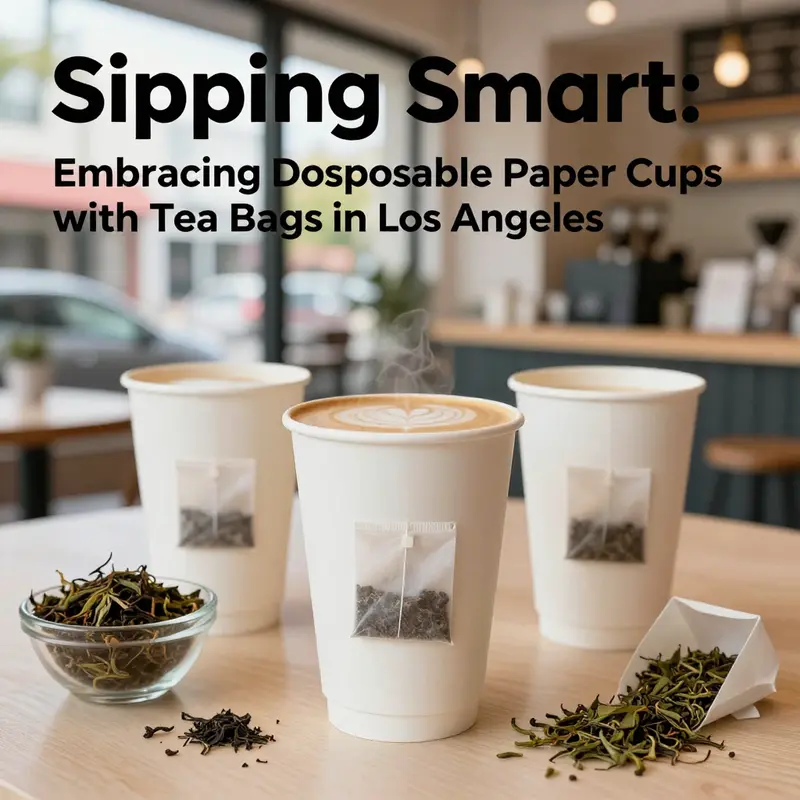
In the bustling beverage landscape of Los Angeles, the trend towards using disposable paper cups with tea bags attached is rapidly gaining traction. This innovative solution caters to the fast-paced lifestyles of urban consumers while delivering convenience and an enhanced drinking experience. The first chapter explores the versatility of these cups, highlighting their applications ranging from bubble tea shops to food trucks and catering services. The second chapter dives into market trends and consumer preferences, revealing how these products retain their appeal across diverse clientele. Finally, the concluding chapter addresses the sustainability concerns associated with disposable tableware, providing insights into environmentally friendly practices that businesses can adopt. Together, these chapters paint a comprehensive picture of why disposable paper cups with tea bags are making waves in Los Angeles.
Brewing Convenience in the City of Angels: How Disposable Cups with Tea Bags Attached Are Shaping Los Angeles’ On-the-Go Tea Experience
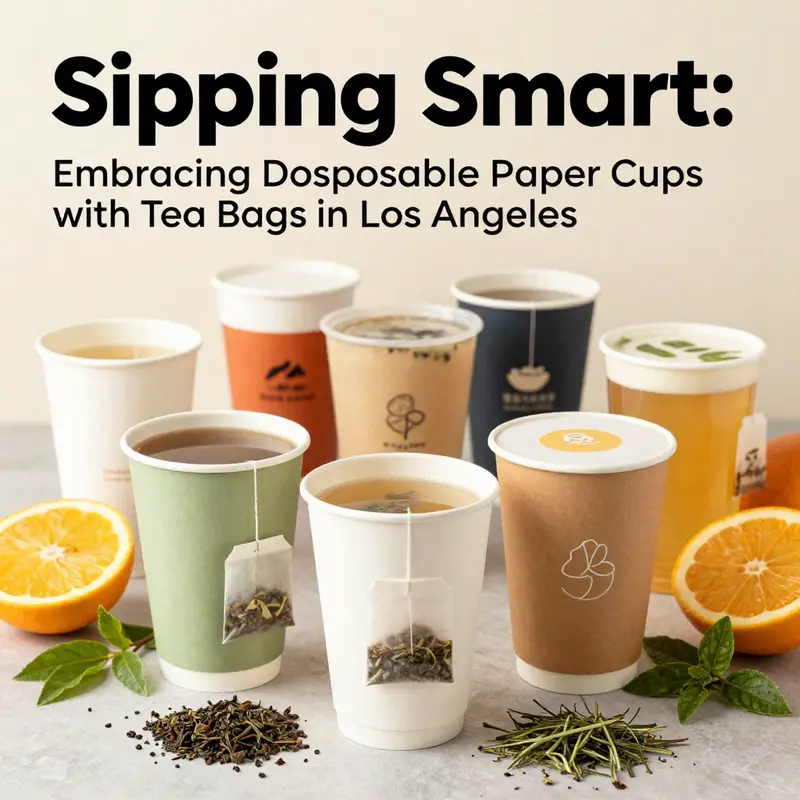
In the sprawling, sun-drenched public spaces of Los Angeles, where the daily pace runs on Urban Time and the demand for quick, reliable beverages never pauses, a small design shift has quietly altered how people sip tea between meetings, on buses, or during weekend wanderings. Disposable paper cups with tea bags attached—an idea that knits brewing, filtration, and consumption into a single, portable gesture—have found fertile ground in a city famous for its sunlit streets, diverse neighborhoods, and a culture that values both speed and quality. The concept is deceptively simple: a cup engineered to present a tea bag in a way that makes steeping almost effortless. The consumer pours hot water, waits a moment, and then sips directly from the cup. For residents who may grab a cup on their way to a film set, a workout studio, a coworking space, or a seaside promenade, the convenience is not merely about speed; it is about hygiene, consistency, and a small but meaningful moment of ritual amid the urban rhythm.
What makes this format resonate in Los Angeles is not only the traffic-choked commutes or the constant search for a break between shoots and meetings. It is also a reliable response to a city that increasingly values sustainable practices and clear, responsible packaging. Californians, and Angelenos in particular, are highly attuned to environmental narratives. The growing interest in materials that can be composted or recycled, the push toward reduced waste, and the incentives from local regulations come together to shape what manufacturers and retailers consider when they design a cup with an integrated tea experience. The result is a product that can be marketed as a practical, hygienic solution, while also speaking to a broader commitment to sustainability that many customers now expect from the businesses they choose to support. In practice, the built-in tea bag mechanism often lives in a compact, food-grade environment, with the bag held in place by a small, internal feature that avoids direct contact with the cup’s exterior or the consumer’s fingers. This subtle engineering reduces the risk of bag fragments, dust, or leakage, and it reinforces a sense of trust—an important factor when people are grabbing a cup in a hurry and want to know their drink will taste right and be safe to handle.
The basic appeal rests on a trio of core benefits: convenience, hygiene, and branding potential. Convenience is obvious in a city where time is often measured in minutes rather than hours. The consumer need not juggle a separate teabag, infuser, or mug; the cup becomes the vessel, the bag, and the steeping chamber all at once. Hygiene follows closely: sealed packaging, intact tea bags, and controlled exposure to air minimize the risk of contamination, an important consideration in busy venues and transit hubs where turnover is rapid and cleanliness is routinely scrutinized. The branding potential is a quieter driver that matters, especially in an economy where visual identity can be as important as flavor. A cup can carry a logo, a seasonal motif, or a local illustration, turning the drink into a mobile billboard and a tangible reminder of a business’s ethos. In a city that thrives on storytelling, the cup becomes a canvas that can convey a narrative about craftsmanship, locality, or care for the environment. The interplay of these dimensions—the practical and the aspirational—helps explain why such cups have gained traction in Los Angeles, where consumer expectations are shaped by a fusion of fast-casual dining, wellness trends, and a culture that values design as much as delicious flavor.
From a design perspective, the cups balance function and form in ways that are especially meaningful in a climate as varied as California’s. The inner materials are chosen to shield hot liquids and protect the flavor profile of the tea from impure contact, while the outer shell often employs a double-wall construction to improve grip and reduce the risk of burns. The energy behind these choices is not simply about comfort; it is about resilience in the face of a crowded urban environment. In places like Los Angeles, where a person might hold a steaming cup while waiting for a transit vehicle, walking along a breezy boulevard, or stepping out of a sun-warmed cafe, the cup’s insulating properties become a practical safety feature as well as a usability asset. Packaging designers increasingly consider the entire lifecycle of the cup: the materials’ sourcing, the potential for compostability, and the end-of-life options available in diverse neighborhoods—from coastal communities to inland districts. The resulting product, if thoughtfully engineered, offers a satisfying tactile experience: a cup that stays steady in the hand, a tea bag that remains anchored without scattering tea leaves, and a seal that preserves aroma until the first sip, all wrapped in packaging that communicates a care for the environment and the consumer’s time.
In the marketplace, a broader supply network supports these cups as a flexible, scalable solution. Wholesale buyers in Los Angeles can access bulk options that accommodate different event sizes, cafe formats, or corporate gifting programs. The appeal to businesses is not only the convenience for customers but the branding latitude it affords. A cup can be customized with color designs, logos, or seasonal motifs—up to a generous palette—that create a unified customer experience across a venue or a chain. This aspect dovetails with Los Angeles’ own branding culture, which prizes visual differentiation and a sense of local flavor. Custom printing provides a tangible way to connect with audiences, and the nine-color printing capability mentioned in industry references means the cup can echo a city’s diverse artistic energy. For venues that host events, the ability to pre-pack these cups in bulk, with the tea already threaded through, can streamline service lines, reduce wasteful handling, and ensure a consistent product standard from one batch to the next. The logistics of acquiring such cups—whether through direct manufacturers, distributors, or B2B marketplaces—tend to emphasize reliability, certifications, and scalable production timelines. In a city that moves quickly, these factors often determine whether a concept remains a novelty or becomes a staple.
The sustainability thread runs deep in the Los Angeles context. California’s environmental regulations encourage, and sometimes mandate, packaging solutions that minimize ecological impact. This reality pushes manufacturers to develop materials that are biodegradable, compostable, or readily recyclable, paired with messaging that helps consumers understand end-of-life pathways. In practice, that means presenting the cup as more than a disposable item; it becomes an invitation to participate in a circular approach to consumption. It is not enough to claim eco-friendliness. The product must stand up to scrutiny about compostability standards, the presence of barrier coatings that enable tea to remain fresh without leaking, and the overall reduction in waste compared with traditional single-use cups plus separate infusers. As a result, producers often pursue certifications or align with recognized sustainability frameworks, which adds a layer of credibility for buyers who are managing corporate social responsibility goals or municipal procurement programs. In a city where environmental storytelling matters—from the beaches along the Santa Monica Bay to the green rooftops of the downtown arts district—consumers are increasingly inclined to choose options that reflect their values, even when those choices come with a premium or a perceived equity of experience.
The cultural texture of Los Angeles—the mix of health-conscious, design-forward, and convenience-driven sensibilities—also informs how these cups are experienced in daily life. On college campuses, in fitness centers, at pop-up markets, or during film shoots, the integrated tea experience aligns with moments that demand both speed and comfort. A student between lectures can grab a cup and steep tea efficiently before their next class; a professional on a lunch break can enjoy a precise brewing moment without washing additional cups or dealing with messy infusers. In neighborhoods with strong street-food cultures, the cup can serve as a clean, portable vessel that fits naturally into quick-service interactions. Even in high-footfall venues, the sealed packaging and the self-contained infusion provide a sense of control for staff who must manage hundreds of these cups in a single shift. For customers, the ritual of pouring hot water over the bag, watching the color unfold, and slowly savoring a cup can be a small yet meaningful ritual that adds texture to the day, turning a simple beverage into a moment of personal pause amid the city’s relentless energy.
The conversation around these cups also touches on design ethics and social responsibility. A well-made cup respects both the consumer and the environment. It acknowledges the realities of crowded urban settings where people may be rushing through. It also recognizes the need to minimize litter and to support waste-diversion programs, which are particularly salient in Los Angeles’ beach and canyon-adjacent communities where waste management and coastal conservation are ongoing concerns. The most persuasive iterations of this product are those that keep promises: a tea that tastes right, a cup that remains safe to handle, a packaging system that is clear about disposal, and an aesthetic that resonates with local tastes without resorting to gimmickry. In this sense, the cup becomes more than a disposable item; it becomes a small but visible gesture toward a planning mentality that seeks to balance urban growth with environmental stewardship. The result is a product that does not simply fit into the city’s routine but enhances it, offering a practical solution that respects local values and supports a broader conversation about how we drink tea in modern urban life.
From the perspective of a business contemplating entry into this niche in Los Angeles, a strategic approach blends operational efficiency with nuanced sensory cues. An operator must consider where the cups are most likely to be used: office complexes with coffee and tea service, coworking hubs that host a mix of professionals and freelancers, hotel lounge areas that serve travelers, or cultural venues where events generate a steady stream of attendees. In each case, the integrated tea solution should be designed to be easy to stock, easy to serve, and easy for customers to understand. Clear labeling about steeping times and water temperature helps ensure a consistent tea experience, even when staff turnover is high or when the cup passes through multiple hands in a busy service flow. A well-curated color palette and branding strategy can translate the city’s diverse aesthetic into an approachable beverage moment. The internal brand feature—the tiny anchor that holds the tea bag in place—needs to be robust enough to withstand the vibrations of a crowded venue and the occasional jostle of a busy street corner. Yet it should be discreet enough not to interfere with the user’s tactile experience or the cup’s clean lines. In designing or selecting these cups, buyers may also weigh the benefits of double-wall insulation against the potential weight increase or cost implications. The choice is rarely about one feature alone; it is about balancing safety, usability, sustainability, and brand storytelling in a way that makes sense for the specific Los Angeles setting.
Technology and materials science quietly influence the storytelling of these cups as well. The inner layer, often a barrier material or food-grade polymer, must protect the liquid and preserve the tea’s aromatic profile. The outer layer, which can be paper-based or sometimes a coated substrate, communicates the product’s environmental stance through its finish, color, and printed messaging. Advances in compostable coatings enable the creation of cups that can break down more readily in municipal compost streams, addressing a common concern about the fate of disposable beverageware. But achieving an optimal balance—ensuring the tea bag is properly anchored while keeping the cup affordable, recyclable, and consumer-friendly—requires careful testing and iterative design. In practice, Los Angeles businesses that adopt these cups frequently work with suppliers who can provide technical data on shelf life, water contact performance, and the durability of the tea-bag-attachment mechanism under typical handling conditions. They also seek assurances about certifications that may be relevant to customers, such as compostability or food-safety standards. The result is not merely a product but a carefully curated experience that lives at the intersection of practicality, sustainability, and sensory satisfaction.
The potential for cross-pollination with local culture adds yet another layer of appeal. A city known for its artistry and its strong ties to the creative economy can use these cups to tell stories that go beyond a simple beverage. A venue might commission designs that reflect regional motifs, neighborhood histories, or seasonal color themes, turning every cup into a tiny ambassador of place. This approach strengthens emotional connections with customers and can create a sense of collectability—encouraging people to keep a small memory of their LA experience in the form of a cup’s design or a particular tea blend. It also creates opportunities for collaborations with local artists and makers, promoting a sense of community involvement that resonates with a population that values creative expression and social engagement. In the long run, as more businesses adopt this format, the cumulative effect is a city-wide shift in how tea is consumed in public spaces: not as a break from activity but as a seamless extension of daily routines, a moment of pause anchored by a well-crafted, thoughtfully designed cup.
For readers curious about the practicalities of procurement and product choice, the path toward outfitting a local operation with disposable cups that hold tea bags is best navigated through careful supplier evaluation and scenario planning. Buyers should request samples to assess how the tea bag sits within the cup, how the flavor holds up after a chosen steeping time, and how well the packaging performs under real-world handling. They should also inquire about bulk pricing, customization options, and the availability of bulk shipment to California warehouses or distribution centers that service the Los Angeles metropolitan area. A reliable supplier will provide documentation confirming the materials’ safety for contact with hot liquids, the presence or absence of fluorinated coatings, and the conformity of the packaging to relevant food-contact regulations. Given the city’s diverse consumer base, it is prudent to verify that the cup’s branding elements can be adapted to reflect a range of cultural aesthetics without compromising readability or brand integrity. In this sense, the product becomes a bridge between global packaging concepts and local sensibilities, a tangible example of how a simple beverage channel can become a conduit for design, sustainability, and community engagement.
As this chapter draws toward a closer alignment with the broader arc of the article, the takeaway centers on a simple, enduring idea: in a city that moves with the pace of a high-velocity film schedule and the rhythm of a miles-long coastline, the tea-cup concept offers a compact, scalable way to deliver warmth, comfort, and a touch of ceremony. The integrated tea bag approach reduces clutter, simplifies service, and provides a consistent, premium-feeling experience that can be scaled from a single coffee bar to a network of locations across the greater Los Angeles area. It invites businesses to think holistically about packaging, not as a disposable afterthought but as a durable component of the customer journey. It invites consumers to consider the moment of steeping as a small personal ritual, a brief pause that punctuates a busy day with a sense of intention. In that sense, Los Angeles becomes more than a geography; it becomes a testing ground where design, sustainability, and urban life converge in a cup of tea.
For readers who may want to explore the broader landscape of such products and their place in the regional market, an external resource offers additional context on how these cups are positioned in wholesale and international supply networks. This reference, while not a substitute for local procurement advice, provides a window into the kinds of materials, certifications, and customization options that suppliers frequently showcase to international buyers seeking U.S. distribution channels. External link: https://www.alibaba.com/product-detail/Disposable-Paper-Cup-With-Tea-Inside-Bottom_1600524978345.html
To complement the practical considerations with a tangible example of how branding and product design intersect in the local context, one can examine a related design approach that emphasizes environmental responsibility and local relevance. A relevant internal resource demonstrates how simple, single-wall paper cups can be adapted to carry eco-conscious messaging and logos, turning each cup into a lightweight ambassador for a brand’s environmental commitments. The design philosophy behind these cups centers on clarity, sustainability, and cultural resonance, which aligns well with Los Angeles’ emphasis on clean aesthetics, social responsibility, and a strong visual language. For readers seeking to glimpse a concrete pathway toward customization, consider exploring the concept of eco-friendly printed logo single-wall paper cups as a practical starting point. This approach highlights how careful graphic treatment and material choice can yield packaging that looks premium while still aligning with environmental goals. Internal link for deeper reading: eco-friendly printed logo single-wall paper cup.
Brewing on the Move: Market Trends, Consumer Tastes, and the Tea-Integrated Disposable Cup Phenomenon in Los Angeles
In a city where traffic hums and the ocean breeze mingles with the aroma of roasted beans, Los Angeles has become a proving ground for packaging that blends convenience with local style.
The disposable tea-bag cup concept merges the ritual of brewing tea with on-the-go service, turning a simple cup into a portable moment of warmth. This chapter threads market momentum, consumer taste, and design imperatives to explain why these cups feel less like a novelty and more like a workable habit in everyday life.
LA’s beverage landscape is a mosaic of cafés, office lounges, and street-side stalls where speed, cleanliness, and personal ritual sit side by side. Consumers want a brew that can be easily replicated, remains consistent from cup to cup, and travels with minimal fuss. The tea-bag attachment seeks to deliver that experience— a familiar immersion that stays contained and predictable as it moves from desk to car to curbside pickup.
Sustainability and branding matter, too. Biodegradable and compostable options are increasingly expected, while clear labeling, responsible sourcing, and branding that travels on a cup are valued in a city attentive to environmental impact and street-level marketing. Local suppliers support quick iterations, from base cup formation to branding and compliance, helping operators balance cost, performance, and eco-conscious goals.
The result is a packaging language that respects Los Angeles’ pace and preferences: practical, visually clean, and adaptable to outdoor dining, events, and daily commutes. The cup becomes a tiny stage for personal ritual, social sharing, and brand storytelling, designed to travel as well as the tea itself.
Brewing Footprints in Los Angeles: Unpacking the Sustainability of Tea-Bag-Embedded Disposable Cups
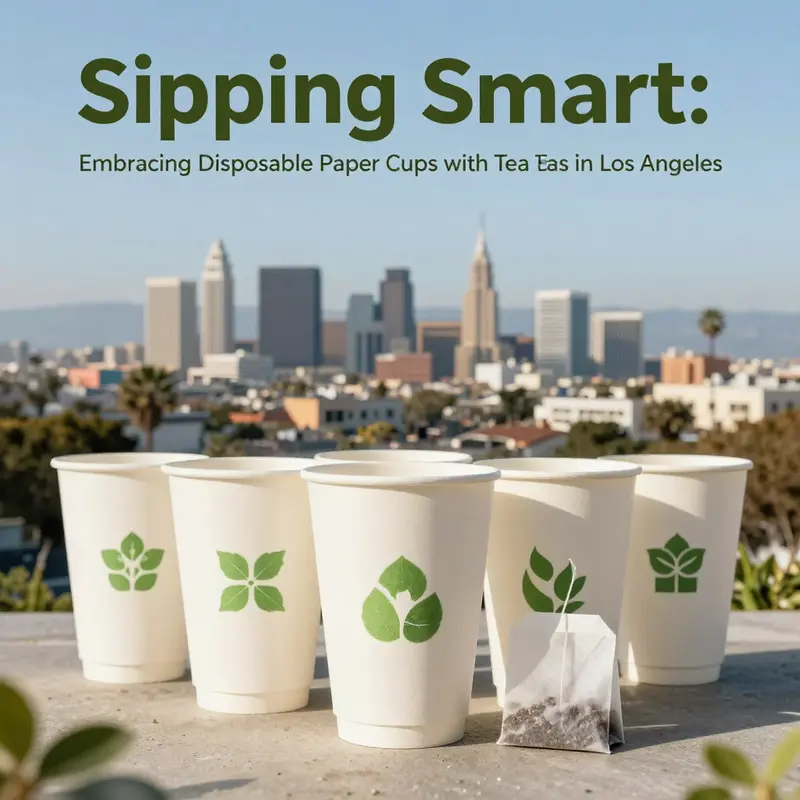
In the radiant urban tapestry of Los Angeles, the daily ritual of stepping into a café, selecting a hot drink, and watching steam rise from a cup has become as familiar as the palm-lined avenues themselves. Yet beneath the surface of this everyday comfort lies a complex conversation about sustainability, design, and the physical realities of packaging. Disposable paper cups with tea bags attached have emerged as a pragmatic answer to consumer demand: a one-stop, ready-to-drink experience that promises speed, cleanliness, and a touch of convenience for busy Angelenos who crave a quick tea on the go. The allure is clear. A cup that arrives with a built-in tea bag promises simplicity and a neat, self-contained moment of infusion. It is a small vignette of urban life, a micro-ritual that mirrors the city’s own appetite for efficiency. But every such vignette leaves a trace, and in Los Angeles that trace intersects with broader questions about environmental impact, health considerations, and the logistics of large-scale consumption.
At the heart of this discussion is the conventional design of disposable cups themselves. Most standard paper cups are lined with polyethylene to prevent leakage and to keep beverages from soaking through the paper walls. That inner lining, while instrumental for performance and practicality, complicates the cup’s end-of-life story. In an era when the term sustainability is often invoked as a rhetorical banner, the polyethylene layer complicates claims of environmental friendliness. When hot beverages are poured into these cups, especially at temperatures that frequently exceed 60°C, heat can interact with the lining in ways that researchers are only beginning to fully understand. Studies have shown that prolonged exposure to heat can facilitate the release of microplastics and nanoplastics from the cup’s interior. The concern is not merely about the cup surviving a single drink; it is about what happens to the cup once it is discarded, and how its components migrate into ecosystems, eventually returning to human bodies through water, soil, or the food chain. In a city like Los Angeles, where coastal proximity and vast urban runoff present unique environmental pressures, these questions take on added weight. The health implications, though still contested in some circles, are increasingly documented in diverse scientific venues. A critical review published in 2025 in Environmental Science & Technology, for instance, underscored the possibility that disposable cups can contribute to the suite of substances encountered by humans and wildlife as plastics break down and interact with other contaminants. While no single study provides a definitive verdict, the convergence of heat-driven microplastic release and potential leaching of organic chemicals pushes the conversation beyond “convenience versus waste” toward a more nuanced calculus of risk and responsibility. In practice, this means that a cup designed for a heat-infused tea — which is a common preference among many tea drinkers in cafés across the city — is also a vessel that carries a layered set of environmental considerations layered into its everyday use.
The tea bag itself—an everyday companion in Los Angeles’s many tea-focused venues—adds another dimension to the environmental equation. Tea bags are not all the same. Some are constructed from conventional paper that may include plastic components, while others rely on nylon or polyester fibers to maintain structure. These materials complicate composting and waste management, especially when they arrive at municipal facilities that are designed to process certain types of organic material but may be less equipped to handle nanofiber plastics or synthetic laminates. When a disposable cup is paired with a tea bag that contains synthetic elements, the end-of-life path becomes more intricate. In practice, this pairing can translate into higher rates of non-compostable waste in green streams, a challenge for a city that has been actively expanding its composting infrastructure and public education around waste separation. The environmental burden thus multiplies through this small interface: the cup’s inner lining, the tea bag’s chosen materials, and the interaction between the two during hot beverage preparation all contribute to a complex waste profile that is not easily dissolved by simple consumer choice alone.
From a broader perspective, the production and distribution footprint of disposable cups is substantial. The creation of these cups requires significant water and energy inputs, and the sourcing of raw materials carries its own environmental costs, including the potential for deforestation when broad fiber resources are used. Transportation layers add further emissions as finished cups travel from mills to distribution centers to cafés across the metropolitan area and beyond. These footprints become particularly salient in a city with a sprawling geography and a robust on-site foodservice economy, where thousands of cups circulate each day and are discarded within hours. The cumulative effect of manufacturing and logistics—often invisible to the consumer eye—contributes to the city’s overall environmental load, even when the cups appear to offer a cleaner or more efficient option at the point of use.
Against this backdrop, Los Angeles has witnessed a growing exploration of alternatives that aim to decouple convenience from high environmental cost. Some cafés and packaging suppliers are experimenting with double-walled paper cups that do not require a single, thin inner lining, or with cups produced from certified sustainable fibers that claim enhanced compostability. Others are advancing reusable cup programs that leverage deposits, collection systems, and community partnerships to encourage customers to return and reuse their vessels rather than discard them after a single use. These approaches, while promising, face practical hurdles. They demand reliable infrastructure for cleaning and exchange, a level of consumer participation that is not universal, and, crucially, an economic calculus that must still contend with the upfront costs of more sophisticated packaging or the operational realities of a city that often operates on thin margins in the service sector. In a market that prizes speed and consistency, any shift toward more sustainable designs must contend with the twin pressures of price and performance. Yet across Los Angeles, there is a growing willingness to experiment, to pilot new packaging concepts, and to reimagine the cup as a disposable item with an attached tea bag not merely as a convenience feature but as part of a system that can be measured, improved, and perhaps even redesigned for a lower environmental footprint.
What matters for the consumer is how these shifts translate into real-world outcomes. The decision to drink from a cup with a tea bag that is already in place might be aligned with a momentary sense of cleanliness and efficiency, but it is also a cue to consider what comes next. In Los Angeles, where composting programs are increasingly integrated into municipal waste management and where public awareness about plastic pollution is high, many shoppers are learning to look beyond the single drink. They ask: Is the cup unlined or made from recycled content? Does the tea bag carry plastic elements that could complicate composting or recycling streams? Could a brand or café switch to a fully compostable alternative that preserves taste and convenience while easing the burden on local waste systems? These are not abstract questions. They are practical ones that shape how a city like Los Angeles moves toward a more circular economy.
For businesses that want to align with these evolving expectations, the opportunity lies in reducing friction between sustainability and consumer experience. Some operators have started communicating packaging choices more transparently, highlighting certifications, compostability statements, and end-of-life guidance as part of the customer journey. Others are investing in supply chains that source plant-based, home-compostable materials, and in packaging designs that minimize synthetic content without sacrificing leak resistance or heat tolerance. In doing so, they are not just responding to regulatory or reputational pressure; they are actively participating in a more deliberate, measurable approach to consumption. The goal is not to eliminate disposables overnight, but to replace them with options that maintain the ritual of a warm cup and a brewing moment while ensuring the materials can be managed responsibly after they flow into the urban stream.
From a policy and city-planning standpoint, Los Angeles is part of a broader shift toward waste reduction and resource stewardship. Local governments, environmental organizations, and industry players are exploring how to align packaging standards with composting capabilities, how to incentivize the use of renewable or recycled content, and how to recognize packaging that truly minimizes environmental risk. The challenge is to establish performance criteria that are rigorous enough to drive meaningful improvements yet pragmatic enough to be adopted by small, medium, and large operators throughout the region. As conversations around packaging evolve, so too does the market for packaging solutions that can deliver branding opportunities without compromising environmental goals. The tea bag attached to a disposable cup is not a mere afterthought; it embodies a nexus point where consumer expectations, material science, and municipal waste management converge in the specific urban ecology of Los Angeles.
For readers who are navigating this space as consumers, the core message is practical: awareness is not enough; choices must be strategic and informed. When you patronize a shop, you can ask questions about packaging, seek out venues that emphasize compostable or recyclable options, and consider reducing reliance on single-use cups by supporting venues that offer reusable mug programs. If you are a business owner or a packaging designer, explore partnerships with suppliers who can provide transparent sourcing information, third-party certifications, and end-of-life guidance that makes it easy for customers to dispose of or return their cups in a responsible way. In this way, the tea cup with its attached bag becomes less a symbol of disposable convenience and more a link in a chain that connects user behavior, material science, and municipal systems into a more sustainable practice.
The broader literature and field observations from cities like Los Angeles reveal a consistent theme: the path to sustainability for disposable cups with tea bags is not a single solution but a portfolio of options. Some customers may embrace fully compostable, unlined cups that align with home-composting principles or certified industrial composting. Others may prefer to move toward reusables—establishing a norm of bringing a personal mug or participating in a café-supported return-and-reuse program. Still others may opt for innovations that reduce the use of plastic in tea bag components or that shift to plant-based coatings that are compatible with existing compost streams. In every case, the challenge remains to ensure that the packaging performs as needed, preserves the integrity of the beverage, and does not introduce new forms of environmental risk. The interplay between consumer comfort, brand storytelling, and environmental impact is delicate. It requires ongoing iteration, transparent communication, and a willingness to test new approaches in real-world settings across the city.
As this narrative unfolds, it is essential to acknowledge the role of information and research in guiding decisions. The 2025 Environmental Science & Technology review offers a cautionary note about the need to scrutinize the end-of-life pathways for disposable cups and tea bags. It invites a rigorous examination of how microplastics and chemical contaminants may travel through ecosystems and potentially affect human health. While the data are evolving and not yet settled in every respect, the direction is clear: a more nuanced understanding of packaging materials and their interactions with hot beverages will inform better design and policy choices. Local stakeholders—consumers, retailers, researchers, and regulators—can benefit from remaining engaged with these developments, translating scientific insights into practical, scalable recommendations for the city’s beverage packaging landscape. This ongoing dialogue is not about vilifying disposables but about leveling the playing field between convenience and responsibility so that Los Angeles can enjoy its famed culinary vibrancy without compromising its environmental commitments.
In closing, the question is not whether disposable cups with tea bags should exist in Los Angeles, but how they can exist in a way that respects the city’s environmental ambitions. The answer lies in a combination of thoughtful material choices, improved end-of-life pathways, and innovative business models that align economic viability with ecological integrity. It involves reimagining the cup as a component of a system rather than a single-use endpoint, recognizing that every sip is part of a larger story about resource use, waste management, and social responsibility. For readers who want to explore concrete options, a range of packaging solutions exists, from custom branding opportunities to packaging formats designed for more seamless composting. One practical example of such partnership-ready packaging can be found in disposable takeaway cups that offer a custom logo option and lid, which demonstrates how branding, user experience, and environmental considerations can be integrated. This approach keeps the consumer experience intact while allowing brands to communicate sustainability commitments clearly. Learn more about this type of solution at the linked product page, which showcases how a shop can maintain distinct branding while offering a practical, single-serve cup and lid combination that accommodates on-the-go tea experiences.
For further context and technical detail, readers may consult external research on the environmental dimensions of disposable cups and related materials. The linked scholarly article provides a rigorous, peer-reviewed perspective on the breadth of issues surrounding microplastics, leaching, and environmental fate, helping to ground local discussions in a broader scientific framework. Overall, Los Angeles’s journey with tea-bag-embedded disposable cups is a microcosm of a larger, global transition toward packaging choices that harmonize consumer convenience with planetary health. The city’s experience demonstrates that incremental improvements—careful material selection, transparent sourcing, and robust end-of-life infrastructure—can collectively yield meaningful progress without sacrificing the everyday rituals that make urban life feel human and connected.
Further exploration of packaging options and branding capabilities can be found here: disposable takeaway cup with custom logo and lid.
External reference: Environmental Science & Technology, https://www.sciencedirect.com/science/article/pii/S0013936X25004785
Final thoughts
In conclusion, disposable paper cups with tea bags attached are more than just a trend in Los Angeles; they reflect a shift towards convenience and sustainability in the beverage industry. By catering to the demands of modern consumers and embracing eco-friendly practices, businesses can enhance their service offerings while contributing to a healthier planet. As these innovations continue to evolve, they will likely play a significant role in shaping the future of beverage consumption in urban environments.