
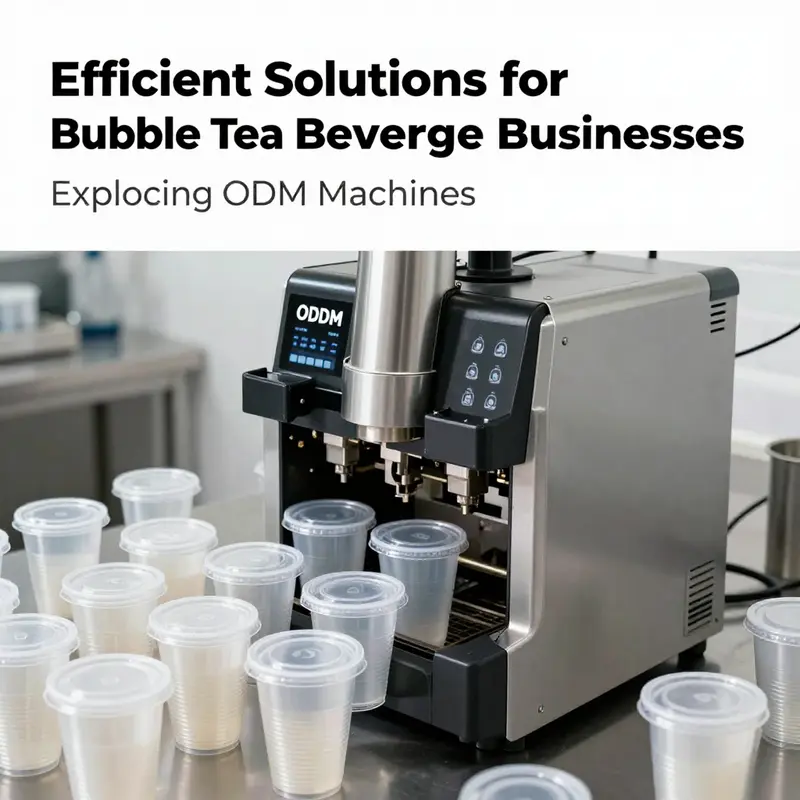
In an increasingly competitive beverage market, having reliable and efficient production solutions is key. Bubble tea shops, restaurants, food trucks, and catering services can significantly enhance their operational efficiency by leveraging high-speed ODM machines for plastic cup lid manufacturing. These machines not only streamline production but also offer customization options that cater to specific branding needs. As we delve into the world of ODM manufacturing, we’ll explore the capabilities of high-speed lid-making machines, the technical specifications that make them indispensable, and the economic benefits that follow their implementation. Each chapter will provide insights to assist businesses in making informed decisions about incorporating this technology into their operations.
From Mold to Brand: The ODM-Driven Transformation of High-Speed Lids for Disposable Plastic Cups
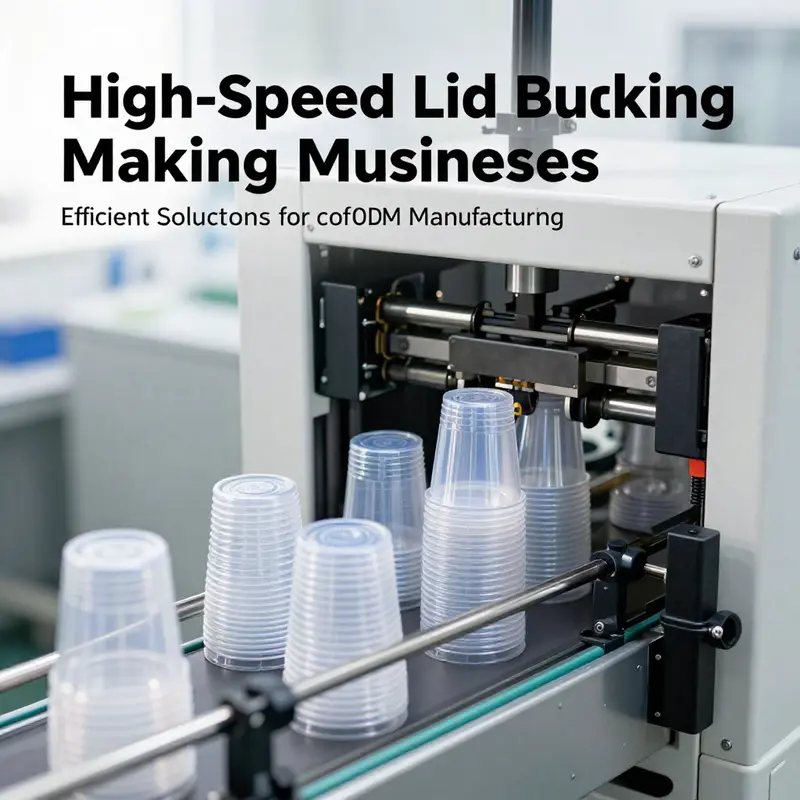
When you walk into a modern VFFS or thermoforming line that is designed to supply lids for disposable cups, you are witnessing more than a machine room; you are watching a process that bridges design intent, materials science, and industrial automation. The ODM (Original Design Manufacturer) approach to lid production does not merely mean a container with a cap. It signifies a collaborative ecosystem where product concepts, tooling, process control, and branding are executed in a single, integrated supply chain. The high-speed lid making machine at the heart of this ecosystem is engineered to take raw sheet stock and deliver finished, hygienic, ready-to-stack lids with a level of consistency that is difficult to achieve with fragmented operations. This chapter traces how such equipment functions at a systems level, why it matters for ODM operations in the food and beverage arena, and how design choices in materials, forming mechanics, and process automation converge to create a supplier that can scale, adapt, and protect the integrity of the final product.
Material versatility sits near the top of the list when evaluating an ODM-capable forming line. A robust lid machine is not a one-material wonder; it must accommodate a spectrum of thermoplastics that have become standards in disposable packaging. The common workhorse materials include polypropylene (PP), polystyrene (PS), and polyethylene terephthalate (PET), with copolymers or additives that extend functionality to PVC and even polylactic acid (PLA) for compostable variants. The thickness window is equally critical. In practice, the forming system handles PS and PVC in the range of about 0.10 millimeters to 0.80 millimeters, while PET lids operate from roughly 0.10 millimeters to 0.60 millimeters. This range ensures that lids can be formed to snugly seal hot beverages, cold drinks, or thicker viscous contents without warpage or loss of integrity. For ODM providers, this material flexibility translates into the ability to tailor lids to a brand’s specific packaging architecture—whether a vented lid for coffee or a snug, earth-friendly lid for cold beverages—without sacrificing line uptime or product safety.
The core of the machine is a multi-station thermoforming system that threads together heating, forming, punching, and cutting into a single, continuous operation. In a traditional shop, these steps are often spread across different workstations or even different suppliers. In the ODM context, the advantage of an integrated line is twofold. First, the process is tightly synchronized; heat settings, draw depth, and punch force are coordinated to minimize distortion and ensure dimensional stability across thousands of cycles. Second, the inline configuration supports rapid changeovers. When a customer requests a new lid size or a new geometry—perhaps a deeper cup lid for a larger beverage or a coin-shaped venting feature—the tooling can be swapped with minimal downtime. This capability is essential for ODMs, where time-to-market is a competitive differentiator. The forming area, which is designed to maximize material yield while delivering clean, uniform lids, typically accommodates substantial dimensions. A generous forming footprint supports lids ranging from small sips to larger take-away cups, ensuring that the same machine can serve a broad product portfolio.
In practice, the interplay of positive and negative pressure within the forming process is one of the more fundamental technical enablers. Positive pressure pushes the sheet into the mold to form the lid’s exterior geometry. Negative pressure, acting as a controlled vacuum, helps pull the sheet toward the mold’s contours, refining features like the tightness of the rim and the precise shape of any integrated venting or locking features. A well-tuned balance between these pressure regimes yields lids with reliable dimensional accuracy and surface quality. The mold tooling itself is designed for rapid interchangeability, a feature that ODM providers rely on to deliver multiple lid designs from a single platform. Quick-change mold systems reduce downtime between runs and enable a single facility to serve many clients with distinct lid geometries—an essential capability when ODMs must align with various brand aesthetics, emission standards, and consumer expectations.
Another distinguishing attribute of high-speed lid forming lines is the seamless fusion of forming with in-line punching and cutting. After a lid is formed, it often requires precise opening-cut patterns, count-specific perforations, or cross-cutting to yield a stackable sheet of lids. Integrating punching and cutting into the same line eliminates material handling steps and dramatically reduces the risk of secondary contamination. From a hygiene perspective, minimizing human contact with the finished product is non-negotiable in food-contact applications. The entire cycle—from heating to final stacking and counting—occurs within a closed, clean environment. The result is an assembly line that supports high throughput while meeting stringent food-grade hygiene standards. For ODM programs, this is more than a manufacturing preference; it is a fundamental requirement to safeguard brand trust and regulatory compliance across borders.
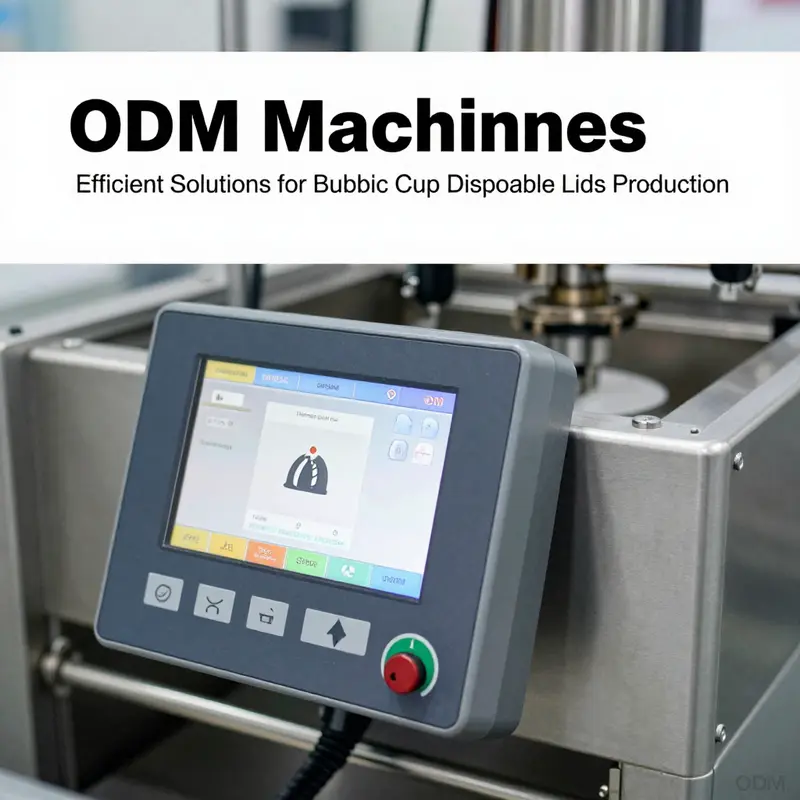
Automation lies at the core of the ODM advantage. A high-speed lid machine is not simply fast; it is engineered for repeatable quality and traceability. The line operates with a tightly controlled sequence that minimizes human intervention. Automatic sheet feeding, sheet alignment, forming, punching, cutting, and stack accumulation all proceed in a synchronized choreography. The stacking and counting subsystem can be programmed to deliver exact counts per bundle, which simplifies downstream logistics and packaging lines. The automation layer also provides a valuable data stream. Temperature setpoints, mold parameters, cycle counts, and maintenance alarms are logged in a format suitable for tracking and audit purposes. For ODM clients who must demonstrate compliance with food safety standards, the monitoring and recording capabilities provide an auditable trail that can be referenced during regulatory reviews, supplier qualification, or brand-protection audits.
Mold flexibility is a recurring theme in ODM manufacturing discussions. In addition to accommodating different material types, lid dimensions, and seal features, the molding system must be designed to handle rapid mold exchanges with minimal impact on overall equipment effectiveness. The changeover process typically involves adjusting forming depth, temperature profiles, and vacuum channel configurations, complemented by a set of precise, tool-less or quickly detachable mold components. The objective is to keep the downtime associated with tool changes to a minimum while maintaining tight tolerances across molds. The broader implication is that ODM vendors can maintain a dynamic product catalog without investing in entirely new line infrastructures for each new client. A single, adaptable lid forming line can serve as the backbone for dozens of lid variants, each aligned with a different brand’s identity and packaging spec.
Quality and cleanliness are not optional features but the organizing principles of ODM lid production. The forming area is designed to minimize places where residues can accumulate. Surfaces are kept smooth, joints are sealed, and airflow within the enclosure is controlled to prevent cross-contamination and to curtail the infiltration of dust or machining debris. In addition, the process control system continuously monitors forming temperatures, dwell times, and draw forces. Should any parameter drift occur, the system can automatically adjust within predefined limits or trigger a maintenance alert. This capability is crucial when producing lids for products with varied flavor profiles or beverage temperatures. A lid that seals well at one temperature profile should not slowly deform or warp when subjected to a hotter fill, and the machine must be able to accommodate such shifts without compromising sterility or fit. For ODM operators, reliable, repeatable results translate into fewer rejects, lower waste, and higher customer satisfaction.
The ODM narrative also encompasses design collaboration. In many cases, the client comes with a concept—perhaps a new lid geometry or a novel venting pattern—that must be transformed into a manufacturable part. The ODM provider offers more than just equipment; they contribute engineering insight, mold design, and process validation to translate a concept into a robust production reality. This collaboration often extends into the early stages of product development, where design for manufacturability decisions can reduce material usage, improve sealing performance, or enhance stackability. The ability to move from concept to full-scale production within a single partner reduces the risk of misalignment between design intent and manufacturing capability. It also shortens the feedback loop, enabling rapid iterations and more precise alignment with brand requirements and consumer expectations.
The environmental and regulatory dimensions are woven into the approach of ODM lid production. Compliance is not a box to check; it is a continuous practice. The machines are designed to meet or exceed relevant safety and sanitation standards, with materials selected for their compatibility with food contact and their environmental footprint. Where possible, manufacturers explore recyclable or compostable material options and design lids with easy disassembly and recycling in mind. The automation framework supports traceability, enabling brands to document material provenance, mold IDs, production lots, and quality control results. This level of traceability is increasingly demanded by retailers and end-users who want transparency in sustainability claims and product safety. ODM providers that embed such capabilities in their equipment are better positioned to respond to evolving consumer expectations and regulatory environments without sacrificing throughput or cost efficiency.
From a business perspective, the ODM model thrives on one more capability: scalable, predictable cost structures. A high-speed lid line that minimizes manual handling reduces labor costs significantly and lowers the risk of human-induced variability. The single-line architecture—heating, forming, punching, cutting, stacking—drives economies of scope. A single platform can produce multiple lid formats with short downtime and without the need for a complete plant reconfiguration. This scalability matters for brands that may launch limited edition beverages or seasonal campaigns, which demand new lid aesthetics, venting solutions, or different sealing profiles while maintaining overall packaging integrity. In practice, ODM partnerships that offer this degree of flexibility coupled with rapid changeover support can absorb demand spikes and still maintain service levels across a broad customer base.
The social and market implications of ODM-focused lid production are equally telling. As consumer consciousness grows around hygiene, waste, and the embodied energy of packaging, brands seek packaging solutions that reflect responsible manufacturing practices. The lid line, when managed as an integrated ODM solution, stands as a prototype of responsible conformity: materials chosen for safety and recyclability, production lines designed to minimize waste, and data-driven processes that encourage continuous improvement. The lid is a small part of the package, yet it carries outsized importance for consumer experience. A well-designed lid prevents spills, preserves beverage temperature, and communicates brand values through tactile and visual cues. In this ecosystem, the ODM maker who can translate a brand’s identity into a functional, manufacturable lid—while sustaining efficiency and hygiene—becomes a strategic partner rather than a transactional vendor.
Some readers may wonder how such a system translates into practical outcomes on the shop floor. Consider the typical journey of a new lid design with an ODM machine. The design brief specifies dimensions, sealing geometry, venting behavior, and stackability. The tooling engineer translates that brief into a mold and a forming profile. The process engineer then tunes the heating cycle and vacuum dynamics to accommodate the chosen material and thickness. In a short time, a pilot run yields a batch of lids that are measured for ring fit, thickness uniformity, and edge quality. If performance metrics align, the changeover to full production is initiated with the same automation backbone, demanding only minimal manual intervention. The result is a production line that can pivot quickly between different brands or lid sizes without compromising speed or quality. This agility is not a luxury in today’s fast-moving consumer goods landscape; it is a competitive imperative.
To bring this discussion back to the operational realities of ODM manufacturing, it is helpful to visualize the lid line as a living system—one in which material science, mechanical design, and software control coevolve. The machine’s forming area is more than a physical cavity; it is a dynamic interface where the geometry of the lid is shaped, trained to respond to heat and pressure, and then transferred into a finished form with mechanical precision. The punching station is not simply cutting; it is a precision act that defines functional features such as vent slots, locking lips, or stiffness ribs that improve stacking behavior. The cutting station completes the cycle by producing a clean, sanitary edge that reduces snag risk and simplifies downstream packaging. The entire cycle must be repeatable, auditable, and gentle enough to avoid micro-tears or delamination under load. The integrated counting mechanism ensures that the downstream stacker can deliver a stable stream of lids, minimizing jams and ensuring predictable downstream flows for filling lines.
In sum, the ODM-centric high-speed lid forming machine embodies a philosophy of manufacturing that blends design, process, and brand into a single executable pathway. It is a platform for innovation that does not require sacrificing reliability or hygiene. It is a tool for brands to translate a concept into a sustainable packaging solution at scale. It is a partner in market expansion, enabling smaller operators to compete with larger manufacturers through predictable quality, flexible tooling, and a ready-made pathway to compliance and certification. For companies evaluating such systems, the questions are not merely about speed or material compatibility; they are about how well the equipment can be integrated with an ODM service model that delivers design support, tooling, and production intelligence as a cohesive package. When these elements align, the result is a packaging proposition that is as much about brand experience as it is about the practicalities of a sealed cup and a lid that behaves consistently across temperature and use conditions.
Further reading and related resources can provide technical depth on the forming, punching, and cutting dynamics of such lines. For practitioners curious about the specific type of disposable lid segments and the broader ecosystem of lid production, a relevant example of an ODM-ready lid system is described in industry materials that discuss disposable paper lids for hot coffee cups. This reference highlights how turnkey design-to-production capabilities translate into a finished product that meets branding, performance, and sanitary requirements. disposable paper lids for hot coffee cups. While the exact configurations vary by supplier and market, the underlying principle remains consistent: an integrated, automated line that supports rapid changeovers, strong hygiene controls, and brand-driven design iterations.
From a practical standpoint, the business case for investing in an ODM-friendly lid forming line is compelling. Labor costs are reduced through automation, while the risk of human error in alignment, trimming, or stacking is minimized by in-line sensors and closed-system controls. Quality consistency improves because the process parameters are kept in a closed loop, with real-time adjustments and traceability baked into the control software. The ability to run multiple lid designs on a single line reduces capital expenditure per SKU and accelerates launch timelines for new brands or seasonal campaigns. In a market where packaging decisions can influence consumer perception as much as the beverage inside, the capability to deliver consistent, brand-aligned lids at scale can become a decisive differentiator.
As the industry continues to evolve, ODM lid makers will likely expand their capabilities to include more sustainable materials, greater automation for post-molding finishing, and smarter maintenance strategies that minimize unplanned downtime. Predictive maintenance, modular mold systems, and digital twin simulations could further shorten development cycles and improve overall equipment effectiveness. The convergence of materials science, mechanical design, and intelligent control will push lid production from being a cost center to becoming a strategic engine of brand value. In this context, the role of the ODM provider is not merely to supply a machine but to provide a complete, adaptable, and compliant manufacturing solution that aligns with a client’s product roadmap and sustainability commitments.
External resource for further technical depth on forming-capable lid lines can be found here: https://www.alibaba.com/product-detail/Plastic-Cup-Forming-Machine-for-PP-PS-PET_1600693765656.html?spm=a2700.184714.0.0.3c3f6e6aKjRlCp
null
null
ODM-Driven Economics in Disposable Lid Manufacturing: Cost, Speed, and Sustainability on the High-Speed Forming Line
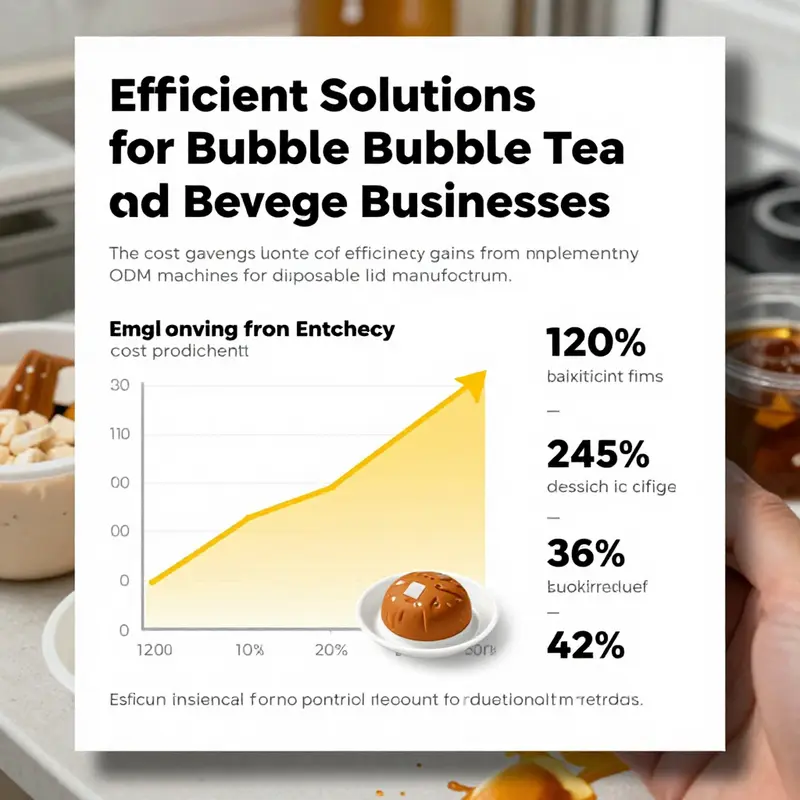
Original Design Manufacturer (ODM) models are reshaping how a highly automated sector—one built around high-speed forming lines for disposable lids—approaches economics. When a manufacturer aligns with an ODM partner, the cost calculus shifts from a capital-heavy, asset-intensive stance to a flexible ecosystem that leverages specialized design, tooling, and production capabilities. This shift is not just about cutting immediate spend; it is about reconfiguring risk, speed, and the quality envelope in a market that hinges on hygiene, precision, and regulatory compliance. The core technology at the heart of this transformation is a fully automated, high-speed lid forming and punching system. This machine family excels at the continuous, one-pass production of lids from a range of thermoplastics, including PS, PVC, and PET, with the added sophistication of negative and positive pressure forming and integrated perforation processes. In practical terms, the ODM-enabled setup can heat, form, perforate, cut, and stack lids with minimal human intervention, all within a single, orchestrated production line. The implications for cost and competitiveness are profound, particularly for manufacturers whose business models revolve around scale, customization, and the ability to respond rapidly to shifting market demands.
At its essence, ODM in this context means outsourcing not only the manufacturing of the lids but also the design and manufacturing know-how that determines the geometry, strength, seal integrity, and material compatibility of each lid. The ODM partner brings to bear a pipeline of proven molds, process windows, and quality assurance protocols that would otherwise require substantial capital expenditure and lengthy development cycles if undertaken in-house. The immediate financial leverage is clear: the client avoids heavy up-front investment in specialty tooling, die sets, and process validation, while gaining access to an established production line with a track record of consistent output. In high-volume environments, where an ordinary lid runs thousands to tens of thousands of units per hour, the asymmetry between in-house development costs and ODM-enabled production efficiency becomes especially meaningful. This dynamic is central to why many packaging manufacturers in regional hubs rely on ODM partnerships to deliver a mix of standard and customized lids that align with evolving consumer preferences and regulatory requirements.
The economic benefits begin with cost reduction, but they extend into a broader strategic framework. ODM technology enables a business to shift from a fixed cost basis—anchored to the ownership of machinery, spare parts, maintenance teams, and process engineers—to a more flexible operating model. When a lid line is designed and validated by an ODM supplier, the client typically pays a predictable unit cost that reflects the volume, the material chosen, and the desired tolerances. The cost curve becomes smoother, with less exposure to the volatility of raw material pricing, equipment downtime, or the need to retrain a maintenance workforce for every new lid size or perforation pattern. In many ODM arrangements, the partner’s economies of scale are the primary lever. The same line that runs 300 ml lids can, with a quick mold change and minor process tuning, produce 9 oz or 12 oz lids, keeping production lines near peak utilization without the capex of a separate platform for each size. The practical effect is a reduction in the capital barrier to launching new lid formats, enabling a faster response to seasonal peaks, client branding campaigns, or a surge in demand from food service channels.
Time-to-market is another dimension where ODM models deliver tangible advantage. A company that would normally require months to prototype, validate, and scale a new lid design can, through ODM partnerships, compress that timeline to weeks. The ODM provider’s operating discipline—reliable supply chains, standardized testing regimes, and approved material specifications—acts as a catalyst for product launches. For packaging brands that must align with tight retail calendars or contract manufacturers that must maintain a portfolio of lids across multiple clients, the speed advantage translates to a favorable competitive position. The high-speed forming line itself is a key enabler here. It combines heating, forming, perforation, cutting, and stacking into a single continuous process. The absence of intermediate manual handling reduces the risk of human-introduced variability, which in turn improves the consistency of lid dimensions and sealing characteristics. When a lid’s cross perforation or venting geometry is part of the product specification, this automation ensures that each unit meets the same mechanical and hygienic standards, something that is statistically harder to guarantee with ad hoc, manually assembled processes.
Scalability emerges as a natural outcome of the ODM approach. ODM partners often maintain capacity buffers and supply chains that are designed for “volume ramping” in response to demand signals. Manufacturers can, therefore, scale up production without a commensurate increase in fixed costs or lead times. This is especially valuable in markets where disposable lids must be synchronized with cup production or where clients require a flexible mix of lid sizes and perforation patterns to support different beverage formats. The ODM model also reduces the risk of overbuilding capacity that might become idle during downturns, since the same forming line, with its adaptable tooling, can be repurposed to new formats with minimal downtime. The economic implication is a leaner asset base that preserves liquidity and strengthens a firm’s ability to navigate currency fluctuations, tariff changes, or sudden shifts in consumer behavior that influence packaging choices.
The geographic dimension of ODM economics cannot be ignored. In practice, the most cost-effective ODM partnerships tend to coalesce in regions with established plastics processing ecosystems and robust supply chains for tooling and consumables. Asia, and notably its manufacturing clusters, has become a global hub for plastic packaging, owing to a combination of lower labor costs, mature supplier networks, and a deep bench of engineering talent capable of developing and validating new lid designs at scale. This geographic concentration helps ODM clients achieve not only lower unit costs but also more predictable lead times, a critical factor when customer commitments hinge on exact delivery windows. Yet the attractiveness of these hubs is paired with a need for tight governance around IP protection and data security, given the transfer of confidential lid specifications, perforation patterns, and material formulations to the ODM partner. In short, the economics of ODM in disposable lid manufacturing reflect a balance between cost discipline, speed, and risk management across a global material and equipment ecosystem.
The sustainability dimension threads through all these economic considerations. As regulatory frameworks tighten and consumer expectations shift toward responsible packaging, ODM partners are increasingly expected to integrate design for recyclability, material migration controls, and reduced material usage into the development cycle. The forming line can be tuned to minimize scrap, optimize material usage, and enable easier separation of components at end of life. For instance, lids designed for recyclable or recycled content materials can be produced on the same high-speed platform with only modest mold adjustments, preserving the advantages of automation while aligning with circular economy goals. This alignment is not merely about compliance costs; it can unlock new value in markets that favor brands with transparent sustainability profiles. When an ODM partner provides not just the lid geometry but also guidance on materials selection, process-induced waste minimization, and end-of-life considerations, the client can claim a more coherent sustainability story without sacrificing efficiency or quality. The result is a unified value proposition: lower total cost of ownership, faster market access, scalable operations, and a credible pathway to ecological responsibility.
These economic dynamics also carry certain, less-visible risks. The most obvious is reduced direct control over product quality. Outsourcing manufacturing to an ODM means relying on another company’s quality assurance architecture, its equipment calibration, and its process controls. If the ODM’s quality metrics drift, the brand owner may find it challenging to diagnose issues quickly, especially if the problem stems from minor geometry changes, tooling wear, or batch-to-batch material variability. A second risk is intellectual property exposure. Lid designs, perforation patterns, and tolerances constitute valuable competitive advantages. Sharing these details with an external partner creates an avenue for unauthorized use or leakage. To mitigate this, robust NDAs, restricted data sharing, and carefully drafted IP protection clauses are essential, alongside staged engagement models that limit exposure during early development. A third concern is dependence on external suppliers. Geopolitical tensions, supply chain disruptions, or sudden shifts in licensing can constrain ODM access to critical tooling, resins, or auxiliary components. When an entire production line relies on a single ODM partner, contingency planning becomes part of the cost picture, not a nice-to-have option. These risks are not reasons to abandon ODM, but reminders that the economics of outsourcing must be accompanied by rigorous governance, explicit service-level agreements, and transparent performance dashboards.
Regulatory and environmental considerations further shape the economic calculus. Governments worldwide are tightening rules around single-use plastics, with bans or restrictions on certain lid materials and configurations, especially those that complicate recycling streams. Extended producer responsibility (EPR) schemes impose costs for end-of-life management, pushing manufacturers to consider the full lifecycle cost of lids from design through disposal. In this environment, ODM partnerships that can demonstrate compatibility with recycling infrastructure—through simpler packaging, compatibility with sorting streams, and potential use of recycled content—become more valuable. The cost impact of compliance is real: additional testing, certification, and waste-management obligations may accumulate over time. On the flip side, early alignment with sustainable design practices can confer competitive advantages. Brands that showcase responsible stewardship are more likely to access green subsidies, tax incentives, and favorable procurement terms from retailers who increasingly weigh environmental performance alongside price.
Transitioning toward sustainability within an ODM framework involves strategic reuse of processes and materials. A lid designed for recyclability is not a drag on cost if it reduces waste and simplifies downstream handling. The ODM partner can assist in selecting materials with compatible melting temperatures, viscosity, and flow characteristics to optimize the forming process while ensuring that the final product remains easy to sort and recycle. In many cases, this means moving toward bio-based or recycled polymers that meet the same performance criteria as conventional resins. The economic benefits of such a transition extend beyond the immediate packaging line. Consumer demand for eco-conscious products can command premium placements, broaden distribution, and attract branding opportunities that were untenable a few years ago. Moreover, design for recyclability often translates into lower landfill or waste-treatment costs for the end user, which can cascade into price-influencing factors for retailers and foodservice operators who bear the waste management burden.
The broader literature supports these observations. Studies that analyze plastic packaging economics in the era of tightening plastic policies consistently show that firms investing early in sustainable design and responsible supply networks tend to outperform peers over time. They enjoy steadier regulatory footing, improved stakeholder trust, and greater access to incentives designed to reward green innovation. The challenge remains to integrate circular economy principles in a way that preserves the speed, precision, and cost advantages of automated lid production. This is the crux of modern ODM strategy: to harmonize the need for rapid, scalable manufacturing with a commitment to environmental accountability. The synergy is not automatic; it requires deliberate decisions about material selection, tool design, process optimization, and supplier governance. When well executed, ODM-enabled lid production becomes a platform for ongoing improvement—an engine that grows more efficient, more adaptable, and more aligned with a sustainable economy over time.
For practitioners seeking to deepen this integration, a practical note is worth underscoring. The ODM partner should provide a transparent mapping of costs across the lifecycle—from raw material procurement and tooling depreciation to energy use, waste, and end-of-life management. The business case should include sensitivity analyses that capture how changes in resin prices, scrap rate, or recycling subsidies influence total cost of ownership. A robust ODM relationship also includes clear performance metrics: yield rates, defect levels, downtime, changeover times, and the efficiency of the perforation process. With these metrics, a client can monitor the real value of the partnership, identifying where automation still outpaces the market and where sustainable design yields tangible financial returns. In the end, the decision to engage in an ODM arrangement for disposable lid manufacturing is not merely about reducing upfront costs. It is about embedding a durable, adaptable business model that can ride the waves of regulatory change, consumer preference, and global supply dynamics while preserving the core advantages of automation: precision, hygiene, and speed.
Inside this economic landscape, the role of the high-speed forming line remains pivotal. The ability to deliver consistent, hygienic lids at scale—across a spectrum of sizes and perforation schemes—contributes meaningfully to the cost discipline that ODMs promise. When combined with a thoughtful sustainability program, such lines can enable a circular economy narrative that resonates with regulators, retailers, and consumers alike. The real value lies in the integration. ODM suppliers provide the design and the route to mass production; the client contributes brand strategy, market orientation, and a long-term commitment to responsible packaging. Together, they create a value chain that is not only cost-effective but also resilient, adaptable, and forward-looking. In a market where the economics of packaging are increasingly entwined with environmental accountability, ODM-driven lid manufacturing offers a compelling blueprint for growth, competitiveness, and responsible stewardship.
For readers seeking a broader context on how plastics policy and packaging economics interact, this study provides a global perspective on the policy shifts and economic implications that shape manufacturing decisions in plastic packaging. It offers a lens to assess risk, opportunity, and the strategic value of adopting ODM models in a changing regulatory environment.
To connect this discussion to practical resources that inform sustainable choices, consider exploring a related internal resource on eco-friendly packaging options that align with lid production. See disposable-eco-friendly-custom-paper-coffee-cups-with-lid. This internal link can help stakeholders understand how sustainability-oriented packaging and ODM-enabled design can converge to deliver value across product lines while maintaining efficiency on the forming line.
External resource for further reading: For a broader view on how policy shifts and environmental considerations influence manufacturing economics, refer to the study available at https://www.sciencedirect.com/science/article/pii/S2590178423000674.
Final thoughts
The journey through ODM technology for disposable plastic cup lids reveals remarkable advantages that can enhance operational efficiency and cater to diverse market demands. With the ability to customize designs and the high-speed production capabilities, businesses can meet consumer preferences while reducing labor costs. Ultimately, embracing these machines is not merely a trend, but a strategic move toward sustainability and efficiency in the beverage industry. By investing in ODM machines, businesses can secure their place in a competitive market, ensuring they provide top-notch products without compromising on quality or environmental responsibility.