
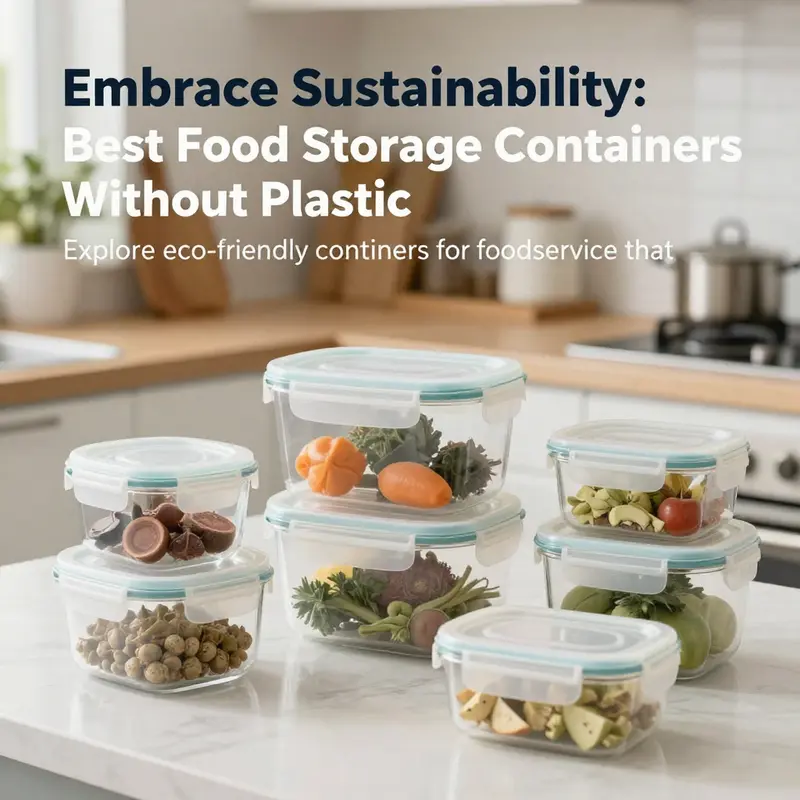
As consumers increasingly demand sustainable options, foodservice industries like bubble tea shops, restaurants, and catering services must adapt to eco-friendly practices. One essential aspect of sustainability is the choice of food storage containers. This guide delves into the best non-plastic alternatives, including tempered glass for safety, durable stainless steel, and innovative sugarcane bioplastics. Each type of container is examined for its unique benefits and suitability for various business needs. By understanding these options, you can enhance your operational sustainability while delighting your customers.
null
null
Stainless Steel for No-Plastic Kitchen Storage: Durability, Safety, and Everyday Versatility
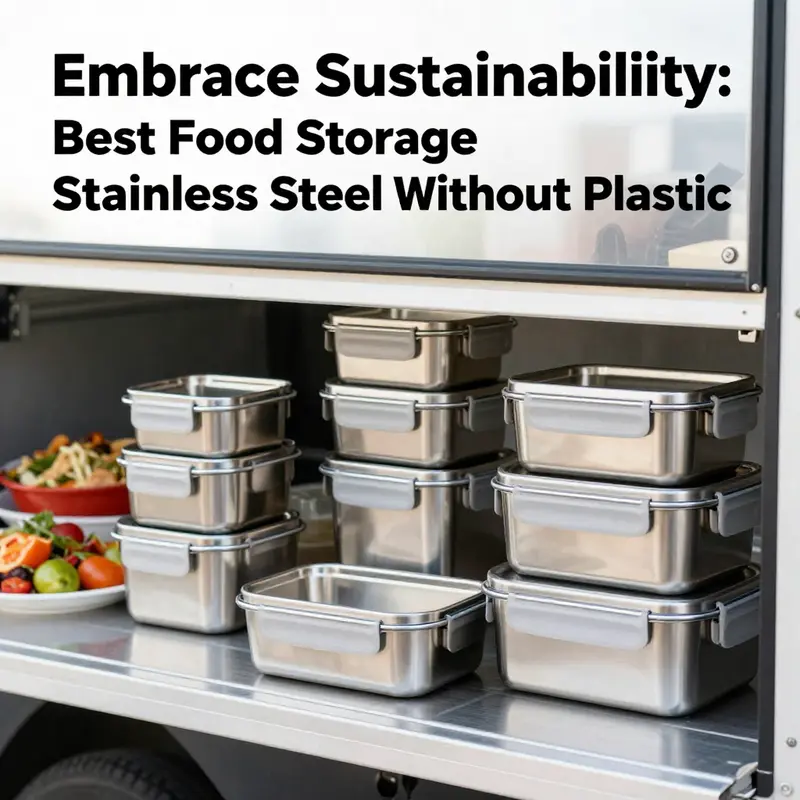
Across the spectrum of no-plastic food storage solutions, stainless steel stands out not just for rugged durability, but for the chemistry of safety it offers in daily use. It is a material that has earned trust in homes, schools, and workplaces because it resists corrosion, stands up to temperature swings, and interacts with food in a fundamentally inert way. When you pivot away from plastic, you’re choosing a path that reduces chemical exposure and microplastic risk, and stainless steel sits at the heart of that path. In practical terms, these containers bring together safety, longevity, and a level of versatility that is hard to match with other non-plastic options. The narrative around stainless steel storage is less about flash and more about sturdy reliability—the kind that turns a crowded cabinet into a well-organized, low-stress zone where leftovers, meal preps, and pantry staples live without compromise.\n\nAt the core of stainless steel storage is 304-grade stainless steel, a widely adopted standard in kitchenware. This alloy is renowned for its corrosion resistance and its ability to hold up under repeated contact with acidic or fatty foods, the kinds of realities that test every kitchen container. When you choose a container built from this material, you are selecting a surface that is largely inert in contact with food. It does not absorb odors or flavors the way unglazed ceramics can, and it won’t leach plasticizers or other contaminants into the meal you are about to enjoy. The non-plastic argument here is not merely a preference; it is about minimizing the opportunity for material migration, especially as leftovers are stored overnight or reheated the next day. In this respect, stainless steel aligns with what researchers and environmental health advocates describe as a safer baseline for long-term storage, particularly when compared with plastics that may interact with heat, fat, and acidity over time.\n\nAnother defining strength is the airtight seal that many stainless steel containers offer when paired with appropriate lids. The seal is not just about keeping aromas contained; it is about preserving texture and preventing the ingress of moisture and air that can lead to rapid staling or spoilage. When the lid incorporates a food-grade silicone gasket, the combination of metal body and gasketed lid creates a reliable barrier against environmental fluctuations. The result is a storage solution that can extend the freshness window for many types of foods, from cooked grains and roasted vegetables to marinated proteins and soups. In the context of meal prep and leftovers, the ability to keep food fresh for an extended period helps minimize waste and supports more intentional cooking rhythms. This is particularly valuable for busy households where meals are planned, cooked, portioned, and then distributed across several days.\n\nDespite these strengths, stainless steel does carry its own considerations. One notable trait is its lack of transparency. Unlike glass, stainless steel doesn’t allow you to identify contents at a glance, which can slow down quick decisions in a crowded fridge. For many households, this is mitigated by labeling containers or maintaining a simple color-coded system for lids and seals. The ability to stack containers neatly also reduces kitchen clutter. Modern stainless steel sets are designed with stackable features that utilize nesting and uniform dimensions, translating to compact storage in cabinets or refrigerators. The result is a modular system that can grow with your family’s needs without adding bulk or weight. It is also true that steel, while exceptionally durable, weighs more than plastic or certain glass options. For portability think lunch boxes, picnics, or car trips the weight is a trade-off against the permanence of a container that can endure the rigors of travel without cracking or leaking.\n\nIn terms of performance, stainless steel holds up across a broad range of temperatures, which suits the realities of freezing and reheating. The material itself is stable when exposed to subzero conditions, and its resilience extends to the way it interacts with a refrigerator or freezer environment. When reheating is involved, the discussion becomes a little more nuanced. The material can withstand reheating, but the lid mechanism often requires careful handling. A sealed lid that includes a gasket must be monitored for integrity over time; silicone seals can degrade with repeated heating cycles or if they are not cleaned and dried properly. It’s worth noting that the safety calculus in stainless steel storage doesn’t rely on the container body alone. The seal and the lid are crucial as well, and they should be composed of food-grade materials that won’t introduce off-flavors or contaminants. This is a reminder that even within a non-plastic framework, the total system—body, lid, gasket, and any decorative finishes—matters for long-term safety and performance.\n\nCare and maintenance are another practical dimension to consider. Stainless steel is famously forgiving, but it is not index-free. To preserve the surface’s pristine appearance and its corrosion resistance, you should avoid abrasive cleaners that can scratch the metal, and you should dry the container thoroughly after washing. A small accumulation of water in a seal can encourage mold growth in the gasket area, which undercuts both safety and aroma integrity. Most families find it helpful to hand-wash the lid-and-seal components, then air-dry completely before reassembly. Dishwashers, while convenient for stainless steel, can place additional wear on silicone gaskets or cause minor corrosion on less robust jewelry-like finishes; following the manufacturer’s care instructions remains the best practice. In daily use, these steps translate into a long, burly life for the container years, not months, of dependable storage that never compromises the quality of what’s inside.\n\nWhen contemplating the everyday kitchen landscape, the choice between stainless steel and glass often comes down to priorities. Glass offers superb inertness and visual transparency, while stainless steel offers unmatched durability and a lighter touch for outdoor living or travel. For people who want to keep foods hot or cold for extended periods, stainless steel’s robust insulation options and rugged construction can make an important difference in maintaining the right temperature on the go. Yet the question of whether steel is microwave-safe remains nuanced in real-world use. The truth is that, in practical terms, steel containers are not heated in microwaves; the metal interferes with microwave energy. The research landscape supporting non-plastic solutions simply reframes this reality: you can’t rely on metal containers to perform as microwave-safe cook-and-serve vessels, but you can use them to store and reheat in conventional ovens or on stovetops where appropriate, as long as you comply with safety guidelines and use heat-tolerant lids. In other words, the stainless steel option supports a lifestyle oriented toward durable, reusable storage, not for direct microwave reheating.\n\nThe design language of non-plastic storage today favors modular, space-efficient, and maintenance-friendly configurations. Contemporary stainless steel sets emphasize ease of use as much as ruggedness. Containers are engineered to nest within each other, a feature that makes a household pantry look more organized than ever. The nesting capability saves precious cabinet real estate and translates to a more efficient kitchen workflow when preparing meals for the week. In practice, this means you can portion meals and store them in a corridor of organized metal shells that are simple to grab, reheat, and enjoy. The lack of plastic in the primary container body is part of a broader ethic that some households adopt to minimize chemical exposure and environmental impact. It isn’t just about one container; it is about a philosophy of reuse and durability that aligns with long-term sustainability goals.\n\nIn the wider context of non-plastic options, it is useful to keep a few guiding principles in mind. First, material safety is anchored in the quality of the metal and the presence of a food-grade seal for the lid. Look for containers produced with a reliable grade of stainless steel and ask about compatibility with acidic foods, heat exposure, and cleaning methods. Second, the practicality of sealing mechanisms matters. A leak-proof seal that remains secure through daily use helps maintain freshness and reduces the temptation to transfer foods into plastic containers for transport. Third, the overall lifecycle matters. Stainless steel containers are durable, reusable, and repairable; they can outlast multiple sets of plastic equivalents if cared for properly. This longevity is not just about reducing waste; it is about reducing the demand for production cycles that generate environmental impact. The moral of the story is simple: when you choose stainless steel, you are investing in a robust system that supports a non-plastic ethos without forcing daily compromises.\n\nFor readers exploring non-plastic storage beyond the metal option, it is helpful to visualize how different materials fit into a broader routine. Stainless steel serves as a backbone for everyday storage, while tempered glass can fill specific needs, such as transparent, oven-safe options for braising or reheating portions in predictable conditions. Sugarcane-based bioplastics, though typically designed for disposable use, demonstrate another facet of the non-plastic spectrum: compostable alternatives that minimize long-term waste in contexts where reusability is not the goal. The landscape is about balancing safety, durability, and environmental footprint in ways that align with your household’s values and routines. When in doubt, begin with a core stainless steel system—an investment that supports longevity, minimizes chemical exposure, and remains versatile across a wide array of foods and scenarios.\n\nA practical takeaway from the deeper material science and usage patterns is that stainless steel provides a compelling baseline for those seeking no-plastic storage. It addresses health concerns about chemical migration, offers durable performance under freezing and reheating cycles, and supports a clutter-free kitchen with design-minded, stackable forms. The lids with silicone gaskets add a reliable seal that preserves texture and aroma, preserving the integrity of leftovers and meal-prep portions alike. Transparency is traded for reliability, but this is a trade-off many households are comfortable making for the stability and ruggedness stainless steel delivers. If you want a concrete path forward, choose a set built from 304-grade stainless steel with a food-grade silicone seal. Prioritize lockable, airtight lids. Aim for stackable configurations that reduce cabinet space usage. And pair your metal containers with clear labeling and a straightforward color or shape system to counterbalance the lack of transparency. In daily practice, that combination tends to be the most satisfying and sustainable route providing peace of mind as you store, transport, and reheat food across weeks and seasons.\n\nTo see how these ideas translate into real-world choices, you can partially explore the landscape by looking at adjacent non-plastic packaging solutions that appear in the same market ecosystem. A relevant reference point is a disposable kraft paper bowl page, which illustrates the contrast between single-use and long-lived storage options within the broader no-plastic sphere. See the following product page for context: disposable-700ml-kraft-paper-bowl-take-out-octagonal-rectangle-paper-bowl. This link, while not about stainless steel, helps illuminate how non-plastic choices are presented to consumers and how non-plastic thinking permeates various packaging decisions. It is helpful to consider these contrasts as you build a non-plastic storage system that emphasizes reuse, safety, and sustainability. The aim is to foster a kitchen ecosystem where metal containers form the backbone of the everyday, with glass or compostable options filling specific needs for heat tolerance or disposal contexts.\n\nIn sum, stainless steel storage embodies a persuasive blend of safety, durability, and practical design that matches the demands of modern life. It aligns with non-plastic ideals while offering the reliability needed for busy households, outdoor adventures, and long-term pantry organization. The emphasis on inert contact with food, robust sealing, and stackable geometry makes stainless steel a dependable anchor in any no-plastic pantry. While no single material holds all answers for every scenario, stainless steel consistently provides a strong foundation for those who want a durable, reusable, and safe non-plastic storage system that truly supports daily life without compromise. External considerations, such as caring for seals and avoiding improper microwave use, round out the guidance and help ensure that your investment remains sound for years to come. External resource: https://www.alibaba.com/product-detail/Nicety-NI001-BXH-Stackable-airtight_1600598884323.html
Sugarcane-Based Bioplastics: A Plant-Powered Path to Non-Plastic Food Storage
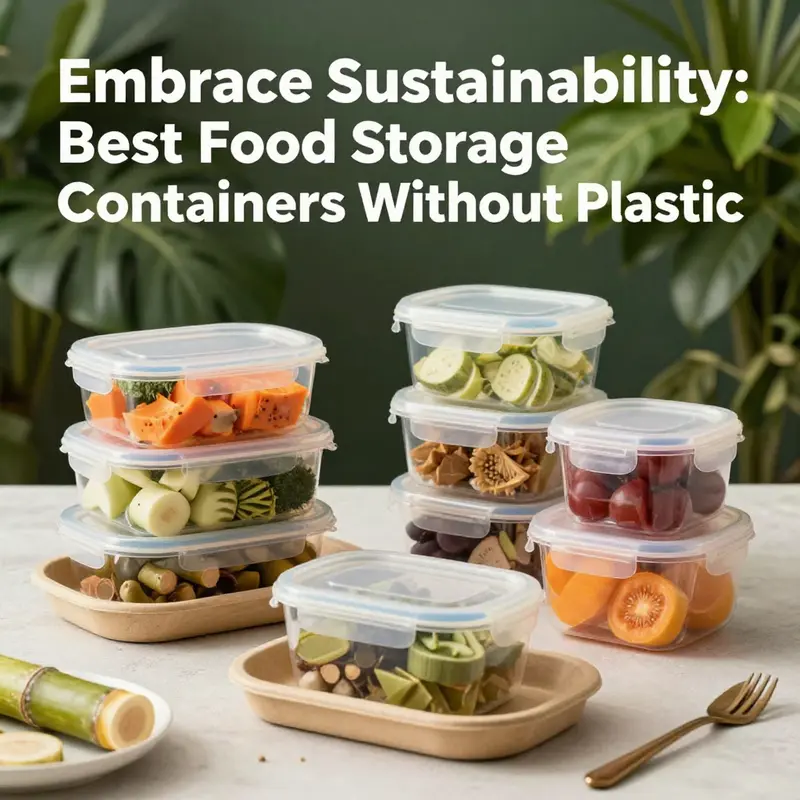
When the conversation turns to non-plastic food storage, most people imagine glass that gleams with simplicity or metal that feels sturdy in hand. Yet a newer class of materials—sugarcane-based bioplastics—appears at the intersection of performance, convenience, and environmental stewardship. They offer a compelling blueprint for how renewable resources can replace petroleum-derived plastics in everyday use, especially for disposable or single‑use containers that still need to perform reliably from pantry to microwave to takeout bag. This chapter follows that thread, tracing how plant‑based bioplastics built from sugarcane pulp can transform our approach to storing and transporting foods without relying on traditional plastics.
Sugarcane-based bioplastics are born from a resource that grows quickly, requires relatively modest inputs, and returns to the earth with a lighter footprint than conventional plastics. The core idea is straightforward: take the fibrous byproducts of processing sugarcane and press them into shape, forming containers that are biodegradable and compostable under suitable conditions. The result is a product that can hold hot or cold foods, travel through a busy day, and then break down when appropriate in industrial composting streams. The environmental rationale is clear enough on the surface. If a material is renewable, reduces fossil resource dependence, and can return to soil or compost rather than lingering in landfills for centuries, it earns a serious place on the table of non-plastic storage options.
The practical implications, however, require nuance. Sugarcane pulp containers are designed to perform as sturdy, leak‑resistant vessels, capable of withstanding the rigors of meal prep, packing, and transport. They do not smudge or warp under typical kitchen temperatures, and they resist the grease and juices that often challenge disposable wares. Importantly, these containers are marketed as compostable and biodegradable—terms that signal a different end-of-life path than traditional plastics. They are intended to be broken down into organic matter rather than persisting as microplastics in soil and waterways. In practice, this often means industrial composting facilities are the most reliable route for full decomposition; some home compost setups may not achieve the same results. Understanding this nuance helps consumers balance convenience with responsibility, choosing an option that aligns with their local waste infrastructure and personal values.
A key narrative in the sugarcane story is versatility. The material is typically molded into a range of shapes and sizes, from small bowls to larger take-out clamshells. In the realm of storage, a standout example is the 34‑ounce disposable container crafted from sugarcane pulp. It demonstrates how a single-use option can be robust enough to handle a variety of meals—from hearty leftovers to fresh-careful-prepped lunches—while still offering the possibility of composting after use. The container’s durability is not about pretending it will endure the same repeated cycles as glass or stainless steel; rather, it is about delivering reliable performance for one or a few uses with a clear end‑of‑life path. It is also a reminder that non-plastic storage does not always mean reusability. In many everyday contexts, the most responsible choice may be a disposable option that travels well and leaves a smaller environmental footprint at discard.
Beyond the performance metrics, the plant-based origin matters for more than a single product line. Sugarcane pulp represents a sector of bioplastics that aims to close the loop in a circular economy model. By relying on a renewable feedstock that regrows season after season, these materials reduce dependence on fossil fuels. They also leverage agricultural byproducts that might otherwise go to waste, turning them into value-added packaging. In practice, this translates to a system where the feedstock’s life cycle—grow, harvest, process, mold, use, dispose—offers lower net environmental impact than conventional plastics. Of course, the real-world impact depends on multiple factors: the energy used in processing, the presence or absence of additives or coatings, the conditions required for safe disposal, and the local waste-management landscape. Still, the trajectory is compelling: sugarcane-derived containers align with a growing consumer and producer interest in materials that are renewable, responsibly sourced, and end‑of‑life manageable.
To researchers and policy watchers, the bioplastic story also carries a cautionary note. The benefits hinge on compassionate supply chains and robust end-of-life infrastructure. If industrial composting facilities are scarce or if composting is not available in a community, the disposal solution may revert to ordinary waste. In such circumstances, the environmental gains can be diminished. That is why the best-use scenarios for these containers emphasize compatibility with established composting streams, along with clear labeling that informs users about proper disposal. Education, then, complements innovation: a user who understands that a sugarcane-based container is designed to break down in composting conditions is more likely to map it to the correct lane in the waste-stream system.
From a consumer perspective, the value proposition rests on three pillars: trust, convenience, and responsibility. Trust arises from the consistent performance of the material in common kitchen use—heat tolerance, leak resistance, and a feeling of safety that the container won’t leach unwanted substances into food. Convenience is measured by how easily these containers fit into busy routines: their microwave safety for reheating, their ability to preserve leftovers without sacking aromas into the fridge, and their compatibility with typical lids or seals. Responsibility completes the circle, because choosing a plant-based, compostable option signals a personal commitment to reducing plastic waste even when it is convenient to default to familiar plastic ware.
The discourse around non-plastic storage inevitably circles back to how such choices intersect with daily life. While glass remains the gold standard for long-term storage and inertness, it is heavier and prone to breakage; metal containers are durable but can be opaque and sometimes expensive. Sugarcane-based bioplastics offer a complementary path: a disposable option with a lower environmental footprint than conventional plastics, yet with enough resilience to be practical for takeout and on‑the‑go meals. For some households, it becomes part of a broader strategy that also includes reusable glass or stainless steel for bulk storage and repurposing, paired with compostable disposables for meals out, events, or quick takeout needs. In this light, non-plastic storage is less about choosing one material over all others and more about building a layered system that matches use cases with end-of-life pathways.
Another dimension is the potential ripple effects in supply chains. A shift toward plant-based packaging can ripple through agricultural practices, waste-management capabilities, and consumer behavior. When retailers and restaurants adopt compostable sugarcane-based options, they send a signal to farmers and processors that renewable feedstocks are not merely a green talking point but a viable business line. This, in turn, can encourage more efficient sourcing and better waste valorization—creating a feedback loop in which environmental gains reinforce economic viability. Yet the vision remains aspirational rather than universal. Not all communities have the same composting infrastructure, and not all households can readily segregate disposables for compost. The best path forward is one that recognizes local realities while continuing to push for advances in materials science, waste science, and public policy that support a broader, more effective network of end-of-life options.
In this sense, the sugarcane narrative sits alongside the broader set of non-plastic options discussed earlier in the chapter. Tempered glass continues to be the best option for reusability and safety in the long term, especially for those who want to minimize chemical exposure and enjoy decades of use with proper care. Stainless steel offers durability and portability for active lifestyles, though care with lids and visibility of contents can pose small hurdles. Sugarcane-based bioplastics then fill a different space: a compostable, microwave-safe, sturdy alternative designed for occasional reuse and, more importantly, responsible disposal. It is about choosing the right tool for the job and recognizing that not every container needs to be reused endlessly; some can be designed to become part of a restorative waste system that returns nutrients to the soil.
For readers evaluating options, consider the life cycle of the container from purchase to end-of-life. How was the feedstock sourced? Is the container labeled for industrial composting, home composting, or both? What happens if it is accidentally heated beyond its recommended limits, or if the lid is left ajar and moisture accelerates degradation? These questions matter because the answers reveal real-world implications beyond the beauty of a glossy brochure. The science and the practice must align in everyday routines to achieve meaningful environmental outcomes.
A practical takeaway is simple in concept: sugarcane-based bioplastics provide a credible, plant-based path for non-plastic storage that can complement glass and metal in a household’s arsenal. They are especially useful for disposable or takeout packaging where a strong end-of-life story matters as much as performance in the kitchen. When integrated thoughtfully into a broader storage strategy, they help reduce plastic leakage into ecosystems while maintaining user-friendly experiences—the very balance that makes non-plastic choices attractive in the first place.
For those who want a broader sense of the landscape and more concrete examples in the market, a representative option exists as a disposable bag of possibilities. It demonstrates that plant-based manufacturing can yield products that are truly suited to meal prep and takeout while proudly claiming compostability as part of their identity. While not every sugarcane-based container will meet every need, the path they illustrate—renewable feedstock, lifecycle transparency, and end-of-life options—offers a compelling template for future packaging solutions. As consumers increasingly weigh convenience against responsibility, these plant-powered innovations stand as a reminder that the materials we reach for in our kitchens can help shape a cleaner, more circular economy without sacrificing everyday practicality.
Internal link note: for a tangible illustration of biodegradable, compostable take-away ware that aligns with this broader movement, you can explore this example: biodegradable eco-friendly take-away kraft paper bowl.
External resource: https://www.amazon.com/dp/B0CQZVJX8K
Non-Plastic, Fully Prepared: A Cohesive Guide to Glass, Stainless Steel, and Compostable Alternatives for Safe Food Storage
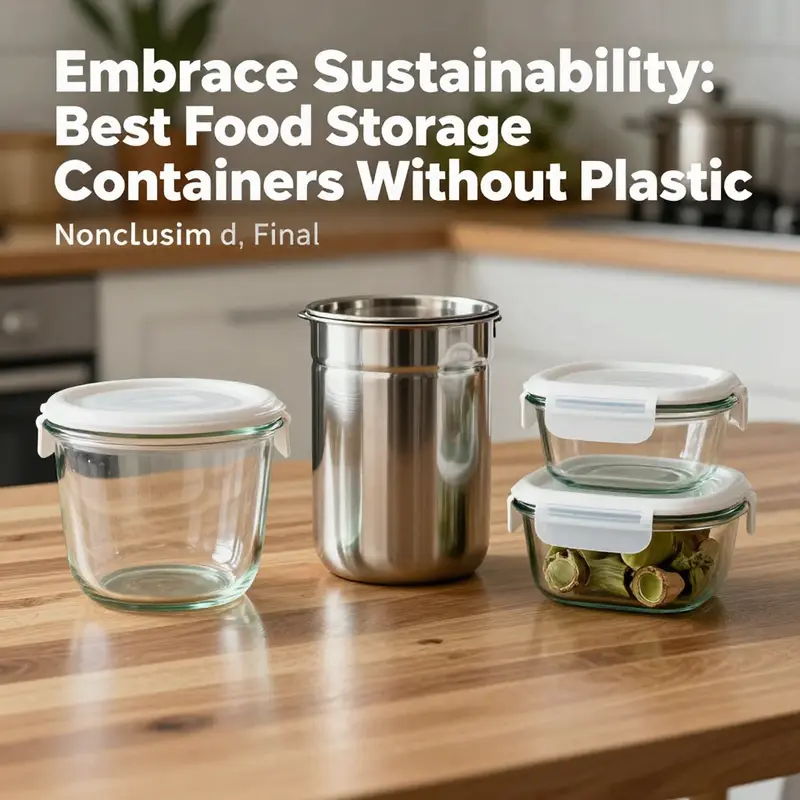
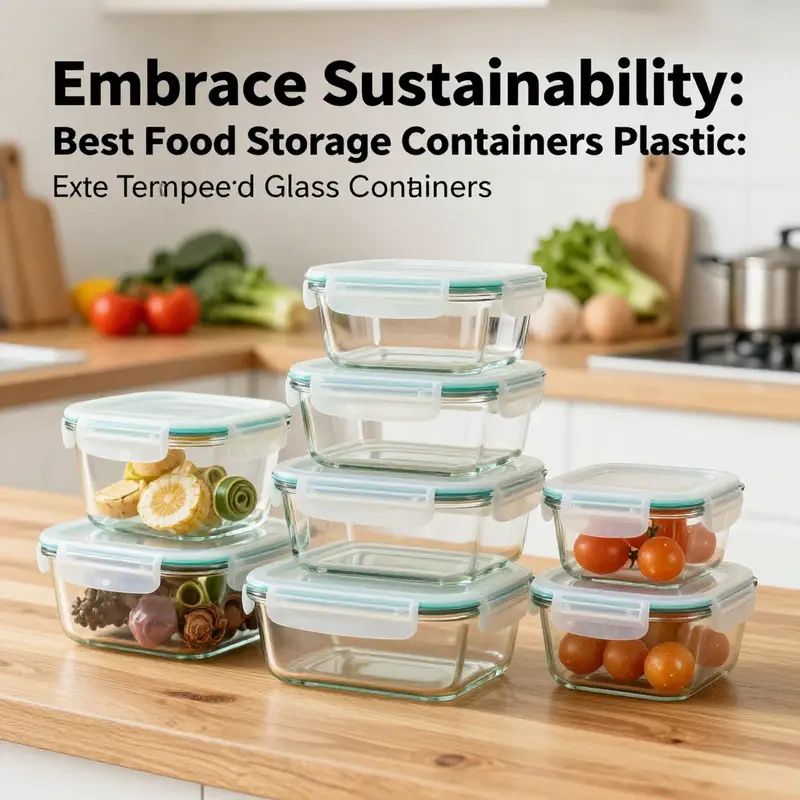
The final chapter in this focused inquiry into non-plastic food storage gathers the threads of safety, practicality, and responsibility into a single, coherent verdict. When the container that holds your leftovers or your meal prep is free from conventional plastics, a clear thread emerges: the materials you choose influence flavor, texture, and even long‑term health. Glass and stainless steel are not just durable vessels; they are gateways to a storage system that respects food as it is—delicate enough to require careful handling, robust enough to withstand daily life, and inert enough to prevent unwanted chemical interactions from heat, acidity, or time. The science behind these choices points to a simple, powerful truth: materials that resist interaction with food tend to preserve quality better over many cycles of use. Glass, in particular, stands out as chemically inert, a barrier that does not migrate or degrade into the food it touches. This is more than a technical detail; it translates into leftovers that taste like themselves after days in the fridge, not flavors borrowed from the vessel itself. An expert in environmental health notes that repeated freezing and reheating in plastic increases the likelihood of chemical migration. In contrast, glass avoids that risk entirely. While this explanation leans on the authority of safety science, the practical upshot is immediate and tangible: you can store, reheat, and freeze without worrying about contamination from the container itself. The tempered design of many glass storage options adds another layer of resilience—shattering resistance in exchange for long‑lasting clarity and smooth surfaces that resist odors and flavors from lingering. When you consider the fixture of the kitchen—where you store both soups and delicate sauces—the appeal becomes even more concrete. Glass maintains its transparency, making contents easy to identify at a glance, and its surface resists the stubborn staining that can cling to plastics after curry or garlic. It also forgives the occasional slip of the hand. Even after a trip through the freezer and a ride in the microwave or oven, tempered glass remains steady, withstanding temperature swings that would crack lesser materials. In this sense, it functions as a reliable partner for meal prep: a single, sensible choice that pays dividends in safety, taste, and convenience over time. And because glass does not absorb odors, it keeps a kitchen free from the cross‑contamination that can accumulate in porous containers. The convenience extends to the practicalities of everyday life. A well‑designed glass storage system with airtight lids—often made from silicone, a non‑plastic sealing material—provides the leak‑proof performance families and individuals depend on. The lid becomes not just a cover, but a seal that preserves moisture and freshness while keeping the contents visually accessible. The upshot is simple: you gain reliability in day‑to‑day storage, which reduces waste, keeps flavors true, and minimizes the need for re‑transfers between containers. While glass is outstanding, stainless steel adds a complementary dimension. Stainless steel is the workhorse of rugged durability. It stands up to drops, transport, and the rigors of outdoor life without losing integrity. It is naturally BPA‑free and non‑toxic, and its non‑reactive inner surface protects both acidic and non‑acidic foods alike. The trade‑offs, however, are practical as well as aesthetic. Stainless steel containers are not transparent, so it takes a moment longer to confirm contents at a glance. They also demand a careful approach to lids and seals, since many stainless options rely on metal or silicone closures to achieve a leakproof performance. Yet for those who prize portability, thermal resilience, and a lightweight profile, stainless steel offers an ideal complement to glass. It travels well, survives the outdoors, and is highly resistant to denting and corrosion. Together, these two materials—glass for visibility and inertness, stainless steel for durability and transport—form a balanced, plastic‑free toolkit. This balance is not accidental. It reflects a careful assessment of how we store a range of foods: from delicate greens and soups to bulk grains and leftovers that must be reheated safely. A high‑quality glass jar with an airtight seal can be a pantry anchor, preserving dryness and preventing moisture ingress for dry goods. In the freezer, the same jar maintains its integrity and ease of use, without introducing off flavors or leaching residues. In the microwave or oven, tempered glass handles heat more gracefully than many plastics, reducing concerns about warping or migration of additives. This makes glass a natural central piece for meal prep routines that prioritize safety and longevity. Yet the landscape of plastic‑free storage also extends beyond reuse and resilience. There is a place for disposable, compostable options when needs arise—takeout, events, or single‑use conveniences—where the aim is to minimize environmental impact while avoiding conventional plastics. Sugarcane‑based containers, formed from renewable fiber, represent an eco‑friendly disposable class. They are designed to be industrially compostable and suitable for hot and cold foods, providing an option that aligns with broader sustainability goals. It is important to note that these sugarcane products are intended for one‑time use; they excel in contexts where reuse is impractical but compostability remains a priority. They reduce fossil fuel inputs and the accumulation of traditional plastics in waste streams. Industry standards and testing back up these claims, giving sustainability‑minded households a credible option that complements the reusable non‑plastic toolkit. The broader environmental logic here connects to a growing body of evidence indicating that avoiding plastics reduces exposure to certain chemical leachants and reduces microplastic ingestion risks over time. The National Institute of Environmental Health Sciences has highlighted the concerns around plastics, prompting a closer look at safer storage alternatives. In practice, this means the kitchen can become a living demonstration of precaution and responsibility: glass and stainless steel for everyday storage and heat handling, with compostable sugarcane solutions reserved for occasions when a disposable option is truly advantageous. As one moves through this decision space, it becomes clear that the plastic‑free kitchen is not a monolith but a layered system. For many households, the simplest, most impactful approach is to assemble a core glass set with airtight silicone lids, paired with a sturdy stainless steel secondary set for on‑the‑go meals and snacks. The glass pieces offer transparency and inertness, while the steel set supplies rugged durability for workdays, travel, and outdoor adventures. The silicone lids, non‑plastic in character yet highly practical, seal in freshness and prevent leaks without resorting to traditional plastics. This combination reduces the need to mix materials that might interact over time, while preserving versatility across freezer, microwave, and oven use. In practice, a well‑considered collection looks and feels like a natural extension of daily routines. It begins with a core group of glass containers in a range of sizes to accommodate everything from a lone yogurt jar to a family‑size soup. Each piece is chosen for its ability to be washed easily, withstand temperature changes, and maintain its form without warping or clouding. The lids are silicone, designed to create an airtight seal, and the containers are designed to nest neatly for compact storage when not in use. The stainless steel complement can be a more compact option for lunches, gym bags, or car rides, where the combination of durability and heat resistance is particularly valuable. For those who prepare meals in advance, the glass containers can be used in the oven for crisp finishes or reheating, while avoiding any risk of plastic migration during the process. Meanwhile, the steel containers can serve as a robust alternative for bulk items and on‑the‑go meals, where the container itself can handle rough handling and changes in temperature without losing its seal. Beyond this core pairing lies a suite of non‑plastic accessories that extend the life and usefulness of the system. Fabric produce bags and beeswax or vegan wraps offer breathable, reusable options for storing fresh produce or covering bowls, reducing the need to wrap foods in any form of plastic or plastic‑like materials. Cotton produce bags stay breathable, helping to slow spoilage by maintaining air exchange, especially for fruits and vegetables, while beeswax wraps provide a flexible, reusable method for sealing bowls and wrapping sandwiches. These accessories help close the loop on plastic avoidance without compromising convenience. They also invite a more mindful approach to food storage—one that values the sensory qualities of food and the way it ages. For households that occasionally face single‑use needs or takeout scenarios, there is a natural place for compostable sugarcane packaging. While not reusable, these containers offer a credible route to reduce waste, especially in contexts where the logistical burden of return or cleaning is high. It is essential to recognize that the compostable option does have its own constraints, including the need for industrial facilities to process the material and the potential limitations on microwave or oven use. Yet in terms of life cycle, the sugarcane path avoids the persistent end‑of‑life problems associated with traditional plastics, aligning with a broader appetite for sustainable, low‑impact packaging. The decision framework for selecting non‑plastic storage hinges on several practical criteria: the foods being stored, the frequency of reheating, the desire for visibility, and the willingness to invest in longevity. If your goal is to maximize safety, minimize chemical exposure, and reduce flavor contamination, glass with airtight silicone lids is your strongest baseline. If you crave sturdy, portable options that tolerate rough handling and require little care, stainless steel becomes indispensable. When the aim is to minimize waste for occasional takeout or events, compostable sugarcane containers offer a viable, eco‑friendly alternative. The key is to design a system that reflects your routines rather than forcing a one‑size‑fits‑all approach. In practice, most households benefit from a core glass set for everyday storage, a supplementary stainless steel set for travel and bulk storage, and a small supply of compostable containers for limited, non‑reusable needs. To tie this conversation back to real‑world choices and ongoing research, consider that a growing body of evidence supports glass’s superior performance in preserving freshness and limiting chemical migration relative to conventional plastics. This evidence complements the lived experience of cooks and families who find glass’s reliability to be a defining feature of a plastic‑free kitchen. For readers seeking a practical way to explore non‑plastic options in daily life, there are accessible pathways to explore packaging and storage alternatives that align with this approach. For instance, take a look at the packaging options designed for sustainable, non‑plastic storage and presentation, such as wholesale custom printing of kraft paper storage solutions, which can reduce reliance on durable plastics in take‑out contexts and everyday transport. This option, while distinct from reusable containers, demonstrates how a plastic‑free mindset can permeate not only the home kitchen but the broader ecosystem of food storage and packaging. If you would like to see a compact example of such options, you can check a relevant product listing here: wholesale-custom-print-kraft-paper-food-storage-salad-noodle-bowl. The idea is not to replace every use of packaging with one product but to demonstrate the principle: every choice that avoids conventional plastics contributes to safer storage and a more sustainable system. In this sense, the plastic‑free kitchen is not about deprivation; it is about intentionality and resilience. It invites a reconsideration of how we store, heat, and transport food, and it rewards thoughtful selection with clearer flavor, fewer chemical worries, and a lighter environmental footprint. For readers who want to deepen their understanding of how non‑plastic materials perform in real life, the broader literature provides rigorous comparisons between glass and plastic in the context of leftovers and freshness. A peer‑reviewed study available in the scholarly literature offers detailed observations on how glass maintains its integrity and resists chemical migration under typical storage and reheating conditions, compared with conventional plastics. For those who would like to read more about this topic, an external resource that synthesizes these insights is available here: https://www.sciencedirect.com/science/article/pii/S002244992300185X. The chapter thus closes with a practical, grounded framework: prefer glass for everyday storage, pair it with stainless steel for durability and transport, and reserve compostable options for limited, single‑use occasions. The overarching message is straightforward and actionable: choosing non‑plastic containers is a meaningful step toward safer food storage, reduced exposure to unwanted chemicals, and a more sustainable relationship with the foods we nourish ourselves with.
Final thoughts
Selecting non-plastic food storage containers is a vital step for food service businesses aiming for sustainability. Tempered glass containers offer unmatched safety and longevity, ensuring your food stays fresh without harmful chemical leaching. Stainless steel containers combine durability and portability, making them perfect for caterers and food trucks on the go. For single-use needs, sugarcane-based bioplastics provide an eco-friendly option that doesn’t compromise on quality. By making informed choices about your packaging, you not only enhance your business’s reputation but also contribute positively to the environment.