
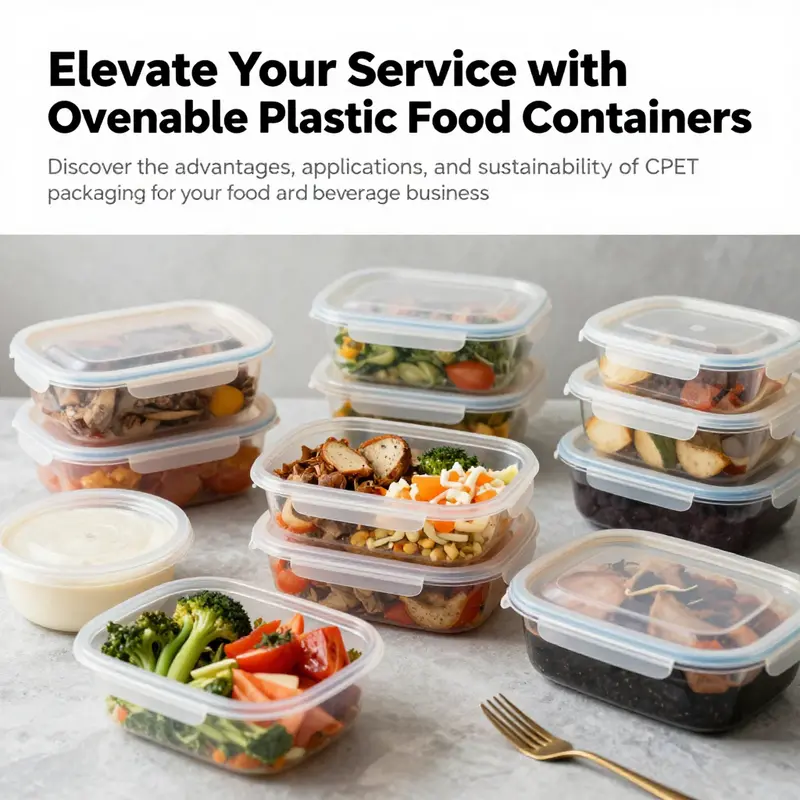
In today’s culinary landscape, the choice of packaging can play a pivotal role in how food and beverages are perceived and enjoyed by customers. Ovenable plastic food containers, particularly those made from CPET (Crystallized Polyethylene Terephthalate), have recently emerged as a transformative solution for various segments of the food service industry, including bubble tea shops, restaurants, and catering services. Designed to withstand high temperatures, these containers are not just ideal for storing and serving— they are engineered for versatility, usability, and sustainability. This comprehensive exploration will delve into the chemistry behind CPET, examine real-world applications within the food service sector, highlight current market trends, assess environmental impacts, and clarify regulatory standards—all while demonstrating how adopting this packaging can enhance your business’s efficiency and appeal. So, whether you’re a restaurant owner seeking reliable packaging, a beverage chain focusing on efficiency, or an event planner aiming for quality, this guide has something valuable for you.
Heat-Ready Chemistry: The Science, Safety, and Sustainability of Ovenable Plastic Food Containers
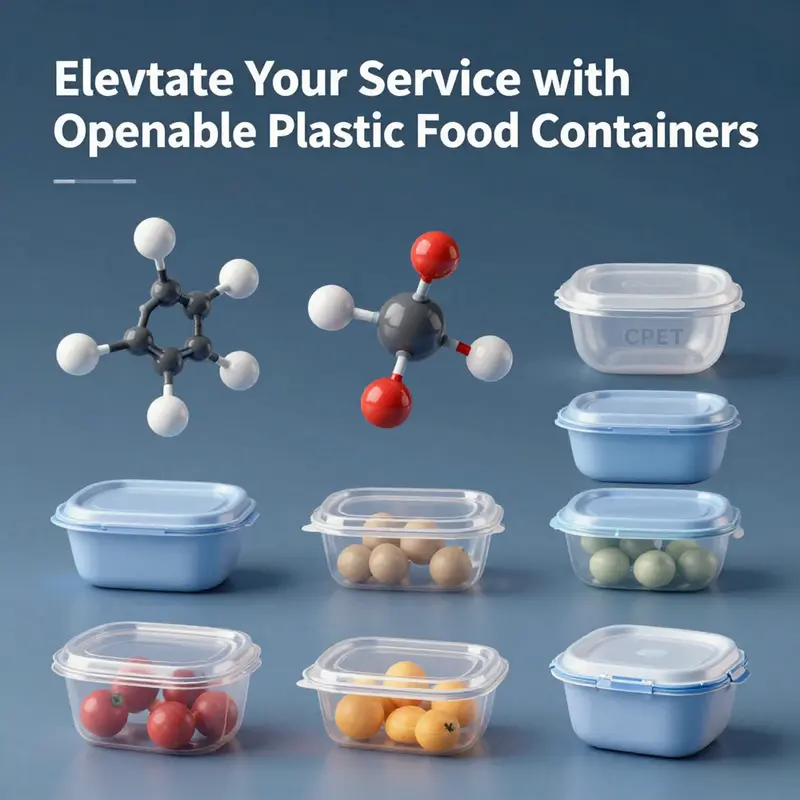
The promise of ovenable plastic food containers rests on more than convenience; it rests on a precise convergence of chemistry, engineering, and responsible design. These trays and bowls are designed to endure the rigors of cooking temperatures while preserving the integrity of the food they hold. In practice, materials like CPET—cyclically modified polyethylene terephthalate—are engineered to withstand heat far beyond typical room kitchen conditions. They can navigate a temperature spectrum that begins with the chill of a freezer and climbs to temperatures that would deform ordinary plastics, all without compromising the appearance, moisture barrier, or mechanical strength that keep meals looking appetizing after a bake or reheat. This capability has found early footholds in the airline industry, where weight reduction and reliability mattered, but the reach has grown to include ready-to-eat meals, takeout packaging, and frozen offerings. The functional appeal is clear: a single tray that can be stored, heated, and served while maintaining structural integrity and visual appeal. Yet the story behind CPET’s ovenable performance is not merely about heat resistance; it is a narrative of material science that explains why these containers behave the way they do under heat and why that behavior matters for safety, nutrition, and the environment alike.
Chemically, CPET emerges from PET through a cyclic stabilization process that strengthens its core structure against thermal attack. This cyclic treatment heightens thermal stability without eroding the material’s fundamental properties, such as clarity and barrier performance against moisture and oxygen. The result is a polymer that remains rigid enough to protect contents during oven heating, yet smooth enough to be formed into diverse shapes and sizes. Regulatory bodies recognize CPET as suitable for direct contact with food under clearly defined conditions. In the United States, guidance from the FDA, alongside CE and EU standards in other markets, underpins the safety framework that makes CPET ovenable at acceptable temperatures. But safety is not a license to ignore limits. The tender balance between heat, containment, and content becomes precarious when a container is pushed beyond its design window. Exceeding the recommended temperatures can lead to deformation, and in worst cases, the migration of substances from the container into food. While CPET itself is regarded as safe within its limits, the real-world risk emerges when the material is compromised by poor manufacturing practices, improper use, or repeated exposure to aggressive, high-fat foods that can facilitate migration of additives. Substances such as certain bisphenols and phthalates have drawn attention in broader packaging discussions as potential concerns when plastics are stressed by heat or degraded by repeated cycles. It is important to frame these risks not as a universal failure of plastics, but as a reminder that safety hinges on the entire system—from resin purification and quality control to usage conditions and food type.
Beyond CPET, the ovenable plastics landscape includes polypropylene and polystyrene, each bringing strengths in certain contexts. PP offers higher heat resistance and admirable chemical durability, which explains its popularity in reusable or expendable containers designed for moderate oven use. PS provides rigidity and clarity that can be advantageous for portions where visual appeal matters. Yet when it comes to enduring oven-heated meals that require reliable performance across a broad temperature range, CPET remains the most widely adopted solution, especially for the freeze-to-oven workflow that is central to many commercial kitchens and food-service operations. The material choice is never purely a technical decision; it is a calculus that weighs heat tolerance against barrier performance, downstream recycling considerations, and the practicalities of production lines. The goal is to ensure that the final product can transition smoothly from cold storage to heat without compromising food safety or quality, a requirement that has become more rigorous as consumer expectations evolve and regulatory landscapes tighten.
The regulatory dimension is moving toward greater clarity and more robust risk assessment. A notable development is the GB4806.7-2023 standard implemented in China in September 2024, which strengthens the framework for food-contact plastics by requiring that migration of harmful substances into food remains within safety thresholds and that manufacturers plainly label the maximum recommended heating temperature. Such standards fit into a wider, increasingly harmonized safety ecosystem that spans the United States, Europe, and other major markets. They reflect a broader movement toward transparency, traceability, and risk management that enables manufacturers to demonstrate how the packaging performs under real-world conditions. The migration concern intersects with environmental and public health considerations that go beyond a single product line. If plastics degrade in the presence of heat, microplastic fragments and associated chemicals can migrate into food and, eventually, the gut. Ecotoxicology and Environmental Safety has highlighted how degraded plastics can disrupt gut microbiota and provoke oxidative stress, with downstream impacts on vascular health in exposed populations. While this field continues to evolve, the practical implication for ovenable packaging is clear: the safer and higher-quality the resin and the processing, the lower the potential for harmful migration, especially when used as intended with appropriate foods and temperatures.
To address these challenges, researchers and manufacturers are exploring material innovations that balance performance with sustainability. Composite configurations, such as aluminum-plastic laminates, combine barrier strength with heat performance while pushing the envelope of recyclability and waste management. Paperboard with ovenable coatings—an approach sometimes branded in sustainability discussions as a path toward compostability or at least improved end-of-life options—offers an alternative path for certain service contexts. Biodegradable and bio-based variants such as poly(vinyl alcohol) and ethylene/vinyl alcohol copolymers promise improved environmental outcomes under specific waste-management infrastructures. Each of these options presents a set of trade-offs: barrier integrity, heat tolerance, optical clarity, manufacturing costs, and compatibility with existing recycling or composting streams. The core challenge remains constant: preserve food safety and quality while delivering reliable oven performance and moving toward a more sustainable lifecycle. In the consumer arena, these advances translate into clearer labeling, more predictable performance, and a menu of options tailored to different meals, service models, and environmental commitments. Consumers who rely on ovenable packaging now expect transparent communication about temperature limits, suitability for oily foods, and any certifications that attest to safety and sustainability.
The practical guidance that emerges from this scientific and regulatory framework is straightforward but vital. Use ovenable containers only within their specified temperature limits, and avoid cooking or reheating foods that exceed those limits unless the product design explicitly supports it. When dealing with high-fat, high-heat foods, be especially mindful of the potential for migration and consider alternatives that have been tested for those conditions. Certifications such as FDA approvals, CE marks, and national or regional standards help buyers and consumers differentiate products with robust testing and quality control from those with weaker assurances. The best packaging solutions are those that provide a consistent performance across a spectrum of use cases, while offering a clear path to safe disposal or recycling at the end of life. The packaging ecosystem benefits from a spectrum of solutions, from CPET trays to paper-based ovenables, and every option should be evaluated through the lens of safety, functionality, and environmental responsibility.
For readers exploring the broader packaging landscape, a paper-based option sometimes referenced in supplier catalogs offers a tangible contrast to plastic-based ovenability. The discussion of such alternatives highlights that the packaging world is increasingly about choosing the right tool for the right task—balancing heat resistance, barrier properties, and end-of-life considerations. If you are curious about a paper-based option that is actively discussed in supplier catalogs, you can explore further through a product page such as wholesale-custom-logo-printed-kraft-paper-soup-bowl. This example underscores how packaging choices today are not simply about material properties but about a holistic approach to safety, sustainability, and service design. wholesale-custom-logo-printed-kraft-paper-soup-bowl
The trajectory of ovenable containers is not a straight path but a continuing negotiation among heat tolerance, safety margins, and environmental accountability. CPET remains a robust backbone for many applications, but the pace of research, regulation, and consumer expectations pushes the market toward more transparent testing, smarter material selection, and clearer end-of-life strategies. In practice, this means packaging that can be trusted to perform under heat, while also delivering on commitments to safety and responsible stewardship of resources. For designers, manufacturers, and buyers, the imperative is to build products that withstand the kitchen’s heat with predictable results and to communicate those capabilities in a way that empowers informed choices. The result is a packaging ecosystem that serves the kitchen today and respects the environmental constraints of tomorrow.
External resource: FDA Guidance for Industry: Food Contact Substances https://www.fda.gov/food/food-contact-materials/fda-guidance-industry-food-contact-substances
Ovenable CPET Trays: From Airlines to Everyday Kitchens

Ovenable CPET trays, made from crystallized polyethylene terephthalate, have quietly transformed how food service handles heat and service flow. Their heat resistance, clarity, and single-use convenience enable a seamless transition from cold storage to oven or microwave heating, while preserving form and presentation. CPET’s crystallized PET matrix resists deformation at the temperatures common to reheating, typically ranging from -40°C to 230°C, making them reliable for both reheating and display. In busy kitchens, these trays reduce handling, lower wash loads, and help maintain portion control and texture during service.\n\nThe airline industry pioneered their use, valuing weight reduction, reliability, and hygienic disposable service. In cabins, CPET trays support refrigeration, reheating, and hot service without switching to heavier ceramic or metal ware. The same benefits translate to fast-casual, institutional dining, and home delivery, with shapes and multi-compartment layouts that keep sauces separate and textures intact. CPET trays often meet food-contact safety standards (for example, FDA oversight in many regions) and are increasingly offered with recycled content and recyclability credentials, aligning performance with sustainability expectations.\n\nCustomization and supply-chain considerations matter. Manufacturers offer a range of shapes, sizes, and compartment configurations to fit menu architectures and prep workflows. Branding, sealing-film compatibility, and the ability to range from hundreds of milliliters to several liters further extend use cases from single-portion meals to larger entrées. While ovenable packaging solves operational challenges, it also raises questions about waste streams and end-of-life processing, prompting suppliers to emphasize recyclability pathways and circular packaging programs as part of product stewardship.
From Freezer to Oven: How Ovenable CPET Containers Are Changing Kitchens

Ovenable CPET containers have become a practical bridge between storage and serving in both home kitchens and professional environments. CPET, or crystallized polyethylene terephthalate, combines heat resistance with clarity and rigidity, allowing foods to be stored in the freezer and heated in the oven without losing form or safety. The typical performance window spans roughly -40°C to 230°C, covering freezing, reheating, and even bake-like scenarios when used with appropriate tray designs. This versatility helps households prep in advance and enables caterers to move from chilling to hot plating in a single vessel.
In practice, CPET’s material science translates into reliable seals, predictable performance during repeated heat cycles, and transparent packaging that lets cooks and diners see the food. For operators, it can streamline workflows by reducing transfers between dishes and servingware, while enabling efficient space management in busy kitchens. Consumers benefit from lightweight, shatter-resistant packaging that travels well and minimizes waste when properly recycled in local streams.
As the market grows, demand centers on durability, safety certifications, and sustainability narratives. Trays and bowls come in multiple sizes and shapes, with airtight seals designed to preserve moisture and prevent leaks during reheating. Clear labeling and standard certifications reassure users that the container can withstand high-heat environments while remaining safe for food contact. The result is an ecosystem where packaging supports not only convenience but also consistent safety and quality across foodservice and home use.
null
null
Safeguarding Heat and Trust: Regulatory Standards and Safety in Ovenable CPET Food Containers
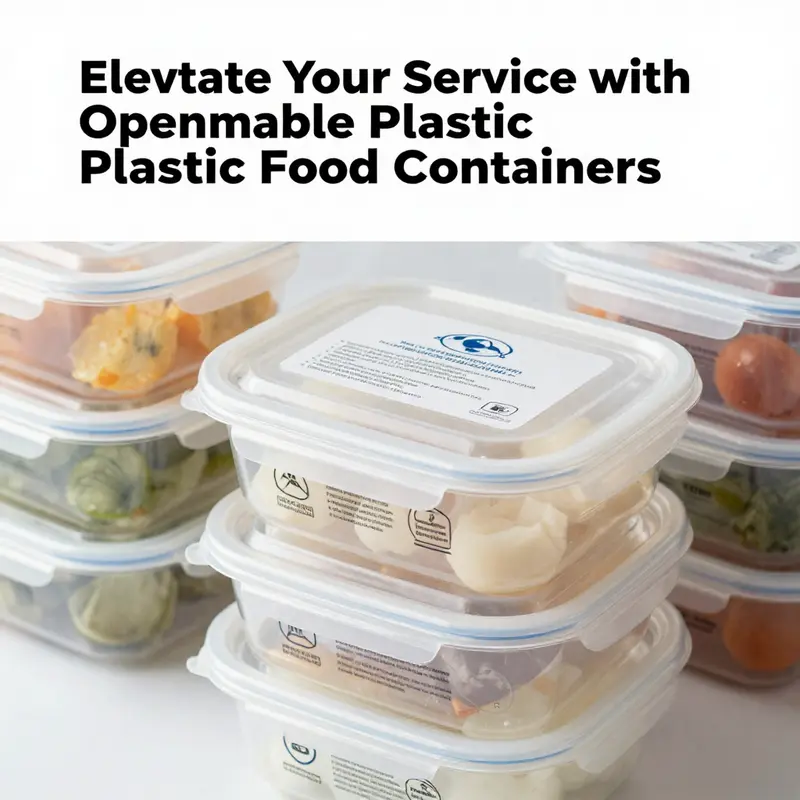
Regulatory oversight of ovenable plastic food containers is tightening as manufacturers push the boundaries of performance while policymakers demand greater safety, hygiene, and sustainability. The material at the center of this convergence is CPET, a crystallized form of PET engineered for high-temperature resilience. When used in ovenable and microwaveable packaging, CPET trays and clamshells promise efficient, heat-first meal workflows, from airline service to home delivery. Yet the very properties that enable this practicality—thermal stability, dimensional integrity, and clear presentation—also pose questions about migration, sterilization, and end-of-life management. The regulatory narrative, therefore, weaves safety, performance, and environmental responsibility into a single framework that industry must navigate with precision. In this landscape, standards are not abstract requirements; they are practical guardrails that shape every step of product development, from resin selection and additive formulation to the testing regimes that verify heat tolerance and surface cleanliness after repeated oven cycles. As markets expand and consumer expectations rise, the chapter of ovenable CPET packaging is increasingly written in standards language, yet it remains a story about real meals, real kitchens, and real concerns about health, safety, and sustainability.
A central hinge in this narrative is the evolving national standard structure that governs plastic disposable tableware. In China, for example, the scheduled revision of GB/T 18006.1-2025*, Plastic Disposable Tableware General Technical Requirements, represents a meaningful shift for CPET applications. This updated standard is designed to close gaps left by its predecessor by delivering clearer specifications pertinent to modern high-performance materials. CPET, with its heat resistance and structural durability, is a prime focus because it must withstand oven and microwave temperatures without compromising food safety or release of substances that could migrate into meals. The revision does not merely tighten the numbers; it redefines the framework for evaluating safety across use cases that extend from frozen storage to hot service and reheating. In practical terms, this means more explicit criteria for how materials perform at elevated temperatures, how resilient a tray is to repeated heating and cooling, and how packaging materials resist the migration of substances under thermal stress. It also signals a stronger emphasis on the end-to-end safety profile, including microbial safety, which remains a top priority for ready-to-eat meals and airline service where hygiene standards are paramount.
The updated GB/T 18006.1-2025 is also expected to sharpen rules around recyclability and biodegradability. For CPET and similar tray materials, this translates into clearer pathways for recyclability where facilities exist and more defined expectations for recyclability claims in packaging design. Biodegradability, while not a universal goal for all CPET forms, is being weighed more carefully for product lines that emphasize compostable or near-end-of-life solutions, ensuring that environmental narratives are grounded in verifiable end-of-life performance. Such revisions are not isolated abstractions; they directly affect how manufacturers select formulations, design barriers, and document testing. They also influence how downstream users—from airlines to food service operators—validate that the packaging they rely on meets the new regime of safety and environmental responsibility.
Beyond national standards, the ecosystem of international certifications remains a critical gateway to market access and consumer trust. In practice, many suppliers highlight food-contact safety credentials that align with recognized global regimes. The U.S. market, for instance, requires that materials intended for direct contact with food meet applicable FDA guidelines, a benchmark that speaks to both the chemical safety of the polymer and the stability of the finished container under high-temperature exposure. For CPET trays, FDA affirmation strengthens confidence that the material will not leach harmful substances during oven or microwave use. Equally important is third-party certification of recycled content, such as the Global Recycled Standard (GRS). GRS certification demonstrates that a product’s recycled content can be traced and verified, helping to offset the environmental footprint of packaging by validating responsible sourcing and processing practices. The convergence of FDA acceptance and GRS validation signals to buyers—whether in airline kitchens or household meal-prep operations—that safety and sustainability can travel together. In this sense, certification is not merely a badge; it is a practical passport for modern supply chains that demand verifiable compliance across jurisdictions and use scenarios.
Material science underpins these regulatory regimes and, in turn, informs how standards are interpreted and applied. CPET is valued for its ability to withstand rapid temperature changes and sustained heat exposure without losing structural integrity or clarity. The -40°C to 230°C operating envelope captures a broad range of real-world conditions, from freezer storage to oven reheating. Such resilience minimizes the risk of warping, cracking, or delamination that could create gaps in hygiene or compromise containment. Yet, high-temperature performance must be balanced with a conservative approach to migration and surface safety. Even when a polymer performs exceptionally in a controlled test, real-world use can present complex exposure scenarios—short heating bursts, stacked configurations, or contact with fatty foods—that influence migration dynamics. Standards bodies, therefore, emphasize robust, scenario-based testing, including long-term migration assessments and microbial safety evaluations, to ensure that the packaging remains inert with respect to the food it touches. The objective is not only to demonstrate that CPET can tolerate heat but also that it does so without creating risks to consumers or the environment.
For manufacturers and users alike, compliance requires diligent risk assessment and a disciplined development process. This means that material selection cannot be considered in isolation, but must be integrated with processing conditions, adhesive systems, and any barrier layers used in the tray design. Food-contact safety is also influenced by how trays are manufactured, cleaned, and sterilized in service environments such as airline kitchens or central commissaries. Each stage presents potential touchpoints for contaminants or unintended chemical interactions, so the testing framework guided by GB/T 18006.1-2025 and parallel international standards must encompass the entire value chain. In practice, this translates to comprehensive documentation—material safety data, batch-level testing records, and evidence of compliance with all applicable migration and hygiene criteria. The industry is increasingly turning to rigorous verification programs that couple supplier declarations with third-party testing to mitigate risk, a strategy that helps ensure that ovenable CPET trays deliver consistent performance and safety across thousands of cycles.
The regulatory conversation also dovetails with consumer expectations around Kosher and other dietary considerations, which intersect with how packaging is labeled and certified. CPET trays designed for Kosher compliance require careful handling in production, labeling, and use, to ensure that the packaging remains suitable for its intended dietary framework through all stages of storage, heating, and service. In a broader sense, ovenable CPET packaging is part of a larger trend toward safer, more hygienic, and more convenient meal solutions. Airlines and food-service providers have long valued the ability to move from cold storage to oven-ready service without switching to heavier or less flexible utensils. The regulatory framework reinforces the reliability of that value proposition by insisting that safety, cleanliness, and environmental responsibility are built into the packaging from the outset.
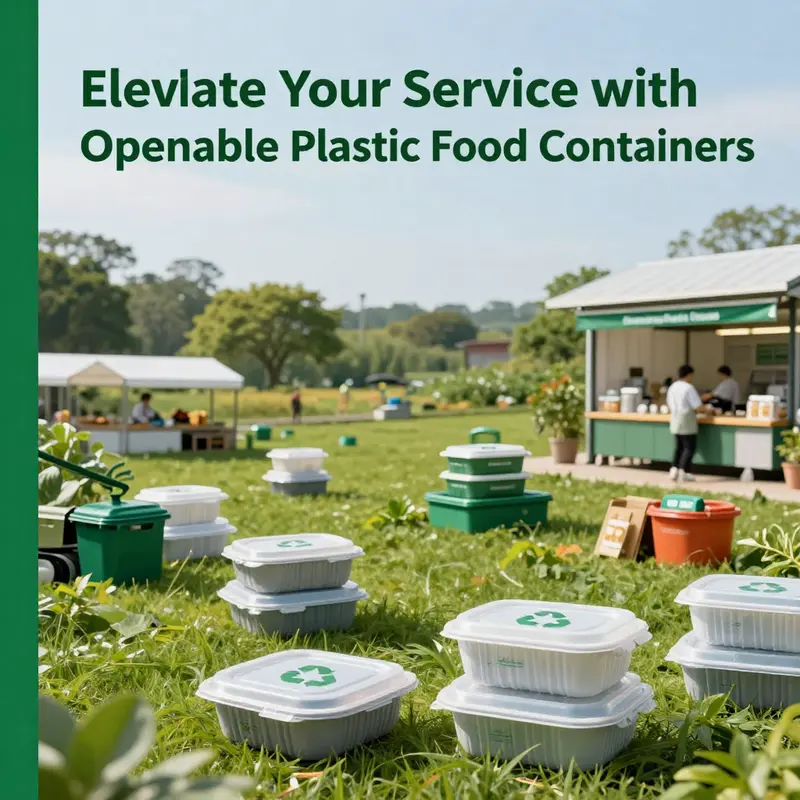
From a sustainability perspective, the conversation around ovenable CPET packaging is evolving with the same speed as the regulatory landscape. The updated standards push for clarity around recyclability claims and the role of recycled content in CPET formulations. While CPET offers clear performance advantages, its end-of-life trajectory depends on the availability of compatible recycling streams and the overall design for disassembly. Industry players are increasingly cautious about marketing claims that outpace the realities of recycling infrastructure. The approach that emerges is one of transparent reporting: clear disclosure of recycled content, acknowledgment of facility capabilities, and a commitment to ongoing improvement as waste-management technologies advance. In this context, certifications like GRS become not just marketing signals but practical assurances that recycled material is responsibly sourced and that the packaging aligns with broader sustainability goals. As standards bodies sharpen these expectations, manufacturers are urged to consider the entire lifecycle of their CPET products—from resin and additives through to end-of-life options—so that the pursuit of heat tolerance does not outpace responsibility.
The regulatory and safety accord around ovenable CPET containers does not exist in a vacuum. It is part of an integrated system that includes supply chain due diligence, quality control, and consumer education. In airline service, for example, rapid turnover and high-volume reheating require packaging that can withstand repeated heating cycles while maintaining hygiene. In home and commercial kitchens, the same properties support fast, reliable meal preparation without compromising safety. The standards framework helps ensure that these outcomes are achieved consistently, and it also provides a mechanism for continuous improvement as new materials, new processing methods, and new waste-management solutions emerge. The journey from raw resin to a finished, ovenable tray is thus a regulated, transparent, and collaborative process that seeks to balance performance with safety and sustainability.
For those exploring the broader landscape of packaging sustainability and material choice, a related example of responsible design can be seen in eco-friendly, recyclable pulp-based packaging. This reference point demonstrates how brands communicate recyclability and sustainability without sacrificing usability. eco-friendly recyclable pulp take-away cup holder offers a window into how packaging ecosystems are evolving to meet consumer demand for responsible choices while maintaining the convenience and hygiene standards that modern food service relies upon. As the CPET narrative continues to unfold, these parallel strands of innovation—rigorous safety standards, verifiable recycling content, and practical sustainability demonstrations—will shape a future in which ovenable packaging remains trustworthy, efficient, and increasingly aligned with environmental priorities.
External reference: https://www.alibaba.com/product-detail/HSQY-HSCPET-CPET-tray-microwavable-and_603734941112.html?spm=a2700.shopsearch-0-0.1.5f1c7d5b1d7a6H
Final thoughts
In conclusion, as food service businesses continue adapting to the needs of consumers for safety, convenience, and sustainability, ovenable plastic food containers made from CPET present a formidable solution. These containers not only enhance operational efficiency in meal preparation and delivery but also align with modern sustainability practices that consumers appreciate. Leveraging the versatility of CPET packaging helps businesses meet evolving consumer preferences while adhering to necessary regulations. As we move forward, embracing these advancements will undoubtedly keep your food and beverage offerings competitive and appealing.