
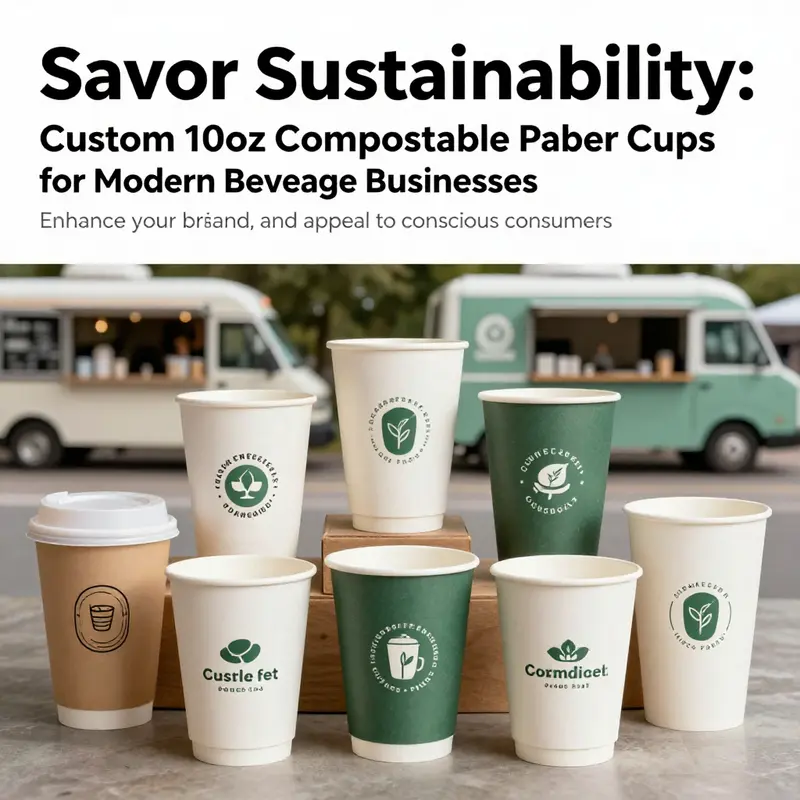
In a world increasingly conscious of its environmental footprint, custom 10oz compostable paper cups stand at the forefront of sustainable practices in the food and beverage industry. These cups not only serve as a practical solution for coffee, tea, and bubble tea but also cater to the growing demand for eco-friendly packaging among businesses and consumers alike. Through several chapters, we’ll explore the various features and benefits of these cups, uncover the current market trends and consumer preferences driving their popularity, and delve into the environmental impact of choosing compostable materials. Together, these insights will serve to highlight how adopting custom compostable cups can elevate your business, foster brand loyalty, and contribute positively to the planet’s future.
The Quiet Revolution in Beverage Service: Understanding Custom 10oz Compostable Paper Cups
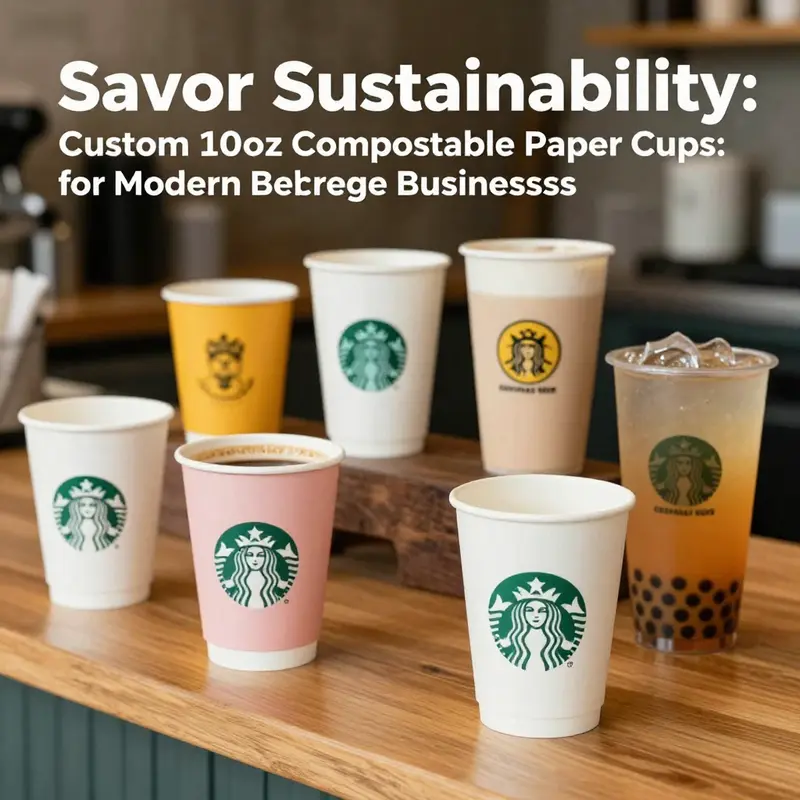
Beneath the surface of a bustling cafe line and a busy restaurant pass, a quiet revolution has taken hold in the way we think about single-use drinkware. The rise of custom 10oz compostable paper cups signals more than a trend in aesthetics or marketing; it marks a coherent shift toward packaging that aligns with a broader commitment to sustainability, consumer health, and responsible waste management. In this chapter, we explore the full spectrum of this seemingly modest product—its materials, its construction, its practical performance, and the nuanced ways it intersects with branding, policy, and daily operational realities. The 10-ounce size is not arbitrary. It sits at an intersection where hot beverages like coffee and tea meet cold drinks such as iced beverages, smoothies, and specialty drinks. It is small enough to be intimate, yet sturdy enough to serve as a practical vessel from the moment it leaves the barista’s hands to the consumer’s. What makes these cups truly transformative is not only their ability to hold beverages safely, but their ability to dissolve the distinctions between convenience and care, between a disposable moment and a lasting message about environmental stewardship.
At the core of these cups is their compostability. They are designed from renewable resources, primarily food-grade paper pulp. A key feature is the coating system: a biodegradable aqueous layer that protects the contents from leakage and preserves the cup’s integrity during use, yet breaks down under composting conditions. This is not merely a marketing claim; it is anchored in material science and waste management practices that distinguish compostable paper cups from conventional plastics and foams. In practice, the cup can decompose naturally in industrial composting facilities within a matter of months, a stark contrast to the centuries-long persistence of many plastics. The environmental payoff hinges on a reliable waste stream that actually takes the cup back into the cycle rather than leaving it to accumulate in landfills. When a business chooses these cups, it is signaling a belief that packaging should be part of a regenerative system rather than a one-way expedient. This shift is reinforced by consumer expectations: a growing segment of customers seeks brands that demonstrate transparency, accountability, and a consistent narrative about reducing single-use plastics.
The double-wall construction commonly associated with these cups adds another layer of value that goes beyond environmental considerations alone. The dual walls deliver superior thermal insulation, a practical benefit for both hot and cold drinks. For hot beverages, the outer wall remains cooler to touch, protecting customers from accidental burns while maintaining the beverage’s warmth for longer periods. For cold drinks, the insulation reduces condensation on the exterior, helping hands stay dry and preventing slippery surfaces. From a service perspective, the double-wall design also contributes to structural integrity. It helps the cup resist deformation as it travels from barista to customer, avoids tremors during transport, and reduces the likelihood of leaks when customers add cream, sugar, or other additions. In short, the double-wall system offers a combination of comfort, safety, and reliability that is particularly valuable in fast-paced foodservice environments where speed and consistency matter as much as environmental responsibility.
In addition to performance, customization is a central pillar of the value proposition. Modern customers do not merely consume beverages; they engage with brands through every touchpoint. Printing logos, brand colors, marketing messages, or limited-time campaigns directly onto the cup surface transforms a disposable item into a mobile billboard and a tangible extension of a company’s identity. This is not an afterthought; it is a strategic opportunity to reinforce sustainability commitments in a way that is both high-impact and cost-effective. When a cup bears a well-executed design, it travels beyond the four walls of a cafe and into offices, homes, and public spaces. The branding is not just about aesthetics; it is about signaling a company’s values and inviting customers to participate in a shared narrative of responsible consumption. The match between product performance and branding potential is where this category truly shines. A cup that performs reliably while reflecting a brand’s ecological promises becomes part of a broader story—one that customers want to tell about themselves as much as about the brands they choose.
The health and safety framework surrounding compostable paper cups is another critical axis of value. These cups are generally designed to be food-safe and compliant with relevant health regulations, ensuring suitability for hot and cold beverages alike. The coatings and liners are crafted to avoid leaching harmful substances while maintaining barrier properties against oils and moisture. This combination of safety and versatility expands the cups’ application beyond coffee and tea to include fruit juices, smoothies, and even certain desserts that come in small portions. For operators, this means fewer product-specific SKUs and streamlined procurement without compromising hygiene or consumer confidence. It also means that menus can be more flexible, with beverage offerings that are not constrained by packaging compatibility. The broader implication is that sustainability and safety are not competing values but complementary imperatives that empower businesses to innovate without sacrificing regulatory compliance or consumer trust.
As the market for these cups grows, the supply chain increasingly emphasizes reliable sourcing, predictable pricing, and robust customization capabilities. Suppliers in this space emphasize not only the material quality but the end-of-life story—the pathways by which a cup can be returned to a composting stream and re-enter the biological cycle. This is a nod to circular economy principles, reinforcing the sense that a cup is not merely a disposable item but a link in a system of materials stewardship. The practical reality, of course, includes a degree of complexity. Industrial composting facilities vary by region in terms of capacity, processing timelines, and acceptance criteria for packaging materials. Not all facilities are equipped to handle every type of compostable coating or resin, and some cups may require specific certifications to ensure compatibility with a given facility’s process. For businesses, this means that the environmental benefits are maximized when there is aligned infrastructure, clear labeling, and customer education about proper disposal. A well-executed program includes staff training on how to direct customers toward the appropriate recycling or composting streams, along with clear in-store messaging about disposal options. It also depends on post-consumer waste flows that are consistent and traceable, enabling brands to quantify impact and continuously improve.
The customization equation must be viewed through the lens of brand-building as well as sustainability. Every printed cup has a message—an invitation for customers to associate the experience with the brand’s values. When a cafe communicates a commitment to reducing single-use plastics on the cup itself, that message becomes part of a broader conversation with the customer about responsible consumption. The effect on brand equity can be substantial. In an environment where customers increasingly scrutinize the lifecycle of the products they use, the cup becomes a visual pledge: we care about what happens after you finish your drink. The imprint of a logo or a color palette on a compostable cup can strengthen recognition in a saturated market, especially when paired with consistent in-store practices and transparent communication about composting options. The synergy between sustainable materials, reliable performance, and compelling design elevates the cup from a mere container to a strategic asset—one that travels with the customer, reinforces the brand narrative, and quietly champions a future where waste is minimized and resources are conserved.
Operational implications, however, require thoughtful planning. For many operators, the decision to adopt custom 10oz compostable paper cups begins with a close look at total cost of ownership, including materials, customization, and the cost of waste disposal. While compostable cups can command a premium relative to standard single-use plastics, the premium is often offset by reduced waste management costs, improved consumer perception, and a more cohesive sustainability program. The optimization process involves aligning cup size with drink offerings, choosing coatings that balance performance with compostability, and selecting printing methods that preserve legibility and brand integrity under different beverage temperatures. Businesses may also consider the role of accessories such as lids and sleeves, which should be compatible with the compostable cups to avoid breaches in performance and to maintain a consistent consumer experience. The overarching goal is to create a seamless, end-to-end system where selection, use, and disposal are intuitive for staff and customers alike, thereby minimizing confusion and maximizing the system’s environmental benefits.
The broader ecosystem—regulators, industry bodies, and consumer advocates—has an increasingly important voice in shaping the adoption of compostable cups. Regulations that restrict or tax conventional plastics, plus standards that certify compostability and safety, create a framework in which businesses can justify the transition from plastics to paper-based alternatives. For brands, compliance does not merely check a box; it signals a proactive stance on environmental stewardship that resonates with a growing cohort of eco-conscious consumers. The alignment between policy signals and consumer expectations accelerates the adoption curve, particularly when the messaging is consistent across product design, store operations, and community engagement. When a café or a university eatery communicates that its cups are compostable and part of a certified waste stream, it helps normalize sustainable behavior and invites others in the value chain to follow suit.
From a design and materials perspective, there is a delicate balance between performance and preservation of the compostability promise. The aqueous biodegradable coating is a focal point of this balance. It is engineered to maintain barrier properties during use and to degrade under composting conditions with minimal residuals. The choice of fiber source for the paper itself matters too. Recycled content versus virgin fiber affects not only the environmental footprint but the processing behavior in printing and sealing operations. Sustainability calculations often consider factors such as energy use in paper production, water consumption, and the environmental costs associated with the coating system. While the domain is not free of trade-offs, the industry is increasingly transparent about the lifecycle impact of different material choices. This transparency helps brands communicate truthfully with customers and, crucially, enables consumers to make informed disposal decisions that maximize the cups’ end-of-life benefits.
For designers and brand managers, the opportunity lies in weaving the sustainability message into the cup’s visual language without overwhelming the clean lines and legibility required for branding. A successful design respects the constraints of the printing substrate while leveraging color, typography, and negative space to convey a sense of responsibility and quality. When done well, a cup’s exterior can evoke a premium experience even as its interior works to minimize environmental harm. This design philosophy is especially important in environments with high drink volumes, where the cumulative impact of thousands of cups becomes part of the daily environmental narrative of the business. The aspirational tone—one of care, realism about recycling and composting, and a commitment to reducing waste—becomes a tangible, portable message that customers carry with them beyond the checkout line.
The literature and market signals suggest a clear direction: as customers demand greater accountability and brands seek stronger differentiation, the 10oz compostable cup will continue to evolve as a practical instrument for change. The path forward involves continued improvements in material science, more robust composting infrastructure, and smarter integration with branding and customer experience. It also requires ongoing education—within teams and among customers—about what compostable means in practice, how to dispose of cups correctly, and why those choices matter. In this sense, the cup is not simply a packaging item; it is a conduit for values, a marker of a brand’s environmental commitments, and a catalyst for behavioral change among consumers who encounter it repeatedly in daily life.
As with any innovation that intersects design, manufacturing, and environmental policy, the narrative around custom 10oz compostable paper cups is iterative. Early adopters have learned that success hinges on alignment across the supply chain: sourcing reliable materials, ensuring compatible printing and sealing processes, educating staff and customers, and maintaining a consistent disposal pattern that supports industrial composting. Late adopters can learn from those experiences by evaluating their own drink menus, their customers, and their region’s waste-management capabilities. The result is not a single solution but a portfolio of practices that together enable a resilient, scalable approach to sustainable packaging. In this evolving landscape, the 10oz cup is less an item and more a platform for integrating environmental responsibility with everyday business needs. It is a symbol of a broader shift in which convenience, branding, and ecological accountability are not in competition but in concert, each reinforcing the other as the industry moves toward a more circular and transparent future.
To the reader who is shaping menus, storefronts, or campus hospitality programs, the takeaway is simple in principle and expansive in practice. Choose materials with proven compostability credentials, verify that your local waste-stream infrastructure can accommodate the disposal pathway you promote, and design your branding so that it communicates both quality and responsibility. Train staff to guide customers on optimal disposal, and provide clear in-store signage about composting options and any regional limitations. Pair this with a thoughtful cup design that enhances usability and reinforces the brand’s sustainability story. When these elements align, a 10oz custom compostable cup becomes more than a vessel; it becomes a daily reminder that small choices, collectively, yield meaningful environmental outcomes. In this way, every latte, tea, or chilled beverage carries with it a pledge to reduce waste, to support regenerative packaging, and to honor the relationships we share with our communities and with the natural resources we use and reuse. The chapter’s exploration of features and benefits is not merely a technical catalog; it is an invitation to participate in a broader practice in which beverage service becomes a microcosm of responsible consumption and a living example of how design and sustainability can co-create value for people and the planet.
External reference for further specification and sourcing: https://www.alibaba.com/product-detail/10oz-Aqueous-Biodegradable-Compostable-Coffee_1600532984795.html
Sustainability as Signature: Market Trends and Consumer Preferences for Custom 10oz Compostable Paper Cups
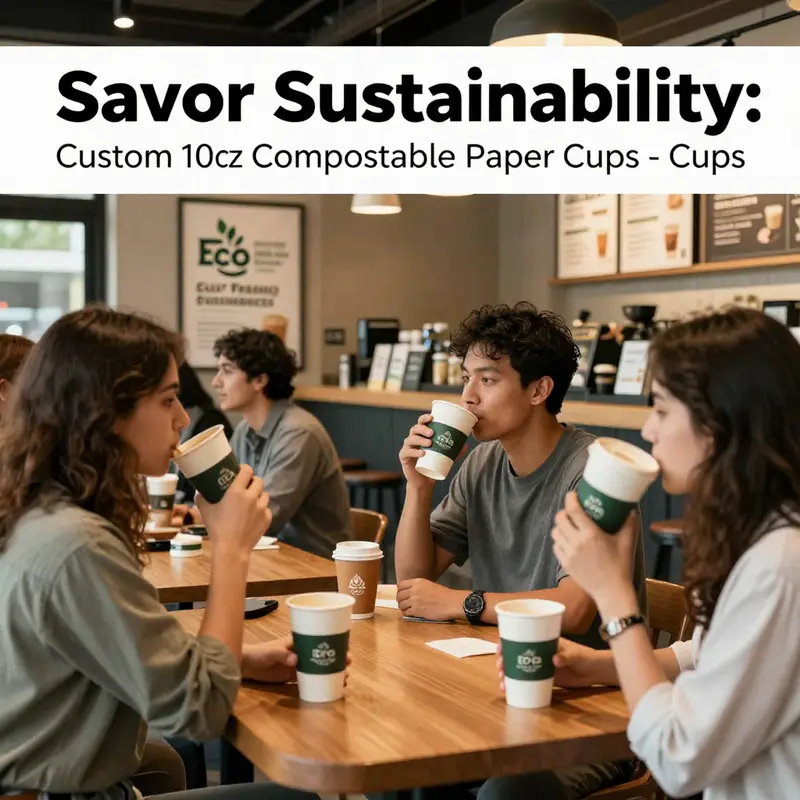
Within the shifting landscape of modern packaging, the custom 10oz compostable paper cup has emerged as more than a vessel; it is a statement about how a brand negotiates sustainability, experience, and convenience in a crowded market. As consumer mindsets tilt toward accountability, the cups you offer do not merely contain a beverage; they communicate values. The segment of compostable cups has grown as a response to both grassroots concerns about single-use plastics and formal policy shifts that encourage circular economies. From the vantage of the food service operator, this is not just about compliance; it is about choice architecture—how a cup can be both a functional tool and a walking billboard for responsible behavior. The 10oz size is particularly well suited to coffee, tea, and cold drinks, striking a balance between portion control, hand comfort, and the ritual of savoring a drink over a conversation or a quiet moment. The convention of a double-wall design adds insulation that preserves warmth without compromising safety, allowing customers to hold hot beverages comfortably while enjoying a clean, minimal exterior surface that is open to customization.
The trends are backed by hard numbers. The 2026 China Consumer Trends Report notes that 64% of consumers consider environmental sustainability a key factor in purchasing decisions. This is not a niche preference; it is a mainstream baseline. In packaging, the category of sustainable materials—kraft paper with PLA coatings or lining—has moved from novelty to expectation. Industry projections place the global sustainable packaging market at a CAGR of 8.7%, with China accounting for roughly three-quarters of output in 2025. Those trajectories matter for custom 10oz cups because they are typically produced with similar materials and processed through same recycling or composting streams. The story is not only about the raw material but about lifecycle performance. Compostable cups are designed to decompose under industrial composting conditions and to leave minimal residues, a feature that helps reduce landfill waste when paired with appropriate waste streams. The material families—heat-resistant kraft with aqueous coatings or PLA linings—have matured enough to perform under hot beverages temperatures approaching 95°C while still delivering on end-of-life compostability.
The material landscape is evolving beyond paper alone. Innovations in biobased packaging have broadened the toolkit, with bamboo and sugarcane pulp entering the conversation as viable alternatives. By 2026 these materials are projected to command a 35% market share in the compostable cup space, up from around 12% in 2020. The shift is not about replacing paper but about expanding the set of options that meet both consumer expectations for feel and heat tolerance and regulatory demands for reduced environmental impact. For operators, this means more choices at the same price point, which translates into opportunities to tailor a cup not only to a beverage but to a moment—whether a busy morning rush, a slow afternoon break, or a special event. The ability to mix materials within a single cup ecosystem allows brands to optimize performance while maintaining a clear path to disposal, a key factor when waste streams vary by city or campus.
Digital tools are reshaping how these cups are made, tracked, and delivered. Smart printing platforms enable faster turnarounds and higher fidelity graphics that withstand repeated handling and storing in a busy shop. AI-driven supply chain platforms now support real-time inventory tracking, demand forecasting, and waste minimization. A typical plant that embraces digital integration can report efficiency gains near 25%, driven by better scheduling, reduced changeovers, and more accurate production planning. Beyond manufacturing, digital features such as dynamic QR codes on cups enable product traceability and marketing engagement, turning a cup into a conduit for information—from composting instructions to brand storytelling. This digital layer aligns with the broader push toward transparent supply chains, where consumers can scan a cup and learn about sourcing, materials, and end-of-life options without leaving the line.
In the world of foodservice, the appeal of single-use compostable cups has grown alongside shifts in consumer behavior. Cafes, drive-thrus, outdoor events, and promotional campaigns are increasingly built around packaging that signals safety, quality, and responsibility. A striking 81% of consumers cite safety and quality as top concerns when choosing beverages and packaging, while 77% express a preference for health-conscious options. To meet these expectations, many operators seek certification marks and standards such as SGS, FDA, ISO9001, and LFGB, which help build trust in the product and the process. Certification becomes a differentiator in a landscape where price and convenience are often negotiated on a crowded stage; it reassures customers that sustainability is not merely cosmetic, but embedded in the chain of custody from raw material to end of life. These standards also provide a common language for retailers, catering companies, and event organizers to communicate what customers are purchasing and why it matters for the environment.
The consumer is not a monolith, and brands recognize this in the way they design and market packaging. Gen Z and Millennials prize environmental responsibility, authenticity, and social consciousness. They are drawn to limited-edition designs, collaborations with artists and creators, and packaging that tells a sourcing story with clear, verifiable details. These dynamics also drive a demand for premium branding and experience. When a cup is not only functional but aesthetically aligned with a cafe’s interior, it can elevate the entire customer moment—an Instagram moment as much as a sipping ritual. Meanwhile, Gen X and Baby Boomers remain price-sensitive but increasingly appreciate sustainable options when those options deliver proven quality and convenience. The audience segments converge around a shared appetite for products that are easy to use, consistent, and aligned with personal values, even as they differ in emphasis on price and brand familiarity. Against this backdrop, clever customization becomes a powerful tool, allowing a business to tell a story through color, texture, and typographic detail.
The practical implications of customization are not limited to pretty graphics. The ability to print logos, cultural motifs, or seasonal designs on a compostable cup becomes a strategic asset. Custom printing—whether offset or flexo—lets brands craft a recognizable beverage-led identity that travels with customers from counter to curbside to home. The design language can echo a cafe’s interior, reflect a festival or season, or embody a local culture that resonates with patrons. These design choices are more than decoration; they shape recall, influence perceived value, and encourage customers to share their experience with others. For operators, such customization is more than decoration; it strengthens brand recall, increases perceived value, and creates shareable moments that amplify word-of-mouth marketing. In practice, brands also weigh the efficiency of the supply chain: how swiftly they can turn around a design change for a promotional campaign, how reliably equipment handles complex color palettes on a curved surface, and how the end product behaves in a variety of service contexts—from hot lattes to iced beverages. The coupling of design flexibility with reliable performance is essential for a successful cup program in a fast-moving retail landscape.
To illustrate the range of choices without naming specific companies, many shops explore tiered packaging strategies that pair a core, understated cup with removable sleeves or lids in vibrant colors or textures. The toolset for customization includes not only printing techniques but also surface finishes, coatings, and the way a cup interacts with lids, sleeves, and accessories. A spoken expectation among operators is that customization should not compromise performance. A compostable cup must withstand repeated handling, stacking in damp environments, and the rigors of transport from point of sale to consumer. This is where the material science and the digital workflow come together: a heat resistant kraft base, a transparent or subtly tinted PLA lining, and a durable exterior that can bear the weight of design without cracking under heat. The interplay of art and engineering is what makes a cup more than a disposable item; it becomes a portable conveyer of the brand, the moment, and the promise of sustainability.
From a supply chain perspective, the shift toward sustainable cups is inseparable from the effort to reduce waste and improve predictability. The digital layer offers not just efficiency but resilience. With AI assisted forecasting, businesses can align production with seasonal demand and promotional calendars, lowering buffer stocks and reducing waste. Real-time inventory visibility means a restaurant chain can respond quickly to demand spikes without overcommitting capacity or disposing of expired stock. In this context, the humble 10oz cup becomes a node in a smarter, more circular system where compostability and operational efficiency reinforce each other rather than compete for space on the agenda. The environmental benefit is amplified when waste streams are properly sorted; when consumers can deposit used cups into appropriate streams, the material can re-enter the cycle as fiber or as feedstock for new products. The result is not merely a more efficient operation but a more transparent partner in the consumer journey, with a measurable impact on emissions, resource use, and end-of-life outcomes.
Cost and customer perception do not exist in isolation. The economics of compostable cups reflect a balance of material costs, printing complexity, and the value of branding. While price sensitivity remains a reality—especially for large chains negotiating tight margins—the premium placed on sustainability is growing. The willingness of customers to pay a little more for a product that demonstrates ethical considerations is not merely hypothetical; it is embedded in consumer surveys that point to greater loyalty and willingness to choose a brand with transparent sourcing and end-of-life commitments. The equivalence is not simply a one-to-one swap from a plastic cup to a compostable cup; it is the creation of a value proposition that integrates product performance, design, and sustainability into a single experience. For operators, this means recalibrating what constitutes a successful cup program: the right balance of insulation, print quality, material choice, and the alignment of the cup with a brand narrative that customers can articulate to their peers and to themselves. The result is a cycle of reinforcement, where positive experiences curve into repeat visits and ongoing advocacy rather than one-off purchases.
The future path for custom 10oz compostable cups is not a straight line but an ecosystem in motion. It is shaped by evolving materials, consumer expectations, and the capacity of businesses to integrate design, production, and waste management. The rise of bamboo and sugarcane pulp as alternatives signals a diversification strategy rather than a monopolistic hold on one material family. Digital transparency, in particular, will drive trust, as a consumer can scan a cup and learn about the origin of the fiber, the nature of the coating, and the end-of-life pathway. For brands, the opportunity lies in pairing strong storytelling with measurable progress—sharing data about recycling rates, composting compatibility, and the suppression of hazardous additives. The chapter closes not with a conclusion but with an invitation to imagine how a simple 10oz cup can carry a broader narrative: a narrative of responsibility, clarity, and a shared commitment to a more sustainable, more thoughtful consumption culture.
For readers seeking a broader market context and corroborating data, external industry analysis offers a complementary lens on the evolving landscape of paper cup demand, material choices, and regulatory trajectories. External reference: https://www.hua-jing.com/reports/2026-paper-cup-market-analysis
Internal reference opportunity: to explore tangible customization capabilities that align with the trends discussed here, consider examples of customizable cups such as the custom double-wall hot paper coffee cups with lid. This type of solution demonstrates how a single product can serve function, form, and storytelling, reinforcing a brand’s commitment to sustainability while delivering a dependable consumer experience.
Breath of the Brew: Unraveling the Environmental Footprint of Custom 10oz Compostable Cups and the Route to True Sustainability
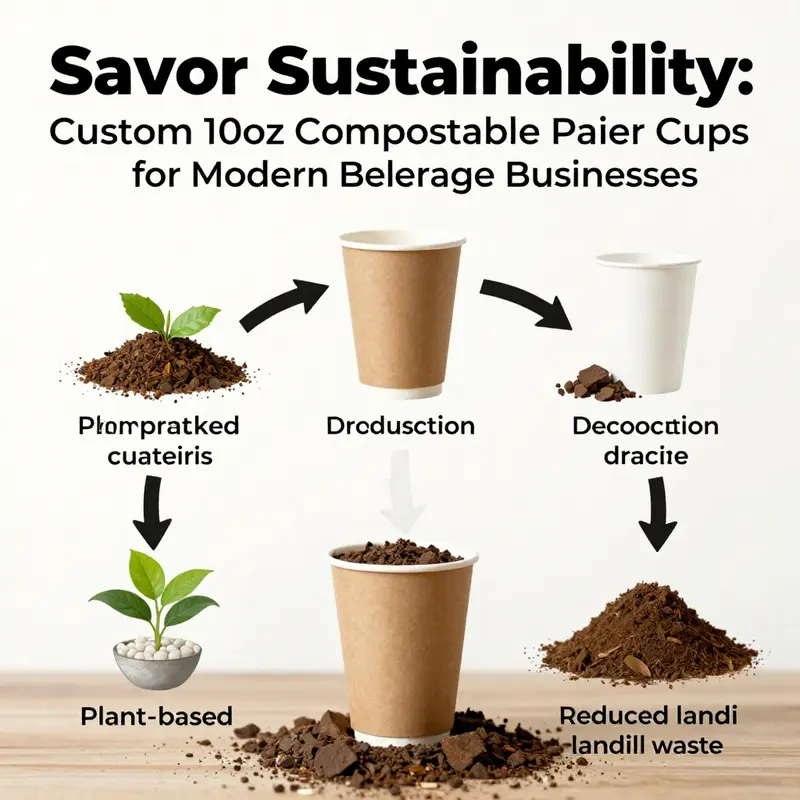
The conversation about single-use containers has shifted from a simple choice between convenience and waste to a nuanced examination of what happens after the beverage is gone. In this chapter, we explore the environmental impact and sustainability of custom 10oz compostable paper cups, a category that sits at the crossroads of renewable materials, practical design, and end-of-life realities. The discussion weaves together material science, waste management infrastructure, consumer behavior, and corporate responsibility, offering a holistic view rather than a narrow assessment of weight and cost. It is not enough to claim that a cup is compostable; the real test lies in the reliability of its entire lifecycle—from renewable pulp to post-consumer fate—and in the alignment of supply chains, regulations, and public behavior that makes that lifecycle viable in the real world.
At the heart of these cups is a decision to use renewable resources rather than fossil-based feedstocks. They are typically formed from responsibly sourced wood pulp, a material that regenerates when forests are managed with ecological balance in mind. This renewable basis contrasts with traditional petroleum-derived plastics, whose production is tightly bound to finite resources and greenhouse gas emissions that are difficult to offset. The substitution is not merely about replacing one material with another; it is about reshaping the energy and water footprint of the packaging system. And yet, renewable content alone does not guarantee sustainability. The chain from tree to cup to end-of-life must also be efficient, traceable, and respectful of global waste management capabilities. The double-wall construction that often accompanies these cups enhances user experience by providing insulation for hot beverages while keeping hands free from burns. This design feature is not a mere convenience; it reduces the likelihood of leakage, spills, and premature disposal that can occur when users abandon a cup due to discomfort. It also introduces a layer of quality that competes with single-use plastics on practical grounds, encouraging a shift toward compostable alternatives among businesses that value both brand integrity and environmental responsibility.
A core technical facet of these cups is their coating system. A biodegradable aqueous coating—commonly plant-based in origin—grants the necessary barrier properties to prevent liquid seepage without sacrificing compostability. In practice, coatings such as polylactic acid (PLA) or other bio-based formulations enable the cups to break down under industrial composting conditions. The distinction between industrial and home composting is crucial. Industrial facilities supply elevated temperatures, optimized moisture levels, and specific microbial communities that accelerate degradation beyond what most home settings can achieve. In a home compost environment, the same cups may persist far longer, sometimes resembling conventional paper products in their behavior. This nuance matters because the environmental gains of compostability hinge on the availability and accessibility of appropriate disposal infrastructure. When facilities exist and are well-used, the cups contribute to a compost stream that can return organic material to soil and reduce landfill volume. When such infrastructure is scarce or underutilized, the same cups can inadvertently follow a less favorable fate.
From a broader perspective, the environmental benefits of compostable cups extend beyond raw material choices. By diverting waste from landfills, they support circular economy goals that seek to keep materials in productive cycles as long as possible. The diversion effect depends on clear labeling, proper sorting, and consumer adherence to composting protocols. Without reliable separation at the point of disposal, the compostable cup risks contaminating the compost stream with materials that hinder processing. Contamination can decrease the quality of the final compost, reduce the viability of the facility, and, in worst-case scenarios, undermine public confidence in composting programs. This is where branding and messaging intersect with sustainability. Companies that emphasize compostability must also invest in clear instructions, on-site labeling, and staff training so that customers know how to dispose of cups correctly. The cycle becomes more efficient when the cup’s branding reinforces responsible disposal, instead of creating ambiguity that leads to misplacement in recycling or trash streams.
The life-cycle analysis of these cups reveals a complex interplay of energy use, emissions, and material flow. The shift away from fossil fuels reduces direct greenhouse gas emissions associated with cup production, a benefit that accumulates across thousands or millions of units. However, the production of any plant-based coating and the processing of wooden pulp require energy and water, sometimes sourced in regions with limited water security. The goal is to maximize net environmental gains by optimizing each stage: sustainable forestry practices, efficient pulping and papermaking processes, and high-efficiency coating and drying steps. Modern manufacturing facilities increasingly adopt energy recovery, water recycling, and emissions controls, which helps offset the upstream intensity of producing compostable cups. Compared with conventional plastic cups, which rely on fossil feedstocks and can persist for centuries, compostable cups often present a lower lifetime burden when properly disposed. Yet the comparison is nuanced. If a compostable cup ends up in a landfill without the proper conditions for decomposition, it may contribute to methane generation, a potent greenhouse gas. In such cases, the advantage over plastics can narrow or disappear, underscoring the vital importance of waste management infrastructure and consumer behavior in realizing environmental benefits.
A practical implication of this reality is the need for robust end-of-life management. The sustainability of custom 10oz compostable cups hinges on access to industrial composting facilities that accept coated paper products. In regions where such facilities are limited or nonexistent, the cups may not break down as intended, diminishing their environmental upside. This situation also highlights the critical role of policy and municipal planning. Regulatory frameworks that incentivize or mandate proper collection and processing of compostable packaging create markets and set expectations for producers, distributors, and consumers. When policymakers align incentives with infrastructure investment, the path from waste to resource becomes clearer and more enforceable. Businesses that commit to compostable packaging bear a responsibility to map their product’s end-of-life route, to collaborate with local composting networks, and to communicate clearly with customers about disposal options. The objective is not merely to offer a green material but to enable a green practice that is supported by a reliable ecosystem.
The customization aspect adds another layer of sustainability considerations. Printing processes for compostable cups must align with environmental goals, minimizing solvent use and avoiding inks that impede compostability. Eco-friendly inks and processing methods can enhance the cup’s sustainability credentials, but they also introduce cost and production considerations. Companies that pursue branded customization must weigh how ink choice interacts with the coating, the overall barrier properties, and the composting stream. Ink formulations that break down cleanly during composting, or that detach from the substrate without leaving problematic residues, are preferred. The overarching aim is to maintain a high-quality visual identity while ensuring that the cup remains compatible with industrial composting processes. In practice, this balance demands close coordination among design teams, print vendors, and facilities that handle the post-consumer stream. It is a collaborative effort that mirrors the broader shift toward sustainable packaging, where success depends less on a single clever material and more on a system that keeps materials moving in a closed loop.
In addition to material selection and end-of-life logistics, consumer perception and business strategy play pivotal roles. Public awareness of environmental issues has risen, prompting many consumers to scrutinize packaging choices. This scrutiny creates a market incentive for brands to demonstrate genuine sustainability rather than relying on selective messaging. The allure of compostable cups, with their renewable feedstock and compostable coatings, is tempered by the reality of disposal behavior. Consumers may recycle, compost, or trash items based on convenience, local options, and whether the brand provides clear guidance. The most effective sustainability stories emerge when businesses couple a credible product with transparent communication and practical disposal support. For example, when a cafe uses cups that are designed to be composted, it can pair the cups with clearly marked compost bins, staff training, and customer education about why composting is preferred to landfilling. In turn, customers become participants in a broader environmental program, reinforcing brand loyalty and strengthening the social license to operate in a world increasingly defined by responsible consumption.
Another dimension worth considering is the broader supply chain and the potential for regenerative practice. The shift to compostable cups creates demand signals that can encourage sustainable forestry, advanced pulping technologies, and research into coatings that degrade efficiently without leaving residues. Suppliers that invest in traceability systems can demonstrate substance behind their sustainability claims, from responsibly harvested wood fiber to transparent certification schemes for coatings. These traceability efforts are more than a marketing tool; they are the backbone of accountability. They enable buyers to verify that the cup they choose aligns with recognized standards for responsible sourcing and compostability. When buyers insist on verifiable certification, they contribute to a market that rewards producers who integrate environmental stewardship into every step of the value chain. The result is not a single eco-friendly act but a sequence of decisions that collectively lower environmental impact across the entire packaging system.
In evaluating the environmental footprint of custom 10oz compostable cups, it is essential to acknowledge both the potential and the pitfalls. The potential lies in reduced fossil fuel dependency, waste diversion, and the opportunity to close material loops through industrial composting. The pitfalls include dependence on proper disposal infrastructure, the risk of contamination in compost streams, and the reality that some life-cycle benefits may not manifest if facilities are not accessible or well-utilized. The balance, then, rests on three pillars: credible material choices, robust end-of-life infrastructure, and consumer and business behavior that supports proper disposal. When these pillars stand together, compostable cups can be more than a neutral or modest improvement; they can be a meaningful component of a sustainable packaging ecosystem. The path to that outcome is not a straight line but a landscape of interdependent factors—materials science, industrial capacity, regulatory alignment, and cultural adoption—that requires continual learning, collaboration, and investment.
To ground this discussion in practical considerations, businesses contemplating custom 10oz compostable cups should pursue a few guiding principles. First, choose materials with a documented commitment to sustainability, including responsibly sourced pulp and coatings that meet widely accepted compostability standards. Second, assess local waste management infrastructure to determine whether industrial composting facilities are accessible to customers and whether they accept coated paper products. Third, invest in clear labeling and education so customers understand how to dispose of the cups properly. Fourth, align branding with sustainability through both the product and the disposal experience, ensuring that the marketing message reflects genuine practice rather than aspirational claims. Finally, monitor and report outcomes where possible, sharing data on waste diversion rates, facility partnerships, and improvements in sourcing. Even modest advances in transparency and collaboration can shift perceptions and increase overall system performance.
The broader narrative surrounding custom 10oz compostable cups, then, is not merely about a single product or a single act of substitution. It is about building an integrated approach to packaging that prioritizes renewable resources, minimizes environmental burdens, and compels a supportive infrastructure and culture. In this sense, the cup becomes more than a container; it becomes a symbol of how a business can align its branding with ecological responsibility while maintaining practical success in a competitive market. The journey from material choice to end-of-life reality is intricate, and it requires ongoing attention to the evolving landscape of waste management, consumer expectation, and policy direction. Yet the effort is worthwhile when it translates into tangible environmental gains, better waste outcomes, and a more credible narrative of stewardship that resonates with customers who increasingly demand that brands act with integrity and accountability.
For readers seeking a deeper dive into the technical and regulatory context that informs composting practices, a credible external reference provides context for the end-of-life conversation. The EPA maintains resources on sustainable waste management and composting, which illuminate how municipalities structure composting programs and how individuals and organizations can participate more effectively. This external perspective helps connect on-the-ground disposal realities with the broader environmental rationale for compostable packaging and clarifies why infrastructure matters as much as material composition. By integrating these considerations into product development and customer engagement, the industry can move toward packaging options that are not only greener on paper but demonstrably greener in the real world.
In sum, the environmental impact and sustainability of custom 10oz compostable paper cups hinge on a holistic approach that honors renewable inputs, recognizes the necessity of industrial composting facilities, and embraces transparent, action-oriented branding. The cups themselves are a meaningful step toward reducing reliance on plastics and shortening the path to a circular economy when disposed of in the right settings. But their true value emerges only when organizations commit to the full spectrum of responsible practices—from sourcing and production to consumer education and municipal partnerships. When these elements converge, the cup becomes a practical catalyst for broader environmental progress, not merely a symbol of an eco-conscious impulse. It is the interplay of design, disposal, and dialogue that will determine whether compostable cups fulfill their promise or remain an aspirational concept in a landscape still learning how to close the loop.
Internal link for further reading: disposable eco-friendly custom paper coffee cups with lid.
External resource for additional context: https://www.epa.gov/sustainable-management-waste/composting
Final thoughts
Looking ahead, the demand for custom 10oz compostable paper cups is poised to grow as more businesses recognize the importance of sustainability and consumer preferences shift towards eco-friendly options. By embracing these cups, brands not only fulfill their operational needs but also send a powerful message about their commitment to the environment. This strategic choice can enhance customer loyalty and differentiate your business in a competitive landscape. Adopting custom compostable cups is not just about meeting current market trends; it’s about making a lasting impact for a greener future.