
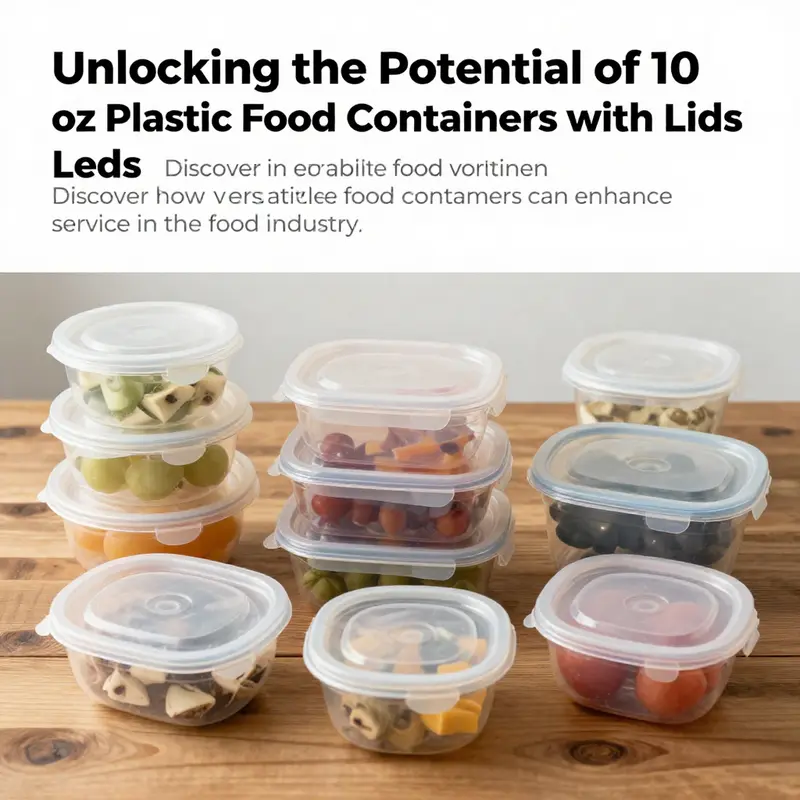
10 oz plastic food containers with lids have become a staple in the food industry, providing numerous benefits in meal prep, storage, and transport. These lightweight yet durable containers are designed for optimal convenience and functionality, making them perfect for bubble tea shops, restaurants, food trucks, catering services, and event planners. In the following chapters, we will delve into the unique features of these containers, explore their diverse applications within the food industry, and discuss the sustainability considerations that come with using plastic packaging. Understanding these elements will help your business enhance customer satisfaction, streamline operations, and stay aligned with modern environmental practices.
Compact Vessels, Lasting Freshness: The Design and Role of 10 oz Plastic Food Containers with Lids
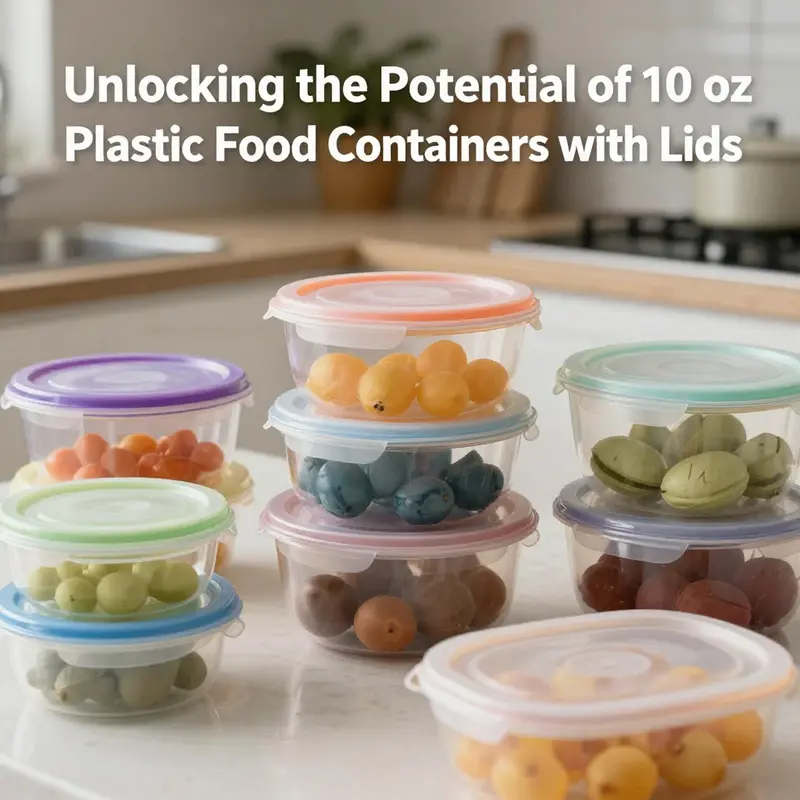
The 10 oz plastic food container with a lid sits at a quiet crossroad of everyday practicality and thoughtful design. It is small enough to fit neatly into a kitchen drawer or a lunch bag, yet robust enough to carry a complete meal without spilling. In kitchens from home countertops to bustling cafeterias, this compact vessel fulfills a simple promise: keep food fresh, organized, and easy to transport. The container acts as a portable micro storage system, a kind of culinary envelope that protects flavor while offering a predictable shape for stacking and shelving. The beauty of this particular size lies less in grand novelty and more in dependable reliability. It is a tool you reach for when you want portion control without the fuss of bulky containers or the mess of loose wraps. And because it is designed to work with a lid, it becomes as much about preservation as it is about portion discipline, a small unit that handles the job of keeping sauces, dressings, and leftovers in peak condition until their next chapter in the fridge or on the road to a new meal plan. Across homes and businesses, the logic is consistent: a well made 10 oz container with a secure lid helps maintain the integrity of food during storage, transport, and quick heating, without demanding constant attention or fragile materials that crack under pressure or spill under movement. The shape itself matters. A round or square profile of uniform dimensions allows for efficient use of cabinet and refrigerator real estate. When prepared in bulk for meal prep, these containers support disciplined portioning, enabling a sequence of meals that are easy to track, easy to reheat, and easy to enjoy without guesswork about how much is left or whether the dressing has leaked its way into the next item on the shelf. The size and lid pairing also accommodates a wide spectrum of foods, from delicate greens and fruit to thicker stews and sauces, making it a versatile choice for a kitchen repertoire that prizes order and reliability as much as flavor. In this sense the 10 oz container becomes more than a simple receptacle; it is a standard bearer for thoughtful storage that respects both the meal and the person who will eventually consume it. The practical reach of this design extends beyond home cooking. In a professional context, the same container can support a shift toward more efficient prep lines, easier portion tracking for dietary programs, and reliable packaging for takeout or delivery. The smaller footprint makes it easier to migrate toward a micro service model of food storage, where each container is a clearly defined unit in a larger system of organized portions. The result is a workflow that minimizes waste, reduces confusion, and speeds up routine tasks such as reloading a refrigerator or assembling a grab and go lunch for a busy office. Yet for all the functional advantages, the success of a 10 oz container with lid rests on a foundational triad of material, seal, and safety. Each of these elements deserves careful attention, because the choices made at the design stage ripple through every day of use. When a consumer reaches for this size, they are rarely aware of the engineering behind the seal or the science of the plastic, yet these choices determine how well the container performs in the real world. The interplay between form and function becomes most evident in the problem of leakage. A high quality lid must pair with a body that holds its shape through a range of temperatures and handling scenarios. The tests are practical and repetitive: a tilt during transport, a shake that could happen in a crowded tote, a quick spin in a dishwasher cycle, a microwave minute that follows a careful heating protocol. In each instance the container must resist the urge to surrender liquids or to warp under heat. A leakproof design is not merely a marketing promise but a result of precise tolerances, gasket alignment, and a thoughtful closure mechanism. When these elements align, the user experiences a quiet confidence. The dressing can travel without tipping into the rest of a salad, the sauce can stay contained without the risk of a spill in transit, and the leftovers can be reheated with the lid vent open or closed depending on the material and user preference. The sense of reliability extends beyond liquids. The same seal that guards against leaks also helps preserve textures and aromas. A crisp vegetable side, a delicate berry mix, or a soft grain dish can maintain its character for longer when shielded from air exposure. In practice, this is more than a matter of taste; it is about preserving the integrity of nutrients and the sensory profile that makes food enjoyable. The container does not operate in a vacuum. Its value is amplified by compatibility with the wider ecosystems of kitchen tools and processes. In the world of meal prep, the 10 oz size becomes a controllable unit that aligns with the habit of planning, portioning, and storing. It works hand in hand with timers, meal plans, and grocery lists. It is easy to scale up a week long plan when each day presents uniform portions that fit a consistent vessel. The lids themselves—often designed to be tight sealing—bear witness to a focus on form as well as function. Some models offer simple snap closures that require a modest press to ensure a seal is complete, while others rely on a more pronounced clip or hinge mechanism. The key is not novelty but reliability. A user should feel certain that the lid will remain closed during a commute or a short walk to a meeting, that it will not open inadvertently when stacked among other containers, and that it will tolerate repeated cycles of heating or washing without degrading. Material selection sits at the heart of this performance. In many instances the containers are crafted from food grade plastics such as polypropylene, polystyrene, or polyethylene terephthalate. Each material brings its own strengths and cautions. Polypropylene is widely cited for its resilience in the kitchen. It generally offers good heat resistance, which makes it a candidate for microwave use when the design is appropriate. It also tends to perform well in dishwashers, resisting the kind of temperature fluctuations that can cause more brittle plastics to crack. This makes PP based containers particularly appealing for those who view the kitchen as a hub of recurring routines rather than a place to manage a short term purchase. Polystyrene can offer clarity and stiffness in certain designs, a quality that some users appreciate for visibility of the contents. However, PS is often more sensitive to heat and may require careful handling to avoid warping. PET, known for its clarity and strength, provides another path. It tends to be durable for cold and room temperature storage, though its suitability for microwave use depends on the specific product and its additives. What matters most in practice is not a single material label but the food safety certification behind the final product. Food contact materials must meet clear safety standards, and the dialogue around these standards translates into trust for the consumer. A container can look sturdy, but it is the certification and the traceability that makes it a credible choice for daily use. For many buyers, that is where the decision to purchase is anchored. They want to know that the product not only keeps food secure but also complies with the regulations that govern safe contact with food. In addition to safety credentials, the lifecycle story of a 10 oz container is one of reuse and potential recycling. The sustainability conversation in modern kitchens has grown louder in recent years as people seek to reduce waste and reimagine what it means to reuse plastic containers. A reusable container is not just a means to cut down on disposables; it is a commitment to a habit of careful cleaning and responsible storage. The reusable path invites discussions about cleaning efficiency in the home, the durability required to survive repeated cycles of washing and reheating, and the design features that make these cycles smoother. For instance, a container that holds up under repeated dishwasher cycles without clouding or cracking earns a practical badge. A lid that retains its seal after dozens of uses demonstrates longevity and value. At the same time, there is a broader push toward eco friendly options in the supply chain. Some manufacturers are exploring recyclable plastic variants and compatible lid materials that support end of life recovery, while others emphasize reusable designs that stand up to the rhythms of daily living. In the context of bulk sourcing, the practical buyer will consider not only the container itself but the bundle that accompanies it. A pack of 12 units represents a standard order size in many markets, offering a balance between inventory management and cost per unit. This scale supports households that meal prep weekly, small offices that offer pre packaged lunches, and casual dining settings that need dependable storage options for leftovers and takeout. The economics of these decisions are not purely about upfront price. They also hinge on the long arc of use. A container that lasts through multiple reheats, survives a few trips to the dishwasher, and stacks neatly for months in a pantry saves time and reduces waste in the long run. In this sense the 10 oz container has a quiet, cumulative impact. It offers predictable performance across a wide range of foods, supports consistent portion control, and integrates with both consumer routines and commercial workflows. It becomes a dependable element of a larger system built around efficiency, safety, and practical sustainability. As with many kitchen tools, the value is not only in what you can do with the container today but what it allows you to do tomorrow. If the meal plan shifts to a new diet, or if a batch of meals needs to be reshuffled for a different week, the container remains a versatile constant. When properly cared for, it is a workhorse that helps preserve freshness, reduce waste, and streamline the mechanics of feeding people. The design philosophy behind these containers embodies a balance between simplicity and capability. The best models do not demand attention; they respond to routine with quiet reliability. They are easy to open and reseal, they tolerate a reasonable amount of handling without losing their seal, and they fit into the everyday rhythm of cooking, storing, and reheating. In the end, the 10 oz plastic food container with a lid is a compact yet expressive artifact. It encapsulates the practical wisdom of modern food storage: keep the contents secure, keep the contents visible, and keep the process of managing meals straightforward. For a household, that means a smoother weekday routine where salads stay crisp, dressings don’t leak into the rest of the fridge, and leftovers come back to life with a quick reheat. For a kitchen that serves customers, it means predictable portions, reliable packaging for delivery, and a supply chain that can scale without compromising safety or performance. The container remains, simply, a vessel that respects food as it travels from one stage of preparation to the next. Its enduring relevance rests on the interplay of material integrity, a dependable seal, and a design that supports everyday life. As the conversation about plastic containers evolves, the 10 oz size continues to prove its worth precisely because it does not seek to replace the richness of home cooking but to protect it. It offers a practical, scalable solution for portion control and meal planning that many households and small operators find indispensable. And while sustainability conversations will keep evolving, the container stands as a practical bridge between convenience and care, a small vessel that makes a big difference in daily routines. For readers seeking further context about supplier options and product specifications, an external reference provides a snapshot of where the market currently stands and how bulk purchasing can align with both safety standards and affordability. External resource: https://www.made-in-china.com/products/10-Oz-Food-Containers-With-Lids.html
Compact, Versatile, and Vital: The Pervasive Role of 10 oz Plastic Containers with Lids in Modern Food Service
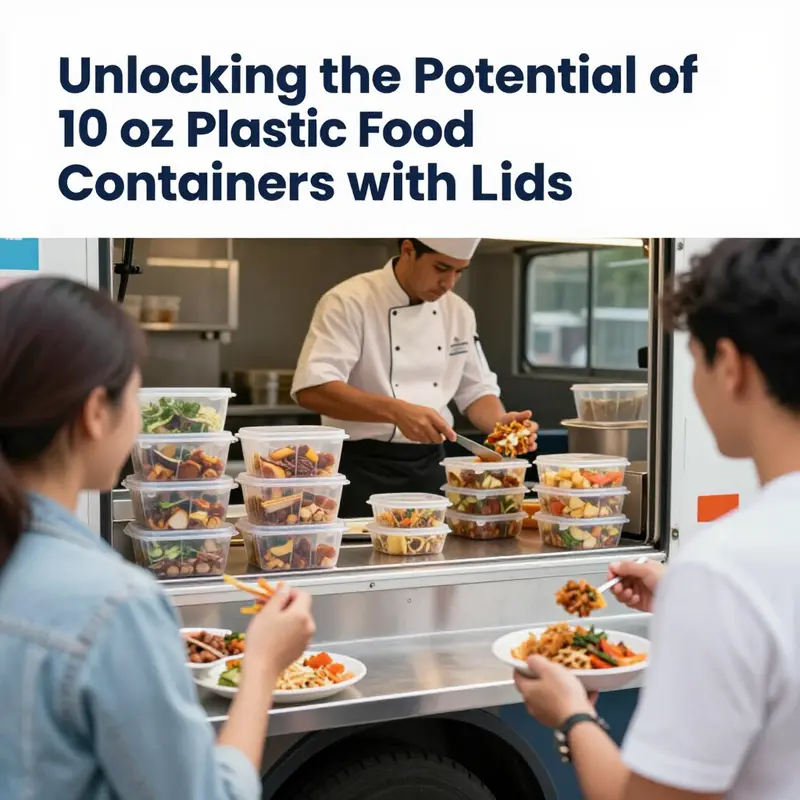
The 10 oz plastic container with a lid is a small workhorse in kitchens, cafeterias, and delivery operations. Its compact volume makes it the natural choice for precise portions, quick service, and reliable transport. In a landscape where speed, safety, and presentation increasingly determine profitability, a container that can keep food fresh, intact, and visually appealing becomes more than just a receptacle. It becomes a key component of the workflow, a silent partner in operational efficiency, and a signal to customers that care has gone into every step from prep to plate. These containers, typically crafted from food-grade plastics such as polypropylene (PP), polystyrene (PS), or polyethylene terephthalate (PET), are designed to withstand the rigors of commercial use while remaining safe for contact with a wide range of foods. The inclusion of a secure lid augments this capability by preserving aromas, textures, and temperatures, thereby extending shelf life and ensuring consistent quality whether a product is stored in a refrigerator, warmed for service, or carried to a customer’s doorstep.
From the outset, the essence of the 10 oz container is its balance between size and versatility. At roughly 300 milliliters, the capacity is large enough to hold a single serving of a diverse array of foods—salads, dips, sauces, dressings, pre-measured portions of grains or proteins—yet small enough to fit neatly into standard storage systems and to support a disciplined approach to portion control. This balance matters in both households and institutions. For meal prep enthusiasts, the container provides a predictable unit for planning weekly menus, enabling clear portioning that aligns with dietary goals. In a restaurant or catering context, the same unit can standardize plating sizes across multiple dishes, simplifying inventory and reducing waste. The uniformity in shape and size also translates into tangible space savings. Stacking efficiency becomes a practical advantage in crowded walk-in refrigerators, under-counter storage, or on mobile catering carts where every inch counts.
The materials chosen for these containers are not arbitrary. PP, PS, and PET each bring distinct properties that influence safety, durability, and performance under different conditions. PP is prized for its resilience in the microwave and dishwasher-intended environments; it tends to resist higher temperatures and is less prone to warping or cracking under repeated cycles. This makes PP-based 10 oz containers especially attractive to households and food-service operations that emphasize reheating convenience and easy cleaning. PS, on the other hand, offers clarity and a crisp, clean presentation. The transparent body of a PS container allows customers to view the contents, an attribute that can enhance appeal in salad bars, deli counters, or prepared-meal shelves where visual cues drive selection. PET brings its own blend of clarity and strength, and often serves well in applications requiring robust leak resistance during transport. Together, these materials deliver a family of containers that can be chosen to match specific use cases—whether the priority is heat tolerance, visibility, or durability against leaks and odors.
A crucial feature of the 10 oz container is its lid, which is not merely a cover but a seal that preserves freshness and prevents contamination. The lid’s performance hinges on the integrity of the seal and the design of the closure mechanism. Tight-sealing lids reduce the risk of spills during transit, a factor that matters whether food travels a short distance to a customer in a drive-thru or a longer route to a conference venue or home delivery. In addition to spill resistance, airtight or near-airtight lids help maintain texture, aroma, and moisture balance. For dressings and sauces, a dependable seal prevents the liquids from creeping into the lid’s underside, which can otherwise lead to odor absorption or staining. The combination of a well-designed lid and a compatible container material helps minimize the transfer of odors between containers, a particularly welcome feature in busy kitchens where multiple flavors share storage space.
The practical implications of these features extend into every stage of the food supply chain. In commercial kitchens, the 10 oz container serves as a pre-portioning solution for ingredients such as sauces, dressings, dips, and condiments. By standardizing portion sizes, kitchens can achieve uniform plating and consistent customer experiences. The small volume is ideal for individual servings in fast food chains, cafeterias, and meal-prep services, where predictability reduces waste and speeds up service. A secure lid ensures that meals retain their intended temperature and moisture during short transports from kitchen to service area or to a pickup point. In the realm of meal prep and ready-to-eat meals, these containers shine as organizers in domestic and professional settings alike. They enable clear separation of components, such as pre-chopped vegetables, proteins, grains, and sides, while remaining compact enough to fit into standard refrigeration racks and lunch coolers. Their transparency and sleek silhouette support appealing shelf presentation in retail settings, where consumers often judge freshness and portion size at a glance.
For microwavable meals, a key consideration is the material’s compatibility with reheating. PP-based containers frequently qualify for microwave use, enabling a seamless transition from cold storage to hot plate. This eliminates the need to transfer contents into a different dish, reducing the risk of spillage and preserving flavors. A dishwasher-safe option, when available, adds another layer of convenience for both household users and food-service operations that emphasize ease of cleaning and turnover. The ability to withstand multiple cycles without warping or staining under typical dishwasher temperatures contributes to a lower total cost of ownership and reduces the burden of frequent replacements. Yet, not all 10 oz containers are designed for every environment. Operators must match material properties to the intended workflow, temperature exposure, and the nature of the food being stored or heated. A robust plan for selecting containers—one that accounts for microwave safety, dishwasher compatibility, and resistance to odors or color transfer—helps preserve the integrity of both the food and the packaging.
The benefits extend beyond safety and durability. The 10 oz container’s design lends itself to a range of applications that support sustainability goals and operational efficiency. The compact size makes it ideal for portion-controlled meal plans, an increasingly popular approach in health-focused food service and wellness-oriented catering. Portion control helps manage nutrient intake while reducing plate waste, and it supports menu pricing strategies that are anchored in precise serving sizes. The container’s stackability further contributes to space savings in crowded storage environments. By stacking uniform containers, kitchens can maximize cold-storage capacity and streamline restocking, which reduces the time staff spend searching for the right unit and increases productivity during peak service windows.
From a sourcing perspective, the availability of these containers in bulk quantities supports both large-scale operations and smaller businesses scaling up their offerings. Suppliers often provide 10 oz containers in wholesale lots, with price tiers reflecting order size. Such arrangements help caterers and meal-prep services optimize their packaging costs while maintaining reliable supply. The emphasis on food safety and environmental compliance remains central to sourcing decisions as well. Reputable suppliers commonly highlight certifications and adherence to food-contact regulations, helping buyers feel confident that the packaging not only protects contents but also aligns with consumer expectations around safety and sustainability.
The transportation and distribution dimension is another area where 10 oz containers make a difference. Lightweight yet sturdy, they are well-suited for takeout packaging and delivery services that rely on efficient packaging to keep costs down and service quality high. In many cases, the container’s lid contributes to leakproof performance that holds up under the rigors of courier travel, reducing the likelihood of spillages on the way to customers. This is particularly important for salad dressings, sauces, and other liquid or semi-liquid components where containment is as critical as presentation. In addition, the containers can be used in secondary packaging strategies to protect smaller product units during transit. By acting as a reliable layer of containment, they help maintain hygiene and freshness as items pass through the layers of a supply chain.
It is helpful to consider the sustainability implications that accompany any packaging choice. Plastic containers offer distinct advantages in terms of durability, reusability, and sanitation when reused according to proper cleaning protocols. Reusable containers, if cleaned effectively, can substantially reduce waste compared to single-use disposables, aligning with long-term environmental goals. Yet, there is a growing push for more eco-friendly options. Some manufacturers are introducing recyclable plastics or biodegradable materials to address end-of-life considerations. In practice, a balanced approach often yields the best results: leveraging the durability and reusability of PP-based containers for daily operations while supporting recycling programs and waste-reduction initiatives. For many operators, the best path blends practical, cost-effective packaging choices with strategies to minimize environmental impact across procurement, usage, and end-of-life.
As organizations plan for sustainability and efficiency, they also navigate the broader ecosystem of standards and certifications. Food-grade plastics must meet regulatory requirements that protect consumer health, such as limits on contaminants and assurances of safe contact with food. These considerations influence not only the choice of material but also the production and testing processes used by manufacturers. In practice, this means that buyers should look for packaging that can demonstrate compliance through relevant certifications and documentation. The presence of a reliable lid mechanism, a proven seal, and consistent dimensions all contribute to a packaging system that performs reliably in busy environments and maintains integrity throughout storage and handling.
The discussion above highlights why the 10 oz container with lid has become a staple in diverse segments of the food industry. Its role transcends simple containment; it shapes operational discipline, influences menu presentation, and underpins the customer experience from first glance to final bite. For chefs, managers, and logistics coordinators, these containers are not just containers—they are building blocks that enable consistent portioning, predictable reheating outcomes, and dependable transport. In markets where efficiency and reliability can differentiate service quality, the 10 oz container with lid is a quiet but powerful ally, enabling faster service, cleaner breaks in workflow, and a clearer, more controlled approach to food safety and presentation.
Sourcing considerations extend into the practical realm of negotiating with suppliers and evaluating bulk options. When evaluating options, buyers often weigh price per unit against the quality of the seal, the clarity of the material, and the perceived durability across cycles. A container that remains bright and free of discoloration after repeated heating cycles signals a stable material quality, which translates into less waste and fewer replacements. This is especially valuable in high-volume settings where even a small improvement in unit lifespan yields meaningful savings over time. In addition, suppliers that can verify food safety certifications and environmental compliance provide confidence that the packaging will not introduce risk into the dining experience or the broader ecosystem around a food business. The integration of these factors—material selection, lid integrity, size, and supplier reliability—defines a robust approach to packaging that aligns with modern demands for efficiency, safety, and sustainability.
Beyond the technical and logistical considerations, there is a consumer-facing dimension to using 10 oz containers with lids. In case studies and retail environments, the transparency of materials like PP, PS, and PET allows customers to quickly assess contents, contributing to trust and perceived freshness. When salads or layered foods are displayed in clear containers, the visual appeal can influence purchase decisions and increase the perceived value of prepared meals. The lid’s seal further reinforces that perception by delivering on the promise of freshness and protection. For operators, this means that thoughtful packaging design can enhance the overall dining experience, support brand storytelling around freshness and portion control, and help sustain repeat business.
In summary, the 10 oz plastic container with a lid sits at a crossroads of practicality, safety, and efficiency. Its compact capacity supports precise portioning and convenient storage, while the choice of material and lid design enables a range of use cases—from quick-service meals to prepared foods, catering, and distribution. By offering a reliable seal, predictable performance in microwaves or dishwashers, and a form that favors stacking and visibility, these containers help streamline operations and improve the customer experience. They also support broader sustainability goals when used thoughtfully, paired with recycling programs and responsible procurement. As the food industry continues to evolve toward greater efficiency, tighter portion control, and stronger commitments to safety and presentation, the humble 10 oz container with lid remains an essential partner for kitchens and food-service operations of all sizes.
External resource: https://www.amazon.com/dp/B0CQJ5XWZV
The Quiet Footprint of Convenience: Rethinking the Sustainability of 10 oz Plastic Food Containers with Lids in a Circular Economy
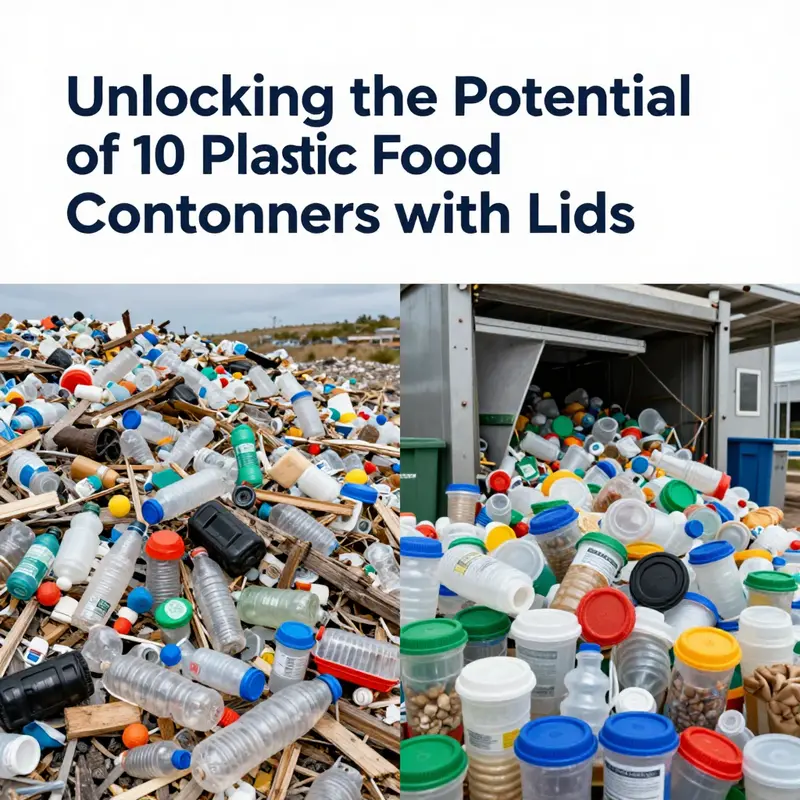
From the moment a 10 oz plastic food container with a lid leaves the factory, a chain of consequences unfolds that extends far beyond the kitchen counter. The promise of portion control, practical transport, and easy storage is undeniable. A single, compact container can help a busy family manage meals, a food service operation portion out sauces, and a caterer orchestrate a precise service in a sea of plates and trays. Yet beneath that promise lies a complex web of environmental questions that researchers, policymakers, and everyday consumers are increasingly compelled to address. The sustainability of these containers cannot be understood merely by their convenience; it rests on the full lifecycle—from the extraction of raw materials to the end-of-life fate in a recycling stream, a landfill, or, less commonly, a composting facility. In this chapter, we examine the environmental footprint of these seemingly ordinary items, explore the factors that either amplify or mitigate their impact, and consider how a shift toward circular design, reuse, and responsible disposal could alter the landscape of plastic packaging in the years ahead. What emerges is not a simple verdict of good or bad but a nuanced portrait of how material choice, product design, consumer behavior, and system-level policies interact to determine real-world outcomes. The discussion draws on the core research about materials, recyclability, and lifecycle impacts, and it situates plastic containers within the broader conversation about sustainable packaging. It also foregrounds practical pathways for individuals and organizations who aim to balance practical needs with environmental stewardship, without sacrificing the benefits that clear, well-sealed food storage offers in homes, cafeterias, and take-out contexts alike.
At the heart of the environmental discussion lies a fundamental reality: plastics are durable, light, and versatile. The types most commonly used in these 10 oz containers—polypropylene (PP), polystyrene (PS), and polyethylene terephthalate (PET)—each carry a distinct set of advantages and challenges. PP, for instance, is often prized for its resilience and heat tolerance, which makes it a frequent choice for microwave-safe applications in households and some food-service contexts. PET brings clarity and barrier properties that help with shelf life, while PS offers a cost-effective, light-weight option. Yet durability cuts both ways. The very features that make these plastics appealing—from strength to lightweight transport—also mean that once discarded, they can persist in the environment for centuries if not properly managed. This paradox is the core of the sustainability conversation around 10 oz containers with lids.
The production phase of these containers already sets an environmental baseline. Virgin plastic manufacture is energy-intensive and typically rooted in fossil fuels. Each step—from polymerization to extrusion and molding—consumes energy and releases emissions. If a significant share of demand relies on virgin resin rather than recycled material, the environmental toll is magnified by the extraction, refining, and processing of fossil feedstocks. Even when the containers are used repeatedly in a commercial setting, the upstream energy footprint remains a crucial piece of the puzzle. In many markets, packaging supply chains are global, often spanning multiple continents, which adds transportation emissions to the total lifecycle impact. The scale of manufacturing and logistics means that small efficiency improvements can translate into meaningful environmental gains, but only if they are consistently applied across the entire supply chain.
The consumer takeaway is simple on the surface: these containers help people portion meals, keep foods sealed, and enable easy refrigeration and transport. But the narrative becomes more complex when we consider how people dispose of them. Recycling rates are not uniform; they hinge on the material type, local recycling infrastructure, and the degree of contamination from food residues. A container that has held a tomato sauce, a fatty sauce, or a dairy product is not automatically recycling-grade. Food residue complicates the separation process at sorting facilities and can downgrade entire batches of recyclable material. Contamination reduces the quality of the recycled resin, leading to higher rejection rates and, in some cases, a decision to divert containers to energy recovery facilities or landfills. The practical implication for households and businesses is that simply placing a container in the recycling bin does not guarantee it will re-enter the production cycle. Effective recycling depends on clean streams, reliable collection, efficient sorting, and the presence of end-use markets for recycled resin—factors that vary dramatically by region.
A more hopeful picture emerges when we examine the recyclability of specific plastics and the design features that facilitate reuse and circularity. PET is highly recyclable in many systems, and PP is increasingly favored for its resilience and relatively favorable recycling dynamics. PS, while recyclable in some places, often presents more challenges in terms of recovery and post-consumer recycling stream integration. The real-world performance of these materials hinges on how well local facilities are equipped to handle them and whether programs are structured to separate food-grade resins from contaminated streams. In practice, many 10 oz containers sold as single-use items are not designed for reuse. They can be affordable to produce, but if reused only a few times before becoming waste, the cumulative environmental benefit is modest. This reality underscores a central tension: the plastic packaging industry often markets reuse as a sustainability solution, yet the lifecycle benefits of repetition depend on the container’s durability, the user’s behavior, and the product’s end-of-life options.
From a systems perspective, the most meaningful environmental improvements tend to arise when there is alignment across supply chains, consumers, and policy frameworks. Extended Producer Responsibility (EPR) schemes, for example, can incentivize manufacturers to design for recyclability, to invest in better end-of-life infrastructure, and to fund take-back programs that ensure materials are collected and processed rather than discarded into landfills. In the absence of strong policy levers, consumer decisions—though powerful—may not be enough to shift the entire system toward a circular economy. When a consumer purchases a 10 oz container, they are participating in a broader ecosystem that depends on efficient recycling networks, accessible composting where appropriate, and the availability of recycled resin that can re-enter manufacturing loops with comparable performance characteristics to virgin material.
Contemporary research into sustainable packaging highlights a key insight: the lifecycle environmental impact is highly sensitive to the end-of-life scenario. If a plastic container is disposed of improperly, enters a landfill, or escapes into the environment, the resulting degradation processes contribute to microplastics and potential ecological harm. Microplastics—tiny fragments that can be ingested by wildlife and potentially enter the food chain—represent a widely discussed risk that has captured public attention. The pathways through which plastics become microplastics are diverse, including weathering of larger fragments, abrasion during handling, and fragmentation in landfills or aquatic environments. Even in well-managed systems, microplastics can arise from packaging that is not fully contained or collected through appropriate channels. The environmental impact of microplastics is not solely ecological; researchers note potential indirect pathways into human exposure, though the degree of risk remains the subject of ongoing study and debate. For consumers, this underscores the importance of minimizing leakage, choosing durable containers where reuse is feasible, and supporting systems that minimize litter and improve collection and processing.
Design for recyclability is another important dimension. Containers that are made with a single polymer, without multi-layer adhesives or coatings that complicate separation, are more readily recycled in many programs. Clear labeling about material type and recycling eligibility helps both consumers and waste-collection workers determine the best disposal route. In practice, many 10 oz containers incorporate a lid that is made of the same or a different polymer, which can complicate recycling if not properly sorted. The goal, then, is to harmonize container and lid materials where possible, or to use designs that allow lids to be easily separated and recycled with minimal contamination. The choice between glass-clear PET and the more opaque PP in some designs has implications for the recycling stream’s efficiency and the final quality of the recycled resin. In cases where the packaging is explicitly designed for reuse, the emphasis shifts toward durability, dishwasher safety, and resistance to staining and odor retention. In this pathway, a high-quality, long-lived container can reduce the need for frequent replacement, thereby lowering overall material throughput. However, the environmental advantage of reuse is again contingent on actual user behavior and on whether the container’s end-of-life fate remains favorable—recycling or proper refurbishment rather than disposal.
Beyond pure recycling, some researchers and manufacturers explore biodegradable and compostable alternatives. PLA (polylactic acid) and other plant-based polymers offer potential benefits, particularly in contexts where industrial composting infrastructure is available. In principle, compostable plastics can disassemble into benign components under controlled conditions, closing material loops in ways that conventional recyclables do not. Yet the practical effectiveness of these alternatives is constrained by the uneven availability of industrial composting facilities, regional waste management practices, and consumer awareness. If compostable packaging ends up in a general recycling stream or a landfill, the expected environmental advantage can be diminished or lost entirely. The lesson is not to view compostable plastics as a universal solution but to recognize their role in a broader palette of strategies that include reuse, design for recyclability, improved collection, and targeted end-use infrastructure development.
The lifecycle picture becomes even more nuanced when we consider real-world behavior in homes and businesses. In homes, the frequency of use, the care taken to clean and dry containers, and the decision about whether to reuse or recycle determine a practical outcome for waste. In food-service settings, the decision matrix shifts toward a balance between cost, efficiency, and customer expectations. For some operators, disposable containers offer predictable performance, light weight, and lower breakage risk—qualities that are particularly relevant in high-volume take-out, catering, and express meal services. For others, reusable containers align with sustainability commitments and customer demand for lower waste. In either case, the environmental payoff depends on how thoroughly the system supports the chosen path. Containers that are reused must withstand repeated cycles of washing and handling without degrading, while recyclables must be collected, sorted, and reprocessed to produce usable resin for new products. When either piece of the system falters, the environmental benefits recede and the risks of waste accumulation rise.
Another important thread concerns the economic and social dimensions of sustainable packaging. Access to recycling infrastructure is uneven, with some communities enjoying robust programs and others lacking reliable collection. Economic incentives influence both consumer behavior and manufacturer design choices. If the cost of recycling is not fully internalized in the price of the packaging, it can be cheaper in the short term to produce and dispose of single-use containers rather than invest in repairs, collection, or advanced sorting technologies. This misalignment can stall progress toward more sustainable packaging even when technology and consumer awareness are aligned toward improvement. In such contexts, policy instruments—such as taxes on virgin plastic, subsidies for recycled content, or mandates on recyclability and compostability—can help tipping points be reached where sustainable options become financially viable for producers and retailers alike. The goal is not to punish but to align economic signals with environmental outcomes so that responsible choices become the natural defaults rather than the exceptions.
The conversation about 10 oz containers with lids also touches on the role of consumer education and behavioral change. People who meal-prep might appreciate portion-controlled containers for reducing food waste. Others may rely on these containers for keeping sauces or dressings fresh during commute or travel. Each use case reveals an environmental lever: how the container is cleaned, how long it is kept, whether the lid is fastened properly to prevent leaks, and where it ends up after its usable life. Simple acts like rinsing containers before recycling, avoiding food contamination, and choosing products labeled with clearer recyclability instructions can improve recovery rates. Even small shifts in consumer routine—such as choosing to wash and reuse a container a few extra times before discarding—can alter the lifecycle balance in a meaningful way when multiplied across millions of households. Consumer behavior thus remains a critical variable in an equation that involves chemistry, engineering, economics, and policy.
To ground this discussion in tangible pathways, it helps to acknowledge a spectrum of practical strategies already in motion. On one end, there is ongoing research and development aimed at making containers lighter while retaining strength and seal integrity. On the other end, there are public- and private-sector initiatives to bolster recycling streams, improve sorting accuracy, and expand markets for recycled resin. At the design stage, manufacturers increasingly attempt to reduce the number of different polymers used in a single packaging system. When a lid is needed, designers may prioritize a lid that matches the base polymer or, where feasible, employ materials that can be more readily separated during recycling. Where multi-layer structures are unavoidable, there is growing emphasis on making the layers easier to separate or recycling compatible, even if that means trade-offs in other performance characteristics. These design considerations are not just technical; they embody a broader commitment to reducing the overall environmental footprint without compromising the container’s primary function: to preserve food quality and ensure safe, convenient handling.
The case for shifting away from single-use plastics toward reusable packaging has gained momentum in many sectors. Reusable containers, especially those designed for frequent use and dishwasher safety, can significantly reduce material throughput over time. The environmental benefit, however, hinges on actual reuse rates and the container’s ability to endure repeated cleaning cycles without significant performance decline. In workplaces that embrace rigorous washing protocols and dedicated storage, the lifecycle impact of a sturdy reusable 10 oz container can be substantially lower than its disposable cousin. Yet for some users, the perceived convenience and relatively low upfront cost of disposables remain attractive, particularly in busy environments where breakage or loss risks are high. The challenge, then, is to bridge the gap between intention and practice by fostering a culture of reuse without sacrificing convenience, safety, or hygiene. This involves not only product design but also practical support—adequate dishwashing capacity in workplaces, clear labeling for reuse, and education about safe reuse practices.
The broader question of sustainability for plastic containers with lids also invites a comparative look at alternatives. While biodegradable or compostable options have potential in certain contexts, their effectiveness is conditional on the waste management ecosystem. Industrial composting facilities are not uniformly available, and in many places, these materials must still end up in the general waste stream. As a result, a move away from conventional plastics toward compostables cannot be assumed to reduce environmental impact without parallel investments in waste infrastructure and consumer adherence to appropriate disposal streams. In contrast, paper-based and pulp-based packaging solutions may offer compostability advantages but present other environmental trade-offs, such as higher land use or different energy demands in production. Each alternative requires a careful, location-specific assessment of lifecycle impacts, infrastructure readiness, and end-of-life behavior. This reality reinforces the central theme: sustainable packaging is not a one-size-fits-all choice. It is a mosaic of design decisions, local capabilities, and human habits that together determine true environmental outcomes.
An explicit reminder of the pathway forward is the importance of linking design, usage, and disposal in a continuous loop. When a 10 oz container is produced, used, and returned to circulation through recycling, it contributes to a circular economy in which resource input, energy, and waste are minimized. This loop depends on robust systems, reliable markets for recycled content, and consumer willingness to participate in proper disposal practices. The challenge is not only technical but also social and organizational. Stakeholders across the supply chain—from raw material suppliers and manufacturers to retailers, waste collectors, and municipal agencies—must coordinate to ensure materials are retained within productive cycles for as long as possible. In this sense, the container becomes more than a single-use item; it becomes a node in a network of material resilience. A resilient network can absorb fluctuations in demand, adapt to variations in waste processing capacity, and continuously improve the legibility and efficiency of recycling streams.
In sum, the sustainability story of 10 oz plastic food containers with lids is a story about choice, design, and systems. It asks us to weigh the immediate benefits of convenience against the longer-term consequences of material persistence and waste. It challenges producers to prioritize recyclability and durability without compromising safety and cost. It invites consumers to consider reuse, cleaning practices, and proper disposal as integral parts of responsible consumption. And it calls policymakers to align economic incentives, waste management infrastructure, and educational campaigns so that the path toward a circular economy becomes practical, affordable, and widely adopted. When viewed through this lens, the container’s quiet footprint becomes a loud invitation: to rethink packaging not as a disposable afterthought but as a design object embedded in a shared system that must function well for people, for ecosystems, and for future generations.
As a closing reflection, consider how small, local acts can accumulate into meaningful change. Choosing to reuse containers for another week or to rinse and recycle them with care can seem inconsequential on an individual level. Yet these micro-decisions accumulate across households, food-service operations, and institutions, shaping the demand signals that drive industry practice and policy development. The shift toward a circular approach is not a matter of abandoning practicality; it is about extending the usefulness of the materials we produce and consume. It means asking questions at every stage—from the materials chosen for a 10 oz container to the design of the lid, the labeling that guides recycling, and the investments that communities make in waste processing and composting where appropriate. If we align intentions with infrastructure and incentives, the everyday act of sealing a meal can become part of a wider collective effort to reduce waste, reclaim value from materials, and protect the environment for years to come.
Internal resource for alternative packaging design and sustainability considerations can provide additional context for those who want to explore practical options beyond traditional plastics. For example, the following resource highlights eco-friendly, recyclable pulp-based take-away solutions that illustrate possible directions for reducing dependency on single-use plastics while maintaining customer satisfaction and operational efficiency. eco-friendly-recyclable-pulp-2-4-cups-coffee-take-away-cup-holder
To ground this discussion in established research and policy guidance, one external resource offers a rigorous overview of sustainable packaging and its lifecycle implications. This resource emphasizes the role of packaging in waste generation, the environmental trade-offs of different materials, and the importance of policies that foster a circular economy. It also highlights practical pathways for reducing the environmental footprint, including design for recyclability, improving end-of-life infrastructure, and promoting reuse where feasible. External reference: https://www.epa.gov/epawaste/consumers/sustainable-packaging
Final thoughts
In conclusion, 10 oz plastic food containers with lids represent an essential resource for various sectors in the food industry. Their leakproof design, versatility, and ability to withstand microwaving and dishwashing make them an ideal choice for meal prep and storage. Furthermore, being mindful of sustainability allows businesses to reduce their ecological footprint while maintaining quality and service standards. By incorporating these containers, your establishment can enhance customer satisfaction, improve efficiency, and align better with environmental expectations.