
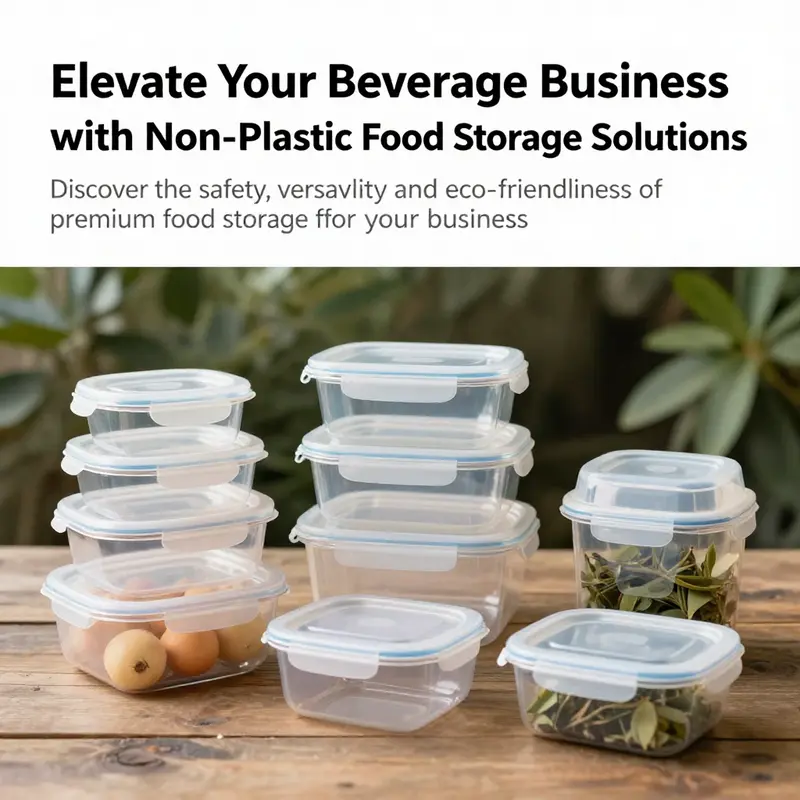
In an era where sustainability is becoming essential, food storage practices in the food and beverage industry are under scrutiny. Non-plastic food storage containers with lids are emerging as excellent alternatives to traditional plastic options, combining premium materials like glass, ceramic, and silicone, which not only ensure safety but also enhance the aesthetic appeal of your products. This article explores everything you need to know about non-plastic food storage containers, detailing high-quality recommendations, material analyses, safety assessments, practical usage scenarios, and current market trends. By the end of this piece, you will have a comprehensive understanding of how these containers can fit into your operations, helping you make informed decisions that cater to both customer satisfaction and environmental stewardship.
Choosing High-Quality Non-Plastic Food Storage Containers with Lids: A Healthier, Greener Kitchen
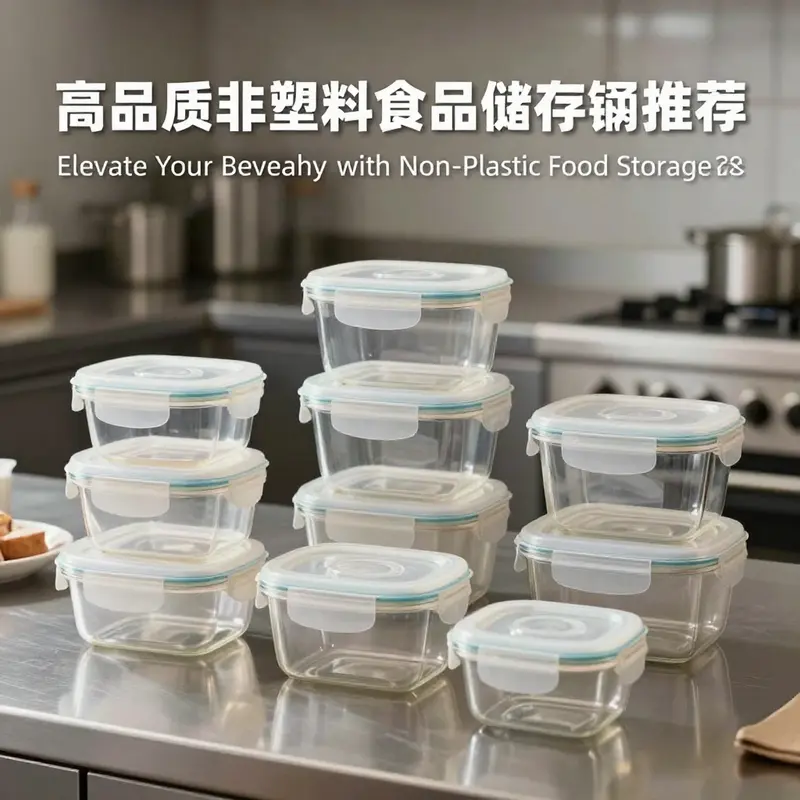
A growing preference for non-plastic food storage containers with lids reflects a quiet but meaningful shift in how people protect what they eat. The appeal is simple and powerful: materials that resist staining, do not impart off-flavors, perform reliably under a range of temperatures, and, above all, reduce exposure to potentially harmful chemicals. Beyond this, non-plastic options often align with broader environmental aims, offering durable, reusable performance that can replace disposable plastic in everyday routines. In kitchens that prize freshness and safety, it is not enough to find a container that merely holds leftovers or prepped ingredients; the container must also shield the contents from air and odors, withstand routine use, and clean easily without degrading. The modern non-plastic landscape includes glass varieties, ceramics, and silicone or metal alternatives, each with its own rhythm of care and its own strengths. A seal that actually keeps moisture and aromas inside matters as much as the material’s safety profile. The right lid design—whether it locks with four corners, snaps securely, or relies on a tight silicone gasket—translates directly into longer storage times and less waste. In this way, the choice of container becomes a practical act of health preservation and responsible consumption, not merely a matter of aesthetics or trend. When we consider health, the conversation naturally turns to what these containers do not introduce into food. Plastics have long been scrutinized for potential leaching of substances such as BPA and other related compounds, especially under heat or prolonged contact with fatty or acidic foods. In contrast, non-plastic options that emphasize inert or stable materials help limit such concerns. Glass, particularly borosilicate variants, offers a sturdy, non-reactive habitat for a wide spectrum of foods, from soups to grains to leafy salads. Glass is naturally non-porous, resists staining, and does not retain flavors once cleaned. This makes it easier to maintain a neutral pantry environment where flavors remain unaltered across meals and seasons. Ceramics, when properly glazed and food-safe, add a touch of warmth and tradition to the kitchen while delivering comparable safety and cleanliness advantages. Ceramic and glass storage can be compatible with both cold storage and gentle reheating, a feature that reduces the need to transfer contents to different vessels for different steps of a meal. Silicone, meanwhile, provides a flexible, lightweight option that can tolerate a wide temperature range and still be easy to clean. For foods that benefit from a certain pliancy—fresh fruit, sliced vegetables, small portions—silicone bags or seals can offer a compact, portable solution, especially for on-the-go users or those who want to minimize waste from single-use sachets. Stainless steel rounds out the material spectrum with exceptional durability and a sleek, modern profile. When designed with a thick, food-grade silicone seal and a sturdy locking mechanism, steel containers can rival glass for heat tolerance and resistance to odor transfer. They may also be preferred for long-term storage of pickles, brines, or other liquids that demand robust containment. Importantly, the value of any non-plastic container lies not just in the material itself but in the lid and its seal. A well-designed lid can make the difference between a fridge-friendly success and a missed opportunity for flavor preservation. Gaskets made from silicone or elastomer, integrated into a four-point or full-wrap locking system, can prevent leaks during transport or stacking in crowded refrigerators. The seal should resist odor migration, a common complaint when containers are reused across a week of meals. Yet even the most advanced lid cannot compensate for poor cleaning or improper temperature handling. Careful cleaning, avoiding sudden temperature shocks, and drying the interior completely before resealing sustain the longevity and safety of these vessels. The goal is ongoing usability: a system that supports batch cooking, leftovers, prepped ingredients, and even baby foods without introducing unwanted chemicals or off-flavors. In practice, this means choosing containers whose interiors are easy to wipe clean, whose rims and threads are accessible, and whose lids snap or seal without excessive force. For households that travel or hike, there are portable, non-plastic options with compact profiles and reliable seals that resist leaks, while structures intended for home use emphasize stackability and visibility—the latter often achieved by clear glass or glass-like clarity in the wall thickness. The visual clarity itself becomes a functional feature, letting you see portions and freshness at a glance, reducing the need to open multiple containers to locate items. From a sustainability perspective, the appeal of non-plastic storage grows as consumers think beyond the immediate convenience to lifecycle considerations. Reusability reduces the frequency of replacements and the generation of waste from disposable plastic. Durability matters: containers that resist cracking, denting, or resin degradation perform better over years of family meals, camping trips, and school lunches. In this sense, the investment in high-quality non-plastic containers with lids is not merely a purchase but a long-term commitment to safer food handling and responsible consumption. When selecting among these options, practical questions emerge. Will the container withstand freezer temperatures without cracking? Is it microwave-safe for reheating, or should it only be reheated indirectly by transferring contents to a microwave-safe dish? Can the lid be cleaned in a standard dishwasher, or is hand-washing advisable to preserve the seal material? How easy is it to clean corners and seals so that residues do not accumulate? And crucially, does the design minimize the chances of cross-contamination between foods such as raw meat and ready-to-eat items? Answers vary by material, but the guiding principle remains consistent: a high-quality non-plastic container is one that keeps foods fresher longer, preserves flavor and nutrients, and endures the everyday realities of kitchen life and travel. In the spirit of practical decision-making, it helps to think of these containers as part of a cohesive storage system rather than as standalone items. A glass or borosilicate container pairs well with a silicone gasket lid and a reliable locking mechanism, forming a unit that can be moved from fridge to microwave with confidence. A stainless-steel option, if well sealed, can replace a plastic tub for marinated vegetables or salads that you intend to keep for several days. A silicone bag offers portable convenience for lunch boxes or snack packs while dramatically reducing single-use plastic waste. In turn, an integrated approach to storage—using appropriate types for different foods and scenarios—minimizes waste and preserves the integrity of what we eat. For contexts where disposable containers are unavoidable—such as picnics, take-out, or care settings—there are durable, non-plastic options designed for single-use convenience that still minimize environmental impact. In such cases, choosing vessels that are easily recyclable and free of fluorinated coatings, and that include lids designed for secure sealing, can be a practical compromise. For readers exploring both reusable and disposable paths, consider the disposable kraft paper bowl with lid as one of several eco-conscious choices in on-the-go settings, which you can explore here: disposable-kraft-paper-bowl-for-food-package-with-lid. This kind of linkage helps connect the broader conversation about non-plastic storage with related options in sustainable packaging, bridging the kitchen with the wider ecological context without sacrificing the focus on health and usability. As with any guideline for safe food handling, it is wise to consult current safety resources and regulatory guidance to stay informed about materials in contact with food. For example, in discussions of chemical safety in packaging, reputable sources emphasize the importance of avoiding long-term exposure to substances of concern and recognizing how different materials interact with various foods and temperatures. External guidance on BPA and related compounds provides a foundation for understanding how non-plastic storage can contribute to healthier routines, especially for households concerned about cumulative exposure. External resource: https://www.fda.gov/food/food-additives-petitions/bpa-bisphenol-a
材料的务实美学:在非塑料食品储存容器中寻觅安全与可持续的可能
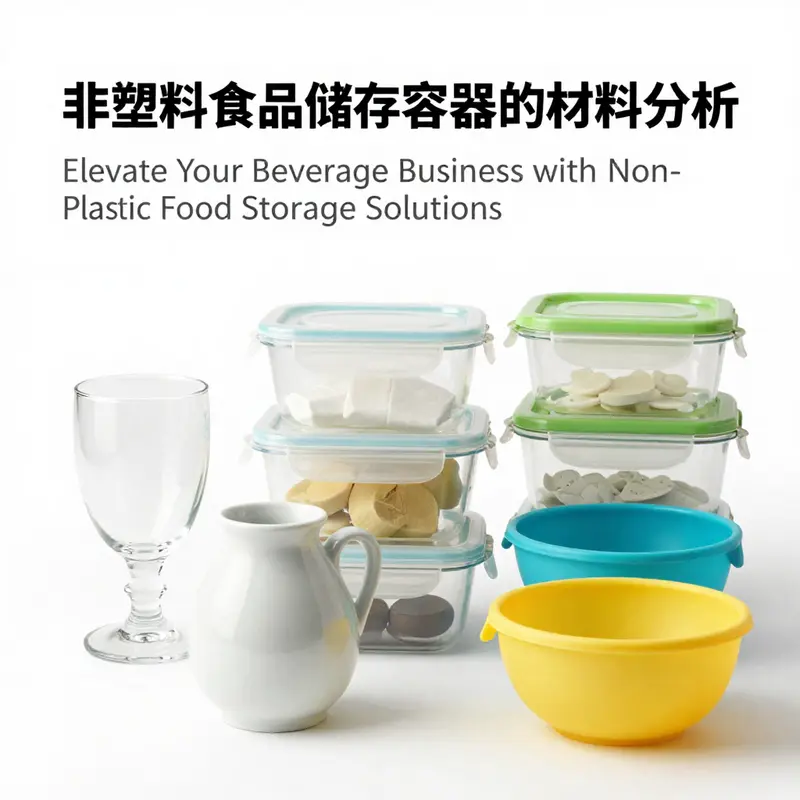
在越来越多家庭将目光从塑料转向非塑料食品储存解决方案的当下,材料选择不仅关乎食品安全,也关乎日常生活的便利与环境的可持续性。当前的研究强调,塑料容器在微波加热或长期储存中的潜在健康风险,尤其是对心血管系统的影响,引发了广泛关注。心血管健康倡导者和营养学界的共识是,尽量减少暴露于高风险化学物质如BPA、邻苯二甲酸盐和PFAS等的机会,成为降低长期健康风险的重要环节。这一背景使得寻找可靠、耐用且安全的非塑料替代材料成为趋势,也推动设计者在材料学与使用场景之间寻求新的平衡点。对于消费者而言,理解每种材料的特性、局限与维护要点,往往比盲目追随时尚更具意义,因为这直接影响到日常食物储存的安全性、食物风味的保持以及容器的使用寿命。
在这样的背景下,玻璃、食品级硅胶、不锈钢以及陶瓷与搪瓷这几类材料成为主流考量的对象。玻璃以其化学惰性和稳定性,被广泛视为最接近“零反应性”的非塑料材料。即便在高温环境中,玻璃也通常表现出优异的耐化学性,既不会向食物释放有害物质,也不易因烹饪过程中的热变应产生迁移。这一特性使得玻璃成为家庭厨房的常见选择,尤其适合用于长期储存和再加热后食用。透明特性则使使用者能够一眼看到内容物,减少误判与食品浪费,同时其表面光滑、易于清洁,长期维护成本也较低。配合密封圈或可靠的盖合设计,玻璃容器在抑制空气与湿气进入方面表现出色,从而延长保鲜期与风味的稳定性。然而,玻璃的易碎性始终是不可忽视的现实问题,搬运和跌落时需额外小心,尤其在儿童使用或户外场景中需要更周全的防护设计。
食品级硅胶则以其柔韧性和良好的热稳定性成为近年备受关注的替代材料之一。它能在极宽的温度范围内保持稳定性,这使得密封良好的硅胶容器能够安全用于冷冻、冷藏甚至微波加热,避免了化学物质迁移的担忧。更重要的是,食品级硅胶具备良好的防漏性和可重复使用性,适合存放液体或半固体食品,且在户外使用时更具灵活性。其轻量化特质也使得带着它外出携带一餐变得更加便利。此外,硅胶的耐用性与多次循环使用带来的环境收益,是许多环保倡导者推崇的方面。不过,购买时需格外留意产品的认证与质量,正规品牌的食品级硅胶往往避免了重金属等杂质的潜在风险。
不锈钢容器在户外活动、旅行和日常厨房的组合使用中也占据重要地位。其高强度和抗冲击性使得容器不易破碎,适合有儿童或需要频繁携带的人群。耐高温与耐腐蚀的特性又使其在微波、洗碗机、冰箱和烹饪过程中的适用性更广。对于长期使用而言,选择符合食品安全标准的不锈钢,如304或316合金,可以显著降低金属析出的风险,并确保在多次清洗和重复加热中保持安全性与风味稳定性。一些容器还具备保温层,能在带走热食时提供更多的温控体验。然则,不锈钢也有重量较大、成本较高的现实考量,且不同等级的材料其对味道和化学迁移的敏感度各不相同,因此购买时的材料等级选择成为决定使用体验的关键。
陶瓷与搪瓷虽然在日常使用中不如前述材料那样广泛,但在特定场景下仍展现出独特的优势。天然材质的陶瓷与搪瓷在无添加剂的前提下提供了优雅的外观与舒适的触感,且在需要静置保存的情形中表现稳定。其耐热性和热传导特性使得它们适合展示性储存、餐桌摆放以及某些冷却室温环境中的使用。局限在于它们对温度骤变有一定敏感度,易产生裂纹或破损,因此在微波炉及高温烹饪场景中的可行性相对较低。综合来看,玻璃与食品级硅胶在当前市场中是最具代表性的非塑料材料,兼具安全性、可维护性和环境友好性。医生与健康倡导者普遍建议在日常家居中优先考虑这两类材料,以降低长期暴露于潜在有害化学物质的风险,从而支持心脏健康与整体代谢平衡。
在评估材料时,设计与使用场景的契合同样不可忽视。玻璃容器通常以玻璃盖、硅胶密封圈或简约锁扣盖组合出现,密封性与防潮性能决定了食物保鲜的有效期与风味的维持程度。硅胶容器则以其柔软边缘和可折叠结构提升了包装的紧凑性与携带便利性,尤其在外出就餐或短途出行时表现突出。至于不锈钢,除了保温和耐用外,现代设计也在提升其密封性与使用安全性方面发力,确保热食不会过快散发热量,同时避免金属与酸性食物发生不良反应。陶瓷与搪瓷若成为日常储存选择,则更适合在室温或低温环境中长期陈列,以及桌面呈现,少量用于日常加热时也应避免急热急冷。
将理论与日常生活连接起来,可以看出一个清晰的现实:非塑料材料的种类越丰富,选择空间越大,使用者就越能根据自身需求来定制储存方案。为了平衡安全性与可持续性,现代家庭往往会采用组合策略——在家中以玻璃或不锈钢容器存放主食、酱料与高水分食物,在日常外出时携带轻便的硅胶容器来盛放便携餐食,偶尔还会用到陶瓷或搪瓷器具来呈现美观的餐桌效果。这样的组合不仅降低了对一次性塑料的依赖,也延长了容器的使用寿命,从而在整体生命周期中减少资源消耗与废弃物产生。与此同时,选择合适的盖合设计、密封圈材料以及耐热等级,是确保材料性能与食品安全的关键。
在对比不同材料时,消费者还应关注一个实际但常被忽视的维度:维护与清洁的难易度。玻璃和不锈钢通常容易清洗,耐高温程序也使得消毒更便捷;硅胶容器虽然也方便清洁,但需要注意不留残留物与异味的积聚,尤其是在密封部位。陶瓷与搪瓷则在日常使用中更易积尘、需要更温和的清洗方式以避免表面微裂。无论选择哪种材料,避免极端温度的快速变换都能显著延长容器的使用寿命,减少因为热冲击引起的损坏。
对于希望了解更多非塑料替代品的读者而言,市场上存在各种纸质或纸基包装作为短期、一次性使用的替代选项,同时也有可重复使用的纸基餐具与容器形式。你可以通过以下链接进一步了解一个常见的非塑料纸基选项及其在日常生活中的应用场景: disposable kraft paper bowl for food package with lid。该类材料在短期内具有便利性,且具备一定回收潜力,但就长期重复使用与耐久性而言,玻璃、硅胶与不锈钢等材料往往更具优势。
将科学研究、材料特性与日常生活联系在一起,便能形成一种务实而富有洞察力的采购观:在保证食品安全与降低暴露风险的前提下,优先考虑玻璃与食品级硅胶为主的组合,以应对家庭日常储存与加热的多样需求。若需应对外出、旅行或儿童日常使用,适度引入不锈钢的耐用与保温特性,可以在不增加安全风险的前提下提升使用体验。对陶瓷与搪瓷的选择,则应在对美观和展示性有较高需求的情境中加以考虑,同时确保它们不被用于高强度热加工场景。关于环境影响和生命周期,这些材料的重复使用潜力与资源投入存在差异,但总体而言,合理的选材与维护策略能显著降低一次性塑料使用的依赖,并朝向更可持续的家庭消费模式迈进。
外部参考资料可帮助读者获得更广阔的视角,尤其是在理解材料与健康之间的联系时。有关食品包装对心血管健康影响的权威总结,可以参考以下外部资源: https://www.heart.org/en/healthy-living/healthy-eating/eating-for-a-healthy-heart/food-packaging-and-your-heart-health。
Beyond Plastic: Safety, Sustainability, and the Promise of Non-Plastic Food Storage Containers
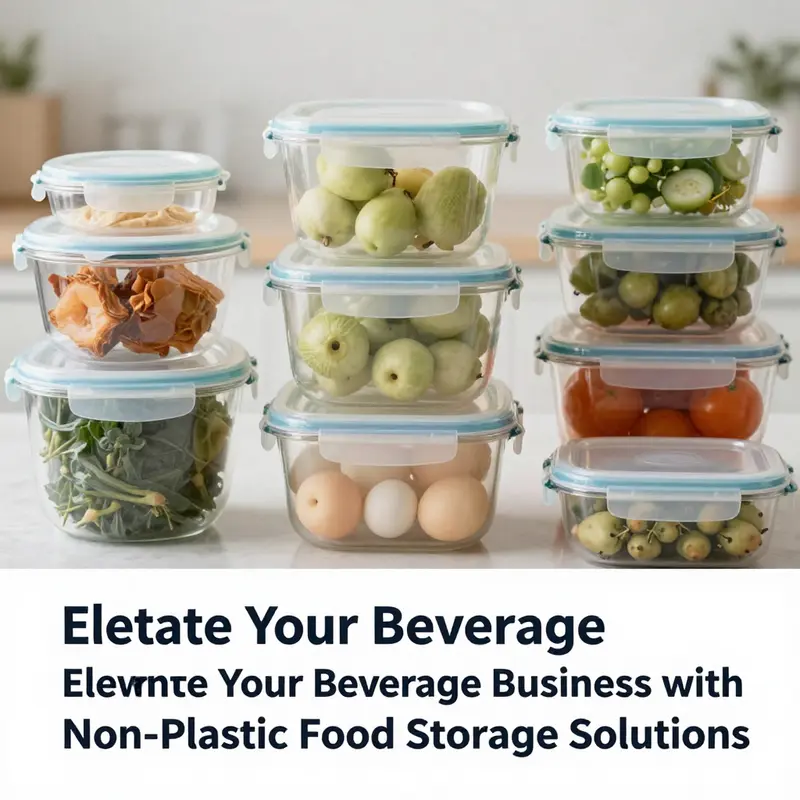
Rethinking how we store food begins with a closer look at what keeps our ingredients safe and our planet healthier. The shift away from plastic storage options is not merely a trend; it is a response to long-standing questions about chemical migration, food safety, and the cumulative impact of disposable materials on ecosystems. In this chapter, the conversation centers on non-plastic containers—glass, stainless steel, and food-grade silicone—as storage solutions with lids that fit tightly, seal well, and withstand the daily cycles of cold, heat, and frequent use. From the kitchen to the outdoors and even to infant feeding routines, these materials offer a stability that plastic often cannot guarantee. The discussion is grounded in the idea that safety and environmental responsibility should go hand in hand, guiding choices that protect health while reducing waste. On the safety front, the concern with many plastic containers lies in their potential to move additives into food, especially under conditions of repeated use, high temperature, or prolonged contact with fatty foods. Public health observations point to plastic products that are not food-grade or not designed for repeated exposure as common sources of chemical migration. Substances such as plasticizers and related compounds can, in some cases, migrate into food during storage, heating, or microwaving. This risk is not merely theoretical; it has been reflected in laboratory simulations and risk assessments that emphasize how exposure to certain additives may influence endocrine function and metabolic processes over time. While the exact risks vary by material, exposure pathways, and usage patterns, the overarching message remains consistent: heating or chilling food in containers not designed for prolonged contact, or for repeated use, can introduce unwanted chemicals into the meal. In contrast, containers made from properly chosen glass, stainless steel, or food-grade silicone owe their appeal to intrinsic material properties. Glass and stainless steel are chemically inert under most kitchen conditions, resisting interactions with acidic or fatty foods and with heat cycles typical of everyday cooking and storage. They do not rely on added stabilizers or plasticizers, and their performance remains predictable across a broad range of temperatures. Food-grade silicone, when properly manufactured and labeled, offers a flexible yet stable option that can bridge the gap between rigid glass and rigid metal. It provides a sealing surface, often with lids designed to minimize air exposure, while maintaining a degree of resilience that helps avoid cracking or denting during travel or frequent handling. In practical terms, these materials present a clear advantage: the probability of harmful substance migration into food is markedly reduced compared with many lower-grade plastics. This difference becomes especially important when meals are stored, reheated, or served to vulnerable populations such as children or pregnant individuals. Beyond safety, the environmental argument for non-plastic containers carries equal weight. Plastic, particularly single-use or poorly managed items, has become a symbol of environmental leakage. Its life cycle—from production to disposal—often incurs ecological costs that accumulate across generations. In contrast, glass, stainless steel, and food-grade silicone are designed for durable, repeated use. A well-cared-for container in these categories can span years, if not decades, reducing the need for frequent replacements and cutting the volume of waste that eventually ends up in landfills or the natural environment. Moreover, these materials are typically more amenable to recycling or closed-loop reuse, further lowering their overall environmental footprint. The environmental calculus also extends to how these containers influence consumer behavior. When households choose containers built to last, they tend to replace disposable options with a habit of reusing, which supports waste reduction at the source. Yet, durability must be balanced with usability. Users often weigh factors such as weight, breakability, ease of cleaning, and compatibility with dishwashers or freezers. The design of lids matters as well: a reliable seal minimizes leaks and preserves moisture, while a thoughtful shape supports convenient stacking and storage in crowded kitchen cabinets or compact travel kits. In climates or travel scenarios where space is at a premium, the ability to nest containers without damaging lids, and to wipe or wash them easily, becomes an essential part of everyday practice. The nuanced choice among glass, stainless steel, and silicone also depends on the specific use case. For long-term pantry storage of dry goods, glass jars with tight-sealing lids offer a timeless balance of visibility, compatibility with pantry shelving, and inert behavior with most foods. For hot beverages, soups, or meals on the go, stainless steel can provide robust thermal retention and portability, along with a resilient exterior that resists impact. When flexibility is key or when lids need a gentler touch to prevent cracking, food-grade silicone presents a compelling compromise, offering pliability, cleanability, and a seal that performs well under a range of temperatures. The chapter thus far has sketched a landscape where safety and sustainability are not opposing forces, but complementary pillars guiding everyday choices. As consumers consider upgrading their storage habits, it helps to imagine practical pathways that translate these principles into tangible steps. For instance, when planning a meal-prep routine, a household might replace several short-lived plastic containers with a smaller set of non-plastic options that cover a range of portion sizes. The goal is to minimize the number of containers in use at any one time while maximizing durability and ease of maintenance. In this regard, the lid design becomes as critical as the container body itself: a reliable seal, a tight closure, and a lid that remains easy to remove after repeated cycles all contribute to a more sustainable and health-conscious routine. For short-term, light-duty storage—such as meal components in the fridge or portioned baby foods—one practical, non-plastic option can be found in a kraft paper bowl with lid. This choice embodies a straightforward, low-impact approach to storage that aligns with the broader non-plastic ethos, particularly for take-away or quick-service contexts where disposability is temporarily unavoidable. See this example page for a representative design that emphasizes lid security and material simplicity: disposable kraft paper bowl with lid. This link demonstrates how non-plastic packaging can still offer reliable performance without introducing the hazards associated with some plastics, while keeping an eye on end-of-life considerations and recyclability. The broader narrative around non-plastic storage is not merely about selecting a single material but about cultivating a mindset that respects safety, minimizes waste, and leverages the strengths of each material type. As research and practice converge, it becomes clear that the kitchen is a laboratory for environmental stewardship. When households adopt glass, stainless steel, or food-grade silicone as the default for daily storage, they reduce exposure to potentially hazardous substances and contribute to a more sustainable supply chain. The choices extend beyond the pantry to shopping habits, product design, and community norms, reinforcing the idea that small, consistent steps in the kitchen can translate into meaningful environmental gains. For readers who wish to explore the topic further, an authoritative external resource on sustainable materials management offers additional context on how societies can shift away from disposable plastics toward durable, reusable options. External resource: https://www.epa.gov/smm/sustainable-management-materials
Beyond Plastics: How Non-Plastic Food Storage Containers Weave Safety, Everyday Convenience, and Sustainability into Daily Life
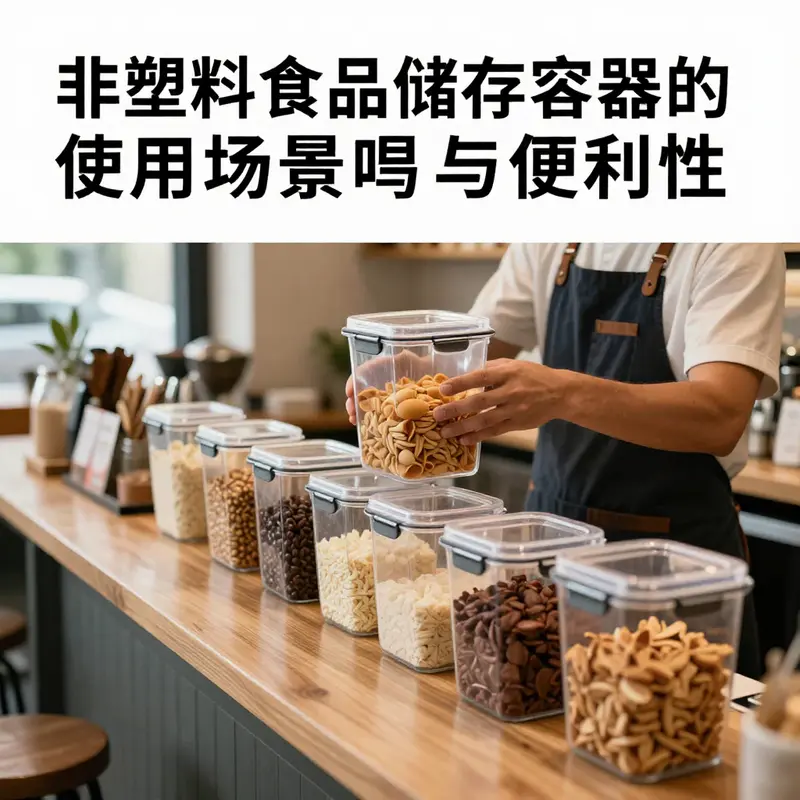
Non-plastic food storage containers—those crafted from glass, ceramic, and food-grade silicone—have quietly become a foundational choice for households seeking safer, simpler, and more durable options for preserving leftovers, dry ingredients, and meal preps. The appeal rests not only in the absence of plastics that may shed additives when heated or contact with acidic foods, but also in the tangible advantages of a material world that is easy to inspect, clean, and reuse. Glass and silicone, in particular, offer a blend of inertness, resilience, and versatility that plastic alternatives struggle to match. They do not release chemical fumes under normal culinary conditions, they resist absorbing odors and stains, and they stand up to regular cycles of washing, whether by hand or in a dishwasher. In a culture that increasingly values transparency, both literally and figuratively, these containers provide peace of mind: you can see what’s inside, know when it needs to be used, and trust that the container itself will not degrade or contaminate the food you serve. The broader implication is a positive ripple effect for health, waste, and daily routines, one sealed lid at a time.
In the home kitchen, non-plastic storage is most immediately impactful when it comes to long-term storage of staples. Dry goods such as flour, sugar, and grains benefit from glass jars with airtight, locking lids that prevent moisture intrusion and deter pantry pests. The clarity of glass makes it easy to monitor levels at a glance, reducing the temptation to waste food because a bag was forgotten at the back of a shelf. When waste is minimized, it is not only a personal savings but a small step toward reducing the environmental footprint of the household. The same principle extends to grains, pasta, and legumes, which retain their texture and flavor longer when kept in a non-porous, non-absorbent environment. Ceramic and dense, stoneware-like containers bring a slightly different aesthetic to the counter or pantry, often offering a warm, tactile feel that makes storage feel less like a chore and more like a stewardship practice. While ceramics can be heavier and more prone to chips if mishandled, their inert surfaces still resist contamination and retain their integrity through countless wash cycles when cared for properly.
The daily rhythm of meals and snacks also benefits from containers designed for more than a single purpose. A set of glass bowls with well-sealing lids can transition from food prep to serving, from marinating to storing leftovers, all without introducing flavors from previous uses. The lids, when equipped with secure seals or gaskets, keep moisture and air exchange to a minimum, which is essential for preserving textures—whether you are refrigerating fresh berries, pre-making overnight oats, or stacking up portions for quick weekday lunches. In these moments, the containers become more than vessels; they become reliable workhorses that simplify decisions and reduce the cognitive load associated with meal planning. There is a quiet comfort in reaching for a container that looks as pristine after washing as it did when first purchased, a benefit that reduces the mental energy spent over sanitation and care.
Outside the kitchen, the practicality of non-plastic storage extends to a spectrum of everyday activities: school or work lunches, travel, picnics, and camping trips all gain from the leak-proof assurance and temperature tolerance of glass and silicone. A leak-resistant container with a silicone-infused seal preserves the integrity of sauces and dressings during transit, even when carried in a bag that rolls around on a commute. The ability to heat or reheat some of these containers—if the material is rated for it—means fewer dishes to wash and fewer disposable options to rely upon during busy days. The convenience is not merely about ease of use; it is about reducing single-use waste and the anxiety that comes with compromised food safety when a container fails mid-day.
The environmental argument for non-plastic options grows louder when examined over time. Plastics can shed microplastics and, in some cases, release additives like BPA or PFAS, especially when heated or exposed to acidic foods. Health authorities increasingly advocate for safer alternatives in direct contact with food, highlighting the benefits of glass and food-grade silicone. Glass is chemically inert, does not leach substances, and is highly recyclable, contributing to a circular lifecycle that minimizes long-term environmental impact. Silicone, too, benefits from durability and a long service life; with proper care, silicone containers can endure many cycles of storage, freezing, heating, and washing, which translates into fewer products ending up in landfills. The combination of safety, durability, and recyclability makes non-plastic options appealing to households aiming to align daily practices with environmental values without sacrificing convenience or performance.
In practice, the selection of non-plastic containers should balance several factors. Size variety is essential; a range of capacities supports both bulk storage and portioning for individual meals. Airtight lids are a priority; the most reliable designs include a gasket or locking mechanism that minimizes air exchange and preserves moisture control. For glass, consider containers with tempered or shatter-resistant walls if you frequently transport items or stack them in crowded cabinets. Silicone components should be labeled food-grade and should tolerate the temperature spectrum you expect to encounter—from freezer cold to oven heat when appropriate. Ceramic options can add charm and warmth to the kitchen while remaining inert with most foods, yet their weight and fragility call for careful handling and storage strategies to avoid breakage.
Care and maintenance contribute as much to the value of these containers as their materials. Glass and ceramic surfaces cleanse easily and resist staining when cleaned promptly after use. A quick scrub with warm water and mild detergent typically suffices, and most pieces tolerate dishwasher cycles, though air-drying is prudent for lids and seals to preserve gasket integrity. Silicone parts benefit from a gentler approach to prolong their elasticity; avoid abrasive cleaners and high-heat exposure beyond recommended limits. For occasional staining, a paste of baking soda and water can lift residues without scratching surfaces. The long-term payoff is not only pristine containers but a kitchen ecosystem that is less reliant on disposable options and more attuned to a sustainable cadence of storage, reuse, and careful handling.
The narrative surrounding non-plastic containers is not just about material science; it is about the daily discipline of choosing safer, more resilient tools for food storage. This is a practical embodiment of a healthier lifestyle: fewer chemical exposures, less waste, and more predictable, reliable storage outcomes. The science and experience converge in a simple truth—quality containers that defy the transient nature of some plastics offer meaningful payoffs in health, convenience, and the environment. For households committed to a safer kitchen, the switch to glass, ceramic, and silicone storage is less a trend and more a reliable, repeatable practice that travels from pantry to table with confidence.
External resource: https://www.heart.org/en/healthy-living/healthy-eating/nutrition/why-you-should-switch-to-glass-and-silicone-food-storage-containers
From Preference to Principle: Market Currents and Mindset Shifts Toward Non-Plastic Food Storage with Lids
Sitting at the edge of the kitchen counter, the question of what truly safeguards our meals has grown more nuanced. On one side, health concerns and environmental guilt weigh heavily. On the other, the daily habits of busy households pull in the opposite direction, toward convenience, lightness, and speed. This tension has become the living fabric of the current market for non-plastic food storage containers with lids. The surface story is simple: people want materials that do not leach harmful substances, and lids that seal tightly. The deeper narrative is more complex. It encompasses evolving material science, shifting consumer risk perceptions, and a regulatory landscape that nudges manufacturers toward safer, more sustainable options. In this space, glass, ceramic, silicone, and the growing family of plant-based and biobased materials offer viable alternatives to traditional plastics, and they do so with a set of trade-offs that shape how and when they are used. For many households, glass and ceramic are the go-to references for durability and inertness, while silicone offers flexibility and heat tolerance. Yet none of these choices arrive without considerations of weight, fragility, ease of cleaning, and the perceived visibility of quality. The market has responded with a spectrum of solutions that balance these factors, recognizing that the best container is often the one that fits a given task—cold storage versus hot leftovers, flat-lidded stacks versus stackable modular systems, or a container that travels well for outdoor meals.
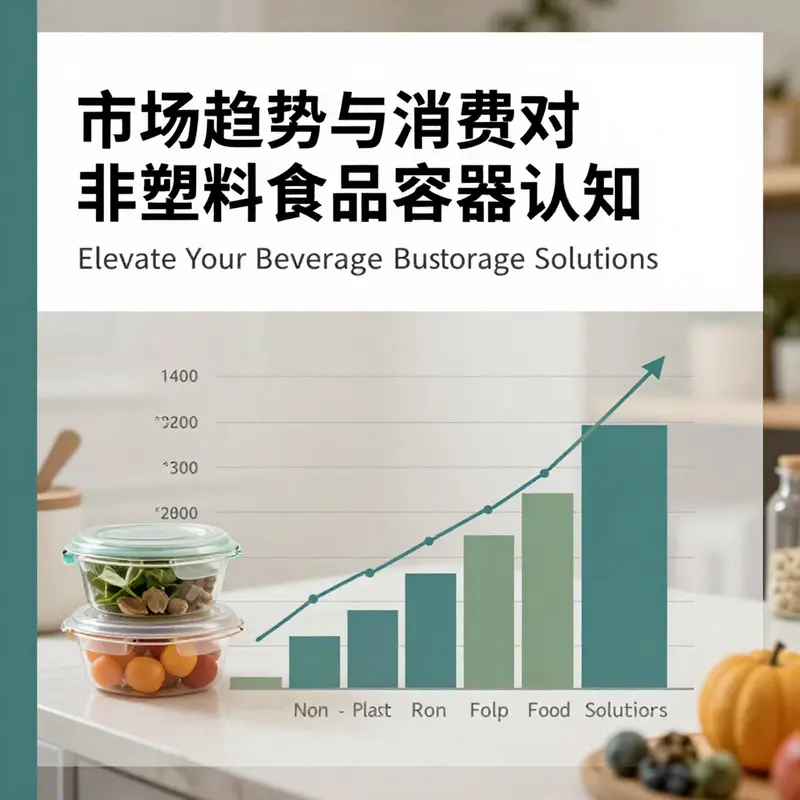
A telling moment in this transition is the way consumer behavior data frames the issue. Recent market research highlights a persistent gap between concern and action. In the context of heat and food storage, more than one major study has shown that a large majority of consumers continue to rely on conventional plastic containers for hot foods. Specifically, more than 70 percent still use plastic meal boxes for hot servings, while a much smaller segment—around 20 percent—actively shifts to glass or ceramic alternatives. This reveals a cognitive and practical disconnect: even as people express worry about microplastic exposure and chemical migrations at high temperatures, everyday routines often win out over optimal safety considerations. The friction is real and meaningful. It suggests that while awareness is rising, feasibility—whether that means price, availability, durability, or compatibility with existing kitchen habits—still heavily guides daily choices.
In response to this, the market is recalibrating toward a more nuanced, multi-material ecosystem. Consumers are increasingly recognizing that safety is not a single-material issue but a system one. High-temperature migration risks, long storage durations, and the cumulative exposure from repeated use all factor into decision making. As a result, there is growing demand for materials that offer low or no migration risk, are non-toxic, and can withstand routine dishwashing or heat exposure without degrading. Glass and stainless steel have gained prominence in households seeking longevity and inertness, while silicone and certain biobased polymers are appealing for their resilience and versatility. At the same time, bamboo-based designs and bio-based options, such as plant-derived polymers, are entering the conversation as greener alternatives that do not rely on conventional petroleum-based plastics. These materials are valued not only for safety but also for their ability to reduce environmental footprints through reuse and potential recyclability. Yet each option brings its own set of logistical considerations: glass can be heavy and fragile; silicone may require more meticulous cleaning; and biobased materials can involve higher cost or limited compatibility with certain dishwashers or storage conditions. The practical reality is that consumers want “safe, durable, and convenient” rather than a single perfect material. The market, accordingly, has become more inventive, offering a spectrum of choices that can be aligned with different use cases—from everyday kitchen storage to outdoor picnics and baby-food handling.
Policy and industry momentum are no small accelerants in this shift. Where regulatory signals tighten the standards for food-contact materials, manufacturers respond with greater transparency around composition and performance. The broader regulatory environment in many regions now emphasizes low migration, non-toxicity, and the traceability of materials used in sealed containers. In tandem, national and local initiatives aimed at reducing single-use plastics push brands to explore durable, reusable solutions that rival the convenience of disposable plastics yet avoid their downsides. This dual pressure—protective of consumer health and protective of the environment—has unleashed a wave of innovation that blends chemistry, design, and digital tooling. The result is not a single rising star but a field of alternatives designed to meet different moments in a consumer’s day: a glass jar for pantry staples that can go from refrigerator to oven, a silicone-sealed container for kids’ snacks during car rides, or a biobased, compostable lid that makes a larger set feel cohesive without sacrificing performance.
The conversation about material choice is inextricably linked to lived experience. For many families, non-plastic containers with lids are not just a health precaution; they are a practical improvement in daily routines. They reduce the risk of chemical exposure during reheating and aid in avoiding flavor contamination from previous storage. They also align with broader environmental goals through reusability and longer product lifespans. The evolution of design—think thicker glass walls, precision-sealed silicone gaskets, and lids that lock into place with minimal effort—has a tangible impact on how often food is moved from one storage state to another. This translates into fewer instances of wasted food and a more predictable approach to portion control, which is central to household meal planning and to the reduction of waste.
In this shifting landscape, a quiet but meaningful development is the rise of everyday packaging formats that emphasize both safety and reuse without compromising convenience. While not every consumer will gravitate toward glass or ceramic for every item, there is a growing acceptance of formats that prioritize lids and seals capable of withstanding repeated cycles of storage, reheating, and washing. This trend aligns with a broader move toward durable goods that function as part of an integrated, low-wuss, low-waste lifestyle. The appeal lies in the clarity of purpose: containers are chosen because they are designed to minimize risk and maximize reuse, with lids that provide reliable seals that keep odors contained and contents fresh. The narrative, then, shifts from “Is this safe?” to “Is this safe, useful, and easy to care for in the long run?” The consumer’s decision-making matrix increasingly rewards materials and designs that deliver consistent performance across multiple contexts, whether at home, in the office, or on weekend getaways.
Incorporating the human element into this discussion is essential. People do not always want to chase the absolute safest option; they want options that fit their routines, budgets, and values. A practical illustration of this is the growing availability of lid-equipped, non-plastic alternatives that can accommodate a range of food types—from soups and stews to salads and leftovers. The focus is on modularity and reliability: containers that stack neatly, seal securely, and survive the rigors of a busy household. And while the consumer segment for high-end, low-migration containers expands, the market also seeks accessible options that broaden adoption. Accessibility matters because the overarching goal is not only to reduce plastic usage but to normalize the switch to safe, reusable alternatives as a routine choice rather than an exception.
For readers who are curious about concrete design directions here, consider the movement toward lid-integrated, shape-efficient formats that optimize space in refrigerators and cabinets. The idea is to minimize wasted space while maximizing seal integrity, making it easier to portion and store a variety of foods. This is where material choice, engineering, and everyday practicality converge. The best solutions manage heat transfer, preserve flavor, and resist staining or odors, all without relying on plastics that raise health or environmental concerns. In this light, the non-plastic storage landscape is less about chasing a single perfect material and more about orchestrating a family of options that can be mixed and matched according to use-case, budget, and lifestyle. That orchestration is precisely what the market is now learning to do more effectively, guided by consumer feedback, health considerations, and an evolving body of evidence about safety and sustainability.
For readers who want to explore practical examples of the kinds of non-plastic storage options that are gaining traction in real homes, a simple reference is the growing availability of lid-enabled, paper-based and other sustainable formats designed for reuse and alternate end-of-life pathways. These designs illustrate how safety, convenience, and environmental responsibility can coexist in everyday goods. To learn more about one such generic option and its design approach, you can explore a representative product range featuring kraft-based containers with secure lids, which exemplify a practical balance of performance and reusability while offering a more sustainable footprint than traditional single-use plastics. kraft paper bowl with lid.
Ultimately, the momentum behind non-plastic food storage containers with lids rests on a synthesis of risk awareness, practical constraints, and the pursuit of better design. It is about recognizing that reducing exposure to potentially migrating substances and limiting environmental impact are not mutually exclusive goals. They can be achieved together when products are built to last, when lids seal reliably, and when materials chosen are compatible with a modern, low-wriction lifestyle. As consumers begin to translate broad health and sustainability cues into daily choices, the products they reach for—whether at home, at a cafe, or on a camping trip—will reflect a more deliberate consideration of safety, durability, and the planet we share. This is not a single trend but a set of evolving norms that will continue reshaping the way we store, preserve, and reuse food for years to come.
External reference: For a broader look at how consumer behavior and sustainability trends intersect with food packaging, see the Meituan sustainability report. https://www.meituan.com/zhengce/report/2023-sustainable-food-consumption/
Final thoughts
The shift towards non-plastic food storage containers is not just a trend but a movement towards a more sustainable future in the food and beverage industry. With their many benefits including safety, practicality, and environmental friendliness, these containers offer an excellent solution for businesses looking to enhance their operations while appealing to eco-conscious consumers. By embracing non-plastic options, you position your brand as a forward-thinking establishment that values both quality and environmental responsibility. As you consider your purchasing decisions, let the insights gathered from this article guide you toward creating a better, healthier future for both your business and the planet.