
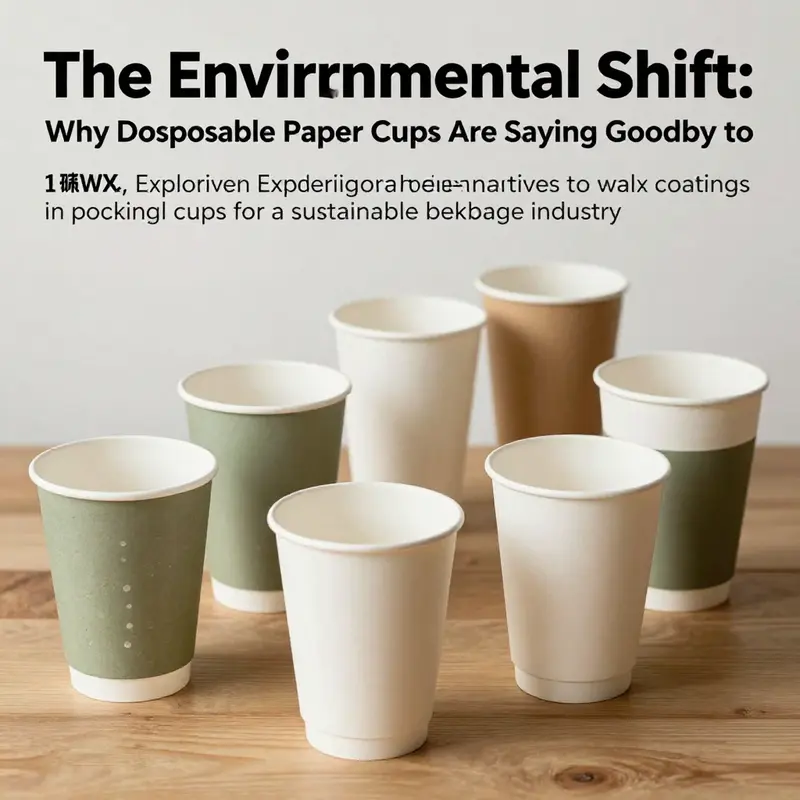
As the world makes strides towards sustainability, disposable paper cups are undergoing a significant transformation. Once coated with wax for waterproofing, these cups are now frequently adopting innovative alternatives that align better with health and environmental standards. In this exploration, we delve into the reasons for the decline of wax-coated cups, examine current technologies replacing traditional coatings, analyze market trends impacting the industry, investigate regulatory influences on disposable paper cups, and underscore the importance of consumer awareness in making informed choices. Each chapter provides a comprehensive view of this critical shift in the beverage packaging landscape.
从蜡到聚乙烯:一次性纸杯防水涂层的转变与背后原因
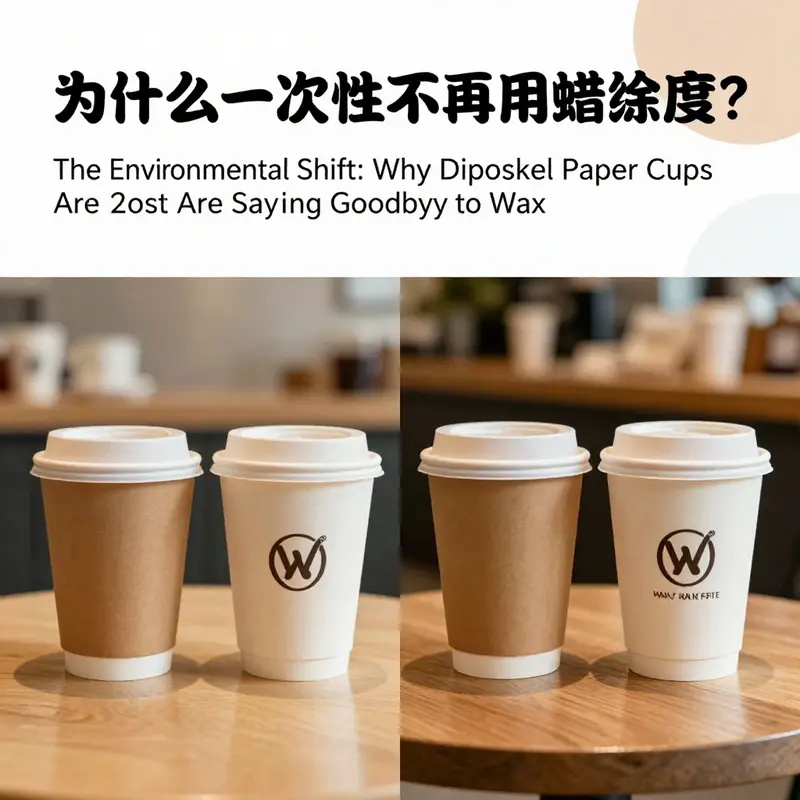
一次性纸杯为何摒弃蜡涂层
一次性纸杯的涂层演变并非偶然,而是技术、食品安全和环保要求共同驱动的结果。几十年前,石蜡曾是纸杯防水的常见选择:便宜、易得、工艺相对简单。然而,随着饮品种类增多、消费者对安全和可持续的要求提高,以及回收与法规体系逐步完善,石蜡暴露出一系列无法忽视的缺陷。今天,聚乙烯(PE)等食品级塑料涂膜已成为行业主流,植物基可降解涂层和无涂层技术也在加速发展。这一章节将以连贯的叙述,解析为何蜡涂层逐渐退出市场,聚乙烯成为主流,以及这对生产、使用和回收带来的实际影响。
石蜡之所以被淘汰,首先是因为其在功能性上的根本不足。石蜡的熔点通常不超过60℃。很多热饮在出杯时温度已达到60℃左右,若遇到更高温度或反复加热的场景,蜡层会出现软化或熔化现象。结果不仅是防水性能下降,出现渗漏和杯体变软,更可能将蜡成分迁移到饮品中。对热饮、含酒精饮料或高温汤品而言,这种风险不可忽视。与之相比,聚乙烯涂层的热稳定性要高得多,在正常使用温度下保持完整的薄膜结构,不会轻易迁移到食品或饮料中,因而在食品安全性上获得更广泛的认可。
其次,涂层的一致性与可靠性决定了纸杯的实用性。石蜡通常以较厚或不均匀的涂覆方式存在,受生产控制能力限制,涂层易出现薄弱环节或局部堆积,导致密封性不稳定。现代的热熔或挤出聚乙烯涂层则可形成连续、致密的薄膜,覆盖均匀且耐摩擦。这样的涂层在制造过程中更容易实现自动化与质量控制,从而显著降低次品率和漏液事件,这对于连锁咖啡店、外卖配送和大规模活动尤其重要。
第三,关于健康与法规的压力促成了材料替换。聚乙烯作为食品级材料在全球范围内被广泛接受。它的化学稳定性高,不易与食物发生反应,普通使用条件下无明显有害迁移物。反观石蜡,如果来源并非食品级或未经过严格精制,可能含有低量杂质或芳香烃残留。这些化学杂质在高温条件下发生迁移的风险,使得监管机构对蜡类应用保持警惕。多个国家和地区逐步收紧对含蜡食品包装的标准或建议,推动行业采用更安全的替代方案。
第四,回收与环境影响是不可忽视的驱动力。一次性纸杯的回收长期以来面临技术挑战,主要原因在于纸与涂层的分离难度。石蜡涂层会在纤维回收流程中造成污染,降低再生纸浆质量,增加工业处理成本,从而使纸杯的回收价值下降。聚乙烯涂层在回收体系内虽然也会带来困难,但塑料与纸纤维的分离技术更成熟,且许多再生纸厂已有处理含PE涂层纸张的流程。更重要的是,随着市场对可降解、可堆肥包装的需求增加,企业开始导入植物基涂层(如PLA)或探索无涂层的纤维技术,通过设计和材料科学减少涂层对回收的负担。
第五,生产效率与成本结构推动了材料的替换。聚乙烯涂层技术与现代纸杯成型线高度兼容,涂覆、成型与印刷工序可实现高速自动化。单位成本在大批量生产中更具竞争力,且质量稳定。这使得厂家在满足食品安全要求的同时,保持商业可行性。相比之下,石蜡涂覆在工艺控制和一致性方面更依赖人工经验,难以在现代高产线上保证相同的良品率。
第六,消费者与市场趋势对材料选择形成了外部压力。零售端与餐饮业越来越偏好标注环保与安全性能的包装。消费者在购买时会留意“是否可降解”“是否含蜡”“是否有食品级认证”等信息。企业为响应这一趋势,主动改用被广泛接受的涂层并在包装上保证透明度。与此同时,监管层面的举措,例如限制一次性塑料的免费供应或鼓励可降解材料的采用,也进一步促进了材料结构的优化。
尽管聚乙烯在功能性和成本上表现良好,它并非没有争议。PE涂层的回收或堆肥友好性不足,这催生了多条替代路径:一是植物基可降解涂层,如聚乳酸(PLA),它能在合适条件下实现在工业堆肥中的降解;二是通过纸材改性或新型纤维工艺,生产出表面天然疏水的无涂层纸杯;三是采用可回收复合材料体系,配合循环保管道改造,使纸与塑的分离更高效。这些方向正与聚乙烯共存,形成多元化的市场格局。
在实际选择上,用户和采购方应关注具体的认证与适用场景。用于热饮、长时间携带或高温食品的杯具,若要求稳妥的防渗与隔热性能,食品级聚乙烯涂层仍是可靠选择。若目标是工业堆肥或更强的环境友好属性,应优先寻找明确标注可堆肥并持有第三方认证的产品。对于希望尽量减少一次性用品使用的环节,鼓励采用可重复使用的杯具或引入回收闭环体系是更持久的解决方案。
行业内的技术演进也带来了新的商机。例如,双层结构的杯体可以在内层使用薄而致密的PE涂膜,在外层采用印刷友好且可回收的纸层,从而在保持消费者体验的同时,简化再处理流程。还有厂家在杯套、杯盖和配套托盘的设计上采用可回收或生物基材料,以降低整体环境负担。若供应链整体朝向标准化认证发展,终端回收与处理成本将进一步下降。
总之,蜡涂层退出主流市场并非单一因素导致,而是功能缺陷、食品安全顾虑、回收难题、法规与市场趋势共同作用的结果。聚乙烯凭借良好的热稳定性、一致的防渗性能和与现代生产线的高度兼容性,成为普及度最高的替代方案。同时,可降解涂层和无涂层技术正在演进,提供更多符合未来监管与消费者期望的选项。作为采购方或消费者,识别产品标签上的涂层类型与相关认证,能帮助在安全与可持续之间做出更符合场景需求的选择。
更多关于可降解包装标准和堆肥化认证的权威说明,可以参考美国农业部关于可堆肥包装的资源:
USDA – BioPreferred Program: Understanding Compostable Packaging
此外,若需要参考与一次性纸杯配套的可回收或可降解产品设计,可查看相关可回收杯托或无塑料内层方案的实例,例如一款可回收纸杯托的产品页面: eco-friendly recyclable pulp 2-4 cups coffee take-away cup holder.
Beyond Wax: The New Coatings Redefining Disposable Paper Cups for Safety and Sustainability
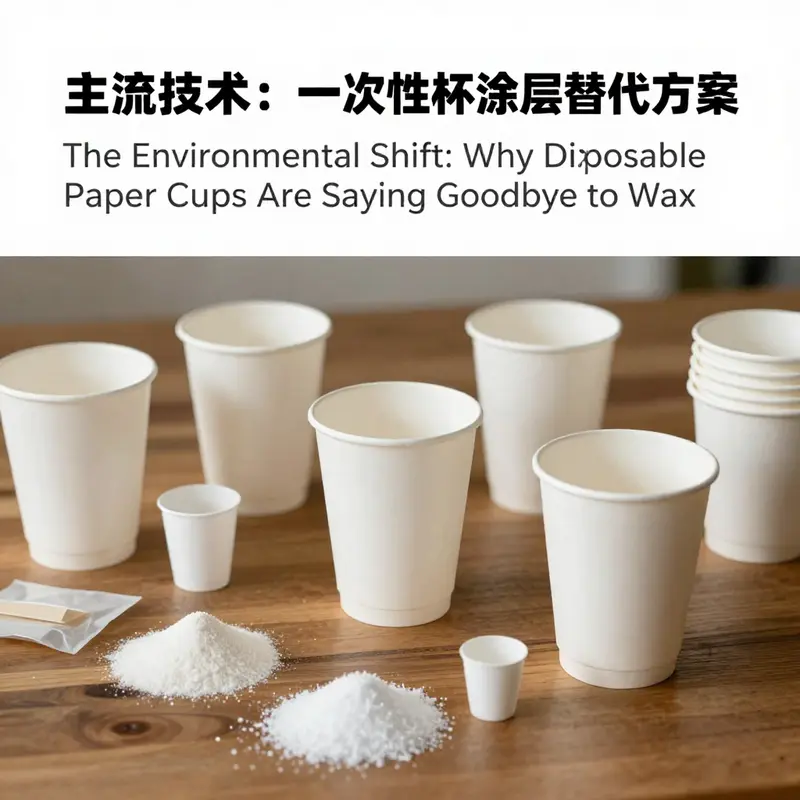
The story of disposable paper cups wax can be read as a long quiet transition. For decades, wax served as a straightforward, low-cost barrier between hot beverages and the paper beneath. It was simple: a thin wax layer kept liquids from seeping through, and the cup could be produced in high volumes with minimal change to existing paper-pulp processes. Yet as markets evolved and concerns about recyclability, safety, and sustainability sharpened, the wax approach began to look increasingly outdated. The contemporary chapter of cup coatings is not about replacing one material with another for the sake of novelty; it is about aligning a familiar product with the demands of modern waste streams, stricter food-contact rules, and rising consumer expectations for transparency. The result is a diversified toolbox that stretches beyond the old wax paradigm and toward coatings that are water-based, bio-based, or even biologically inspired. The arc you see today is less a single leap and more a thoughtful reengineering of what a disposable cup can be, both in the way it performs and in the way it leaves the environment after use.
The decline of wax in mainstream cups is not a cancellation so much as a recalibration. Environmental concerns underpin the shift: wax-coated cups are notoriously hard to recycle because wax can contaminate the paper pulp. In many recycling streams, a wax barrier disrupts the pulping process and lowers the quality of recovered fibers. Food safety considerations have also grown louder. When hot beverages approach the boiling point, there is worry that a wax layer could soften or leach, potentially affecting flavor and consumer health. Regulations in several jurisdictions now push manufacturers to adopt safer, more inert barrier systems that uphold both hygienic standards and recyclability. Collectively, these forces have nudged the industry away from traditional paraffin-like coatings toward alternatives that integrate more seamlessly with circular economies.
What has emerged in place of wax is a spectrum of coatings and technologies that aim to deliver comparable protection without the same trade-offs. At the heart of the current landscape is the search for coatings that can be peeled away cleanly from the paper during recycling, or that can be compatible with industrial composting processes where applicable. A foundational approach has been to replace PE-based lamination, which forms a robust waterproof layer but complicates recycling, with water-based systems. Water-based acrylic coatings, for instance, use an emulsion to create a dense film that resists moisture, oils, and temperature fluctuations while staying compatible with pulping. These formulations are designed to cure into a barrier that remains intact at high temperatures but can be separated from the paper fibers during recycling. The result is a cup that behaves like a conventional wax cup in the user’s hand, yet contributes less friction to the reclamation of paper products.
The chemistry behind water-based acrylics is elegantly simple in principle, though technically nuanced in practice. The coatings rely on polymer networks formed by cross-linking reactive acrylic monomers in water, yielding a film that is non-migratory and food-safe under typical usage conditions. This approach achieves several critical advantages. First, it can be tuned to resist hot liquids up to roughly 120°C, making it suitable for coffee and hot tea without compromising barrier performance. Second, it supports complete bond compatibility with standard paper substrates, which means it does not require exotic backing materials that complicate manufacturing lines. Third, when recycled, the waterborne film tends to delaminate from the pulp during the pulping process, freeing fibers for reuse and thereby increasing fiber utilization while lowering energy consumption relative to traditional poly-coated laminates. The cumulative effect is not merely a substitution of one barrier for another; it is a broader reimagining of how a cup interacts with the recycling stream.
Beyond water-based acrylics, the field has seen a robust push toward bio-based polymers that can offer improved end-of-life outcomes. Polymers derived from renewable sources, particularly polylactic acid (PLA) and related biopolymers, have gained traction as coatings that can be composted under industrial conditions. PLA-based coatings provide a clear environmental signal: a durable barrier while remaining more amenable to composting than traditional fossil-based plastics. In practical terms, a PLA coating can shield against moisture and grease, support high-temperature beverages, and still align with municipal composting programs that require organic waste to be diverted from landfills. The advantage is not only aesthetic or functional; it is a commitment to a value chain that emphasizes end-of-life management as a material attribute of the product rather than an afterthought.
Another frontier in coating technology is the exploration of biobased polymers that avoid common controversial additives. Polymers such as polyhydroxyalkanoates (PHAs) stand out for their intrinsic biodegradability and their ability to degrade without leaving persistent residues. The appeal of PHA coatings lies in their compatibility with a broader range of food-contact environments, including high-oil and high-temperature contexts typical of milk-tea and hot soups. Crucially, PHA does not rely on fluorinated compounds, which have drawn scrutiny over environmental persistence and safety concerns. As cities and regions accelerate plastic-reduction initiatives, coatings that can demonstrably reduce plastic footprint while maintaining performance become increasingly attractive to manufacturers looking to align with policy directions and consumer expectations alike.
A more experimental but highly promising avenue involves mycelium-based or fungal-inspired coatings. Research teams have demonstrated that certain fungal networks, grown in conjunction with natural fibers, can form robust, hydrophobic barriers that resist water and oils. Such coatings harness the intrinsic properties of fungal matting to create a barrier system that is not only effective but also renewable and potentially compostable at the end of life. While these approaches are still in the research and pilot phase, they illuminate a broader design principle: that nature-based processes can yield barriers that perform on par with conventional coatings while reducing dependence on fossil-based inputs. The notion of a cup coated with a bio-derived film that can degrade into harmless constituents resonates with the growing emphasis on cradle-to-cradle thinking. It is not just about avoiding waste; it is about rethinking the materials cycle altogether.
In addition to these core directions, several other developments are contributing to a more resilient coating landscape. Some researchers and manufacturers are pursuing water-based barrier dispersions that can be applied within existing cup-forming lines, reducing capital expenditures and downtime for plant operators. These systems aim to be drop-in compatible, meaning they can be integrated without large-scale retrofits while still delivering strong barrier performance. There is also ongoing work on optimizing the coating thickness and curing conditions to maximize recyclability without compromising barrier integrity. Such optimization is not trivial: the barrier must withstand the rigors of transport, stacking, and consumer handling, while still breaking away cleanly in the repulping process to protect fiber yields. The balance is delicate, but the trajectory is clear—coatings are becoming more sophisticated, yet more recycling-friendly than ever before.
From a policy and market perspective, the momentum is evident in regional leadership and regulatory signals. In some jurisdictions, there is active encouragement for cups to be wax-free and polymer-free, or at least to favor coatings that are fully compatible with recycling streams or composting facilities. These policy cues are not mere rhetoric; they translate into practical directives that push manufacturers toward safer, more sustainable alternatives. The momentum is further reinforced by consumer awareness and demand for transparency. People want to know that their daily cup does not contribute to long-lived waste or persistent chemicals. This demand, in turn, incentivizes brands to adopt labeling that communicates clear information about coating composition, whether a cup is wax-free, and what end-of-life options are available. Consumers who scrutinize packaging labels now routinely seek phrases such as “wax-free,” “biodegradable coating,” and third-party certifications that validate compostability or recyclability. In this context, even the most modest reformulation becomes part of a broader narrative about responsibility and opportunity.
The practical implications for manufacturers and recyclers are equally significant. For the former, the shift opens avenues to innovate within existing production lines while avoiding the cost and complexity of completely new equipment. Water-based and bio-based coatings can often be applied with modifications to current coating stations and drying ovens, allowing a smoother transition from wax to more sustainable materials. For recyclers, the benefits are tangible: the separation of coating from pulp improves fiber recovery rates and reduces energy use in the recycling process. This harmonization of material science with waste management is precisely what makes the move away from wax not only feasible but advantageous over the long term. It is a case where material performance and environmental performance align, producing a product that can be accepted by a wider range of end-of-life systems and still meet consumer expectations for reliability and safety.
In the broader narrative of green packaging, the coatings conversation is inseparable from branding and market positioning. The days when a disposable cup signified only convenience are gone. Today, cups are ambassadors for sustainability, signaling a company’s values through the materials that touch their customers. The choice of coating becomes a statement about environmental stewardship and compliance with evolving standards. When a brand chooses a wax-free, compostable, or fully recyclable cup, it is not just selecting a technical solution; it is making a promise about the end of the product’s life. For consumers, identifying this promise means looking beyond the lid and the color of the cups to the coating information printed on the sleeve or bottom. A simple label stating that the cup is wax-free or that the coating is biodegradable can carry substantial weight in a market where waste reduction is a shared imperative.
As these materials and strategies permeate the industry, there is also room for practical community-scale and regional initiatives. The reference to policy milestones in different regions—such as shifts away from plastic-based packaging and toward recyclable or compostable alternatives—highlights how local regulation can accelerate the adoption of safer coatings. In areas where policymakers encourage or mandate the use of non-wax barriers, manufacturers gain a clearer market signal to invest in the most appropriate coatings for their products and end markets. The interplay between policy, industry innovation, and consumer preference is what will ultimately determine how quickly and how thoroughly the wax-era is left behind in favor of more sustainable solutions. If the imagined future of disposable cups hinges on recyclability and safety, the coatings narrative will be the primary levers that make that future practical and scalable.
For readers who want to explore concrete product options that align with these trends, a growing subset of cups now offer packaging designed around eco-friendly, wax-free coatings. These options emphasize transparency about coating composition and end-of-life pathways, and many provide a clear signal that the product is compatible with recycling or industrial composting. Such information helps consumers and businesses alike to align purchasing decisions with circularity goals. An example of accessible options that integrates with existing packaging ecosystems can be found in a catalog of eco-friendly, custom-coated cups that emphasize sustainability and design flexibility. You can explore a relevant example through an internal resource that highlights eco-friendly, custom paper coffee cups with lids, which illustrates how coatings can be tailored for both performance and sustainability while maintaining compatibility with current handling and service models. eco-friendly custom paper coffee cups with lid.
Looking ahead, the coatings landscape is likely to retain its pluralism. No single approach will dominate across all markets, because the suitability of a given coating depends on local recycling infrastructure, industrial composting availability, and consumer expectations. Yet the underlying trajectory is clear: coatings will become more environmentally aligned, more compatible with recycling streams, and more capable of enduring the heat and grease associated with popular beverages. The wax era may still echo in some places where legacy equipment and supply chains persist, but the mainstream shift toward water-based, bio-based, and bio-inspired barriers will continue to redefine what a disposable cup can be. In this sense, the chapter of wax is closing, not with a dramatic finale, but with a gradual, measured handover to coatings that honor both the integrity of the cup and the health of the planet. The consumer experience remains the touchstone—an interaction that should feel effortless, safe, and responsible—while the science behind it quietly marches toward a circular economy that treats every cup as a step, not a stumble, in a larger sustainability story.
External reference for further standards and compostability insights: https://www.usda.gov/biopreferred
Wax-Free Evolution: Tracing the Decline of Wax Coatings and the Rise of Sustainable Paper Cups
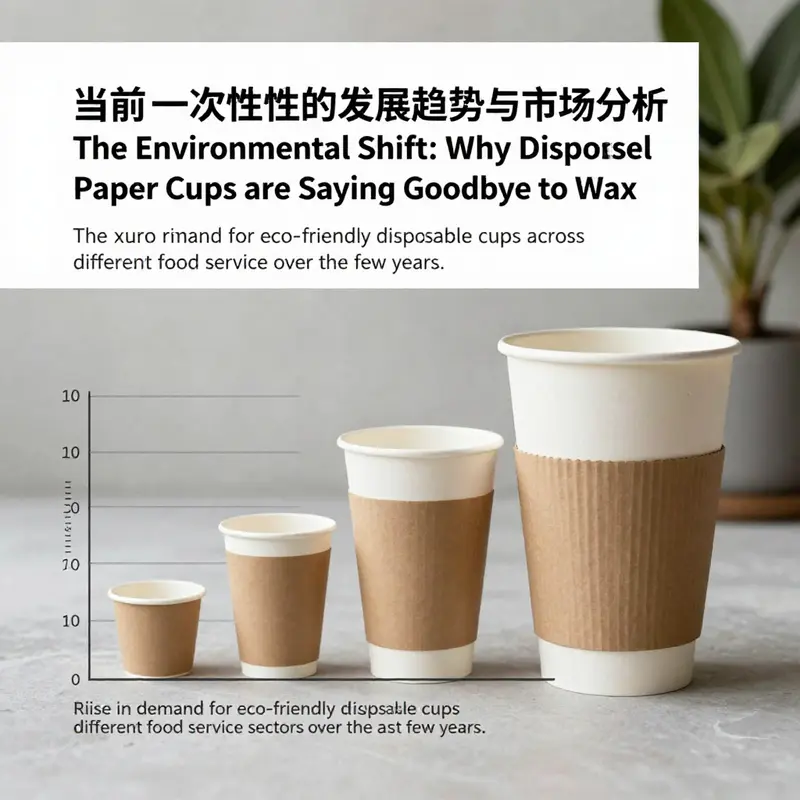
A quiet revolution has been underway in the humble paper cup, moving beyond the familiar wax lining to embrace a spectrum of more environmentally conscious barriers. For decades, wax coatings served a straightforward purpose: keep hot drinks from soaking through the paper and leaking when in transit. Yet as markets mature and systems of waste management tighten, the wax layer has become more of a liability than a safeguard. Recycling streams find wax contamination problematic, safety concerns surface when hot liquids reach waxed surfaces, and regulators in many regions push toward safer, more recyclable packaging. The current landscape presents a layered narrative: wax is fading out, while new materials and smarter designs win both regulatory acceptance and consumer trust. In this moment of transition, the chapter moves through the market’s current state, the technologies driving the shift, and the strategic implications for manufacturers and buyers alike. The result is not merely a technical switch, but a broader rethinking of how disposable paper cups fit into sustainable consumption, circular economies, and the branding ambitions of foodservice operators.
The most visible change is the replacement of traditional wax with a trio of approaches that collectively redefine what counts as a responsible cup. First, food-grade polyethylene (PE) coatings remain widespread because they provide reliable barrier properties for hot and cold beverages alike. PE-coated cups are familiar to kitchen staff and consumers, and the production processes have benefited from decades of refinement. Yet as recycling streams seek higher purity and simpler separation, the presence of a polymer barrier can complicate pulping and fiber recovery. This tension has spurred continued optimization of PE-based formats to maximize recyclability, while also exploring alternative layers that do not compromise performance.
Second, biodegradable and compostable coatings—most notably those based on biopolymers such as polylactic acid (PLA) derived from plant sources—have gained momentum. These coatings align neatly with the broader green packaging narrative, especially when they can break down under industrial composting conditions or in recycling streams designed to handle bioplastics. The technology aims to balance safety, performance, and end-of-life outcomes, a trifecta long sought by both policymakers and brand owners who want to signal genuine environmental commitments without sacrificing beverage experience.
Third, there is a growing interest in barrier innovations that eliminate conventional coatings altogether or deploy advanced fiber treatments to achieve water resistance intrinsically. Some high-end development programs pursue uncoated or minimally coated cups that rely on surface engineering and fiber composition to resist moisture. While promising, these options often come with higher production costs and still-outstanding questions about scalability and long-term disposal. In the current market, then, the wax layer is rarely seen in mainstream products, but the door remains open to hybrid approaches that blend fiber science, coatings chemistry, and intelligent design to tailor performance for different beverages and service contexts.
Beyond the coating technologies, policy and market dynamics are shaping how cups are designed, used, and valued. A clear trend is the intensification of environmental regulation and the rising expectations of customers for transparent claims around sustainability. In 2025–2026, several regional policies have accelerated the shift away from wax by incentivizing or mandating more recyclable or compostable packaging. While a global standard remains elusive, the practical effect is a narrowing of acceptable coatings and a push toward materials that can be integrated more seamlessly into existing waste management infrastructure. The result is a two-fold effect: manufacturers must retool, and buyers must become more discerning about the life cycle of the products they purchase. A notable market dynamic accompanying this shift is the pricing and supply risks associated with raw materials. Paper pulp costs, resin prices, and the availability of bio-based polymers all influence which solutions are economically viable at scale. In a market where margins can be tight, the choice of barrier technology becomes a strategic decision, balancing cost, performance, and environmental credentials.
Market data emerging from 2024 to 2030 underscores the scale and care with which this transition is unfolding. The global disposable paper cup market reached approximately 32.38 billion yuan in 2024 and is projected to expand to about 35.06 billion yuan by 2030, a compound annual growth rate of around 1.33 percent. These figures might appear modest in absolute terms, but they reflect a sector that is increasingly anchored in sustainability. The Asia-Pacific region dominates, accounting for a substantial share of production and consumption, with China playing a pivotal role as both a leading manufacturer and a key consumer. In this context, the wax layer’s retreat is not simply a technical footnote; it is a marker of how the industry reconciles consumer demand, regulatory expectations, and the economics of material choice.
The transformation also hinges on how cups are designed for use and reuse in real-world settings. Consumer expectations have evolved from simple disposable convenience to branding opportunities and hygiene assurances. In response, manufacturers are expanding the functional envelope of a single product. For instance, smart cups that monitor beverage temperature, track consumption patterns, or carry anti-counterfeiting marks are moving from novelty to plausible marketing and operational tools. The design language is becoming more versatile, with multi-size compatibility, improved grip textures for comfort, and customization options that allow brands to translate their visual identity into an everyday item. The ability to print logos, messages, or coordinates for promotional campaigns makes the cup a portable billboard, extending the lifecycle value of the product for a brand and a footprint that customers can carry into daily routines.
A single, practical implication of these shifts is the growing appeal of cups produced with environmentally minded materials that are marketed as 100 percent biodegradable or fully recyclable. The industry narrative emphasizes post-consumer fiber recovery and the minimization of pollution in the pulping process. In this light, the internal calculus of product selection becomes more nuanced for buyers who balance a taste for reliability with a mandate to reduce waste. The strategy for most operators is to standardize on a set of cups that perform consistently across a range of beverages while offering clear, verifiable end-of-life pathways. In practice, this often means choosing products with third-party certifications that verify compostability, recyclability, or overall environmental responsibility. The emphasis on transparency helps address consumer skepticism and makes sustainability a measurable attribute rather than a marketing claim.
From a supply-chain perspective, the shift away from wax has catalyzed improvements in production efficiency and waste handling. Advanced coating applications, fiber treatment technologies, and smart manufacturing practices—driven by automation, modular tooling, and digital tracing—reduce variability and increase yield. This is not merely about cutting costs; it is about creating a resilient production ecosystem capable of meeting rising demand for eco-friendly options under fluctuating raw-material markets. The trend toward lightweight designs also contributes to lower material usage without compromising strength or barrier performance. In a market where every gram shaved from a cup can translate into meaningful sustainability gains, lightweight, high-performance structures are no longer a niche pursuit but a foundational strategy.
The consumer-facing dimension of the wax-free transition is significant as well. A growing cadre of buyers seeks clarity on what is inside a cup and what happens after disposal. The market response is to feature explicit language about wax-free or biodegradable barriers, to provide clear guidance on end-of-life options, and to align packaging claims with recognized standards. Brand perception increasingly hinges on credible environmental storytelling. Rather than relying on vague ideals, companies are adopting standardized declarations verified by independent bodies. This shift not only strengthens consumer trust but also reduces the risk of greenwashing—a critical factor as market players compete on both price and responsibility.
For readers who want concrete connections to practice, one avenue is the use of environmentally conscious, customizable cups that serve multiple roles. These cups are designed to satisfy the performance needs of hot and cold beverages while also offering a canvas for brand storytelling and a pathway to sustainable disposal. An example is the growing availability of eco-conscious, customized coffee cups with lids that emphasize post-use recyclability or compostability, paired with marketing opportunities for the brand. Such products illustrate how the cup can function as a portable asset in a company’s sustainability portfolio, rather than a simple disposable item. See for instance the “eco-friendly custom paper coffee cups with lid” option, which embodies this dual role of product performance and environmental alignment. eco-friendly custom paper coffee cups with lid
The narrative would be incomplete without acknowledging the role of policy ecosystems in shaping the market. Korea’s 2025 initiative to monetize cup usage and curb free distribution is a notable example of policy nudges that encourage shift to biodegradable or recyclable formats. Similar tendencies are observable in other major markets, where regulators push for clearer labeling, safer materials, and supply chains that align more closely with waste management capabilities. The anticipated outcome is a market that rewards products with measurable environmental performance and discourages those that merely claim sustainability without substantiation. As a result, the most competitive cups will be those that demonstrate a robust life cycle story—from material sourcing and manufacturing efficiency to end-of-life processing and consumer education.
In sum, the current trajectory of disposable paper cups is neither a surrender to a single dominant technology nor a simple upgrade path from wax to a new coating. It is a nuanced evolution that blends material science with design, with policy and consumer psychology, and with the economic realities of a global supply chain. The wax coating, once a standard feature, has become a historical footnote in a broader transition toward water-based and bio-based barriers, smarter production, and transparent environmental accountability. For end-users, this translates into cups that perform reliably under heat, that align with recycling or composting opportunities, and that carry with them a story of stewardship as compelling as the drink they hold. The chapter thus closes not on a definitive answer about wax, but on a future where the disposable cup becomes a more integrated part of a circular economy—one that is as much about responsible consumption as it is about convenience. The endgame is not simply a wax-free cup, but a credible, data-backed practice of packaging that helps shape a cleaner, more efficient supply chain—and a market that rewards durability, clarity, and care in equal measure.
External resources for broader context can be found in global standards and guidance on compostable packaging, such as the USDA’s BioPreferred program, which outlines standards for compostable packaging, including wax-free and biodegradable paper cups: https://www.usda.gov/biopreferred
Policy Currents, Wax Dilemmas: How Regulation Reshaped the Coating of Disposable Paper Cups
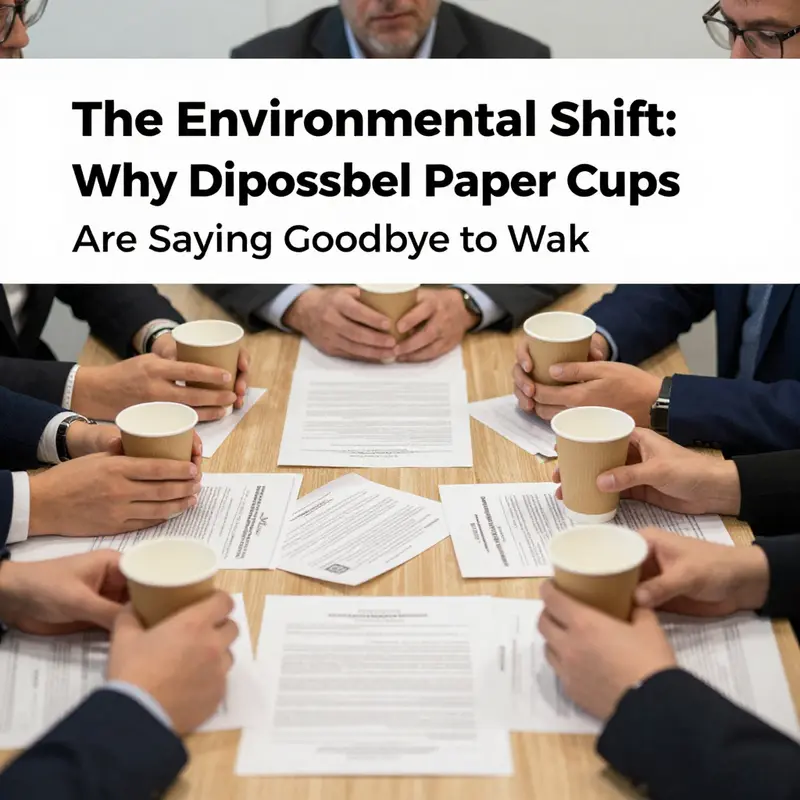
Across a crowded shelf of take-away options, the humble disposable paper cup often disappears from view as a design problem and reappears as a regulatory one. Its coating—once a simple wax seal—has become a focal point for safety, recyclability, and sustainability. The shift from traditional wax coatings toward safer, more environmentally friendly finishes did not happen by accident. It followed a complex path of standards, classifications, and policy signals that gradually redefined what a cup can and should do. To understand the present landscape, it helps to trace how policy currents have guided material choices, compelled clearer labeling, and nudged manufacturers toward coatings that perform under heat, resist migration, and fit into modern recycling streams. In this chapter, we will move beyond the surface of wax and into the regulatory undercurrents that have reshaped the very idea of a waxed cup. We will also explore how standards operate from the factory floor to the consumer’s hands, and why those standards matter when a consumer pours hot tea or a cold soda and expects both safety and convenience without compromise.
In the regulatory space, national standards establish the non-negotiables that govern what is permissible inside a single-use cup. In the Chinese context, the national standard GB/T 27590-2011 sets clear expectations for the inner coating of paper cups. It specifies that the interior wall should be lined with food-grade wax or a polyethylene (PE) film, and it forbids the use of industrial or non-food-grade materials. This distinction—between a food-grade wax and industrial wax—appears technical, but its practical effect is direct: it restricts the quality and source of materials that can contact beverage, especially under typical consumer conditions. When a company uses a wax coating that meets the standard’s food-grade criterion, it reduces the risk of contaminant migration and aligns with broader food-safety requirements under GB 4806.1-2016. From the regulator’s point of view, the aim is not only to prevent harm but to facilitate responsible innovation; to allow safer materials to shine, while cautioning against choices that could compromise safety down the line.
Within this framework, there is an important distinction between the types of coating that fall under different treatment regimes. The QB/T 2294-2006 standard, which is widely cited in industry practice, distinguishes between涂蜡纸杯 and淋膜杯—terms that translate to wax-coated cups and laminated-PE cups, respectively. The wax-coated variant, generally intended for cold drinks, relies on a relatively modest melting point around 50–60°C. The PE-laminate cup, designed to cope with hotter beverages, employs a high-melting plastics barrier that withstands boiling water. This classification does more than indicate temperature tolerance; it informs labeling requirements and consumer use guidance. Standards push manufacturers to declare the intended use clearly—“for cold drinks only” versus “suitable for hot beverages”—to prevent misapplication. In a market where a cup could be marketed for multiple scenarios, the risk of mislabeling is not just a compliance issue but a safety concern for the consumer who expects a product to perform as advertised.
Beyond heat and taste, policy-makers have grappled with a broader, deeper set of questions about materials and health. One persistent myth—that plasticizers or plastic additives leak from all plastic-based coatings—has been addressed through regulatory clarifications. In the case of disposable paper cups, the coating is PE, a hard polymer that does not require plasticizers to achieve its properties. This distinction matters: it informs both consumer confidence and manufacturing practice. Regulators emphasize that the migration risk associated with plasticizers does not apply to PE-based inner linings in a standard cup. By issuing clear statements and warnings, authorities help dispel misunderstandings that can undermine trust in compliant products and threaten legitimate product categories that are genuinely safe.
Another arena where policy shapes practice is in the safety of printing inks used on cup surfaces. It is not enough for the inner coating to be safe; the exterior design should not become a source of contamination through migration of heavy metals or fluorescent compounds from inks. The standards specify that ink application near the interior should be carefully controlled. In particular, the area within 15 millimeters from the rim and 10 millimeters from the bottom of the cup should remain free from printing, a precaution designed to minimize any risk of ink migration. When inks are used, they must be food-grade and environmentally friendly, aligning with broader expectations for materials that come into contact with food and beverages. This focus on printing safety underscores a broader regulatory logic: every surface that could touch a consumer product, directly or indirectly, is subject to scrutiny so that the cup remains a reliable, safe vehicle for hot or cold drinks alike.
Regulatory signals have also shifted the market toward more sustainable solutions beyond traditional wax. The environmental argument against wax is tied to recycling and composting challenges. Wax-coated cups have historically posed difficulties for recycling streams because wax can contaminate the pulps and reduce the quality of recycled paper. In response, manufacturers have leaned into PE coatings, or toward biodegradable alternatives such as plant-based PLA coatings that can decompose under industrial composting conditions. The trend is not simply about substituting one barrier for another; it is about aligning with broader environmental goals, including 100% biodegradability claims that avoid relying on any harmful coatings in the first place. The policy environment thus nudges the industry toward solutions that not only protect the beverage but also enable end-of-life processing that aligns with circular economy principles.
The global policy environment provides important contextual boundaries. In 2025–2026, for example, Korea introduced a policy that prices disposable cups by usage rather than offering free service, with the explicit intent to curb waste and encourage better packaging choices. Such pricing signals create a realistic economic incentive for food-service operators to switch toward more sustainable packaging solutions, including cups that employ biodegradable or recyclable coatings and materials. This is not merely a political stance; it is a market-driven mechanism that can change the supplier mix, the negotiation dynamics with packaging manufacturers, and the operational costs that cafés and restaurants bear. In parallel, global trends emphasize transparency and forthright communication about materials. Many firms now highlight “Eco Friendly” or “100% Biodegradable” features, and more brands pursue third-party certifications to validate their claims. In practice, this means that a cup on the shelf must carry credible evidence of its claimed properties—whether it is compostable, recyclable, or free of harmful additives—so that retailers can confidently present these attributes to consumers who are increasingly vigilant about packaging choices.
From a consumer-facing perspective, the regulatory architecture translates into clearer labeling and safer use instructions. The shift away from industrial wax toward food-grade wax, PE liners, or PLA coatings means that a simple question—“is this cup safe for hot beverages?”—receives a more precise answer. The labeling must communicate the intended use, the coating material, and the presence or absence of any hazardous substances. This clarity benefits not only individual shoppers but also schools, hospitals, and catering services that require consistent safety standards across large-scale procurement. Moreover, the move toward robust labeling and compliant supply chains helps reduce the incidence of counterfeit or non-compliant products that flood markets when regulation lags behind industry capabilities. In short, law and policy shape the entire lifecycle of a disposable cup, from raw material choices to end-of-life outcomes, and they do so in ways that anticipate risks and encourage responsible innovation.
For marketers and designers within the cup industry, these regulatory currents carry a practical implication: every decision about coatings becomes a compliance decision as well as a performance decision. If a brand announces a cup as suitable for hot drinks, it must show that the inner layer can resist heat without degrading or releasing unwanted substances. If a cup is marketed as recyclable or compostable, its coatings and inks must be chosen to align with the target recycling stream or composting facility’s requirements. The governance framework thus shapes not only product development but also the composition of supply chains, the selection of third-party verifications, and the way in which sustainability narratives are communicated to consumers.
In the spirit of continuous improvement, producers have begun to emphasize educational content that helps customers navigate these choices. Consumers are urged to check packaging for explicit statements such as “PE-coated” or “PLA-coated,” and to seek third-party certifications that attest to biodegradability or compostability. A well-informed consumer can distinguish between a cup that merely claims to be green and one that has been vetted under rigorous standards for end-of-life processing. As part of this shift, brand owners often feature informational links to broader resources that explain packaging standards, the safety of coatings, and recycling guidelines. A practical touchpoint is the practice of linking related content within a product page to help buyers understand how contemporary cups differ from legacy designs and why those differences matter for safety and the environment. For example, you might encounter a reference to an eco-friendly, printed-logo single-wall paper cup that demonstrates how branding can coexist with sustainable materials in a regulatory-compliant package. eco-friendly printed-logo single-wall paper cup
Looking ahead, the regulatory trajectory suggests a future where coatings that are safe under a wide range of uses become standard practice. Advances in biodegradable and compostable coatings—alongside transparent labeling and robust认证—are likely to continue. This does not render wax obsolete; rather, it redefines what is acceptable and how it should be implemented. The trajectory implies that the market will reward cups whose inner coatings are clearly defined, sourced from food-grade materials, and compatible with the disposal infrastructure in place in different regions. As standards evolve, companies that align early with the most stringent, evidence-based criteria will be best positioned to meet growing consumer expectations and regulatory diligence.
The regulatory lens, then, reframes the wax question from a simple material choice to a broader system issue. It invites consideration of not only the safety of the beverage but also the environmental pathway of the packaging. It compels manufacturers to think about end-of-life compatibility as an input into design choices and to treat labeling as a critical form of risk communication. In this light, the ancient image of a wax cup—a small, waxed barrier—transforms into a modern story about materials science, public health, and sustainability policy. The coffee in that cup becomes a small test of a larger system that must balance consumer needs, industry capability, and environmental responsibility. The conversation about coatings is therefore not a footnote in packaging, but a central chapter in how societies reconcile convenience with safety and stewardship.
External resources for further reading are plentiful, and readers are encouraged to consult authoritative standards and guidance when evaluating cup materials. For a concise overview of compostable packaging standards, see the USDA’s BioPreferred program, which provides clear criteria for wax-free and biodegradable packaging and explains how such standards translate into practical packaging choices. (External link: https://www.usda.gov/biopreferred)
从蜡到PE:消费者如何识别、安全选购一次性纸杯

一次性纸杯看似简单,但其内壁的涂层直接关系到饮品安全与环境影响。消费者在面对琳琅满目的包装时,需要掌握一套实际、可执行的判断方法,既保护自身健康,又推动市场向更安全、更环保的材料转型。本文在实践层面整合了类型辨识、风险提示和选购策略,帮助你把一次性纸杯当作食品来挑选,而不是简单的消耗品。
首先,了解市场主流与潜在风险至关重要。当前市场上常见的纸杯大致分为三类:涂蜡杯、聚乙烯(PE)涂膜杯和无涂层或特殊处理的高端纸杯。聚乙烯涂膜杯因其耐热性和化学稳定性,被广泛认为是适合热饮与冷饮的主流选择。相较之下,传统的石蜡涂层在耐热性和卫生控制上存在明显短板:工业石蜡可能含有苯系物和多环芳烃,遇热易释出并溶入液体,长期摄入存在健康风险。此外,某些劣质或不合规的制造商会用回收废纸做原料,并通过荧光增白剂或非食品级油墨改善外观,这些添加剂也可能带来安全隐患。理解这些差异能帮助你在购买时做出更明智的选择。
在日常购物场景中,第一步应是查看包装与标识。一款合格的纸杯应有明确的生产商信息、生产日期、标准认证和适用温度范围标示。优先选择带有第三方认证标识的产品,像食品安全类合格证、或工业堆肥认证等,能在一定程度上保证材料与工艺合规。对于没有说明用途或仅写“冷饮用”的杯子,应明确避免用于热饮。若你常常需要外带热饮,选择注明“热饮专用”或明确耐热至80℃以上的聚乙烯涂膜杯会更安全。
除了纸面文字,感官判断也很实用。打开包装后,观察杯壁内外是否有明显粉末或脱屑,闻闻是否有刺鼻化学气味。正规PE涂膜杯通常触感光滑,杯壁较挺,有一定厚度;涂蜡杯在触感上可能较软,有粉末感或蜡质摩擦声。若杯子闻上去有油墨或刺鼻溶剂味,应避免使用。此外,杯壁过薄或明显折痕频出的产品,往往为降低成本所致,耐热和防渗性能可能不足,最好不要用于盛放热饮或油脂含量高的饮品。
理解“第一杯水”习惯的科学性也很关键。市场上流传的“倒掉第一杯水再喝”的做法,其实只在面对来源不明或明显劣质纸杯时才有意义。对于有合格标识的聚乙烯涂膜杯,制造过程中已经经过必要的清洁与灭菌处理,倒掉第一杯并不能消除涂层中可能存在的化学风险。相反,把注意力放在选择合规产品和识别杯子用途上,比寄希望于丢弃第一杯水更可靠。
在购买渠道方面,优先选择信誉良好的经销渠道和品牌。连锁咖啡店、经过认证的外卖平台或大型超市所采用的纸杯,往往经过更严格的供应链把控与合规审查。个人或小型商家采购时,应留意供应商是否能提供材料成分说明或第三方检测报告。若你为企业采购大量纸杯,建议要求供应商提供聚乙烯或可降解涂层的具体认证文件,并明确回收或堆肥处理建议,以减少后端环境负担。
环保角度同样值得关注。旧式石蜡涂层的纸杯在回收体系中存在显著问题:蜡会污染再生浆,使回收过程复杂化,降低废纸回收价值。因此正规的制造商在近年来纷纷采用食品级PE涂膜、PLA(聚乳酸)等可降解材料,或开发无需涂层的纸材处理工艺,来平衡防水性与环境友好性。作为消费者,你可以优先选择标注“可降解”或“工业堆肥”认证的产品,但同时注意,这类认证通常要求在工业堆肥条件下处理,家庭堆肥并不一定满足相应温度与湿度条件。
还有一个务实建议是关注杯盖与杯套的配套材质。即便杯体采用安全涂层,如果搭配的盖子或外部印刷油墨并非食品级,仍然可能引入风险。选择时可查看盖子是否标注为食品级塑料(如PP等),以及杯套是否为可回收或可降解材料。对于外带场景,使用纸质杯套或双层隔热杯能减少直接接触烫手的风险,同时避免使用其他隔热材料可能带来的化学迁移问题。
面对市场上“环保”“可生物降解”的宣传语,保持理性尤为重要。营销用语可能夸大材料的降解速度或可持续性。如果你对某款产品的环保性能有疑问,索要完整的认证信息或检测报告。常见的可信认证包括独立认证机构颁发的工业堆肥认证、森林管理认证以及食品接触安全认证。理解这些认证的差别有助于判断该产品是否真正适合你的使用场景与处置路径。
最后,消费者的选择不仅影响个人健康,也会影响行业方向。通过坚持选购明确标识、第三方认证和合规材料的纸杯,你在无形中支持了那些投入研发、采用更安全材料与生产流程的企业。反之,忽视这些信息、因价格或外观妥协,可能继续助长劣质产品在市场上的生存空间。将一次性纸杯视为食品包装的一部分,用同样谨慎的标准来挑选,是最直接且有效的策略。
了解更多关于一次性纸杯的国家级安全标准和具体条款,请参阅国家市场监督管理总局发布的《食品安全国家标准 一次性餐饮具》(GB 18026-2017):https://spcjm.cn/standards/detail/GB18026-2017
如需快速查看适合热饮的可靠纸杯样式,可参考这款专为热饮设计的纸杯选项,了解其材质与规格:https://greendispopack.com/product/disposable-kraft-thick-paper-cup-for-hot-drinks/
掌握这些判断方法后,你在日常生活中便能更自信地选择一次性纸杯,既保护自己,也在推动整个市场朝更安全、更环保的方向发展。
Final thoughts
The shift away from wax coatings in disposable paper cups not only addresses environmental and health concerns but also aligns with the growing demand for sustainable packaging solutions. Beverage chains, restaurants, and all players in the food service industry must adapt to these innovations to meet regulatory compliance and consumer preferences. By understanding these trends and making informed choices about materials, businesses can enhance their commitment to sustainability while serving their customers. As the market evolves, focusing on environmentally friendly alternatives will be key in ensuring a responsible and competitive edge in the beverage industry.