
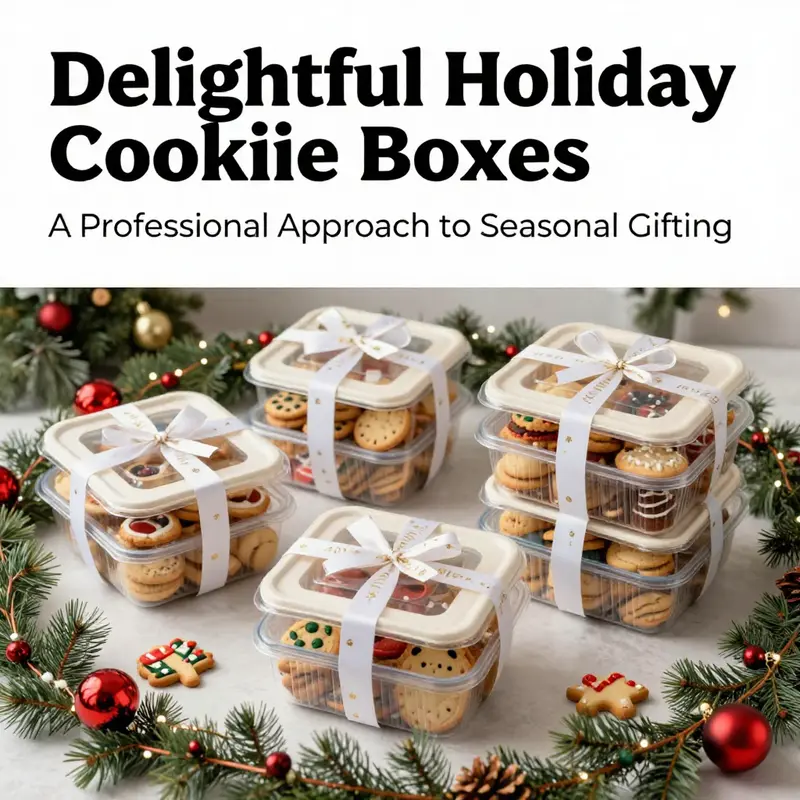
Holiday cookie boxes have become an essential component for businesses looking to enhance their seasonal offerings. These disposable food containers, designed with both aesthetics and functionality in mind, enable bakeries, event planners, restaurants, and even food trucks to present their festive treats elegantly. In this exploration, we delve into the design and versatility of holiday cookie boxes, market trends that highlight consumer preferences, and the crucial aspect of sustainability. By understanding these elements, businesses can make informed choices that resonate with their target audience while aligning with modern ecological standards.
How Design and Practicality Shape Holiday Cookie Boxes as Disposable Food Containers
Design that Delights, Functionality that Protects
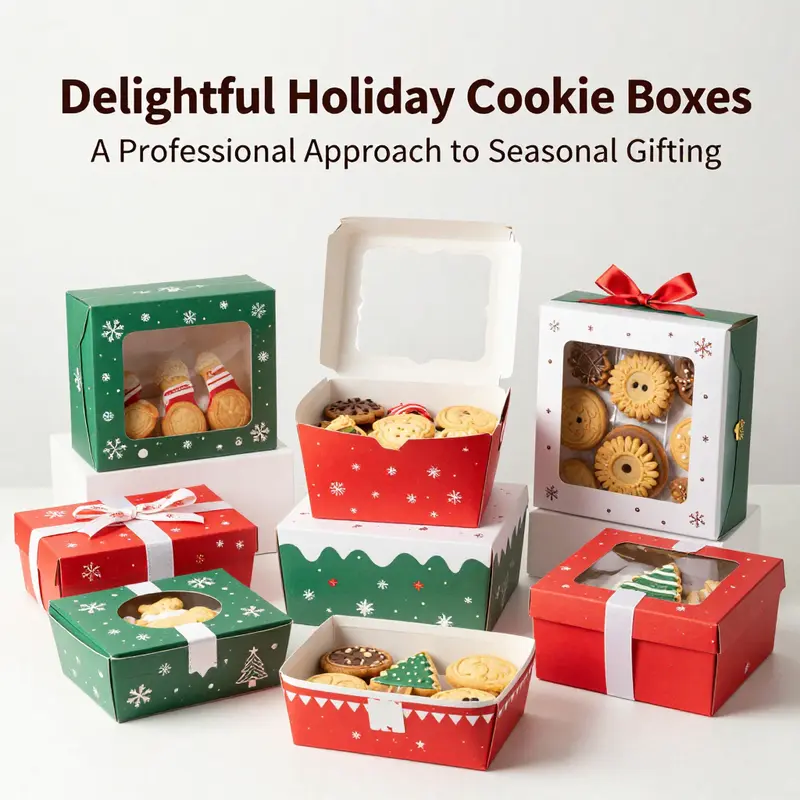
Holiday cookie boxes serve two demands at once: they must capture the festive moment and protect fragile treats until they reach the recipient. Successful designs balance emotion and engineering. Visual cues—seasonal motifs, clever windows, and tactile metals—evoke warmth and excitement. Structural choices—material thickness, closures, and internal supports—ensure cookies arrive intact. When these aspects align, the box becomes part of the gift rather than just its wrapper.
A well-designed holiday cookie box begins with a clear idea of use. Is it meant for a small bake sale, a corporate giveaway, or an intimate family exchange? This intent drives choices around size, shape, and finish. Traditional rectangular and round shapes remain popular because they stack and ship easily. Yet unique silhouettes like stars, trees, or house shapes create a memorable unboxing moment that connects emotionally to the season. Those shapes do more than catch the eye; they communicate intent—celebration, comfort, or whimsy—without needing extra words.
Visual finishes translate feeling into touch and sight. Techniques such as foil stamping, embossing, and spot-varnish provide a premium look without a heavy price. A matte kraft box with a subtle embossed snowflake can feel artisanal and warm, while a shiny spot-UV accent on holly leaves adds a modern luxe touch. These treatments allow disposable options to appear value-rich. They enhance perceived quality and make recipients more likely to reuse the box, extending its life cycle and emotional value.
Window panels deserve special attention. A clear panel invites immediate engagement: the recipient sees the cookies and anticipates taste. Windows also function as quality signals—when the product is visible, bakers rely on appearance to sell freshness and craftsmanship. Careful placement of the window preserves structural integrity and minimizes exposure to moisture or accidental crushing. Designers often balance visibility with protection by recessing the window or overlaying a thin inner liner that still provides a view while adding a barrier between treats and the outside.
Material choices anchor both design and function. Recyclable paperboard, corrugated cardboard, and lightweight plastics each offer different performance profiles. Recyclable paperboard often wins for its combination of printability and stiffness. It takes inks and finishes well, enabling vibrant seasonal graphics while remaining cost-effective. Corrugated options give added strength for bulk shipments or heavy assortments. Thin plastics or compostable windows enable transparency but require careful consideration of recyclability and consumer disposal habits.
A key practical element is closure design. Snap-fit lids, tuck-flap tops, and ribbon ties all secure contents with varying degrees of convenience. Snap-fit lids are intuitive and fast for retail environments; tuck-flap designs offer assembly efficiency and can be manufactured flat and folded at point of use to save storage space. For gift-focused boxes, closures that allow for decorative ribbons or sealing stickers help present the package as finished, reducing the need for additional wrapping. Effective closures also protect against crumbs falling out and keep external contaminants away from edible goods.
Inside the box, partitioning and liners play an outsize role in protecting delicate cookies. Dividers, paper cups, or molded inserts prevent items from sliding and colliding. Even simple corrugated inserts create separate compartments that absorb shock during transport. Lining the interior with grease-resistant paper or food-grade waxed paper preserves cookie texture and prevents moisture migration from the box walls. For seasonal assortments with different textures—glazed, powdered, or frosted—separators ensure flavors and decorations remain distinct, improving the overall presentation upon opening.
Stackability and efficient storage matter for vendors. Retailers and home bakers both benefit from boxes that nest or stack securely. Nesting minimizes warehouse footprint and reduces shipping costs, while stackable outer designs enable attractive in-store displays. Weight distribution is also crucial; heavier items should be placed near support points within the box to avoid deformation. Thoughtful design balances display aesthetics with these operational realities.
Sustainability is now inseparable from design decisions. Consumers expect eco-conscious choices, and many manufacturers respond by using recyclable or compostable materials. Window films made from compostable cellulose replace traditional PVC. Paperboards certified by responsible forestry programs and water-based inks reduce environmental impacts. Yet sustainability is not only material choice; it extends to design for reuse and minimalism. A durable-looking disposable box encourages recipients to reuse it as a keepsake container. Designers increasingly aim for simplicity—less plastic, fewer layers—so that boxes are easier to recycle in common waste streams.
Designers must also anticipate regulatory and labeling needs. Food-contact safety standards dictate choices for adhesives, inks, and coatings. Moisture-resistant coatings improve performance but can complicate recycling if they are not compatible with standard paper streams. Clear labeling about recyclability, compostability, or reuse motivates correct disposal behavior. Including brief disposal instructions on the base of the box helps close the loop between purchase and post-use outcome.
Color and pattern choices speak directly to the holiday calendar. Warm reds and greens feel classic for winter holidays, while pastel hearts suit romantic occasions. But color is also functional: darker interiors can hide crumbs better on display shelves, while lighter interiors emphasize freshness in visible cookies. Seasonal patterning can be subtle—an embossed wreath—or bold—full-bleed winter scenes. These aesthetic decisions should align with the brand voice. An artisanal baker might favor understated, hand-drawn motifs. Larger retailers may opt for bolder, mass-appeal graphics that stand out from a distance.
Manufacturing constraints shape what designs are feasible at scale. Complex die-cuts and deep embossing add cost and can slow production, so projects must balance creativity with throughput needs. Designers often prototype several iterations, testing assembly time, load-bearing performance, and shipping resilience. This iterative approach reduces surprises when orders scale up during holiday peaks. Material suppliers often provide samples with printing and finishing so teams can evaluate look and behavior before committing to a full run.
Functionality extends beyond a single-use mindset when the packaging contributes to the brand story. A box that tells a story—through a small printed note, a recipe card, or branded tissue paper—creates longer-lasting impressions. These inserts can be made of recycled paper and remain lightweight, preserving the disposable advantage while adding perceived value. For corporate gifting, custom prints or foil-stamped logos communicate professionalism and align the edible gift with company identity.
Transport resilience is a critical, often under-discussed factor. Seasonal shipping can mean cold, damp conditions combined with rough handling. A robust exterior and thoughtful internal supports reduce breakage. Corrugated trays, corner reinforcements, and slightly oversized lids that compress without crushing the content help absorb shocks. For fragile iced cookies, adding a thin foam or paperboard shim between cookie layers can be the difference between pristine presentation and a damaged product.
Cost considerations influence every decision. Disposable holiday boxes must be affordable enough for wide use while conveying specialness. Designers work to allocate budget towards elements with the highest perceived value—such as a tasteful window or selective foil stamping—while simplifying elsewhere. Bulk ordering, standard die sizes, and print-on-demand patterns for smaller runs help manage expenses. For small bakers, pre-designed templates that require only minimal customization reduce lead time and cost.
Accessibility and user experience are central to gift-giving. Easy-open features prevent frustration, especially for older recipients or children. Tabs and perforations that tear cleanly and ribbon holes that allow secure tying without compromising integrity contribute to positive experiences. Packaging that is intuitive to open and close invites reuse, which in turn reinforces brand memory.
Finally, versatility matters for seasonal products to maximize inventory value. Many designs transition well across holidays with minor graphic swaps or ribbon color changes. A neutral base box with detachable thematic wraps or stickers can serve multiple events, reducing waste and inventory overhead. This flexibility makes disposable cookie boxes a pragmatic choice for small operations that must serve varied seasonal needs without large storage capacity.
For those seeking a deeper dive into decorative finishes that elevate disposable boxes, an exploration of luxury packaging techniques offers practical ideas on how modest investments yield high perceived value. See this resource for more on that topic: https://www.packagingdigest.com/insights/exploring-cookie-boxes-luxury-packaging-gold-foil/
For a practical example of a versatile structural option, designers and vendors often reference standard shapes that nest and stack efficiently. One readily adaptable structural solution is detailed on the product page for a disposable octagonal box, which demonstrates how geometric forms can balance display interest with packing efficiency: https://greendispopack.com/product/disposable-octagonal-box-restaurant-food-kraft-paper-packaging/
Across these layers—visual appeal, structural design, sustainability, and user experience—holiday cookie boxes function as more than containers. They are storytellers, protectors, and practical enablers of seasonal commerce. When design and functionality work together, disposable cookie boxes transform simple treats into memorable gifts that travel safely and present beautifully, while still allowing vendors to meet budgetary and environmental goals.
null
null
Sustainability at the Center of Seasonal Treats: Eco-Friendly Holiday Cookie Boxes
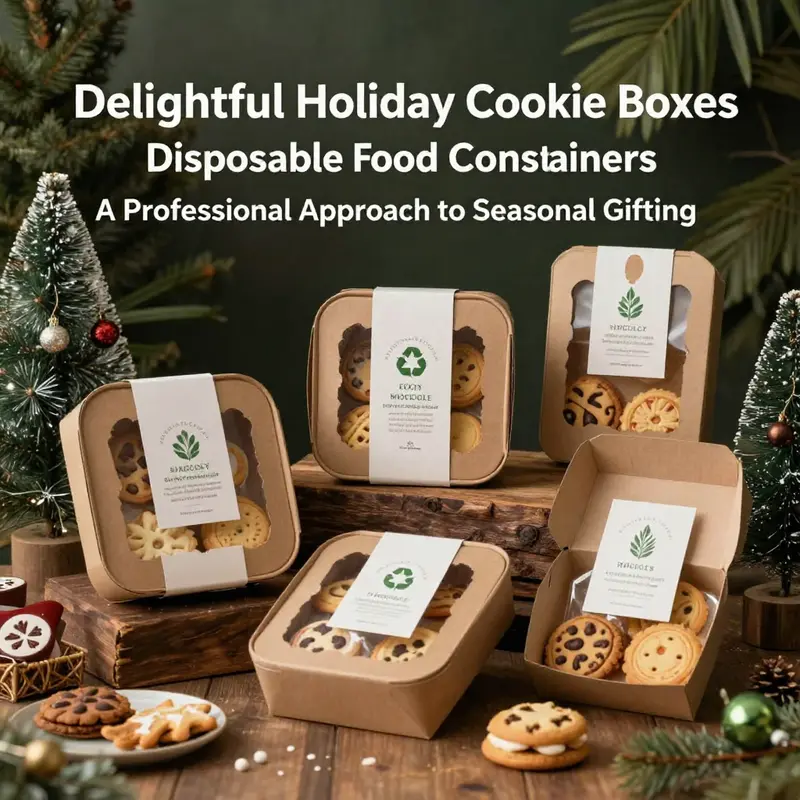
Sustainability in holiday cookie boxes has moved from a hopeful aspiration to a practical standard that guides every choice from material science to consumer messaging. As families, bakeries, and brands lean into the rituals of gifting and sharing during the holidays, the packaging that carries these confections has become a meaningful location where aesthetics and responsibility meet. The challenge is not merely to create something that looks festive; it is to craft a container that preserves flavor and freshness while minimizing environmental impact across its full life cycle. This requires a careful balance of material selection, production processes, and end-of-life logic that can withstand the rigors of storage and transport without translating into wasteful afterlives. In practice, sustainable disposable holiday cookie boxes must perform, protect, and impress—yet do so with a footprint that aligns with growing expectations for circularity, transparency, and stewardship.
The materials chosen for these boxes are revealing of the broader shift in packaging philosophy. Recycled paperboard has become a cornerstone because it recycles efficiently, reduces demand for virgin fibers, and carries a tactile sensorial appeal that resonates with the warmth of holiday baking. At the same time, plant-based bioplastics and compostable fibers are stepping beyond their niche roles to offer viable alternatives to traditional plastics, especially in parts of the box that require moisture resistance or a sealed seal. Materials like bamboo fiber and sugarcane bagasse demonstrate how a “green” box can still boast structural integrity, moisture management, and a clean, polished finish. These choices are not merely about substituting material types; they reflect a holistic approach to sustainability that considers sourcing, manufacturing energy use, and the potential for post-consumer recovery. The trend toward FSC-certified cardboard, which ensures that wood pulp originates from responsibly managed forests, adds another layer of credibility and assurance for retailers and consumers who want their purchases to support forest stewardship. In tandem, water-based inks and non-toxic coatings minimize hazardous residues and support safer composting or recycling pathways, making the entire packaging system safer for people and the environment.
One dimension of this shift is the way packaging is designed. Sustainable holiday cookie boxes increasingly embrace minimalist aesthetics that reduce the use of unnecessary components while delivering a strong brand narrative through texture, color, and form. A concise approach to graphic elements—one that communicates care for the planet as part of the product story—often translates into less ink, simpler coatings, and fewer mixed-material interfaces that complicate recycling. Yet minimalism does not equate to a compromise in functional performance. On the contrary, modern designs employ reinforced corners, moisture barriers made from natural waxes or bio-polymers, and inner sleeves that secure cookies without shifting during transit. The result is a container that remains as fresh on day one as it is at the moment of opening, which is essential for premium gift sets and corporate gifting programs where presentation matters as much as taste. The durability of these boxes is a testament to advances in sustainable packaging engineering, proving that a disposable container can be both sturdy and environmentally considerate when designers prioritize end-of-life outcomes alongside immediate usability.
Within the sustainability narrative, the end-of-life story is no longer an afterthought. Brands increasingly publish disposal guidance directly on packaging or through QR codes that link to online resources explaining whether a particular box should be recycled with paper, composted in industrial facilities, or treated as part of a local composting program. This educational element invites consumers to participate in the circular economy rather than simply disposing of packaging. In a world where consumer awareness is rising, offering clear disposal instructions can bolster trust and strengthen brand loyalty. It also aligns with broader ESG goals, presenting a transparent account of the environmental trade-offs involved in packaging decisions. As the life cycle of a sustainable holiday cookie box unfolds—from responsible material sourcing through efficient manufacturing to conscientious end-of-life management—it becomes a practical touchpoint for communicating a brand’s environmental commitments to customers who may be considering multiple gift options.
The advantages of sustainable disposable holiday cookie boxes extend beyond environmental metrics. For premium gift sets and wedding favors, the packaging can become a meaningful design element that enhances the gifting experience without sacrificing sustainability. The visual language of a box can evoke the same warmth and generosity that cookies convey. This dual role—functional protection and emotional resonance—can be achieved without resorting to costly or unsustainable components. In fact, many brands are discovering that a thoughtful, eco-forward package can elevate perceived value. A high-quality, recyclable box with a clean, elegant silhouette can convey care, attention to detail, and a commitment to the planet. The market responds to this alignment, as retailers seek packaging that supports storytelling while enabling efficient logistics and reduced waste. The result is a more cohesive gifting experience where the box and its contents reinforce a shared narrative of stewardship and celebration.
The supply chain implications of sustainable packaging are equally compelling. Sustainable holiday cookie boxes benefit from a shift toward local or regional sourcing for materials, reduced energy intensity in production, and streamlined logistics that minimize emissions. Regionalized supply chains also enable faster response times to market demand, enabling bakeries and retailers to scale up or adjust packaging configurations quickly around holiday peaks. This agility matters because the variability of holiday demand can otherwise tempt compromises in sustainability—larger inventories, rushed production schedules, or reliance on less eco-friendly components to meet tight deadlines. When sustainability is integrated from the outset, it becomes a driver of efficiency rather than a constraint. It spurs collaboration among material suppliers, box manufacturers, and logistics partners to optimize packaging for recyclability, minimize waste, and ensure that every component—from outer sleeves to inner inserts—contributes to a streamlined, circular system.
In practice, the industry has begun to embrace a broader portfolio of sustainable options that can be tailored to diverse gifting occasions. Premium gift sets may rely on sturdy, compostable liners and moisture barriers that protect delicate cookies while remaining compatible with composting streams. For everyday holiday gifts or corporate gifts, recyclable cardboard with crisp printing and minimal embellishment can deliver a sophisticated look that travels well and performs during storage. For events and experiences, transparent windows or partially transparent inserts can offer visual appeal while still enabling recyclability or compostability, provided they are designed with compatible materials. The design decision matrix becomes a balance between visual impact and end-of-life compatibility, a balancing act that many packaging teams now navigate with the aid of life cycle assessments and independent certifications. This evidence-based approach helps brands quantify trade-offs, identify improvement opportunities, and communicate tangible environmental benefits to customers who want to support responsible packaging choices.
Consumer behavior remains a decisive factor in shaping the uptake of sustainable disposable holiday cookie boxes. The preference for packaging that feels festive and gift-ready can coexist with a growing demand for transparency about environmental credentials. Consumers increasingly read packaging not just for brand cues but for information about recyclability, compostability, and the presence of recycled content. Transparency helps reduce confusion at the point of disposal and empowers consumers to participate more effectively in recycling ecosystems. As a result, packaging strategies now frequently include certifications, clear material declarations, and, where appropriate, educational components about how to dispose of the box responsibly. In parallel, brands are experimenting with minimalist yet striking artwork that communicates seasonal cheer while avoiding superfluous elements that complicate disposal or add waste. The convergence of aesthetics, ethics, and practicality is redefining what a holiday box can be: not just a container, but a reflection of values expressed through everyday choices.
The broader industry implications are notable as well. Sustainable disposable holiday cookie boxes align with corporate responsibility agendas and global ESG goals, enabling retailers and manufacturers to demonstrate a tangible commitment to responsible production and consumption. This alignment is particularly relevant for premium gift programs, wedding favors, and corporate gifting streams, where the reputational dimension of packaging matters alongside cost and performance. The environmental narratives embedded in sustainable packaging can also become part of marketing and storytelling—creating a cohesive proposition that connects the product’s quality with its environmental responsibility. In this way, sustainability becomes a differentiator that resonates with an increasingly conscientious audience without sacrificing the joyous, celebratory experience that holiday cookies symbolize. The packaging thus serves as a bridge between indulgence and responsibility, a practical embodiment of the idea that good taste can coexist with good stewardship.
From an innovation standpoint, the ongoing evolution of sustainable packaging is likely to accelerate as material science advances, recycling infrastructures expand, and consumer expectations refine. Advances in barrier technology, for example, are enabling compostable or bio-based materials to achieve moisture resistance and shelf stability previously associated with petrochemical plastics. Innovations in coatings and inks reduce contamination risks and improve end-of-life outcomes. Meanwhile, the push toward zero-waste packaging models invites brands to rethink every component, down to the tape, sleeve, and inserts, so that almost every element is recyclable or compostable. This holistic perspective encourages companies to audit their packaging ecosystems comprehensively, identifying opportunities to reduce mass, simplify assembly, and minimize the use of mixed materials that complicate recovery. It also invites collaboration across sectors—retailers, packaging suppliers, municipal recycling facilities, and consumer education groups—to build a more resilient system that can reliably handle seasonal surges in demand without compromising environmental performance.
As the chapter closes on this exploration of sustainability in holiday cookie boxes, it is essential to consider the practical steps that readers and practitioners can take to translate these principles into everyday practice. Start with a materials audit: assess whether current boxes use recycled content, how easily they can be recycled or composted, and whether inks and coatings are non-toxic. Next, examine the packaging architecture: can you simplify components without losing structural integrity or gift appeal? Are there opportunities to pre-assemble elements in a way that reduces waste and improves shipping efficiency? Then, consider end-of-life guidance as an integral feature rather than a voluntary add-on. Clear disposal instructions empower consumers and support a healthier recycling stream. Finally, embrace external validation through certifications and third-party assessments that verify environmental claims. When these steps are taken in concert, sustainable disposable holiday cookie boxes move beyond compliance to become a practical expression of care—care for the people who receive the boxes, for the communities that collect and process the packaging, and for the planet we all share.
For readers seeking concrete design directions or supplier options that align with these principles, a representative approach is to explore packaging solutions that combine durability with recyclability and minimalism. Some brands experiment with windowed boxes that use recyclable plastics or clear biopolymers, balanced by strong paperboard exteriors and compostable liners. The packaging interface can be designed to minimize adhesives and simplify opening and closing, further reducing waste. With the right combination of materials, coatings, and forms, a holiday cookie box becomes a harmonious blend of artistry and responsibility, a small but meaningful statement about how we choose to celebrate sweetness with stewardship. As the season unfolds, such choices will increasingly define the character of the gifting experience, turning packaging from a mere vessel into a partner in sustainable celebration.
For those who want to deepen their understanding beyond the immediate packaging decisions, the broader context of sustainable management in food packaging offers practical frameworks and evidence-based guidance. Life cycle assessments illuminate where emissions and resource use rise, enabling designers to target improvements most effectively. Certifications and standards help stakeholders communicate clearly with consumers and supply-chain partners about what is being done and why it matters. And ongoing research into recyclability, compostability, and bio-based alternatives continues to push the boundaries of what is possible, providing a steady stream of options that maintain quality and appeal while reducing environmental impact. In the end, the objective is not to eliminate disposability but to pursue disposability with responsibility, ensuring that holiday joy and future resources can coexist. The dialogue between form and function, aesthetics and ethics, will keep shaping holiday packaging for years to come, inviting more brands to adopt practices that honor both tradition and the planet.
As a final note on practical application, consider how a single packaging decision can ripple through a business’s operations. Choosing a sustainable option affects supplier selection, production timelines, labeling and compliance, marketing communications, and consumer education. It invites collaboration across departments—design, procurement, sustainability, and sales—to ensure alignment with corporate values and customer expectations. The real value lies not only in reduced waste or lower carbon footprints but in the storytelling capacity of packaging. When a box clearly communicates that it was designed with the environment in mind, it becomes a tangible reminder of shared values, turning a holiday treat into an occasion to celebrate responsible choices as well. In this light, sustainability is not an add-on but a central design criterion, guiding every decision from color and texture to material sourcing and disposal guidance. The result is a robust, elegant, and responsible packaging system that reflects the season’s warmth while honoring the planet’s limits.
To illustrate a practical example within this narrative, think of a box that blends the aesthetics of a festive gift with the practicality of a sustainable package. A box built from recycled paperboard features a subtle, recyclable coating and a clean window that showcases the cookies without compromising recyclability. An inner sleeve made from the same material secures the cookies, while a minimalistic inner liner provides moisture management with a natural wax barrier. The lid is designed for easy reuse or recycling, and the entire assembly integrates with a QR code that guides consumers toward disposal options and the environmental benefits achieved through the packaging choices. Such a design demonstrates that eco-friendly packaging can satisfy the desire for seasonal charm while delivering measurable environmental benefits. And as consumer demand for responsible packaging continues to escalate, the adoption of this approach is likely to become more widespread, with more brands experimenting with forms, materials, and messaging that celebrate both sweetness and sustainability.
In sum, sustainability in holiday cookie boxes represents a convergence of quality, responsibility, and consumer trust. It is about choosing materials that are responsibly sourced, processing methods that minimize energy use and emissions, and end-of-life pathways that empower consumers to close the loop. It is about reducing waste, simplifying recycling, and delivering packaging that protects taste, freshness, and presentation. It is about telling a story in which the box itself is part of the gift, a sign of care and commitment that extends beyond the cookies inside. As the industry continues to innovate, the possibilities for combining festive charm with environmental stewardship will only grow, inviting more bakers, retailers, and households to participate in packaging that respects resources while delivering delight. The holiday cookie box, once a simple container, becomes a thoughtful instrument of sustainability, a small yet meaningful contribution to a more sustainable holiday season.
For readers who want to explore concrete supplier options that emphasize sustainability, consider the following actionable path: an octagonal kraft paper packaging option can offer a compelling balance of form, function, and recyclability. This octagonal kraft paper packaging choice demonstrates that distinctive shapes can be achieved with recyclable materials while preserving the visual appeal of a gift box. It embodies the idea that eco-conscious packaging can be both elegant and practical, aligning with contemporary consumer expectations without sacrificing the festive experience that makes holiday cookies special. By integrating such solutions into product lines, bakeries and retailers can strengthen their sustainability narratives while delivering the quality and charm that customers expect from holiday celebrations.
External resource: for a broader understanding of sustainable management of food packaging and related best practices, readers may consult the U.S. Environmental Protection Agency’s guidance on this topic. https://www.epa.gov/sustainable-management-food-packaging
Final thoughts
As the holiday season approaches, the demand for aesthetically pleasing and functional disposable food containers continues to rise among businesses. Holiday cookie boxes not only make gift-giving elegant but also reflect the latest consumer preferences for sustainability. By choosing the right packaging, enterprises can vastly improve their seasonal offerings and cater to an audience that values both style and eco-friendliness. Heightening the holiday experience for customers ultimately translates to enhanced business success, making the thoughtful selection of holiday cookie boxes essential.