
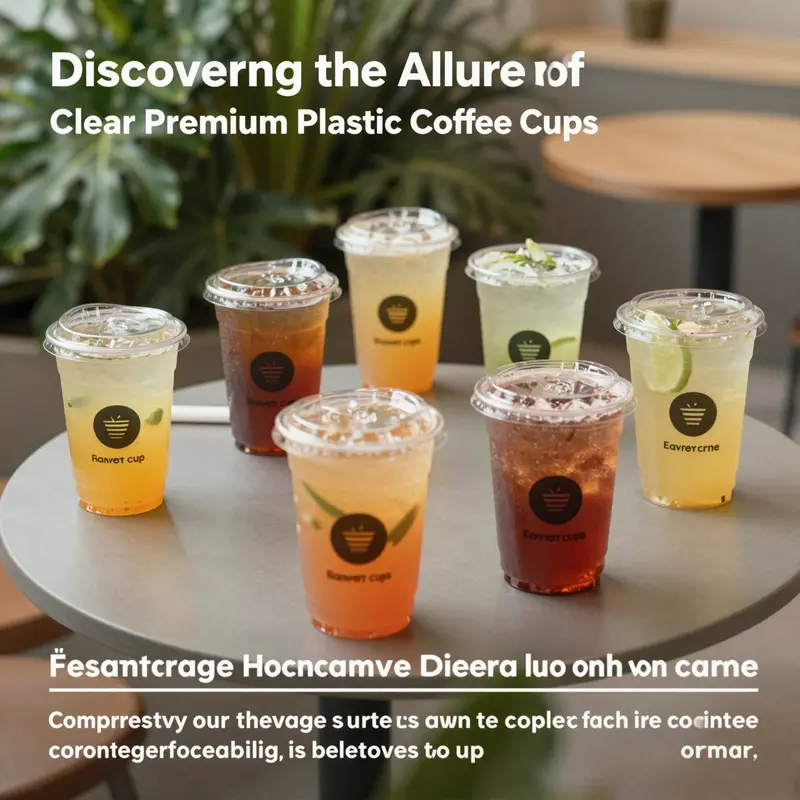
Clear premium plastic coffee cups are swiftly becoming a staple in the beverage industry, offering a perfect blend of functionality, style, and sustainability. As bubble tea shops, restaurants, food trucks, catering services, event planners, and corporate procurement teams seek reliable and attractive packaging solutions, understanding the many advantages of these cups is crucial. This article explores the numerous benefits of using clear premium plastic coffee cups, delving into material performance, manufacturing sustainability, market trends, and consumer preferences. Each chapter will shed light on how these factors intertwine to create insightful business opportunities, allowing professionals to make informed decisions when procuring beverage containers for their operations.
Why Clear Premium Plastic Coffee Cups Perform: Materials, Design, and Business Advantages

Clear premium plastic coffee cups marry form and function in ways that meet both operational demands and consumer expectations. At first glance their transparency simply showcases the drink inside, but beneath that clarity lies a deliberate selection of materials, structural engineering and design choices that together deliver heat resilience, durability, spill protection, and meaningful sustainability gains. This chapter traces how those elements interact, what they mean in practical terms for service environments, and how to weigh trade-offs when choosing between polypropylene, PET, PLA and recycled components.
Material choice is the foundation. Polypropylene (PP) is prized for its heat resistance and toughness. It resists warping at temperatures that would soften many conventional plastics, making it a dependable option for hot coffee and tea. Cups molded from high-grade PP keep their shape through repeated handling and the thermal stress of piping-hot liquids. They also provide a crisp, semi-gloss clarity that reads as premium to consumers. PET (polyethylene terephthalate), by contrast, delivers exceptional optical clarity and rigidity. That clarity enhances visual merchandising of layered drinks, specialty coffees or iced beverages, while rigidity helps preserve a neat silhouette when cups are stacked, transported or filled quickly behind a counter. PLA (polylactic acid) introduces a different logic: it is a plant-derived bioplastic. PLA is compostable under industrial conditions and appeals to businesses seeking lower-carbon alternatives and consumers who prioritize renewables. Its heat tolerance is lower than PP and PET, so PLA is often matched with beverage types and service practices that avoid extremely high temperatures or that use insulating design features.
Design solutions compensate and amplify material performance. Double-wall construction and foam lining are common upgrades that isolate the hot beverage from the outer wall. A double-wall cup creates an insulating air gap or uses a bonded second layer to slow heat transfer. The result is twofold: the beverage stays warmer longer and the outside surface stays comfortable to hold. This reduces the need for cardboard sleeves and keeps service flowing. Some premium cups integrate contoured grips or subtle tapering that improve ergonomics without disrupting the cup’s clean visual language. These tactile details matter: customers carry drinks, set them down on varied surfaces, and often balance other items while walking. A well-designed cup reduces slips and spills simply by fitting the hand naturally.
Lid systems are as important as the cup body. Snap-on or press-fit lids engineered to seal firmly minimize leaks during transit and reduce the chance of temperature loss. Sip-through openings, secure seals for straw insertion, and venting that controls foam transfer all contribute to a safer, more comfortable drinking experience. When combined with rigid rims and precise manufacturing tolerances, lids made from rPET or compatible polymers preserve both seal integrity and recyclability. rPET lids repurpose post-consumer bottles, reducing demand for virgin resin and lowering overall lifecycle impacts. Crucially, using recycled lids does not need to compromise performance; modern rPET has proven mechanical strength and clarity suitable for premium service.
Durability and safety are core advantages. Clear premium plastic cups are effectively shatterproof, which is a major practical benefit in busy environments. Unlike glass, they do not fracture into hazardous shards. Compared with thin disposables, premium plastics resist dents and collapse, maintaining a professional look through service rushes. This durability extends product life where cups are reused within single-service cycles or for multi-visit loyalty models. For operators, fewer product failures mean less waste, lower replacement costs and fewer customer complaints.
Visual appeal amplifies perceived product value. Transparency lets consumers assess the beverage at a glance: the crema on espresso, the milk-to-foam ratio in specialty drinks, or the vibrant hues of cold brew with citrus. For retailers, this is marketing in micro-form: the cup becomes a frame that elevates the drink. Clear cups also support cross-sell tactics; baristas can point to visually appealing options and customers can see add-ons such as syrup layers or toppings. That aesthetic advantage often translates into higher conversion for premium beverages.
Sustainability considerations shape purchasing choices. Incorporating recycled content such as rPET in lids and cup components reduces reliance on virgin plastics and diverts waste from landfills. PLA offers a compostable route, but operators must consider local waste infrastructure—PLA requires industrial composting to fully degrade. Where municipal composting is unavailable, PLA may persist and confuse recycling streams. The most pragmatic sustainability strategy balances material selection with end-of-life logistics: a cup with recycled content plus clear labeling and a take-back or composting program yields the best environmental outcomes. Businesses that pair clear premium cups with visible sustainability commitments can strengthen brand loyalty among eco-conscious customers.
Operational performance matters as much as environmental credentials. Clear premium cups are engineered for high throughput. They stack predictably for dispensing, resist deformation during rapid filling and tolerate hot-fill processes. Their compatibility with automated lid applicators, cup dispensers and point-of-sale workflows reduces service friction. On the supply side, many manufacturers offer bulk ordering, competitive pricing and verifiable supplier certifications that protect buyers from low-quality imports. These sourcing structures help foodservice operators secure consistent supply, manage inventory and scale promotions or seasonal demand without risk of stockouts.
User-centric features influence daily experience. Ergonomic rims that sit comfortably against the lip, precise pour lines that aid portion control, and straw ports designed to accept both thick and thin straws all boost convenience. Leak-resistant seals and venting reduce splatter of foam and protect clothing. For delivery and takeaway, the ability to secure lids so they survive being jostled in bags or bike carriers is essential. In contexts where beverages travel on public transport or are carried while walking, these features translate directly into fewer refunds, fewer complaints and higher perceived quality.
Comparative trade-offs should guide selection. If the priority is holding very hot beverages for extended times, PP or double-wall constructions are optimal. If visual clarity and rigidity for cold or warm drinks matter most, PET is the best fit. For enterprises with strict sustainability targets and access to composting, PLA adds significant value. Combining rPET lids with a PP or PET cup blends performance with lower carbon footprints. Understanding how cup materials interact with lids and additives (like barrier coatings or printing inks) is critical; some combinations complicate recycling and composting pathways.
Marketing and brand alignment are subtle but real benefits. Clear cups enable consistent product presentation across outlets, help standardize portioning and support social-media-friendly visuals. They are particularly effective for limited-time offerings and specialty beverages where the visual composition is part of the proposition. Packaging that looks premium invites higher price points and can justify modest markup for crafted drinks.
Finally, procurement and long-term cost considerations close the loop. While per-unit costs differ across materials and order sizes, buying smarter depends on aligning the cup’s capabilities with use case. High-volume operations can secure aggressive pricing with MOQs, but must plan storage and inventory turns. For businesses transitioning to sustainable options, staged rollouts, trials with composting partners and clear customer communication minimize waste and maximize adoption. Transparent supplier verification and third-party audits give buyers confidence that recycled claims and material specifications are accurate.
For operators balancing durability, performance and environmental impact, clear premium plastic coffee cups present a compelling toolkit. They preserve beverage quality, protect users, and support brand storytelling through visual clarity. The best outcomes come from pairing material choices with practical service realities: choose PP or double-wall for hot stability, PET where optical clarity and rigidity drive sales, and PLA when composting is available. Using recycled lids like rPET and implementing clear end-of-life practices ties these technical advantages to measurable sustainability gains. Practical design choices—secure lids, ergonomic grips and insulating walls—translate to fewer spills, happier customers and smoother operations, making clear premium plastic cups an effective bridge between functional demands and modern consumer expectations.
For a complementary eco-friendly accessory that helps customers carry multiple cups securely, consider an eco-friendly recyclable pulp cup holder that matches the convenience and sustainability of premium clear cups: https://greendispopack.com/product/eco-friendly-recyclable-pulp-2-4-cups-coffee-take-away-cup-holder/.
For further guidance on selecting clear coffee cups and matching materials to service needs, refer to a complete buying guide that outlines material properties, use cases and selection tips: https://www.plasticcupguide.com/how-to-choose-clear-coffee-cups-a-complete-buying-guide/.
Clear Choices, Cleaner Futures: Sustainability Practices in Clear Premium Plastic Coffee Cup Manufacturing
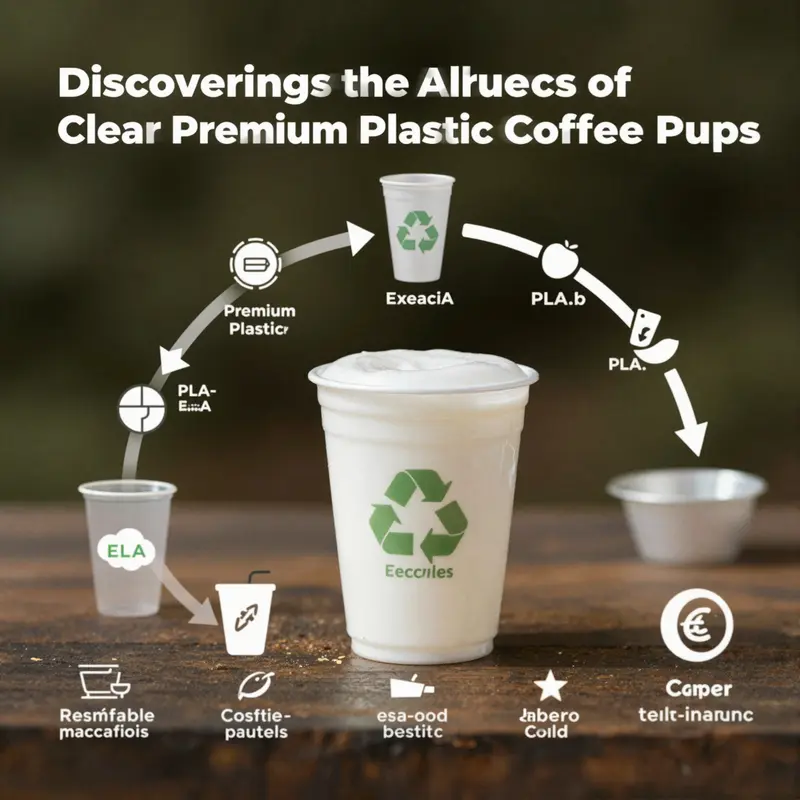
Clear premium plastic coffee cups sit at a crossroads of function and responsibility. Their transparency invites visual appeal and consumer trust, while their design must endure heat, movement, and the rigors of take-out culture. The challenge is not simply to make a cup that looks good and performs well; it is to align that performance with a growing expectation that packaging, even at the point of sale, should contribute less to environmental harm. In this chapter, the conversation moves beyond the surface gleam of clarity to examine how material choices, production practices, and end-of-life realities shape the sustainability profile of these ostensibly simple vessels. The core tension is clear: the same features that make a premium plastic cup desirable—clarity, strength, insulation, and a comfortable user experience—can also intensify its environmental footprint if life-cycle considerations are not integrated from design through disposal.
Material composition sits at the heart of this discussion. In many contexts, polypropylene (PP) is favored for hot beverages because it stands up to heat without melting, maintains structural integrity, and remains relatively clear. Polystyrene (PS), prized for rigidity and clarity, is another common option, especially in applications where a crisp, transparent appearance is essential. While some segments of the market explore alternatives such as PET for enhanced clarity and stiffness, and others experiment with bioplastics like polylactic acid (PLA) as a compostable option, the detailed sustainability analysis often centers on PP and PS. The energy burden of producing these fossil-fuel–based materials is nontrivial, and the emissions profile of their manufacture contributes to a broader climate footprint that accompanies single-use packaging. The end-of-life challenge compounds this picture: many of these cups are not widely recyclable in everyday municipal streams, and contamination from residual liquids, plus the persistence of multi-material configurations (such as a plastic cup with a plastic lid and sometimes a lining) complicate separation and recovery.
Beyond the raw materials, the design and production choices that accompany clear cups influence both performance and downstream impact. Double-wall constructions and foam insulations, while effective at keeping beverages hot or cold, introduce additional layers or foams that may hinder recycling. Thinner walls can reduce material use, yet they must be engineered to preserve drop resistance, heat retention, and rigidity during handling. When a cup is designed with the user in mind—cool to the touch on a hot drink, sturdy in transit, easy to grip—the temptation is to optimize for comfort at the potential cost of recyclability. This balancing act is where sustainable manufacturing begins in earnest. It requires engineers and designers to look not only at how a cup performs on day one, but how it can gracefully re-enter a circular economy after the moment of purchase.
The environmental impact of production extends beyond material choice. The manufacturing process consumes energy, generates heat and emissions, and uses water for cooling and processing. A system built around efficiency—highly optimized extrusion, molding, and finishing steps—can reduce the energy intensity of each cup produced. But even with efficiency gains, the sheer scale of single-use cups means significant aggregate waste unless recovery and recycling systems perform at a comparable scale. In settings where cups are used briefly and then discarded, the call for responsible end-of-life management becomes a central metric of sustainability. This is not merely a compliance or branding concern; it is a strategic imperative that affects brand reputation, operational costs, and the willingness of consumers to support plastic packaging in a world increasingly oriented toward reuse and recapture of materials.
In response to these pressures, industry shifts toward sustainability have taken several paths. Bioplastics, particularly PLA, have drawn interest because they promise compostability and renewable feedstocks. The appeal is clear: a plant-based origin can reduce fossil carbon in the product’s life cycle and, in certain settings, enable industrial composting that aligns with a circular approach. Yet PLA and other bioplastics are not a panacea. They require specific disposal infrastructures, such as industrial composting facilities, to achieve the intended end-of-life outcomes. Home composting, soil environments, and natural ecosystems often do not provide the conditions needed to break PLA down efficiently, leading to inconsistent degradation and potential contamination of recycling streams if mis-sorted. Moreover, converting agricultural resources into bioplastics raises land-use considerations and can compete with food production or biodiversity goals if scaled aggressively. These complexities illustrate why virtue-signaling alone cannot drive sustainability; robust life-cycle thinking is essential.
The industry’s move toward better stewardship, therefore, hinges on a set of practical best practices that can be adopted across suppliers, manufacturers, and users. Reducing material usage without sacrificing performance is a foundational step. This means refining wall thickness, optimizing mold geometry, and leveraging material science to extract maximum strength from less resin. Each gram saved translates into lower energy consumption during production and a smaller footprint per unit. Increasing recycled content where feasible is another critical lever. When processors can responsibly integrate recycled PP, PS, or PET into new cups, the loop tightens and the demand for virgin resin shifts downward. Closed-loop recycling concepts gain traction when post-consumer streams are clean and well segregated, and when the entire supply chain aligns around standardized materials and easy separation at end-of-life. Importantly, recyclable design should not merely consider the cup in isolation but its accessory ecosystem—the lid, sleeve, and any liners that may accompany it. If the entire system can be reliably recovered, the environmental arithmetic improves significantly.
Even with these improvements, challenges remain, and innovation continues to pursue practical, scalable solutions. Industry researchers and manufacturers are investing in new polymer formulations and processing methods aimed at achieving greater recyclability and higher recycled content without compromising the consumer experience. Some research explores fully recyclable materials that can be processed with existing plastic recycling infrastructure, reducing the likelihood of contamination and stream losses. Other areas of inquiry examine bio-based polymers that can blend with conventional plastics or replace them in specific applications while maintaining performance under heat and handling conditions. The overarching objective of these efforts is to bring about a packaging ecosystem in which a single cup can be cleanly collected, separated, and reintroduced as a high-quality feedstock for new products, effectively shrinking the footprint of a disposable item through design, materials science, and systemic reuse.
Alongside polymer science, process transparency and standardized testing regimes contribute to responsible manufacturing. Consumers are increasingly informed about the lifecycle of the packaging they encounter, and regulatory landscapes are gradually tightening, pushing for clearer labeling, better end-of-life guidance, and stronger commitments to recyclability. In this environment, best practices extend beyond the factory floor to supply chain collaboration, service-level agreements with waste management partners, and explicit commitments to circular economy principles. A sustainable manufacturing program thus becomes a living framework, continually updated as new data emerge about energy efficiency, emissions, and the evolving capabilities of recycling technologies. This adaptive approach is necessary because the environmental performance of plastic cups cannot be judged by a snapshot but by a sequence of decisions spanning sourcing, production, distribution, consumer use, and disposal.
In discussing alternatives, many buyers examine options that align with circularity beyond the plastic cup itself. Some operators explore eco-friendly options that complement or replace plastic with compostable or recyclable pulp-based solutions. These choices can offer genuine sustainability benefits when paired with appropriate collection and processing systems. For businesses weighing such shifts, it is helpful to consider the broader packaging ecosystem rather than isolated materials. For example, an option like eco-friendly recyclable pulp cup holders can be a practical complement to a broader strategy that emphasizes reuse, recycling, and responsible waste management. This kind of material and design diversification illustrates how a company can preserve the consumer experience of premium clarity and reliability while moving toward a less wasteful overall packaging system.
All of these considerations—material choices, design optimization, end-of-life management, and the embrace of alternatives—frame a coherent path forward for clear premium plastic cups. The trajectory is not a rigid replacement of one material with another; it is a holistic strategy that seeks to maintain the performance benefits customers expect while delivering measurable improvements in environmental impact. To achieve this, manufacturers must partner with recyclers to map post-consumer streams, with policymakers to align standards and incentives, and with customers to communicate the value of responsible choices. When a cup is designed with recycling in mind, and when partners across the chain commit to efficient collection and processing, the once-linear story of a single-use item can begin to resemble a closed loop. The potential is significant: a reduction in virgin resin demand, lower energy intensity per unit, and a more resilient packaging system capable of withstanding the pressures of modern commerce without sacrificing sustainability.
The sustainability conversation surrounding clear premium plastic coffee cups is thus a conversation about systems, not just materials. It requires designers who think in life cycles, suppliers who provide reliable recycled content, producers who minimize waste in manufacturing, and end users who participate in proper disposal practices. It also demands openness to emerging solutions, including advanced recycling technologies and bio-based pathways, while maintaining a rigorous eye on real-world performance and infrastructure feasibility. The EPA’s work on chemical recycling, for example, offers a useful lens for understanding how some plastic streams might be reprocessed into valuable feedstocks rather than relegated to landfills. This broader perspective helps frame a responsible path that honors both consumer expectations for clarity and the global imperative to steward resources more effectively. For readers seeking a deeper dive into the science and policy surrounding plastic recycling, an external resource provides foundational context about how such technologies can contribute to greener packaging practices: https://www.epa.gov/sustainable-management-plastics/overview-chemical-recycling
Seeing Through Clarity: Market Momentum, Compliance, and Sustainability in Clear Premium Plastic Coffee Cups
The visual purity of a clear premium plastic coffee cup is more than an aesthetic choice; it is a strategic signal to customers about quality, reliability, and modernity. In fast-paced spaces where presentation competes with speed, the ability to see a beverage’s color, texture, and clarity instantly communicates freshness and craftsmanship. This is not merely about glass-like transparency; it is about a packaging option that blends visual appeal with resilient performance. Clear cups, especially those crafted from robust polymers and designed for thermal comfort, have become a core element in the dialogue between brand image and operational practicality. As the market expands, the question shifts from whether these cups can perform under heat or cold, to how they align with regulatory expectations, sustainability ambitions, and the evolving needs of global foodservice ecosystems. In 2026, the Cups and Lids market stood at approximately 18.34 billion dollars, with a projected compound annual growth rate of 3.37 percent, signaling steady, deliberate growth that leverages both functionality and value. By 2031, the market is expected to reach about 21.64 billion dollars, a trajectory that underscores how essential dependable, clear packaging has become for cafes, quick-service restaurants, and retailers aiming to deliver a compelling in-store and on‑the‑go experience. This growth is not a single story about volume; it is a convergence of material science, safety standards, consumer expectations, and logistical efficiency that pressures suppliers to innovate while allowing end users to maintain consistent branding and service quality. The sense of momentum around clear premium cups arises from several intertwined forces: the demand for visual transparency to showcase beverage quality; improved thermal management that protects both the beverage and the user; and a pricing framework that supports bulk procurement without sacrificing margin in competitive foodservice environments. The resulting product category is not monolithic. It includes a range of materials and constructions, each with distinct advantages and trade-offs that affect performance, cost, and sustainability. At one end of the spectrum lie polypropylene cups, renowned for their heat resistance and durability. Their compatibility with hot beverages such as coffee makes them a staple in places where the drink must stay warm without compromising the outer surface. The clarity of polypropylene remains high, and its structural integrity stays resilient at higher temperatures, contributing to a premium, sleek aesthetic that still feels practical in demanding service settings. Then there isPET, which offers exceptional clarity and rigidity while maintaining versatility across cold and hot drink applications. PET cups are favored for their robust silhouette and reliable performance in busy environments where the presentation matters just as much as the sip. Their balance of visibility, stiffness, and cost has helped them become a standard option in many cafes that launch seasonal beverages or promotional flavors aligned with a brand’s color story. Finally, PLA-based cups represent a compelling eco-forward option. Derived from renewable resources like cornstarch, PLA is compostable under appropriate conditions, aligning with the growing consumer demand for greener packaging. While PLA’s heat resistance may lag behind PP or PET in certain high-temperature scenarios, its environmental profile resonates with brands seeking to signal responsibility to an increasingly sustainability-minded audience. Together, these materials form a spectrum of choices that allow operators to tailor cup performance to beverage type, expected service duration, and environmental commitments. The dual-wall and foam-lined designs that often accompany these cups significantly amplify their value proposition. Double-wall construction and foam insulation reduce heat transfer, enabling hot beverages to stay warm longer while keeping the outer surface comfortable to touch. In a marketplace where the customer experience extends from the moment the drink is ordered to the last sip, this feature translates into improved safety, reduced handling risk in crowded venues, and a more confident service experience for baristas and staff. The result is a packaging option that doesn’t merely hold a drink; it actively enhances the user journey from purchase to consumption. Yet this is a feature that must align with a broader regulatory and safety framework that governs food-contact plastics. Across regions, suppliers are required to provide verifiable documentation to ensure products meet the highest standards for safety in direct contact with hot beverages. In the United States, compliance with FDA 21 CFR regulations is a baseline expectation, signaling that the materials used in cups intended for hot drinks do not introduce hazardous substances into beverages. In Europe, stricter regimes such as REACH and ROHS govern chemical composition and impurity levels, encouraging manufacturers to maintain transparency and traceability throughout the supply chain. These standards do more than mitigate risk; they empower buyers to select cups with confidence, knowing that documentation, testing results, and supplier certifications are in place for routine audits and regulatory reviews. The emphasis on material compliance is more than a legal safeguard; it is a strategic advantage for operators who want to minimize liability while preserving brand reputation. Against this regulatory backdrop, sustainability remains a critical but nuanced factor. The narrative around premium plastic cups is evolving from “single-use convenience” to a more deliberate discussion of lifecycle impact and end-of-life management. While plastics have historically faced scrutiny for waste and environmental footprint, the premium segment has shown resilience by highlighting reusability, compatibility with established recycling streams, and, in the case of PLA variants, compostability under suitable conditions. The volatile economics of packaging materials mean that brand teams must balance environmental aspirations with practical cost considerations. PLA, for example, presents an eco-friendly alternative that appeals to environmentally conscious customers, yet it often demands higher production costs and specific waste management infrastructure. Consequently, companies are weighing a mixed portfolio approach: maintain traditional PP or PET cups for routine use and hot beverages, while introducing PLA variants for promotional events or sustainability-focused campaigns where waste streams can be managed effectively. The sustainability calculus also intersects with consumer behavior in meaningful ways. Customers increasingly expect packaging to reflect a brand’s values and story. The clear cup becomes more than a vessel; it becomes a medium through which color, clarity, and design convey a message about quality and care. The choice of cup can influence brand perception, with premium visuals and dependable thermal performance reinforcing a sense of care, precision, and attention to detail. This is particularly true in cafes and fast-casual venues where presentation matters and the drink’s appearance can be part of the overall sensory experience. The economics of clear premium cups are equally compelling. Suppliers frequently quote MOQs starting at substantial volumes, often in the range of tens of thousands of pieces, with pricing that can dip into competitive per-unit costs for large orders. This pricing structure is shaped by scale economies, materials, and the complexity of designs, such as double-wall insulation or foam lining. For operators, the math is not simply about the sticker price per cup; it involves assessing total cost of ownership, which includes thermal performance, leakage resistance, and the potential for fewer customer complaints due to heat burn risk or spill incidents. In this sense, a clear premium cup can yield savings over time by improving customer satisfaction and reducing waste through better portion control and reliable leak protection. The supply chain, particularly in manufacturing hubs like China, plays a crucial role in meeting these demands. The efficiency of production lines, the reliability of polyolefin suppliers, and the availability of printed or cap-and-lid options all contribute to the overall value proposition. The ability to source in bulk, coupled with secure trading terms and supplier certifications, helps buyers manage seasonal spikes and promotional campaigns without sacrificing quality or delivery timelines. This is where the relationship between design flexibility and supplier capability becomes central. Operators increasingly seek cups that offer both visual clarity and versatility—clear, high-quality cups that can be branded with logos, color accents, or seasonal themes without compromising the transparent appeal of the beverage itself. In practice, this translates into a preference for cups that can accommodate secure lids, efficient sip-through openings, and ergonomic stacking. The durable outer appearance, the drop-in-fit lids, and the predictable internal geometry all contribute to a seamless customer experience, enabling to-go orders to travel well from bar to street and into the hands of busy patrons. As the market continues to expand, the emphasis on clear premium cups will likely intensify the importance of transparent communication about materials, safety, and environmental impact. Buyers will seek robust documentation that substantiates regulatory compliance and material safety, while brand leaders will monitor consumer sentiment to gauge whether the visual clarity and perceived premium quality translate into deeper loyalty. The convergence of these factors—material performance, regulatory rigour, sustainability considerations, and a strong economic model—helps explain why the clear premium plastic cup remains a central element in modern beverage packaging. It is a choice that aligns with the visual storytelling of beverage color and texture, meets the hygienic and safety expectations of foodservice operations, and supports branding goals through reliable, scalable production that can meet seasonal demand and promotional cycles. In balancing practical constraints with aspirational goals, operators find themselves moving toward a structured yet flexible approach to packaging that can accommodate a range of beverages, service contexts, and sustainability narratives. The result is not a single solution, but a portfolio strategy that enables brands to select the right cup for the right moment—hot drinks that benefit from thermal insulation and heat resistance, cold beverages that require crisp clarity and rigidity, and eco-conscious campaigns that call for bio-based options with compostable credentials. And while the market continues to evolve, the underlying value proposition remains clear: premium, clear cups that perform reliably, present beverages compellingly, and align with the broader ambitions of responsible, customer-centric business practice. For brands looking to deepen connections with customers while maintaining efficient operations, the lesson is straightforward. Clarity in packaging is not merely about visibility; it is about trust, consistency, and the promise that every sip is delivered as intended. In this sense, the modern cup becomes a quiet ambassador for quality, a tactile link between brand intention and consumer experience that travels from the counter to the hand and, ultimately, to the moment of enjoyment. To explore related packaging options that illustrate the broader ecosystem of to-go solutions, see eco-friendly-printed-logo-cold-beverage-cup-paper-cup-with-lid. eco-friendly-printed-logo-cold-beverage-cup-paper-cup-with-lid. For a broader market context and strategic insights on the cups and lids landscape, consult the external market research resource linked in the Detailed Research Results for the Chapter. External reference: https://www.marketsandmarkets.com/Market-Reports/cups-and-lids-market-289553533.html
How Consumer Taste and Social Responsibility Shape the Future of Clear Premium Plastic Coffee Cups
Clear premium plastic coffee cups sit at an intersection where aesthetics, convenience, and responsibility meet. The clear silhouette of a beverage reveals more than color and texture. It communicates quality, craftsmanship, and a moment of indulgence. For many buyers, visibility of the drink is a meaningful part of the experience. Seeing crema on espresso, foam on a latte, or layered syrups in an iced coffee fosters trust. It affirms freshness and aligns the sensory with the visual. This simple truth helps explain why transparent cups are so widely accepted across venues that range from quick service counters to boutique cafes.
Beyond visual appeal, consumers weigh performance. Clarity alone does not satisfy; the cup must feel sturdy in the hand. It must tolerate heat without warping. It must resist cracks and leaks. Materials like polypropylene and PET are chosen because they unite those attributes. They offer a balance of clarity and durability at a price that suits high-volume needs. In practice, that means the cup can survive frequent handling and transit. It also means businesses can rely on consistent presentation across many service points. For customers, that reliability reinforces a sense of value and care.
Thermal comfort is another practical consideration shaping preferences. Double-wall constructions and insulated foam linings have shifted expectations. These design features reduce heat transfer and make hot drinks comfortable to hold without extra sleeves. Insulation preserves drink temperature longer, enhancing flavor and extending the window of consumption for commuters and gallery visitors alike. The emphasis on sensible engineering—keeping beverages hot while the exterior stays cool—has helped clear cups move beyond cold-drink uses to become credible options for hot beverages.
Convenience and hygiene remain central. Disposable, single-use cups reduce the need for washing between servings. For businesses operating at scale, disposables lower labor demands and simplify service workflows. For consumers, they minimize perceived contamination risks. Recent years have amplified interest in hygienic packaging, without sacrificing style. Clear cups answer both concerns: they are easy to stash, quick to discard, visually attractive, and compatible with spill-resistant lids. That combination of factors helps explain their staple status in urban retail and festival settings.
Yet the story of clear premium plastic coffee cups is not purely functional. These vessels have become marketing tools that amplify brand identity. Transparent cups act as tiny stages for beverages, inviting social sharing and organic advertising. Logos printed on clear surfaces, full-color wraps, and custom lids transform a utilitarian item into a communication channel. A drink that looks good in a cup is more likely to be photographed and posted. That ripple effect enhances brand exposure with minimal additional expense. For many operators, this is a strategic advantage that offsets the marginal cost of premium materials.
Consumer values are evolving, and environmental considerations now sit at the center of purchasing decisions. Many people actively seek packaging that reflects their ecological priorities. This has prompted a shift toward alternative materials such as polylactic acid, a compostable polymer derived from plant starches. While PLA has a lower heat tolerance than some conventional plastics, it carries strong symbolic value. Choosing plant-based materials signals alignment with sustainability goals. It also offers a tangible way for brands to demonstrate a commitment to responsible sourcing.
Still, the transition to compostable materials raises practical questions. Compostability depends on proper end-of-life systems. Without industrial composting infrastructure, many biodegradable cups may end up in landfill. There they can degrade slowly or release methane in anaerobic conditions. Consumers increasingly understand this nuance. They look for clear labeling and verifiable end-of-life pathways. Businesses that adopt compostable cups must coordinate with local waste management services or offer take-back programs. Transparent communication about disposal options helps preserve consumer trust.
Recycling pathways for conventional plastics add further complexity. PET and PP are recyclable where collection and sorting systems exist. But contamination with food and drink residues complicates recycling. Even when recycling is possible, the economics depend on local demand for recycled resins. That economic reality shapes manufacturer choices and consumer expectations. Many responsible companies now combine recycled content with design tweaks that facilitate recycling. Clear labeling and education become part of the brand promise, aligning operational practices with customer understanding.
Society-wide implications extend beyond individual purchase decisions. The prevalence of clear plastic cups sparks debates about single-use culture and infrastructure investment. As demand grows, pressure mounts on policymakers and waste managers to scale recovery systems. That can stimulate beneficial shifts. Investments in recycling and composting facilities create jobs and reduce environmental burdens. They also encourage designers and suppliers to improve material formulations for easier processing. On the other hand, without coordinated systems, increased use of single-use items risks deepening waste challenges and undermining consumer confidence.
The market response to these tensions is instructive. Suppliers are offering more diversified portfolios. Some present high-clarity PET for cold drinks and robust PP for hot beverages. Others emphasize compostable PLA for venues with take-back or composting capabilities. These choices allow businesses to match material performance with operational realities. They also enable tiered pricing strategies for different customer segments. Bulk purchase options remain critical. Large MOQs continue to drive unit prices down, which is attractive to high-volume operators. But smaller businesses look for accessible minimums and flexible sourcing options that align with their sustainability goals.
Consumer education plays a critical role in shaping the long-term social impact of clear cups. When buyers understand material differences, they make more informed choices. A clear, concise message about the distinctions among PP, PET, and PLA helps. It clarifies which cups are suitable for hot drinks and which require special disposal. It also illuminates the trade-offs between clarity, heat resistance, and environmental performance. Transparent communication reduces confusion and creates realistic expectations.
Brand accountability is equally important. As consumers demand greener solutions, brands that overclaim or mislabel their products face reputational risks. Genuine commitments require investments in certified materials and verifiable supply chains. Third-party audits and credible certifications reassure customers. Payment guarantees and verified supplier credentials further reassure buyers about product consistency and quality. Companies that integrate sustainability into procurement policies stand to gain long-term loyalty.
The cultural meanings attached to clear cups will continue to evolve. They are not merely containers. They are objects through which consumers express taste, values, and belonging. A clear cup on a city sidewalk can signify trend awareness. The same cup at a community event can indicate civic participation. As society negotiates environmental priorities, those meanings will shift. Consumers may prize compostability in some contexts and recyclability in others. Their preferences will reflect local infrastructure, cultural norms, and brand relationships.
Finally, the trajectory of clear premium plastic coffee cups points to a larger lesson about design and systems thinking. Material choices matter, but so do collection systems, labeling standards, and consumer education. When manufacturers, waste managers, businesses, and consumers act in concert, the benefits of clear design and functional performance can be achieved with less environmental cost. Conversely, if these actors operate in isolation, the societal trade-offs will grow more acute. The future of transparent beverage packaging will be shaped by coordinated innovation and honest communication.
For businesses navigating these choices, practical resources can guide decision-making. A recent expert guide outlines material safety, insulation properties, and sustainability best practices. It offers clarity on how to choose plastic cups that meet both consumer preferences and regulatory standards. For operators exploring greener serviceware and complementary products, compatible eco-friendly options such as an eco-friendly recyclable pulp cup holder provide a practical companion for cup-based service.
External reference: https://www.howtobuyplasticcups.com/best-coffee-plastic-cup/
Final thoughts
As the demand for visually appealing and eco-conscious beverage solutions rises, clear premium plastic coffee cups stand at the forefront of industry choices. From their performance qualities to sustainable manufacturing practices, these cups cater to the needs of modern beverage services while satisfying consumer preferences. Businesses that embrace this trend will not only enhance their product offerings but also align themselves with the growing movement toward sustainability. In a world where presentation and eco-friendliness matter, clear premium plastic coffee cups provide a smart and attractive option for a diverse range of operations.