
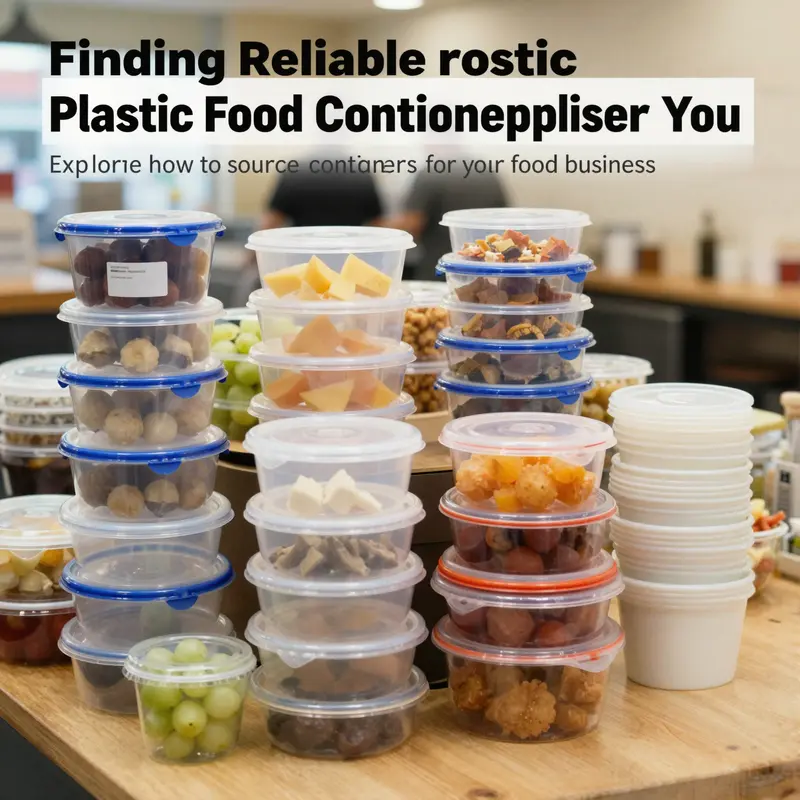
For businesses in the food and beverage industry, selecting the right plastic food container suppliers is crucial for operational efficiency and customer satisfaction. Bubble tea shops, restaurants, food trucks, catering services, event planners, and corporate procurement teams all require dependable packaging solutions. This article delves into the top global suppliers of plastic food containers, their product features, ways to customize orders, strategies for finding local suppliers, and the economic implications of sourcing these vital materials. Each chapter enhances your understanding of how to secure the best packaging strategies tailored to your needs.
null
null
Local Sourcing, Global Standards: Unpacking Features and Customization from Plastic Food Container Suppliers Near You
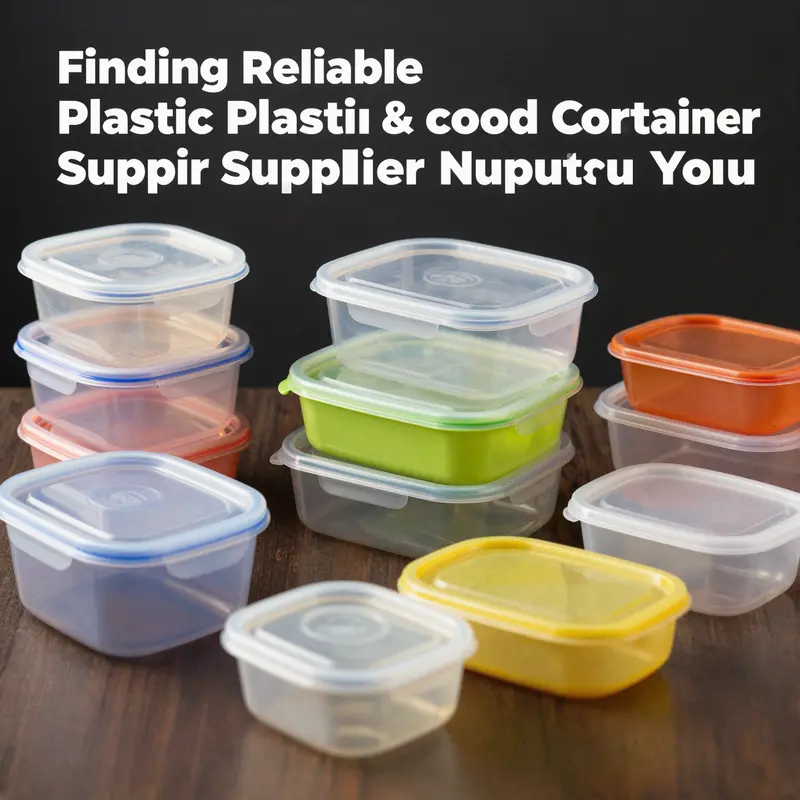
Choosing plastic food containers for a business goes beyond selecting a box with a lid. It is a decision that folds safety, performance, sustainability, and supply reliability into every shipment. When the search radius expands from a single warehouse to a regional network or even a global web of manufacturers, the question becomes not just whether a supplier can meet demand, but whether they can align with your operational tempo. The best near-me suppliers—those you can collaborate with without long lead times or opaque communication—do more than produce durable boxes. They act as extensions of your brand’s reliability and your promise to customers. In this chapter, we explore the spectrum of product features and customization options that matter most for B2B buyers seeking safety, compliance, and innovation. We also consider how local sourcing intersects with global standards, so you can evaluate options from nearby sources without sacrificing the benefits of a robust, standards-driven supply chain. For decision-makers who want to marry proximity with capability, the pathway is practical and principled at the same time. Safety and compliance anchor every meaningful choice. Reputable plastic food container suppliers maintain a portfolio of safety certifications that speak directly to direct food contact. Among the most recognized standards are those from the U.S. FDA, the EU’s Plastics Regulation 10/2011, and national standards in key producing regions, such as those reflected in GB 4806.7. These certifications are not mere paperwork; they are a testament to controlled processes, traceable materials, and validated testing regimes. When a supplier can demonstrate conformity to these frameworks, a buyer gains confidence that the containers they put on a table or into a cold chain are designed to meet the rigorous demands of everyday use, from grocery-store ready meals to high-throughput delivery operations. The real value lies in how certifications translate into practical benefits: predictable performance, minimized risk of regulatory hiccups, and the ability to scale with confidence across multiple markets. The conversation around safety inevitably leads to the matter of materials. A growing portion of the market leans into eco-friendly options that maintain performance while reducing environmental impact. Recyclable RPET, derived from post-consumer PET, offers a pathway to circularity without sacrificing clarity or strength. Biodegradable composites are another route for customers who need packaging with end-of-life considerations that align with evolving waste management infrastructure. PCR-HDPE—where recycled content is blended into high-density polyethylene—has also gained traction, providing a way to incorporate recycled material while preserving the toughness needed for transport, stacking, and repeated use where applicable. These material choices become especially important for businesses that emphasize sustainability in their brand narrative or must meet strict waste-reduction targets across multiple sales channels. The designers and engineers who specify container features are now asked to solve for more than just containment. They must balance usability with lifecycle considerations, demanding a mix of tactile simplicity and performance that endures through freezing, reheating, and repeated handling. A common feature set includes a range of shapes and capacities, from compact, single-portion formats to multi-compartment trays that isolate flavors or components within a single container. The ability to stack securely without slippage, to seal effectively against leaks, and to tolerate the rigors of a microwave or freezer are fundamental. Precision engineering underpins these capabilities: tolerances as tight as ±0.3 millimeters enable reliable mating of lids and bases, consistent volume, and uniformity across large batches. For premium segments—such as ready-to-eat meals, chef-driven specialties, or event catering—the demand for high-clarity bodies, glare-free presentation, and durable hinges or handles becomes a differentiator. Clear bodies that showcase the contents can elevate perceived quality, while microwave-safe or freezer-safe materials extend versatility from display to preparation to storage. Integrated handles or rims further enhance usability during transport and service, shrinking the friction points that often trigger breakages or spills in busy environments. Beyond the core materials and forms, the ability to tailor dimensions, wall thickness, and sealing systems is a headline capability for manufacturers pursuing strategic advantages. Customization is no longer a luxury in B2B procurement; it is a baseline expectation. Brand-specific printing opens a direct line from manufacturing to consumer recognition. A supplier that can imprint logos, nutritional information, or barcodes on containers helps preserve brand identity across all packaging touchpoints. Color customization and structural design choices follow closely, enabling a match with a brand’s color palette, iconography, or functional requirements such as category separation, spoilage indicators, or tamper-evident features. For many buyers, rapid prototyping is the practical gateway to validation. Through quick iterations, a team can confirm fit with existing equipment, test for user experience, and refine lid-locking or stacking behavior before committing to full-scale tooling. The ability to prototype accelerates time-to-market and reduces the risk of costly late-stage changes. It is common for manufacturers to offer these prototyping services in conjunction with in-house molding and tool-building capabilities, ensuring a tighter feedback loop from concept to production. The economics of customization tilt toward efficiency at scale. Bulk pricing models reward larger orders, with progressively lower unit costs as volumes rise. A representative scenario in this ecosystem might see substantial savings when orders exceed tens of thousands of pieces, with per-unit costs dropping to highly competitive levels. These arrangements are most effective when the supplier also provides continuity across the supply chain, from mold design to injection molding and finished packaging. Vertical integration is a feature that many buyers appreciate, because it anchors quality control, reduces handoffs, and speeds response times. When a supplier manages the core steps in-house, from tooling and resin selection through molding and assembly, it becomes easier to assure that every container meets the same standard of performance. For customers who operate at scale—think meal-prep services, mobile kitchens, or large-scale events—this reliability translates into predictable inventories and smoother production planning. Yet the practical value of any supplier goes beyond one-off specifications or a single line item. It rests in a robust quality control system that maintains consistency across production runs and responds to the pressures of peak demand. In practice, that means statistical process controls, traceability programs, and rigorous testing regimes that check dimensional stability, material migration, and leak resistance. It also means a supplier’s responsiveness to changes in demand and their ability to accommodate just-in-time delivery, so clients can keep working inventories lean without compromising service levels. For buyers, that combination—safety, sustainability, precise engineering, customization, and reliable supply—forms a durable foundation for packaging strategy, especially when the search footprint includes nearby suppliers. In your local market, you may discover firms that emphasize flexible MOQs, short lead times, and transparent communication as part of their core DNA. Local partnerships shine when they reduce the friction of procurement—shorter shipments, easier QA communication, faster returns, and more direct collaboration on process improvements. The net effect is a packaging program that feels intimate and responsive, even as it scales to meet the demands of larger distribution networks. As you weigh options, consider how a supplier’s capabilities align with your specific use-case needs. For instance, a fast-paced meal-prep operation benefits from multi-compartment designs that streamline portioning and reduce sauce cross-contact. A catering service that handles fragile items in transit may prioritise robust seals, high clarity for display, and efficient stacking to optimize vehicle space. A brand that markets sustainability values may lean on RPET and PCR-HDPE materials, coupled with clear labeling strategies that support recycling streams. Integrating these considerations into a supplier search often means looking beyond the ad copy and into the practical realities of production. It means asking questions about the supplier’s certification processes, the stability of resin streams, and how they handle changeovers between lots. It also invites inquiry into the prototyping and testing cycles that govern new designs, because the fastest path from concept to scale usually passes through iterative validation rather than a single big-batch rollout. To illustrate how this mix of capabilities translates into concrete procurement decisions, consider the following approach. Start with a baseline of safety compliance and material suitability for direct food contact. Then layer on eco-friendly material options that align with your sustainability goals. Next, assess whether the design and performance features meet your operational realities, such as ease of use, display quality, and compatibility with your existing serviceware ecosystem. Finally, evaluate the supplier’s supply chain stability and customization fluency. Do they offer just-in-time delivery, vertical integration, and scalable production that can keep pace with seasonal demand or promotional pushes? If yes, you are likely looking at a partner who can grow with you while maintaining the quality and compliance your customers expect. Practical sourcing guidance for near-me suppliers also suggests leveraging local search engines and mapping services to identify candidates that can offer dependable delivery windows, on-time performance, and direct lines of communication. It is not enough to know a supplier’s general capabilities; you want a partner who can translate those capabilities into a practical, repeatable packaging program. In the end, the goal is to create a packaging architecture that supports your brand narrative, preserves product integrity, and reduces total cost of ownership over time. The combination of safety compliance, sustainable material choices, high-precision design, and flexible customization makes today’s plastic food container suppliers indispensable allies for modern food and beverage enterprises. For readers exploring the global landscape, the reference material includes a widely cited sourcing guide that highlights how buyers in B2B markets connect with manufacturers in major hubs while maintaining strict standards of quality and safety. This chapter draws on those insights to describe the near-me supplier experience in a way that remains faithful to the core topic: finding reliable, capable plastic food container suppliers near you who can deliver not just boxes, but a reliable packaging program built for growth. External resource: https://www.alibaba.com/product-detail/Plastic-Food-Container-Suppliers-in-China-Sourcing_1600555952588.html. For further reading on packaging alternatives that can complement plastic containers while emphasizing sustainability, you may also explore related ranges such as eco-friendly pulp cup holders, which can be accessed here: eco-friendly-recyclable-pulp-2-4-cups-coffee-take-away-cup-holder.
Nearby Partners, Global Standards: A Deep Dive into Local Plastic Food Container Suppliers and Their Impact on Freshness
When a business moves packaging from concept to shelf, sourcing plastic food containers becomes a strategic decision. Nearby suppliers can offer pace, customization, and regulatory clarity that distant factories often cannot match. The regional landscape around local manufacturers tends to cluster by region, with each cluster specializing in different aspects of container design and production.\n\nWithin this regional context, three categories of local suppliers consistently deliver advantages. First category: Zhejiang province hub. They are known for food-grade containers with strong barrier performance; multi-layer co-extrusion technology; 3 to 10 layers; barrier against oxygen extends shelf life for sauces and condiments; portfolio includes standard formats plus advanced film structures. Second category: Pearl River Delta Guangdong; broad range of PET, PP, and HDPE; shapes and sizes; compatibility with filling equipment, capping, and labeling; depth of engineering helps reduce integration risk from concept to commercialization. Third category: southern hubs known for customization and rapid prototyping; on-press printing; valuable for limited runs and seasonal packaging; prototyping speeds can shorten time from design to production; supports brand differentiation while maintaining scale.\n\nPractical evaluation criteria include ensuring material compatibility with food-contact requirements; discuss temperatures they can withstand, leaching considerations, and resistance to fatty or acidic contents. Clarify barrier properties relevant to the product (oxygen, moisture, aroma) so options can be compared on a like-for-like basis. Lead times and MOQs: local suppliers often offer flexible MOQs for trials; scalability to full production matters for growth plans. Also assess compatibility with filling lines, capping equipment, and labeling workflows; ensure documentation for certifications and sustainability.\n\nProximity reduces sampling friction and enables hands-on QA; local partners tend to communicate more transparently and to co-create improvements in printing alignment, closure stability, and material efficiency. A blended sourcing strategy uses local partners for fast-turn needs and prototyping while keeping a global reference for performance benchmarks and escalation paths; this helps ensure resilience.\n\nExternal reference for context can be found at: https://www.srlon.cn/
Close to the Shelf: The Economic Architecture of Sourcing Plastic Food Containers
Sourcing plastic food containers sits at the intersection of cost discipline, reliability, and regulatory compliance. For operators in food service, catering, and the growing world of online food commerce, the choice of where to buy is not just about price. It is about how a supplier network can sustain operations under pressure, adapt to demand shifts, and minimize risk across a complex and increasingly scrutinized marketplace. This chapter unpacks the economic logic behind sourcing decisions, revealing how firms balance local convenience with the advantages and vulnerabilities of a highly globalized packaging ecosystem. The tale begins with cost, but it extends well beyond price tags to a broader tapestry of supply stability, lead times, and the capability to respond to a changing regulatory and consumer environment. In this framework, the ability to source efficiently near the end user is both a practical consideration and a strategic lever that shapes margins, service levels, and brand confidence alike.
Cost efficiency remains the most immediate driver for many businesses choosing their packaging partners. When buyers pursue strategic sourcing from wholesale manufacturers, particularly in regions renowned for high volume production, the per unit cost of containers can fall dramatically as volumes increase. The economic logic here rests on economies of scale, a principle that turns large factories into efficient engines of production. In industrial hubs that feed vast export channels, the cost to manufacture and package millions of units shifts decisively in favor of the buyer who can commit to sustained orders. In practical terms, this means unit prices can drift toward the very low end of the spectrum, making a meaningful difference to overall packaging budgets. The ripple effect is clear lower input costs expand profit margins, enable more aggressive pricing in competitive markets, or free resources to invest in product quality and differentiation elsewhere in the value chain. For a business facing tight quarterly targets or seasonally driven demand, these savings translate into resilience an ability to weather demand spikes without compromising service levels or inventory discipline.
Yet price is only part of the equation. Inventory stability is a critical, often overlooked, economic advantage. Bulk purchases built around long term supplier arrangements provide a cushion against stockouts during peak demand windows such as holidays, promotions, or large scale catering events. When a procurement strategy is anchored by reliable wholesalers who can deliver consistently over time, a business avoids the revenue losses and operational disruptions that accompany empty shelves. For mobile operators like food trucks or event caterers, downtime is measured not in days but in revenue hours. A steady supply of containers in the right sizes and configurations helps keep operations fluid, supports on time service, and preserves customer trust. In these contexts, the cost of a stockout not only the lost sale but the potential reputational damage often dwarfs the marginal savings gained from choosing the cheapest option. The economic calculus, therefore, rewards relationships built on predictability and reliability as much as on price alone.
From a macroeconomic perspective, the packaging landscape has been reshaped by the concentration of manufacturing capacity and the integrated ecosystems that support it. A country that can sustain high volume production through efficient tooling, sophisticated molding technologies, and a dense network of downstream suppliers can influence global market dynamics in meaningful ways. Proximity to major export ports and logistics hubs further amplifies this effect, enabling rapid turnarounds and lower logistics risk for buyers who must balance speed with cost. The scale at which these producers operate hundreds of thousands to millions of units per month feeds a global demand for packaging that underpins the rapid growth of food delivery, takeout, and at home meal solutions. In such a system, price advantages accumulate not only from manufacturing efficiency but also from the ability to synchronize production with demand signals, reducing the need to hold excessive value depleting safety stocks while still guaranteeing timely fulfillment.
Vertical integration is another economic pillar that strengthens supplier appeal in this space. When a single supplier controls the tooling, automated assembly, and even digital printing of packaging components, lead times shorten and customization becomes more nimble. In environments where clients increasingly seek tailored shapes, labels, and branding integrated into the packaging, the speed and flexibility afforded by vertical integration translate directly into economic value. Shorter lead times reduce the risk of obsolescence and stockholding costs, while the capacity for rapid iteration supports a more responsive product development cycle. For buyers, this means faster time to market for campaigns or seasonal menus, smoother onboarding of new SKUs, and the ability to adapt packaging to evolving regulatory requirements without incurring punitive delays or quality gaps. In short, vertical integration is less about novelty and more about reducing friction across the procurement and fulfillment continuum, a factor that tightens the link between supply chain efficiency and business performance.
But every economic advantage comes with potential risk. The low unit price that appeals to procurement teams carries the shadow of quality and compliance concerns. Substandard or non compliant packaging products can trigger recalls, legal penalties, and brand damage that far exceed any savings realized at the point of purchase. The cost of these failures includes not only direct financial losses but also customer erosion, reputational harm, and the added burden of remediation across distribution networks. Consequently, prudent buyers invest in suppliers whose processes are underpinned by robust quality assurance and safety certifications. International and national standards play a decisive role here, with recognized benchmarks for material safety and migratory limits helping to guard against contamination risks and regulatory penalties. The business case for certified suppliers becomes compelling precisely because it mitigates the long tail risk that can unravel the advantages gained from aggressive pricing. In many instances, slightly higher upfront costs for certified packaging translate into lower total cost of ownership, a more predictable supply, and fewer operational disruptions over the life of a contract.
This tension between cost and risk is amplified by the globalization of packaging supply chains. In emerging markets, where automation may still be maturing and export readiness varies, buyers often rely on imported containers from established manufacturing bases to meet demand. This interdependence can be a powerful driver of global economic development, as it opens access to affordable, scalable packaging solutions that enable rapid growth in the takeout and delivery sectors. At the same time, it creates exposure to currency fluctuations, geopolitical shocks, and regulatory changes across borders. The most resilient sourcing strategies acknowledge this complexity and seek to balance the advantages of a diversified supplier base with the benefits of scale and specialization. In practice, that balance often looks like a core portfolio of primary suppliers capable of delivering volume with consistent quality, complemented by carefully selected regional partners who can fill gaps, offer near market proximity, or provide contingency coverage. The aim is a procurement ecosystem that is both efficient and robust, capable of sustaining growth even as external conditions shift.
Against this backdrop, decision makers increasingly weigh the trade offs between global reach and local access. Local suppliers bring advantages in responsiveness, shorter transit times, and stronger alignment with local regulatory landscapes. They also offer a buffer against global supply shocks and can simplify logistics and warehousing. Yet the breadth of options, the scale of production, and the cost discipline offered by large scale manufacturers remain critical pillars of modern packaging procurement. The most effective strategy, therefore, blends the predictability and scale of global supply with the adaptability and proximity of local channels. It is a strategy that recognizes packaging not as a mere commodity but as a strategic asset one that touches margins, customer experience, and the ability to deliver on brand promises without compromise. Within this framework, procurement teams continuously reassess supplier performance, track compliance through independent audits, and align packaging choices with evolving consumer expectations, sustainability goals, and regulatory directives.
Regulatory considerations add further dimensions to the economic picture. As governments intensify oversight of packaging materials, buyers must stay abreast of evolving standards and recommended practices. The economic argument for compliance grows stronger when one considers the consequences of non compliance a single violation can trigger recalls, fines, and forced product withdrawals that ripple through the entire distribution network. In many jurisdictions, certifications and traceability become non negotiable prerequisites for sustained business, particularly in sectors with heightened safety expectations. The prudent path couples favorable pricing with transparent quality assurance, regular third party verification, and a proactive posture toward evolving regulatory landscapes. This is not merely a defensive tactic; it is a strategic investment in business continuity, brand protection, and long term profitability. The chapter s synthesis of these considerations points to a clear conclusion the most economically advantageous sourcing approach is not simply the cheapest option, but the one that consistently delivers value across price, reliability, compliance, and adaptability.
As markets continue to evolve, the importance of strategic supplier evaluation grows. Firms increasingly assess supplier performance through multi criteria frameworks that weigh price, quality, lead times, and regulatory alignment alongside supplier reliability and financial health. This approach helps procurement teams avoid over reliance on a single source and fosters resilience in the supply network. In practice, it means establishing clear performance indicators, conducting regular supplier reviews, and maintaining a dynamic risk register that captures supplier risk exposure, alternative sourcing options, and contingency plans. The outcome of such disciplined management is not a single winner but a diversified, adaptable network that can support growth without sacrificing quality or compliance. In this economic landscape, decisions about where to source packaging are less about chasing the lowest price and more about cultivating value across the entire lifecycle of a product—from design and production through distribution, consumption, and end of use considerations.
Looking ahead, the interplay between local and global dynamics will continue to shape sourcing strategies in meaningful ways. As consumer demand for safety, sustainability, and convenience intensifies, buyers will prioritize suppliers who combine rigorous quality controls with scalable manufacturing capabilities and transparent regulatory compliance. The resulting procurement ecosystems will be less about chasing arbitrage and more about building enduring partnerships that withstand volatility, streamline operations, and safeguard brand trust. In that sense, the economics of sourcing plastic packaging near the shelf are not simply about cost containment they embody a forward looking strategy that aligns procurement, operations, and compliance with the realities of a rapidly changing food economy. For readers who seek practical guidance on navigating these complexities, regulatory context and best practices remain essential guides to making sound durable choices in a market defined by scale, speed, and scrutiny. External resources can provide grounding as you refine your own sourcing playbook and ensure that every container you move from factory floor to customer table supports both business success and consumer confidence. For regulatory context, see the Plastic Packaging Levy Guidance: https://www.gov.uk/government/publications/plastic-packaging-levy-guidance/plastic-packaging-levy-guidance
Final thoughts
Sourcing plastic food containers is a significant consideration for any food-related business. By understanding the global landscape of suppliers, exploring product customization options, and actively seeking local suppliers, you can create a more resilient supply chain. Additionally, recognizing the economic impacts of your sourcing choices is essential for maintaining a profitable operation. Equip your business with the right packaging solutions and foster connections with suppliers that align with your needs.