
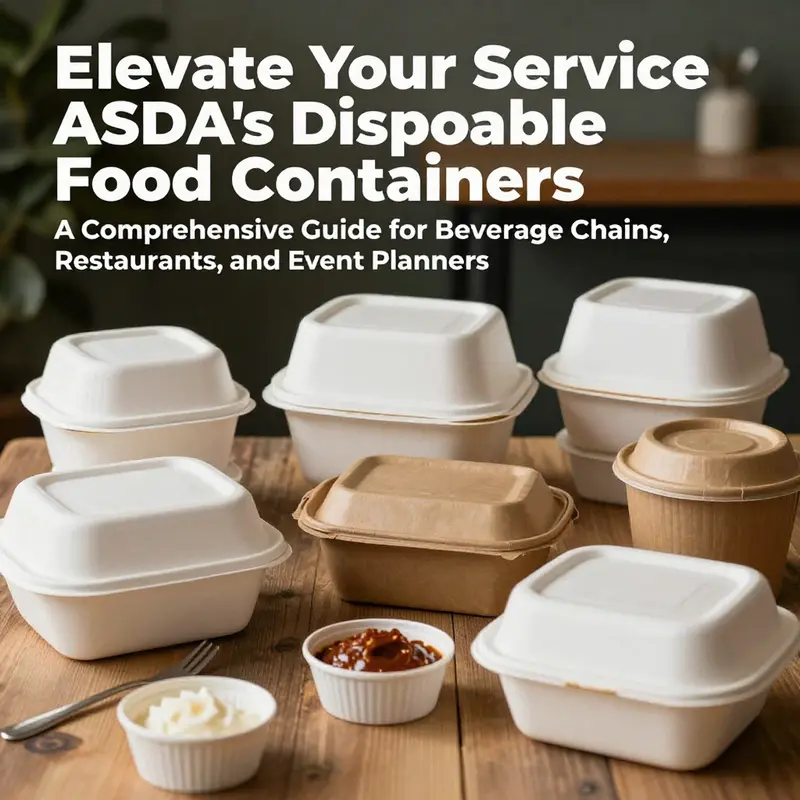
In today’s service-oriented marketplace, the choice of disposable food containers can significantly impact operational efficiency and customer satisfaction. ASDA, a leading retailer under the Walmart umbrella, offers a wide array of disposable food containers tailored for various business needs, from bubble tea shops to corporate event planners. This article delves into three key areas: the extensive product range that ASDA provides, their sustainability initiatives which are increasingly necessary in today’s eco-conscious climate, and the market position coupled with economic insights that highlight the importance of these products to the overall business landscape. By understanding ASDA’s offerings and commitments, your business can enhance service delivery while promoting responsible consumption.
Quiet Footprint: ASDA’s Approach to Disposable Containers Within a Reusable Core

ASDA’s product strategy foregrounds durability and reuse over single-use packaging. The online catalog emphasizes reusable tableware and durable dinnerware designed for daily life, family meals, and social occasions. Disposable containers appear less as a defined range and more as a peripheral option embedded within broader categories, reflecting a deliberate prioritization of lifecycle thinking and long-term value. This framing can shape shopper behavior toward reuse while acknowledging the ongoing need for disposables in takeout, events, and catering. The absence of a dedicated disposable aisle suggests a two-track approach: a robust reusable core complemented by more modest disposable offerings tucked into other sections. From a user experience perspective, navigation often routes seekers of disposables through general categories, which can create friction but also opportunities for cross-category awareness. The chapter concludes with a perspective on how large retailers balance convenience, cost, and environmental responsibility, and how ASDA may evolve its disposables presence in the future.
Circular Packaging in Aisle Five: ASDA’s Journey Toward Sustainable Disposable Containers
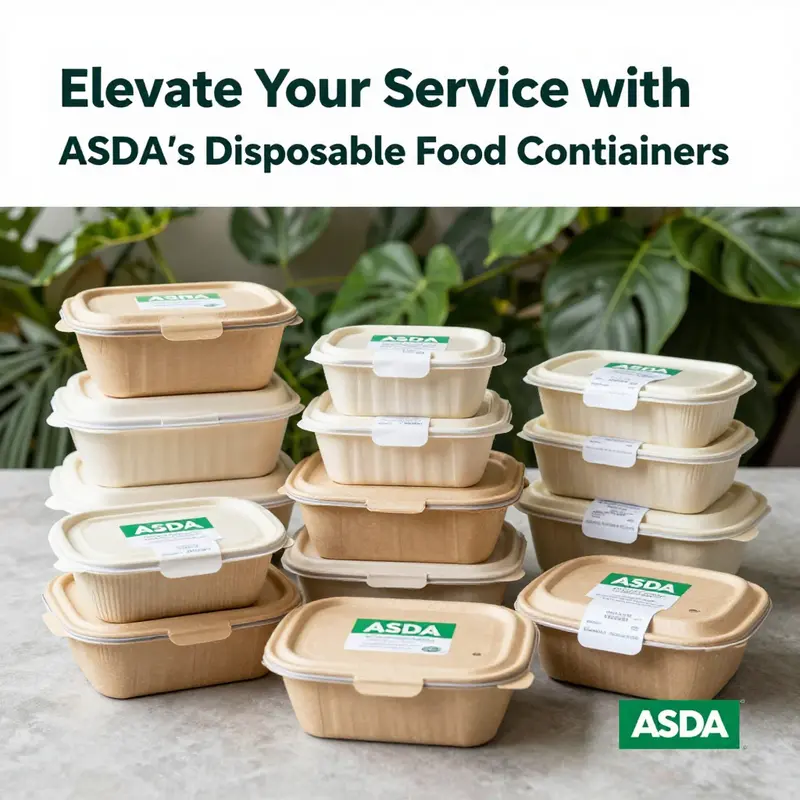
When you walk the aisles of a major supermarket, the conversation about sustainability rarely sounds like a single policy. It unfolds as a continuous negotiation between practicality, cost, and responsibility. In the United Kingdom, ASDA has positioned itself at the center of that negotiation for disposable food containers. The chapter-size task before the company is not merely to offer convenient products; it is to reframe convenience in a way that aligns with a longer horizon. ASDA operates within a retail ecosystem shaped by consumer demand, regulatory pressures, and a growing chorus of environmental consciousness. The challenge is to balance the undeniable need for sanitary, disposable containers with the urgency of reducing packaging waste. The path it has chosen centers on redesign, material innovation, and a reassessment of life cycles, all aimed at moving from a linear take-use-discard model toward something closer to a circular economy. This is not a single initiative; it is a constellation of decisions threaded through product design, supplier relationships, and in-store and online consumption patterns that culminate in a measurable shift over time.
At the core of ASDA’s sustainability push in disposable containers is a clear aspiration: reduce packaging waste by 20 percent by 2030. This target is not just a number; it signals a strategic commitment to rethink every touchpoint along the packaging chain. It touches not only the obvious choices—like the amount of material used in a box or lid—but also the more nuanced decisions that determine whether a container can be recycled, composted, or repurposed after its initial use. The emphasis on a circular economy means viewing packaging as a resource within a system, rather than as a one-way burden. In practice, this means designing for recyclability where feasible, selecting materials that have cleaner end-of-life profiles, and simplifying designs to minimize waste streams without compromising safety, hygiene, and convenience.
ASDA’s approach to materials reflects a careful weighing of performance, cost, and environmental impact. The selection process increasingly prioritizes recyclable and compostable options where available, with a focus on paper-based solutions and other substrates that marry barrier properties with end-of-life clarity. The goal is not to eliminate plastic entirely where it still serves essential functions; rather, it is to shift toward materials and structures that can be recovered, reclaimed, or responsibly processed at scale. The move is incremental in the best sense: a mosaic of improvements that reduces overall reliance on single-use plastics and makes space for more responsible packaging choices across a broad range of products—from take-away meals to ready-to-eat items to beverages in disposable cups.
These material choices are inseparable from design. A disposable container must protect food integrity, resist leaks, tolerate microwaving when necessary, and withstand the rigors of distribution and consumer handling. Yet the design steps taken by ASDA’s product development teams reflect a growing sensitivity to the environmental footprint of each container. Redesigns often entail lighter weights, simpler shapes, and fewer composite layers that complicate recycling. In some instances, this requires partnering with suppliers to test novel combinations that still meet food-safety standards while delivering improved end-of-life outcomes. The intent is not merely to replace one material with another; it is to optimize the entire configuration so the container can be efficiently processed after use, ideally with minimal residual waste.
ASDA’s supplier ecosystem is central to turning these design ambitions into tangible products. The company recognizes that meaningful progress cannot occur behind closed doors. Instead it works closely with a broad network of suppliers to raise environmental standards across the packaging portfolio. This collaboration involves sharing performance criteria, aligning on recycled content targets, and ensuring that labeling communicates recyclability and disposal guidance clearly to consumers. The result is a packaging strategy that seeks consistency across categories—so a consumer who picks up a take-away meal from any section of the store encounters packaging that is easier to recycle and cleaner in its end-of-life journey. In practice, this means harmonizing specifications so suppliers can invest with confidence, knowing their innovations will be scaled and supported by a retailer that values circular outcomes as much as shelf appeal.
A critical piece of the transition lies in the balance between convenience and environmental responsibility. Disposable containers must remain reliable for everyday use—whether it’s a quick lunch, a party platter, or a hotel take-away order—while nudging consumers toward responsible disposal. Consumer education plays a supportive, not heroic, role in this effort. Clear recycling labels, consistent disposal guidance, and simple-to-understand material choices help demystify what can be recycled where. The more predictable the end-of-life route is for a container, the higher the likelihood that it will exit the waste stream and re-enter a legitimate processing channel. In this sense, ASDA’s strategy extends beyond product development. It also touches on the information ecosystem that empowers shoppers to make decisions aligned with the broader sustainability goals.
Behind the scenes, the logistic and operational realities of a vast retail network influence every packaging decision. ASDA’s procurement and supply chain teams monitor packaging usage across thousands of SKU configurations, ensuring that reductions in material inputs translate into tangible waste reductions without compromising product safety or performance. This means scrutinizing case packs, pallet efficiencies, and the often-overlooked but consequential packaging attached to delivery and fulfillment. The digital dimension enters here as well, because data on packaging waste, recycling rates, and supplier performance feed into continuous improvement cycles. The digital dashboards help leadership see where the biggest waste streams originate and which interventions generate the clearest, fastest payoffs. The result is a living system that evolves as new materials, processing capabilities, and consumer behaviors unfold.
One practical manifestation of this approach is a shift toward more streamlined packaging structures that reduce the number of separate components and the total amount of material involved. A lid that fits snugly on a compact base, a single-material container that can be diverted to recycling streams with minimal processing, or a sleeve that holds a container securely without needing a separate wrap—all these small design choices accumulate into meaningful waste reductions across millions of units. The cumulative effect cannot be overstated: even modest reductions in weight and complexity per unit, multiplied by the scale of a national retailer, can yield substantial environmental dividends over the lifecycle of the packaging. The science behind these decisions is not abstract; it translates into real-world improvements in waste diversion rates and a lower environmental footprint for everyday meals and snacks.
ASDA’s emphasis on lifecycle thinking—analyzing materials from extraction through use to disposal—also informs its engagement with regulatory developments. Policy environments increasingly favor recyclability, compostability, and transparency about end-of-life options. By anticipating these shifts, ASDA positions itself to adapt quickly, align with evolving standards, and minimize the risk of stranded assets in packaging that becomes harder to process. This proactive posture reduces uncertainty for suppliers and helps ensure that packaging innovations released today remain viable tomorrow. In turn, consumers benefit from packaging that is easier to recycle, clearer to dispose of, and more compatible with local recycling infrastructures, which vary across regions and communities.
Material choices, supplier collaboration, and lifecycle thinking converge most visibly in products designed for take-away and ready-to-eat meals. These categories—where speed, hygiene, and reliability are non-negotiable—pose particular challenges for sustainability. The balance ASDA aims for is to preserve the confidence customers place in hygienic packaging while reducing the environmental cost of these frequently consumed items. It is a balancing act that requires ongoing testing, consumer feedback, and a willingness to iterate. In some cases this means leaning toward simpler, recyclable packaging formats that maintain food safety and ease of end-of-life processing. In others, it means exploring compostable options that can, in suitable facilities, break down into non-harmful residues. Each decision is a data-driven step toward increasing the fraction of packaging that can be diverted from landfills and reintegrated into useful material streams.
Within this broader arc, ASDA also recognizes the importance of consumer engagement as a driver of change. Packaging cannot achieve its full potential without shopper participation in recycling and responsible disposal. To support this, the retailer invests in clearer packaging instructions, better labeling that reduces confusion, and partnerships that promote recycling across communities. The aim is to reduce the friction consumers encounter when deciding how to dispose of a container after its use. Simplicity matters, and so does consistency. When a shopper encounters uniform guidance about what to do with different container components, the likelihood of proper disposal increases. In turn, this reliability strengthens the recycling stream and makes the process more economically viable for recycling facilities. The virtuous loop—better packaging, clearer guidance, improved recycling outcomes, and more sustainable consumer choices—becomes self-reinforcing over time.
If you examine the tangible signs of progress, you will notice more container designs that prioritize end-of-life clarity. Labels increasingly indicate whether a component is curbside recyclable, compostable in industrial facilities, or requires alternative processing. The messaging is not only about disposal but about stewardship: packaging that invites responsible behavior rather than passive consumption. In parallel, suppliers are encouraged to invest in materials and processes that align with these outcomes, knowing that ASDA rewards progress with scale and shelf visibility. The result is a market signal that nudges the entire packaging ecosystem toward more sustainable options, with packaging becoming a more integral part of the consumer experience rather than an afterthought.
A noteworthy yet understated element of this transition is the potential for reusability and refill models to become more widespread in the context of disposable containers. While the term disposable may imply single-use, the broader trend is toward packaging that can be repurposed, returned, or refilled in ways that fit into contemporary urban lifestyles. In practice, this can mean containers that are designed to be reusable for a certain number of cycles, paired with programs that support take-back or return schemes. Even in the absence of formal reuse programs, the emphasis on durability and cleanability informs design choices that extend the useful life of containers or facilitate more efficient recycling. These considerations resonate with consumer expectations for quality and value, as well as with the economic realities of waste management in densely populated markets.
Throughout this ongoing evolution, the pace of progress is shaped by the interplay of market readiness, infrastructure, and competing priorities within the retailer’s own portfolio. Packaging must support product integrity, branding, and customer experience, all while becoming lighter on the planet. The balancing act means constantly re-evaluating trade-offs and embracing innovations that show clear, measurable benefits. It also means acknowledging the complexities of recycling systems that differ by region, city, and even neighborhood. In this context, ASDA’s strategy is not a single invention but a disciplined, iterative program that seeks to align product development with the realities of modern waste management and the ambitions of a circular economy. The larger narrative here is not just about reducing material use but about reimagining the entire value chain so that disposability does not equate to disposability of resources.
For readers and researchers looking to explore concrete examples of the kinds of packaging solutions being tested, a broader view of the market can provide useful context. The shift toward sustainable disposable containers is part of a global movement that recognizes packaging as a material with potential for reuse, recovery, and responsible disposal. Within ASDA’s operations, this translates into a steady cadence of pilots, supplier trials, and evidence-based adjustments to product specifications. The outcome is incremental but cumulatively powerful: a packaging system that better serves customers while reducing waste streams and conserving resources. The path forward includes continued investment in material science, alliances with waste-management networks, and ongoing dialogue with environmental stakeholders to ensure that the packaging choices remain aligned with community needs and regulatory expectations.
In this evolving landscape, one subtle but significant implication is the need for greater transparency around end-of-life outcomes. Consumers increasingly want to know what happens to packaging after use. As ASDA advances its disclosure practices, it helps to demystify the recycling and composting processes and to clarify the conditions required for different materials to be properly processed. This transparency fosters trust and supports the broader goal of a more resilient waste-management system. It also invites constructive feedback from customers that can inform further refinements to packaging design and labeling. The ultimate objective is not just to meet a target but to cultivate a culture in which packaging design itself becomes a driver of sustainable behavior—where every container carries a clear, actionable narrative about what comes next after its initial life with a meal, a party, or a takeaway order.
To give a sense of how these ideas translate into tangible options, consider the ongoing exploration of container formats that balance functionality with end-of-life practicality. Some designs emphasize simplicity and recyclability, while others test more advanced materials that can fit specific food-safety requirements or regional recycling capabilities. The dialogue with suppliers continues to evolve, reflecting both advances in materials science and shifts in consumer expectations. The aspiration remains consistent: to deliver packaging that protects food, reduces waste, and remains adaptable as technologies and waste-management infrastructures evolve. In the context of a leading retailer, these efforts have the potential to scale quickly, creating ripple effects across product categories, store formats, and consumer choices. The cumulative impact extends beyond a single aisle and becomes part of a broader cultural shift toward responsible consumption and stewardship of resources.
As the chapter closes, it is useful to frame ASDA’s work within the larger arc of corporate responsibility and social impact. The sustainability journey for disposable containers is a lens through which supply chains, design disciplines, and consumer education intersect. It demonstrates how a large retailer can catalyze change by aligning internal priorities with external expectations, investing in material and process innovation, and communicating clearly about end-of-life pathways. The result is not only a more sustainable packaging portfolio but also a more informed and engaged customer base that understands the connection between everyday choices and long-term planetary health. This deeper, more integrated approach to packaging is a practical example of how a major retailer can contribute to a broader societal transition toward sustainable production, consumption, and waste management.
For readers who want to delve into the specifics behind these strategic directions, ASDA’s broader sustainability materials provide a rich source of context. The company’s ongoing progress toward its 2030 packaging waste reduction target, along with its supplier engagement and material innovations, forms a living record of how a flagship retailer translates policy into practice. The narrative is not static; it evolves as new partnerships mature, facilities expand their capabilities, and recycling infrastructures adapt to new material streams. The story of ASDA’s disposable container initiatives is, in essence, a case study in how large-scale retail can contribute to the circular economy—one container at a time, with the understanding that every design decision, every supplier negotiation, and every consumer instruction matters in the collective effort to steward resources more effectively.
For those who wish to explore adjacent ideas or observe related developments in the market, a practical example from the broader ecosystem is the ongoing innovation around biodegradable and compostable packaging options. These materials, when paired with appropriate facilities and clear consumer guidance, can substantially improve end-of-life outcomes. The industry continues to test formulations, assess performance, and refine processing pathways to ensure that such options are both commercially viable and environmentally advantageous. In the context of ASDA’s strategy, the potential of biodegradable solutions is one piece of a broader toolkit aimed at reducing waste, increasing recyclability, and shortening the distance between product use and resource recovery. The journey is iterative, and each tested approach contributes to a more robust, resilient, and transparent packaging system that aligns with both consumer expectations and planetary limits.
In closing, ASDA’s sustainability initiatives for disposable containers illuminate a practical path toward responsible packaging within a large, dynamic retail environment. The company demonstrates that meaningful progress can be achieved through a combination of redesign, material innovation, supplier collaboration, and consumer education. The journey is long and the milestones incremental, yet the direction is clear: toward packaging that protects the food it surrounds and respects the world it occupies. The narrative invites readers to reflect on their own role as shoppers and citizens, recognizing that small choices at the point of purchase can align with a larger, collective effort to steward resources. This is not a single policy or a singular breakthrough; it is a sustained, iterative program that seeks to embed circular thinking into the everyday act of shopping, transforming disposable containers from a convenience into a conscious component of environmental stewardship.
If you want a concrete stepping-stone into this evolving landscape, consider how supplier innovations are shaping return on investment for sustainable packaging. The path forward relies on pragmatic demonstrations of impact, clear communication with customers, and continued investment in materials research and recycling infrastructure. ASDA’s work illustrates how a retailer can maintain a vital balance between customer experience, economic viability, and environmental responsibility. It is a continually unfolding narrative—one that invites collaboration, experimentation, and steady progress as more efficient, recyclable, and even reusable packaging options become the norm rather than the exception. In this sense, the aisle may be the site of the greatest potential transformation: a commonplace space where choices, guided by science and stewardship, can alter the trajectory of packaging waste for years to come. For those who want to read more on the specific progress, ASDA’s sustainability report provides a comprehensive overview of the actions, metrics, and timelines associated with these ambitious goals.
External resources and further reading:
ASDA Sustainability Report 2024: https://www.asda.com/sustainability
Internal reference (example of related packaging innovations): biodegradable eco-friendly take-away kraft paper bowl
Sustainable Convenience in the Aisle: Market Position and Economic Impact of Disposable Food Containers at ASDA
ASDAs presence in the UK grocery landscape is more than a matter of shelf space and price tags. It reflects a decisive alignment between consumer appetite for convenience and a retailer strategy that seeks to balance affordability with evolving expectations around sustainable packaging. In the realm of disposable food containers, ASDA occupies a position that blends broad accessibility with a pragmatic commitment to practical performance. The containers span a spectrum designed to meet everyday needs, from quick family meals at home to last minute takeout at small gatherings, and even to occasional catering or event setups. The market position that emerges from this blend rests on four pillars: accessibility, affordability, functionality, and sustainability. Accessibility is straightforward in a large supermarket network that extends beyond brick and mortar into a robust online platform. Consumers can choose from a range of takeout and storage options with minimal friction, whether they are stocking up during a routine shop or selecting items for a spontaneous picnic. The online platform complements the in store experience by showcasing a breadth of options that can be delivered to a doorstep, locker, or pickup point, ensuring that the products are within reach for busy households, students, and professionals who value convenience as a core daily habit. Affordability is a deliberate strategic emphasis. In markets where households juggle tight budgets and rising costs, the ability to source reliable disposable containers at lower price points is not merely a convenience, it is a value proposition that supports regular, recurring purchases. This is reinforced by pricing strategies that favour multi-packs and bundled options, enabling shoppers to stock up for household use, small events, or business needs without paying a premium for one time use. Functionality follows closely behind affordability, because customers expect packaging to perform as advertised. Leakage resistance, microwave safety, and the ability to hold a variety of foods without compromising shape or integrity are central to the consumer experience. These features are not decorative; they enable practical meal planning, reduce the need for secondary wrapping, and minimize the likelihood that households will revert to non disposable alternatives during busy periods. On top of these practical considerations, sustainability increasingly anchors consumer choices and retailer response. ASDA has signaled that its disposable containers incorporate biodegradable materials or recyclable composites, with attention to materials like kraft paper that can be integrated into circular economy models. This alignment with sustainability does not come at the expense of usability. The containers are designed to withstand standard heat ranges and everyday service demands, while also offering a pathway for recycling or reuse where customer habits and local facilities allow. The result is a market position that is not simply about price competitiveness but about packaging that respects the practical realities of modern life and the growing consumer imperative to reduce waste where possible.
The product features that define ASDA sourced disposable containers are anchored in durability and heat tolerance. In a fast paced service environment, containers must resist deformation, maintain seal integrity, and perform under a range of temperatures. The typical design goal is to support a smooth transition from kitchen to table, from home to office, and from consumer to consumer’s recycling bin. In this regard, ASDA’s packaging choices demonstrate a conscious effort to harmonize form and function. The materials are chosen to balance moisture management with structural stability, ensuring that sauces, gravies, and liquids are contained without spillage. The compatibility with common kitchen equipment, notably microwaves, is another explicit consideration. The ability to reheat food directly in the container—when the container is rated for microwave use—reduces waste and simplifies meal preparation, a feature that resonates with households juggling time constraints. These functional attributes align with the broader retail objective of facilitating easy, reliable meal solutions for a diverse customer base.
From an economic perspective, the disposable container category contributes to ASDA’s broader business model by influencing basket size and repeat purchase behavior. When customers see value in the combination of price, performance, and sustainability, they are more inclined to include these items in their regular shopping lists. The inclusion of reliable disposable containers expands the range of items a household would consider as part of a single trip, thereby increasing average transaction value. The recurring nature of disposable packaging purchases introduces a predictable revenue stream that complements other categories and strengthens seasonal demand during events such as parties, holidays, or school terms when the appetite for convenient packaging rises. The economics extend beyond the individual shopper to the relationship between ASDA and its suppliers. Competitive pricing strategies, including bulk offers and multi packs, bolster volume sales while supporting the retailer’s everyday low price philosophy. This dynamic is particularly relevant in the context of disposable containers where margins can be sensitive to raw material costs and packaging innovations. By maintaining tight control over product quality and supplier diversity, ASDA can navigate fluctuations in input costs while preserving affordability for consumers.
Regulatory and reputational considerations also shape the economic landscape surrounding disposable containers. The push toward sustainability is paired with ongoing scrutiny of single use plastics and related packaging waste. For ASDA, integrating more sustainable packaging options reduces potential regulatory risk and positions the retailer to respond proactively to policy shifts, labeling requirements, and recycling program expectations. In practice, this means investing in packaging solutions that are compatible with local recycling streams and consumer recycling habits, reducing the friction between disposal and recovery. It also opens doors for collaborations with suppliers who specialize in renewable or recycled content, enabling a more resilient supply chain that can adapt to evolving environmental standards. The sustainability narrative thus doubles as a strategic differentiator. By promoting and stocking packaging that aligns with both consumer preferences and policy trajectories, ASDA reinforces its role as a responsible retailer that can deliver value without compromising ethical and environmental commitments.
A central thread in ASDA’s approach is the ongoing evolution of material choices. Kraft paper and similar biodegradable or recyclable composites appear prominently within the assortment, reflecting a broader industry trend toward more sustainable packaging configurations. The shift toward kraft based options offers a tangible path to reducing post use impact while still meeting the practical demands of home and food service contexts. Kraft paper, with its natural appearance and potential for compostability or recyclability, resonates with consumers who associate earth friendly aesthetics with responsible consumption. The environmental calculus is nuanced, however. While recyclable materials can lower long term waste, their effectiveness hinges on the presence of robust local recycling infrastructures and clear consumer guidance on disposal. In response, ASDA’s sustainability narrative extends beyond product design to customer education initiatives and in store recycling programs. The combination of consumer awareness, store level recycling offerings, and product design aimed at recyclability forms a cohesive strategy to minimize single use waste and promote a more circular approach.
The market dynamics of disposable containers at ASDA are further enriched by the retailer’s digital presence. The online marketplace not only broadens the geographic reach of packaging products but also amplifies the ability to test new formats and materials with minimal risk. Data generated from online sales illuminate consumer preferences in real time, enabling ASDA to adjust assortments, emphasize certain sustainable formats, and respond to changing demand rapidly. The online channel also expands the potential for cross category synergies, such as bundling disposable containers with related food service supplies, which can nudge customers toward more holistic purchases. In this sense, the online platform acts as a living laboratory where ideas about packaging functionality, durability, and sustainability can be tested against actual consumer behavior and feedback, while still preserving the practical benefits that make these products a fixture in everyday life.
The consumer narrative around disposable containers at ASDA is shaped by evolving attitudes toward waste, convenience, and value. A growing segment of customers now looks for packaging that can perform reliably while offering a sustainable end of life. This means that packaging iterations must address both the immediate need to protect food during transport and the long term imperative to reduce waste and support recycling or composting where feasible. The tension between performance and environmental responsibility is not easy to resolve, but it is precisely where ASDA seeks to differentiate itself. The retailer pursues a balanced approach that highlights practical advantages, such as leak resistance and microwave safety, while signaling a commitment to sustainability through material choices, recycling programs, and educational outreach. In doing so, ASDA positions itself not merely as a seller of disposables but as a partner in responsible consumption that helps consumers navigate daily meal decisions without sacrificing convenience.
In exploring the packaging ecosystem beyond the shelves, one can glimpse the kind of packaging innovation that informs ASDA’s approach. An example of industry practice involves packaging styles that combine functional integrity with materials engineered to support recycling streams. Such designs may feature reinforced yet lightweight compositions, optimized for stacking and transport, with lids and seals that preserve freshness without excessive plastic content. The integrated design philosophy is essential for reducing waste across the lifecycle of the product. It also aligns with broader industry shifts toward reusable or returnable models where feasible, and with consumer expectations that packaging should be both sturdy for transport and mindful of end of life. While ASDA’s immediate strategy emphasizes disposables that are affordable and practical, the broader trajectory reflects a market that increasingly equates packaging stewardship with brand value and trust. The retailer’s ability to tell this story in a credible, accessible way—through clear labeling, recycling guidance, and visible commitments to sustainable materials—can strengthen customer loyalty and differentiate the shopping experience in a crowded field.
From a chain wide perspective, the economic impact of disposable containers at ASDA must be viewed in relation to the retailer’s broader objectives for value, accessibility, and sustainability. The containers are not isolated product lines but are embedded in a retail ecosystem that includes fresh foods, prepared meals, and an expanding array of service options. By providing reliable, affordable packaging solutions alongside a diverse range of food offerings, ASDA helps customers translate convenience into everyday practicality. This dynamic also supports the retailer’s capacity to manage margins in a competitive market by promoting repeat purchases and higher basket value, particularly among households that prioritize time efficiency and predictable costs. Moreover, the sustainability narrative can help to buffer against reputational and regulatory risks associated with single use plastics, gradually shifting customer expectations toward packaging that is easier to recycle or reuse. In this way, the disposable container category becomes a strategic lever that intersects consumer behavior, supplier collaboration, and policy developments, contributing to a more resilient and responsive retail operation.
The chapter would be incomplete without acknowledging how packaging choices intersect with environmental outcomes at the community level. The materials and design decisions that accompany ASDA product lines influence not only waste streams but also consumer habits around disposal. If packaging is perceived as a burden at the curb or as a barrier to recycling participation, it undermines the positive impact of convenient packaging. Conversely, packaging that communicates clear disposal guidance, uses recyclable or compostable content, and integrates well with community recycling programs can amplify positive environmental results. This is where the integration of design, education, and policy becomes a meaningful pathway to reduce landfill burden while preserving the benefits of convenience for families and small businesses. The interplay between customer experience and environmental stewardship thus becomes a defining characteristic of ASDA’s position in the disposable container market.
An illustrative bridge between practice and possibility can be seen in the way packaging options are positioned online and in stores. A case in point is packaging variants designed to meet the needs of various service contexts, from home meal preparations to takeout at small events. The today of shopping is increasingly multichannel, and the packaging category must follow suit. In-store demonstrations, clear labeling about material composition, and accessible recycling information can help customers make informed choices at the moment of purchase. This is not a mere marketing exercise; it is a practical response to how customers use packaging in real life, where decisions about disposal and recycling occur after the last bite. The more transparent and actionable the guidance, the greater the likelihood that consumers will participate in recycling programs and treat packaging as a resource rather than a wasteful end product. Such behavioral alignment does not happen by accident; it emerges from a carefully designed retail approach that respects consumer constraints while encouraging responsible decisions.
To summarize, the market position of disposable containers within ASDA is characterized by a pragmatic fusion of accessibility, affordability, functionality, and sustainability. The economic impact flows through increased basket sizes, stronger customer loyalty, and resilient sales volumes driven by competitive pricing and strategic packaging choices. At the same time, the retailer navigates regulatory expectations and environmental considerations by embracing materials that support recyclability and by investing in consumer education and recycling infrastructure. The result is a packaging narrative that reinforces ASDA as a retailer committed to convenient, affordable solutions that also respect the growing imperative to reduce waste. As consumer preferences continue to evolve and as packaging technology advances, the role of disposable containers in ASDA stores and online platforms is likely to evolve further. The enduring challenge and opportunity lie in delivering packaging that performs reliably, costs less for shoppers, and contributes meaningfully to a more sustainable consumption cycle.
For readers seeking concrete examples of the packaging formats discussed here and their material composition, a representative case of kraft based packaging underscores the direction of travel toward durable yet recyclable options. The design ethos behind such containers emphasizes stability, moisture resistance, and safe handling for reheating, all while maintaining a footprint compatible with recycling workflows. This example of packaging design can be explored in more detail at the following resource: disposable-octagonal-box-restaurant-food-kraft-paper-packaging. The link illustrates how a seemingly simple container can embody a broader shift toward responsible packaging that supports both consumer needs and environmental goals. Looking ahead, ASDA is likely to continue refining its assortment as new materials and recycling technologies emerge, while maintaining the essential balance between convenience and stewardship that defines its market position.
External resource for broader context on packaging sustainability: https://www.wrap.org.uk
Final thoughts
The extensive range and commitment to sustainability that ASDA brings to disposable food containers showcases their dedication to meeting the diverse needs of businesses from beverage chains to catering services. As the market evolves, partnering with ASDA not only equips your business with practical solutions but also aligns it with the growing consumer preference for sustainability. Investing in reliable disposable food containers from ASDA means enhancing operational efficiency while contributing to a more responsible and environmentally conscious future.