
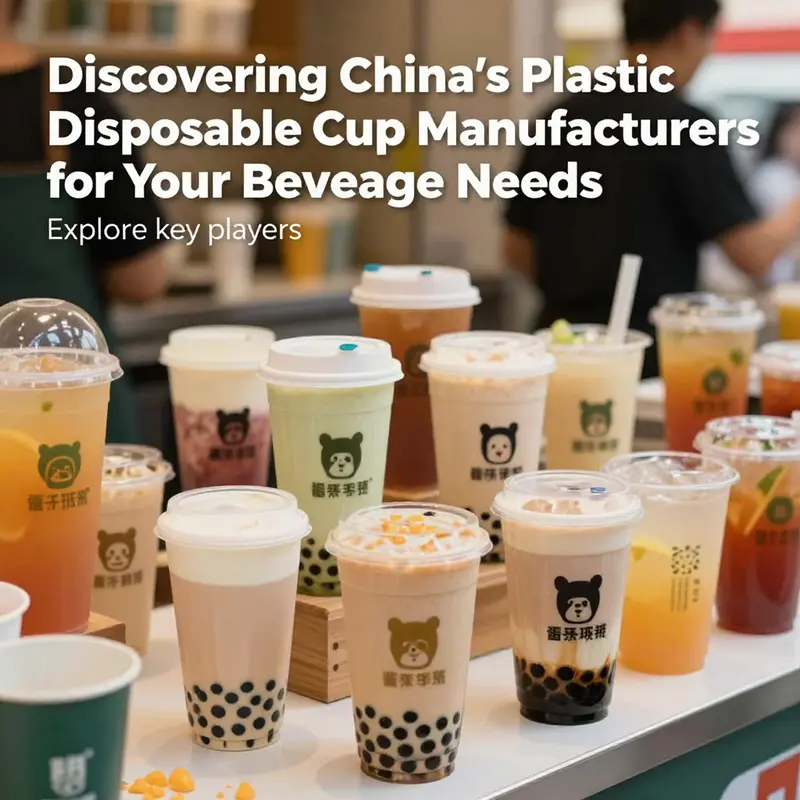
Navigating the bustling beverage market requires reliable and high-quality suppliers for essential items like plastic disposable cups. As bubble tea shops, catering services, restaurants, and food trucks continue to thrive, understanding the landscape of plastic disposable cup manufacturers in China becomes crucial. This article delves into key manufacturers, emerging market trends, and how customization options can enhance your beverage offerings. By exploring these insights, businesses can forge strong partnerships, ensuring they meet customer expectations effectively and sustainably.
Manufacturing the Cup: China’s Leading Plastics Producers and the Global Disposable Cup Supply Chain
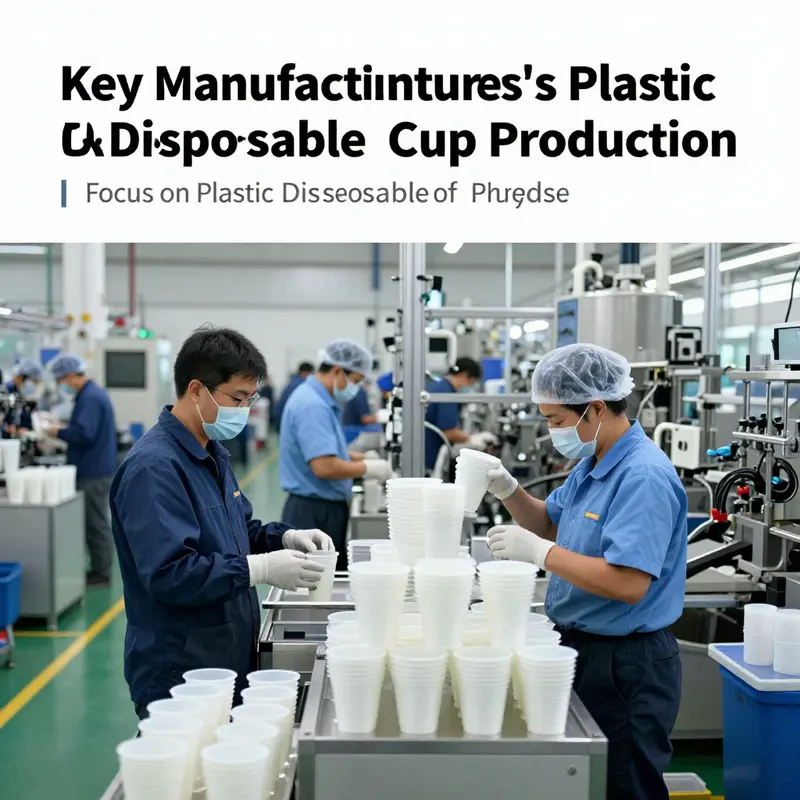
China’s plastic disposable cup production sits at the intersection of scale, technology, and global logistics. Leading groups operate multi-factory networks across major manufacturing hubs, combining high-volume extrusion and precise molding with stringent quality control to deliver cups that meet international food-safety standards. The strongest players offer OEM and ODM capabilities, enabling brands to customize size, wall thickness, colors, and branding while maintaining efficiency and cost competitiveness. Global distribution networks and cross-border trade channels extend these capabilities to the US, Europe, and other markets, while procurement platforms simplify supplier selection and enable bulk ordering. Buyers prioritize reliability, lead times, and the ability to source a full packaging solution (including lids and sleeves) from a single supplier. As sustainability and regulatory requirements evolve, manufacturers are expanding into recycled-content materials and compostable options, without sacrificing throughput. The result is a robust ecosystem where scale meets customization, underpinned by automation, data-driven quality assurance, and integrated logistics to support global demand.
Clear Choices, Safe Standards: Market Trends and Material Specifications in China’s Plastic Disposable Cup Industry
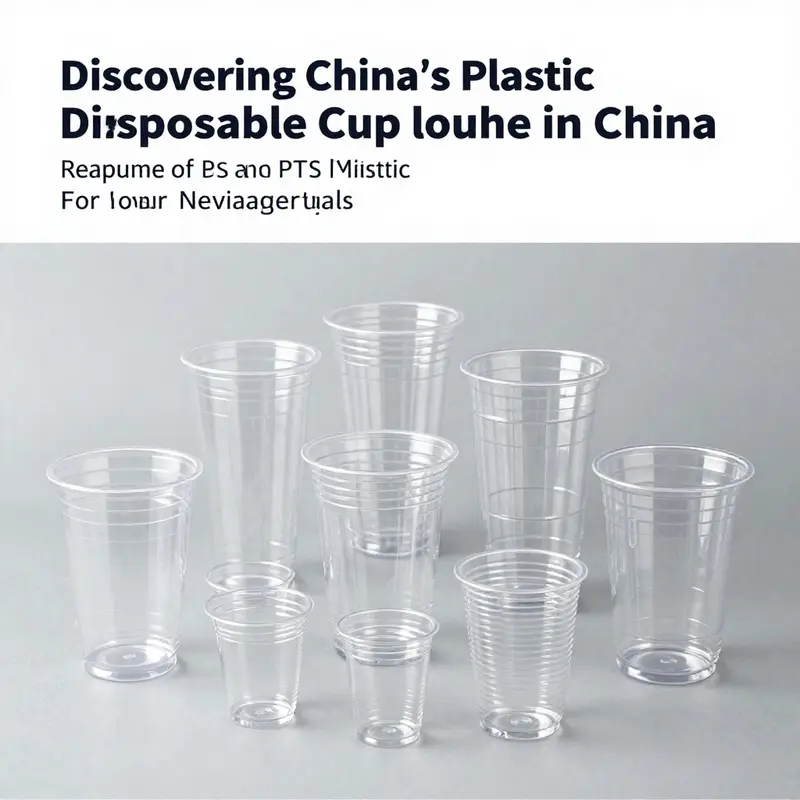
China stands at the intersection of scale and precision when it comes to plastic disposable cups. The country’s dominance in this segment is not accidental; it rests on a deeply integrated manufacturing ethos that blends raw material access, injection molding, high-speed printing, and meticulous packaging into a single, continuous workflow. In practical terms, this means a buyer can source a vast range of cup formats—from standard cold-drink models to specialty, high-clarity PET cups for premium beverages—within a supply chain that is both tightly coordinated and highly responsive. The backbone of this capability is the manufacturing ecosystem that has evolved across several core provinces. In Guangdong’s coastal heartland, Zhejiang’s sophisticated precision industries, Fujian’s agile production nodes, and even Hubei’s inland clusters converge to create vertically integrated hubs. These clusters do not merely assemble products; they optimize the entire lifecycle of a cup, from raw resin to finished packaging, often under one roof. The result is an ability to move from concept to shipment in remarkably short cycles. Ready-to-ship items can be produced and allocated in as little as seven to fifteen days, while fully customized runs typically fall into a window of twenty-five to thirty-five days. This production tempo supports the high-volume, just-in-time demand patterns that characterize global foodservice and retail procurement today. The scale is formidable: many facilities regularly exceed one million units per month, a testament to both automation and the sophistication of inline quality control systems. The deployments are not merely in the visible form of machinery on a factory floor; they are embedded in the fabric of daily operations, from robotic pick-and-pack lines to real-time measurement of wall thickness and dimensional tolerance. In such a system, precision is not a luxury but a given, and consistency is the currency by which suppliers gain trust on longer contracts and larger purchase orders. The impact of this ecosystem is multifold. It reduces lead times, enabling brands to respond to seasonal trends and new promotional campaigns with speed that would have been unimaginable a decade ago. It also enables a broader differentiation strategy through customization, where logos, color schemes, and even label designs can be printed in multiple colors with high fidelity using flexo printing processes that can accommodate up to six colors. This level of customization, once the preserve of a handful of premium suppliers, has become a baseline capability for mid- to upper-tier manufacturers in China, allowing brands to maintain consistent branding across a broad product line without the need for expensive tooling or repeat color-matching cycles. The market dynamics described above are complemented by the sector’s evolving emphasis on material safety and sustainability. While the archetype of the disposable cup has long been associated with polystyrene (PS) and, more recently, clear polycarbonate-derived PET options, buyers are increasingly prioritizing food-grade, heat- and chemical-resistant materials that align with global safety standards. In particular, there has been a discernible shift toward polypropylene (PP) and PET, each chosen for its respective strengths. For hot beverage applications, food-grade PP has become the preferred option due to its heat resistance and comparatively lower risk of surface degradation when exposed to hot liquids. PP cups are engineered to withstand temperatures up to about 100°C, making them suitable for steaming beverages or hot-fill scenarios that might push other plastics to their limits. The clarity and visual appeal of PET render it the material of choice for cold drinks, where optical transparency matters for branding and product appeal. PET’s recyclability profile also aligns well with a growing emphasis on end-of-life considerations, a factor that resonates with brands seeking to demonstrate responsible sourcing and packaging. In many cases, suppliers offer a combination strategy: PP for hot beverages or multipurpose hot/cold use, and PET for cold drinks, with clear labeling and testing documentation that satisfies stringent regulatory expectations across major markets such as the United States and the European Union. Related to safety, the alliance between material choice and regulatory compliance remains central to market access. The global nature of the beverage industry means cups travel far from their origin to reach distributors, retailers, and foodservice operators who demand adherence to recognized safety frameworks. In the United States, FDA standards guide many material choices, while the EU’s EFSA guidelines influence others, particularly for materials intended for long-contact with food or beverages. The Chinese suppliers who progress through certification and audit cycles frequently present robust documentation packages that include lot traceability, batch-level testing, and third-party verification. This emphasis on traceability is not merely a regulatory checkbox; it is a practical risk-management practice that helps brands control product quality across thousands of manufacturing runs and varying design specifications. When combined with modern automation, it yields a supply chain capable of delivering reliable performance at scale while maintaining the brand integrity that consumers have come to expect. The interplay between material specifications and manufacturing efficiency is most visible in the capacity to meet diverse customer needs without sacrificing speed. Buyers can request a range from 8-ounce to 24-ounce variants in hot or cold formats, with options for single-, double-, or ripple-wall configurations to manage insulation, grip, and aesthetics. The wall structure itself becomes a design variable; in many instances, a consumer-facing brand will choose a specific wall type to enhance the user experience, whether that means better insulation against heat transfer, improved structural rigidity for stacking and transport, or a particular tactile feel in the hand. The capacity to customize extends beyond wall thickness into lid configurations, injection-molded in several shapes and sizes to suit various beverage formats and promotion plans. The presence of dedicated OEM/ODM channels means that brands can retain their distinctive visual identity without the cost of bespoke tooling for every order. Yet where speed matters most, the advantage lies in the ability to scale production quickly while maintaining consistent quality control. Modern factories are equipped with automated inspection systems that monitor critical dimensions along the entire manufacturing line. Variations in wall thickness, diameter, and volume are detected and corrected in real time, minimizing reject rates and ensuring uniform performance in stacking, shipping, and consumer use. The result is a reliable, repeatable product profile across hundreds of SKUs and dozens of customer specifications—an essential capability for manufacturers who must manage complex portfolios for multinational brands and local beverage operators alike. This is not to say the market has abandoned price considerations. On the contrary, pricing dynamics in China’s disposable cup sector reflect a mature competitive landscape. While the base materials are subject to fluctuations in global resin markets, manufacturers have built cost structures that absorb some of these shifts through scale, process optimization, and long-run procurement arrangements. For bulk orders—often the range where distributors and large retailers negotiate—unit costs can become remarkably affordable, with volumes like fifty thousand units or more realizing significant per-unit savings. This price discipline does not come at the expense of safety or quality. In fact, the integrated nature of the supply chain means that buyers can leverage both cost advantages and robust compliance frameworks in a single, synchronized purchasing decision. An added dimension of the market is the growing importance of reliability and transparency. Buyers increasingly evaluate suppliers on more than just price and delivery speed. They seek visibility into manufacturing processes, quality-control protocols, and the ability to evidence regulatory compliance through certifications and documented traceability. In practice, this translates into a preference for vendors that operate in-house machinery for injection molding and automated packaging rather than relying on third-party contract manufacturers, a shift that reduces risk and enhances accountability across the product lifecycle. The sourcing narrative also highlights logistics as a strategic differentiator. China’s proximity to major export hubs—Shenzhen, Ningbo, Xiamen, and Shanghai—offers tangible cost and time advantages for international buyers. The proximity translates into shorter inland transit times, lower freight costs, and more predictable lead times. For international shipments, sea freight remains the predominant mode for non-urgent, large-volume orders, with typical post-production lead times ranging from twenty-five to forty days. This window can widen in cases of unusually customized designs or destinations that require special handling, but even so, the overall framework remains conducive to global distribution. In this broader landscape, supply-chain reliability is increasingly prioritized. Buyers are not merely comparing price per unit anymore; they are weighing supplier transparency, QA rigor, and the depth of internal capabilities. Firms that demonstrate end-to-end control—from materials receipt and resin grade certification to finished product testing and packaging integrity—tend to win more long-term, higher-volume contracts. The practical meaning for brands is straightforward: when evaluating suppliers in this space, a robust track record for quality control, clear documentation, and consistent performance under peak demand conditions matters as much as, if not more than, price alone. Material specifications, too, are moving toward standardization. The ability to switch quickly between PET and PP within a given product family, while maintaining branding and regulatory compliance, reduces supply risk for brands facing resin price volatility or sudden demand shifts. It also opens the door to environmental narratives that resonate with a growing segment of consumers who favor clarity about packaging materials and end-of-life options. In sum, the Chinese plastic disposable cup market is defined by its scale, its automation, and its meticulous attention to material safety and regulatory alignment. It is a system where speed and customization coexist with rigorous quality assurance and traceability. For buyers seeking to navigate this landscape, the path is clear: leverage the advantages of vertically integrated suppliers, demand transparent documentation, and choose material and design configurations that balance performance with safety and sustainability. In this context, a simple cup becomes a controlled product with predictable outcomes across myriad use cases, from everyday takeaway beverages to premium, event-driven campaigns. As the industry continues to evolve, the balance between convenience, cost, and conscience will shape the next wave of innovations in both material science and manufacturing practice. For readers who want to explore adjacent dimensions of this ecosystem, one internal resource highlights how a full spectrum of disposable cup formats can co-exist with sustainable packaging options. best-price-8oz-double-plastic-free-single-wall-paper-cup
External references and further reading reinforce the global nature of this market. For a broader perspective on supplier strategies and market trends, see the industry synthesis published on a major international sourcing platform, which documents how material standards, production capabilities, and evolving buyer expectations are converging in China’s disposable cup sector: https://www.alibaba.com/showroom/strategic-sourcing-plastic-cups.html?spm=a2700.19890672.0.0.7a7f1c1dXJzvDw
null
null
Final thoughts
By understanding the landscape of plastic disposable cup manufacturers in China, businesses like bubble tea shops, restaurants, and catering services can make informed choices that elevate their service offerings. With an array of manufacturers providing diverse options, customization capabilities, and competitive pricing, these insights equip beverage providers to enhance customer experiences while maintaining operational efficiency. Engage with top manufacturers to ensure your beverage service stands out.