
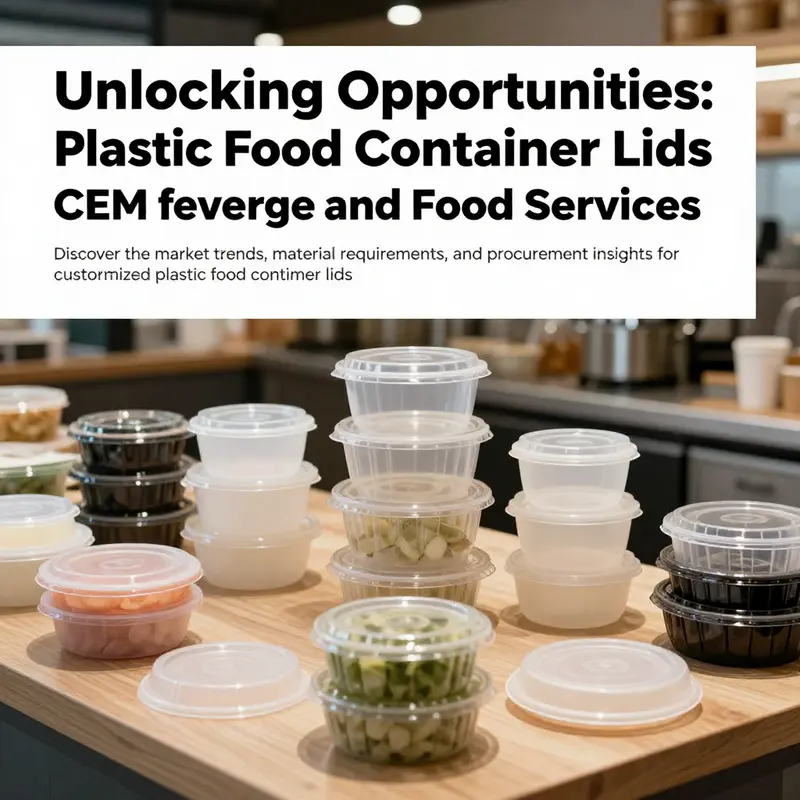
The food and beverage industry is evolving, with an increasing emphasis on customized packaging solutions such as plastic food container lids. These closures are vital not only for maintaining food safety but also for enhancing brand visibility and customer experience. As businesses from bubble tea shops to corporate catering services navigate this competitive landscape, understanding market demand, material performance, and pricing strategies will empower them to make informed procurement decisions. Chapter 1 delves into the current market demand and customization trends, while Chapter 2 explores the material and performance requirements essential for achieving optimal functionality in food packaging. Chapter 3 wraps things up by discussing pricing structures and procurement scales critical for effective supply chain management in the food service industry.
Design, Demand, and Durability: The Market Pulse and Customization Wave in Plastic Food Container Lids for OEM
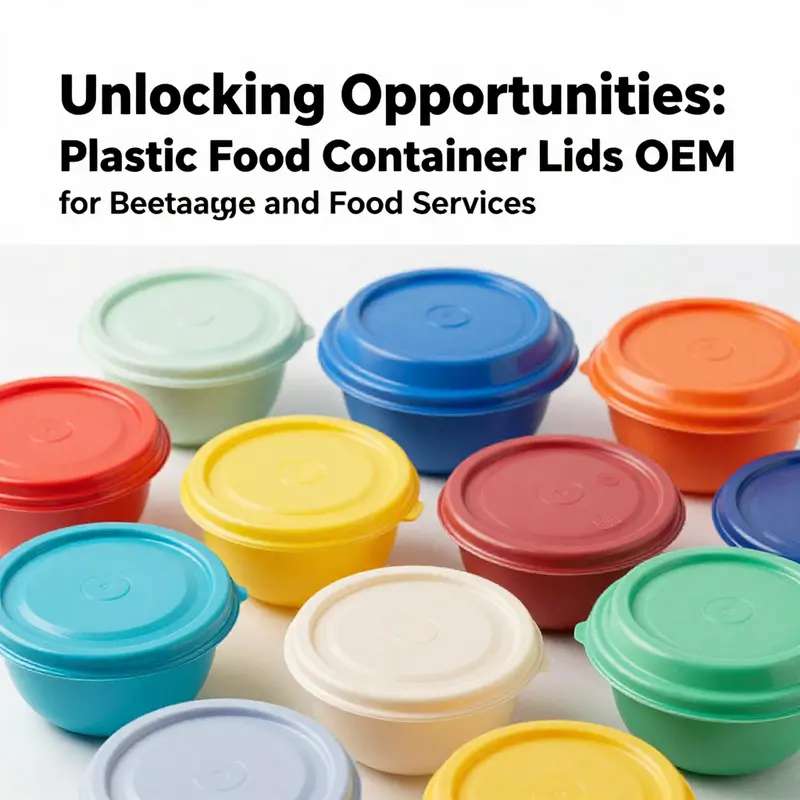
Lids on plastic food containers are more than closures; they are a critical interface between product safety, convenience, and brand storytelling. In OEM contexts, lids must deliver reliable seals, compatibility with heating and cold storage, and surface options for branding. The customization wave includes logos, textures, color, embossing, and digital printing, along with coatings like UV or foil stamping to boost shelf appeal. Bio-based and recycled-content materials are increasingly employed while maintaining performance and recyclability.
Material choices balance heat resistance, seal integrity, and recyclability. PP remains dominant due to heat tolerance and recyclability; PET, PS, and bioplastics appear in specialty lids. Regulatory certifications (FDA, food-grade) and traceability are essential to reassure brands and consumers. The market favors end-to-end solutions from mold making to packaging assembly, enabling faster time-to-market and more consistent quality. Pricing dynamics show higher upfront tooling for customized lids, but volume and on-demand capabilities can reduce unit costs. OEMs that integrate design, production, and certification deliver lower risk and stronger partnerships.
Sustainability and supply chain resilience are now core decision drivers. Lids are designed for recyclability, minimal material use, and compatibility with existing waste streams. The ecosystem benefits from close collaboration among resin suppliers, mold makers, and surface-treatment specialists to balance performance, cost, and environmental goals. The result is a packaging system where lids act as a cohesive part of the brand experience, not merely a closing mechanism.
Resin, Seal, and Safety: Material and Performance Benchmarks for OEM Plastic Food Container Lids
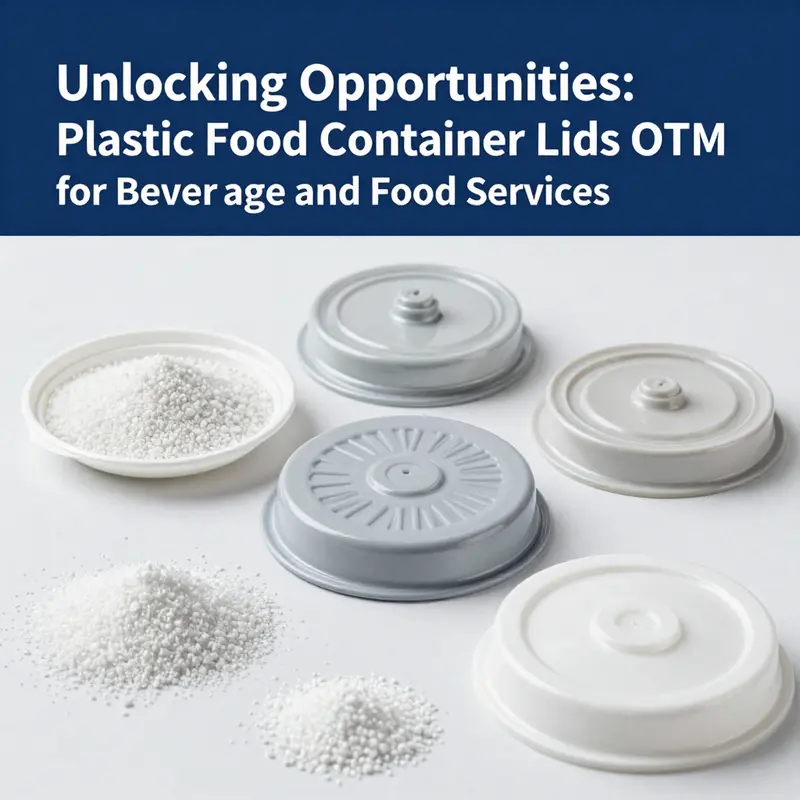
The lid is more than the final barrier between food and environment; in OEM manufacturing it embodies a complex intersection of material science, process engineering, regulatory compliance, and brand experience. In modern packaging ecosystems, a plastic food container lid must perform under a spectrum of use cases—from home microwaves to industrial cold chains—without compromising safety or user convenience. As markets demand greater customization, the lid becomes a vessel for differentiation, yet every enhancement must pass through stringent safety and performance gates. The journey from resin selection to a sealed, reliable lid is governed by a disciplined balance of chemical compatibility, mechanical resilience, and process reliability, all anchored in the regulatory expectations that shape today’s global food packaging standards.
Material choice is the first and most consequential decision in OEM lid design. Polypropylene (PP) has emerged as a leading workhorse for lids due to its combination of heat resistance, clarity (in transparent grades), chemical inertness, and recyclability. PP’s heat resistance makes it suitable for microwave heating in many consumer routines, while its chemical stability minimizes the risk of substance migration into food under typical storage and reheating conditions. However, PP is not a one-size-fits-all solution. For some rigid lids that must endure aggressive handling or exposure to higher temperatures during processing, HDPE presents an alternative with excellent chemical resistance and toughness, though it can be less transparent and may require different molding parameters. Polystyrene (PS) offers stiffness and low-cost potential for certain lid geometries, but migration concerns and less favorable recyclability can limit its use in higher-end or sustainability-sensitive applications. The material selection process thus becomes a careful triage: the lid should not leach any unsafe substances, should tolerate the intended heating or cooling cycles, and should align with the container’s own material strategy and the end-user’s environmental expectations.
Across these polymers, food-contact safety standards function as non-negotiable guardrails. The mainstream practice in OEM environments is to use resins that comply with recognized food-safety certifications, including FDA compliance for the U.S. market and LFGB for certain European contexts. These certifications require rigorous testing for extractables and leachables, chemical migrations, and overall material compatibility with a wide range of foods. In practice, this means that a supplier will not just provide a lid material that appears suitable; they will present documented test data, batch-level certifications, and traceability that covers resin suppliers, colorants, and additives. The ISO family of standards, including ISO 18590, frames plastics in contact with food in a broader, systems-oriented way—ensuring that the entire lid assembly, including surface finishes and any coatings, adheres to cleanability and safety criteria. This is particularly relevant when design engineers consider whether to add functional coatings or printing on the lid surface, as these surface treatments can alter chemical compatibility or migration profiles if not properly characterized.
In addition to safety, performance and user experience drive the material choice in OEM lids. PP’s heat resilience makes it a natural fit for microwave-compatible lids that accompany re-heatable meals, while its fatigue resistance supports a practical life of repeated use without significant deformation. When the lid is designed for liquids or semi-liquids, the seal integrity becomes a focal point. Here, the geometry of the lid, the texture of the gasket area, and even the precise tolerances of the mating container contribute to a leak-resistant design. Some OEMs address this by integrating a thin elastomeric or thermoplastic gasket in the lid, while others rely on geometric features such as a tight circumferential snap fit, raised rims, and undercut profiles that generate a positive seal with minimal deformation over time. There is also the question of venting. For vented lids designed to relieve steam during microwaving, materials and joint geometry must permit controlled venting without permitting overflow or compromising containment. In practice, this requires a coordinated approach among material choice, mold design, and the selected surface finishes, because any vented path or micro-groove can become a site of contamination if not correctly engineered and manufactured.
Surface finishes are more than cosmetic or branding details; they can influence both performance and perceived safety. The automotive-like precision of branding through debossing, hot-stamping, or UV coatings is often a feature in premium OEM lids. However, coatings and inks must be carefully chosen for food contact safety, heat stability, and resistance to migration during heating. UV-curable coatings offer rapid curing and strong adhesion, but they must be validated for compatibility with the base resin and any colorants. Similarly, hot-stamped logos or patterns can add brand value without changing the lid’s core mechanical performance, provided the stamping process does not introduce stress concentrators or microcracks that could compromise edge strength. Debossed textures can improve grip and hinder slippage during handling, while also providing a surface topology that affects cleaning and sanitization. These surface design choices become part of the OEM’s broader strategy to deliver a lid that communicates safety and quality as clearly as it says brand identity.
The sustainability dimension has become inseparable from material and performance decisions. In addition to recyclability, OEMs are increasingly exploring biodegradable or bio-based blends to address waste concerns and evolving regulations in consumer markets with strong environmental expectations. Biopolymer blends can offer comparable mechanical properties to traditional PP or HDPE while enabling an improvement in end-of-life pathways. Yet these options must be scrutinized for compatibility with standard recycling streams and for their behavior under repeated thermal cycling. The drive toward sustainability does not excuse performance trade-offs; rather, it motivates material engineers to optimize blends and processing conditions so that seals, stiffness, and heat resistance remain robust across the product’s lifecycle. In some cases, this translates into the use of multilayer approaches where a thin bio-based surface layer provides sustainability benefits while the core resin maintains mechanical integrity and process compatibility. OEMs who pursue these blends need to maintain a rigorous testing program to ensure that migration, mechanical performance, and processability remain aligned with both safety standards and consumer expectations. The broader industry consensus is that sustainability and safety are synergistic goals, not mutually exclusive objectives.
From the point of view of manufacturing, the practical realities of producing lids at scale shape much of the material strategy. Lids come in a variety of diameters and thicknesses, and each geometry has its ideal molding approach. Injection molding is the dominant technique for solid lids with tight tolerances and intricate features such as snap-fit rims, venting channels, or embossed branding. The tolerances must be tightly controlled to ensure consistent seal performance across large production runs and to guarantee compatibility with a family of container bodies. For some low-cost applications or simpler shapes, thermoforming may be leveraged, especially when very thin lids or special surface textures are desired. In either case, the mold design, gate locations, cooling channels, and cycle times dictate batch consistency, defect rates, and overall throughput. The reliability of the supply chain hinges on consistent resin supply, stable colorant formulations, and a disciplined quality management program that includes in-process checks and end-of-line functional tests such as seal integrity tests, leak tests, and temperature cycling.
The testing regime for OEM lids is designed to simulate real-world use with confidence. Understanding seal integrity requires not only a static test for leak resistance but also a dynamic test that considers the container’s typical handling, the pressure changes during transport, and the variations introduced by different storage temperatures. A robust lid must maintain its seal in both vacuum and positive pressure scenarios, particularly for liquids that may exert internal pressure during warming or transport. Durability testing includes simulating thousands of open-and-close cycles, drop tests to assess impact resistance of the rim and edge, and exposure to extreme temperatures to measure material fatigue and potential embrittlement. The performance of vented lids is further evaluated for venting efficiency—the balance between allowing steam escape during heating and preventing uncontrolled release that could lead to spillage. The end-user experience, though subjective, is not optional; it guides the choice of hinge designs, snap-on versus screw-on mechanisms, and even the tactile feel of the lid surface for one-handed operation or easy resealing.
An OEM’s risk management framework must also address regulatory and contamination concerns. Migration tests examine whether trace amounts of additives, colorants, or monomers migrate into food under various storage and heating scenarios. Compliance with ISO 18590 and related food-contact safety standards is not merely about passing a certification test; it’s about sustaining confidence in the product through a lifecycle that includes storage in diverse climates, exposure to detergents and sanitizers, and repeated reheating. Heavy metals testing is part of this narrative, ensuring that the lid’s constituents do not pose health risks to consumers. Microbial risk assessment is also essential, particularly for lids used with moist or semi-solid foods. Cleanability is evaluated, not just by industry standards but by practical use cases, to ensure the lid remains sanitary through consumer use and cleaning cycles. The integrated approach to safety, performance, and cleanliness becomes a signature of OEM quality that retailers, brands, and end users value.
The market reality for OEM plastic lids is a blend of engineering precision and strategic branding. A lid signaled as microwave-safe, leak-resistant, and easy to open can carry a premium, but only when its performance is consistently demonstrated across the supply chain. This is why brands and manufacturers invest in traceability, batch-level testing, and supplier qualification programs. The lab data, the process controls, and the on-shelf performance all converge to create trust. In practice, this means that a typical OEM lid program will bundle resin specifications, molding parameters, surface finish choices, and clear, verifiable safety data into a package that communicates reliability as well as aesthetic appeal. A successful lid strategy recognizes the need to support not only the functional requirements but also the story the packaging tells about a brand’s commitment to safety, quality, and sustainability.
The broader packaging ecosystem often extends beyond the lid and container pairing. While the current discussion centers on plastic lids, the market reality includes lids designed to pair with paper-based or hybrid packaging solutions, where the lid must adapt to different substrate properties and moisture interactions. This ecosystem perspective matters because it informs design choices that ensure end-to-end performance. For instance, a lid that seals a PP container might need slightly different tolerances than a lid intended for a PET jar, because the thermal and mechanical properties of the associated container contribute to how the lid behaves under stress. The choice to pursue an OEM approach, in contrast to off-the-shelf components, reflects a commitment to harmonize material properties, sealing geometry, branding opportunities, and regulatory compliance into a single, coherent product offering. It is a posture that supports consistent performance across markets, helps manage risk, and enables modular branding strategies that align with retailer and consumer expectations.
As new generations of packaging evolve, OEM lid developers balance the lure of advanced materials and novel coatings with the realities of recycling streams and consumer habits. The drive toward greater customization—through colors, branding, and tactile texturing—must not compromise the fundamental requirements of safety and function. In this context, the lid becomes a living interface between the consumer’s needs and the container’s material system, a mediator of trust that travels through the supply chain from resin supplier to factory floor to kitchen shelf. The best OEM lid programs recognize that performance cannot be measured in isolation but only in the context of the entire packaging system, including the container body, the food contents, the end-user’s handling patterns, and the regulatory environment that governs safety and labeling.
To link this broader discussion back to practical procurement, consider how OEMs will assess potential partners. The process begins with clearly defined specifications for diameter, depth, and sealing geometry, followed by a materials plan that maps resin type, regulatory compliance, and anticipated end-use conditions. Suppliers who can demonstrate a robust migration and safety data package, combined with a proven record of consistent year-over-year performance, become reliable candidates. It is equally important to validate the supplier’s capability through samples and pilot runs before committing to large-scale production. The path from concept to scalable, compliant, and brand-affirming lids rests on transparent communication, rigorous testing, and a shared commitment to durability and safety across every touchpoint of the packaging chain.
In closing this exploration of materials and performance, it is essential to recognize that the very act of sealing food is a commitment to safety and trust. When a lid seals correctly, it preserves flavor, prevents leakage, and sustains the integrity of the product through transit and storage. The science behind this seemingly simple component is a layered tapestry of polymer chemistry, mechanical design, regulatory diligence, and brand storytelling. OEM lids are, in essence, small but mighty representatives of a company’s standards for quality, sustainability, and consumer care. As markets evolve, the most successful lid programs will be those that maintain rigorous material science foundations while embracing opportunities for customization, surface innovation, and environmentally responsible manufacturing—with every batch validating safety, performance, and the promise of a sealed, safe, and satisfying consumer experience.
Internal link reference: For packaging ecosystems that extend beyond plastic lids, see the discussion on eco-friendly kraft paper cups with lids, which demonstrates how brands are integrating lid design with paper-based bodies to create cohesive, sustainable solutions. eco-friendly kraft paper cups with lids.
External resource: A real-world reference on material and performance expectations for high-quality food container solutions can be found in product documentation detailing polypropylene-based lid performance, including microwave, freezer, and dishwasher compatibility. See the IKEA 365+ Food Container product details for verified material and safety specifications. https://www.ikea.com/us/en/p/365-food-container-square-plastic-14-l-90359179/
Pricing, Scale, and the OEM Mold: Navigating the Economics of Plastic Food Container Lids
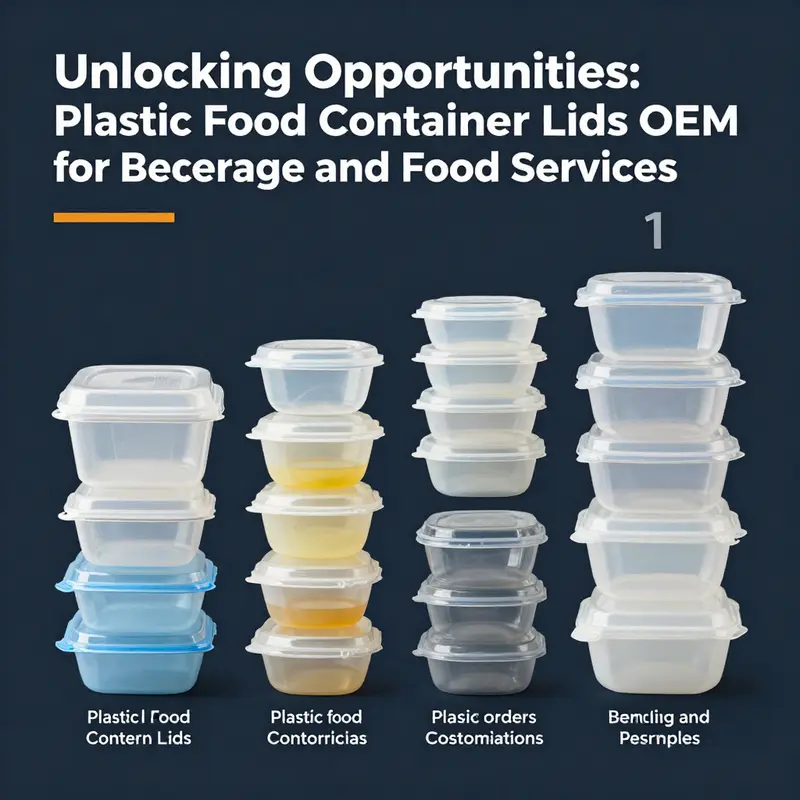
The economics of plastic food container lids in an OEM context balances material cost, tooling amortization, process efficiency, and demand scale. Resin choice among PP, PET, and PS influences per-unit price, regulatory compatibility, and performance, while mold design and startup time determine upfront investment. High volumes amortize fixed tooling costs and reduce unit cost, whereas customization—logos, colors, special seals, or enhanced barrier features—increases upfront tooling but can justify higher selling prices when tied to brand strategy and product differentiation. Lead times hinge on complexity and capacity: standard lids typically ship in weeks, while custom geometries and pilot runs may extend timelines by several weeks. MOQs, regional logistics, and traceability requirements further shape the commercial terms. Sustainability considerations, such as recycled or bio-based variants, can add cost but may unlock access to credibility with retailers and regulatory programs. The practical path is to establish a reliable baseline with a midrange resin and a proven mold, then layer in scalable customization and a long-term supplier relationship that emphasizes quality, transparency, and predictable delivery.
Final thoughts
Navigating the world of plastic food container lids OEM opens a myriad of opportunities for food and beverage businesses. Emphasizing customization, material performance, and understanding pricing structures can not only enhance product appeal but also streamline operations for a competitive edge. By aligning your procurement strategies with market trends and consumer preferences, you can ensure that your offerings resonate with customers while maintaining high standards of safety and sustainability. As you consider your next steps, remember that partnering with experienced suppliers can provide the support you need to elevate your packaging solutions.