

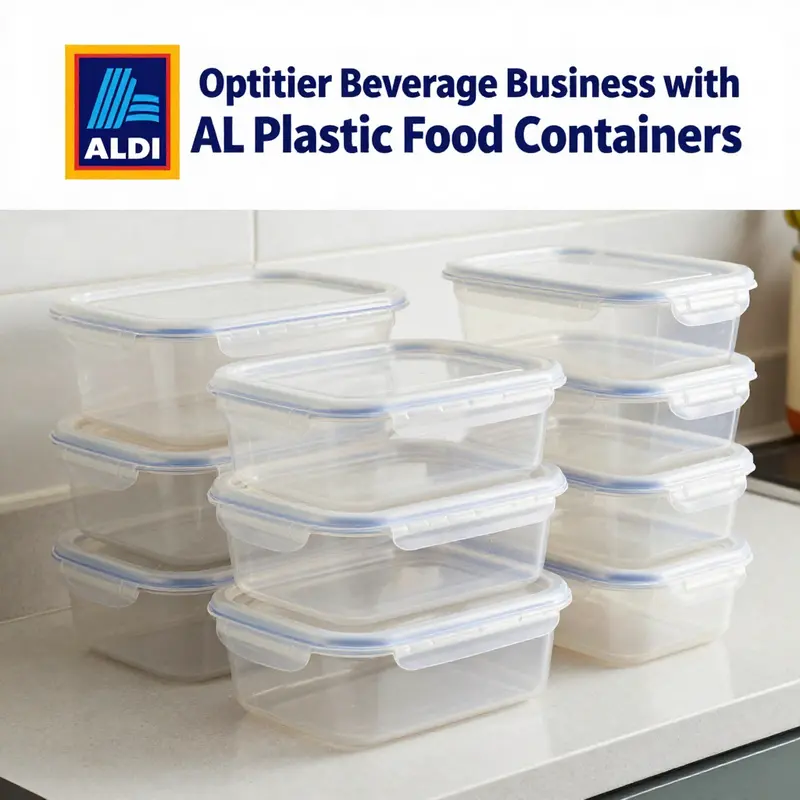
The dynamic world of food and beverage service requires reliable storage solutions capable of safeguarding quality while maximizing operational efficiency. ALDI’s plastic food containers offer a compelling blend of durability and functionality, making them an ideal choice for beverage shops, restaurants, food trucks, and catering services. This article delves into the intricacies of these containers, emphasizing their design and durability, environmental impact, and innovative spice storage solutions. By examining these features, beverage industry professionals can appreciate how ALDI’s offerings integrate seamlessly into their operations, improving food storage, enhancing customer satisfaction, and promoting sustainability across the board.
null
null
From Pantry to Planet: Navigating the Environmental Footprint of Budget Plastic Storage

In many kitchens, the unassuming plastic storage container becomes a quiet ambassador for everyday sustainability. It sits in the cupboard, sliding into the fridge to guard last night’s supper, and then travels to the recycling stream or the landfill depending on how thoughtfully it is used. The chapter that follows examines those simple, practical vessels through a lens that blends kitchen utility with environmental responsibility. It is not a praise song for plastic alone, but a careful reckoning of how material choices, design engineering, and corporate commitments intersect to influence waste, resource use, and everyday habits. The containers under discussion embody a pragmatic balance between affordability, practicality, and a growing awareness that good storage can contribute to a less wasteful home, a more efficient pantry, and, at scale, meaningful environmental outcomes.
At the heart of these containers sits polypropylene, a durable, food-grade plastic known for its resilience and light weight. When a storage solution is described as BPA-free, it signals a response to consumer demand for safety around food contact and a rational approach to material selection. Polypropylene’s chemical stability and high melting point make it well suited for the repeated cycles of washing, stacking, and reusing that define household storage. This is not mere marketing; it is a practical choice that translates into longer product life. A longer life means fewer replacements and, consequently, less plastic entering the waste stream over time. In homes, where a single family can accumulate a surprising number of containers, even modest improvements in durability translate into real reductions in consumption and waste.
Beyond safety and longevity, the material choice carries implications for the lifecycle of the product. Polypropylene is widely recyclable where infrastructure supports it, but the truth of real-world recycling is messier than a label suggests. The container’s life may begin with a clean, food-safe line, but its end depends on whether local facilities can accept polypropylene, whether the cap and lid are compatible with the same recycling stream, and whether households separate materials correctly. These practical realities shape the environmental footprint of the set long after it leaves the factory. In this sense, the material is not merely a chemical specification; it is a gateway to responsible use that hinges on consumer behavior, municipal programs, and the broader circular economy.
The design ethos surrounding these containers grows out of a straightforward aim: keep food safe, preserve freshness, and maximize pantry space with thoughtful geometry. A key feature is the precise dimensional tolerance of about 2.0 millimeters. This modest specification yields a surprisingly tangible benefit: airtight stacking with little to no gap. When a kitchen shelf or pantry is crowded with diverse shapes and sizes, secure nesting means more efficient use of vertical and horizontal space. The 2.0-millimeter tolerance reduces the likelihood of gaps that trap air and moisture, and it minimizes the misalignment that can cause lids to scratch or seals to wear unevenly. In practice, this translates to an organized cabinet where containers tuck neatly into one another, creating a compact system that supports better inventory management. The consequence is more than neatness; it is a measurable improvement in storage efficiency—often estimated at a significant percentage in busy households where space is at a premium.
Storage optimization is not the only ecological payoff. The tight fit provided by precise tolerances often lessens the need for extra shelving, reduces the chance of accidental spills, and streamlines the stacking process when preparing meals or organizing leftovers. A well-designed container system helps households plan ahead: prepped ingredients, measured portions, and clearly labeled sections become easier to manage when gear is created to fit together without wasted space. In effect, the design reinforces efficient consumption and minimizes the impulse to overbuy out of anxiety about pantry space. The result is a kitchen that not only functions smoothly but also promotes mindful consumption, which is a foundation stone of sustainable living.
Airtight seals and secure lids are the outward signs of a broader performance narrative. These features seal in freshness, slow the onset of spoilage, and help preserve the quality of stored foods. In practical terms, airtightness can reduce spoilage by a notable margin—figures commonly cited in consumer testing indicate a meaningful decrease in the rate at which leftovers go to waste. When spoilage is reduced, households use fewer ingredients before they spoil, which translates into less wasted food. This is a small but significant piece of the sustainability puzzle, because food waste is a major contributor to environmental impact through wasted resources and methane generation in landfills.
The practical benefits extend beyond the kitchen. Spice storage, for example, is a realm where the same design principles demonstrate their value. Stackable, resealable containers protect aromatic compounds from light, heat, moisture, and air—critical factors in maintaining spice potency and flavor. The same attention to sealing and stability that keeps soups fresh also guards the small, powerful ingredients that flavor meals and define home cooking. In homes that take pride in their pantries, such features help cooks preserve the character of ingredients over time, supporting both taste and waste reduction. Thoughtful storage becomes a quiet ally in the ongoing effort to cook with intention, use ingredients more efficiently, and minimize discard.
One of the most important realities to acknowledge is that sustainability around plastic storage is not a one-and-done achievement. It is an ongoing practice that sits at the intersection of consumer choices, product design, and policy landscapes. The design that offers 20 percent space savings—due in part to careful dimensioning and uniformity—has broad implications for how households approach inventory and grocery planning. When pantry organization lowers the cognitive load of meal planning, households tend to buy only what they can store and use within a reasonable time frame. This, in turn, reduces the overall demand for packaging, contributing to a virtuous cycle: efficient storage supports efficient consumption, which supports lower waste, which supports broader environmental goals.
The sustainability narrative attached to these containers extends beyond the kitchen and into the corporate realm. A growing number of retailers are engaging with policy conversations about plastic waste, seeking to align product development with evolving regulations and public expectations. In recent years, the industry has seen movements toward banning or restricting certain single-use plastics, and the conversation has moved toward more sustainable packaging ecosystems. In this context, the role of a budget-friendly storage set becomes more complex—and more important. By choosing materials with a robust safety profile, designing for durability, and enabling long lifecycles, these containers contribute to a logic of reuse rather than disposal. This is not a call to celebrate plastic in all its forms; it is an invitation to recognize that, in some consumer contexts, well-made plastic storage can be part of a more sustainable household practice, provided it is used thoughtfully and disposed of responsibly.
Corporate sustainability commitments, while sometimes perceived as distant from daily routines, have concrete ramifications that touch households in tangible ways. A notable thread in this broader corporate narrative is policy engagement around plastic waste and packaging standards. For instance, there is public evidence of moves to support expansions of plastic bans and to encourage the development of policies that reduce the environmental footprint of single-use materials. Such moves signal a willingness to participate in the policy discourse that shapes how products are designed, produced, and recycled. When a retailer takes a proactive stance on policy, it creates a pathway for innovations in packaging, recycling infrastructure, and consumer education. The net effect is not only a reduction in waste but also a democratic process that invites consumers and communities to participate in shaping a more sustainable packaging system.
In practical terms, this chapter links the lifecycle of a simple, affordable storage solution to the broader framework of environmental stewardship. The material choices, the engineering of tolerance and seals, and the commitment to reducing waste all interact with consumer behavior. The choice to reuse containers for meals, to wash them thoroughly between uses, and to sort them appropriately for recycling, are all activities that amplify the impact of a well-designed product. The more a container is used, the more its environmental benefits accrue; the more it is properly recycled at the end of its life, the more the cycle closes. In a world where packaging often carries hidden burdens, these containers offer a pragmatic example of how design and behavior can work together to minimize waste and maximize value.
The narrative is not merely theoretical; it is anchored in accessibility and scale. The packaging ecosystem benefits when a large number of households adopt durable, reusable storage solutions that fit neatly into real-life routines. The appeal of a compact, stackable set lies in its ability to reclaim space, reduce clutter, and simplify daily tasks—from packing school lunches to preparing batch meals for the week. When these practical benefits are paired with a credible commitment to sustainability, the result is a product category that resonates with consumers who want effective storage without compromising environmental responsibility. In the end, the conversation returns to everyday choices: what we store, how we store it, and how we dispose of it when its life has run its course.
For readers seeking a more technical lens on the environmental and safety certifications behind these containers, the official product specification pages provide the granular details about material composition, tolerances, and performance metrics. While the core ideas here center on how design and material choices shape environmental outcomes, a deeper dive into the data confirms the practical implications discussed above. The conversation about sustainability, then, moves from abstract ideals to concrete elements—materials, tolerances, seals, and end-of-life options—that together define the environmental footprint of this everyday product.
In summary, the environmental story of budget-friendly plastic food containers is a layered one. It begins with a material choice that prioritizes safety and durability, continues through a design that optimizes space and preserves food quality, and extends into a corporate and policy context that seeks to align consumer products with broader environmental goals. The real-world impact of these decisions depends on how households use, maintain, and eventually recycle the products. When practiced with care, reuse becomes a straightforward habit; when neglected, a lightweight, affordable container can contribute to waste rather than reduce it. The balance struck by this design philosophy offers a compelling template for how everyday objects can be engineered to support sustainable living without sacrificing practicality or accessibility. As households navigate the challenges of storage, waste, and budget constraints, such containers illustrate that environmental responsibility can be woven into the fabric of daily life without losing sight of value and convenience.
External resource: For a more detailed look at the technical specifications and certifications of ALDI’s plastic food containers, you can visit the official product page: https://www.aldi.com.au/products/aldi-best-selling-2021-30pcs-plastic-food-containers
Spice Shelves, Stackable Systems: Practical Use of Budget-Friendly Plastic Containers

In contemporary kitchens, the way we store spices often reveals how we cook. A small, crowded cabinet can turn the simple act of extracting cumin into a scavenger hunt. Yet a thoughtfully organized storage system can transform everyday cooking into a smooth, almost ritualistic routine. The aim is practicality married to value: to keep potent herbs and ground spices within easy reach, protected from the elements that dull their flavor, and arranged in a way that makes sense for small spaces and busy schedules alike. The containers under discussion embody that aim. They are designed to be durable, safe for family use, and efficient in how they occupy space. Their material choices—food-grade polypropylene and BPA-free design—signal a commitment to safety and resilience. Encased in a robust form, these containers stand up to the wear and tear of regular use, whether in a bustling family kitchen, a compact apartment pantry, or a seasonal home setup where every square inch of storage counts. And because they are built with a precise manufacturing standard, their size and shape aren’t a guessing game. They stack, align, and nest with predictability, a small but meaningful advantage when every shelf has a specific purpose and every drawer is counted in inches rather than feet. The heart of the system lies in three linked ideas: uniform sizing, modular flexibility, and reliable freshness. Uniform sizing means that all spice jars share the same diameter and height in the chosen line, allowing them to sit in neat rows without tipping or wiggling. This consistency eliminates the cognitive load of hunting for the right container and the physical nuisance of rearranging mismatched jars when you reach for paprika or oregano. It also makes labeling straightforward. You can keep a simple, legible system where each jar carries the spice name and perhaps a purchase date. The result is a pantry that reads like a well-organized symphony rather than a cluttered shelvescape. A modular configuration is the second pillar. The containers are designed to be stacked and arranged in several configurations, depending on how much space you have and how you use spices in your cooking. In a narrow cabinet, you might line them up on a sliding rack. In a deeper pantry, a compact drawer arrangement can show every jar at a glance. The size range typically covers smaller volumes used for common seasonings and a few larger sizes for bulk purchases or especially aromatic spices that you encounter less often. This modular approach helps you curate a spice collection that grows and evolves with your cooking habits rather than forcing you into a rigid, one-size-fits-all setup. The third pillar—freshness—addresses what many cooks notice first when spices are not stored properly: the loss of aroma, the dulling of color, and the muted bite that makes a dish sing. The containers are designed to protect contents from the elements that cause quick degradation. They shield from light, heat, moisture, and air. The seal on the lids is tight, designed to slow the process of staling and flavor loss. When you pop the lid on a jar of cinnamon or cumin, you want to experience that immediate, familiar scent, not a stale whisper of what once was. Preserving freshness this way matters not just for flavor but for the chemistry of seasoning. Aromatic compounds fade with exposure to oxygen, warmth, and moisture. By minimizing those factors, you extend the life of your spices and maintain the potency of their essential oils. In practical terms, this means better value for a kitchen that cooks often and stores frequently. The pantry stops becoming a burden and starts becoming a partner in cooking, supporting the rhythm of daily meals as well as the occasional weekend project that demands more precise seasoning. A cabinet that respects that rhythm reduces waste. You spend less money replacing spices that have degraded in quality, and you waste less time hunting through a jumble of jars to find the one you need. In this sense, the containers are more than containers; they are a way to reclaim time and keep flavor intact. The design language also speaks to ease of use. The materials chosen are inherently sturdy and simple to clean. Food-grade polypropylene resists chipping, and the surfaces are smooth enough to wipe down quickly after a spill. This matters in the real world, where splashes and dust from the stove add up over weeks and months. Spills are not an indictment of a system but a prompt to maintain it, and the right design makes maintenance feel painless rather than punitive. Cleanliness, in turn, contributes to longevity. When containers are easy to wash and dry, you keep their seals tight and their interiors free of residue that could harbor odors or dampness. Each small effort compounds into a longer-lasting, more reliable storage solution. The choice of sizes—ranging from compact portions to medium volumes—fits the reality of how we use spices. You don’t always need a full cup of coriander; you often reach for a teaspoon or two to flavor a dish. The 1- to 3-liter range offers flexibility: you can dedicate a few jars to the seasonings you reach for most often and reserve larger jars for those spices you buy in bulk yet use sparingly. That blend of selective abundance and space-conscious sizing mirrors the broader philosophy of modern kitchen storage. It is not about piling up more containers; it is about making the most of the space you have, with an eye toward clean lines, easy access, and a calm, uncluttered workspace. The wooden spice rack that accompanies or complements these plastic containers adds another layer to the organizational equation. A six-slot design—compact and stylish—provides a focal point on the countertop or inside a cabinet door. The combination of wood and clear plastic can strike a pleasing balance between warmth and practicality. The rack’s presence invites spontaneous seasoning decisions, turning the act of reaching for a jar into a small ritual that aligns with the way you cook. When you pair the rack with the modular, stackable jars, you create a system that is more than the sum of its parts. Each spice has a home that is easy to locate, easy to observe, and easy to retrieve. The labeling becomes a crucial habit in this context. A simple, readable label on every container reduces mis-scooping and cross-contamination. Labels also support rotation: you can move spices from the front to the back as you use them, ensuring that older jars are used first and the freshest flavors stay at the front of the shelf. In small kitchens, labels can be minimalist—name and date—but the effect is significant. The discipline of labeling keeps the pantry honest and the cooking process smoother. There is a broader sustainability argument to be made about this storage approach as well. Reusable, durable plastic containers reduce the need for single-use packaging and offer a long lifecycle when cared for properly. The materials used are chosen to support reuse and resilience. The tank-like seals and rigid sides help resist spills, making the containers suitable for multiple re-stocks and a variety of spices over time. When you next fill a jar with a spice you’ve bought in bulk, you can picture how the same jar will serve for many future purchases. The cost logic aligns with this mindset too. A budget-friendly system that reduces waste and extends the life of spices can add up to meaningful savings over months and years. The benefit becomes especially clear in households that cook daily, where the cumulative aroma and flavor of spices matter. Strong, fresh notes can elevate a dish, and the right storage helps preserve those notes longer, making every dollar spent on spices go further. Beyond the kitchen, the design has implications for how you think about organization and daily routines. A well-ordered spice setup reduces cognitive load. It creates a predictable flow: find the spice, note the date, seal the jar, wipe the surface, and return it to its place. In the end, the combination of uniform jars, modular stacking, airtight seals, and a stylish spice rack delivers a practical philosophy. It is not simply about storing spices; it is about creating space for creativity. It frees mental energy to focus on planning meals, testing new flavor combinations, and cooking with confidence. The system supports several modes of use. For the chef who experiments, you can group spices by cuisine or by the heat level, arranging a quick, color-coded map of flavors. For families with little time, a streamlined lineup of essential spices stays front and center, ready for weeknight goals. For anyone who enjoys seasonality, you can rotate seasonal favorites into the exposed front line, tasting their freshness as they come into vogue. This approach harmonizes with meal prepping habits. If you prepare meals in advance, you can pre-measure spice blends and store them in labeled containers, making weeknight assembly swift. The containers’ durability and cleanability support this practice, reinforcing a dependable routine rather than a fragile, high-maintenance system. The practical use extends beyond dry spices. The same containers can hold seeds for quick snack ideas, ground coffee impulses for early mornings, or small herb mixes for customized seasoning blends. The lids’ tight seals keep flavors contained and prevent the accidental mixing of aromas when you reach for something else in the drawer. In short, the spice storage solution is not just about a tidy shelf; it is about a kitchen that works with you. It respects your time, protects your ingredients, and adapts to how you live and cook. As you consider your kitchen design or a refresh of the pantry, the question is not merely what to buy, but how to arrange it so that the system serves your cooking rather than hinders it. The right choice blends safety, efficiency, and aesthetics while offering real, measurable benefits—space savings, reduced spoilage, and clearer organization. Together, these elements create a small but meaningful shift in your daily routine. They invite you to cook more deliberately, to plan with greater clarity, and to enjoy the simple satisfaction of a kitchen that feels designed to help you make better food. For those who want to explore further, a hands-on approach to testing assumptions—using a few jars to start, then expanding as needed—can be the most effective way to learn what works in a given kitchen. Track how much time you save during cooking, how much spice you can access at a glance, and how much waste you avoid by using properly sealed containers. The numbers become part of the narrative: a tangible measure of how design, material choice, and thoughtful organization can reshape common activities into smoother, more enjoyable tasks. In a world where every cent and every minute counts, embracing a structured, label-friendly, and well-sealed spice storage system offers not just a practical improvement but a small, enduring sense of order. The pantry becomes a space that supports flavor exploration, daily routines, and the joy of cooking itself. External resource: https://www.aldi.com/us/en/products/food-storage-organizers/plastic-food-containers-30-pack
Final thoughts
ALDI’s plastic food containers stand out not just for their durability and functionality, but also for their contribution to sustainability in the food service industry. By choosing these high-quality storage solutions, beverage chains, restaurants, and event planners equip themselves with reliable tools that elevate food preservation and enhance organizational efficiency. The holistic benefits of these containers—from robust design to eco-friendly materials—make them not only a practical choice but a smart business investment. Selecting ALDI’s offerings allows food professionals to streamline operations while aligning with a growing commitment to environmental responsibility.