
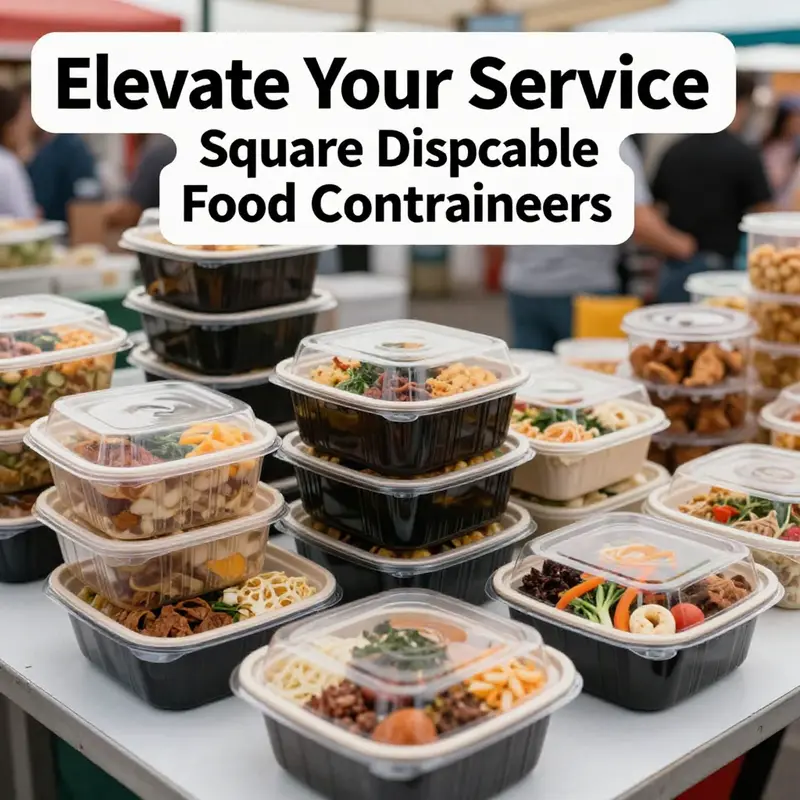
As the demand for convenient dining solutions rises, square disposable food containers have emerged as a key player in the foodservice industry. These containers provide a perfect blend of functionality and sustainability, catering to the needs of bubble tea shops, restaurants, food trucks, and catering services. This article explores the materials and environmental impact of these containers, their innovative capacities and designs, the importance of certification and quality assurance, and market procurement and customization options. Each chapter will delve into a specific aspect, offering insights that can help your business make informed decisions and enhance your packaging strategy.
null
null
Capacity and Design Innovations in Square Disposable Food Containers
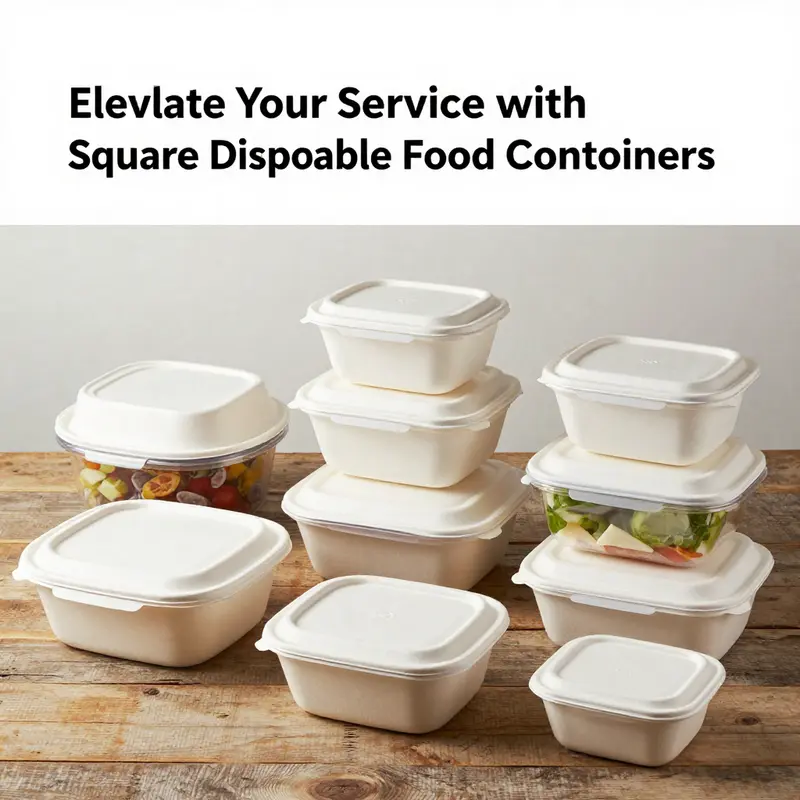
Square disposable food containers have emerged as a clear signal that packaging design is catching up with how people eat and how kitchens operate. They are more than a geometric choice; they embody a shift toward efficiency, predictability, and responsibility in the food service chain. The square form aligns with the way chefs portion meals, the way stores stack inventory, and the way customers carry a complete, balanced meal from a counter to a desk or a park bench. What begins as a simple shape evolves into a system of capacity planning, material science, and logistical optimization that touches every step from procurement to disposal. In practice, these containers are engineered to maximize usable space inside commercial refrigerators and microwaves, while also delivering consistent portions that simplify both front-of-house service and back-of-house preparation. The result is a packaging solution that feels natural in everyday use, yet rests on a foundation of careful engineering that balances performance with sustainability. At the heart of this evolution is a dual focus: capacity that fits real meals, and design that preserves integrity under heat, cold, and movement. Capacity, in particular, has moved beyond a rough gauge of food fill to a precise dialogue with portion control, customer expectations, and operational efficiency. Common capacities span a broad range, from compact volumes that suit single portions to substantial containers designed for family meals or multi-item assortments. In many markets, standard sizes sit around the 300 to 2,600 milliliter band, with widely used equivalents such as 16 ounces (473 milliliters), 32 ounces (946 milliliters), and 64 ounces (about 1.89 liters) proving especially popular. These sizes have been chosen not by guesswork alone but by careful analysis of typical menu items and consumer behavior. A donburi bowl, tempura set, or yakitori assortment, for instance, benefits from a container that prevents overfilling and reduces spillage, while still maintaining a visually appealing portion that travels well through takeout and delivery channels. The precision in sizing underpins operational efficiency. When a kitchen knows exactly how much room a meal needs, it can optimize assembly lines, minimize waste, and regulate inventory with greater confidence. For managers, consistent portion sizes translate into predictable food cost, better menu engineering, and a smoother handoff to drivers and customers alike. The design discipline extends beyond capacity. The square geometry itself offers tangible advantages in storage and transport. In commercial kitchens, the flat, angular footprint makes stacking more predictable and space utilization more efficient. The shape minimizes dead space when containers are nested or nested with lids, enabling a higher density of products on a single shelf or shelf tray. For delivery fleets, the flat side profiles reduce the risk of tipping and ensure bags and totes can close more securely around the lineup of meals. In practice, these benefits translate into real-world savings in both space and handling time, which matter as hours and orders scale up in busy cafeterias, fast-cake shops, and school lunch programs. The material choices behind these square containers are equally telling. The materials landscape now spans from traditional heat-tolerant plastics to bio-based, biodegradable pulp and cellulose composites. The most common thermoplastic options emphasize properties that align with high-temperature tolerance, recyclability, and food safety. Polypropylene (PP) remains a workhorse due to its excellent heat resistance, ease of recycling, and stability under microwaving and cold storage. In many designs, PP is paired with a robust barrier function to maintain the texture and temperature of contents during transit. Polystyrene (PS) still appears in some markets, especially where cost control is tight, but its environmental profile has encouraged a shift toward more sustainable choices. The narrative around sustainability has grown more nuanced as well. A new generation of bio-based and biodegradable materials, including bamboo pulp and bagasse-derived fibers, has entered the scene. These plant-based bases promise improved compostability under controlled conditions and a lower carbon footprint in some life-cycle analyses. Importantly, these materials are engineered to withstand the heat ranges typical of domestic and professional kitchens, enabling safe reheating in microwaves and reheating devices while maintaining structural integrity. Detailed temperature performance often cited ranges from roughly -20°C to 120°C, a span that accommodates cold storage and hot service without compromising safety or performance. Such versatility is essential for multi-concept venues, where a single container must bridge cold prep, hot plating, and even oven-like reheating in some scenarios. The environmental dimension goes beyond material choice. Designers are exploring the end-of-life fate of these containers, with options for home composting in some cases and industrial composting or recyclability in others. The sustainability equation no longer rests on a single metric; it now depends on the local waste stream, municipal facilities, and consumer behavior. In this system, the square container becomes a testbed for balancing functionality with responsible stewardship. The lid is a critical partner in this design language. A good lid must seal, resist leaks, and cope with temperature fluctuations during transit. Silicone lids and bamboo or resinous lids are among the most common variants, chosen for their durability and ease of reuse or disposal. A well-sealed container reduces moisture loss, helps preserve texture, and minimizes the risk of food cross-contact during stacking and transit. In addition, the lids themselves are increasingly designed for reuse or multiple-use cycles, aligning with broader moves toward reusability in food packaging. The result is a container that supports the complete lifecycle of meals—from preparation to delivery, to consumer use, and finally to disposal. A separate but closely linked factor is the certification and quality assurance framework surrounding these containers. Responsible manufacturers pursue a portfolio of certifications that reassure buyers of safety and reliability. FDA, CE, ISO, and BRCGS represent common markers of quality and safety across regional markets. For example, the BRCGS and FSSC 22000 family of standards reflect the needs of international supply chains that serve food service companies requiring stringent safety systems. Comprehensive certification programs help restaurants and caterers extend their procurement reach, enabling them to operate across borders with confidence about product integrity and compliance. In practice, this certification regime translates into formal documentation, supplier audits, and continuous improvement cycles that focus on consistent performance, traceability, and risk management. For buyers, the assurance of standardized testing protocols and documented performance reduces the friction of supplier selection and enables faster scaling for large operations. The procurement landscape for square containers is as dynamic as the product itself. Large-scale buyers and smaller chefs alike look for options that fit their brand, their menu, and their waste-management strategy. Supply chains respond with modular manufacturing capabilities and adaptable production lines. Many suppliers offer flexible quantity options, from small trial orders to large, mass production runs. The ability to customize alphabet soup of details—surface finishes, color, printing, and lid options—helps operators maintain brand consistency while preserving the core performance attributes of the container. In practice, customization frequently happens through OEM/ODM arrangements, where the container geometry remains fixed, but branding, labeling, and finishing choices are tailored to fit a client’s needs. The economics of scale play a decisive role in this space. Short-run prototyping and small-batch testing are feasible, sometimes at relatively modest costs, enabling operators to validate new formats before committing to larger production runs. Conversely, large-scale orders can drive price-per-unit down and simplify logistics through standardized port of entry and harmonized packaging. The trade-offs here are not purely financial. Larger runs also carry implications for inventory management, warehouse space, and supply reliability. A square container’s favorable packing density helps reduce warehousing space and improve transport efficiency. The design, then, is not just about the container itself; it is a system that touches the entire chain—from supplier negotiations to shelf presentation, to consumer experience. That consumer experience hinges on portion predictability and the sensory cues tied to packaging. When a customer opens a square container, the visual alignment of the contents with the clean lines of the package reinforces perceptions of care and control. For operators, a consistent container shape reduces the cognitive load of assembly, labeling, and cross-sell opportunities during service. Schools, offices, and fast-casual concepts benefit particularly from these features. The square footprint supports meal kits and build-your-own bowls with compartments that help separate components without requiring extra packaging. This arrangement can streamline school lunches by enabling students to see a complete, balanced plate while maintaining portion control. In such contexts, the container’s symmetry becomes a practical asset, enabling learners and staff to navigate menus with clarity and ease. The integration of partitions or multi-compartment designs is another notable design trend. Some square containers feature built-in dividers to separate items like starch, vegetables, and protein. This approach reduces the need for separate cups, sachets, or secondary packaging. It also encourages more efficient assembly lines, as staff can prepare multi-item meals in a single vessel without risking cross-contact or leakage. The evolution of these designs toward multi-layered or nested configurations further enhances space efficiency for display and transport. A nested, multi-layer variant can hold a main course in the bottom layer with a smaller side or dessert tray perched above, creating a compact, all-in-one packaging solution. The packaging industry’s move toward plant-based polymers echoes a broader trend toward sustainability without sacrificing performance. Plant-based polymers, including those derived from starches and cellulose, are used to form the bulk of the container, while still offering barrier properties suitable for foods with moisture and fat content. These materials challenge designers to balance mechanical strength with biodegradability, heat tolerance, and opacity or translucence. The design challenge is to ensure that the container remains rigid enough to prevent deformation under heat, while offering the user the visual and tactile cues that signal quality. The square geometry helps by providing consistent wall thickness and predictable bending moments during molding, making it easier to achieve uniform mechanical properties across production runs. In parallel, the rise of digital printing and customization platforms has transformed the branding potential of square containers. Operators can brand take-out packaging with logos, color codes, and messages that reinforce identity and loyalty. The ability to print close to the point of use reduces lead times and enables more flexible campaigns—seasonal menus, school events, or corporate programs—that rely on a consistent, high-grade packaging experience. This facet of the design story—branding as a differentiator—complements the core packaging performance metrics and strengthens an operator’s market position without compromising the container’s functional core. Within the broader regulatory and standards framework, the square container’s evolution is guided by established guidelines for food contact materials. The FDA and related global standards influence material choices, migrational limits, and testing protocols that determine everyday safety in food packaging. Industry groups such as the Sustainable Packaging Coalition offer additional guidance on lifecycle assessment, recyclability, and compostability. Together, these standards anchor innovation in a measurable way, ensuring that advances in performance do not outpace safety or environmental responsibility. For buyers seeking to deepen their understanding of how these standards are applied, the integration of practical testing protocols with manufacturing capabilities provides a roadmap for selecting reliable suppliers. It is through this lens that the interplay of capacity and design becomes most meaningful. The container’s shape is not a mere aesthetic preference; it is an instrument that shapes how meals are prepared, stored, heated, transported, and disposed. The capacity choices aligned with those shapes influence menu engineering and operational throughput. The materials chosen determine how a container behaves in a microwave, a freezer, or a dishwasher—if reuse is part of the lifecycle plan. The lids, divisions, and finishes wire into how a meal is perceived by the consumer and how resilient the packaging remains under rough handling. The resulting package, in short, is a carefully choreographed system rather than a single product. As markets continue to demand more from sustainability programs, designers and manufacturers will likely intensify their efforts to harmonize biomass-based materials with high performance. The challenge is to maintain heat resistance and structural stability while still allowing for efficient end-of-life management. The future of square disposable food containers seems poised to hinge on a few decisive capabilities: fine-tuned tolerances that guarantee consistent fit for lids and inserts, smarter packaging systems that enable modular meal configurations, and data-enabled supply chains that track compatibility across materials, certifications, and recycling streams. In this context, buyers should look for evidence of a proven track record, including certifications, standardized test results, and transparent supply chain practices. The best providers will be able to demonstrate traceability from raw material sourcing through production quality checks and delivery performance. They will also offer flexible procurement strategies, including small trial runs to evaluate new formats and large-scale production options to meet growing demand. The journey toward more capable square containers is ongoing, but the core logic remains clear: the shape and capacity chosen for a container, when paired with durable and safe materials, can unlock significant gains in efficiency, safety, and sustainability. The market’s willingness to adopt plant-based materials, compliant with strict safety standards, signals a new normal in which environmental stewardship is embedded in routine packaging decisions rather than treated as an afterthought. For readers exploring the specifics of how brands implement these concepts, consider a practical example available through industry resources that showcases the versatility of square, take-away–oriented containers. Take-away-food kraft rectangular-square rectangle salad paper bowl represents a concrete instance of how firms align form and function in a single, adaptable package. This example illustrates the tight coupling of size, shape, and lid design in delivering a reliable meal in a compact footprint. As the chapter’s findings indicate, the space-filling efficiency of square containers, combined with heat tolerance, barrier properties, and the potential for compostable materials, makes them particularly well-suited to fast-casual and institutional settings. The ongoing evolution will depend on continued innovation in material science, manufacturing processes, and the governance structures that enforce safety and environmental accountability. In the near term, expect more modular designs to emerge, enabling chefs and operators to assemble complete meals within a single vessel while still offering separate compartments for texture variety and visual appeal. Expect better integration of branding with a consistent, practical packaging backbone that serves both the kitchen and the customer. And expect suppliers to offer clearer, more verifiable life-cycle data that helps buyers compare the true environmental impact of competing materials and designs. External resources provide the regulatory and technical scaffolding that makes these advances credible and repeatable. For a governance perspective on food-contact materials, see the FDA guidance on Food Contact Materials. Internal resources and communities of practice, such as those referenced in related procurement content, offer practical guidance on selecting compatible formats that align with waste-management infrastructures in different regions. Take-away-food kraft rectangular-square rectangle salad paper bowl. This link demonstrates how a square, multi-faceted packaging solution can be positioned to support branding, efficiency, and sustainability in a single package. For broader regulatory context, you may consult public guidance from authoritative bodies. External resource: FDA guidance on Food Contact Materials. https://www.fda.gov/food/food-contact-materials
null
null
Sourcing at Scale: Market Procurement and Customization of Square Disposable Food Containers
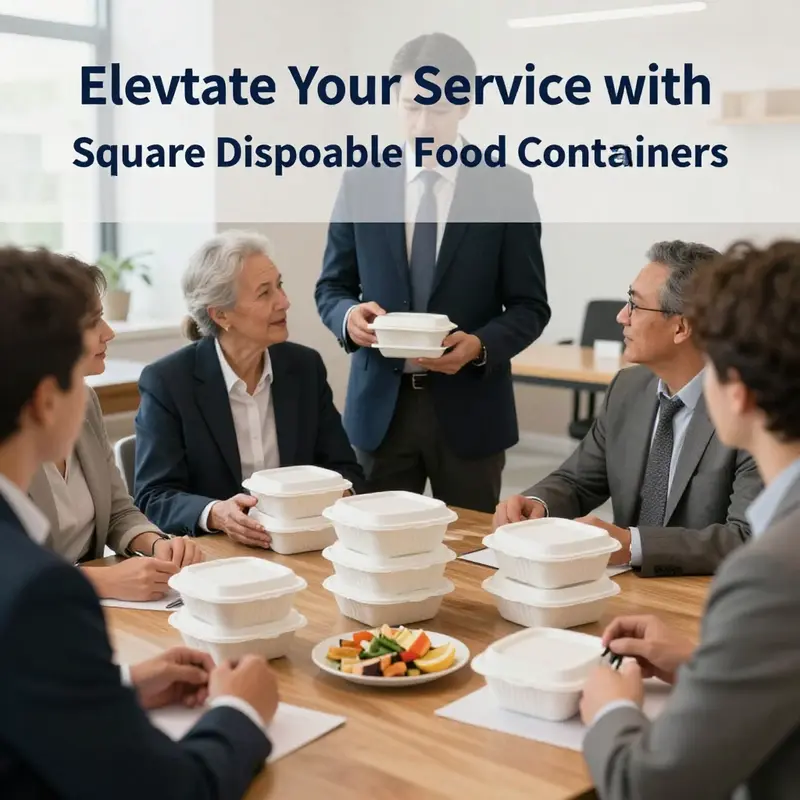
The market for square disposable food containers has evolved from a simple storage and transport solution into a sophisticated ecosystem where supply chain resilience, material science, and brand storytelling converge. Buyers today do not simply seek a low unit price; they demand suppliers who can deliver dependable service, technical capability, and materials that align with sustainability goals. In this environment, the square format—by its very geometry—offers a practical advantage. It maximizes packing efficiency, enhances stackability on shelves and in transit, and presents a clean, modular silhouette that brands can leverage for consistent display and easy branding across channels. Across global markets, the demand for square and rectangular containers has accelerated, catalyzed by a rise in quick-service restaurants, meal-prep services, and institutions that require reliable portion control. As buyers expand their supplier networks, the procurement journey has shifted from chasing the cheapest offer to orchestrating a broader value proposition that features throughput, compliance, and environmental stewardship, all framed within a package that customers experience as trustworthy and pleasant to interact with.
Market dynamics in this space are underwritten by a handful of manufacturing hubs that have built end-to-end capabilities for both plastic and eco-friendly molded-fiber products. In particular, Chinese manufacturing clusters have emerged as dominant players due to their advanced thermoforming and injection-molding infrastructure, which can push output into the millions of units per month when required. These clusters—centers of gravity for high-speed production and customization—enable rapid ramp-ups for large chain operations, while still accommodating experimentation for smaller brands through prototypes and short-run trials. The advantage lies not only in scale but in the breadth of specialization: suppliers that can deliver traditional polypropylene (PP) and polystyrene (PS) options alongside bio-based alternatives. That versatility matters, because today’s procurement teams are often evaluating the total lifecycle of a container—how it performs from the microwave to the freezer, how it behaves during stacking, how it resists leakage, and how it is treated at end of life.
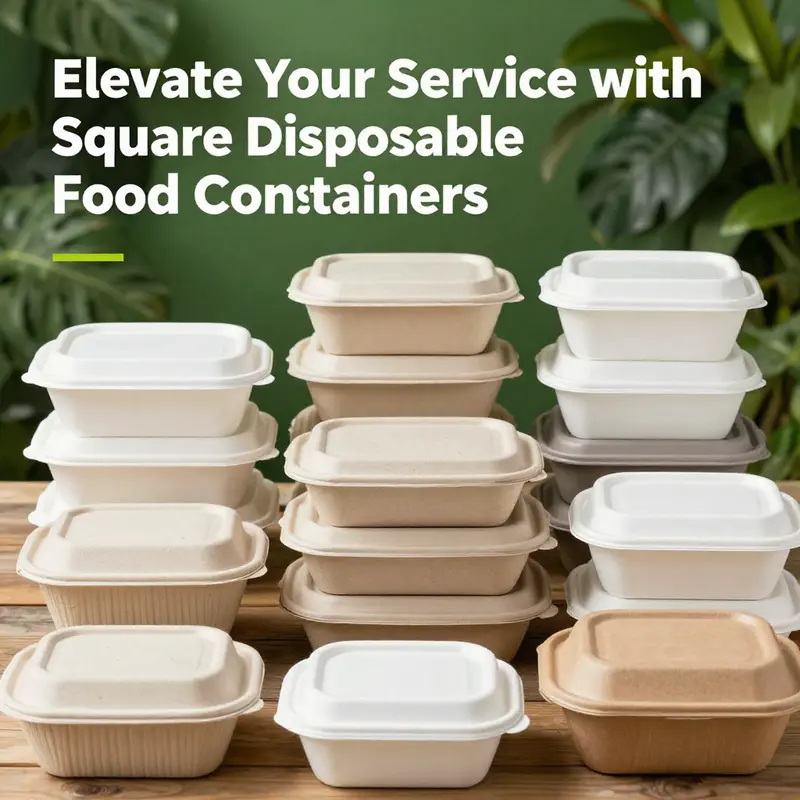
Material choices are not merely about price; they define performance envelopes and regulatory compliance. PP remains the workhorse for many square containers because of its robust heat resistance and compatibility with standard food-contact processes. It tolerates microwave heating, supports freezing without becoming brittle, and offers a pathway to recycling where infrastructure supports it. PS, while often easier to mold into rigid shapes and to achieve crystal-clear clarity, is scrutinized more carefully in some regulatory environments due to evolving waste and recyclability considerations. Yet, a broader material palette is now common. Bio-based and biodegradable solutions—such as molded-fiber alternatives derived from bamboo pulp or bagasse—have moved from niche applications toward mainstream practicality. These eco-friendly formulations can maintain structural integrity in a broad temperature window, typically from -20°C to 120°C, which covers most storage, reheating, and serving scenarios. In certain markets, such materials are increasingly favored by regulators and retailers who seek to reduce single-use plastic footprints, while still requiring predictable performance under typical service conditions.
From a design standpoint, the capacity spectrum for square containers typically spans compact 200 ml portions up to 1000 ml and beyond. The most common configurations—200 ml, 450 ml, 600 ml, 850 ml, and 1000 ml—reflect the needs of individuals, families, or shared portions in cafeterias and school settings. The design language often favors modularity: double-layer or multi-chamber layouts that facilitate separation of staples, sides, and fruits, which are highly valued in school lunch programs, office cafeterias, and catering services. The lid systems vary as well, with proposals ranging from snap-fit, leak-resistant seals to reusable silicone or bamboo lids that complement the container body in terms of tactile appeal and sealing performance. In practice, a well-executed lid not only controls leakage but also enhances the consumer experience by making the container easier to open, transport, and reuse in a subsequent meal cycle.
Quality and safety remain non-negotiable in this arena. Reputable suppliers emphasize compliance with a spectrum of international standards that reflect the diverse regulatory landscapes in which buyers operate. FDA conformity (21 CFR) remains a baseline for many export markets, ensuring that materials intended for contact with food meet established safety thresholds. European buyers look to CE conformity alongside ISO certifications, which communicate a company’s commitment to robust quality management. In manufacturing terms, certifications such as ISO 22000 for food safety management, BRCGS for brand protection and product safety, and FSSC 22000 for food safety systems are increasingly requested by retailers and restaurant chains that operate across borders. Beyond certification, the ability to trace materials, maintain batch-level traceability, and implement sanitary production practices are critical factors when a supplier is evaluated for large, ongoing supply agreements. To meet these expectations, manufacturers invest in clean-room-style process controls, precise inventory management, and rigorous testing of both the container and lid assemblies under simulated service conditions. The result is a procurement landscape in which quality is built into the supply chain rather than added on as an afterthought.
Market procurement today also reflects a shift in how buyers build supplier relationships. Long-established dynamics—price-led purchasing, one-off spot buys, and minimal supplier qualification—give way to more strategic partnerships. Buyers seek suppliers who can demonstrate reliable supply continuity even during peak cycles, who can provide comprehensive documentation for compliance, and who can collaborate on design iterations that optimize performance and cost. In this context, supplier evaluation often includes a formal audit of production capacity, a review of quality management systems, and a demonstration of the supplier’s capability to scale from pilot runs to mass production without quality degradation. The digitalization of procurement adds another layer: real-time performance tracking, transparent lead times, and vendor-scorecard dashboards that help buyers compare potential partners on metrics beyond price, such as on-time delivery, first-pass yield, and the stability of supply during demand surges. The integration of these tools into procurement workflows reduces the friction that once accompanied large-scale sourcing efforts and accelerates decision-making, which matters when brands must respond quickly to market shifts or seasonal demand.
A practical narrative of scale and customization emerges when considering how a brand might procure square containers for a national rollout. Large orders, often in the millions of units, are typically fulfilled by established producers with well-documented quality control and traceability. At the same time, a growing number of buyers explore a multi-vendor strategy to balance risk, diversify supply streams, and access a wider array of material options. In this context, the value of a robust customization program becomes clear. Brands can choose to imprint logos, color schemes, and branding motifs on container surfaces, tailor the interior layouts to accommodate distinct food compartments, and specify a range of lid options that harmonize with their identity. Customization extends to packaging skins, labeling, and even the architecture of the container’s bottom features, which can influence how a product stacks within distribution pallets and on kitchen prep lines. The ability to tweak dimensions, wall thickness, and partition schemes without sacrificing compatibility with existing filling lines and sealing processes is a key capability that separates the most agile suppliers from the rest.
For buyers seeking tailored solutions, platforms and supplier directories provide access to verified manufacturers who offer flexible minimum order quantities and rapid prototyping. The procurement journey often begins with a search for a supplier who can deliver a particular combination of material, size, and lid configuration, followed by a small-volume sampling phase to validate performance under real-world conditions. Once a design passes its first performance gates, suppliers can ramp up production through standardized tooling and shared process parameters. The integration of digital tools supports this progression, enabling buyers to monitor prototype testing, track tolerance data, and compare prototype performance with mass-produced outputs. This digital dimension is not merely a convenience; it is a governance mechanism that helps prevent costly design changes after mass production has begun. In practice, one might see a multi-stage pathway from concept to full-scale production that preserves the integrity of the original design intent while enabling cost optimizations and material substitutions as regulatory or supply conditions evolve.
A representative, non-brand-specific example of market success in this space is a square container category that pairs a durable, transparent body with a reliable sealing lid designed for both storage and transport. The principle here is straightforward: consumers value a container that presents food clearly, seals securely to prevent leaks, and can be reused or recycled with minimal friction. For brands, the lesson is equally clear. A square footprint that stacks neatly reduces packaging and storage costs, while a lid system that offers a confident seal reduces the risk of product damage during delivery. The confluence of durability, clarity, and sealing performance creates a compelling value proposition that supports higher basket sizes and better brand recall in crowded take-away environments. This convergence is not accidental but the outcome of deliberate procurement and design collaboration—one that blends process engineering, material science, and consumer research into a coherent package.
In terms of market scope and practical sourcing, a well-rounded procurement approach recognizes the breadth of service levels available. Some suppliers emphasize large-scale mass production with very tight MOQs, ideal for established brands and hospitality chains seeking predictable, uniform output. Others specialize in flexible MOQs and rapid prototyping, accommodating startups and niche concepts that require faster iteration cycles and smaller initial commitments. The latter often benefits from the use of digital order portals that streamline the ordering, testing, and feedback loop, helping designers and purchasers converge on final specifications before committing to full-scale tooling. For brands that intend to communicate a sustainability story, the choice of materials becomes a narrative decision as much as a functional one. Eco-friendly options may carry different pricing structures, lead times, and supply risks, so procurement teams must determine the most responsible mix of attributes to align with corporate ESG objectives while maintaining a competitive cost position. This balancing act—between cost, performance, and sustainability—defines the current frontier of square container procurement and underpins the future trajectory of the category.
An important practical touchpoint for the customization conversation is the ability to visually express a brand through the packaging. The square shape, with its crisp lines and flat surfaces, offers ample canvas for color, texture, and logos. Printing and branding can be applied to exterior walls or lids, enabling a consumer-facing experience that reinforces brand recognition even before the first bite. For many companies, this is where vendor collaboration becomes crucial. Design teams, packaging engineers, and procurement specialists must align on production tolerances, print methods, and surface finishes that will survive typical handling from kitchen prep to consumer disposal. The goal is a seamless handoff across the supply chain: from design files and material selections through to mold tools, sealing tests, and final packaging validation. A well-executed collaboration yields containers that look and feel like an extension of the brand, while performing reliably across the full range of service conditions.
In the sphere of customization and supply chain orchestration, one concrete strategy is to blend scale with modular customization. This means standardizing core container geometries to achieve economies of scale while offering a curated set of accessory options—such as interchangeable lids, partition inserts, or color-coded bands—that enable brands to tailor the packaging to different menu lines without incurring the friction of a completely new tool design. Such an approach keeps tooling costs manageable, reduces changeover times, and preserves production line stability. It also supports more agile marketing campaigns. When a brand introduces a new flavor profile or a seasonal menu, the packaging can be adjusted through a quick customization layer rather than a full redesign, preserving brand consistency and reducing the risk of misalignment between product and packaging ecosystems. The result is a procurement pathway that resembles a well-tuned supplier partnership: predictable in cost, adaptable in design, and accountable across quality, safety, and sustainability parameters.
To close the loop on the procurement narrative, consider a real-world transaction pattern. A buyer often negotiates for a core SKU family in multiple sizes to cover a range of menu items, with optional add-ons for branding accents and lids. The supplier then provides a standardized testing protocol, including material compatibility checks, seal integrity assessments, and temperature stress testing, to assure performance under the most demanding service conditions. The buyer evaluates these results alongside lead times, MOQs, and the supplier’s capacity to provide rapid prototyping and small-volume pilots. When a fit is found, the relationship escalates into a formal agreement that specifies service-level expectations, transparency around material sourcing, and a shared commitment to continuous improvement. In this dynamic landscape, the square container becomes more than a receptacle for food; it becomes a strategic interface between brand promise and consumer experience, a tangible artifact of how a company chooses to balance cost, quality, and conscience on a daily basis.
For further exploration of strategic sourcing, supplier evaluation, and customization trends in the disposable food container market, particularly from leading manufacturing hubs like China, refer to the following external resource: Strategic Sourcing of Disposable Food Containers: B2B Supplier Guide. https://www.supplychaindigital.com/procurement-strategy/disposable-food-container-sourcing-guide
For practical reference within the content ecosystem, brands may also explore supplier catalogs and product configurations that exemplify the square-and-rectangle packaging family. A representative product page demonstrates how a take-away square or rectangular salad paper bowl can be designed for compatibility with standard fast-service kitchen workflows while offering branding opportunities and predictable performance in service environments. For instance, a take-away kraft rectangular-square salad paper bowl page illustrates how form, function, and branding cohere in a single packaging solution, enabling brands to communicate quality and care through a clean, square silhouette. This kind of option—where the container geometry supports efficient stacking, the lid system provides reliable seals, and the material choice aligns with sustainability goals—epitomizes the procurement and customization balance that modern buyers strive to achieve. If readers wish to see a concrete example of such a packaging solution in action, they can consult supplier pages that showcase square and rectangle kraft-based bowls, lids, and complementary accessories, which mirror the design philosophy discussed above.
In sum, the procurement of square disposable food containers today is defined by a sophisticated blend of scale, flexibility, and responsibility. Buyers demand capabilities that extend beyond low unit costs to include reliability, regulatory alignment, and the capacity to customize at scale without sacrificing production efficiency. As sustainability considerations gain urgency, eco-friendly materials and recyclable pathways increasingly enter the core decision matrix, not as afterthoughts but as central criteria that shape supplier selection and design options. The square container stands at the intersection of engineering precision and brand storytelling, a practical system that can be tuned to deliver consistent food experiences while aligning with corporate values and consumer expectations. The next chapter will continue to explore how design, material science, and consumer behavior converge to influence the evolution of these containers in the marketplace, with attention to how emerging regulatory frameworks and supply chain innovations will shape future offerings.
Internal link reference for context and further reading: take-away food kraft rectangular-square salad paper bowl
Final thoughts
Square disposable food containers represent a significant advancement in sustainable packaging for food and beverage service providers. By choosing materials that are both eco-friendly and functional, businesses can meet consumer demand while adhering to environmental standards. The innovative designs, quality certifications, and market customization options available ensure that you can find the perfect solution for your specific needs. Emphasizing sustainability not only appeals to eco-conscious consumers but also enhances your brand’s reputation in an increasingly competitive market. Make the switch today for a cleaner, greener, and more efficient future.