
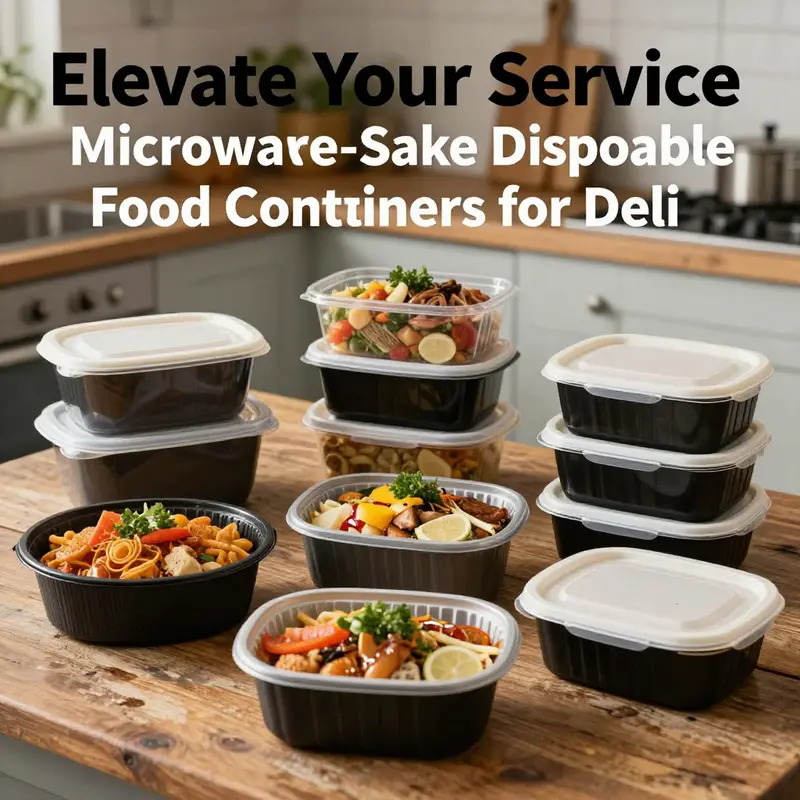
Microwave-safe disposable food containers are becoming essential for various food service businesses, including bubble tea shops, restaurants, and catering services. These containers ensure product safety and convenience, allowing seamless movement from storage to microwave without the mess. As we explore the key features, design and functionality, applications, and certifications, you’ll understand how these containers can enhance operational efficiency and customer satisfaction while maintaining high safety standards.
From Storage to Reheat: The Essential Design Language of Microwave-Safe Deli Containers
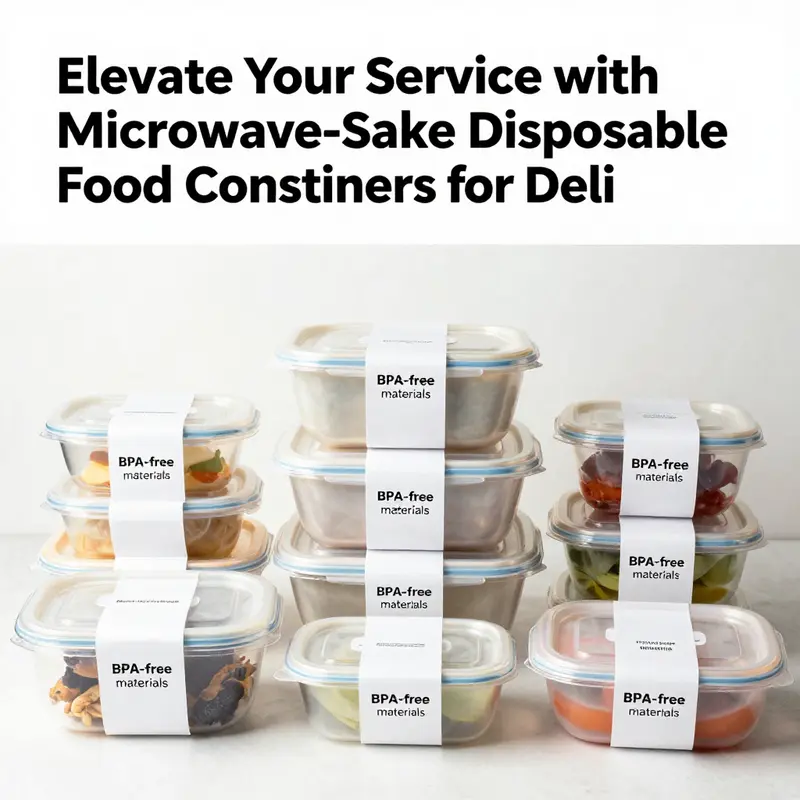
In a modern deli, speed and safety are the operating system that runs every shift. Customers expect meals that travel well, reheat cleanly, and stay appetizing from the moment they leave the counter to the moment they reach home or the office. The containers that carry these meals are more than vessels; they are a streamlined workflow. The chapter that follows examines how microwave-safe disposable food containers—especially those tailored for deli use—are engineered to meet this demand. It is a story of material science meeting practical design, where every surface, seal, and dimension plays a part in reducing waste, guarding food safety, and enabling rapid service. The focus here is not on a single product but on the enduring features that make these containers indispensable for both kitchens and takeout counters. When a deli’s operations hinge on reliability, the choice of container becomes a quiet, unseen partner that shapes every decision, from portion control to the final presentation of a hot meal in a customer’s hands.
At the heart of these containers lies a simple truth: safety and convenience must coexist without compromise. The most common material, BPA-free polypropylene plastic, is chosen precisely because it balances food safety with functional performance. BPA-free certification signals that harmful chemicals do not leach into food, even under the heat of a microwave. This is not merely about regulatory compliance; it is about creating a reliable experience for diners who reheat in their own kitchens. Polypropylene also endows the containers with durability that belies their disposable status. The material maintains structural integrity when faced with repeated microwaving, a crucial attribute for delis that repeatedly portion meals for quick pickup. And because PP is naturally lightweight, containers can cut through the logistics chain—from prep tables to delivery routes—without adding unnecessary weight to a cart or a bag. In an era when supply chains face fluctuations, the reduced weight translates into measurable savings in energy and handling costs, reinforcing the container’s role in a broader efficiency strategy.
The design language of these containers extends beyond the material to a practical, end-user centered approach. Airtight, leak-proof lids are not a luxury; they are a necessity when soups, sauces, or any liquid component travels through crowded takeout environments. A reliable seal minimizes the risk of spills during transport, which protects staff from messes and protects customers from scalding liquid. The lids are often transparent, a feature that might seem small but carries real value in a fast-paced kitchen and a busy refrigerator. When staff can see what’s inside without opening the lid, it reduces unnecessary handling and helps with inventory checks. This visibility also benefits the consumer at the point of retrieval, where a quick glance confirms the contents before they even reach the microwave.
Stackability is another practical virtue of deli containers. In a kitchen where space is at a premium, the ability to stack containers neatly reduces clutter and frees room for lining up orders, prepping, and staging delivery loads. The stackable design also translates into easier cooling and storage after refrigerating takeaway items. The shapes play a role here too: round and rectangular configurations cater to different menu items and portion types. The variety in sizes—ranging from modest 12-ounce to larger 32-ounce options—allows a deli to segment its offerings by portion, enabling precise control over food costs and waste. The standard dimensions, kept within tight tolerances (often around ±1.0 cm), ensure that shelves, bins, and even transport carts can be organized with predictable efficiency. This standardization matters, especially for operations that scale up to meet peak demand; predictable packaging becomes an invisible backbone supporting the speed and accuracy of every order.
When these containers move from fridge to microwave, they embody a seamless continuum of function. The multi-use capability—storing, packing, and reheating within the same vessel—reduces the need to transfer food between containers. In practice, that means less risk of cross-contamination, fewer handling steps, and shorter service times. For a deli that flips from a hot line to a takeout window, this continuity is a quiet but powerful advantage. Food safety specialists emphasize minimizing transfer points; a container that can hold a hot soup or a hearty casserole during storage, transport, and reheating helps meet that standard. The ability to go from cold storage to a hot meal without opening the container to repackage fosters cleaner kitchens, more consistent portioning, and steadier compliance with sanitation protocols.
Beyond safety and cleanliness, the performance envelope of these containers is defined by practical capacity and predictable fit. The common range—about 350 milliliters (12 ounces) up to roughly 950 milliliters (32 ounces)—covers snacks, single portions, and family-style servings alike. This breadth allows a deli to tailor its packaging to specific menu items without resorting to a haphazard mix of alternatives. The standardized dimensions help ensure that every lid fits precisely, every seal remains dependable, and stacks stay aligned. The result is a reliable toolkit that fits neatly into both cold storage and hot service lines, reducing the friction of daily operations. A deli that wants to manage inventory without guessing can rely on this consistency to optimize stock levels, reduce waste, and streamline replenishment cycles.
Sustainability also threads through the technical and functional choices of microwave-safe containers. While disposability is a central premise, responsible packaging recognizes the environmental responsibilities that accompany it. Many containers are designed to support responsible disposal and recycling programs. Compliance with European Extended Producer Responsibility (EPR) regulations demonstrates an orientation toward lifecycle thinking and end-of-life stewardship. This means packaging manufacturers are considering how products are collected, recycled, and reprocessed after use, contributing to a broader cultural push toward sustainable packaging systems. In markets where EPR is a cornerstone, deli operators can communicate a credible commitment to responsible packaging, which can enhance brand perception and align with consumer expectations that sustainability be part of everyday operations.
From a safety and sustainability standpoint, the certifications that accompany these containers matter as much as their physical design. The FDA’s food-contact approvals provide a baseline guarantee that the materials are safe for direct contact with foods during normal conditions of use. BPA-free certification further reassures staff and customers that the container will not release harmful substances into meals. Taken together, these standards create a confidence framework that allows a deli to pursue efficiency without compromising safety. In an industry where a single hesitation about packaging can ripple into customer dissatisfaction, having containers that meet stringent safety criteria and environmental standards becomes a strategic asset rather than a burden.
Customization serves as the connective tissue between packaging design and brand identity. For businesses aiming to project a cohesive image across takeout and dine-in options, customization options offer real value. Many suppliers can customize labeling, branded logos, color-coding, or specific size and shape configurations. This is not only about aesthetics; it also supports inventory management, order accuracy, and customer recognition. A well-branded container can reinforce a restaurant’s identity at the moment of disposal, when the consumer is most attuned to the brand’s message. Customization capabilities enable a deli to create a consistent package language that travels with each meal, helping to distinguish offerings in crowded markets and facilitating smoother coordination between kitchen, pickup, and delivery channels.
In the daily rhythm of a deli, these features translate into tangible outcomes. A typical workflow might begin with portioning and packing, where the chosen container’s size aligns with the dish and the planned price point. The next step is labeling or branding, where a lid’s visibility complements a back-of-house system for quick sorting and retrieval. Then comes the critical test: reheating. The microwave-safe material, paired with a well-sealed lid, ensures that reheating can occur without spillages, while keeping the food’s moisture and flavor intact. The lid’s clarity makes it easy to verify content at a glance, which speeds up the service line and reduces the chance of mistakes. Finally, the container’s compact footprint supports efficient packing into delivery bags or insulated boxes, contributing to energy savings in transit and a neater, more professional final presentation when the customer opens the meal.
From a practical standpoint, the choice of container also interacts with broader packaging ecosystems. For a deli looking to balance cost with performance, the lightweight yet sturdy PP containers can deliver the needed durability without the extra weight that can complicate handling and shipping. Their compatibility with FDA guidelines and European regulatory frameworks makes them a versatile option for diverse markets. The continued emphasis on leak-proof performance means staff can confident in transporting liquids or semi-liquids, a common requirement for deli staples such as soups, stews, and sauces. The transparent lids offer the advantage of quick visual verification, helping staff quickly confirm the contents before passing a package to a customer, a habit that reduces confusion and speeds up turnover during peak hours.
As packaging decisions become more strategic, suppliers often present customization as a pathway to operational efficiency. Branded logos and color-coded systems, for example, can assist kitchen teams in distinguishing entrees from sides or soups from dessert items, thereby cutting down on mis-packs and time spent sorting orders. Size standardization contributes to a more predictable cold- and hot-storage workflow, enabling refrigerators and cold carts to accommodate the same containers repeatedly without needing to adjust shelving configuration. And because these containers are designed with the deli setting in mind, they are often compatible with a wide array of menu formats—from compact grab-and-go options to larger, family-style meals that are meant for sharing. This flexibility matters in markets where menus evolve with seasons or promotional campaigns; a well-chosen container system can accommodate shifts without sacrificing consistency or safety.
For those who want to better understand the technical and supplier landscape behind these features, the best approach is to connect with comprehensive product specifications and real-world pricing data. A leading reference point in this space offers verified supplier details, technical specifications, customization options, and certifications, including verified FDA compliance and BPA-free assurances, along with notes on environmental regulation alignment. While details can change as markets evolve, the core takeaway remains steady: when a deli invests in microwave-safe, leak-proof, and well-sealed packaging that is both safe for repeated reheating and mindful of environmental responsibilities, it gains a reliable platform for delivering hot, fresh-tasting meals with efficiency and pride. The chapter above has traced how material choices, lid design, capacity flexibility, dimensional consistency, and customization options work together to create a container system that supports the most demanding deli environments without sacrificing safety, speed, or sustainability.
To explore related packaging options that can complement microwave-safe deli containers, consider looking at packaging designed for versatile, lid-equipped food storage. For instance, the disposable kraft paper bowl for food package with lid offers a different material choice with its own advantages for cold or room-temperature items, a handy pairing in a deli’s broader packaging ecosystem. This option can be integrated with takeout and dine-in strategies where hot meals remain in the PP container, while salads or cold components stay within the kraft solution. The pairing of a microwave-safe plastic container with a lid and a separate kraft paper bowl for complementary items can form a cohesive system that speaks to both functionality and brand identity. For more details on such kraft-based solutions, you can visit the dedicated product page linked here: disposable kraft paper bowl for food package with lid.
In sum, the essential features of microwave-safe disposable deli containers rest on a careful blend of material science, practical design, and thoughtful lifecycle considerations. The use of BPA-free PP provides a safe, durable base that stands up to microwaving and everyday handling. Airtight, transparent lids preserve contents and enable quick checks, while stackable shapes and standardized dimensions unlock space efficiency in busy kitchens and delivery workflows. Capacity options from 12 to 32 ounces cover an array of deli items, enabling accurate portioning and reduced waste. Certifications ensure safety and regulatory alignment, and customization options empower brands to maintain a consistent, recognizable package language across channels. When these elements align, a deli can offer meals that reheat cleanly, travel securely, and present well—every time. The packaging thus becomes less a disposable afterthought and more a critical component of a smooth, safe, and brand-consistent dining experience, reflecting a modern, responsible approach to takeout and deli service.
External resource: https://www.alibaba.com/product-detail/Microwave-Oven-Safe-PP-Plastic-Food-Container_1600798327631.html
The Hidden Engineering of Deli-Grade Microwave-Safe Containers: Design, Durability, and Daily Efficiency
Every lunch rush in a busy deli seems to hinge on a quiet partner: the container that holds a meal long enough to be enjoyed, yet sturdy enough to survive the journey from fridge to microwave to mouth. The chapter you’re about to read follows that unassuming protagonist through the design studio and the back dock, where engineers, designers, and chefs converge to solve a dilemma that is as practical as it is perceptible. In the world of microwave-safe disposable food containers, the true story isn’t just about how a box looks or feels; it’s about how it behaves under heat, how clearly a customer can see content without lifting a lid, and how a stack of boxes can disappear into a crowded fridge or a delivery bag without leaking, warping, or wasting food. Delis demand speed, safety, and cleanliness, and the containers chosen to serve those needs are a product of meticulous decisions about material, geometry, sealing technology, and lifecycle thinking. When these elements are balanced just right, the result is not merely a packaging vessel but a carefully tuned tool that elevates everyday meals into reliable experiences, whether a salad, a hot soup, or a compact deli plate—each item arrives ready for reheating without a transfer step, each step safeguarded against cross-contamination, each moment of handling reduced to a minimum of fuss.
Central to this engineering is the choice of material. The default for deli-grade microwave-safe disposables is polypropylene, a thermoplastic known for its heat tolerance, chemical resistance, and overall resilience under repeated use and exposure to common kitchen environments. Polypropylene’s heat resistance is not merely a spec sheet number; it translates into real-world performance. Containers can withstand temperatures reaching around 160°C (approximately 320°F) in reheating scenarios, which covers the typical range needed to warm soups, stews, grains, and mixed dishes without the plastic softening or warping. This stability is essential in fast-paced service where meals move quickly from the prep counter to the customer’s hands, and then to a microwave in a home kitchen. The material’s resistance to moisture, oils, and the acids found in many foods further preserves the integrity of the container and the flavor of the contents, reducing the risk of compromised packaging during transit or storage.
The choice of PP also supports important safety standards that matter to both operators and diners. These containers are designed for direct contact with food, and many options come with FDA-approved food-grade certification and a BPA-free declaration. In practice, that means less concern about leaching and more focus on the dining experience: no acrid plastic taste, no uncertain odors, and a sense of trust that the container is a legitimate vehicle for food safety. In regulatory conversations, the BPA-free attribute is often the starting point, while the FDA affirmation of food-grade status reinforces confidence in the material’s suitability for repeated microwave exposure, freezing, and even dishwasher cycles. Alongside this, contemporary deli packaging often aligns with broader environmental stewardship commitments through compliance with Extended Producer Responsibility (EPR) schemes in major markets. Those schemes encourage responsible disposal and recycling at the end of a container’s life, a consideration increasingly valued by operators who want their brands to reflect a thoughtful approach to waste.
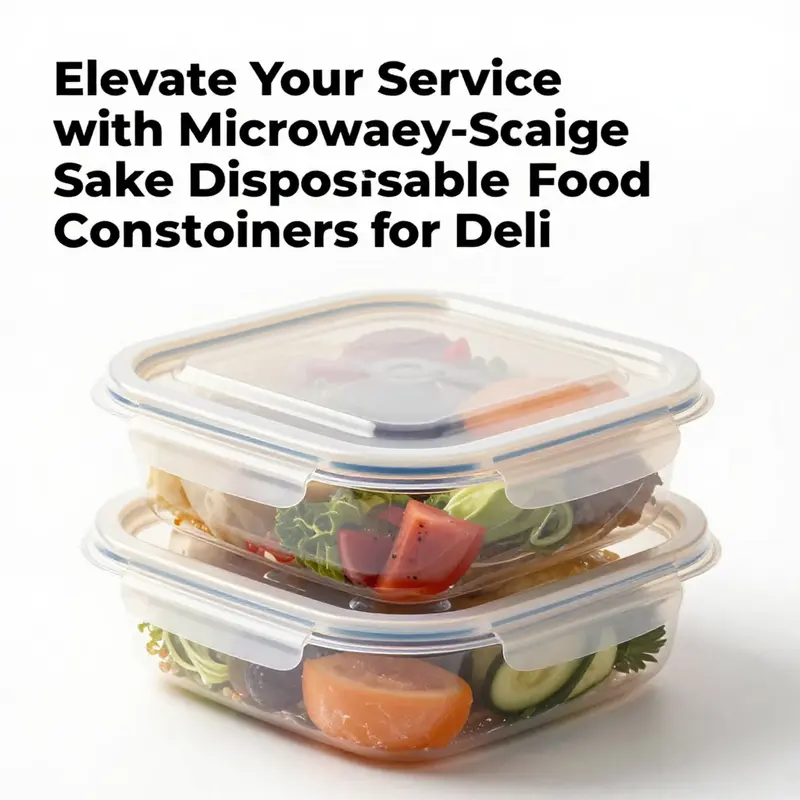
If material choice establishes the container’s backbone, the lid and the body shape define its daily choreography. A hallmark feature of deli containers is their transparent, microwave-safe lid. This design choice is more than aesthetic; it is a functional discipline. The transparency allows staff and customers to identify contents at a glance, which speeds up order fulfillment and reduces the need to unwrap or open containers to verify what’s inside. In a busy service line, that visibility translates into faster pick-and-pack processes, fewer mistakes, and shorter lines at the counter. The seal integrity is paramount—the lid is engineered to be airtight or at least leak-proof under transportation and handling conditions. A reliable seal protects freshness, especially for items like salads or soups that are sensitive to moisture loss and temperature fluctuations during transit. By keeping contents secure, the container helps minimize spill events in bags or carts, an advantage when customers are juggling a hot container and a cold, fragile salad container together on the same ride home.
Functionality in practice extends beyond the lid’s seal. The geometry of deli containers is carefully tuned for storage efficiency. Many models feature stackable designs, smooth rims, and grip-friendly edges that facilitate quick handling by kitchen staff. The stackability is not trivial; it is a direct response to the real-world constraint of limited fridges, pantry shelves, and transport bins. When a kitchen can safely stack dozens of units without risk of crusts, lids, or bases wedging into one another, the result is a leaner storage footprint, faster retrieval, and reduced breakage. The shapes offered—round and rectangular—cater to a spectrum of meal types while respecting space constraints. The capacities most commonly seen range from compact 500 ml or 12 oz portions suitable for snacks or salads to larger 1000 ml or 32 oz servings designed for soups, stews, or multi-component meals. This assortment allows a deli to standardize portion sizes while still offering flexibility for more elaborate configurations.
The lifecycle perspective is an increasingly central dimension of design. In the past, disposable packaging carried the implication that its use would end in a single throwaway cycle. Modern deli packaging, however, often emphasizes reusability within a defined lifecycle and compatibility with recycling or composting streams. PP containers can be designed to endure freezing, microwaving, and dishwasher cleaning without significant degradation in material integrity or performance. This capability supports a practical, safety-conscious approach to meal preparation and storage, enabling a single container to handle multiple stages of a meal’s journey. From the perspective of environmental goals, some manufacturers are moving toward recyclable PP or even biodegradable alternatives, aligning with sustainability programs and consumer expectations that packaging should do more than simply contain—it’s part of a responsible system for waste reduction.
From a safety and compliance standpoint, the packaging that serves deli operations must satisfy a constellation of standards. The FDA’s oversight of food-contact materials offers assurance that the plastics in use have met stringent requirements for safety in direct contact with food. BPA-free assurances address concerns about hormone-disrupting compounds, a consideration that resonates with consumer expectations for healthier and safer takeout experiences. In markets where packaging regulations are structured around extended producer responsibility, compliance signals that a company is mindful of end-of-life stewardship. For operators, this translates into a packaging choice that not only protects the food but also aligns with broader corporate commitments to sustainability and regulatory adherence. The result is a packaging ecosystem in which safety, performance, and responsibility reinforce one another, enabling deli staff to focus more on cooking and customer service and less on compensating for weak packaging performance.
Customization emerges as a practical merit for businesses seeking to reinforce branding even in the humble deli container. Suppliers often offer options for branding through printed logos, color-coding, or specific size and shape configurations that can streamline inventory and improve brand recognition at the point of purchase. A well-executed customization strategy turns a disposable unit into an ambassador for a brand’s identity, even in the moment of purchase, pick-up, or delivery. In many cases, this customization is balanced with functional objectives—an ergonomic container that is easier to grip, a lid designed for easier opening, and a consistent color system that aids staff in sorting and rotating stock. The result is a cohesive packaging program, where form and function reinforce brand consistency while also supporting operational efficiency.
Operationally, the practical impact of a well-designed microwave-safe deli container extends into several everyday tasks. For kitchen teams, the ability to rehearse meals directly in the container minimizes handling and reduces cross-contamination risk. The transparent lid removes the need to open and inspect food items repeatedly, which helps maintain temperature and hygiene standards in busy service lines. For delivery staff or customers who heat food at home, the container’s performance during microwave reheating—avoiding sizzling, splattering, or cracking—is a tangible measure of reliability. In addition, the containers’ compatibility with freezing and dishwasher cycles offers a seamless lifecycle that reduces waste while maintaining performance across multiple uses. These attributes collectively support a more predictable, efficient workflow that keeps the focus on speed, safety, and satisfaction rather than on packaging challenges.
To connect this design-centric view with the broader takeout packaging landscape, it helps to think of the container as a modular piece of a system rather than a standalone object. The way a deli organizes its storage, labels its stock, and plans for return visits by customers shapes how well the container will perform in practice. A system that values clear visibility, secure sealing, space-saving storage, and scalable sizes naturally supports fast service, while still offering room for branding and sustainability goals. It is this convergence of practical reliability and strategic branding that makes microwave-safe deli containers more than mere vessels. They become enablers of consistent quality, safe reheating, and a reliable customer experience—every time a guest picks up a meal, whether for immediate enjoyment or for later warming.
In this light, even the seemingly modest decision to select a particular container becomes a strategic one. A deli that prioritizes a transparent lid, a robust seal, and a well-formed base is choosing a tool that minimizes the friction points in a service flow. It’s a choice that supports faster order fulfillment, reduces the risk of leaks and mess, and helps keep food at the right temperature longer during transport. It’s also a choice that signals a commitment to safety and sustainability, because the same container that performs well in a microwave also stands up to freezing, washing, and recycling in a responsible lifecycle. The sum of these decisions is a packaging solution that travels far beyond its simple physical form, carrying with it the potential to elevate service standards and customer trust.
This broader perspective mirrors a real-world trend toward packaging that is practical, visible, and brand-conscious. A single container is a microcosm of a deli’s approach to quality: a well-considered material that resists heat and moisture, a lid that keeps contents safe and viewable, and a geometry that respects space and handling. It is a design that anticipates the daily rhythms of a kitchen and the expectations of a dining public. And it is a reminder that even the most everyday items—takeout boxes and deli containers—carry with them a complex fabric of standards, capabilities, and choices that, when aligned, enable meals to travel from counter to microwave with confidence and care.
This sentiment is echoed in broader packaging discourse, where the emphasis on practical, reliable design intersects with sustainability and brand integrity. For operators, the takeaway is clear: invest in containers whose design is guided by real-world use rather than by appearance alone. That means a focus on heat tolerance, leak resistance, clear visibility, and lifecycle-minded materials. It means seeking options that can survive freezing, reheating, and washing, without sacrificing performance or safety. It means recognizing that customization and branding are not distractions but tools that help maintain consistency across outlets and in customers’ minds. And it means acknowledging that the packaging itself can be part of a responsible business narrative—one that respects food safety, supports efficient operations, and contributes to a more sustainable approach to takeout culture.
For operators who want to explore the broader ecosystem of packaging beyond the deli counter, there is value in examining related packaging formats that share some of the same design challenges. The trend toward compact, leak-resistant, and transparent packaging is not limited to PP containers; it resonates across the spectrum of takeout and meal-kit solutions. Quick, intuitive access to contents, the ability to re-seal, and a clear path for recycling are features that translate well from deli to grocery and hospitality contexts. The design DNA—clear lids, secure seals, ergonomic shapes, and compatible sizes—serves as a blueprint for future packaging innovations that aim to combine safety with convenience in a highly competitive retail environment. As the field evolves, manufacturers continue to refine the interplay of material science, regulatory compliance, and consumer expectations, producing containers that perform consistently across the varied rhythms of home and commercial kitchens.
In closing, the design and functionality of microwave-safe disposable deli containers embody a practical engineering ethos: materials chosen for safety and resilience, forms engineered for efficiency and visibility, and lifecycles that acknowledge environmental responsibilities without compromising everyday usefulness. When these elements converge, the packaging ceases to be merely a receptacle and becomes a reliable partner in the service of good food, delivered quickly and safely to customers who expect nothing less than a trustworthy dining experience. This is the quiet engineering behind deli meals reheated in microwaves, the governance of cross-contamination prevention, and the everyday elegance of a well-designed container that meets the exacting demands of modern food service. And in this quiet engineering lies the foundation for continuous improvements, as materials scientists, designers, and food-service professionals collaborate to make the journey from storage to reheating as smooth, safe, and satisfying as possible.
disposable-octagonal-box-restaurant-food-kraft-paper-packaging
External resource: https://www.dellapack.com/microwave-safe-food-containers
null

null
Certified for Confidence: How Certifications and Safety Standards Shape Microwave-Safe Deli Containers
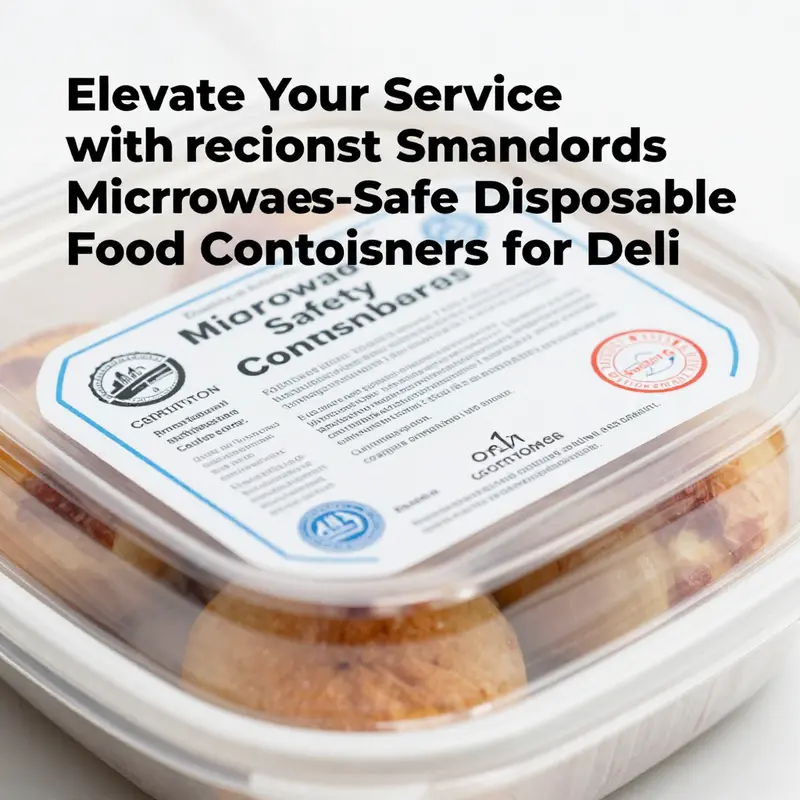
When a deli customer transfers a freshly made sandwich, soup, or salad into a microwave-safe takeaway container, the moment carries more than convenience. It carries trust. The container must withstand heat, seal in flavor, guard against leaks, align with environmental expectations, and provide a clear, verifiable record of safety for every stage of its life—from manufacturing to disposal. In this landscape, certifications and safety standards are not mere slogans on a label; they are the architecture of reliability that supports kitchens, caterers, and retailers who depend on these disposables to perform day after day. For operators who manage a steady stream of hot or cold items, the choice of packaging is as strategic as the recipe itself. The container acts as a shield against cross‑contamination, a safeguard during transport, and a user-friendly interface for reheating in a microwave. This is why the conversation around microwave-safe deli containers centers on what the packaging is certified to do, how those certifications are earned, and what they imply for the people who choose and use the packaging in the real world. The core material—polypropylene, or PP—serves as the practical backbone of this story. PP is favored in part because it can perform under repeated heating without significant degradation, but more importantly because a broad set of validations exists around its safety for direct food contact. The emphasis on BPA-free formulations reflects a wider public health focus that has shaped packaging design since the early debates about chemical leaching. Yet safety is not a single test or a single label; it is a constellation of standards that together create a robust framework for risk assessment, quality control, and continuous improvement. In a deli environment, where products move quickly from prep station to display case to microwave, these standards translate into tangible, measurable outcomes: predictable performance under thermal stress, consistent containment of food at various temperatures, reliable packaging integrity during storage and transport, and a responsibility toward the environment that extends beyond a single serving. These outcomes emerge only when manufacturers embrace a holistic approach to safety that blends regulatory compliance with rigorous internal systems, tested processes, and transparent communication with customers who rely on these assurances every day. The journey from material selection to final consumer use begins with the regulatory mapping that governs what can be used, how it is tested, and how it is labeled, and it advances through the operational discipline that keeps production aligned with those commitments across every batch. In practical terms, this means that many microwave-safe deli containers are built from PP that is labeled as BPA-free, a choice driven by scientific caution and consumer expectations about chemical exposure. But the certification story goes beyond BPA status. The U.S. FDA’s framework for food-contact materials establishes the baseline—ensuring that substances used in packaging do not migrate into food at levels that could pose a risk under normal use. In a country where many takeout meals are reheated in consumer kitchens, this baseline is a critical starting point for trust. Yet the story doesn’t stop there. For producers who export or serve customers in other regions, additional frameworks come into play, and those frameworks often shape product development, testing regimes, and even labeling practices that inform how a customer uses a container at the point of sale and in their home kitchen. The internationally recognized standards—HACCP, FSSC 22000, ISO 9001, and ISO 14001—form a connected web that ensures not only the safety of the finished container but the integrity of the entire supply chain: the materials sourcing, the manufacturing processes, the handling and storage of finished goods, and the environmental footprint of production. HACCP provides the risk-analysis backbone, identifying potential stages where contamination could occur and establishing critical control points to prevent or mitigate those risks. This is not a theoretical exercise; it translates into concrete checks, documented procedures, and traceable records that enable facilities to audit themselves and demonstrate to customers that safety is built into every step. FSSC 22000 takes that foundation and integrates it within a globally recognized food-safety management system, aligning ISO-based expectations with the specific realities of food packaging. It codifies a disciplined approach to hygiene, preventive controls, and continuous monitoring, ensuring that the factory environment—air, surfaces, water, and incoming materials—meets stringent criteria before, during, and after production. ISO 9001 contributes a parallel assurance: it focuses on quality management across processes, ensuring consistency in product performance and reliability that keeping a consistent lid seal or maintaining transparency of the container’s contents hinges on. ISO 9001’s emphasis on process control, corrective actions, and continual improvement helps drive predictable outcomes for large-volume operators who rely on uniform specifications rather than sporadic excellence. ISO 14001 broadens the lens to environmental stewardship. It signals that the company considers life-cycle impacts, from material sourcing to end-of-life disposal, and that sustainability is integrated into decision-making rather than added as an afterthought. In markets where packaging end-of-life responsibilities are formalized through Extended Producer Responsibility, EPR compliance becomes a practical yardstick for compliance and a driver of packaging design. EPR requirements push manufacturers to use materials that are easier to recycle, to label products clearly to facilitate sorting, and to participate in take-back programs or recycling schemes that reduce the waste burden imposed by single-use packaging. The practical effect for deli operators is twofold. First, it provides visible assurances that the packaging has been produced under a controlled, audited system capable of supporting high volumes and frequent reheating. Second, it offers a forward-looking signal that these containers fit within a broader commitment to responsible waste management. The BPA-free claim often accompanies the set of certifications and is itself one more piece of the safety puzzle. BPA’s history as a point of consumer concern has driven the adoption of BPA-free labeling, particularly for items intended for direct contact with hot foods. Consumers assume that a BPA-free container is safer for reheating; however, they also expect that the container will perform under microwave conditions without compromising food quality or container integrity. Against this backdrop, migration testing—an essential facet of FDA evaluation and ongoing quality assurance—becomes a practical measure of how well packaging resists heat-related leaching and maintains chemical stability. This testing looks at overall migration and specific migration into food simulants across a range of temperatures and time points that approximate real-world use. When a manufacturer can demonstrate compliant performance, the deli operator gains confidence that reheating a sauce or soup won’t introduce unwanted substances into a meal, even after repeated cycles. Yet safety is not merely a matter of regulatory compliance; it is a matter of trust that informs every purchase decision, from the most casual grab-and-go order to the takeout plan for a large catering event. In this sense, the certifications are not a wall to scale but a bridge that connects product designers, manufacturers, and food-service professionals through a shared language of safety and accountability. They enable procurement teams to compare options not simply on price or appearance but on a transparent framework that reveals testing regimes, supplier controls, and environmental considerations. They signal that the packaging has been produced under a controlled, audited system capable of supporting high volumes and frequent reheating. The environment, in turn, is not a peripheral concern but a central context in which decisions are made. EPR compliance, for example, reflects a broader movement toward accountable end-of-life management that extends beyond the kitchen. Packaging that is designed for recyclability, with clear labeling and minimal multi-material complexity, supports easier sorting and higher recovery rates in recycling streams. This matters for delis and food-service operations that want to reduce environmental impact without sacrificing performance. The certification ecosystem also informs how suppliers approach customization. Brands seeking alignment with specific standards may request features such as tamper-evident lids, leak‑proof seals, or transparent lids that improve visibility while preserving safety. Customization can be aligned with HACCP and ISO 9001 processes to ensure that variations in shape, size, or lid design do not undermine critical control points. In practice, this means that a supplier, while offering different capacities—ranging from compact 500 ml cups to larger 1000 ml or 32 oz formats—will still maintain traceability, standardized testing, and consistent packaging performance across lots. The result for deli operators is smoother operations: uniform stacking, predictable microwaving outcomes, and reliable portion control that supports menu planning and pricing. The overarching narrative here is that certifications are the operating system of safety for microwave-safe deli containers. They do not replace hands-on vigilance or good food-handling practices, but they do reduce risk by embedding quality into the entire lifecycle of the packaging. Operators can rely on these standards as a baseline for supplier evaluation, while also using the labels to communicate with customers about what to expect when reheating and handling meals at home or in a workplace kitchen. As the industry evolves, new materials and processes will inevitably challenge old assumptions, making ongoing certification maintenance essential. Producers will continue to pursue continual improvement initiatives, adopting even more robust validation protocols, expanding environmental certifications, and refining supply chains to ensure that safety remains a shared, measurable outcome rather than a marketing claim. For deli teams, the result is practical: you can heat, grab, and go with greater assurance that the container will hold up under heat, minimize leaks, resist deformation, and respect the environment into which it will be disposed. It also means that staff can focus more on food quality and service, rather than worrying about container failure or ambiguous labeling. If you want to see how these standards translate into the real-world packaging landscape, consider the way packaging options communicate safety and performance in their documentation. One practical way to connect with the broader packaging ecosystem without getting lost in technical jargon is to explore packaging options that emphasize both performance and durability in a manner that does not compromise recyclability or climate impact. A tangible illustration of how design and safety considerations intersect in packaging is visible in formats such as disposable, single-use containers designed for takeout and delivery in the deli sector. In this context, a well-rounded packaging program might include a lid that provides an airtight seal, a transparent cover to reduce the need to open the container, and a base material that supports microwave reheating while maintaining shape integrity, even when the container is knocked or jostled during transport. The combined effect of these features—tied to safety certifications, quality management systems, and environmental stewardship—ensures that every reheating event, every transfer from fridge to microwave to plate, is supported by a credible chain of safety and reliability. For buyers, the practical upshot is the ability to document compliance, to compare suppliers with a consistent yardstick, and to align procurement decisions with broader sustainability and regulatory strategies. The conversation about standards is not abstract; it is about building confidence in the meals that pass through a deli’s doors and into customers’ homes. The chain of assurances—FDA recognition for direct contact and thermal exposure, HACCP and FSSC 22000 for process safety, ISO 9001 for consistent quality, ISO 14001 for environmental management, and EPR for end-of-life responsibility—forms a coherent framework. It is a framework that supports not only safety and performance, but also a broader cultural commitment to responsible manufacturing and responsible consumption. When a deli chooses a microwave-safe container with this constellation of certifications, it signals a clear message to staff, customers, and partners: safety is designed, tested, and validated throughout the lifecycle of the packaging, and the confidence that follows is earned, not assumed. And while every operation will have its own specific constraints—volume, reheating practices, menu variety, and logistics—the underlying standard‑based approach remains the same: rigorous testing, transparent reporting, and a steady progression toward packaging that is safe, reliable, and mindful of the world that receives it. For those who want to dig deeper into the practical evidence behind these standards and see how suppliers articulate compliance in technical documentation, consider resources that lay out specific certification scopes and audit requirements. As a final note for readers who want to explore real-world examples of the kinds of packaging solutions that meet this standard, a representative supplier listing can provide concrete data on testing protocols, material specifications, and certification commitments. External resource: https://www.alibaba.com/product-detail/Microwave-Oven-Safe-PP-Plastic-Food-Container_1600798327631.html The broader packaging ecosystem also offers accessible case studies and practical guidance; for instance, a packaging option page that highlights how a durable, stackable, and transparent lid design can improve efficiency in a deli, while still meeting the safety expectations described above, can be a useful companion as you evaluate options for your operation. Additionally, for a hands-on example of how packaging formats can be integrated with brand identity without compromising safety, you can explore a packaging option page that demonstrates a practical approach to combining form, function, and safety in deli packaging. The link provided here is an external resource intended to illustrate the kind of testing and certification language that often accompanies microwave-safe packaging; it is not an endorsement and should be evaluated against your own safety standards and operational requirements. For further context on how a packaging program can align with both safety and sustainability goals, consider exploring materials and design approaches that emphasize recyclability and minimized material complexity, as these factors often intersect with EPR and ISO 14001 objectives in manufacturing environments. And while every facility operates within its own regulatory environment, the core principle remains consistent: safety, quality, and environmental responsibility must be demonstrable, auditable, and traceable at every step of the life cycle of the container used in deli service.
Final thoughts
Microwave-safe disposable food containers offer a myriad of benefits for food service businesses seeking efficiency and safety. Their features cater to diverse culinary needs, making them an excellent choice for meal prep, delivery, and catering. Invest in quality containers to streamline operations, uphold food safety standards, and enhance customer satisfaction in your establishment.