
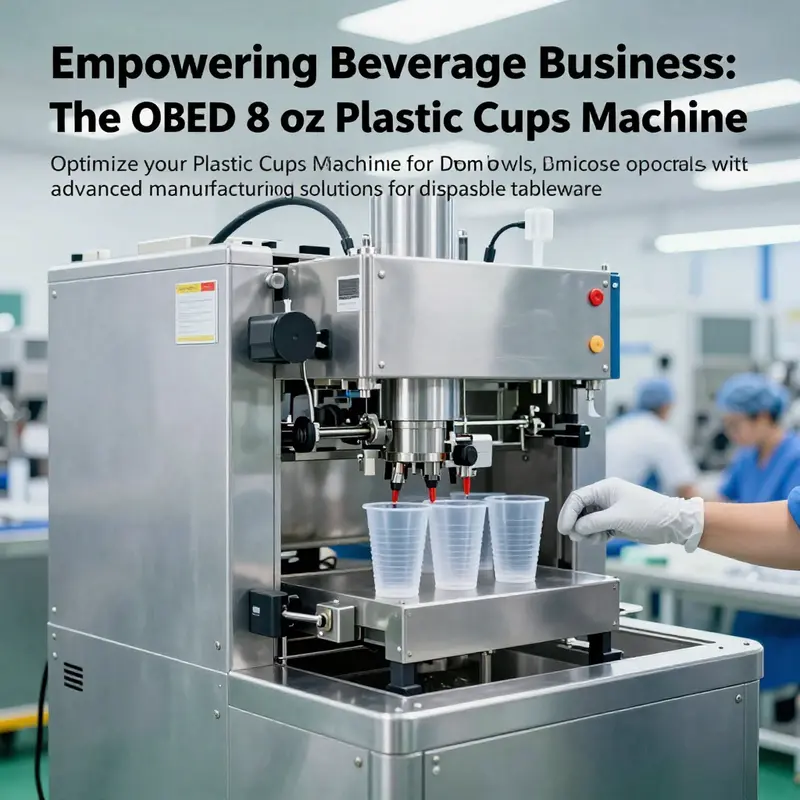
In today’s dynamic food and beverage industry, providing efficient and reliable service is more essential than ever. As bubble tea shops, beverage chains, restaurants, food trucks, and event planners seek ways to elevate their offerings, the demand for high-quality disposable tableware is on the rise. The OEM 8 oz plastic cups machine for disposable bowls stands out as a vital asset for these businesses. This article explores the manufacturing process, technical specifications, market demand, and sustainability considerations associated with this innovative machinery, helping operators make informed decisions. Join us as we delve into each aspect to understand how this machine enhances production capabilities and meets consumer expectations.
null
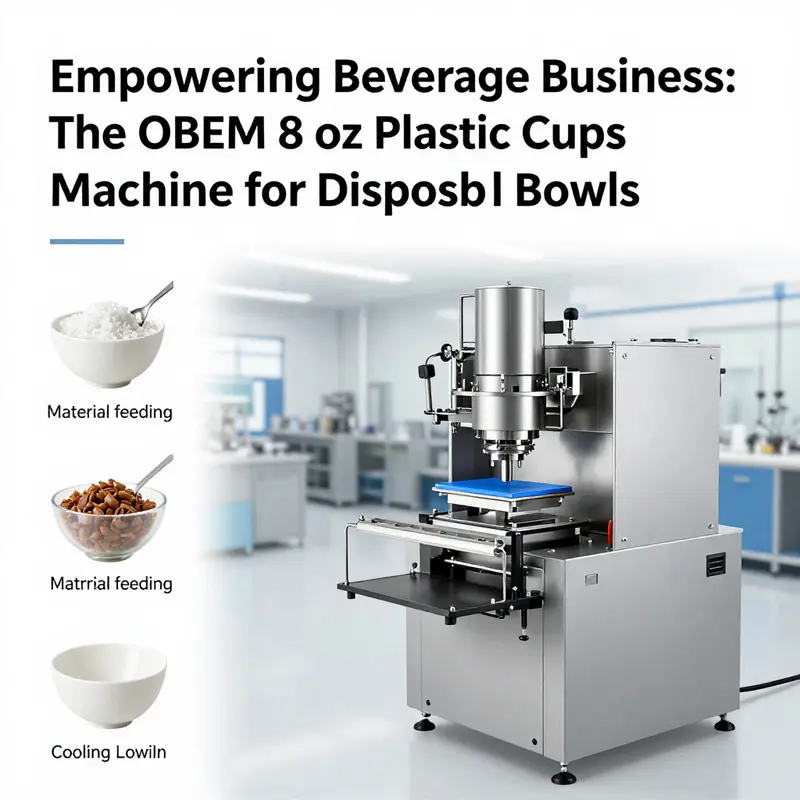
null
Molded Convenience: The Engine Behind OEM 8 oz Plastic Cups for Disposable Bowls
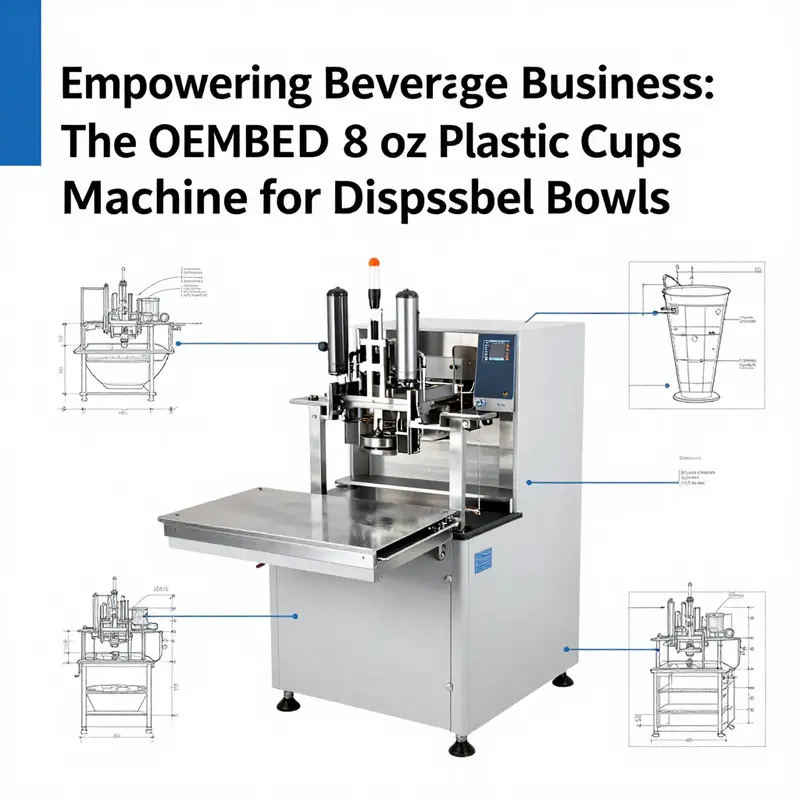
The world of disposable tableware hinges on machines that transform a raw strip of plastic into the familiar cups, bowls, and lids that carry meals, snacks, and beverages through a busy day. Among these, the OEM 8 oz plastic cups machine for disposable bowls sits at the intersection of reliability, flexibility, and scale. It is not merely a piece of equipment; it is an orchestration center where heat, pressure, and precision converge to create products that must meet strict safety standards, maintain uniform thickness, and withstand the varied demands of hot coffee, cold beverages, or plain water on the go. To understand its value, one must trace the path from material sheet to finished container, and then through the rhythm of a high‑volume production line where speed and quality must coexist in perfect balance.
At the heart of this class of equipment is the automatic thermoforming machine. It is designed to take flat sheets of plastic—commonly PP (polypropylene) for hot applications, or PET (polyethylene terephthalate) for clarity and rigidity in cold beverages, with PS (polystyrene) as another option in some contexts—and convert them into durable, single‑use cups, bowls, lids, and trays. In practice, the process begins with feeding a roll or sheet of plastic into the forming station. The sheet is precisely heated to a temperature that softens the material without degrading its properties. Then, a mold—an array of cavities that define the final product shape—pulls the softened sheet down around it. The result is a three‑dimensional form that is trimmed, cooled, and stacked for downstream handling. This sequence, repeated rapidly and with meticulous consistency, underpins the high‑volume manufacturing capability that brands rely on for dependable supply.
One of the strongest attributes of an OEM 8 oz machine is its automatic operation. After the initial setup and mold change, the line can run with minimal manual intervention. Operators monitor parameters such as temperature, forming pressure, and cycle time, while the machine’s control system coordinates the timing of sheet feeding, heating zones, mold closing, and trimming. The automatic nature of the line reduces human error and accelerates throughput, which is essential when production must align with fluctuating demand patterns—from seasonal promotions to new product launches. Even so, the true value of automation is not just speed. It is the capacity to deliver consistent product quality across thousands of pieces per hour, with uniform wall thickness, crack‑free rims, and reliable seals when lids are employed or when bowls are stacked for transport.
A stable hydraulic system is another core feature. The forming and trimming actions rely on precise hydraulic pressure to lock the mold securely and to release finished pieces without deformation. In practice, this means crisp rims on cups, clean edges on bowls, and exact bottom dimensions that ensure stacking stability. Low noise operation is not merely a comfort for the manufacturing floor; it is a practical benefit that helps workers concentrate on quality checks and reduces fatigue over long shifts. The combination of a robust hydraulic platform and a well‑engineered mold lock creates a dependable backbone for production and minimizes downtime that often erodes profitability on high‑volume lines.
The materials that a thermoforming machine can process are chosen not only for mechanical strength but for safety in contact with food. PET is valued for clarity and rigidity, making it a natural choice for cold‑drink containers where visibility of the beverage matters. PP, with its higher heat resistance, suits hot beverages and has favorable sealing characteristics for lids and heat‑sealed assemblies. PS remains a common option for simple, cost‑effective cups and bowls in certain markets, though its use is tempered by temperature and environmental considerations. The 8 oz size itself, roughly 237 milliliters, has become a staple in many beverage programs and snack portions, offering a compact, portable package that fits neatly into cupholders, bags, and on‑the‑go meal kits.
A multifunctional design is common in this class of equipment. Some models are marketed as capable of forming a variety of shapes beyond basic cups and bowls, including certain lid and tray configurations. This flexibility is valuable for brands exploring a broader disposables portfolio without investing in multiple dedicated lines. The ability to adapt molds to new sizes—such as 8 oz, 12 oz, or 14 oz—while maintaining the same forming platform can shorten time to market and reduce capital expenditure. OEM/ODM capabilities extend this flexibility further. A supplier that can design and fabricate custom molds and adjust the production line to meet a buyer’s exact specifications allows a company to differentiate its packaging. That customization might involve subtle changes to the inner geometry to optimize drainage, venting, or heat resistance, or it could mean a complete retool for a new pattern or a different product family altogether.
From a manufacturing perspective, the capacity of an 8 oz thermoforming line is a function of several variables: sheet width, the number of forming stations, the cycle time per piece, and the efficiency of downstream trimming and stacking. While exact output rates are often guarded by manufacturers, the category is characterized by high‑volume capability designed to deliver thousands to tens of thousands of units per hour under peak conditions. The Newsmart‑style references in industry discussions illustrate how these lines are engineered for bulk manufacturing needs, emphasizing a balance between rapid forming and careful handling that preserves product integrity. The outcome is a steady stream of consistent containers that meet dimensional tolerances and optical quality standards, which in turn supports reliable downstream filling, sealing, and packing processes.
An important dimension of this equipment is its customization pathway. OEM/ODM services enable buyers to tailor both the final product and the production line around their brand requirements. This can include sculpting the mold to achieve a particular rim profile, adjusting the depth of the cup, or engineering a bowl to accommodate specific lid attachments. It can also mean aligning the line’s output with particular downstream equipment, such as filling machines, lid applicators, or tray stacking systems. The result is a cohesive packaging solution that minimizes bottlenecks and reduces the risk of mismatches between containers and their accessories. The value proposition is clear: a turn‑key line that not only produces the 8 oz form factor but also integrates with the broader packaging ecosystem, from preforms to final merchandised units.
Cost considerations, while practical, vary with scope and customization. A typical full setup for an automatic disposable cup/bowl/tray line can span a broad price band, reflecting not only the raw capital cost but also the breadth of features included, the level of automation, and the degree of customization. As of recent market observations, turnkey thermoforming systems in this segment have been quoted in a range that roughly aligns with 14,900 to 18,300 USD for a complete package, with a minimum order quantity of one set. This budget envelope often covers the core forming stations, basic automation, standardized tooling, and essential controls, while higher‑end configurations or more complex molds can push the price higher. For buyers, the cost picture must be weighed against the potential savings in labor, the improved consistency of product, and the ability to scale with demand while maintaining strict quality control.
The decision to adopt an OEM line for 8 oz disposable bowls and cups involves more than price. It requires careful mapping of end‑use requirements, regulatory compliance, and sustainability goals. Food safety standards must be met through material choices, process controls, and validation protocols. Cleanliness and hygiene on the line are not optional; they are integrated into design features such as easy‑to‑clean surfaces, predictable mold behavior, and reliable sealing processes that prevent contamination. The line must also be adaptable to a company’s evolving packaging strategy, including shifts toward recycled content, lighter weight materials, or multi‑pack configurations that optimize shelf presence and consumer convenience.
From a strategic perspective, the NBA of forming lines—no, not the basketball league, but the broader packaging ecosystem—depends on a symbiotic relationship between supplier capability and customer demand. The supplier brings in tooling know‑how, process optimization, and after‑sales support that helps the line stay productive across years of operation. The buyer contributes brand positioning, specifications for compatibility with downstream equipment, and a forecast of SKU counts, seasonal spikes, and promotional cycles. When a line is configured with 8 oz cups or bowls, the quality bar becomes a shared objective: thickness uniformity across walls, accurate bottoms that sit flat on conveyors, and consistent bottom radii that prevent weak spots during stacking or handling.
An often overlooked, but increasingly important, dimension is the integration with sustainable packaging strategies. While thermoforming is a plastic‑based process, the sector has been exploring material choices that balance performance with environmental responsibility. In some markets, PET and PP remain favored for their recyclability profiles and safe contact with food. In others, brands are testing bio‑based or recycled content materials and seeking molds and line configurations that accommodate these inputs without compromising speed or form fidelity. Even as these materials evolve, the core machine logic remains consistent: precise heating, stable forming, clean trimming, and reliable ejection—all orchestrated to yield a product whose dimensions, weight, and surface quality are predictable and repeatable.
Within this broader frame, it is helpful to consider packaging alternatives that sit alongside plastic cups and bowls. The packaging ecosystem is diverse, spanning paper, molded fiber, and plastics in various combinations. For readers who want to explore the broader world of disposable containers and their sustainability tradeoffs, a related path is to examine kraft paper packaging options. These alternatives illustrate how brands balance customer experience, moisture management, and disposal considerations across materials. For a representative example of kraft paper packaging in the disposable bowls space, you can explore kraft paper packaging designed for take‑out and dining applications, which demonstrates how consumers perceive quality and convenience in a paper‑based form factor. This broader context can help a buyer weigh whether to pursue a plastic thermoforming line or an integrated packaging solution that spans materials. For a concrete sense of such packaging options, see this example of kraft paper packaging for disposable bowls: kraft paper packaging for disposable bowls.
As a practical matter, managers evaluating an OEM 8 oz line look for several indicators beyond price and basic specifications. They assess the stability of the hydraulic system and how it handles mold clamping forces across different shapes. They review the ease of mold changeovers, how quickly new patterns can be swapped in, and the availability of spare parts. They consider the footprint of the equipment and the energy requirements, recognizing that a high‑throughput line should not overshadow the need for safe, energy‑efficient operation. They also examine the supplier’s willingness to provide design customization and tooling services, which can significantly shorten lead times for new SKUs and reduce the risk of design mismatch between the container and the customer’s branding strategy.
The lifecycle of an OEM 8 oz cup/bowl line is a narrative of balance. It balances speed with quality, automation with human oversight, and capital intensity with long‑term cost of ownership. It balances the certainty of predictable, repeatable outputs with the flexibility to evolve in response to consumer preferences and regulatory landscapes. And it balances the comfort of a tried‑and‑true process with the promise of innovation, as new materials, new sealing methods, and new product formats emerge in the market. In this sense, the machine is more than a device; it is a partner in the packaging journey, enabling brands to deliver reliable, safe, and convenient disposable containers that meet the demands of a fast‑moving market.
In closing, the OEM 8 oz plastic cups machine for disposable bowls stands as a pivotal enabler of scale, consistency, and customization in modern packaging. Its thermoforming core, combined with a stable hydraulic platform and an adaptable mold strategy, provides the backbone for producing cups, bowls, and related components that satisfy everyday consumer needs. The equipment supports a spectrum of materials and offers a path to bespoke solutions through OEM/ODM collaboration. Price points and minimum order quantities reflect a market that prizes accessibility alongside capability, making it feasible for a wide range of manufacturers to enter or expand in the disposable packaging arena. For teams steering product development, procurement, and operations, this machine represents a disciplined choice: one that aligns with the demand for efficiency, the demand for safety, and the demand for brand‑specific design language across a growing family of single‑use containers.
Demand, Scale, and Resilience: The Economic Footprint of 8 oz Disposable Cup Machinery
Automated thermoforming lines capable of producing 8 oz plastic cups, bowls, and lids sit at the intersection of industrial ambition and everyday practicality. In a world where rapid service demands speed and reliability, these machines translate demand signals into tangible, single-use packaging that keeps beverages safe, foods fresh, and brands consistent across thousands of outlets. The chapter that follows traces how this specific niche—equipment designed to manufacture eight-ounce disposable containers—reverberates through markets, labor, supply chains, and the bottom line. It is not merely about machines; it is about the orchestration of capacity, customization, and timing in a sector that prizes both cost efficiency and dependable quality. The arc begins with a straightforward truth: demand for convenient, hygienic packaging remains robust, and the systems that convert raw sheet or film stock into finished cups, bowls, and lids are the fulcrums that balance scale with differentiation.
In the broad landscape of disposable packaging, the growth drivers are clear. Foodservice, retail, and events collectively push volume upward in a way that makes a dependable supply chain essential. Operators rely on containers that can be produced at scale, with uniform dimensions, consistent wall thickness, and reliable sealing. The appeal of single-use containers—whether for hot coffee, cold drinks, soups, or snack meals—rests on convenience, hygiene, and cost efficiency in high-throughput environments. When a café, catering company, or quick-service chain expands, the manufacturing line for cups and bowls is often among the first investments considered, because it directly determines how quickly and cost-effectively products can move from kitchen to customer.
The economic implications of these coupling lines extend beyond the factory floor. In regions where manufacturing ecosystems cluster around plastics processing, thermoforming, and precision tooling, the production of 8 oz containers becomes a bellwether for export readiness and regional competitiveness. China, with its extensive industrial clusters, has emerged as a dominant hub for turnkey lines that deliver end-to-end production—from sheet plastic handling to finished cup output. The clusters in several provinces—each with its own specialization in thermoforming, injection molding, toolmaking, and downstream packaging—collectively contribute to a shared efficiency that translates into more competitive per-unit costs. This efficiency is not just a matter of raw labor; it includes sophisticated automation, stable hydraulic systems, and robust mold locking that reduce variability across shifts and lines. The story of scale here is cumulative: as factories invest in larger or more integrated lines, they achieve faster cycle times, lower scrap, and tighter process control, all of which reinforce a price structure that makes bulk supply viable for global buyers.
The materials used for these eight-ounce containers also shape the economic footprint. Thermoforming lines typically process polypropylene (PP), polyethylene (PE), or polystyrene (PS), each offering a distinct balance of rigidity, heat tolerance, and cost. PP and PET are common choices for cold and hot beverage applications, where the material must withstand a range of temperatures without warping or losing integrity. The flexibility of modern lines to switch among these resins—sometimes within the same facility or with only minor tooling changes—adds a powerful dimension to the economic calculus. It means manufacturers can tailor products to regional preferences, regulatory environments, or brand requirements without sacrificing throughput. The ability to adapt material choices also has implications for recycling and end-of-life considerations, a facet increasingly woven into the procurement decisions of major buyers who seek to align packaging with sustainability goals.
The mechanical choreography of an automatic plastic disposable cup/ bowl/ tray production line is a blend of precision engineering and adaptive control. A modern thermoforming setup moves from sheet stock to formed part through a sequence of steps that include preheating, forming, trimming, and sometimes lining or sealing. The system must hold tight tolerances on wall thickness and base contour while maintaining rapid cycle times. A stable hydraulic system reduces vibration and noise, enabling quieter operation and longer tool life—a practical benefit when production runs operate around the clock to meet peak demand. The molds themselves are the heart of customization: with the right set of tools, a line can shift from producing a standard 8 oz cup to a variety of shapes and sizes, or to bowls with different depths and rim styles. This mold flexibility feeds directly into the strategic value proposition for OEMs and contract manufacturers who serve diverse brands and markets.
From a buyer’s perspective, the capacity to customize matters as much as the volume. The market increasingly rewards manufacturers that offer end-to-end flexibility: multiple cup diameters, lip finishes, lid compatibility, and even specialized features like double-wall insulation for temperature retention or heat barriers that protect hands from hot beverages. For brand owners, this translates into the opportunity to design packaging that carries logos, colors, and messaging—a vital factor in differentiating products in crowded retail shelves or at large events. OEM/ODM arrangements support this aspiration by enabling mold design, process adaptation, and line configuration aligned with a company’s unique specifications. In practice, this means a buyer can commission a line that not only makes 8 oz cups but can also be tuned to deliver bowls or trays with identical or complementary dimensions, ensuring visual and functional consistency across product families.
The economic impact of such lines also unfolds through workforce dynamics and capital efficiency. Automation reduces labor intensity and labor costs per unit, while standardization improves predictability in output quality. Operators can achieve faster ramp-ups during seasonal spikes—festivals, holidays, or promotional campaigns—without the need for a proportional increase in headcount. The result is a more responsive supply chain: a factory can scale production to match demand surges and then scale back to maintain lean inventories during quieter periods. This responsiveness is crucial for international buyers who depend on steady, bulk supplies rather than sporadic shipments.
Price and procurement considerations have their own storytelling within this ecosystem. Observed supplier listings indicate a full turnkey line for disposable cup, lid, and tray production can sit in a price band that reflects its sophistication, automation level, and the extent of customization offered. While exact figures vary by configuration, the general pattern shows a range that aligns with the value of a single completed line that can reliably produce 8 oz cups and related items. Buyers often weigh the upfront investment against ongoing savings in material efficiency, reduced scrap, and the ability to meet peak demand with minimal downtime. The decision also hinges on the supplier’s ability to provide ongoing support, spare parts, and tooling for future design iterations—an important factor when brands seek to refresh packaging without overhauling their production footprint.
Beyond the factory gate, the economic footprint expands into regional manufacturing ecosystems that sustain resilience. In major production hubs, vertically integrated facilities combine thermoforming with downstream finishing processes, allowing for tighter control of product quality and timing. The proximity of tooling, mold makers, and raw material suppliers reduces transit times and accelerates the feedback loop between design and production. This proximity matters when customers demand fast turnarounds for new packaging concepts or when regulatory changes necessitate quick product adaptation. The consequence is a self-reinforcing cycle: efficient lines attract more orders, which justifies further investment in automation, tooling, and staff expertise. In this sense, the 8 oz disposable cup machine becomes more than a device; it becomes a central node in a network of capabilities that strengthen supply chain resilience and price stability for buyers who operate on thin margins yet require dependable throughput.
The sustainability dimension adds another layer to the economic narrative. Lightweight, recyclable materials, process optimization that minimizes waste, and the potential for recycling-ready packaging influence both material costs and end-of-life handling. While the core purpose of these lines is to deliver functional containers, modern buyers increasingly demand solutions that align with circular economy principles. This expectation nudges manufacturers toward material choices and wall-thickness strategies that reduce scrap while maintaining performance. The capacity to adapt to evolving environmental standards without sacrificing output is itself a competitive differentiator and an argument for continued investment in advanced lines.
In a broader market context, these dynamics do not exist in a vacuum. The disposable cup and lid ecosystem interacts with shifts in consumer behavior, regulatory landscapes, and macroeconomic conditions. The pace of service industry expansion, the growth of takeaway and delivery models, and the rising prevalence of large-scale events all influence demand trajectories. The technology and capital that underlie 8 oz cup lines have to stay aligned with these trends. For manufacturers, the equation is simple in principle but complex in practice: invest in automation and tooling to capture volume and maintain quality, while preserving the flexibility to switch or upgrade line configurations as market preferences evolve. The potential payoff is clear—lower unit costs, greater output stability, and the ability to serve both local markets and international buyers with a single, scalable platform.
As a snapshot of market intelligence, the broader disposable container data signals a continuing expansion of capacity and a broadening of use cases. The industry has learned to balance high-volume manufacturing with customization, so brands can differentiate themselves not just through product design but also through packaging that reflects their values and promises. The economic implications extend to employment patterns, capital allocation, and supplier diversification, reinforcing a trend toward more resilient regional manufacturing clusters that can meet global demand with speed and predictability. In short, the 8 oz disposable cup machinery segment embodies the interplay between technical capability, market demand, and strategic investment that defines modern packaging supply chains.
For readers seeking a wider frame of reference, the disposable container market is part of a broader shift in consumer packaging toward convenience and performance, even as sustainability concerns sharpen the focus on recyclability and material efficiency. A comprehensive view of these dynamics can be found in industry analyses that track capacity, growth projections, and material flow across the packaging landscape. External resources provide deeper context on how the larger market is evolving, including drivers like foodservice expansion, retail channel growth, and the persistence of large-scale events that sustain demand for bulk packaging.
External resource: For a broader view of the disposable container market dynamics and growth projections, see Grand View Research’s analysis of the paper cups market: https://www.grandviewresearch.com/industry-analysis/paper-cups-market
null
null
Final thoughts
As the beverage industry continues to evolve towards efficiency and sustainability, investing in the OEM 8 oz plastic cups machine for disposable bowls represents a strategic move for businesses of all scales. This machine not only enhances production capabilities but also aligns with the growing consumer demand for high-quality, eco-friendly options. By understanding the processes, technical features, market dynamics, and sustainable practices associated with this equipment, businesses can make informed decisions to thrive in a competitive landscape. With the right machinery, your operation can effectively meet customer needs while contributing positively to environmental goals.