

The growing demand for disposable paper plates and cups reflects a shift toward sustainability and consumer convenience, especially in food service sectors like bubble tea shops, restaurants, and catering services. With more businesses seeking convenient, hygienic, and eco-friendly packaging solutions, understanding the intricacies of manufacturing these items becomes essential. This guide delves into key machinery for production, effective sourcing strategies, current sustainability trends, and future innovations in the disposable paper plate and cup market. By the end of this article, you will be well-equipped to make informed decisions that enhance your service offerings and align with emerging consumer preferences.
From Mold to Market: The Machinery Engine Behind Disposable Paper Plate and Cup Production
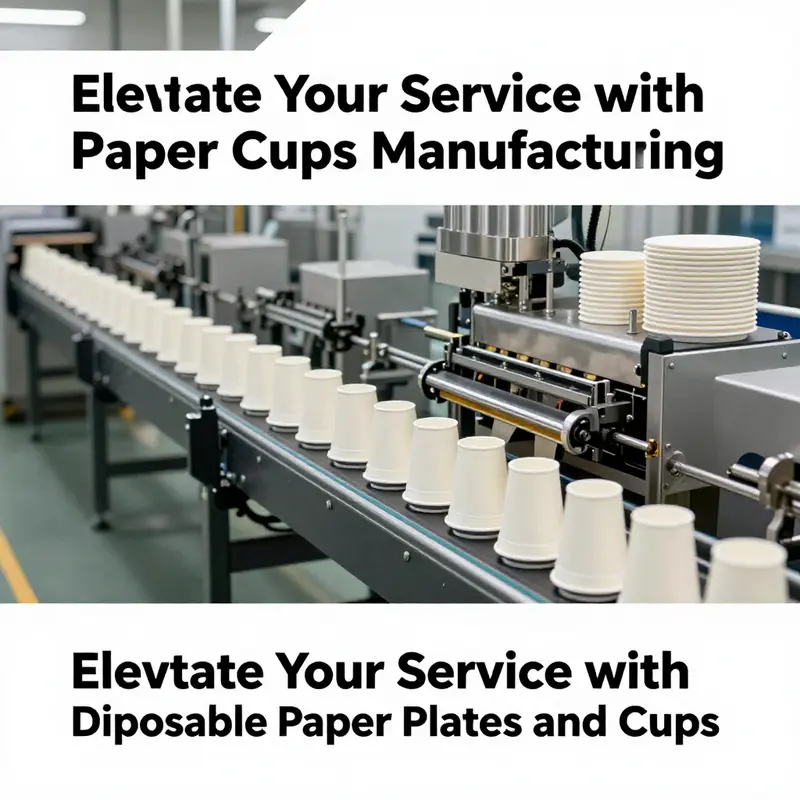
Across the disposable paper plate and cup sector, the production line is a tightly orchestrated sequence of forming, drying, sealing, and finishing that turns pulp or stock into hygienic, convenient packaging. The rising demand for single-use tableware is not driven by a single machine but by an integrated assembly of purpose built equipment that works in tandem. In this landscape, the machines are not mere tools but a synchronized system that determines speed, quality, waste levels, energy use, and ultimately the cost per unit. Manufacturers who master this system can scale while meeting stringent environmental expectations, and they can do so without sacrificing the consistency that food service brands require. The core machinery components form the backbone of this system, each with a distinct function that feeds into the next step, creating a flow that minimizes handling, reduces downtime, and optimizes material utilization. The central machine in the plate line, the paper plate making machine, is responsible for shaping the plate from a sheet or pulp with controlled heat and pressure. It relies on a mold cavity to impose the precise curvature and edge geometry that define the plate’s ability to hold sauces without leaking, while also ensuring rigidity and stackability. Modern variants integrate automated feeding systems, which align pulp sheets or pulp molded stock with the mold, and the heating and cooling elements that drive bonding and dimensional stability. A cutting or trimming mechanism then removes excess material and smooths edges, yielding a finished disk that is uniform in diameter and thickness. In high performance configurations, servo driven hydraulics replace older mechanical systems, enabling rapid, repeatable motion with minimal vibration. The most advanced setups push speeds upward to a rate that can reach a hundred or more plates per minute, while maintaining precise tolerances. The improvements come not only from stronger drives but from smarter sensing—photoelectric detectors confirm the plate is properly formed, and feedback loops regulate temperature to avoid warping during cooling. The result is a consistent, warp-free product that stacks neatly on conveyors and enters downstream packaging without manual rework. The paper cup making machine plays a complementary role in the same family of lines, engineered to shape cups from a continuous roll of paper. The process begins with feeding, where the system guides a corrugated sheet around a rotating mandrel or forming ring. The seam is glued and then ultrasonically sealed, a method that creates a robust edge capable of holding hot drinks without leakage. Automated glue stations deliver precise quantities, while sealing stations lock the seam with energy pulses that are both rapid and calibrated to the material’s thickness. The shaping step is followed by trimming, where excess paper is removed and edges are finished to a smooth, drinkable rim. In high speed configurations, laser cutting and ultrasonic sealing are integrated to yield clean, consistent edges that meet aesthetic standards as well as functional requirements. The whole cup line benefits from a tightly controlled moisture, heat, and tension profile. The materials must remain pliable enough to form around the mandrel yet stable enough to hold their shape after cooling. This balance is achieved through a heating and cooling system that is not merely a burner and a chiller, but a carefully tuned circuit that responds to feedstock variability and ambient conditions. The heating stage activates binding agents or adhesives, the cooling stage locks the geometry, and the entire cycle is repeated with remarkable precision as the cups accelerate through the line. A dedicated cutting and trimming mechanism complements both the plate and cup processes. Precision blades or laser systems remove excess material and create uniform rims with minimal burrs. The goal is to minimize waste while ensuring finish quality that reduces downstream rejection rates. The raw material feeding system is the quiet workhorse that keeps the line moving. It ensures a steady, controlled supply of pulp or paper stock to the forming station. The complexity scales with output. Smaller lines may rely on simple hoppers, while larger, fully automated plants deploy belt conveyors, synchronized feeders, and closed loop controls that match stock flow to machine cycle times. This level of synchronization helps prevent bottlenecks, maintains consistent sheet thickness, and supports predictable uptime. The interplay among these core components is where the real value lies. If the feeding system becomes a bottleneck, the forming machines may idle, even if the sealing and trimming stations are ready. If the sealing is unreliable, even perfectly formed products can fail in service. Therefore, operators and engineers prioritize not only the correctness of each module but the reliability of the interfaces between modules. In practice, this means robust mounting, vibration damping, and integrated control software that orchestrates timing, temperatures, and motion with a single operator interface. It is this harmony that enables a line to move from a pilot run to full production with confidence in repeatability and traceability. The regional specialization within China underscores how geography translates into capability for these machines. Zhejiang Province, with hubs around Wenzhou and Rui’an, has earned attention for precision automation, particularly in hydraulic and ultrasonic sealing technologies that tightly couple strength with speed. Fujian Province continues a long tradition of pulp molding expertise, translating material knowledge into robust, reliable forming modules. Shandong Province offers logistical advantages via major ports, enabling faster shipment of equipment and spare parts to Europe and North America, while Henan Province presents a model of cost efficiency and scalability that appeals to startups and mid sized producers seeking to accelerate growth without compromising performance. Buyers who seek a balanced combination of technical capability, reliability, and service should view these clusters as integrative ecosystems. Suppliers in these regions often provide a vertical chain of services, from steel molds to control panels, reducing lead times and lowering total cost of ownership. The practical reality for a plant today is not simply the selection of a single machine but the integration of a line that can respond to regulatory demands and evolving consumer preferences for eco friendly packaging materials. Advances in energy efficiency come from more than better insulation; they arise from modular designs that allow retrofits and upgrades as demand shifts or as new materials emerge. Ultrasonic sealing is increasingly favored because it creates durable seams without excessive glue use, while smart monitoring systems track temperatures, pressures, and cycle times in real time. These improvements translate into lower energy consumption per unit, less waste, and faster changeovers when switching sizes or products. Modular design supports scalable expansion, enabling a facility to begin with a mid sized line and then add stations or entire modules as sales grow. The result is a manufacturing architecture that is adaptable, and that can align with sustainability goals by adopting eco friendly stock and minimizing waste through precise cutting and edge finishing. The business case for such lines extends beyond the equipment bill of materials. It rests on the overall efficiency of the plant, the quality of the finished goods, and the reliability of after sales service. When a machine requires maintenance, predictable response times and accessible spare parts are essential. In practice, this means the supplier’s network includes online assistance, remote diagnostics, and international service teams that can reach a site within a defined window. A robust support structure reduces downtime and improves long term production planning. For entrepreneurs evaluating suppliers, the decision framework should go beyond initial price to include four pillars: technical capability, where speed, material compatibility, and control of tolerances match business needs; operational reliability, where durability and consistent output under varied load are proven; after sales service, where timely support and remote diagnosis minimize downtime; and transaction transparency, where certifications, warranties, and clear documentation validate risk management. A CCC certification, for example, acts as a safety and quality signal that is increasingly important for export readiness, while regional clusters in China offer a blended value of innovation, equipment quality, and cost competitiveness. As the industry evolves, manufacturers are increasingly experimenting with eco friendly materials that respond to regulations favoring biodegradable and compostable stock. The machines themselves must accommodate these materials, which may have different binding properties or heat requirements. In response, suppliers refine heating curves, mold designs, and bonding methods to preserve product integrity while enabling sustainable alternatives. The emerging trend also includes smart monitoring and predictive maintenance that rely on digital interfaces to optimize run times, predict part wear, and schedule service calls before a fault disrupts production. This convergence of material science, mechanical engineering, and information technology creates lines that are more than simply fast; they are resilient, traceable, and adaptable to shifting regulatory and consumer landscapes. For readers seeking a practical glimpse into packaging ecosystems that often accompany forming lines, consider exploring the new-arrival single-layer paper cup lid page, which illustrates how end use components are designed to complement the forming process and final presentation. new-arrival single-layer paper cup lid. The same logic applies to plates and bowls, as the downstream packaging and display elements influence how the forming line must perform, especially in terms of edge geometry, sealing strength, and finish quality. For operators evaluating external references to widen their supplier horizon, the Global Buyer’s Guide for Paper Plate Manufacturing Machines from China provides a comprehensive view of the market landscape, regional strengths, and the kinds of specifications commonly demanded by food service brands. It serves as a starting point for benchmarking machine configurations against industry norms. Global Buyer’s Guide for Paper Plate Manufacturing Machines from China. In sum, the machinery that drives disposable plate and cup production is not a collection of isolated devices but an integrated fabrication ecosystem. Its performance hinges on the careful selection of forming, sealing, cutting, drying, and feeding modules, and on the intelligence that coordinates them. The best lines combine regional expertise with modular design, robust after sales service, and an openness to adopt sustainable materials as they become commercially viable. When this is achieved, a plant can be agile enough to meet fast changing consumer preferences, rigorous safety regulations, and the evolving expectations of brands that prize both cleanliness and responsibility in their packaging. The journey from pulp to plate or cup thus becomes a story of equipment, control systems, and a disciplined approach to continuous improvement, with each component playing a critical role in turning raw material into reliable, market ready packaging.
Practical Sourcing Strategies for Paper Plate and Cup Manufacturing Equipment

Finding the right manufacturing equipment requires a strategy that balances technical fit, supplier strength, operational sustainability, and long-term serviceability. For entrepreneurs and established manufacturers entering disposable paper plate and paper cup production, sourcing is not a single decision but a series of coordinated choices. Each choice—from machine speed and material compatibility to regional supplier selection and post-sales support—directly shapes production continuity, product quality, and environmental performance.
Start by defining the production profile with precise metrics. A clear production profile lists target output per shift, product sizes and formats, raw material grammage range (for example, 100–1000 g/m²), and the degree of automation desired. These parameters determine whether you need a high‑speed, fully automatic paper bowl and cup former capable of 15–20 pieces per minute, or a compact, mid‑speed plate maker optimized for smaller diameters. Precise targets eliminate guesswork during supplier evaluation and prevent costly over‑ or underinvestment in capacity.
Next, match technical capabilities to your product mix. Machines differ in core functions: forming, thermal pressing, ultrasonic sealing, drying, and integrated packaging. Choose equipment that supports the materials you plan to use—virgin or recycled fiber, molded pulp blends, or plant‑based composites—and that accommodates any compostable coatings or barrier layers. Modern lines often include PLC touch screens, photoelectric detection, and closed‑loop temperature control. These features improve repeatability and reduce scrap. Servo-driven components and modular designs simplify size changes and maintenance, enabling rapid transitions between cup diameters or plate profiles.
Automation level is a strategic lever. Higher automation reduces labor needs and improves repeatability, but it raises upfront capital requirements and, sometimes, technical complexity. For medium and large operations, fully automated systems including automated feeding, forming, sealing, and packaging are standard. For startups, semi-automatic machines provide a lower entry cost and easier maintenance. Evaluate the total cost of ownership—energy consumption, spare parts availability, expected mean time between failures, and operator training needs—rather than focusing solely on purchase price.
Supplier reliability must be assessed beyond marketing claims. Investigate a supplier’s track record on three dimensions: engineering capability, production consistency, and after‑sales responsiveness. Request references from customers with similar product mixes and ask for documented performance under continuous production conditions. Where possible, arrange factory visits or remote audits to observe assembly standards, quality control procedures, and inventory management for spare parts. Factory audits reveal intangible yet critical indicators such as workforce skill, tolerance to schedule shifts, and the supplier’s capacity for rapid prototyping or customization.
Demand objective performance data. Ask suppliers for machine run sheets and test reports showing actual output rates, power consumption, yield percentages, and typical downtime causes. Performance test data should come from production with materials comparable to your planned feedstock. If suppliers offer pilot runs or trial materials—such as a limited supply for testing—use them to validate cycle times, sealing integrity, and post‑forming dimensional consistency. Pilot runs reduce integration risk when you commission a full line and provide baseline metrics for future service agreements.
Customization is increasingly important. Markets require multiple formats—single‑wall and double‑wall cups, various plate diameters, bowls with lids, and specialized deli containers. Source machines that permit configurable tooling, quick changeovers, and multi‑format programming. Modular machine architectures allow incremental upgrades: add a high‑speed forming module, integrate ultrasonic sealing, or connect an automated packing line later. This modularity protects capital while preserving scalability.
Certifications and compliance matter for foodservice packaging. Verify that prospective machines and their electrical and safety systems meet relevant standards. For manufacturing intended for export or for regulated markets, confirm that suppliers can support documentation for food‑contact compliance and industry certifications. This includes machine electrical safety, CE or similar regional approvals, and evidence that the final product can comply with food safety regulations when produced on the equipment.
After‑sales support is a critical differentiator. Equipment uptime depends on timely access to spare parts, responsive technical troubleshooting, and training for local operators. Preferred suppliers maintain a documented spare parts list, offer guaranteed lead times for critical components, and provide remote diagnostic support. Where possible, secure contracts that include a defined SLA for on‑site service visits and an initial commissioning period with hands‑on training. Remote monitoring and IoT-enabled diagnostics can shorten response times and reduce the need for onsite visits.
Consider the supplier geography and ecosystem. China remains a primary hub, with provinces such as Zhejiang, Fujian, and Guangdong hosting experienced manufacturers and dense supply chains. These regions provide fast prototyping, vertical integration, and competitive pricing. Within Zhejiang, specialized clusters deliver high‑precision automation and comprehensive turnkey lines. However, supplier selection should factor logistics, communication capability, and time zones for support. A nearby regional supplier may offer faster spare parts delivery even if per‑unit costs are slightly higher.
Sustainability considerations influence both machine choice and supplier selection. Choose equipment that supports compostable and recycled feedstocks. Machines compatible with plant‑based fibers, water‑based coatings, and minimal thermal energy per cycle reduce environmental footprint. Suppliers in certain provinces are increasingly aligning with green technology trends and can offer solutions tailored to circular-economy objectives. Energy‑efficient drives, insulation in thermal systems, and waste‑reduction features in forming and trimming operations all contribute to lower lifecycle emissions.
Risk management and contractual clarity reduce procurement hazards. Contracts should define acceptance tests, performance guarantees, warranty scopes, and penalties for missed milestones. Include provisions for spare parts kits, training sessions, and a schedule for software updates if PLC or digital control systems are included. A clear handover procedure that lists documentation—schematics, maintenance manuals, spare parts catalogs, and contact protocols—keeps expectations aligned and ensures a smooth transition to local operation.
Pilot testing and early validation are indispensable. Before final acceptance, run a pilot phase to verify production consistency, sealing integrity, and packaging compatibility. Use your own raw materials during pilot runs to ensure the machine handles real‑world variability. Pilot runs also expose integration issues with downstream packaging systems and help you refine quality control thresholds.
Finally, develop a long‑term supplier relationship. Treat the supplier as a strategic partner. Share product roadmaps and growth projections so they can advise on incremental upgrades and parts inventories. Regularly review machine performance metrics and agree on continuous improvement initiatives. A collaborative relationship ensures access to innovation—such as ultrasonic sealing, smart monitoring, and modular upgrades—while locking in reliable supply and support.
For practical verification and further supplier research, consult industry directories that list verified manufacturers and certifications. These resources provide immediate access to supplier listings and the documentation needed for due diligence: https://www.cnmia.org.cn/supplier-directory
When you combine a precise production profile, rigorous technical validation, and robust supplier vetting, sourcing becomes a competitive advantage. The right equipment, matched to production goals and backed by dependable service, creates a resilient operation that can scale with market demands while meeting sustainability objectives. For a concrete example of finished products that align with eco-conscious manufacturing and packaging workflows, explore the range of standard single‑wall paper cups available as a reference for sizing and compatibility at this product page: https://greendispopack.com/product/best-price-8oz-double-plastic-free-single-wall-paper-cup/
A strategic, evidence‑based sourcing process will reduce commissioning time, limit production surprises, and position your operation to respond quickly to changing market requirements without compromising quality or compliance.
From Fiber to Footprint: Sustainability Trends in Disposable Paper Plate and Cup Manufacturing

Disposable paper plates and cups have long been a fixture in food service and retail for their convenience, but mounting concern about environmental impact is reshaping the industry from the ground up. Today’s manufacturing landscape is defined by a push for sustainability, focusing both on raw materials and the entire product lifecycle—from design and production to disposal and recycling.
A major trend is the adoption of plant-based and renewable raw materials. Sugarcane pulp, bamboo, wheat straw, and sustainably sourced wood pulp are increasingly replacing traditional, petroleum-based products. These biomass sources are preferred for their renewability, lower carbon footprint, and, in some cases, compatibility with composting or recycling streams. For example, bagasse (sugarcane pulp) leverages a byproduct of sugar production to create sturdy, heat-resistant tableware while reducing the need for virgin fiber. Bamboo and wheat straw offer rapid renewability and specific fiber properties that improve the strength and quality of disposable items. Wood pulp remains important for premium finishes and printable surfaces.
Manufacturers also focus on eco-friendly barrier coatings to replace petroleum-based linings. Water-based and plant-derived coatings preserve essential properties like leak resistance and heat tolerance, but are easier to separate or biodegrade at end-of-life, making products more acceptable for composting or recycling facilities. This innovation helps reduce contamination within waste streams and meets the increasingly strict requirements of government regulations, such as the European Union’s Single-Use Plastics Directive and North American standards.
Bioplastics like polylactic acid (PLA), made from corn starch and similar feedstocks, are also finding wider use for making cups and coatings. PLA is prized for its compostability in industrial facilities and its lower greenhouse gas profile compared to conventional plastics. However, manufacturers and brands must educate consumers about proper disposal, since PLA’s compostability usually depends on specialized facilities and not home composting.
Supplier networks are adapting to these new material demands by integrating advanced machinery for forming, sealing, and packaging sustainable tableware. Clusters in regions like Longkou, China, are a hub for mold-makers, machinery producers, and system integrators specializing in eco-friendly substrates and coatings. The ability to efficiently produce, test, and adapt these biodegradable products is vital for global suppliers seeking to meet international standards and secure export business.
Brand buyers increasingly seek value beyond just the product—they look for suppliers who provide integrated, sustainable packaging ecosystems, not just plates and cups. This includes coordinated supplies for lids, sleeves, and transport packaging, all designed for minimal waste and maximum recyclability. Transparent supply chains, robust after-sales support, third-party certifications, and reliable international delivery are now essential evaluation criteria. Machines and production lines are expected to handle substrates from 100 to 1000 g/m², plate diameters up to 95 mm, and offer modular upgrades for new material streams.
The sustainable transition is also changing how products are marketed. Brands now differentiate themselves with clear stories about renewable sourcing, compostable coatings, and coordinated packaging solutions. End-of-life performance—whether compostable, recyclable, or biodegradable—is no longer just a technical detail but a key selling point and a regulatory requirement. Integrated packaging systems streamline production and waste management, reinforcing each brand’s environmental narrative.
For manufacturers and buyers wishing to make concrete progress, the best practices are clear: prioritize renewable, traceable raw materials, adopt eco-friendly coatings and labeling, invest in modular machinery compatible with current and future substrates, and build strong, transparent relationships with suppliers. Seeking partners with certifications and proven commitment to sustainability reduces risk and ensures readiness for shifting markets and regulations.
For an example of practical solutions in this space, see eco-friendly recyclable pulp cup holders and integrated packaging described at: https://greendispopack.com/product/eco-friendly-recyclable-pulp-2-4-cups-coffee-take-away-cup-holder/
As the industry evolves, innovations such as ultrasonic sealing, modular machine platforms, and real-time monitoring will help minimize energy use and production waste, further advancing sustainability. Success will belong to manufacturers who embed environmental responsibility into their strategic planning and daily operations, turning challenges into differentiated market value.
For further reference on supplier networks and forming machine ecosystems supporting eco-materials, see: https://www.alibaba.com/showroom/disposable-plate-making-machine.html
Biodegradable Frontiers, Smart Factories, and Customization in Disposable Paper Plates and Cups

This chapter surveys how material science advances, digital manufacturing, and demand-driven customization converge to reshape disposable paperware. Biodegradable and compostable materials derived from agricultural residues, nanocellulose reinforcement, and bio-based coatings are enabling performance parity with traditional plastics while improving end-of-life outcomes. The manufacturing ecosystem is becoming intelligent and connected, with AI-assisted quality control, predictive maintenance, and real-time traceability through blockchain supporting ESG objectives. On-demand production, modular lines, and digital twins reduce inventory, waste, and time-to-market, while enabling brands to offer personalized designs without impractical costs. The end goal is a system-level transformation where sustainable materials, smart processing, and transparent supply chains unlock durable consumer value without compromising hygiene and convenience.
Final thoughts
Understanding the manufacturing landscape of disposable paper plates and cups is crucial for businesses looking to enhance service offerings responsibly. By leveraging modern machinery, adopting effective sourcing strategies, embracing sustainability trends, and keeping an eye on future innovations, you can elevate your brand’s appeal and meet the growing demands of environmentally conscious consumers. Choosing reliable partners in this space will not only streamline operations but also solidify your place in a competitive market, making your service stand out.