
Recycling Amazon’s paper packaging is a crucial practice for businesses aiming to contribute positively to the environment. This guide will discuss essential recycling procedures, delve into the environmental impacts of recycling, clarify consumer responsibilities, explore the challenges faced in recycling efforts, and provide insights into the future of Amazon paper package recycling. As bubble tea shops, beverage chains, restaurants, food trucks, catering services, event planners, and corporate procurement teams, understanding these facets will not only elevate your sustainability initiatives but also resonate well with eco-conscious customers.
null
null
Measuring the Real Footprint: How Recycling Paper Amazon Packages Lowers Environmental Cost
Energy, transport and design converge in the lifecycle of paper shipping materials, and recycling plays a pivotal role in reducing their environmental cost. From the tree to the curb and back into new paper, each step produces emissions and consumes resources. Understanding where the largest impacts occur clarifies how recycling paper shipping packages can make a measurable difference.
Life cycle assessment (LCA) is the tool that turns assumptions into numbers. When applied to paper packaging, LCA traces environmental inputs—energy, water, and materials—and maps emissions released to air and water across production, transport, use and end-of-life. Robust studies show that the main hotspots are concentrated in a few linked stages: energy used during paper production, fossil fuel consumption for steam generation, moving recovered paper to mills, and core mill operations such as recovered paper processing, papermaking, boiler operation and sludge treatment. These processes are primary sources of greenhouse gases, particulate emissions and wastewater loads. Targeting improvements here delivers disproportionate environmental benefits.
Energy sits at the center of the impact profile. Electricity powers pulping and papermaking machinery. Natural gas or other fuels produce steam for drying and chemical recovery. When that energy comes from non-renewable sources, the carbon footprint rises quickly. Reducing energy demand, switching to renewable electricity, or improving boiler efficiency cuts emissions at the source. Likewise, optimizing mill processes to recover and reuse heat and chemicals lowers both energy needs and pollution. These are technical levers with direct returns: less energy per tonne of recycled fiber means fewer emissions and lower resource intensity for every recycled package.
Transport is the next crucial variable. Collected paper must travel from homes and businesses to sorting centers, then to mills for reprocessing. The longer and more fragmented those routes, the greater the fuel use and emissions. Consolidating collection, improving logistics, and locating mills closer to urban centers reduce the miles per tonne moved. Even modest reductions in transport distance can materially shrink the lifecycle impact of recycled paper, because trucking and freight account for a significant share of total emissions for low-weight packaging.
Material quality influences outcomes, too. Recovered paper that is clean and dry requires less processing than soiled or wet paper. Contaminants such as plastic tape, foam inserts, or adhesive labels increase the energy and chemical burden during reprocessing. Encouraging consumers to remove non-paper elements and to flatten boxes reduces contamination and handling costs. This simple care at the curb can improve yield and lower the environmental toll of turning used packages back into usable fiber.
Design choices upstream affect everything downstream. Lightweight, well-fitted paper mailers and structures with protective layers built from paper instead of plastic increase recyclability and reduce shipping volume. When packaging fits a product precisely and uses minimal material, fewer trucks are needed per item shipped, and less material enters waste streams. Data-driven design choices—guided by lifecycle analysis—help balance protective function and resource intensity. Shifts to recyclable paper-based cushioning and multi-layer paper mailers that avoid plastic laminates are practical examples that reduce both shipping mass and end-of-life complexity.
Scaling these design improvements across high-volume operations creates visible impact. When millions of lightweight paper mailers replace bulkier alternatives, aggregate benefits emerge: lower fuel consumption during transport, less landfill pressure, and higher recovery rates for recyclable fiber. Community recycling infrastructure must keep pace, however. Accessible drop-off points, clear labeling and municipal sorting capacity ensure the recovered material makes its way back into mills instead of into residual waste.
There is also a systems-level argument for preferring recyclable paper over conventional plastic in many shipping applications. Plastics can be more difficult to recycle due to mixed polymers, contamination and limited recycling streams for flexible plastics. Paper, by contrast, is widely accepted in curbside programs and is easier to reprocess when it remains uncontaminated. Prioritizing paper where it functionally fits often yields measurable reductions in lifecycle environmental burdens.
Economic and policy factors shape the pace of change. Investments in recycling infrastructure, incentives for recycled-content use, and regulation that favors recyclable materials all accelerate adoption. When mills can reliably source high-quality recovered fiber, they can produce recycled paper at scale with lower environmental footprints. That commercial certainty encourages designers and shippers to choose recyclable formats, reinforcing a positive feedback loop between supply and demand.
Practical consumer behavior also matters. Flattening boxes to save space, removing bulky internal plastic or foam inserts where possible, and keeping paper dry all improve recyclability. Even where small amounts of tape or labels are acceptable, minimizing contamination increases yield and reduces processing energy. Clear, consistent guidance from shippers and municipalities reduces confusion and boosts participation in recycling programs.
Finally, measuring progress demands transparent data. Using standard LCA methods and recognized impact assessment baselines allows meaningful comparisons over time. When companies and municipalities report reductions in package weight, increases in recycled content and the number of recyclable formats adopted, those metrics provide concrete evidence of environmental improvement. They also highlight where further gains are needed—be it energy sourcing, logistics efficiencies or expanded local recycling services.
Integrating design, operations and community recycling systems creates an effective pathway to reduce the footprint of paper shipping materials. Energy efficiency and cleaner energy sources at mills, shorter and smarter transport routes, higher-quality recovered paper streams and packaging designed for recyclability together lower emissions and conserve resources. Consumers and communities play a vital role by following simple practices that preserve the value of recovered fiber.
For practical examples and products aligned with recyclable paper packaging principles, see this resource on an eco-friendly cup holder designed for recyclable paper cups. This type of ancillary packaging demonstrates how paper-based accessories can replace plastic alternatives and support a circular material flow.
For deeper, company-specific guidance on sustainable packaging and the recyclability of paper-based materials, refer to the official sustainability resource linked here: https://www.amazon.com/sustainability/exchange
Closing the Loop: The Consumer’s Role in Recycling Amazon’s Paper Packaging
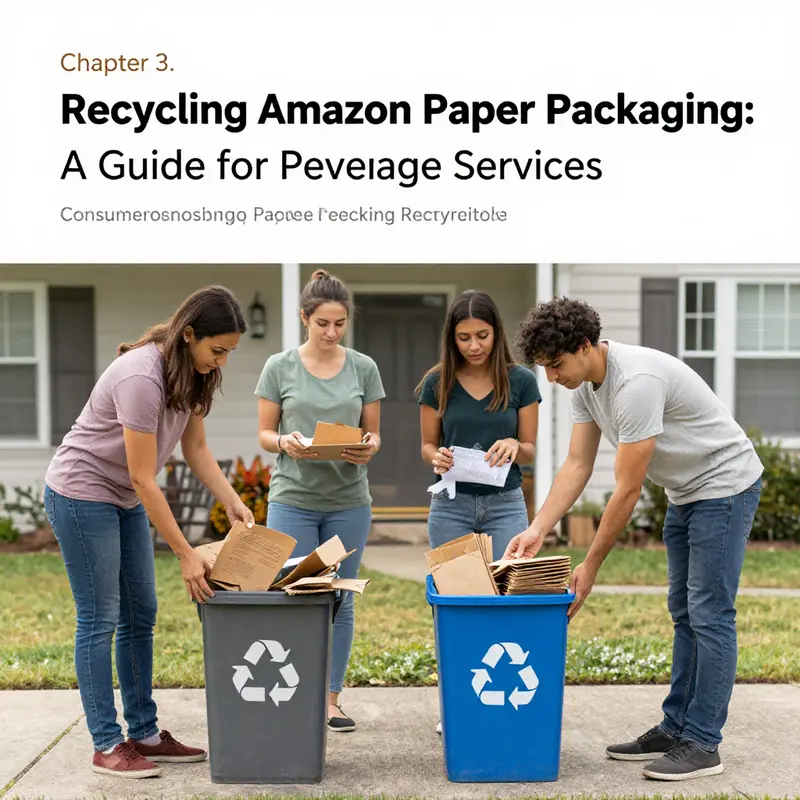
When we follow the path of a paper package from order to reuse, the question becomes not only if it can be recycled but whether everyday habits actually close the loop. Amazon’s packaging design aims for compatibility with curbside streams and straightforward handling, while households form the critical link through their disposal routines. Clean, dry paper with non-paper elements removed increases recyclability, reduces contamination, and supports local processing infrastructure.
Flattening boxes saves space and helps sorting facilities run more efficiently. Removing tape, labels, and plastic inserts minimizes contaminants in the pulp, and the overall guideline remains: prioritize clean, dry, paper content.
Design choices that emphasize standard formats and predictable acceptance reduce consumer confusion and raise the likelihood of proper disposal. Education and transparency about recycling rules empower shoppers to participate more confidently, while policy frameworks like Extended Producer Responsibility shape the landscape in which packaging is designed and recycled.
In practical terms, households can create dedicated spaces for paper grades, strip packaging of non-paper components, and verify local guidance when in doubt. These small, daily actions aggregate into meaningful gains when scaled across millions of households, helping to keep paper within the circular economy and support a more sustainable packaging ecosystem.
Ultimately, reaching higher recycling rates for paper packaging depends on the alignment of design, behavior, and policy. Clear claims, third-party verifications, and standardized recycling streams can unlock the full value of paper, turning everyday packaging into feedstock for new products.
Toward Circularity: Overcoming Challenges in Recycling Amazon Paper Packaging
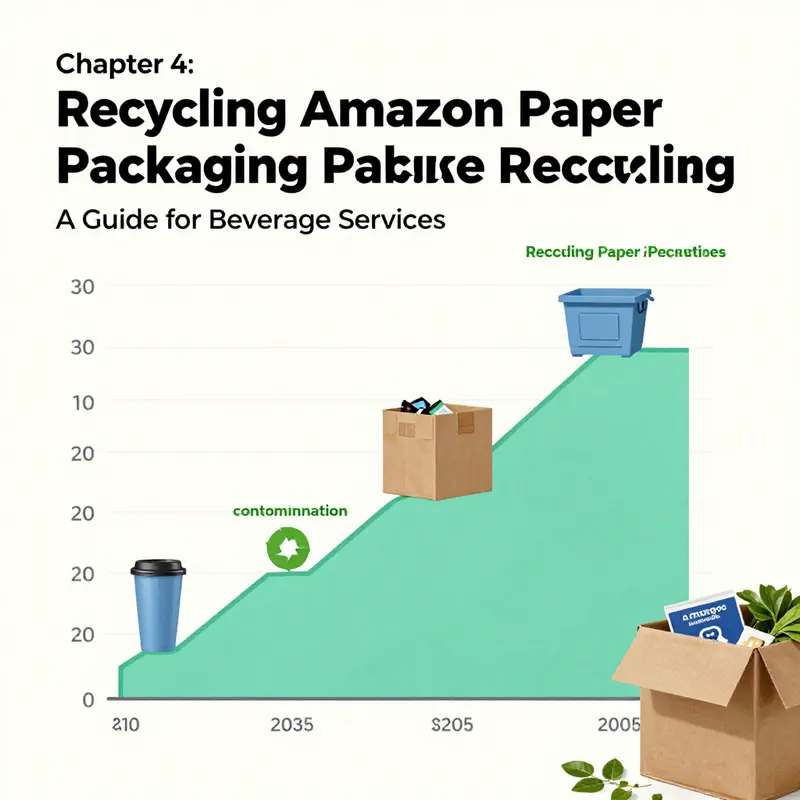
Recycling paper packaging from a global retailer is not a simple either/or proposition. It is a story of potential held back by gaps between policy, practice, and everyday behavior. The broad claim that paper packaging is recyclable is true, but the reality of turning that packaging into clean, usable fiber again depends on how it is sorted, collected, and processed. A 2025 EPA outlook underscores a stubborn truth: only about 30 percent of packaging waste is recycled in the United States. That figure points to a larger systemic issue—an ambition mismatch between what happens in homes and businesses and what the waste system can actually handle. In this light, the challenge is not merely about whether the packaging is recyclable in theory, but about enabling practical, scalable recycling in everyday life and across diverse communities. This is where the chapter’s focus becomes critical: improving awareness, aligning materials with sorting systems, and reducing the friction that keeps recyclable paper from becoming new material rather than trash. The journey toward higher recycling rates for Amazon’s paper packaging cannot be reduced to a single intervention. It requires a network approach that couples consumer education with smarter design, better infrastructure, and policy alignment that makes sustainable choices easier, not harder, for ordinary people.
The first barrier to realized recycling is consumer awareness and participation. Even with visible sustainability pledges and programs, the everyday user often lacks clear guidance on how to recycle packaging materials properly. Those gaps translate into waste that ends up in landfills, not because people want to waste resources, but because they either do not recognize the recyclables in their mailers and boxes or feel disincentivized by steps that seem inconvenient. When sorting rules vary by municipality, and when the packaging includes non-paper components—tape, plastic films, foam inserts, or stickers—the path from curbside to recycling bin becomes murky. Small missteps, like leaving a little tape on a box or not removing a poly mailer, can complicate the sorting process at facilities designed to handle mostly paper alone. For many households in rural or underserved areas, access to convenient drop-off points or curbside programs lags behind needs, heightening the sense that recycling is optional rather than essential. In this context, the numbers matter more than rhetoric: a substantial portion of packaging waste remains unrecycled because the system’s incentives for participation are misaligned with the realities of daily life. To close this gap, practical guidance and accessible resources must travel with the packaging ecosystem. Consumers benefit from straightforward instructions that emphasize the minimal steps needed to recycle and the simplicity of turning waste into raw material again. The Amazon Sustainability narrative acknowledges this imperative by pointing to resources that help people place the right materials in the right bins, but the challenge is broader than any one resource can solve. It requires a shared language about materials and a consistent message across channels so people do not have to search for guidance every time they open a package.
A second major barrier lies in the material diversity of Amazon’s packaging. The company’s procurement and fulfillment networks rely on a wide array of packaging forms to protect products during transit while trying to keep costs down. Cardboard boxes and paper padded mailers are common, but so are air pillows, foam inserts, and multi-layered films. While many of these materials are paper-based or paper-adjacent, their combination with plastics and foams complicates sorting and recycling. Municipal facilities often struggle with multi-layered packaging that resists simple separation, and some films are not accepted at all due to contamination risk and processing constraints. This complexity reduces the efficiency of recycling streams and raises the likelihood that recovered paper fibers face downcycling or disposal rather than becoming high-quality recyclates again. The design challenge here is subtle but powerful: it is about choosing materials that cleanly separate and are compatible with established recycling lines, while still delivering the protective functions needed for shipping. The push toward lighter, fewer-component packaging, a thread in Amazon’s own public sustainability communications, is a response to this reality. By reducing the number of different materials and avoiding non-paper laminates where possible, the system becomes more forgiving of sorting errors and more forgiving of imperfect consumer practices. Yet even with design simplifications, the presence of non-paper elements remains a practical pain point. Tape, adhesives, labels, and inserts may not always come off easily, and some contamination is almost inevitable. The result is a recycling stream that is less efficient and more costly to process, a reality that ripples through municipal budgets and consumer costs alike.
A third set of obstacles resides in the logistics of collecting and transporting used packaging. Amazon’s own programs—trade-in drop-offs, prepaid return labels, or in-store take-back options—improve convenience in some markets, but access remains uneven. Rural communities, smaller towns, and underserved neighborhoods often lack reliable pickup options or nearby drop-off sites. When customers cannot participate easily, participation rates stagnate. The economic and environmental calculations are nuanced. Collecting, transporting, and reprocessing used packaging incurs costs and emissions that must be weighed against the value of recovered materials. If the recovered materials are low in quality or abundant, the incentives may not align with the energy and fuel expended in the collection process. This is not a failure of goodwill but a data and logistics problem: without robust, scalable infrastructure and market demand for recovered paper, even well-designed packaging systems struggle to create net benefits. The result is a cycle where the best intentions and sophisticated designs cannot realize their potential simply because the forces that make recycling possible are not evenly distributed across the population. Addressing this reality requires a combination of policy support, targeted investments in collection points, and the design of packaging that lowers the bar for participation everywhere, not just in metropolitan centers.
Despite these challenges, innovation remains a central pillar of the path forward. The emphasis on circularity is not only about ending waste but about rethinking packaging as a resource that can re-enter the supply chain with minimal loss—a shift from a linear, take-make-dispose model to a more resilient loop. In practice, this means ongoing work in materials science to develop coatings and laminates that are truly recyclable, and in logistics to optimize the flow of used packaging from households to processing facilities. The ambition to make 100 percent of shipments net-zero carbon by 2040 marks a bold north star, signaling a broader commitment to eliminate unnecessary packaging, increase recycled content, and design for end-of-life. This vision relies on the integration of machine learning to predict packaging needs more accurately, reducing over-packaging and unnecessary materials, while simultaneously exploring alternative fibers and polymers that can be easily separated and processed. The challenge is not merely technical; it requires alignment across suppliers, retailers, municipalities, and policymakers to establish standards and incentives that reward circular practices. In this sense, the sustainability roadmap is as much about governance as it is about chemistry or logistics. It is about creating a systemic environment where sustainable choices are the default, not the exception.
For consumers who want to participate more effectively, practical steps remain essential. Flatten boxes to maximize curbside space; this simple action speeds sorting and reduces truckloads. Remove non-paper materials where feasible—plastic tapes, foam inserts, and stickers can be set aside for disposal with other waste streams when no recycling option is available. Ensure packaging is clean and dry before placing it in the recycling bin, because moisture and residues can hamper fiber quality. These habits, though small, accumulate into meaningful improvements when adopted broadly. To support this, the sustainability page and related guidance provide region-specific instructions and highlight nearby resources. For readers seeking tangible linkages between packaging design and recycling practice, one internal resource can illustrate how even small packaging components can be chosen with end-of-life in mind: eco-friendly recyclable cup holder resources. This example demonstrates how consumer-oriented materials can be aligned with sorting capabilities and recycling realities, offering a glimpse of how everyday products can fit into a more circular system. The broader takeaway is that better recycling starts with clearer guidance, simpler design, and more accessible infrastructure.
Ultimately, the path to better recycling of paper packaging hinges on bridging intent and action. It calls for a steady combination of education, design refinement, and expanded, more equitable access to recycling services. The chapter thus emphasizes that progress is not a single breakthrough but a sustained, coordinated effort across the entire packaging life cycle. When households, retailers, and municipalities share a common understanding of what can be recycled and how to sort it, the system becomes more efficient and less wasteful. The momentum behind circularity—driven by policy signals, corporate commitments, and consumer empowerment—points toward a future where the paper recovered from packaging becomes high-quality feedstock, not residual waste. In that horizon, Amazon’s packaging choices, consumer guidance, and infrastructure investments will be evaluated not only on their immediate environmental claims but on their capacity to deliver measurable, durable reductions in waste and emissions. The next chapter will explore how suppliers and retailers can standardize packaging design to align with recycling facilities, further reducing confusion and improving performance across communities of different sizes and capabilities. External reference: https://sustainability.amazon.com/waste-and-circularity
Chapter 5: The Paper Path Forward—Design, Partnerships, and AI Driving Amazon’s Packaging Recycling
The chapter that follows the exploration of Amazon’s paper packaging practices takes a long view. It treats paper as more than a disposal problem and reframes it as a design and system challenge. In this view, the future of paper packaging is not a single material swap but a coordinated ecosystem that blends smarter design, broader collaboration, and data-driven logistics. The core premise is simple: when packaging is designed to be easily recyclable, when partners share the same ambitions and resources, and when operations are guided by live analytics, the path to lower waste, higher recyclability, and steadier efficiency opens up. This is the paper path forward—the course that aligns product protection, customer convenience, and the health of local recycling streams into a cohesive, scalable approach.
Design decisions in this future are not cosmetic. They are functional choices that determine whether a shipment can re-enter the circular economy with minimal friction. Fiber-based protective materials, already central to Amazon’s strategy, stand as evidence that a robust, recyclable packaging stack can replace non-recyclable alternatives without compromising safety. The aim is to reduce plastic reliance while preserving the integrity of items during transit. As teams test and refine packaging at scale, the emphasis shifts from simply meeting a shipment’s needs to aligning those needs with the capabilities of community recycling systems. In practical terms, this means lighter boxes, fewer mixed materials, and more packaging that can be readily separated and processed by curbside facilities. It also means acknowledging where closures, tapes, or inserts might block recyclability and designing around those constraints so that what arrives at the curb is truly recoverable.
One of the most consequential shifts in this vision centers on collaboration. The Recycling Partnership’s expanded role—supported by new funding from major corporate actors—signals a broader conviction that changes in packaging can only be sustained through collective investment. By channeling resources toward expanding curbside recycling, improving sorting technologies, and strengthening consumer education, the partnership helps knit together dispersed municipal programs into a more coherent nationwide recycling infrastructure. In this frame, Amazon’s role extends beyond reducing its own waste; it becomes a catalyst for improvements that benefit diverse communities, including areas that historically faced barriers to effective recycling. Such collaboration creates a more predictable, efficient system for paper streams and reduces the friction that often makes recycling seem burdensome or unreliable to the consumer. The practical upshot is a higher likelihood that the paper components of a shipment will find a second life in a local facility rather than ending up in a landfill.
In the same breath, the internal progress documented by the company’s Sustainable Impact Report shows a disciplined, incremental tightening of the packaging portfolio. A marked advance has been the near-elimination of plastic air pillows from shipments, completed by the end of 2023, with a broader transition to fiber-based protective materials across multiple fulfillment centers. This shift not only reduces plastic waste but simplifies end-of-life processing for consumers, who encounter more uniform, paper-based packaging when opening orders. The next milestone—targeting 100% recyclability in device packaging by 2025—illustrates a clear, time-bound aspiration that nudges designers and operations toward ever-higher standards. Yet the journey remains nuanced. Heavier items and certain configurations still require non-recyclable inserts to ensure protection in transit, underscoring the need for ongoing research into paper-based alternatives that can deliver equivalent performance without compromising recyclability.
A crucial lever in this ongoing evolution is the increasingly sophisticated use of data analytics and artificial intelligence. Packaging decisions are no longer guided by static rules but by real-time patterns in order types and fulfillment flows. AI helps teams determine the optimal box size for a given mix of products, reducing overpacking and minimizing waste—both in materials and in energy consumed during production and transport. At the same time, the rollout of reusable outbound carts offers a practical alternative to single-use containers, further shrinking the non-inventory waste that often accompanies fast-moving, high-volume operations. This data-informed design loop is not only about efficiency; it is about enabling a packaging system that adapts to changing product assortments and shifting consumer expectations without sacrificing recyclability.
An equally important dimension concerns the broader aim to ship more products directly in their original packaging. This strategy—where possible—eliminates redundant packaging layers supplied by the retailer and brings the packaging directly into the consumer’s hands in a form that is already compatible with recycling streams. The current progress toward this goal is a meaningful indicator of what is technically feasible at scale. Globally, the share of products shipped with no extra packaging is clearly rising, while regional figures in the United States and Canada reflect a steady, purposeful climb. The implication for the recycling system is straightforward: with fewer packaging layers to separate and sort, the chance of accurate recycling increases, and consumer confusion decreases. When customers encounter packaging that is easier to dispose of, it reinforces the behavioral patterns that recycling programs rely on to maintain high recovery rates.
Yet the narrative remains grounded in the everyday realities of households and communities. A consistent decline in the average weight of single-use plastic packaging per shipment—recorded as a notable reduction from year to year—signals the tangible environmental payoff of these coordinated efforts. The 9 percent decrease between 2022 and 2023 may seem modest at first glance, but it represents a compounding effect when multiplied across millions of shipments. Each incremental improvement in material selection, each reduction in unnecessary wrap, and each acceleration in recycling processes creates a ripple effect through the entire supply chain. The chapter’s thread is simple and powerful: smarter design, stronger partnerships, and precise, scalable use of technology converge to make the packaging system more resilient and less wasteful over time.
This integrated approach is not merely a collection of isolated tactics; it is a philosophy of packaging as a system. Designers, logistics managers, and sustainability leaders increasingly share a common language about recyclability, material flows, and the end-of-life realities of curbside programs. They recognize that policy levers, too, matter—a reminder that the long-term health of recycling streams depends on community rules, standardized sorting practices, and consistent consumer guidance. In practice, this means clear labeling, predictable material streams, and straightforward recycling instructions that empower customers to participate with confidence. The consumer education piece, often taken for granted, is a critical component of the future-facing packaging framework. When shoppers understand what can and cannot be recycled, and when local guidelines align with corporate packaging choices, the likelihood of successful material recovery improves dramatically.
Within this evolving landscape, one can envision a more seamless alignment between what is designed for recycling and what actually gets recycled. A practical example is the growing emphasis on packaging that dovetails with curbside capabilities, such as fiber-based protection that also serves as a material that local facilities can readily process. To illustrate the breadth of this shift in a tangible way, consider a practical, recyclable packaging option that aligns with consumer expectations for convenience and sustainability. eco-friendly-recyclable-pulp-2-4-cups-coffee-take-away-cup-holder — a product example that embodies the kind of design thinking that underpins the broader strategy. It is a reminder that the push toward recyclable packaging is not abstract; it is grounded in concrete, usable forms that fit into daily life while aligning with recycling infrastructure.
As the chapter looks to the years ahead, the synergy of design, technology, and policy becomes the compass. A smarter system will not only reduce waste and improve recyclability but also create a more predictable supply chain for recyclers, municipalities, and customers alike. It will require continued transparency about progress, ongoing investments in sorting and collection, and a willingness to test, fail, and reframe. The ultimate aim is to move toward greater direct packaging in original formats where feasible, a consistent reduction in plastic usage, and a fabric of partnerships that can mobilize resources quickly in response to new recycling science and regional differences. In this sense, the future is not a fixed destination but a dynamic pathway, one that bends toward greater circularity as data, design, and collaboration sharpen the edges of what is possible.
For readers seeking a broader sense of how these partnerships and investments translate into practical outcomes at the community level, the external literature on corporate collaboration with national recycling initiatives provides valuable context. It underscores the idea that private-sector leadership, when aligned with public infrastructure and consumer education, can accelerate improvements far beyond what any single actor could achieve alone. The broader takeaway is that the paper pathway is not merely an operational choice; it is a strategic commitment to a more resilient, inclusive, and transparent recycling network that supports sustainable consumption at scale.
External resource: https://www.recyclingpartnership.org/news/amazon-international-paper-starbucks-join-recycling-partnership
Final thoughts
As the beverage industry continues to evolve and adapt to eco-conscious consumer demands, recycling Amazon paper packaging is more critical than ever. By understanding and implementing proper recycling techniques, businesses can help reduce environmental waste, improve sustainability efforts, and appeal to a growing base of eco-friendly customers. Embracing these practices not only contributes to a healthier planet but also enhances brand reputation in a competitive market.