
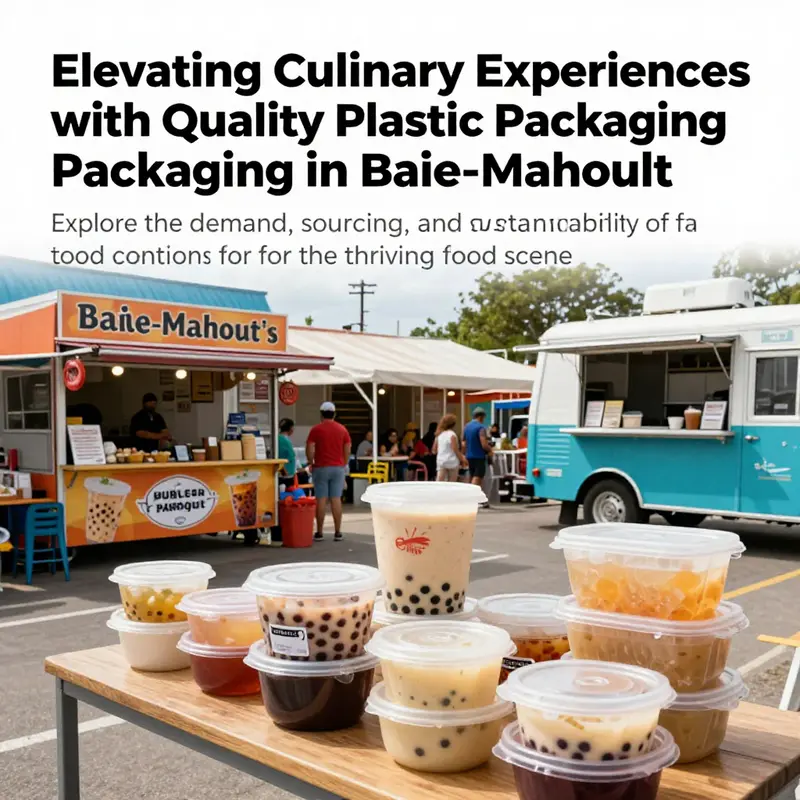
In Baie-Mahault, France, the culinary landscape is vibrant, thriving with bubble tea shops, restaurants, food trucks, and catering services. As the demand for high-quality plastic food packaging containers continues to grow, it is essential for businesses in the food and beverage sector to prioritize not just aesthetics but compliance and sustainability. Understanding the market demand for these containers, effective sourcing strategies, and evolving regulations around sustainability can significantly enhance your operational efficiency and customer satisfaction. This article provides an in-depth overview that will guide you through these critical aspects to assist you in making informed decisions for your business.
Demand, Regulation and Responsible Sourcing: Plastic Food Containers for Baie-Mahault’s Market
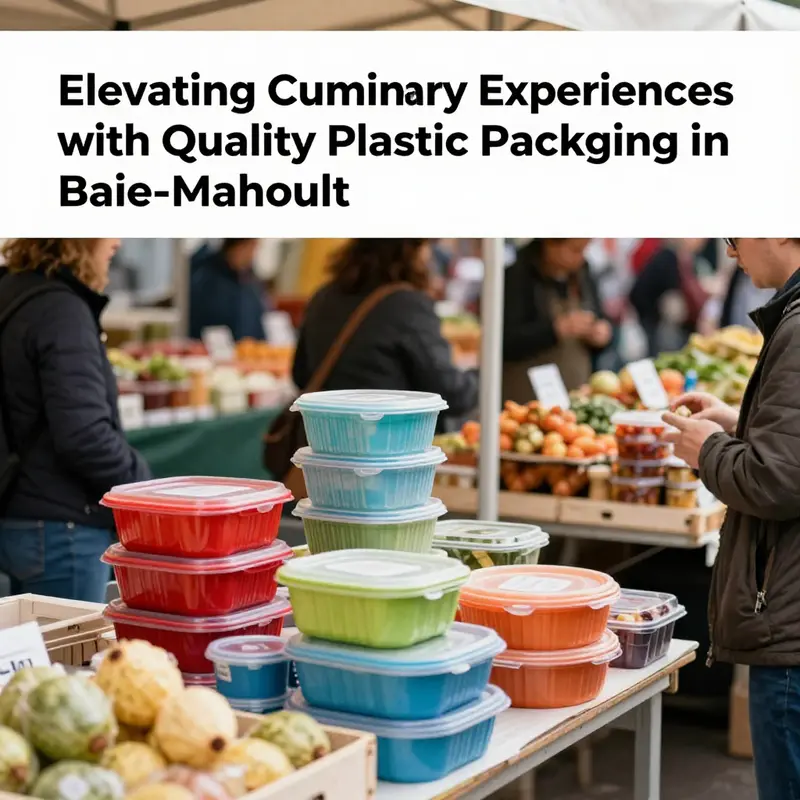
Demand, Regulation and Responsible Sourcing: Plastic Food Containers for Baie-Mahault’s Market
Baie-Mahault’s appetite for plastic food packaging follows wider French consumption patterns, yet local realities shape how demand translates into procurement choices. The island’s restaurants, small retailers, take-away vendors, and household shoppers seek containers that combine safety, convenience and cost-effectiveness. Simultaneously, French and EU rules push suppliers toward recyclable materials, documented compliance, and participation in circular systems. This chapter weaves those forces into a coherent view of what buyers in Baie-Mahault need to know when selecting plastic food containers, and how suppliers must adapt to meet both market expectations and regulatory obligations.
Consumer and commercial demand in Baie-Mahault mirrors national momentum: convenience-driven formats, ready-to-eat meals and growing food delivery services generate steady use of single-serve and multi-portion packaging. National figures show the disposable food packaging segment expanding, reflecting preference for lightweight, transparent packaging that displays food while protecting it. For local restaurants and street vendors, clear plastic tubs and clamshells made from polypropylene (PP) or polyethylene terephthalate (PET) suit salads, prepared meals and cold desserts. For retailers and food processors, rigid containers in multiple sizes provide stackable, sealable solutions for bulk and portioned goods.
Price sensitivity is real. Large-volume manufacturing and global supply chains have pushed unit costs down, enabling competitive pricing even after freight and duties. Buyers who order at scale can access very low per-unit prices, which matters for high-turnover businesses. But cost alone no longer wins contracts. Buyers now weigh price against compliance documents, material transparency, reuse potential, and end-of-life recycling claims.
Regulation frames what is acceptable in ways that directly affect sourcing. France enforces strict rules on materials intended to contact food. European frameworks such as the Single-Use Plastics Directive and REACH, along with French law, limit non-recyclable formats and require clear labeling and traceability. In practice, that means containers must be made from food-grade resins, avoid restricted additives, and — where feasible — incorporate recycled content without compromising safety. Producers operating in or shipping to Baie-Mahault must align product specifications with EU food contact material rules and with national EPR obligations that require producers to fund waste collection and recycling systems.
Food safety is non-negotiable. Containers must use materials certified for food contact. Typical choices include PP (marked PP #5), PS (polystyrene) for certain rigid trays, and PET for transparent containers. Acceptance of recycled content depends on migration testing and regulatory approvals; recycled polymers must meet the same food-contact safety standards. Buyers should insist on documentation that proves compliance: material safety data sheets, certificates from recognized labs, and migration test results demonstrating that the product does not transfer harmful substances to food under intended conditions of use. These tests are particularly important for hot-fill applications and oils, where migration risk rises.
Sustainability credentials now carry weight equal to traditional certifications in procurement decisions. Businesses in Baie-Mahault evaluate suppliers on recyclability statements, lifecycle assessments, and certifications such as ISO 14001 or environmental product declarations (EPD). These credentials show a supplier’s commitment to environmental management and provide metrics that buyers can use in their own reporting or to satisfy corporate responsibility requirements. For many local buyers, the ability to show customers that packaging is recyclable or contains post-consumer recycled content is a differentiator.
Extended Producer Responsibility (EPR) reshapes the economics of packaging. Under EPR, manufacturers and importers must contribute to the cost of collection and recycling. For buyers in Baie-Mahault, this means price offers from suppliers often embed EPR fees or require the supplier to register products with the relevant French schemes. Local businesses should confirm who carries EPR obligations: supplier, distributor, or the importer. Failure to address EPR correctly can produce unexpected costs and compliance headaches later.
Procurement strategy should incorporate a layered evaluation of suppliers: certification, testing, material sourcing, and logistics capacity. Buyers should require proof of compliance with EU food-contact legislation and ask for third-party test reports such as migration tests, heavy metal analyses, and identification of any intentionally added substances. ISO 22000 or similar food-safety management certifications add confidence for food processors. For environmental claims, request EPDs or recycled-content chain-of-custody documentation.
Customization matters. Many food service operators in Baie-Mahault need bespoke formats: lids that seal tight for delivery, tamper-evident closures for hygiene, or printing for branding and labeling. Suppliers capable of offering custom molds, printing, and secure closures add value. When customization relies on adhesives, inks, or coatings, each additional material must be evaluated for food-contact safety. Buyers should require sample approval, followed by pilot orders and batch testing to confirm that mass-produced parts match approved samples.
Logistics and import considerations are practical constraints. Baie-Mahault imports much packaging through overseas suppliers. Lead times, freight mode, customs duties, and import paperwork influence total landed cost. Suppliers who can manage consolidated shipments, provide export documentation, and navigate French import regulations simplify procurement. Buyers should confirm that suppliers handle export compliance, provide commercial invoices and certificates of origin, and can support CE or other declarations where needed. In many cases, working with suppliers experienced in exporting to France reduces delays at customs and ensures documentation aligns with French authorities’ expectations.
Alternative materials and hybrid solutions are increasingly relevant. As regulatory pressure on single-use plastics grows, many operators look to compostable paper bowls, coated cardboard, or hybrid designs combining a paper body with a PET or PP lid. These formats can satisfy both convenience and environmental goals, provided buyers verify the entire system’s end-of-life path. A compostable paper bowl that uses a non-compostable lid creates confusion and undermines sustainability claims. Similarly, a container labeled recyclable must be compatible with local recycling streams; otherwise, recyclable claims are misleading.
To illustrate, some buyers opt for coated kraft paper bowls with fitted lids for hot soups and salads; these perform well for take-away and can carry strong sustainability messaging when made from responsibly sourced fiber and clearly labeled. If a plastic lid is used for clarity and sealing, the supplier should provide guidance on correct separation and disposal in French recycling systems. For operators prioritizing minimal plastic, paper-only systems with barrier coatings designed to be recyclable or compostable are viable alternatives. In such cases, suppliers should provide certification and testing for compostability or recyclability under the conditions that apply in France.
Testing and traceability must be routine. Each production batch should carry traceable identifiers so any quality issue triggers a fast recall or containment. Traceability helps with EPR reporting and with answering customers’ questions about materials. It also backs up supplier claims during audits. Supply agreements should define acceptable tolerances, testing frequency, and responsibilities for non-conforming goods.
Small and medium enterprises in Baie-Mahault can benefit from buying consortia or shared logistics. Pooling orders reduces unit costs and spreads compliance overhead. For example, several neighborhood food vendors might coordinate orders to meet large minimum order quantities that unlock lower per-unit pricing. Shared procurement can also centralize quality assurance tasks, so a single independent lab test covers multiple buyers.
When evaluating overseas suppliers, French buyers should prioritize those who demonstrate an understanding of EU regulatory frameworks and who provide appropriate paperwork. Important documents include: certificates of compliance with EU food-contact regulations, test reports for substance migration, material composition reports, and certificates from relevant international standards bodies. Suppliers who can show prior shipments to France or who maintain European distribution centers are often easier to work with.
Cost management remains a key driver, but total cost of ownership must be the lens. Low unit price can hide costs: non-compliant materials can trigger fines, EPR misallocation can create liabilities, and poorly designed packaging can increase food waste or damage goods. Buyers should model scenarios that include disposal or recycling costs, handling inefficiencies, and potential compliance penalties. This approach tends to favor suppliers who invest in quality control, can demonstrate reductions in lifecycle impacts, and who offer reliable logistics.
Procurement teams can use a simple checklist during supplier selection: confirm food-grade resin type; verify migration and safety testing; assess recyclability and recycled content claims; check environmental certifications; confirm EPR and export documentation; test sealing and durability for intended uses; and validate traceability. Conduct site visits or virtual audits when possible. Insist on written warranties covering safety and compliance.
Marketing and consumer communication also matter. Labels must meet French requirements, including information on materials and disposal instructions that align with local sorting schemes. Clear labeling reduces contamination in recycling streams and helps customers dispose of packaging correctly. When using mixed-material designs, provide explicit guidance on how to separate components. For operators wanting to highlight environmental credentials, use verified claims and avoid vague terms like “eco” without substantiation.
Finally, future-proofing procurement decisions pays off. Regulatory trends show continued tightening around single-use plastics and expanded producer responsibility measures. Choosing materials that are easier to recycle in local systems, investing in reusable or refillable models, and designing for material recovery protect businesses from sudden compliance costs. Suppliers that can demonstrate continuous improvement in material science, reduced carbon footprint, and engagement with circular initiatives offer partners for long-term supply.
For Baie-Mahault buyers balancing price, safety and sustainability, pragmatic choices prevail. Prioritize suppliers that provide robust compliance documentation, third-party test results, clear labeling and a willingness to support EPR responsibilities. Where possible, trial hybrid or paper-based alternatives that integrate well with local waste systems. Consider collaborative purchasing to access lower unit prices while maintaining rigorous quality checks. Finally, staff training on correct sorting and disposal completes the chain: well-designed packaging only delivers environmental benefits when end users dispose of it correctly.
For buyers interested in low-plastic alternatives that still fit take-away and retail needs, consider exploring coated paper bowls with secure lids as an option to reduce plastic use while maintaining performance. A practical example can be found in readily available kraft paper bowl designs that come with lids and can be sourced with eco-friendly credentials. See a disposable kraft paper bowl with lid for an example of a hybrid, low-plastic offering that balances convenience and reduced plastic footprint.
For authoritative guidance on applicable packaging regulations, EPR schemes and environmental compliance in France, consult the official resource of the French Ministry for Ecological Transition: https://www.ecologie.gouv.fr
Global Watch, Local Shelves: Navigating Compliance, Cost, and Convenience in Baie-Mahault’s Plastic Food-Container Sourcing
In Baie-Mahault, Guadeloupe, the lure of reliable, safe, and affordable plastic food containers sits at the intersection of global supply chains and local dining culture. This district, part of a French overseas region in the Caribbean, operates under a complex regulatory umbrella that extends far beyond its shores. The core of the challenge—and opportunity—for buyers here is to align purchasing decisions with European food-contact safety standards while still maintaining price discipline and timely availability. Plastic containers, often transparent or lightly tinted, made from materials such as polypropylene (PP), polystyrene (PS), and polyethylene terephthalate (PET), have become the workhorse packaging solutions for retail displays, take-out meals, and home storage. Success in this market hinges on balancing regulatory compliance with cost efficiency and supply chain resilience, a set of tensions that become more pronounced when sourcing from distant manufacturing hubs.
The regulatory non-negotiables begin with the European framework. Even though Baie-Mahault is geographically distant from the European mainland, EU-wide rules govern what can be used for food contact. Regulation (EC) No 1935/2004 requires that materials and articles intended to come into contact with food preserve the integrity of the food and do not release unsafe substances in amounts that could endanger consumer health. In parallel, Regulation (EU) No 10/2011 addresses plastic materials and articles specifically, detailing permissible monomers, additives, and migration limits. Buyers in Baie-Mahault must insist on batch-specific test reports that confirm the absence of undesired substances—heavy metals, volatile organic compounds (VOCs), and, crucially, bisphenol A (BPA). They also need evidence that migration testing has been performed for products intended for microwave use or freezer storage if that is part of the intended use. These requirements are not mere formalities; they are the gateway to selling into French supermarkets and dining networks that prioritize consumer safety and brand trust.
From a practical standpoint, many small and mid-sized businesses in Baie-Mahault consider a tiered sourcing strategy. Local and regional suppliers may offer logistical flexibility and faster response times for smaller orders, but the breadth of customization and scale often found in offshore manufacturing hubs remains compelling. The global electronics of modern plastics production make China a particularly attractive option. Regions such as Zhejiang (Ningbo), Fujian (Xiamen), and Henan (Zhengzhou) have built robust ecosystems for injection molding, thermoforming, and blow molding, capable of delivering food-grade, EU-compliant containers at scale. Minimum order quantities (MOQs) can be surprisingly modest—sometimes as low as hundreds of units for standard designs—yet the same suppliers can ramp up to millions when larger retail contracts or franchise networks demand it. For Baie-Mahault buyers, this scalability translates into an ability to test new formats, sizes, or sealing systems with a tempo that local suppliers cannot easily match. The flexibility of digital communication channels further accelerates this dynamic. Online exchange platforms, rapid prototype cycles, and virtual design reviews can shorten the time from concept to sale, enabling local players to refine packaging solutions that suit the specific contours of Caribbean consumption patterns while preserving compatibility with EU safety norms.
A pricing anchor that often governs decision-making in this space is the unit cost of a transparent plastic container. By early 2026, market data indicated a downward drift to roughly 0.145 USD per unit for large-volume runs, with a baseline MOQs at or above one million units. This price point underscores the cost advantage of offshore production when accompanied by rigorous quality control and documented compliance. It also highlights the importance of aggregate demand: Baie-Mahault’s food service operators, retailers, and households collectively drive the need for standardized formats that reduce SKU fragmentation and simplify restocking. Yet price alone cannot determine supplier selection. A container that costs a cent less per unit but arrives late, leaks, or fails a migration test will erode brand value and inflate total cost-of-ownership. This is especially true for a market that values freshness and safety as much as convenience.
To manage this balance, buyers should insist on a spectrum of capabilities that extend beyond price. First, material safety and certification matter. ISO 22000 certification signals robust food-safety management, while FDA-related compliance or CE marking confirms alignment with North American or European markets, respectively. Second, production agility and customization capabilities matter. In-house mold development, color matching, embossed logos, and graphic printing can convert packaging into a branding asset rather than a generic container. Third, supply chain reliability cannot be an afterthought. A supplier with a history of on-time delivery, clear lead times, and transparent communication during disruptions helps protect Baie-Mahault businesses from cascading delays that ripple through kitchens and shelves.
Sustainability and consumer perception are increasingly central to sourcing decisions in Baie-Mahault, just as they are in metropolitan France and across the EU. The global dialogue around packaging now encompasses more than functionality and safety; it extends to end-of-life considerations, recyclability, and the potential for recycled-content resins. Even in the plastic segment, innovations have broadened the palette of options. Some suppliers now offer containers made with recycled or post-consumer resins, and others experiment with resin chemistries that reduce migration risks while maintaining clarity and strength. Additionally, there is growing interest in switching to resins that enable recycling streams with lower environmental impact, and in some cases, exploring alternative materials that maintain performance while reducing ecological footprints. In Baie-Mahault, as in EU markets, the challenge is to align these innovations with regulatory requirements and local waste-management realities. In practice, this means not only verifying the chemical safety of the resin but also ensuring that the chosen packaging aligns with the region’s recycling infrastructure and labeling standards. Consumers who seek sustainable options will scrutinize packaging shortcuts that claim “green” status without substantiation, so transparent disclosures about resin type, recycled content, and end-of-life guidance become practical differentiators.
This broader view of sustainability also invites a more nuanced consideration of total cost of ownership. A container that appears inexpensive in unit price may incur higher shipping costs, longer lead times, or increased risk of product recalls if it fails to meet EU migration requirements or if inconsistent sealing compromises shelf life. Conversely, a supplier that demonstrates production traceability, batch-level testing, and a track record of stable compliance can yield dividends in reputational risk reduction and fewer product recalls. In the Baie-Mahault context, where local businesses often serve as the bridge between Caribbean consumers and EU-sourced products, the cost of non-compliance can be steep. A batch that triggers a recall or regulatory hold disrupts operations in restaurants, convenience stores, and households that rely on predictable, safe packaging for daily routines.
The sourcing journey for Baie-Mahault thus resembles a careful navigation of a map where every stop—regulatory clearance, supplier capability, production lead times, and sustainability claims—needs to be validated through evidence. A practical approach begins with clearly defined specifications. Buyers should articulate their intended uses (microwave, freezer, boiling water compatibility), the preferred resin family, desired clarity or color, and the level of sealing integrity required for leak resistance. They should specify whether the packaging will bear branding through embossing or printed graphics and whether a custom lid, venting mechanism, or child-safety feature is necessary. With these details in hand, parties can issue a well-structured request for information (RFI) or request for proposal (RFP) that includes needs for material safety data, migration test reports, and a schematic of the supply chain that shows sourcing origins, production steps, and distribution hubs.
The due diligence process must extend to the supplier’s corporate capabilities. Beyond certifications, buyers should seek evidence of production agility and capacity. Can the supplier adjust line speeds to meet seasonal demand peaks? Do they maintain in-house tool-and-die facilities for mold changes, thus reducing external dependencies and potential delays? Is there a robust quality-control regime with batch traceability, and can the supplier provide certificates of analysis and test data relevant to the specific products? In addition, it is prudent to probe supply chain resilience: how does the supplier manage material shortages, transport disruptions, or regulatory inspections? The best partners can demonstrate a track record of maintaining service levels during crises and a proactive approach to continuous improvement. In this sense, sourcing is as much about governance as it is about resin chemistry or container geometry.
An often-overlooked dimension is the environment in which Baie-Mahault businesses operate. The local climate, logistics networks, and port throughput can influence the feasibility of certain sourcing strategies. The Caribbean environment emphasizes robust packaging that can withstand heat and humidity during transit and on retail shelves without compromising integrity. It also incentivizes containers that minimize moisture ingress and prevent product spoilage, particularly for perishable goods or ready-to-eat meals. In such settings, the advantages of offshore production can be even more pronounced when combined with resilient logistics and well-planned inventory management. Forward-thinking buyers in Baie-Mahault adopt a diversified supplier base, combining a stable regional backbone with selected offshore partners who bring scale and advanced capabilities. Such a blended approach helps maintain continuity during regional weather events or port congestion, ensuring that retailers and foodservice channels can meet consumer demand without bottlenecks.
One practical way to illustrate this blended approach is through a phased sourcing program. In the first phase, Baie-Mahault buyers identify a core set of containers that meet EU compliance, offer reliable seal integrity, and carry necessary migration data. They may opt for a few standard shapes and sizes that cover the majority of retail and foodservice use cases, then introduce a small pilot of each new design to assess performance in local conditions. The pilot phase provides empirical data on leakage rates, ease of cleaning, stacking stability, and consumer handling preferences. It also offers a window into the supplier’s capabilities for customization and speed to market. In parallel, buyers begin exploring a secondary tier of suppliers who can provide close substitutes or alternative materials, such as glass-reinforced polymers, to hedge against resin shortages or regulatory shifts. The ultimate objective is a robust supplier ecosystem with clear escalation protocols, predictable lead times, and well-documented compliance files.
To bring this vision to life in Baie-Mahault, leveraging digital marketplaces and cross-border logistics becomes essential. International procurement platforms facilitate direct communication with manufacturers, help negotiate favorable terms, and enable rapid prototyping and testing. The ability to request sample lots, receive expedited shipping for testing, and obtain batch-level testing data is a critical catalyst for moving from concept to shelf. Crucially, platform-enabled communication accelerates the feedback loop between local buyers and offshore suppliers, allowing feasible design tweaks and more precise regulatory alignment before large-scale orders are placed. When this technological backbone is paired with a disciplined supplier evaluation framework, Baie-Mahault can achieve a supply chain that is not only cost-effective but also resilient, transparent, and aligned with EU expectations for food safety and environmental responsibility.
In the broader arc of packaging strategy, it is useful to acknowledge the trade-offs between plastic containers and alternative formats. While plastic remains dominant for its lightness, durability, and barrier properties, there is growing interest in kraft paper and other sustainable materials for certain applications. For brands exploring more sustainable lines, it is worth considering a packaging matrix that allows a portion of the portfolio to move to alternatives without sacrificing the performance required for temperature extremes or moisture control. For instance, a brand might maintain clear plastic containers for high-clarity display needs and test kraft paper bowls or compostable options for consumer-facing ready-meal lines where sustainability is a key selling proposition. This approach aligns with the broader European trend toward recyclability and compostability, while keeping Baie-Mahault’s operations anchored in the regulatory reality of food-contact safety. A practical reminder is that clear communication with regulators and waste-management partners remains essential to avoid mismatches between packaging design and local disposal streams. In practice, this means labeling that clearly indicates material type, recycling or composting instructions, and any certifications that support green claims.
As a closing reflection for Baie-Mahault practitioners, the optimal sourcing strategy emerges not from chasing the lowest price in isolation but from cultivating a trusted ecosystem of compliant suppliers, resilient logistics, and adaptable packaging formats. Cost considerations matter, of course, but they are most effective when anchored in verifiable safety data, consistent performance, and a long-term view of how packaging choices influence shelf life, consumer trust, and the environmental footprint of the entire supply chain. A well-structured approach—defined specifications, rigorous testing, multi-sourcing, and phased pilots—positions Baie-Mahault businesses to navigate the complexities of EU-market access while capitalizing on the efficiencies offered by global manufacturing capabilities. The result is a packaging strategy that protects product integrity, supports brand credibility, and opens clients to the scale and speed of international production, all while respecting the local realities and consumer expectations in Baie-Mahault.
For readers seeking a tangible entry point into the broader conversation about food-contact safety and material compliance, an authoritative overview of EU regulatory requirements and best practices is essential. This resource provides in-depth guidance on how plastic materials in contact with food are regulated across the EU and the implications for manufacturers and importers alike. (External resource: https://www.foodanddrinksafety.com/plastic-food-contact-materials-compliance-eu-regulation-ec-no-1935-2004)
Internal link note: for alternative packaging formats and a broader view of sustainable packaging options, see Kraft paper packaging options.
In summary, Baie-Mahault’s plastic food-container sourcing sits at the crossroads of global manufacturing power, EU regulatory discipline, and evolving consumer expectations. The right combination of compliant materials, proven test data, scalable production, and thoughtful sustainability considerations will enable local businesses to meet today’s demands while preparing for tomorrow’s changes in packaging technology and waste management. When approached as a coherent, evidence-based program rather than a series of one-off purchases, container sourcing becomes a strategic capability that strengthens operational resilience, supports responsible innovation, and keeps Baie-Mahault’s shelves stocked with safe, dependable packaging.
From Regulation to Redesign: Sustainable Packaging in Baie-Mahault, France
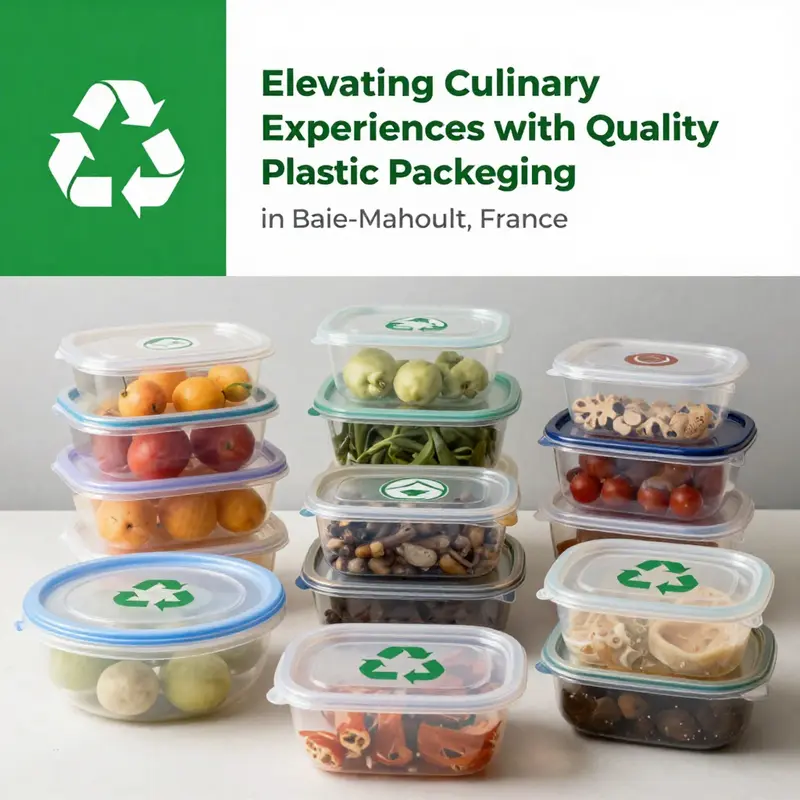
In Baie-Mahault, packaging decisions for food containers are shaped by a layered framework of European and national rules. The European Union’s Single-Use Plastics Directive (2019/904) sets a baseline to reduce problematic plastics and to encourage reusable or easily recyclable designs across the supply chain. France’s anti-waste law, known as AGEC, translates those ambitions into concrete expectations for product design, end-of-life responsibility, and supplier transparency. For local restaurants, grocers, and distributors, this means selecting materials, coatings, and formats that can meet safety requirements while fitting into existing recycling streams and waste-management infrastructure.
The practical impact in Baie-Mahault is a move away from one-off purchases toward a system view: securing robust material declarations, migration data, and conformity documentation; evaluating recyclability in the French and EU networks; and balancing cost with long-term resilience. Materials such as polypropylene (PP), PET, and certain grades of polystyrene are weighed for food-contact safety and recyclability, while recycled-content options and, where feasible, reusable designs are increasingly explored to reduce environmental footprints.
Businesses are urged to design for recyclability and to document supply chains with traceability, ensuring that products can be sorted and recovered efficiently at end-of-life. This creates an opportunity for local suppliers and buyers to partner on standardized specifications, scale, and responsible sourcing. While regulations set the guardrails, the real shift comes from thoughtful packaging design: modular formats, clearer labeling, and coatings that do not hinder recycling streams or contaminate other materials. In Baie-Mahault’s vibrant economy—where tourism, hospitality, and daily commerce intersect—adopting circular-design principles can enhance safety, brand trust, and long-term competitiveness.
Final thoughts
As Baie-Mahault continues to develop its gastronomic reputation, understanding the intricacies of plastic food packaging is vital for businesses aiming to succeed in this competitive space. By aligning with market demand, implementing informed sourcing strategies, and adhering to sustainability regulations, food and beverage businesses can not only enhance their compliance but also foster a sense of trust with their customers. The right packaging not only preserves food quality but also signifies a commitment to safety and environmental awareness. Ensure your operation is at the forefront of these trends to thrive in the evolving culinary industry.