

In the dynamic landscape of food services, successful operations hinge on quality and convenience—traits offered by divided disposable food containers. These innovative packaging solutions allow restaurants, food trucks, catering services, and beverage chains to present diverse meals while maintaining freshness and flavor integrity. This article will explore the various materials available for divided containers, the regulatory standards that ensure food safety, the implications of environmental sustainability, and the current market trends that highlight consumer preferences. By understanding these fundamental aspects, food service professionals can make informed choices that elevate their offerings and align with evolving customer expectations.
Between Compartments: Material Choices, Performance, and Environmental Trade-offs in Divided Disposable Food Containers
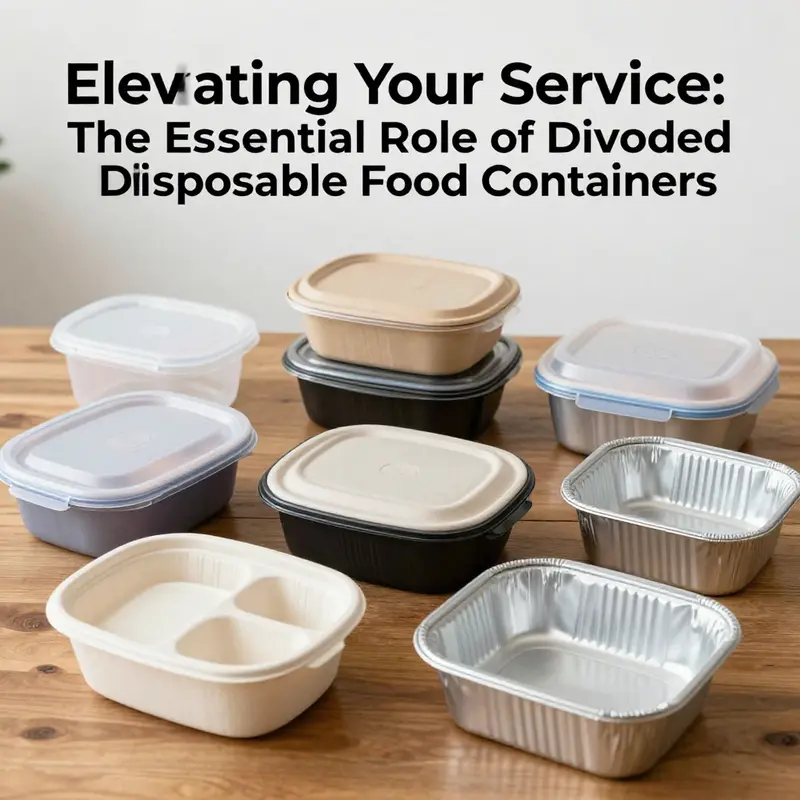
Divided disposable food containers emerged from the simple need to keep sauces, textures, and colors from mingling during transport and service. The geometry of a segmented tray influences not only appetite appeal but also how well the product performs under real world conditions, including stacking, washing, and disposal. Material choice therefore becomes a core design decision that affects safety, performance, and the lifecycle of the packaging system.
Polypropylene is a common choice for its durability, light weight, and broad compatibility with reheating and cold storage. It often tolerates microwave use and dishwasher cycles when properly certified, offering a practical path for reuse in many restaurant operations. Yet the environmental footprint depends on local recycling streams and the ability to recover material after use.
Foamed polystyrene provides strong insulation and low weight, which can reduce energy use during transport. However its recyclability is limited in many markets, and concerns about persistence and chemical leaching in certain conditions complicate its sustainability profile.
Biodegradable options from plant-based sources, such as bagasse, PLA, or fiber-based trays, aim to align with circular economy goals. They can offer composting advantages where industrial facilities exist, but heat tolerance and disposal infrastructure remain critical constraints, and costs are often higher.
Aluminum offers excellent heat conduction and oven safety, with robust performance that supports hot and crisp dishes. Its recyclability is favorable when collection streams exist, but material costs and the need for reliable end-of-life processing shape its role as a premium option rather than a universal solution.
Across all materials, regulatory compliance and end-of-life infrastructure matter as much as on-shelf performance. Food-contact approvals, migration testing, and consumer education about disposal help ensure that packaging supports safety and sustainability goals without compromising service quality.
Guardrails of Separation: Navigating Regulatory Standards for Divided Disposable Food Containers
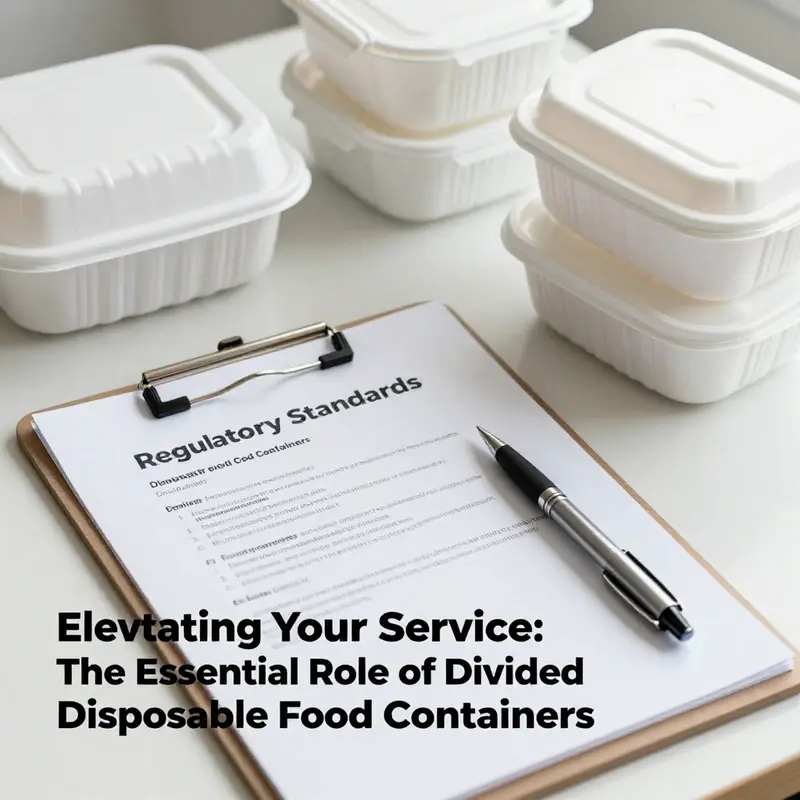
Divided disposable food containers exist at the intersection of practical design and public health, where the simple act of keeping foods apart becomes a matter of safety, quality, and consumer trust. The very purpose of a divided container—to prevent cross-contact, preserve texture, and maintain the visual appeal of diverse ingredients within one portable package—rests on a web of regulatory expectations that guide what materials can touch food, how those materials behave under typical serving conditions, and how products are tested, labeled, and traced from factory floors to dining tables. In this landscape, regulatory standards do not merely set minimums; they define a framework that aligns a manufacturer’s capability with a caterer’s needs for portion control, a restaurant’s culinary integrity, and a consumer’s confidence in safe handling from shelf to stomach. The result is a shared language of safety that supports industries as varied as hospital kitchens, school cafeterias, event catering, and on-the-mly delivery platforms, where the consequences of noncompliance can extend from a ruined menu to a public health incident and a costly product recall. The core of this framework is material composition and the behavior of those materials when they meet real-world conditions—heat, cold, humidity, rubbing, and sometimes aggressive cleaning and sanitizing regimens. When a container claims to be microwave-safe, for instance, regulators expect evidence that the polymer will not transfer harmful substances to food at typical reheating temperatures. When a lid seals and an inner wall forms a barrier to listable dressings, sauces, or moisture-laden components, the design must tolerate repeated cycles of handling and washing without degrading or shedding particles that could migrate into the food. In this sense, the divided design is more than a convenience feature; it is a test of material science, packaging engineering, and hygiene management working in concert to reduce cross-contamination and to maintain the sensory integrity of each component of a meal. The practical implications extend to ongoing sanitation protocols and supply-chain discipline. In industrial kitchens and catering operations, the ability to stack, transport, and reuse or recycle containers without compromising barrier properties or structural integrity matters as much as the basic requirement that food contact substances stay within safe migration limits. Standards pioneered in one region often ripple into others, shaping supplier choices, procurement strategies, and even the way menus are planned for batch-service or just-in-time delivery. In the United States, the U.S. Food and Drug Administration (FDA) governs the materials that come into contact with food, outlining clear expectations about what plastics and other polymers can be used in packaging and the conditions under which they may be used. The FDA’s stance is not merely about whether a material is inert, but about how it behaves during storage, heating, and exposure to fatty or acidic foods. It emphasizes limits on residual monomers and additives that could migrate into food, as well as the overall hygiene profile of the container, including its resistance to leakage, staining, and microbial harboring. The regulatory emphasis on migration is particularly salient for divided containers. A four-compartment design must guard against differential migration that could occur at the interface where a liquid dressing sits next to a dry grain or a moist salad rests alongside a protein. Even when the components are visually separated, the packaging design must ensure that any migratory substances do not compromise safety or taste in a way that would mislead consumers. Europe presents a parallel, yet distinct, regulatory philosophy. The European Food Safety Authority (EFSA) frames food contact materials with a forward-leaning emphasis on long-term exposure, cumulative migration, and the interpretation of safe levels across a broad range of years and consumer demographics. EFSA’s guidelines require a careful appraisal of all substances that may transfer from container to food, including additives in colorants, stabilizers, and processing aids that might be present in composite plastics such as multilayer or reinforced dividers. The EFSA framework complements regional regulatory bodies by underscoring the need for robust risk assessment and transparent documentation that can withstand cross-border scrutiny. Even within the spectrum of plastics—HDPE, polypropylene (PP), and other polymers—the insight regulators seek is not merely about the material’s inherent safety but about its performance history, consistency across batches, and capacity to meet both consumer protection standards and operational realities. HDPE, for example, is frequently highlighted for its favorable balance of cost-effectiveness, strength, and food-safety characteristics. It can serve as a reliable base material in many divided containers, offering predictable migration profiles and compatibility with standard cleaning protocols. Yet even HDPE is not a universal panacea. The growing interest in biodegradable and compostable alternatives—such as sugarcane bagasse, bamboo, and PLA-based composites—introduces another layer of regulatory consideration. These materials harness renewable resources and align with sustainability goals, but they often carry different heat resistance profiles and unique migration characteristics. Regulators scrutinize these materials with the same rigor as plastics, ensuring that any breakdown products or residual substances do not compromise food safety, especially under heat intended for reheating or during prolonged storage in coolers and freezers. The regulatory narrative, then, is one of balance. It weighs the performance advantages of a container against the potential risks of material migration, leaching, or structural failure under pressure or stacking. In practice, this balance translates into a set of concrete criteria that manufacturers must demonstrate through testing and documentation. Third-party testing plays a pivotal role in this ecosystem. Laboratories accredited to perform migration studies, extractables and leachables assessments, microbial challenge tests, and physical performance tests provide an independent verdict on whether a divided container complies with FDA and EFSA expectations. The testing regime typically examines several dimensions: chemical migration under various temperatures and food simulants, mechanical integrity under compression and repeated opening and closing cycles, leak resistance at the labeled working temperatures, and the container’s behavior when exposed to detergents and sanitizers used in commercial dishwashing and sanitation routines. In the context of industrial kitchens and event catering, the reliability of a divided container becomes just as critical as its safety profile. A container that seals poorly, leaks, or deforms under stacking pressure can ruin a service workflow, disrupt cold-chain logistics, and undermine trust among clients. In response, manufacturers design for transparency and practicality: features like clear lids for quick visual verification of contents, robust dividers that resist deformation from stacking, and materials and adhesives that withstand repeated cleaning cycles without compromising the barrier properties. Such design choices are often harmonized with regulatory expectations to deliver a product that performs consistently across the supply chain. The choice of material—plastic, biodegradable, or metal—also intersects with environmental considerations that regulators increasingly weigh as part of lifecycle assessments. Plastic containers, particularly PP and HDPE, offer durability and low weight, which support refrigerating, freezing, reheating, and safe transportation. Biodegradable options, while appealing in terms of end-of-life management, demand careful validation of heat resistance and degradation behavior in real-world waste streams. Aluminum, with its heat conduction and oven-safe properties, may be favored for certain heat-intensive dishes, though it can present recyclability and cost considerations that differ from plastic and bioplastic options. The regulatory landscape, therefore, is not a fixed set of lines but a dynamic framework that guides product development and market access. It requires manufacturers to stay current with evolving guidelines, to document compliance comprehensively, and to communicate clearly about the permitted use conditions—such as temperature ranges, food contact conditions, and permissible food types. In practice, compliance becomes a shared responsibility across the supply chain. Material suppliers must supply data on composition and migration potential; molders and converters must demonstrate process control and cleanliness; brand owners and caterers must ensure proper labeling, storage, and handling in line with safety standards. Across industrial kitchens, catering operations, and cold-chain logistics, compliance supports more than regulatory avoidance. It enables a culture of portion control, reduces cross-contamination risk, and contributes to a predictable service experience. When a divided container is designed with compliance in mind, the result is not merely safer food packaging; it is a packaging system that can be integrated into automated workflows, compatible with standardized dishwashing cycles, and aligned with sustainability goals without compromising safety or performance. The practical effect is a smoother procurement process, greater consistency in service execution, and a clearer roadmap for future packaging innovations. For designers and buyers, one practical takeaway is the ongoing relevance of documented migration data, temperature performance, and hygiene testing as part of vendor qualifications. This is where official resources, such as the FDA Food Contact Substances Database, become valuable references for validating material choices and usage conditions. The broader narrative also encourages a thoughtful approach to sustainability: selecting materials that align with a given facility’s disposal infrastructure, whether that means traditional recycling streams or composting facilities capable of handling biodegradable alternatives. In a mature system, choices are informed by both safety data and environmental stewardship, creating a packaging portfolio that serves the needs of diverse foodservice contexts—from school cafeterias to corporate dining programs—without compromising safety or performance. As the industry continues to evolve, standards will continue to adapt to new materials, new processing methods, and new delivery modalities. The core remains the same: a commitment to keeping separated foods safe, preserved, and properly presented, with a documented assurance trail that reinforces trust among operators, regulators, and consumers alike. For designers seeking practical illustrations of compliant packaging systems, a look at diverse packaging formats that balance function and appearance can be instructive. See an example of a divided packaging option that demonstrates how a single container can hold multiple components while meeting design and safety expectations in a way that supports efficient handling and clear visibility of contents. disposable octagonal box for restaurant food kraft paper packaging. This kind of reference helps bridge the gap between regulation and real-world application, showing how compliance, materials science, and logistical efficiency converge in a product that serves busy kitchens and fast-moving foodservice environments. The regulatory narrative does not end with compliance alone; it informs the choices that influence waste streams and end-of-life outcomes. When a facility incorporates certified, compliant materials, it also positions itself to participate in responsible waste management programs, leveraging the compatibility of certain plastics with recycling streams or the availability of composting infrastructure for biodegradable options. In this sense, regulatory standards support a holistic approach to packaging that recognizes food safety as the primary objective while also acknowledging environmental responsibilities and operational realities. For researchers, policymakers, and industry professionals, the ongoing task is to monitor and interpret the evolving guidance issued by agencies like the FDA and EFSA, then translate that guidance into practical specifications that designers and suppliers can implement. The dialogue among regulators, manufacturers, and foodservice operators must remain open, collaborative, and transparent, ensuring that protection of public health never becomes an obstacle to innovation. Rather, it becomes the shared foundation upon which improved packaging systems can be conceived—systems that keep ingredients distinct, maintain texture and flavor, and support efficient, safe handling across the entire lifecycle of a product. In this evolving landscape, the material choices for divided containers, the methods used to test them, and the clarity of the compliance narrative all contribute to a single outcome: confidence. Confidence that the container will perform under pressure, that it will not introduce unwanted substances into food, and that it will support a dining experience that meets the highest standards of safety and quality. For readers seeking direct regulatory sources to deepen their understanding, the FDA’s Food Contact Substances Database remains a fundamental reference, offering detailed information on approved materials and their usage conditions in food packaging. https://www.fda.gov/food/food-contact-materials/food-contact-substances-database
null
null
Compartmental Demand: Market Trends and Consumer Preferences Driving Divided Disposable Food Containers

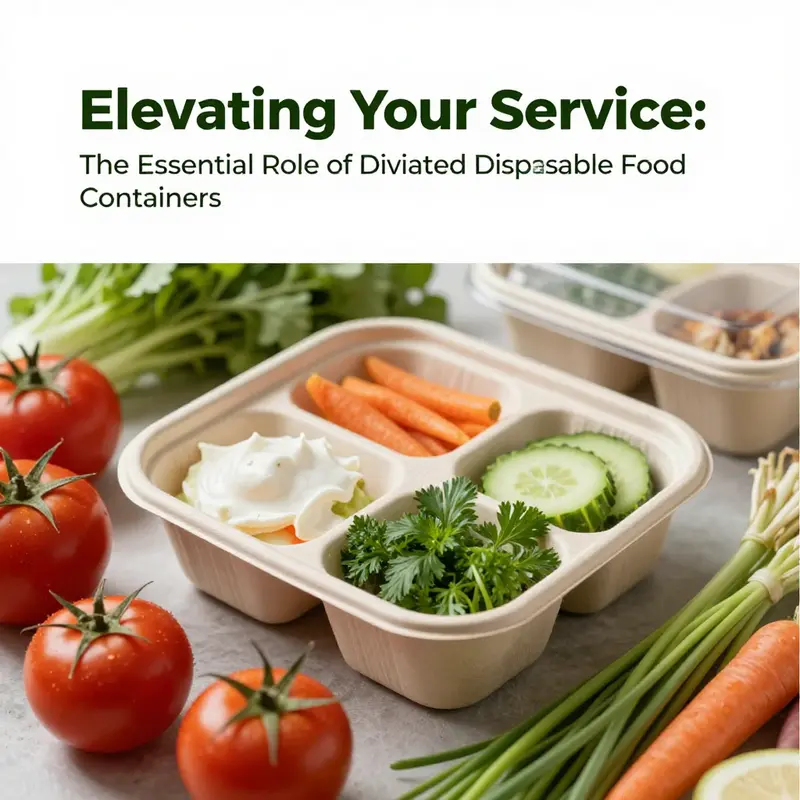
Divided disposable food containers have evolved from simple convenience items into essential tools for managing portion control, texture preservation, and rapid service. Consumers seek packaging that keeps ingredients separate without sacrificing taste, while brands pursue materials that balance performance with environmental responsibility. Sustainability and convenience drive demand for leak-resistant designs, clear labeling, and stackable forms that fit busy operations. Regional differences exist in adoption of compostable and recycled-content options, but the core drivers—separation, hygiene, and ease of use—are universal. As regulators tighten safety and material standards, manufacturers are innovating with multi-layer barriers and modular components that can be integrated into automated kitchens and large-scale catering.
Final thoughts
Choosing the right divided disposable food containers plays a crucial role in enhancing your food service operation. By considering the materials, regulatory compliance, and sustainability aspects, you can align your offerings with customer expectations and market trends. Elevating your service comes with the thoughtful selection of packaging solutions that not only preserve food quality but also resonate with eco-conscious consumers. Ultimately, investing time to understand these facets can lead to improved customer satisfaction, operational efficiency, and a positive environmental impact.