
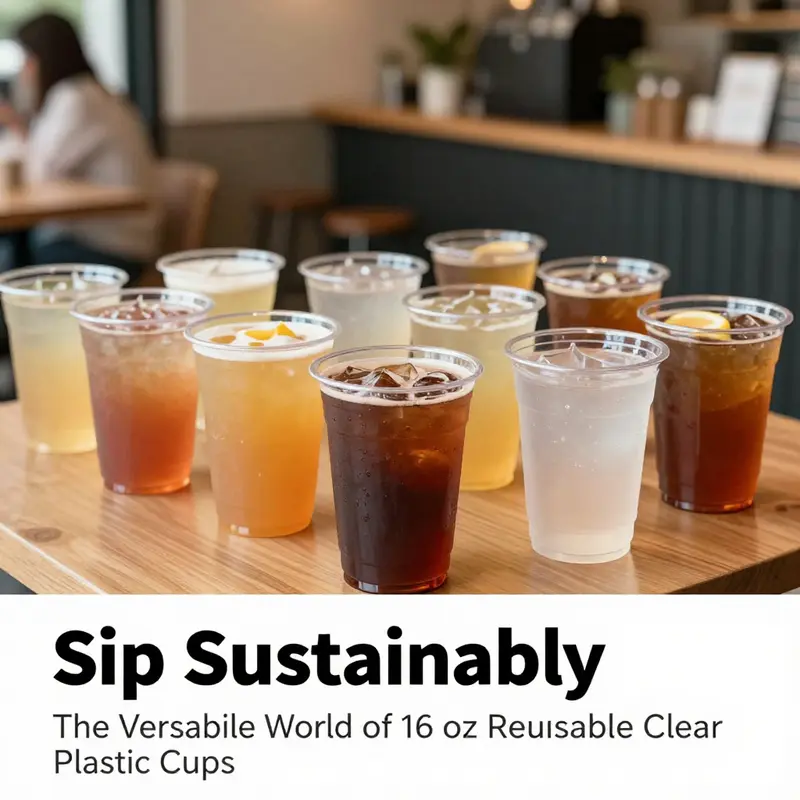
Reusable clear plastic cups have become an essential item for beverage providers, appealing to sustainability-minded consumers and business owners alike. With a capacity of 16 oz, these cups are perfect for various beverages, from bubble teas to iced coffees. This article examines the materials involved in producing these cups, especially the advantages of polypropylene and polycarbonate. We will also explore the innovative designs that enhance usability, including insulation and portability features that cater to an active lifestyle. Further, we’ll delve into the diverse applications of these cups across different industries and how they assist in promoting sustainability efforts. By the end of this discussion, readers will understand why these cups are indispensable for bubble tea shops, food trucks, catering services, and corporate procurement teams.
Clear Choices for a Reusable 16 oz Cup: Weighing Polypropylene Against Polycarbonate
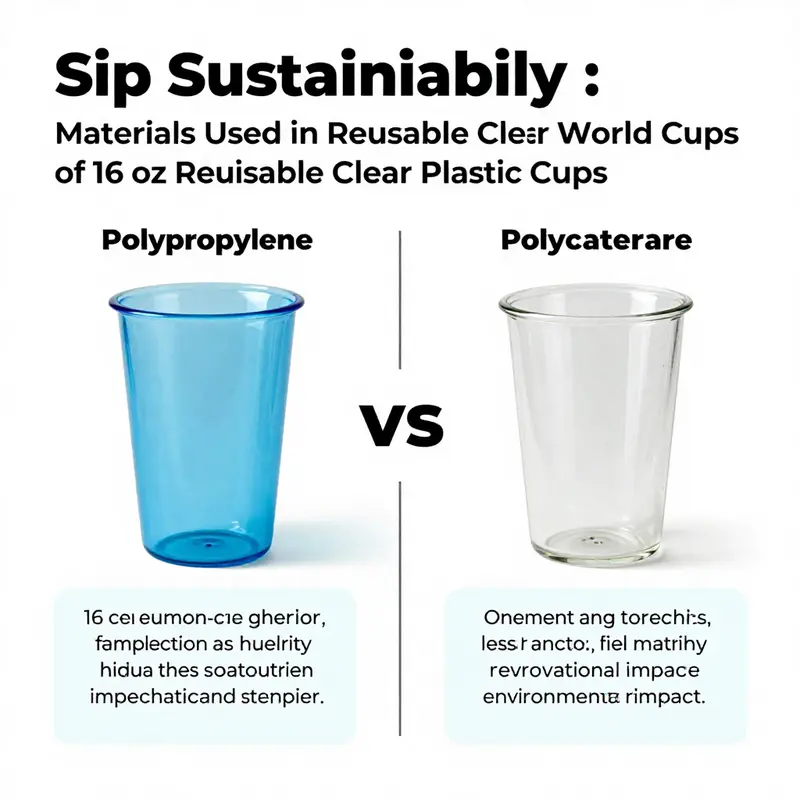
When cafés, offices, gyms, and households seek a reliable 16 oz reusable cup, the choice of material becomes more than a matter of look and feel. It shapes how the cup performs in daily life, how safe it is for long-term use, and how sustainable the practice of reusing can be. Reusable clear cups at this size are designed to balance several priorities: maintaining beverage temperature, withstanding repeated cleansing, and presenting a visually appealing, crystal-clear view of the drink inside. Two materials dominate the conversation: polypropylene (PP) and polycarbonate (PC). Each brings a distinct set of properties, and the decision between them is not merely about strength or transparency. It is a nuanced assessment of safety, durability, manufacturability, and lifecycle impact, all of which ripple through real-world use in cafés, break rooms, and homes where everyday rituals hinge on a dependable cup that feels comfortable to hold, resists heat, and can be reused many times without compromising the experience.
Polypropylene is the workhorse of many reusable drinkware designs. Its appeal begins with a practical triad: warmth tolerance, chemical stability, and a light, forgiving composition. In numerical terms, PP can handle temperatures up to roughly 160°C (320°F) without deforming, a threshold well beyond the average hot beverage moment. This heat resilience matters because a reusable cup, unlike a single-use vessel, is repeatedly subjected to hot liquids, occasional microwaving, and the wash cycles of commercial dishwashers or home dish sets. Clarity is not sacrificed at the altar of resilience; modern PP formulations are engineered to preserve a transparent or near-transparent appearance that users expect from a clear cup. The material’s toughness translates into shatter resistance, a critical attribute for a cup that will be jostled in a bag or carried in a car cup holder. In practice, that combination—heat tolerance, clarity, and impact resistance—reduces the chance of cracks or fatigue after many uses, a core advantage when durability is a top criterion.
From a safety perspective, polypropylene earns strong marks for food contact. It is widely recognized as BPA-free, a crucial distinction for a vessel designed to frame beverages, not leach chemicals into them. The BPA concern has been central to consumer conversations about plastic safety in recent years, and PP’s BPA-free profile aligns with growing expectations that reusable drinkware should not introduce synthetic hormones or other additives into daily routines. This safety posture is reinforced by regulatory and industry guidance that positions PP as a suitable material for repeated use with hot and cold drinks alike. In addition to safety, PP’s energy profile in production and its end-of-life options contribute to its appeal. The energy footprint of producing PP is typically lower than that of PC, and PP is widely accepted for recycling—marked in many places with the recycling code #5. This code signals a pathway to reprocessing into new consumer goods, helping to close the loop in a circular economy approach for reusable drinkware.
Yet PP is not without trade-offs. In terms of optical clarity, PC has the edge. PC’s inherent transparency and smooth surface yield an almost glass-like appearance that some brands prize for premium clarity. This is where PC often shines: a crisp, near-instantaneous view of the beverage, a subtly shimmery sparkle when light passes through, and a sense of premium engineering that can feel more “polished” in certain contexts. However, the same features that support that high-clarity aesthetic can complicate other dimensions of use. Polycarbonate is more prone to certain safety concerns linked to bisphenol A (BPA) in older formulations, and even as many products have moved to BPA-free sequences, the association between PC and BPA cast a long shadow in consumer perception. The industry’s cautious pivot away from PC in food-contact applications reflects a broader trend toward safer, BPA-free alternatives. When PC remains in use, it is often in contexts where its impact resistance under heavy use is prioritized and where suppliers emphasize BPA-free PC variants. The environmental story for PC is less favorable in some respects: recycling streams for PC can be more complex, and energy demands for production tend to be higher, which can influence the overall lifecycle impact of a reusable cup made from PC.
The decision between PP and PC thus hinges on how a cup is expected to behave in day-to-day use and which values take precedence for a given user or setting. In practice, the practical, everyday needs of most 16 oz reusable clear cups align more closely with PP. PP’s combination of heat resistance, safety profile, and recyclability makes it a balanced choice for long-term reuse. Its ability to withstand repeated cleaning cycles and its compatibility with common lid and straw configurations support the design goals of durability without sacrificing user comfort. The exterior of a PP-based cup remains comfortable to hold even with hot drinks, staying cool thanks to the material’s relatively low thermal conductivity and the effectiveness of any optional double-wall design. This brings us to a broader design concept that layers the material choice with structural features to optimize the user experience.
Double-wall construction, a hallmark of many reusable drinkware designs, operates synergistically with the chosen polymer. For PP, the double-wall approach amplifies insulation: the inner surface that holds the liquid is physically separated from the outer wall, creating a pocket of air that inhibits heat transfer. This not only preserves beverage temperature longer but also minimizes exterior heat transfer to the hand, a crucial factor when serving hot drinks or beverages near the boiling point. In many environments, this insulation is a practical enhancement that reduces the need for a coaster or sleeve and contributes to a more comfortable, one-handed grip even during brisk service. The use of double-wall PP cups thus embodies a design philosophy that values user experience—clear visibility of the drink inside, a sturdy yet weight-conscious shell, and reliable thermal management that supports both hot and cold beverages.
Lids and straw configurations further define how a 16 oz PP-based cup integrates into daily routines. Lids that snap securely and threads or seals that resist leakage are essential for transport and on-the-go consumption. Straws—whether removable or integrated as a straw-friendly lid—introduce another axis of functionality, particularly in settings like offices or fitness centers where beverages are often consumed away from a dedicated table. The cup’s material choice interacts with these features: PP’s resilience supports repeated disassembly and reassembly of lids and straws, while maintaining a clear, clean interior and exterior surface that remains visually appealing after multiple cycles of use and washing.
From an environmental perspective, PP’s lifecycle is worth framing within the broader context of reusable drinkware. Recyclability, energy intensity of production, and the ability to reuse multiple times all shape the ecological calculus. When users choose PP-based cups and adhere to proper cleaning and recycling practices, the cups contribute to reduced reliance on single-use plastics and help shift consumption toward more sustainable patterns. Compared to PC, PP’s production footprint and recycling pathways are generally more favorable in many regions, aligning with a pragmatic approach to environmental stewardship that still values performance and comfort in daily beverage routines.
In considering PC, the counterpoint to safety and environmental concerns lies in the material’s exceptional attributes. PC’s impact resistance and optical clarity can be compelling in contexts where durability against accidental drops and a high degree of transparency carry significant value. Some users may associate PC with premium feel and long-lasting transparency, resulting in a perception of sturdiness that aligns with expectations of repeated use. Yet the health concerns associated with BPA, even if mitigated by BPA-free PC variants, complicate the narrative for food-contact applications. Consumers increasingly equate safety with sustainability, and this alignment often tips the balance toward PP for 16 oz reusable cups designed for beverage service where health considerations are paramount and where the product is intended to be reused many times in a busy environment.
Beyond material properties, the broader environmental and social context matters. Industry guidance and consumer protection discussions increasingly emphasize the importance of BPA-free products in food-contact applications and advocate for materials with well-established, low-risk safety profiles. The practical takeaway for designers, retailers, and institutions is to weigh the total lifecycle impact, considering not only the immediate performance of a cup but also its end-of-life fate, the feasibility of recycling streams in local infrastructure, and the likelihood of consumer adoption of reusable products that feel safe, comfortable, and trustworthy.
Within this framework, the polypropylene option emerges as the more balanced choice for a 16 oz reusable clear cup intended for widespread use. It supports a durable, heat-tolerant, and safe experience, pairing well with double-wall designs and secure lid systems that urban environments demand. The double-wall concept amplifies the practical virtues of PP by delivering a tactile experience that remains comfortable in hand while preserving the beverage’s temperature. The clear appearance—so critical to consumer appeal for a transparent, beverage-forward presentation—remains strong with PP, even if PC promises a crisper, more glass-like clarity under certain lighting.
For readers who are curious about how these material choices intersect with broader packaging options, consider how other reusable or semi-reusable cup formats compare in terms of environmental performance. A related thread in sustainable servingware often highlights paper-based and other BPA-free plastics as viable alternatives, underscoring the trade-offs among weight, insulation, durability, and end-of-life options. In that vein, there are accessible paths to explore, such as noting how a shift toward eco-friendly, custom paper coffee cups with lids can reflect a different design philosophy—one that emphasizes compostability or simple recycling within certain systems—without losing sight of the functional needs that a 16 oz cup must meet. For those interested in the broader landscape of eco-friendly options, a representative example can be found here: eco-friendly custom paper coffee cups with lids. This reference helps frame a comparative lens: while plastic cups will remain a mainstay in many settings for their combined performance and reusability potential, paper-based alternatives illustrate how packaging materials can align with varied sustainability goals and operational constraints.
In sum, the polypropylene route for a reusable 16 oz clear cup harmonizes safety, resilience, and recyclability with a practical user experience that includes comfortable handling, reliable temperature management, and straightforward cleaning. While polycarbonate offers advantages in clarity and impact strength, the health considerations surrounding BPA and the more complex recycling narratives associated with PC tend to tilt the balance toward PP for most food-contact reusable applications. This direction aligns with consumer expectations for BPA-free, durable, and responsibly recyclable drinkware that can endure the rhythms of daily life—from the quiet moments of home coffee to the high-energy pace of a busy café or gym. The choice, then, becomes not merely a technical specification but a commitment to a shared standard of safety, usability, and environmental mindfulness that supports repeated use without compromising the experience of enjoying a beverage in a clear, confidently designed cup.
External resources provide a broader technical grounding for polypropylene’s role in reusable foodservice products, offering detailed property data and safety considerations that reinforce the practical conclusions drawn here. For a deeper dive into polypropylene’s behavior in reusable foodware, consult the authoritative overview from the American Chemistry Council, which highlights safety, recyclability, and performance considerations relevant to consumer and industry applications. This resource helps readers connect the product-level discussion to a broader materials science framework that informs design and procurement decisions across sectors where reusable plastics are increasingly prevalent.
Clear, Insulated, and On the Go: The Design Story of 16 oz Reusable Clear Plastic Cups
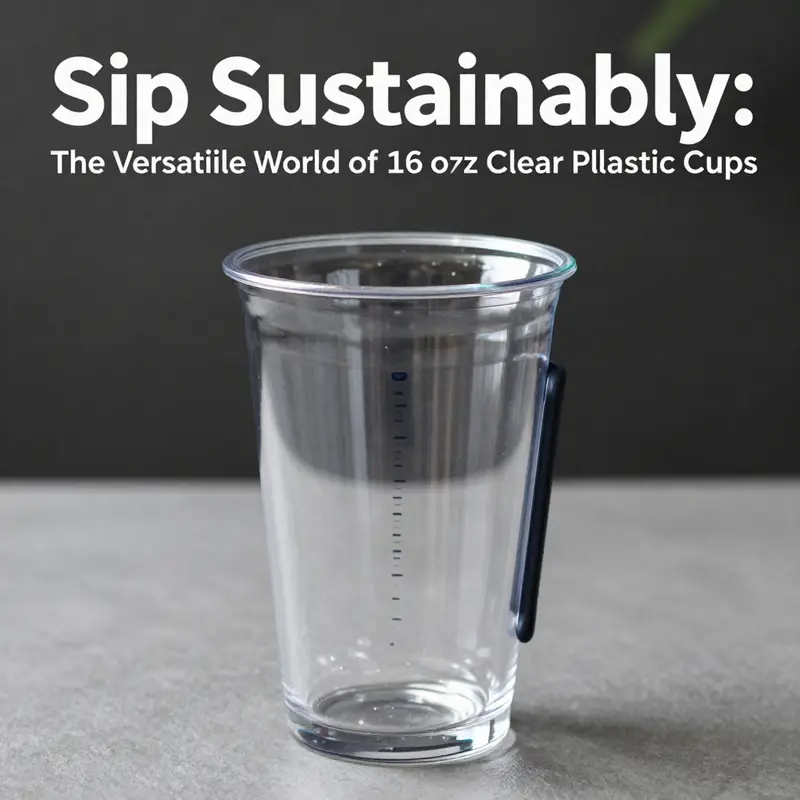
A tall, clear glass might reveal the color of a drink, but a 16-ounce reusable clear plastic cup tells a story about how design choices translate everyday behavior into practical, sustainable habits. This chapter follows that thread from material selection to the nuanced details that make these cups both functional and appealing in a world where people move between offices, gyms, cafés, and homes with their beverages in tow. The 16-ounce footprint is not random. It balances a comfortable grip with ample capacity, offering a beverage-snapping compromise between a compact personal cup and a larger, more spill-prone vessel. The transparency of the cup, often prized in this category, is not merely aesthetic. Clarity reveals the drink inside, allowing users to assess sweetness, ice content, or color without lifting the cup to see through opaque walls. Yet the same clear exterior hides a sophisticated engineering challenge: how to keep hands comfortable and drinks hot or cold for as long as needed, even when the cup is perched in a car cup holder or a busy office cubicle.
At the heart of the design is a thoughtful choice of materials. Two plastics dominate the landscape for reusable clear cups in this capacity: polypropylene and polycarbonate. Polypropylene has earned its position as a go-to material because it delivers heat resistance, chemical stability, and, crucially, recyclability. In a world increasingly sensitive to lifecycle impacts, PP offers a practical compromise: it resists the heat of hot beverages, maintains clarity, and remains amenable to recycling streams in many communities. Polycarbonate, by contrast, has a reputation for exceptional clarity and rigidity, which can enhance the perception of a premium product. It can be more robust against impacts and may resist clouding over time, but it often comes with tradeoffs in weight and, historically, concerns about certain additives. In practice, many reusable 16-ounce cups lean toward polypropylene as the primary material, while design teams reserve polycarbonate for models where maximum stiffness and optical clarity are prioritized. The overarching goal remains consistent: a material that supports durability and reuse without compromising the clean, transparent look that helps beverages shine.
A defining feature that distinguishes these cups from simpler single-wall designs is the double-wall construction. The inner container houses the drink, while the outer shell stands apart in a separate wall. An insulating air gap sits between the two cups, acting as a buffer against heat transfer. This configuration markedly improves thermal performance, allowing hot beverages to stay hot and cold drinks to stay cold for extended periods. The practical effect is straightforward: the exterior of the cup remains comfortable to touch, even when the contents are at temperature extremes. This is not just a comfort feature; it broadens usage scenarios. People can sip and stroll with confidence, switch between warm and refreshing drinks without sweating through a sleeve, and keep the exterior dry for a more secure grip. The insulation is most effective when paired with materials such as insulated acrylic or double-walled polyethylene, which preserve clarity while maintaining the integrity of the air gap. These materials contribute to resilience in daily use—cushioning minor bumps, resisting condensation, and supporting repeated washing without losing form or translucence.
But insulation alone does not guarantee practical daily use. Portability must be baked into the very geometry of the cup. The cups designed for 16 ounces typically feature a slim, ergonomic silhouette that fits naturally into a hand and nestles into most standard cup holders—whether in automobiles, office desks, gym bags, or travel totes. Aware designers often add features that further reinforce portability: secure, leak-proof lids that seal in both hot steam and cold condensation, compatible straws for on-the-go sipping, and occasionally built-in handles or non-slip grips for a steadier hold during transit. The lids themselves deserve special attention. They must form a reliable barrier against leaks while still allowing convenient sipping. Straw compatibility expands the cup’s usability for a wide range of beverages and user preferences, from smoothies to iced coffees. The combination of a double-wall interior and a securely closed exterior makes the cup versatile enough to act as a personal hydration tool in multiple contexts, from a quick coffee run to a long gym session.
Care and cleanliness are often underestimated as design features, yet they are essential for a reusable product to live up to its promise. BPA-free labeling is more than a marketing checkbox; it speaks to the safety considerations that reassure users during repeated use. Dishwashability is another practical attribute, simplifying cleaning rituals and encouraging consistency in reuse. The ability to place the cup in a dishwasher reduces the maintenance burden and makes daily reuse more appealing than reverting to disposable alternatives. In many households and workplaces, this combination of BPA-free safety and dishwasher compatibility underpins a consumer’s willingness to adopt a sustainable habit rather than a temporary choice. When a product is easy to clean and safe, it is easier to reuse confidently, which in turn reduces the lure of disposable options that often accompany lower upfront friction but greater long-term waste.
Beyond the core construction, many 16-ounce reusable clear cups include bonus features that reflect a broader design intent: user-friendliness, hygiene, and personalization. Some models ship with accessory bundles such as straw cleaners or name-tags, acknowledging a practical reality of shared environments where multiple people use the same vessels. Such touches may seem small, but they address real-life concerns about hygiene and identity—two elements that influence whether a person feels comfortable using a cup repeatedly. These extras also hint at a market philosophy that values not just the container but the ecosystem around it: how containers are stored, cleaned, carried, and individualized for daily life. This holistic approach aligns with a broader trend toward durable, adaptable products that support sustainable behavior without adding friction to routine moments of refreshment.
From a lifecycle perspective, the appeal of these 16-ounce cups is twofold. First, their durability and lightweight profile reduce the likelihood of breakage and the energy costs associated with replacing fragile items. A sturdy yet light cup travels easily from kitchen to car, to office desk, and back again, encouraging ongoing reuse rather than discarding after a few uses. Second, the materials chosen—primarily PP and, in some designs, PC—carry recyclability narratives that resonate with consumers seeking accountable consumption. Reuse is not merely a practical alternative to single-use plastics; it is a gateway to a more mindful relationship with packaging where the emphasis shifts from disposal to renewal. The double-wall concept further enhances this ethos by reducing the need for disposable sleeves or outer wrappers that add waste, while the transparency of the cup reinforces a sense of honesty about what one is drinking and how it is stored.
The practical upshot of these design choices is a product that is as comfortable in the hand as it is clear to the eye. Consumers appreciate when a cup feels right in the moment—when the grip is natural, the weight balance feels right, and the drink remains at its intended temperature for a meaningful stretch of time. In workplaces and cafes, where people might prepare beverages in the morning and sip them across a long afternoon, the ability to keep a drink hot or cold without constant seeking of a sleeve or a warmer can be a small but meaningful improvement to daily routines. The cup becomes more than just a vessel; it becomes a daily companion that supports steady hydration, reduces waste, and remains reliable under the varied pressures of a busy day.
This chapter also situates the reusable cup within a broader ecosystem of drinkware design. A related line of thinking appears in double-wall disposable cups, an approach that demonstrates the enduring value of insulating walls for thermal management. While disposable options serve different market needs, the underlying engineering principle—the idea of an inner container separated from an outer shell by an insulating layer—offers a useful frame for evaluating reusable models. The comparison helps highlight what reusable cups achieve beyond the immediate function of insulating a beverage: sustainability in use, washability, and long-term cost savings. For readers curious about the architectural logic behind layered cup constructions, this adjacent example provides a useful reference point while reaffirming the unique advantages of a reusable solution. You can explore a related double-wall concept in a disposable context here: kraft hot double-wall disposable cup.
In sum, the 16-ounce reusable clear plastic cup embodies a synthesis of materials science, ergonomic design, and practical lifecycle thinking. The choice of polypropylene for many of these cups reflects a balance of heat resistance, stability, and recyclability that matches the everyday demands placed on a vessel meant for frequent use. The double-wall geometry introduces a simple yet powerful mechanism for keeping temperatures stable and hands comfortable, while a slim silhouette ensures compatibility with typical car cup holders and office environments. Add secure lids, compatible straws, and user-oriented details like non-slip grips or optional handles, and it becomes clear why this size and shape repeat across cafés, gyms, workplaces, and homes. The emphasis on BPA-free construction and dishwasher safety aligns with expectations for today’s reusable products, signaling a product designed for the long haul rather than a brief moment of convenience.
And yet the design story goes beyond just the cup itself. It is a narrative about how users interact with everyday objects in a world increasingly oriented toward reuse and responsible consumption. The simplicity of a clear wall belies a carefully engineered system that respects temperature, touch, and time. It is about moments of refreshment that feel effortless, even as they embody a broader commitment to reducing waste and choosing durable, repeatable solutions. Each sip is a reminder that good design can be quiet and practical while still offering a meaningful push toward more sustainable habits. In the end, the 16-ounce reusable clear cup is more than a vessel; it is a small podium for everyday stewardship—one that lets temperature, clarity, and portability converge in a single, dependable motion.
For readers who want to compare design approaches across related cup technologies, a close look at related double-wall concepts can illuminate how insulation and portability co-evolve in both reusable and disposable formats. This cross-pollination helps designers ask the right questions: How much insulation is truly needed for a given beverage? How light can a cup be without compromising strength? Where should the grip be added to accommodate repeated use? How can a lid seal without making cleaning more difficult? The answers shape products that feel effortless in daily use and accumulate benefits across a lifetime of reuse. And as consumer expectations continue to rise around safety, recyclability, and ease of cleaning, the intersections between material choice, wall geometry, and feature set will only grow more complex—and more rewarding—for those who design with both practicality and purpose in mind.
External resource for further insight: https://www.amazon.com/STRATA-CUPS-12-Colored-Skinny-Tumblers/dp/B0CQJX7K3F
Clear Utility Across Sectors: The Design, Durability, and Demand of 16-Ounce Reusable Clear Plastic Cups
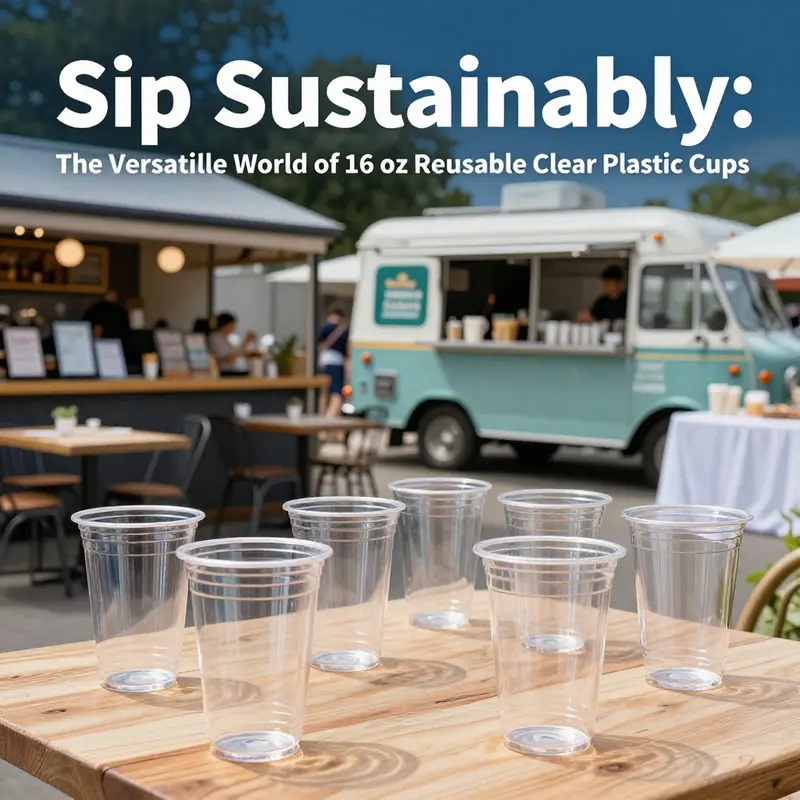
The 16-ounce reusable clear plastic cup acts as more than a vessel for beverages; it is a compact convergence of material science, ergonomic design, and service ecology that shapes how people sip, move, and interact with a product. In examining the landscapes where these cups circulate—from the bustling counters of cafés to the structured rhythms of offices and gyms—it becomes clear that their value rests on a careful balance among clarity, resilience, and ease of use. The cups most commonly rely on polypropylene for everyday reuse because this polymer brings heat resistance, chemical stability, and a tangible pathway to recyclability. When a cup can withstand hot drinks, resist staining, and return to a recycler without residue, it earns trust from both operators and consumers. Yet the story does not stop at the material. The design choices—particularly the double-wall construction that many 16-ounce cups employ—work behind the scenes to keep beverages at an appealing temperature while protecting the user’s hands from heat and the exterior from condensation.
In practice, double-wall insulation is more than a feature listed on a spec sheet. It translates into a tangible experience for people who drink on the move. A commuter reaches for a cup of coffee, the cup’s interior maintaining heat while the outer surface remains cool to the touch. A gym-goer preps a smoothie, the cup enduring the chill of the fruit while still offering a comfortable grip. A student in a study lounge abides by a quiet rhythm, sipping water or tea through a secure lid that prevents spills during a late-night sprint toward a deadline. In settings such as cafés and tea shops, the visual clarity of the cup plays a surprising role in marketing: the translucent body showcases color and texture, letting the beverage’s appeal speak through the cup itself. In retail and promotional contexts, the clear surface becomes a canvas for branding through custom prints or logos, echoing the broader trend toward sustainable yet personalized packaging.
The functional versatility of these cups extends beyond mere containment. The integration of secure lids and compatible straws addresses practical realities—transportability, leak resistance, and the chance to enjoy beverages without constant refilling. In many designs, the lids snap into place with a confidence that reduces spillage during transit, a feature particularly valued by office workers commuting between meetings or by parents managing a busy morning routine. The lids—when paired with an ergonomic lip or narrow rim—enhance the drinking experience by guiding the liquid toward the mouth with minimal effort, which matters in contexts ranging from a busy front-of-house service to a quiet home kitchen.
The design ethos emphasizes not only user experience but operational efficiency. Many models are dishwasher-safe, a critical attribute for institutional environments that require frequent sanitization without excessive labor or risk of damage. The ability to withstand repeated cycles, remain BPA-free, and stack neatly for storage reduces downtime between shifts and helps facilities minimize labor costs and space requirements. In compact service venues, stacking and space-saving features become as decisive as insulation and clarity: a cup that nests efficiently saves cabinets and dish racks, allowing staff to serve more customers with less friction. Its light weight complements durability, enabling customers to carry, shake, or swirl a beverage without feeling encumbered, an advantage in settings that prize speed and mobility.
Durability, however, must be considered within a lifecycle that weighs environmental impact against practical reuse. Polypropylene’s recyclability is a key dimension in this analysis. Reuse reduces the per-service waste stream and aligns with growing consumer expectations for packaging choices that can be responsibly managed after use. The cup’s clear, smooth surface not only showcases drinks but also invites easy cleaning, minimizing residue that can degrade performance over time. The lifecycle conversation also touches on the importance of avoiding materials that may leach or degrade under heat, a topic that informs both consumer confidence and regulatory compliance in a variety of markets.
What makes the 16-ounce size particularly resonant across industries is its alignment with daily routines that merge convenience with social rituals. In coffee shops, the 16-ounce cup often represents a standard portion, balancing the warmth of a hot beverage against the practical need to consume it within a reasonable timeframe. In fast-service environments, it offers a consistent vessel that customers can rely on for cold drinks like iced teas or smoothies, while the secure lids ensure reliability for takeout or curbside pickup. In corporate and institutional spaces—offices and schools—the same capacity supports hydration goals in a high-traffic context, encouraging regular consumption without the inconvenience of refills or clutter from numerous smaller cups.
In the realm of meal prep and buffet-style dining, the 16-ounce reusable clear plastic cup becomes a convenient unit for portion control and service efficiency. The double-wall construction that some models feature is not merely about insulation; it creates a practical buffer against temperature fluctuations during busy shifts, which can help maintain beverage quality for longer periods. The ability to microwave or freeze certain polypropylene variants further extends their utility in meal kits, catering, and self-serve stations, allowing operators to offer a broader range of beverage options without committing to a larger inventory of specialized containers. While microwave safety is not universal across all plastics, the option exists for certain designs, enabling chefs and catering teams to streamline prep while reducing waste by reusing a single cup across multiple courses or beverages.
From the perspective of retail and promotions, the clear surface again emerges as a strategic asset. A brand can leverage the transparent cup as a marketing channel, whether through simple branding or more elaborate customization. The prospect of custom-printed options, although not always a perfect fit for every venue, opens doors to short-term campaigns that require scalable, reuse-oriented packaging with a clear on-brand message. In this context, sustainability resonates with consumers who are attentive to a company’s broader environmental commitments. Yet even as customization becomes more accessible, the core advantages of the cup—clarity, insulation, durability, and reusability—remain the anchors of its value proposition. The cup’s visual appeal does not simply sell beverages; it communicates a sense of care for how products are served, stored, and disposed of, nudging consumer behavior toward more sustainable habits.
The practical realities of everyday use reveal how a seemingly simple item can influence operations and customer satisfaction across different spaces. Offices, for instance, benefit from dishwasher-safe features that reduce the burden on office kitchens and break rooms. Students and educators discover a reliable vessel that handles daily hydration, supports a focus on sustainability within campus programs, and fits into shared spaces where space and time are at a premium. Gym-goers, who require a quick, mess-free option for post-workout hydration, appreciate the combination of secure lids and leak resistance—a small but meaningful improvement in a setting where users move quickly between zones and need containers that can endure activity without compromising cleanliness. Cafés and tea shops, meanwhile, leverage the cup’s aesthetic clarity to highlight the color and texture of specialty beverages, turning a routine act into a sensory moment that reinforces brand identity and beverage craftsmanship.
The conversation about these cups cannot ignore the broader trends shaping packaging decisions. Consumers increasingly demand products that are designed for reuse and that fit within a circular economy. The 16-ounce clear plastic cup, when produced from materials like polypropylene, sits at a crossroads where performance, hygiene, and end-of-life options converge. Reusability reduces the frequency with which new cups must be manufactured, lowering the cumulative energy and resource impact associated with single-use plastics. At the same time, the presence of a robust recycling pathway for PP-based products ensures that end-of-life management remains feasible, provided that the cups reach the appropriate collection streams and sanitation standards are met. This alignment between function and responsibility helps build trust with customers who are keen to support businesses that demonstrate a thoughtful approach to material choice, waste reduction, and product stewardship.
In thinking about the future of the 16-ounce reusable clear plastic cup, designers and operators alike imagine iterations that push the envelope toward greater sustainability without sacrificing user experience. Innovations might focus on even more efficient insulation, lighter yet stronger materials, or surface treatments that resist staining and clouding, preserving the cup’s clarity through hundreds of cycles. Advancements in lid technology could yield more secure seals, easier disassembly for cleaning, or compatibility with a wider range of beverage types and temperatures. Meanwhile, the industry will continue to balance the demand for customization with the need for scalable, cost-effective reuse: the more a cup can be reused, the more meaningful it becomes in reducing the overall environmental footprint of beverage service. In this evolving landscape, the 16-ounce cup remains a practical reference point—an object whose significance lies not in novelty but in dependable performance, clear presentation, and the quiet, cumulative impact of everyday reuse.
From a narrative perspective, the cup’s value is reinforced when it functions as a bridge between the consumer’s desire for a clean, attractive beverage experience and the operator’s need for a reliable, efficient system. It is in this interface that the research findings converge into a practical philosophy: clarity to attract and reassure, insulation to preserve quality, durability to withstand frequent handling, and reusability as a pathway to sustainability. The interplay of these factors helps explain why the 16-ounce size endures as a standard across multiple sectors. It is not merely a container; it is a system component that, over time, contributes to smoother service flows, more consistent beverage quality, and a consumer culture that increasingly values responsible choices alongside everyday convenience.
For readers seeking a deeper sense of how packaging choices compare in practice, consider the broader ecosystem of cup options that exist beyond plastic, including paper and other renewably sourced materials. As brands explore the best fit for their goals, the clear plastic cup remains a compelling choice when the emphasis is on durability, reusability, and the experiential value of seeing the beverage itself. In contexts where branding and message are vital, a transparent cup can be paired with design strategies to reinforce identity without compromising the drink’s visual appeal. And in settings where speed, cleanliness, and space efficiency are essential, the cup’s combination of double-wall insulation, secure lids, and stackable form factors can contribute to a more streamlined, satisfying service experience.
Where appropriate, links to related packaging options illuminate the broader design space without diluting the core focus on reusable clear plastic cups. For readers interested in branding and packaging alternatives that complement the reuse narrative, a relevant resource exploring eco-friendly, printed-logo cup options provides a useful comparative reference. This reference offers insight into how branding considerations intersect with sustainability goals across different materials, helping organizations weigh trade-offs between visibility, durability, and end-of-life handling. eco-friendly printed-logo single-wall paper cup.
As the chapter closes on the practical and experiential dimensions of 16-ounce reusable clear plastic cups, it becomes evident that these containers do more than hold beverages. They encode a pattern of behavior in the daily rituals of millions—an ordinary object that, through thoughtful design and responsible material choices, supports better service, cleaner environments, and a consumer culture that increasingly expects products to be both useful and accountable. In every café, office, gym, and home where a cold drink sits in a shimmering, clear form, the cup embodies a balanced approach to modern packaging: reliable performance, visual appeal, and a path toward reuse that, when scaled, can contribute meaningfully to reducing single-use waste. This is the essence of the 16-ounce reusable clear plastic cup—a modest container with a surprisingly expansive influence on how we drink, move, and think about sustainability in everyday life.
External reference: For a practical reference on durable, clear plastic tumblers that survive repeated use, see this resource on unbreakable, stackable cups. durable, unbreakable plastic tumbler
Rethinking Clarity: The Environmental Footprint and Circular Promise of 16-Ounce Reusable Clear Plastic Cups
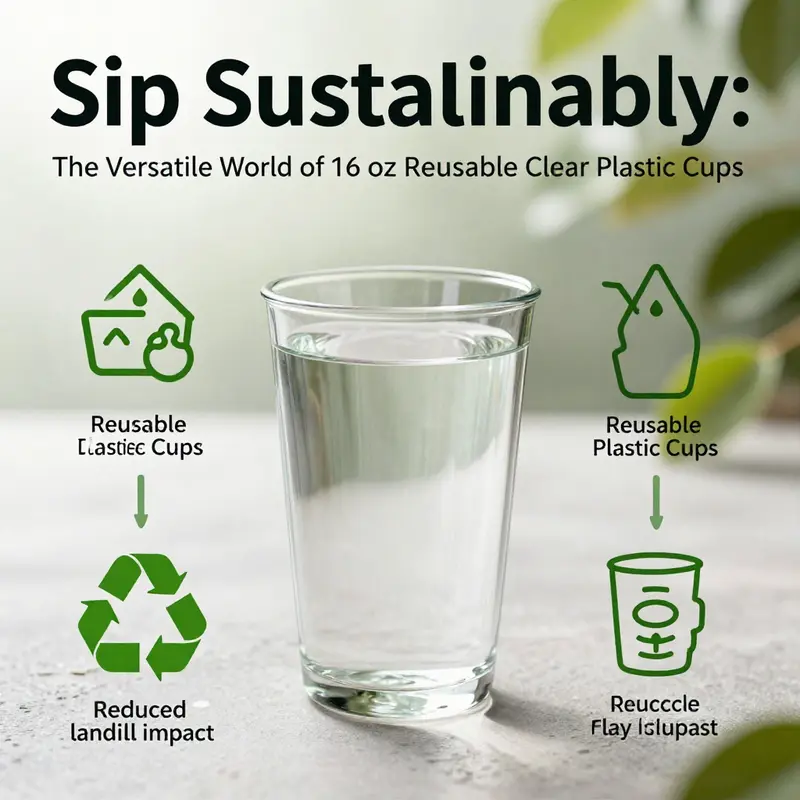
Clear, 16-ounce cups have become a familiar sight in workplaces, cafés, gyms, and homes, valued for their transparency, lightweight feel, and the ease with which beverages can be seen and enjoyed. But when these cups are considered as part of a larger system—the circular economy rather than a single-use ebullience—their environmental profile becomes more nuanced. The chapter that follows weaves together material choices, design features, usage patterns, and end-of-life management to explore how reusable clear plastic cups perform in the real world. It moves beyond the surface appeal of convenience to ask what it truly takes for a 16-ounce cup to contribute to sustainability goals, how the benefits hinge on reuse, and where the limits lie when alternatives are weighed against a different vision of resource use. In this examination, polypropylene—the workhorse polymer in many reusable cups—emerges not as a miracle material but as a participant in a larger system where the value of reuse is unlocked only through disciplined management of the entire life cycle.
From the outset, the practical appeal of a reusable cup rests on a simple premise: one cup, used many times, can displace a multitude of disposable cups. The materials most commonly used for these 16-ounce, reusable clear cups are polypropylene (PP) and, in some cases, polycarbonate (PC). Polypropylene earns attention for its favorable balance of heat resistance, chemical stability, and recyclability, especially when the product design emphasizes durability and cleanability. Polycarbonate brings a different set of advantages, including exceptional clarity and toughness, though it often carries a higher energy footprint in production and considerations about long-term leachability that deserve careful attention. The most common practical configuration features a double-wall construction. This design is not merely decorative; it is an insulation strategy that cushions the hand from heat and helps beverages maintain temperature longer, while the exterior remains comfortable to hold. When combined with secure lids and compatible straws, these cups become do-it-all tools for to-go culture, office routines, and high-traffic service environments. This triad of features—clear visibility, insulated comfort, and secure transport—appeals to users seeking both convenience and a sense of responsibility, but that appeal must be matched by diligence in end-of-life management if sustainability goals are to be realized.
To understand the environmental implications of 16-ounce reusable cups, one must consider both the production phase and the reuse phase. The production of virgin plastics, including PP used for reusable cups, carries a noticeable early-stage environmental cost. Energy consumption during manufacturing is substantial, and the raw material inputs—derived from fossil fuels—carry the broader consequences of resource depletion and greenhouse gas emissions. A useful point of comparison arises when considering similarly durable materials. For example, a 350-ml stainless steel cup—a different durable option—can generate several kilograms of CO₂ during production. While PP cups are lighter and generally less resource-intensive than metal or glass, their production still contributes meaningful emissions, underscoring that the initial footprint is not trivial. The key insight is not to demonize the material per se but to recognize that the environmental advantage of a reusable cup is not intrinsic to the cup itself. It is realized through extended reuse, efficient cleaning, and a robust system for recovery and recycling that prevents premature disposal.
Health considerations inevitably accompany any discussion of plastic materials in contact with food and beverages. Even BPA-free plastics can raise concerns about chemical leaching. The health narrative has evolved to encompass substances such as BPS and BPF, which can emerge under heat, acidic conditions, or over time as the plastic wears. While the aim of BPA-free formulations is to reduce risk, the reality is more nuanced: the absence of one problematic compound does not guarantee complete safety across all use conditions. This complexity reinforces why design for safety must accompany design for reuse. It also highlights the need for clear guidance about appropriate temperature ranges, drink acidity, and wear thresholds to help users make informed decisions about how best to use and care for their cups. When health concerns are acknowledged openly, the conversation shifts from a fear-based avoidance of plastics to a more constructive evaluation of how to optimize both material selection and usage patterns to minimize risk while maximizing reuse.
A central pillar of sustainability for reusable cups is the reuse cycle itself. Research consistently points to a break-even point where repeated use offsets the initial environmental cost of production. For polypropylene-based reusable cups, the break-even typically falls somewhere between ten and twenty uses, depending on factors like cleaning frequency, wash energy intensity, and the overall efficiency of the reuse system. In closed-loop environments—such as large events, corporate cafeterias, or institutional kitchens—the break-even point can be strikingly low, occasionally as few as three uses if the system ensures reliable collection, thorough cleaning, and minimal transport emissions between reuse cycles. These figures reveal a powerful truth: the environmental superiority of a reusable cup is a function of the circulation it experiences. In other words, the same cup can be far greener in a well-run, disciplined loop than in a setting where return and reprocessing are irregular or burdensome. Design choices such as the double-wall insulation also contribute indirectly to sustainability by supporting longer drink temperatures without forcing users to reheat or discard. When consumers enjoy hot beverages without needing to replace the cup mid-session, fewer disposables are consumed, and energy associated with production, transport, and waste is reduced.
The broader sustainability conversation cannot avoid grappling with end-of-life outcomes. Recycling, while technically feasible for polypropylene, faces practical challenges in real-world settings. Contamination, sorting limitations, and the realities of post-consumer waste streams can diminish the effectiveness of recycling programs. A durable cup designed for reuse must still be compatible with recycling streams at the end of its life, but the emphasis often shifts toward ensuring that a high percentage of cups are kept within a controlled reuse loop rather than being diverted to traditional waste streams. This shift demands coordination among manufacturers, service providers, and facility operators to create incentives for return and reuse, as well as reliable cleaning logistics that preserve product integrity. In many cases, the most sustainable path is one that minimizes the need for end-of-life processing by maintaining high reuse rates, rather than relying on post-consumption recycling to salvage a portion of the material.
Alternatives to reusable clear plastic cups, including paper-based options and PLA bioplastics, illustrate the complexity of choosing an eco-friendly path. Paper cups coated with plastic or compostable barriers can complicate recycling, as the coatings disrupt the continuity of the fiber stream and complicate end-of-life processing. PLA bioplastics offer the allure of compostability, but they require specialized industrial facilities that may not be widely available. In many regions, these facilities are sparse, and PLA products end up in landfills where they do not degrade any faster than conventional plastics. The consequence is that some “eco-friendly” options fail to deliver on their green promises when the broader waste-management infrastructure is not aligned with the product’s life cycle requirements. The takeaway is not a simple material preference but a call to align product design with a robust, accessible end-of-life pathway that can be scaled across diverse usage environments. In this sense, the most sustainable approach is less about a single material and more about a system that prioritizes reuse, prevents leakage into waste streams, and fosters a circular economy mindset where products are designed, used, recovered, and reintroduced into production with minimal loss of value.
Given these dynamics, the practical decision-making framework for institutions and individuals becomes clearer, though still nuanced. For venues that handle high volumes of beverages, investing in vessels designed for repeated use is often the most effective route to lower overall environmental impact. The insulation provided by double-wall construction is not only a comfort feature but a usability advantage that supports longer beverage experience without compromising safety or comfort. The secure lids and compatible straws tied to these cups enable easier transport and reduce spill risk, a consideration that translates into fewer disposables and less waste to manage. Yet the success of this strategy hinges on the system: the cups must be returned, cleaned, and ready for another cycle in a timely manner. This necessitates efficient logistics, clear stewardship roles, and a culture of reuse among staff and customers alike. When these conditions are present, the life-cycle narrative moves away from a simple materials balance toward a dynamic performance story where the cup’s value lies in how many times it serves before reaching its final destination in the waste stream.
A practical reminder for readers to situate this discussion within their own operations is that the choice between reusable and disposable options cannot be divorced from the surrounding systems. If a café or office relies on a take-back program that only occasionally recovers cups, the environmental advantage of the reusable option diminishes. If cleaning energy is excessive or if the cups are damaged frequently and must be replaced, the lifecycle balance shifts toward a larger throughput of resources; the benefit of reuse reduces. Conversely, a well-designed program that emphasizes sharing, easy return, and efficient cleaning can push the system into a regime where the cumulative impact of each cup is markedly lower than that of countless disposable alternatives. The double-wall design, while primarily a comfort and performance feature, thus becomes a small but meaningful contributor to ongoing reuse behavior: it encodes a habit of careful handling and longer service life, which in turn supports better overall environmental outcomes.
To connect this discussion to the broader landscape of packaging decisions, consider a practical comparison that is often entertained by managers and designers: how does a reusable clear plastic cup stack up against a disposable paper variant or a bioplastic option when evaluated through a life-cycle lens? The answer is rarely categorical, because it depends on the usage pattern, the local infrastructure for recycling or composting, and the energy mix powering cleaning operations. What remains consistent across analyses is the central insight that the environmental savings of a reusable cup accrue through repetition and responsible end-of-life management. In other words, the largest environmental dividends emerge when a cup is not merely durable or attractive at first purchase, but when it travels through many hands, returns through well-functioning channels, and re-enters production as a valued resource rather than a rejected material.
For readers seeking to explore the comparative dynamics in more detail, a broader life-cycle analysis provides a rigorous framework for interpretation. The study aggregates scenarios and indicators to confirm that, even under conservative reuse rates, reusable cups outperform single-use options across multiple dimensions of environmental impact, including greenhouse gas emissions, energy consumption, and resource depletion. This evidence reinforces the principle that sustainability is less about choosing a single “green” material and more about embedding cups within a circular system that prioritizes reuse, maintenance, and end-of-life stewardship. It also underscores the importance of system design: the simplest pathways to real impact are those that minimize friction in the return and cleaning processes while maximizing the number of reuse cycles per unit of production energy invested.
In the spirit of practical application, consider the value of connecting design with consumer behavior. The double-wall, insulated structure is not only a feature for temperature control; it signals quality and reliability, encouraging users to treat the cup as a durable asset rather than a disposable after a single use. The secure lid and straw assemblies, when designed for reuse and easy cleaning, reduce the temptation to abandon components mid-use. These features collectively influence the rate at which cups circulate through a given environment, which in turn shapes the environmental performance of the entire system. The more attention paid to return logistics, cleaning protocols, and user education, the more likely it becomes that the cup will meet or exceed the break-even threshold in a given context. When this threshold is reached consistently, the cup’s environmental impact relative to disposable options becomes demonstrably favorable, reinforcing the case for investing in reusable clear plastic cups as a strategic element of sustainability programs.
For readers who want to explore related discussions on alternative cup formats and packaging choices within a practical, applied framework, a related resource that surveys disposable and reusable cup options can offer useful context. disposable single-wall paper cup with lid provides a contrasting baseline for evaluating performance, though the central message remains that the best outcomes arise when reuse is embedded in well-designed systems. Where packaging design aligns with robust collection, cleaning, and supply chain coordination, the environmental advantages of reusable cups become more pronounced and reliable.
In sum, the environmental impact and sustainability of 16-ounce reusable clear plastic cups cannot be judged solely on material choice or immediate performance. Their true potential emerges when the cups are integrated into a disciplined reuse loop that optimizes energy use for cleaning, minimizes waste through high reuse frequency, and respects the practical realities of end-of-life management. This integration requires a concerted effort from manufacturers, service operators, and end users to create and sustain a circular pathway where each cup remains a useful resource across many cycles. When such pathways exist, the cups do more than hold beverages; they become participants in a broader shift away from take-make-dispose toward a resilient, circular economy that keeps material value in play and reduces the ecological burden of everyday consumption.
External resource: For a broader, evidence-based comparison of life-cycle impacts across single-use and reusable beverage cups, see the detailed study linked here. https://doi.org/10.4491/eer.2025.078
Final thoughts
As explored throughout this article, 16 oz reusable clear plastic cups are more than just a beverage container; they are a sustainable choice that responds to consumer demand for eco-friendly products. By utilizing durable materials like polypropylene or polycarbonate, incorporating clever designs for insulation and portability, and finding extensive applications across various industries, these cups enhance both functionality and environmental responsibility. For beverage chains, restaurants, and event planners, investing in reusable cups not only boosts brand awareness but also aligns with growing sustainability initiatives. Thus, when considering options for refreshment services, reusable clear plastic cups surely take the lead in assisting businesses in their eco-conscious missions.