
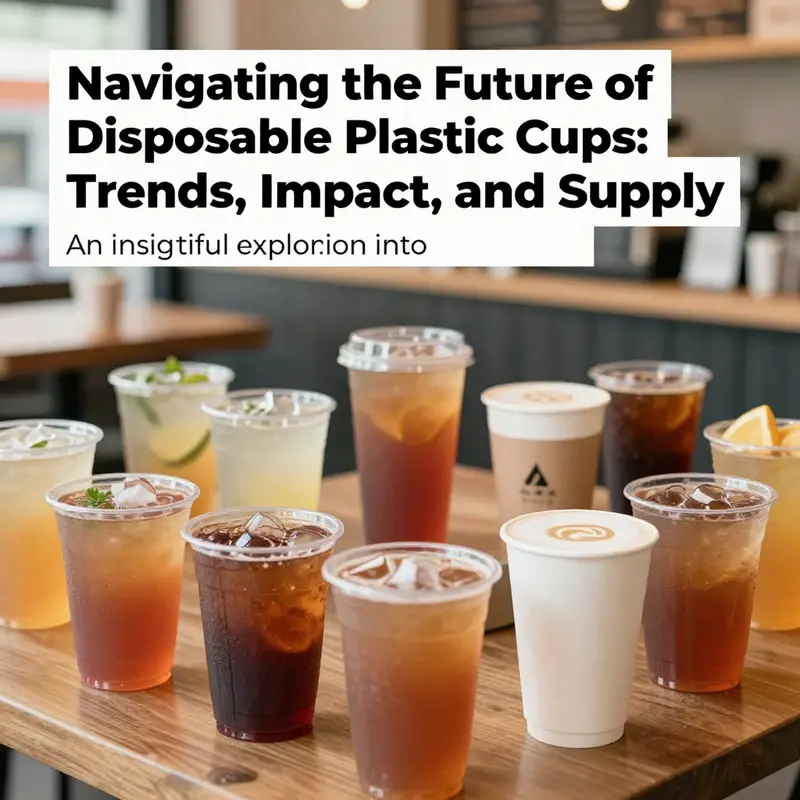
Disposable plastic cups have embedded themselves into the daily lives of consumers, especially in the thriving sectors of bubble tea shops, restaurants, food trucks, and catering services. These ubiquitous items provide ease and convenience, making them essential for serving a variety of beverages and food. However, the implications of using these cups go beyond their immediate utility. As global awareness of environmental issues grows, understanding the impact of disposable plastic cups, current market trends, and the manufacturing and supply chain processes is critical for businesses looking to align with sustainable practices. This article delves into these aspects to provide a thorough overview, equipping businesses with the knowledge needed to make informed decisions about their disposable cup usage.
From Sip to Soil: The Environmental Footprint of Disposable Plastic Cups
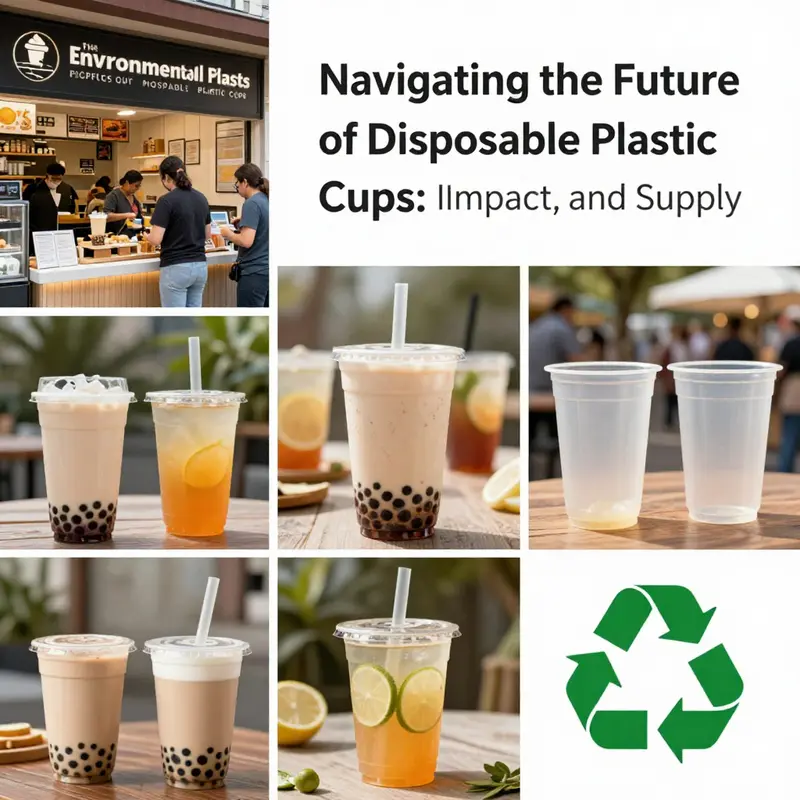
Across cafes, event halls, and bustling take-out lines, disposable plastic cups slide from hands into waste streams with minimal fanfare. They are designed for one purpose and often forgotten the moment the last drop is sipped. Yet their quiet ubiquity conceals a chain of environmental consequences that extend far beyond the tray or table where they first appear. The chapter that follows traces this footprint from the moment the cup is forged from feedstocks to the moment it ends up in a landfill, a recycling bin, or a precarious part of the natural world. It is a narrative not just about materials and processes but about choices—how societies value convenience, how economies price risk, and how design can either amplify harm or open pathways to a more sustainable flow of everyday goods.
The production of disposable plastic cups is inseparable from the broader system of fossil-fuel–based plastics. Most cups used for beverages involuntarily remind us of their origin in polymers that arise from petroleum-based feedstocks. In the most common configurations, these cups are molded from polymers that deliver clarity, rigidity, and lightness, qualities that make them well-suited for cold drinks, smoothies, and ready-to-serve beverages. The energy intensity of their manufacture is tied to upstream extraction and refining, polymerization, and the molding processes that shape millions of cups daily. This linkage to fossil fuels means that even as the cups perform their intended function with efficiency, they participate in a climate system that is already under stress. The emissions associated with producing and transporting these cups contribute to the atmospheric burden that drives warming and climate-related disruptions. It is not just a matter of the few grams of plastic per cup; it is the cumulative impact of billions of cups across regions and seasons—and the fact that demand does not falter even when sustainability conversations intensify.
Yet production is only part of the story. The real test of environmental performance unfolds after the cups leave the manufacturing plant and enter the realm of consumption and disposal. In many places, recycling infrastructure struggles to process disposable cups efficiently. Recycling rates for these items remain disappointingly low, and several obstacles impede progress. First, contamination is a persistent problem. Cups carry residual liquids that can foul feed streams, making processing more expensive and less reliable. Second, the very layers of materials—often a thin plastic film or lining intended to guard against leaks or improve barrier properties—can complicate separation and recycling in curbside streams. Even when facilities exist to handle them, the economics of recycling cups depend on fluctuating markets for recovered plastics and the quality of collected streams. The reality is that a significant share of cups ends up in landfills or informal disposal channels, where their end-of-life trajectories are neither ecological nor efficient.
The persistence of plastic cups in the environment amplifies their impact long after the initial use. Plastics do not simply disappear; they fragment under sunlight, heat, and mechanical action, breaking into microplastics that pervade soils and waterways. The timeline of degradation for disposable cups ranges from hundreds to thousands of years, a horizon that dwarfs the human life cycle of a single event or a single restaurant season. As these fragments migrate through ecosystems, they become part of a broader mosaic of pollution that includes soil, freshwater, and marine habitats. Microplastics can be ingested by a variety of organisms, from plankton to larger fauna, and may accumulate in food webs. The chemical leachates that accompany plastic degradation add another layer of concern, as additives and constituents can migrate into surrounding environments. While absolute risk to human health from environmental microplastics remains a topic of ongoing research, the potential for exposure grows with the scale of the plastic economy and the ubiquity of discarded cups.
A lifecycle perspective sharpens the climate and resource implications of disposable cups. From cradle to grave, these cups trace a path that begins with resource extraction, includes manufacturing and distribution, and culminates in disposal or repurposing. Each stage carries its own ecological footprint—energy use, greenhouse gas emissions, water use, and land and air impacts. A central tension emerges: the same features that make disposable cups highly functional—rigidity, clarity, light weight, and low unit cost—also translate into significant aggregate environmental costs when multiplied by billions of units each year. The ecological footprint of this single-use packaging extends beyond the cup itself. It encompasses the energy and material flows required to manufacture the plastics, the plastics’ behavior in waste streams, and the broader social and ecological costs of litter, dynamic waste management practices, and the degraded ecosystems that can accompany mismanaged waste.
The public conversation around disposable cups often toggles between two extremes: calling for outright bans or demanding that all cups be made from biodegradable or compostable materials. Yet a more nuanced assessment reveals that material choice alone does not guarantee sustainability. Biodegradable or compostable cups, when not disposed of in appropriately engineered facilities, can perform no better than conventional plastics. Industrial composting requires controlled conditions—temperature, moisture, oxygen, and specialized collection streams—that simply do not exist everywhere. If compostable cups end up in regular landfills or curbside recycling streams, they may not decompose any faster than conventional cups and can even create contamination issues that hamper recycling efforts. In some cases, compostable cups carry a different set of environmental costs, including potentially higher energy inputs for composting and different nutrient cycles in soils where they eventually accumulate. The upshot is clear: material innovations must be paired with thoughtful waste management infrastructure and consumer behavior to realize meaningful environmental gains.
In this broader context, the transition away from disposable plastic cups invites a reimagining of packaging itself. The question becomes not only what material to use but how to align product design with the realities of waste systems and ecological limits. Designers and manufacturers can pursue strategies that reduce the material mass per cup without compromising performance, increase the ease of separation at end of life, and improve the recoverability of components within a circular economy framework. These design choices may include simpler multilayer constructs, improved barrier properties with less material, or even rethinking the single-use imperative in favor of reusable systems where feasible. To move beyond single-use constraints, businesses might explore integrated solutions that blend durable, reusable options for high-frequency contexts with recyclable or compostable options that align with local infrastructure where single-use remains the practical choice.
The social and policy dimensions of this challenge deserve careful attention as well. Each community operates within a specific regulatory and cultural landscape that shapes how cups are produced, used, and disposed of. Policies that encourage producer responsibility, establish clear labeling for recyclability and compostability, and fund reliable collection and processing facilities can shift incentives toward more sustainable outcomes. Consumers, in turn, can influence the system through choices that favor packaging that is demonstrably easier to recycle or that supports reuse in appropriate settings. A coherent, systemic approach requires collaboration among designers, manufacturers, waste managers, policymakers, and the public. The hoped-for outcome is not zero waste in the abstract but a practical, scalable approach that reduces harm while preserving the essential conveniences that cups provide in a modern food-to-go economy.
As readers explore these ideas, it is worth considering concrete alternatives and pathways that can be implemented in many settings without sacrificing service quality. Some venues experiment with reusable cup programs, which, when paired with effective cleaning and logistics, show promise in reducing single-use waste. Others adopt a menu of packaging options tailored to the local waste infrastructure—emphasizing recyclable polymers where facilities exist and offering compostable alternatives in places with industrial composting capacity. Even where the most ambitious solutions are not immediately feasible, incremental gains accumulate: optimizing lid and cup design for easier separation, simplifying material layers, and improving labeling so that consumers can act with confidence about disposal. Every improvement, however small, contributes to a larger shift in how society thinks about the lifecycle of everyday objects.
For readers who want to peek into practical alternatives and packaging choices that align with sustainability goals, there are options worth examining. For instance, readers seeking more sustainable packaging options can explore kraft paper-based alternatives that are designed for take-out contexts and offer different end-of-life pathways than plastic cups. See this disposable kraft paper bowl option as an example of how product design can shift toward compostable or recyclable pathways depending on local infrastructure: disposable-700ml-kraft-paper-bowl-take-out-octagonal-rectangle-paper-bowl. Such choices reflect a broader principle: sustainability often hinges on aligning packaging design with the realities of disposal systems, consumer behavior, and the economic incentives that drive production and waste management.
Despite the best intentions, the road ahead is not simply a matter of replacing one material with another. It requires a systems-oriented approach that rethinks the role of disposable packaging in hospitality and catering, incentivizes upgrades to infrastructure, and empowers consumers to act in ways that maximize environmental benefits. The challenge is not only to reduce the volume of waste but to decrease the overall ecological footprint of the packaging life cycle. This involves improving the efficiency and resilience of recycling streams, clarifying labeling to avoid contamination, and investing in technologies and infrastructures that can recover and reintegrate materials rather than consigning them to long-term accumulation in landfills. It also means acknowledging that the benefits of convenience must be weighed against the costs to ecosystems, communities, and public health.
Ultimately, the environmental impact of disposable plastic cups is a proxy for how societies value material abundance in a world of finite resources. It asks us to consider not only the annual tally of cups consumed but the trajectory of demand, the design of waste systems, and the social contracts that govern our daily choices. In decoding this footprint, we glimpse a broader opportunity: to reframe packaging as a component of a regenerative, rather than extractive, economy. When packaging design, consumer habits, and waste management policy move in concert, the cup becomes less a symbol of disposable convenience and more a case study in sustainable stewardship. The aim is not perfection but progress—an ongoing dialogue about how to honor both human needs for nourishment and the health of the planet that sustains us.
For readers seeking further context on the environmental and littering impacts of disposable cups, the broader literature provides a rigorous foundation for these observations. An in-depth study published in 2025 synthesizes multiple strands of evidence about production emissions, waste management challenges, and ecological consequences, offering a comprehensive lens through which to view single-use cup systems. External resource: https://www.sciencedirect.com/science/article/pii/S095605422400381X.
Market Currents in Disposable Plastic Cups: Growth, Regulation, and the Sustainable Path
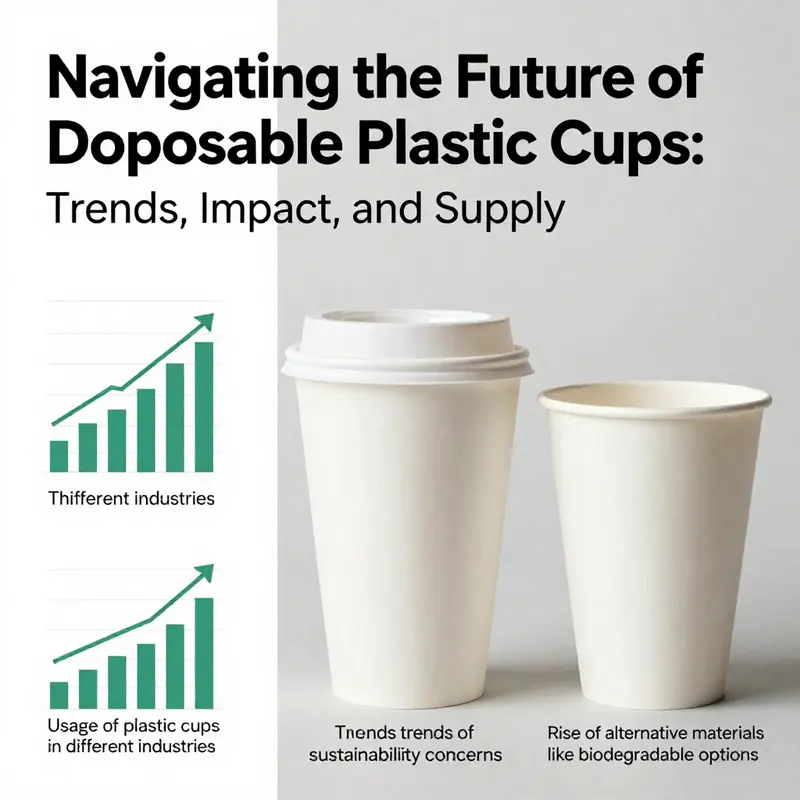
Beneath the everyday convenience of a cold drink or a simple takeout meal lies a market that moves with the pace of urban life and the rising stakes of environmental responsibility. The disposable plastic cup, long lauded for its low cost, light weight, and reliable performance, sits at a crossroads where demand continues to expand while scrutiny intensifies. In 2024, the United States market for disposable plastic cups stood at roughly 2.07 billion dollars, a figure that nudged upward to an estimated 2.11 billion in 2025. This growth is modest yet persistent, reflecting a sector that serves multiple functions across food service, catering, and beverage delivery. Globally, the sector shows a more expansive arc: about 12.5 billion dollars in 2023, projected to swell to nearly 22.1 billion by 2033, a compound annual growth rate around 5.9 percent. These numbers tell a story of durable demand driven by urbanization, the acceleration of on-demand food and drink services, and the ongoing need for hygienic, portable serving options that can withstand the rigors of transport and the variability of consumer environments. The narrative is not a single thread but a braid of consumer preference, logistics efficiency, and policy orientation that together shape how cups are designed, produced, and purchased.
The industry’s trajectory rests on a few durable pillars. First, the demand side remains anchored in the practical realities of modern consumption. People seek quick, clean, and convenient solutions for hot and cold beverages, as well as for ready-to-eat foods that accompany them. Cups are the interface through which customers experience a brand’s identity, temperature control, and even texture as they sip and savor. Delivery platforms, curbside pickups, and event catering have expanded the scenarios in which a disposable cup is not merely a disposable item but a logistical hinge—one that must perform consistently from production line to final mile. This operational continuity is a key reason why suppliers emphasize sturdy materials, reliable sealing with lids, and compatible accessories such as sleeves and lids that fit snugly and minimize leakage. All of these features contribute to a predictable user experience, which in turn sustains demand.
Second, regulation and policy signals have begun to tilt the playing field toward sustainability, even as price and performance keep plastic cups competitive on a cost-per-use basis. Environmental concerns around plastic waste have elevated the conversation around alternatives, especially for single-use items. The industry has observed a notable shift toward eco-friendly substitutes, with a growing focus on materials that can be recycled, composted, or derived from renewable feedstocks. Yet the path to true sustainability is nuanced. Paper-based disposables have gained ground since the mid-2020s, driven by consumer sentiment and regulatory incentives. Analysts project that this segment could gain material share in the 2026–2035 window as supply chains adapt and consumer awareness deepens. The cup market thus embodies a dual challenge: maintain the advantages that plastic cups offer—lightweight, temperature stability, cost efficiency—while demonstrating tangible progress toward environmental performance. In many cases, this has meant exploring recyclable plastics, plant-based bioplastics, and compostable formulations that can align with evolving waste-management infrastructure.
Finally, the role of manufacturing technology cannot be overstated. The supply chain for disposable cups is highly integrated, with China occupying a central position as the dominant production hub. In regions such as Zhejiang, Guangdong, and Fujian, the ecosystem spans raw material sourcing, high-precision injection molding, sophisticated printing, and streamlined packaging. This vertical integration supports rapid production cycles and controlled costs, which is crucial for international brands that rely on predictable lead times. Typical production and order timelines illustrate the balance of speed and customization: ready-to-ship items can be produced and dispatched within about 7 to 15 days, while custom orders often require 25 to 35 days. Ocean freight adds another 25 to 40 days in transit to many markets. These timeframes reflect the practical realities of global manufacturing at scale, where economies of scale translate into competitive pricing, but where quality control and compliance cannot be sacrificed in pursuit of speed.
Amid these dynamics, the pricing of disposables remains a critical lever for procurement decisions. The market’s exposure to low unit costs is well documented, with bulk orders sometimes approaching as little as a penny per unit for certain sizes and configurations. But pricing is not a simple function of material choice alone. It hinges on a matrix of factors: the type of plastic, the cup size, the presence or absence of lids and printed branding, and the degree of customization. Large buyers often operate with minimum order quantities that reflect production scale and factory automation; MOQs can begin around the 50,000-piece mark, underscoring the need for buyers to plan procurement with strategic foresight. These economic realities reinforce the importance of supplier relationships, not merely as price negotiators but as partners that can deliver on time while meeting strict food-safety standards.
The market’s texture also shifts with the material mix in use today. Polypropylene (PP) and polystyrene (PS) remain common choices for cold beverages and general-purpose serving. PET is another option in some segments, valued for clarity and rigidity. While these plastics deliver reliable performance—especially in cold-drink scenarios—regulators and industry participants are increasingly mindful of end-of-life considerations. At the same time, the paper-based cup segment is not simply a competitor but a potential complement within a broader packaging strategy. The evolving market favors a spectrum of materials and designs that can align with specific use cases, whether the aim is to optimize for hot beverages, foam stability, or heat retention during transport. In practical terms, brands looking to differentiate will often pursue a packaging strategy that blends core plastic functionality with branding opportunities or liners and lids that enhance usability without compromising recyclability or compostability.
The question of branding and customization remains central to the modern disposable cup market. Many buyers want not just a utilitarian container but a canvas for identity—color, logos, messaging, and even event-specific designs. Providers increasingly offer turnkey customization options, enabling clients to imprint logos or designs on cups and lids, as well as to select from a range of sizes and shapes that suit different beverage formats. This capability is more than aesthetic; it supports marketing campaigns and consumer recall, turning a simple cup into a portable advertisement that travels with the customer through the service journey and into everyday life. For brands seeking customizable solutions, there is a spectrum of opportunities, from simple branded cups to more complex configurations that pair cups with matching lids, sleeves, and utensils in a complete packaging solution. For an example of disposable custom cups with lids, see the related product page that highlights the full spectrum of customization and packaging options available to businesses seeking a cohesive takeout experience. disposable custom double-wall hot paper coffee cups with lids.
Beyond the factory floor, the market is shaped by supply-chain resilience and the capacity to adapt to shifting demand. The dominance of a few large manufacturing corridors in Asia confers efficiencies but also introduces exposure to geopolitical and logistic risks. The ability to maintain lead times and quality control depends on rigorous supplier selection, robust in-house capabilities, and automated packaging systems that reduce variability. The most successful players emphasize not only cost efficiency but also production independence, ensuring that critical steps such as mold-making, quality testing, and on-site finishing can be controlled in-house. This strategic emphasis reduces bottlenecks and fosters reliable performance for customers who require consistent product specifications across multiple regions and seasons. The industry thus benefits from a continuous cycle of improvement: better materials with improved heat resistance and clarity, refined molds that deliver consistent wall thickness and print fidelity, and more efficient automation that accelerates throughput while maintaining strict hygienic standards.
As the market evolves, the conversation around sustainability becomes more nuanced and more urgent. While plastic cups offer undeniable advantages in durability and performance, there is a clear push toward materials that align with environmental goals without compromising user experience. Within this framework, innovations in recyclable plastics, plant-based bioplastics, and compostable formulations are being pursued with varying degrees of success and regulatory alignment. The shift toward paper-based cups in specific time windows reflects consumer preference for readily compostable or recyclable materials and the perception that paper may carry a smaller environmental footprint in certain waste-management contexts. Importantly, the path toward greener options is rarely linear. It requires a holistic approach that accounts for source materials, manufacturing energy, transport emissions, and end-of-life infrastructure. In practice, producers and buyers are weighing carbon footprints alongside costs, and many are testing hybrid approaches—units that maintain the performance needed for hot drinks or heavy-load transport while enabling easier recycling or composting through compatible systems.
For businesses navigating these pressures, the decision matrix includes when to adopt new materials, how to structure packaging for separate waste streams, and how to communicate environmental initiatives to consumers. It also involves considering the role of digital marketplaces and procurement platforms that connect buyers with verified suppliers and transparent product specifications. In this ecosystem, platforms like Alibaba and similar marketplaces surface a range of options, from standard configurations to highly customized runs, along with detailed certifications and customer feedback that help buyers assess quality and compliance before placing large orders. These platforms do not replace due diligence; they amplify it by making product data more accessible and by enabling buyers to request samples and test performance before committing to multi-ton or multi-container shipments.
The market’s outlook remains cautiously optimistic, balancing growth with responsibility. If current trends persist, the disposable cup sector will continue to serve the needs of hospitality, food service, and on-demand delivery while gradually integrating more sustainable materials and end-of-life solutions. The transition will likely be incremental, requiring collaboration among raw-material suppliers, converters, packaging manufacturers, distributors, and waste-management entities. In the near term, growth will hinge on the ability to offer packaging that satisfies temperature control, durability, and branding requirements while meeting evolving environmental criteria. In the longer term, success will depend on a broader shift to packaging systems designed for circularity, where cups, lids, sleeves, and even packaging cartons are part of a cohesive recycling or composting stream. The market is thus at a critical juncture: it can accelerate the adoption of greener solutions and reduce environmental impact, or it can resist change and risk greater regulatory friction and consumer pushback.
For readers seeking a macro view of these dynamics, a comprehensive external perspective emphasizes the scale, growth, and regional nuances of the global disposable cups market. This broader market insight underscores the resilience of demand across sectors while highlighting the challenges and opportunities created by sustainability initiatives, supply-chain concentration, and technological advances. It is a reminder that the disposable cup is not merely a commodity item but a strategic element in how services are delivered, how brands are perceived, and how cities manage waste and resource use in a rapidly urbanizing world.
From Melting Polymers to Global Stalls: The Invisible Cadence of Disposable Plastic Cup Manufacturing
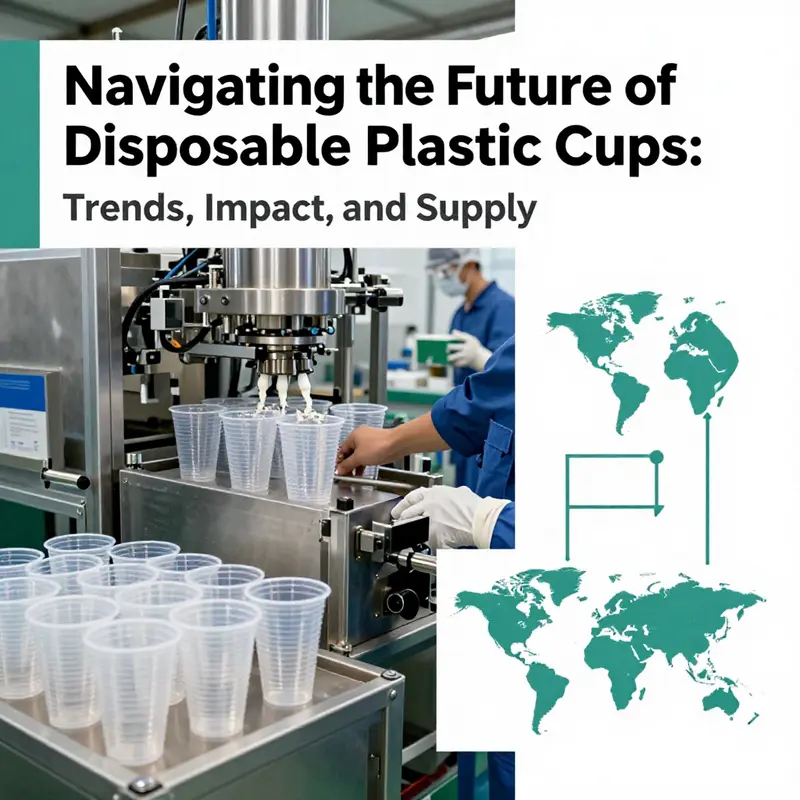
Beneath the gleam of a clear plastic cup lies a chain of decisions, machines, and logistics that keeps beverages gliding from hand to table with precision and speed. The disposable plastic cup is not merely a container; it is a tiny, engineered system designed to preserve temperature, maintain structure, and support brands in a compact form. In many parts of the world, the appetite for single-use cups has remained voracious, shaped by the realities of events, restaurants, and takeaway services where speed, hygiene, and cost matter more than permanence. Yet the vitality of the supply chain that produces these cups is less visible than the cups themselves. It sits in the rhythm of factories, raw materials, specialized equipment, and the dense web of sourcing, production, and shipment that stitches demand to supply across continents. The chapters that follow in this part of the article are not about fashion or novelty; they are about how a product as ordinary as a cup can reveal the modern logic of manufacturing at scale, particularly in an economy where Chinese-based production continues to anchor much of the global supply chain for everyday packaging goods.
The manufacturing landscape for disposable plastic cups is organized, process-driven, and capable of rapidly translating diverse customer requirements into finished, export-ready products. A typical operation begins with a careful selection of raw materials, often polypropylene (PP), polystyrene (PS), or polyethylene terephthalate (PET), chosen for their consistency, clarity, and resistance to the temperature ranges common to cold beverages like juice, soda, and milkshakes. Each material brings distinct properties: PP for its balanced rigidity and cost-effectiveness, PS for clarity and rigidity that showcase a beverage’s color, and PET for its transparency and barrier performance. In the minds of buyers, these choices translate into concrete outcomes—how clearly a beverage appears, how long a cup maintains its shape during transport, and how resistant it is to deformation when a lid presses against the rim during stacking or shipping. While many buyers fixate on price, the broader calculus rests on a quiet calculus of performance: a cup that cracks under pressure or a cup that loses its seal in a hot transit is not merely a defect; it is a disruption of a chain that touches catering staff, logistics teams, event planners, and end consumers.
The operational heart of most disposable plastic cup manufacturers is an integrated production line designed to move from raw material to finished cup with minimal handling and maximal control. In practical terms, this means a factory floor where polymer resin is transformed through precise heating and molding steps into thermally stable cups of 300 milliliters all the way up to 1000 milliliters. Modern lines combine forming with injection processes, so cups can be shaped, trimmed, and readied for downstream processes like coating or labeling in one continuous flow. The equipment behind these lines is specialized and purpose-built. Forming machines, often automated, shoulder the heavy lifting by shaping cup bodies with high repeatability, while downstream stations for coating, printing, and labeling ensure that each batch carries consistent dimensions and a reliable surface ready for branding or functional features such as in-mold labeling. In practice, many factories aim to minimize manual intervention by designing lines capable of running different cup sizes with only modest changeovers. This flexibility is essential given the market’s demand for a spectrum of volumes—from compact 300-350 ml cups used for cold drinks to our larger 700 ml or 1000 ml variants for smoothies or bubble tea. The result is a production ecosystem that prioritizes speed, predictability, and the traceability that buyers increasingly demand.
Quality control in this context serves as both a checkpoint and a design constraint. Integrated lines enable tighter oversight because the same platform that forms a cup can also perform coating, labeling, and even some forms of surface finishing, reducing the risk of misalignment between stages. Coating and printing are not merely cosmetic; they contribute to barrier properties, temperature performance, and branding. In-mold labeling, for instance, becomes a strategic feature that embeds branding or product information during the cup formation itself, eliminating additional post-molding steps and reducing the risk of misalignment or peel during use. Flexographic printing offers a cost-efficient method to apply multi-color logos or promotional designs, enabling brands to place their mark on cups without sacrificing throughput. The capacity to print a single color or multiple colors—typically in the range of one to six colors—allows a supplier to meet a wide array of promotional needs while maintaining efficient production schedules.
A robust supply chain for disposable cups hinges on clear, repeatable specifications and reliable certifications. Export-ready packaging is standard, usually in sturdy cartons that align with international shipping practices and help ensure that cups arrive in pristine condition. Buyers can expect to encounter CIQ inspection reports as part of the documentation landscape; these reports provide a level of assurance regarding product conformity to regulatory standards and safety expectations in various markets. While buyers often bear the costs associated with inspections and shipping, having access to certified documentation at the point of purchase reduces the administrative burden on downstream partners and accelerates onboarding for new customers. The combination of standardized packaging, formalized testing, and traceable production data creates a predictable risk profile for clients who must manage inventory across multiple outlets, events, or retail channels. The result is a dependable, export-ready product that can travel across oceans with confidence in its structural integrity and performance.
Customization emerges as a defining feature of this sector’s value proposition. A client seeking to extend brand reach or coordinate packaging with a broader marketing campaign can request custom logo printing, typically available from take-away PP plastic cups. The printing capabilities—from 1 to 6 colors—ensure that a brand’s identity is legible and visually engaging on every cup that leaves the factory floor. Intriguingly, the economics of customization often hinge on minimum order quantities. A common MOQ is in the range of 50,000 pieces, a threshold that reflects the fixed costs associated with plate creation, color registration, and finite machine set-ups. Yet the economics of bulk orders can be compelling: the unit price can fall to surprisingly low levels, with bulk pricing sometimes quoted around a few hundredths of a dollar per cup, depending on size, material, and the extent of customization. For buyers, this means that large, well-planned campaigns can benefit from price stability and reliable lead times, while smaller pilots must balance the desire for branding with the realities of unit costs.
Timelines in this industry reflect the dual pressures of scale and customization. Sample delivery times are typically in the range of three to five days, enabling buyers to assess fit, print quality, and material performance before committing to a production run. Full-order fulfillment, particularly for initial deployments, can span roughly 30 to 45 days, with subsequent orders often entering a faster cadence of 7 to 15 days as supplier capacity, tooling, and process parameters become stabilized. These lead times reflect the need to source raw materials, confirm custom printing plates or in-mold labeling configurations, and ensure that packaging remains consistent with the customer’s branding and requirements. In practice, a supplier’s ability to deliver on schedule is a critical part of the value proposition, one that clients weigh alongside price and quality.
The packaging ecosystem that accompanies cups is more than a shipping convenience; it is a logistics solution. Export-ready packaging typically includes standard carton configurations that optimize stacking and protect the cups during overseas transport. This is especially important given the fragility of high-clarity PS or PET variants when subjected to long-haul vibrations and compressive forces. Suppliers frequently offer additional components that simplify a buyer’s go-to-market strategy, including matching lids—such as dome or flat lids tailored to beverages like iced coffee and bubble tea—and even utensils to create a cohesive, one-stop packaging solution. The ability to bundle lids and utensils with cups speaks to a broader industry trend toward convenience and cost containment, enabling foodservice operators to minimize sourcing steps and inventory SKUs while ensuring compatibility across components. In practice, this level of integration reduces friction for buyers who seek predictable onboarding and consistent quality across multinational deployments.
The modern supply chain for disposable plastic cups is a study in integration, resilience, and risk management. It thrives on the tight alignment between manufacturers, material suppliers, and distributors, all coordinated through trade platforms and direct relationships that cross borders with relative ease. Buyers frequently access verified exporters and manufacturers via established platforms, where product specifications, certifications, and customer reviews provide a lens into reliability and capacity. The social and economic value of this ecosystem is substantial: it supports a widespread catering and hospitality infrastructure, enables fast service at events, and underpins the takeout culture that has grown in urban centers around the world. Yet the same ecosystem must continually adapt to growing concerns about sustainability and the environmental footprint of single-use plastics. This tension between performance and responsibility shapes the trajectories of new materials, alternative solutions, and the pace at which suppliers can introduce innovations that reduce waste without sacrificing the benefits customers rely on.
From a buyer’s perspective, the decision to source disposable cups often comes down to a balance of cost, speed, and reliability, tempered by a long view of environmental considerations. While the dominant materials and processes deliver predictable outcomes in terms of temperature control, rigidity, and cup integrity, there is a gradual shift toward sustainability that is reshaping expectations and investment. Some suppliers are incorporating recycled-content resins or exploring compostable options as part of a broader plan to diversify material choices and appeal to clients who want to signal environmental stewardship. This transition is not without its challenges. Recycled-content resins can alter mechanical properties and cycle times; compostable alternatives may require different end-of-life processing that not all markets can accommodate. Nevertheless, the industry is increasingly transparent about tradeoffs and opportunities, inviting buyers to participate in a more nuanced conversation about lifecycle performance, regulatory compliance, and the evolving expectations of consumers and institutions regarding waste, recycling infrastructure, and the true cost of disposal.
The digital and logistical arteries supporting this industry are equally important. Buyers often discover suppliers through trade portals that offer payment protection, documentation, and after-sales services, including warranties that extend across many months. A common expectation is that the supplier will provide not only the cups but also the necessary documentation to facilitate international shipping, quality control, and compliance with import regulations. In this environment, a supplier’s experience—often phrased in terms of decades of operation and export activity—becomes a signal of stability. The role of logistics is not merely about moving product; it is about tuning the entire chain to respond to demand surges, seasonal peaks, or promotional campaigns. The result is a robust, if sometimes opaque, choreography where each actor—raw material supplier, forming line, printer, carton packager, freight forwarder—plays a part in delivering a consistent experience to the consumer who will ultimately hold a cup and pour a drink into it.
To tie these threads together, consider the end-to-end value proposition of disposable plastic cups as a product category. They represent a convergence of economics and engineering: a simple form that must perform under stress, maintain clarity for brand visibility, and be affordable enough to be produced at scale. The manufacturing narrative—material selection, automated forming, printing, labeling, coating, and packaging—translates directly into the ability of foodservice and retail networks to meet customer expectations for consistency and speed. The supply chain’s strength lies in its capacity to absorb variability: changes in demand, shifts in material costs, or fluctuations in shipping schedules. In this sense, the cup is more than a container; it is a module in a larger system that enables a global appetite for convenience, speed, and branded experiences across countless venues and venues without walls. For readers exploring the broader landscape of disposable cup production, the continuous improvement in automation, process control, and supplier collaboration remains a core driver of reliability and value.
For readers who want a concrete glimpse into the machinery that powers this sector, further reading on equipment and manufacturing options can be found in external industry resources. As the literature notes, automated forming lines capable of turning resin into finished cups—along with downstream coating, labeling, and packaging steps—illustrate how scale is achieved without sacrificing precision. These systems are designed to accommodate a range of cup sizes and designs, while enabling relatively quick onboarding for new customers who require sample validation and, eventually, mass production. The emphasis on integrated production solutions—where coating, printing, and cup fabrication occur in a coordinated sequence—emphasizes how modern manufacturers reduce turnaround times, improve quality control, and deliver consistent results across large orders. The ongoing dialogue about sustainability and material innovation will continue to shape how future lines are configured, what resins are considered viable, and how end-of-life considerations influence packaging decisions across markets.
Internal link: For a practical look at related disposable cup options and packaging solutions that align with fast-moving consumer needs, see disposable-custom-double-wall-hot-paper-coffee-cups-with-lid.
External reference: For a more technical perspective on the machinery underpinning these operations, see the detailed overview of automatic forming equipment used to produce disposable plastic coffee glasses at https://www.made-in-china.com/products/889239282-213930621/Automatic-Forming-Machine-for-Manufacturing-Disposable-Plastic-Coffee-Glasses.html.
Final thoughts
Understanding the landscape of disposable plastic cups—from their environmental impact and market dynamics to the intricacies of production and distribution—empowers businesses to make informed choices. As the demand for convenience continues to rise, so does the responsibility to seek sustainable alternatives. By staying abreast of these trends and utilizing available resources, bubble tea shops, restaurants, and catering services can align their practices with consumer expectations and environmental stewardship, elevating their brand while doing their part for the planet.