
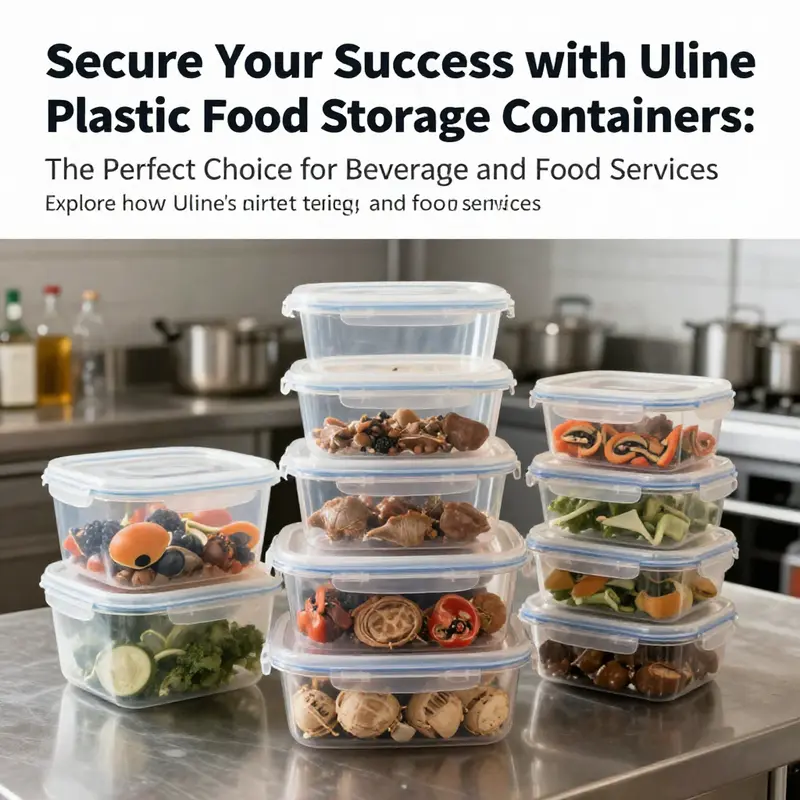
In the vibrant world of food and beverage service, how you’re keeping your ingredients organized and fresh can make all the difference. Uline’s plastic food storage containers with screw-on lids are specifically designed to meet the needs of bubble tea shops, restaurants, food trucks, catering services, event planners, and corporate procurement teams. Their durable construction and thoughtful design help maintain the quality of your products while providing ample flexibility for various uses. This article will take you through five essential chapters that dive deep into the materials and safety standards, design features, practical applications, a comparative analysis of alternatives, and market trends driving consumer preferences for Uline containers. As we journey through these aspects, you will find valuable insights into how these containers can enhance your operational efficiency and food quality.
Quiet Strength: How Materials, Safety Standards, and Design Shape Screw-On Lid Plastic Storage for Food
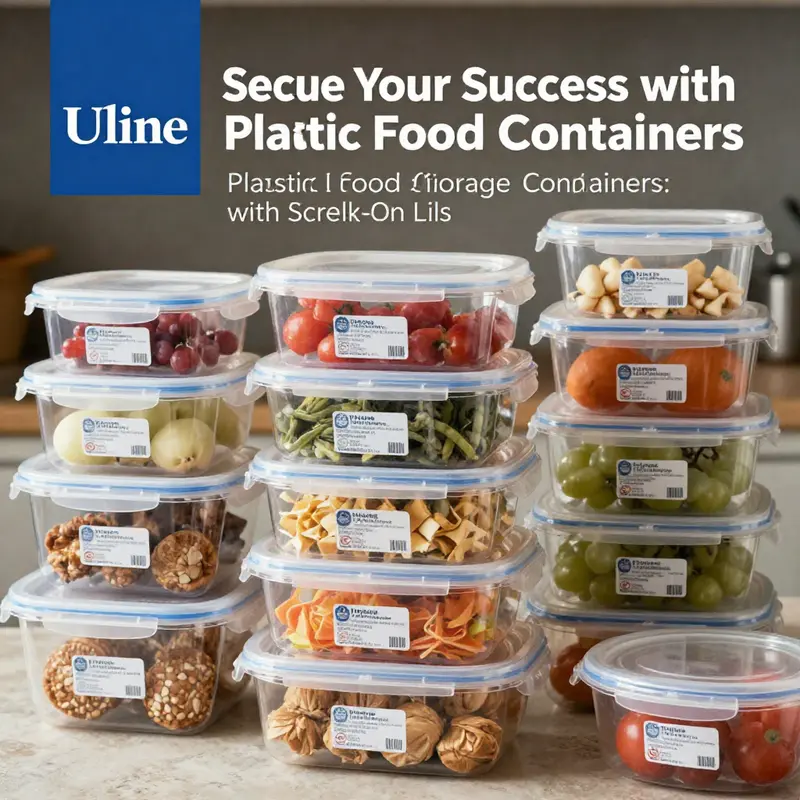
Few kitchen tools are as reliable as a plastic container with a screw-on lid. When chosen well, these containers do more than hold leftovers; they organize ingredients, shield food from moisture and air, and simplify meals on the go. Behind their everyday convenience lies a quiet framework of materials and standards that shape safety, durability, and performance. The core decisions focus on two plastics: high-density polyethylene and polypropylene, which provide the balance of toughness, heat tolerance, and clarity modern kitchens demand.
HDPE offers durability and chemical resistance. It resists impact and holds up under cold storage. Polypropylene offers better heat resistance and a clearer appearance; it stays stiffer at higher temperatures, making it suitable for transporting sauces or dressings. Both materials are common in food-contact containers because they clean easily and can be molded into shapes that maximize space—rectangular, square, or round. The choice between them often depends on use: HDPE for freezing and bulk storage; PP for hot leftovers or liquids, with lids and rims compatible with heat.
Safety standards are integral. The materials used for screw-on-lid food containers are typically recognized by the U.S. FDA as safe for food contact. This recognition means the plastics meet limits on migration of residual substances, even with extended storage or reheating. In practice, it translates to containers that resist staining and odors, remain clear after repeated use, and keep their integrity across routine temperatures. The result is confidence that a common storage solution will not compromise its contents.
Beyond safety, the screw-on lid adds performance. The seal must be airtight to slow oxidation and preserve flavors, and to prevent leaks during transport. In well-made designs, the lid locks onto the rim with precision, sometimes aided by a gasket to prevent seepage. The container then stands securely on shelves or in the fridge without tipping. For batch cooks and meal preppers, leak resistance reduces waste and cross-contamination risks. A thoughtful gasket can be a small but meaningful detail, helping the system endure the bumps of daily use.
Care instructions are part of the safety equation. Most molded containers are dishwasher-safe, but heat can affect lids, so many models are placed on the top rack. Microwave use often requires removing the lid; microwaving liquids is acceptable when the lid is off. Freezer safety is common, with protection against brittleness or cracks. The outcome depends on matching size, rim, and lid geometry to the task: a shallow rectangle for stacked freezer storage, a deeper square for portions, or a compact round form for grab-and-go lunches. The material, lid design, and container geometry together determine how long leftovers stay safe and how easily a kitchen routine scales. A practical note for daily use: if a seal includes a gasket, inspect it periodically for wear and replace when necessary.
Space efficiency matters in real kitchens. Rectangular and square shapes maximize shelf and door storage, enabling a consistent system that frees space and reduces clutter. Stackability helps; containers that nest when empty save room while preserving lids for easy access. The lid design matters too: if lids are too large or take too long to align, frustration follows. In well-designed sets, lids match their bases and stack securely. This simple balance—size range, lid compatibility, and stackability—turns a chaotic cabinet into an organized, efficient system that saves prep time and simplifies inventory. For growing families or small operations, the ability to pre-sort by size can keep every item in its place, enabling faster meal assembly and clear visibility of what’s on hand.
Hygiene is a core driver of durability. Smooth interiors resist stubborn residue, and surfaces without sharp corners help prevent trapped crumbs. HDPE and PP withstand domestic cleaning, but best practice includes quick rinsing and air drying before stacking. The seal benefits from occasional inspection for wear. If gaskets become cracked or discolored, the seal can fail even if the base remains sound. In a busy kitchen, replacing worn lids or seals keeps the system reliable. Some users mark the date of storage on the lid or base to track freshness, a small habit that can prevent forgotten items from sitting too long.
Durability and long-term use also shape cost and waste. The robust HDPE and PP mean a container can outlast disposable options when treated well. For families who batch cook, portion meals, or store sauces for the week, investing in sturdy containers reduces the need for frequent replacements. Plastics are often criticized for their footprint, but reuse with proper cleaning and storage can contribute to lower waste when aligned with realistic routines. Choose sizes that cover typical portions to avoid oversized or undersized containers, which waste space and time. The material choice, lid design, and geometry together turn a kitchen into a practical, reusable system rather than a pile of mismatched tops and loose bottoms. The result is a flexible toolkit that adapts from fridge to freezer to plate with minimal fuss.
To connect materials and performance with broader packaging choices, imagine a system that combines screw-on containers with compatible packaging for take-out or meal kits. A cohesive approach can reduce waste and improve efficiency. For take-out or on-the-go meals, you can explore kraft paper bowls for take-out with lids as part of a broader, eco-conscious packaging strategy, which you can find here: kraft paper bowls for take-out. This approach supports a design that emphasizes durability, safety, and practicality while leaving branding as a secondary concern.
Ultimately, the story of screw-on-lid plastic containers is reliability plus safety. The materials provide resilience; safety standards anchor trust; and practical features—the seal, heat handling, and space-efficient shapes—turn a simple box into a dependable kitchen tool. In daily use, leftovers stay fresher, sauces travel without leaks, and organized ingredients stay visible rather than buried in a tangle of tops. The materials and safety discussion is not a detour; it is the lens through which the rest of the chapter, and the article, come into focus. When you reach for a screw-on-lid container, you are choosing a tool built to endure the demands of everyday life—cleaning, freezing, heating, transporting, and stacking—while maintaining safety and freshness in equal measure. Choosing the right combination—size, material, and lid geometry—transforms everyday storage into a predictable workflow, making weeknight cooking smoother and weekend prep less stressful.
External resource: https://www.uline.com/PL/Plastic-Food-Storage-Containers-with-Screw-On-Lids
Sealed for Freshness: The Design Language and Practical Impact of Screw-On Plastic Food Storage Containers
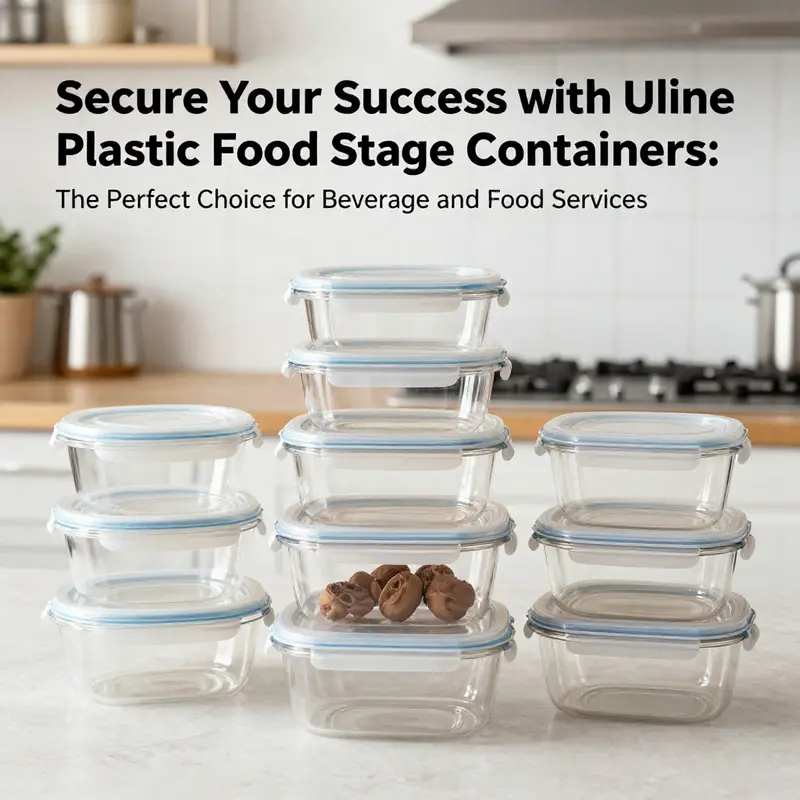
In kitchens, storage is as much about psychology as it is about physics. The moment you snap a lid onto a container, you’re not just capping in leftovers; you’re establishing a controlled microclimate that slows moisture loss, shields flavors from odor exchange, and keeps the mess contained. Among the most reliable tools for achieving this balance are plastic food storage containers with screw-on lids. These containers combine durable materials with a seal that is more than a convenience—it’s a core feature that affects shelf life, hygiene, and daily workflow in both home and commercial settings. The design choices behind these containers—material composition, lid geometry, and ergonomic features—work together to create a system that protects what you store while streamlining the way you store, transport, and reuse it.
Material choice sits at the foundation of safety and performance. The workhorse plastics used in these containers are typically food-grade polypropylene (PP) or high-density polyethylene (HDPE). Both materials are prized for their resistance to cracking, their ability to stand up to repeated cycles in the freezer, and their low risk of migrating small amounts of flavor or odor into or out of stored foods. PP often provides a comfortable balance of stiffness and toughness, while HDPE contributes durability and chemical resistance that is particularly valuable for liquids, sauces, and dressings. The emphasis on food-grade standards is not merely about compliance; it translates into tangible benefits for households and businesses alike. You gain peace of mind knowing that the container’s plastic won’t leach toxins as it warms in a microwave or cools in a refrigerator, and that the container’s surface will resist the staining and odor absorption that can plague lower-quality plastics.
The screw-on lid is the heart of the system’s reliability. A well-designed lid threads smoothly onto the container to create a tight, uniform seal. This seal is more than a line that stops air from rushing in; it is a carefully engineered barrier against moisture ingress and air exchange, two factors that drive dehydration of dry foods and oxidation of fatty items. In practice, the result is extended freshness and reduced freezer burn, which translates into less food waste and more predictable outcomes for meal prep and batch cooking. For liquids and semi-liquids, the seal protects against leaks during transport, a feature that is especially valuable for on-the-go meals, catered events, and bulk ingredient handling. The seal’s effectiveness rests on consistent tolerances between the lid and the container, reinforced edge designs, and stable threading that remains reliable after dozens of cycles through dishwashers and freezers.
Another cornerstone of these containers is their visibility. The typical design emphasizes a clear or translucent body that lets you identify contents at a glance. In a busy kitchen, the ability to read labels, colors, or even the preserved color of a sauce without opening the lid speeds up inventory checks and reduces the time needed to locate ingredients. When combined with a screw-on lid, the visibility feature becomes a practical shorthand for organization: you know what you have, how much is left, and whether it’s appropriate for a quick reheating or a longer storage horizon.
Space efficiency follows from shape and stacking geometry. Rectangular and square variants are common for a reason: they maximize cabinet, pantry, and refrigerator real estate. The corners and flat sides align with shelf edges and grid-like freezer compartments, enabling neat, uniform stacks that minimize wasted space. A robust lid-locking system often goes hand in hand with this efficiency, because stable lids reduce the likelihood of toppled stacks or accidental openings during transport. Some designs also incorporate reinforced edge details and stackable bases that maintain stability even when containers are loaded with heavier ingredients. The result is an organizing principle as much as a mechanical one: a modular system that helps cooks and storers plan their days with clear, repeatable configurations.
Beyond these core elements, the practicalities of everyday use reinforce the appeal of screw-on plastic storage. Many variants are designed to be compatible with common kitchen routines: they can enter a microwave for reheating, slide into a refrigerator for cooling, and emerge from the dishwasher without warping or clouding. The compatibility pays off in convenience: reheating leftovers in the same container that held the original meal reduces dishwashing steps and limits the number of containers needed for meal-prep cycles. The ability to withstand a range of temperatures without compromising safety or performance makes these containers suitable for a broad spectrum of storage demands—from keep-it-for-a-week leftovers to portioned meal plans for busy families.
In practice, a well-chosen screw-on container becomes a versatile ally in both domestic kitchens and professional environments. In home use, you gain reliability for leftovers, batch-cooked meals, and ingredients organized by category in the fridge or freezer. In catering or food-service contexts, the durability and leak-proof design support transport, portioning, and long-term storage without compromising hygiene or sanitation. The design language behind these containers—clear bodies, tight-sealing lids, and efficient stacking—addresses a spectrum of needs from the precise to the everyday. It is a language that speaks to the way people think about food: that storage should be predictable, safe, and respectful of both time and waste.
A note on design nuances helps illuminate why these containers perform so well under diverse conditions. The materials’ chemical resilience matters when ingredients include oils, marinades, or acidic components that can, over time, interact with certain plastics. The choice of PP or HDPE slides a spectrum of properties into play: PP generally offers strong fatigue resistance and a more transparent appearance, which helps with visibility, while HDPE adds impact strength that protects against drops and enclosures in busy kitchens. The lid geometry—threaded rims, flat contact surfaces, and occasionally gasket-like features—further optimizes the seal’s integrity and reliability across cycles of heating and chilling. The combination of these design elements yields an archive-worthy memory of how a well-made container behaves when faced with the practical demands of modern cooking, meal prep, and service.
In this ecosystem of materials and geometry, the user experience becomes about confidence. You know that when you screw the lid on, you have a seal that guards against leaks, odors, and air intrusion. You know that the container will tolerate being stacked alongside others without sliding apart. You know that you can slide it into a fridge or freezer and, when needed, bring it straight to a microwave for reheating. It is not a single attribute but the sum of several design decisions working in harmony that makes screw-on plastic storage containers a reliable backbone for food organization and safety. And while they are simple in appearance, their impact on kitchen efficiency, waste reduction, and process hygiene is substantial.
The broader packaging and storage ecosystem also informs how contractors and home cooks think about lids and containers. In a wider context, one can compare sealing effectiveness across lid designs and materials, noting that the screw-on approach often provides a more uniform seal along the entire rim than some snap-on alternatives. This uniform engagement is crucial for preventing leaks during transport or when the container is tipped at an angle. It also reduces the risk of moisture migration into the cap and gaskets, which can lead to odor transfer or material degradation over time. As a practical matter, the decision to adopt screw-on containers in a kitchen routine signals a commitment to long-term reusability, hygiene, and efficiency.
For readers exploring the broader packaging landscape, an accessible point of reference on lids and containment aesthetics can be found in related packaging formats, such as disposable takeaway paper cups with lids. This contrast highlights how a lid’s role remains constant across materials and contexts: to protect contents, prevent leaks, and maintain the integrity of the product as it moves through different environments. If you want to explore a packaging option outside rigid plastics while appreciating the same principles of sealing and portability, you can visit the following resource: Disposable Takeaway Paper Cup with Lid.
In sum, the design features and functionalities of screw-on plastic food storage containers create a dependable framework for storing, transporting, and preserving food. Material choice supports safety and durability, while the screw-on lid delivers a reliable seal that protects against air and moisture. The clear, stackable bodies optimize visibility and space, turning everyday organization into a repeatable, efficient process. Whether used in a home kitchen or a professional setting, these containers offer a compact, resilient system that makes the day-to-day acts of cooking, packaging, and storing feel more controlled and predictable. The result is less waste, more consistency, and a storage solution that adapts to the evolving rhythms of modern eating.
External resource for further context on related lid-and-container design: https://www.uline.com/Item/N/1153146
Seal, Stack, and Store: The Quiet Power of Screw-On Lid Plastic Food Containers in Everyday Food Storage
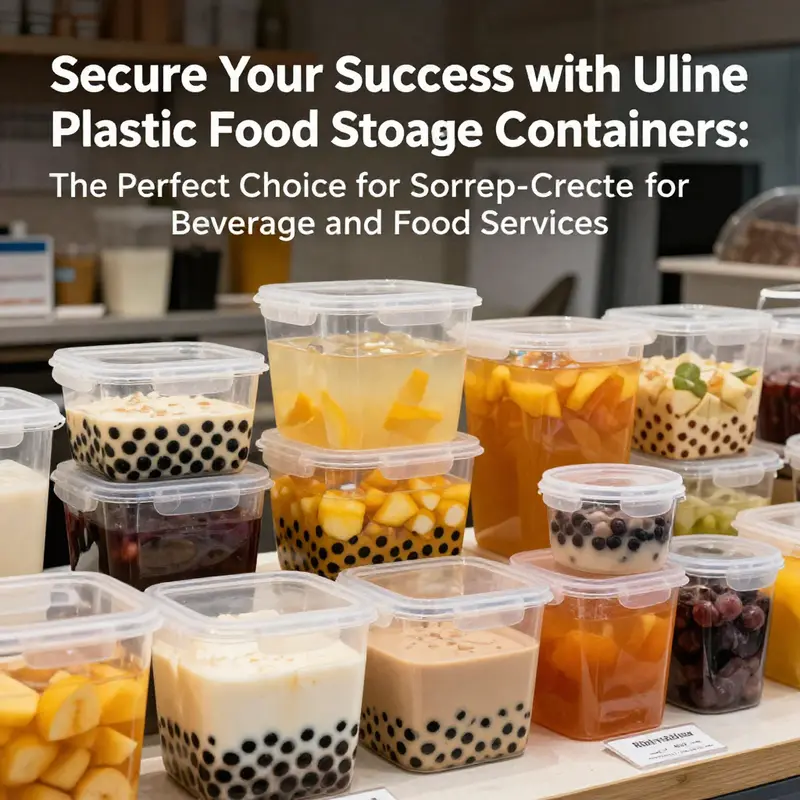
In every kitchen, the flow of food from prep to plate hinges on more than the ingredients themselves. It hinges on the containers that cradle those ingredients between steps, on the way to becoming meals. Plastic storage containers with screw on lids have earned a place in this rhythm not by flash, but by reliability. They are designed to form a confident alliance between containment and accessibility. When a lid twists down and the seal is tight, flavors stay where they should, aromas stay contained, and the risk of leaks or cross smells diminishes. The practical value of this design choice goes beyond mere containment; it shapes how we think about leftovers, batch cooking, and even the way we plan groceries for the week. Read through any busy kitchen—home or professional—and the containers with screw on lids seem almost invisible, yet their impact is felt in the crispness of a stored salad, the creaminess of a sauce kept fresh, and the calm of a refrigerator that no longer smells like last night’s onions because the seal kept it from escaping and mingling with everything else. In that sense, the lid is less an accessory and more a safeguard for both taste and hygiene. It is also a tool for organization, because a secure lid pairs with a matching base to form a clearly stackable package that can line a shelf, a freezer, or a pantry with orderly, uniform blocks of storage. The value here is not only in the ability to seal but in the repeatable cycle of use. A container can be filled, sealed, stored, moved, reheated, and washed many times, reducing waste and spreading the cost of storage over days or even weeks. The materials used for these containers are chosen for food safety and durability. Commonly, maker-grade plastics such as polypropylene and high-density polyethylene offer a balance of rigidity, clarity, and chemical resistance. They are selected for their stability across a range of temperatures, from refrigerator chill to freezer cold, and many models are engineered to be microwave-friendly or dishwasher-safe, depending on the design and the exact material composition. While the term food-safe is the baseline assurance, the reality lives in how a container behaves in daily practice: will it resist staining or absorbing strong odors, will the seal hold under repeated use, and can it withstand frequent cycles of heating and cooling without warping or cracking? These questions guide the user from the moment of purchase through the long life of the product in a kitchen. The practical benefits multiply when we consider the dimensions and shapes that maximize space. A suite of rectangular and square containers, for example, makes efficient use of vertical space in a refrigerator or cabinet. The flat sides enable snug stacking, while tight-fitting lids eliminate gaps where air could circulate or spills could escape. This combination of shape, lid design, and material quality means a simple act—twisting the lid—produces a reliable seal that protects the contents during shifting, travel, or sudden temperature changes. The seal’s integrity is aided by a gasket or a closely engineered thread that clamps the lid to the base with even pressure. A thoughtful thread design also minimizes the risk of cross-threading, a small detail but one with outsized consequences for usability. If a lid is hard to twist, users may abandon the container at the exact moment they need it most: when dinner is ready to be portioned or when lunch needs to be packed for the road. When the seal works smoothly, the same container becomes a consistent partner for meal prep. In households where members prepare and portion meals ahead of time, the predictability of closing and storing a container becomes a guiding principle of routine. You can plan a week’s worth of meals with confidence when every container handles leftovers, sauces, and marinated vegetables with equal ease. The lids add security for liquids and semi-liquids alike; sauces or dressings that might otherwise slosh or spill are kept inside, which reduces the risk of leaks into drawers or bags and prevents the refrigerator from turning into a labyrinth of mixed aromas. For ingredients that are prepped in bulk, the stackability offered by many designs helps keep a kitchen orderly and efficient. When you can see through the container, you can quickly identify what’s inside, which is a small but meaningful productivity boost for busy households. Transparency in the base wall or lid often informs a straightforward inventory approach: what you have, what you’ve used, and what you still need to stock up on. In common practice, these containers see life across multiple spheres. In family kitchens, they store leftovers, chopped vegetables, or pre-measured portions for school lunches. In meal-prep routines, they play a central role in dividing a cooking output into ready-to-heat portions, helping to reduce waste and encourage balanced eating. Their secure lids make them reliable for transporting meals to work, school, or car trips, where spills would otherwise threaten clothing, bags, or car seats. The same design logic underpins use in more demanding environments, where hygiene and reliability must meet higher standards. In commercial kitchens, persistence and consistency matter for inventory management and food safety. Containers with screw on lids facilitate pre-processing steps such as washing, chopping, and marinating with a controlled flow of air and moisture. They enable a predictable batching system: ingredients can be portioned, air expelled, sealed, and stacked, then moved into cold storage or serving lines without mixing or contamination. For food service operations, the durability of the container and the tightness of the seal contribute directly to compliance with safety and sanitation protocols. In facilities that rely on food storage for long shifts or extended service periods, the ability to seal in flavors and prevent leaks is a practical cornerstone of efficiency. The same principles apply when containers are used for dry powders, grains, or pelletized ingredients in processing environments. The capacity for repeated use reduces waste and supports cost management in ways that align with sustainability goals. While the everyday consumer may mostly associate these containers with the fridge and the pantry, the broader ecosystem includes applications that extend into cold storage in bulk and temporary storage during transport. In cold environments, the plastic’s low-temperature resistance helps keep contents intact without becoming overly brittle or prone to cracking. This reliability is critical when long-term freezing or controlled-thaw processes are part of a routine. The result is a versatile system that transcends a single use case. Outdoors and on the move, the portability of compact sealed containers makes them a dependable option for picnics, camping, or long-haul travel. A secure lid translates into confidence when you place a meal in a backpack or cooler, knowing that a spill is unlikely and that the contents will remain closed off from external elements. Maintenance and care also matter. While many models are dishwasher-safe and suitable for limited microwave use, the exact guidance varies by product and material. The general rule is to avoid sharp impacts that could crack the base or distort the threading, and to separate lids from bases when cleaning to ensure every surface is scrubbed and dried thoroughly. Regular inspection of the threads and lid gasket, if present, helps preserve the seal’s integrity over time. A simple habit—hand washing the lid and base periodically—can extend life and preserve clarity, which makes it easier to identify contamination or residue. The environmental and economic advantages of reusable, screw-on lid containers emerge most clearly when you consider lifecycle costs. A one-time purchase can supply many months or years of service, replacing disposable alternatives and cutting the daily expenses of single-use packaging. The durability and cleanability of the materials support a low-maintenance approach, which is attractive in homes that prize simplicity as much as hygiene. When it comes to choosing among available options, the key questions revolve around size variety, lid robustness, and the intended use case. If a system prioritizes maximum space efficiency, rectangular and square bases with secure lids are compelling. If the goal is transparency for quick identification, clear bases and light-colored lids can help. If the storage needs include freezing, check the material’s tolerance to low temperatures and whether the design accommodates easy labeling for inventory. In a broader packaging context, the principle remains the same: a well-designed seal makes the difference between a product that sits forgotten in the back of a freezer and one that becomes a reliable ally in daily cooking and nourishment. For readers exploring related packaging formats, consider how take-out containers with lids demonstrate similar principles of containment and portability. To see how sealed vessels in other materials address parallel use cases, you can explore related designs such as a kraft paper bowl with lid in the take-out segment, which illustrates how secure closures extend shelf life and improve transport convenience in different contexts. kraft paper bowl with lid. As this chapter closes, the throughline is clear: screw-on lid plastic containers are not flashy, yet they are foundational to practical, efficient, and hygienic food storage. They empower home cooks to plan ahead, support professionals in maintaining consistent standards, and contribute to more sustainable daily habits by emphasizing reuse over single-use waste. The next chapter will build on this foundation by examining how to integrate these containers into organized meal-prep systems and how to select the right sizes and configurations to match specific kitchen workflows. For now, the reliable seal, the predictable shape, and the resilient material form a simple triad that helps preserve what matters most—the flavor, texture, and safety of the foods we feed ourselves and others. External resource for broader industry context: https://www.uline.com/
Seal, Stack, and Scale: How Screw-On Lid Plastic Containers Redefine Food Storage for Homes and Businesses
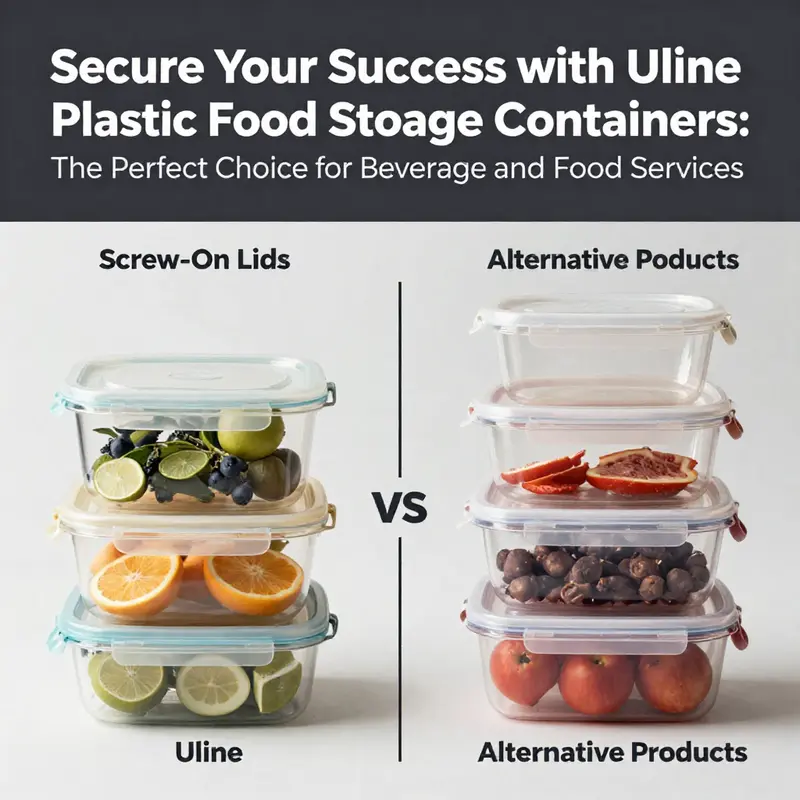
A chapter on practical storage cannot ignore the humble screw-on lid. In kitchens that juggle meal prep, inventory, and the pressures of a busy service or catering operation, the fundamental choices around containers and closures do more than hold leftovers. They shape how long food stays safe, how easily teams move through prep and service, and how tightly spaces can be packed on a shelf or in a cooler. This chapter follows the thread from material science through daily use, showing how the combination of a sturdy plastic body and a reliable screw-on lid becomes a quiet engine of efficiency. It is not merely about containment; it is about preserving quality, enabling precise workflow, and aligning with sustainability goals in both home kitchens and larger food operations. The broader article examines the role of these containers in modern food storage, and this chapter situates how design, standards, and real-world use intersect to influence decisions across different scales.
At the core of these containers is a choice of material that is both robust and food-safe. The most common families are high-density polyethylene (HDPE) and polypropylene (PP). HDPE offers excellent impact resistance, which matters when containers are stacked in a crowded refrigerator or moved through bustling kitchen lines. It also provides good resistance to temperature variations, a key factor for containers that shuttle between cold storage and a prep counter. PP, meanwhile, tends to offer a sleeker feel, often improved chemical resistance, and in many designs, higher clarity or opacity to help with labeling and inventory control. Both materials are widely recognized as safe for contact with food when produced to proper specifications. They withstand routine cleaning regimes, including high-temperature wash cycles and common kitchen sanitizers, without migrating tastes or colors, which is essential for operations that batch-prep sauces, dressings, or marinated products.
The lid is not an afterthought. In a busy kitchen or a warehouse pantry, the screw-on closure is the line between a sealed environment and exposure to air, moisture, and contaminants. A well-designed lid, paired with a precisely engineered thread on the container body, creates an airtight seal that slows oxidation, minimizes moisture loss, and reduces the risk of condensation that could lead to spoilage or texture changes in delicate ingredients. The effect is twofold: first, a tighter seal can extend shelf life in the fridge or cooler, making batch cooking and inventory rotation more predictable. Second, it clamps down on leaks during transport, which is crucial when shifting liquids like dressings, marinades, or soups between prep stations, cold lines, or even off-site catering. In this regard, the combination of a sturdy body and a dependable lid translates to tangible cost savings; less waste, fewer substitutions, and less time spent managing spills.
The scale of the container family under consideration often matters more than the glossy spec sheets. In professional settings, sizes tend to cover a broader range, with emphasis on shapes that maximize space in tall, narrow racks as well as in deep, wide shelves. Rectangular and square profiles, for instance, maximize fridge and freezer real estate because edges align with shelf supports and with each other when stacked. A uniform set of dimensions across a line reduces the cognitive load for staff who must rotate stock, label, and track usage. It also enables smarter warehouse planning and easier cross-docking during busy periods. By contrast, consumer-grade options frequently prioritize compact size, color variety, or a lower upfront cost, but often without the same emphasis on standardized dimensions or long-term durability. The disparity becomes clear in environments where containers must endure repeated sterilization cycles and frequent handoffs between shifts or departments. The industrial-grade designs that dominate professional lines are often built to withstand more aggressive cleaning agents and higher-frequency sanitization, while still maintaining a safe, inert surface for food contact.
A key dimension of the conversation concerns durability and cleaning compatibility. In many professional settings, containers are subjected to more aggressive cleaning protocols than those found in households. This includes repeated hot water or chemical sanitation cycles, which can test the resilience of seals and the integrity of threads. HDPE and PP both fare well in these regimes when the closure design emphasizes a tight fit and a reliable thread pattern. A lid that wobbles, cracks, or loosens after each wash can become a daily nuisance, increasing the risk of leaks and compromising the usability of an entire batch of containers. Thus, the best designs combine precise molding tolerances with robust threads and sometimes a gasket or a secondary seal to buttress the airtight claim. It is worth noting that while many consumer-grade configurations advertise microwave and dishwasher safety, commercial-grade containers often emphasize compatibility with industrial dishwashing equipment and chemical cleaners. The distinction is not about safety in principle but about the likelihood that a given unit will hold up to more strenuous, repeated cycles over months or years.
Inventory control and workflow efficiency hinge on more than the lid’s performance. A stackable, uniform set of shapes and sizes simplifies everything from labeling and color coding to automated line clearing and restocking. When a common height and footprint are shared across a family of containers, shelving becomes predictable, pallets stack neatly, and square corners align with standard racking systems. In many professional applications, the ability to nest or stack containers without deformation supports lean inventory practices. What starts as a space-saving feature cascades into reduced handling time, quicker temperature stabilization in cold storage, and smoother batch processing. In short, the container system becomes a silent partner in the kitchen’s operational rhythm. This is particularly valuable in institutions such as cafeterias, schools, hospitals, and catering kitchens where large quantities must be stored, retrieved, and transported with minimal risk of spillage or cross-contamination.
Another axis of comparison is the way lids seal and how that seal holds up under different uses. Some screw-on lids incorporate a gasket or an elastomeric seal that enhances airtightness. The gasket contributes to a more dependable barrier against air and moisture, which is especially important for storing liquids or semi-liquids, as well as for preserving the integrity of sauces and dressings that can gel or separate if exposed to air. In contrast, simpler screw caps may rely solely on the mechanical engagement of threads. For a food operation with high throughput, the difference between a lid with a gasket and one without can translate into less waste and longer product shelf life, which reduces both spoilage risk and cost. For home cooks who meal prep and portion foods for the week, the difference might manifest as better odor control and reassurance when stacking containers in a crowded fridge or freezer. In all cases, the lid’s reliability becomes a habit-forming attribute: once staff or household users trust a closure, they store with confidence, knowing that everyday tasks like refrigeration, freezing, and transport won’t compromise quality.
When set against consumer-oriented alternatives like small, widely sold stackable containers, commercial-grade screw-on lids often win on the front end of performance and the back end of durability. Consumer models may advertise convenience and low price, but they can struggle under frequent sanitization, heavy reuse, and the demands of larger storage volumes. In contrast, the professional lines emphasize longevity and standardization. They are designed to be systematically cleaned, inspected, and rotated in a way that aligns with HACCP-style hygiene practices. Consider the difference in space planning: a business can optimize cubic footage in a cold room by using containers with standardized footprints and heights, enabling predictable shelving and more efficient palletization. Household use, while less rigid in its space constraints, still benefits from such standardization when people store multiple sizes for meal prep and leftovers, creating a tidy, easy-to-navigate pantry or refrigerator.
Sustainability also enters the conversation in meaningful ways. Reusable containers reduce single-use packaging and the waste associated with disposables, but that benefit is only realized if the containers can endure repeated cycles and are recycled at the end of their life. HDPE and PP are widely recyclable in many municipal streams, and their durability reduces the need for frequent replacement. Yet the life-cycle impact depends on how long a container lasts, how it is disposed of, and how efficiently it can be cleaned without degrading its safety profile. A well-designed screw-on lid contributes to this equation by extending shelf life and reducing spoilage, which translates into fewer discarded ingredients. At the same time, manufacturers and operators are increasingly attentive to end-of-life pathways, encouraging select recycling streams and exploring recycled-content options where feasible. In modern packaging discourse, the best results come from a holistic view: selecting materials and designs that balance safety, durability, and recyclability while fitting the practical realities of daily use.
In practice, the choice of container and lid structure mirrors the scale and aims of the operation. A restaurant or central commissary may adopt a limited range of sizes with reinforced lids to streamline training and reduce misplacement on the line. A school cafeteria might favor transparent bodies or lighter weights to ease handling by a broad team, with a focus on easy visual inventory. A home cook who stores prepped meals for the week benefits from strong seals that guard against leaks in the fridge, and from shapes that optimize cabinet space. Across these scenarios, the common thread is clear: screw-on lids paired with robust plastics deliver a practical balance of seal integrity, versatility, and space efficiency that makes them suitable for a wide spectrum of food storage needs. The real value lies in how the combination supports hygiene, order, and sustainability without imposing unnecessary complexity on users.
In the broader packaging ecology, even non-plastic options compete for attention when it comes to safety, leakage prevention, and user experience. Take, for example, a disposable take-away Kraft paper cup with a lid used in fast-casual settings. It represents a different approach to sealing and transport, emphasizing compostable or recyclable materials and a distinct set of handling considerations. The juxtaposition is not about superiority in every case but about choosing the right tool for the job: a screw-on lid system may excel in bulk storage, meal prep, and long-term refrigeration, while paper-based or other packaging types may be preferred for single-use or specific service contexts. The key is that both paths share a focus on clean lids, careful material choices, and an awareness of operating realities—from inventory turnover to end-of-life handling. The integrated understanding of these dimensions helps buyers weigh trade-offs when expanding storage capabilities, whether they are outfitting a new prep area, upgrading a warehouse arrangement, or simply reorganizing a kitchen for a more efficient workflow. For those exploring the broader packaging landscape and seeking practical illustrations of alternative closures, a relevant resource that demonstrates the diversity of packaging solutions is available at the disposable takeaway Kraft paper cup with lid product page.
As this chapter links to practical considerations across scales, it is worth noting external perspectives on packaging choices. For readers seeking industry-standard guidance and supplier experiences that extend beyond plastic storage, a comprehensive resource on container performance, material safety, and lifecycle considerations can be found here: https://www.uline.com/
Internal link note: In the broader packaging ecosystem, businesses often explore complementary packaging options that optimize service contexts beyond bulk storage. For example, in a discussion about disposable, take-away paper cups with custom branding and lids, you can see a representative example of the kind of packaging flexibility that underlines the broader shift toward integrated, sealed containers across food-service operations. See the disposable takeaway kraft coffee cup with lid page for context: disposable-takeaway-paper-cup-custom-logo-kraft-coffee-cup-with-lid
Seal, Stack, and Sustain: The Subtle Engineering of Screw-On Lids in Modern Plastic Food Storage
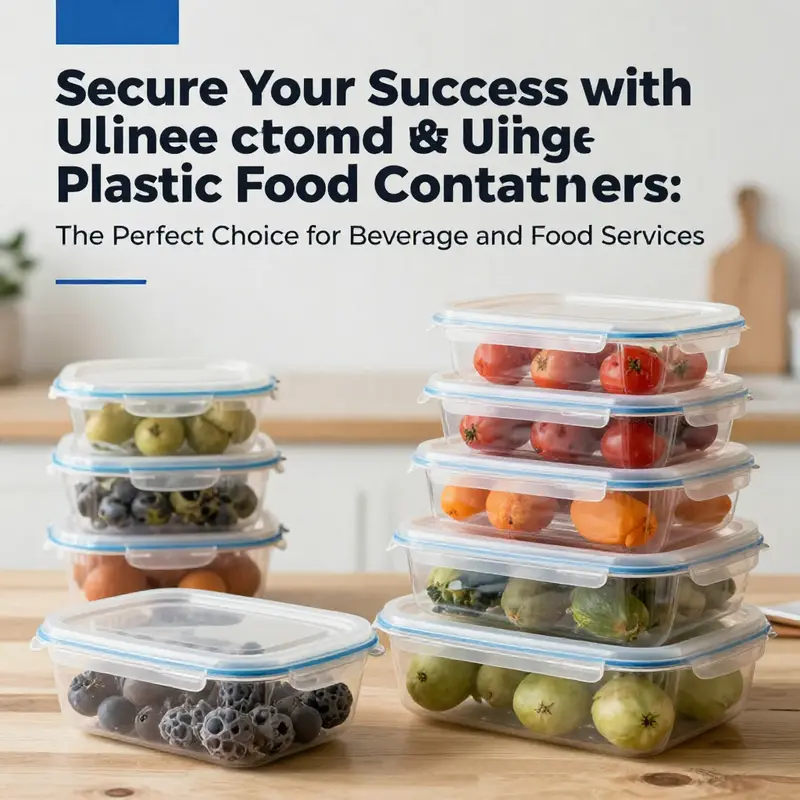
The kitchen is a landscape of decisions, and few choices ripple through daily routines as profoundly as the containers that hold our leftovers, ingredients, and takeout. Among these, one small design choice—the screw-on lid—acts like a hinge between freshness and practicality. It is the quiet engineer of modern food storage, enabling a level of control over moisture, odor, and spill risk that changes how we shop, cook, and reheat. When you lift a container that seals tightly, you feel the difference not as a single feature but as a sum of decisions about material, geometry, and ease of use. The lid, more than a cover, becomes a partner in extending shelf life, preserving flavor, and keeping kitchens orderly in homes and across professional settings alike. In this broader landscape, plastic storage options designed with screw-on lids have grown to meet a spectrum of needs, from bulk organization in a pantry to precise portioning for meal prep and safe transport for liquids and sauces during catering or daily commutes alike.
Material choice matters as much as lid design. The containers used for these purposes are typically crafted from food-safe plastics such as polypropylene and high-density polyethylene. These polymers offer a robust blend of clarity, chemical resistance, and resilience to everyday temperature swings. They can withstand the cool of a refrigerator, the intimacy of the freezer, and the heat of a microwave when labeled and used according to the manufacturer’s guidance. The fact that these plastics are widely recognized as food-grade underpins consumer confidence, which is essential when repurposing containers for leftovers or meal-prep portions. The emphasis on safety not only reduces the risk of migration of additives into the contents but also aligns with growing consumer expectations that packaging materials be non-toxic and stable even after repeated cycles of use and cleaning. The screw-on lid contributes to this safety profile by forming an airtight or near-airtight seal that guards against moisture loss and odor transfer, while simultaneously limiting exposure to air and contaminants.
Beyond safety, durability and versatility drive user preference. A well-designed screw-on lid resists slippage and leaks, keeping liquids contained during transport and within the confines of a fridge or a bag on the way to work or school. In everyday kitchen life, such a seal translates into fewer spoiled leftovers and less mess, especially when containers are stacked or stored in shallow drawers and crowded pantry shelves. Space efficiency is another key attribute. Many of these containers come in rectangular or square geometries that maximize cabinet and refrigerator real estate. The shape matters as much as the seal; it is easier to organize and access a lineup of uniform, stackable containers than a mishmash of round, awkwardly proportioned vessels. The practical benefits compound when we consider busy households and professional kitchens that must reconcile speed with sanitation. When a lid is simple to twist on, easy to clean, and compatible with a dishwasher or a microwave, the day-to-day workflow becomes smoother and less error-prone. In markets that serve both food service operations and home cooks, these features translate into tangible value—less time spent managing containers and more time devoted to cooking and planning.
The promise of the screw-on configuration also carries implications for shelf life and freshness. An airtight tactile seal minimizes exposure to humidity and air, which are principal drivers of moisture loss, texture change, and flavor drift. This is particularly valuable for ingredients susceptible to drying out or absorbing neighboring odors, such as chopped herbs, sauces, marinades, and marinated vegetables. The ability to store such items in containers with reliable lids makes meal planning more flexible and reduces the temptation to discard portions that might otherwise have a brief but usable window. It is not merely about keeping food safe from pests or humidity; it is about preserving the organoleptic qualities that define a dish—from the crisp bite of a fresh celery stick to the brightness of a citrusy dressing. In practice, this translates into less waste, more confident meal prepping, and a kitchen that runs with greater predictability.
The consumer landscape around these products also reflects a broader shift toward sustainability and responsible consumption. While metal and tin containers have long been celebrated for corrosion resistance and hygiene, plastics designed for food contact offer a different balance of benefits: light weight, lower breakage risk, and clear visibility of contents. The choice between plastic and metal often hinges on use-case needs—whether the priority is long-term storage, frequent transport, or the ability to see what is inside at a glance. In this context, the screw-on lid is a small but decisive factor that can tilt a decision toward a particular style or size. Consumers increasingly seek options that are not only safe and durable but also easy to reuse and recycle within local programs. That means a lid that can be washed cleanly, withstand repeated cycling, and pair well with a family of compatible containers. And when a product line offers multiple sizes and shapes, it becomes simpler to assemble a modular, reusable system that can adapt to evolving kitchen routines rather than forcing shoppers into a one-size-fits-all approach.
For business buyers—the restaurants, caterers, and households that rely on bulk purchases—the calculus expands to include logistics, pricing, and supply chain reliability. The screw-on lid is a pivot point in those calculations: its design can influence how well a batch of containers stacks for transport, how easily staff can label and rotate products, and how quickly lids can be replaced when needed. In environments where hygiene standards are non-negotiable, the interplay between container material, lid tightness, and ease of cleaning takes on even greater importance. The ability to procure a broad assortment of sizes and shapes that stack efficiently, withstand common reheating processes, and endure frequent use can translate into real cost savings and reduced downtime for kitchens that move quickly from prep to service.
As these practical considerations come together, the topic of customization—once seen as a luxury for brands and food service operators—emerges as a pragmatic advantage for households and small businesses alike. Containers that integrate with easy labeling systems, that offer consistent lid threading across sizes, or that fit into standardized storage frameworks enable households to design a personalized, reusable ecosystem. Customization does not necessarily imply bespoke production costs; it can also refer to a thoughtfully curated range that aligns with how people actually store, view, and manage food. In this sense, the screw-on lid becomes an everyday tool for planning and coordination, not merely a closure device.
For readers curious about adjacent packaging solutions that share the same underlying goals—safety, efficiency, and sustainability—there is a broader ecosystem worth exploring. A linked reference to related packaging formats can provide complementary context about how different materials approach storage needs. For a related look at kraft paper food storage bowls and other paper-based packaging options that retailers sometimes employ for take-out and storage, see this resource on wholesale packaging solutions: kraft paper food storage bowls. This example helps illustrate how the packaging world often balances performance with environmental considerations, even as plastic containers with screw-on lids remain a dominant choice for versatile, durable, and affordable storage.
In sum, the screw-on lid is more than a feature. It is an instrument of routine, an enabler of efficiency, and a marker of consumer trust. Its performance shapes what we store, how long we store it, and how readily we reuse containers across countless meals and days. The narrative around these containers is not merely about capacity or price; it is about designing a system that respects freshness, minimizes waste, and fits seamlessly into the rhythms of modern life. As kitchens—home and professional—continue to evolve toward flexible, modular storage solutions, the screw-on lid will likely remain a quiet but indispensable ally in our ongoing quest to store with integrity, organize with grace, and cook with confidence. For anyone charting a path through the crowded landscape of plastic storage options, understanding the lid is a meaningful starting point that unlocks much of what follows in the broader story of how we keep food safe, tasty, and accessible from fridge to table.
External resource for further reading on food-contact packaging safety and guidelines can be found here: https://www.fda.gov/food/packaging-food-contact-substances-fcns
Final thoughts
Uline’s plastic food storage containers with screw-on lids represent an invaluable resource for businesses within the food and beverage industry. Their durable materials, practical designs, versatile applications, and market-preferred features make them highly effective solutions for storing ingredients and ensuring freshness. By understanding the full range of benefits these containers offer, from safety standards to design functionalities, businesses can make informed procurement choices that enhance their operational excellence. Embracing Uline containers can not only streamline kitchen operations but also improve overall customer satisfaction through better food preservation.