
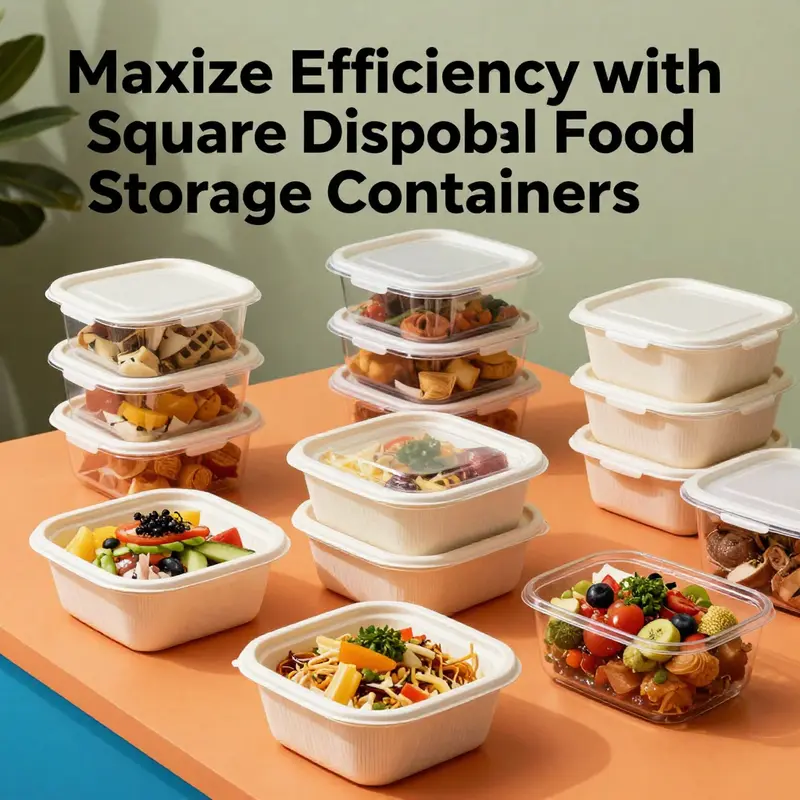
In the bustling realm of food service, effective storage solutions are essential for maintaining quality, hygiene, and convenience. Square disposable food storage containers provide strategic advantages for bubble tea shops, restaurants, food trucks, catering services, and corporate procurement teams. This article explores the key features and materials that make these containers a reliable choice, delves into their design and functionality, highlights popular options tailored to your business needs, and discusses environmentally friendly trends that are shaping the future of food storage. By the end, you’ll understand why square containers are a must-have in your food service arsenal.
Geometry, Materials, and the Modern Promise of Square Disposable Containers: A Deep Dive into Space, Seal, and Sustainability
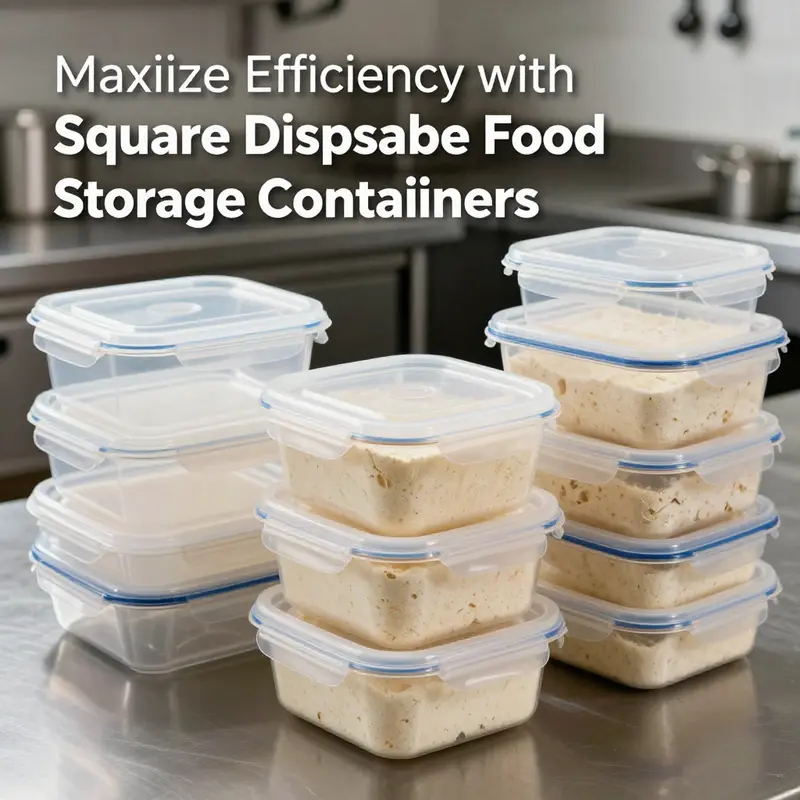
The square disposable food storage container is more than a tidy shape in a tray of leftovers or a neat box for lunch. It is a deliberate answer to how modern kitchens, cafeterias, and takeout operations manage space, preserve quality, and communicate care for the environment through the everyday act of packing food. The geometry itself—the clean lines, the right-angled sides, the predictable corners—speaks to a design philosophy that treats storage as a logistical puzzle with real human consequences. When square forms align with material choices and lid technologies, they do more than hold food; they organize how we think about portioning, transporting, and presenting meals. In this chapter, we explore how the optimized geometry, material science, and practical design of square disposable containers come together to meet diverse needs while shaping the behavior of users, from home cooks to professional caterers, in ways that matter for efficiency, freshness, and sustainability.
The geometric logic of a square is not merely aesthetic. It translates into tangible advantages in real-world use. In any refrigeration unit, pantry, or delivery bag, square containers stack with minimal wasted space. The flat sides and right angles create a grid-like efficiency that rounds out only at the outer edges of the kitchen or the vehicle. Where round containers create gaps that invite shifting and tipping, square shapes lock into place. They align with the way shelves and compartments are designed, and they synchronize with the ebb and flow of meal-prepping routines. The result is a system where every container has a defined place, and every bite-sized plan—whether you are preparing a week of lunches or staging a catered event—benefits from reduced clutter and easier inventory control. Stability is another practical benefit. The flat sides prevent rolling, a common nuisance during transport and at the table. This stability helps reduce accidents, spills, and wasted food, which matters not only for cleanliness and convenience but also for safety and cost control.
Beyond stability and space efficiency, the visual clarity of many square disposables enhances the consumer experience. A clear or lightly translucent material lets the eye scan what’s inside without opening the lid, which speeds up selection at a busy lunch line or in a packed office fridge. This visibility is particularly advantageous for meal kits, prepared salads, noodle bowls, and layered dishes where the components matter as much as the overall portion. The design language—clean edges, matte or glossy finishes, and the crisp geometry—projects a sense of order. It elevates the perception of food quality and the professionalism of the service offering, whether you are feeding students, coworkers, or guests at a social gathering. In settings that prioritize order and brand storytelling, square containers support a modern, uncompromising aesthetic that says efficiency and care can coexist with style.
The functional design of these containers is a blend of airtight sealing, leak containment, and, in some cases, thoughtful ventilation. Modern square containers often feature snap-on lids with a notched or interlocking design that locks the seal in place, creating an airtight barrier against the ingress of air and moisture. This is essential for maintaining freshness, particularly for liquids or sauces that otherwise risk sloshing during transport. It also reduces the risk of spills in bags or on uniforms, which is a common pain point for food handlers and recipients alike. Some designs further refine this experience by integrating small ventilation or perforation features that help maintain crisp textures for fried items or delicate components while keeping the container intact and leak-free. These micro-design choices—whether a vent that opens briefly during transit or a lid with a precisely engineered seal—demonstrate how a seemingly simple accessory can significantly influence the quality and perception of the food inside.
Material choices form the backbone of how square containers perform under varying conditions. The most common options, driven by performance, cost, and environmental considerations, include plastics such as polypropylene (PP) and polyethylene terephthalate (PET), alongside molded pulp. Each material brings a distinct set of properties that determine where and how the container is best used.
Polypropylene stands out for its durability and heat resistance. It is lightweight, shatter-resistant, and capable of withstanding relatively high temperatures, which makes it a strong candidate for microwaveable and hot-fill applications. PP’s rigidity helps the container hold its square shape under load, preserving stackability and reducing deformation over time. Its recyclability adds a practical tailwind to sustainability conversations, especially when the material can be diverted from landfills through appropriate waste streams. Yet, the real-world performance of PP hinges on processing methods and the specific grade used; some variants offer greater flexibility, others higher temperature tolerance. The result is a versatile option for households and businesses that prize resilience and versatility in daily use.
PET, or PETE, is another ubiquitous choice, particularly when visibility matters. PET’s excellent clarity lets customers glimpse the contents, a feature that aligns well with consumer expectations in grocery environments, takeout windows, and display-ready meals. PET is also lightweight and strong for its weight, contributing to efficient shipping and handling. However, PET generally has lower heat resistance compared with PP, making it more suitable for cold or room-temperature applications or for foods that are reheated by other means. The combination of clarity and modest heat tolerance makes PET an ideal partner for cold salads, sandwiches, or other meals where presentation is key and the temperature window is moderate. Consumers appreciate the clean, transparent look because it helps them quickly identify the dish they want—an important factor in busy settings where speed matters.
Molded pulp represents the growing emphasis on environmental stewardship. Derived from recycled paper or plant fibers, molded pulp containers offer compostability and biodegradability that align with sustainability goals for both individuals and organizations seeking to minimize waste. While molded pulp provides solid structural integrity and can support a variety of foods, it can behave differently under moisture and oil exposure. Many pulp-based options excel with dry or semi-dry items like salads, sandwiches, and baked goods, where the fibers provide sturdy support without the glossy reliance on plastic. The eco-credentials of molded pulp are compelling, and as consumer demand for greener packaging rises, these containers are increasingly integrated into meal-prep and catering workflows that prioritize closed-loop or compost-friendly solutions. Still, the moisture management and barrier properties of pulp are active areas of development, and matching the right pulp formulation to the intended food profile remains central to performance.
Between these materials, the square container design can act as a flexible chassis that accommodates different performance profiles. In cold-chain use, PET’s transparency and lightness make it appealing, while in hot or microwave scenarios, PP’s resilience and heat tolerance shine. For sustainability-minded programs, molded pulp can be a keystone, offering compostability and a lower environmental footprint, particularly when paired with composting infrastructure that can handle post-consumer waste. Each material’s strengths influence the overall user experience—ease of use, reliability, and the perception that the packaging is aligned with the values of the buyer or caterer. The practical decision often comes down to aligning expected use, temperature range, and disposal pathways with the most suitable material, rather than chasing a single universal best option.
But material choice is not the whole story. The lid design, wall thickness, and sealing mechanism all feed back into a single performance envelope. A robust snap-on lid that mates tightly with a square body reduces leakage and preserves freshness, while a shallow lip on the rim can improve handling and stacking stability. Ventilation strategies, when used, must be carefully integrated so that they do not undermine the integrity of the seal. For example, a vented lid might permit steam to escape in hot foods while maintaining a barrier against spills during transport. Such features reflect a broader principle: the container must behave predictably under the varied conditions of storage, transport, and service. It must be easy to open for the consumer and stable enough to withstand the rigors of delivery routes and busy kitchens. The best designs anticipate user behavior, reducing the cognitive load required to store, carry, and reheat meals while maintaining food quality.
Alongside performance, the lifecycle of square disposables is increasingly framed by sustainability considerations. The eco-credentials of each material category influence procurement decisions, waste management outcomes, and corporate responsibility profiles. Molded pulp’s compostability presents a clear end-of-life path, but it relies on the presence of appropriate facilities and consumer adherence to composting guidelines. Plastics, including PP and PET, provide durability and barrier properties but raise questions about recyclability and the effectiveness of recycling streams in capturing post-consumer packaging. The ideal scenario envisions a closed-loop or highly efficient recycling or composting system that minimizes environmental impact while preserving functionality. In practice, organizations often navigate a spectrum of trade-offs, balancing objective performance metrics with the realities of supply chains, consumer expectations, and local waste infrastructure. In this balancing act, square containers become part of a larger conversation about responsible consumption and waste reduction, rather than an isolated logistical choice.
The broader implications extend into commercial and institutional contexts as well. For meal-prep services, the square footprint aligns with standardized pre-portioning workflows, enabling predictable packing lines, uniform storage bins, and coherent inventory management. In catering and events, the square geometry contributes to a cohesive presentation aesthetic—neat, modular, and easy to sort after the meal, which simplifies post-event cleanup and waste sorting. In office environments, where efficiency and convenience drive daily routines, square disposables complement the rhythm of grab-and-go lunches, workplace kitchens, and shared refrigerators. The container’s design supports a culture of orderliness, speed, and reliability, which can translate into improved user satisfaction and procurement efficiency.
Where does one go from here? The story of square disposable containers is one of ongoing refinement and adaptation. Material science will likely continue to deliver options that blend barrier properties, temperature resilience, and compostability, expanding the practical toolkit for different food types and service models. The lids, too, will evolve, perhaps with smarter sealing mechanisms, micro-vents, or integrated features that facilitate easier opening with one hand, even when wearing gloves. The manufacturing ecosystem will respond to demand for more sustainable options, driving innovations in fiber-based composites, bio-based polymers, and improved recycling compatibility. As users become more conscious of waste and more discerning about presentation, the square container will maintain its relevance by offering a reliable foundation that can be customized through size, lid design, and material composition to fit diverse needs without sacrificing performance. In short, the square disposable container is not a static artifact but a dynamic element in the evolving language of practical, responsible food packaging.
To connect this discussion to real-world sourcing and options, consider how a supplier’s catalog can present a spectrum of choices that reflect the same design logic. A kraft-paper option for certain applications offers a tangible contrast to glossy plastics, while still maintaining the square geometry that supports efficient storage and handling. For those exploring more eco-conscious paths, a product page can illuminate how an eco-friendly, compostable design translates into end-of-life feasibility and workflow alignment, helping buyers weigh trade-offs between moisture management, structural rigidity, and disposal infrastructure. The decision matrix becomes not only about keeping foods fresh and contained but also about aligning packaging with the broader goals of sustainability, cost control, and operational simplicity. In that sense, the square container becomes both a practical tool and a strategic choice, a small but meaningful part of how modern food systems operate with clarity and accountability.
For readers who want to see a concrete example of an eco-conscious option within the same family of square disposables, a specific kraft-based take-out bowl model can illustrate how the square geometry translates to a compostable or recyclable packaging path while still delivering reliable performance. This option embodies the principle that form and function can be harmonized with environmental responsibility, providing a blueprint for teams seeking to balance daily practicality with longer-term sustainability goals. The link below points to a resource that situates this kind of option within a broader ecosystem of sustainable packaging, helping readers compare sustainability profiles, barrier properties, and user experiences across materials. kraft paper bowl option
In this integrated view, square disposable containers emerge as more than a packaging choice. They are an enabling technology for efficient kitchens, predictable service, and responsible consumption. They empower meal-prep routines, support reliable catering workflows, and offer a platform for presenting food in a way that feels modern and organized. The geometry makes storage intuitive and transport safer, the materials determine how well they endure heat and moisture, and the lids and sealing systems define the boundary between freshness and leakage. The interplay among geometry, material science, and user-centered design is what makes square disposables a robust solution for a broad spectrum of food storage and transport needs. The ongoing evolution of these containers will continue to reflect changing consumer preferences, waste-management realities, and innovations in sustainable materials, all while keeping the simple, elegant logic of squares at the heart of practical food packaging.
External resource for further reading on packaging sustainability and waste management: https://www.epa.gov/sustainability
null
null
Efficient, Leak-Proof, and Ready to Go: The Real-World Reach of Square Disposable Food Storage Containers
Square disposable food storage containers have evolved from simple, throwaway vessels into a versatile toolkit that supports modern kitchens, catering operations, and on-the-go dining. The defining shape—precisely square rather than round—offers more than a neat aesthetic. It represents a deliberate solution to the way people store, transport, and portion foods in tight spaces. In homes, offices, schools, and commercial kitchens, square containers promise a disciplined balance of hygiene, convenience, and efficiency. They sit neatly in refrigerators and freezers, stack securely for compact pantry storage, and present contents with a clarity that helps both the preparer and the consumer quickly identify what lies inside. This practical geometry underpins a broader pattern in disposable design: containers that make the most of space without sacrificing performance, even when they are used just once before disposal.
Material choices shape how these containers perform, and the tradeoffs are tangible. Plastic variants—primarily in polypropylene (PP) and polystyrene (PS)—dominate the shelves because they can endure a range of temperatures, resist impacts, and accommodate both hot and cold foods. The promise of microwave, freezer, and dishwasher compatibility—when the product is labeled as such—adds a convenience that aligns with contemporary meal routines. In many markets, these plastics are made BPA-free to address consumer concerns about safety, while still delivering the barrier against leaks and odors that everyday use often demands. The open, transparent design common to square containers makes it easy to see contents, which reduces the time spent searching through a crowded fridge and, by extension, the likelihood of unnecessary handling or spoilage.
Alongside plastic, biodegradables such as pulp-based options offer a contrasting path for those prioritizing sustainability. Made from plant fibers like sugarcane or bamboo, these pulp containers are designed to be composted under appropriate conditions. They bring a different set of strengths to the table: they can handle moisture and oils well, and many of them are sturdy enough for layered foods or sauces while presenting a compostable profile that many offices, schools, and event organizers seek. The growth of this category reflects a broader market shift toward options that can reduce environmental impact when disposed of, even as the containers fulfill the day-to-day demands of portability and reliability. The decision between plastic and pulp, then, often comes down to the specific use case: whether the priority is ultra-low weight and broad temperature tolerance, or a clear end-of-life solution that aligns with composting programs.
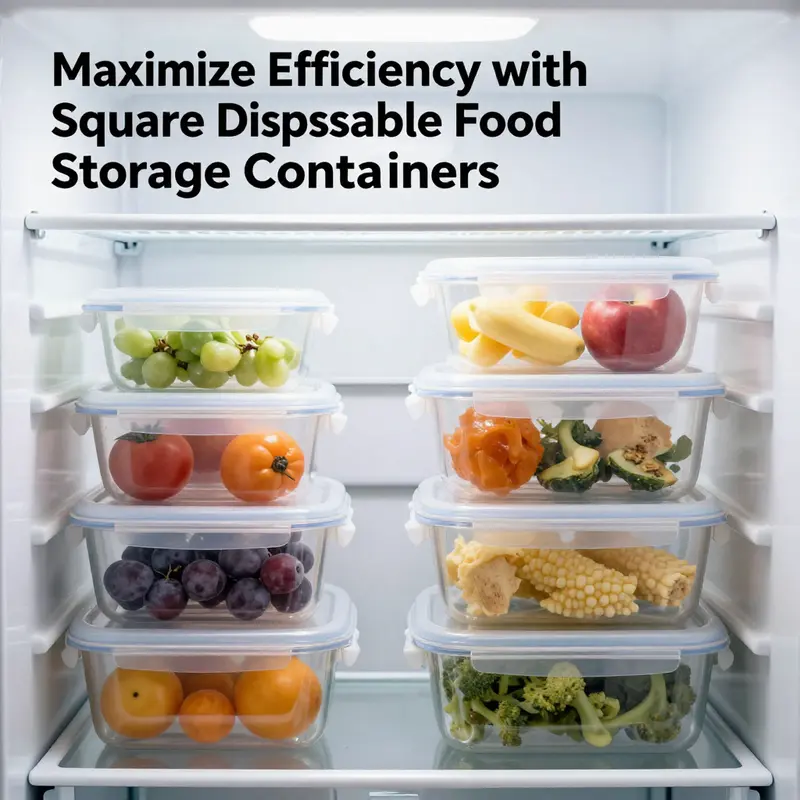
A core advantage of the square format is its space efficiency in multiple contexts. In households, a set of square containers can line up along the shelves with minimal wasted space, unlike their round counterparts that leave awkward gaps when stacked. In the refrigerator and freezer, the flat sides and right angles maximize usable volume and create predictable stacks, which translates into easier inventory management and less time rummaging for the right size. In busy commercial settings, this translates into more efficient cold-chain operations, smoother takeout preparation, and a sanitation rhythm that keeps lines moving. The lids, often snap-on with reinforced seals, are designed for reliable performance under transport as well as for repeated use in controlled environments. The presence of notches or specialized locking mechanisms in these lids helps prevent leaks, a critical feature when containers are filled with soups, gravies, or sauces that could otherwise complicate both handling and delivery.
The configurations most commonly encountered range from modest portions suited for single meals to larger containers intended for bulk meal prep or catering servings. Typical capacities—such as 16, 32, and 64 ounces in practical, everyday use—mirror the practical needs of portioning for a single person, family meals, or shared plates. In a professional setting, these sizes facilitate clear portion control and predictable costs, while still delivering the versatility needed to accommodate a broad mix of hot and cold items. The square shape supports this versatility by enabling easy grouping of meals for batch preparation, which is especially valuable for meal-prep enthusiasts and for catering workflows that rely on consistent packaging to maintain quality over time.
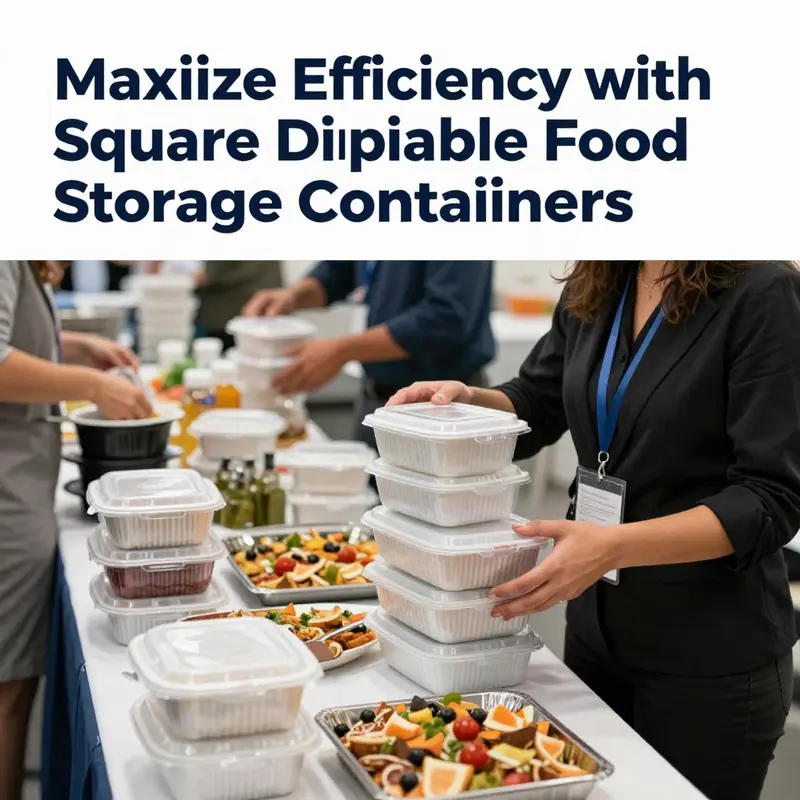
When it comes to applications, the appeal of square disposable containers spans several critical use cases. Home meal prep is the most immediate: the space-efficient design makes it straightforward to portion and store meals for lunch boxes or for quick reheats during the workweek. For households that plan ahead, the ability to reorganize a fridge with a neat, uniform lineup of containers can reduce food waste; knowing what’s inside each container and how much remains helps limit over-preparation and spoilage. In restaurants and catering operations, these containers support both dine-out and takeout scenarios. They are used to portion, transport, and serve meals with confidence that the contents will remain intact and uncontaminated during transit. In buffet-style or event settings, the clear, stackable design allows hosts to present a clean, organized display that makes it easy for guests to see options and select servings without sacrificing presentation quality. Mobile vendors, such as food trucks, benefit from the light weight, durability, and space-conscious packing that square disposables provide, enabling quick turnovers even during peak periods.
Beyond single-use convenience, square disposables are increasingly seen through a sustainability lens. The market recognizes that the lifecycle of these containers matters in addition to their immediate utility. Biodegradable pulp options are selected by operators who aim to minimize landfill impact, particularly for settings with robust composting programs. Yet, the infrastructure for proper disposal—industrial composting or specialized recycling streams—varies by region, which means that even the most sustainable choice depends on local capabilities. At the same time, the widespread recycling of PET and HDPE plastics remains a practical option in many communities, provided that the containers are accepted by local programs and are kept clean enough to avoid contamination. Companies exploring these options often weigh the cost, performance, and end-of-life implications to determine the best fit for their operation and customers. In this cross-section of decisions, the square container is not merely a shape; it is a platform that can bridge convenience with responsible stewardship, depending on the materials chosen and the systems available for recovery and reuse.
For those exploring eco-friendly alternatives, one practical route is to consider sustainable paper-based or kraft options designed for take-away use. These vessels can be paired with lids and other closures to deliver a complete, compostable package suitable for hot or cold foods. In the broader ecosystem of disposables, such choices often align with brand or venue commitments to environmental values and can help distinguish a service in crowded markets. A real-world illustration of this approach appears in the product line that offers kraft paper bowls designed for take-away meals. You can explore a representative option at take-away-food-kraft-rectangular-square-rectangle-salad-paper-bowl. This specific example underscores how a square or rectangular kraft design can complement the broader goal of responsible catering while maintaining the practical benefits that define square disposables: reliable containment, clear visibility of contents, and efficient handling from kitchen to consumer.
Choosing the right option hinges on thoughtfully aligning the container’s material properties with the intended use. For high-volume food service where temperature extremes and spill risk are critical, a sturdy plastic variant with a secure snap lid and reinforced seals delivers dependable performance. When the goal is to minimize environmental impact and support sustainable disposal streams, pulp-based options that are certified compostable can be attractive, provided that they are accompanied by compatible waste-management practices. Reusability can also factor into decision-making, though the disposables model remains dominant in many markets due to speed, hygiene, and cost considerations. In any case, a few practical evaluation criteria help guide selection: barrier against leaks, heat tolerance, clarity of contents, stackability, ease of handling during service, and compatibility with available disposal or recycling channels. The square format integrates these criteria into a single, cohesive design philosophy that supports both efficiency and reliability across many settings.
The implications for operations extend beyond the immediate packaging experience. For a kitchen team, the predictability of square containers helps standardize recipe scaling, portion control, and inventory planning. Because the containers stack consistently and occupy less shelf and cool-space area than round containers of comparable volume, operators can maintain a leaner stockroom with less risk of overordering or misplacing items. In a catering context, the ability to pre-portion meals into uniform units simplifies both assembly and distribution, enabling staff to focus on quality and speed rather than wrestling with mismatched shapes. For schools and corporate cafeterias, standardized portions delivered in hygienic, single-use packaging help ensure compliance with safety guidelines while offering a convenient, familiar experience for students and employees. In each scenario, the square container does more than hold food—it becomes an operational asset, shaping how teams plan, prep, transport, and serve.
Despite the clear advantages, it is important to acknowledge that not all disposable options are created equal. Performance can vary with the exact formulation, lid design, and packaging geometry. For those who prioritize cost, the broad availability of square containers in various plastics makes it possible to balance price with performance. For those prioritizing end-of-life outcomes, pulp-based options or plastics designed for higher recyclability may be preferred, especially if local waste streams support such pathways. The overall trend remains: square disposable containers are favored for their ability to simplify storage, reduce waste through better portioning, and streamline service workflows. This combination of efficiency, reliability, and adaptability continues to drive their popularity across diverse environments.
As a final note on the ecosystem in which these containers operate, the broader category of disposable food packaging is moving toward smarter, more transparent choices. Consumers and businesses alike want clarity about what materials are used, how they perform under common use cases, and how disposal will be handled after meals. The square format remains a stable platform within this evolving landscape because it aligns well with existing kitchen routines, supply chains, and waste-management capabilities. The result is a packaging option that is not merely functional but deeply integrated into the daily rituals of cooking, service, and consumption. In this sense, the square disposable container is less a single product and more a flexible, scalable system designed to support the practical realities of modern food life.
External resource for broader market context: For an overview of current market leaders and consumer preferences in disposable food storage, see the Amazon Best Sellers page. https://www.amazon.com/gp/bestsellers/home-garden/1295136011/ref=svnav0
Squared Solutions: The Eco-Conscious Evolution of Eco-Friendly, Square Disposable Food Storage Containers
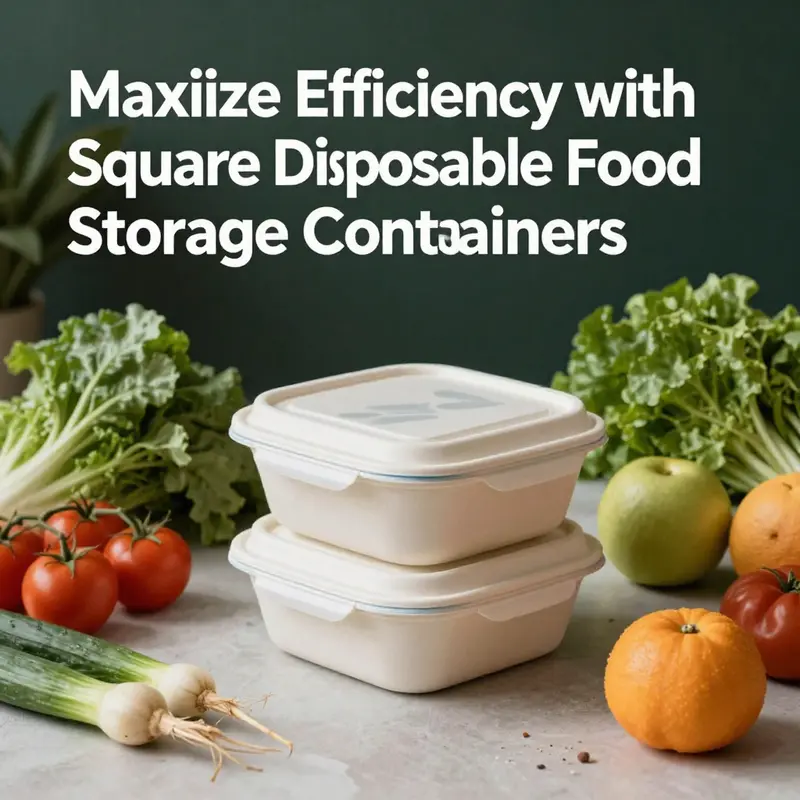
A shift is quietly reshaping the way kitchens, both commercial and domestic, think about waste, space, and convenience. It isn’t a dramatic upheaval but a steady rebalancing toward packaging that respects the planet while preserving the essential benefits that have made disposable containers a staple of modern food handling: hygiene, portability, and predictable performance. The square container, with its clean lines and predictable geometry, sits at the center of this evolution. Its shape, more than a stylistic choice, is a practical instrument for reducing waste, streamlining storage, and improving transport efficiency. In a market where every inch of cold space and every square centimeter of shelf real estate counts, the square footprint offers more than an orderly look. It enables a disciplined approach to inventory, meal prep, and distribution that translates into less waste, better portion control, and, ultimately, lower environmental impact without compromising food safety or user experience. As consumer awareness grows, so does the demand for packaging that can be trusted to perform in real-world circumstances—whether in a compact kitchen at home, a bustling school cafeteria, or a high-volume catering operation. This chapter traces the eco-friendly trends that are shaping these square containers, highlighting materials, design innovations, lifecycle considerations, and the business imperatives that propel sustainable practice from niche preference to standard practice.
The materials story is central to any conversation about eco-friendly containers, and it is a story of both continuity and change. Traditional square disposables have long relied on plastics, mainly polypropylene (PP) and polystyrene (PS), for their durability, heat resistance, and barrier properties. These plastics perform well under a wide range of temperatures, from chilled to hot foods, and their clear, rigid form helps users identify contents at a glance. Yet the environmental tally of fossil-fuel-based plastics, even when they are BPA-free and designed for reuse or recycling, remains a critical consideration. In response, manufacturers and buyers are increasingly balancing performance with lifecycle responsibility. One major line of development is the integration of biodegradable and compostable materials that still meet the practical demands of everyday use. Biodegradable pulp—crafted from renewable plant resources like sugarcane or bamboo—offers a compelling option for items that often encounter moisture and oil. These pulp-based containers can be composted after use, which lowers landfill volume and reduces the carbon footprint associated with end-of-life waste. They also address a common consumer concern: how to dispose of containers that cradle messy meals without guilt or added complexity.
Another material pathway centers on plant-based plastics, including polylactic acid (PLA) and allied formulations, which aim to reduce reliance on fossil fuels. While PLA is not universally accepted in all recycling streams, it excels in composting contexts where industrial facilities are available. The shift toward plant-based materials does not erase the realities of waste management; rather, it reframes them. Many programs emphasize dedicated composting rather than blind recycling as the most effective route for compostable containers. This requires alignment across supply chains: clear labeling, consumer education, and partnerships with composters or recycling facilities that recognize the unique end-of-life needs of square disposables. In parallel, some designers are experimenting with coatings and barrier technologies that extend shelf life and resistance to leaks, enabling fewer accidental spills during transit and reducing food waste—a subtle but meaningful environmental win. In all these approaches, the square format remains advantageous. Its straight edges and uniform geometry enable tighter nesting and more efficient stacking, which reduces packaging volume and improves load efficiency in transport. The net effect is a reduction in what carbon analysts call the “logistics footprint”—the emissions associated with moving, warehousing, and handling containers before they reach the consumer.
Design considerations around leakage and sealing lie at the heart of the square container’s environmental performance. The most widely adopted seals combine snap-on lids with precise notching and mating grooves that minimize spills and preserve food quality. In the eco-friendly spectrum, designers increasingly prioritize seals that not only prevent leaks but also facilitate clean disposal or composting. A well-sealed container helps keep the contents intact during multi-stop deliveries and in consumer kitchens, reducing the likelihood that food is discarded due to leakage or spoilage. The square geometry augments this reliability by supporting uniform lid engagement across the entire surface, which contributes to a consistent seal even after repeated use in bustling service environments. While some markets still reward the traditional rigid plastic with its known durability, a growing cohort of square containers pairs this durability with smarter materials and clearer end-of-life pathways. The result is a practical compromise: materials that can endure the rigors of transport and handling, yet are compatible with modern sustainability goals, whether through recycling streams, industrial composting, or other waste-diversion strategies.
The market dynamics behind eco-friendly square disposables reveal a pragmatic allocation of cost versus benefit. For many foodservice operators—cafeterias, catering services, and quick-service outlets—the decision to switch to greener options is not purely ideological. It is anchored in risk management, supply chain resilience, and total cost of ownership. Eco-conscious containers can reduce waste by improving portion control and by enhancing meal presentation, which in turn lowers the rate of discard due to unappealing packaging. Square shapes help operators maximize storage efficiency in refrigerators and dry storage areas. In busy kitchens, the ability to stack, nest, and organize inventory with surgical precision translates into tangible savings: less space required, fewer mis-sorted items, faster restocking, and reduced time spent handling fragile packaging. When a business expands its use of sustainable square disposables, it often adopts a phased approach. It may begin with a smaller, trial-focused shift to biodegradable pulp or plant-based plastics for specific product lines or events, then scale up as appetite for sustainability grows and as composting or recycling infrastructure becomes more accessible. This incremental strategy helps manage cost, ensures compatibility with existing workflows, and builds the internal expertise needed to optimize lifecycles across products, from procurement to end-of-life.
A crucial dimension of this conversation is lifecycle sustainability. Environmental impact assessments increasingly emphasize not just the material’s footprint at production or disposal but the entire journey from raw material to final destiny. For plastics, even when recycled, processes consume energy and can degrade materials over time. In contrast, pulp-based and other bio-based containers offer advantages in end-of-life management when composting is feasible, though moisture resistance and durability under temperature extremes may require careful formulation and packaging design. Certifications and standards play a pivotal role here. While consumer education and transparency are essential, formal attestations—such as safety certifications and disposal guidance—help ensure that end users know how to appropriately recycle or compost containers, aligning consumer behavior with ecological intent. The ongoing evolution in labeling practices, including clear indications of heat tolerance, microwave safety, and compostability, empowers households and institutions to make informed choices that align with their waste infrastructure. The square container’s advantage persists through this evolution: its geometry supports consistent, scalable production and simplifies the processes of sorting and handling in various waste streams.
Behind the eco-friendly shift lies a broader social and economic context. Consumer demand for sustainable packaging has shifted from a niche concern to a mainstream expectation in many markets. This demand intersects with regulatory pressures that encourage or require more responsible packaging choices. Where regulations incentivize or mandate reductions in single-use plastics, square disposables that can be recycled, composted, or otherwise diverted from landfills become not only attractive but prudent. Yet policy alone cannot drive change; it requires a cultural shift in how businesses view packaging. Many operators now see sustainability as a product differentiator rather than a compliance checkbox. By offering a uniform, space-efficient, and responsibly sourced packaging solution, businesses can deliver consistent service quality while contributing to a circular economy. The square container becomes a tangible expression of this philosophy: a vessel that holds food safely and predictably, while signaling a commitment to smarter, less wasteful operations.
For those who manage procurement decisions, the practical implications of choosing eco-friendly square disposables extend into branding and customer experience. Packaging has become a spoke in the wheel of value delivery that extends beyond the food itself. For retailers and foodservice brands, even the outward appearance of the container communicates environmental intent. A clean, modern square shape with transparent visibility can showcase the meal within while also signaling a responsible approach to packaging. In some contexts, operators exploit wholesale or customization options to reinforce their brand ethos without compromising the ecological narrative. A wholesale approach to square, eco-friendly containers can offer standardized sizes that streamlining ordering, inventory, and usage. A practical example is the option to source wholesale, customizable, kraft-based square containers that marry rustic aesthetics with environmental responsibility. These choices enable businesses to align their packaging with a broader sustainability story, one that resonates with customers who value both function and responsibility. This alignment also supports operational efficiency: standardized shapes and sizes simplify training, reduce waste from mismatched lids or wrong-fit containers, and enable more precise forecasting and replenishment.
From a communications standpoint, transparent labeling matters. Consumers increasingly seek to know what a container is made of, whether it is recyclable or compostable, and how to dispose of it properly. When manufacturers provide clear, straightforward disposal guidance, the consumer experience improves. The result is less confusion at point of use and higher likelihood that containers are diverted to appropriate waste streams. Clear labeling also reduces the risk of contamination in recycling streams, which can undermine the value of a facility’s processing capabilities. The square container, with its crisp geometry, provides a stable platform for accurate labeling and consistent messaging. The visual clarity of a square shape can help communicate a straightforward story about sustainability—one that emphasizes material choices, end-of-life options, and care for the environment—without sacrificing the convenience that makes disposables attractive in the first place.
In the end, the eco-friendly trend in square disposable food storage containers is not a single invention but a network of choices that reinforces a broader commitment to sustainability. It blends durable performance with materials that fit into modern waste management systems, designs that optimize storage and transport, and policies that encourage responsible use. It embraces a lifecycle perspective that accounts for production energy, material sourcing, and end-of-life outcomes. It acknowledges that some environments rely on recycling, others on composting, and still others on reuse strategies, each requiring different material technologies and product architectures. The square container emerges as a pragmatic shape for this era, a geometry that enables consistent manufacturing, reliable performance, and adaptable end-of-life pathways. For anyone who manages meals at scale or simply wants to do better with household packaging, the question is not whether to adopt eco-friendly square disposables, but how quickly and how comprehensively to integrate them into operations, training, and procurement rituals. The goal is not perfection in a single moment but steady, measurable progress toward a future in which packaging is both a practical aid to daily life and a responsible steward of resources. If we view packaging through that dual lens—functionality and responsibility—the square container stands as a clear, confident answer: simple in form, robust in function, and increasingly gentle on the planet.
For teams committed to advancing this field, the path forward is clear but nuanced. It calls for a careful assessment of material science trade-offs, ensuring that the chosen options meet the demands of temperature resistance, moisture management, and lifecycle end-of-life. It also requires a commitment to space optimization, so that every storage decision reduces waste and supports efficient operations. Finally, it invites collaboration across supply chains, from raw material suppliers to waste processors, retailers, and end users, to align incentives and workflows toward durable, scalable, and verifiable sustainability outcomes. In this sense, the square disposable container becomes more than a container; it is a platform for sustainable practice—an enabling technology for lean storage, responsible consumption, and a more circular economy. As markets continue to evolve, it will be the combination of material innovation, thoughtful design, and a clear pathway to disposal that determines which square containers move from novelty to norm, and which packaging choices remain on the periphery of industrial ecosystems. The future of square disposables, in other words, lies not in abandoning convenience but in enriching it with responsibility, accountability, and a transparent commitment to the health of both people and planet.
Internal link reference for further reading can be found here: Wholesale custom-printed kraft paper food storage bowls. This resource, while framed around paper-based storage concepts, illustrates how square designs can be paired with branding and bulk ordering to support consistent usage patterns across a network of kitchens and events. It demonstrates how wholesalers and operators can collaborate to deliver standardized, aesthetically cohesive, and sustainable options that reinforce a brand’s environmental commitments without sacrificing practicality or performance. As you explore the full spectrum of materials and applications, consider how a similar wholesale approach could streamline procurement and reduce waste across your own operation, while maintaining the clarity and reliability that customers expect from contemporary food packaging.
External resource: https://www.alibaba.com/product-detail/Baicheng-R3000B-Disposable-Food-Storage_1600579284843.html
Final thoughts
Square disposable food storage containers exemplify the perfect blend of functionality, design, and sustainability. Their unique properties make them an invaluable asset for businesses in the food industry—from bubble tea shops to large catering services. By utilizing these containers, you can enhance the efficiency of your operations while aligning with eco-friendly practices. Make the smart choice for your food service needs and reap the benefits of effective food storage solutions.