
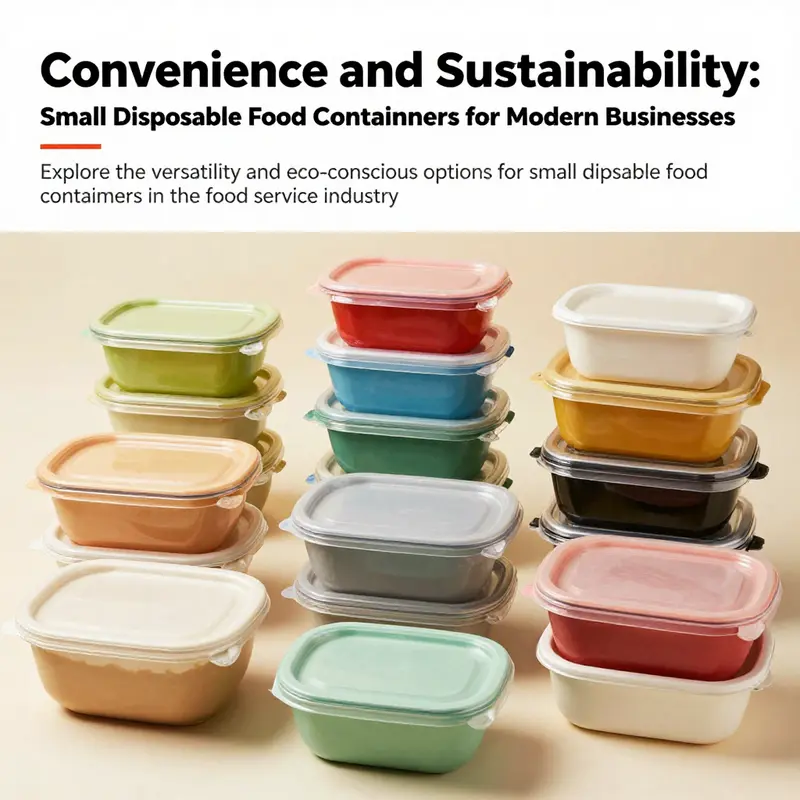
In a rapidly evolving culinary landscape, the importance of small disposable food containers cannot be overstated. These containers not only offer convenience for takeout, meal prep, and catering but also support the growing demand for hygienic and efficient food service solutions. From aluminum foil to eco-friendly materials, understanding the diverse materials and applications provides a comprehensive insight into how these products cater to various businesses—be it bubble tea shops, restaurants, food trucks, or corporate procurement teams. Each chapter will delve into different aspects, from the materials that make these containers effective to the latest sustainability trends and market insights, enhancing the overall understanding of this essential product category.
Tiny Trays, Big Impact: The Craft of Small Disposable Food Containers in Modern Food Service
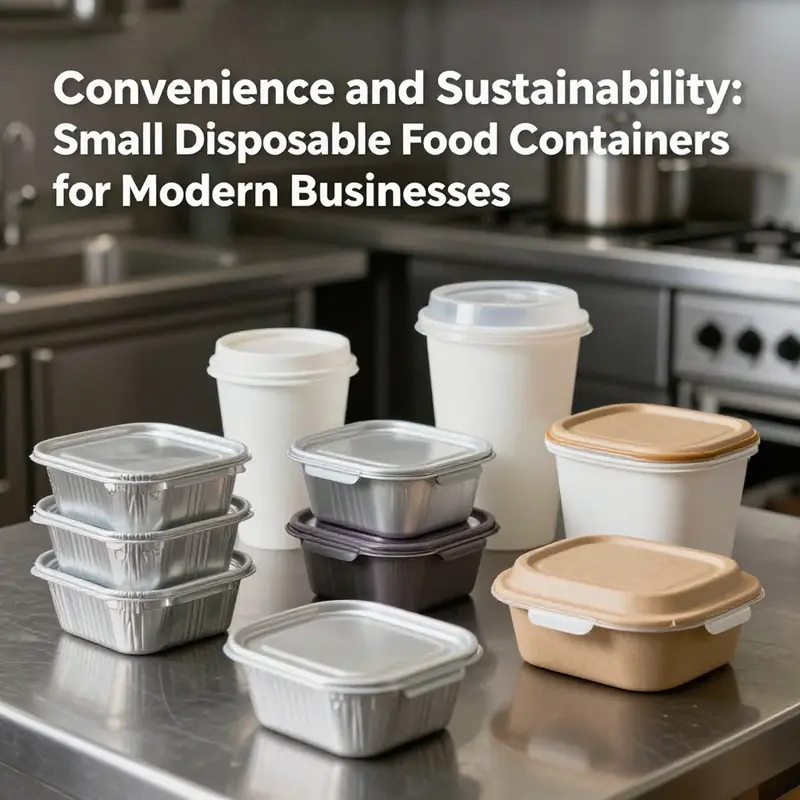
Small disposable food containers appear simple, yet they influence safety, convenience, and waste management in everyday dining. In busy kitchens, cafes, events, and home meal prep, these compact vessels move food from kitchen to customer while protecting quality and preventing spills. Their design balances portability and durability, serving as both container and part of the overall dining experience.
Materials vary: PP stands for polypropylene and is common for heat resistance and microwavable options. PS, or polystyrene, is favored for cold items where clarity is valued. PET offers barrier properties for sauces and dressings, while biodegradable or compostable options from cornstarch or PLA blends address sustainability goals. Each material involves trade offs in cost, rigidity, transparency, barrier performance, heat tolerance, and end of life.
Design matters: stackability, leak resistant seals, venting, and multi compartment configurations influence service efficiency and food texture. Clear lids enable quick content recognition, while tamper evident seals enhance safety.
Market dynamics show a broad range of sizes and forms to fit meals from single portions to multi item boxes. Suppliers may offer OEM or ODM customization for branding and material blends. Certifications and QA reassure buyers about safety and traceability.
Sustainability considerations increasingly guide choice, with greener packaging, compostable designs, and smarter packaging innovations improving waste outcomes without sacrificing convenience. Operators weigh the nature of the food, service style, and end of life when selecting containers.
For sourcing, marketplaces and supplier networks provide breadth of options, and testing across materials helps optimize cost versus performance. Example categories include kraft paper bowls and other paper based options that align with greener practices and supply chain transparency.
Material Realities: How the Fabric of Small Disposable Food Containers Shapes Food, Use, and Planet
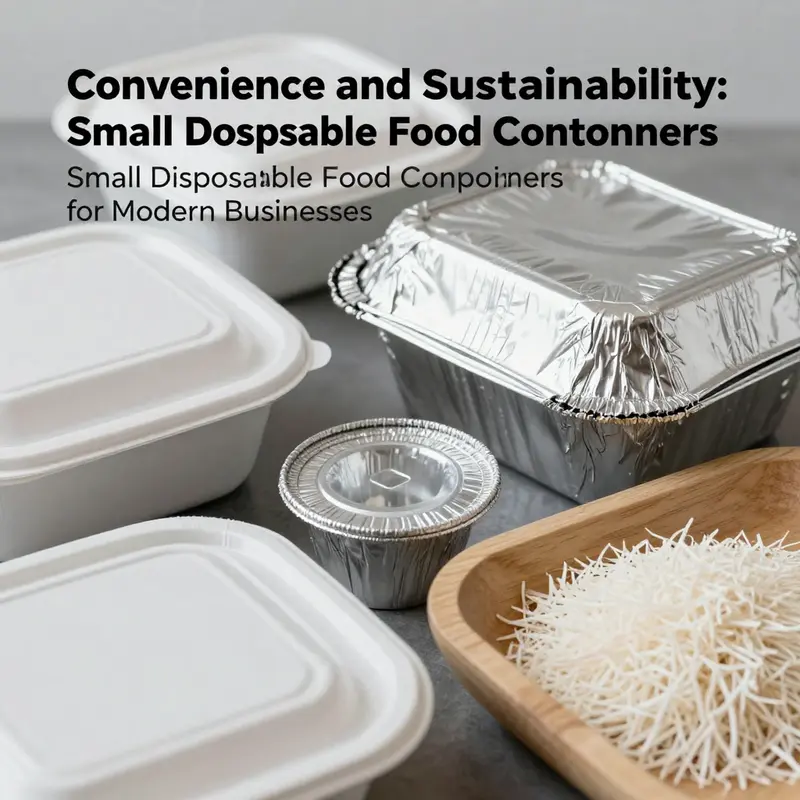
Material choices define what small disposable food containers can do for cooks, caterers, and curious home users. They determine how well a container holds a sauce, whether it can be reheated, how long it can protect the food from outside moisture, and what happens to the packaging once the meal is finished. The same culinary task—holding leftovers, delivering a slice of cake, serving a segmented lunch—can be accomplished with different materials, each bringing its own mix of performance, cost, and end-of-life implications. The landscape is not simply about one material being better than another; it is about aligning a container’s properties with the food’s needs and the expectations of diners who want convenience without compromising safety or the planet. In this sense, material science guides practical choices as surely as any design or branding decision, shaping how meals travel from kitchen to table and beyond.
Plastics remain prominent for many takeout and meal-prep applications because they can be engineered for a precise balance of rigidity, lightness, barrier properties, and price. Polypropylene, often praised for its microwave-safe performance and BPA-free formulations, offers a reassuring combination for reheatable meals and storage in both refrigerators and freezers. Its chemical stability helps prevent flavors from leaching into foods and keeps fats and sauces from migrating, while the lightweight nature of PP reduces shipping volume and energy use. Yet plastic comes with caveats: some polymers must be selected to resist hot liquids without warping, and the broader environmental conversation pushes technologists toward formulations that enable recyclability or degradation with minimal residue. A few options within the family also emphasize stiffness and clarity, which can be advantageous for labeling and product visibility in a display setting, while other PP grades emphasize durability for stacked, reusable configurations where reuse is feasible.
Polystyrene, another common plastic, has historically kept costs low and allowed for thin-walled constructions that maximize oven-and-freezer compatibility in a compact form. Its ease of manufacturing supports a wide range of shapes—from simple rounds to more intricate trays—and its lightness suits high-volume service. However, environmental concerns about persistence in the waste stream have driven regulators and users to rethink its role. Similarly, PET provides strong rigidity and excellent barrier properties, which can be vital for preserving the texture and moisture of certain foods during transport. Yet PET’s strength and stiffness must be balanced with considerations around recycling infrastructure in different regions, since effective recycling can vary widely depending on local facilities and consumer participation.
Expanded polystyrene, commonly known as Styrofoam, once dominated insulated takeout applications for hot or cold foods. Its insulation capabilities can keep meals at a stable temperature during transit, but the material’s environmental footprint and its resistance to decomposition have led to tight scrutiny. Where EPS is used, it is often with strong motivations like affordability or very short-term use; in many markets, alternatives with better end-of-life outcomes are increasingly favored. The plastics family, then, is not a single narrative but a spectrum where heat resistance, leakage prevention, rigidity, and recycling practicality must be weighed in concert with the food’s characteristics and the service model.
Paperboard and paper-based containers mark a different philosophy: they trade some of the absolute barrier strength of plastics for renewability, recyclability, and a natural aesthetic that resonates with many consumers. Paperboard boxes and cups can be treated with thin moisture barriers or waxes to resist dampness, enabling dry foods and short-term storage with a lighter environmental signature. Because this material is inherently biodegradable and widely recyclable where facilities exist, it appeals to takeout operators who want to signal sustainability without surrendering performance for every dish. Still, coatings and layering choices matter. A paperboard tray with a water-based coating might perform well for salads and dry bites yet struggle with soups or sauces, while a waxed layer or polymer film adds moisture resistance but can complicate recycling streams if not properly sorted.
Bagasse, a fiber sourced from sugarcane processing, has emerged as a rapidly renewable alternative. In many cases it offers a compelling combination of strength, heat tolerance, and compostability. Bagasse containers can withstand hot foods and liquids without leaking and can be bred to appeal to eco-conscious diners who want a clean end-of-life story for their packaging. The trade-offs often revolve around supply consistency, pricing, and the availability of composting facilities that can handle bagasse waste. In markets where industrial composting is robust, bagasse can deliver a practical, midweight solution that does not overstep the boundaries of what consumers are willing to recycle or compost at home. For purely home-composting contexts, the performance of bagasse may hinge on how quickly it breaks down in a typical yard or municipal compost setup.
Starch-based materials, derived from corn, potato, or other plant starches, represent a more recent wave of bioplastics designed to be fully compostable in industrial facilities. They aim to close the loop by offering a material that behaves like traditional plastics in terms of function but departs from fossil-based feedstocks in its end-of-life outcome. In practice, the industrial composting requirement is a critical factor: many starch-based resins break down only under specific temperatures and humidity, conditions that aren’t always present in standard home composting or recycling streams. Yet the appeal is strong for catering services seeking to reduce plastic waste without sacrificing the crisp, reliable performance customers expect from a well-sealed container.
Wood and metal containers occupy a smaller niche, generally reserved for specialty applications or premium segments where heat resistance and presentation are paramount. Their higher cost and heavier weight can limit their use in high-volume takeout, but for certain culinary contexts—hot desserts in a shareable box, for example—their natural materials and aesthetic can convey quality and care. Such options remind us that the material story is not only about function but about the experiential language a package communicates to the diner. In every case, the package must align with the intended use: microwave or oven safety, leak containment, liquid retention, and the ability to endure brief but meaningful transit times without compromising the meal’s integrity.
Beyond the chemistry and physics of these materials lies a practical orchestration of supply, customization, and lifecycle thinking. The choice of material is rarely made in isolation. For many operators, bulk procurement is a balance of price, availability, and the opportunity to reinforce branding through packaging design. Some suppliers in global marketplaces offer a spectrum of tray sizes and lid styles, enabling a portion-controlled approach that can streamline kitchen operations while making delivery and catering easier to manage. In this environment, a simple but effective strategy is to choose a material that minimizes the need for additional components or coatings, reducing complexity at the point of service and in waste streams. For designers and procurement teams exploring eco-friendly packaging options, an option that blends durability with compostability can be particularly compelling. See for example octagonal kraft paper packaging, which combines form, function, and end-of-life considerations in a way that resonates with many modern foodservice operations. octagonal kraft paper packaging.
The sourcing journey for these containers often intersects with global trade, where suppliers can offer customization and branding opportunities through OEM services. While this can be attractive for establishing a distinctive identity, it also invites careful scrutiny of the supply chain: the origin of raw materials, the energy used to produce them, and the logistics that bring these containers to kitchens and storefronts around the world. A pragmatic approach defines the decision not by novelty alone but by a holistic view of life cycle impacts. When possible, choosing materials that are recyclable in local streams or compostable in commonly available facilities can simplify post-consumer logistics and help align packaging choices with regional waste management realities. This is not a one-size-fits-all answer; rather, it is a nuanced tapestry of properties, processes, and local infrastructure that determines how well a container performs from oven to table and, ultimately, into the waste stream.
For readers seeking additional context on how these materials fit into broader consumer and industry trends, a widely accessible online resource provides a snapshot of contemporary offerings in disposable food packaging. It highlights the diversity of options—from heat-resistant plastics to compostable fibers—and underscores the importance of understanding end-of-life pathways when selecting a container for a given purpose. External reading can offer practical comparisons of price, performance, and sustainability trade-offs that complement the nuanced discussion above. https://www.amazon.com/dp/B08Q6X5L3W?th=1
From Takeout to Table: The Quiet Versatility of Small Disposable Food Containers
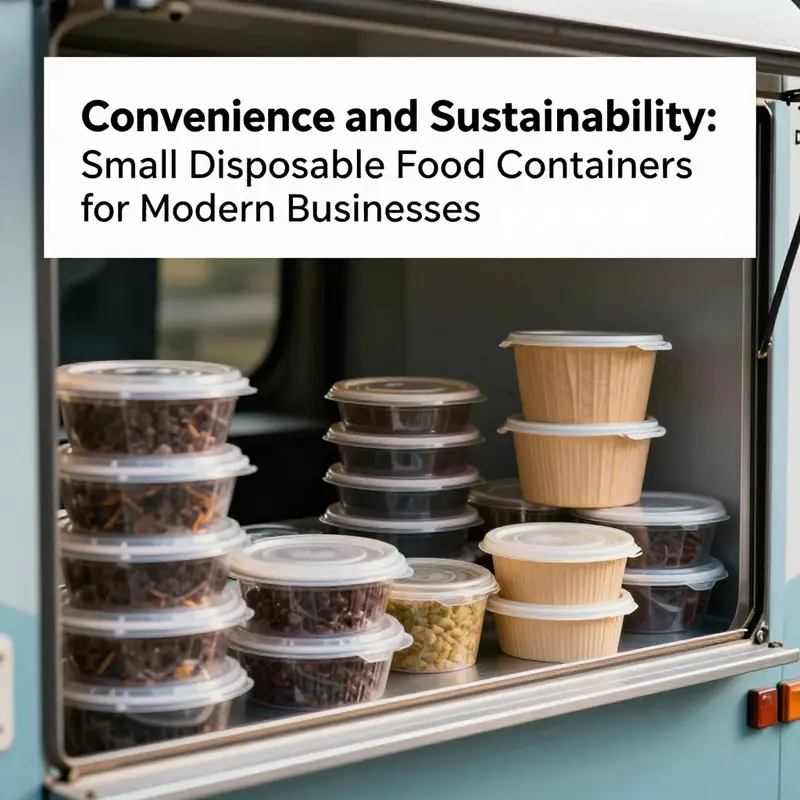
Every day, millions of meals travel from kitchen to consumer in slim, disposable vessels. These small containers are the practical backbone of modern food service, appearing in restaurants, schools, offices, homes, and event spaces. Their appeal rests on a simple triad: hygiene, convenience, and affordability. They shield foods from contamination, preserve moisture and temperature, and enable easy handling during packing, transport, and service. In many settings, the containers do more than hold food; they structure portions, simplify logistics, and shape the consumer experience. A well-chosen container can keep a salad crisp, a risotto creamy, a curry hot, and a pastry intact, while a poorly chosen one can compromise safety or waste valuable resources. The options span materials, sizes, and shapes, each trade-off reflecting a balance between performance, sustainability, and cost. As the food world evolves toward more takeout, meal kits, and micro-catering, these tiny vessels grow in strategic importance, quietly aligning culinary ambition with everyday practicality.
Across sectors, the daily dance of selection, use, and disposal reveals why these containers matter beyond mere packaging. In fast food settings, the aim is speed paired with predictable portions. Sleek trays and compact boxes help staff assemble meals quickly, while lids seal in heat and minimize spills during busy transfers from kitchen to curb. The same logic applies when meals move from a cafeteria line to a tray or a grab-and-go station. Bulk-serving items like pasta dishes, vegetables, or rice options rely on container shapes that optimize stacking and reduce handling time for servers. In office catering, containers are chosen to support efficient delivery and storage. They need to nest neatly for stacking, resist crushing in transit, and still look tidy on a conference table. For home meal preparation, enthusiasts favor containers that simplify batch cooking, enable precise portioning, and fit easily into refrigerators and freezers. The goal is not only to preserve flavors but also to support mindful eating by making portion control straightforward. When takeout and delivery are part of a service model, the containers assume a logistical role as well. Lightweight design minimizes shipping weight, while secure lids prevent spills and maintain temperature during transit. In all these scenarios, the container becomes a co-operator in the dining experience, shaping expectations about freshness, ease, and satisfaction.
Material choices sit at the heart of these practical decisions. Polypropylene (PP) containers are prized for their strength, flexibility, and heat resistance. They can safely hold hot foods and resist deformation, making them reliable for quick-service kitchens. Yet careful guidance is needed because not all PP containers are oven-safe. For reheating, it is essential to know the container’s limitations and to follow manufacturer recommendations. Paperboard boxes present an eco-friendly alternative that aligns with growing consumer demand for sustainable packaging. Made from corrugated or solid bleached sulfate (SBS) materials, these boxes offer solid structure and ample print space for branding while often performing best with cold foods or short-term storage. The rising interest in compostable options has also spotlighted materials like rice husk. These options appeal to environmentally aware customers while delivering the lightweight, disposable convenience that service models rely on. Aluminum foil containers add another layer of capability, especially for heat retention and oven or freezer use. Their recyclability enhances their sustainability profile when properly collected, even as they excel in transporting baked goods or meals that need a compact, sturdy vessel with reliable heat retention.
Hygiene and food safety remain central considerations. Disposable containers protect foods from cross-contact when used properly, and their single-use nature helps manage sanitation between shifts or events. However, limited heat resistance in some varieties means they are not universally suitable for oven use. Microwave guidelines vary by material, with some containers safe for reheating and others not recommended due to sealing, venting, or structural concerns. Clear labeling and simple handling instructions help keep service smooth and customers safe. The design also influences hygiene directly. Lids, vents, and stackability reduce the risk of leaks, spills, or mixed contents during transport. In a busy service context, container integrity under load matters too; containers that bow or crack can compromise food safety and customer trust.
Beyond performance, sustainability threads through every choice. Aluminum’s recyclability, and paper’s compostability, are important dimensions for modern operators weighing environmental impact. The market continues to expand with eco-conscious options such as compostable rice husk and other plant-based materials, which appeal to customers seeking lower overall waste footprints. The balance among health, convenience, and ecology is constantly shifting as new standards emerge and consumer expectations evolve. In this environment, suppliers and buyers increasingly consider the entire lifecycle—from sourcing and manufacturing to transport, use, and end-of-life.
Sourcing and customization are also shaping the landscape. In bulk, containers are supplied with options for sizing, shape, and branding. Operators often seek solutions that align with their service model and aesthetic, and some buyers pursue OEM branding or customized print to reinforce their identity. The purchasing process typically involves evaluating cost per unit, durability under typical use, and compatibility with existing equipment and workflows. Bulk suppliers on global marketplaces offer a spectrum of choices, including compact options designed for portion control and easy organization. An illustrative example of design ingenuity that blends function with branding can be seen in the disposable octagonal box for restaurant kraft paper packaging, which demonstrates how packaging can balance durability and visual appeal while serving practical needs. For readers seeking practical product examples, this kind of packaging demonstrates how container design supports a cohesive service concept while remaining adaptable across different meals and occasions. https://greendispopack.com/product/disposable-octagonal-box-restaurant-food-kraft-paper-packaging/
Importantly, the consumer-facing experience hinges on how well these containers integrate with the broader service ecosystem. Takeout and delivery platforms depend on containers that arrive intact, are easy to handle, and can be stored efficiently. When a meal reaches a customer, the container should reinforce the perception of value through clean presentation and reliable performance. In cafeterias and corporate settings, containers facilitate service accuracy and waste reduction. The ability to portion meals effectively helps minimize leftovers and encourages responsible consumption, a trend that aligns with many organizations’ sustainability goals. For home cooks and meal-prep enthusiasts, these vessels extend the shelf life of prepared foods and enable flexible meal planning. When everything lines up—from material choice to lid design, from stackability to labeling—the container ceases to be a simple holder and becomes a reliable partner in daily dining routines.
The chapter on materials and performance in disposable food boxes provides a technical frame for understanding these choices. It highlights how standards, thermal properties, and performance expectations intersect with real-world usage. For readers who want to explore the technical side further, an external resource offers a deeper dive into material standards, specifications, and performance insights. External research such as this helps operators align packaging decisions with safety, quality, and regulatory expectations while supporting innovation in design and sustainability.
As demand continues to grow for convenient, hygienic, and sustainable packaging, the role of small disposable containers will only deepen. They will continue to adapt through evolving materials, smarter lid systems, and smarter ways to reduce waste. They will also reflect shifts in consumer values—favoring recyclability, compostability, and responsible sourcing—while remaining deeply practical for busy kitchens and service teams. In short, these tiny vessels do more than hold food; they enable a modern food economy to run smoothly, deliver consistently, and respond to changing expectations with grace. For those who design, specify, or purchase these containers, the challenge is to balance performance, cost, and environmental responsibility in every meal that travels from kitchen to table.
External resource for deeper exploration: https://www.benjaminross.com/disposable-food-boxes-material-standards-and-performance-insights
From Convenience to Conscious Choice: Navigating Sustainability in Small Disposable Food Containers
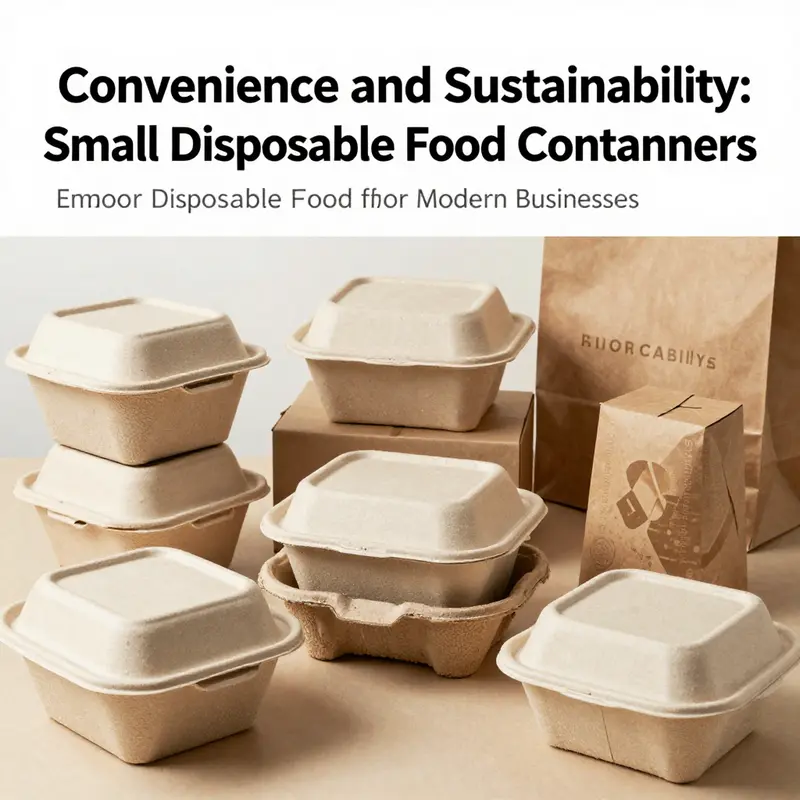
The story of small disposable food containers is no longer a simple ledger of convenience versus cost. It has evolved into a narrative about responsibility, material science, and the invisible systems that determine what actually happens to a package after the last bite. As takeout, meal-prep, and catering expand in scope, the pressure to align packaging with environmental values intensifies. This pressure is not merely about reducing waste; it is about rethinking the entire lifecycle of a container—from raw material extraction and production to performance during heat and time in the consumer’s hands, and finally to its end of life. In this context, the market is shifting away from single-use plastics toward options that offer a clearer pathway to reuse, recycling, or composting, while still delivering the reliability needed in kitchens, delis, and delivery fleets. The shift is not a rejection of practicality; it is a recalibration of what practicality means in a world conscious of material footprints and resource constraints.\n\nA central axis of this evolution is the diversification of materials. Traditional petroleum-based plastics have long dominated due to their low cost and strong barrier properties. Yet regulatory pressures, public concern, and corporate sustainability commitments are reshaping demand. Biodegradable and compostable alternatives—derived from renewable resources such as cornstarch, bagasse (sugarcane pulp), and bamboo—are gaining traction. These plant-based materials are engineered to break down under industrial composting conditions, offering a route to divert some single-use waste from landfills. Polylactic acid (PLA), produced from fermented plant starch, stands out as a widely discussed example. PLA finds its way into microwaveable meal trays, deli containers, and salad packaging, touting the appeal of compostability coupled with food-safe performance. Still, the promise carries caveats. Production costs for bioplastics can exceed those of conventional plastics, and real-world shelf life can be sensitive to moisture and heat. Their decomposition often depends on access to specialized industrial composting facilities, which are not uniformly available across regions. The result is a nuanced picture: closure of the loop in principle, but mixed outcomes in practice unless infrastructure catches up.\n\nAlongside plant-based options, aluminum foil containers retain a paradoxical predominance in many segments. They offer formidable heat resistance, enabling oven, microwave, and freezer use in a way that few plastics can rival. They also carry a recycling advantage when properly managed, contributing to a circular lifecycle if collected and reprocessed. Yet even aluminum faces scrutiny in a sustainability narrative. The energy requirements for producing and recycling aluminum remain high, and the perceived impermeability of some recycled streams requires careful handling to prevent contamination. The positive story—renewable energy-powered recycling loops when available—needs to be balanced with reality in markets where collection and sorting systems vary widely. In many kitchens, small aluminum trays and lids are indispensable for their performance, but their ultimate fate hinges on local waste systems and consumer participation.\n\nPaper-based and pulp-derived options present another major thread in the current landscape. Disposable papers and bowls made from kraft fibers or pulp composites—sometimes reinforced with small quantities of biodegradable binders—offer a familiar sensory experience and a sense of natural origin. Materials such as rice husk or other agro-waste fibers introduce additional pathways to reduce reliance on virgin plastics while keeping the weight light and the form-factor convenient for portion control and grab-and-go service. When properly designed, these containers can pair with composting programs or green waste streams, enabling a broader environmental objective beyond the single-use mentality.\n\nYet the practical embrace of these materials must be grounded in transparency. Consumers increasingly demand clear, trustworthy labeling that distinguishes between true compostability, biodegradability, and simple degradation. Certifications such as OK Compost or TÜV Austria—along with third-party testing—emerge as important signals in a marketplace crowded with green claims. For brands navigating this space, the message is not just about choosing a material, but about communicating its end-of-life realities in a way that avoids greenwashing and builds trust with customers who want to make responsible choices. The interplay between material selection, labeling, and consumer understanding is a critical driver of adoption. It is not enough to offer a container that can supposedly break down; it must be clear to the user when and where that breakdown is expected to occur, and under what conditions.\n\nIn practice, the conversation about sustainability also intersects with the broader economics of scale. Biobased and compostable options often come with higher unit costs, particularly at smaller production runs or in markets where demand remains uneven. This is where lifecycle analysis becomes essential: by evaluating the total environmental impact—not just the end-of-life outcome—companies can compare options on the basis of energy use, water footprint, packaging material efficiency, and emissions across the supply chain. A material that reduces waste may still incur higher energy costs during production. Conversely, a lightweight, recyclable aluminum tray might offer significant savings in transport emissions due to lower weight, even if the recycling stream is not universally efficient. The net effect is that sustainability is rarely a single-factor decision; it is a balancing act that depends on product type, use case, and local waste infrastructure.\n\nDesign innovation is advancing to meet these realities. Researchers and manufacturers are exploring hybrids that combine the durability and barrier properties of plastics with the degradability of natural fibers. The goal is to achieve smarter packaging that performs under heat and moisture while presenting a credible end-of-life option. At the same time, efforts to improve heat resistance and moisture barriers in bioplastics address a persistent weakness—sensitivity to humidity and long-term storage—that has limited broader adoption in some segments of the food service industry. The industry is also experimenting with multilayer structures that optimize performance while enabling easier separation for recycling or composting. The idea is to design packaging with a clear and feasible path to recovery, rather than one that simply delays waste.\n\nAnother layer of the story is the supply chain and market access. A growing number of global suppliers are expanding their portfolios to include sustainable disposable packaging options that can be customized or branded through OEM arrangements. The ability to offer tailored shapes, sizes, and surface finishes, combined with certifications and traceability, helps brands align product packaging with sustainability claims and consumer expectations. This diversification is particularly important for small and mid-sized food businesses that want to differentiate themselves through responsible packaging without sacrificing performance. It is a reminder that the sustainability conversation is not only about materials in a lab; it is about how those materials move through the real world—from factory floor to consumer hands to waste streams—and how well that journey can be optimized.\n\nEducation and consumer awareness remain pivotal. Even the most advanced material can falter if end users do not understand how to dispose of it properly. This is why transparent labeling, clear guidance on compostability in industrial facilities, and straightforward recycling instructions are essential complements to material choices. The end goal is not to create anxiety about waste but to empower informed decisions. Consumers will reward packaging that is transparent about its strengths and limitations, and they will support brands that take responsibility for the entire lifecycle of their containers. In this sense, sustainability becomes a competitive advantage rooted in trust, performance, and consistency rather than a one-off green claim.\n\nFor readers seeking a concrete sense of the directions in which the industry is headed, it helps to consider real-world options that embody these principles. Options exist in the realm of compact, take-out-ready vessels that balance usability with environmental considerations. For brands exploring compostable or eco-friendly alternatives in the context of small containers, there are growing choices that emphasize end-of-life clarity and performance. For example, an option such as eco-friendly kraft paper bowls illustrates how packaging can align with both consumer expectations for natural materials and the practical requirements of food service. You can explore one such lineage of sustainable design here: eco-friendly kraft paper bowls.\n\nUltimately, sustainability in small disposable food containers is not a fixed target but a moving equilibrium. It requires ongoing assessment of material science advances, end-of-life infrastructure, regulatory signals, and consumer education. The most resilient strategies are those that acknowledge trade-offs, invest in transparent communication, and design for adaptability. As cities and regions invest in more robust composting and recycling networks, the real-world impact of plant-based and recycled alternatives will become clearer. Until then, the balance will continue to shift as innovations in materials science, packaging design, and waste management push the industry toward solutions that are not only convenient and hygienic but also responsible in their cradle-to-cradle footprint. For researchers, designers, and operators, that is the core challenge and the core opportunity of this chapter of packaging history. For a broader synthesis of these trends and the evolving science behind them, see external research resources that survey the landscape of sustainable disposable food packaging.\n\nExternal resource: Sustainable Trends in Disposable Food Packaging – ResearchGate. https://www.researchgate.net/publication/398745622SustainableTrendsinDisposableFoodPackaging
Small Keeps, Big Currents: Navigating Sustainability, Supply, and Sourcing in the Small Disposable Food Container Market
The market for small disposable food containers is not a backdrop; it is a living system that mirrors appetite for convenience, hygiene, and responsible practice. In 2025 the sector was valued at approximately 8.38 billion dollars, and analysts project a steady climb with a CAGR around 13.36 percent from 2026 onward. This growth is driven by a mix of everyday takeout, the accelerating pace of meal delivery, and the expanding footprint of corporate catering that seeks fast, reliable, and safe packaging. The containers themselves span a spectrum from compact aluminum foil trays to sturdy plastic options and an emerging class of compostable alternatives. Across continents, kitchens and curbside hubs rely on these vessels to preserve temperature, protect aromas, and maintain crusts and crunches from entry to consumption. Yet the chapter of growth is inseparable from the chapter of responsibility. Consumers and operators alike are asking for packaging that performs under heat and moisture while minimizing harm to the ecosystems that support the meals they serve. Those dual demands—functionality and sustainability—are reshaping how manufacturers approach materials, coatings, and end-of-life outcomes, turning a simple takeout box into a signal about brand values and supply-chain discipline.
Sustainability is no longer a niche concern but a guiding principle in product development. The market’s shift toward compostable and biodegradable materials is pronounced, driven by both consumer choice and regulatory expectations. Sugarcane bagasse, bamboo pulp, and PLA-lined paper containers have moved from novelty to the baseline for legitimate, food-contact applications in many regions. These materials are typically designed to meet FDA and EU standards for direct contact with food and are engineered to break down under industrial composting conditions. The result is a packaging ecosystem that aims to reduce landfill burden while preserving the aesthetics and performance customers expect. In practice, this has meant more attention to moisture and grease resistance, as well as the integrity of sealings and lids when containers travel through cold chains, ovens, and microwaves. Innovations such as water-based coatings and PLA linings are increasingly common, pairing improved grease resistance with a compostability profile that keeps sustainability claims credible rather than aspirational.
The functional expectations for small disposable containers are equally shaped by the realities of food service. Many operators rely on compact, robust formats like 26-ounce Chinese takeout boxes or 250-milliliter plastic containers made from polypropylene (PP) or polyethylene (PE). These formats are prized for durability, stackability, and reusability in environments that demand repeated use or quick turnover. Importantly, manufacturers are not sacrificing convenience for eco-friendliness; the best-performing versions combine heat resistance with odor and stain control, ensuring that flavors stay true and customers stay satisfied. When brands seek to balance cost with performance, the dialogue often turns to material optimization: a trade-off between barrier properties and end-of-life outcomes, tempered by regulatory clarity and consumer education about disposal expectations.
On the supply side, the landscape is still led by major manufacturing ecosystems in China, where hubs like Shanghai, Xiamen, and Dongguan anchor integrated operations. These regions offer access to raw materials, advanced converting technologies, and efficient logistics that reduce lead times and enable flexible production. Typical turnaround times for full container loads fall within a 15- to 30-day window, a rhythm that supports both off-the-shelf procurement and rapid customization. What makes this dynamic particularly meaningful is its implication for resilience. Flexible manufacturing models—small trial batches, private-label runs, and scalable capacity—enable brands to experiment with new materials or coatings without overcommitting to long-term commitments. In practical terms, this reduces risk while preserving opportunities to differentiate through sustainability stories, packaging design, and sensory cues like color and texture that communicate care for the food and the planet.
The price canvas for these containers reflects a wide range of material choices and production efficiencies. Typical unit costs span roughly from one cent to eighteen cents, with the exact figure dependent on material grade, finish, print complexity, and the scale of the order. While the numbers may seem modest, they accumulate quickly in high-volume programs, underscoring the importance of negotiating terms that consider not just stencil fees or surface decoration but also waste, variance in thickness, and the stability of seal integrity across batches. In a market where the same box might perform differently when exposed to a freezer cycle or a microwaved dish, predictable performance becomes a form of value, not only a guarantee of compliance. A robust supplier network, with clear lines of accountability, is essential to maintain consistency as demand ebbs and flows with seasonality, promotions, and the expanding universe of meal-delivery platforms.
With sustainability and performance as twin anchors, buyers increasingly rely on a thoughtful supplier-evaluation framework. Compliance and certification sit at the top of the list, ensuring alignment with FDA, EU, and regional regulations that govern direct food contact. Quality assurance programs, focusing on material thickness, sealing consistency, and structural integrity, become ongoing rather than episodic checks. Production capacity and scalability are equally critical; a supplier must be able to absorb spikes in demand without sacrificing lead times or quality. Sustainability credentials can take many forms, including certifications for compostability or verifiable claims about reduced carbon footprints. Finally, after-sales support—troubleshooting, replacements, and clear communication channels—can prevent small issues from cascading into brand-affecting problems. These dimensions of due diligence shape purchasing decisions that balance cost with risk, and they help create supply chains that are resilient in the face of disruptions that have become more common in global logistics.
For readers focused on practical sourcing, the purchasing landscape presents an array of options that blend global reach with local flexibility. Platforms that connect buyers with manufacturers can accelerate discovery, testing, and scale, while also providing data-rich insights into supplier capabilities, material specs, and trend analyses. A common starting point is to explore bulk procurement pathways that enable both off-the-shelf inventory and tailored configurations. Alongside these platforms, there is value in examining packaging designs that emphasize both performance and sustainability. For instance, a compact, yet distinctive option like an octagonal kraft paper packaging design illustrates how form can support function while communicating a sustainability narrative to customers. To view a packaging approach that aligns with this logic, see the dedicated packaging concept here: disposable octagonal kraft paper packaging. This example reinforces how packaging shapes perception while delivering practical benefits such as stacking efficiency, grease containment, and consumer-friendly disposal messaging. In the broader sourcing conversation, it is also instructive to consult well-established sourcing guides that compile supplier profiles, material specs, and compliance considerations—resources that help buyers build resilient, future-ready supply chains. A widely cited reference for wholesale disposable food containers and supplier data is the comprehensive guide hosted on a major global marketplace, which offers insights into leading suppliers, product categories, and customization options. For readers seeking a concrete starting point, the link provides a structured overview of the market landscape and can help frame negotiations and quality benchmarks as you evaluate options across regions and materials.
The procurement landscape is not static. It evolves as consumer values shift toward transparency, recyclability, and responsible sourcing, while regulators tighten standards related to compostability and restricted additives. In response, manufacturers and brands are experimenting with multi-material architectures that preserve barrier performance while enabling composting in industrial facilities. The convergence of improved barrier coatings, PLA linings, and compostable papers is gradually expanding the set of viable choices for small containers that must endure transport, reheating, and casual reuse in cooking environments. The practical implication is that buyers should approach packaging decisions as a long-term strategic matter rather than a one-off cost exercise. Establishing clear performance criteria, sustainability targets, and supplier scorecards early in the relationship can yield dividends in reliability and customer trust.
To further ground these considerations in real-world sourcing practices, buyers are encouraged to consult wholesale-distributor guides that consolidate supplier capabilities, regulatory compliance, and lead-time benchmarks. An external resource that provides a broad view of global suppliers and sourcing strategies can complement internal assessments and on-site audits. External reference: https://www.alibaba.com/product-detail/Wholesale-Disposable-Food-Containers-Top-China_1600478915786.html
For practitioners seeking concrete examples of packaging design and material choices, consider the broader design ecosystem that includes kraft-based bowls and lids, as well as two-compartment plastic options that support portion control. The interplay between sustainability claims and performance metrics—such as heat resistance, odor control, and moisture management—remains a central challenge and opportunity. In practice, brands that combine clear communication about disposal expectations with reliable packaging performance will differentiate themselves in crowded segments like takeout, meal prep services, and small-scale catering. The next chapter will explore how branding, labeling, and consumer education intersect with packaging choices to reinforce a sustainable value proposition while maintaining the practicalities of fast-paced food service.
Final thoughts
As the food service industry continues to evolve, small disposable food containers remain pivotal in enhancing convenience and supporting sustainability efforts. Business operators must stay informed about the materials, applications, and market trends to ensure they choose products that meet their operational needs while appealing to eco-conscious consumers. From aluminum to biodegradable options, there is a growing spectrum of choices that can perfectly align with your business’s values and goals. Embracing these innovations not only enhances service efficiency but also contributes positively to the environment, making it an essential aspect of modern food service.