
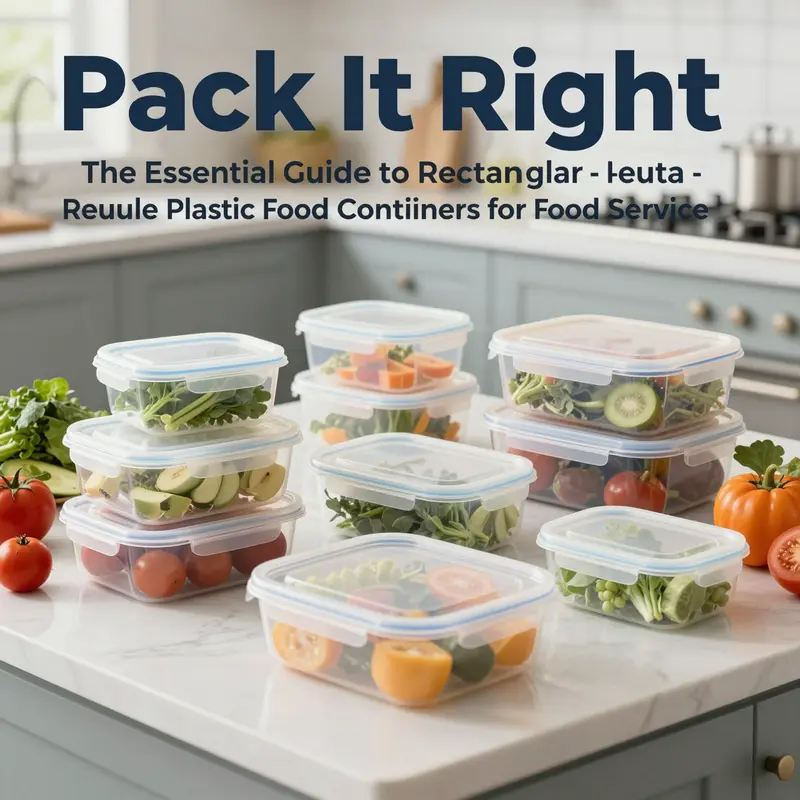
In the world of food service, operational efficiency and sustainability are not just buzzwords; they are the foundation of successful businesses. Rectangular reusable plastic food containers are evolving to meet these demands, proving to be invaluable assets for bubble tea shops, restaurants, food trucks, catering services, and event planners. Their robust design offers unmatched durability, while their sleek, modular shape maximizes storage space and creates a uniform kitchen aesthetic. As we delve into the key characteristics, sustainability factors, economic benefits, and societal trends surrounding these containers, you’ll see how they can transform your food handling processes and enhance customer satisfaction. Discover how integrating these functional tools into your operations can set you ahead in the competitive market.
The Quiet Strength of Rectangles: Durability and Design in Reusable Plastic Food Storage
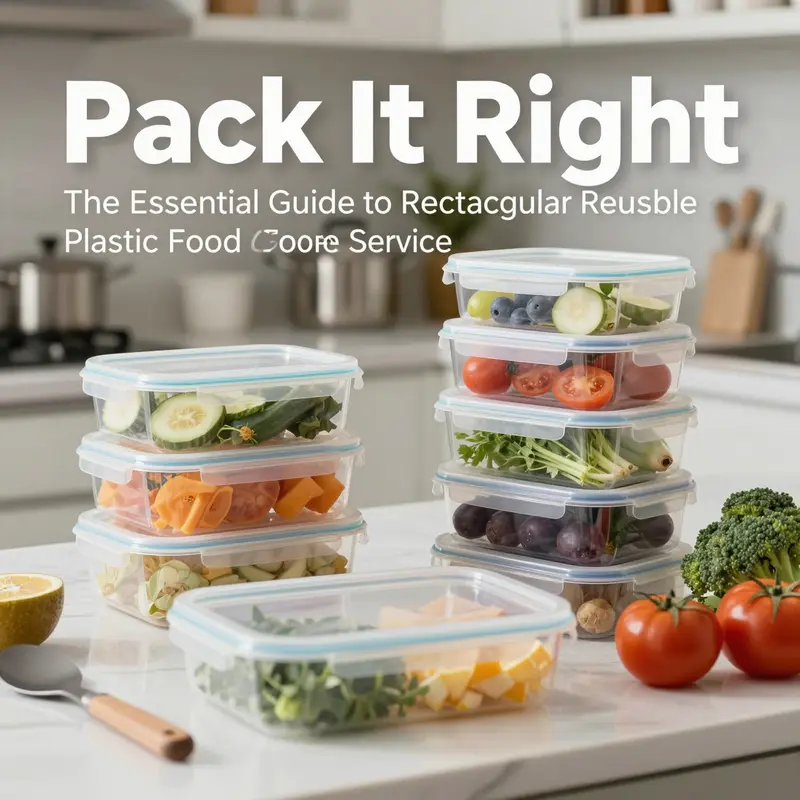
Durability and design in rectangular reusable plastic food containers reveal a quiet, practical elegance that underpins everyday cooking, cooling, and caring for meals. The rectangle is not merely a shape but a working principle that aligns with how kitchens are organized, how people store leftovers, and how they plan meals ahead. It is a geometry that respects the rhythms of busy lives. In many homes, the refrigerator shelves become a grid of predictable footprints where each container rests like a tile in a larger mosaic. When empty, these containers nest neatly, occupying less space and inviting a quick return to the cabinet. When full, they stack in stable towers that minimize the risk of tipping as the door swings open. This balance of nesting versatility and stacking stability translates into tangible benefits: easier inventory, faster meal prep, and smoother transitions from storage to reheating. In short, durability for these containers emerges not from a single feature but from a disciplined combination of geometry, materials, and surface design that works together with human routines.
The material story behind durability begins with the most common workhorse in this category: food-grade polypropylene. PP offers a remarkable blend of toughness and chemical resistance that makes it well suited to the kitchen. It handles cold storage well, resisting the brittleness that can plague other plastics in the freezer. It tolerates gentle reheating in many home microwaves, provided the user adheres to the limits set by the manufacturer. It also holds up under repeated dishwasher cycles, though repeated exposure to high heat and aggressive detergents can erase some transparency and, over time, dull the surface. In higher end designs, engineers may reinforce walls, add ribbing along the inner faces, or pair PP bases with lids crafted from silicone or a different polymer that improves the seal. These refinements do more than just keep contents in place; they resist deformation when the container is pressed into the back of a crowded shelf or knocked during a rushed kitchen routine. Yet even with these refinements, no design can eliminate all forms of wear. Corners, where two walls meet at a right angle, can trap small food particles and residues. If those particles are not cleaned promptly, they become stubborn stains or odors and, more worryingly, potential sites for microbial growth. This is not a flaw in the material but a reminder that durability in practice includes a robust cleaning ritual to accompany it.
Designers treat the interface between container and user as a system, not as a single object. The flat surfaces and uniform height of the lids make labeling straightforward, whether the label is handwritten with a marker or printed using a label maker. This emphasis on flatness and uniformity supports a systematic approach to kitchen organization. If a family owns a suite of containers in identical widths and depths, each lid can be swapped with ease, and the sequence of sizes used in a given setting becomes predictable. Such predictability reduces cognitive load during a busy morning or a rushed evening, enabling someone to locate the right size in seconds rather than minutes. In commercial settings, the advantages compound: standardized shapes and lids streamline inventory, speed up prep tasks, and reduce the risk of cross-contamination due to mismatched equipment. The upshot is a durable system that feels effortless because its parts are designed to interlock with minimal friction and maximum compatibility.
The practical benefits of this design reach beyond mere convenience. A well-thought-out rectangular system supports portion control, a daily discipline that helps manage calories, nutrients, and leftovers. When portions are measured against uniform bases, it becomes easier to track intake and keep meals balanced across a day or a week. The flat surfaces also invite a practical labeling culture. You can note the contents, date, and even suggested reheating times in a legible, unobtrusive way. This visibility reduces food waste by making it easier to see what is inside at a glance. It also aids in planning and shopping, because a quick inventory check can reveal what needs to be prepared or bought before the week runs out.
The material choice and the design together influence the life cycle of a container. Recyclability matters, and many designs are crafted to be compatible with recycling streams that accept the plastics used in food storage. Some options incorporate recycled content or are designed with end-of-life sorting in mind, helping to close the loop in a circular economy. The durability of a container—how many times it can be reused before it shows significant signs of wear—affects its environmental profile. A base that resists cracking, a lid that seals consistently after hundreds of openings, and a surface that maintains a clear view of its contents throughout years of use all contribute to a lower environmental footprint per meal stored and reheated. Conversely, an inexpensive option that degrades quickly can fail in ways that force early replacement, increasing waste. The designer must weigh these competing considerations—strength, longevity, and recyclability—against cost and consumer expectations to strike an equilibrium that feels trustworthy in daily life.
A particularly practical benefit of rectangular shapes lies in how they fit temperature-controlled storage. In the refrigerator, the flat bases and parallel sides maximize usable shelf space. In the freezer, they provide stable stacks that minimize the risk of items sliding and tipping, even when the freezer is pulled open with a hurried hand. In pantries and cupboards, the same geometry translates to an organized ecosystem where similar items align with consistent spacing. This spatial efficiency has a cascading effect: less rummaging, less food lost to forgotten corners, and less time spent reordering after a busy week of meals. The design does not merely save space; it streamlines behaviors, turning storage into a reliable foundation for cooking and eating. The lid, too, earns its share of attention. A strong seal matters not just for keeping flavors in and odors out but for ensuring that containers travel safely from home to work in a bag or a lunchbox. A leak-proof or leak-resistant lid reduces the risk of spills on shelves, on the way to the office, or in the car, which in turn lowers the need for extra cleaning and lowers the chance of cross-contamination between foods.
In practice, many rectangles employ seals that combine a rigid frame with a flexible gasket. The gasket provides the liquid resistance, while the rigid frame maintains the integrity of the top surface so that labels stay legible and the lid remains user-friendly. The hinge design matters, too. Durable hinges withstand repeated opening without sagging, while simple flip-top mechanisms offer one-handed operation that is particularly appealing to busy caregivers or professionals transporting meals. A thoughtful system may also include interchangeable lids that fit several bases, reducing clutter in the kitchen and simplifying the user experience. Fewer pieces mean fewer chances to lose a lid or mismatch a base, which in turn supports the long-term durability of the entire set.
Within this ethos of practical design, there is room to consider the broader environmental and social implications. For many households, the allure of a long-lasting container is inseparable from a sense of stewardship: that the device used to preserve a meal can also align with broader goals of reducing waste and conserving resources. In this light, materials matter, as do manufacturing practices that keep emissions and energy use in check. There is a balance to strike between raw toughness and end-of-life responsibility. A container that lasts for many years but cannot be recycled at the end of life may complicate a user’s sustainability goals, while a lighter, easier-to-recycle option might tempt more frequent replacements and undermine durability. The best designs attempt to negotiate these tensions by using materials that endure repetitive cycles yet remain compatible with recycling infrastructure. They encourage a habit of reuse by being pleasant to use, easy to clean, and straightforward to care for.
Another facet of durability is the user’s care routine. The rectangle is forgiving in some respects, but it cannot compensate for neglect. A routine that includes a quick rinse after use, a careful wash in the dishwasher if allowed, and a periodic deep clean to address the corners and the lid rim will extend the container’s life well beyond a few seasons. In particular, the corners deserve attention because the tight angles can trap food bits that later harden and resist removal. A small brush or a soft sponge can work wonders. The interior walls should be wiped down with a non-abrasive cleaner to preserve the surface integrity and avoid micro-scratches that harbor stains and odors. These practices are not burdensome; they become part of the daily rhythm of meal planning. When users maintain their containers, the design continues to deliver the same steady performance that drew them to it in the first place: dependable storage, predictable reheating, and clean, bright visibility of what is inside.
The rectangle’s enduring appeal also lies in its adaptability. The same family of shapes can accommodate a wide variety of food types, from dry goods to semi liquid sauces, from salads to stews, from cooked grains to sliced fruits. The most durable systems are built to be forgiving of a range of contents while offering specialized features for trickier items. A well conceived set may include a high-visibility option that helps you see the contents beneath the lid, a transparent wall that makes quick checks possible, or a subtly tinted lid that hides stains without compromising the ability to identify what is inside. The combination of a stable base, a reliable lid, and a cohesive labeling strategy creates a kitchen tool that seems to vanish into the background of daily routines, yet quietly supports the work of cooking, storing, and reheating with consistent quality.
From a design perspective, the rectangle is a platform rather than a finished product. It invites iterations that respond to how people actually use containers day after day. A new lid may lock more securely yet remain easy to open. A wall rib can improve rigidity without compromising interior capacity. A better surface finish can resist staining and make cleaning simpler. In this way, the rectangle acts as a stable template around which improvements accumulate, one cycle at a time. The result is a storage system that feels almost invisible because it blends efficiency, safety, and longevity into a single, dependable habit. When a household finds a set that performs this balancing act, it becomes less about chasing the newest feature and more about cultivating a reliable partner for meals—one that keeps flavors intact, prevents waste, and stands up to the daily grind of kitchen life.
As usage patterns evolve, this design philosophy remains relevant because it aligns with core human needs: predictability, safety, efficiency, and environmental mindfulness. The rectangular form delivers these in a way that other shapes struggle to match. It reduces the cognitive load of organization, supports straightforward labeling, and enables a practical approach to meal prep and storage. It also embodies a disciplined approach to materials and manufacturing that seeks to minimize waste and maximize reuse, even as consumer expectations shift toward greater sustainability. The rectangle is more than a container; it is a practical instrument that shapes how we plan meals, how we interact with leftovers, and how we think about the lifecycle of the food we store. The result is a kitchen tool that, in its quiet, steady way, makes everyday nourishment smoother and more reliable for families and professionals alike.
External resource: https://www.foodserviceequipment.com/reusable-plastic-food-containers-explained/
Sustainability in Shape: Rectangular Reusable Plastic Food Containers and the Circular Economy
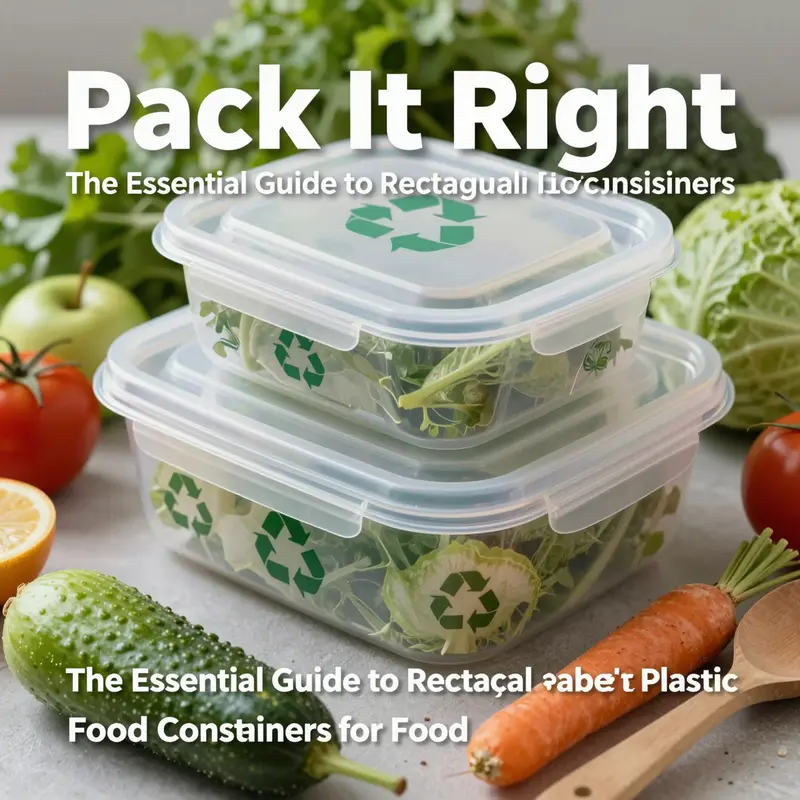
Rectangular reusable plastic food containers offer practical advantages for sustainability. Their flat, uniform shape supports efficient stacking, organized storage, and easier labeling, which in turn reduces waste and improves kitchen efficiency.
Durability and safe materials matter. High density polyethylene and polypropylene are common choices for their strength, chemical resistance, and ability to withstand repeated washing without losing performance.
Maximizing reuse extends the life of a container and lowers per use impact. When cared for properly, lids seal well, odors stay contained, and the set remains in rotation for years. Clear labeling and a uniform design simplify rotation and inventory management, reducing the likelihood of discard due to missing lids or mismatched pieces.
End of life can still matter. Recyclability and the option to use post consumer recycled content helps close the loop. Some containers are designed to be recycled in standard streams, while others are paired with PCR content to reduce virgin resin demand.
Better care multiplies environmental benefits. Proper washing, drying, and storage prevent odor retention and material degradation. Following manufacturer guidance for heat and microwave use preserves performance and safety.
In the broader system, recycling infrastructure and consumer participation determine true impact. When recycling options exist and are accessible, recycled content can replace virgin resin, supporting a circular economy. For many households, the rectangle thus acts as a practical tool that aligns daily convenience with responsible material stewardship.
Economic Logic of Rectangular Reusable Plastic Containers
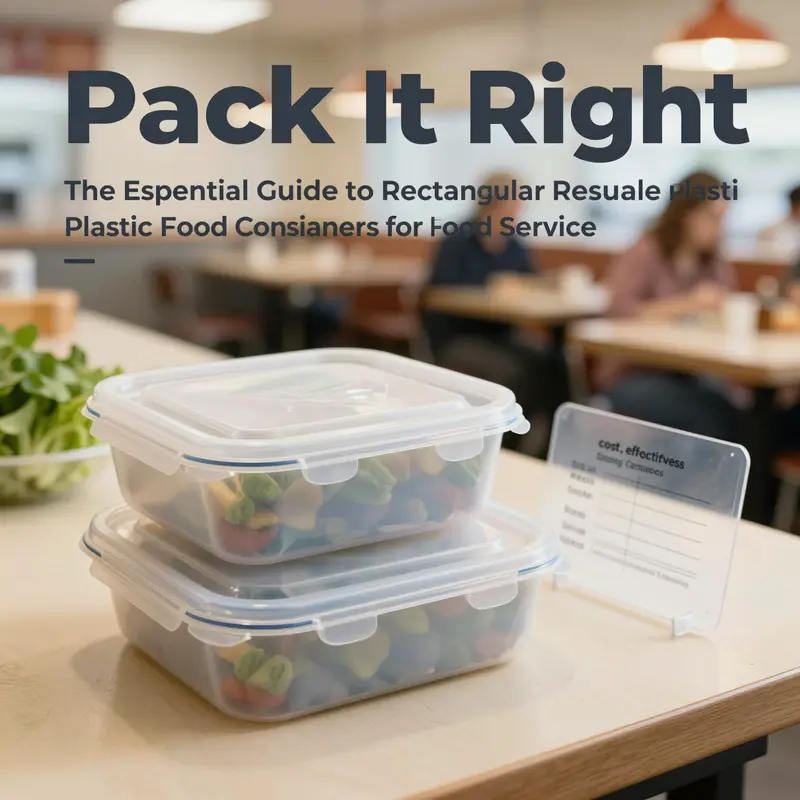
When businesses switch from disposable to reusable packaging, the economic math centers on durability, efficiency, and flow. Rectangular reusable plastic containers are not just vessels; they are systematic investments in storage and labor productivity. The upfront cost is offset by recurring use and lower material disposal and purchase costs over time. In high volume operations, the material savings and reduced waste fees can be substantial. The rectangular shape enables tight packing, straightforward stacking, and consistent handling, which lowers space and transport costs and improves cycle times.
A second pillar is space and logistics. Uniform dimensions maximize pallet density, simplify warehousing, and ease automation. The predictable form reduces labor in picking and counting and lowers capital needs for equipment as operations scale. As automation and batch processing grow, these efficiencies compound, producing meaningful reductions in total cost of ownership.
A third dimension is risk management and reliability. Durable containers resist damage and mis packed items, preserving product quality and reducing replacement cycles. This improves service levels and steady margins even as volumes move through complex supply chains.
These economic advantages are complemented by customer perceptions. Reuse signals environmental responsibility, supporting brand value and loyalty in markets where sustainability matters. The business model of container as a service can create ongoing revenue streams through maintenance, cleaning, and returns, rather than a one time sale.
Steady Stacks in a Shifting Society: How Social Currents Drive the Rise of Rectangular Reusable Food Containers

Rectangular, flat-edged, and oddly satisfying in their simplicity, these containers aren’t just kitchen tools. They are artifacts of a broader movement shaping how people plan, store, and transport food in a world where time is compressed and choices are scrutinized. The shape itself—long, low, and stackable—embodies a design language born of practical constraints and evolving values. In kitchens that rhythmically chase efficiency, these containers offer a predictable footprint: uniform lids, consistent depths, and a clean, modular silhouette that makes labeling and organizing almost intuitive. The story beneath that silhouette, however, is written in the language of society. It speaks of environmental stewardship, urban living, evolving work patterns, and the transparency demanded by a generation that refuses to separate convenience from responsibility. The result is not merely a preference for a plastic form; it is a reflection of how communities imagine food storage as a shared, sustainable act.
At the heart of this shift lies a growing environmental consciousness that has moved beyond peripheral concern to central decision-making. Consumers increasingly measure their choices by the life cycle of a product: materials used, energy consumed in production, waste diverted from landfills, and the ease with which items can be reintroduced into circular economies. Rectangular reusable containers respond to this ethos with several aligned properties. They are designed to be durable enough to withstand repeated use, a feature that appeals to households that want to reduce waste without sacrificing reliability. They are often BPA-free and composed of food-grade plastics that emphasize safety and longevity. And they tend to be dishwasher- and microwave-friendly, which lowers the friction of adoption. The societal impulse here is not to abstain from convenience but to reconfigure convenience as something that travels through time rather than ends at the countertop.
Yet the pull toward reusable solutions is not purely about personal virtue. It is reinforced by social influence—an effect that ripples through neighborhoods, offices, and schools. When friends and colleagues adopt a reusable storage routine, others observe and imitate, creating a chain reaction that extends beyond the household. In this sense, the rectangular container becomes a social signal as well as a practical one. Its flat surfaces invite labeling, which in turn invites routine. Labels help households track meals, dietary needs, and portion sizes with a quiet, almost ceremonial regularity. The social momentum is especially evident in workplaces and collaborative kitchens where shared systems reduce miscommunication and streamline meal prep for teams. The form supports a culture of order, which in turn strengthens trust in the sustainability narrative—trust that matters when people decide to replace a familiar single-use option with a durable, reusable alternative.
Urban living amplifies these dynamics. City dwellers often navigate small kitchens, crowded refrigerators, and busy commutes that reward compact, stackable storage. Rectangular containers maximize fridge shelves, freezers, and cabinets by aligning neatly with shelves and door bins. Their predictability standardizes inventory, so leftovers from last night’s dinner can be found quickly this morning and repurposed for lunch. This spatial efficiency is not merely a convenience; it becomes a daily discipline that reduces impulse purchases and food waste. In neighborhoods where take-out is a staple and home cooking is a valued counterpoint, the same rectangular form doubles as a reliable transport vessel for meals and snacks that travelers carry through transit or from office to home. The design, in other words, mirrors the rhythm of modern life: it is adaptable, quiet, and dependable.
A similar logic governs the rise of durable, safe materials. For many households, safety narratives around plastics translate into a preference for BPA-free formulations and materials that can tolerate repeated heating, washing, and stacking without degrading. This alignment addresses a real concern: the way plastics age under heat and abrasion can influence consumer trust. Transparent labeling helps demystify composition, assuring users that the container will not leach substances during daily cycles of use. When combined with dishwasher and microwave compatibility, the materials talk becomes a practical promise. It is a reassuring calculus for families juggling meals, school lunches, and after-school snacks, where a reliable container reduces the mental load attached to food storage and transit.
The push toward reusable containers also intersects with policy and corporate strategy. Societal governance increasingly favors packaging systems that minimize pollution and encourage reuse. Regulations that discourage single-use plastics, through bans or taxes, nudge households toward reusables. At the same time, institutions and companies pursue sustainability goals by expanding programs that reward responsible packaging and penalize wasteful practices. In this climate, rectangular containers are not passive recipients of policy; they are active participants in compliance and reporting. Their standardized shapes simplify data collection for waste audits and lifecycle assessments, enabling households and organizations to quantify savings in a way that feels tangible and responsible.
The material science behind these containers has also evolved in concert with public expectations. Safer plastics, better barrier properties, and improved heat resistance have expanded the range of dishes that can be stored, reheated, and transported without fuss. The rectangular geometry, with its flat lids and even walls, supports predictable heating patterns and even distribution of heat, which can be important for maintaining texture and flavor in leftovers. This is not merely about avoiding spillage; it is about preserving the eating experience across multiple meals. In households that rely on meal prepping, the predictability of portion sizes and the clarity of labeling become part of a daily routine. The container becomes a notational device as well as a vessel—a way to translate dietary goals into tangible, measurable outcomes.
The design philosophy behind these products embraces modularity. Modularity is not a marketing buzzword here; it is a practical response to the realities of recurring storage cycles. When containers share uniform dimensions, stacking becomes more reliable, and nested storage saves cabinet space when not in use. This is crucial for those who live in smaller apartments or who manage limited pantry real estate in shared kitchens. A uniform system also helps families rotate foods more efficiently, ensuring older meals are consumed before newer ones. The storytelling here is subtle but powerful: order and predictability reduce stress. People do not have to manage a mishmash of shapes and sizes; they can rely on a coherent ecosystem in which every piece has a purposeful place.
Of course, no design is perfect in a real-world context. Some concerns remain, such as how certain liquids or emulsions behave in very full containers with secure lids. Designers respond by optimizing gasket geometry, lid interlocks, and wall curvature to minimize leaks and prevent corner areas where residues can accumulate. Spaces where food particles tend to linger become opportunities for improvement rather than excuses to abandon the system. This iterative improvement—driven by user feedback, lab testing, and field observations—speaks to a broader societal truth: adoption is not a one-off event but a process of refinement that aligns with changing needs, cuisines, and lifestyles.
Meal prepping has emerged as a particularly potent driver of rectangular container adoption. When people cook in batches, the promise of consistency becomes a selling point. This is where the form shines. The rectangular footprint allows uniform portions, straightforward labeling, and easy stacking in both cold storage and on go. The habit of portioning meals into uniform units is itself a social benefit; it supports family nutrition, expense tracking, and even mindful eating. The same logic extends to schools, dormitories, and workplace cafeterias, where standardized containers enable centralized prep and distribution without sacrificing individual control over portions. The container’s geometry becomes a quiet organizer of daily life, a tool that echoes the social preference for simplicity in a world that often feels complex.
In reflecting on these dynamics, it is important to acknowledge the trade-offs that accompany any packaging choice. Some users report that extremely liquid-heavy dishes demand lighter, more watertight designs, and that corners can trap food particles if the geometry is too acute. These points are not an indictment of rectangular containers; they are signposts for ongoing design challenges. They reveal the real value of a consumer-oriented approach: listen to user experiences, adjust material formulations, rethink lid designs, and balance sealing integrity with ease of cleaning. When designers respond with thoughtful iterations, the utility and appeal of rectangular systems grow for a broader range of foods and culinary preferences, further entrenching their place in daily life.
The integration of these containers into daily routines is also a narrative about trust. Trust is built not only through performance—durability, safety, and leak resistance—but also through transparency. Clear material labeling, straightforward care instructions, and consistent performance across repeated cycles create a credible story that consumers want to invest in. The result is a cycle in which trust and habit reinforce each other: people trust that a container will perform year after year, which makes them more likely to reuse it, which in turn reduces waste and supports broader sustainability goals. This trust is the social currency that underpins the growing acceptance of rectangular reusable containers as standard kitchen infrastructure rather than a niche choice.
The chapter would be incomplete without a nod to forward-looking design that anticipates evolving needs. As remote work and flexible schedules persist, households will continue to rely on durable, versatile storage options that can travel from fridge to office to car without compromising safety or quality. In many communities, the household becomes a micro-enterprise of cooking and preservation, where front-of-house sharing, school lunches, and community kitchens all rely on reliable, uniform storage systems. The rectangular form, with its emphasis on flat surfaces for labeling and its predictable stacking behavior, remains uniquely positioned to support that ecosystem. It is not merely a product; it is a practical response to a social world that prizes efficiency, accountability, and shared responsibility for the food we store and consume each day.
For readers seeking a practical sense of how these trends translate into real-world choices, consider the broader landscape of packaging solutions and their role in sustainability narratives. The conversation is moving toward systems that not only reduce waste but also illuminate its sources and pathways. The rectangular reusable container embodies that movement through its architecture—compact, consistent, and capable of serving multiple meals across days. Yet it is also a reminder that sustainability is a collective effort, requiring consumer discipline, thoughtful design, and policy support to ensure that the containers we rely on today do not become the waste of tomorrow. As this chapter closes, the next discussion will turn to how innovations in material science, labeling clarity, and lifecycle assessment are shaping the evolution of storage containers in ways that align with both personal routines and planetary stewardship.
External resource for further reading: Plastic Food Containers Market Outlook 2026-2034. https://www.marketsandmarkets.com/Market-Reports/plastic-food-containers-market-185792746.html
Internal reference: For readers exploring a practical starter within sustainable storage systems, a product listing that demonstrates a modular, rectangular approach to food storage and presentation can offer helpful context. Access the example here: wholesale-custom-print-kraft-paper-food-storage-salad-noodle-bowl.
Final thoughts
Rectangular reusable plastic food containers stand as a testament to how innovation and functionality can lead to enhanced food service operations. By embracing their durability, supporting sustainability, and recognizing their economic advantages, businesses in the food industry can not only contribute to environmental efforts but also improve their bottom line. As customer expectations evolve towards more eco-conscious practices, adopting these versatile containers is a step towards aligning with broader societal values. Investing in the right food storage solutions equips business owners with the tools to cater efficiently and sustainably, paving the way for future success in the competitive food service landscape.