
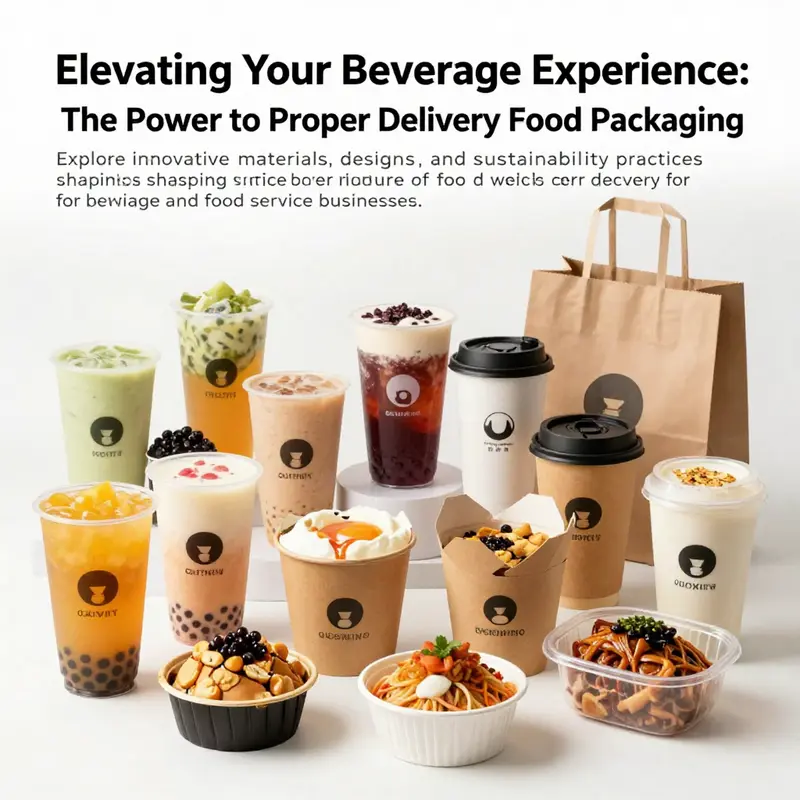
Proper delivery food packaging is more than just a protective layer; it’s essential for maintaining food quality and ensuring safety during transit, particularly for beverage-centric businesses like bubble tea shops, restaurants, and catering services. With increasing consumer expectations for quality and sustainability, innovative packaging solutions are paramount for creating an excellent customer experience. This article discusses the three crucial dimensions of packaging: material innovation, functional design, and sustainability focus, all of which converge to enhance food and beverage delivery’s reliability, functionality, and appeal.
Material Innovations in Delivery Packaging

Material innovation in delivery packaging is a balance of protection, performance, and sustainability. Barrier science now uses high-barrier resins and multi-layer structures to keep freshness over longer distances while allowing recyclability. Active packaging with antimicrobial and antioxidative additives helps preserve quality when barrier perfection isn’t enough. Smart packaging with time-temperature indicators adds transparency and enables better logistics and consumer trust. Sustainability drives the shift toward bio-based resins, recyclable substrates, and compostable coatings that fit into circular waste streams. Paper-based substrates, molded pulp, and plant-derived coatings enable grease resistance with recyclability. Design considerations include compartmentalization to prevent cross-contamination, secure closures for multi-item meals, and branding that communicates environmental responsibility. Regulatory frameworks ensure safe migration limits and accurate labeling, while QA and traceability prevent recalls. The horizon includes edible coatings, nanoscale barriers, and printed electronics that provide real-time condition data without compromising safety. The result is packaging that protects food, reduces waste, and builds brand trust across delivery ecosystems.
Design That Travels: The Seamless Function of Food Delivery Packaging
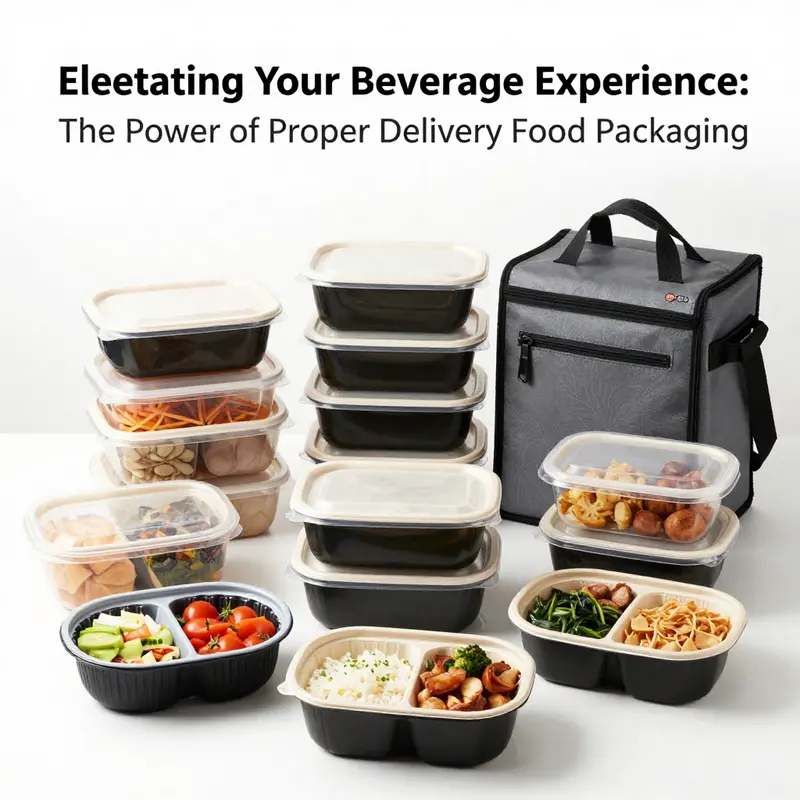
The journey of a meal from kitchen to doorstep rests as much on the packaging that surrounds it as on the recipe itself. In delivery, a package is not merely a container; it is an active participant in the chain, a gatekeeper that preserves safety, protects quality, and shapes the consumer’s moment of arrival. Functional design in delivery packaging, at its best, is quiet and dependable. It does not shout for attention with gimmicks, yet it quietly steers outcomes in favor of safety, convenience, and satisfaction. The four core functions identified by researchers—containment, protection, convenience, and communication—are amplified by transit. The real test is not how a box looks on a shelf, but how it behaves after it leaves the hand of the cook and travels through crowded sidewalks, weather, and varying temperatures. In the delivery context, those four functions become a continuous performance, a choreography that must hold together over miles of street and minutes of waiting until someone forks into a steaming meal or a cold dessert surfaces from its container like a small triumph at the end of a long day. The design challenge is to weave these functions into a single, durable, user-friendly package that also respects regulatory standards and environmental responsibilities.
Protection sits at the top of the list. A package must stand as a barrier against microbial intrusion, moisture, oxygen, and light, while also withstanding the mechanical jostling of urban logistics. In practice, this translates into thoughtful material choices and engineered barriers. Vacuum-sealed films, insulated sleeves, and multilayer composites can dramatically slow heat transfer and limit moisture migration. Yet protection is never a one-size-fits-all proposition. A hot meal demands an insulating scaffold that can keep the core temperature stable for the journey, while a cold dessert requires moisture resilience to prevent condensation and sogginess. The materials chosen—whether paperboard with a high-density inner lining, molded pulp for rigidity, or a bio-based film with a robust oxygen barrier—must be compatible with the food, non-toxic, and capable of withstanding repeat handling. The goal is to preserve not just safety but the sensory attributes that define a dish: aroma, texture, and temperature. A well-designed package makes it possible for a sauce to arrive where it should be—still cohesive, not split or seeping through the lid—because the protective system was engineered for the journey and the product’s particular physicochemical profile.
Containment complements protection by preventing leaks, spills, and accidental product loss. This function becomes especially critical when dealing with soups, sauces, gravies, or beverages that might otherwise tip the scales of a delivery experience toward chaos. The containment strategy is often a synergy of leak-proof lids, secure seals, and compartmentalization that prevents cross-contamination and flavor migration. Consider, for example, a container with a hinged lid and a double-seal mechanism that resists prying and accidental opening during transit. The same principle informs the design of multi-compartment systems that keep sauces separate from starches or acidic toppings from delicate greens until the consumer chooses to combine them. Such configurations also support portion control and reduce waste, because customers can access only what they intend to eat at one time, minimizing unattractive spillage and the mess that results from unsettled deliveries. The structural integrity of the container must endure stacking pressures in carrier vehicles and resilience against humidity and minor impacts from handling, all without compromising the user’s ability to open, reclose, or reseal the package when necessary. When containment is executed with clarity and security, it quietly reinforces trust.
Convenience is about the human factor. A package must be intuitive to use, easy to open for a broad spectrum of users, and adaptable for reheating or direct consumption where appropriate. In a world where a growing share of meals is consumed away from home, the ability to access food without a struggle becomes part of the dining experience. Ergonomic shapes, user-friendly closures, and clear labeling all contribute to a smoother interaction. Resealability, for instance, is not just a nice-to-have feature; it supports multi-use scenarios and helps reduce waste. If a consumer cannot easily reclose a container, anxiety about spillage can transform a potentially satisfying meal into a source of frustration. Similarly, packaging that accommodates direct reheating in a microwave, oven, or air fryer—without transferring heat to the hand or compromising safety—extends the meal’s life and broadens its appeal. Design choices also influence the practical realities of delivery operations. Stackable boxes, nestable lids, and modular trays optimize route efficiency and storage in back-of-house settings, enabling faster packing, fewer errors, and less breakage in transit. Even the opening experience matters: tactile cues, visible indicators, and straightforward instructions reduce cognitive load, particularly for customers with limited dexterity or vision. The more seamless the user journey, the more the packaging becomes a reliable companion rather than an obstacle, and the more likely the consumer is to associate the brand with ease and satisfaction rather than with inconvenience.
Communication completes the triad of functional delivery design by conveying essential information and reinforcing brand value. In practice, packaging becomes a portable information medium that guides safe and proper consumption, while also serving as a canvas for brand storytelling. Accurate ingredient lists, allergen declarations, preparation or reheating instructions, and best-by dates are not merely regulatory obligations; they are trust signals. As the regulatory bodies remind us, labeling faults or misstatements can trigger recalls, eroding consumer confidence and imposing costly consequences. Beyond safety data, effective packaging communicates practical details: how to open, how to reclose, whether utensils are included, and how to dispose of the packaging in an environmentally responsible manner. On the branding front, the packaging can reinforce identity through color, typography, and consistent graphics, turning a simple box into a mobile ambassador that helps customers recognize the cuisine and the service at a glance. In this sense, the package transcends its physical boundaries; it becomes a moving advertisement that carries the values of the brand while also delivering functional benefits. Transparent windows or printed visuals offer a glimpse of the contents, enhancing appetite appeal, while safeguarded labeling maintains integrity in transit and at the point of arrival.
If the three core functions form the baseline, innovations in delivery packaging push the envelope toward new capabilities. Smart labels, time temperature indicators, and other sensor-enabled features convert a passive container into an active participant in the supply chain. A small indicator can tell a consumer whether a hot dish has remained above a designated temperature during the journey or if a cold item inadvertently exceeded safe thresholds. These additions support accountability for everyone along the chain—from kitchen staff and drivers to the consumer who ultimately consumes the product. In parallel, material science is expanding the toolkit with biodegradable and compostable alternatives that address environmental concerns without sacrificing barrier performance. Grease- and moisture-resistant coatings, often derived from food-safe waxes or biopolymers like PLA, extend the usefulness of paper-based packaging for saucy or oily meals. The trend toward compostable or recyclable packaging reflects a cultural shift in consumer expectations and regulatory emphasis on end-of-life outcomes. Yet real-world adoption requires careful alignment of materials with food safety, regulatory compliance, and the realities of waste management infrastructure. Not every compostable option composts as readily in every locale, and designers must anticipate these variations to avoid missteps that could undermine both safety and sustainability goals.
In this light, the choice of materials becomes a critical design decision. Food-grade paperboard and molded pulp deliver rigidity and printability with a favorable environmental profile, while coatings such as wax or PLA help maintain integrity under heat and moisture. The structural geometry—the inclusion of compartments, the use of interlocking lids, and the arrangement of layers to resist shear forces during stacking—emerges as a central design axis. A well-conceived compartmental system does more than separate items; it prevents flavor crossover, protects delicate items from crushing, and keeps sauces and garnishes in their intended places. Clamshell designs with secure closures, drop-tested for durability, provide a reliable enclosure that withstands the rigors of last-mile movement. Similarly, space-efficient, stackable configurations accelerate kitchen-to-doorstep workflows, reducing handling time and potential damage. The design ethos is not merely about making a container that holds food; it is about engineering a system whose parts synchronize with the complex choreography of delivery logistics.
The consumer experience remains inseparable from safety and functionality. Packaging acts as a tangible extension of the brand, a physical interface that can evoke trust through clean typography, clear allergen declarations, and honest, legible date markings. The expressive power of packaging lies in the balance between visibility and responsibility: clear windows can entice appetite and provide a taste of what lies inside, while tamper-evident seals and traceable labeling reinforce safety and accountability. A design that respects open accessibility for those with limited dexterity or vision, while preserving the aesthetic appeal of the food, embodies a holistic approach to accessibility. At the same time, the packaging must be pragmatically aligned with the realities of foodservice operations. Materials must be manufacturable at scale, cost-effective in high-volume production, and compatible with efficient, reliable supply chains. The most successful packaging systems integrate aesthetic ambition with operational robustness, so that the experience of opening a box feels effortless, the meal arrives in optimal condition, and the brand’s promise is reinforced in every tactile detail.
The regulatory landscape adds another layer of design discipline. From accurate labeling to ensuring the integrity of circulation during transit, packaging must meet stringent safety standards. The regulatory bodies emphasize the potential consequences of labeling errors or packaging faults, which can culminate in recalls that disrupt not only sales but also public trust. The functional design thus requires a systems mindset: a package is designed not only to protect the product but to convey critical information in a way that remains legible and verifiable under the strains of delivery. The integration of time temperature indicators and other smart features further aligns practice with the real-world behavior of food in transit. These technologies do not replace human diligence; they augment it, offering a concise, visible signal that helps both handlers and consumers make informed, safe decisions about when a meal is ready to be enjoyed. In this sense, functional design serves as a bridge between scientific principles of food safety and the everyday realities of consumer markets, ensuring that safety, quality, and satisfaction travel in tandem with the meal itself.
The conversation around sustainability remains a central thread in modern design thinking. Consumers want packaging that respects the planet without compromising performance. This aspiration guides the shift toward recyclable, compostable, or reusable options, even as logisticians navigate the practicalities of clean separation, adequate curbside waste streams, and consumer behavior. A responsible design approach considers end-of-life outcomes at the earliest stage of development, evaluating how a chosen material will be disposed of after use and what infrastructural support exists to process that material. In some cases, this means selecting liners or inner films that can be easily separated from outer packaging during recycling, or choosing materials that biodegrade efficiently in municipal composting environments. The aim is not a single silver bullet but a coherent portfolio of solutions that respects environmental constraints while meeting the high standards required for food safety and consumer convenience. The packaging becomes not only a shield but a pledge—an assurance that the meal’s journey is mindful of its broader ecological footprint.
A subtle but powerful aspect of functional design is its role in shaping brand identity and the customer experience beyond the plate. In a crowded market, packaging is a mobile platform for storytelling, a way to communicate values, provenance, and care for the customer. When well executed, the design elevates the moment of delivery into a small ceremony: the unsealing, the purposeful arrangement of compartments, the clarity of allergen information, and the satisfaction of a well-sealed, aesthetically pleasing container. These experiential elements contribute to customer loyalty, repeat purchases, and positive word of mouth, creating value that extends far beyond the product inside the package. The best packaging designs default to a philosophy of quiet reliability, where form follows function and aesthetics serve the objective of clarity and safety. In such a framework, the consumer’s perception of quality is reinforced not by flashy novelty but by a consistent, dependable experience that respects both the product and the person who ends up enjoying it.
The design conversation does not end with today’s best practice. Innovations will continue to push toward more integrated and intelligent packaging systems. Beyond the obvious gains in safety and convenience, active packaging concepts such as oxygen scavengers, antimicrobial coatings, and sensors hold promise for extending shelf life and preserving freshness in transit. While these technologies may raise cost or complexity, they also offer new levers for reducing waste and enhancing safety, which can justify the investment when deployed thoughtfully. The future of delivery packaging thus lies at the intersection of materials science, user-centered design, and supply chain transparency. The challenge for designers, manufacturers, and restaurateurs is to harmonize these elements into a coherent strategy that can be implemented at scale, remains accessible to diverse customers, and aligns with evolving regulatory expectations and environmental priorities. A well-conceived design is more than a product feature; it is a system of decisions that, taken together, ensures that what leaves the kitchen is delivered intact, safe, and enjoyable, every time.
To illustrate how these principles translate into practical design choices, consider the example of a robust, versatile container that combines a secure sealing system with modular compartments. Such a configuration can accommodate a variety of meal components while maintaining separation to prevent flavor mixing and moisture transfer. The liner materials chosen for this system must resist grease and moisture, yet be food-safe and recyclable where possible. The lid design should provide an airtight seal, with a simple mechanism that a broad user base can operate without difficulty. The exterior finish can carry a brand’s color palette and typographic identity while offering legible allergen and date information. The same concept can be adapted for different meal formats by adjusting the internal geometry, rather than redesigning the entire container, which promotes efficiency in production and consistency in user experience. A thoughtful packaging architecture, in this sense, becomes a flexible backbone for the evolving menu and delivery model, capable of responding to shifts in cuisine type, portion size, or consumer preference without sacrificing core safety or usability. In all cases, the emphasis remains on how the package performs under real-world conditions: during preparation, during transit, and at the moment of opening in the customer’s hands. The quality of that performance ultimately reflects the maturity of the design process and the discipline of the teams who implement it.
For readers seeking concrete examples and deeper design rationale, a practical reference point is found in the world of disposable packaging designed for restaurant use. A disposable octagonal box for restaurant food kraft paper packaging, for instance, embodies several of the principles described above: a geometry that resists bending and provides upright stability in stacks, a sealing system that protects contents, and an outer surface ready for branding and essential information. This example demonstrates how a single design can serve multiple purposes—from protecting the meal to strengthening brand recognition and aiding the consumer in safe handling and disposal. It epitomizes how thoughtful design decisions, when aligned with operational realities and regulatory requirements, lead to better outcomes across the delivery ecosystem. External reference for broader theoretical grounding: https://www.sciencedirect.com/topics/engineering/traditional-food-packaging
As readers move from theory to practice, the importance of an integrated viewpoint becomes clear. The optimal packaging solution is not merely the most protective or the most economical; it is the one that balances protection, containment, convenience, and communication with sustainability and brand differentiation. The design process must consider the realities of production scale, supply chain variability, and post-use behavior. It must anticipate the needs of the consumer who is balancing work, family, and time, offering a reliable means to enjoy a hot meal, a cold beverage, or a fresh dessert without unnecessary fuss or risk. It must also be mindful of the broader context of environmental stewardship, recognizing that materials science and waste management infrastructure differ across regions and markets. The outcome is a packaging system that not only safeguards the product but also supports the business by improving throughput, reducing returns, and enhancing customer satisfaction—an essential contribution to the overall delivery experience.
In sum, functional design in proper delivery food packaging is about engineering a reliable pathway from kitchen to consumer that respects safety, usability, and environmental responsibility while reinforcing brand trust. It is a discipline that blends scientific principles of barrier properties and material compatibility with human-centered design and strategic communication. It requires a forward-looking mindset that embraces new materials, sensors, and sustainable end-of-life options without losing sight of the everyday realities of the delivery chain. When done well, packaging becomes the quiet hero of the meal, an invisible safeguard and an attentive host that makes the journey from plate to palate feel effortless and dependable for every customer.
External reference for broader theoretical grounding: https://www.sciencedirect.com/topics/engineering/traditional-food-packaging
From Footprint to Flavor: Designing Sustainable, Safe Delivery Packaging for Modern Eateries
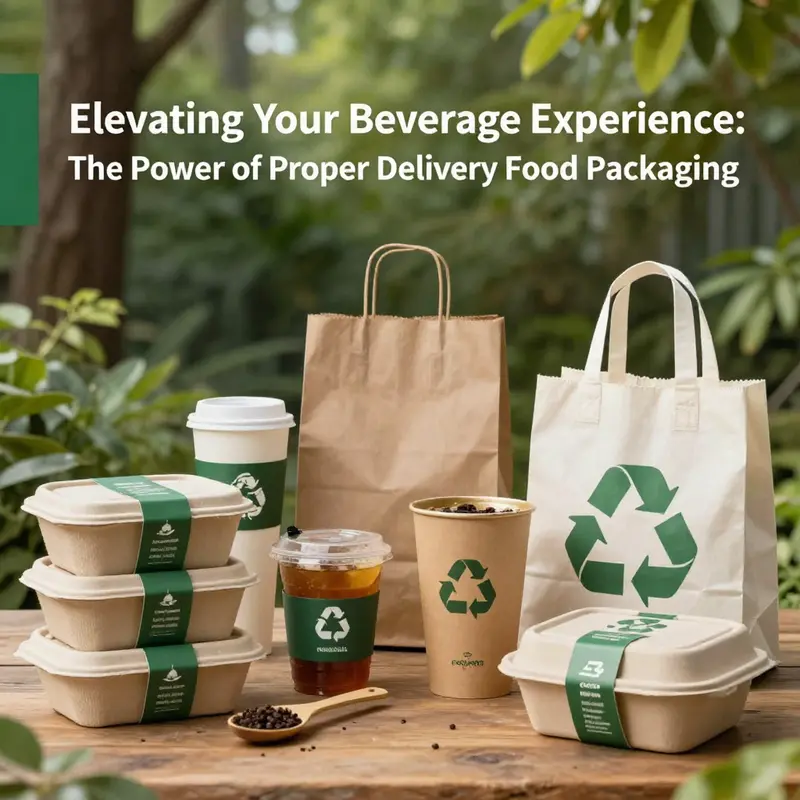
Sustainability has moved from a peripheral consideration to a core design principle in proper delivery food packaging, shaping every choice from material selection to how a box is disposed of after the last bite. The modern consumer does not just want food to arrive hot, fresh, and hygienic; they want the journey there to be responsible. This shift is driven by a mix of growing climate awareness and tangible experiences with waste, especially in urban settings where takeaway containers accumulate in landfills and recycling streams alike. In this context, sustainability is not a marketing veneer but a practical framework that guides risk management, operational efficiency, and long-term brand integrity. Packaging becomes a part of the product itself, a statement about values as much as a barrier against contamination or a container for flavor. When executed well, it preserves the quality and safety of the food while minimizing environmental impact, a balance that requires careful attention to both process and material science, as well as to consumer perception and regulatory expectations. The interplay between safety, performance, and sustainability is not a zero-sum game; it is a design challenge that, when solved, yields tangible benefits across the supply chain and the customer experience.
At the heart of sustainable packaging lies a simple, powerful principle: reducing waste without compromising safety or quality. The maxim often paraphrased as “less packaging, more responsibility” anchors a strategic shift across menus and delivery models. It calls for a disciplined approach to packaging volume, seeking to eliminate redundancy while preserving the integrity of the product. This does not mean offering less protection; rather, it means rethinking each layer to determine whether it is essential, whether it can be replaced with a lighter or smarter alternative, and how it will be managed at end of life. For instance, a coated paperboard box might replace a heavier multilayer container if the coating can deliver equivalent moisture and grease resistance with a smaller ecological footprint. In other cases, volume reduction is achieved by reconfiguring the system—combining components into multifunctional units or adopting modular designs that minimize over-packaging when multiple items are shipped together. The result is a lighter, more efficient package that still performs under the rigors of transport, protecting food from temperature fluctuations, physical shocks, and contamination while streamlining the downstream handling in kitchens and logistics hubs.
Material choice is the most visible and consequential aspect of this shift. Innovations in the realm of sustainable materials are broad and often nuanced, requiring a careful balance among barrier performance, recyclability, compostability, and supply chain reliability. Compostable containers, biodegradable films, and reusable packaging systems have moved from experimental concepts to mainstream options in many markets. They offer attractive pathways to reduce end-of-life burden when designed and implemented correctly. Yet sustainability is not merely about selecting a green label. It demands rigorous assessment of the entire life cycle, from raw material extraction through manufacturing, distribution, usage, and disposal. For example, a PLA-coated paper box may deliver excellent moisture resistance, but its compostability depends on the availability of industrial composting facilities and the proper sorting in waste streams. If the local infrastructure does not support composting, the environmental advantage may be neutralized by the energy inputs and potential contamination in recycling streams. This is why manufacturers and operators increasingly rely on life-cycle thinking, evaluating trade-offs between recycled content, energy use, water footprint, and end-of-life pathways. The aim is to minimize the total environmental burden while maintaining the quality and safety that customers expect.
In practice, sustainable packaging also emphasizes material transparency and performance consistency. Paper-based solutions pick up momentum because they can be sourced from responsibly managed forests, can be engineered with wax or PLA coatings to resist grease and moisture, and are widely recognized as easier to divert from the waste stream at the end of life when designed for recycling or composting. But the path to sustainability is not simply about replacing plastic with paper; it is about reimagining the entire packaging system. Grease- and moisture-resistant coatings, barrier enhancements, and innovative surface finishes enable paper-based boxes to handle saucy or oily dishes, hot soups, and dense desserts without sogging or losing structural integrity. In parallel, plastic alternatives, when designed with recyclability in mind, can contribute to lower carbon footprints in some contexts, especially when they enable lighter-weight solutions or enable packaging reuse programs that reduce overall material throughput. The optimal choice often depends on the specific product, the typical transport distance, and the local waste-management ecosystem.
Design for function is a companion pillar to material innovation. Sustainable packaging must not only be kind to the environment but also practical in a fast-paced delivery setting. Compartmentalization, secure closures, and stackable geometries are increasingly common features that support both portion integrity and post-use handling. Compartments prevent cross-contact and flavor transfer, which is particularly important for mixed meals and for reducing the need to wrap each component separately. Clamshells with robust latching mechanisms reduce the risk of leaks during transit, while modular shapes improve stacking efficiency in delivery bags and storage spaces in restaurants. The emphasis on secure closures is especially salient once customers start to handle packages on crowded commutes or front-door deliveries, where a single compromised seal could render a meal unappealing or unsafe. In this light, sustainability and practicality converge: durable, functional packaging reduces waste by preventing spoilage, limits the need for additional protective layers, and minimizes the risk of recalls due to improper containment or leakage during transport.
The sustainability conversation would be incomplete without acknowledging the growing importance of consumer attitudes. Modern diners are increasingly aware that their choices have consequences beyond taste. They expect brands to be accountable for the environmental footprint of every fold of a box, every layer of a film, and every lid. This awareness translates into tangible behavior—customers are more likely to choose meals packaged in recyclable, compostable, or reusable systems, and they expect clear labeling that helps them sort waste correctly. The packaging must tell a story, not just with brand logos and vivid colors but with honest information about recyclability, compostability, and disposal guidance. The design language becomes a form of in-restaurant diplomacy and on-the-go communication, signaling a brand’s commitment to sustainability while avoiding misleading simplicity. In response, operators integrate transparent labeling, minimalistic but informative print, and sometimes even QR-encoded sustainability data that consumers can scan to learn about the product’s life cycle, local disposal options, and the brand’s broader environmental initiatives. Such practices reinforce trust and foster loyalty, demonstrating that sustainability is not an add-on but an integral part of the dining experience.
Regulatory realities also shape sustainable packaging decisions. While the specifics vary across jurisdictions, regulators increasingly emphasize labeling accuracy, packaging integrity, and the proper management of packaging waste. Standards bodies and agencies scrutinize not only the safety and performance of packaging during transport but also the environmental narratives conveyed to consumers. In some cases, recalls may stem from labeling errors or packaging faults that compromise safety or traceability, reminding us that sustainability is inseparable from regulatory compliance. The Food Standards Australia and New Zealand (FSANZ), among others, has underscored that packaging must support safe handling, accurate ingredient declarations, allergen disclosures, and correct date or lot information. In practice, this translates into packaging that is designed to withstand the rigors of delivery while presenting information in a way that is both legible and actionable for end users. It also means that sustainability claims must be credible, verifiable, and aligned with actual performance in real-world conditions. For instance, a claim about compostability should reflect the packaging’s intended disposal pathway and the local infrastructure required to realize that benefit. The intersection of safety, sustainability, and clear communication becomes a cornerstone of responsible packaging strategy, guiding choices from the factory floor to the customer’s doorstep.
A practical outcome of these converging priorities is a packaging ecosystem that treats end-of-life as an opportunity rather than a problem. The circular economy mindset pushes designers and operators to consider how materials can be recovered, reused, or reprocessed rather than simply disposed of. Reusable packaging systems, while not universally applicable, exemplify this approach when paired with effective take-back schemes and robust cleaning protocols. In some markets, rental or deposit models for durable, reusable containers are gaining traction, especially for beverages and certain ready-to-eat meals. Even when reuse is not feasible, design for recyclability remains crucial. Clear separation of materials, avoidance of composites that thwart recycling streams, and standardized closures that facilitate automated sorting all contribute to higher recycling rates and lower emissions in the long run. The balance remains nuanced: the most sustainable solution for a given product and route may be a hybrid of materials and strategies, where the environmental benefits of reuse are weighed against logistical complexity, hygiene considerations, and consumer convenience.
The narrative of sustainability in delivery packaging thus evolves into a broader conversation about partnerships and systems thinking. It is no longer sufficient for a single brand to pursue greener packaging in isolation. Suppliers, distributors, and waste-management entities must align their practices, infrastructure, and incentives to realize the intended environmental benefits. Collaboration accelerates access to innovative materials, creates economies of scale for compostable or recyclable options, and facilitates consumer education around disposal practices. In turn, brands can position themselves as responsible stewards of resources, leveraging packaging choices to differentiate themselves through tangible, verifiable actions rather than aspirational slogans. This ecosystem approach also helps address equity considerations—ensuring that sustainable options are accessible across different geographies and income levels, and that waste management capabilities match the packaging choices offered by restaurants and delivery platforms.
A concrete reminder of the evolving landscape is the continued expansion of sustainable materials and design innovations that have begun to redefine what is possible in delivery packaging. Compostable containers and biodegradable films are increasingly practical when the supply chain supports composting or anaerobic digestion; recyclable plastics and coated papers have improved in recyclability and energy efficiency; and reusable systems have proven viable in select contexts where volumes and logistics can sustain return flows. These shifts require a careful balance of performance, cost, and environmental impact. The most successful implementations are those that harmonize with the local waste-management infrastructure, the preferences of the customer base, and the brand’s sustainability commitments. In this harmony, packaging becomes a bridge rather than a barrier—delivering food safely while communicating care for the planet.
To illustrate how these ideas come to life in everyday practice, consider the potential of one practical option: a packaging approach that pairs sustainability with everyday usability. A thoughtfully designed, eco-friendly pulp cup holder can serve as a tangible symbol of a brand’s commitment to responsible packaging while delivering practical benefits in storage and transport. Such a component, lightweight yet sturdy, supports a seamless handoff from kitchen to customer and can be incorporated into a broader ecosystem of compostable serviceware and recyclable containers. The beauty of this approach lies in its adaptability: it reduces reliance on more resource-intensive materials, complements compostable or recyclable main packaging, and supports a consistent disposal message for customers. It is not a lone solution but a piece of a larger, coherent strategy that integrates material science, logistics, consumer education, and regulatory alignment. When brands communicate clearly about the disposal pathway and provide simple, actionable guidance, customers are more likely to participate in sustainable practices, thereby closing the loop in a practical, meaningful way.
Beyond the tangible materials and the mechanics of transport, sustainable packaging also reframes the customer experience. The packaging becomes part of the dining narrative, a sensory cue of quality and responsibility. The aesthetic choices—earth-toned palettes, tactile textures, clear but concise labeling, and a design hierarchy that emphasizes recyclability or compostability—enhance perceived value while reducing waste. Transparent windows, where feasible, can reveal the product and the care taken in its presentation without inhibiting performance or safety. Bold, honest storytelling about sustainability efforts—currents of ethical sourcing, responsible disposal options, and community partnerships—resonates with diners who are increasingly looking for authenticity. The net effect is a stronger brand proposition, one that aligns with evolving consumer expectations, drives loyalty, and contributes to a more sustainable market ecosystem.
As technology continues to advance, the future of sustainable packaging for delivery will likely incorporate more sophisticated active features that extend shelf life and preserve freshness without compromising recyclability or increasing waste. Oxygen scavengers, antimicrobial coatings, and smart packaging technologies are already entering conversations about how to sustain quality during transit and reduce spoilage. The challenge remains to integrate these innovations in a way that respects end-of-life options and does not introduce new environmental liabilities. The responsible evolution will involve robust life-cycle assessments, transparent reporting, and close collaboration with regulators, customers, and waste-management providers to ensure that new features deliver measurable benefits without unintended consequences. In the best case, the result is a packaging system that not only defends safety and quality but also advances sustainability as a core competitive edge.
For practitioners seeking concrete where-to-start guidance, the imperative is to map the current packaging system, identify pressures and gaps, and then pursue a staged improvement plan. Begin with a materials audit: what are the most impactful drivers of waste in your current packaging, and which substitutions offer meaningful environmental gains without sacrificing performance? Move to design: can you reduce layers, combine functions, or enhance barrier properties with lighter, recyclable alternatives? Extend to operations: how can packaging decisions improve efficiency in packing, loading, and cold-chain maintenance? Finally, engage with customers and waste-management partners. Clear labeling, disposal guidance, and education campaigns help ensure that sustainability claims translate into real-world actions by consumers. The process is iterative, with each cycle informing the next, gradually shifting the entire delivery ecosystem toward practices that are economically viable, environmentally responsible, and socially credible.
For additional context and industry-wide perspectives on these trends, see a comprehensive resource that delves into how the food-packaging landscape is adapting to sustainability demands through innovative materials, design refinements, and strategic partnerships. External resource: Sustainability in Food Packaging.
In sum, sustainability in delivery packaging is not a single policy or a flashy material claim. It is an interconnected system of choices—about materials, design, usage, disposal, and communication—that together determine the true environmental and social impact of a meal from kitchen to doorstep. The most effective programs are those that weave together safety, performance, and environmental stewardship into a coherent, measurable strategy. They recognize packaging as a dynamic interface among producer, carrier, and consumer, one that can reinforce trust, elevate the dining experience, and move the industry toward a more responsible future. In this way, every box, cup, or lid becomes a conduit for a better planet, a more efficient operation, and a stronger brand—an outcome that resonates with the expectations of today’s conscientious diners and tomorrow’s better, cleaner world.
Final thoughts
As the preferences of consumers gravitate towards quality, safety, and sustainability, proper delivery food packaging demonstrates its critical role in enhancing the overall experience for beverage and food service businesses. Material innovation, functional design, and a steadfast commitment to sustainability are vital elements shaping the future of food delivery. By embracing these dimensions, businesses not only adhere to regulatory standards but also build stronger connections with customers who prioritize eco-friendliness and high-quality products.