
In recent years, Paris has embarked on pioneering efforts to reduce single-use plastic packaging, responding to pressing environmental and health challenges. To align with the European Union’s Single-Use Plastics Directive, Paris has set a goal to eliminate disposable plastic food containers by 2026. This initiative not only aims to protect the environment but also addresses emerging health concerns linked to plastic pollutants. Through a series of strategic phases, the city is piloting new solutions among local businesses, particularly affecting restaurants, food service providers, and event planners. Each chapter of this article delves into specific facets of this transition – from understanding the policies shaping the packaging landscape in Paris to exploring sustainable alternatives being adopted by the food industry. By the end of this exploration, readers will gain a comprehensive view of the evolving dynamics surrounding food containers in Paris and the sustainable practices paving the way forward.
Paris at the Crossroads of Plastic: Policy, Health, and the Reimagining of Food Containers
Paris stands at the edge of a wider shift in how cities think about packaging, taste, and the long-term health of their residents. The move away from disposable plastic has become less a policy fad and more a fundamental recalibration of everyday life in one of Europe’s busiest culinary capitals. The city’s actions are not isolated tinkering; they are part of a coordinated effort to redesign how food travels from kitchen to table, to reduce the ecological footprint of every bite, and to safeguard public health from the unseen dangers of microplastics that quietly hitchhike into meals through packaging and processing. As the European Union’s framework against single-use plastics matured and found its footing in member states, Paris responded with a tightening of rules, a recalibration of business models, and a public communication strategy that reframes packaging not as a mere accessory but as a central component of urban resilience.
Policy momentum in Paris has historical depth and contemporary urgency. A pivotal shift occurred when the city—alongside national and European partners—began to prohibit the use of certain single-use plastic containers for takeout and delivery. The aim was clear: to eliminate materials that resist natural breakdown and to promote options that either biodegrade more readily or can be reused many times over. The practical upshot is a pivot away from the familiar polystyrene foam—long a staple in quick-service takeaway—and toward materials with transparent life-cycle benefits, such as paper, cardboard, and compostable substrates. Restaurants, cafes, and street vendors have faced a rapid learning curve as they experiment with containers that maintain food quality while aligning with disposal infrastructure designed to handle compostables or recyclables. The city’s restaurants, including beloved street-food traditions, have felt the pressure of this shift. The quintessentially yellow, foam-based takeout container that once defined many kebab shops is becoming a thing of the past, replaced by options that project a more deliberate, sustainable image even as they strive to preserve the service speed customers expect.
What makes Paris’s approach distinctive extends beyond the mere ban. The city is actively advancing Extended Producer Responsibility (EPR) programs that place the lifecycle burden of packaging on manufacturers themselves. This is a design and economics problem as much as a logistics one. If producers must bear the costs and responsibilities of collection, sorting, and recycling, there is a strong incentive to rethink packaging geometry, material choice, and even branding to reduce waste and improve end-of-life outcomes. The EPR framework encourages innovations in materials science, and it nudges designers toward systems that can be integrated into Paris’s waste streams with high efficiency. In this way, the city’s policy instruments are not punitive edicts but catalysts for a more thoughtful, circular economy where packaging is designed with reuse, repair, and recycling in mind from the outset.
Behind these regulatory developments sits a public-health argument that has gained momentum in scientific literature as microplastics become a matter of routine conversation in kitchens and classrooms alike. Studies published around 2026 have highlighted how plastics used in food packaging can shed microplastics during storage, transport, and heating. Once ingested, these microscopic fragments may interact with human physiology in ways that are only beginning to be understood. Oxidative stress, inflammatory responses, and potential disruptions to metabolic processes are among the concerns researchers are grappling with as they map the health landscape of prolonged microplastic exposure. The policy response, therefore, is not merely ecological stewardship; it is a preventive health strategy. By reducing dependence on single-use plastics, the city reduces one potential conduit for MPs to enter the food chain, while promoting materials that are either safer in contact with food or easier to manage at end-of-life.
The practical dimension of these policies reveals themselves in the day-to-day decisions of eateries and market stalls. Paris’s Zero Waste framework, which is guiding the long-range plan, emphasizes not only waste reduction but also better design for recovery. The city is supporting small businesses with subsidies and guidance to transition toward eco-friendly packaging, while public information campaigns aim to shift consumer expectations and disposal habits. These efforts are not limited to metropolitan vibes; they ripple outward to suburbs and peri-urban districts where logistics networks must be retooled to handle more reusable and compostable streams. The vision is ambitious: a city that produces less waste, recovers a larger share of what is produced, and sustains a vibrant food scene that does not compromise environmental or health standards.
In practice, a spectrum of packaging solutions has begun to appear in the market, reflecting both policy pressures and consumer demand for convenience. Reusable, sealable paperboard containers have gained traction for holding items like fries and other fast-food staples, while biobased materials and compostable coatings offer credible alternatives for other takeaway applications. A growing subset of suppliers has begun offering customized, durable packaging designed for non-disposable use in food service operations and selective retail channels. These products are engineered to preserve freshness and texture, even during delivery or extended storage, while aligning with the city’s end-of-life infrastructure. In parallel, the market has seen an uptick in compact, aesthetically pleasing packaging designed for grab-and-go meals that still communicate quality and responsibility to the consumer. The design challenge here is not simply to replace plastic with something that looks comparable; it is to create containers that perform reliably across multiple stages of a supply chain, from refrigeration to reheating, while maintaining a controlled environmental footprint.
For those seeking concrete exemplars of how a shift from plastic to paper-based packaging can look in practice, a notable trend is the expansion of kraft paper-based bowls and lids. These containers are lightweight, stackable, and compatible with a range of food offerings. They are particularly well-suited to the fast-casual models that dominate Paris’s streets and neighborhoods. The market has adapted by offering a variety of sizes and shapes, from octagonal and rectangular bowls to round forms, with lids designed to keep foods at the right temperature without compromising moisture. The shift toward kraft paper and similar materials also opens opportunities for local customization—branding, color accents, and textures that convey a commitment to sustainability while meeting operational needs. In this transition, one can imagine a future where even the most common takeaway meal carries with it a visible signal of responsible design and a clear message about the city’s public health and environmental priorities. For readers curious about practical packaging options that align with these aims, consider exploring packaging solutions described in the broader market, such as eco-friendly recyclable pulp take-away cup holders. They illustrate how durable, recyclable, and reusable concepts can coexist with consumer convenience. eco-friendly recyclable pulp cup holder for take-away coffee.
Within this evolving landscape, the link between policy and daily life becomes tangible when one reflects on the supply chain implications. Manufacturers must redesign their packaging lines to accommodate the new standards, ensure compatibility with municipal sorting facilities, and reassure customers that the packaging is safe, easy to dispose of, and logically aligned with local infrastructure. For many operators, the switch demands new procurement strategies, supplier partnerships, and estimation of total cost of ownership that accounts for end-of-life management. These considerations extend beyond mere regulatory compliance; they shape the competitiveness and resilience of food businesses in a city that prides itself on culinary competence, innovation, and a high standard of living. In a broader sense, the Paris experiment offers a template for other cities facing similar pressures. It demonstrates how regulation can stimulate material science, how consumer education can accelerate behavioral change, and how a well-structured EPR program can drive manufacturers toward designs that reduce waste without sacrificing functionality or taste.
Yet the transformation is not without its tensions. Small operators, in particular, face upfront costs associated with switching materials, changing packaging configurations, and educating staff about proper disposal protocols. Even as subsidies are offered, there is a need for scalable administrative processes to ensure that all participants can access support without creating a maze of compliance requirements. Public health messaging must be precise about what constitutes safe handling and disposal of compostable or recyclable packaging, to avoid contamination that can undermine recycling streams or compost facilities. The urban planner in Paris, meanwhile, must keep pace with changing logistics, updating collection routes, improving sorting education, and ensuring that the infrastructure for composting and recycling remains robust as the city’s appetite for takeout food remains strong. The social dimension is equally important: communities must see real benefits in air quality, noise reduction, and cleaner streets, alongside the cleaner oceans and healthier soils that reduced plastic waste promises.
In this sense, the Paris story is not merely about banning a material; it is about reimagining a dynamic food ecosystem in a way that respects local culture while embracing science and sustainability. The culinary energy that characterizes Paris—from bustling street corners to intimate bistros—continues to thrive, but with a packaging system that mirrors today’s values: transparency, accountability, and a commitment to health. The city’s policies and the market’s responses together sketch a trajectory where food containers become part of a circular loop instead of a one-way ride to a landfill. This is a move that can influence consumer expectations and inspire innovations well beyond the city limits, offering a blueprint for how urban centers can align economic activity with environmental and health imperatives without stifling creative and culinary expression. For policymakers and practitioners who monitor these developments, the key takeaway is that design, whether in a crate, a lid, or a label, matters as much as the meal inside.
External reference: https://www.paris.fr/actualites/le-paris-veut-etre-le-premier-monde-a-eliminer-le-plastique-a-usage-unique
Parisians Unpack a New Era: Reimagining Takeaway Packaging Under the Single-Use Plastics Directive
In the shadow of the Seine, Paris has become a living experiment in how cities can reconcile appetite for convenience with the health of people and the planet. The Single-Use Plastics Directive, activated across the EU in 2021, touched down most clearly in the city’s street-level economy where takeout boxes, clamshells, and wrap sleeves once defined the visual rhythm of lunchtime. The directive bans single-use plastic food containers used for meals ready for immediate consumption; there are exceptions for certain items that aren’t intended to be reused. For Paris, this meant a sweeping shift: restaurants and vendors could no longer rely on the familiar yellow foam boxes or other throwaway plastics to serve kebabs, falafel, pizzas, and bowls of noodles to crowds of hurried locals and visitors. The city set an audacious target for 2026: stop the use of disposable plastic takeaway packaging citywide, shifting to alternatives that are compostable, recyclable, or highly reusable. The path is not simply a matter of swapping materials; it is a rethinking of how meals move from kitchen to curb, how waste is captured, and how consumers perceive packaging as part of a meal rather than a temporary wrapper.
Paris’s approach began with pilots, a strategy designed to learn before mandating. By the end of 2021, the city had aimed to influence hundreds of food operators—culinary staples like kebab shops, sandwich stands, and busy street corners—along with a smaller but significant cohort of supermarkets, to sunset single-use plastics in favor of more sustainable choices. The ambition to phase out these plastics by 2026 is not just regulatory theater; it is a deliberate attempt to model a different relationship between consumption and waste in a city that has long been a global stage for design, gastronomy, and environmental experimentation. The policy frame is complemented by public education, signaling that the success of the SUPD rests as much on behavior as on material substitution. The city’s experience underscores a broader truth: the most effective packaging reform is achieved when citizens, retailers, and waste services align around a shared aim—minimizing the environmental footprint of what arrives in the possession of a consumer for a few minutes.
What has emerged in Paris is more than a simple substitution of material types. There is a clear shift toward sustainable alternatives that can perform the same function with less damage to the wider ecosystem. Paper, cardboard, molded fiber, and plant-based bioplastics have moved from the periphery to the core of the city’s packaging repertoire. Sugarcane bagasse trays, recycled paperboard clamshells, and compostable film wraps are appearing in a growing number of outlets. The changes are visible on high streets and in neighborhood eateries alike; the city’s fast-food culture is adapting to maintain the speed and convenience that customers expect while aligning with environmental expectations. The transition has given rise to design questions as well: how can container shapes, stacking efficiency, and labeling be optimized for recycling streams and for efficient sorting in municipal facilities? The objective is not merely to replace one plastic with another; it is to redesign the packaging system so it integrates with local waste management and consumer habits.
The shift, however, is not without challenges. Even when alternatives avoid plastic, their production can require significant land use and energy. The life cycle of a compostable container often involves industrial composting, which means that if consumers throw it away with ordinary trash or fail to separate it for composting, its environmental advantages can evaporate. This dynamic is particularly sensitive in a city where composting infrastructure remains unevenly developed across neighborhoods. The success of the SUPD, therefore, hinges on more than material choice. It relies on a coordinated network of producers, retailers, and waste managers, all guided by clear labeling, reliable collection streams, and robust public education campaigns that explain how to dispose of or return packaging in ways that enable proper processing. When a consumer learns to rinse, flatten, and sort rather than pile everything into a general bin, the waste stream becomes legible to the municipal facilities designed to extract value from it.
The data from this transition point to another critical reality: recycling rates for plastic food containers remain stubbornly low worldwide, a lesson echoed by European Commission analyses and aligned with broader waste-management challenges. The numbers, while stark, do not merely assign blame; they illuminate why Paris has chosen to pursue a holistic approach. It is not enough to recycle away the problem; it is essential to rethink what is used to hold and transport meals in the first place. In practice, Paris has leaned into a mix of solutions—reusable schemes, clear labeling, and the promotion of containers designed for ease of cleaning and multiple uses. In many outlets, the phasing out of plastic is complemented by reinforced recycling practices and a more aggressive push for consumer awareness. The result is a city where waste reduction is pursued not by a single deadline but by a sequence of steps that gradually rewire expectations about packaging.
Within this evolving landscape, the health dimension has sharpened attention to what plastics release as meals are stored, moved, and heated. Microplastics, those tiny fragments that can migrate from packaging into food, have become a focal concern for scientists and public health advocates. A January 2026 study highlighted the potential for microplastics to find their way into meals under typical handling conditions, with possible implications for digestive health, metabolic function, and overall well-being. The implication for Paris and similar urban centers is to push beyond merely substituting materials toward ensuring that materials are inert or easily captured within safe waste streams. This means choosing packaging that minimizes environmental leaching, selecting products with standardized disposal pathways, and encouraging a culture of responsible handling that reduces unnecessary exposure to any contaminants. It also means accelerating research and collaboration with suppliers to ensure that innovations in packaging do not trade one hazard for another.
The practical responses to these concerns have begun to coalesce around a pragmatic portfolio of options. Reusable, washable containers used across different meals and drop-off points create a circular loop that reduces the volume of waste entering landfills. For takeout and delivery services, brands have adopted sturdy, easy-to-clean designs that can withstand repeated use and professional sanitation regimes. For one-off meals, a growing preference is for compostable or recyclable containers that perform under the pressure of fast service while aligning with waste-management capabilities in Paris. The city’s public-private partnerships play a crucial role here, as municipal officials work with retailers and packaging manufacturers to align incentives. This collaboration helps ensure that a container chosen for a kebab or a burger can be seamlessly incorporated into the city’s sorting and collection systems, rather than becoming a stray object that complicates the municipal waste stream.
The transformation is not limited to the physical materials in the crates and clamshells. It extends to packaging design, logistics, and service models that support a more resilient urban food economy. For example, the emergence of customized, size-appropriate packaging that reduces excess material while maintaining food integrity is enabling more efficient transport and storage. In practical terms, this has meant smaller, lighter compartments for some meals and sturdier, more stackable forms for others, all designed to ease handling by vendors and to reduce spills during transit. This design thinking aligns with broader sustainable development objectives and with an insistence on keeping food fresh, safe, and visually appealing. The integration of design with waste management and consumer education demonstrates how a city can use policy not merely to restrict but to steer innovation toward packaging that serves both public health and environmental goals.
The Paris case also reveals an important governance lesson: policy success depends heavily on the social and cultural fabric surrounding consumption. The city has initiated educational campaigns that echo throughout schools, markets, and neighborhoods, fostering a shared understanding of why packaging matters. The messaging emphasizes the link between what ends up in the bin and the health of the water, soil, and air in a densely populated urban environment. It invites residents to see packaging as part of a system, not a disposable artifact. When a customer asks for a container that supports reuse or a bag that can be returned for cleaning, the social norm shifts toward responsible consumption. The cooperation with local businesses, including food vendors and large supermarkets, illustrates how economic actors can align with environmental aims when the regulatory framework provides clear signals and practical support such as standardized options and visible disposal guidance.
From a broader perspective, Paris’s experience with the SUPD offers insights for other cities facing similar transitions. The push to move away from disposable plastics in takeout contexts demonstrates that policy timing matters and that pilot programs are essential for learning which materials and processes can scale quickly without compromising food safety or consumer convenience. The city’s ongoing work is a reminder that the packaging ecosystem is not simply about the container itself but about a chain—from supplier to kitchen to customer to waste facility—that must be efficient, transparent, and aligned with environmental targets. In the end, the question is not only what the container is made of, but how it integrates with behavior, infrastructure, and governance to reduce the environmental footprint of Paris’s food culture. The little changes—the choice of a compostable alternative here, the promotion of a clearly labeled reusable scheme there, the careful design of a container that travels well with hot steam—accumulate into a larger shift toward a city that treats packaging as part of a sustainable system rather than a throwaway afterthought.
As Paris tests and refines these approaches, the policy conversation broadens. It intersects with debates about global supply chains, branding strategies in the food industry, and the economics of waste management. Food operators must balance cost, reliability, and compliance while maintaining customer satisfaction. Consumers, in turn, are learning to navigate new sorting rules, to bring their own containers when possible, and to engage with incentives designed to encourage reuse. The discourse moves beyond a single regulatory clause to a shared ethos about responsibility—an ethos that is visible in the street-food stalls, the cafe terraces, and the busier bistros that form the city’s everyday rhythm. The SUPD acts as a catalyst for this shift, not merely a mandate to remove a familiar material from the menu. It acts as a catalyst for a broader reimagining of what food packaging can be, how it should behave in urban life, and how cities can steward both convenience and health in a densely populated, globally connected metropolis.
For readers seeking further detail on how the SUPD translates into practical guidelines and enforcement, official EU resources provide a structured blueprint for implementation, including definitions, exceptions, and timelines that illuminate the scope of what is required, what is allowed, and what remains to be clarified as the regime evolves. The Paris story makes this abstract framework tangible, showing how policy becomes everyday practice in kitchens, storefronts, recycling centers, and households. As the city continues its phased transition, the lessons learned there will be of value to other municipalities seeking to reconcile the convenience of single-use containers with the imperative to protect health and the environment. The soundtrack of this evolution is not a lament over lost convenience; it is a chorus of design-driven, system-wide improvements that enhance food safety, reduce pollution, and invite a more mindful approach to what accompanies a meal in the city of light.
Internal resource note: for readers curious about practical, sustainable packaging options that align with the evolving Parisian landscape, explore examples of eco-friendly, recyclable packaging designs such as the disposable octagonal kraft-paper packaging. These designs illustrate how form and function can converge to reduce waste while maintaining the performance needed for fast service.
External resource: https://ec.europa.eu/environment/chemicals/supd-guidelines_en.htm
null
null
null
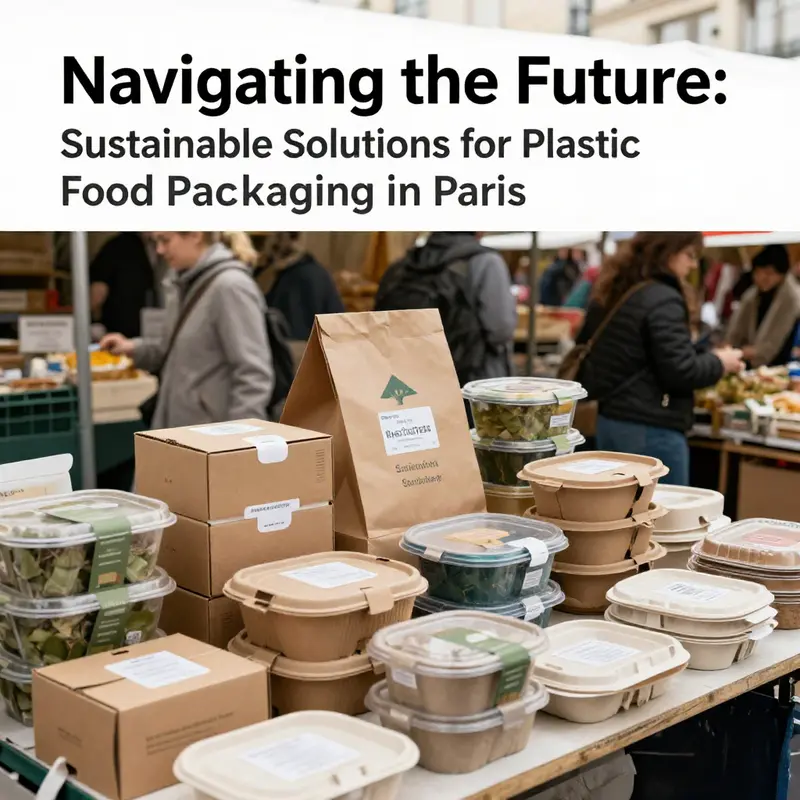
null
Shifting Sands of Parisian Packaging: Market Adaptations and the Delayed Ban on Plastic Food Containers
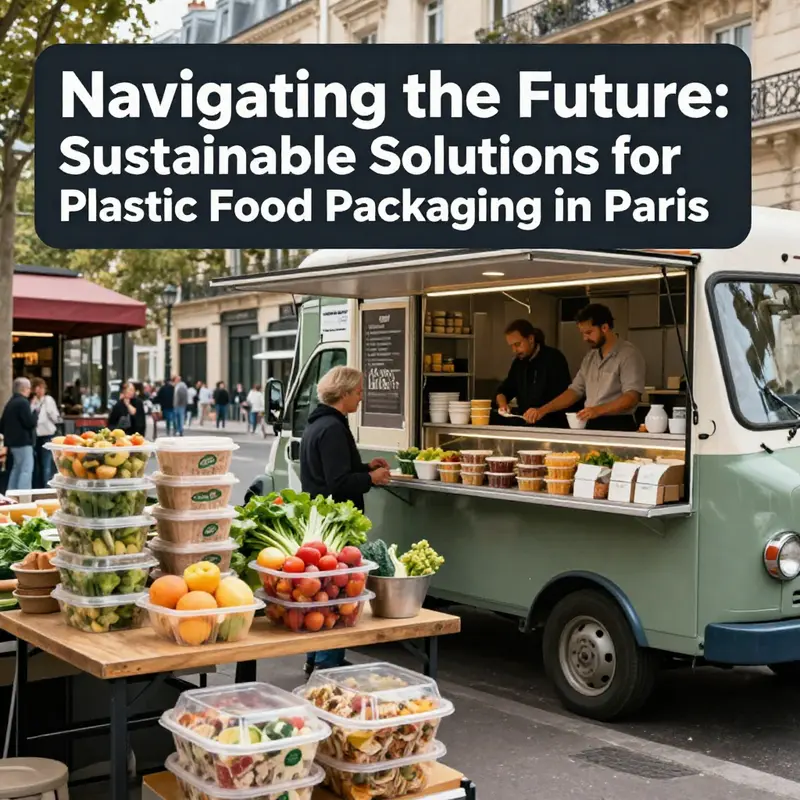
Paris stands at a pivotal crossroads where policy, health concerns, and commercial pragmatism collide in the quiet rhythm of daily meals. The city’s drive to reduce disposable plastic packaging speaks to a broader European commitment, one that has accelerated since the EU’s single-use plastics framework began to be enforced across member states. Yet even as regulations push forward, the pace of change in Paris has shown that policy is only one force among many shaping the market. In late 2024 and into 2025, France announced a notable shift: the planned ban on single-use plastic food containers, originally slated for January 1, 2026, would be postponed to January 1, 2030. This extension was not a retreat but a strategic pause, designed to align enforcement with the realities of supply chains, the availability of viable alternatives, and the complex logistics of a city hosting large-scale events in the not-too-distant future. The Paris Olympics, though now in the past, underscored the need for robust waste management infrastructure, dependable recycling streams, and consumer confidence in sustainable choices. The delay thus became a critical window for the market to innovate, test, and scale alternatives without sacrificing the predictability that businesses require. Across the city, the market response has been mixed but increasingly purposeful. Some firms accelerated investments in compostable or reusable solutions, while others warned that the costs of transition—capital expenditures, new processing dependencies, and the capitalization of extended supply chains—could translate into higher prices for operators and, ultimately, for consumers. Yet the broad arc remains clear: Paris is moving toward a future where packaging choices are governed less by convenience and more by lifecycle thinking, environmental accountability, and resilience in waste systems. The extended timeline has thus become a facilitator of creativity, a stage upon which entrepreneurs, restaurateurs, and retailers can experiment with material science, logistics, and consumer education. Companies that previously relied on simple, disposable packaging found themselves weighing options that balance performance with environmental impact. Grease resistance, heat tolerance, moisture barriers, and shelf stability must be preserved even as the packaging footprint shrinks or morphs into reusable or compostable forms. In this context, several material strategies have emerged as plausible pathways. Paper-based and molded pulp options, often derived from recycled content or rapidly renewable feedstocks, are being refined to perform on par with familiar plastic containers. For hot meals and fries, coated paper systems with grease barriers are advancing, offering comparable performance while promising better end-of-life outcomes. For cold, moist, or oily foods, barrier modifications and new lamination techniques are enabling containers that remain sturdy during transport and storage. The market is also revisiting the potential of biobased and compostable materials. While bioplastics can deliver reductions in fossil fuel reliance, their environmental benefits depend on local composting capabilities, collection systems, and consumer participation. The gap between material promise and municipal processing capacity remains a central challenge. Parisian operators are increasingly asking not only what can be produced but how it will be collected, sorted, and processed after use. The success of any alternative hinges on a coherent waste framework. Without compatible facilities, even the most innovative packaging risks becoming a missed opportunity for real environmental impact. In practical terms, this means collaborations with municipal authorities, waste management companies, and recycling cooperatives to ensure that new packaging can be recovered and diverted from landfill. The extended timeline also gives room for infrastructure pilots tailored to the city’s unique rhythm. Large-scale events, like the Olympics and international conferences, have spurred pilots in centralized composting, curbside sorting improvements, and lab-scale demonstrations of local materials turning into finished products that look, feel, and perform as well as conventional plastics. The market’s attention, however, is not limited to the technicalities of material science. cost dynamics loom large, and the price delta between traditional plastic containers and eco-friendly alternatives remains a practical hurdle for many operators. In Paris, the economics of transition are framed by three interacting forces: procurement price volatility, the cost of upgrading packaging lines and supply networks, and the potential savings from waste management efficiencies. Early feedback suggests that the total cost of ownership may tilt in favor of sustainable options over the lifecycle, particularly when packaging waste is priced according to its environmental footprint and when disposal costs rise with landfill dependence. But the path to true cost parity is non-linear. It requires predictable lead times, scalable manufacturing, and the integration of packaging choices with broader menu and service redesigns. A restaurant district’s shift away from single-use plastics has shown how quickly consumer perceptions follow policy momentum. In the street-food culture that still fuels much of Paris’s culinary imagination, the move away from iconic yellow polystyrene trays—once a symbol of quick, low-cost service—has forced vendors to reimagine presentation without compromising speed or taste. The kebab stands that many residents and visitors recognize as part of the city’s cultural fabric illustrate this tension vividly: a familiar format must be preserved even as the packaging that carries it evolves. As vendors adapt, a notable pattern has emerged: the adoption of paper-based, reusable, or returnable packaging systems that align with the city’s waste objectives. For everyday operations, a growing cadre of suppliers offers customizable, durable paper-based options in sizes and shapes designed to meet varied menu formats. For instance, some providers are now offering disposable octagonal boxes suitable for takeout and display, combining visual appeal with practical performance. These designs often incorporate practical features such as sturdy lids, grease resistance, and heat retention—all essential for maintaining food quality across delivery and dining contexts. The shift toward such packaging is not simply about replacing a material; it is about retooling the entire service model to be compatible with a circular economy mindset. In this transition, branding and customer experience become central. Food service operators aim to replace a disposable feel with a sense of care and responsibility, showing patrons that a choice for sustainability can coexist with convenience. Packaging often becomes part of the product narrative, a tangible signal of a restaurant’s values, and a touchpoint for consumer education about waste reduction, recycling, and composting. From this perspective, the market is less about a single replacement and more about locating a blend of options that suits diverse business models. Some operators favor fully compostable systems, especially for venues with on-site composting capabilities or strong city-supported compost programs. Others explore multi-use systems, where containers are collected, cleaned, and reused within a closed-loop system—an approach that may require partnerships with logistics providers and facilities capable of handling repeated cycles. For many street-food vendors and casual eateries, the latter model offers a compelling balance of reliability and environmental impact, particularly when supported by revenue models that encourage customers to return packaging in exchange for a discount or other incentive. The design and availability of packaging capable of integration with delivery platforms also matter. As online orders become a larger proportion of revenue, the packaging must travel well, fit standard courier boxes, resist leakage, and preserve temperature and texture. That means packaging manufacturers are increasingly collaborating with technology-enabled logistics networks to ensure optimization across the supply chain. A crucial takeaway is that the market’s response is not a singular line but a mesh of strategies that reflect different risk appetites, capital resources, and local waste contexts. For some players, the path forward involves incremental improvements within existing production lines, upgrading to better barrier materials and more recyclable substrates. For others, the path is more transformative, reimagining the packaging architecture around reusable or returnable systems, and aligning product design with the broader urban waste infrastructure. The internal market conversation also intersects with consumer expectations. While many Parisians welcome a shift toward more sustainable packaging, they also demand reliability, affordability, and consistency. Transparent communication about why certain materials are chosen, how they perform, and how end-of-life outcomes will be managed helps build trust. Restaurants that actively engage customers in these conversations tend to see higher acceptance of new packaging forms, and a growing segment of shoppers now regards eco-friendly packaging as a standard service attribute rather than a niche feature. The practical reality remains nuanced. The delayed ban to 2030 does not absolve businesses from beginning the transition; rather, it reframes the pressure points. It provides a breathing space for equipment upgrades, supplier diversification, and the refinement of end-of-life systems. It also invites ongoing dialogue among policymakers, industry associations, and municipal authorities about enforcement, incentives, and accountability. In the end, Paris’s market responses are less about choosing between plastic and paper and more about choosing a future where packaging decisions are informed by environmental outcomes, user experience, and resilience. The city’s packaging ecosystem is evolving toward a more nuanced palette—one that blends compostable materials, durable paper-based containers, and selectively deployed reusable systems—woven together by a robust, city-supported waste framework. This evolution will likely be visible not only in restaurants and supermarkets but also in the design language of packaging itself, where shape, size, and branding converge with performance and lifecycle thinking. The seeds of change are being planted now, with the willingness to embrace complexity, innovate at scale, and learn from pilots that test the boundaries of what sustainable packaging can be in a modern metropolis. For readers seeking a glimpse of the practical side, consider the range of customized packaging options that are gaining traction in the market. A notable example is the disposable octagonal box system described above, which is gaining attention for its blend of practicality and visual appeal. This kind of packaging illustrates how the market is translating policy momentum into tangible choices for operators and consumers alike. disposable octagonal box restaurant kraft paper packaging. As policy horizons extend further into 2030, the conversation will continue to orbit around the twin goals of reducing environmental harm and enabling a vibrant, accessible food scene in Paris. External resource: https://www.packagingpost.com/france-delays-single-use-plastic-cup-ban-to-2030/
Final thoughts
The initiative to ban plastic food containers in Paris marks a significant shift towards sustainable practices in the culinary landscape. By implementing the Single-Use Plastics Directive and addressing health risks associated with plastic consumption, businesses across various sectors are being encouraged to adopt eco-friendly alternatives. As restaurants, food trucks, and catering services adapt to these new standards, the transition serves not only as a catalyst for change within Paris but also as a model for other cities facing similar challenges. The key takeaway is clear: sustainability is not merely a choice, but a necessity, and the innovative solutions emerging from this movement will define the future of food service.