
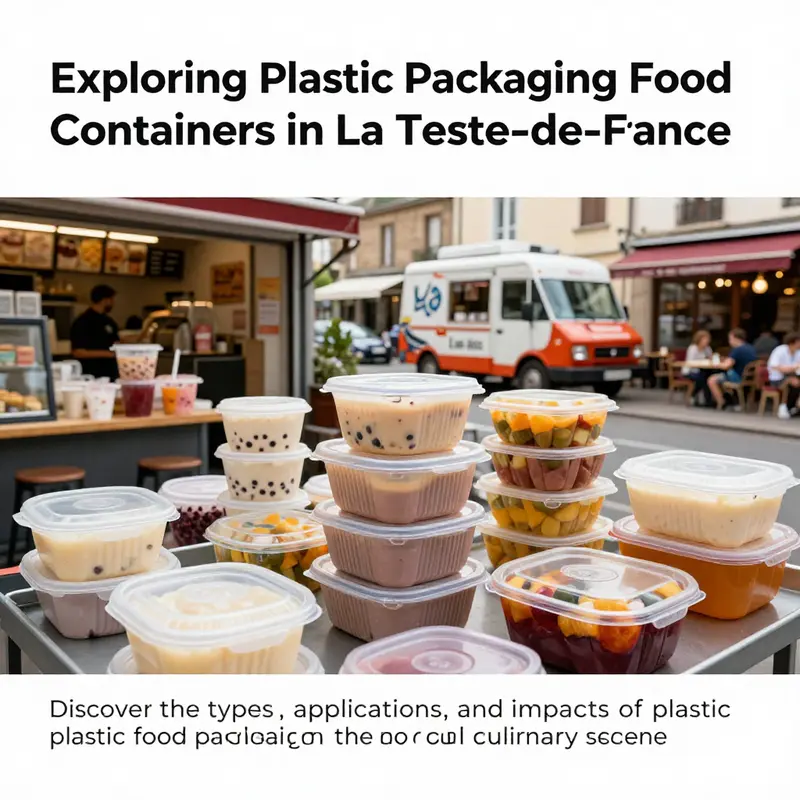
La Teste-de-Buch, a bustling region in France, has seen a surge in the usage of plastic food packaging containers, particularly within its vibrant food service industry. This article delves into the distinct types of plastic containers commonly used in the area, including PETE and PS materials, showcasing their applications and relevance to local businesses like bubble tea shops, restaurants, and catering services. We’ll also explore the environmental implications of these materials, consumer preferences guided by experience and sustainability concerns, and the regulations governing their use. As we navigate this multifaceted topic, you will gain valuable insights into how packaging choices significantly influence both business operations and consumer experience.
Packaging on the Atlantic Edge: Everyday Containers in La Teste-de-Buch
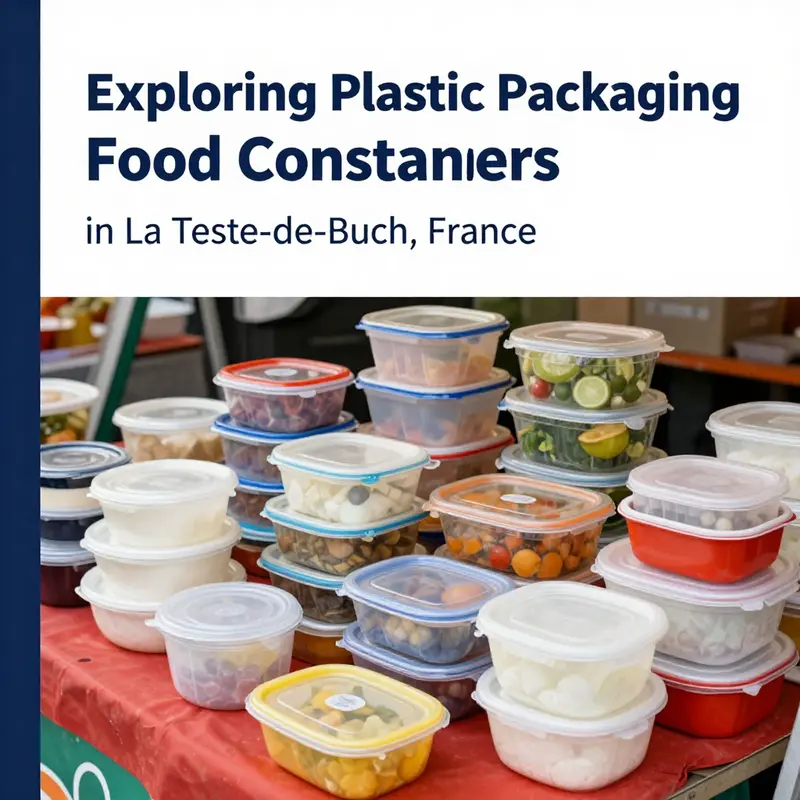
La Teste-de-Buch sits where the Atlantic folds into marshes and promenades, a place where markets and casual eateries line the shoreline and the pace of service depends on reliable packaging. In this setting, the everyday container becomes part of the sensory memory travelers carry home. Behind the scenes, suppliers stock a spectrum of plastic options that influence how food travels from kitchen to coast to couch.
Polypropylene containers stand out for clarity, strength, and heat tolerance. They keep sauces intact and preserve textures during transit, making them a favorite for hot meals and prepared plates in fast casual spots near the beach. Their compatibility with microwaves and sturdy seals support quick service during busy summer shifts.
A second major family is polyethylene, prized for moisture resistance and barrier properties that suit dairy portions and snack portions in local shops. PE boxes are resilient against leaks but typically see their best use for cooler or room temperature items and consumer storage rather than direct reheating.
Polystyrene remains visible in street food and kiosks where lightweight, insulating foam helps keep items warm. Yet growing environmental concerns and EU and national policy pushes are steering operators toward alternative materials, even as demand for cheap, fast, visually appealing packaging persists.
Rigid PET displays are common where visibility is important, such as salads and fruit cups. PET offers good clarity and barrier properties, but limited heat tolerance and recycling considerations push operators to seek post consumer recycled content or alternative formats where feasible.
Copolyester based containers, BPA free and built for repeated use, are increasingly seen in coastal towns that emphasize durability and cleanability for longer service life. These options carry higher upfront costs but can reduce waste when used across multiple shifts and outlets.
The regulatory frame around packaging is clear and evolving. EU REACH and EFSA guidance set food contact baselines, while France pushes for recyclability or compostability where possible. In La Teste-de-Buch, planners and restaurateurs experiment with compostable options, recycled content plastics, and other formats that fit into circular economy schemes. Kraft paper bowls with lids and other plant based options offer a different aesthetic and disposal profile, particularly for soups, salads, and hot snacks. A representative example is available here: https://greendispopack.com/product/disposable-kraft-paper-bowl-take-away-kraft-paper-salad-bowl-with-pet-lid/
For operators, the challenge is to balance heat tolerance, durability, cost, and the ease of recycling or composting. A takeaway box that tolerates reheating, a clamshell that preserves color, or a seal that prevents leaks all influence the guest experience as much as material science. Local supply networks matter, with dependable delivery, safety compliance, and access to recycled or recyclable streams shaping everyday choices. The port of supply is thus a node in a broader circular economy conversation about extending material life and reducing coastal litter, aligning with residents who value a pristine shoreline.
Beyond plastic, the region also considers paper based solutions that can slot into menus with minimal changes to presentation. For example, kraft paper bowls with lids are being piloted for soups and salads in places that want to project a more sustainable image while keeping the convenience of takeaway. See the catalog entry linked above for a concrete sense of what these options look like in practice.
The broader lesson from La Teste-de-Buch is not to prescribe a single material but to understand how packaging decisions align with safety, service quality, and environmental stewardship in a tourism driven economy. The story here mirrors wider European currents: a move toward higher recyclability, better waste management, and smarter design for disassembly without compromising function or affordability for small businesses.
As the article continues, attention will turn to how consumers perceive packaging, how waste infrastructure shapes choices, and how eateries communicate sustainability commitments to diners who seek both good food and responsible packaging.
Sealed Freshness on the Arcachon Coast: PETE and PS Packaging in La Teste-de-Buch’s Food Ecology
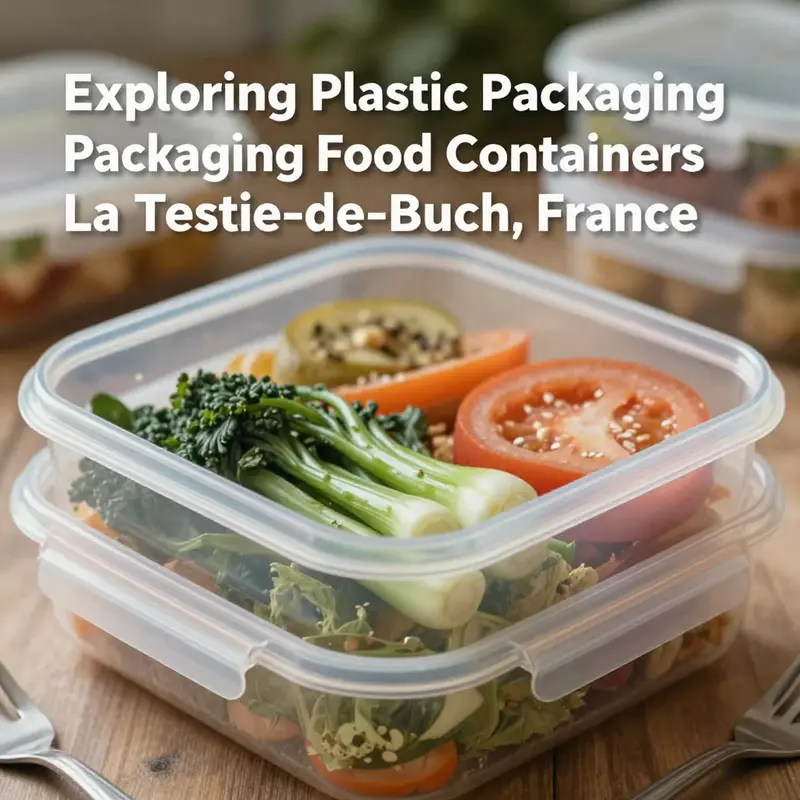
The town of La Teste-de-Buch sits where the Arcachon Basin curls toward the Atlantic, a place where fishermen and ferry boats share the same shoreline as market stalls and playgrounds. In summer, the town becomes a living corridor of taste: a string of seaside cafés, fishmongers, bakeries, and take-out counters catering to visitors who want speed, reliability, and the momentary thrill of a well-presented meal. In this setting, the packaging that surrounds food is less a backdrop than a key part of the experience. It protects, it showcases, and it sometimes even tells a story about the region’s relationship with the sea, the sun, and the rhythms of seasonal life. The practical question for many players in La Teste-de-Buch’s food economy is simple: which plastic containers best balance safety, visibility, cost, and customer appeal, while fitting into the town’s evolving waste management and sustainability goals? The short answer is that two materials—PETE and PS—appear in distinct but overlapping roles across different segments of the food landscape, from supermarkets to street corners to hotel kitchens. Their deployment reveals how a small coastal town negotiates the tension between convenience and responsibility, between the lure of a bright, quick-service aesthetic and the longer horizon of resource stewardship.
PETE, or polyethylene terephthalate, is a material whose strengths show up most clearly when the consumer needs clarity and containment. In La Teste-de-Buch, as in much of France and Western Europe, PETE is the workhorse of clear, hinged, clamshell-style containers that seal tightly while allowing a shopper to see what’s inside. In the local retail environment, these semi-transparent boxes become the visual shorthand for freshness. They are ideal for pre-packaged meals that blend the appeal of a ready-to-grab option with the assurance that the contents remain intact during transit. The clamshell design, often with a reliable latch, helps to keep moisture and aromas in check in the way a sealed theater curtain keeps the stage from leaking into the audience. Fresh-cut items, pre-portioned meals, and cold-case assortments benefit from this barrier, particularly in warm-weather conditions when temperature swings can stress more porous packaging. The economic math is straightforward: PETE offers a relatively low-weight, high-visibility option that travels well through the town’s bustling retail corridors and into the hospitality sector that serves visitors whom the coast attracts year after year.
The other thread in La Teste-de-Buch’s packaging tapestry is Polystyrene, a material whose properties have long made it popular in the food-service sector. PS, especially in cone or tray formats, has a well-recognized role in hot-food service and street-style offerings. In the town’s markets and outdoor eateries, PS is valued for its light weight, energetic colors, and the ease with which it can be shaped into small, disposable containers that fit comfortably in a hand or a tote. These cone-shaped or tray-style PS packaging solutions excel for fried items, warm snacks, and street-food-inspired dishes that demand rapid assembly and quick access for customers on the go. Their practicality has broadened the look and feel of the food-fair, festival, and outdoor dining moments that define many visits to the Arcachon coast, where speed and portability often merge with the desire for a satisfying, affordable bite. PS’s relatively low cost also aligns with the seasonal economic realities of tourism-driven commerce, where high turnover and flexible inventory matter as much as the final product itself.
Interwoven with these material profiles is a broader appreciation for how packaging choices influence the consumer’s perception of quality and safety. In a coastal town with a strong fishing heritage, the visual emphasis on cleanliness and order can shape trust as much as the actual contents. PETE’s transparency provides a window into the product, a feature that resonates with shoppers who want to see the freshness of seafood salads, chilled sides, or neatly arranged baked goods. PS, with its color and form, can signal warmth and indulgence—hot chips, fried octets, and festival staples often rely on the sensory foothold that a sturdy, no-nonsense PS container offers. Both materials, when deployed thoughtfully, contribute to a cohesive dining narrative: one that values quick access, reliable containment, and a visual language that communicates freshness at a glance while still respecting the constraints of portside and market logistics.
Yet the conversation around PETE and PS cannot ignore the practical limits and the evolving regulatory and environmental context. PETE containers, while highly recyclable in many municipal streams, require careful handling to preserve their barrier properties and prevent contamination that complicates recycling. In La Teste-de-Buch’s shops and markets, the flow of plastic waste into the local recycling system is a daily calculus—collectors, sorters, and residents sharing responsibility for keeping materials out of landfills while ensuring they re-enter the economy as new products. PS, by contrast, often presents a more challenging recycling path. While it can be mechanically recycled, its barrier properties are inferior to PETE, and contamination from food residues can hinder processing. This reality shapes decisions at the point of sale: operators weigh the convenience and price of PS against the potential environmental impacts and the town’s waste-management goals, which reflect broader national efforts to curb single-use plastics and foster more sustainable packaging ecosystems.
The regulatory backdrop in France—mirrored in European policy—adds another layer of decision-making for operators in La Teste-de-Buch. Legislation aimed at reducing plastic waste pushes businesses to consider alternatives, to improve recyclability, and to design packaging that travels more cleanly through the post-consumer stream. The local supply chain, with its seasonal fluxes and tourism-driven demand, must navigate these rules alongside practical pressures: the need to keep meals appetizing and safe, the demand for low-cost options that appeal to price-sensitive travelers, and the imperative to minimize waste while supporting high turnover in busy service environments. In this milieu, packaging decisions become a blend of art and logistics. The aesthetics of a product’s outer shell—its color, its translucence, and its shape—must align with the moment the consumer experiences on the quay, in a market square, or inside a brisk take-out line. The physical performance of the container—its seal, its barrier properties against moisture or heat, and its ability to protect contents during transit—must align with the varied conditions of La Teste-de-Buch’s meals, from a hot-fish supper near the port to a chilled noodle bowl bought during a coastal stroll.
The research landscape for this topic is revealing as much about the limits of current data as it is about the materials themselves. While PETE and PS are widely used in food packaging across many regions, there is little explicit, location-specific data tying these particular plastics directly to the food industry in La Teste-de-Buch. A practical takeaway from that gap is a reminder of how local and regional analyses often depend on broader industry observations to tell a complete story. What exists clearly is a framework of general material properties and typical use-cases that can be mapped onto the town’s unique rhythms: markets that peak on market days, eateries that expand their offerings during tourist season, and a waste infrastructure that must cope with fluctuating volumes.
In translating these broader patterns to La Teste-de-Buch, one can observe a tendency toward hybrid packaging ecosystems. The daily takeaway culture—whether at a seaside café serving a premium salad box or a street vendor dishing out hot snacks in a cone—demands packaging that is both robust and quick to dispose of. That tension nudges operators toward PETE for transparent, sight-line-friendly packaging when cold or chilled items are involved, while PS remains a staple for hot, fast-service formats where a strong, inexpensive disposable solution is valued. The story here is not a straightforward reign of one material over another; it is a dialog about context, purpose, and the lifecycles of the products that fill the town’s markets and tables.
For readers seeking a concrete example of packaging alternatives that move beyond plastics, consider the notion of paper-based take-out options that have grown in parallel with the plastics debate. A widely available example in the broader packaging landscape is a disposable 700ml kraft paper bowl designed for take-out meals. Such alternatives illustrate how operators look for wipe-clean usability, stackability, and a potential end-of-life path that aligns with local recycling or composting capabilities. In the context of La Teste-de-Buch, these options signal a direction toward more sustainable choices, even if they do not yet dominate the local scene. The decision to adopt them depends on several factors: cost per unit, the practicalities of cold and hot foods, the perception of quality and value by diners, and the capacity of nearby facilities to process the materials after consumption. In this way, the town’s food economy becomes a microcosm of the global packaging conversation: a living laboratory where tradition, efficiency, and responsibility converge at the point of sale.
While the immediate data linking PETE and PS specifically to La Teste-de-Buch remains sparse, the implications for local businesses are clear. Packaging matters not only as a functional vessel but as a signifier of the dining experience itself. It frames expectations, supports operational flow, and interfaces with the town’s reputation as a culinary and leisure destination. A shopper’s confidence in a product is reinforced when the container appears well-sealed, clean, and appropriate for the item inside. A street-food visitor’s memory of a meal can hinge on how easy it was to carry, how well the container retained heat or moisture, and how cleanly the packaging disposed of afterward. For hot snacks, the user experience hinges on reliability and comfort—an area where PS often shines in terms of ease of use and cost, while PETE delivers clarity and a perceived barrier against leakage. For cold items or freshly packed commodities, PETE’s barrier properties and transparency can elevate the perceived freshness, which in turn reinforces the value proposition of the product.
In closing, the place of PETE and PS in La Teste-de-Buch’s food ecosystem is best understood as a spectrum rather than a binary choice. The town’s packaging map is shaped by the tangible needs of consumption, the economic realities of seasonal business, and the evolving expectations about waste and sustainability. The lack of direct, locale-specific data should not obscure the practical lessons that emerge from broader industry knowledge: the importance of reliable seals, the benefits of clear visibility for freshness, the trade-offs between cost and environmental impact, and the growing appeal of packaging options that align with regional waste management strategies. As La Teste-de-Buch continues to welcome visitors and resident diners alike, its packaging choices will continue to reflect a delicate balance—aiming to preserve taste and safety while embracing a future where responsible consumption and thoughtful design go hand in hand.
Internal link reference: For a take-out packaging option that demonstrates how non-plastic solutions can still deliver performance and convenience, see this example: disposable 700ml kraft paper bowl for take-out.
External context: For a broader perspective on reducing plastic use in packaging and improving end-of-life outcomes, consult external guidelines and research resources such as the U.S. Environmental Protection Agency’s packaging section, which offers insights into sustainable packaging practices and waste management considerations that inform decisions at the local level. https://www.epa.gov/smm/packaging
null
null
Visible Plastics, Quiet Shifts: The Ecology of Plastic Food Packaging in La Teste-de-Buch
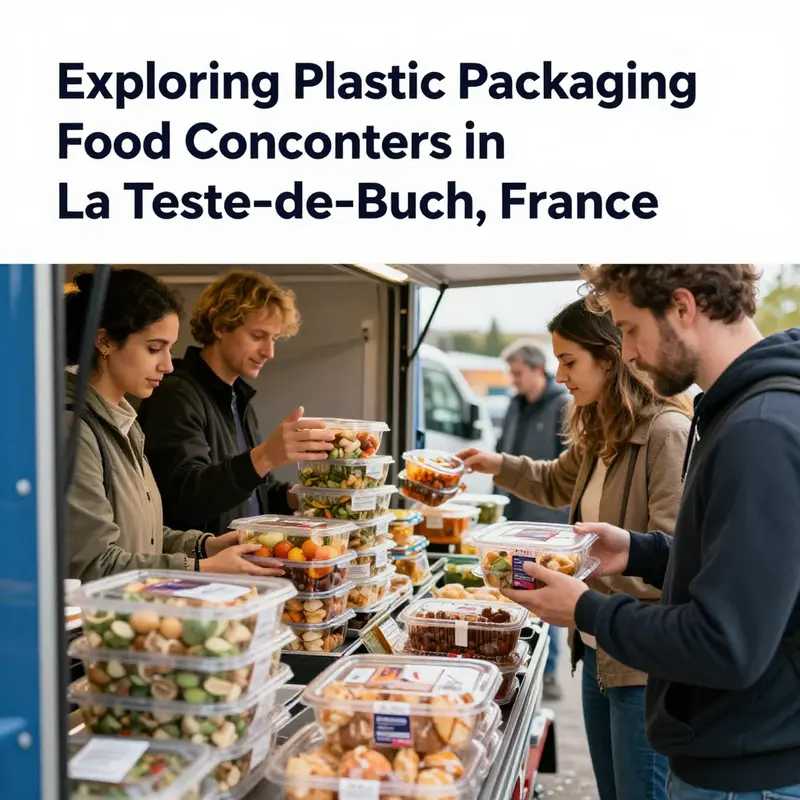
La Teste-de-Buch sits along the Atlantic coast where tourism, fisheries, and a bustling market economy converge. The town’s food service ecosystem—from waterfront cafés to neighborhood bistros and small groceries—depends on packaging that protects, displays, and moves products quickly through busy service lines. In this coastal context, plastic packaging for food containers is not simply a material choice; it is a decision that shapes product visibility, staff workflow, and the guest experience. The juxtaposition of seasonal influx and steady local demand creates a dynamic where packaging must perform under varied pressures: the heat of street stalls, the humidity of a seaside kitchen, and the cold hold of a retail display. In such a setting, the most common plastic formats that appear in practice are not merely defaults but practical responses to the rhythms of daily life. Two material families stand out in the region’s everyday use: a transparent PETE-based hinged container and a conical PS-based takeaway box. Each embodies a set of strengths and compromises that resonate with local operators and consumers alike.
The first of these is a PETE plastic container, typically a semi-transparent, hinged shell that closes with a reliable seal. Its design emphasizes product visibility, which matters in a market where shoppers often rely on sight to judge freshness and portion size. The hinge allows quick opening and closing, enabling staff to assemble meals—likely pre-packaged items such as freshly prepared fries or ready-to-eat meals—without sacrificing speed. The container’s seal protects contents during transport, a critical feature when customers move from a storefront to a seaside promenade or a park bench. Yet the same sealing capability that preserves moisture and aromas can also reduce airflow, which in turn can contribute to internal condensation in longer service cycles or during peak demand. For vendors aiming to balance presentation and practicality, PETE-based containers are a familiar, dependable choice that aligns with a fast-paced, turnover-driven food culture that characterizes much of La Teste-de-Buch’s informal and formal dining spaces.
The second prominent format is a conical PS-based takeaway box, often favored at street-level stalls and outdoor events. The cone or trapezoidal silhouette makes these boxes visually striking, a feature that matters when a vendor seeks to attract passersby or entice festival-goers. PS, with its lightweight and formability, can be shaped into attractive shapes that stand out in a crowded market. The trade-off lies in its relatively short-term thermal performance and ventilation characteristics; the design supports hot foods like fried items well enough for quick service, but its thinner walls can lead to heat transfer and moisture accumulation if food sits for too long. For La Teste-de-Buch’s outdoor service moments—summer markets, harbor-side snack stations, weekend fairs—these conical boxes deliver speed and portability, letting vendors hand over a hot product with a compact, easy-to-carry package. Together, these two formats map a practical palette that local operators rely on to fulfill safety, usability, and display expectations while navigating the constraints of busy service environments.
Beyond the micro-mechanics of containers, consumer perceptions about plastic packaging emerge as a guiding force for how these choices are received. Broadly, studies on packaging preferences show that while plastic remains widespread, there is a clear, growing appetite for systems that promote reuse or recycling rather than a single-use mindset. In many contexts, a substantial share of consumers—about three-quarters in some regional studies—express willingness to participate in packaging circulation, where packaging is collected, cleaned, and reused or repurposed. This signaling matters for La Teste-de-Buch because it points to a consumer base that is receptive to sustainable practice when it is structured, visible, and trustworthy. The implication for local businesses is not simply to swap materials but to rethink the lifecycle of the packaging they use: how it is collected, whether it can be reintroduced into a system of reuse, and how clearly such a program communicates its value to guests who are visiting during a vacation or who frequent a hotel lobby café. In other words, the preference for reuse is less about a single container and more about an ecosystem where plastic packaging becomes part of a closed loop rather than a disposable afterthought.
Nevertheless, the literature also highlights a tension in consumer sentiment. People appreciate the conveniences of plastic’s lightness, moisture resistance, and cost-effectiveness, especially in a busy tourism economy. At the same time, they express concern about waste, litter, and the environmental footprint of single-use items. In La Teste-de-Buch, where beaches and waterways attract visitors who are attuned to the local natural beauty, this tension translates into a delicate balancing act for restaurateurs and retailers. Packagers in the region must respect the practical realities of high-volume service while remaining sensitive to guests who associate environmental stewardship with the hospitality experience itself. That balance often prompts considerations beyond material selection alone—such as how to design packaging that minimizes leakage and odor, how to optimize stackability and transport efficiency, and how to align with municipal recycling and waste-sorting practices that shape the end-of-life trajectory of containers.
To provide meaningful alternatives without losing the focus on plastic, it is useful to acknowledge parallel packaging options that operators in similar coastal markets consider. Kraft paper-based bowls and other paper packaging solutions, including some recyclable or compostable variants, are widely discussed as complementary or transitional options to traditional plastics. For readers exploring a broader choice set, a useful reference point can be found in examples of disposable, take-out-friendly paper packaging such as kraft paper bowls designed for hot or cold foods. These options demonstrate how a market may diversify its packaging portfolio to reduce plastic use while maintaining the convenience and portability that guests expect. For direct exposure to this form of packaging, see this collection of kraft-based take-out bowls: kraft paper bowls for take-out. Integrating such options with existing plastic workflows can help operators tailor their packaging mix to seasonal demand, menu complexity, and the preferences of a diverse clientele who come to the town to enjoy both the sea and the local culinary scene.
The call for localized data is clear. While general attitudes toward reuse and sustainability provide a helpful frame, La Teste-de-Buch-specific insights would enable more precise decisions about which packaging pathways resonate with residents, seasonal visitors, and the hospitality sector. A targeted survey could illuminate how guests experience plastic packaging during peak tourism months, how staff perceive the ease of handling different container types, and whether guests respond positively to visible reuse programs or clearly labeled recycling streams. Without such local data, operators must rely on broader regional patterns and the pragmatic realities of their own operations, from procurement cycles to logistical constraints in a town where markets swell during the summer but quieten in the off-season. Even so, the indicators that emerge from wider consumer research can help business owners frame experiments—perhaps piloting a short-term reuse or recycling pilot, or offering a mixed packaging portfolio that pairs familiar PETE containers with paper alternatives for certain menu items or events.
Ultimately, the packaging choices seen in La Teste-de-Buch reveal more than a preference for form and function. They expose a community negotiating its relationship with waste, aesthetics, and guest experience in a way that reflects cultural values around hospitality and environmental responsibility. The PETE hinged box and the conical PS takeaway container encode not just a price point and a shelf life but a story about how the town presents itself to visitors and how residents frame their daily routines around the flow of meals, markets, and seaside recreation. In moving toward reuse and clearer recycling signals, the local ecosystem can preserve the benefits of plastic—durability, clarity of product, and lightweight handling—while addressing the ecological and social expectations that increasingly guide consumer choices. And in this ongoing conversation, the role of packaging designers, suppliers, and retailers becomes ever more crucial: to craft solutions that are not only technically sound but also socially resonant, visually appealing, and materially responsible.
For readers seeking a broader perspective on how packaging systems can evolve toward greater circularity without sacrificing convenience, external resources offer a global lens on the challenges and opportunities that coastal and tourist economies share. https://www.wrap.org.uk/content/plastics-packaging-recycling
Regulatory Currents and Local Practice: How France’s Packaging Rules Shape Plastic Food Containers in La Teste-de-Buch
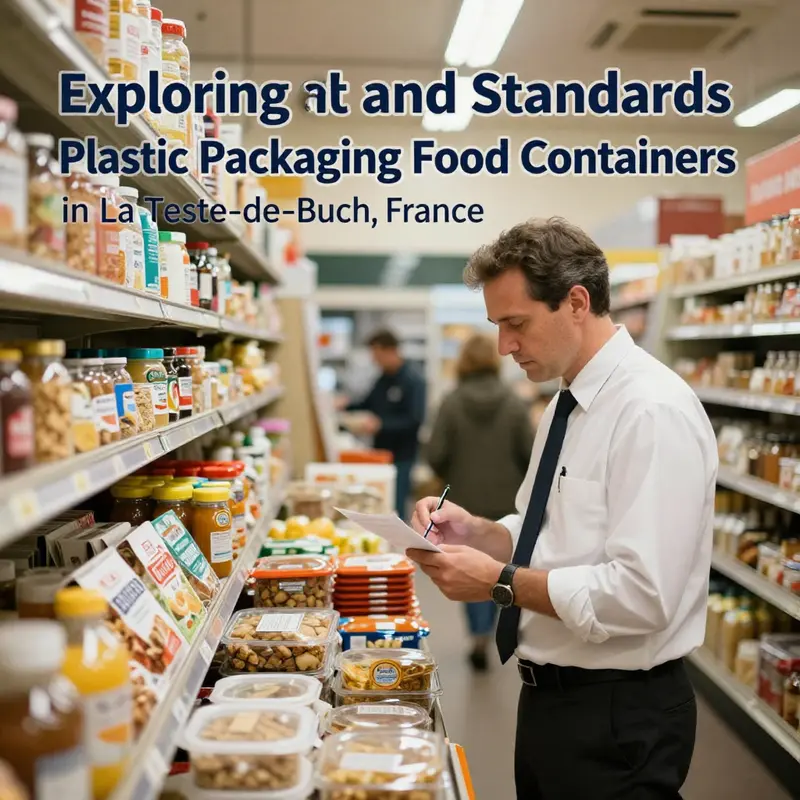
La Teste-de-Buch sits along the Atlantic fringe, where the rhythms of a coastal economy—fisheries, seaside cafés, and markets filling with seasonal visitors—shape daily decisions about what to package, how it travels, and what customers expect to see on a shelf or at a grab-and-go counter. In this setting, plastic food packaging containers are not just vessels; they are interfaces between safety, practicality, and perception. Local practices reflect a blend of global standards and regional sensitivity to waste, cleanliness, and the aesthetic of a seaside town. Within this frame, two common container types reappear across the urban and peri-urban food landscape: transparent PETE-based hinged clamshells and cone-shaped PS #6 takeaway boxes. Each serves a specific purpose and market segment, yet both exist under a tight regulatory umbrella that increasingly pushes for safer, more sustainable alternatives. The clamshells, usually semi-transparent and hinged, maximize product visibility and provide a reliable seal for items like pre-packaged meals or freshly cut sides. Their design minimizes handling, protects contents during transport, and supports quick, efficient service in supermarkets and fast‑casual outlets that dot the region. But their ventilation is limited, and moisture can accumulate inside if packaging is not matched to the product’s characteristics. The cone-shaped PS #6 boxes, with their bright colors and lightweight construction, are especially common at street stalls and outdoor events. They excel at rapid packaging for hot items such as fried potatoes, where ease of use and portability are paramount. Again, the trade-off is weight and insulation, which can affect the food’s warmth and texture during a short walk to the customer. Taken together, these containers epitomize the modern dining ecosystem: they must safeguard safety, preserve appeal, and support a quick turnover, all while aligning with evolving environmental expectations. In La Teste-de-Buch, this means that a successful packaging choice cannot be evaluated only on cost or convenience; it must also reflect compliance with safety rules, waste management realities, and the preferences of a community that often travels between markets, beaches, and restaurants with disposable packaging in mind.
The regulatory backbone behind these choices is layered and purposeful. France’s move, formalized as a decree that took effect on 3 July 2021, extends the ban on non-biodegradable single‑use plastics to include packaging. In practical terms, this shifts the terrain for local operators—from fishmongers and snack stalls to grocery chains and take-out counters—toward materials and designs that either biodegrade, compost, or are highly recyclable. The implication is not a blanket ban on all plastic, but a narrowing of the field to options that meet environmental criteria and can be traced through the waste stream. It is a shift that resonates beyond provincial borders, aligning with the European Union’s broader push for sustainable packaging and waste reduction. For businesses in La Teste-de-Buch, compliance is not merely about decontaminating a kitchen or replacing a shelf display; it is about ensuring that anything in contact with food has a legally defensible basis for safety and performance.
At the heart of this framework lies the European Regulation (EC) No 1935/2004 on materials and articles intended to come into contact with food. This regulation sets general safety requirements that govern how substances migrate from packaging into food. In practice, this means that manufacturers and distributors in La Teste-de-Buch must demonstrate that their packaging materials are authorized and that any potential migration remains within safe, legally defined limits. The French pathway for food-contact materials is harmonized with EFSA (the European Food Safety Authority) and ANSES (the French Food Safety Agency), ensuring that local decisions are consistent with continental risk assessment and public health priorities. For the entrepreneur or restaurateur, this translates to a need for documentation, traceability, and a clear understanding of which materials can legally be used for specific foods, whether they are hot, cold, dry, or moist. It also implies ongoing monitoring to confirm that products continue to comply as recipes evolve or as supply chains shift.
The push toward compliance dovetails with a parallel emphasis on sustainability standards, notably those associated with compostability and biodegradability. In many cases, the regulatory path increasingly favors packaging that meets the criteria of European standard EN 13432, which defines what it means for a material to be compostable in industrial facilities. For La Teste-de-Buch operators, this does not simply imply a switch to “green” branding; it means choosing materials that can be reasonably recovered and processed in the local waste infrastructure. The practical consequences are substantial: suppliers and packaging designers must work within a system that can certify compostability, document supply chain integrity, and demonstrate end-of-life behavior. The result is a more rigorous, though potentially more expensive, decision tree for what to buy, how it is labeled, and how it is disposed of after use. In coastal towns where the tourism season intensifies consumption, this can influence menu pricing, promotional strategies, and the perception of a business as a steward of the local environment.
To operate transparently under these conditions, La Teste-de-Buch businesses are expected to establish traceability and monitoring mechanisms. Traceability is not a mere bureaucratic requirement; it is a practical tool for identifying where a packaging material originated, what substances it contains, and whether it has been used in food applications that might affect migration or safety. Monitoring systems help ensure that any changes in suppliers, formulations, or regulations are detected and addressed promptly. The aim is to prevent non-compliant packaging from entering the food chain and to provide a clear audit trail should questions arise about safety or environmental impact. This approach dovetails with consumer expectations for accountability and with broader public policy goals aimed at reducing plastic waste in the region around Arcachon Bay and the Atlantic coast.
Amid these regulatory currents, the local business community is also weighing practical considerations that go beyond compliance alone. Biodegradable and compostable packaging—such as paper-based or pulp-derived alternatives—offers a path forward that can maintain product presentation while reducing environmental footprint. In La Teste-de-Buch, packaging designers and suppliers increasingly talk about resilience to heat, moisture, and time, ensuring that even compostable options perform as well as traditional plastics during transport and display. For operators, the transition requires evaluating not only material properties but also logistics: how easily can packaging be sourced locally, how reliably can it be recycled or composted, and how well does it integrate with existing waste streams? The region’s markets and eateries thrive on the quick turnover of meals and snacks, which means that any new packaging must preserve form and function through a typical service cycle—from kitchen to counter to customer’s hand. It also means that consumer-facing cues—like the perceived sustainability of a container—can influence purchase decisions in a crowded marketplace.
In practical terms, La Teste-de-Buch businesses can look to a combination of regulatory guidance and local procurement options to guide their decisions. Official sources from the French Ministry of Ecological Transition provide the authoritative road map for current requirements and updates. For operators considering alternatives to traditional plastics, there is a clear incentive to seek out materials that are compatible with food contact safety frameworks, while also meeting environmental criteria. The conversation around packaging in La Teste-de-Buch is thus a conversation about safety as much as about sustainability: a balanced approach that protects consumers, respects the local ecosystem, and responds to a changing regulatory environment. This balance is especially important in markets and tourism hubs where guests may bring new expectations about how food is packaged, transported, and disposed of.
For readers and practitioners seeking concrete examples of alternatives in practice, consider how a take-away operation might pivot toward materials that satisfy both safety standards and environmental goals. The shift is not only about replacing plastic with an eco-friendly substitute; it is about rethinking the entire packaging ecosystem—from materials selection and supplier certification to end-of-life management and consumer messaging. In this light, even small changes—such as choosing a sturdy, compostable take-out option for hot items, paired with clear disposal guidance—can contribute to a broader regional commitment to sustainability. When selecting alternatives, it helps to assess not just the material’s performance but also its compatibility with the town’s waste processing capabilities and the degree to which local customers value sustainable packaging narratives attached to their dining experience.
La Teste-de-Buch thus offers a microcosm of how European and national policies translate into real-world packaging decisions at the street, market, and restaurant level. The rules are not merely about compliance; they define a practical framework that shapes the daily choices of shop owners, cooks, and market vendors. In a town where sea breeze, tourism, and culinary culture intersect, the packaging story becomes part of the experience itself—an invisible but influential layer that affects safety, convenience, and the sustainability story a visitor takes away. For those exploring commercial opportunities in the area, understanding this regulatory landscape is essential to designing packaging strategies that are not only compliant but also resilient, customer-friendly, and aligned with the town’s environmental ethos. As the regulatory tide continues to shift, the most successful operators will be those who blend rigorous safety practices with thoughtful material selection and transparent communication about end-of-life options, all while keeping the distinctive character of La Teste-de-Buch in view.
To glimpse how practitioners navigate these choices in context, consider the practical option of integrating diversely sourced, yet regulation-compliant, alternatives into daily operations. Packaging choices such as kraft paper bowls, lids, and corresponding take-away systems can offer a visually appealing, functional, and potentially compostable pathway for casual dining and street-food formats. These alternatives align with a broader movement toward sustainable packaging and can be described in ways that resonate with environmentally conscious customers. For instance, a take-out counter might feature a simple note or symbol indicating that the chosen packaging is designed for responsible end-of-life processing, reinforcing the store’s commitment to the local environment while maintaining the convenience customers expect. This approach helps bridge the gap between compliance and consumer appeal, turning regulatory necessity into a value proposition for both business and community.
As guidance, operators in La Teste-de-Buch should reference official sources for up-to-date requirements and consider engaging with packaging suppliers who can provide documentation demonstrating food-contact safety and environmental performance. The official website of the French Ministry of Ecological Transition is a primary resource for the latest regulations and enforcement practices, which may evolve as technology and waste-management capabilities advance. For a broader, externally validated understanding of packaging standards and safety, readers can consult the relevant European framework documents that underpin national rules. External resources reinforce the principle that safe, compliant, and sustainable packaging is an ongoing collaboration among regulators, manufacturers, retailers, and consumers. In the end, the shaping of plastic packaging in La Teste-de-Buch reflects a shared commitment to health, convenience, and the stewardship of France’s coastal environment.
Internal link note: for readers exploring practical packaging alternatives aligned with sustainability goals, see the following example of a take-out packaging option that demonstrates how paper-based solutions can complement regulatory compliance: disposable 700ml kraft paper bowl take-out octagonal rectangle paper bowl.
External resource: for a centralized overview of French environmental policy and guidance on implementing packaging standards, consult the official French government page at https://www.ecologie.gouv.fr.
Final thoughts
The understanding of plastic packaging food containers in La Teste-de-Buch extends beyond mere functionality; these containers reflect the evolving landscape of local dining and consumer habits. As professionals in food service and event planning, recognizing the types, applications, environmental considerations, and regulatory frameworks surrounding plastic packaging will ultimately guide your procurement decisions and enhance your service offerings. Embracing both aesthetic appeal and sustainability can set your business apart in this competitive market, aligning with the values of today’s conscientious consumers.