
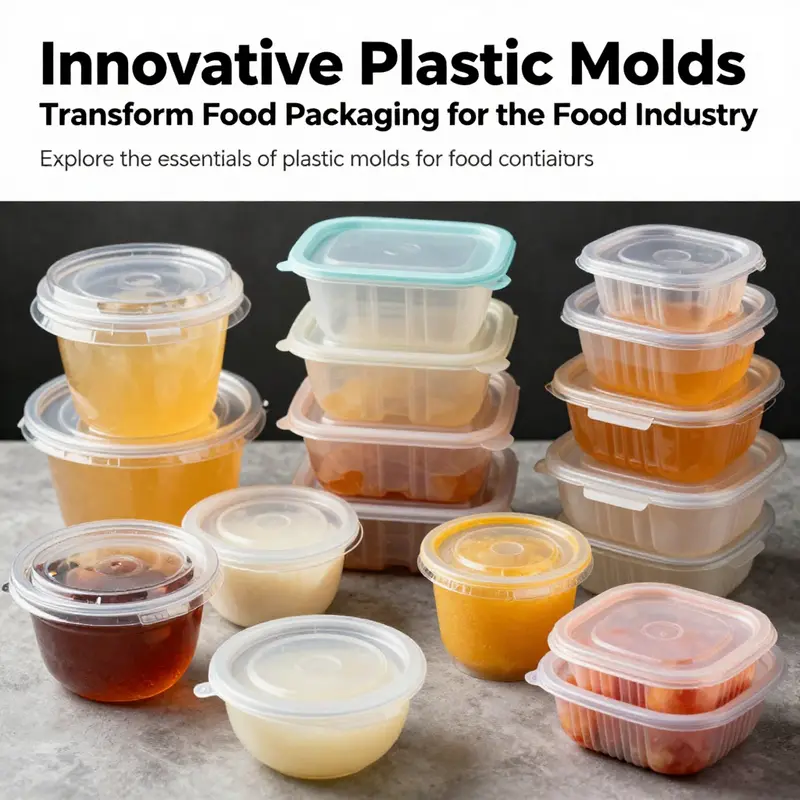
The demand for efficient and hygienic food storage solutions has propelled advancements in plastic molds for food containers. As businesses within the beverage and food sectors increasingly prioritize sustainability and functionality, understanding the market trends, product specifications, and manufacturing processes becomes crucial. This article provides insights into the world of plastic molds, highlighting not only the current market landscape and key players but also the various container specifications that cater to specific needs. Finally, we will delve into the manufacturing techniques employed to ensure quality and reliability in food contact materials, thus enhancing the operational efficiency of bubble tea shops, restaurants, food trucks, catering services, and more.
Molds That Hold Our Meals: The Global Dynamics of Plastic Molds for Food Containers
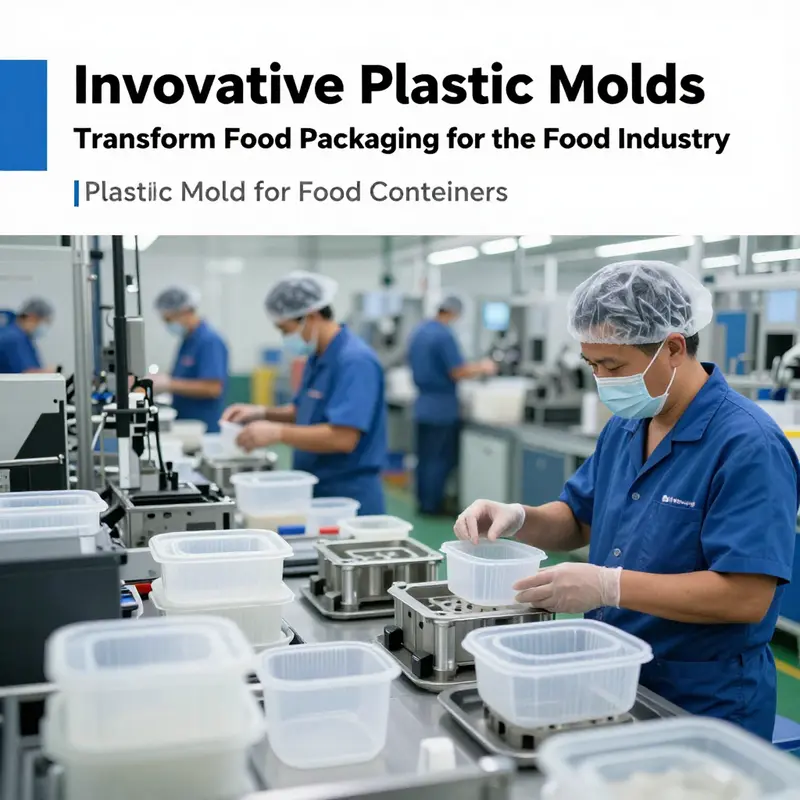
The technology behind the everyday container is often invisible to the consumer, yet it sits at the intersection of chemistry, precision engineering, global trade, and evolving consumer expectations. Plastic molds for food containers are more than tooling; they are the foundational logic that translates a design concept into a safe, reliable vessel for meals, sauces, snacks, and ingredients. In recent years, the market has expanded in complexity as demand grows across regions, materials evolve to address safety and sustainability concerns, and manufacturers embrace digitalization to tighten quality and speed. From the earliest compact lunch box to today’s multi-compartment meal-prep trays, the arc of this market mirrors a broader shift in how people eat, how food is packaged, and how supply chains adapt to rapid change. At the heart of this evolution lies a family of molds that shapes not only plastic but the very patterns of modern consumption.
Market dynamics around plastic molds for food containers are driven by a confluence of macro trends and micro-level manufacturing realities. The global market, viewed through the lens of the container industry, has grown to a scale that underscores both opportunity and responsibility. Industry reports estimate a multibillion-dollar value for the broader plastic food container space, with robust expansion projected into the next decade. The Asia-Pacific region, particularly, stands out as a hub of activity. Rapid urbanization, rising disposable incomes, and a surge in online food delivery have created sustained demand for containers that are affordable, durable, and safe for direct food contact. In China and other leading manufacturing centers, this demand has translated into a steady stream of mold development and production capacity that supports quick customization as brands seek to differentiate through packaging design as well as performance features. While the region’s volume could outpace others in the coming years, global competition remains intense, with North American and European markets emphasizing regulatory compliance, traceability, and end-of-life considerations that influence material choice and mold design alike.
Two realities shape the technical core of mold making. First, consumer expectations for convenience and safety push molds toward precision and variety. Molds for lunch boxes, meal-prep containers, and storage solutions must accommodate a range of capacities, most commonly from roughly 500 milliliters up to 1250 milliliters. The 1000-milliliter size has emerged as a particularly popular standard in many markets, balancing volume with practical handling. Second, material selection remains critical for both performance and safety. Polypropylene remains the principal workhorse for food-contact molds and their plastic products due to its strength-to-weight ratio, chemical resistance, and established safety profile for direct contact with food. Other materials, including PET and certain blends, find niches where transparency, sealing performance, or thermal properties offer advantages. In practice, a mold may be optimized not only for a single material but for a family of materials to accommodate shifting regulatory or market preferences.
Design innovation is integral to meeting evolving needs. Thin-wall designs, for example, reduce material usage and weight while increasing the number of units that can be produced per cycle. In the context of multi-compartment trays, the engineering challenge is to maintain integrity across walls and walls’ thickness while preserving clarity of labeling and ease of cleaning. The range of potential configurations is broad, accommodating simple single-chamber boxes as well as complex assemblies with inner dividers, vents, or lids that snap into place. Even the presence of a lid can influence mold geometry because locking features and snap-fit geometries must withstand repeated use without deformation.
Cost is a practical constraint that often shapes decision-making in mold selection and development. A spectrum exists—from basic, entry-level molds to sophisticated, feature-rich sets. A simple mold may begin at modest prices, enabling startups or smaller manufacturers to enter the market with lower capital risk. On the other end of the spectrum, high-end molds with advanced engineering, refined tolerances, and durable insert systems command higher prices, reflecting the investment in longevity and performance. The economics of mold making thus hinge on expected production volume, the desired lifecycle, and the complexity of the packaging design. Even the mold’s maintenance can be a determinant of total cost, given the wear resistance required to withstand millions of injection cycles. In this context, manufacturers often balance upfront tooling investment against long-term reliability and consistent quality.
The production and quality assurance processes surrounding these molds reveal a meticulous approach to turning design intent into dependable, food-grade products. Modern mold makers rely on hot-treatment methods that improve surface hardness and wear resistance. Techniques such as quenching, nitridation, and tempering are applied to critical components to extend tool life and maintain the dimensional stability essential for repeatable cycles. The equipment used in production—high-precision plastic injection molding machines—plays a central role as well. These machines must deliver stable melt temperatures, precise shot sizes, and repeatable clamping forces to ensure that each molded part conforms to strict tolerances. In parallel, rigorous quality control protocols govern every stage of production, from resin preparation and mold setup to post-mold inspection and final packaging. The emphasis on food-grade safety is non-negotiable: molds and their resulting containers must meet standards that guard against contamination, leaching, and migration of additives.
Supply chain considerations add another layer of complexity. The raw materials feeding mold production—polypropylene, polyethylene, and polystyrene among them—are subject to the ebb and flow of global feedstock markets. Resin pricing tracks crude oil trajectories and downstream demand, introducing a level of volatility that mold makers must manage through hedging, inventory strategies, and supplier diversification. The downstream applications of these molds span a broad spectrum: dairy products, beverages, fresh produce, ready-to-eat meals, and other convenience formats all rely on packaging that is safe, reliable, and economically viable. Beyond containers, the broader packaging ecosystem increasingly emphasizes compatibility with sealing films, laminates, and multi-layer structures that influence mold design, particularly when integrated with lids and pour spouts.
A notable trend shaping the near future is the shift toward sustainability. Environmental considerations are no longer peripheral; they are central to product development and regulatory strategy. The global dialogue around single-use plastics has prompted a diversification of materials. Biobased and biodegradable options—such as certain bioplastics and plant-based fillers—are being explored for their potential to meet consumers’ demand for convenience without compromising environmental goals. Even within a predominantly plastic toolkit, designers are seeking ways to reduce material usage through thin-wall technology, optimize wall thickness for heat transfer and containment, and extend lifecycles through smarter molds and process control. Moreover, the industry is examining end-of-life pathways, exploring recyclability, compatibility with recycling streams, and post-consumer waste management that aligns with circular economy objectives. For instance, some packaging strategies emphasize the use of lighter, recyclable components or alternative materials that preserve performance while reducing environmental impact.
The sustainability conversation also intersects with policy. Governments and regulatory bodies around the world are increasingly scrutinizing single-use packaging and encouraging recycling, design for disassembly, and safer materials. These pressures push mold makers to adopt standards that facilitate recyclability and to work with suppliers who can provide certified, food-grade resins with clear provenance. In this evolving landscape, the mold itself becomes part of a system—an enabler of safer, more sustainable packaging pathways that can be scaled globally while meeting local regulatory requirements.
Market structure reflects both global forces and local capabilities. The manufacturing heartbeat for plastic molds in the food container space is concentrated in regions with mature tooling ecosystems, abundant resin supply, and deep skilled labor pools. The value proposition for a mold producer combines technical sophistication with reliable service networks that can support customers from concept through mass production. In practical terms, this means offering a continuum of services—from initial design and rapid prototyping to full-scale tooling, trial runs, and ongoing maintenance. For many buyers, the appeal of a supplier lies not only in the mold’s technical performance but also in the speed and predictability of delivery, the ability to customize, and the willingness to collaborate on material optimization and processing parameters. This collaboration is particularly essential when a customer seeks to align product design with a specific production line, molding machine type, or thermal profile to maximize throughput and minimize waste.
The competitive landscape in this market is nuanced. International players bring scale, process discipline, and access to a broad materials portfolio, while domestic and regional manufacturers often win on responsiveness, cost efficiency, and customization agility. In either case, success is increasingly tied to a capacity for rapid iteration, reliable after-sales support, and clear documentation that supports traceability, quality assurance, and compliance with food-safety standards. The most resilient operations are those that weave together precision engineering, robust supply-chain management, and a culture of continuous improvement. In practice, this translates into a cycle of design feedback, mold refurbishment, and process optimization that reduces cycle times, tightens tolerances, and improves yield across varying product generations.
As with any advanced manufacturing domain, the future will likely be characterized by even closer alignment between the physical mold and digital realities. Digital twins, simulation-driven design, and real-time process monitoring can unlock new levels of predictability. By modeling heat transfer, material shrinkage, and ejector behavior, mold makers and their customers can anticipate issues before they arise in production. This kind of integration is not merely a capability; it is a pathway to higher quality, reduced downtime, and more efficient changeovers when a new container design or material is introduced. In the long term, a more connected mold ecosystem could support end-to-end optimization—from resin procurement and mold cooling circuit to part handling on the assembly line—delivering tangible gains in productivity and sustainability.
The chapter would be remiss if it overlooked the broader packaging ecosystem into which these molds feed. The plastic molds for container bodies must work in concert with lid systems, sealing technologies, and sometimes nested or stackable geometries that influence stacking strength and crown integrity. The result is a packaging solution that is more than its individual parts. It is a thoughtfully engineered system designed to maintain product safety, preserve freshness, and deliver consumer convenience across diverse retail and foodservice contexts. The evolving consumer can demand features such as tight seals, easy-open lids, and clear labeling for reheating instructions, all of which impose additional constraints on mold design. Each of these requirements adds a layer of complexity to tooling, reinforcing the truth that the mold is not a standalone asset but a critical enabler of a functional packaging ecosystem.
In the face of environmental concerns, some buyers actively seek alternatives to traditional all-plastic solutions. While many markets still rely heavily on plastic packaging for its cost and performance, others are experimenting with hybrid approaches or fully recyclable designs. For readers who want to explore non-plastic options in the packaging family, consider the example of biodegradable or recyclable paper-based packaging solutions used for certain food applications. A representative product category in this space includes disposable kraft paper bowls designed for food service with lids, which illustrate a different design philosophy and processing pathway compared with plastic molding. This context helps frame how plastic molds compete and cooperate with alternative materials as part of a broader packaging strategy. For further reading on this category, see this example: Disposable kraft paper bowl for food package with lid.
The external market research landscape reinforces what practitioners feel at the workshop bench. Analysts project continued growth driven by demand for convenience, safety, and speed in food delivery and quick-service formats. The Asia-Pacific region remains a critical engine, but global supply chains will test the resilience of mold manufacturers as geopolitical and economic shifts unfold. Suppliers that balance cost with reliability—and that can translate a customer’s requirements into robust, repeatable processes—will be best positioned to prosper. At the same time, the trade-offs between single-use disposables and recyclable, reusable designs will continue to shape investment decisions, material choices, and design approaches that either extend or shorten product lifecycles. In other words, the mold is not only a technical tool but a strategic asset in a rapidly evolving packaging world.
From a practitioner’s standpoint, the takeaway is clear: excellence in plastic molds for food containers requires a blend of material science, mechanical design, and process engineering, anchored by a relentless focus on safety and quality. It also demands adaptability—to changing consumer habits, to regulatory expectations, and to the economic realities of global trade. The best mold makers will be those who can translate a simple request for a container into a full ecosystem of capability: a design that optimizes material use, a mold that delivers precise geometry across thousands or millions of cycles, a production line that runs with minimal downtime, and a quality framework that proves performance at every step. The outcome is packaging that not only protects food but enhances the consumer experience and aligns with broader sustainable ambitions. For those seeking a broader market perspective and forecast, external analyses provide a macro view of the packaging space and its trajectory over the coming years: https://www.fortunebusinessinsights.com/plastic-food-containers-market-101234.
In the end, the story of plastic molds for food containers is a story of balancing discipline and creativity. It is about turning an idea for safer, more convenient meals into a physical form that can be produced at scale, inspected for safety, and transported across the globe. It is about understanding the critical role of tooling as the bridge between product concept and consumer experience, and it is about recognizing that every feature engineered into a mold—every wall thickness, every ejector pin location, every cooling channel—contributes to the reliability, performance, and perception of the packaging that feeds people every day. The mold maker’s craft is, in essence, an act of translation: translating appetite, constraints, and value into a tangible, dependable container that holds meals from the farm to the table.
Molded for Meals: A Comprehensive Look at the Specifications and Types of Plastic Molds for Food Containers
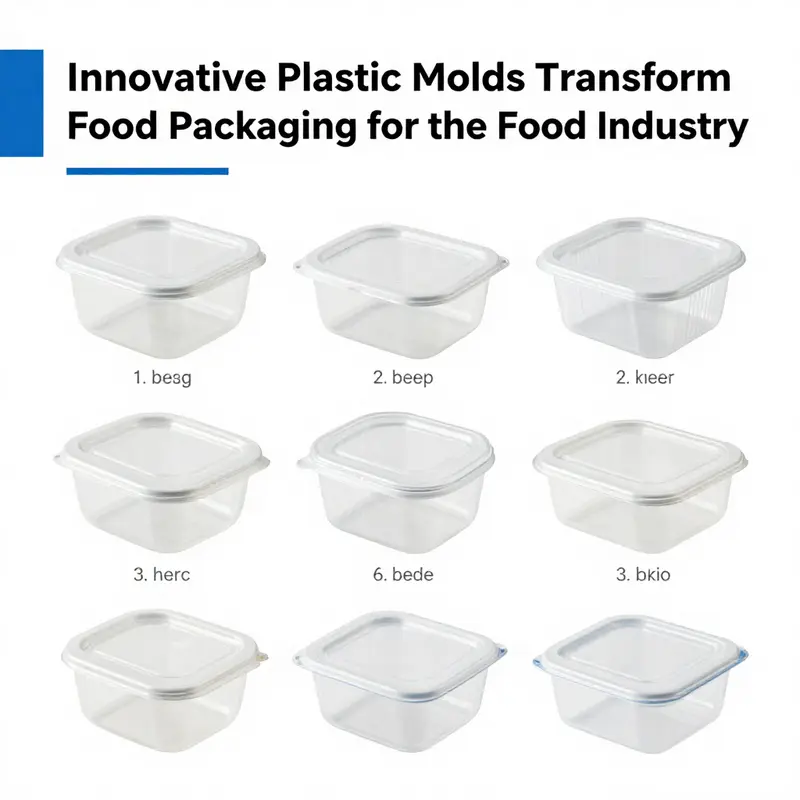
Plastic molds are the quiet workhorses behind every convenient, safe, and shelf-stable meal. They are not mere metal cavities but carefully engineered tools that translate resin chemistry into reliable, hygienic packaging. The chapter that follows threads together how three primary mold families—injection, blow, and vacuum-formed molds—address different geometry, production scales, and regulatory demands. It also highlights the material choices, surface finishes, tolerances, and process controls that determine safety, performance, and cost. In a market where food contact safety and consumer convenience converge, the mold becomes a strategic element, shaping not only the form of containers but also the efficacy of sanitation, the predictability of manufacturing lines, and the environmental footprint of final products. The insight here is that the choice of mold type is inseparable from the product’s function, the expected run length, and the compliance framework that governs what can touch food in a given region. While the discussion centers on plastics used for food containers, the underlying themes—precision, cleanliness, and traceability—translate into broader packaging considerations that suppliers and manufacturers must manage across the supply chain.
Injection molding stands as the backbone for rigid, sealed containers such as cups, bowls, and multi-compartment boxes. The mold that yields these items must cradle a hot, viscous resin and extract a part with exacting dimensions while preserving a pristine surface finish. In practical terms, this means selecting appropriate tool steels or aluminum alloys that balance hardness, machinability, and heat transfer. Common practice leverages high-grade tool steels for long life, with aluminum reserved for rapid prototyping or low-volume runs where cost and weight are crucial. The typical capacity target for these containers ranges from roughly 500 ml to 1250 ml, with 1000 ml often cited as a sweet spot for everyday meal containers and takeout boxes. The mold surface finish is typically mirror-polished or near-mirror to create a smooth, non-porous interface that resists bacterial adhesion and eases cleaning. A smooth surface also helps maintain low friction during ejection, reducing the risk of surface defects that could harbor residues or compromise seal integrity. Dimensional tolerances of about ±0.05 mm to ±0.1 mm are common to ensure that lids align properly, seals seat evenly, and stacking compatibility remains intact across high-volume production. The temperature control system is a crucial feature; cooling channels embedded in the mold body remove heat uniformly, shorten cycle times, and minimize warpage. The better the cooling design, the more consistent the wall thickness, which supports uniform heat sealing and reduces the likelihood of weak spots under microwave or boiling conditions that some consumers may test at home.
From a regulatory viewpoint, the mold and the final molded part must align with food contact safety standards. Materials chosen for the container and any colorants or additives must be free of harmful substances and compliant with relevant regimes such as FDA regulations or EFSA standards. In practice, this translates into a design that avoids migrating constituents like BPA and selects resins that offer a good balance of rigidity, chemical resistance, and heat tolerance. The injection process itself involves injecting molten resin into a closed mold cavity, where it cools and solidifies before the part is ejected. For multi-cavity molds that produce several units per stroke, the synchronization of cooling, ejection, and part handling becomes an exercise in hydraulic precision and control logic. The mold must accommodate tight tolerances across cavities, which often necessitates balanced cooling channels and uniform gate design to ensure consistent fill and solidification. The ejection system, sometimes including slides or collapsing cores, must be designed to avoid sticking and to minimize the risk of part damage during removal. In modern lines, mold designers increasingly integrate sensors and automated feedback to monitor temperature differentials, pressure profiles, and cycle consistency. These data streams feed maintenance planning and help sustain a high level of quality, especially on lines with constant product changes or frequent colorant and resin changes.
Thin-wall designs represent a meaningful optimization when the goal is to reduce material usage and cycle time without compromising strength or barrier properties. Implementing thin walls requires precise control of resin viscosity, mold temperature, and fill speed. It can push the boundaries of mold technology, demanding tighter tolerances and more robust cooling strategies. The same philosophy applies to multi-compartment configurations, such as meal-prep trays that separate sauces from staples, or modular lids that snap onto the base while maintaining seal integrity. While injection molds handle rigid, multi-layered constructs well, the design complexity increases with each added feature, and so does the upfront investment. Nonetheless, the payoff is substantial: high-volume consistency, strong mechanical performance, and the possibility of integrating additional features like molded-in measurements or tamper-evident elements without adding external components.
A key consideration for injection molds is the material ecosystem surrounding the final product. Polypropylene remains the workhorse resin for many food containers because of its favorable balance of rigidity, chemical resistance, and fatigue performance. PET is another common choice when transparency or higher temperature performance is desirable, though it can impose greater demands on mold design and processing controls. Some packages require barrier layers or co-injected skins to improve moisture retention or oil resistance, which in turn influences mold architecture and tooling cost. The design challenge is to align resin selection with the intended use, cleaning regime, and consumer expectations for performance, whether the container will be microwaved, refrigerated, or subjected to sanitation cycles in industrial settings. In this context, the mold serves as the nexus where material science, process engineering, and regulatory science converge.
Blow molding represents a different set of design and manufacturing challenges, optimized for hollow, large-volume containers such as beverage bottles, jugs, and condiment vessels. Unlike injection molds, blow molds must shape a hollow interior while ensuring airtight seams and consistent wall thickness. The starting resin is typically HDPE or PET, chosen for toughness, clarity (in some applications), and compatibility with the blow molding process. Two primary blow molding pathways are used: stretch blow molding for PET bottles, which yields high clarity and dimensional stability, and extrusion blow molding for HDPE containers, which offers robust wall strength and simplicity for larger shapes. The molds themselves are often fashioned from aluminum or steel, with aluminum favored for lighter weight and faster cycle times in high-volume runs, while steel provides longer wear life for demanding, repetitive production. The interior surface must be carefully finished to avoid residues and facilitate easy cleaning, while the exterior can be textured to improve grip and handling. A critical design issue is wall thickness distribution. Uneven thickness can lead to warpage, leakage, or failure under stacking and transit stresses. The mold design must account for the neck finish, which governs lid compatibility and sanitary seals, as well as features like threaded necks, handles, or spouts that complicate cavity geometry. Venting and parison control are additional focal points; the mold design must permit uniform inflation and prevent wrinkles or air pockets that would compromise structural integrity or aesthetics.
The life cycle of a blow mold includes considerations for thermal management, energy use, and maintenance scheduling. Because blow molding often runs at high speeds on continuous lines, even small improvements in heating and cooling efficiency can yield meaningful gains in throughput and energy savings. Advanced blow molds may incorporate enhancements such as gas-assisted molding, which enables thinner walls without sacrificing stiffness, or integrated cooling channels that mold designers place along strategic surfaces to control thermal gradients. Post-molding operations—trimming, annealing, and sometimes surface finishing—are essential to stabilize dimensions and ensure surface quality before the parts enter assembly lines or direct packaging. On the consumer side, the exterior surface finish can influence perceived value and grip, a factor that interacts with the container’s functional requirements and branding considerations.
Vacuum forming is the simplest and most economical route for shallow, lightweight packaging such as clamshells, egg cartons, and basic trays. The mold for vacuum forming is typically less complex and can be made from aluminum, wood, or composite materials, offering low tooling costs and rapid iteration cycles. The process relies on heating a sheet of thermoplastic and drawing it into a mold cavity with vacuum pressure, producing parts with relatively modest tolerances, often within about ±0.5 mm to ±1.0 mm. Vacuum-formed parts excel in low-to-mid volume scenarios where design changes are frequent or where rapid prototyping is valuable. The surfaces are not as glossy as those produced by injection molding, but the method supports simple, cost-effective packaging that can still meet consumer expectations for disposable trays and containers. A critical factor for vacuum forming is material management, including sheet handling, heating uniformity, and proper venting to avoid wrinkles or incomplete fills. Recycling and reuse of shell sheets are important sustainability considerations that align with industry goals to minimize waste in packaging chains. The mold design may emphasize simplicity and ease of replacement, allowing for quick adaptation when new tray shapes or carton formats are introduced.
Across all three mold families, the common thread is a relentless focus on safety, precision, and manufacturability. The regulatory backdrop—food contact standards, migration limits, and material safety certifications—drives choices from resin selection to finishing and testing protocols. Quality assurance is not an afterthought but an integral part of mold design, with test plans that probe dimensional accuracy, surface integrity, and resistance to repeated sanitation cycles. In practice, this means building tolerance stacks into design documents, validating them with prototype runs, and then refining cavities, cores, and inserts before committing to full-scale tooling. The best molds also anticipate future needs: the ability to adapt from a single container to a family of containers through modular cavity blocks, or the capacity to incorporate new features such as improved lid integration, stackable geometries, or tamper-evident patterns without a wholesale retooling of the base tooling. This forward-looking stance can reduce lead times for product updates and support a more agile response to shifting consumer preferences and regulatory requirements.
The regional landscape of mold making adds another layer of complexity. In many global markets, a dense ecosystem of mold shops, tooling suppliers, and processing plants concentrates in regions with established industrial clusters. The proximity to resin suppliers, cleaning and sanitization services, and regulatory consultants can influence lead times, cost, and the ability to run pilot programs quickly. Even so, the capability to produce high-precision, food-grade molds is distributed worldwide, with a spectrum of offerings from rapid-prototyping services to fully serialized, multi-cavity family molds designed for long production lives. The result is a marketplace that rewards engineers who understand both resin chemistry and the subtleties of mold heat transfer, gating, and surface finishing. The interplay between design intent and manufacturing reality means that a successful mold program balances upfront investment with long-term stability in quality and throughput, while remaining adaptable to new product formats and evolving safety standards.
To connect these technical threads to the broader packaging landscape, it helps to situate plastic molds within the continuum of packaging choices. While molds defined for plastic containers dominate many cold-chain and ready-to-eat formats, there is a growing conversation about sustainable alternatives that cohabit with traditional plastics. For readers exploring the packaging ecosystem more broadly, a representative internal reference can illuminate how paper-based or kraft packaging designs intersect with mold decisions in adjacent product lines. See the following example for context: customized eco-friendly kraft soup bowl with lid.
In sum, the specifications and types of plastic molds for food containers reflect a balance of chemistry, mechanics, and regulatory discipline. Injection molds deliver rigid, high-precision packages with tight tolerances and strong sealing performance; blow molds enable hollow, large-volume containers with robust wall design and efficient production cycles; vacuum-formed molds provide cost-effective, shallow packaging suitable for rapid iteration and modest volumes. Each mold family presents its own design dictionary—materials, surface finishes, tolerances, cooling strategies, and post-molding workflows—that must align with the container’s intended use, the production scale, and the safety narratives demanded by regulators and consumers. As the industry evolves, innovations in smart cooling, mold coatings, and modular cavity architectures will continue to push the performance envelope, enabling safer, more efficient, and more sustainable packaging. For readers seeking a deeper technical lens on injection-molding advancements in food packaging, a detailed external reference offers current context and regulatory considerations: https://www.plasticstoday.com/processing/injection-molding-food-packaging.
Molded for Safety: Precision Manufacturing and Quality Assurance in Plastic Food Container Molds
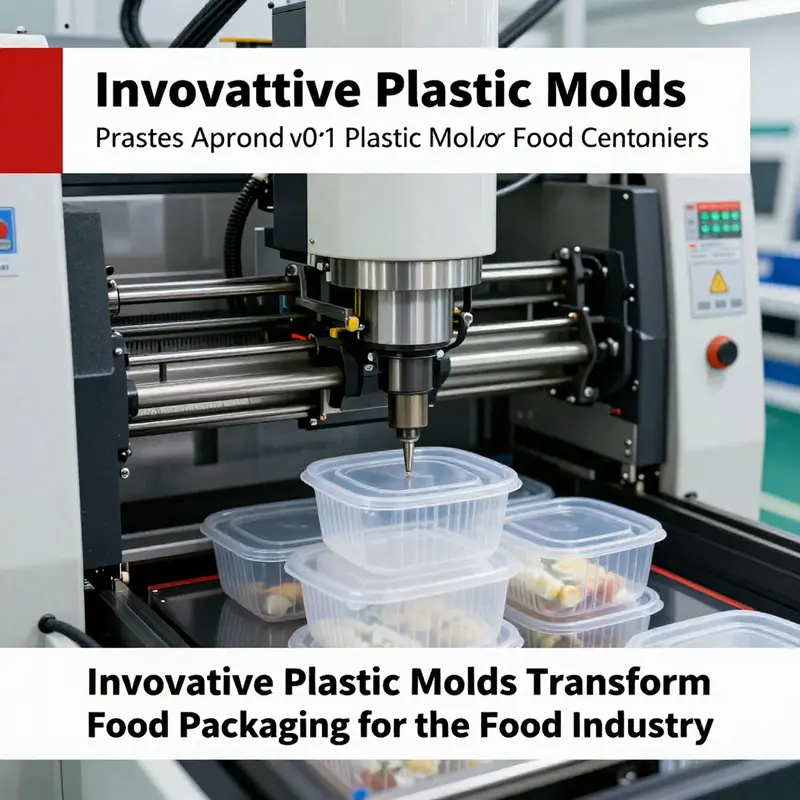
The everyday convenience of a plastic food container rests on a chain of decisions made long before the first batch hits the line. It begins with deliberate material choices, moves through the disciplined craft of mold making, and concludes with ongoing quality assurance that keeps millions of meals safe, fresh, and portable. This chapter traces that journey without distraction, showing how high stakes meet high precision in the world of plastic molds for food containers. It is a narrative of tolerance, testing, and trust, where every microdetail matters because consumer safety hinges on the integrity of the tool that shapes the resin into a reliable vessel for nourishment.
At the heart of the process is injection molding, the workhorse technique that turns polymer resins into durable containers in vast quantities. Material selection is more than picking a plastic; it is a strategic choice about heat resistance, chemical compatibility, stiffness, and toughness. Polypropylene often leads the field for food contact applications because it combines rigidity with light weight and a favorable safety profile. Its melt behavior typically yields crisp edges and uniform walls, attributes essential for coordinated lid sealing and reliable stacking. Other resins—such as PET and HDPE—offer benefits in transparency, barrier properties, or impact resistance, but each brings tradeoffs in flow, shrinkage, and cooling requirements. The mold designer must anticipate these behaviors, shaping cavities, gates, and cooling channels so the resin fills evenly, shrinks predictably, and yields parts that will tolerate repeated washing and reheating without warping or losing integrity.
The actual molding cycle amplifies the complexity because it compresses time, pressure, and material science into a fraction of a second. Molten resin enters the mold through carefully sized gates and runners, a network engineered to deliver consistent fill to every cavity in the tool. Pressure is ramped to a precise peak, and cooling is targeted with a matrix of channels that removes heat efficiently, preventing distortion as the part solidifies. A well-tuned cycle not only speeds production but also stabilizes part geometry. The required surface finish, particularly for containers that must be cleaned easily and resist residue buildup, is achieved by finishing the mold and controlling the cavity surface texture. Any roughness can become a trap for residues, compromising both hygiene and repeatable cleaning during consumer use.
Designing molds for family-style containers, including multi-compartment trays and thin-wall boxes, compounds the challenge. In multi-compartment designs, each cavity is a mirrored twin of the others, yet slight disparities in gate location or cooling can create uneven fill, leading to delamination between compartments or inconsistent sealing lines. Thin-wall constructs push the envelope of manufacturability because the margins of wall thickness must be balanced against thermal conductivity and resin viscosity. If walls are too thin, cooling must be exceptionally fast to avoid warping; if too thick, material usage climbs and cycle times become longer. Here the mold becomes a platform for optimization rather than a simple cavity. It demands precise alignment of cores and cavities, careful balancing of temperature across the tool, and an integrated ejection system that retracts parts without creating micro flaws that could jeopardize seal integrity or surface cleanliness.
Durability enters the equation early. A mold is not a single device but a rolling investment designed to withstand millions of cycles. Tooling steel is selected for hardness, fatigue resistance, and thermal stability. Surface treatments and coatings are layered to reduce resin sticking and to facilitate rapid heat transfer away from the molded part. Coatings must be food-safe and chemically inert to prevent any possibility of contaminant migration during lifecycle use. The wear resistance of these surfaces matters because even a minute scratch can disturb flow, alter wall thickness, or harbor bacteria during repeated washing. To sustain performance, many facilities pair hard coatings with precise polishing. The combination helps ensure that the resin glides over the surface during release and that post-mold finishing steps are minimized, keeping throughput high without compromising cleanliness or dimensional accuracy.
There is more to durability than surface chemistry. The internal geometry of the mold—the shape of the cavities, the alignment of cores, and the design of ejector systems—dictates how long a mold will stay within spec. Ejector pins, plates, and sliders must be engineered so that the finished part is released cleanly every cycle, without flash or deformation. The parting lines, zones where two halves of the mold meet, are strategically positioned to minimize detectable seams while reducing post-mold trimming. In high-volume environments, automated handling and robotics interface with the mold through standardized clamps and alignment features, ensuring that the transfer of parts from mold to downstream equipment occurs with repeatable precision. The result is a tool that not only makes high-quality containers but also survives the rigors of continuous production.
In practice, the life of a mold is reinforced by hot treatment cycles designed to harden and stabilize structural components. Quenching and tempering can dramatically improve resistance to deformation and wear, while nitridation and similar surface hardening processes can enhance hardness at the tool surface without sacrificing the core’s toughness. The aim is to achieve a microstructure that resists scoring, cracking, and micro-delamination under the combination of high temperature, high pressure, and abrasive resin composites. After heat treatment, components are measured for dimensional fidelity, and surface roughness is verified to ensure that the mating surfaces of the mold remain smooth. The level of scrutiny extends to every batch of tool steel used, with hardness tests and surface roughness checks to verify that each tool meets exacting specifications before it returns to the line.
But a mold is not an island. Its success depends on its integration with a broader production ecosystem. The injection machine, cooling system, robotized handling, and mold clamp assembly must work in concert. Cycle time, a primary driver of productivity, is influenced by resin viscosity, melt temperature, and the rate at which the mold can shed heat. Rapid cycles are attractive only if they preserve part integrity; otherwise, the savings are illusory. In busy markets, plants run multiple molds in parallel to mitigate downtime and maintain a stable rhythm for downstream operations such as labeling, packaging, and palletizing. The interplay among equipment, process parameters, and tool wear forms a feedback loop that operators and engineers use to refine the entire line toward reliability and efficiency.
An essential element of this system is sensorization and real-time monitoring. Modern molding lines collect data from many sources: the temperature of cooling channels, the pressure profile of the injected melt, mold temperature, cycle counters, and quality indicators observed on trial parts. Real-time dashboards alert technicians when a process drifts beyond permissible limits, allowing corrective action without significant wasted material. These data streams feed predictive maintenance programs, where machine learning models anticipate tool wear and schedule refurbishments just before a failure disrupts production. The benefit is twofold: it reduces unexpected downtime and extends mold life by aligning maintenance with actual usage patterns rather than with rigid calendars. The era of wear-resistant tool steels and smart manufacturing thus converges into a reliable, data-driven approach to sustaining high-quality output.
Quality assurance in this field is not a finish line but a continuous discipline. It begins with raw material inspection, an early gate that screens incoming resins for safety compliance, chemical stability, and thermal performance. Additives, colorants, and stabilizers are evaluated for headspace migration and compatibility with the intended resin system. The goal is to ensure that every batch of resin will behave consistently under high-temperature processing and during consumer use. Then the machining and assembly of the mold itself are subjected to rigorous metrology. Coordinate measuring machines and high-precision sensors verify that every cavity, gate, and core aligns within micron-level tolerances. The assembly is tested as a system, with lockings, alignment pins, and cooling channels validated for proper engagement and sealing performance. The tests do not end with assembly; they continue through trial runs where a set of test parts is produced and carefully inspected for warping, flash, sink marks, and dimensional deviations that would signal a need for adjustment.
Functional testing is equally critical. Producers assess seal integrity under simulated consumer conditions, evaluating whether lids align and seal as intended and whether moisture and gas barriers perform under expected storage scenarios. These tests extend into accelerated aging studies, where containers are exposed to high temperature, humidity, and repeated washing cycles to observe long-term performance. Throughout, traceability is essential. Each mold, each resin batch, each refurbishment, and each test result is logged so that regulators and internal auditors can reconstruct the life story of a tool. This traceability supports not only compliance with regulatory frameworks for direct food contact but also corporate goals for quality and safety. It also underpins the confidence of brand owners who rely on predictable performance across the supply chain and across product generations.
Certification of the tooling and the finished manufacturing process provides formal validation that the mold meets safety and regulatory expectations. Documentation often includes material safety data and evidence of migration testing to demonstrate that contact with the container does not introduce unsafe compounds into the food. Global standards for food contact materials are complex, and manufacturers pursue audits and third party verifications to align with these requirements. The combination of careful material selection, precise mechanical design, thermal maturity of the tool, and robust quality systems is what yields a mold that can support safe, consistent, and scalable production across diverse markets. The end result is a mold that not only shapes containers with exacting tolerances but also stands as a reliable enabler of a packaging line that consumer households depend on for daily meals.
The broader takeaway is that the value of a plastic mold for a food container extends beyond raw capability. It rests on a philosophy of design for safety, design for manufacturability, and design for lifecycle reliability. Each decision— resin choice, gate location, cooling strategy, surface treatment, and maintenance plan—feeds a thread that, when pulled, reveals a coherent system. This system delivers parts that are dimensionally stable, free of surface defects, and capable of withstanding the rigors of commercial kitchens and consumer kitchens alike. It is a careful balance between upfront tooling investment and long-run reliability, a balance that determines how quickly and confidently a packaging line can scale to meet growing demand without compromising safety or performance.
For readers seeking deeper context on industry best practices and standards related to plastic mold food packaging, a practical reference to this topic is provided in the external resource at the end of this chapter. In addition, for those looking to glimpse related packaging components and how they intersect with mold design, consider exploring related packaging content in the linked external and internal resources. As an example of a related packaging context, see the high quality take-out kraft paper rectangle octagonal bowl for a sense of how packaging formats interact with design considerations across materials and supply chains. high-quality food take-out kraft paper rectangle octagonal bowl.
External resource for further depth on standards and mechanical performance in plastic mold food packaging: https://www.alibaba.com/showcase/plastic-mold-food-packaging.html?spm=a2700.12061005.0.0.8d3a3f7bJZgDQm
Final thoughts
In an increasingly competitive market, understanding the intricacies of plastic molds for food containers is essential for businesses seeking to elevate their food service operations. From the market overview to specific product types and advanced manufacturing processes, each segment plays a pivotal role in effective packaging solutions. By leveraging these insights, bubble tea shops, restaurants, food trucks, and catering services can make informed choices to enhance their packaging efficiency and sustainability.