
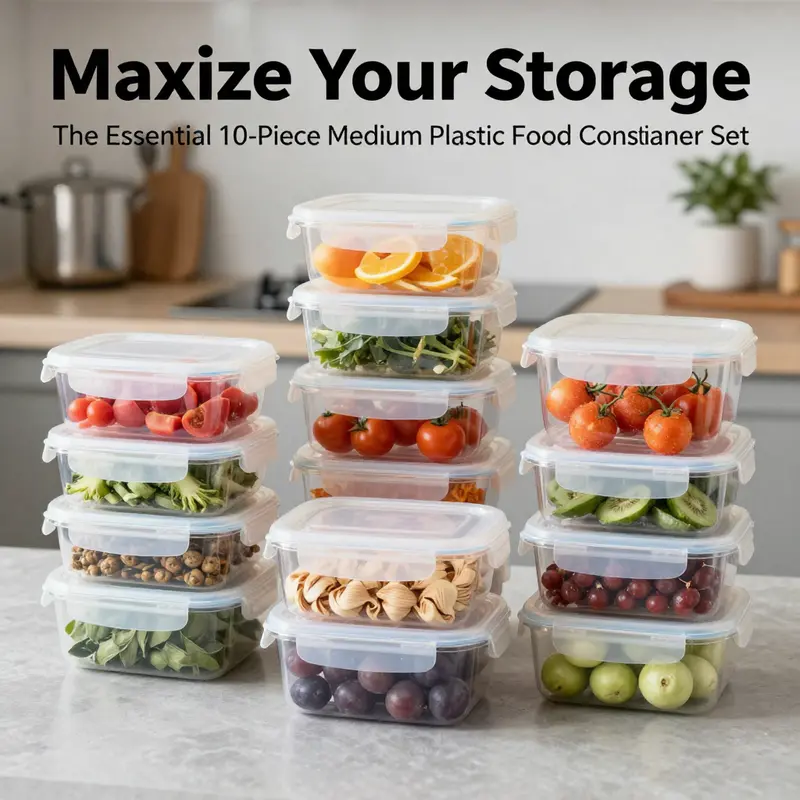
In the bustling realms of bubble tea shops, restaurants, food trucks, and catering services, the efficient organization of ingredients can significantly impact operational success. Enter the 10-Piece Medium Plastic Food Storage Container Set, designed with both functionality and aesthetics in mind. This article delves into the core features, material safety standards, and practical applications of this essential kitchen tool, demonstrating how it can assist businesses in storing ingredients securely, maintaining hygiene, and optimizing workspace. Each chapter will illuminate how these containers can elevate your food storage game while ensuring compliance with food safety standards and enhancing your overall kitchen organization.
Architects of the Pantry: How a 10-Piece Medium Plastic Storage Set Redefines Freshness, Space, and Everyday Cooking
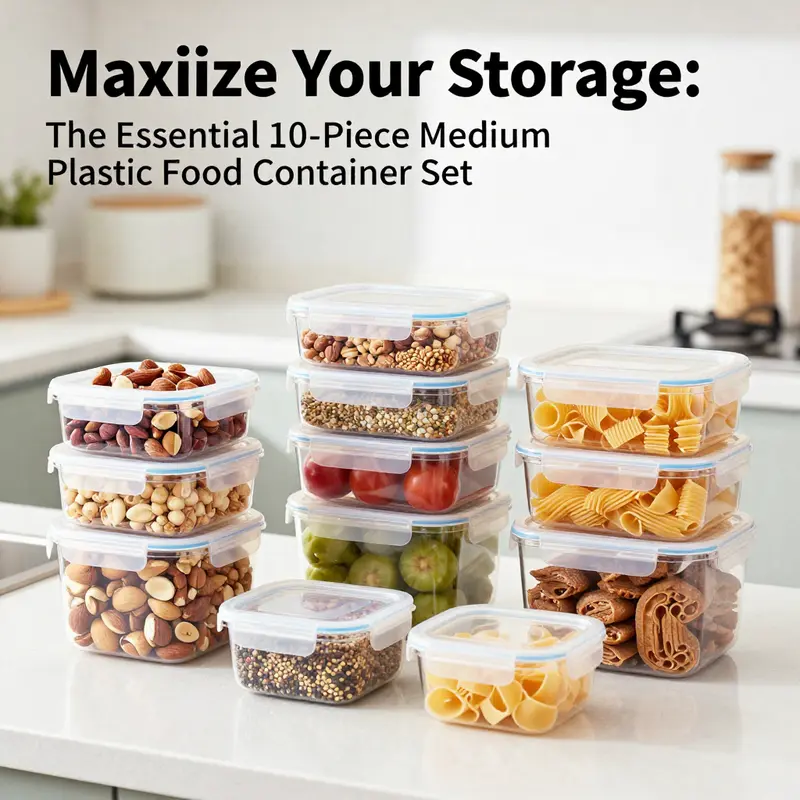
In the rhythm of a well‑ordered kitchen, a simple rectangle can become a reliable instrument. A 10-piece medium plastic storage container set, designed with rectangle silhouettes and a balanced capacity around 1600 ml per piece, moves beyond mere containment. It becomes a framework for routine: batch cooking, precise meal planning, and the quiet choreography of daily life where leftovers, dry goods, and snacks mingle in orderly harmony. The essence of such a set lies not in a singular feature but in the way its parts interact with the flow of the home. A pantry that feels composed is often a reflection of the containers that hold its contents—clear, stackable, and forgiving enough to handle the ebb and flow of a busy family schedule. In this chapter, the discussion unfolds as a cohesive exploration of how medium‑sized, ten‑piece plastic storage helps restore balance to the kitchen, preserve flavor, and maximize space, without sacrificing ease of use or safety.
Material choice is the quiet engine of durability and practicality. The containers are crafted from a sturdy plastic that keeps weight manageable while resisting the bumps and tosses of daily life. Polypropylene, a common choice for food‑contact containers, offers a favorable combination of clarity, resilience, and resistance to cracking or clouding over time. The impact of material selection extends beyond mere heft. It touches cleanliness, because a surface that resists staining and odor absorption simplifies the routine of washing and reusing containers. When a set is designed with food safety in mind, the confidence it affords a household stretches beyond the kitchen to the shopping cart and the recycling bin. The promise of safety is reinforced by certifications that signal alignment with rigorous standards. A well‑made medium set aims to be BPA‑free and compliant with widely recognized benchmarks—from food contact regulations in North America to European requirements—so that families can store grains, cereals, nuts, and snacks with a sense of assurance that echoes through every planned meal.
Airtight seals form the true heart of the set’s functionality. The lids are engineered to create a reliable barrier against moisture and air, a critical factor for preserving the texture and aroma of foods stored for days or even weeks. This is especially important for dry goods such as grains, dried fruit, cereals, and snack mixes, where a few days of exposure can transform crunch into staleness. The airtight seal plus a rigid body structure reduces the risk of condensation, which can invite clumping, mold, or the transfer of unwanted odors. It is in the subtle domain of moisture management that the value of a ten‑piece collection becomes clear: you can dedicate specific containers to particular items, remove guesswork from portioning, and avoid cross‑contamination of flavors that would otherwise blur the identity of staple ingredients.
Space optimization is another essential design principle that underpins the set’s usefulness. A core feature of a modern kitchen is the capacity to arrange and reconfigure storage to fit the available real estate. The rectangle profile matters precisely because it slots neatly alongside other containers and shelves. The lids and bases are designed to stack in a stable, interlocking way, enabling vertical stacking that makes the most of tall pantry sections or under‑cabinet storage. This is especially meaningful in compact living situations, where every inch of cabinet space counts. The vertical stacking reduces clutter and improves the mental map of the kitchen: when everything has a designated place, the act of cooking and preparing meals becomes less about hunting for the right container and more about flowing through a sequence of steps with minimal friction.
Versatility is the hallmark of what counts as good storage in a family kitchen. A 10‑piece set with medium capacity can accommodate a wide spectrum of foods and use cases. Leftovers find a tidy, predictable home, while batch‑cooking portions stand ready for quick lunches or dinners. Snack assortments—nuts, seeds, dried fruit, crackers—can be organized by category, color, or flavor profile, which makes it easier to curate a balanced eating pattern for both kids and adults. Freeze, reheat, or redefine as the weeks unfold: the ability to navigate different stages of food preparation without reaching for a different system is what helps a household sustain variety without chaos. In practice, this means not every container needs to be a perfect match for every scenario. Some are designated for long‑term dry storage, others for day‑to‑day meal prep, and still others for seasonal or time‑sensitive items—the set becomes a modular toolkit rather than a single, rigid solution.
From a safety perspective, the set’s design aspires to align with stringent guidelines that govern food contact materials. The combination of a robust polypropylene structure and carefully engineered seals supports regular use across common kitchen routines. The materials are chosen to be durable and non‑reactive, minimizing the potential for staining or odor retention that could compromise future uses. The safety narrative extends to the manufacturing standards that guide these products: adherence to recognized certifications offers reassurance that the containers have undergone scrutiny for safety in contact with food. In real terms, this means you can rely on the containers not only to keep food fresh but also to do so without introducing unwanted substances into your meals. The practical outcome is modest confidence: you can wash, store, and re‑use with less concern about the material’s compatibility with long‑term food storage or repeated heating in a microwave, dishwasher, or freezer. As with any kitchen tool, the actual experience will vary with usage patterns, but the overarching aim is clear: a durable, safe, and user‑friendly container set that can withstand the cadence of family life.
The everyday ease of use is a quiet but crucial aspect of how the set integrates into routine. The lids are designed for intuitive operation, with a lid that aligns with a simple press or snap to seal. This tactile simplicity lowers friction at the moment of storage, a factor that increasingly matters as households juggle school runs, work, and cooking experiments. Beyond the act of sealing, the containers tend to be dishwasher‑ and microwave‑friendly, and often freezer‑safe as well. These attributes expand the practical window for using the containers in a realistic kitchen cycle: you can move from freezer storage to microwave reheating with minimal transfer or risk of spillage, and you can clean quickly between uses without differential handling that would complicate chores. The net effect is a system that supports not just the preservation of food, but the preservation of time—time that would otherwise be spent managing multiple, less compatible storage options.
The narrative of storage efficiency inevitably touches on how a family structures its approach to meals. For many households, the daily grind is a sequence of decisions about what to cook, what to portion, and what to pull from the fridge or pantry when hunger pangs hit. The ten pieces in the set offer a practical lane for this decision‑making. A common pattern is to allocate containers to meal components: a container for cooked grains, one for vegetables blanched and ready to reheat, another for proteins portioned into ready‑to‑go slices or cubes. In this way, the set becomes a support system for meal prep, letting the cook assemble a complete dish with minimal improvisation at the last minute. For families with evolving routines—children’s lunches, weekend meal planning, or leftovers acting as a bridge between busy workdays—the ability to pre‑portion and label items translates into fewer last‑minute compromises and more consistent nutrition. The medium capacity category is particularly forgiving here: it’s large enough to hold a substantial portion, yet compact enough to avoid dominating a shelf or causing clutter when stacked beside other containers.
A broader trend underscored by this kind of storage solution is the movement toward modular, space‑efficient, and safety‑conscious home ecosystems. In the era of compact living, every kitchen is a small ecosystem with inputs and outputs that must balance out. The rectangle, the stack, the seal, and the safe materials together form a micro‑infrastructure that supports sustainable habits. People are increasingly mindful of reducing food waste, and the practical leverage of airtight containers is clear: better visibility, simpler organization, and more reliable preservation reduce the likelihood that good food is discarded because it spoils or loses its appeal before it’s used. The ten‑piece set embodies this philosophy by providing a complete, easy‑to‑use collection rather than a loose assortment of mismatched containers. The result is a pantry that looks and functions with confidence, where items are easy to locate, food remains fresher for longer, and the cognitive load of kitchen routines is diminished.
In discussing the broader context of packaging and storage, it’s also useful to acknowledge the evolving conversation about sustainability and consumer choices. While plastic storage remains a practical standard for many households, there is growing interest in alternative materials and designs that support longer life cycles and easier end‑of‑life processing. This tension between convenience and environmental considerations drives ongoing innovation in the category. Within this landscape, the rectangle 10‑piece medium set represents a pragmatic compromise: durable, safe, and easy to maintain, while still designed to maximize space efficiency and support diverse kitchen tasks. Even as the market explores compostable or reusable alternatives for other uses, the core needs of most homes—reliable containment, reliable freshness, and simple handling—keep this type of storage at the center of many kitchen routines.
To illustrate the practical integration of such a set into daily life, consider a typical week. On Monday, batch cooking yields a batch of quinoa, roasted vegetables, and a protein that can be combined into several dinners. The containers are filled with each component and placed in the fridge with clear labeling—an invisible cue that guides the week’s meals. By Tuesday, the workflow shifts toward snacks and grab‑and‑go lunches, with smaller portions portioned into two or three containers so kids can independently grab a balanced bite. By Thursday, leftovers from midweek dinners are re‑encouraged through reassembly into new dishes: warm through a protein, toss with fresh greens, and serve with a side of grains revived from the day before. This cycle, made practical by a small but capable set of containers, creates a pantry that doesn’t require heroic memory or frantic reorganizing every few days. It rewards consistency, reduces waste, and supports culinary creativity because the containers themselves become a silent partner—not an obstacle—in the journey from grocery list to table.
One practical note worth highlighting is the importance of choosing the right lid design for a given use. The set’s lids should provide a secure seal without being overly stiff, ensuring that daily use is a pleasure rather than a chore. The closure mechanism should perform reliably in the kitchen environment—the kind of reliability that comes from tested design principles rather than occasional, inconsistent performance. In the same spirit, ease of cleaning matters. Containers that resist staining and odor absorption simplify maintenance, encouraging regular reuse rather than disposal after a single season of use. In a home where the dishwasher is a key ally, the compatibility of containers with dishwasher cycles is not a luxury but a necessity that keeps the system practical and inviting.
The narrative here is not about a single feature in isolation but about a holistic approach to storage that respects the realities of family life. It is about how a carefully designed 10‑piece medium set—rectangular, stackable, durable, and safe—can bring order to chaos and calm to routine. It is about how such a system nudges households toward better habits, from mindful leftovers management to intentional meal prep, and how, in turn, those habits contribute to a more efficient, less wasteful kitchen ecosystem. It is about the quiet competence that emerges when the right tools are in place—tools that feel invisible because they simply work as expected, day after day.
To acknowledge the broader ecosystem of packaging and sustainability, consider the role of alternatives and complementary items within a household’s overall storage strategy. While high‑quality plastic storage provides a durable, convenient solution for everyday needs, it exists alongside other materials and forms that support a more sustainable approach. For instance, while not substituting the core function of the rectangular plastic containers, households may explore serving vessels or secondary storage options that align with seasonal menus or special occasions. A good example of broader packaging considerations can be seen in related items that emphasize take‑out convenience, where a variety of shapes and materials are used to optimize waste, transportation, and usability. For readers who are curious about how different packaging formats intersect with storage needs, one relevant resource is a detailed look at take‑out packaging options and their practical implications for daily life: disposable-700ml kraft paper bowls with take‑out capability. This reference, while not a direct substitute for the primary storage set, helps illustrate the broader ecosystem of containers and the practical decisions that households navigate when balancing convenience, cost, and sustainability in food storage and service. disposable-700ml-kraft-paper-bowl-take-out-octagonal-rectangle-paper-bowl
In sum, the value of a 10‑piece medium plastic storage container set lies in its capacity to harmonize several overlapping needs: preserving freshness, conserving space, enabling versatile use, and supporting a safe and straightforward user experience. Its rectangle form factor optimizes shelves and cupboards, its airtight seals protect the integrity of dry goods and prepared foods, and its durable materials provide reassurance through years of daily use. When households adopt such a system, they do more than store food. They create a sustainable pattern of organization that reduces waste, promotes healthier eating habits, and makes the kitchen a friend rather than a taskmaster. The story of this set is not a tale of a single improvement but a chapter in a broader conversation about how thoughtful design, responsible material choices, and practical features converge to deliver not only preserved food but a more efficient and enjoyable living space. And in that convergence, the kitchen becomes a canvas where everyday routines are painted with clarity, predictability, and a touch of quiet joy.
External resources continue to guide best practices in food safety and packaging design. For those who want to explore the safety standards that underpin materials used in food containers, the FDA provides authoritative guidance on food contact substances and related regulations. This background supports consumer confidence when selecting containers for long‑term use and frequent reheating, freezing, and washing. https://www.fda.gov/food/packaging-labeling-food-contact-substances
Guardians of Freshness: Safety, Design, and the 10-Piece Medium Plastic Food Storage Set
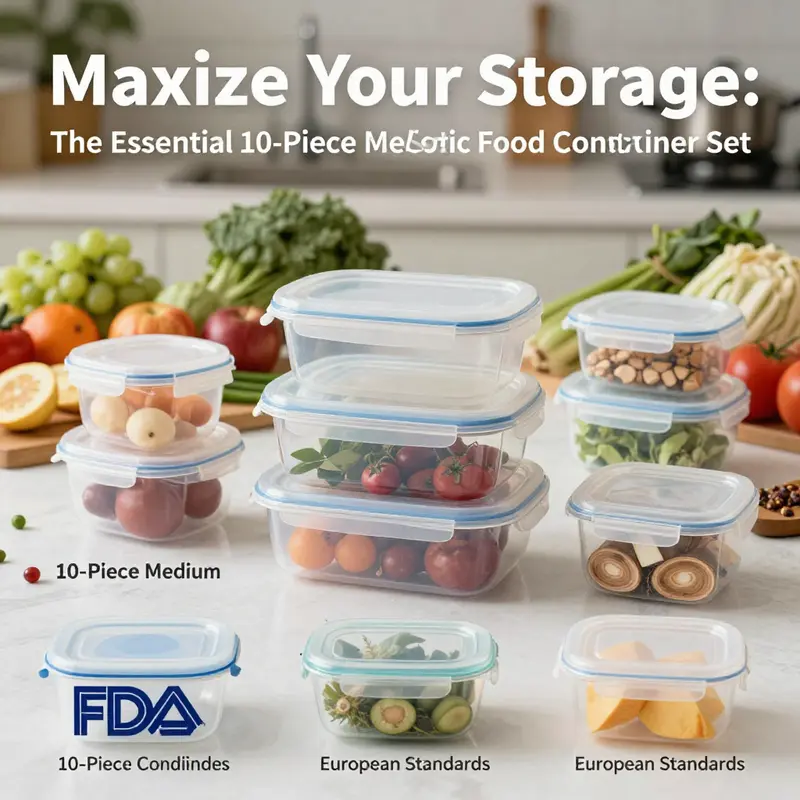
In kitchens around the world, a well-chosen set of storage containers does more than hold leftovers. It creates a quiet framework for the daily rhythm of meals, snacks, and the small decisions that keep food from slipping toward waste. A 10-piece medium plastic set with rectangular shapes embodies a particular balance of capacity, practicality, and safety. It sits at a size that is manageable for most families, large enough to store a box of oats or a baker’s dozen of nuts, yet compact enough to tuck into a pantry or a crowded cabinet. The rectangular silhouette is not merely a design choice; it is a practical decision that maximizes the often precious vertical space in a modern kitchen. The promise of such a set rests on three pillars: a robust material that is safe for food contact, a lid system that preserves freshness, and a thoughtful shape that makes the most of scarce storage real estate. When these elements come together, the result is more than a product. It is a trusted everyday ally that helps you keep dry goods dry, grains grainy in their best condition, and snacks free from the dampness that can dull flavor and texture alike. In practice, that means you might pour dried beans into one container and almond slivers into another, each with its own air-tight seal. The 1.6-liter scale, a common capacity in many medium sets, offers a flexible middle ground: enough space to avoid overfilling, yet not so large that a single family’s weekly needs require a mountain of plastic lids and mismatched boxes. The specific configuration of a typical 10-piece rectangle set—ten containers with matching lids—reflects a design philosophy: keep things simple, predictable, and scalable. This approach recognizes that households vary in what they store, how often they cook, and how vehicles of clutter often invade pantry space. A set that uses consistent, stackable dimensions reduces the cognitive load of organization. You reach for a container without having to guess whether it will fit in the upper shelf or beneath the bread box, and you can allot clear, quick visibility to what’s inside, which in turn reduces waste by making it easier to see leftovers before they reach their best-by moment. The decision to choose a medium, rectangular format often goes hand in hand with a commitment to durability and safety as well. In a world where meals are prepared in advance and materials are scrutinized for safety, the material choice becomes a form of daily care. The most widely adopted materials for these kinds of containers are food-grade polymers that promise resilience in the kitchen environment and safety in contact with food. A common baseline in this category is a thermoplastic polymer known for its balance of stiffness, clarity, and chemical resistance. The material is designed to withstand typical kitchen conditions: it does not degrade under repeated wash cycles, it resists staining from coffee and spices, and it remains reasonably clear so you can inspect contents at a glance. Yet the real test of safety lies not just in the material’s name, but in the regulatory assurances that accompany it. The modern consumer demands more than a promise; they want a clear signal that the containers meet established safety standards for food contact. And here the conversation naturally turns to the language of compliance: the U.S. FDA’s framework for food-contact materials, third-party certifications, and the ongoing conversation about what “food-grade” really means in a world of complex supply chains. When a 10-piece medium set is evaluated through this lens, several practical criteria emerge that help separate good options from merely convenient ones. The most critical criterion is the absence of harmful substances that can migrate into food. BPA, once ubiquitous in polycarbonate plastics, has become the poster child for the debate over safe food storage. The modern standard in this space is not just “BPA-free,” but the ongoing awareness that substitutes may still carry concerns. In this context, the most trusted choices are those that rely on well-established resins known for decades of safe use in food storage. Among these, two resins stand out for different reasons. Polypropylene, commonly designated as PP and labeled as a #5 resin, is celebrated for its heat resistance and low risk of chemical migration. It is widely regarded as microwave-safe (up to typical household temperatures), freezer-safe, and dishwasher-safe on the top rack. Its performance is well suited to a set designed for daily use and for long-term storage, where containers may move from freezer to microwave to tabletop, sometimes within the same day. The other resin, high-density polyethylene or HDPE (labeled #2), also carries a strong safety profile. HDPE is robust, chemical-resistant, and often used for items that demand durability and a long service life. While HDPE is less commonly used in the sleek, stackable sets marketed as “rectangle, 10-piece,” it remains a reliable option in storage systems that value longevity and impact resistance, especially for items that may endure rough handling or demanding environments. The bottom line for safety is the combination of material choice with explicit labeling. A 10-piece medium set should clearly indicate that the plastic is suitable for food contact and should ideally specify the resin type—#5 PP or #2 HDPE—along with explicit assurances such as microwave-freezersafe and top-rack dishwasher-safe. This transparency matters because it gives you a concrete basis for trust rather than a vague impression of safety. The best practice in contemporary consumer science is to see material safety as a cross-cutting property: it is not merely about a single feature, but about a bundle of commitments that a product embodies. It is common for reputable containers to accompany their packaging with a concise safety declaration, including references to standards and, when applicable, third-party certifications that corroborate the manufacturer’s claims. A mature, responsible approach to selecting a 10-piece set is to look for explicit statements such as “made from #5 polypropylene,” “BPA-free,” and “microwave-safe.” While these labels are important, they are only part of the story. The overall safety profile depends on the entire lifecycle of the product—from resin manufacturing to finished product testing, from how the product is used in kitchens to how it is disposed of when it reaches the end of its useful life. Real-world testing often accompanies formal certifications. In practice, you’ll find that credible brands either pursue independent testing and certification or maintain rigorous internal quality controls that align with recognized standards, such as NSF International or ISO-based frameworks. In the context of a 10-piece medium set, consumers increasingly value this kind of verification because it reassures that the seal you rely on for your pantry is backed by a robust process rather than marketing claims alone. Food safety is not a static target; it evolves as new research illuminates the behavior of plastics under various conditions. For instance, even when a container is described as BPA-free, researchers point to substitutes that may exhibit similar activity under specific circumstances. This is something to keep in mind when you evaluate sets that are pitched as safe in the short term but lack long-term, independent validation. The practical implication for everyday use is simple: prioritize resin type, confirm the presence of a reliable seal, and observe clear indications of dishwasher and microwave suitability. If you keep these considerations at the forefront, a 10-piece medium set becomes less a mere collection of boxes and more a carefully chosen system that protects the flavor, aroma, and texture of what you store. The lid mechanism is another crucial element in this equation. Air-tight or near air-tight seals rely on a well-engineered lid geometry combined with o-ring or silicone gasket technology. In a high-quality rectangle set, you should expect a gasket that remains durable after repeated cycles and does not pinch, warp, or detach from the lid. The seals are not just about preventing leaks; they serve to maintain moisture levels and minimize the exchange of air that can lead to rapid staling of grains, nuts, cereals, and dried fruit. The lids in these systems should snap on firmly without requiring excessive force, while still offering a simple mechanism for removal and cleaning. The tactile feedback of a secure seal—an audible click or a satisfying snap—can be a small but meaningful cue of reliability in daily use. A well-designed set also benefits from a shape that supports stacking without compromising access. Rectangular containers suit most pantry shelves and can be nested or stacked to optimize vertical space. When a kitchen is compact, every centimeter saved matters. A container that fits flush against its neighbor reduces the risk of tipping and makes the whole storage area easier to navigate. In practice, you may find that the 10-piece medium rectangle set yields a clean, uniform shelf line, with lids aligned in a single row along the top. This disciplined arrangement, besides being aesthetically pleasing, reduces the mental load of meal planning. You know where to locate your dry goods; you know which containers are clean enough for a quick dinner prep; and you have a reliable system for rotating stock to prevent waste. The material choice and lid design, then, are not cosmetic decisions. They shape the daily rituals that frame our cooking and eating, especially in households with limited storage space. The trade-off between capacity, durability, and ease of cleaning must be well balanced. In a typical 1.6-liter-per-container configuration, there is room to store multiple pantry staples without crowding. This capacity is large enough to hold a box of quinoa or a bag of oats, yet compact enough to keep the set from dominating a shelf. The rectangle form adds further advantage by aligning with the natural geometry of kitchen cabinetry. The combined effect is a set that supports both the practicalities of food storage and the aesthetics of a well-organized kitchen. For readers considering this kind of system, it is worth noting how the choice of symbols and labeling on the containers can influence daily use. Clear bodies that show contents at a glance reduce the friction of meal prep. A translucent body invites quick recognition; it helps you avoid opening several containers to find yesterday’s leftovers while a draft of air from the fridge seeps slowly into other packages. In this way, the material is not only about safety and durability but also about visual clarity, which in turn supports better food hygiene and planning. The conversation about plastic safety rarely remains isolated within the walls of a home. It intersects with broader questions about sustainability, waste, and resource use. A four-step mental frame helps readers approach the topic with both caution and practicality. First, consider the resin type and safety signals, as discussed earlier. Second, assess the design for durability and repairability—how easily lids can be replaced, whether gaskets can be resealed after wear, and whether the set supports long-term reuse rather than quick replacement. Third, reflect on usability in real life: stackability, dishwasher guidance, and how the containers behave in the freezer. Fourth, align with the end-of-life story, including whether the resin can be recycled and whether the packaging itself supports responsible disposal. These steps create a wholesome evaluation that aligns with the modern kitchen’s expectations: safety, convenience, and stewardship. While reviewing a particular 10-piece medium set, it can be tempting to focus on a single feature such as airtightness or capacity. Yet the most satisfying choice emerges when you see how the pieces interact to form a cohesive system. A well-conceived set becomes a kind of culinary co-pilot, a quiet helper that eliminates guesswork when you pack snacks for a road trip, prepare a week’s worth of lunches, or curate the pantry’s rotating stock. The rectangular footprint invites a disciplined approach to layout and labeling, while the 1.6-liter content capacity per unit aligns with the practical realities of daily cooking and storage. The interplay of safety, design, and practicality culminates in a product that does more than hold food. It helps sustain the routines that keep a family nourished, organized, and free from the anxiety of spoilage. In this sense, the discussion about a 10-piece medium plastic storage set transcends mere consumer choice. It is about a small but meaningful alignment of human behavior, product design, and regulatory guidance that together support healthier, more efficient living. For readers who want to explore related packaging options beyond plastic, consider exploring packaging choices such as eco-friendly paper-based containers for certain foods. For instance, you can find related green packaging solutions like eco-friendly printed-logo paper cups with lids, which illustrate an expanding landscape of storage and serving options that balance convenience with sustainability. eco-friendly printed-logo paper cups with lids. This broader perspective underscores that there is no single perfect material for every use; rather, the strongest approach is to understand the trade-offs, select materials with transparent safety credentials, and design systems that support both everyday life and the long arc of responsible consumption. The best practice is to seek clear labels: microwave-safe, freezer-safe, dishwasher-safe, BPA-free, and made from #5 polypropylene when possible. Always verify migration and testing claims, and be mindful that “BPA-free” does not automatically guarantee safety if substitutes have not been proven to be nonhazardous in the long term. In the end, a 10-piece medium plastic storage set can be more than a purchase; it can be a repetitive, reliable routine that sustains freshness and reduces waste across weeks and seasons. The rectangle’s geometry and the material science behind it come together to give you a product that behaves calmly under the pressures of daily life—hectic mornings, meal-prep Sundays, the quiet, careful storage of herbs and spices, and the slow persistence of pantry staples. This balance of form and function—capacity that accommodates the varied foods we cherish, a lid system that preserves flavor and texture, and a material choice anchored in safety and durability—defines the practical elegance of a well-made 10-piece medium set. When you consider adding such a system to your kitchen, you are not merely stocking up on containers. You are investing in a reliable framework that helps you control moisture, limit waste, and make leftovers feel like a planned, not improvised, part of your menu. And if you ever pause to reflect on the safety signals that accompany these choices, remember that the strongest confidence comes from a transparent combination of resin type, certification, and honest labeling. Those signals together offer a quiet assurance that your food remains as fresh on day seven as it was on day one, and that your kitchen moves through the week with less clutter and more clarity. For readers seeking authoritative regulatory context on these materials, consult the FDA’s official guidance on food contact materials regulations, which outlines the migration limits, testing expectations, and compliance pathways that underpin safe use of plastics in food storage. FDA Food Contact Materials Regulations
From Pantry to Plan: Designing Modern Kitchens with the 10-Piece Medium Plastic Storage Set
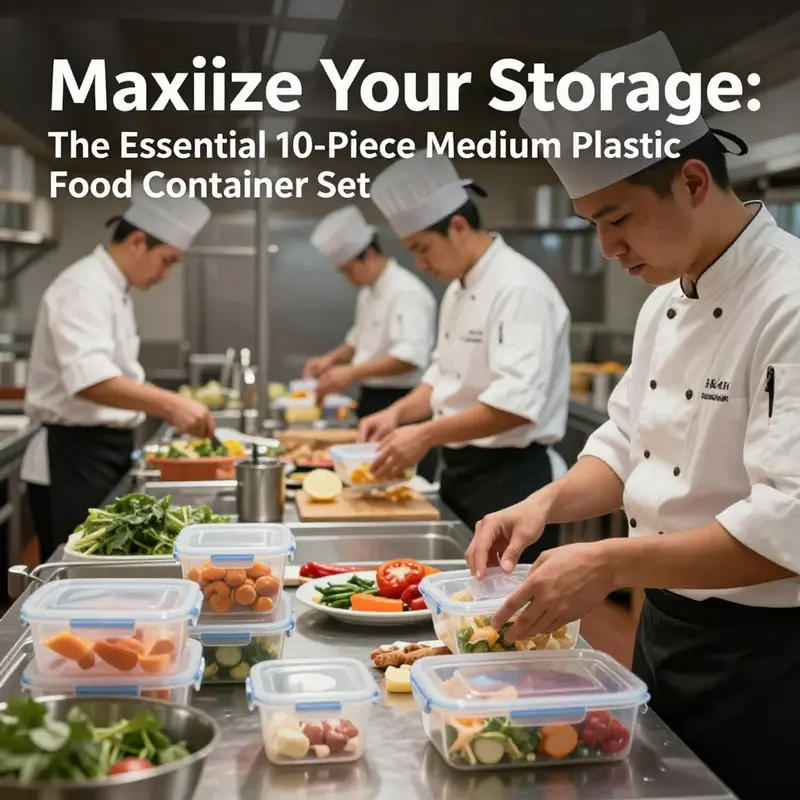
In every kitchen, organization is a quiet engine that keeps meals moving from dawn to dinner. The 10-piece medium plastic storage container set emerges not merely as a collection of lids and bases, but as a flexible system that translates the messy, floating inventory of a busy home into a predictable, efficient routine. When you view storage as a workflow rather than a set of scattered containers, the value of a tightly designed, medium-sized, rectangular kit becomes clear. Each piece, with its 1600 ml capacity, is calibrated for daily use, long enough to hold a substantial bag of grains or a week’s worth of snacks, yet compact enough to slide into a crowded cabinet or a refrigerator shelf without creating a web of clutter. The rectangular geometry matters here. It aligns with how most pantries and refrigerators are organized, allowing the set to nest neatly beside a stack of similar shapes or to form a tidy column of vertical space. This is not merely about keeping food fresh; it is about shaping a kitchen that breathes ease, where every item has a purpose and a place that makes sense at a glance.
A core strength of this 10-piece ensemble lies in its material choice and safety credentials. Crafted from durable polypropylene, the containers are built to withstand the daily tasks of a modern household. PP is known for its resilience and light weight, making the set easy to handle for all family members. Beyond practicality, safety standards anchor the design: FDA compliance to 21 CFR 177 and additional European certifications such as CE, BV, and ISO underpin the product’s suitability for food storage. In a market where certifications can be a maze, this combination offers reassurance that the containers are intended for real-world use with real foods. The emphasis on food-grade safety becomes especially relevant when considering storage needs for babies’ foods, health supplements, or any items that warrant meticulous handling. The material choice and the associated certifications form a foundation you can trust, a quiet assurance that the containers won’t impart unwanted flavors, odors, or contaminants to your meals over time.
Function follows form in a way that genuinely changes daily routines. The airtight seal is not a luxury; it is the mechanism that preserves texture, aroma, and nutrient integrity across days. Dry goods—grains, dried fruits, pasta, rice, cereals—benefit enormously when exposure to air is minimized. The seal keeps out moisture and prevents the kind of humidity-driven staleness that erodes flavor and mouthfeel. In kitchens where humidity fluctuates with the seasons, this airtight design becomes a dependable constant. A well-sealed container also acts as a barrier against pantry pests, a practical safeguard that protects shopping dollars and reduces waste. The stackable profile further reinforces the sense of control. The set’s thoughtful geometry allows containers to nest or stack, transforming underutilized vertical space into a structured pantry or refrigerator corridor. For those living in compact apartments or homes with limited storage, the ability to stack without sacrificing accessibility is a meaningful upgrade. When you add the modularity of a 10-piece lineup, the system becomes more than the sum of its parts. You can dedicate one container to pasta, another to rice, a third to granola; you can rotate, combine, and substitute without losing sight of what you have or what you need next. The upside is not only neater shelves, but faster meal planning: measure out a week’s worth of ingredients, portion them into designated containers, and move on to actual cooking with a clear map of what remains.
The practical applications extend beyond the kitchen, which is a reminder that a good storage set is a tool for life. The same airtight, stackable, medium-sized containers can be deployed for snacks, baking supplies, or spices in a pantry, turning a chaotic draw into an orderly grid of labeled, easy-to-access options. They can also serve organizational needs in the fridge or freezer, where the seal helps preserve flavors across longer cycles. In short, the set is adaptable enough to support multiple routines: batch cooking for the week, meal-prep Sunday rituals, or a quick grab-and-go approach for busy mornings. The durability of the PP plastic means everyday use won’t degrade the containers’ integrity, so you don’t have to replace them frequently, an important consideration in a market where disposable alternatives flood the shelves. Aesthetics matter as well. The clean lines of a rectangular configuration and the uniformity of the 10-piece set contribute to a calm, orderly visual rhythm on the counter, in the cabinet, or within the fridge. A kitchen that looks organized often feels more organized, which, in turn, makes you more likely to prepare meals at home rather than default to takeout.
In practice, the scale and shape of the set invite a disciplined approach to storage without feeling rigid or punitive. For example, when you prepare a shopping list or plan a week’s meals, you can assign each ingredient to a designated container. A 1600 ml capacity provides a meaningful chunk of space for dry goods and bulk items—enough to store a substantial bag of lentils or a bag of quinoa, a box of cereal, or several servings of oats. When air and moisture are kept at bay, these staples stay fresher longer, maintaining their texture and reducing the need to discard partially used portions. This is especially advantageous for households that chase freshness while balancing budgets. By extending the usable life of pantry staples, you reduce waste and stretch every grocery dollar further. The airtight design is complemented by a design sensibility that recognizes how people actually cook. The containers are easy to open and reseal, which matters for mornings when time is tight and the goal is to assemble breakfast quickly without wrestling with stubborn lids. The design’s simplicity—no fiddly locks, no fragile hinges—translates into reliability; you’ll reach for the same container repeatedly throughout the week and not worry about malfunction or wear.
One aspect that often goes unspoken is how a set of containers interacts with the broader ecosystem of kitchen tools. The 10-piece medium set is not a standalone hero; it is part of a larger storage philosophy that includes labeling systems, shelf planning, and even cross-material compatibility. In this context, the family of products that sits alongside these rectangular containers—such as durable paper-based bowls and other take-away style storage options—becomes relevant. For those seeking complementary options that share a similar approach to portioning and portability, a related family of products offers a compelling parallel: Kraft paper food storage bowls designed for salads and noodle bowls. These kraft-based solutions, while different in material, echo the same ethos of simple, practical storage that respects both the meal and the space it occupies. The link to this related storage approach can be found here: Kraft paper food storage bowls. This cross-category reference is not about duplicating functionality but about recognizing a broader pattern in household organization: durable, reusable containers that reduce waste, paired with easy-to-use, low-friction vessels for serving, packing, or transporting foods when needed.
Beyond the pantry, the versatility of the set invites creative uses that can streamline daily routines. For families with specific dietary needs, the containers can be employed to portion out ingredients for vegan or gluten-free meals, making dietary adherence easier without sacrificing variety. For households that batch-create snacks for kids—a habit that often dissolves into a tangle of plastic bags and loose wrappers—the containers offer a repeatable, clean system that protects freshness and reduces plastic waste. The modularity also lends itself to non-food applications, such as organizing small craft supplies, beads, or office supplies. A compact, uniform container can become a reliable catchall for loose items, turning a chaotic desk drawer or craft shelf into an orderly, accessible space. In all these uses, the core advantages remain constant: the containers are durable, easy to use, and designed to preserve what they hold. The combination of material choice, safety credentials, airtight seams, and thoughtful geometry creates a holistic storage solution that transcends a single use case.
From the perspective of long-term value, the 10-piece set presents a compelling case for investing in a storage system that respects the food we eat and the spaces we inhabit. The polypropylene construction endures through regular microwaving (when labeled as microwave-safe), washing, and freezing, while the BPA-free composition minimizes concerns about chemical migration. The initial outlay buys a durable core that can serve a family for years, adapting as needs evolve—from storing bulk grains to supporting weekly meal-prep routines and even housing non-food items during seasonal reorganizations. The products that accompany such a system—whether lids with robust seals, color-coded bands for quick identification, or translucent walls that let you see contents at a glance—often come to complement this core set, reinforcing the idea that storage can be both functional and visually cohesive. In environments where space is at a premium, these principles matter more than ever. A well-thought-out set of containers can be the difference between a pantry that slows you down and one that accelerates your cooking process.
The practical implications for different households are nuanced but measurable. In small apartments, the vertical, stackable design represents a practical uplift that makes previously unusable space accessible. A pantry wall can become a grid of containers that align with how you think about meals: grains and cereals on one shelf, pasta and rice on another, and snacks tucked neatly away in a third. The result is a kitchen where every item has a defined home, reducing search time and decision fatigue. For larger families, the 10-piece set scales with the need for stability and rhythm. You can allocate containers for bulk shopping, for school lunches, or for batch-cooked dinners, then rotate them without disrupting the overall system. The containers’ durability supports the constant handling that comes with busy households, while the airtight seals preserve freshness during the weeks between grocery runs. Even households that emphasize quick, casual eating can benefit: a pre-measured supply of ingredients allows for rapid assembly, helping to minimize last-minute junk food picks and promote healthier choices.
In a broader cultural sense, storage is a reflection of how we value time, space, and the resources we consume. A well-designed 10-piece medium set invites people to reimagine their routines, turning the act of storing food into an intentional practice rather than a passive background task. It aligns with contemporary moves toward minimalist, efficient living without demanding a drastic overhaul of habits. The rectangular form meets everyday ergonomic needs; the 1600 ml capacity per container balances the desire for substantial portions with the practical limit of what can be managed in a typical refrigerator or cabinet. The airtight seal reinforces the attitude that freshness is a resource to be protected, not squandered. The combination of safety credentials, durability, and user-friendly design offers a level of reliability that home cooks, bakers, parents, and students alike can appreciate. In that sense, this 10-piece set is not just a product; it is a recurring instrument in a kitchen’s daily symphony, a predictable component that helps every other element of the meal plan perform more smoothly.
If you are building a cohesive storage system, consider how this set can harmonize with other organizational choices in your home. The durability and safety profile enable it to handle a broad spectrum of contents—from everyday staples to specialty ingredients—while its space-saving design gently invites you to rethink how you arrange your shelves. The result is a kitchen that not only stays fresh longer but also feels calmer, more predictable, and more capable of supporting the rhythms of a busy life. The value is measured not only in the immediate containment of food but in the longer arc of reducing waste, saving time, and elevating the everyday act of cooking into a more intentional and enjoyable experience.
External resource: Alibaba listing for 10-Piece 1600ml Airtight Plastic Food Containers: https://www.alibaba.com/product-detail/10-Piece-1600ml-Airtight-Plastic-Food_1600483954222.html
Final thoughts
The 10-Piece Medium Plastic Food Storage Container Set is more than just a storage solution; it represents an essential tool that bolsters efficiency and safety within any food-related business. By understanding its core features, material safety standards, and practical applications, operators can streamline their ingredient storage process, enhance organizational frameworks, and maintain compliance with health regulations. Investing in a reliable food storage system ultimately leads to smoother operations and ensures that your food remains fresh and safely stored, allowing you to focus on delivering the best culinary experience for your clients.