
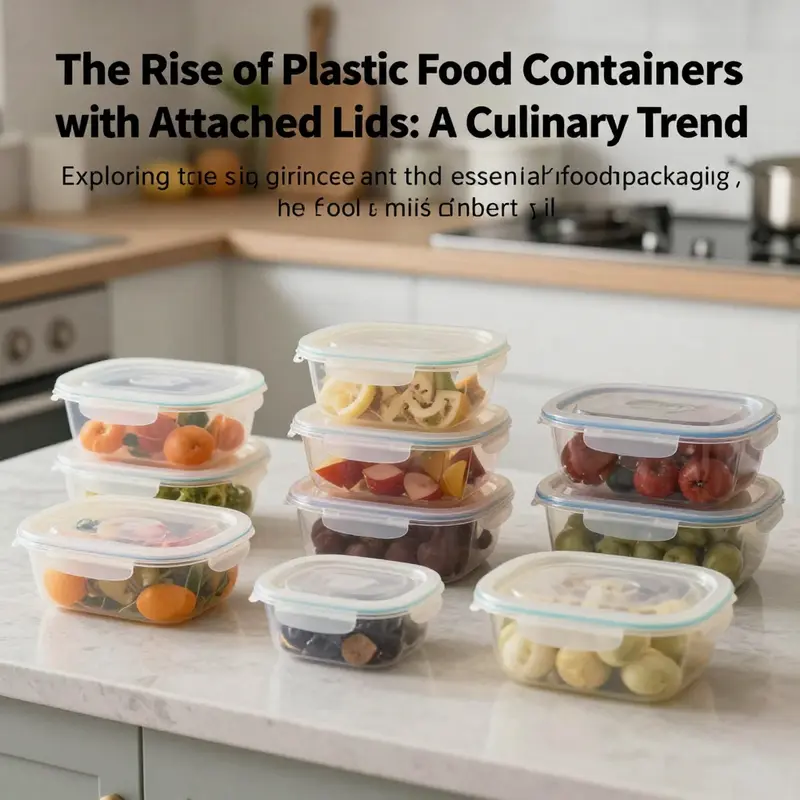
Plastic food containers with attached lids have become a staple in kitchens, food trucks, and catering services, often showcased on popular TV cooking shows. These containers serve not only as a practical solution for meal prep but also reflect evolving consumer preferences and industry advancements. This article delves into the evolution of these containers, their economic impact on the food service industry, and the current trends guiding consumer choices, ultimately painting a comprehensive picture of why they are so vital to businesses today.
From TV Demonstrations to Everyday Kitchens: The Enduring Allure of Attached-Lid Plastic Food Containers
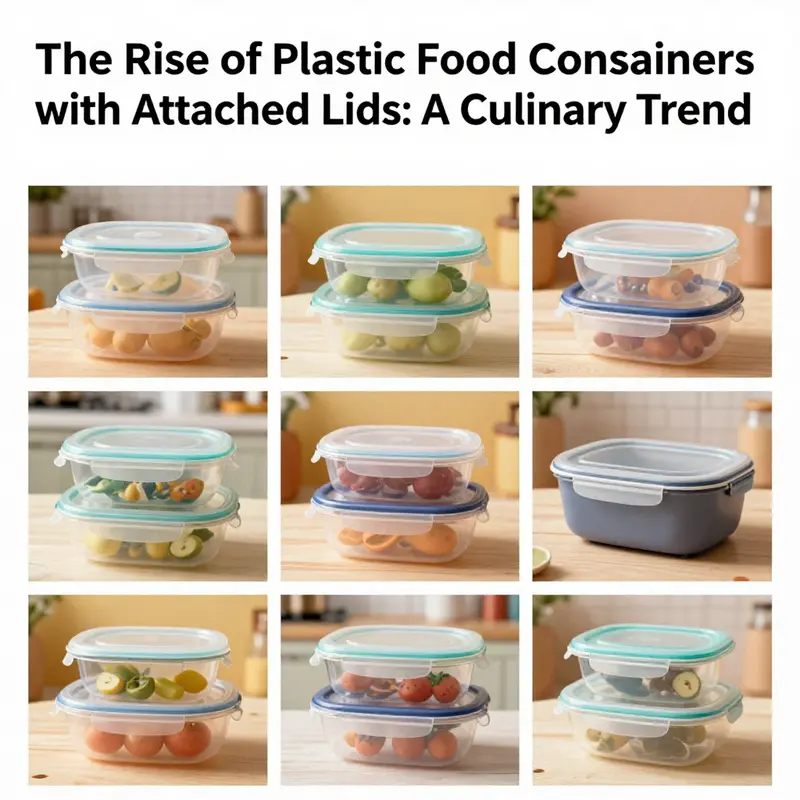
Television tends to distill practical ideas into simple actions that people can imitate at home. Viewers watch a cook seal portions with a single confident press and hand over an airtight container that seems to belong in every kitchen. The result is a small fantasy of meals prepped in advance, easy to transport, and easily reheated. The plastic containers with attached lids shown on cooking shows have become more than containers; they embody a philosophy of convenience, reliability, and simplicity that travels from studio sets to busy weekday routines. When shown on screen, the lesson goes beyond what to store; it shows how stored food can keep flavor, texture, and safety with minimal fuss. The lid attached to the container is not an afterthought; it is a hinge on which much of the product promise turns. From TV demonstrations to everyday use, attached lid containers have become a quiet workhorse of the modern kitchen, supporting meal prep, school and office lunches, and family meals.
The material story centers on polypropylene, or PP, as the workhorse polymer. It offers clarity, strength, and heat resistance for a range of uses—from cold salads to hot leftovers reheated in a microwave. The BPA free claim matters to consumers, reflecting concerns about chemical additives. In practical terms BPA free translates into trust. Viewers see a product safe for reheating, washing, and repeated use, lowering the perceived risk of daily use. The walls are clear, letting you see contents without opening the lid; this clarity helps identify contents quickly, valued in households juggling meals across a week. This transparency is practical, reduces the cognitive load of meal planning. When you see what is inside, decisions about what to eat and when to reheat become more efficient, a small but meaningful improvement in daily life.
The design story focuses on lids that stay tethered, addressing the annoyance of lids vanishing or getting misplaced. In homes with kids or crowded refrigerators, an attached lid reduces small frustrations of ordinary storage systems. The lid remains within reach, increasing perceived reliability. If the lid is always within reach, users are less likely to misplace it in the car or kitchen drawer. This seemingly small feature becomes a real reason people choose one container over another at the moment of purchase, and it helps sustain the habit of prepping and packing meals ahead. The design also supports portability: a single attached unit reduces bulk and simplifies stacking. Carrying multiple portions to work or school, or packing leftovers for a day, the absence of loose lids means fewer misalignments, spills, leaks during transit. There is a quiet efficiency to this approach that resonates with people balancing tight schedules.
The television framed version emphasizes core capabilities that translate into real world usefulness. First, the seal must be airtight enough to prevent leaks while forgiving enough to maintain its integrity after repeated use. The combination of a secure seal with a hinge that withstands repeated opening and closing cycles matters in kitchens that rely on daily meal prep. Airtightness also helps with freezer storage, a common requirement for batch cooking, where a container might need to withstand low temperatures without cracking or losing sealing performance. When reheating, the lid’s design can influence steam release; some models offer a venting mechanism that reduces pressure buildup, making reheating safer and more efficient. These engineering decisions—how the gasket interacts with the rim, how much flexibility the lid has at the hinge, how sharply the container walls resist deformation under heat—play a disproportionate role in user satisfaction. TV demonstrations often spotlight these details, turning a routine lunch container into a product that promises longevity and dependable performance.
The media fed narrative around attached lid containers has helped frame them within broader patterns of eating and living. As meal prep culture grew, the idea of pack it, travel with it, reheat it became a recurring motif in cooking segments and lifestyle programming. The ease of transporting a single attached unit to work, school, or a picnic speaks to an ongoing search for efficiency in daily routines. The attached lid form supports this through simplification: no separate lids to misplace, no lids to screw down or snap in place under time pressure. The result is a storage system that aligns with time poor realities while still offering a sense of control over portions and freshness. The clarity of the walls helps users quickly assess what is inside, reducing the need to open multiple containers to determine contents. When a viewer feels confident about freshness, reheating, and portioning, a simple product becomes a trusted ally in daily life.
Within households, the attachment design also affects the storage experience in a tactile way. The lid’s connection to the body of the container creates a unified silhouette that stacks neatly in the fridge, freezer, and pantry. This stacking efficiency matters in kitchens with limited space, where every cubic inch counts. The clear walls provide visual cues about contents, enabling quick, practical decisions about what to eat and when to eat it. A visually organized lineup of containers can encourage healthier eating patterns simply by reducing the effort required to prepare and portion meals ahead of time. The result is a kind of gravitational pull: once a family adopts a system of attached lid containers, the habit becomes self reinforcing, not merely a fad seen on a screen but a routine that shapes behavior and taste over months and years.
The sustainability dimension adds another layer to the story. Polypropylene’s recyclability, when done correctly, aligns with broader environmental goals that many households now pursue. The BPA free claim resonates with consumers who are mindful of chemical exposure, especially when reheating foods. However attached lids can complicate recycling streams if not handled properly. Lids and containers can be sorted together in some programs, but in others they must be separated to avoid contamination. The practical takeaway is to understand local recycling guidelines and to rinse containers before recycling. The on screen narrative of durability and reuse fits with a grown up, slower consumer confidence in responsible consumption. These are not just gadgets; they reflect a habit of shopping, using, and reusing.
For many households, the appeal extends beyond the TV kitchen. The design invites a disciplined routine that integrates with grocery planning, cooking, and eating together as a family activity. The ability to batch cook meals, portion them into clearly labeled containers, and reheat without fiddling with separate lids can dramatically simplify weekly routines. The TV demonstration becomes a blueprint for a calmer approach to meals. The containers become a practical system that supports health goals and time management objectives, an outcome the media hints at but rarely guarantees. Yet when the system works, it does so quietly: leftovers stay fresh, carry on meals stay secure, and the kitchen remains a place of calm readiness rather than a scramble of mismatched lids and leaking boxes.
No design is perfect. The fixed attached lid can constrain some situations. For example, if a volume needs to be vented during reheating, the fixed lid may limit how steam can escape, unless the design includes an intentional venting mechanism. The hinge material must resist wear; repeated opening and closing can loosen the fit if the materials are not chosen with durability in mind. Some users also note that attached lids can take up a bit more space when stored empty compared to flat lidded options. These trade offs are not catastrophes; they are practical considerations that influence day to day use. Brands that recognize these nuances often experiment with gasket formulations, hinge geometry, and wall thickness to balance leak proof performance with ease of use, ensuring that the product remains reliable through the course of a busy month or two.
As these containers appear in households, their story is inseparable from the broader move toward practical, durable kitchen tools that align with a focus on home cooked meals and mindful consumption. The allure rests on a single dependable tool for storage, transport, and reheating; it endures because it fits a universal desire: to simplify the daily chore of feeding people well. The TV frame may have introduced the idea, but the everyday kitchen has kept it growing. The attached lid container is more than a storage item; it is a compact solution that reflects a modern approach to nourishment—one that values reliability, ease, and longevity as much as affordability. In the long arc of kitchen innovations, this design pattern demonstrates how a simple mechanical decision can ripple outward, shaping habits, expectations, and routines across households of varying size and time constraints. The result is a durable, repeatable practice that transcends the moment of the TV showcase and becomes part of daily life—an artifact of design that earned its place not because it dazzled the eye for a brief moment, but because it consistently delivered practical value, day after day, meal after meal.
The Invisible Ledger: How TV-Driven Attached-Lid Plastic Containers Shape Market Economics
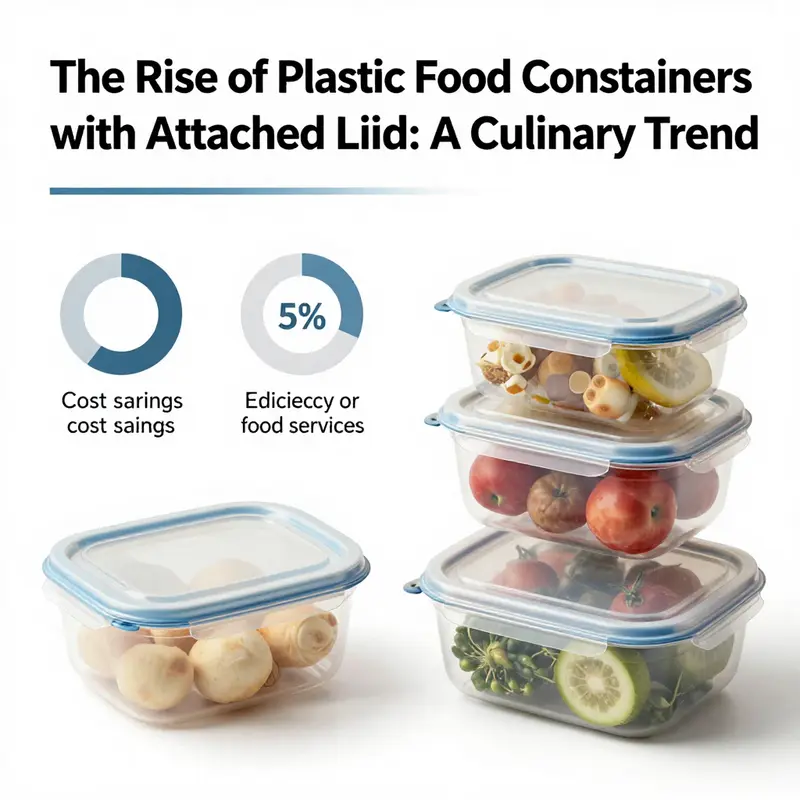
The plastic food containers with attached lids that appear in cooking shows, meal-prep segments, and infomercials carry a quiet but stubborn power: they promise convenience, certainty, and a kind of promise-fulfillment that can tilt a consumer’s willingness to pay. In the dialogue between media and manufacturing, these containers are not mere receptacles for food; they are actants that influence procurement choices, brand positioning, and even the rhythms of supply chains. The economic footprint of these products sits at the intersection of material science, precision manufacturing, retail economics, and media-driven demand. Although the research materials do not isolate the economic impact of television appearances for these specific containers, they do sketch a landscape in which TV-driven visibility can alter several moving parts of the economics, from cost structures to channel mix, and from mass adoption of a design to the pace of product iteration. What follows is an integrated look at how the attached-lid, microwave-safe, BPA-free plastic containers operate within broader market forces, and how their economics might be read against the grain of the supply chain, consumer behavior, and the evolving packaging milieu.
Central to understanding the economics of these containers is the recognition that the core features—attached lids, snap-on seals, microwave compatibility, leak resistance, and clear polypropylene construction—are not cosmetic choices. They shape factory floor realities and downstream cost economics. An attached lid reduces the risk of misplacing a cap, which in turn lowers handling losses at the point of sale, during transport, and in consumer households. It also lowers packaging complexity in the consumer’s kitchen, reducing the cognitive load associated with opening and closing, a factor that can translate into higher perceived value and, potentially, a higher willingness to pay for bundles or sets. This is not simply a design flourish; it is a lever in cost-to-serve calculations. The ability to reuse and reheat within the same container feeds into life-cycle cost models that weigh initial outlays against repeated uses. Material choice—generally polypropylene for its balance of clarity, impact resistance, and heat tolerance—frames both the manufacturing cost and the end-user value proposition. PP’s relatively favorable price point compared with higher-performance polymers helps sustain competitive pricing in a crowded market where many players race to offer more for less without compromising microwave safety and leak resistance.
The economics of these containers are deeply tied to scale and process efficiency. The production lines for containers with attached lids are a showcase of molding and assembly synergy. The snap-on lids require accuracy tolerances that interlock with the body to maintain an airtight seal. This tight integration reduces post-mold handling and minimizes waste from misfits, both of which have clear cost implications. In mass production, even small improvements in cycle time, mold longevity, or scrap rate yield meaningful savings. When multiplied across millions of units, these savings crystallize as margin stability—an essential consideration for manufacturers who must manage raw material price volatility, energy costs, labor, and packaging components themselves. The research notes underscore a broad market in a mature space, with a projected market size hovering around trillions of won, euros, or dollars depending on currency cycles and regional mix. While the precise regional breakout isn’t specified in the provided results, the implication is clear: large-scale manufacturing and procurement networks underpin the economic backbone of these products. The ability to secure polypropylene in bulk, to negotiate favorable mold maintenance contracts, and to streamline the assembly sequence for attached lids translates into price discipline and competitive differentiation in a market that prizes both reliability and convenience.
From the procurement perspective, these containers sit inside a network of suppliers, contract manufacturers, and distributors whose decisions ripple through to the consumer price. Procurement economics depend on long-term supplier relationships, forecast accuracy, and the risk-sharing arrangements embedded in contracts. For PP, price movements are tied to crude oil dynamics, polyolefin markets, and energy costs in the region where production occurs. Manufacturers often hedge against price swings by locking in polymer grades and resin blends that meet the exact mechanical and thermal properties required for a robust lid-body interface. The attached-lid feature also introduces a sub-category of components with its own cost structure: the sealing material, the hinge or snap-fit geometry, and the tolerances that govern lid retention. Each of these components has a price delta that, while modest per unit, compounds across volumes. Add to this the costs of quality assurance, packaging, labeling, and compliance testing to assure consumer safety in the microwave environment, and you begin to glimpse the multi-layered economics at play. The procurement narrative thus blends commodity markets with strategic sourcing, where suppliers vie for larger contracts by offering reliability, consistency, and a track record of minimal defect rates—critical attributes when the product sits in the consumer’s microwave for reheating and in the freezer for storage.
The market context adds another layer to the economic equation: the channel mix and the media-driven demand that these products often ride on. In the realm of television marketing and cooking show demonstrations, the rhetoric of convenience, leakage prevention, and the ability to transport meals in a single unit is highlighted in ways that can recalibrate consumer expectations. When viewers encounter a product designed to be both transportable and microwave-ready, the ad narrative promises a lower total cost of ownership over time, as households avoid the need to transfer contents into multiple containers. The implied toll on waste is another dimension; if viewers perceive a product as durable and reusable, they may tolerate a higher initial price for the perception of long-term utility. However, the absence of explicit data tying television appearances to measurable economic outcomes in the provided research results means that such inferences must be carefully qualified. The media signal is real, but its translation into sales volume, price elasticity, or inventory turnover is mediated by audience targeting, ad spend, creative quality, and the broader macroeconomic environment.
The economics of price and margins in this space hinge on a balance between value delivery and competition from alternative packaging formats. The attached-lid design brings a premium over similarly shaped, loose-lid options because the integration reduces friction in the user journey—from opening to sealing to reheating. Retailers may recognize this value in the form of higher shelf appeal and lower risk of spillage, which reduces negative consumer experiences and returns. The risk-return calculus for retailers is crucial: a bulky, multipack configuration featuring attached lids can command higher margins if it supports a higher unit price and greater per-site consumption. Yet the same configuration can invite price pressure from competitors who offer lower-priced, separate-lid versions or from substitutes such as glass, metal, or more sustainable packaging options. The competition is not limited to other plastics; the market is increasingly segmented by sustainability claims, recyclability, and end-of-life considerations. Consumers are more likely to reward brands that demonstrate environmental responsibility, and this can alter the pricing equations through willingness-to-pay differentials and through the growth of recycling programs that reduce net material costs over time through higher resin recycling yields.
The lifecycle economics of these containers deserve particular attention because they illuminate the long-run cost structure beneath the headline price. On the input side, the use of BPA-free, microwave-safe PP has implications for consumer safety costs, regulatory compliance, and potential liability exposure. While BPA is a distinct concern in some consumer segments, the broader category of BPA-free plastics has become a default expectation in many markets, influencing both manufacturing choices and retail messaging. Production costs reflect resin pricing, additives for clarity and heat resistance, and the engineering of the snap-fit lid interface. On the output side, consumer use-phase costs matter: the energy needed to wash and dry containers, the compatibility with home dishwashers, and the ability to withstand repeated reheating cycles without degrading sealing performance all factor into the perceived value. A container that remains airtight after multiple heat cycles and withstands the dishwasher without warping earns a stronger case for repeated use, which in turn affects long-run demand and the economics of replacement cycles. All of these elements shape the total cost of ownership and can be a decisive factor in consumer choice when the price difference between competing designs is narrow.
The research context notes a sizable market footprint, with a projected value around several trillions in USD equivalents by mid-decade, signaling a robust demand environment. This scale offers a path for manufacturers to spread fixed costs over a larger output, which improves gross margins in steady-state conditions. It also enables investments in process optimization, such as more energy-efficient molding cycles, lean quality-control procedures, and the adoption of automation to reduce labor costs. However, the same scale brings exposure to broader macroeconomic risks. Volatile resin prices, energy costs, and fluctuations in global trade policies can compress margins if volumes do not translate into commensurate price realization. In such contexts, firms may lean into product differentiation through design refinements, smarter packaging configurations, or bundling strategies that increase average order value. Bundling—offering the attached-lid container in sets with lids, or with complementary kitchenware—can improve average revenue per customer and reduce shopping cart abandonment in online channels. While a direct link to infomercial performance remains elusive in the reviewed data, it is reasonable to hypothesize that strategic bundles could amplify the impact of television exposure by turning impulse interest into higher-value purchases, particularly when the bundles address common consumer needs such as meal-prep, office lunches, or family meals.
In contemplating sustainability and regulatory pressures, the economics become more complex but no less essential. Consumers increasingly weigh the end-of-life implications of packaging choices, and producers respond by offering recycled-content resins, easier-to-recycle formats, or lids designed for separation in recycling streams. The allure of attached lids in a plastic format must be reconciled with the circular economy agenda that pushes for greater reuse, recycling, and material recovery rates. This tension can influence product design choices, packaging configurations, and even brand messaging, potentially affecting demand curves and price tolerance. It is here that a broader trend emerges: the packaging ecosystem is migrating toward smarter design that couples user-friendly performance with recyclability incentives. As developers experiment with different polymer blends or post-consumer recycled content, the cost structure shifts. Recycled content may come at a premium, depending on supplier capabilities, or may offer long-run cost advantages if it stabilizes supply and reduces the price volatility associated with virgin resin prices. These dynamics matter most for the bottom line in an environment where media-driven demand can push volumes higher in the short term, but where sustaining margins requires disciplined material sourcing and investment in sustainable innovation.
An additional layer of consideration concerns the practical realities of consumer behavior in a TV-influenced market. When viewers encounter demonstrations of how easily a container can be used for cold storage, hot meals, or on-the-go transport, the perceived convenience factor can translate into quicker purchase decisions. Yet, this impulse-driven behavior interacts with the seasonality of meals, the cadence of promotions, and the consumer’s budget priorities. The resulting demand signal can be volatile, making inventory management more challenging. Manufacturers and retailers must navigate this volatility with flexible manufacturing schedules, responsive logistics, and clear messaging about value and durability. The attached-lid feature, by reducing spillage and simplifying the food-to-reheat workflow, may help smooth out some of this volatility by encouraging repeat purchase and brand loyalty. Still, the absence of explicit data tying TV appearances to measurable sales outcomes in the provided research means that stakeholders must approach any performance claims with caution and insist on robust post-campaign analytics before scaling spend.
To contextualize the packaging ecosystem beyond plastics, consider the broader packaging alternatives gaining traction in the food-service sector. The shift toward sustainable paper-based solutions and compostable options reflects a competitive pressure to position packaging as part of a broader environmental narrative. This competitive pressure can influence the economics of attached-lid plastic containers in two ways. First, it can push manufacturers to invest in greener formulations, then to price those innovations into the market. Second, it encourages retailers to reassess combinations of packaging formats—where a consumer might choose a plastic container for certain use cases and a paper-based alternative for others—depending on channel, geography, and consumer values. The result is a more dynamic pricing environment, where the economics of a single container design are influenced by competing formats and the perceived total environmental cost of ownership.
The internal link embedded here points to an example of sustainable lid-equipped packaging in a different material family. While not a direct substitute in every scenario, kraft paper bowls with lids illustrate how the market tests new combinations of lid design and material choice to deliver comparable convenience with different environmental footprints. See disposable-kraft-paper-bowl-for-food-package-with-lid for a compact case study in lid-enabled paper packaging. Such examples help illuminate how packaging decisions reverberate through cost structures, supply chains, and consumer expectations, reinforcing that the economics of attached-lid plastic containers cannot be read in isolation from the broader packaging ecosystem.
As the market matures, the economics of these containers will increasingly hinge on a blend of core performance, supply-chain resilience, and sustainability commitments. The attached lid remains an attractive feature for many consumers, but its economic value is realized only when manufacturing excellence, procurement strategy, and channel alignment converge around a clear value proposition. In the absence of published, television-specific economic metrics within the current research, the plausible scenario is one of steady demand underpinned by efficiency gains and a continued push toward more sustainable packaging options. The key for manufacturers and retailers is to translate media visibility into durable customer engagement, while managing the inherent risks of price volatility and shifting consumer sentiment. If the industry can maintain a dialogue between design quality, cost discipline, and environmental responsibility, the economics of these containers can continue to be a reliable part of the kitchen ecosystem rather than a transient media moment.
External resource: For a broader view of the economics and trends shaping plastics packaging, see https://www.statista.com/topics/3108/plastics-packaging/.
null
null
Final thoughts
The journey of plastic food containers with attached lids is a testament to their essential role in food service operations. As we explored their evolution, economic implications, and consumer preferences, it becomes clear that these containers are more than just packaging options—they are vital tools that enhance efficiency, promote sustainability, and meet the ever-changing demands of the food industry. Understanding and leveraging these trends can empower businesses to elevate their service offerings and customer satisfaction.