
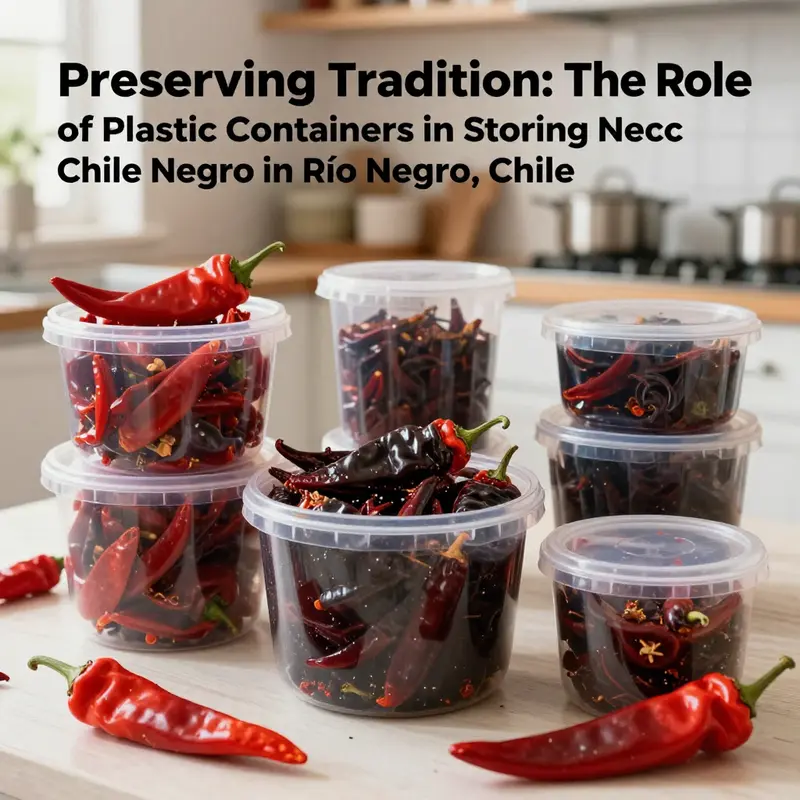
In the picturesque landscapes of Río Negro, Chile, one of the culinary treasures is the ‘chile negro,’ particularly the rare ‘chilhuacle negro’ pepper. Known for its nuanced flavors, this heirloom pepper is pivotal in various traditional dishes. However, the rarity and specific flavor profile necessitate careful storage to preserve its qualities. This article delves into the significance of plastic containers for food storage, exploring not just their protective features, but also the larger economic and cultural landscape that surrounds this cherished ingredient. Each chapter will uncover the importance, specifications, economic impacts, and cultural significance of using the right packaging solutions for preserving ‘chile negro’ in Río Negro, fostering a deeper appreciation for this culinary gem.
Shielding Chile Negro: The Quiet Power of Plastic Containers in Safeguarding Flavor and Heritage on Río Negro, Chile
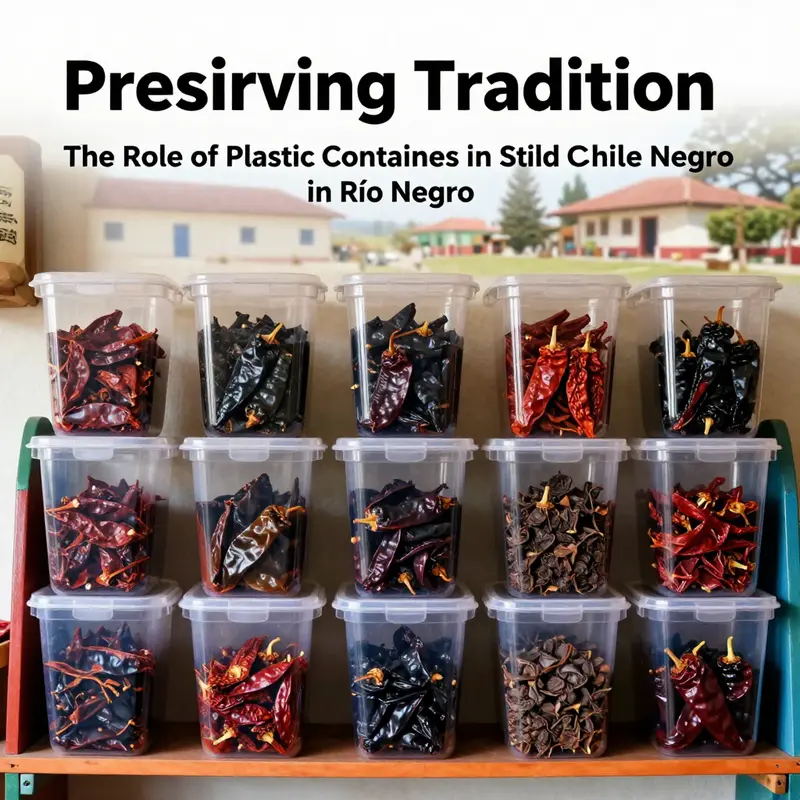
On the idea of storing one of Oaxaca’s most cherished ingredients—chilhuacle negro—the everyday act of sealing it away becomes a small, quiet act of stewardship. The pepper’s perfume, its plum-like sweetness with a raisiny undercurrent and a smoky, leathered finish, travels not only through recipes but through memory and tradition. When dried chilies are kept in the kitchen, their vitality rests on more than aroma; it rests on the careful choices that surround them. In places where people speak of mole negro and the lineage of family feasts, the container you choose is more than a vessel. It is a gatekeeper, a limit against degrading light, air, and moisture that would otherwise steal the pepper’s delicate balance. And while the phrase “Río Negro, Chile” might evoke a picturesque hillside town in the imagination, the historical and culinary truth remains clear: the preservation practices that protect this prized ingredient travel well beyond any single place. The science of storage—light, temperature, humidity, and oxygen—operates the same way whether the pepper is kept in a sunlit valley or a shaded shelf in a distant market. The container becomes a steward of flavor, a practical artifact that connects kitchen craft to cultural memory.
In the dried state, chilhuacle negro is particularly susceptible to change. The capsaicinoid profile, the volatile esters that carry aroma, and the pigments that give the pepper its deep hue can drift when exposed to the wrong conditions. Light is a slow burglar, nudging pigments toward fading and altering the pepper’s sweetness profile, the corridor in which notes like raisin, wood smoke, and a faint leathery echo can grow dimmer with each passing season. Air is a second thief, exchanging the pepper’s composition with the outside world; oxygen can promote oxidation, dulling brightness and masking the pepper’s natural complexity. Moisture is a rogue as well, inviting mold or desiccation to blur texture and flavor. In the heart of any kitchen where this pepper remains a living element of dishes and stories, the aim is to slow these processes without creating a barrier so aggressive that it locks in undesirable conditions. A carefully chosen plastic container—opaque and airtight—offers a balanced solution that respects both practicality and preservation.
From a practical standpoint, the decision to use opaque, airtight plastic containers is grounded in several everyday realities of home cooking and professional kitchens alike. Dried peppers, especially heirloom varieties with limited availability, gain a shelf life that rewards consistency and control. Opaque plastic blocks light that would otherwise hasten flavor degradation, while a tight seal minimizes the exchange of air and moisture with the surrounding environment. The design also helps keep aromas from migrating between the chile and other pantry items, an outcome that fosters more predictable flavors when the peppers are ground into pastes, rehydrated for sauce-making, or added directly to moles and stews. The material itself matters, too. Food-grade plastics intended for storage are selected to avoid imparting off-flavors, residual odors, or harmful substances. The goal is not to create a sterile prison for flavor but to offer a respectful environment in which the pepper’s essential qualities can endure across seasons.
Culturally, this approach carries a quiet elegance. Chilhuacle negro embodies a regional and historical specificity that travels with cooks who value its rare sweetness and smoky lineage. In kitchens where mole negro is a ritual as much as a recipe, preserving the pepper’s integrity is a way of honoring technique and lineage. The container thus serves as a bridge between tradition and modern practicality. It is not merely a grocery-store afterthought but a tool that keeps the pepper accessible for the next generation of cooks who will coax its flavors into a dish that speaks of Oaxaca, of family kitchens, and of the long roads from field to pot. This sense of continuity is reinforced when the packaging is reliable, simple to use, and adaptable to different household rhythms. The right container makes it easier to portion peppers for a week of cooking, to label them for seasonal use, and to stack jars in a pantry so that the order of a kitchen’s life remains legible even as the days accumulate.
Yet the absence of a real, well-documented locality named Río Negro, Chile in the research results does not disrupt the universality of these practices. The lesson is not about one place but about how households and kitchens everywhere can protect a precious spice. The research does, however, help us see a crucial point: an effective storage solution transcends geography. A region may have a different climate, different pantry configurations, and distinct culinary rhythms, but the fundamentals stay the same. The pepper’s fragile compounds need shielding from light and oxygen, and controlled humidity helps ensure that the drying process has not produced a brittle, crumbly texture that would crumble away when ground into a powder. In any setting, including hypothetical ones, the choice of container and the care applied to seal and store are the smallest but most impactful acts that support large cultural dishes.
The practical aspects of storage unfold in a familiar sequence. After the peppers have dried to the point of being pliable and not tacky to the touch—a sign that moisture has been properly driven off—many cooks will check for uniform color and absence of mold or damp spots. Any pepper showing signs of moisture or clumping is set aside for another round of drying or discarded to prevent cross-contamination. Once the peppers meet these criteria, they can be tucked into an opaque container with a snug lid. The container should be clean and dry, free of residues from other spices or foods that might carry their own odors. The lid’s gasket, if present, is a small but telling feature: it helps to maintain a steady microenvironment inside the jar, one that resists sudden changes that would otherwise jolt the pepper’s delicate balance.
Labeling, too, becomes part of a disciplined routine. A simple label noting the variety, the harvest year, and the intended use helps prevent unnecessary crossings of flavors in the pantry. This is especially useful for rare heirloom peppers whose aroma and sweetness can be most vividly appreciated when preserved for mole seasons or special stews. In households that juggle multiple peppers—some pungent, others with deeper sweetness—the library-like organization of the pantry becomes a quiet act of cultural care. The container’s design supports this ordering by resisting moisture-induced clumping and by containing any potential odor within the jar, thus protecting adjacent spices from a drift of flavor that might otherwise blur recognized profiles. In this way, a plastic container is not a mere storage tool but a steward of identity, enabling cooks to access and preserve a pepper’s essence with confidence.
From a design perspective, it’s essential to consider that not all plastics are created equal for this purpose. The most reliable options for dried chiles are those that are food-grade and specifically intended for long-term storage. Opaque plastics reduce light exposure and often come with smooth interiors that resist caking and buildup. The absence of transparency is a practical advantage here: it protects the pepper’s color and aroma and prevents any photochemical changes from altering the pepper’s perceived sweetness and smoky notes over time. A container that seals well, resists picking up smells from neighbors in the pantry, and is straightforward to clean becomes a constant ally in the kitchen. The goal is not to over-engineer storage, but to choose a simple solution that consistently safeguards the chili’s character, season after season. And the benefits of such a choice extend beyond the pepper itself: it can inform how cooks manage other dried ingredients, reinforcing a pantry philosophy that values discipline, clarity, and respect for ingredients.
In moments when a cook reaches for chilhuacle negro to deepen a mole’s complexity, the container’s influence becomes part of the storytelling around the dish. The pepper’s aroma should not be a memory of yesterday but a living prelude to the sauce being formed. The container, by limiting exposure to light and air, keeps that aroma robust enough to re-emerge in the simmering pot, where it mingles with other ingredients—the toasted nuts, herbs, roasted spices, and the cacao that often frames mole negro. The result is a sauce with a layered, evolving character: a bright top note of dried fruit and smoke, a mid-palate warmth, and a lingering finish that hints at the pepper’s leathery, sun-dried heart. The container’s role thus becomes part of a chain of cause and effect: careful drying leads to stable storage, which preserves aroma, which in turn yields a more expressive dish when the chili is finally used.
In closing, while the phrase Río Negro, Chile may not anchor a real, easily located culinary geography in the sources consulted, the practical truth remains universal. The way a pantry handles chile negro—how it protects, preserves, and organizes—speaks to a broader ethic of care that sustains traditional flavors through time. The choice of an opaque, airtight plastic container is a concise embodiment of that ethic: it acknowledges the pepper’s fragility, it respects the labor that produced it, and it offers a straightforward tool for cooks who want reliable access to flavor’s core. For kitchens where mole and other pepper-forward dishes anchor weekly menus or seasonal celebrations, this approach translates into steadier results and fewer compromises. The heritage of the pepper is not just in its seeds or its name, but in the everyday acts of storage that let its sweetness and smoke travel from dried pepper to pot to plate with discipline and grace.
Internal link for related packaging considerations: Biodegradable eco-friendly take-away kraft paper bowl. This reflects a growing interest in sustainable serving options that can complement a pantry strategy while reducing reliance on plastic for some culinary contexts. For readers curious about alternatives to plastic containers for serving or display, this option illustrates how packaging choices can align with environmental goals without sacrificing the integrity of stored ingredients. biodegradable eco-friendly take-away kraft paper bowl
External resource: For a broader understanding of how dried chiles should be stored to preserve flavor and aroma, see Storing Dried Chiles. This resource provides practical guidance that complements the storage principles discussed here and helps situate the chapter’s recommendations within a wider culinary context. Storing Dried Chiles
Preserving Río Negro’s Chile Negro: Practical Specifications and Features for Plastic Food Containers
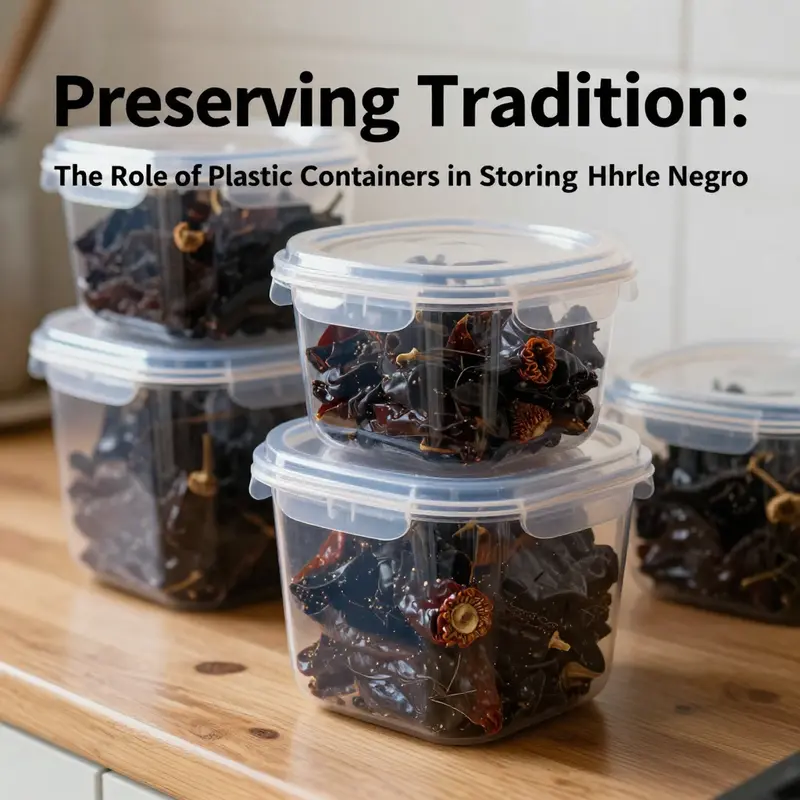
The distinctive flavor of Chile Negro calls for packaging that does more than hold product. It must shield aroma, limit oxidation, and withstand the handling common to farm-to-market supply chains in Río Negro, Chile. When dried chilies like chilhuacle negro are valued for their complex notes — raisin-like sweetness, woodsmoke depth and leathery finish — storage choices determine whether those qualities arrive intact at the kitchen. A single, well-designed plastic container can help maintain sensory integrity, reduce losses, and make logistics safer and more efficient.
Materials and food-safety requirements sit at the foundation. Durable polyolefins such as high-density polyethylene (HDPE) and polypropylene (PP) are the preferred choices. These polymers resist moisture, block direct water migration, and tolerate repeated cleaning cycles without softening. They also exhibit low rates of chemical migration when manufactured to food-grade specifications. For chilies, which are dry and aromatic rather than high-fat, those low-migration properties are essential to avoid contamination and off-flavors. Containers intended for food contact must meet applicable national food-contact regulations. Compliance ensures the polymer formulation and any colorants or additives will not leach harmful substances into the product.
Physical performance shapes every storage decision. Containers must deliver high mechanical strength to survive stacking, transport and frequent handling. Standard test criteria include compression or stack-load endurance and resistance to impact at both ambient and cold temperatures. For smallholder and cooperative operations in Río Negro, stackable boxes that carry predictable loads are vital for maximizing truck and warehouse space. Dimensional consistency, normally within a narrow tolerance range, allows stable stacking across pallets and trucks. Smooth, uniform walls and accurately sized rims reduce wobble between nested or stacked units.
Sealing and barrier functions guard chile quality. An airtight closure slows oxidation and preserves volatile flavor compounds. While full vacuum sealing is not typical for large plastic turnover boxes, well-fitting lids and gasket designs significantly reduce airflow. Opaque or low-transmission materials protect light-sensitive volatiles that can degrade under prolonged illumination. For high-value chilies, combining an opaque container with controlled interior humidity — sometimes using desiccants or moisture-absorbing sachets — stabilizes the product and prevents mold growth during humid seasons.
Design details influence hygiene and handling. Rounded interior corners permit thorough cleaning and reduce residue buildup. Smooth surfaces resist organic matter entrapment, making sanitation faster and more effective. Containers should be compatible with common disinfectants used in food operations and withstand multiple wash cycles without cracking. Drainage features and sloped bases facilitate water removal. Grip areas and molded handles must be ergonomic and robust, enabling safe manual handling without sharp edges that could tear sacks or injure workers.
Stacking and nesting characteristics affect transport costs and storage density. Nesting empty containers saves space when returning or storing them. Conversely, stacked full units must maintain stability and resist sliding. Designs with interlocking rims or anti-slip profiles enhance stack safety. Dimensional tolerances must be tight to ensure interoperability between batches and with pallet systems common in the region. Structural ribs and reinforced corners add stiffness without excessive material weight. The goal is a balance between lightness for manual handling and stiffness for mechanical stacking and forklift operations.
Temperature resilience is another essential feature. Containers used across cold rooms, ambient warehouses, and refrigerated trucks must resist embrittlement at low temperatures. Polypropylene and HDPE grades with appropriate impact modifiers perform reliably down to typical cold-chain temperatures. Heat resistance is relevant when containers are washed with warm water or used briefly in warmer environments. UV-stabilized formulations extend service life for containers stored outdoors or exposed to sunlight during staging.
Traceability and labeling integrate packaging into modern supply chains. Smooth, flat surfaces or recessed placards allow secure application of labels, permanent ink printing or barcode stickers. Color-coding options can denote harvest lots, quality grades, or intended markets. Tamper-evident lids and serialization features support high-value produce traceability and help demonstrate due diligence during quality assessments or audits. For cooperatives and exporters in Río Negro, these capabilities facilitate inventory control and simplify market compliance.
Interior environment control—managing humidity and oxygen exposure—determines shelf life. Dried chilies are hygroscopic and can reabsorb moisture from humid air. Airtight closures with gasketed lids reduce moisture ingress. Complementary measures include using breathable liners, desiccant sachets and oxygen absorbers where appropriate. While oxygen absorbers can extend aroma life, they must be used with containers that limit air exchange. For most turnover boxes, a strategy combining opaque, airtight containers with humidity control yields the best balance between practicality and product protection.
Cleaning and reuse are central to long-term cost-effectiveness. Materials should endure mechanical washing and sanitizing without degrading. Surfaces must not develop microcracks that trap residues over time. A design that supports stack washing and allows water to drain easily speeds sanitation cycles. Reuse not only conserves resources; it reduces a product’s environmental footprint when containers are managed in a reuse loop. However, reuse calls for inspection protocols to ensure damaged or worn units are removed before they compromise product safety.
Sustainability and end-of-life considerations matter to growers and buyers. Choosing HDPE or PP with clear recycling codes simplifies the material recovery process. Some operations opt for containers made from recycled content, provided they meet food-contact standards. Reusability and repairability prolong service life, reducing the need for frequent replacements. Where disposable alternatives are used, easy separation of materials helps recycling streams remain clean. Design for recyclability, coupled with local collection systems, increases diversion rates from landfills.
Practical sizing reflects harvest and transport realities. Large-volume single-chamber boxes suit bulk transport from field to collection centers. Smaller, modular units ease sorting and grading tasks. Size selection also affects drying strategy and airflow. For chilhuacle negro, which can be delicate when dried, avoiding over-compression in containers preserves shape and surface integrity. Ventilation options, where required, must strike a balance: sufficient airflow for any in-transit drying needs, but limited exposure to ambient humidity and pests.
Pest protection and contamination control are vital. Containers must resist insect ingress and be free of crevices that harbor grain moths or other pests. Tight-fitting lids and smooth mating surfaces are practical barriers. When necessary, integrated seals or lids that lock into place prevent opportunistic pest entry during storage periods on farms or at aggregation centers.
Operational features that reduce handling risk also matter. Clear weight ratings molded onto the container inform handlers of safe stacking and lifting limits. Handles positioned for balanced lifting reduce strain and improve ergonomics. Containers should be compatible with standard pallet dimensions and forklift tines to streamline warehouse flow. For small operations, stackability and stable nested returns reduce transport of empty boxes and related costs.
A final layer of value comes from design that supports culinary quality. Containers can include features that enable controlled micro-environments, such as compartmentalization for different grades, or removable inserts that facilitate portioning for processors. Surfaces that limit static cling help preserve the fragile skins of dried chilies. Minimizing movement during transit prevents scuffing and loss of volatile aromatics.
Selecting the right container for Chile Negro in Río Negro means aligning technical specifications with the realities of harvest, handling and market expectations. Prioritize food-grade HDPE or PP, airtight closures, opaque walls, robust stack and drop performance, easy-to-clean interiors, and traceability features that fit your system. Complement the container with humidity control, clear labeling and a reuse plan. These elements together protect the flavor and value of chilhuacle negro, reduce waste, and support reliable delivery from field to table.
For practical alternatives in food packaging design and disposable options that may complement containerized storage strategies, review this disposable kraft paper bowl for food package with lid. For technical testing and national specifications that inform food-grade plastic turnover boxes, refer to the standard document: https://std.samr.gov.cn/gb/search/gbDetailed?id=10000000000000000000000000000000
Guarding Flavor and Livelihoods: The Economic Role of Proper Storage for Chile Negro Grapes in Río Negro, Chile
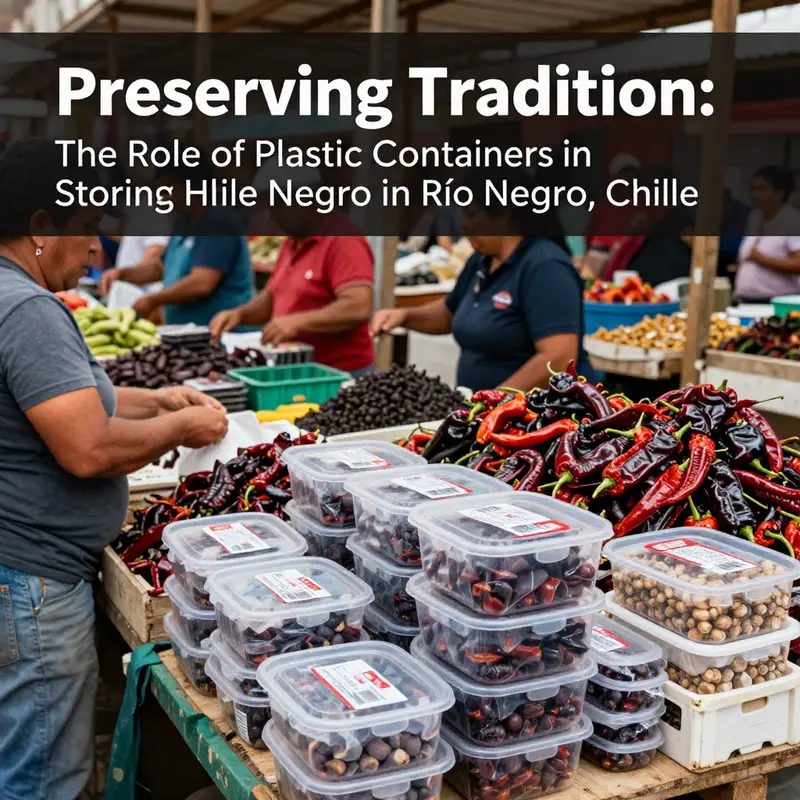
Río Negro, Chile, sits at a hinge point in the global fresh fruit system. It is a place where climate, soils, and care converge to shape a product that carries premium expectations across continents. Chile Negro grapes, a designation that signals both rarity and desirability, depend not only on the care given at the moment of harvest but on every link that follows, especially the storage and handling stages that come after picking. In this chain, the choice of storage containers—particularly opaque, airtight plastic options—emerges as more than a practical detail. It becomes a strategic lever that can preserve or erode value across markets that demand consistent quality, exacting timelines, and predictable availability. The economics of this storage choice, when understood and managed well, ripple outward to affect growers’ livelihoods, packing houses, exporters, and ultimately consumers who seek a reliable fruit experience. The chapter that follows treats storage not as a backdrop to production but as a core driver of economic resilience in a high-stakes agricultural corridor.
The premise is straightforward in theory and complex in practice: the freshness and flavor of Chile Negro grapes must be preserved from the moment they are removed from the vine to the moment they arrive at distribution centers abroad. Light exposure, moisture fluctuations, and air contact are the adversaries of post-harvest quality. Light can stimulate unintended reactions in the fruit’s surface and internal tissues, subtly altering color, aroma, and perceived sweetness. Moisture loss or gain shifts the balance of texture, making berries that should be plump and firm end up shriveled or mushy in transit. Air exchange accelerates respiration and can hasten the onset of spoilage, especially during long export journeys where temperature variance and handling can compound stress on delicate cells. In this context, the rationale for using opaque, airtight plastic containers is not merely to shield the fruit from sun or humidity; it is to stabilize a fragile microenvironment that sustains the fruit’s sensory profile and physical integrity for longer periods.
The academic and industry discourse around post-harvest storage emphasizes two intertwined truths: reducing losses and maintaining marketable quality. Proper cold chain logistics, including controlled atmosphere (CA) storage, are indispensable for keeping Chile Negro grapes at their optimal shelf life as they travel from vineyard to consumer. The alignment of temperature, humidity, and atmospheric composition with the fruit’s biology directly translates into measurable outcomes. Losses that would otherwise erode revenue—rot, over-ripening, dehydration, and mechanical damage—are mitigated when storage conditions are carefully controlled. For exporters, the gains are not merely volume preservation; they are confidence in meeting strict delivery windows, safeguarding reputations for consistency, and enabling price realization at premium levels that reflect the fruit’s heightened quality. In a global market that rewards predictability as much as flavor, the storage approach becomes a competitive differentiator.
Within Río Negro’s regional economy, the economics of storage intersect with broader systems thinking. A strategic investment in appropriate containers and CA-compatible cooling networks creates a more predictable supply curve, smoothing out the inevitable fluctuations of seasonal production. When a producer can slow down or modulate the ripening process through tightly controlled storage, they gain leverage over timing—an ability to match shipments with peak demand in distant markets or to extend shelf life during supplier shortages elsewhere. This performance translates into fewer in-market stockouts and less need to discount fruit when demand softens or when logistical hiccups occur. In turn, retailers and distributors benefit from steadier inbound flows, reducing the risk premium they must add to pricing and enabling longer, more coherent planning horizons. The net effect is price stability that cushions farmers and downstream partners from the volatility that typically accompanies perishable commodities in export channels.
Cost efficiency and sustainability further shape the economic calculus of proper storage. While the upfront expenditures for high-quality opaque, airtight containers and for cold chain infrastructure may seem substantial, they often pay for themselves over the product’s extended life. In studies of fresh food supply chains, strategic storage models are shown to minimize the combined costs of storage and transportation to processing or distribution centers. For a region like Río Negro, where viticulture has become an important economic driver, those savings compound with the premium price that a well-preserved Chile Negro grape can command in overseas markets. The premium is not merely for a perfect berry count; it is for the assurance that every grape in a shipment tastes like it did when it left the vineyard. The result is a more sustainable livelihood framework: farmers who invest in quality storage reduce waste, increase predictability of harvests, and contribute to a resilient rural economy that can absorb climate variability and market shocks.
Market stability hinges on the reliability of the entire storage and distribution network. When post-harvest losses are minimized, the available supply becomes more predictable, which dampens price volatility across the supply chain. For a crop like Chile Negro grapes, which can fetch strong prices when stock levels are tight but face pressure during surplus periods, the stability afforded by proper storage is a critical policy and business asset. In practical terms, this means that exporters can commit to longer-term contracts with confidence, retailers can plan assortments with fewer last-minute substitutions, and growers can invest in vineyard improvements, knowing that the downstream chain will honor the value created by improved storage practices. The ripple effects extend into regional employment, as reliable year-round throughput supports more stable processing and logistics roles, and into credit markets, where lenders view storage-enhanced predictability as a lower-risk proposition for working capital.
The environmental dimension of storage choices cannot be ignored, even as economic arguments take center stage. Cold chain and CA storage inherently involve energy use and careful resource management. The challenge is to balance the demand for longer shelf life with responsible energy consumption and waste reduction. In this regard, the use of opaque, airtight plastic containers is not a panacea; it is a component of a larger system that aims to minimize spoilage and, by extension, wasted inputs and packaging. When containers are correctly sized, properly sealed, and paired with sustainable cooling protocols, the result is a leaner logistical footprint. Producers can avoid the cycle of overproduction and premature disposal of shelf-unsafe fruit, while distributors can reduce returns and rejections at ports and warehouses. The environmental payoff, while measured in energy intensity and waste diversion, also accrues as a reputational benefit: markets increasingly reward producers who demonstrate stewardship of natural resources alongside premium product quality.
Policy and infrastructure considerations add momentum to these private-sector incentives. Investment in cold chain logistics—including temperature-controlled warehouses, reliable electricity supply, and efficient transport routes—creates the framework in which proper storage can realize its full value. When public and private actors align around standards for post-harvest handling and storage, the capital barrier to adopting high-quality containers and CA practices becomes more tenable. In this sense, the economic argument for storage is not only about margins; it is about the security of regional livelihoods against climate shocks and global market disruptions. A robust storage approach becomes a hedge against weather events, port delays, and demand surges, providing a degree of resilience that is particularly valuable in a region whose agricultural sector drives employment and export earnings.
Beyond the immediate economics, there is a narrative about trust that underpins the Chile Negro grape value chain. Buyers abroad expect consistency—an uninterrupted supply of fruit that looks, feels, and tastes like a premium product. When storage solutions deliver on that expectation, trust accumulates across the chain. Growers are empowered to invest in canopy management, irrigation efficiency, and soil health—knowing that the benefits of these improvements will be realized in steadier shipments rather than in sporadic, quality-tinged yields. Pack houses can optimize sorting and packing lines for uniform fruit characteristics, reducing handling damage and ensuring that each crate aligns with the standards that global buyers demand. In this ecosystem, plastic containers that are opaque and airtight are not mere containers; they are instruments of quality assurance, signaling to partners that the fruit has been safeguarded against degradative factors at every step.
This integrated view—on storage, logistics, economics, and sustainability—offers a practical pathway for Río Negro’s grape producers. It highlights the necessity of aligning on packaging choices with colder storage protocols and controlled atmospheres to protect premium attributes. It also underscores the importance of investing in the broader infrastructure that makes those choices viable: reliable power, modern warehouses, calibrated CA environments, and continuous training for staff at every node of the supply chain. The result is a coherent strategy in which a single decision about container type becomes a lever for reducing waste, stabilizing income, and preserving the sensory promise of Chile Negro grapes for consumers halfway around the world. In a field where margins are often dictated by small physical changes in shelf life, the prudent use of technology and materials that shield fruit from the ravages of time can translate into sizable gains for regional livelihoods and the national economy alike.
To place this discussion in a wider context, the evidence base emphasizes that improved storage and logistics are central to the resilience of agricultural economies in volatile markets. The FAO situational study on Chile’s agricultural economy, for example, highlights how market openness, fair competition, and efficient distribution harmonize with storage innovations to support food security and economic stability. While the retailer and consumer experience remains downstream, the upstream decisions about packaging, cold chain integrity, and CA storage shape the entire trajectory of value creation. For Río Negro, this means that investments in robust storage solutions—paired with disciplined container choices and climate-aware logistics—are not optional luxuries but foundational elements of a sustainable, competitive agricultural system.
As producers look to the future, the imperative is clear: storage solutions must be integrated with the region’s broader development plans. This includes aligning private capital with public incentives for energy efficiency, updating infrastructure to handle longer-export journeys, and fostering a workforce proficient in modern post-harvest techniques. It also means cultivating a narrative of value that connects the sensory excellence of Chile Negro grapes with the reliability of the storage and transport system that preserves that excellence. When buyers in distant markets can count on consistent quality, when farmers can forecast returns with confidence, and when distribution channels operate with minimal waste, the economic dynamics become healthier and more inclusive. In this sense, the humble plastic container—opaque and airtight—appears as a small artifact within a sophisticated supply chain, yet its role is integral to a system that sustains livelihoods, honors regional know-how, and keeps a beloved fruit thriving on tables worldwide.
For further context on how storage and distribution shape agricultural economies, see the FAO situational study on Chile’s open markets, which provides a broader framework for understanding market stability, post-harvest losses, and policy implications that intersect with storage innovations. https://www.fao.org/3/cb2976en/cb2976en.pdf
Preserving Flavor and Heritage: Chile Negro, Packaging Choices, and Food Safety Considerations for Río Negro
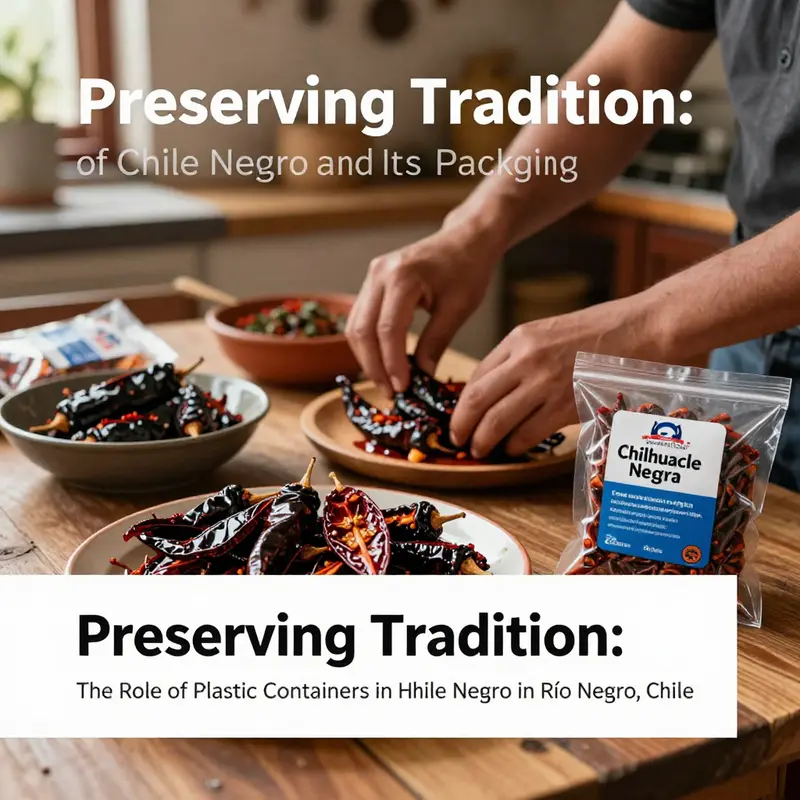
Chile negro occupies a special place in the culinary imagination of many regions. Its dried pods carry a layered flavor—sweet, smoky, leathery—that defines traditional sauces and stews. For communities that prize this ingredient, storage and packaging do more than protect physical product. They guard memory, technique, and identity. When discussing Chile Negro and packaging in the context of Río Negro, Chile, it helps to examine the interplay between cultural value, practical preservation, and food safety. The research available does not provide detailed, place-specific records for Río Negro. Still, the broader principles that conserve heirloom chiles apply across geographies. This chapter weaves those principles into an actionable narrative that respects culinary heritage while emphasizing safe handling and smart packaging choices.
Dried chiles like Chile Negro are botanically resilient but sensitive to storage conditions. Their complex volatile compounds—those responsible for raisin-like sweetness, woodsmoke notes, and leathery finish—are vulnerable to light, oxygen, humidity, and heat. Over time, exposure causes loss of aroma and accelerated oxidative breakdown. Similarly, moisture invites mold and insect activity. Cultural practices that rely on small-batch drying, hand-sorting, and age-old blending resonate with value-driven agriculture. To maintain flavor integrity, packaging must address several threats simultaneously: light, air, moisture, and biological contaminants. A successful approach combines material choice, container design, and handling discipline.
Opaque, airtight containers are especially effective for dried chiles. Opaqueness blocks light that can degrade pigments and aromatic molecules. Airtight seals slow oxygen exchange that drives rancidity and loss of volatile oils. When a container also resists moisture, it prevents the rehydration that enables mold. In many kitchens, this combination makes the difference between a spice that sings and one that fades into blandness. Plastic containers are commonly used because they are lightweight, durable, and form reliable seals. When selected and used wisely, they preserve the sensory qualities that Chile Negro contributes to dishes.
However, choosing a plastic container involves nuance. Not all plastics behave the same. Food-grade materials reduce the risk of chemical migration. Containers with tight-fitting lids and gasketed seals provide the most consistent barrier to air and humidity. Equally important is the container color or opacity. Clear plastic reveals contents but does little to protect light-sensitive compounds. Opaque or dark-colored containers are preferable for long-term storage. For short-term use or display, transparent options may be acceptable, provided the product is rotated rapidly and kept out of direct light.
Beyond material and opacity, practical storage protocols matter. Dried chiles should be fully cool and dry before they enter a sealed container. Residual warmth or moisture from drying processes encourages condensation and spoilage when sealed. Small, measured batches reduce the frequency of opening containers. Each opening invites humid air, insects, and potential contaminants. Using portioned storage—transferring smaller amounts for daily use while keeping the main supply sealed—reduces exposure and preserves a core reserve.
Labeling and traceability are often overlooked, but they matter for food safety and heritage. Clear labels that record harvest date, drying date, and variety help chefs and families track freshness. When Chile Negro carries heirloom status, provenance can add cultural and commercial value. Basic traceability aids recall and risk assessment if spoilage occurs. A label is a simple safeguard for both safety and storytelling.
Sanitation routines for containers deserve attention. Reusable plastic containers must be washed and fully dried between uses. Microbial residues can persist in scratches and seams. Inspect seals and lids for wear. Replace containers that no longer close tightly. For community or cooperative contexts, establishing cleaning protocols helps maintain collective trust in shared supplies.
Pest control strategies should favor prevention and low-toxicity approaches. Airtight containers block larger pests but do not deter eggs or tiny mites. Freezing newly dried chiles for a short period before long-term storage can eliminate insect eggs and larvae. This method is non-chemical and preserves flavor. Similarly, keeping storage areas clean and cool reduces pest attraction. Avoid storing dried chiles near bulk grains or other open products that attract pests.
Food safety regulations vary by country and locality. For communities in Río Negro, Chile, local standards and inspections may have specific packaging and labeling requirements. Where regulations exist, they should be consulted and followed. Where they do not, community-based best practices can fill the gap. Small producers and households can adopt voluntary standards that align with international good manufacturing practices. These include separation of dry and wet processes, avoiding cross-contamination, and maintaining records of cleaning and batch handling.
Packaging also interacts with cultural perception. In many traditions, the way a culinary ingredient is presented affects its status. A carefully wrapped bundle, a cloth-lined basket, or a dark jar can signal reverence. Modern plastic containers can be adapted to respect this perception. Using neutral, matte-colored containers, adding handwritten labels, or storing jars within decorative wraps preserves both functionality and cultural expression. Packaging need not strip the ingredient of its story. Thoughtful choices can support both preservation and presentation.
Environmental considerations enter the conversation, especially when plastic use increases. Communities committed to sustainability may prefer reusable containers with long service lives. Selecting durable food-grade plastic reduces the frequency of replacements. Where possible, exploring recyclable or compostable options for short-term distribution also makes sense. Paper or fiber bowls and boxes with lids can work for some prepared foods, but they do not offer the same moisture and light protection as an opaque airtight container. For a balance between environmental values and preservation needs, integrating reusable plastic storage for long-term holding with eco-friendly disposables for immediate service is a practical compromise. For those interested in paper packaging alternatives for takeaway foods, a well-constructed kraft paper bowl with lid can be useful for serving, though it is not recommended for long-term chile storage. See this kraft paper bowl for food packaging with lid for options.
Culinary use connects storage to technique. Chile Negro often undergoes blistering, soaking, and blending in traditional sauces. The way chiles are stored affects these steps. Drier pods rehydrate more predictably, yielding consistent texture and flavor infusion. Pods that have absorbed moisture can become limp and develop off-flavors. Practitioners who prepare mole and similar dishes should assess their stored chiles before use and discard any that show visible mold, off-odors, or atypical discoloration. When in doubt, rely on sensory checks: aroma, appearance, and texture.
Community knowledge is central to culturally sensitive food safety interventions. Elders and traditional producers hold practices that combine empirical wisdom with local conditions. Any effort to introduce new packaging or storage protocols should begin with listening. Field visits, interviews, and collaborative trials build trust. For example, a cooperative might trial opaque containers on a subset of harvests, compare sensory outcomes, and document results. Sharing such trials openly respects both culinary heritage and scientific inquiry.
Finally, where specific local information is absent, targeted research is necessary. For Río Negro, Chile, local agricultural offices, community cooperatives, and regional culinary historians are the best sources. They can clarify which varieties are cultivated, how drying is performed, and which pests or climatic factors predominate. Public health authorities can outline regulatory constraints, while universities and extension services might provide testing for moisture content and microbial load. Until such data is available, applying general principles—keep chiles dry, dark, cool, and sealed—will preserve quality and reduce risk.
For readers seeking deeper background on Chile Negro varieties and culinary roles, consult established botanical and culinary references. These resources outline pepper taxonomy, traditional uses, and sensory profiles in detail. One useful general reference is the encyclopedic summary of chilhuacle peppers and their culinary context: https://en.wikipedia.org/wiki/Chilhuacle.
This chapter emphasizes the link between respect for culinary heritage and practical food safety. Proper packaging safeguards flavor, health, and the stories embedded in each pod. In Río Negro and similar regions, applying transparent, community-driven practices can protect both the chile and the culture it supports.
Final thoughts
As we explore the intricate relationships surrounding the ‘chile negro’ and its preservation through appropriate storage, the critical role of plastic containers in this narrative becomes evident. They not only serve as functional tools in safeguarding flavor and quality but also support the economic marketplace and cultural heritage of Río Negro. By investing in reliable, quality packaging, food service businesses can uphold the culinary traditions that make ‘chile negro’ a celebrated ingredient while ensuring its flavors are protected, fostering both sustainability and appreciation for this unique pepper.