
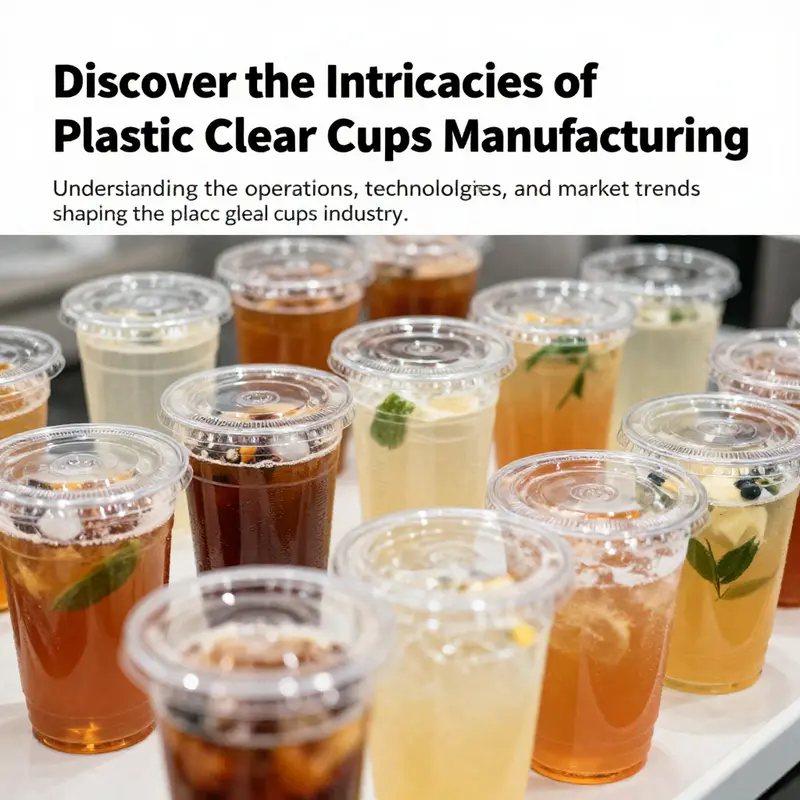
Plastic clear cups have become a staple in the beverage service industry, with increasing demand from bubble tea shops, restaurants, food trucks, and event planners. The operations of plastic clear cup factories play a crucial role in meeting this demand. By exploring manufacturing technologies and market trends, businesses can make informed decisions about their disposable cup requirements, enhancing customer satisfaction while addressing sustainability concerns. This comprehensive overview will shed light on the nuances of plastic clear cup manufacturing, the technologies employed, and the ever-evolving market landscape.
From Melt to Clarity: Inside the Operations of a Plastic Clear Cups Factory
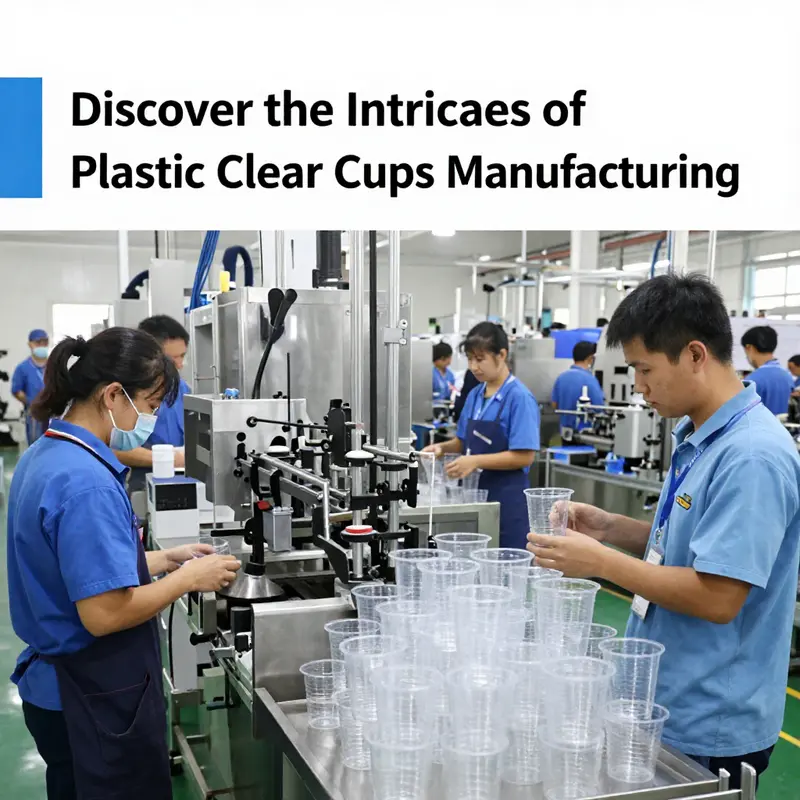
A modern plastic clear cups factory operates as a tightly choreographed system where raw polymers, precision tooling, and human and machine judgment converge to deliver a product that is clear, reliable, and ready for service in busy cafes and events. Yet behind the transparent surface lies a rigorous sequence of choices, each tuned to guarantee dimensional accuracy, clean surfaces, and consistent performance through the line. The starting point is material science, followed by process engineering, quality assurance, and a steady focus on safety, sustainability, and market responsiveness. This narrative is about more than machinery; it is about disciplined collaboration among suppliers, manufacturers, and customers who demand reliable results at scale.
At the heart of production are the feedstocks such as PET and polystyrene, whose melt characteristics govern every stage of cup formation. The plant layout emphasizes pellets to parts through a tightly controlled sequence: drying, melting, injection molding, cooling, trimming, inspection, and packing. The goal is high repeatability, low scrap, and a geometry that fits standard lids and stacking patterns. The line balance distributes tasks to minimize idle time while maintaining uniform quality. From hopper to finished cup, every step is measured and managed to support traceability and continuous improvement.
The molding process converts solid resin into a transparent geometry with smooth surfaces and uniform wall thickness. Injection molding offers fine features, consistent rims, and dimensional stability that withstands stacking, lid mating, and transport. Temperature control and metrology are essential to detect defects early and prevent downstream misfits. Dimensional integrity, including outer diameter, inner diameters and wall thickness, must align with downstream components. Even a fraction of a millimeter shift can cascade into lid misfit or leakage risk, so calibration and maintenance are part of daily practice.
Clarity and strength are achieved through a carefully designed thermal profile, controlled cooldown, and surface finishes that resist fogging when exposed to cold beverages. The interior surface quality reduces drag during drinking and cleaning, while the exterior resists micro-scratching to maintain gloss in service. Material choice, whether PET or PS, involves tradeoffs in rigidity, cost, and heat resistance. The production plan accounts for typical beverage profiles, ensuring reliable performance from first pour to last sip.
Operational hygiene and safety are foundational. The plant pursues standards such as ISO 9001 for quality management and QS for food contact safety, reflecting a broader industry expectation that processes are well documented as well as executed with precision. Clean handling, temperature controlled storage, and careful packaging reduce contamination risk and protect product integrity. A culture of disciplined process control translates into consistent outcomes across lots and builds customer confidence.
The designed attributes of the cups—clear visibility, compatibility with lids and straws, and predictable stacking behavior—derive from an integrated approach to product and packaging ecosystems. The rims must be robust, interior dimensions accurate, and the assembly interfaces reliable. The ability to produce a family of matching components under one roof is a differentiator, enabling tighter supply chains and faster response to demand surges. Understanding tolerances and assembly margins helps minimize recalls and returns.
Sustainability and end-of-life considerations shape day-to-day decisions. Clear cups are evaluated for recyclability and waste management, with attention to resin streams and scrap reuse. Energy efficiency, optimized molding cycles, and automation contribute to a smaller footprint per cup. Real progress is demonstrated through data, traceability, and continuous improvement that aligns with customer expectations and regulatory requirements.
Customization and market adaptation are integral to factory resilience. Many facilities offer design options for different diameters and wall thicknesses, aligning downstream compatibility with lids, sleeves, and display environments. The ability to adjust tolerances and processing windows supports varied customer needs while maintaining high volume efficiency. A cross-functional culture that links mold maintenance, quality control, and supply planning enables a responsive supply chain and steady inventories for retailers and events.
The evolving packaging landscape emphasizes performance, recyclability, and sustainable packaging systems. The factory competes not only on the clarity of the cup but on reliability across the entire packaging ecosystem, including lids, straws, and sleeves. In a fragmented market, the ability to run small batches alongside large volumes and to demonstrate consistent quality becomes a core competitive asset.
In sum, the factory is a system of synchrony among materials, tooling, process control, and a rigorous approach to quality. It translates raw polymers into a reliable consumer interface, maintains hygiene and safety through the chain, and remains adaptable to environmental expectations and market demands. A well-run plant does not simply manufacture cups; it sustains a dependable channel that supports everyday moments with clarity, reliability, and a predictable user experience.
Seeing Through Precision: The Hidden Architecture of Modern Plastic Clear Cup Manufacturing
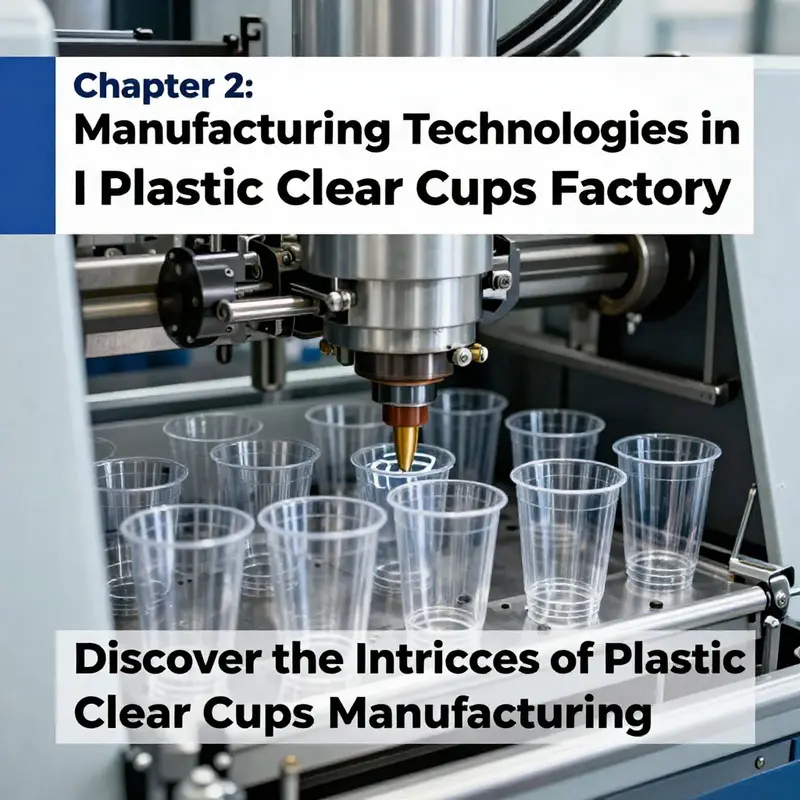
The plastic clear cup, at first glance, is a simple, almost ephemeral object. Yet its everyday utility rests on a deeply engineered pipeline that begins with raw resin and ends with millions of identical, transparent vessels. In a modern plastic clear cup factory, precision is not a feature but the baseline. The process is a layered choreography of material science, mechanically coordinated forming methods, and intelligent control systems that keep every cup within tight tolerances for clarity, strength, and weight. To understand how a factory achieves this, one must walk through the invisible architecture of production—the choice of resin, the geometry of the mold, the timing of heat and cool, and the orchestration of automation that turns tiny droplets of molten polymer into a flawless, lens-like surface. It is a story of how high-volume manufacturing, long associated with hard constraints, has become a field that respects nuance as much as quantity, where a few tenths of a millimeter can determine whether a cup will be crystal clear or subtly hazy under a party’s lights, and where the economics of speed and waste are balanced by the science of optics and material behavior under stress.\n\nThe backbone of any plastic clear cup factory is the production line. It begins with pellets of a food-grade polymer chosen for clarity, chemical stability, and safety in contact with consumables. The most common choices are polymers whose optical properties are favorable and that can be processed with clean, repeatable results. The goal is a resin that, when melted and shaped, yields a wall that is thin yet robust, transparent yet resistant to fogging, and consistent across thousands or millions of pieces. The choice of resin is not incidental; it determines how the material flows in the mold, how it crystallizes or remains amorphous, and how it behaves during cooling. In practice, operators and engineers look for polymers that offer high purity, low ash content, and stable color so that the cup appears pristine from rim to base. The processing window—temperatures, pressures, residence times—must be narrow enough to maintain clarity while robust enough to withstand everyday handling.\n\nThe most visible machinery in producing clear cups is the injection molding cell. Here, pellets are fed into a heated barrel where they melt into a viscous stream. The molten polymer is then injected into a precisely machined mold cavity under high pressure. The mold defines the cup’s geometry: the lip, the wall thickness, the inside surface that will become the drinking surface, and the bottom contour that supports stacking and stacking density. Modern injection molding setups use servo-driven hydraulic or fully servo systems to modulate shot size, injection speed, and packing pressure with exquisite finesse. This precision matters, because even minor deviations in wall thickness translate into optical imperfections. A wall that is too thin may warp or craze; one that varies along the circumference can refract light unevenly, producing a cloudiness that is immediately evident to the eye.\n\nOptical clarity, in particular, hinges on the surface finish of the mold and the cleanliness of the process. The mold is a precisely polished instrument. Its surface quality must be so high that the finished cup does not reveal the tooling marks beneath. Any residue left on the mold can imprint on the cup as a blemish, a speck, or a haze that grows with temperature and time. Therefore, mold maintenance is part science and part craft. It involves regular cleaning, careful inspection of surface texture, and, increasingly, remote sensing to monitor wear in real time. The interplay between mold condition and process parameters creates a feedback loop: if the mold surface begins to wear, the surface finish of the cup deteriorates, which in turn prompts adjustments in cooling and packing to compensate. The aim is not just to produce a single run of cups but to sustain a stable, high-quality output across shifts, days, and even months.\n\nCooling is another critical contributor to clarity. After the polymer is injected and fills the mold, it must cool and solidify rapidly enough to minimize cycle time while preserving material properties. The cooling phase is governed by precise temperature control and uniform heat transfer across the mold. Any hot spots can lead to internal stresses, birefringence, or trapped air pockets that manifest as cloudiness. Modern systems incorporate integrated cooling channels, sensors embedded in the mold, and control strategies that adapt to ambient conditions and resin batch variations. The result is a consistent, glassy finish that looks as if it could be lifted from a pristine sheet of glass, yet remains durable enough to withstand stacking and transport.\n\nThere is a second family of forming technologies used in producing clear cups, particularly when thin walls or complex shapes are desired or when large volumes are required at lower unit costs. Extrusion blow molding, for instance, uses a parison formed from extruded plastic that is clamped in a mold and inflated with air to take the cup’s shape. This method can yield very thin walls with excellent transparency, especially when the polymer’s rheology is favorable to stretching without inducing anisotropy that would scatter light. In some factories, extrusion blow molding serves as a complement to injection molding, enabling rapid production of certain cup geometries or larger diameter rims that might be more challenging to achieve with a single mold in an injection press. The control systems behind blow molding are equally sophisticated, monitoring air pressure, parison thickness, and temperature profiles so that each cycle yields a uniform wall and a uniform optical finish. Where thermoforming is used, sheets of PET or similar materials are heated to a soft state and vacuum-formed into cup shapes, then trimmed and cooled. Thermoforming offers the advantage of material economy for larger-volume runs and can integrate well with automated trimming and stacking lines that feed directly into downstream packaging modules.\n\nIn practice, a modern factory will leverage a combination of these forming technologies, selecting the method that best aligns with the cup’s intended use, the required clarity, and the cost structure of the run. Each method imposes its own set of tolerance bands and quality challenges. Injection molding excels for high-volume, consistent parts with strict tolerances on inside and outside surfaces. Blow molding can optimize for ultra-thin walls and more elaborate geometries. Thermoforming provides flexibility for medium-to-large formats and the ability to handle sheets and panels with efficient trimming. The choice is not about one technique versus another but about orchestrating a family of processes that collectively maximize yield, clarity, and throughput while minimizing defects and waste.\n\nThe automation layer that ties these processes together is the real conductor of the plant’s performance. Programmable logic controllers and operator interfaces manage the cadence of each machine, translating the operator’s intentions into precise sequences of heating, cooling, clamping, and ejecting. Even at the plant floor level, automation is not a cold, mathematical abstraction but a living system that responds to real-time signals. Temperature sensors, pressure transducers, and vibration monitors feed data into a central control model that forecasts when a component might fail or when a cycle needs adjustment to stay within spec. The most mature facilities employ predictive maintenance, using gathered data to anticipate mold wear, motor heat buildup, or alignment issues before they cause a stoppage. The objective is less about chasing perfect uptime than about maintaining a predictable, high-quality rhythm that reduces scrap and improves material yield.\n\nAutomation also streamlines material handling and logistics. Robotic arms and automated conveyors carry parts between molding, inspection, and packaging stages with minimal human intervention. Automated palletizers stack finished cups into predefined configurations for shipping, while centralized feeding systems deliver resin and colorants directly to the correct machines, reducing manual handling and contamination risk. Traceability is built into the line’s backbone: every batch of resin, every cavity in every mold, every cycle is linked to a lot code and a production timestamp. This traceability supports not just quality control but also safety and recall readiness, should any issue arise with a particular batch. The factory becomes a living network, with data moving in near real time from the noisy floor to the design center, enabling engineers to test hypotheses about process improvements with discipline and speed.\n\nMaterial science underpins not just the choice of resin but the entire interplay of process and product. The optical clarity demanded by drinkware is a feature that has to be engineered into the resin’s composition, the preform or parison geometry, and the finished surface. The resin’s purity is non-negotiable; even trace contaminants can cause haze or color shifts after molding and cooling. Additives, if used, must be compatible with food-contact safety and must not compromise optical quality. The resin’s molecular orientation, controlled during flow through the mold, determines whether light passes with minimal scattering. In some advanced operations, designers track how the polymer’s crystallinity, or lack thereof, interacts with cooling profiles to ensure the absence of microcrystalline regions that could degrade clarity over time. The mold surface quality, the lubricants used during ejection, and the path the cup follows through the handling system all contribute to the final perception of transparency. The result is more than a visually perfect cup; it is a consistently reliable product across millions of units.\n\nQuality assurance in this environment is layered and rigorous. On-line vision systems scan the inner and outer surfaces, catching surface flaws, distortion, or flash from the molding process. Laser-based gauging checks wall thickness and dimensional accuracy at hundreds or thousands of points per cup, building a map of the lot’s conformity. Each cup is not individually measured; rather, the process is controlled to keep the entire batch within statistical tolerances. When a deviation is detected, the system can isolate the affected output and adjust the process parameters in real time, creating a closed-loop feedback that minimizes scrap. This is where the factory’s digital backbone proves its value: data from the vision and metrology systems feed back into the PLCs, enabling small, rapid adjustments that preserve global quality without sacrificing speed. Downtime is minimized not by brute forcing a single parameter but by a holistic view of the manufacturing ecosystem, in which mold condition, melt temperature, cooling duration, and ejection force are treated as interdependent levers.\n\nThe lifecycle of a clear cup in such a facility also reflects a thoughtful approach to sustainability and waste. Even when a part is produced with the utmost precision, a portion of the output will be rejected due to slight imperfections, geometry variation, or surface defects. The waste stream is managed through dedicated scrap recovery loops that regrind and reintroduce scrap into the process, often after a controlled rejuvenation of its melt behavior. This approach reduces material waste and lowers the energy burden of raw material production. The efficiency of energy use is enhanced by optimizing cooling water circuits, recuperating heat where practical, and aligning production schedules with energy tariffs to minimize peak consumption. In a more expansive vision, facilities are exploring closed-loop systems that recapture and reprocess end-of-line cups that failed to meet the final packaging criteria, feeding them back into resin preparation lines after safe, controlled processing. These strategies are not a luxury but a practical necessity for sustaining high-throughput operations in a market that demands both affordability and responsible manufacturing.\n\nThe broader context of this technology lies in the factory’s readiness to respond to evolving consumer needs and regulatory expectations. Consumers increasingly expect clearer, more uniform, and safer products, while regulators require traceability and documentation that the cups, in contact with food, meet safety standards. The modern plant meets these expectations not through a single breakthrough but through a disciplined blend of better materials, smarter molds, tighter process controls, and more capable automation. It is a system designed for resilience as much as for speed: a system that can adapt to variations in resin batches, a shift in demand, or the introduction of a new cup geometry with minimal disruption. The end result is not merely a quantity of cups printed with a flawless surface but a reliable supply of consistent quality that manufacturers can rely on to keep foodservice operations running smoothly. In that sense, the journey from pellet to cup is as much about discipline as it is about invention, and the result is a product that looks as pristine in a crowded event as it does under laboratory-grade inspection. The cup becomes, in effect, a small but telling testimony to how contemporary manufacturing marries materials, mechanics, and digital intelligence to deliver reliability at scale.\n\nExternal resource: https://www.ptonline.com
Chapter 3 Reframed: Market Forces, Manufacturing Hubs, and Sustainability in Plastic Clear Cups
The story of plastic clear cups unfolds like a lens on the modern packaging economy. Transparent, lightweight, and versatile, these cups have become a staple in food service, hospitality, and retail environments that prize speed, visibility, and cost efficiency. Yet beneath the surface of everyday use lies a dynamic interplay of market forces, supply-chain reconfigurations, and a shifting regulatory and environmental landscape. This chapter traces that terrain, weaving together the macroeconomic rhythms that drive demand with the micro realities of factory floors where plastic clear cups are born. It is not a tale of a single technology or a single consumer trend; it is a narrative about how clarity—literally and metaphorically—meets complexity in a globalized industry that must balance performance, sustainability, and scale.
At the broadest level, the global market for cups and lids has grown into a sizeable, interconnected ecosystem. Market analyses place the overall value in the tens of billions of dollars, with steady but selective growth expected over the coming years. The trajectory is shaped not only by everyday usage in cafés and convenience stores but also by events that magnify demand, such as large gatherings, festivals, and corporate catering. In this frame, clear plastic cups occupy a critical niche: they offer an unobstructed view of layered beverages, testifying to the beverage’s color, texture, and composition while maintaining the practical virtues of lightness and shatter resistance. Their role in branding—where a logo, color, or beverage signature can be showcased through a clear vessel—adds another layer of value that goes beyond mere containment. In short, the market rewards not just containment but presentation, durability, and speed of service.
The economic engine behind production is as important as the consumer desire for clarity. Modern plastic cup factories are not isolated machines but nodes in a dense network that includes resin suppliers, mold makers, automation specialists, and logistics providers. The most efficient ecosystems cluster in regions where proximity matters: where raw materials, tooling, and downstream finishing steps can be synchronized within short distances. When a factory designs a line for high-speed filling, sealing, and capping, it does more than increase throughput; it minimizes risk and reduces the chances of disruption in the supply chain. This is especially critical when serving large-scale buyers—fast‑food chains, event caterers, and hospitality groups—where a delay at any point can ripple through service timelines and reputations. The result is a deployment of capital that emphasizes automation, precision, and repeatability, with processes that favor modular upgrades and rapid changeovers for different cup sizes and lid configurations.
As the sector moves forward, sustainability has emerged as a central axis around which product development and policy revolve. The traditional materials—PP and PS—remain widely used for their clarity, rigidity, and cost structure. However, regulatory pressures, consumer preferences, and corporate sustainability commitments are pushing producers to expand beyond conventional single-use plastics toward more eco-friendly options. PLA cups, derived from renewable feedstocks like corn starch, are a prime example of this pivot. They offer biodegradability and a lower carbon footprint profile under certain waste-management conditions, aligning with global efforts to reduce plastic waste. The shift toward PLA is not uniform, and it does not render traditional plastics obsolete. Instead, it introduces a nuanced balance: selecting the right material for the right application, considering end-of-life scenarios, and integrating recycling and composting capabilities into packaging programs.
The material conversation intersects with design choices that influence user experience and operational efficiency. Clear cups have evolved beyond simple volume and clarity; they now accommodate a variety of geometries and wall thicknesses that address thermal performance, grip, and stackability. Specializations such as taller, slimmer profiles—often seen in beverage categories that blur the lines between smoothies, tea, and bubble drinks—illustrate how form follows function. Taller designs, sometimes reaching 15 to 20 centimeters, may feature reinforced walls to accommodate viscous, layered beverages while maintaining structural integrity during transport. At the other end are packages shaped to mimic familiar beverage can lines, a design cue that blends brand recognition with the advantages of plastic material—lightweight, shatterproof, and cost-efficient. These innovations reflect a broader trend: manufacturers are increasingly thinking about the entire customer journey, from the moment a cup is filled to the moment it is discarded or recycled, with the aim of reducing waste while enhancing the consumer’s experience.
In markets where growth is most robust, the proximity of an integrated supplier ecosystem becomes a decisive factor. The clustering of mold makers, resin suppliers, machinery vendors, and packaging converters within a compact radius creates an ecosystem that accelerates development cycles and reduces logistical friction. In practical terms, this means shorter lead times, faster prototyping, and more reliable scales of production for trial orders. The ability to run small experiments—such as trying a new cup wall thickness, a new lid with a straw slot, or a different sealing mechanism—without incurring prohibitive costs is critical for firms that serve diverse clients with fluctuating demand. When times are uncertain, such supply-chain density translates into resilience: the capacity to pivot quickly in response to shifts in consumer taste, regulatory updates, or seasonal spikes in demand.
From the perspective of manufacturers and buyers, efficiency often translates into tangible metrics: cycle times, waste reduction, energy consumption per unit, and the precision of automated labeling and packaging lines. The modern plastic cup factory is a convergence point for automation and standardization. Robotic pick-and-place systems, servo-driven injection and sealing stations, and real-time quality control through vision systems contribute to consistent output at scale. The result is a manufacturing environment capable of delivering large container loads within tight windows, while also satisfying the rigor of quality management frameworks such as ISO-certified processes. In practice, this means a supplier can provide not only the cups themselves but also a range of packaging and branding services, enabling buyers to source a more complete, end-to-end solution from a single partner. The efficiency story is thus not purely about speed; it is about reducing the friction between design, production, testing, and delivery.
Yet the story is incomplete without acknowledging the regulatory and environmental contours that shape decision making. Government policies around single-use plastics, waste management infrastructure, and product take-back schemes influence which materials are deemed acceptable and at what scale. In some markets, restrictions on PS or certain thickness thresholds push brands to adopt alternative materials or to design cups for easier recycling. In others, incentives for recycling infrastructure or composting facilities influence end-of-life outcomes and, by extension, the total cost of ownership for a given cup. The result is a landscape where regulatory signals become a lever for investment—for instance, a manufacturer may accelerate a PLA-capable line or pilot a compostable sleeve in response to new guidelines. The interplay between policy and product is not adversarial; it is synergistic, encouraging a shift toward packaging systems that perform well in use and exhibit more favorable environmental footprints when appropriately managed at end of life.
A robust market also hinges on the reliability and predictability of supply chains for raw materials and components. The resin supply cycle interacts with global petrochemical markets, currency fluctuations, and regional disruptions, all of which can affect unit costs and lead times. For buyers, this underscores the value of partner networks that can offer stability through diversified sourcing and built-in contingencies. The concept of resilience here extends beyond the factory floor to relationships with material suppliers and logistics providers who understand local realities, from port congestion to regional demand surges. The best partnerships are those that combine deep technical knowledge of plastic processing with a practical sensitivity to the seasonal and logistical rhythms of food service. In such relationships, a manufacturer’s capability to adjust to a new specification—whether it is a different height, a thicker wall, or a new lid design—does not merely reflect technical prowess; it reflects an ethos of collaboration aimed at keeping customers competitive in a crowded market.
Looking ahead, the convergence of consumer demand, sustainability imperatives, and manufacturing efficiency points toward a multi-layered evolution of plastic clear cups. On one level, there is an ongoing, gradual substitution away from traditional single-use plastics toward materials with more favorable end-of-life profiles. On another level, price pressures and the need for rapid innovation push factories to explore digitalization and data-driven optimization. Real-time monitoring, predictive maintenance, and supply-chain analytics can transform a factory’s capacity to forecast demand, schedule maintenance, and allocate capacity with a precision that reduces downtime and waste. The net effect is a manufacturing paradigm that blends deep technical know-how with agile, data-enabled decision making. In this environment, the role of the factory shifts from being a pure producer of containers to becoming a strategic partner in a buyer’s packaging program—an entity that helps manage risk, aligns with sustainability targets, and delivers consistent, scalable outcomes.
It is also important to recognize the subtle but significant relationship between clear cups and consumer perception. The visual clarity of the cup is not just a material property; it is a cue that communicates freshness, transparency, and quality. In beverage and food service, where a customer’s choice hinges on appearance and perceived value, the cup functions as an extension of the brand narrative. This insight explains why manufacturers invest in wall thickness optimization, precise translucency, and consistent tinting. It also informs the development of seals and lids that preserve clarity while ensuring leak resistance and user-friendliness. The technical challenge here is to reconcile optical performance with mechanical durability in conditions of repeated handling, chilling, heat exposure, and transport. The best outcomes emerge when design decisions integrate optics, thermal management, and environmental considerations into a cohesive package rather than treating them as separate concerns.
Within this integrated view, the market appears not as a simple supply-demand curve but as an ecosystem of co-evolving capabilities. A factory that can simultaneously offer high-clarity cups, robust thermal resistance, compatible sealing lids, and scalable branding services has a distinct advantage. This does not imply a single path to success; rather, it highlights the importance of aligning product architecture with customer needs, regulatory realities, and lifecycle considerations. The ability to tailor cup geometries to accommodate specific beverage types, to select materials that perform under expected usage patterns, and to coordinate end-of-life recycling streams can create a compelling value proposition for customers seeking more than just a container. In practice, buyers benefit from suppliers who can provide clarity about performance, sustainability, and total cost of ownership in a way that supports long-term planning and brand integrity.
One practical implication of this broader view is the growing importance of cross-functional collaboration within manufacturing and procurement teams. Engineers, sustainability officers, supply-chain planners, and brand managers increasingly share a common objective: delivering a packaging solution that performs, resonates with consumers, and aligns with corporate environmental goals. This collaborative approach often begins with a common framework for evaluating trade-offs among clarity, rigidity, barrier properties, and end-of-life feasibility. It then extends into the vendor selection process, where capability in injection molding, sealing, labeling, and packaging integration becomes a decisive factor. Buyers learn to value suppliers who can demonstrate a track record of consistent quality, predictable delivery, and transparent communication around substitution risks and regulatory compliance. The resulting partnerships are less about a single transaction and more about a continuous program of optimization that spans product development, manufacturing, and stewardship.
As this chapter closes its arc, the reader is left with a sense that plastic clear cups embody more than a disposable accessory. They reflect a complex web of design choices, material science, and system-level thinking about waste, reuse, and value creation. The cups’ clarity is a metaphor for the market’s demand for transparency in sourcing, production reliability, and environmental accountability. The future will likely bring continued refinement in materials and processes, a broader adoption of sustainable alternatives where feasible, and ever more sophisticated ways to integrate packaging into the broader story of brand experience and responsible consumption. In this sense, the plant floor and the boardroom share a common objective: to deliver clarity in a world that increasingly values insight, efficiency, and responsibility. The journey from raw resin to the finished cup—through molds, presses, seals, and labels—tells a broader story about how manufacturing adapts to demand and how markets, in turn, shape what is made.
To the reader seeking tangible signposts, several signals stand out. The first is the continued investment in lines capable of handling multiple cup sizes and lid types, enabling quick scale-ups in response to demand spikes. The second is a growing emphasis on lifecycle thinking, with more suppliers exploring recycling-ready designs and easier end-of-life processing. The third is the persistent importance of reliability and speed, as buyers seek vendors who can deliver in days rather than weeks and with consistently high quality. Taken together, these indicators point to a market that remains essential but increasingly sophisticated. It is a sector where efficiency, clarity, and sustainability converge, creating opportunities for those who can balance the competing pressures of cost, performance, and responsibility.
For practitioners and scholars alike, the chapter invites a holistic perspective. It invites readers to consider not only what a clear cup does but how it fits within the broader system of packaging, consumer behavior, and environmental stewardship. The growing availability of alternative materials and the emergence of smarter production technologies do not simply replace older solutions; they complement them, offering a palette of options that can be selected based on context. The plastics industry, like many others, stands at a crossroads where the best path forward involves collaboration, adaptability, and a commitment to higher standards of sustainability without sacrificing the benefits that make these clear cups a staple of modern provisioning. In that light, the chapter frames the plastic clear cup factory not as a standalone producer but as a pivotal node in a dynamic, evolving ecosystem that continues to redefine what is possible in disposable tableware.
Embedded link for broader context on packaging alternatives and sustainability, to complement the discussion above: Dispoable Kraft paper bowls for take-out packaging.
External reference for market scope and dynamics: https://www.mordorintelligence.com/industry-reports/cups-and-lids-market
Final thoughts
The production of plastic clear cups significantly impacts various sectors, particularly within the beverage industry. By understanding the factory operations and the technologies involved, businesses can optimize their supply chains and enhance their service offerings. In addition, staying informed about market trends helps organizations navigate the competitive landscape and prioritize sustainability in their choices. As the demand for reliable, high-quality disposable packaging continues to grow, the knowledge gained from exploring plastic clear cup factories will be invaluable for businesses aiming to thrive in this dynamic environment.