
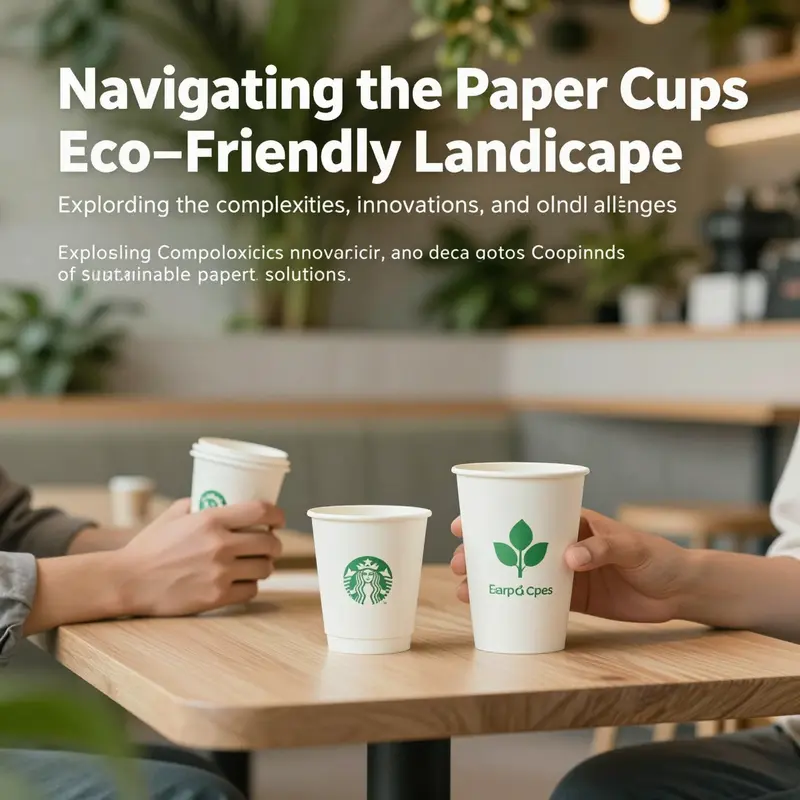
The environmental impact of paper cups is a topic gaining momentum, sparking conversations among beverage chains, restaurants, and event planners. While marketed as eco-friendly due to their renewable materials, paper cups often carry a hidden complexity—most are lined with polyethylene, rendering them non-recyclable and contributing to landfill waste. In the following chapters, we will delve into understanding the paradox of paper cups’ eco-friendliness, explore innovative alternatives emerging in the market, discuss the challenges in adopting these sustainable solutions, and highlight the importance of consumer awareness and the evolving retail landscape. Together, these insights will empower businesses to make informed decisions regarding their disposable cup choices.
Beyond the Plastic Coat: A Cohesive Look at Paper Cups and True Sustainability
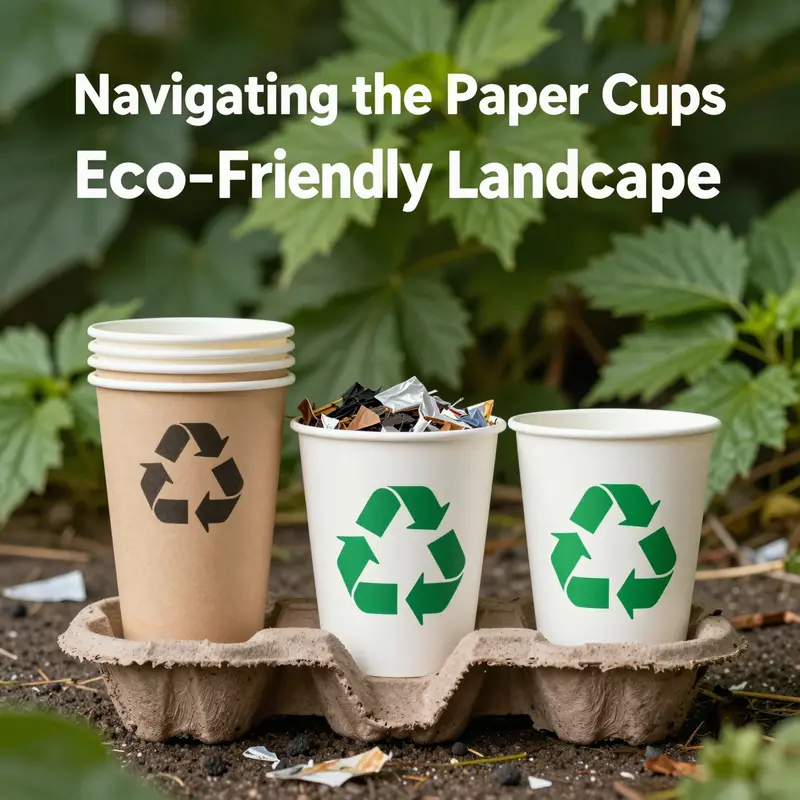
From the outside, a paper cup often suggests a bright environmental narrative: a renewable base, a simple disposable moment, and the promise of easy recycling. Yet the environmental message carried by these everyday containers is more tangled than it appears. The so called paper cup eco friendliness hinges on more than the paper content or the presence of a lid. It rests on coatings, closures, and the end of life pathway that follows a single use moment from manufacturing to disposal. In practice, the vast majority of standard paper cups are lined with polyethylene, a thin sheath of plastic that guards against leaks and maintains structure when filled with hot beverages. That plastic barrier is exactly the feature that makes recycling more complicated, because the paper and plastic must be separated to recover materials in most municipal streams. When separation does not occur, which is often the case in everyday curbside programs, the cups end up in landfills or are incinerated. This is the core of what researchers and waste managers call the paper cup paradox: a seemingly green product that frequently travels a non green end of life route. The paradox is not a failing of intent but a signal that the life cycle of disposable cups demands a more nuanced assessment than a label of paper or biodegradable alone can provide.
The paradox became particularly acute in policy and advocacy circles around 2023, when the European Environment Bureau and Zero Waste Europe underscored the misalignment between marketing claims and actual recyclability. Their report called out the practice of presenting paper packaging as an eco friendly substitute for plastic without adequately addressing its end of life reality. The result was a wake up call: the environmental narrative needs to shift from what a cup is made of to how it is disposed of, and whether the disposal pathway exists at scale in a given region. This shift matters because the environmental footprint of a cup is not defined by paper alone; it is defined by the full chain—from raw material extraction and production to distribution, use, and post use management.
Amid this complexity, a clearer path toward genuine sustainability is emerging in the form of plastic free, compostable paper cups. These cups eschew the conventional polyethylene coating in favor of materials that can, in theory, break down into organic matter under specific conditions. The most frequently discussed alternatives include biopolymers such as polylactic acid PLA derived from renewable resources like corn, and plant based coatings such as cornstarch. When designed to meet recognized compostability standards, these cups are intended to be fully compostable in industrial facilities that operate under controlled temperatures, moisture, and time frames. They promise a lifecycle that can leave behind nothing more than organic matter and a greatly reduced chance of persistent micro plastics. Yet the practical realization of these promises depends on infrastructure and behavior at the point of disposal. If compostable cups are thrown into conventional waste streams, or if they miss the appropriate composting facility altogether, their environmental gains are greatly diminished or lost. The value of compostable cups, therefore, cannot be assessed in isolation from the systems that manage cups after use.
There is also a core distinction between truly compostable options and other approaches that may appear eco friendly at first glance. PLA coated cups, for instance, are designed to break down under industrial composting conditions. They are not biodegradable in a home compost bin, nor do they disappear in a standard landfill where anaerobic conditions and limited heat prevail. The practical implication is that if a city does not provide industrial composting facilities or if consumers do not access them, PLA coated cups can behave similarly to traditional plastic lined cups in the environment. In contrast, plastic free cups that rely on plant based coatings, like cornstarch, are often marketed as fully compostable as well. The nuance here is that fully compostable depends on certification, a reliable waste stream, and a functioning facility that can accept those materials. The lack of a robust, accessible composting infrastructure in many regions means that even the best intentioned cups may fail to deliver the environmental benefits advertised, a failure that is not a flaw of the product alone but of the waste system surrounding it.
The lifecycle costs of these cups extend far beyond the material choice. Every stage—from the energy intensity of production, the emissions associated with transport, and the chemicals used in printing and finishing—contributes to the overall footprint. Even when a cup is plastic free at the point of use, the manufacturing process may rely on energy intensive plant based coatings, adhesives, and inks. The transportation footprint matters, too, because many eco friendly cup variants originate in regions far from consumption centers. The carbon costs of shipping must be weighed against the potential end of life benefits. In short, the environmental responsibility of disposable cups is not primarily a matter of choosing between paper and plastic; it is a matter of choosing a lifecycle path that aligns with regional waste management capabilities, consumer disposal habits, and the broader push toward reduced single use consumption.
Recognizing these complexities, many environmental advocates now emphasize a hierarchy of options rather than a single silver bullet. Reusable cups—made to endure repeated use, with robust materials like stainless steel or glass—represent the most straightforward path to waste reduction. When used consistently, reusable cups eliminate the daily externalities of disposables. Yet for some contexts—cafes with intense throughput, events with high turnover, or environments where washing facilities are not readily available—disposable options still matter. In those cases, the aim has shifted toward prioritizing plastic free, compostable cups that are certified for industrial composting and used in settings that actively direct waste to appropriate facilities. Certification is essential here. Third party standards, such as those from recognized bodies like BPI or TÜV OK Compost, provide a quality signal that a cup meets established compostability criteria. Certifications help guard against greenwashing by offering a verifiable basis for claims about how a product should behave at end of life.
Even with certifications, the user experience and disposal behavior play pivotal roles. A cup that is compostable in theory will deliver no real environmental advantage if it is tossed into the regular garbage, mixed with non compostable waste, or left as litter where it cannot reach a composting facility. Consumer education, clear labeling, and consistent disposal guidance are crucial pieces of the puzzle. In this sense, the consumer’s choice becomes a system level action—not merely selecting a product but participating in a waste stream ecosystem. Consumers and businesses alike must cultivate a culture of responsible disposal and a willingness to adjust purchasing and service practices to fit local capabilities. The goal is not only to purchase a more sustainable cup but to design a system that reliably transforms that cup into organic material rather than into waste.
This is where the lifecycle conversation becomes practical. If a city or region cannot sustain industrial composting for the necessary materials, the supposed advantage of compostable cups dissolves. In such places, compostable cups may still be appropriate—if they are part of an integrated program that collects compostables separately and transports them to accredited facilities. But absent that infrastructure, the best choice may be a reusable cup, or a plastic free disposable that is paired with an effective take back or recycling program designed for that locality. In other words, context matters. The same cup can be part of a sustainable solution in one city and a less favorable option in another. The broader takeaway is not that one material is universally superior, but that true sustainability depends on the alignment of product design with end of life infrastructure and user behavior.
To move beyond the paradox, many organizations and retailers are experimenting with packaging systems that pair material choice with changed service models. For instance, some outlets are adopting reusable or returnable cups where feasible, while others emphasize a broader shift toward reusable ware in higher volume settings. The dialogue around packaging must therefore evolve into a conversation about systemic change: better labeling to guide disposal, more transparent information about end of life pathways, and investment in industrial composting and recycling capabilities where they are most needed. Achieving this requires cooperation among manufacturers, waste managers, policymakers, and the public. It also demands that we resist the temptation to rely on a single category paper plastic or compostable as a cure all. Instead, we should continuously evaluate and adjust the lifecycle approach, ensuring that each cup is part of a net positive loop rather than a one way journey into the waste stream.
Within this framework, it is reasonable to highlight a practical resource for readers seeking tangible options. A recent line of products emphasizes plastic free, single wall designs that are compatible with industrial composting when disposed of correctly. For readers curious about specific models and their coatings, consider exploring new arrival options that aim to balance performance with compostability. One such option, presented in a page that emphasizes a new arrival single layer design with a flat lid, offers a pathway to imagine how a cup can function efficiently during service while maintaining a more environmentally coherent end of life. You can learn more about it here: https://greendispopack.com/product/new-arrival-single-layer-paper-cup-lid-flat-paper-cup-lid/. This link serves as a reminder that the market is evolving toward better specified end of life behavior, even as the broader waste system continues to adapt.
In conclusion, not all paper cups are eco friendly, and not all plastic free cups automatically deliver environmental benefits. The real measure of sustainability lies in a combination of material design, third party certification, and the existence of appropriate waste management infrastructure. The most robust path forward combines plastics free, compostable cup designs with targeted investments in industrial composting and clear consumer guidance, alongside a disciplined move toward reusable options wherever practical. The ultimate aim is to reframe disposable cups as a temporary convenience tethered to a responsible waste system, rather than as an unexamined default. A shared commitment to improved labeling, standardized compostability criteria, and systemic changes in waste handling can transform the narrative from a paradox to a pathway. For anyone seeking a broader context and external insights into how the debate has evolved, a recent analysis in a major news outlet offers critical perspectives on how consumer expectations may outpace the actual performance of disposable packaging. This external resource provides additional angles on the broader conversation about the ecological footprint of disposable cups and the importance of aligning claims with real end of life outcomes: https://www.theguardian.com/environment/2026/mar/07/pet-vs-paper-cups-are-eco-friendly-coffee-drinkers-being-tricked.
null
null
From Paradox to Practice: Navigating Barriers on the Path to Plastic-Free, Compostable Paper Cups
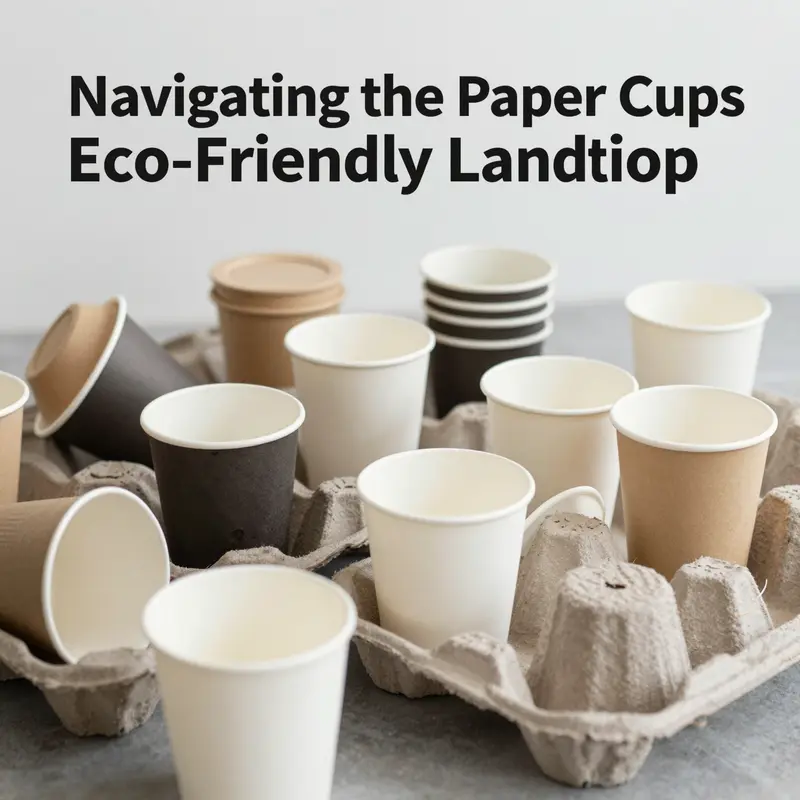
Every leap toward sustainability in disposable packaging carries a hidden map of compromises. The hope that a seemingly simple item like a paper cup can be both renewable and harmless hinges on a chain of choices that begin at the forest and end in the bin. The so-called paper cup paradox rests on a single, stubborn contradiction: a cup may be made from a renewable fiber, but if that fiber is bound to a non-recyclable lining, the cup’s end-of-life story is not aligned with its early promise. This paradox is not a mere trivia note for sustainability nerds; it shapes the decisions of cafes, event organizers, and municipalities that are trying to reduce waste without sacrificing drink quality or user experience. The challenge is not to abandon paper cups, but to reframe what we mean by eco-friendly in the context of a real circular economy. The path forward is paved with nuanced material science, smarter disposal infrastructure, and a culture shift toward more disciplined reuse and responsible end-of-life management.
The material composition of standard paper cups often lies at the heart of the problem. While the paper itself comes from wood pulp or recycled fibers, most cups are lined with polyethylene, a plastic polymer that prevents leakage and maintains heat resistance in hot beverages. That thin plastic layer is the critical barrier to recyclability in ordinary municipal streams because the paper and plastic must be separated for proper processing. In practice, separation is expensive and technically challenging, which means many cups end up in landfills or, less ideally, in litter. The consequence is a lifecycle that looks promising at the sourcing stage but reveals significant waste management hurdles once the cup is thrown away. When treated as a single-use product in a system that values circularity, the cup loses much of its perceived ecological advantage.
A growing alternative is the plastic-free or compostable cup, which reframes the problem by removing the common plastic liner. Some variants replace PE with PLA, a bioplastic derived from renewable resources such as corn starch. Others pursue plant-based coatings that are designed to biodegrade under industrial composting conditions. In theory, these options close the loop by enabling compostability while keeping the material origin in the biological sphere. In practice, the story is more complex. Industrial composting facilities, where these cups are meant to break down, are not universally accessible. In many regions, the infrastructure simply does not exist or does not operate at scale. Even when facilities are available, collection and sorting systems must be coordinated to ensure that compostable cups actually reach the right stream. Without reliable collection, the benefits of a compostable cup can evaporate, leaving the cup to persist in landfills or contaminate other recycling streams.
This is where the compostable paradox becomes particularly acute. The very feature that makes PLA-based or plant-coated cups seem greener—their potential to become compost rather than long-lived waste—depends on a disposal network that is both sophisticated and widely distributed. In the absence of industrial composting capacity, compostable cups may behave no differently from conventional plastics. The gravity of this reality has spurred a broader conversation about how to design end-of-life systems before material choices are locked in. It is a reminder that materials alone cannot guarantee sustainability; the system around those materials must be aligned to enable the intended outcomes. This alignment demands not only investment in facilities but also policy clarity, standardized certifications, and a durable consumer signal that compostable means properly disposed, not simply discarded.
The lifecycle perspective is essential here. A cup’s environmental footprint encompasses more than its end-of-life fate. Manufacturing emissions, energy use, transport distances, and the water footprint of processing all contribute to the overall picture. A plastic-free cup that travels long distances to reach a distant industrial composting facility may still carry a larger carbon load than a traditional cup used closer to home if the energy mix and logistics are unfavorable. Conversely, a cradle-to-grave assessment can reveal substantial gains when a cup is produced locally, uses renewable energy in manufacturing, and is disposed of in a way that supports composting rather than landfill. In other words, the eco-friendliness of a paper cup is not a simple yes-or-no verdict; it is a spectrum influenced by geography, infrastructure, and behavior. This is why lifecycle thinking must guide both product development and policy design, lest well-intentioned innovations become misaligned with the real-world systems that either enable or obstruct them.
Consumer behavior sits squarely in the center of this dynamic. Even when a compostable cup exists, missteps in everyday actions can undermine its benefits. If consumers drop the cup into a general trash bin rather than a designated compost or recycling stream, the cup’s chances of degrading cleanly are dramatically reduced. If they smoke out the facility’s capacity by littering on streets or at events, the compostability promise remains unfulfilled. Education is part of the solution, but so is practical design. Clear labeling, easy-to-find disposal bins, and consistent on-site guidance can nudge behavior toward the intended end-of-life pathway. Additionally, businesses have a stewardship role to play. The choices they make—from procurement and supplier certification to staff training and waste management partnerships—set the conditions for how a plastic-free cup performs in the real world. A well-crafted supply chain that embraces transparency can help avoid greenwashing and build trust with customers who want to support genuine eco-friendly practices.
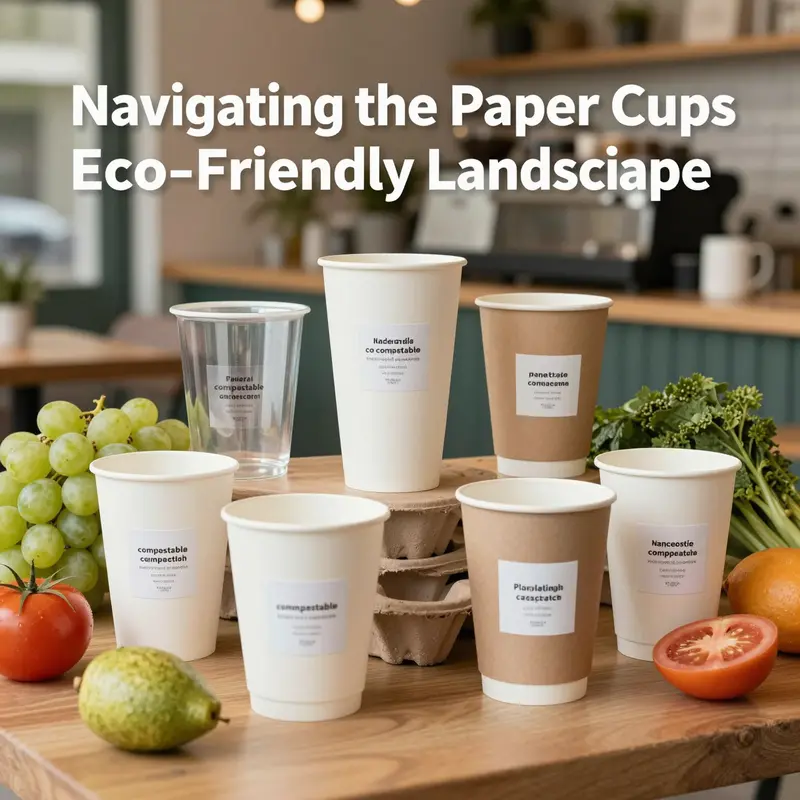
The certification landscape is a lifeline in this complex ecosystem. Third-party verification helps distinguish between cups that meet true compostability standards and those that merely market themselves as “green.” Look for certifications that specify industrial compostability under defined conditions and provide credible performance benchmarks. The Biodegradable Products Institute (BPI) and TÜV OK Compost are among the well-known attestations that communities and businesses rely on when assessing claims. Certifications do not replace responsibility; they complement it by providing a verifiable standard that reduces the risk of greenwashing. For buyers who want to go beyond marketing claims, this is a crucial tool. The combination of material science, certified performance, and robust end-of-life infrastructure represents the most reliable route to a cup that genuinely aligns with ecological goals rather than offering a superficial appearance of sustainability.
In the practical realm, a spectrum of options exists as the industry experiments with materials and system designs. Some producers are exploring fully compostable cups that use bio-based coatings designed to degrade naturally without industrial facilities. Others are moving toward reusable cup systems that reduce single-use waste altogether. Reuse schemes often pair durable serving ware with efficient cleaning and return logistics, offering a different set of environmental benefits and challenges. The transition toward reuse requires careful attention to hygiene, customer convenience, and the economic viability of the system in daily operation. It is a reminder that sustainability offerings are rarely one-size-fits-all. A cafe in a dense urban area may benefit more from a robust reuse program and local composting links, while a smaller venue may gain more from high-quality, compostable cups accompanied by well-structured take-back partnerships. The key is to design solutions that respect local waste management realities while preserving a positive user experience for customers.
As research and practice converge, the path forward involves a blend of material innovation, better disposal infrastructure, and clearer consumer signals. Innovations in coatings derived from renewable feedstocks that do not require industrial composting could lower barriers to entry where facilities are scarce. Simultaneously, policymakers and industry groups can push for standardized labeling, common definitions of “compostable,” and shared collection systems that unify disparate streams into coherent processes. The goal is not to erase the advantages of paper as a renewable resource but to ensure those advantages translate into genuine environmental benefits after use. The journey toward truly sustainable paper cups is iterative: it requires testing, learning, adjusting, and scaling in a way that remains faithful to the principles of a circular economy.
For readers seeking a practical entry point into current options and real-world trade-offs, consider exploring the broader landscape of eco-friendly cup design and sourcing through one example page that highlights sustainable features connected to lid-equipped designs. This page illustrates how a single product page can reflect an ecosystem of features—renewable fiber origins, plastic-free coatings, certified compostability, and the potential for reuse systems—without overpromising results. By examining such resources, businesses can begin to map a path that aligns product attributes with local waste-management realities and customer expectations. eco-friendly printed-logo paper cups with lids.
Ultimately, the transition from discussion to delivery hinges on deliberate collaboration across producers, waste managers, retailers, and policymakers. It requires aligning incentives so that choosing a plastic-free, compostable cup is not a risky bet but a rational decision that reduces environmental impact in the context of regional capabilities. If a city invests in a network of industrial composting facilities and establishes clear procurement criteria for institutions, the benefits of compostable cups become tangible rather than theoretical. If brands insist on rigorous testing and transparent disclosures, consumers gain confidence that what they buy is more than a marketing claim. If users recognize that compostability is a property of end-of-life systems as much as the material itself, they will participate more actively in the waste streams that make these cups work as intended. Taken together, these moves can transform the current barriers into scalable solutions that honor both the renewable starting point of paper and the practical necessities of waste management.
As this chapter concludes, it becomes clear that eco-friendliness is not a static label but a dynamic outcome produced by intentional design, robust infrastructure, and informed choices. The aim is not to chase a perfect product but to advance a robust system in which paper cups can genuinely contribute to lower environmental impact. When the components—materials, standards, disposal networks, and behavior—are coordinated, the result is a packaging option that respects renewable resources while meeting the practical demands of everyday use. The dialogue between material innovation and end-of-life realities must continue, guided by clear metrics, credible certifications, and a willingness to adjust as new knowledge emerges. Only then can the dream of plastic-free, compostable paper cups move from promise to practice and, finally, to a normalized part of sustainable consumption.
External resource: https://www.greenpeace.org.uk/2026/03/07/pet-vs-paper-cups-are-eco-friendly-coffee-drinkers-being-tricked/
Awareness in Motion: How Consumer Understanding Shapes the Plastic-Free Paper Cup Market
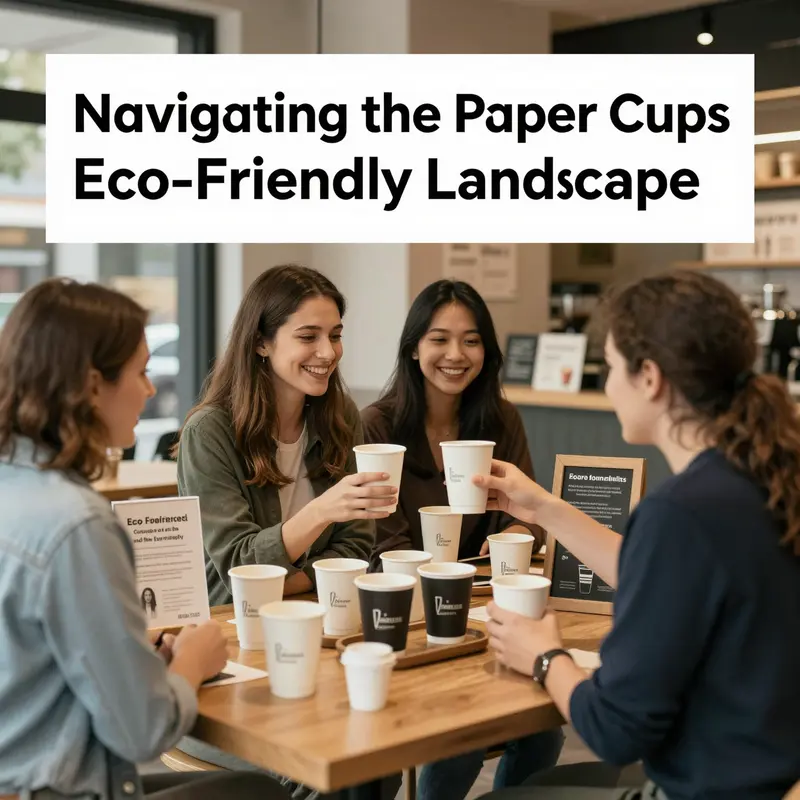
A quiet shift is taking place in the way people think about single-use cups and the packaging that accompanies their daily rituals. Across cities and towns, consumers are not merely reacting to marketing claims; they are growing more intuitive about what lies behind those claims. The rise of eco-conscious choices in the paper cup sector is less about a single, flashy product and more about a changing mindset that links everyday convenience with environmental responsibility. What seems simple at first glance—picking up a cup, sipping a drink, tossing the cup away—unfolds into a more complex story when awareness stretches toward the lifecycle of that cup, from raw materials to disposal. In this story, the so-called paper cup paradox becomes a crucial teaching moment. Paper cups are often perceived as inherently eco-friendly because they are rooted in renewable resources, but the reality becomes clearer only when the entire lifecycle and the end-of-life options are considered. The presence or absence of a plastic lining is not a mere technical detail; it is a defining factor that reshapes whether a cup can be recycled in mainstream streams or must be directed toward more specialized pathways. This nuance matters because it informs not just consumer choices but the decision-making of cafés, universities, event organizers, and retailers who want to align their practices with genuine sustainability goals. The consumer community is learning to demand more rigor from labeling, more transparency about sourcing, and more honest assessments of environmental trade-offs. The dialogue around paper cups is moving away from a binary good-versus-bad narrative toward a responsible, systems-oriented view that recognizes both progress and remaining challenges. In this context, the dynamics of awareness are not a passive backdrop; they actively steer market development, guiding which materials, coatings, and end-of-life options resonate with people who want to minimize their footprint while maintaining the convenience and social signals that cups provide in daily life.
Foundational to this shift is the recognition that not all eco-friendly claims are equally substantiated. The market has begun to distinguish between cups that rely on a plastic interior and those that forego plastic in favor of plant-based or recycled materials. The former, although convenient in the short term, often end up in conventional waste streams where the paper and polymer cannot be easily separated, limiting recyclability. The latter, plastic-free and designed for industrial composting, signal a more credible commitment to a circular approach. Yet credibility hinges on more than the absence of plastic or on a compostability label. It rests on verifiable certification, transparent supply chains, and accessible disposal infrastructure. Consumers are realizing that the real-world impact of a cup depends on where it goes after use and whether that destination can be reached without contaminating other waste streams. In other words, awareness now includes practical literacy about waste management systems, not just the aesthetics or claims printed on a cup.
This literacy appears in pockets across the globe, including urban centers where campaigns and school programs emphasize sustainable choices. A study focusing on Chennai City projected for 2025 hints at a broader pattern: as people learn more about environmental sustainability, they also begin to seek user-friendly options that fit their routines. When labeling communicates clear, actionable information—such as whether a product is compostable under industrial conditions, or what materials are used in the coating—we empower consumers to compare options quickly and accurately. The transition from awareness to action, however, is not automatic. It rests on what happens between the moment a consumer notices a claim and the moment they decide to purchase or dispose of a product. Accessibility matters. If truly eco-friendly cups are hard to find, or if the packaging appears ambiguous, knowledge alone won’t convert intention into behavior. Here, clear product placement, visible sustainability data, and straightforward disposal instructions become essential tools that bridge understanding and action. The market increasingly recognizes this bridge as a core driver of growth rather than an optional courtesy.
This is where marketing meets policy and governance. Effective campaigns by government agencies, industry bodies, and environmental groups can amplify credible information and counter misinformation. When governments provide guidance on what constitutes compostability, what certifications mean, and how consumers should dispose of cups in different contexts, they reduce the cognitive load on individuals who already juggle many daily decisions. The result is a smoother pathway from awareness to purchase. If a consumer sees a cup labeled as compostable and accompanied by a trusted certification mark, they are more likely to choose it, provided the product is readily accessible in their neighborhood and clearly labeled with the end-of-life expectations. Accessibility, transparency, and credibility thus become the triad that supports responsible consumption and shapes market growth.
Within this evolving landscape, market growth projections for biodegradable paper cups mirror the broader shift toward sustainable packaging. The biodegradable segment, part of the sustainable packaging industry, is expected to expand in both magnitude and influence. For example, forecasts from a regional market analysis point to a compound annual growth rate (CAGR) of 3.6% through 2030 in the United Arab Emirates, signaling a regional momentum that resonates globally. Such forecasts are not mere numbers; they reflect a convergence of consumer aspirations, corporate strategies, and regulatory environments that collectively push the market toward more responsible solutions. The growth is not only about introducing new materials but also about elevating the standards by which products are judged. As awareness spreads, so does the demand for products that can demonstrate measurable environmental benefits, from renewable sourcing to end-of-life infrastructure and verified compostability.
Material innovations sit at the heart of this evolution. The materials themselves carry the narrative of the market’s confidence in its future. Cornstarch-based polylactic acid, or PLA, emerges as a biodegradable polymer derived from renewable resources. Bamboo pulp adds another dimension with its sustainability profile, offering strength and workability that align with the needs of coffee shops and event spaces that prioritize a green footprint. These materials enable cups that perform reliably in hot beverage settings, withstand the rigors of handling in busy environments, and still align with environmental goals when disposed of properly. The implications extend beyond technical performance: they affect consumer experience, brand perception, and the social meaning attached to choosing an eco-friendly option. In environments like eco-friendly events or zero-waste initiatives, these materials can signal a genuine commitment to reducing impact, enhancing the credibility of the entire supply chain.
Still, scope and success depend on standards and certifications that translate promise into verifiable reality. The rising demand for eco-friendly products drives the need for clear benchmarks. In practice, this means products such as compostable double-wall cups with lids that meet recognized compostability standards, accompanied by verifiable certifications. Consumers increasingly read beyond slogans and seek proof of performance and lifecycle integrity. Transparent supply chains, third-party verification, and explicit disposal instructions become the currency of trust in this market. When a brand can point to credible certificates and a documented chain of custody, it strengthens the consumer’s confidence to choose eco-friendly options, even if they come with a slightly higher price or a different handling requirement in specialized facilities. This trust is crucial, because the environmental benefit of compostable cups hinges on proper end-of-life management. If industrial facilities are not available or if disposal habits drift back toward ordinary trash, the anticipated environmental benefits can be eroded. In that sense, standards and certifications are not bureaucratic hurdles but essential enablers of real-world impact.
The lifecycle perspective remains central to the consumer story. Manufacturing emissions, transportation, and the efficiency of end-of-life systems all contribute to the overall environmental profile of a cup. A plastic-free, compostable cup can deliver meaningful advantages when production is managed sustainably, when the supply chain minimizes waste and energy use, and when end-of-life infrastructure supports industrial composting rather than landfilling. Consumers are increasingly attuned to these nuances, recognizing that the environmental story does not end at disposal but requires a cradle-to-grave view. This broader understanding informs both personal buying choices and business strategies. Cafés and venues that commit to robust sourcing practices, minimize packaging waste, and partner with suppliers who disclose environmental data send a stronger message about accountability and care for the planet. In turn, this transparency can influence consumer expectations across categories, nudging markets toward more responsible packaging choices across the board.
Within this evolving awareness landscape, there is also a practical dimension to consider. Availability is a condition for action. If eco-friendly options are plentiful and consistently offered, consumers can practice sustainable choices with minimal friction. Conversely, if the range is narrow or the information on the packaging is opaque, people may default to familiar, convenient choices that undermine long-term goals. Therefore, the industry’s challenge is twofold: expand the range of plastic-free, compostable cups and ensure that the experience of choosing and disposing aligns with the stated environmental objectives. This requires a coordinated effort among manufacturers, distributors, venue operators, and policy makers, all aligned to deliver clear messages, reliable products, and accessible disposal options. When that alignment occurs, consumer awareness becomes a powerful driver of market transformation rather than a mere reflection of changing tastes.
For readers seeking a concrete illustration of how these dynamics play out in a real-world setting, consider how the sector is moving toward integrated packaging solutions that emphasize plastic-free design without sacrificing performance. In some market segments, venues now offer complete plastic-free alternatives, pairing compostable cups with compatible lids and a network of composting facilities. In such ecosystems, the entire beverage experience—from purchase to disposal—becomes a test of the market’s sincerity about environmental stewardship. The emphasis is on holistic design: cups that are easy to handle, lids that fit securely, labeling that reduces confusion about disposal, and a disposal pathway that minimizes contamination and maximizes compostability. The result is not only a more sustainable product line but also a more informed and engaged consumer base that understands why certain choices matter and how those choices resonate with broader environmental goals.
To reinforce the sense that awareness has real, practical effect, consider how product labeling and placement influence behavior. When a café displays transparent, accessible information about compostability, and when staff are trained to explain disposal options with clarity, customers feel empowered rather than overwhelmed. This reduces the cognitive load of making sustainable choices and strengthens the likelihood that a plastic-free cup will be used and recycled as intended. Marketing that respects the science behind compostability, coupled with visible third-party certifications, helps avoid greenwashing and builds lasting trust. The overall effect is a market that not only grows but matures, as products and services evolve to meet elevated expectations while remaining approachable and convenient for everyday use.
As this chapter threads together awareness, behavior, technology, and policy, a single image emerges: consumer understanding does not merely reflect a trend; it actively shapes the practical viability of eco-friendly paper cups. The market moves toward materials and designs that deliver reliable performance without compromising environmental commitments. It becomes clearer why plastic-free, compostable options—supported by credible standards and robust disposal infrastructure—are favored by both ecologically minded customers and the operators who serve them. The path forward depends on maintaining momentum in education, expanding accessible product options, and ensuring that end-of-life pathways are reliable, scalable, and properly resourced. Only then can awareness translate into durable, measurable environmental benefits across the lifecycle of disposable cups.
In the meantime, cafés and event organizers can illustrate this progression by embracing plastic-free alternatives and by sharing the story of their choices with customers. A single link on a menu or a well-placed sign indicating that a cup is compostable in industrial facilities can become a small but meaningful signal of accountability. For customers, this translates into a sense of participation in a collective effort to reduce waste and move toward a circular economy. For businesses, it represents an opportunity to differentiate through credible environmental stewardship that resonates with increasingly discerning consumers. The arc is not about rejecting convenience but about reimagining it in a way that recognizes responsibility as a core value. When awareness becomes informed, reliable choices, the market for plastic-free, compostable paper cups is not merely growing; it is evolving into a system that supports sustainable behavior across consumption and disposal, with tangible benefits for the environment and for the communities that rely on healthier, cleaner resources. And as this evolution continues, the conversation will likely expand to include more nuanced discussions about the social dimensions of consumption, the economic implications of sustainable packaging choices, and the ongoing innovation required to keep pace with changing consumer expectations.
For readers exploring related packaging options and real-world examples of plastic-free design in public-facing settings, a relevant product category to consider is disposable kraft-based tableware, which illustrates how plastic-free concepts can extend beyond cups to bowls and other serveware. See the detailed product page for Disposable 700ml Kraft Paper Bowl Take-Out as an example of how plastic-free, compostable design translates into everyday use in cafés and events. Disposable 700ml Kraft Paper Bowl Take-Out.
External reading to broaden the perspective on the environmental trade-offs involved in disposable cup choices can be found in professional journalism that scrutinizes the lifecycle impacts of PET versus paper cups. This source provides a broader context for understanding the complexities behind eco-friendly claims and the importance of robust end-of-life infrastructure. https://www.theguardian.com/environment/2026/mar/07/pet-vs-paper-cups-are-eco-friendly-coffee-drinkers-being-tricked
Final thoughts
In conclusion, while paper cups often carry an ‘eco-friendly’ label, their sustainability hinges on understanding the materials involved. The emergence of truly eco-friendly alternatives signals hope, but challenges remain in widespread adoption and consumer education. Beverages businesses, from bubble tea shops to catering services, must weigh their options and advocate for practices that truly promote sustainability. By recognizing the complexities and staying informed, we can collectively move towards a future where disposable cup choices support environmental goals without sacrificing service or convenience.