
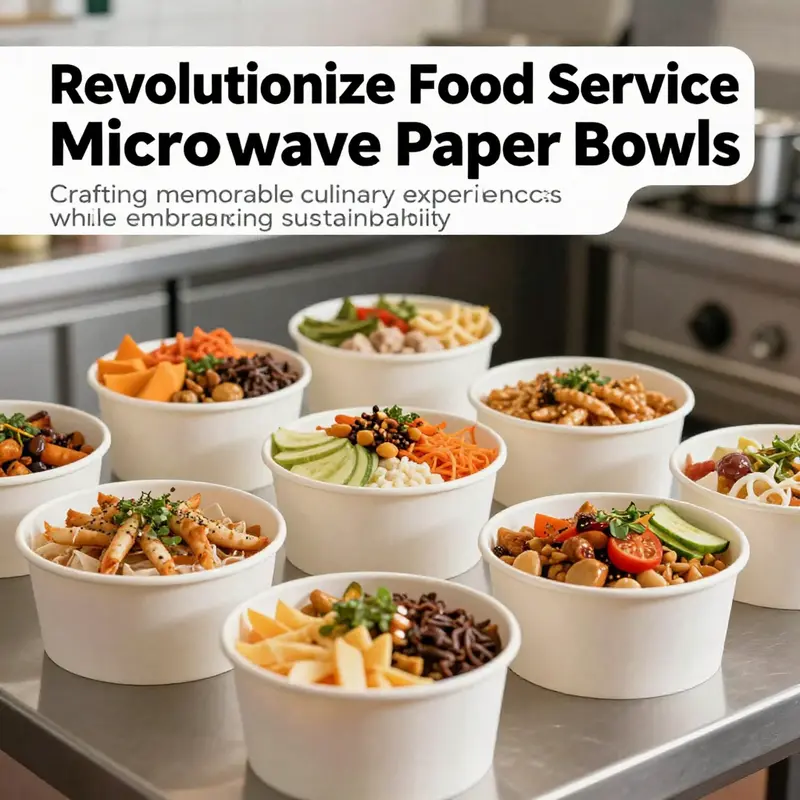
Microwave paper bowls have emerged as a game-changing option for food service professionals, such as bubble tea shops, restaurants, food trucks, and catering services. These bowls not only offer practicality and convenience for reheating and serving meals but also underscore an increasing commitment to sustainability in the food industry. In this piece, we will explore the innovative materials and constructions behind these versatile bowls, the environmental implications of their use, and best practices to maximize benefits while ensuring food safety and quality. Each chapter effectively builds toward a holistic understanding of how microwave paper bowls can enhance operational efficiency while aligning with eco-friendly goals.
Heat, Coating, and Care: The Quiet Engineering Behind Microwave-Safe Paper Bowls
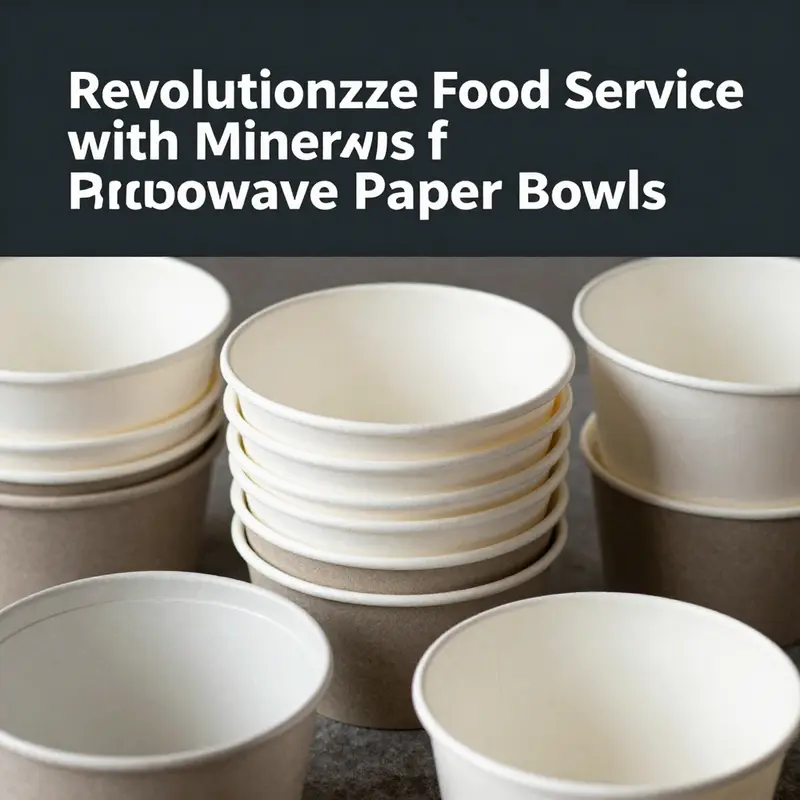
A microwave-safe paper bowl may look like a humble vessel, a simple white or kraft-colored cup meant to cradle soup, noodles, or a shareable snack. Yet the moment you lift it from the microwave, you sense there is more than luck at work. The bowl is the result of a careful blend of material science, manufacturing precision, and safety considerations that transform ordinary paper into a heat-tolerant, leak-resistant package. This chapter follows the arc of that transformation, tracing how base substrates, protective coatings, and structural refinements come together to produce a container that not only performs under heat but also respects the environment and the needs of busy kitchens. The story begins with the base itself—the paper that must be renewable, strong, and receptive to the next layer, and it moves through coatings that guard moisture and temperature, then into the engineered details that keep hot contents contained and safe to handle. Along the way, it touches on the practical realities of production, quality control, and the evolving role of sustainability in a market hungry for both performance and responsibility.\n\nAt the heart of every microwave-safe paper bowl lies its base substrate. Most often, this is kraft paper or another paper-based material chosen for its strength, durability, and renewability. Kraft comes from long fibers that can be dressed with a protective finish without sacrificing recyclability, and this makes it a natural starting point for a product that must perform in a microwave while aligning with growing environmental expectations. In today’s packaging landscape, a rapidly renewable resource footprint carries real value. The switch from traditional plastics to paper-based substrates reduces the life-cycle burden and offers a story that retailers and consumers can feel good about. Yet paper alone, however strong, would not stand up to the thermal demands of microwave reheating, nor would it prevent the moisture that foods liberate from seeping through the container walls. This is where coatings enter the scene, turning a sturdy sheet into a heat-resilient vessel.\n\nCoatings are the practical heart of microwave safety. They perform a dual role: they provide a robust moisture barrier and they modulate heat transfer in ways that help preserve both the container and its contents. The coatings found in contemporary microwave-safe paper bowls are carefully chosen for their performance, safety, and environmental profile. Traditionalists may recognize polyethylene, or PE, as a long-standing option. PE offers moisture resistance, a predictable barrier against leaks, and the flexibility needed to maintain a smooth surface on the inside of the bowl. It keeps hot sauces, soups, and gravies from soaking into the paper fibers and compromising strength during heating. But the conversation around coatings does not end there. Many manufacturers are exploring plant-based biopolymers and other bio-derived coatings as part of a broader push toward sustainability. These alternatives aim to offer similar moisture defense and heat stability with a smaller ecological footprint, aligning with a growing demand for materials that are compatible with composting or at least easier to recycle after use.\n\nThe thermal envelope of a microwave-safe bowl is a carefully calibrated range. In practical terms, these bowls are designed to tolerate temperatures that might reach well into the upper hundreds of degrees Fahrenheit during a normal microwave cycle, while remaining safe to handle and free from the release of undesired chemicals. The stated operating window often includes temperatures from negative twenty degrees Celsius up to about two hundred twenty degrees Celsius, a span that covers frozen applications, hot soups, and noodles alike. The coatings are chosen to resist deformation, warping, and breakdown at these hot moments, ensuring the bowl retains its shape long enough for the user to lift it away from the heat or pass it to a server. This is not merely about resisting melting; it is about resisting a cascade of mechanical failures that could lead to leaks, scalding, or a collapse of the container’s integrity.\n\nBeyond the substrates and coatings, the structural geometry of microwave-safe bowls plays a decisive role in their reliability. Reinforced rims and bases are common features that prevent deformation under heat. The rim must resist flexing when the lid is removed or when a hand grips the edge after microwaving. A sturdy base helps the bowl stand steady on a table or a serving tray, even as steam and heat circulate within. Some designs incorporate anti-leak structures that extend to the interior seams, reducing the chance that a hot liquid seeps through to the outer surface or the packaging beneath. In professional settings, where repeated reheating and rapid turnover are the norm, such reliability is not a luxury but a requirement. A bowl that leaks or sags under pressure can ruin a service flow, create messes, and undermine trust with customers.\n\nAnother crucial design element is the venting mechanism. Advanced models sometimes feature vented lids or specially engineered internal features that permit steam to escape in a controlled fashion. The idea is to relieve pressure without letting contents splash out when the lid is removed or during a brief pause in heating. This venting capability not only improves user safety but also reduces the likelihood of splatter that could stain trays, machinery, or countertops. The presence of a vent can be subtle and integrated into the lid’s geometry, yet it is a meaningful difference in how the container behaves during microwave cycles. The choice of venting solution is often guided by the expected use case and by safety standards that govern consumer and commercial packaging.\n\nThe materials and structures described above are not merely academic distinctions; they translate into practical capabilities across a broad spectrum of applications. For home cooks, a microwave-safe bowl offers a reliable vessel for reheating leftovers, mixing or serving hot dishes, and keeping portions portable for lunches at work. In offices and schools, these bowls support meal-prep routines, enabling individuals to reheat and consume meals without transferring to other containers or creating waste with disposable plastics. In restaurants and catering operations, the bowls become part of a bigger system—an eco-conscious, efficient line of serviceware that can withstand the rigors of mass production, frequent cleaning, and frequent stacking. The ability to withstand high temperatures without warping or leaking is particularly important in institutional environments where safety, compliance, and standardization matter.\n\nFrom a manufacturing perspective, a microwave-safe bowl is a product of precise quality control and thoughtful supplier relationships. Producers often emphasize rigorous checks at multiple stages, including an “always final inspection before shipment” approach. These checks help ensure that each batch meets defined performance criteria before it reaches a distributor or customer. And while steel-eyed audits are common, many manufacturers also build in policy protections to address defects or delays. In an industry where the supply chain can be complex and variables such as paper fiber quality and coating consistency come into play, having a clear path for refunds or replacements helps maintain trust with buyers who count on dependable packaging for their operations.\n\nThe environmental narrative surrounding microwave-safe bowls is also evolving. Consumers and businesses alike have shown a preference for materials that combine performance with lower environmental impact. Biobased coatings, sourced from renewable materials, and feedstock choices that consider end-of-life options are becoming more common. A notable example within the broader material ecosystem is the use of bagasse—a byproduct of sugar production—as a substrate, which can be processed into fiberboard-like structures that are compatible with microwave use. Bagasse-based bowls can offer robust heat resistance and leak-proof performance while also presenting an attractive compostable or biodegradable option. Such materials illustrate how the packaging industry can pursue sustainability without sacrificing the quality or safety demanded by food service.\n\nFor those exploring the landscape of manufacturers and product lines, there is a spectrum of options that reflect different priorities. Some producers highlight the mechanical robustness of their rims and bases, while others emphasize moisture barriers and heat resistance in the coating system. Still others foreground sustainability, documenting the renewable content of the base substrate and the biodegradability or compostability of the finished product. A practical takeaway for buyers is to examine the whole package: substrate origin, coating chemistry, structural reinforcement, venting capability, and the claimed end-of-life outcomes. In complex supply chains, a bowl’s performance in a microwave is the result of this carefully balanced combination rather than a single feature.\n\nCited among industry references, one manufacturer demonstrates how these principles translate into a concrete product family. Their microwave-safe paper bowls illustrate a range of capacities and configurations that map onto distinct use cases—from single-serving soups to larger meal portions. The emphasis on safety standards and quality assurance aligns with best practices in food service packaging, where consistency and reliability are not optional but essential. Such examples illuminate how the field has grown beyond a single-layer solution into a curated ecosystem of materials and designs that support diverse service models while maintaining safe, heat-tolerant performance.\n\nIn considering the integration of these bowls into daily routines or business operations, it helps to acknowledge practical usage guidance. Storage in a cool, dry place preserves the integrity of the coating and the fiber matrix, while avoiding exposure to high humidity or direct sunlight reduces potential degradation over time. When reheating, following recommended temperature guidelines is prudent; exceeding those limits increases the risk of coating breakdown, food leakage, or external staining. To minimize splatter and promote even heating, experts advise using a microwave-safe lid or dome rather than a common paper towel. A vented cover—whether made of BPA-free plastic, silicone, or tempered glass—provides a controlled steam environment, facilitating safer handling and reducing mess in the kitchen or dining area. These precautions complement the technical sophistication of the bowl itself, reminding us that performance emerges from both material choices and user practices.\n\nThe supply side of the equation is also noteworthy. Markets show a broad range of sizes and configurations, including capacities such as 500 ml, 1000 ml, and 1300 ml, with options for custom printing and lids. These variations reflect the diverse needs of foodservice operators who require equipment that fits their menu lines, branding strategies, and portioning standards. The pricing reality of bulk orders—where a 1000 ml kraft bowl with a lid can be offered at very competitive unit costs—speaks to the scale advantages that drive accessibility, especially for caterers and takeout providers who must balance cost with reliability. In this context, the coatings and substrates are less abstract features; they are the levers that influence cost, performance, and end-user experience. A well-made microwave-safe bowl becomes a critical node in a broader system that spans procurement, storage, reheating, service, and waste management.\n\nWhat, then, should a thoughtful buyer or designer keep in mind when evaluating a microwave-safe paper bowl? First, consider the thermal resistance of the container. The bowl must withstand temperatures without warping or losing its structural integrity, particularly where the edges and seams meet. Second, assess the moisture barrier performance. The food’s moisture can challenge the paper’s fiber matrix, and a robust barrier helps maintain food texture and prevents sogginess. Third, look at structural strength across potential use cases. A bowl that performs once for a photo-worthy shot but struggles under repeated use will disappoint in high-volume environments. Fourth, evaluate the end-of-life scenario. Materials that are compostable or readily recyclable—and that degrade in a controlled manner when waste streams permit—help close the loop between packaging and sustainability. Finally, confirm the presence of practical features such as lids, venting options, and clear guidance on safe heating. The sum of these factors is what transforms a simple bowl into a dependable tool for kitchens, cafeterias, and catering operations alike.\n\nIn closing, the journey from the pulp and fibers of a paper sheet to a microwavable dining experience is a story of careful material choices and engineering discipline. It is about selecting substrates that can be renewed and refined, coating chemistries that guard moisture and heat, and structural forms that resist deformation while enabling safe handling. It is about balancing performance with environmental responsibility and aligning production practices with the realities of busy service environments. It is about the quiet confidence that when a customer lifts a microwave-safe bowl from the oven and carries it across a counter, everything behaves as expected because engineers and designers have anticipated the heat, the steam, and the everyday rush of a modern dining landscape. The result is not just a container but a reliable partner in the moment of reheating, serving, and sharing.\n\nFor readers seeking a concrete, real-world touchpoint that mirrors the themes above, consider the option of an octagonal kraft paper bowl in stock, which demonstrates how form, function, and availability intersect in practice. octagonal kraft paper bowl in stock. This example embodies the idea that packaging design can be both distinctive and dependable, delivering performance while remaining adaptable to branding and volume requirements. As the industry continues to explore and refine coatings, substrates, and manufacturing processes, the fundamental promise remains clear: heat, held safely by paper, can travel from microwave to table with calm efficiency.\n\nFurther reading and external perspectives on microwave-safe paper bowls can be found in industry resources that discuss safety standards, performance expectations, and the evolving landscape of biobased coatings and sustainable substrates. For a broader overview of safety and heat performance, see the external resource here: https://www.sowinpak.com/microwave-safe-paper-bowls/.
Greener Heats and Cleaner Afterlives: The Environmental Journey of Microwave Paper Bowls
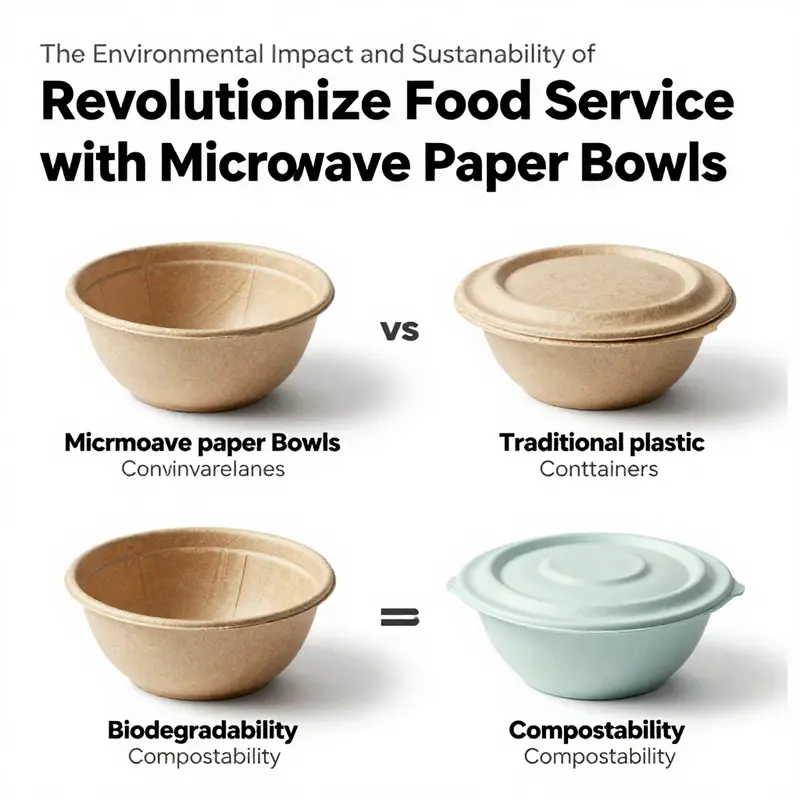
The rise of microwave paper bowls marks a quiet but consequential shift in how we think about convenience, heat, and home-friendly packaging. They promise a practical balance: the ability to reheat and serve hot food without the risk of melting or leaking, paired with a more sustainable profile than many conventional plastic or foam alternatives. Yet the sustainability story of these bowls is not a single line about being biodegradable or compostable. It is a layered narrative that unfolds across sourcing, manufacturing, use, and end-of-life, weaving together material science, waste management infrastructure, consumer behavior, and regulatory signals. When we examine microwave paper bowls through a lifecycle lens, we see that their environmental footprint depends as much on the choices made in forests and mills as on the choices made by kitchens and diners. The conversation shifts from “can this bowl survive a hot meal?” to “how does this bowl fit into a circular economy that minimizes waste and maximizes resource efficiency?” It is within this broader frame that the environmental potential of microwave paper bowls becomes most meaningful, especially as the design and supply chains incorporate greener materials, smarter processing, and better end‑of‑life pathways.
At the heart of these bowls is a simple, robust insight: paper is a renewable feedstock when it comes from responsibly managed forests or from agricultural byproducts. In practice, this means virgin paper pulp harvested from forests certified for sustainable management or from residues that otherwise would go unused. The renewable nature of paper contrasts with fossil-based plastics, introducing a different pattern of resource use. When the paper is augmented by a thin, heat-resistant coating—commonly polyethylene or, in newer, more sustainable iterations, polylactic acid (PLA) derived from corn or other plant sources—the bowl gains the ability to resist heat, contain liquids, and stay structurally sound during microwaving. This coating is essential not only for performance but also for the environmental outcomes of end-of-life processing, because it influences how the bowl behaves in composting streams or recycling facilities. The coatings are designed to be thin and to minimize interference with biodegradation or recycling, yet their presence invites careful consideration of waste streams and local facilities because PLA, PE, and other materials have different fate in various ecosystems.
One of the most visible advantages of microwave paper bowls is their potential to reduce reliance on single-use plastics and foam containers. Studies tracing the environmental footprint of paper-based packaging often find lower global warming potential and less depletion of finite resources when compared to plastics. This advantage, however, is not universal. A comprehensive life cycle viewpoint reveals that the environmental benefits hinge on factors such as the efficiency of pulping, the energy mix used in manufacturing, and the end-of-life options available to end users. If a paper bowl is burned or disposed of in a setting where composting or recycling is not available or is poorly executed, many of the theoretical benefits may not be realized. A key insight from life cycle assessments is that maximizing the environmental advantage of paper bowls requires investments not only in greener materials but also in better waste management infrastructure and public awareness around proper disposal.
The adoption of agricultural waste as a material input, such as bagasse—a byproduct of sugar production—exemplifies a broader shift toward circular economy thinking. Bagasse-based bowls demonstrate that it is possible to convert what would otherwise be waste into functional packaging while maintaining microwave performance and leak resistance. They epitomize the concept of “waste tudo,” reusing streams that would clutter landfills or incinerators. This approach reduces the demand for virgin tree fiber in some applications and helps alleviate pressure on forests, a factor that resonates with environmental policy debates about land use, biodiversity, and carbon sequestration. When these plant-derived fibers are combined with modern coatings that preserve heat resistance, the result can be a durable, compostable alternative that aligns with contemporary sustainability goals. The challenge, however, lies in sustaining a price point that competes with conventional plastics and ensuring that composting facilities are accessible to consumers who purchase these bowls.
From a production perspective, the environmental footprint of microwave paper bowls is strongly influenced by energy efficiency and material efficiency. Life cycle assessments conducted with tools like Simapro underline that every stage—from pulping to coating to converting—contributes to the overall environmental picture. Green materials and efficient processing can dramatically reduce impacts, but the benefits are contingent on the energy sources used in factories. For regions where the electricity mix is heavily fossil-fueled, the gains from switching to greener inputs can be offset by higher energy demand. Conversely, in areas powered by cleaner grids or with on-site renewable energy, the same processing steps can yield substantial improvements. In this sense, the environmental performance of microwave paper bowls is tightly coupled to the broader energy policy landscape and to corporate commitments to reduce carbon intensity across manufacturing footprints. A meaningful step toward lower environmental impact is investing in more efficient drying technologies, optimized coating thickness, and higher yields per batch—all of which lower waste, water use, and energy consumption while maintaining the necessary heat resistance and leak protection.
Another crucial dimension is the end-of-life pathway. The environmental benefits of paper bowls multiply when the products are directed into recycling streams or composting facilities rather than landfills. Recycling reduces the demand for virgin material and lowers greenhouse gas emissions associated with the extraction and processing of new fibers. Composting, particularly for bagasse or other plant-based materials, can return nutrients to the soil and close material loops. Yet this ideal scenario depends on the availability and accessibility of appropriate facilities, plus consumer participation in sorting and disposal. Contamination remains a persistent challenge: residues from soups, oils, or sauces can complicate recycling or hinder compostability. Clear labeling, better consumer guidance, and standardized testing for compostability and recyclability help address this issue. Moreover, the interaction between coatings and end-of-life streams matters. PE coatings may complicate composting, while PLA coatings are intended to be compostable in industrial facilities. The practical outcome is that the success of end-of-life strategies hinges on alignment among manufacturers, waste processors, municipalities, and households.
In pursuit of green packaging, some manufacturers have begun to blend materials more deliberately to balance performance with end-of-life compatibility. For instance, coatings derived from renewable feedstocks, when engineered to separate cleanly from pulp during pulping or to degrade under composting conditions, can reduce the environmental burden without sacrificing the integrity of the bowl in microwaves. The aim is not simply to replace fossil-based inputs with plant-based ones but to integrate a holistic approach that considers the entire lifecycle. This means analyzing questions such as how many times a given bowl can be used in a microwave reheat scenario before disposal, whether multiple reuses could reduce overall waste, and how the packaging ecosystem can be designed to support both food safety and environmental stewardship. It is a balancing act between durability, user convenience, and the goal of lowering life cycle impacts.
The economic dimension cannot be ignored when discussing sustainability. Even when environmental benefits are clear in principle, higher production costs and less predictable end-of-life outcomes can slow adoption. Paper bowls that are perceived as more expensive than plastic options risk losing share in competitive markets, particularly where margins are tight or where customers demand the lowest possible costs. This tension between price and sustainability underscores the need for policy signals, consumer education, and supply chain collaboration. Governments can accelerate progress through extended producer responsibility, composting infrastructure investment, and clear labeling standards that help customers distinguish truly compostable or recyclable products from those that merely appear greener. In turn, brands and manufacturers can leverage scale, standardized testing, and transparent reporting to demonstrate real gains in environmental performance. The narrative thus moves beyond a simple “green badge” toward credible, verifiable improvements across product families and manufacturing facilities.
A practical takeaway for businesses and consumers alike is the importance of context. The environmental benefits of microwave paper bowls are most pronounced when these bowls are integrated into a sustainable operating model. For a restaurant or catering operation, this may mean selecting bags and bowls made from bagasse or recycled fiber with a coating designed for easy separation in recycling streams, paired with a waste program that encourages composting of certified products where available. For households, it means understanding local composting capabilities and municipal recycling guidelines. It means choosing the right bowl for the right function and accepting that the most sustainable option often involves a multi-pronged strategy: reduce unnecessary packaging, reuse where feasible, recycle when appropriate, and ensure degradation through composting where it is truly supported by local infrastructure. In this sense, the four Rs—reduce, reuse, recycle, degrade—are not a slogan but a framework for evaluating and improving the environmental performance of microwave paper bowls at every stage of their life.
The narrative of sustainability is not static. Advances in material science promise thinner, stronger, and more compostable coatings, and there is ongoing exploration into alternative fibers that avoid pressures on forest ecosystems. The shift toward renewable resources, coupled with improvements in processing efficiency, can yield lower greenhouse gas emissions and reduced resource depletion. However, as lifecycle thinking makes clear, these gains must be realized in practice; they require alignment between materials developers, manufacturers, waste management providers, and end users. The future of microwave paper bowls thus rests on a chain of coordination that makes sustainable choices easy, intuitive, and economically viable for all players in the system. When successful, the bowls become part of a broader movement toward design for disassembly, material recycling, and biological degradation that respects planetary boundaries while delivering the convenience customers expect.
If one seeks a concrete, research-backed frame for these considerations, the field is increasingly guided by comparative life cycle assessments that juxtapose kraft paper bowls against plastic counterparts. Such assessments highlight how sourcing, processing energy, water consumption, and end-of-life channels collectively shape environmental outcomes. They remind us that the path to lower impact is not a single switch from plastic to paper, but an orchestration of choices across supply chains and communities. In practice, this means choosing suppliers who can demonstrate certified sustainable fiber sourcing, implementing energy efficiency programs in mills, investing in waste-stream separation technologies, and educating customers about the best disposal routes for the products they buy. The result is a more resilient packaging ecosystem, one that can better withstand the pressures of rising demand for takeout foods while reducing environmental harm.
For readers who want to explore this topic further, a substantial body of work exists that compares takeout packaging options from a lifecycle perspective. These studies provide methodological foundations, data, and nuanced insights into when and where paper-based options outperform plastics and where caveats apply. They also point to the importance of local context—how regional recycling and composting capabilities shape outcomes. As researchers, policymakers, and industry players continue to collaborate, the environmental narrative around microwave paper bowls will likely grow more precise, with clearer guidelines for material choices, manufacturing practices, and end-of-life stewardship that maximize the benefits without compromising safety or convenience. This evolving story invites a broader audience to participate in sustainable decision-making, recognizing that small improvements in everyday packaging can accumulate into meaningful environmental dividends over time.
In closing, the environmental footprint of microwave paper bowls is best understood not as a fixed label but as a dynamic profile shaped by material choices, processing efficiency, and the effectiveness of disposal systems. When designed with responsible sourcing, optimized manufacturing, and robust end-of-life options, these bowls contribute to a more sustainable takeout culture. The challenge lies in aligning incentives across the supply chain so that greener materials and processes are accessible and attractive to producers, retailers, and consumers alike. The reward is a packaging landscape that supports heat-enabled dining without compromising planetary health. As the field evolves, continuing attention to lifecycle thinking, transparent reporting, and consumer education will be essential to translating technical improvements into real-world environmental benefits. For practitioners and researchers seeking a deeper dive into lifecycle comparisons and methodological considerations, the external resource linked below offers a rigorous examination of kraft paper versus plastic bowls, framed within a takeout meals context.
Internal link for further reading: disposable kraft paper bowl for food package with lid.
External resource: https://doi.org/10.1108/prt-10-2022-0113
Guarded Heat: Navigating Safety, Sustainability, and Practical Use of Microwave Paper Bowls
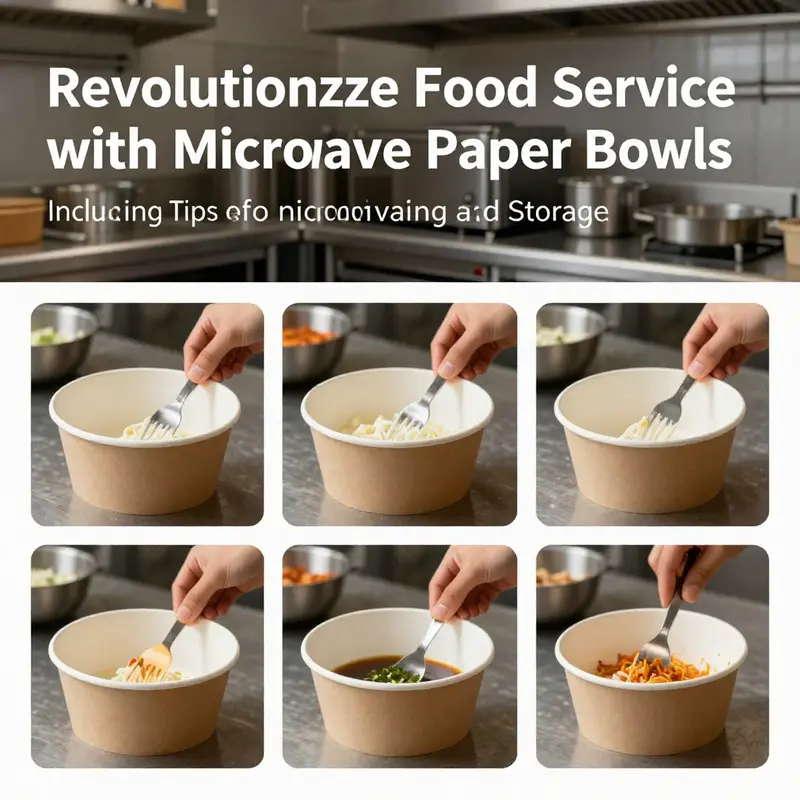
Microwave paper bowls have quietly become a familiar part of daily meals, transforming how homes, cafes, and quick-serve operations reheat and present hot foods. The allure lies not just in convenience but in the careful balance between performance and responsibility. When we lift a steaming bowl from the microwave, we expect resilience—the kind that keeps a soup from seeping, a noodle dish from splattering, and a dessert from turning into a cardboard memory. Yet beneath that expectation lies a web of material choices, coating chemistries, and manufacturing decisions that determine whether heat is a simple task or a hazardous one. This chapter threads through those realities, drawing a cohesive picture of how microwave paper bowls are designed, used, and improved, while remaining true to the larger aim of sustainable, safe food packaging.
At the core of the discussion is a deceptively simple distinction: not all paper bowls are created equal when it comes to microwave use. Many standard disposable paper bowls are fashioned from cellulose pulp and then treated with wax or plastic coatings to resist leaks. Those coatings, though practical for a drying or staining barrier during storage, can become a problem when subjected to microwave temperatures. The risk is twofold. First, the coatings may melt, degrade, or even ignite as heat concentrates near the food. Second, and more concerning, chemicals from coatings can migrate into the food if the container is overheated or used beyond its intended limits. A synthesis of recent safety evaluations underscores these concerns, noting that wax coatings can give rise to alkane compounds when heated, and certain metallized or foil linings can create electrical arcing risks in microwaves. The practical takeaway is not to demonize paper bowls outright but to recognize that a standard, unapproved bowl offers little margin for safety in reheating scenarios.
The safer path, and the path increasingly taken by responsible manufacturers, is to employ true microwave-safe designs. These designs rely on heat-resistant barriers and material systems that remain stable under typical reheating conditions. In many modern microwave-safe paper bowls, that stability comes from careful coating choices. A widely used approach is to pair paper with a protective layer—often polyethylene (PE) or, with growing interest in sustainability, polylactic acid (PLA). PE provides a familiar moisture barrier and leak resistance, while PLA’s plant-derived origins align with broader environmental goals, even as it preserves the essential heat resistance needed for microwaving. The coatings are not just about keeping liquids in; they are about preserving the bowl’s structural integrity at the temperatures typical of soups, stews, noodles, and even certain desserts. The difference is palpable when you compare the feel of a heat-toughened surface to a container that softens or warps at modest heat. The truth about microwave-safe bowls is less about one universal standard and more about a lineage of materials engineered to meet the calendar of service, from prep to plate.
Sustainability threads through the market in a distinctive way. In the ongoing effort to reduce plastic waste and move toward renewable resources, several producers have turned to bagasse—the fibrous byproduct of sugarcane processing—as a feedstock for disposable bowl walls. Bagasse-based bowls are typically designed to be sturdy, leak-resistant, and, crucially, biodegradable or compostable under appropriate conditions. The appeal is especially strong in foodservice environments that generate high volumes of takeout and need packaging that can be responsibly discarded along with a meal. A 16-ounce heavy-duty bagasse bowl, for instance, can handle hot soups without delamination, resist splatter, and offer a degree of cut resistance that enhances handling in busy service settings. The trade-off for sustainability is not a compromise in safety but a careful alignment of materials, coatings, and processing to ensure the bowl performs as needed in a microwave while still meeting compostability timelines.
From the production floor to the dining table, the value proposition of microwave-safe paper bowls lies in a triad: performance, safety, and environmental responsibility. Performance begins with strength and heat tolerance. A bowl must hold hot liquids and dense foods without leaking or deforming, even when the user removes it from the microwave and carries it across a room. Safety follows in the form of chemical stability and fire resistance. The coating system must stay intact and non-reactive under heat, while the construction as a whole should avoid any design that could create arcing, combustion, or rapid temperature spikes. Environmental responsibility comes into play as more bowls are made from renewable, compostable, or recyclable fibers and coatings, reducing the long-tail impact of disposables. The industry is moving toward a future where a micro-innovation—a more bio-based coating, a new barrier layer, or a redesigned geometry—can unlock safer microwaving while simultaneously advancing circularity goals.
Yet all these ambitions demand an informed approach to use. The best practices outlined by researchers and food safety professionals converge on a simple baseline: do not use standard disposable paper bowls in the microwave unless they are explicitly labeled as microwave-safe. The presence of a “Microwave Safe” mark is not a decorative flourish; it is a product of testing that confirms the bowl’s materials and coatings can withstand conventional reheating without compromising safety. When a user approaches any bowl without that label, it is prudent to view the heating step with caution, because untested interactions between heat, coatings, and food can yield unpredictable outcomes. The path to safe reheating is anchored not in wishful thinking but in adherence to labeling that reflects validated performance.
For households and professionals who occasionally run into the need to heat foods in uncertain containers, the recommended strategy is straightforward: transfer the contents to a container that has been explicitly designed for microwave use. This is where the practical wisdom of the industry meets the everyday decision-making of cooks and caterers. A microwave-safe transfer is more than a ritual; it reduces risk by ensuring that the vessel, not the food, shoulders temperature extremes. When the original bowl is deemed unsuited for microwaving, a temporary switch to glass or ceramic can be a simple, reliable safeguard. The transparency of glass, for example, not only provides a heat-tolerant performance but also offers visual confirmation of what is happening inside the container during heating. The ceramic alternative, free of internal migratable coatings, often remains inert while warming, preserving the flavor and texture of the dish rather than competing with it through leached compounds.
One of the most practical and increasingly common approaches is to pair a microwave-safe bowl with a vented lid or dome designed to manage steam during heating. Venting matters because microwaves heat unevenly, and the steam pressure that builds up under a lid can cause splatter, bloat, or even scorching if uncontained. A vented cover, especially when made from BPA-free plastics, silicone, or tempered glass, provides a controlled environment that traps steam, reduces mess, and minimizes the chance of a lid sticking to hot food. In addition, it implies a boundary that helps ensure the coating remains intact, reducing the likelihood of coating migration. The combination of a microwave-safe bowl and a proper vented lid represents a disciplined approach to reheating that respects the materials involved and the safety of the consumer.
The supply chain and market dynamics further shape how these products are chosen and used in practice. The breadth of sizes—ranging from smaller volumes to 1000 milliliters or more—accommodates diverse menus, from quick soups to noodle bowls and even dessert items that arrive warm but need a protective barrier against leaks. In commercial settings, instructors and quality teams emphasize “always final inspection before shipment” as a standard of accountability, ensuring that every batch meets safety and performance criteria before it reaches customers. Some manufacturers also offer post-sale guarantees or refund options if products prove defective or delayed, reinforcing a broader commitment to reliability across supply chains where risk tolerance is low and margins depend on predictable performance.
A concrete illustration of the practical choices in the marketplace can be seen in the availability of certified microwave-safe, foldable, and recyclable packaging designed for takeout and dine-in services alike. While multiple options exist, a striking feature is the ability to combine these bowls with lids and size variants to tailor packaging for soups, salads, or layered meals. The design considerations extend beyond mere containment; they also address handling safety, temperature retention, and consumer experience. For instance, a kraft paper bowl with a lid can present a robust, compostable front for a restaurant’s takeout program while preserving heat. The lid becomes a critical partner in performance, enabling better steam management and reducing the likelihood of leakage during transport.
To bring these ideas into a concrete practice, consider the role of a single, well-designed container that optimizes both safety and usability without demanding a complex logistics change. A bowl designed for 700 milliliters or 1000 milliliters of capacity—such as a kraft paper bowl with an octagonal or rectangle geometry—offers a balance of strength, stackability, and heat tolerance that supports high-volume kitchen operations. This kind of container can be paired with a compatible lid that seals against leaks and supports a controlled reheating process. For operators seeking a reliable, standardized solution that aligns with sustainability goals, these configurations can be part of a broader packaging strategy that emphasizes compostable or recyclable materials while remaining functional in microwaves. The practical outcome is an ecosystem where the user’s confidence in reheating translates into consistent product quality and reduced waste over time.
In the everyday rhythm of kitchen life, the precautionary principle remains central. If you must heat food in a container whose microwave compatibility you cannot verify, the safest course is to avoid it entirely. This stance is not a rejection of innovation but a careful acknowledgment that safety and reliability begin with accurate labeling and proven performance. When a bowl is confirmed as microwave-safe, it is still wise to observe time-and-power guidelines. Short heating intervals, medium power settings, and occasional stirring or rotation can help distribute heat more evenly, reducing hot spots that might otherwise challenge the integrity of the container. When the dish contains high-fat or high-sugar elements, the risk profile shifts upward, because such contents can concentrate heat and heighten the potential for coating degradation or structural failure. In those cases, err on the side of caution and use a dedicated microwave-safe vessel rather than pushing a bowl beyond its intended design.
From a consumer education perspective, the dialogue around safety should be clear and actionable. Read the labeling thoroughly; do not rely on appearance or weight alone to judge whether a bowl will survive microwaving. If the product is clearly marked as microwave-safe, follow the manufacturer’s guidance for maximum time and thermal limits. If not, plan a transfer to an appropriate container before heating. When possible, incorporate a vented lid to maintain control over moisture and splatter. And, when discussing sustainability, recognize that the ecological footprint of microwave bowls includes not only their end-of-life destinies but also the materials, coatings, and production practices that enable safe heating in the first place. The most responsible choice is the one that harmonizes safety, performance, and environmental stewardship in a real-world kitchen through a well-informed sequence of decisions.
A final reflection on practice ties back to the everyday realities of supply and variety. The market offers a spectrum of capacities, shapes, and finishing touches—from octagonal and rectangular designs to those with decorative prints and printed logos that align with brand identity. For buyers and operators seeking a practical, ready-to-use option that supports both safety and sustainability, there are compelling choices. Consider a bowl that is expressly designed for microwave use, paired with a compatible lid, and produced with renewable feedstock or responsibly sourced fibers. The linked example, a 700ml kraft paper bowl intended for takeout use, epitomizes this balance of functionality and environmental consideration. It embodies the direct link between material science and practical foodservice deployment, illustrating how a well-conceived packaging solution can streamline operations, reduce waste, and maintain food quality during reheating. Disposable 700ml Kraft paper bowl for takeout.
The broader takeaway is not a decree to abandon paper bowls but a disciplined invitation to recognize and follow their intended role. Microwave-safe bowls exist to prevent the mismatches that cause fires, leaks, or chemical exposure. They are paired with careful handling practices, appropriate lids, and a clear sense of when a container is being pushed beyond its design envelope. In a world where food safety expectations rise in parallel with environmental goals, the evolving story of microwave paper bowls becomes a case study in responsible packaging: a field where material choices, product labeling, consumer education, and sustainability objectives converge to shape safer, cleaner, and more sustainable meal experiences.
External resource for further reading and safety guidelines: https://www.fda.gov/food-safety
Final thoughts
Embracing microwave paper bowls in food service not only streamlines operations but also aligns with the growing demand for sustainable practices. By understanding their construction, recognizing their environmental advantages, and following best practices, businesses can enhance their service offerings, reduce their environmental footprint, and engage customers with eco-friendly choices. As customers become increasingly conscious of sustainability, incorporating microwave paper bowls into your menu could set your business apart, ensuring you not only meet but exceed consumer expectations regarding quality and environmental responsibility.