
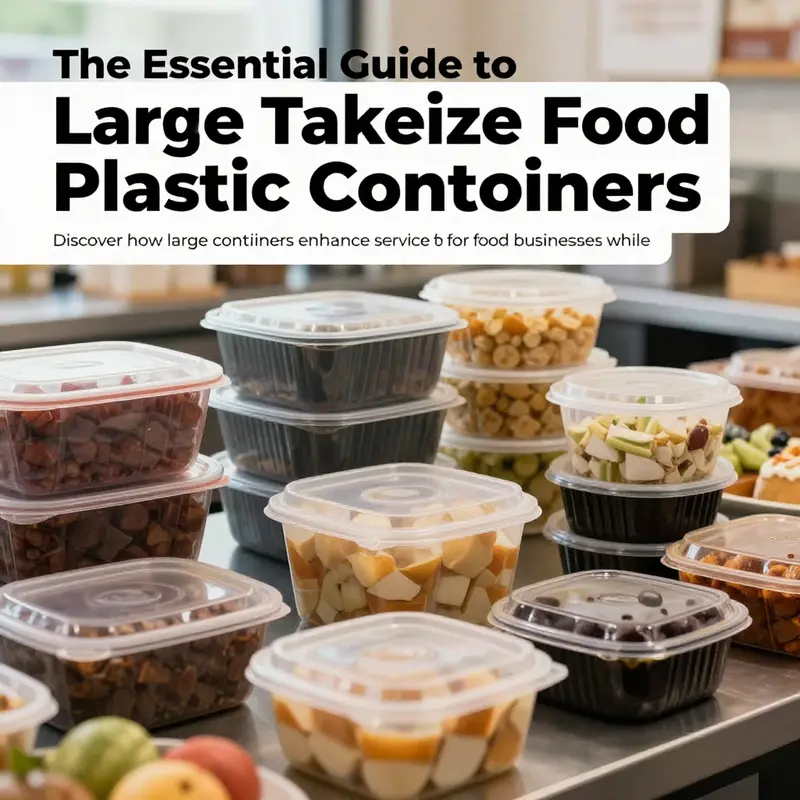
Large takeout food plastic containers are vital tools for food service businesses, ensuring efficient transport and presentation of meals. This article explores key features that make these containers ideal for bubble tea shops, restaurants, food trucks, catering services, and corporate teams. The following chapters will delve into their advantages, sourcing strategies, and environmental considerations, equipping businesses with the knowledge to optimize their packaging solutions.
null
null
Beyond Convenience: The Real-World Impact of Large Takeout Plastic Containers
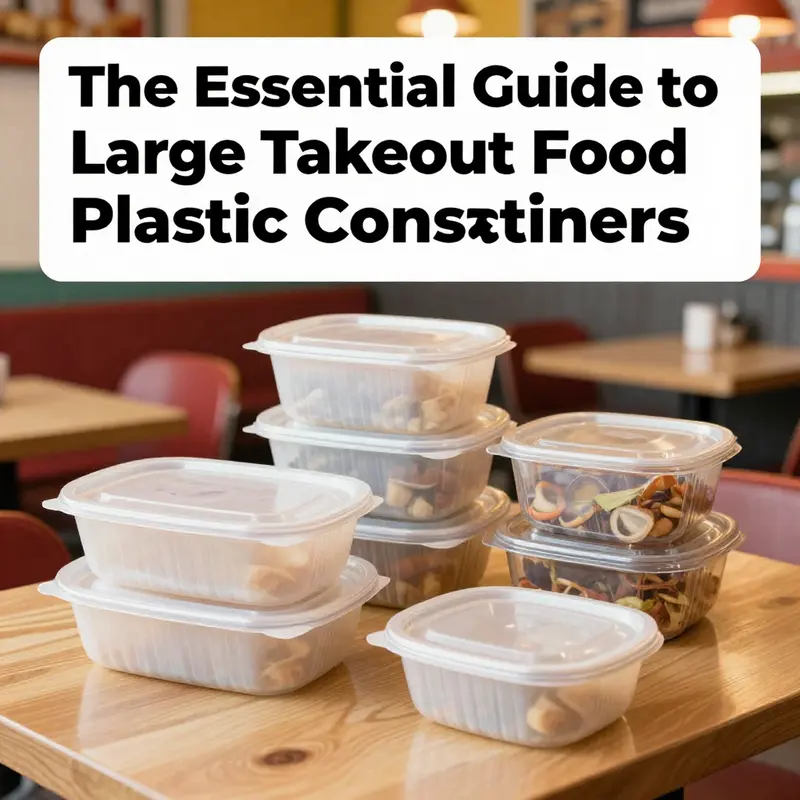
Large takeout food plastic containers are more than just a vessel for meals; they are a critical link in the chain from kitchen to consumer, influencing food quality, operational efficiency, and brand perception. In the busy ecosystem of restaurants, meal prep services, caterers, and delivery platforms, the choice of container shapes how reliably a business can scale, protect, and present its offerings. The advantages of large takeout containers emerge not only in their core features but also in how those features interact with kitchen workflows, customer expectations, and sustainability goals. A focused look at capacity, durability, sealing, heat tolerance, and customization reveals a practical philosophy: design packaging to handle large portions with confidence, and you enable better service, steadier margins, and stronger brand trust, while shaping how customers experience leftovers and reheating.
Capacity is foundational. Large containers often span roughly one to three liters, fitting between single-serve convenience and family meals. This range supports hearty entrees, multi-component sets, and dishes meant to travel intact. In practice, a 1000 ml to 3000 ml band captures common menu realities: noodles with broth, saucy curries with rice, family-style stir-fries, or mixed platters for take-home gatherings. The space is not just volume; it is a predictable geometry that stabilizes stacking and shipping. Rectangular or square formats optimize space in storage, transport boxes, and shelves, creating a modular footprint that reduces wasted transit space and simplifies inventory planning for kitchens operating on tight margins and precise timing.
Durability sits at the heart of confidence in takeout. Large containers are frequently made from a sturdy polypropylene (PP) blend that balances strength with lightness. Thick walls and reinforced edges give structural integrity so that even when full of hot or saucy foods, the container resists deformation and leakage. This matters not just for preventing spills but for preserving presentation. When a meal arrives looking as intended, customers are more likely to trust the brand and reuse the container for reheating or storage, extending its value beyond a single meal. The ability to resist cracking under pressure is especially important for soups or stews that exert force on walls during handling. These design choices translate into fewer complaints about leaks or crushed cartons and fewer returns that erode margins.
Sealing performance is another key advantage. The hinged lid, often called a clamshell, provides a secure closure that protects contents from shifting and spillage. A tight seal is essential for avoiding mess in transit and for preserving moisture and temperature. In large formats, the lid may interlock with the base to maintain a flush fit even when jostled or stacked. For sauces and dressings, some containers include additional leak-proof features or dedicated compartments that isolate liquids from solids. This reduces cross-contamination risks and supports a cleaner consumer experience, especially for office or event deliveries where multiple components travel together. The practical outcome is a higher rate of first-time-right deliveries, with meals ready to eat or reheat without extra decanting or repackaging.
Heat resistance and reheating flexibility amplify the advantages. High-grade PP tolerates substantial temperatures, making these containers suitable for hot meals and, in many cases, brief microwave reheating directly in the container when guidelines are followed. Reheating in the container saves time for the consumer and reduces cookware clutter. It also aligns with sustainability goals by encouraging reuse rather than discarding after a single meal. The microwave-safe aspect must be clearly communicated to users, since different plastics and lids have varying tolerances. When guidelines are clear about what foods can be reheated and for how long, the user experience is smoother and heat-damage complaints drop.
From a hygiene perspective, disposable packaging addresses a set of operational realities. In high-volume settings, disposables simplify cleanup, save water and detergent, and reduce cross-contamination risks that can arise from reusing containers. The sanitary advantages influence consumer confidence, signaling the brand’s attention to hygiene and quality. At scale, this translates into more predictable experiences and fewer bottlenecks in warewashing during peak times or large events. Of course, disposable packaging introduces environmental considerations, a conversation that prompts designers to balance performance with recycled content or compostable options.
Economics of scale also contribute to the appeal. As orders grow, unit costs tend to fall, making a seemingly premium element cost-efficient for bulk procurement. Economies of scale affect not just per-piece pricing but also how packaging integrates with supply chains. Bulk orders can stabilize supplier lead times, reducing vulnerability to shortages. With consistent packaging, kitchens can streamline procurement, forecast demand, and maintain steady inventories across seasonal cycles. Branding opportunities also matter, as containers can be printed with logos, color palettes, and information such as nutritional notes or reorder URLs, creating a continuous brand connection. Customization options—from offset printing to silk screening and foil accents—help maintain a cohesive brand narrative across dining, takeout, and catering.
The environmental dimension is a meaningful axis in modern packaging. While plastic offers convenience, brands are balancing performance with sustainability. Some suppliers offer recycled PP content or PLA-coated variants in paper-based lines to signal environmental responsibility. Consumers increasingly expect packaging that signals responsible disposal without sacrificing performance. Designers are exploring material use optimization, lightweight yet robust construction, and reliable seals to deliver the same service with a lower footprint. For brands, choosing packaging that supports recycled content and end-of-life recycling or compostability becomes part of a broader sustainability strategy.
Tactile and sensory aspects also matter. Clear visibility through transparent walls, combined with strong exterior print fidelity, can influence appetite appeal and perceived quality. High clarity helps consumers assess freshness and portions, while branding elements on lids and sides reinforce identity. The balance of visibility and customization invites manufacturers to push printability without sacrificing performance, turning the container into a canvas that communicates the brand at the doorstep or pickup point. This packaging experience becomes a functional part of the dining experience itself.
From a sourcing perspective, large containers are often purchased in bulk, with a network of manufacturers and distributors coordinating to meet demand. Brands that work with suppliers offering OEM/ODM capabilities can tailor packaging to evolving menus and seasonal promotional formats. For example, a restaurant expanding into catering may need scalable packaging that maintains a uniform look across product lines. Bulk procurement is about more than price: it is about the resilience of the packaging ecosystem and the ability to respond to growth and changing consumer preferences. Eco-friendly variants and upgrade potential are also important considerations for long-term strategy.
In practice, the container’s ease of use influences customer satisfaction. A secure closing mechanism that is easy to open without spills, and a form factor that fits neatly into takeaway bags, reduces cognitive load on the customer. The ability to reheat in the container, when permitted, aligns with modern expectations for speed and convenience. The rectangle or square shape supports space efficiency in delivery boxes and in consumer refrigerators, translating into fewer wasted materials and a more organized kitchen or pantry. All these factors contribute to repeat orders and stronger brand loyalty, without overt promotion.
Viewed within the broader takeout ecosystem, large containers strike a balance among capacity, durability, and cost while leaving room for aesthetic and environmental considerations. The trend toward customization—branding on packaging—reflects a shift in how consumers evaluate value. Packaging is no longer a mere wrapper; it is a touchpoint that communicates quality, care, and responsibility. When designed and deployed thoughtfully, large takeout containers become a strategic asset that supports operational efficiency, reduces waste, and enhances the customer experience across contexts—from quick-service to catering events. This integrated approach shows that the advantages of large containers extend beyond the need to hold a meal. They shape the service ecology, influencing workflow, customer perception, and the sustainability narrative brands tell.
For a practical example of how packaging choices align with broader goals, see this guide on takeaway kraft paper bowls: https://greendispopack.com/product/takeaway-food-kraft-rectangular-square-rectangle-salad-paper-bowl/. An authoritative look at performance and durability in large-format disposable containers is also valuable for teams evaluating options: https://www.amazon.com/gp/product/B0C8Y9KXJZ.
Sourcing at Scale: Environmental Realities and Responsible Choices for Large Takeout Plastic Containers
The scale at which large takeout containers move through kitchens, delivery hubs, and homes makes every sourcing decision a statement about a business’s values.
The core materials that dominate large takeout containers–polypropylene and polystyrene–offer lightness, strength, heat resistance, and barrier properties, but environmental scrutiny sits at the center of procurement conversations. Production of PP and PS is energy-intensive and relies on petrochemical feedstocks, and end-of-life outcomes depend on local recycling and waste-management infrastructure.
Sourcing at scale also means negotiating supplier capability, reliability, and the ability to deliver thousands of units with consistent tolerances and performance. Customization for branding or functional features adds complexity but can influence how a chain stores, ships, and reheats meals while maintaining cleanliness and integrity.
The clamshell or hinged-lid design helps transport stability but can complicate recycling if contamination accumulates around the closure. A balance is needed between leak resistance and recyclability, supported by clear consumer guidance on disposal and recycling.
From a lifecycle perspective, production is energy-intensive, use must tolerate heat and oil loads, and end-of-life is where recyclability becomes the decisive question. Recycling rates depend on contamination levels and the strength of local material-recovery streams, and in many regions, a large share ends up in landfills or litter.
To move beyond conventional plastics, many operators are exploring recycled-content plastics (rPP, rPS) and, where feasible, bioplastics or compostable coatings. These options can reduce virgin material demand but require careful attention to contaminants and compatibility with food safety rules and end-of-life infrastructure.
Certifications and third-party verifications help buyers signal credible performance and end-of-life potential. Asking for data on recycled content, recyclability across end-of-life streams, and take-back or reuse programs strengthens procurement with measurable accountability.
Reuse programs, when well implemented with cleaning, sanitation, and returns logistics, offer meaningful long-term reductions in single-use demand. They also create opportunities for brand loyalty and customer engagement, provided the economic and regulatory context supports viable return flows.
Branding and consumer messaging must balance visibility with processing practicality. Surface finishes, inks, and printing methods influence both aesthetics and recyclability, so clear guidance to customers about disposal can reinforce environmental commitments.
A diversified internal strategy reduces risk: maintain a core set of proven containers while evaluating alternatives that offer different environmental advantages or costs, and demand transparency about transport emissions, supplier origins, and material provenance.
Beyond traditional plastics, fiber-based and coated-paper options can deliver similar durability with different end-of-life pathways. These choices bring trade-offs in heat tolerance and leak resistance, but they can align with recycling streams and composting where available.
Finally, the policy and public-resource context shapes feasibility. Government and NGO guidance on plastics management, recycling infrastructure, and consumer education provides a framework for evaluating environmental plausibility and aligning procurement with recognized best practices.
In practice, the sourcing journey for large takeout packaging is a persistent dialogue about data, standards, and evolving capabilities. Questions about recycled content, end-of-life pathways, reuse viability, material performance under heat and oil, and energy footprints should guide ongoing supplier conversations. The most resilient programs treat packaging as part of a broader system that spans procurement, operations, marketing, and waste-management realities, and that can adapt as standards and technologies change.
Final thoughts
Choosing the right large takeout food plastic containers is crucial for businesses aiming to enhance service quality. By understanding their features and advantages, along with sourcing sustainably, food service companies can effectively meet customer demands while addressing environmental responsibilities. As the marketplace continues to evolve, staying informed on packaging options will ensure brands remain competitive and committed to sustainability.