
The growing emphasis on health and safety has prompted businesses in the food industry to scrutinize their packaging choices closely. One of the critical concerns is the presence of Bisphenol A (BPA) in plastic products, often linked to adverse health effects. Among the numerous options available for food storage, IKEA’s 365+ series has garnered attention for its affordability and versatility. This article dives into the specifics of whether IKEA plastic food containers are BPA-free, crucial information for Bubble Tea shops, restaurants, food trucks, catering services, event planners, and corporate procurement teams. In exploring this topic, we will provide an in-depth review of the BPA-free status of these containers, enhance consumer awareness about BPA and its health implications, underscore the importance of using BPA-free containers, and investigate various claims regarding IKEA’s product variability.
null
null
Clear Promise, Safe Storage: Decoding BPA-Free Plastic Food Containers from a Major Flat-Pack Retailer
BPA has become a shorthand for a broader conversation about what we store and heat in our kitchens. In the realm of plastic food containers the central question is not only whether a product keeps food fresh but whether it is free from a chemical that could influence health over time. A widely discussed facet of this dialogue concerns bisphenol A, or BPA, a substance historically used to make certain plastics and resins durable enough to withstand repeated use. For decades BPA found its way into products like polycarbonate plastics and the epoxy linings of metal cans, creating a sense that convenience and safety could coexist in a single purchase. Yet as the science evolved, so did the public understanding of what that permanence might mean for the body, especially for those in vulnerable life stages such as pregnancy, infancy, and early childhood. The conversation has shifted from whether a product simply works to whether it belongs in a household that aims to minimize potential risks linked to everyday exposure. In this larger arc the BPA question has persisted as a lens through which manufacturers regulators retailers and consumers interpret risk and responsibility in kitchen storage.
What matters in everyday terms is not just the presence or absence of BPA in a container but what that label communicates about a product safety posture. When a widely distributed line of plastic food containers is described as BPA-free it signals an intentional design choice aimed at reducing a particular chemical exposure. The phrase carries a promise: food can be stored, transported and reheated with less concern about the estrogen mimicking effects that have been associated with BPA. Yet as with many safety labels the nuance is essential. BPA-free labeling does not guarantee that every material or component within a product is entirely free of BPA in trace amounts. It does, however, indicate that the primary formulation or additive package did not include BPA as an intentional component. The distinction matters because consumer confidence often rests on how a brand communicates its safety posture and what it does to verify and maintain that posture across production batches and over time.
In practice the BPA conversation intersects with a broader materials science question: what plastic formulations offer the right balance of durability clarity resistance to heat and safety for food contact. The materials chosen for modern food containers range from polypropylene and polyethylene to a spectrum of copolymers. Each material carries its own profile of properties including how it behaves under heat how it resists chemical interactions with fatty foods and how it may or may not leach additives when subjected to repeated washing or microwaving. The reality is that a true zero risk state for chemical migration across all conditions remains a complex standard to achieve. What manufacturers and retailers can do and what responsible consumers should look for is a robust safety posture that reduces known risks and remains transparent about testing certification and ongoing compliance.
The core of consumer confidence lies in communication that aligns with current science and regulatory expectations. When a container line is marketed as BPA-free it often carries with it a chain of assurances: the main plastic resin used does not contain BPA by design; the product undergoes testing that looks for BPA migration under realistic use conditions; and the manufacturer communicates limitations and caveats clearly. The value of this approach becomes evident as households navigate choices about heating plastics the appeal of resealable lids and the desire to minimize disposable waste while preserving food quality. Language matters here. Phrases without quotes or added emphasis are not simply marketing they reflect an engineering decision in the production process. Such language helps consumers distinguish between products that avoid BPA as a deliberate addition and those that may have trace amounts due to complex supply chains or legacy materials.
From a health perspective the concerns about BPA have always centered on its action as an endocrine disruptor. BPA has been shown to mimic estrogen and potentially interfere with hormonal signaling in ways that could affect development and metabolism. Vulnerable populations fetuses infants young children are repeatedly cited as needing particular protection because their bodies are still developing. The health literature has linked BPA exposure to a spectrum of potential issues including reproductive system development early puberty and associations with metabolic and cardiovascular health risks. In response regulatory bodies around the world have pursued restrictive measures in specific contexts notably in food contact materials and infant focused applications. The regulatory landscape has not converged on a single global stance but it has moved toward tighter controls, greater transparency, and stronger incentives for safer alternatives.
Yet the practical takeaway for someone choosing a plastic container is not a dossier of global regulations. It is a grounded daily decision about storage habits and material choices. The simplest step is to prioritize BPA-free options for everyday use especially when feeding children or heating leftovers. But the next layer of discernment is equally important understanding how to interpret the label what conditions might influence leaching and how to maintain the integrity of the container over time. BPA-free does not mean indestructible. Heat agitation and repeated washing can still affect how a plastic container behaves. It is prudent to avoid heating plastics in the microwave especially with fatty or acidic foods and to consider transferring hot contents to glass or ceramic containers when possible. There is a practical refrain here a BPA-free label is a meaningful safeguard but it works best in concert with prudent use practices.
The consumer experience of choosing BPA-free plastic containers is also a function of trust in the retailer and the manufacturing ecosystem. When a major retailer communicates a BPA-free posture across a family of products designed for food storage that message travels quickly through households kitchens and meal routines. The value to shoppers extends beyond a single product s label. It becomes a signal of a brand wide commitment to safer materials responsible sourcing and ongoing monitoring. Trust in such a posture grows when the company provides access to clear information about testing methods and the conditions under which testing is conducted. It grows further when the company acknowledges the limits of what a label can guarantee and offers practical guidance on use and care. This combination clear labeling accessible testing information and practical usage guidance forms a holistic safety narrative that supports informed choices without creating false certainty.
A critical element of that narrative is the real world practicality of what BPA-free labeling means during everyday kitchen routines. People routinely heat chill mix and reuse containers. Each of these actions interacts with the material in ways that can influence safety perceptions and actual safety outcomes. For instance heating plastics can increase the rate at which certain additives migrate into food even when BPA is not present as an additive. Similarly certain consumer cleaning practices such as aggressive scrubbing or the use of abrasive cleaners can affect the surface integrity of containers and potentially alter their interaction with stored foods. In light of these realities practitioners and researchers alike emphasize not only the absence of BPA but also robust material performance across typical household scenarios. In other words BPA-free is a valuable baseline but it is not a guarantee that every possible use case will be risk-free. This nuance underscores the importance of adopting a cautious and informed approach to food storage choices.
The science and policy conversations about BPA have also illuminated the value of independent verification. Third party testing allows consumers to gauge how a product behaves under conditions that resemble real life use. Techniques like high performance liquid chromatography and mass spectrometry can detect trace amounts of BPA and related bisphenol compounds in plastics and resins. Certifications are another layer of assurance. While not all certifications cover every material some standards now explicitly address chemical migration and the safety of consumer goods extending beyond textiles to include plastics used for food storage. The endgame of these processes is a greater degree of confidence that the label aligns with actual performance not just marketing rhetoric. This is the kind of alignment that helps households keep faith with the products they entrust with meals snacks and family snacks.
In practice a line of BPA-free containers might enter a household with a familiar reassuring narrative the product is designed with safety in mind the labeling communicates that intention and the retailer supports this through ongoing oversight. Yet the household s daily experience will also be colored by how the product is used. If the container is routinely microwaved with hot liquids or if it sits in a jar of the dishwasher alongside knives and other metal items that might abrade its surface then the chance of material interaction increases. The practical implication is that consumers should treat BPA-free labeling as one part of a broader safe use routine. Transfer hot foods to heat resistant glass or ceramic containers when possible. Avoid microwaving plastic containers with fat rich or acidic foods for prolonged periods. Hand washing with mild detergents and avoiding harsh scouring pads can help preserve the container s integrity and longevity. These steps paired with BPA-free labeling create a pragmatic approach to safer kitchen storage.
In the end the story of BPA-free plastic containers in a major flat pack retailer s lineup is not about a single label or a single substance. It is about building a culture of safety through transparent communication rigorous testing and thoughtful material selection. It is about turning scientific caution into practical habits that fit into busy lives. It is about reducing exposure where possible while maintaining the convenience and reliability that make plastic containers a staple of modern eating and cooking. The narrative is iterative new research may refine what constitutes a safe threshold new materials may offer improved performance with less risk and new labeling conventions may emerge to reflect these shifts. Consumers who stay engaged with these developments who read product pages with a critical eye and who use containers in ways that preserve their integrity will be better equipped to translate the BPA conversation into everyday confidence in their kitchen.
To connect this broader discussion to everyday decisions take a closer look at how retailers frame safety in product pages and how they guide customers toward safer material choices. A careful review of product labels along with attention to use guidelines provided by manufacturers can illuminate the path from claim to practice. If you are curious about safer packaging alternatives beyond plastics you can also explore materials that offer similar functionality with lower chemical exposure concerns. The shift toward safer packaging is not only a matter of consumer preference it reflects a broader commitment to environmental stewardship and public health. The more you understand about what goes into the containers you reach for the better you can align your household habits with a goal of reduced chemical exposure healthier meals and a cleaner safer kitchen environment.
For readers seeking a broader context or additional perspectives on safer packaging and material choices consider exploring related resources that discuss eco friendly alternatives and practical storage strategies. As you navigate the landscape of plastic containers and their claims one practical avenue is to examine how a retailer communicates safety across its product family this approach helps you see how a brand translates a scientific concern into a usable trustworthy consumer experience. The result is not simply a label to trust but a framework for informed decision making that can extend well beyond a single purchase and into daily routines that prioritize health safety and sustainable living.
In sum BPA free labeling on plastic food containers from a major flat pack retailer lineup represents a meaningful and actionable step toward safer storage. It reflects a deliberate material choice a commitment to testing and transparency and a practical reminder that what we put into our bodies begins with what we store our food in. While science continues to refine our understanding of BPA and related compounds adopting BPA free products along with sensible use practices offers a tangible way to minimize exposure while preserving the convenience and versatility that help feed households with varied needs and busy schedules. The journey from label to kitchen is not instantaneous but it is increasingly navigable for anyone who reads the cues asks questions and respects the balance between science safety and everyday practicality. For a broader sense of how packaging choices can align with eco conscious thinking you might explore related resources that discuss recyclable and renewable materials in food service and how these choices shape consumer behavior and waste streams.
BPA-Free Promise: Understanding the Safety of a Major Retailer’s Plastic Food Containers
A shift has taken root in how people think about the containers that cradle their meals. From leftovers in the fridge to quick lunches on hectic days, the vessels that hold our food are part of daily life, and they carry with them more than just a seal and a lid. Across households, the demand for safer, more reliable storage options has grown in step with what science can tell us about how packaging interacts with food. Central to this conversation is the question of BPA—bisphenol A—and whether the plastic containers many shoppers reach for are free from this chemical. The evolving answer is not a simple yes-or-no, but a nuanced assessment of materials, labeling, real-world use, and the integrity of the safety claims offered by major retailers.
Bisphenol A has a long history in the production of certain plastics and resins used in packaging. For years, it was a common additive in items that come into direct contact with food and beverages. The concern, grounded in a growing body of scientific literature, is that BPA can migrate from plastics into food, particularly when the containers are heated, contain acidic foods, or are used repetitively with diminishing barriers to migration. When BPA leaches into food, it has the potential to interact with the body’s hormonal systems. A range of health concerns has been explored, from effects on reproductive development to metabolic function and beyond. While the severity and likelihood of harm can depend on exposure levels and individual susceptibility, the precaution many consumers take is straightforward: minimize BPA exposure whenever possible by choosing BPA-free options.
In response to these concerns, manufacturers and regulators have pursued BPA-free solutions. Modern BPA-free storage is often built around safer polymers such as food-grade polypropylene (PP) or high-density polyethylene (HDPE). These materials are typically chosen for their stability under heat, their durability, and their relative inertness when in contact with common foods. They also bring practical advantages that matter in everyday use: they are lightweight, shatter-resistant, and frequently designed with lids that seal tightly to help preserve freshness and limit spills. The improved safety profile of these plastics is reinforced by certification schemes, with many products undergoing testing to verify that they meet safety standards for direct food contact. The combination of material science and regulatory oversight has produced storage options that are not only more reliable in terms of safety but also adaptable to the busy rhythms of modern kitchens.
For a consumer seeking reassurance, the labeling on storage products matters as much as the material itself. Clear statements such as “BPA-free” or “no BPA added” offer a direct signal about what stands behind a container’s chemistry. In practice, labels that explicitly call out the absence of BPA help demystify the decision at the moment of purchase. Yet labeling is not the only safeguard. Reputable manufacturers typically provide documentation or references to the standards their products meet, including food-contact safety certifications. Materials intended for direct food contact often carry attestations from recognized bodies, such as agencies that certify the safety of plastics used in consumer goods. Consumers benefit when these certifications accompany the packaging, offering a traceable trail from raw material to finished product.
Within the broader market, a well-known retailer’s plastic storage range has positioned itself as part of the safety conversation. The retailer has stated that its plastic food containers are BPA-free and that no BPA is added to the line. This stance aligns with a widely accepted industry direction: phasing out BPA from containers intended for direct contact with food. The official messages emphasize safety and peace of mind for families who rely on these containers for leftovers, meal prep, and bulk storage. It is important to acknowledge, however, that consumer reports can reveal exceptions. Some collectors and shoppers have raised concerns about specific batches or model numbers that might not be BPA-free. In practice, what this means is that while the mainstream line carries a BPA-free designation, diligence remains prudent. Checking batch numbers, inspecting packaging for explicit BPA-free language, and consulting retailer guidance can help confirm that a particular unit meets the stated standard.
This nuance matters because the material science and labeling landscape are not static. Manufacturers continue to refine polymers, coatings, and additives to reduce potential migration further, while retailers evolve their information strategies to reflect emerging evidence and consumer expectations. In other words, a blanket claim across an entire product line is a strong baseline, but the real-world experience can vary with manufacturing changes, supply chains, and regulatory updates. For households investing in safety, this means a blend of trust in official communications and practical verification when possible. The overall trajectory is clear: BPA-free storage is now a mainstream expectation in direct food-contact containers, and many lines from major retailers strive to meet and communicate that expectation with explicit language.
Beyond the chemistry, there is a broader set of advantages that BPA-free containers bring to daily life. The absence of BPA can reduce concerns about hormone-disrupting exposure during routine handling. This is especially meaningful when hot foods are stored, meals are reheated, or liquids are carried in containers for extended periods. The modern BPA-free solutions also tend to be designed with features that support healthier habits. Airtight or leak-resistant lids help keep odors contained, which is particularly valuable for sauces and moist foods. Microwave-friendly labeling, when provided, offers practical options for quick reheating without compromising safety, and top-rack dishwasher compatibility makes cleanup easier and more convenient for busy families. These practical benefits support healthier storage routines, reducing the reliance on disposable packaging and encouraging reuse, which in turn has implications for the environmental footprint of food storage practices.
Still, the path is not without caveats. Some stains or color retention can surface over time, especially with vivid sauces, spices, or deeply pigmented foods. This is not necessarily a safety red flag; it is more about aesthetics and maintenance. The same caution that applies to any plastic container—avoiding excessive heat, using utensils that won’t scratch the surface, and following care instructions—remains relevant. The science behind BPA-free plastics does not imply invulnerability to staining; it implies a reduced risk of chemical migration under typical use. For most households, these trade-offs are acceptable and manageable through routine care and mindful usage. As consumer interest in safer storage grows, so does the conversation about improving long-term performance, minimizing staining, and extending the usable life of storage systems.
From a behavioral standpoint, BPA-free containers reinforce a healthier habit ecosystem. They fit naturally into meal-prep routines, where plastic storage often replaces single-use options. They encourage batch cooking and portioned leftovers by providing a convenient platform for safe, repeated use. In this way, BPA-free containers become more than just a physical container; they are a signal of a broader commitment to health, hygiene, and a more sustainable approach to food management. The practical reality is that safe materials, when paired with thoughtful design—such as sturdy lids, clear measurements, and stackable shapes—create a storage system that is easier to integrate into daily life. In turn, this can influence how people think about the volume of waste generated in a household and how reusable containers might offset the environmental impact of disposable packaging.
There is a final layer to consider—how to approach the safety claim in a consistent, informed way. Consumers should consider three things when evaluating BPA-free storage: the source of the claim, the material composition, and the practical use guidelines. First, a retailer’s official statements deserve attention because they reflect the company’s policy and quality controls. Second, knowledge that BPA-free storage commonly relies on PP or HDPE helps demystify what is behind the label and what behavior is expected from the container under typical conditions. Third, user manuals and labeling about microwave use, dishwasher safety, and heat exposure provide actionable boundaries that keep safety intact. Taken together, these elements support a cautious, informed approach to choosing, using, and maintaining BPA-free containers in a busy kitchen.
For readers who want to explore alternatives or complement their plastic storage with other materials, there is value in branching out beyond plastics. Some households consider paper-based or pulp-based options for particular uses, such as take-out or cold storage, when feasible. A relevant example in the broader marketplace is kraft paper-based bowls and boxes that offer take-out convenience with a different set of material properties. If you are exploring such alternatives, you can see a representative option here: kraft paper octagonal bowl in stock ready to ship fast delivery. While these paper-based choices are not direct substitutes for plastic containers in all scenarios, they illustrate the ongoing diversification of food-storage and transport solutions. They remind us that safety is not a single-material decree but a spectrum of options that can be aligned with personal risk tolerance, meal patterns, and environmental priorities.
In closing, the BPA-free promise embedded in a major retailer’s plastic storage range represents more than a label. It reflects a commitment to reducing chemical exposure while promoting practical, durable, and user-friendly design. The science behind BPA-free materials supports a safer storage environment, especially for meals stored, heated, or reheated within the same container. Yet proactive consumers recognize that no single label guarantees absolute risk elimination. Verification, mindful use, and an openness to alternatives all contribute to better storage choices. The ongoing dialogue between science, standards, and everyday practice continues to shape how households decide which containers to trust for their families, how to store leftovers safely, and how to move toward storage solutions that are both healthier and more sustainable in the long run. As this conversation evolves, the core principle remains clear: when the container in contact with your food is BPA-free, you remove a significant potential source of chemical migration, and you empower yourself to store with confidence.
External reference for further context on BPA-free containers and food safety: https://www.foodsafetynews.com/2021/10/why-bpa-free-containers-are-essential-for-food-safety/
BPA-Free in Practice: Tracing Variability Across IKEA’s 365+ Containers and the Quest for Safer Food Storage
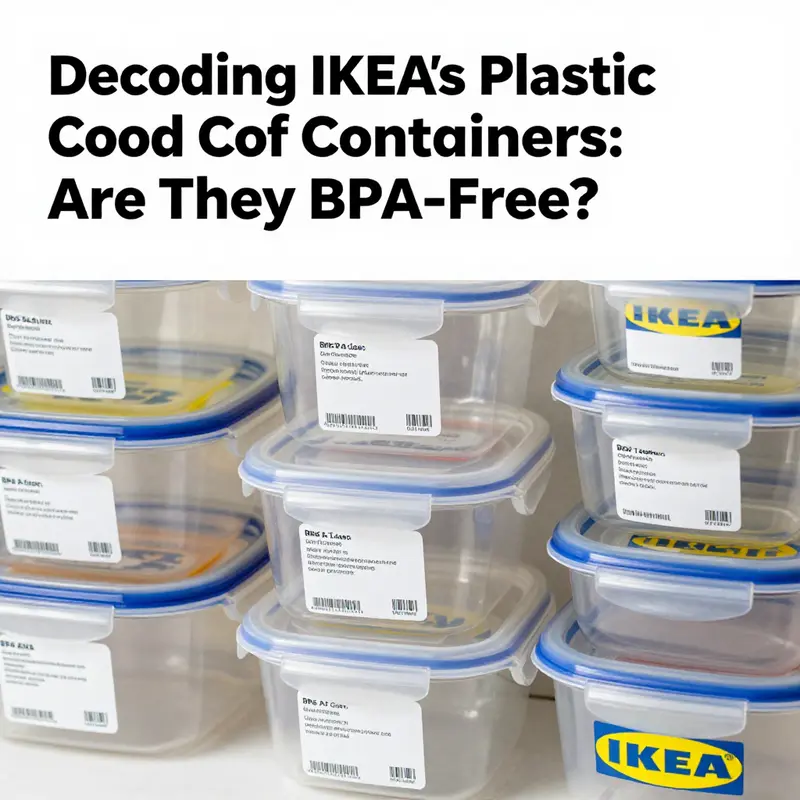
When people reach for plastic food containers, a simple question often defines their choice: is this BPA-free? The answer, in practice, is rarely a bare yes or no. It sits at the intersection of corporate claims, regulatory standards, material chemistry, and real-world use. In the case of a well-known retailer’s BPA-free plastics, the official line has been clear: the plastic storage options marketed under the 365+ range are BPA-free. That clarity matters because consumers want to minimize exposure to bisphenol A, a chemical that has generated debate and concern since the early warnings about potential hormonal effects. Yet even with official assurances, the landscape is not wholly uniform. Subtle variations can creep in across product lines, batch numbers, and even between different material families within the same range. To understand what BPA-free means in everyday kitchen practice—and what it means for choosing between plastic and non-plastic options—it’s helpful to move beyond the blanket label and into the details of how these products are described, tested, and used in real life.
At the heart of the discussion is a straightforward definition: BPA-free means that bisphenol A has not been added to the plastic in the product’s formulation. But chemical reality is rarely so simple as a single label on a box. The literature and retailer pages make clear that the claim applies to the absence of BPA in the plastic resin itself and as an additive in the final product. This distinction matters because it addresses a potential route of exposure: direct transfer of BPA from the container into food. The public health conversation has grown to recognize that even when BPA is not added, other bisphenols or related compounds might be present in the polymer matrix or as trace contaminants from the manufacturing process. The practical takeaway for a consumer is nuanced: “BPA-free” is a robust reassurance regarding BPA, but it does not automatically guarantee that the product is free of all bisphenols or all potentially concerning plastic additives. Within many product descriptions, however, the emphasis remains squarely on BPA-free as the core safety promise. It is this emphasis that has guided countless shoppers in the decision to choose plastic storage that is labeled BPA-free over older, BPA-containing options.
In this context, the 365+ line has earned its share of attention precisely because it is marketed with BPA-free language designed to reassure daily users who store leftovers, prepare meals in advance, and transport foods to work or school. The marketing text often reads like a conversation with a cautious consumer: no added BPA, reassurance as you enjoy your meal. This is meaningful because it translates directly into everyday decisions about what goes into the refrigerator and, eventually, into the lunchbox. Yet, as with many extended product families, the reality on the shelf can diverge from broad statements. User feedback that a subset of sets may not be BPA-free reflects the broader manufacturing landscape: plastic production involves multiple resins, colorants, and sealants, all of which may be sourced from different batches or suppliers. In some cases, a batch-specific variation or a packaging update can occur, potentially leading to a temporary mismatch between a prior labeling and the current lot. It is a reminder that while a product line can commit to a standard, the distribution chain and the precise formulation of a given batch can still yield subtle deviations. For consumers who handle hot foods, acidic sauces, or long storage periods, these variations may raise questions about the stability of the label over time and across product families.
The other side of the discussion lies in the glass variants offered within the same range. The research materials underscore a practical distinction that deserves emphasis: glass is inherently BPA-free because it is not a plastic polymer and thus does not rely on bisphenol-based chemistry. This is more than a technical footnote; it is a meaningful choice for users who want a non-plastic storage solution or who are dealing with sensitive culinary tasks where the potential for any chemical migration is a deterrent. Glass storage options within the broader product family are described as oven-safe, freezer-safe, and fridge-safe. This trifecta of capabilities expands their utility far beyond a simple container for leftovers. It means a batch of tomato sauce can be stored in a glass jar, then reheated directly in some cases, reducing the friction between cooking and storage. The absence of plastic in these variants also mitigates common concerns about handling and cleaning; glass tends to resist odor absorption and discoloration from many foods, a factor that matters for people who repurpose containers for sauces, marinades, or beverages. In practical terms, glass substitutes can offer a different kind of reliability: fewer questions about heat-induced leaching, easier maintenance in some households, and a cleaner edge in the ongoing debate about chemical exposure from household plastics.
Still, a consumer would be naïve to assume that glass storage is inherently perfect across every product line. The broader message to take from the research results is not a verdict on one material over another but a more nuanced understanding of how “BPA-free” functions in real life. BPA-free status is a strong signal—one that aligns with regulatory expectations in many markets and with consumer safety concerns about BPA specifically. But this signal should be interpreted in the wider context of ongoing chemical safety assessments. Other compounds may be present, other bisphenols or related additives may exist in trace amounts, and batch-level variations can arise. The scientific and regulatory communities continue to monitor these possibilities, and retailers respond by updating materials disclosures, labeling, and, on occasion, product collections. For consumers, the takeaway is practical and immediate: use the BPA-free claim as a reliable baseline while recognizing that the chemistry of plastics can be complex, and the simplest label does not guarantee the absence of every potentially concerning compound.
From a decision-making perspective, the choice between plastic BPA-free containers and glass storage within the same family also reflects everyday needs and cooking habits. Plastic containers often win on lightness, cost, and durability. Their airtight lids and stackable design are particularly advantageous for busy households where leftovers are a daily habit and space is at a premium. The 365+ plastic containers are described as durable and stackable, with airtight lids designed to retain freshness. For many users, the combination of convenience and safety—disclosed as BPA-free—meets their expectations for responsible storage of everyday meals. Yet the stability of that convenience depends on how the containers are used: for hot foods, for lengthy refrigeration, or for repeated dishwashing, it is prudent to verify the product’s care instructions and to consider how repeated cycles might affect any sealant or labeling. In contrast, glass variants, with their non-plastic composition, address a separate dimension of risk: a consumer who wants to minimize contact with plastic materials altogether, perhaps due to a personal precaution or a specific dietary regimen, will naturally gravitate toward glass. The glass options are also described as easy to clean and resistant to odors and discoloration, a feature that appeals to cooks who frequently work with tomato sauces, curry spices, or other strong flavors. The contrast between plastic and glass within the same range thus maps onto a broader spectrum of consumer preferences rather than presenting a single universal choice.
To translate these nuances into everyday practice, readers should be mindful of how labeling, batch variation, and material type come together in real kitchens. The BPA-free label on a plastic container should be read as a strong safety assertion about BPA, not a carte blanche guarantee that no other chemical considerations exist. It is worthwhile to check product details during purchase, especially if you notice a product family update or a new batch number on your packaging. If you prioritize non-plastic storage, the glass option presents a compelling route in the same product family, offering different advantages in terms of heat tolerance, odor resistance, and cleaning. The decision becomes a balance of risk, convenience, and sustainability goals. And for readers who want to explore how sustainability narratives in container design intersect with practical choices, a related resource on non-plastic packaging can offer broader context and alternatives beyond the plastic-versus-glass debate. For a closely related exploration of safer, non-plastic alternatives, see this resource on biodegradable eco-friendly take-away kraft paper bowls: biodegradable eco-friendly take-away kraft paper bowl.
In the end, the chapter on BPA-free storage within a major retailer’s plastic containers is not a simple yes-or-no verdict. It is a layered narrative about how safety claims are constructed, how they endure in the face of batch-to-batch variation, and how consumers translate those claims into daily routines. The data suggest that mainstream BPA-free labeling within the plastic range is a reliable baseline for minimizing BPA exposure. They also suggest that there is a practical upside to considering glass as a non-plastic alternative when the goal is to minimize chemical exposure altogether. The presence of glass within the same product family, with its oven-safe, freezer-safe, and fridge-safe flexibility, offers a tangible option for households that value versatility alongside chemical simplicity. For families who simply want reliable, easy-to-use containers for everyday meals, BPA-free plastic storage can meet those needs well, while for others, glass may be the preferred long-term solution, especially where heat or all-plastic contact is a concern.
What remains essential is reader discernment. The language on product pages is a powerful guide, but it is not a substitute for attentive shopping habits. If a label reads “no BPA added,” that is a meaningful commitment about the absence of BPA in the material itself. If a batch appears to diverge from expectations, or if the number of potently heated uses raises questions about material resilience, it is reasonable to contact the retailer or consult the product’s care and safety documentation. As with any consumer decision that touches health and daily living, the goal should be to align packaging choices with personal risk tolerance, cooking habits, and a clear understanding of the materials involved. The research results underscore a nuanced truth: BPA-free is a strong standard, but it is most helpful when interpreted in the broader context of how plastics and glass behave in real kitchens, across diverse foods, and under the rhythm of daily life. The ongoing conversation—about how products are labeled, how batch variation is managed, and how alternatives like glass storage are positioned within the same family—ultimately helps shoppers make choices that fit their values and their routines.
External sources and official product disclosures continue to shape this ongoing dialogue. For readers seeking primary information on the official materials and safety standards from the retailer, a direct source of record is available on the retailer’s site. That page provides the most current articulation of BPA-free claims, any updates to material formulations, and any notes about product care or dishwasher compatibility. It is a practical companion to the narrative outlined here, offering a touchpoint for anyone who wants to verify claims in the context of current product offerings and regulatory expectations.
External resource: https://www.ikea.com/us/en/p/ikea-365-plus-food-storage-containers-glass-plastic-70421982/
Internal link for further reading: biodegradable eco-friendly take-away kraft paper bowl.
Final thoughts
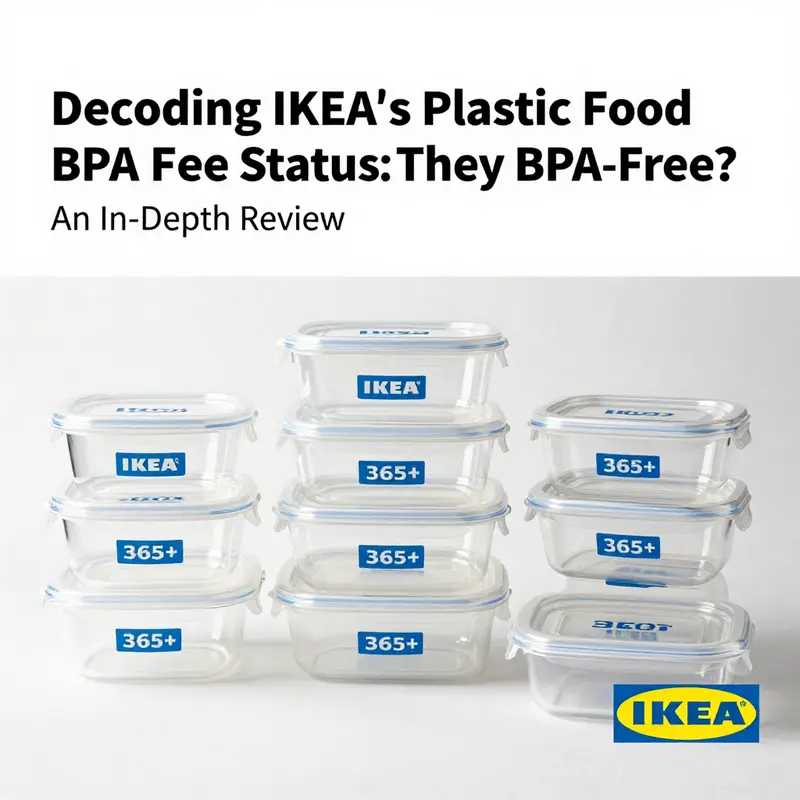
In conclusion, IKEA’s 365+ series does offer BPA-free plastic containers, ensuring safe food storage options for restaurants, catering services, and event planners. Understanding the nuances of BPA and its effects on health is essential as businesses strive to provide safe and healthy culinary experiences. While the majority of IKEA’s offerings are confirmed BPA-free, it’s crucial to remain vigilant about product variability and individual batch differences. This assurance enables you to choose safer options for your customers and ensure compliance with health standards. Ultimately, adopting BPA-free containers aligns your business with health-conscious practices, ensuring customer satisfaction and safety.