
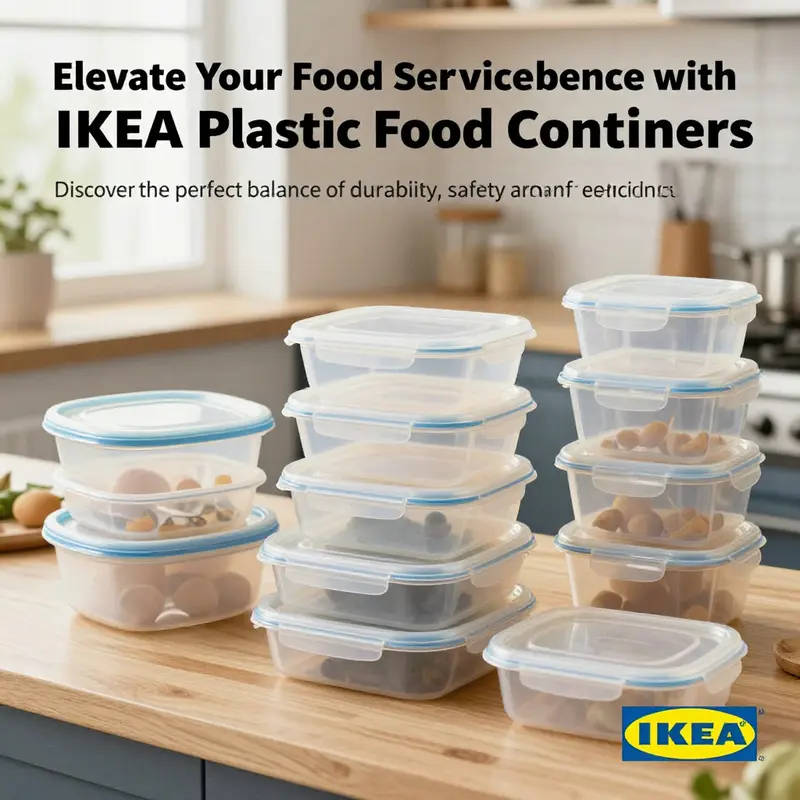
In today’s competitive food service industry, selecting the right storage solutions goes beyond mere functionality—it involves ensuring the safety, quality, and appeal of your offerings. The IKEA 365+ series of plastic food containers excels in all these aspects, making them an ideal choice for bubble tea shops, restaurants, food trucks, catering services, and event planners. This article delves into the durability and design of these containers, health and safety standards, cost-effectiveness, storage efficiency, and real-world consumer feedback. Each chapter is crafted to provide insights into why these versatile, BPA-free plastic containers can transform your food storage and transportation practices.
Built to Last and Beautiful: Durability and Design of IKEA Plastic Food Containers
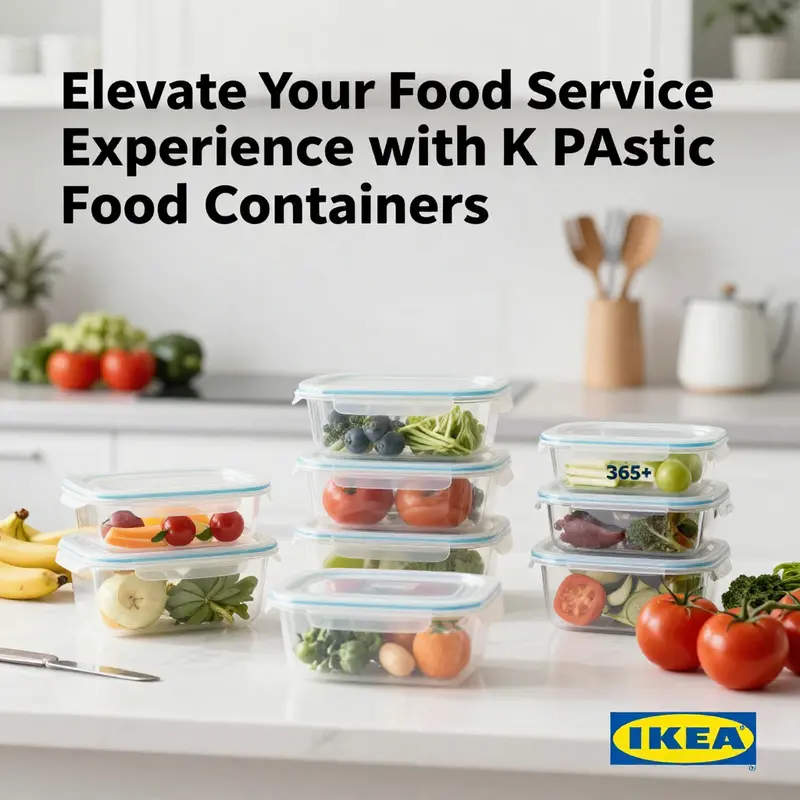
Durability and Design That Work Together
The appeal of a well-designed plastic food container lies in its ability to disappear into daily life while reliably protecting food. These containers must resist knocks, temperature shifts, and repeated use without becoming an eyesore. The models in this family achieve that balance by using a resilient polypropylene construction and a restrained aesthetic. The result is a storage system that feels intentionally made for kitchens, lunchboxes, and on-the-go living.
Material choice defines longevity. Polypropylene offers toughness without heavy weight. It resists cracking and warping under common stresses. That same chemistry tolerates low and high temperatures, so containers move between freezer, microwave, and dishwasher with fewer worries. Because the material is flexible enough to absorb pressure, it resists permanent deformation when jostled in a bag. Yet it is rigid enough to stack neatly and hold its form in a crowded cupboard.
Design decisions extend the material’s benefits into everyday use. Latch-style lids lock in place with a clear tactile feedback. This design secures the seal and reduces accidental opening. The lids also create a clear visual boundary between container and closure, which simplifies handling. Transparent lids and bodies are common in this line, enabling quick content checks without interrupting storage routines. That transparency speeds meal prep and reduces waste from forgotten leftovers.
Sealing performance is central to how these containers protect food. The lids incorporate narrow sealing lips and shallow channels to trap air and contain liquids. In practice, this reduces leaks during transport and helps slow freezer burn when storing meals. The effective seal makes the containers reliable for soups, stews, and saucy dishes. Still, users should exercise caution with vigorous shaking or extreme tilting; no plastic box is truly failproof when filled with free-flowing liquids.
Stacking is another pragmatic feature that enhances both durability and organization. Containers are shaped to nest when empty and to stack securely when full. This geometric harmony saves valuable cabinet space and reduces the chance of toppling. When stacked, the containers distribute weight evenly, preventing excessive pressure on individual walls and lids. The stacking system both preserves container shape and makes inventory easy to scan at a glance.
Aesthetic restraint matters because function alone does not satisfy modern kitchens. Clean lines, muted tones, and simple geometry make these containers visually versatile. Because they read as neutral, they integrate into varied kitchen styles, from minimalist to rustic. The focus on unobtrusive design also reflects a practical ethic: objects that age gracefully are objects people keep for longer.
Durability extends beyond raw strength to how a product stands up to repeated cycles. Repeated heating, cooling, and washing can stress plastic over time. In this design, the chosen plastic exhibits strong fatigue resistance, meaning it tolerates many thermal cycles without cracking or degrading visibly. Lids and latches are engineered to withstand thousands of open-close cycles. The result is a product that keeps performing for months or years, depending on care.
Care guidelines matter for longevity. Simple habits—hand washing lids, avoiding abrasive cleaners, and allowing containers to cool before microwaving—reduce stress on materials and seals. Avoiding direct contact with concentrated oils and high-acid solutions also helps preserve clarity and prevent odor retention. When signs of wear appear, like deep scratches or persistent stains, it is safer to replace the container rather than risk contamination.
Comparing plastic to alternatives highlights trade-offs. Glass containers offer superior long-term clarity and are inert to flavors. They also withstand oven heat. But glass is heavier and more fragile in transit. Metal containers can be durable but limit microwave use and readability of contents. The plastic solutions here aim for a middle ground: lighter, impact-resistant, and transparent enough to simplify everyday routines. For many households, that combination delivers a practical equilibrium between convenience and longevity.
Sizing and shape play a practical role in durability too. A range of capacities and forms allows users to choose containers that match portions and storage spaces. Square and rectangular shapes maximize shelf and fridge space, while round forms are better for single servings. When a container fits its intended use, it experiences fewer damaging stresses. Overfilling, for example, strains lids and can accelerate wear. Properly sized boxes tend to last longer because they avoid extreme pressure on seals and walls.
Portability is a design priority for those who rely on containers for meals away from home. Lightweight construction and secure latches keep contents intact during transport. The materials also resist impacts typical of bags and lunchboxes. Even when knocked around, these containers maintain shape and seal, protecting both food and the carrier’s belongings. For commuting or active lifestyles, these attributes matter more than small gains in visual polish.
Environmental considerations shape design decisions as well. Choosing a durable plastic reduces waste by extending product life. Clear labeling about material composition and recyclability helps buyers make considered choices. The interplay between durability and sustainability becomes apparent when users keep containers for years rather than replacing them frequently. In this sense, thoughtful design reduces consumption and supports a more circular approach to everyday storage.
Small features often reveal the product’s design maturity. Tactile ridges on lids improve grip when opening with damp hands. Subtle measurement marks assist portion planning without additional utensils. Rounded corners simplify cleaning and prevent food buildup. These understated elements accumulate to create a superior experience. They are the kind of refinements that feel obvious once experienced, yet they require intentional design to implement.
Durability and design also influence how people store and rotate food. Because the containers are stackable and clear, users can organize meals by date or type. This visual order reduces food waste. It also makes it easier to plan meals and reuse leftovers safely. The containers thus become tools for better kitchen management, not just vessels for holding items.
Practical care tips extend usable life. Avoid sudden temperature changes, which can stress plastic. Wash lids by hand to protect seals and snaps. Store containers nested when space is tight, and leave lids slightly ajar for occasional airing to reduce odors. Replace any container that shows deep gouges or persistent warping; those signs indicate compromised integrity.
In day-to-day life, the most valuable quality is reliability. A container that opens properly, stands up to a packed bag, and keeps a meal fresh removes small frictions from routines. The design philosophy behind these plastic containers prioritizes just that: practical reliability wrapped in a calm, adaptable aesthetic. That combination makes them a sensible choice for people who seek efficiency without sacrificing style.
For a closer look at the materials and specific product information, see the official product page. For an alternative option in disposable, lid-equipped bowls suitable for takeout and single-use scenarios, consider this salad bowl with lid 750ml as a comparative reference: https://greendispopack.com/product/salad-bowl-with-lid-750ml-disposable-takeaway-kraft-paper-bowl/
External reference: https://www.ikea.com/us/en/p/365-food-container-square-plastic-750-ml-40483365/
Safeguarding Freshness and Health: The Health and Safety Standards Behind IKEA’s Plastic Food Containers
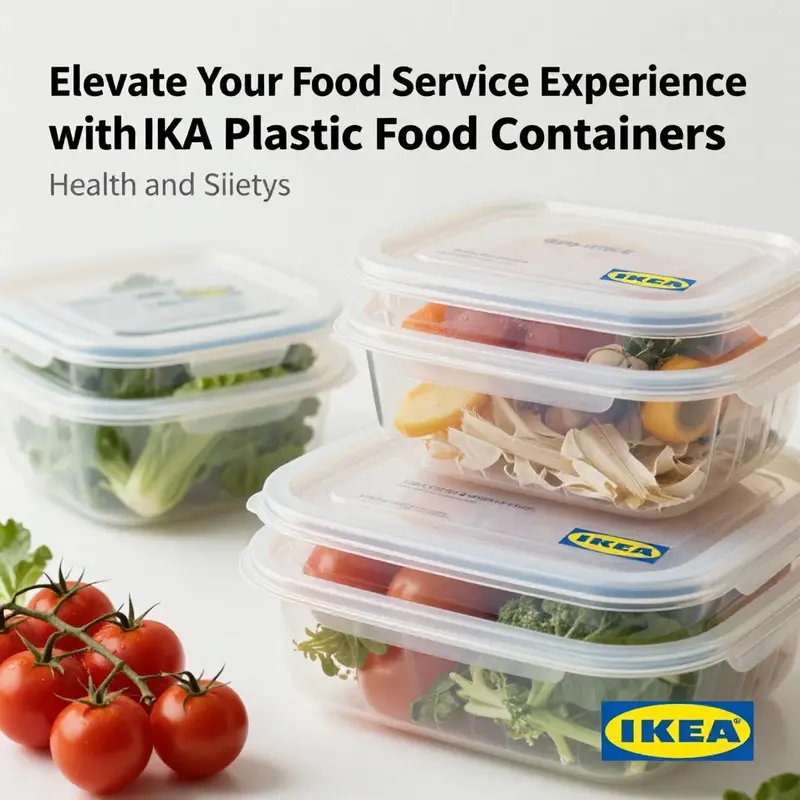
When we open a kitchen drawer or pantry and reach for a plastic food container, we rarely pause to consider the full spectrum of health and safety standards that shape what we bring to our tables. Yet the choices behind everyday storage devices matter. For a family that values practical design as much as peace of mind, understanding the health and safety standards of IKEA’s plastic food containers offers not just reassurance about the products themselves but a lens into how modern households navigate preservation, convenience, and long-term well-being. The core of these standards rests on materials, performance under typical kitchen conditions, and a disciplined approach to care that keeps food safer and containers lasting longer. The overarching aim is simple: prevent harmful substances from migrating into food, maintain the integrity of the container through varying temperatures, and minimize the risk of contamination as we move meals from fridge to table to bag, and back again. In practice, this translates into a careful balance of chemistry, engineering, and user guidance that shapes every facet of the product experience, from the choice of materials to the snap and seal of the lid, and from the sizing options to the cleaning recommendations that come with first use.
Material safety sits at the heart of consumer confidence. The containers in question are manufactured from durable plastics that are BPA-free. This is not merely a marketing claim but a regulatory-granting standard that aligns with global guidelines for food-contact materials. BPA, or Bisphenol A, has been scrutinized for its potential to leach into food under certain conditions, particularly with prolonged contact or repeated exposure to heat. By committing to BPA-free formulations, the design reduces one of the most commonly discussed chemical exposure pathways for everyday storage products. Of course, the story does not end with a single label. Real-world use must also account for how plastics behave when heat, cold, and mechanical stress collide in a busy kitchen. The health and safety framework therefore extends beyond composition to include testing for stability under microwave conditions, freezer temperatures, and dishwasher cycles. These tests are not only about immediate performance but about long-term durability that keeps lids secure and contents uncontaminated over time. A container that holds its shape in a tote, stays sealed in a crowded freezer, and emerges clean after a dishwasher cycle is manifestly safer for regular use, because food is kept away from surfaces and micro-contaminants while odors are contained within the vessel.
Yet safety is not a one-size-fits-all proposition. While the labeling highlights microwave safety, freezer safety, and dishwasher safety, user experiences have raised important caveats that underscore the need for mindful usage. In early February 2026, some users reported white marks appearing on containers after use, a symptom attributed by observers to possible plastic-melting effects under high heat. This kind of feedback, while not overturning the stated safety claims, invites a careful interpretation: labels indicate testing and compliance, but consumer conditions—how long a container sits in a microwave, the presence of fatty or sugary residues, or the temperature and duration of heating—may influence outcomes. In other words, a product can be designed and certified to withstand certain conditions, yet individual practices and heat exposure can alter the material’s behavior. This nuance is precisely why the health and safety framework also emphasizes best practices for use and handling, not merely the passive robustness of the polymer. It is a reminder that safety is a living standard, tested by real kitchens and refined over time through feedback and updated guidance.
The design features that enable safe and convenient use extend well beyond heat resistance. The snap-and-lock lid is a focal point of the system. It delivers a leakproof and airtight seal that helps maintain the integrity of stored food and reduces the risk of cross-contamination during transport or storage. A transparent design further supports safe handling by allowing quick visual checks of what sits inside, minimizing the need to open containers repeatedly and exposing contents to ambient air or potential contaminants. The ability to see the food at a glance also discourages unnecessary handling, which is another layer of safety in everyday routines. In a kitchen where multiple containers share shelves, the stackable form ensures that clean, dry storage space is used efficiently without compromising the lid’s integrity or the container’s shape. The practical implications are clear: better preservation, less waste, and fewer opportunities for accidental spills.
From a usage perspective, the care instructions accompany the safety features as an essential companion. The guidance commonly advises washing containers before first use and avoiding direct exposure to high heat unless explicitly stated as safe. This reflects a broader precaution: even BPA-free plastics can degrade if subjected to conditions beyond tested thresholds. Careful handling, including gentle washing and avoiding prolonged high-heat exposure, helps preserve the material’s inert properties and its seal. The end result is a storage system that performs as advertised across a typical cycle of fridge, freezer, micro, and dishwasher; yet it also foreshadows the reality that not every scenario is covered by standard tests. Consumers who routinely heat meals directly in containers or rely on them for hot food might consider alternates within the same product family that are specifically designed for higher temperatures, such as glass or stainless-steel options. The overarching message remains consistent: follow the manufacturer’s care instructions, and select the right tool for the job.
The conversation about health and safety is also a conversation about the materials’ inertness and how that translates into regular kitchen life. Plastic offers undeniable advantages of lightness, affordability, and flexibility in design—customizable sizes and shapes, compact storage when empty, and a price point that makes healthy lunches more accessible. But for consumers with particular priorities—long-term safety, avoidance of any potential heat-related issues, or concerns about odors and stains—glass and stainless steel variants within the same family can be appealing alternatives. These materials are often more inert under repeated heating and do not absorb odors or discolor as readily as some plastics, which can be a decisive factor for households that store hot meals or leftovers frequently. In this light, the product family presents a spectrum of choices rather than a single solution, allowing users to tailor storage to their needs while still benefiting from a shared approach to safety and usability.
The health and safety standards extend into the realm of regulatory alignment, a dimension that reassures consumers that the practices behind the product line are not merely ad hoc but part of a structured system. The plastics are designed to meet established food-contact material guidelines, and labeling is meant to reflect tested capabilities for heating, freezing, and cleaning. To deepen trust, many retailers and manufacturers publish safety documentation and certifications that detail compliance with material safety, testing protocols, and cleaning recommendations. This documentation helps users understand what to expect in terms of performance and how to care for containers so that their safety profile remains intact across daily routines. Where questions arise, turning to official product safety information provides a direct channel to the criteria and standards that inform these products, helping align consumer expectations with verified practices. Such transparency is essential in a climate where consumer curiosity about chemical exposure and long-term health impacts remains high.
For readers seeking practical context and further exploration, one useful cross-reference is a broader dialogue about alternative packaging options and sustainability considerations. While plastics offer convenience, many households also consider recyclable or reusable alternatives in their broader meal-prep strategy. A related resource in this space highlights a variety of take-away and storage options that complement the plastic family, such as kraft paper bowls and other eco-conscious containers. These examples, while distinct in material composition, illustrate how consumers navigate storage decisions with an eye toward safety, ease of use, and environmental impact. If you are curious about one such option, you can explore a detailed product example here: disposable-700ml kraft paper bowl take-out. This cross-reference serves not as a direct substitute for plastic containers but as a window into how similar considerations—safety, usability, and care—shape choices across materials.
In sum, the health and safety standards behind IKEA’s plastic food containers reflect a careful synthesis of chemistry, engineering, and practical guidance. The BPA-free composition reduces exposure concerns, while testing for microwave, freezer, and dishwasher use demonstrates a strong commitment to real-world performance. User feedback about high-heat experiences underscores the ongoing need for clear usage boundaries and vigilant adherence to care instructions. The design emphasis on leakproof lids, transparent visibility, and space-efficient stacking aligns with a philosophy of safer, more convenient daily storage. And while plastic remains a practical default for many kitchens, the option to explore glass or stainless steel within the same product family offers a broader decision space for households with specific health or long-term safety priorities. The objective is straightforward: empower consumers to preserve freshness, minimize contamination, and enjoy reliable storage that fits into the rhythm of modern life.
External resource: For official safety documentation and certifications, see IKEA’s product safety information: https://www.ikea.com/us/en/health-safety/
Counting Cost Without Compromise: A Practical Look at Flat-Pack Plastic Food Containers
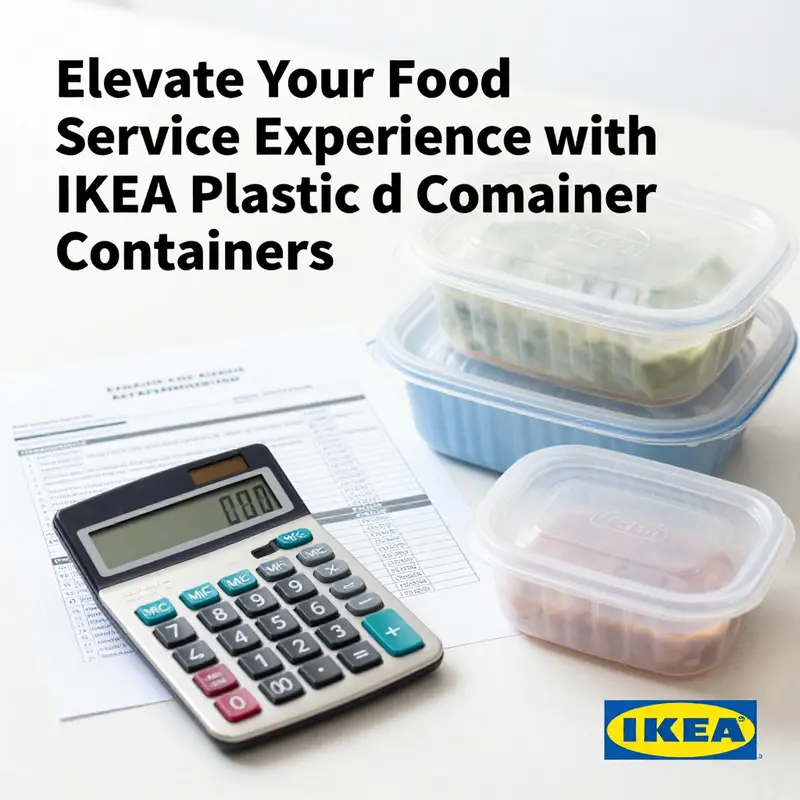
Price rarely tells the whole story of a kitchen purchase, but it is a powerful lens through which households judge value. When choosing plastic food containers, the numbers on the price tag do more than reflect the cost of a single unit. They reveal the tradeoffs between capacity, durability, leak resistance, and the flexibility to store a wide range of foods. In the case of a large flat-pack retailer’s line of BPA-free plastic storage, price signals both immediate affordability and longer-term savings. The simplest way to understand this is to walk through the typical price points for containers of varying sizes, and then to connect those numbers to how people actually use containers in daily life. Start with the small, endearingly compact option: a 750 milliliter container that measures roughly the size of a mid-sized lunch, priced around 2.97 dollars per unit. This is a price that makes portion control and quick leftovers easy to manage without a sense of guilt about waste or cost. When a family faces several meals for one person, or needs to portion out a few sides for a week, the per-unit cost being just under three dollars can feel like a reasonable doorway into better meal planning. The value here lies not only in the material but in the design: a container that keeps its shape even when stuffed into a bag or a crowded lunchbox, with a lid that seals with a snap and a clear view of contents that reduces rummaging during hurried mornings. The small size thus becomes a practical gift to time management and portion discipline, and its price mirrors that practical origin. Yet, the story broadens quickly as capacity increases. A larger rectangular plastic container in the 5.2 liter range presents itself at about 4.69 dollars per unit in some markets. That price point positions it as a bulk-storage solution or a meal-prep workhorse. It is not simply a bigger box; it’s a more versatile vessel that can hold leftovers, bulk ingredients, or even be repurposed for pantry organization. In a busy household, one of these larger containers can replace several smaller pieces, reducing clutter and simplifying stackable storage. The incremental cost of adding a container that can handle an entire family portion often makes economic sense when set against buying multiple smaller boxes that would fill a cabinet more quickly and complicate organization. The narrative grows still more with the extra-large option, around 10.6 liters in capacity, which commands about 7.49 dollars. This is not a luxury price for a single oversized container; it is a strategic investment for meal-prep enthusiasts, caregivers who batch cook for a week, or households that routinely freeze and reheat large quantities of food. In practice, the extra-large box becomes a single solution that handles bulk soups, stews, or large batches of roasted vegetables, reducing the need for multiple containers and the risk of mismatched lids later. The price curve here is instructive: the larger the container, the more it can consolidate, and the more it can simplify weekly routines, which translates into time savings and reduced clutter over time. Across these sizes, price tags can also reveal the underlying economics of sets versus singles. A three-pack deal in some markets might price around 4.69 dollars for the same capacity as a single unit, which on the surface appears to offer less value. Yet the per-unit cost declines when you think in terms of total storage capacity and the convenience of having matched lids and consistent shapes. The set approach rewards households that plan meals and stock their fridges and freezers with a synchronized system. The ability to mix and match containers of different sizes within a cohesive set reduces the mental load of choosing, ensures compatibility, and minimizes spill risk when moving containers from fridge to microwave or from kitchen to office bag. The economics of sets and singles thus become a psychological and practical decision as much as a mathematical one, with the choice depending on how a household uses time, space, and leftovers. Another dimension of cost that tends to surface in real-world shopping is the price of lids. The snap-and-lock lid that fits all of the square shapes in this line carries a modest premium—roughly 0.80 dollars per lid in many regions. It may seem small in isolation, but lids are the difference between spill-free transport and a leak all over a bag. A single, reliable lid aligns with the broader promise of the product line: durability and long life in daily use. When a lid is included with a container, or when a lid costs only marginally more than a single container, the value becomes clear through repeated wear and reuse, not just the initial purchase. Then there are the logistics and how they influence the bottom line. Free or discounted shipping promotions, particularly on orders that exceed a threshold, can tilt the overall value calculation. Put differently, a container that might seem expensive in a vacuum can turn into a cost-effective choice when the shipping cost is waived or when a bulk purchase qualifies for free delivery during a seasonal sale. The broader context here is crucial: these are not luxury items; they are practical tools designed to simplify day-to-day feeding routines. The comparison against more fragile or premium alternatives, such as glass or metal, is telling. In many markets, the plastic variant remains markedly cheaper than its glass or stainless-steel counterparts, while still offering transparency, microwave compatibility, and dishwasher safety. A 34-ounce glass/plastic hybrid might fetch a similar price to a small 750 ml plastic container, but the stainless-steel option can be several times more expensive. For households weighing the costs of replacement and care, the plastic option offers a more forgiving balance between upfront price and long-term use. Beyond the sticker price, the decision often hinges on practical expectations: does the family need containers that can survive the rigors of a busy morning commute, or are they looking for a pantry system that stacks neatly and travels well? In this context, the value proposition of a BPA-free plastic line is not only about containment but about resilience and simplicity. The lids click securely, the material resists warping under pressure, and the transparent surfaces let you see what is inside at a glance, reducing rummaging that leads to wasted food and energy. Maintenance is straightforward—top-rack dishwasher compatibility and microwave safety reduce friction when preparing, reheating, and storing meals. The design language of such containers—square and rectangular forms that nest efficiently, with uniform lids that stack in compact rows—also matters when it comes to space efficiency. In a kitchen where cabinet real estate matters, the ability to stack and align containers with their lids minimizes the footprint of the entire system. A thoughtful buyer will weigh not only the purchase price but the total cost of ownership: the number of times a container is reused, the ease of cleaning, the energy and water savings from batch cooking and reheating, and the intangible but real benefit of reduced waste due to better portioning. In other words, cost analysis in this space is a lifecycle conversation, not a one-off calculation. The numbers make the argument clearer, but the lived experience completes it. A household that commits to a practical volume of containers may find that a small, medium, and large trio covers most needs: portioning leftovers, preparing family meals, and having a bulk storage option for pantry staples. The price progression—from near three dollars for a compact unit to under eight dollars for a high-capacity option—lines up with a simple logic: buy what you will actually use, and choose a configuration that minimizes wasted space and time. The broader market context matters as well. Promotions, regional pricing, and bundled offers fluctuate, so the numbers you see in one country or during one sale may differ in another. Yet the core message remains consistent: value comes from a combination of cost, capacity, reliability, and the ease with which you can transform your kitchen workflow. For anyone tracking how much a simple lunch box or a batch-cooking container costs over the course of a year, the math is reassuring. A durable, leak-proof system that travels well and stacks securely can reduce the need for multiple replacements, cut down on single-serve packaging waste, and encourage healthier, more planned meals. In that sense, the cost analysis is not about buying cheap containers. It is about investing in a practical framework that makes everyday eating more predictable, tidy, and efficient. For those who want to explore practical pricing dynamics tied to real-world purchasing, a detailed look at the official product pages provides concrete numbers and regional differences. External resources offer the latest prices and promotions, helping households calibrate expectations as they plan from week to week. See here for a representative overview of the retailer’s plastic storage offerings and current price ranges: https://www.ikea.com/us/en/p/365-food-container-rectangular-plastic-52-l-80393065/
Efficient Footprint: The Storage Science Behind IKEA 365+ Plastic Food Containers
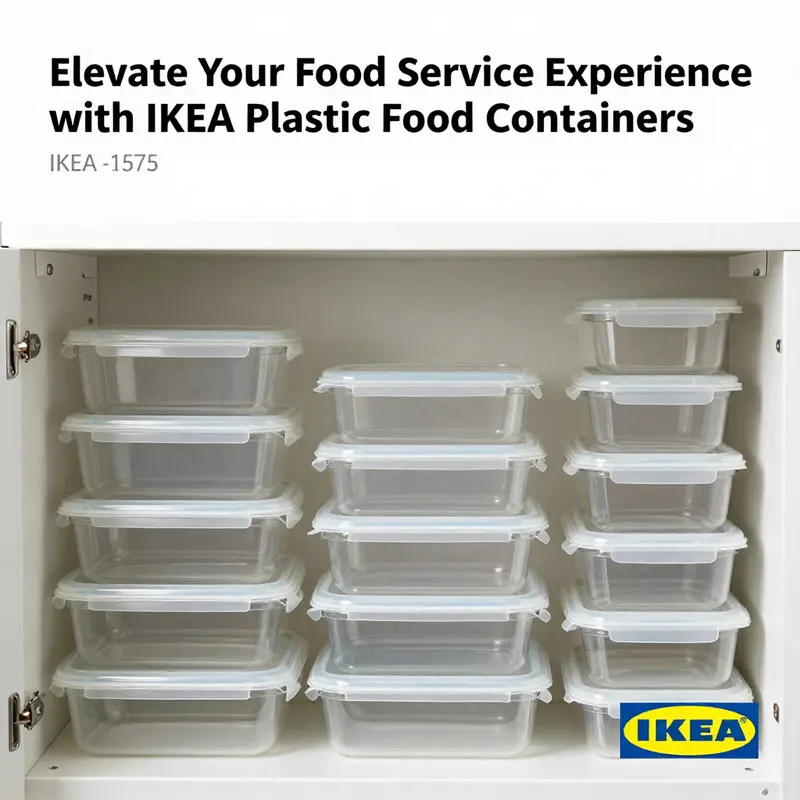
In contemporary kitchens, the way we store food shapes how we cook, plan, and even waste less. The idea behind a well-designed storage system is simple in theory but difficult in execution: maximize space, minimize spoilage, and keep everyday meals portable without turning the pantry into a labyrinth. The IKEA 365+ plastic food container family embodies this philosophy through a carefully engineered blend of stackability, visibility, and reliable seals. They are built to be more than just boxes for leftovers; they are tools for a disciplined approach to home organization that plays nicely with a busy schedule and a small footprint. Their design speaks to how material choice, geometry, and lid engineering can transform the way a kitchen is used rather than simply how it is stored.\n\nThe most immediate contribution of these containers is their storage efficiency. They are designed to be stackable and nestable, a practical feature that reduces clutter both when containers are in use and when they are not. Empty boxes can be nested inside each other, compaction reducing the volume they occupy in a cabinet or drawer. This nesting capability matters in real kitchens where every centimeter counts, especially in apartments or households that juggle multiple food-prep routines across the workweek. When in use, the same thinking applies: the flat, square or rectangular shapes align neatly with one another, creating a compact, orderly block of storage that slides into the refrigerator or freezer with minimal wasted space. This is not accidental; it is a deliberate response to the way vertical space is used in modern refrigeration. The square and rectangular geometries are chosen precisely because they maximize the usable surface area against the back wall and allow multiple containers to align like a well-ordered row of books. The transparency of the lids and bodies adds another layer of efficiency by removing the guesswork from daily routines. Contents are visible at a glance, so you don’t have to haul each container out of the fridge or pantry just to verify what’s inside. This reduces unnecessary openings and helps cut down on the energy and time expended in daily meal planning.\n\nA deeper layer of efficiency comes from the way these containers interact with daily chill storage. When stacked or lined up in the fridge, their vertical footprint is minimized, and the airtight seal keeps ingredients near their best. The snap-and-lock lids contribute to that reliability. An airtight seal protects against leaks and helps preserve flavors, while the robust construction maintains shape when containers are tightly packed for transport in bags or backpacks. For people who meal-prep, the ability to securely stack containers on a single shelf or in a single bin is a tangible benefit. It means fewer wasted minutes every week reorganizing the fridge to fit new meals and leftovers. The lids’ design also minimizes the risk of frost damage, a common annoyance for those who store soups, stews, or sauces in the freezer. The practical outcome is a system that remains stable through the entire lifecycle of a meal—from preparation to consumption to reuse.\n\nAlongside these functional strengths lies a pragmatic note about long-term utility. Replacement lids can be purchased separately, which extends the life of the containers even as lids wear or degrade with frequent use. This is an often overlooked detail that can matter a lot in households that rely on a small set of containers across multiple weeks. When a lid is replaced rather than the entire box, the cost per use drops and the product remains a more durable choice in the long run. It also speaks to a broader philosophy of modularity and resilience in consumer design: components that can be replaced or upgraded keep a system viable longer and without throwing away high-quality materials simply because one part failed.\n\nYet the story of efficient storage does not stop at performance alone. Acknowledging the realities of modern kitchens means confronting how heat and cleaning affect plastics. Several versions of these containers have been labeled as microwave-safe and dishwasher-safe, which reflects a common expectation in households that plastic should be flexible enough to move from fridge to oven, and from dishwasher to dinner table with ease. The lived experience, however, provides a more nuanced view. Some users have reported visible white marks appearing after heating, even after the first use. These marks are widely interpreted as heat-induced degradation, and they have led some observers to question the reliability of heat-related safety labels. The takeaway here is not a blanket rejection of the products but a careful, informed approach to their heat exposure. In practice, this means avoiding high-temperature microwaving or dishwasher cycles that involve high heat or aggressive detergents. It also means recognizing that while these containers excel in cold and room-temperature storage, they may not be the best option for heating or high-heat dishwashing. For those who routinely heat meals, turning to glass alternatives can be a safer choice. Glass versions in the same family, such as rectangular or larger-capacity glass containers, are oven-safe and do not absorb odors or discolor from acidic foods. They carry their own trade-offs—greater weight and less crush resistance—but they provide a safe, heat-triendly route for reheating and long-term storage where heat is a constant requirement.\n\nThis balance between plastic’s lightness and glass’s heat resilience highlights a broader decision set for consumers: storage efficiency and portability versus heating versatility. The plastic containers shine when it comes to saving space, reducing waste through effective portioning, and enabling a clutter-free fridge that simplifies meal planning. Their lids lock in freshness, their shape makes the most of shelf and door space, and their transparency helps keep your eyes on exactly what you have on hand. For households that value efficient prep cycles and a clean, organized kitchen, these attributes deliver a clear practical payoff: less time spent rummaging, less food spoiled by uncertainty, and more predictable portions that align with weekly shopping and planning.\n\nIn the wider spectrum of storage options, the choice between plastic and glass grows more nuanced when you consider the realities of everyday use. The plastic options offer crush resistance, light weight, and cost efficiency that many households appreciate, particularly for on-the-go meals. The glass options, while heavier and less forgiving in portable contexts, offer heat tolerance and odor neutrality that some cooks prize for longer-term storage and reheating. This is why the 365+ plastic family remains a common anchor in many kitchens: it balances space efficiency with everyday practicality, serving a broad array of use cases from portion-controlled lunches to batch-cooked dinners kept fresh in the fridge or freezer. Care guidance—such as washing before first use, avoiding high-heat dishwashing, and steering clear of microwaving when heat labels are ambiguous—helps keep the system functioning smoothly and extends its life. Additionally, the option to replace just the lid if it shows signs of wear reinforces the value of a modular approach to kitchen tools, where aging components do not necessitate replacing an entire set.\n\nFor readers who want a taste of how a dedicated, space-conscious approach translates into real-world choices, the story is not merely about a single product but about an ethos of organization. It is about selecting shapes that fit tightly against each other in a refrigerator, choosing lids that create reliable seals, and recognizing when a tool is best suited to a specific task—storage, transport, or heating. In this sense, the 365+ line embodies a broader lesson in household design: that efficiency emerges from how elements cooperate, not just from how durable or pretty each element is in isolation.\n\nAs you explore your own kitchen routines, consider how often you reach for a container that can sit compactly in a fridge while also performing reliably in transit. The balanced blend of stackability, transparency, and airtight seals found in this line embodies the core value of storage efficiency. When a system is easy to access, easy to clean, and easy to repurpose, it invites more thoughtful meal planning and reduces waste. That is the essence of efficient storage: the ability to see what you have, use it effectively, and move on to the next meal with confidence.\n\nInternal link reference: disposable-700ml-kraft-paper-bowl-take-out-octagonal-rectangle-paper-bowl\n\nExternal resource: https://www.ikea.com/gb/en/p/365-food-container-square-plastic-750-ml-60452174/
Consumers Weigh In: Real Feedback on a Popular Line of Plastic Food Containers
Consumer Voices and Practical Takeaways
Across dozens of reviews, users paint a clear picture of what matters most in everyday food storage. The dominant themes are practicality, reliability, and value. Consumers repeatedly highlight a set of features that turn ordinary containers into dependable kitchen tools: a seal that keeps liquids in place, a clear view of what’s inside, stable stacking for neat storage, and a build sturdy enough for daily use. These core expectations form the backbone of the feedback and explain why many shoppers rate this particular plastic range highly.
Ease of use is the simplest and most commonly cited benefit. People appreciate lids that snap on and off without fighting them. Simple mechanisms reduce the chance of user error and make the containers pleasant to use for all ages. Reviewers often describe the containers as well designed and reliable. When opening a lunchbox, reheating leftovers, or portioning meals for the week, an intuitive lid and a predictable fit save time and reduce frustration. That practical comfort is a frequent reason for high ratings.
Leak resistance and aroma preservation are two closely related attributes that reviewers emphasize. A reliable seal matters most when transporting soups, stews, or saucy salads. Users praise snap-and-lock lids that prevent leaks during commuting or picnics. Many also note that an effective seal helps preserve aromas, keeping strong-smelling foods contained and fresher longer. For those who pack school lunches or carry meals to work, such a lid is not a small convenience. It is a necessity.
Transparency is another pleasantly practical trait. Clear lids and walls let people identify contents at a glance. This saves time when searching crowded fridges and reduces food waste, because leftovers are less likely to be forgotten. Transparency also simplifies meal prep. Stacked, labeled containers still allow a quick visual check without unsealing multiple boxes. Consumers repeatedly praise that feature for its contribution to everyday efficiency.
Stackability emerges as a central strength in reviews. Compact storage matters in small kitchens as much as in large ones. Users report that these containers stack neatly when empty and remain stable when filled. That predictability makes them ideal for cramped cabinets and crowded fridge shelves. Stackable sets allow households to buy multiple sizes without losing storage space. Reviewers call out this advantage repeatedly, linking it to better organization and smarter use of kitchen real estate.
Durability and material quality show up in user comments as well. Many buyers are satisfied with a plastic that keeps shape under stress. Reports indicate the material resists warping, even when tossed into bags or placed under other items. The absence of deformation reassures users who carry meals frequently. A perceived toughness translates into long-term value in the minds of reviewers.
Value is a recurring theme. Several reviewers compare these containers to alternatives and conclude they offer a good balance of price and functionality. For budget-conscious shoppers, sets that include multiple sizes and shapes are particularly attractive. People like getting several useful pieces for a modest price. When price, durability, and convenience align, satisfaction tends to be high.
Still, consumers do surface a few caveats. Some prefer glass for reheating or long-term storage. Glass is favored for perceived cleanliness and heat resistance. Others worry about staining after contact with certain foods. A minority mention that, over time, lids can show wear or lose a perfect seal if handled roughly. Such concerns are not dominant, but they are consistent reminders that no single material meets every need.
Maintenance and care receive practical attention in feedback. Many users recommend washing containers before first use. Regular cleaning practices matter for longevity and hygiene. Handwashing is sometimes preferred to preserve lid mechanisms, though many plastic containers are dishwasher-safe. Consumers note that handwashing can extend the life of sealing parts and maintain clarity in the plastic. Simple habits—like letting lids air dry separately and avoiding abrasive cleaners—appear in multiple reviews as useful tips.
Size variety and modular design get positive mentions. Sets that include small, medium, and larger volumes fit different tasks. Reviewers often describe a 750ml or 1.0L capacity as ideal for single portions or mid-sized leftovers. Square and rectangular shapes suit stacking and efficient shelf use. The availability of different shapes and capacities allows households to mix and match containers for meal prep, storage, and transport.
Real-world stories give life to the numbers. One user shared how a tight-sealing box saved a lunch from leaking in a work bag. Another said stacked containers transformed a cluttered cabinet into a tidy lineup. Parents especially value lids that secure firmly, offering peace of mind during school commutes. These anecdotes reinforce the central claims: when containers perform, they simplify routines and reduce daily friction.
Ratings data align well with these qualitative impressions. Multiple listings show very strong averages, often above four out of five stars. Higher star counts coincide with reviews that emphasize consistency and repeated use. In short, reliability over time forms the basis for enthusiastic endorsements.
For shoppers weighing plastic versus other materials, feedback suggests a pragmatic view. Plastic boxes often win on weight, cost, and shatter resistance. They are lighter to carry, more forgiving in transit, and typically cheaper per piece than heavier alternatives. Glass still holds an appeal for oven-safe reheating and a premium feel. But many users balance those advantages against the daily convenience of plastic.
Sustainability and lifecycle concerns surface in some comments. A number of reviewers consider disposability and recyclability when choosing storage. This leads some to pair reusable plastic boxes with compostable or single-use options for specific tasks. Those looking for biodegradable takeout solutions might explore kraft-paper bowls and similar disposable products when a reusable container is impractical. For readers interested in alternatives that reduce plastic use, this take-away option provides a pragmatic complement to reusable containers: https://greendispopack.com/product/take-away-food-kraft-rectangular-square-rectangle-salad-paper-bowl/.
Taken together, consumer feedback offers a clear, actionable profile. Buyers value secure seals, transparent design, reliable stacking, and overall durability. They praise the everyday convenience of a container that works without fuss. Concerns tend to focus on long-term wear and preferences for glass in specific situations. For most users, however, the strengths outweigh the trade-offs, producing high satisfaction and positive ratings.
If you are comparing options, let real use cases guide the choice. Think about what you carry most—soups, salads, or dry snacks. Choose sizes that match typical portions. Prioritize lids with proven sealing mechanisms if you transport liquids. Consider transparent bodies for quick identification, and favor stackable shapes if storage space is limited. Finally, weigh cost against durability and your personal preference for material feel.
External reference: For the detailed product listing that many reviewers reference, see the official product page: https://www.ikea.com/us/en/p/365-food-container-square-plastic-750-ml-40483365/.
Final thoughts
IKEA’s 365+ plastic food containers stand out as a robust solution for food service professionals. With their durability, health safety standards, cost-effectiveness, and excellent storage capabilities, these containers are designed to meet the diverse needs of businesses in the food industry effectively. By investing in these containers, you ensure that your food remains fresh, safe, and conveniently stored. As you consider your options, remember that quality, reliability, and customer satisfaction are paramount—qualities that IKEA’s products embody.