
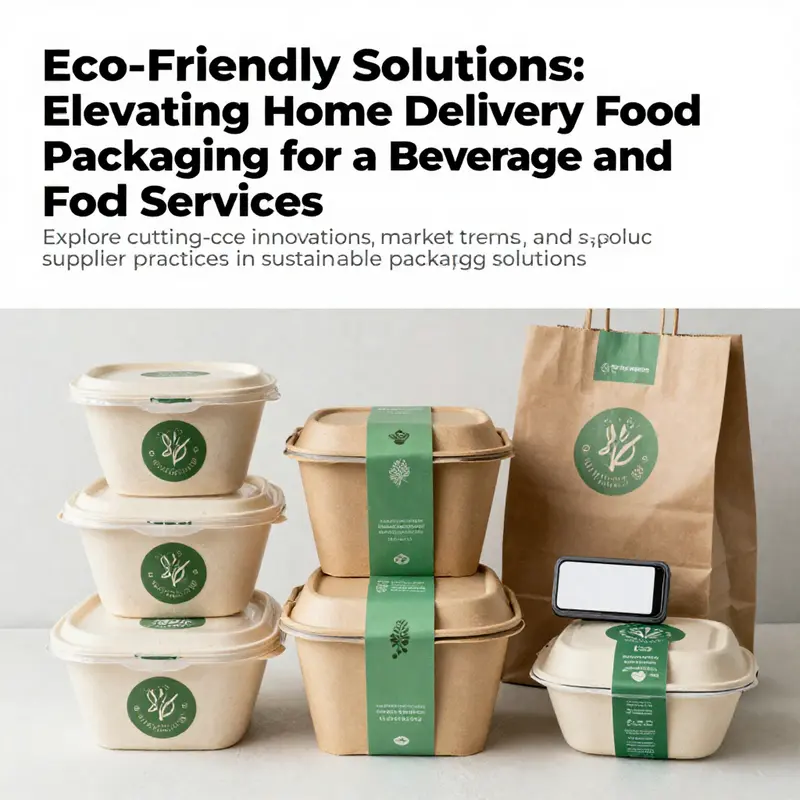
With the growing demand for home-delivered food and beverages, effective packaging is becoming more important than ever. This trend is driven by consumer preferences for convenience and sustainability, pushing businesses like bubble tea shops, restaurants, and catering services to reconsider their packaging choices. Modern food delivery packaging must ensure product safety, maintain quality, and reflect a commitment to environmental responsibility. We will examine the latest innovations in sustainable packaging materials and smart technology, analyze the evolving market trends regarding consumer preferences, and discuss the role of suppliers in providing customized, eco-friendly solutions tailored to the needs of food and beverage services. Each chapter will guide you through understanding how these elements intertwine to create effective packaging strategies that support your business goals.
From Plant Fibers to Smart Labels: Rethinking Home-Delivery Packaging for Sustainability and Safety
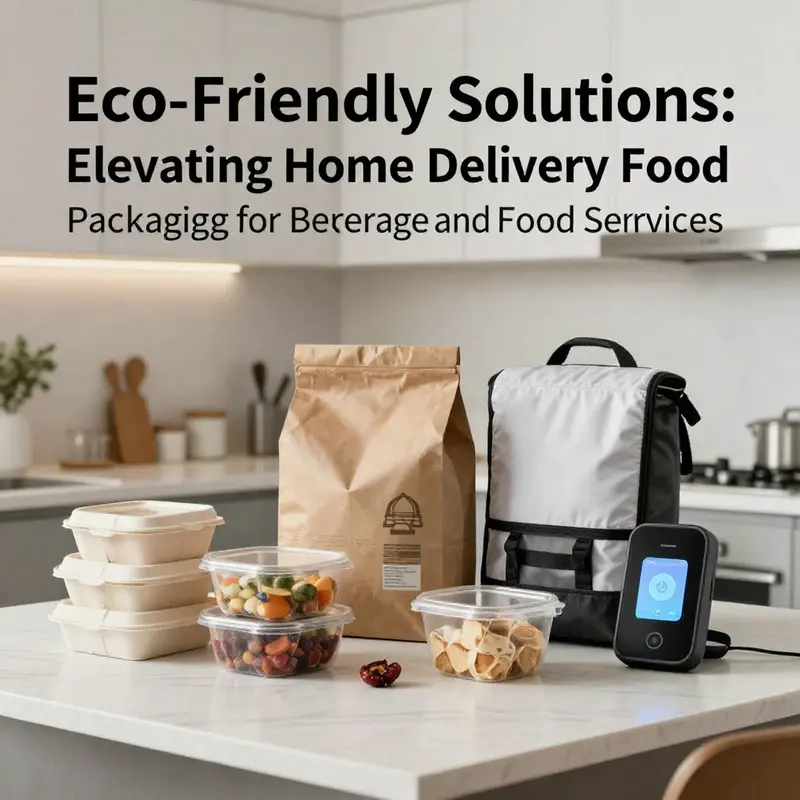
The evolution of home delivery food packaging is a study in balancing competing imperatives: the need for convenience and reliability on the one hand, and the demand for environmental responsibility and safety on the other. As urban populations swell and consumer routines tighten around quick, predictable meals, packaging is no longer a mere vessel. It is a visible commitment to quality, a shield for the product during transit, and a signal of a brand values its customers can trust. The industry is responding with a blended approach that treats materials not as disposable afterthoughts but as active participants in the delivery experience. This shift is being driven by two parallel currents. One is the heightened concern for the earth and resources used in packaging life cycles. The other is rapid progress in sensor technology and digital connectivity that translates packaging into a platform for information, safety, and customization. The result is a narrative where packaging enhances not only the sustenance on the plate but also the trust around the act of ordering itself. In this context, sustainability and smart technology are not optional add ons; they are fundamentals that redefine the expectations for every meal that travels to a doorstep.
Sustainable materials have become the frontline of this transformation. Traditional plastics still served reliably in the past, but they increasingly give way to alternatives that promise lower environmental footprints. Plant based polymers such as polylactic acid and others derived from renewable feedstocks offer a path to decompose without leaving long lasting residues. Molded fiber products, derived from recycled paper or agricultural byproducts, provide stiff, leak resistant structures that compete with conventional thermoformed plastics in both durability and barrier properties. Even more experimental options are appearing on the horizon. Materials such as sugarcane bagasse fibers and mushroom mycelium demonstrate how agricultural waste streams can be repurposed into sturdy, compostable packaging forms. The aim is not merely to replace plastic with another single use solution but to design packaging that is compatible with industrial composting facilities or curbside recycling streams where available. This philosophy aligns strongly with consumer expectations, as modern buyers increasingly view packaging as part of brand ethics rather than a nuisance to be tolerated. According to recent analyses, sustainable packaging has shifted from a niche concern to a central factor in purchasing decisions for a majority of customers, and this mindset is now shaping menus and packaging strategies across the home delivery landscape. While material choices matter, the full story requires attention to the life cycle of each option. Manufacturers and restaurants are now evaluating cradle to grave implications, including energy use, water consumption, transportation emissions, and the eventual disposition of packaging after the meal is consumed. The emphasis is on reducing waste at every stage, from raw material extraction to end of life, and on making the consequences of those choices visible to customers and regulators alike.
The practical implications of sustainable materials are reinforced by a broader move toward circular economy principles. Packaging is being designed with reuse and easy disassembly in mind, so that components can be recovered, refurbished, or melted down to create new products with minimal losses. Designers are asking hard questions about how plates and bowls can be cleaned and reused across multiple orders, or how lids and sleeves can be paired with different container formats without compromising integrity. In some programs, closed loop systems are explored within urban microhubs, enabling restaurants to return used packaging to central facilities for processing rather than letting it accumulate in landfills. Such systems require partnerships across the supply chain, from raw material suppliers to packaging manufacturers to delivery platforms. They also necessitate standardized labeling and clear color coding for recycling or composting, so customers can participate without guesswork or costly contamination. This shift is not a theoretical ideal; it translates into tangible benefits for the environment and for customers who seek transparency about the journeys their meals undertake before they land on the table.
Yet sustainability does not exist in a vacuum separate from performance. The barrier properties of new materials must meet the practical demands of hot beverages, greasy foods, and delicate perishable items. Heat resistance, moisture barriers, and mechanical strength are non negotiable attributes when a curry or a seafood dish must traverse city streets without leaking, without compromising texture, and without becoming a safety hazard. The challenge has water tightness that can withstand transit shakes and temperature fluctuations while remaining affordable enough for broad adoption. Researchers and designers respond by combining materials in layered structures that use just enough plastic for barrier protection while relying on bio-based and compostable components for outer shells. Surface treatments and coatings further enhance grease resistance and scuff protection, extending the life of the package during the journey. This careful engineering reflects a practical philosophy: reduce environmental impact where possible, without sacrificing the reliability customers expect when they open a meal that has traveled many miles from the kitchen to their door.
The consumer is not merely a passive recipient of packaging innovation. Today many shoppers view packaging as a statement of brand identity and a platform for information that could influence health and waste outcomes. Sustainable packaging contributes to brand trust by signaling responsibility and consistency. Smart packaging deepens that trust by providing real time data about freshness, temperature exposure, and product origin. Temperature sensitive labels or indicators can reveal if a shipment has been exposed to heat beyond the safe window, helping to prevent unsafe consumption and reducing the risk of foodborne issues. In parallel, packaging can carry digital threads that connect customers with product stories. Embedded QR codes or digital tags unlock layers of information about ingredients, sourcing ethics, and cooking guidance, all accessible via smartphones. These features empower consumers to make informed choices and to participate in sustainability efforts more actively, turning packaging into a conduit for knowledge and accountability rather than a mere barrier between food and consumer.
Technology is not confined to sensing temperature or transmitting data. It also redefines how packaging integrates with the broader delivery ecosystem. The digital layer can provide design customization options for brands seeking to differentiate themselves in crowded marketplaces. For example, packaging elements can be tailored to align with seasonal menus, regional tastes, or health oriented shifts, while maintaining a consistent performance standard. This flexibility is increasingly essential as menus evolve rapidly in response to consumer trends, supply fluctuations, and regulatory changes. Platforms that offer verified suppliers and bulk ordering enable restaurateurs and meal kit operators to scale sustainably. The integration of design tools with order management helps accelerate the path from concept to carton, and from carton to customer, reinforcing a seamless experience that spans the kitchen, the courier network, and the dining room table. The end result is a packaging system that behaves like a connected extension of the brand, telling a cohesive story about care for people and planet throughout the lifecycle of the meal.
A notable anchor in the evolution of packaging design is the move toward modular, portion friendly forms that support the rise of home meal replacements and ready to eat options. Modularity makes it easier to portion meals, reheated, or repackaged in smaller portions, without introducing wasteful redundancies. The ability to adapt container geometry to a specific dish while preserving heat and moisture control reduces the likelihood of half consumed meals and unnecessary trash. This approach is particularly relevant to health conscious consumers who rely on consistent portioning to manage calories, sodium, and other dietary targets. In practice, modular designs enable operators to tailor packaging to diverse menus and consumer needs while keeping the environmental impact in check. The pursuit of modularity also extends to the packaging interior, where liners and seals can be chosen to separate components such as sauces or garnishes that would otherwise compromise texture or experience if combined too early. The result is a more reliable meal experience that encourages repeat orders and, through that reliability, strengthens loyalty to a kitchen or platform that prioritizes both quality and responsibility.
The business implications of these shifts are wide and interwoven. Restaurants and meal kit providers increasingly see packaging not as a cost center but as a strategic investment in brand equity, customer satisfaction, and waste reduction goals. When packaging signals durability, safety, and sustainability, it reinforces a customer perception of conscientiousness that translates into higher willingness to pay for quality. This perception is not merely sentiment; it is grounded in data about reduced waste, fewer delayed shipments caused by compromised foods, and more efficient reverse logistics as packaging becomes easier to reuse or recycle. At scale, these improvements translate into measurable gains in margins and in the ability to compete in a marketplace that prizes transparency and environmental stewardship. The expectations of investors, regulators, and consumers converge on a common point: packaging must demonstrate responsible innovation that balances feasibility with impact. As a result, the home delivery packaging sector is moving toward an ecosystem where every container is designed to perform, inform, and regenerate after use rather than simply end up as waste.
In the context of practical supply chain operations, the shift toward sustainability and digitality is closely tied to supplier networks and platform ecosystems. Operators increasingly rely on platforms that connect restaurants with verified packaging manufacturers capable of delivering customized green solutions at scale. Such platforms often provide options for branding, material selection, and bulk ordering, with the added benefit of design iteration and lifecycle analysis that helps businesses compare scenarios before committing to a particular material path. Digital tooling also enables better forecasting, ensuring that the right packaging formats are available when menu rotations demand changes. The interplay between supply chain agility and sustainability is increasingly decisive; a resilient packaging strategy can absorb disruptions and maintain service levels even as the broader food system encounters volatility. The broader implication is simple yet powerful: sustainable design, when paired with robust digital infrastructure, gives home delivery services a competitive edge that is both responsible and economically viable.
It is worth noting a practical exemplar of sustainable packaging in action. A durable, compostable option designed for delivery illustrates how a single container can be optimized for multiple meals across a day while maintaining temperature integrity and preventing leaks. For readers who want to explore a real world example of this approach, a common takeout container that has gained traction in some markets demonstrates the potential for a forest friendly, multi use design that aligns with circular economy goals. See the packaging example here for a concrete sense of how form and function can harmonize in a single product that travels from kitchen to consumer and back into streams that recycle or compost it. disposable-700ml kraft paper bowl take-out octagonal rectangle paper bowl. This kind of option illustrates how a seemingly simple container can embody the philosophy of sustainable performance while offering practical benefits in heat retention and ease of use for customers who value clarity and predictability in their meals.
A forward looking lens on the topic invites engagement with the broader body of work described in the literature. In particular, a chapter in a well known reference work titled Future Foods frames sustainability challenges and future scenarios for food packaging with a strong emphasis on how digital tracking and new materials will intersect with consumer behavior and regulatory expectations. The discussion highlights case studies, life cycle assessments of novel materials, and the integration of digital tracking systems that help organizations balance environmental goals with operational realities. This synthesis supports the argument that the future of home delivery packaging lies in systems that are transparent, adaptable, and regenerative. It is not enough to replace one material with another if the overall system remains linear and wasteful. Instead, the most enduring solutions will emerge from a holistic view that treats packaging as an asset with multiple legitimate roles across the value chain.
With these developments in view, the broader aim is to craft packaging that helps the kitchen near the customer become a connected, responsible actor in a shared food system. The packaging becomes a facilitator of trust, a steward of quality, and a component of a circular economy that values reuse, recycling, and composting over disposal. This requires a convergence of material science, design thinking, data driven logistics, and customer education. It calls for standards that make compostable and recyclable options clearly identifiable, ensuring that customers understand how to dispose of each item correctly. It also calls for investments in infrastructure so that compostable polymers, molded fibers, and other alternatives can be processed efficiently in the networks that already exist. The scale of impact is substantial because each packaging decision cascades through efficiency in production, waste management, and consumer satisfaction. In that sense, sustainability and smart technology in home delivery packaging are not competing tracks but complementary dimensions of a single strategic trajectory that seeks to deliver meals cleanly, safely, and with a lighter footprint on the planet. This is a future in which each package acts as a message about responsibility, a signal that what arrives at a door is not only delicious but also thoughtfully designed for the world it inhabits.
For readers seeking a concrete example of how such ideas translate into everyday practice, consider the role of design in modular takeout ware. The packaging is intended to be stacked and transported efficiently, yet it also invites reuse and easy separation for recycling. The interior surfaces can be coated with thin layers that provide barrier properties without introducing excessive plastic content. The bowls and boxes can be designed to nest together, reducing space during delivery and enabling more compact storage in kitchens and delivery hubs. Materials chosen can be optimized for low carbon footprints and minimal water use during production. The visual language of the packaging, including color and typography, can reinforce the sustainability narrative while still supporting clear readability and brand recognition. In short, the packaging becomes a multi functional artifact that carries information, preserves food quality, supports efficient logistics, and communicates a commitment to the environment. It is a testament to how far the field has moved from generic containers to purpose built systems that serve people and the planet.
To ground this discussion in practical terms, ongoing research emphasizes the importance of cross disciplinary collaboration. Material scientists, packaging designers, supply chain analysts, and consumer behavior researchers must work in concert to optimize the entire life cycle. This integration supports decision making that weighs trade offs between performance and sustainability, and between cost and impact. As the sector continues to mature, it is likely that new standards will emerge for labeling, testing, and end of life. These standards will help customers compare options across brands and platforms with greater confidence, and they will help regulators enforce practices that reduce waste and encourage responsible disposal. The resulting ecosystem promises not only safer and more reliable meals, but also a clearer, more accountable relationship between the foods we eat and the packaging that brings them to our tables. In this sense, the future of home delivery packaging is less about a collection of clever gadgets and more about a coherent framework that aligns materials, digital tools, logistics, and consumer engagement toward a shared target: cutting waste while enhancing the experience of enjoying a prepared meal.
External resources and ongoing scholarship reinforce the trajectory described here. For a forward looking synthesis on innovations in food packaging and the sustainability challenges that accompany them, readers may consult the chapter on sustainability challenges and future scenarios in the reference volume Future Foods. This resource surveys emerging technologies, life cycle assessments, and the integration of digital tracking systems that are shaping the next generation of home delivery packaging. It provides a rigorous analytical backdrop for practitioners and researchers who are developing and evaluating new materials, designs, and process innovations. External link for readers seeking deeper theoretical and empirical grounding: https://doi.org/10.1016/b978-0-323-91001-9.00039-6
Riding the Wave: How Consumer Preferences and Market Growth Are Reshaping Home-Delivery Packaging
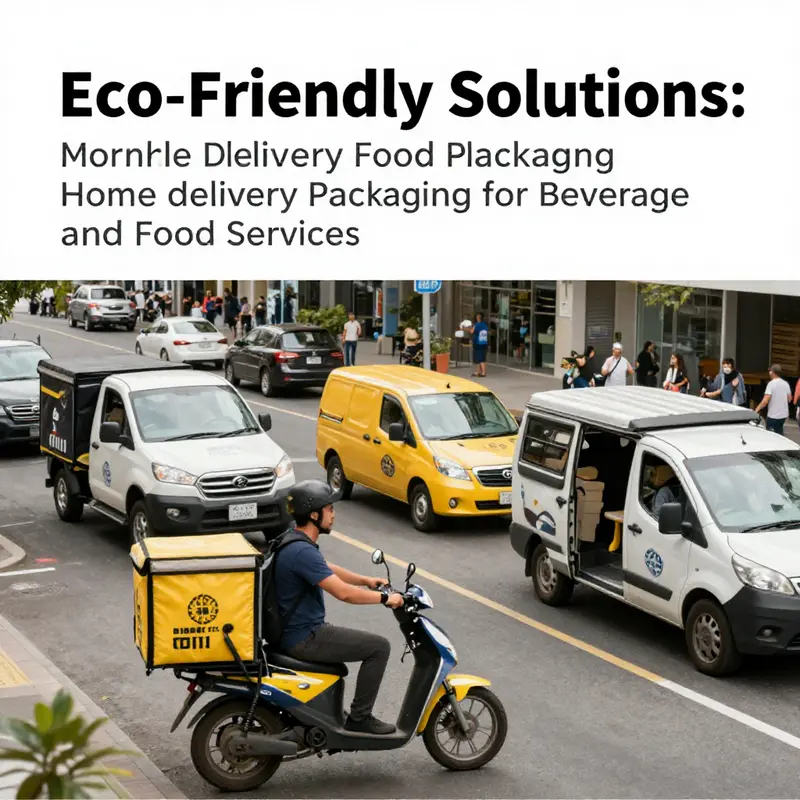
The market for home-delivered food is moving faster than the traditional packaging mindset can track. It is not just about getting a meal from point A to point B; it is about delivering safety, quality, convenience, and a promise of responsibility in a single, compact package. As urban living continues to compress daily life into tight schedules, consumers increasingly expect packaging that performs under transit stress while aligning with broader values around sustainability. This convergence—between practical needs and principled choices—has become a powerful engine driving product and process innovation across the industry. The result is a packaging landscape that looks less like a disposable wrapper and more like a smart, modular, and evolving system that supports both immediate gratification and long-term brand loyalty. In this environment, the stories that matter are not only about insulation, leak prevention, and temperature retention, but also about how a package communicates care for the planet and respect for the diner’s time and health.
From the supply chain side, the pace of growth in online food delivery, ready-to-eat meals, and home meal replacements has created a continuous demand for packaging that can scale without compromising safety or the integrity of the product. Industry analyses point to a multi-fold expansion of the online food-delivery market in the coming years, a trajectory that increases the volume of packaging pushed into residential ecosystems. Yet growth here is not a reason to indulge in any one- size-fits-all approach. The real challenge—and opportunity—lies in choosing packaging architectures that balance lightness with strength, barrier performance with recyclability, and affordability with distinctive brand cues. This balancing act is precisely what has pushed many manufacturers and retailers to reimagine the very DNA of their packaging strategies.
Central to this reimagining is a heightened emphasis on sustainability as a design parameter, not a mere afterthought. Consumers are no longer satisfied with packaging that merely does its job; they want packaging that minimizes environmental impact and supports a circular economy model. The shift is not a boutique trend but a broad consumer expectation. Data from industry observers indicate that more than six in ten shoppers consider sustainable packaging a key factor when choosing a food-delivery option. That statistic translates into measurable behavior changes: brands are adopting recyclable polymers, exploring compostable options, and investing in material science that reduces weight while preserving core performance. The implications for designers and procurement teams are profound. Every choice—from resin type to thickness to the finish—reverberates through the consumer’s perception of the brand, the cost structure of the meal, and the environmental footprint of the entire delivery cycle.
A useful lens to understand this evolving landscape comes from five consumer trends identified by industry leaders in plastics packaging. First, there is a strong and enduring preference for sustainability. Shoppers are looking for materials and processes that minimize waste, enable recycling, and, wherever feasible, allow for compostability within municipal or industrial streams. Second, there is a demand for enhanced functionality. Temperature retention, leak-proof seals, and well-insulated constructions are not merely conveniences; they are essential safeguards for food safety and quality during variable transit conditions. Third, there is rising interest in portion-controlled and compartmentalized packaging. The modern diner often plans for flexibility—leftovers, different meals in one order, or the need to combine items in a single box without compromising taste or texture. Fourth, consumers are increasingly open to reusable or recyclable materials. The concept of a packaging system that can be repurposed or reintroduced into the supply chain resonates with those who want to reduce disposable waste and support closed-loop solutions. Fifth, there is growing appetite for personalized or themed meal-delivery boxes. The packaging narratives that accompany dietary preferences—vegan, keto, regionally inspired, or globally influenced menus—now play a role in brand storytelling and in shaping the perceived value of the meal itself. These five trends are not isolated phenomena; they converge to push the market toward a future in which packaging is less about containment and more about experience, identity, and responsibility.
The practical upshot of these shifts is clear in the ongoing evolution of packaging technology. Advanced material science is enabling lighter, stronger, and more sustainable plastic alternatives, while design innovations are delivering absolute reliability in the field. Temperature indicators, for example, offer real-time feedback on product integrity during transit, allowing both the delivery team and the consumer to verify that a meal remains within safe limits. Insulated layers and multi-layer barriers help preserve texture and moisture, reducing the likelihood of soggy noodles or dry, overcooked exteriors. Secure seals and leak-proof hardware protect surroundings from spills, a concern that becomes more acute as household members become more time-pressed and delivery windows tighten. These features are practices with tangible cost implications, yet their value is increasingly measured not only in dollars saved from waste and returns but in the reputational premium they confer to a brand that can reliably deliver high-quality meals in challenging environments.
The growth trajectory of the market is thus a function of both demand and capability. On the demand side, the consumer’s willingness to pay for premium packaging experiences—characterized by sturdiness, clarity, and sustainability—has risen. People are willing to choose a delivery service that guarantees the same hot meal experience they would expect from dine-in service, and they are increasingly reluctant to accept disproportionate waste for convenience. On the capability side, suppliers are expanding the toolkit for packaging design—offering a menu of materials that can be chosen based on the intended use, the meal’s composition, and the desired end-of-life path. Biodegradable and compostable alternatives, such as plant-based plastics and molded fiber, are moving from niche to mainstream in many markets, while cellulose and paper-based solutions are being engineered to resist moisture and grease while still facilitating recycling. The convergence of these materials with modular, portioned packaging concepts creates opportunities for brands to tailor packaging to specific meals, dietary needs, and even seasonal campaigns, without requiring a wholesale change in the supply chain for every new offer.
Another layer of complexity—and opportunity—emerges from the rise of subscription-based meal services and multi-meal orders that encourage uniformity and standardization in packaging across a brand’s portfolio. This has a dual effect: it enables scale economies in production and logistics, while also inviting a greater degree of design experimentation. A single packaging system that can accommodate a family of meals—perhaps with standardized compartments or insertable dividers—allows restaurants and meal-prep operations to present a coherent brand narrative while minimizing waste and confusion in the consumer’s kitchen. In practice, this might translate into a modular container architecture that can be reconfigured for different dishes or portion sizes, a design approach that supports reuse where possible and simplifies disposal when reuse is not feasible. The result is a more resilient packaging ecosystem that can adapt to shifting consumer patterns, from single-person households to larger gatherings seeking reliable, easy-to-handle packaging.
From the standpoint of supplier ecosystems, the journey toward greener, smarter packaging is increasingly facilitated by digital tools. Design software, simulation platforms, and online supplier networks enable faster prototyping, better material choices, and more accurate life-cycle assessments. The possibility to customize packaging at scale—through digital printing, modular inserts, or tailored lidding solutions—helps brands maintain distinctive identities while controlling costs and waste. In this context, the procurement process becomes less about chasing the lowest unit price and more about orchestrating a holistic system that optimizes performance, sustainability, and consumer satisfaction across multiple channels.
The sustainability narrative, in particular, has begun to inform not only the choice of materials but the broader business model around packaging. Circular economy concepts—where packaging is designed for reuse, recycling, or safe decomposition—are increasingly presented as strategic commitments rather than regulatory constraints. When a brand communicates a clear end-of-life path for its packaging and demonstrates practical steps toward that path, it strengthens consumer trust and builds durable loyalty. This is especially critical in a market where a large share of the packaging gets resealed, relabeled, or repurposed within the consumer’s home. In such cases, the packaging becomes a touchpoint for ongoing engagement, inviting customers to participate in responsible consumption rather than merely accepting a product’s convenience. The marketing implications are significant: the packaging itself becomes a reflection of the brand’s ethics and a mobilizer for community standards around waste reduction and resource stewardship.
The integration of sustainable design with high performance presents a practical blueprint for the near term. The industry’s best practices involve selecting materials that offer the needed barrier properties with the smallest environmental footprint, adopting finishes and coatings that enable recycling without compromising grease resistance or flavor preservation, and embracing insulation systems that minimize energy use during production and transport. A practical design philosophy also recognizes the realities of the home delivery context: boxes stacked in entryways, food that sits on doorsteps in varying weather, and the need for quick, confident opening for anxious diners. Gradual improvements—such as resealable lids, easy-to-recycle composites, and intuitive labeling—can deliver meaningful enhancements without forcing radical changes in consumer behavior. The goal is to deliver a packaging experience that feels effortless and trustworthy, even after the box has been opened and the meal has been enjoyed.
The consumer-led pressure for customization has also influenced the evolution of packaging formats. Subscriptions and curated meal kits have created a demand for packaging that can be personalized to accommodate dietary restrictions, preferences, and cultural cuisines. This trend dovetails with the broader drive toward modular packaging systems that can be tailored to different meals while maintaining a consistent, brand-aligned aesthetic. In this sense, packaging becomes a platform for storytelling—an avenue through which a brand can communicate its values, its culinary philosophy, and its commitment to the environment. For a dining experience that travels, packaging the story as well as the meal is a differentiator that helps to convert first-time buyers into repeat customers. And as more customers participate in home delivery, their expectations about packaging quality and responsibility become a shared standard that competitors must meet or exceed.
In practice, the path forward involves a deliberate blend of material science, design ingenuity, and process efficiency. It calls for a careful evaluation of end-of-life options, a willingness to experiment with new packaging architectures, and a disciplined approach to measuring outcomes. By tracking metrics such as spoilage rates, incidence of leaks, and disposal costs, brands can quantify the value that improved packaging brings not only to the dining experience but to the entire supply chain. This is a shift from packaging as a necessary cost to packaging as a strategic investment in product integrity, customer satisfaction, and long-term sustainability. It is a shift that acknowledges the complexity of modern food delivery ecosystems—the myriad little decisions, from lid fit to fiber type to color and labeling, that collectively determine whether a meal arrives hot, intact, and aligned with a consumer’s values.
As this chapter narrows in on the consumer’s perspective, it is essential to ground the discussion in real-world implications for both brands and their suppliers. For brand owners, the priority is to understand how packaging choices influence perceived value, how to communicate sustainability credibly, and how to design for a smooth end-to-end experience. For suppliers, the challenge is to offer adaptable solutions that can scale across menus and seasons while meeting evolving regulatory requirements and consumer expectations. The bridge between these two sides is the packaging engineer or designer who can translate consumer demands into practical specifications, material selections, and manufacturing processes that stay within budget and timeline constraints. It is this cross-functional collaboration that ultimately determines how quickly and how well a market can adopt more responsible, efficient, and delightful packaging solutions.
To bring this to life in a consumer context, consider the way a well-designed package can reduce cognitive load. A single box that clearly indicates temperature guidance, opening instructions, and recycling pathways reduces the mental energy required by the consumer. A modular layout that can accommodate multiple meals within a standardized outer shell simplifies unpacking and reduces the chance of spillage. A design that minimizes the number of separate components—such as lids, inserts, and wrapping—can lower waste while preserving freshness. These seemingly small choices accumulate into a more satisfying delivery experience that empowers customers to enjoy a meal without worrying about waste, leakage, or sogginess. In turn, this enhances willingness to reuse or recycle packaging where possible and to select delivery services that align with one’s personal values about sustainability.
From a broader industry viewpoint, the future of home-delivery packaging appears less like a single material or a single form and more like a family of compatible systems that can be mixed and matched to meet specific needs. This is a world where a durable, insulated container might pair with a recyclable inner liner, where a portion-controlled tray sits inside a sturdy outer shell that can be flattened and disposed of with minimal effort, and where a courier network can support real-time monitoring of temperature and integrity. It is a world where a brand can offer seasonally themed packaging without compromising on recyclability or cost, and where customers can participate in sustainable practices without sacrificing convenience. The transition to such systems will require continued investment in material science, more robust life-cycle analyses, and stronger collaboration across manufacturers, packagers, and retailers. Yet the path is clear: to sustain growth while keeping quality high and the environmental footprint manageable, the industry must keep turning these design imperatives into concrete solutions that can be mass-produced, tested in real-world conditions, and scaled across markets.
Internal links can help readers explore concrete examples of the kinds of packaging solutions that embody these principles. For instance, a reader interested in practical, eco-friendly packaging options can examine a range of disposable kraft paper bowls with lids that support grab-and-go meals and salad offerings. Such solutions, when thoughtfully designed, can deliver the dual benefits of performance and sustainability that modern consumers expect. custom kraft paper bowls with lids. This single link points to a product family that illustrates how a simple container can be engineered to balance moisture resistance with recyclability, while also enabling branding through subtle surface treatments and labeling that guide consumer disposal choices.
In closing, the chapter sails forward on the current of consumer expectations and the momentum of market growth. The packaging conversation has matured from a tactical concern about protecting food during transit to a strategic dialogue about sustainability, user experience, and lifecycle thinking. The most successful players will be those who translate consumer insights into packaging systems that feel effortless to use, responsible to dispose of, and resilient in the face of growing delivery volumes. The future belongs to those who recognize that packaging is not merely a safeguard for a product but a connector—between the diner and the brand, between present convenience and future responsibility, and between rapid growth and enduring value. The ongoing evolution will continue to test and refine the balance among material performance, environmental stewardship, and economic viability, but it will also reward the brands that align their packaging strategies with the evolving expectations of a diverse, digitally connected consumer base. External trends, regulatory developments, and the accelerating pace of e-commerce will shape the pace and direction of change, yet the fundamental goal remains stable: to deliver meals that arrive in peak condition, with packaging that honors both people and planet.
For a broader industry overview of how these trends are shaping the future of food packaging, see the latest insights from Packaging Digest: https://www.packagingdigest.com/food-packaging-trends-2026.
null
null
Final thoughts
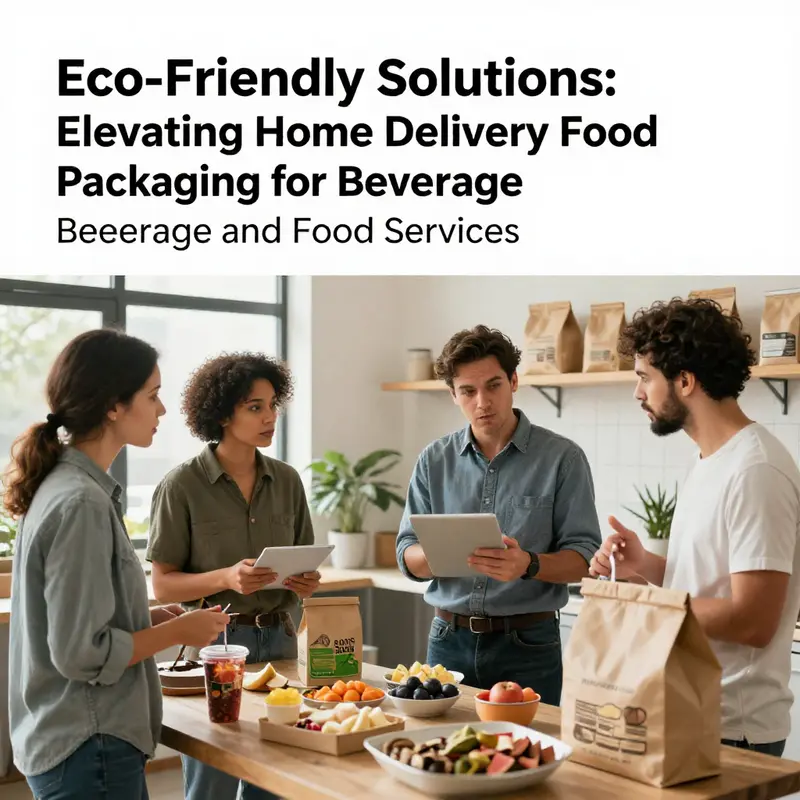
As consumer preferences shift towards sustainability and convenience, it becomes crucial for bubble tea shops, restaurants, catering services, and corporate procurement teams to adapt their home delivery packaging strategies. Innovations in packaging materials, smart technology, and supplier collaboration can enhance brand identity while promoting environmental responsibility. The integration of these elements can help foster consumer trust, attract a loyal customer base, and ensure operational efficiency. By investing in sustainable packaging solutions, your business can stand out in a competitive market, respond effectively to consumer demands, and contribute positively to environmental sustainability.