
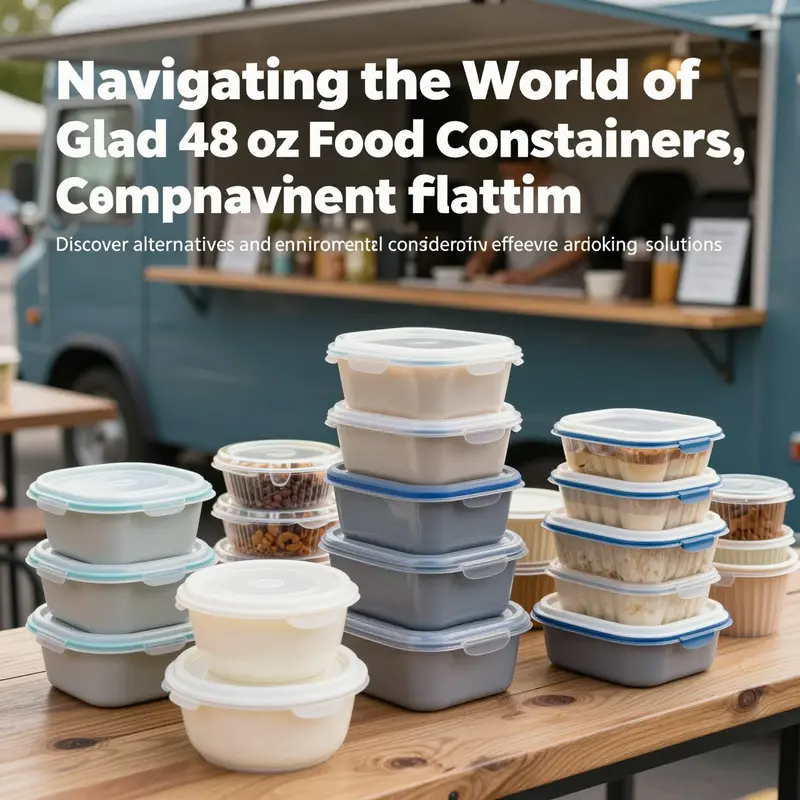
For bubble tea shops, restaurants, food trucks, and event planners, the right disposable food containers are essential for efficient service and customer satisfaction. Glad brand is well-known for its food storage solutions, yet it does not produce a 48 oz disposable option. This gap reveals opportunities to explore alternatives and consider market availability. The following chapters will delve into the product comparisons available, highlight market alternatives, and evaluate the environmental impact of these packaging choices, aiding you in making informed decisions that align with your business needs and sustainability goals.
Redefining 48-Ounce Food Containers: Durability, Safety, and the Reusable Frontier
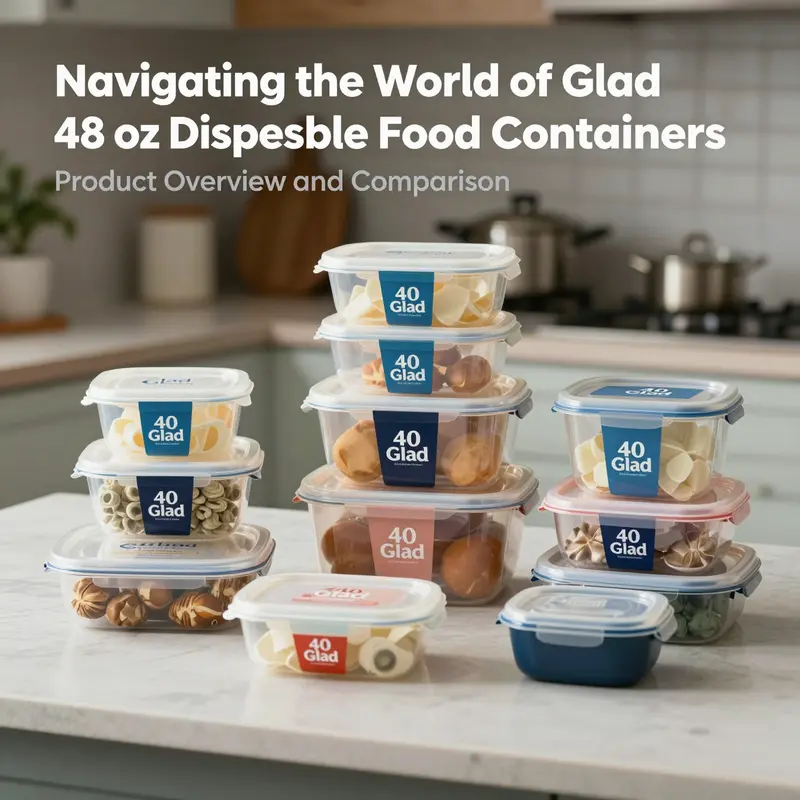
The notion of a 48-ounce food container carries with it a certain familiar tension: a capacity large enough to hold a hearty meal, a pot of sauce, or generous portions of leftovers, yet the market is dotted with competing ideas about whether that size is best served by a single-use shell or a sturdier, reusable workhorse. In many grocery aisles and catering supply shelves, the impulse toward a convenient disposable option remains strong. Yet a closer look at the landscape reveals a more nuanced reality. Among the players in this space, a well-known maker of reusable storage solutions has positioned a 48-ounce rectangle take-away container not as a throwaway item, but as a long-lived asset for kitchens and kitchens-on-the-go. The contrast between this approach and the conventional disposable mindset is not merely a matter of material choice; it signals a broader shift in how people think about capacity, portability, safety, and the true cost of packaging over time.
What distinguishes the rectangle take-away option at the center of this discussion is its deliberate design for reuse. It is described as a premium storage solution that borrows the convenience typically associated with disposable containers but replaces the single-use lifecycle with a durable, washable, and repeatedly usable form. The lid is engineered to snap into place in a leak-resistant, airtight embrace, a feature that matters when soups, sauces, dressings, or any liquid-rich contents are being transported. The lid’s snap-lock mechanism represents more than a simple seal; it is a safeguard against spills during transit, a practical assurance for meal-prep enthusiasts who portion meals for the week, and for professionals who move dishes between kitchen stations, delivery routes, and customers’ doors. In everyday terms, that means fewer leaks in bags and less mess in car trunks, on office floors, or in the backseat cup holders—small but meaningful wins for anyone who has ever faced a soggy tote or a compromised takeaway.
The container itself is described as stackable, a feature that is not merely about saving space in a crowded pantry but about enabling a rational, scalable approach to storage. When the containers are neatly stacked, the kitchen floor or the backroom’s shelving can be organized more efficiently, making room for more options without increasing clutter. It is a subtle advantage that translates into real-world workflow benefits: faster grab-and-go packaging for busy mornings, more efficient rotation of leftovers, and easier inventory management for small food service operations that juggle many SKUs and several prep timelines at once. The combination of a leak-resistant lid and a stackable form elevates the practical value of the container beyond the obvious capacity metric. You begin to see a product that is crafted not only for “one more meal” but for “many meals, over many days.”
A crucial pillar supporting this container’s story is its compliance with recognized food-safety standards and its manufacturing footprint. The text describing it emphasizes FDA compliance and North American manufacturing, underscoring a commitment to safety, regulatory alignment, and quality control. In an era when consumers and professionals alike are increasingly attuned to the provenance of the packaging that holds their food, such assurances carry weight. FDA compliance is not merely about meeting a baseline; it signals that the materials used in the container, the finishes on the interior surfaces, and the overall construction meet expectations for contact with food items. North American manufacturing contributes another layer of confidence, offering a more transparent supply chain and a greater likelihood of consistent quality control versus sourcing from more distant regions. These factors matter not only to individual households aiming to reduce waste but also to small food-service operators who rely on predictable performance to sustain their reputations and maintain a reliable service tempo.
Perhaps the most striking claim about this rectangle take-away option is its durability in the real world. The record of endurance is described in striking terms: it can withstand over one hundred washes. That figure is not a mere marketing flourish; it speaks to a lifecycle that far exceeds ordinary disposable containers, which are designed for a single usage and then discarded. In practical terms, this translates to a reduced per-use cost when one considers the container’s long-term life and the savings realized from avoiding frequent replacements. It also carries ecological implications. While no packaging solution exists in a vacuum, a reusable system with a proven washing and freezing tolerance directly addresses the waste question that often shadows large-capacity packaging. By choosing a product that can be washed, sanitized, and refilled repeatedly, a household or a food-service operation can meaningfully shrink its annual waste footprint without sacrificing the convenience that the 48-ounce capacity affords.
The narrative around this container naturally invites comparison with the more traditional disposable plastic options that populate the market. In many cases, standard disposable containers are not designed with the same emphasis on long-term reuse, and they may lack robust certifications or features that make them reliable for repeated cycles of use, washing, and freezing. The reusable rectangle take-away container, by contrast, positions itself as a practical middle ground: it preserves the ease of transport and the white-glove feel of a premium product while empowering an ongoing routine of reuse that can outlast dozens of one-time alternatives. Its surface is described as smooth and easy to clean, a detail that matters when meals are prepped in advance or when sauces and soups leave residues that can cling to rougher textures. The ease of cleaning complements its durable construction, creating a cycle of use that does not demand aggressive scrubbing or specialized tools, yet maintains food safety and aesthetic integrity through repeated cycles of washing and re-use.
This nuanced stance on 48-ounce capacity packaging speaks to a broader consumer habit: the desire for packaging that respects both practicality and principle. For households that prepare multiple meals for the week, or for professionals who coordinate batch cooking and delivery logistics, the rectangle take-away container offers a dependable platform for portioning, reheating, and transporting meals without the constant churn of buying, using, and discarding. It supports freezer storage as well, a feature that matters for those who plan ahead or who work with seasonal ingredients that need to be preserved for later weeks. The ability to freeze and rewarm safely within the same container reduces the need to transfer contents between vessels, a small but meaningful advantage when time, cleanliness, and efficiency are at stake.
It would be remiss not to acknowledge the market reality that not every 48-ounce container you encounter is designed for reuse. A subset of products marketed as disposable remains widely available, and the temptation to treat large-capacity packaging as a one-and-done item persists in the minds of many buyers. The key distinction is not merely the number on the label but the intention behind the product’s design and the materials from which it is built. The reusable rectangle take-away container embodies a deliberate choice—one that leans toward durability, safety, and lifecycle thinking rather than short-term convenience alone. It is a reminder that capacity in itself does not determine value; the broader questions of how often a container is used, how it is cleaned, and how it is disposed of after its useful life all influence the true cost and environmental impact of a packaging choice.
From a consumer guidance perspective, several practical considerations emerge. First, if your goal is to store and transport large portions of liquid-based foods—soup, chili, gravy, or thick sauces—the leak-resistant seal becomes a meaningful feature. The combination of a secure snap-seal lid and an anti-leak mechanism reduces the risk of spills during transit, which is particularly valuable for takeout businesses, caterers, or busy family members who commute with meals in hand or in car trunks. Second, the container’s build quality and its ability to withstand more than a hundred wash cycles speak to the total cost of ownership. For anyone calculating the true cost of ownership, the upfront investment in a reusable system is weighed against the ongoing expense of replacing disposable units, detergent or sanitizer usage, and the intangible costs associated with waste disposal.
Third, the container’s compatibility with freezing temperatures broadens its utility in meal-prep routines. The ability to withstand freezing without cracking or losing shape, combined with a microwave-safe reheat option (where applicable by manufacturer guidance), offers versatility across the cooking calendar. It allows cooks to batch-prepare meals, portion them into the same containers, and cycle between storage, reheating, and serving with a consistent vessel that fosters portion control and meal planning discipline. This is particularly meaningful for households seeking to simplify routines, for meal-prep enthusiasts who chase efficiency, and for small food-service operations that balance customer demand with inventory management. In all these contexts, the product’s reputation for rigidity and airtight sealing translates into tangible performance gains, turning what could be a fragile, leak-prone system into a dependable backbone for daily operations.
Another layer worth considering is the environmental calculus. The question often arises: does reusability truly translate into reduced environmental impact when a container must be washed, sanitized, and eventually replaced? The answer depends on usage frequency, the choice of cleaning methods, and the container’s durability. When a single vessel replaces the consumption of multiple disposable containers over its life, and when the cleaning process uses energy and water at reasonable, efficient levels, the net effect is a meaningful reduction in waste. In this sense, the 48-ounce rectangle take-away container illustrates a practical approach to packaging that aligns with ongoing discussions about sustainability in home kitchens and in small- to mid-sized food-service operations. It embodies a convergence of capacity, safety, and longevity that other, throwaway-oriented packaging often lacks.
For readers navigating the broader landscape of 48-ounce packaging, one takeaway is clear: not all 48-ounce options are created equal, and the choice should be guided by intended use, frequency of reuse, and the value placed on safety certifications and manufacturing transparency. If the aim is to minimize waste while maintaining the flexibility to store, transport, and reheat substantial portions, a durable rectangle option offers compelling advantages. If, however, the priority is the absolute convenience of a one-time-use vessel for a single event, other suppliers may provide disposable shapes and materials with the specific characteristics you require—such as microwave safety, sealed lids, or round forms optimized for certain foods. The central insight is that buyers should recognize the spectrum that exists within the 48-ounce category and select a solution that aligns with their operational reality rather than with a single marketing promise.
In communities and businesses where packaging decisions ripple outward to supply chains and waste streams, the decision to adopt a reusable, 48-ounce rectangle container can influence procurement strategies, sanitation protocols, and even menu planning. The container’s durable, washable surfaces simplify cleaning routines and reduce the risk of contamination that sometimes accompanies more fragile disposable vessels. Its FDA-compliant construction and North American manufacture offer a layer of assurance that is often valued by operators who must demonstrate compliance to regulators, insurers, and customers alike. The practical implications of these features extend beyond the kitchen; they touch on cost management, operational workflows, and the everyday rhythms of a food-preparation environment. When you consider the greater whole, the case for such a container rests not on one compelling feature in isolation, but on the cohesive alignment of safety, durability, transportability, and lifecycle thinking.
For those curious about alternatives in related packaging categories, consider exploring sustainable options in other take-away formats. For instance, some readers who want to reduce waste may look to compostable or recyclable materials for large portions or soups. A relevant example in related packaging discussions can be found in this option for disposable paper-based bowls with lids, which demonstrates how a different material paradigm approaches the same capacity needs. You can read more about such alternatives here: disposable 700ml kraft paper bowl take-out octagonal rectangle paper bowl.
In sum, the 48-ounce capacity container discussed here is not merely a larger version of a disposable shell. It is a thoughtfully engineered reusable system that foregrounds safety, durability, and practical usability. It invites users to reframe their expectations about what 48 ounces can mean in daily life: not just a measure of volume, but a measure of how packaging can support repeated use, responsible sourcing, and a cleaner, more efficient kitchen workflow over time. This reframing matters, because it touches on decisions that are made every day in kitchens and backrooms around the world. When people choose to invest in a container designed for hundreds of uses rather than a single use, they participate in a broader conversation about waste, responsibility, and the pace at which modern households and businesses can transform everyday packaging into something that serves more than a momentary need. It is a reminder that, in the realm of 48 ounces, the right container can quietly redefine what it means to store, transport, and enjoy food across many meals and many days.
External resource: Official product page for reference on specifications and certifications can be found here: https://www.glad.com/products/48-oz-rectangle-takeaways-food-storage
Beyond 40 Ounces: Navigating 48-Ounce Disposable Takeout Containers and the Alternatives Landscape
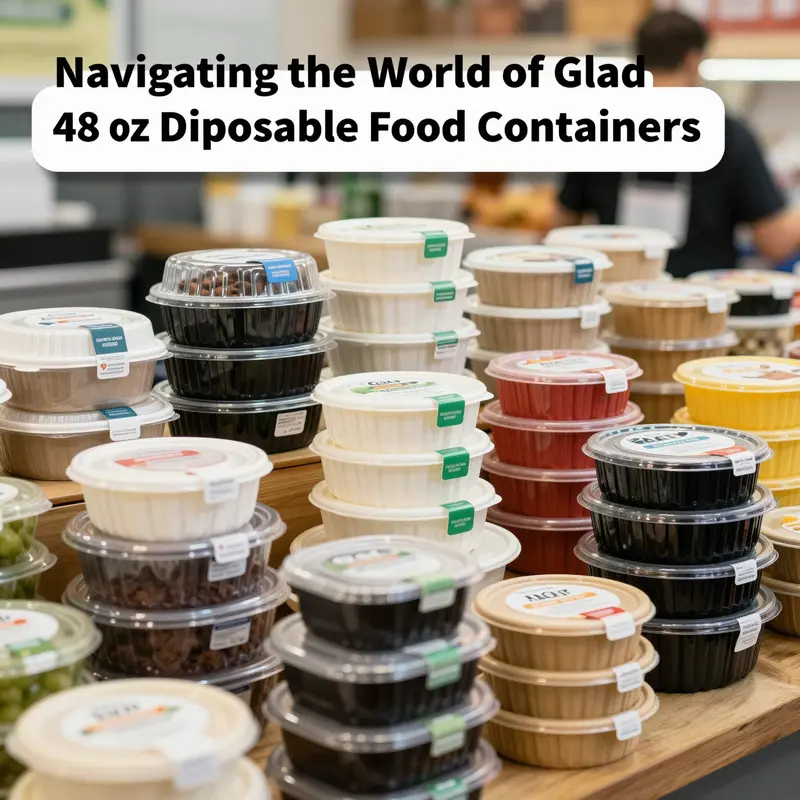
Tracing the demand for 48-ounce disposable takeout containers begins with understanding a market that often favors bulk portions and day-long catering needs. In many conversations about container sizing, the most visible gap is not the absence of large sizes but the way retailers frame what counts as a practical, single-use option. A leading brand that is widely recognized for reusable storage solutions does not offer a 48-ounce disposable container. This gap reshapes how buyers evaluate what is available, who should buy it, and how to balance convenience with environmental considerations. What you find in the marketplace is a spectrum: round and rectangular shapes that can hold roughly 1.4 to 1.5 liters of food, with common capacities at or near 40 ounces, and a variety of 48-ounce options spread across different manufacturers. The practical takeaway is not just a question of capacity, but of how the container is designed to perform during transport, reheating, and disposal. In this chapter, we examine the market availability, the typical features that define 48-ounce disposables, and the viable alternatives that savvy buyers consider when a single-use container in this size becomes a logistical necessity.
A practical assessment of availability begins with the recognition that 48-ounce disposables have become a mainstream option in online marketplaces and some brick-and-mortar supply stores. On major online platforms, you consistently encounter products marketed as 48-ounce disposable containers or bowls with snap-tight lids engineered to prevent leaks during transit. These solutions are primarily composed of BPA-free polypropylene, a plastic resin that is resilient under chilling and heating cycles while remaining food-safe when used as directed. The design considerations are deliberate: secure lids, rigid walls, and smooth interiors that minimize residue and facilitate quick cleaning in potential reuse scenarios. These containers are marketed not only to households managing home meal prep but also to small catering operations, tiny food businesses, and organizers of community events who need dependable portions for buffet lines or takeout. The consumer value proposition hinges on a simple, familiar promise: keep contents contained, prevent spills, and tolerate the rigors of cold storage, microwave reheating, and eventual disposal. In practice, the availability snapshot shows a handful of shape options—round bowls and rectangular, more tray-like formats—each with its variant leakage-control features, whether a snap-on lid with a tight seal or a vented lid designed to reduce steam buildup during reheating. The capacity figures commonly featured in product listings sit within a narrow range around 48 ounces, with some packaging indicating exact milliliter equivalents that help caterers in menu planning to standardize portion sizes.
The user experience of shopping for these containers often mirrors a simple truth: convenience is most valuable when it is predictable. Amazon and major retailers frequently stock multi-packs—two, three, or more containers per package—reflecting the bulk-buying habits of families, meal-prep enthusiasts, and small-service operations. The packaging logic behind multi-packs is twofold. First, it lowers per-unit cost, which matters when the same container is used repeatedly for weekly meal-prep cycles or for a rotating takeout menu. Second, it simplifies inventory management, ensuring that a steady supply of 48-ounce portions is available without frequent reordering. The trade-off, of course, is that some buyers encounter heightened plastic usage in these multi-packs and must weigh this against their disposal or recycling capabilities. From a sustainability perspective, the decision often hinges on whether the consumer plans to reuse the containers or to rely on them as single-use items. When a container is explicitly marketed as single-use, it’s designed with straightforward disposal in mind, yet many buyers still choose to recycle the PP plastic where local programs allow. This nuance—between reuse intent and actual disposal behavior—frames a broader conversation about the environmental footprint of bulk-sized disposables.
The market presence of 48-ounce disposables also serves as a reminder that there is a meaningful differentiation between the shapes and the practical features that accompany them. Round options tend to emphasize a bowl-like experience, with wide mouths that facilitate scooping and portioning, while rectangular or square formats align more closely with stackable storage in refrigerators and cold cases. In both cases, the quality of the seal between lid and container is a critical determinant of performance during transport. A secure snap-tight lid reduces the likelihood of leaks when a container is jostled in a transit scenario and can prevent messy spills if a container is tipped or inverted. The lids themselves vary—some feature a simple snap-on design, others incorporate a silicone gasket or a double-locking rim that adds rigidity to the seal. The materials used in the walls of these disposables are also worth noting. BPA-free PP is favored for its heat tolerance and rigidity, which helps preserve the food’s shape and reduces the risk of deformation under cold or warm conditions. While these containers can be used in the microwave in many cases, it remains essential to verify the product’s labeling. Not all 48-ounce disposables are recommended for oven use or long reheating, and users should follow the manufacturer’s instructions to avoid warping or chemical exposure. In practice, this means reading the label for microwave compatibility and following the safe handling guidelines that accompany hot foods.
From the perspective of the buyer comparing options, the list of considerations goes beyond the mere capability to hold a certain volume. The capacity is the headline feature, but the true decision set includes leak resistance, lid security, stackability, ease of cleaning if a container is ever repurposed, and the overall durability of the plastic. A sturdy container with a robust lid is more likely to survive multiple trips to and from a kitchen, a catering event, or a home delivery run. In a world where many families and small businesses rely on delivery and takeout, the reliability of packaging translates directly into customer satisfaction and reputational risk. A spill during transport can transform a routine meal into a negative experience, and that experience can reflect on the container brand itself even when the food vendor is careful. To mitigate such concerns, the market has leaned into design refinements: reinforced rims, ribbed sidewalls to resist denting, and lids that click into place with audible assurance. These features, while technical, become meaningful signals to buyers who want to minimize the risk of leakage and crumbly edges when containers are stacked in a delivery bag or placed in a cooler with other perishables.
Despite the clarity of this availability narrative, a critical point remains: the leading brand known for reusable storage solutions does not offer a dedicated 48-ounce disposable option. This fact cues buyers to look beyond a single brand’s catalog and to survey the broader ecosystem of disposables. The market’s breadth is not only about the presence of 48-ounce items but also about how buyers navigate alternatives, especially when the aim is to balance convenience with environmental or cost considerations. In that light, the alternatives landscape unfolds as a valuable counterpart to the disposable options. For anyone weighing the choice, there are three primary trajectories. The first is to opt for reusable containers that match the 48-ounce capacity, delivering long-term savings in a single purchase and allowing repeated use for meals, meal-prep cycles, and catering events. The second is to lean into compostable or biodegradable disposables made from plant-based materials; these options align with a growing consumer focus on reducing plastic waste and can be a practical solution for one-off events where recycling streams are limited or absent. The third pathway involves long-term, durable materials that transcend the disposable model entirely, such as stainless steel or glass, paired with secure lids that are built for repeated use and easy washing. Each path has its own advantages and trade-offs related to cost, convenience, environmental impact, and practicality for heating and storage.
To illustrate the alternatives in a grounded way, it helps to describe the kinds of products that sit alongside 48-ounce disposables in the marketplace. Reusable plastic containers in the same size range emphasize durability and seal integrity. They are designed for repeated cycles of use, dishwashing, and reheating, and they often feature thicker walls and more sophisticated locking lids. The environmental argument for reuse is straightforward: when a single container replaces many disposables, the aggregate waste reduces over time. Of course, the upfront cost is higher, and the onus is on the user to track, clean, and properly store the containers to maximize their lifespan. A related option is the family of compostable or biodegradable disposables that mimic the format of traditional disposables but are designed to break down under industrial composting conditions or in appropriate home composting setups. These materials—from plant-based polymers to renewable fibers—offer a path to single-use convenience with a reduced reliance on conventional plastics. They are typically suited to short-term usage, such as takeout orders that travel from kitchen to consumer in a single day, and are valued for their ability to avoid long-term persistence in landfills. Yet, these materials can have different performance profiles when heated, frozen, or subjected to mechanical stress, so buyers should vet heat tolerance, moisture resistance, and the presence of any coatings or treatments that facilitate grease resistance or moisture management.
A third logical option is to employ non-disposable, long-lasting containers made from stainless steel or glass. While not a disposable solution, these materials offer the strongest resistance to chemical leaching, maintain flavor integrity, and can be used across multiple meal-prep cycles, menu changes, and service formats. For many households and small businesses, the decision to invest in reusable stainless steel or glass is as much about workflow and end-to-end sustainability as it is about a single catering event. The trade-offs here include heavier weight, the need for a washing cycle, and the possibility of needing additional storage or transport accessories. The choice among these alternatives is rarely a binary one. Buyers often adopt a hybrid approach: using disposables for high-volume, time-constrained situations where speed matters; resorting to reusable containers for daily meal prep in households or for regular catering tasks; and turning to compostable options when the priority is minimizing plastic waste in events where waste streams are managed responsibly.
In translating this landscape into practical guidance, several decision factors emerge. First, the intended use must be clarified. If the container is meant to be single-use, the key questions center on leak protection, ease of opening, and whether a lid remains secure during transport. If the container is meant for repeated use, the discussion shifts toward durability, dishwasher compatibility, and the container’s performance with repeated cycles of heating and cooling. Second, environmental impact matters. For some buyers, compostable options offer a meaningful reduction in plastic waste, though the infrastructure to collect, compost, and process such materials must be considered. Third, ease of cleaning plays a central role in whether a container is adopted for repeated use. A container that resists staining, preserves the integrity of the food, and survives many wash cycles becomes a reliable workhorse in meal-prep routines. Fourth, compatibility with heating methods is essential. While 48-ounce disposables often tolerate microwaving for reheating, not all are safe for oven use or for prolonged high-heat exposure, and this distinction can influence which option is adopted for a given use case. Finally, the procurement context matters. For home cooks, a small set of sturdy options may be sufficient, while for a catering operation, the ability to purchase in bulk and the predictability of supply become decisive factors. In all cases, it is wise to compare the total cost of ownership—taking into account purchase price, potential reuse or compostability, and the logistics of waste management—before locking into a single path.
Though the landscape may seem straightforward at first glance, the reality is that decisions about 48-ounce disposables are rarely about a single attribute. They are about balancing the certainty of performance with the ambiguity of environmental outcomes and the practical realities of a diverse supply chain. As buyers become more attuned to the lifecycle of packaging, they increasingly seek options that align with their operational demands and their values. This shift is not about choosing one perfect solution; it is about constructing a packaging strategy that accommodates the realities of meal prep, catering timelines, and waste management realities in today’s consumer economy. The market’s breadth ensures that a user can locate a container that meets the exacting needs of a particular operation, whether that means a leak-resistant lid for a busy catering route, a more rigid, stackable rectangular form for cold storage, or a sustainable, compostable option for events that prioritize waste reduction.
For readers who want to explore a practical example of the disposable packaging ecosystem beyond the strict 48-ounce form, consider examining the broader family of disposable take-away options, including kraft-paper bowls and other compostable take-out components. These products illustrate how packaging designers respond to the need for convenience with a lighter environmental footprint, while remaining compatible with common kitchens and service settings. To learn more about one readily accessible, compostable option within this ecosystem, you can explore a disposable kraft paper bowl designed for take-away use—an alternative that embodies the balance of practicality and environmental responsibility that many buyers now seek. disposable kraft paper bowl take-away kraft paper salad bowl with lid.
As the conversation about 48-ounce disposables continues to evolve, the practical takeaway remains clear: the market offers a spectrum of options tailored to different needs, not a single solution. Buyers must align their choice with the context of use, cost considerations, and the environmental footprint they are prepared to accept. The absence of a particular 48-ounce option from a high-profile brand does not constrain the broader market; rather, it prompts a more nuanced assessment of how best to meet the demand for large, convenient portioning without compromising safety, efficiency, or sustainability. In this sense, the 48-ounce category is less about chasing a specific brand’s catalog and more about understanding how various packaging formats—from disposable plastics to compostable fibers and reusable metals—can support a modern, efficient approach to food storage, transport, and service.
External resource: https://www.amazon.com/Glad-Take-Aways-Rectangle-Food-Storage/dp/B07YQJZVW5
The Hidden Footprint of 48-Ounce Disposable Food Containers: Materials, Waste, and Greener Paths
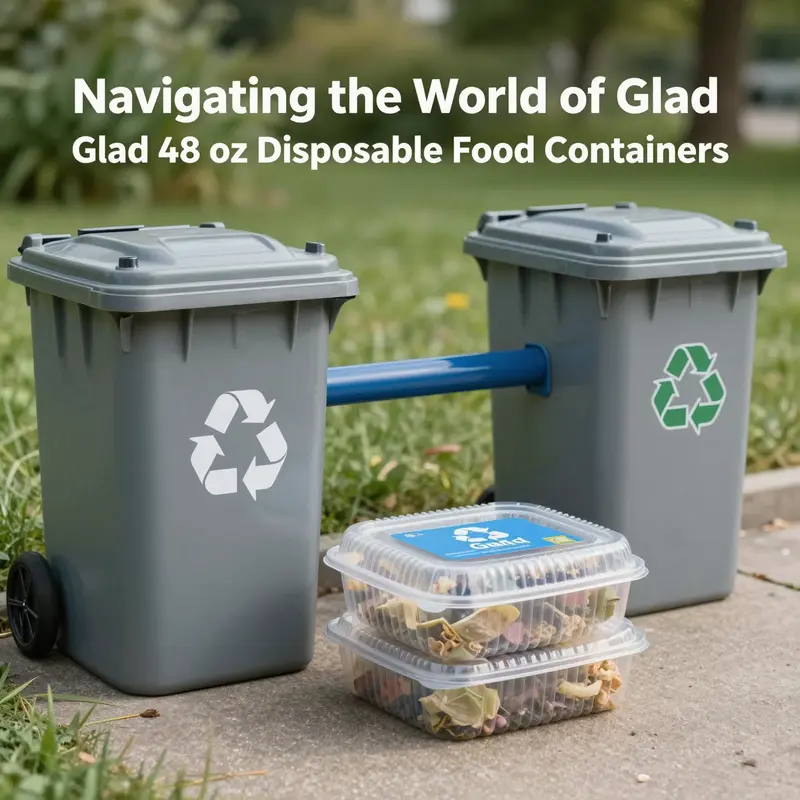
The practicality of 48-ounce disposable food containers—though often taken for granted in kitchens, catering operations, and takeout workflows—rests on more than the simple act of sealing in a portion. Behind the glossy surface and the convenience of single-use disposables lies a chain of choices: the materials that form the container, the way those materials interact with heat and grease, the fate of the container after use, and the larger systems that decide whether it can be reused, recycled, or composted. In this chapter, we untangle that complexity, focusing on how the 48-ounce category functions in real-world settings and why material science, waste infrastructure, and consumer behavior converge to shape its environmental footprint. The narrative here leans toward the broader market dynamics rather than any single brand, acknowledging that many manufacturers supply 48-ounce options, each with its own material recipe and end-of-life story. By tracing the lifecycle from production to disposal, we gain a clearer sense of where the environmental leverage lies and how customers—whether home users, restaurant operators, or event planners—can tilt choices toward more responsible outcomes without sacrificing the practical benefits that these containers promise.
A first, foundational consideration is the material itself. In the 48-ounce segment, the dominant choices have long been polypropylene (PP) and polystyrene (PS). Both of these materials share a common trait: they are not biodegradable in any practical sense within consumer waste streams. PP is frequently marketed as recyclable, sometimes marked with the recycling code #5, but the reality on the ground is more nuanced. Even when a container carries a recycling symbol, the rate at which it actually gets recovered depends on local facilities, contamination levels, and the presence of compatible processing streams. PS, often used for its rigidity and heat resistance, compounds the problem because it tends to fragment into microplastics if it is not properly collected and treated. When disposed of improperly, or when waste management systems falter, these plastics persist for decades, if not centuries, in landfills or the broader environment. And because the 48-ounce size is large enough for substantial servings or batch storage, a single container represents a relatively large chunk of material that may outlive the meal it held. This is not merely a theoretical concern; it reflects a very practical calculus about how households and operations manage packaging waste in daily life.
Within this material landscape, the environmental impact is not uniform. The life cycle assessment of a disposable container depends on the energy used to manufacture the resin, the fossil fuel footprint of that resin’s production, and the energy and emissions involved in collecting, transporting, sorting, and processing end-of-life streams. Contamination is a silent but potent determinant of outcome. A container that has grease, sauces, or food residues can complicate recycling efforts, lowering the probability that it will be successfully rerouted to a second life. This challenge is amplified when the container is used in out-of-home settings where streams intersect with municipal recycling programs that are already stretched thin. When a container fails to be properly cleaned or sorted, it becomes part of a broader problem: it can no longer travel down an efficient recycling pathway and instead ends up in a landfill or, in some regions, an incineration stream. In practical terms, this means that even disposable containers that bear recyclable labels may not contribute to a circular economy in any meaningful way if the waste system does not support clean separation and advanced processing.
This reality makes the concept of durability particularly important. A 48-ounce container that resists heat and grease could, in principle, be reused. Yet the literature and industry data indicate that reuse is more often associated with containers designed for repeated use rather than single-use disposables. The reusable-storage category—catering to home, office, and kitchen settings—offers a different material logic, with thicker walls, reinforced seals, and designs calibrated for cycles of washing and reuse. The environmental benefit of reusables depends on the lifetime of the product, the energy and water costs of cleaning, and the user’s rate of adoption. When reuse fails to materialize at scale—for instance, due to low washing efficiency or high breakage risk—the same plastic that could have been rerouted toward a different life ends up as waste in the same or a more problematic stream. In short, the environmental calculus for 48-ounce disposables hinges not only on what they are made of but also on how they are used, collected, and treated after use.
Against this backdrop, the market has increasingly looked toward alternatives that can break the dependence on fossil fuel-based plastics while preserving the functional benefits of a container in a takeout, meal-prep, or catering context. A notable shift has occurred toward materials that are either compostable or more readily integrated into circular waste streams. Bagasse, a byproduct of sugarcane processing, stands out as a rapidly renewable fiber that can be molded into sturdy, grease-resistant containers. Bagasse-based products are designed to be composted in industrial facilities, enabling a more closed-loop outcome than traditional PP or PS containers when such facilities exist and are accessible. The environmental advantage hinges on an effective disposal infrastructure that can separate and process bagasse into compost rather than confining it to landfills. The broader insight here is that the environmental benefit of material choices is inseparable from the surrounding waste-management ecosystem. Bagasse, while promising, requires appropriate composting networks to realize its full potential; without those networks, the advantage may be muted, and the container could still contribute to the landfill burden.
Another pathway gaining attention involves plant-derived and partially plant-derived composites, such as paperboard containers lined with plant-based films like polylactic acid (PLA). These designs aim to combine the familiarity and versatility of paper packaging with a compostable or biodegradable profile. They tend to perform well for cold and room-temperature foods and for short-term storage. However, their performance under heat, grease exposure, or long storage tends to lag behind that of high-grade plastics, and their compostability is contingent on the availability of industrial or community composting facilities that can meet the specific standards required to break down PLA and similar materials. This nuance is essential for planners and operators who must balance food safety, consumer expectations, and environmental outcomes. A container that cannot withstand heat or fails under grease pressure will force decisions that may compromise either performance or sustainability goals. The upshot is that greener materials are not a one-size-fits-all solution; they demand alignment with usage scenarios and disposal infrastructure to deliver meaningful environmental gains.
In light of these material considerations, the practical choices for businesses and households become clearer when framed as a set of trade-offs rather than absolutes. For example, if a restaurant relies on to-go packaging for hot dishes, the selection process must weigh heat resistance, grease containment, and microwave compatibility against end-of-life possibilities. If the facility can support industrial composting, bagasse or PLA-lined options may present a compelling path to reduce long-term waste. If, however, composting capacity is limited or inconsistent, the same choices may not yield the desired environmental benefits and could even shift the burden from landfills to incomplete recycling streams. The decision map becomes even more complex when region-specific realities—such as plastic-recycling rates, compost facility density, and consumer behavior—enter the equation. The risk of contamination and the variability of local infrastructure underscore a central theme: material choice cannot be decoupled from the waste-management landscape in which the containers ultimately live and die.
This is where data, policy, and consumer preference begin to intersect. Environmental considerations are not solely about the container in the hand but about the entire system that processes that container after use. Policies at the municipal or regional level often prioritize reducing single-use plastics, encouraging compostable or recyclable alternatives, and investing in facilities that can handle new materials. Consumer demand increasingly favors packaging that can be responsibly managed at end-of-life, but this demand must be grounded in realistic options. If a consumer purchases a compostable container, yet there is no industrial composting option available locally, the container may still end up in a landfill where neither biodegradation nor recycling occurs promptly. The effect is to shift responsibility away from the producer and toward the entire waste management ecosystem. In this sense, the evolution of 48-ounce disposable containers is not simply a matter of material science but also of planning, policy alignment, and infrastructure development that enable the intended environmental benefits to be realized on a broad scale.
From the consumer’s kitchen to the commercial kitchen, the daily choices around 48-ounce disposables reflect a spectrum of considerations. For households, cost, convenience, and the rhythm of recycling or composting routines play significant roles. For foodservice operators, the balance tilts toward reliability, safety, and operational efficiency. A container must hold a competitive serving size, resist leakage, endure heat and grease, and interact with present cleaning or disposal workflows. Yet every decision pushes against the same underlying constraint: packaging waste remains one of the most visible indicators of our consumption patterns, and the 48-ounce size sits at an intersection where meal portions meet packaging volumes that are still substantial in scale. In such a context, the emergence of compostable, renewable-based, or otherwise more responsibly managed options is not merely a niche trend but a response to a real demand for packaging that aligns with modern waste systems. The broader narrative is one of gradual alignment—between what the material can do for the food experience and what the waste system can responsibly do with the end product.
To illustrate how this alignment can manifest in practice, consider the case where a foodservice program integrates a line of containers designed for industrial composting or effectively recyclable streams. The leadership role here is not just in choosing greener materials but in coordinating disposal instructions, staff training, and customer education. Signage and packaging instructions that clearly state whether items are compostable or recyclable can reduce contamination and improve end-of-life outcomes. In parallel, partnerships with local waste providers can create a conducive pathway for compostable packaging to reach facilities that can handle PLA, bagasse, or other plant-based materials. This is not an academic ideal; it is a practical strategy that business operators can implement to align day-to-day packaging choices with a more sustainable waste trajectory. When customers encounter packaging that explicitly communicates its end-of-life path, they become participants in the system rather than passive bystanders. In many markets, this small shift in behavior can yield meaningful improvements in waste separation, overall recycling rates, and the visible presence of greener options in the marketplace.
The considerations outlined here do not exist in isolation from the growing emphasis on life-cycle thinking and corporate responsibility. Regulators and standards bodies increasingly expect manufacturers and users to justify the environmental claims of packaging, to reduce the reliance on single-use options where feasible, and to support innovation that improves end-of-life outcomes. The Environmental Protection Agency’s Sustainable Management of Plastics program, among others, offers a framework for assessing materials choices, improving waste management, and guiding investment toward infrastructures that enable more sustainable packaging ecosystems. In practice, this translates into a call for a more deliberate approach to selecting 48-ounce disposables: choose materials that are compatible with end-of-life goals, invest in partnerships and processes that enable proper disposal, and communicate clearly with customers about how to recycle or compost the chosen packaging. This integrated approach helps bridge the gap between convenience and responsibility, ensuring that the size and performance of a 48-ounce container do not come at the expense of the broader environment.
For readers seeking concrete avenues to translate these principles into everyday decisions, the practical takeaway centers on three core questions: What is the material, and how does it perform under real-use conditions? What end-of-life pathway does it fit, and is that pathway accessible where you operate? How does the disposal infrastructure in your community influence the container’s ultimate fate? Answering these questions requires looking beyond the label and the surface features to the actual waste streams and facilities that handle those materials after use. It also invites a shift in budgeting and procurement—prioritizing packaging that aligns with available disposal options and with the environmental standards that customers increasingly expect. In this sense, the 48-ounce disposable container becomes more than a simple vessel; it becomes a node in a broader system of materials stewardship. The more that systems, facilities, and consumer habits can be synchronized around a common goal, the greater the likelihood that the packaging will serve its purpose without imposing an outsized environmental burden.
The chapter’s full arc moves from the micro-level choices of plastic resins and paper-based composites to the macro-level implications for waste management, policy, and user behavior. It emphasizes that there is no single perfect solution, but rather a spectrum of viable paths that depend on context, goals, and capabilities. The momentum toward sustainable packaging in the 48-ounce category reflects a wider trend in society toward more responsible consumption patterns, better waste separation, and smarter material choices. While the fate of a single container may seem modest in isolation, the aggregate impact of these decisions—when scaled across countless meals, events, and caterings—can be substantial. The key is to approach packaging with a systems mindset: recognizing how every link in the chain—from resin production to end-of-life outcomes—affects the environmental ledger and how incremental improvements in material choice, disposal practices, and consumer engagement can shift that ledger in a meaningful way. This is the core message that ties the environmental considerations of 48-ounce disposable containers to the broader ambition of greener, more resilient packaging ecosystems for the future.
To connect this discussion to tangible options and real-world choices, consider a segment of the market that has begun to emphasize compostability and renewable content. Containers made from bagasse fibers or paperboard with plant-based liners can offer credible advantages in communities equipped with industrial composting facilities. They may perform differently from conventional plastics, requiring adjustments in storage, transport, and usage guidance. Yet when aligned with appropriate waste streams, these materials can reduce the long-term environmental footprint of meal portions and catering services. For decision-makers who aim to implement sustainable practices, the path forward often involves not just selecting a material but also designing an integrated program that educates staff and customers, coordinates with waste-management partners, and tracks outcomes over time. In the end, the environmental impact of a 48-ounce disposable container is not a fixed attribute, but a living outcome shaped by material science, operational choices, and the supporting waste infrastructure that makes end-of-life processing possible.
As we move to conclusion-adjacent reflections that inform the broader article, the aim is to keep a clear eye on the balance between practicality and responsibility. The 48-ounce size remains a practical standard for shared meals, large portions, and takeout orders. The challenge is to ensure that its use does not disproportionately burden the environment. This requires embracing alternative materials where feasible, investing in disposal systems that can handle those materials, and communicating clearly with end-users about how to dispose of packaging. With these strategies in place, the 48-ounce container can continue to serve its essential function while fitting into a more sustainable packaging landscape. The broader takeaway is that every packaging choice carries a set of consequences, and the most effective path blends performance with environmental stewardship. The result is not a single perfect solution but a pragmatic, evolving approach that reflects regional realities, technological advances, and the choices of millions of consumers who seek to enjoy meals with less ecological cost.
Internal link: To explore an example of a compostable kraft paper option often highlighted in discussions about greener packaging choices, see this page on kraft paper bowls and lids: disposable kraft paper bowl for food package with lid.
External resource: For additional context on how packaging materials interact with waste management and policy, you can consult the EPA’s guidance on Sustainable Management of Plastics. https://www.epa.gov/sustainable-management-plastics
Final thoughts
In your search for effective packaging solutions, understanding the landscape of disposable food containers is crucial. Though Glad does not offer a 48 oz disposable option, there are numerous alternatives that cater to the needs of food businesses. By considering market availability and focusing on environmentally conscious choices, your operations can thrive while aligning with sustainable practices. Strive to choose products that not only serve your business effectively but also contribute positively to the community and the environment.