
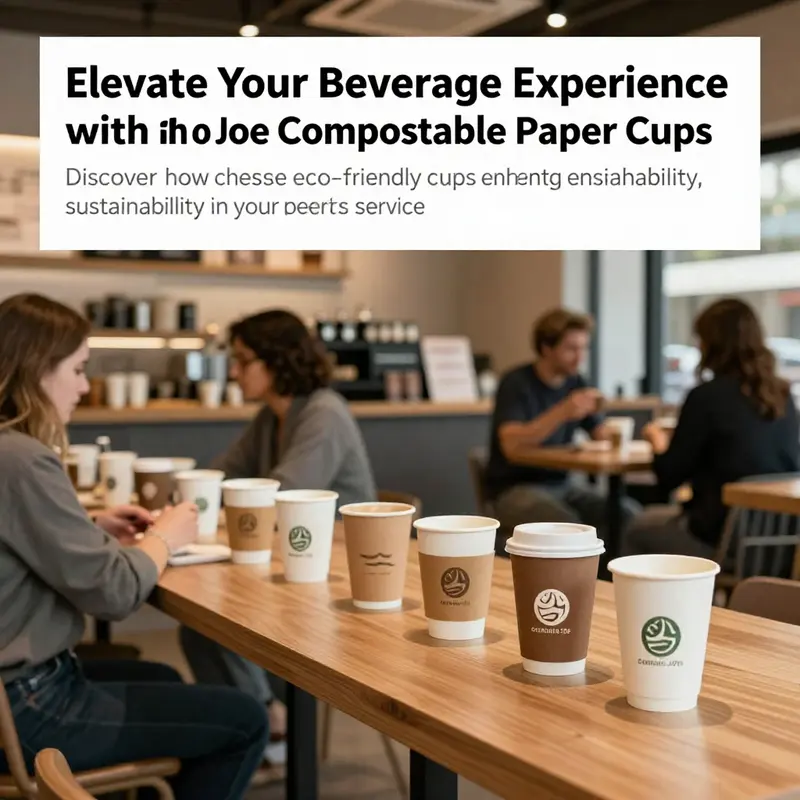
In today’s environmentally conscious world, choosing the right disposable cup is essential for beverage chains, restaurants, food trucks, and event planners alike. Genuine Joe Compostable Paper Cups stand out as a superior choice, merging eco-friendliness with impeccable food safety and innovative design. This article delves into their food safety and durability, unique design features, environmental impact, and practical market applications, showcasing how these cups can elevate the customer experience while supporting sustainability goals. As you read through each section, you will gain insights into why these cups are invaluable for your business.
Safe, Strong, and Compostable: Ensuring Food Safety and Durability in Compostable Paper Cups

Compostable paper cups have evolved beyond simple disposables. They must now deliver food safety, structural integrity, and verified environmental benefits. When a cup looks and feels like a traditional paper cup but is marketed as compostable, the key questions are straightforward: will it keep beverages safe to drink, and will it hold up in real-world use? This chapter examines how modern compostable paper cups meet those demands through materials, engineering, and certification, and how users and foodservice operators can get the most from them.
Materials form the foundation of both safety and strength. Contemporary compostable cups typically start with paperboard sourced from renewable fibers. To perform like conventional coated cups, they rely on a plant-based inner barrier. This barrier replaces fossil-derived plastics and avoids problematic fluorinated chemistries often used for grease and moisture resistance. Because these cups use a plant-based coating rather than PFAS, there is no routine risk of those persistent compounds migrating into hot drinks. The absence of PFAS addresses a major food-safety concern and aligns the cups with stricter regulatory expectations for direct food contact.
Beyond the choice of barrier material, construction details matter. A double-thick inner laminate increases pressure resistance and improves liquid retention. This reinforcement creates a rigid cup wall that resists buckling when filled with hot beverages. Rolled and polished rims eliminate burrs and sharp edges. That small finishing step reduces contamination risk and improves the user experience. A smooth, burr-free mouth makes the cup safer to drink from and more comfortable to hold.
Design touches at the base are equally important. A thickened base and spiral bottom geometry distribute weight and provide lateral stability. These features reduce tilting and improve balance when a cup is placed on uneven surfaces or in transit. For takeaway service, that translates to fewer spills and complaints. The spiral bottom also helps channel condensation and small leaks away from the rim, giving an additional layer of protection against wetness that could otherwise compromise the cup wall.
Temperature performance must be realistic and clearly defined. Quality compostable cups often tolerate a wide thermal range, from deep freeze to hot beverages. Typical limits span from roughly -20°C to 120°C, allowing safe use for iced drinks, hot coffee, tea, and brief microwave exposure where allowed. However, it’s important that users follow guidelines: avoid sustained exposure to very high temperatures, such as over 200°F, and do not use compostable cups for long-term storage of boiling liquids. Extended contact with extreme heat can soften or weaken the plant-based barrier, reducing structural integrity and increasing the chance of seepage. For this reason, vendors should recommend immediate consumption or transfer to insulated containers for very hot beverages.
Food-safety compliance is confirmed through testing and certification. Reputable compostable cups undergo checks for direct-food-contact safety under regulatory frameworks. Compliance with national food-safety rules ensures that coatings and inks do not leach harmful substances into beverages. On the environmental side, compostability certification to standards such as ASTM D6400 or accreditation like TÜV OK Compost demonstrates that the material will break down in industrial composting conditions. Those certifications provide assurance that the cup will not persist in the environment the way conventional plastic-lined paper cups can.
A practical concern for foodservice operators is how these cups perform in everyday operations. The thickened walls and reinforced seams make them stackable and less prone to crushing during storage or transport. Cups designed with a polished rim and sturdy base insert easily into lids and fit snugly into delivery cup holders. For businesses that provide to-go beverages, pairing compostable cups with an eco-friendly cup holder improves safety during transport and reduces spill risk for customers. Using a compostable pulp cup holder reduces overall plastic use and keeps the entire service chain aligned with sustainability goals.
Handling and storage practices further protect food safety and durability. Keep unopened stacks of cups dry and away from direct sunlight. Moisture and humidity can compromise the paperboard over time, while UV exposure can degrade printed coatings. When cups are stored in humid backrooms near dishwashing areas or outdoors, they can swell or delaminate, so dry, cool storage extends useful life. Avoid heavy stacking on top of cup boxes to prevent deformation of rim edges and maintain a consistent fit with lids.
Operational testing reveals real differences between designs. The best-performing compostable cups combine a thick inner laminate with precise rim finishing and a reinforced base. In real use, these cups resist softening under hot pour, maintain their shape when carried, and interface cleanly with lids without leaking. When cups are pushed beyond their recommended limits—left to sit with extremely hot content for prolonged periods—wear becomes visible: bases can lose stiffness, and the inner barrier may begin to show damp patches. Those are not failures in safety so much as signals that recommended usage boundaries were exceeded.
Consumer communication matters. Clear labeling on cups and lids about temperature limits, composting instructions, and proper disposal channels helps prevent misuse. Many consumers still assume that a product labeled compostable will decompose in a backyard bin. The reality is that most certified compostable cups require industrial composting conditions: controlled heat, moisture, and agitation. Without access to industrial composting, these cups may not break down as intended. Foodservice operators should provide disposal guidance and consider partnering with local composting services to close the loop.
Certifications give both operators and consumers confidence. Look for third-party verification that covers both food contact safety and compostability. A food-safety certification affirms the absence of regulated contaminants and confirms that materials meet migration limits for food contact. A compostability certification confirms that the product will biodegrade under industrial conditions within a defined timeframe. Together, these credentials show that safety and sustainability were tested, not just claimed.
Designers balance thermal performance with environmental goals in several ways. A double-thick laminate improves heat resistance without adding non-compostable materials. Some manufacturers also offer corrugated or double-wall options to increase insulation while preserving compostability. These variations help businesses tailor choices to their service model: a single-wall compostable cup may suit iced drinks and quick-service counters, while a double-wall compostable cup works better for long carry times and very hot beverages.
From a waste-management perspective, compostable cups reduce landfill persistence only when they are processed correctly. If compostable cups end up in general waste, they may be diverted to landfill or incineration. That undermines the environmental benefits. Operators should implement clear signage and separate collection bins for compostables. When possible, provide customers with easy instructions and information about local composting programs. Even simple changes—like offering a small sign explaining that cups should go into the compost bin—can greatly increase correct disposal rates.
Lastly, consider the broader system: a cup’s real-world sustainability depends on materials, manufacturing, logistics, and end-of-life processing. A cup that is food-safe, sturdy, and certified compostable is an improvement, but its overall impact improves further when paired with compostable lids, recyclable or compostable cup holders, and effective collection. Operational policies, staff training, and customer education are part of the product’s performance as much as the cup’s physical design.
In practice, choosing a compostable cup that combines validated food-safety standards with robust mechanical construction delivers measurable benefits. Better thermal stability reduces complaints and spills. Polished rims improve hygiene and the consumer experience. A reinforced base and spiral bottom reduce tilts and leaks. Plant-based barriers that meet food-contact requirements avoid PFAS and other undesirable chemicals. And when these cups are recovered through industrial composting, they return to the material cycle rather than persisting as waste.
For businesses and consumers committed to sustainable service, selecting the right cup means balancing daily performance needs with disposal realities. Look for clear temperature guidelines and follow them. Store cups correctly to preserve their structure. Pair cups with appropriate lids and an eco-friendly cup holder to make transport safer for customers. Adopt separate compost collection and promote local composting channels. With those practices in place, compostable paper cups can deliver both reliable food safety and the environmental outcomes they promise.
For additional product specifications and manufacturer guidance, see the full product information available at: https://www.genuinejoe.com/products/compostable-paper-cups
For better takeaway handling, consider pairing cups with an eco-friendly pulp cup holder such as this recyclable option: eco-friendly recyclable pulp cup holder.
From Rim to Compost: Practical Design Advances in Compostable Paper Cups
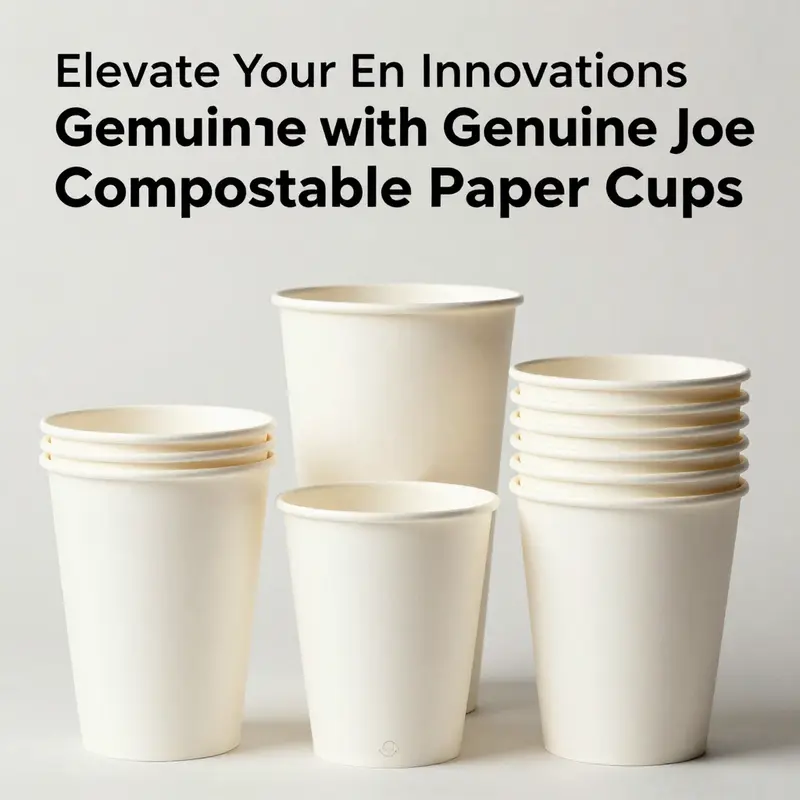
Design Innovations That Matter
Sustainable paper cups have evolved beyond simple paper tubes with plastic linings. The latest compostable designs blend material science, user-centered engineering, and lifecycle thinking. These cups aim to solve practical problems everyday users and businesses face, while ensuring the cup truly returns to the earth under industrial composting conditions. This chapter examines those advances in a single, integrated story, focusing on the structural, thermal, hygienic, and end-of-life choices that make modern compostable cups both practical and planet-friendly.
At the heart of the cup is the substrate and its lining. Designers moved from petroleum-derived polyethylene linings to plant-based barrier coatings. Polylactic acid, commonly known as PLA, is a leading example. It forms a thin, continuous film that resists liquid penetration. Unlike conventional plastic films, this coating is sourced from renewable feedstocks and is designed to break down in industrial composters. The liner must balance two demands: impermeability to liquids and compatibility with composting biology. Achieving both requires precise formulation, strict manufacturing controls, and rigorous testing to ensure the lining neither delaminates nor leaves plastic residues after composting.
Material selection also influences tactile performance. A paperstock with a denser fiber structure provides stiffness and strength. That stiffness prevents softening when the cup contains hot or cold liquids. Combined with a robust plant-based lining, the cup resists soft spots and wrinkling, which improves user confidence. Paper weight, fiber orientation, and the degree of mechanical embossing all work together to avoid collapse when the cup is filled. Designers often favor a single-wall construction with optimized thickness or a double-wall option with a corrugated air gap for additional insulation. Both approaches provide stability without resorting to noncompostable sleeve materials.
Thermal performance is critical to user satisfaction. Good compostable cups hold temperature, maintain beverage warmth, and allow comfortable handling. Thermal retention is achieved by material choices and geometry. A thicker base resists heat transfer through direct conduction. A contoured profile reduces surface area contact with hands, and a shallow taper improves fit with lids, reducing heat loss through convective currents. Where extra insulation is needed, corrugated or air-pocketed double-wall constructions create a still-air buffer. These solutions extend beverage warmth without adding noncompostable components.
The cup rim and edge finish matter more than many assume. A burr-free, polished rim improves drinking comfort and reduces tearing under stress. Rolled and sealed edges strengthen the uppermost bead of the cup, making it easier to add lids and reducing the risk of leakage at the seam. Designers often specify a high-precision roll that meets sanitary requirements and ensures consistent lid fit. The result is safer, cleaner drinking and greater confidence for staff who serve large volumes quickly.
Stability and leak resistance are fundamental. A thickened base and spiral bottom support prevent tilting and leaks. A well-engineered base helps the cup sit flat even on uneven surfaces. The spiral bottom pattern distributes mechanical stress evenly when cups are stacked. That structural layout also minimizes the likelihood of adhesive failure or bottom separation, which can occur when cups are filled with hot liquids or carried long distances. Stability improvements are particularly valuable in takeaway and event contexts where cups move through busy environments.
Lids are a complementary design element. A well-fitted lid must seal reliably while providing hygienic access to the drink. Lids designed for compostable cups use compatible materials and locking mechanisms that snap into rolled rims securely. The lid profile works in concert with the cup profile to minimize spillage during transit. Some lid styles incorporate venting features that reduce pressure buildup and allow easier sipping without sudden splashes. When lids are made from compostable polymers, designers ensure they break down under the same composting parameters as the cup.
Stackability and logistics reduce the product’s footprint even before it reaches the end of life. Stackable cups occupy less storage space and make automated dispensing and assembly efficient. Manufacturers optimize the taper angle and bead sizing to enable stable, low-friction stacking that avoids sticking. Better stacking means less packaging volume, lower shipping emissions, and simpler inventory handling for cafes and caterers.
Branding and graphic opportunities remain central to adoption. Compostable cups provide generous printable surfaces that communicate identity and values. The printable paper surface accepts water-based or soy-based inks that maintain food safety. Designers recommend avoiding coatings that interfere with ink adhesion or compostability. Thoughtful graphic design can convey sustainability credentials, usage instructions, and composting guidance to consumers. Clear messaging increases proper disposal rates and reduces contamination of compost streams.
Certifications and end-of-life performance bridge product design with ecological outcomes. Effective designs are not merely theoretically compostable; they meet established standards. Certifications that verify industrial compostability provide a credible signal to buyers and waste managers. When cups are engineered to meet such standards, the result is predictable decomposition within compost facilities, contributing nutrients back to soil. Designers must therefore ensure that coatings, adhesives, and inks are all within compostable limits. This integrated material specification is essential to close the loop in a circular economy.
Manufacturing precision plays a decisive role. Forming processes, temperature control, and coating uniformity affect both performance and compostability. Uneven coatings create weak spots that compromise leakage resistance. Excessive curing can alter polymer crystallinity, reducing biodegradation rates. Modern production lines incorporate in-line inspection systems to detect flaws early. Quality control metrics include peel strength of the lining, rim uniformity, and stackability tolerance. These specifications ensure every cup leaving the line performs as intended under real conditions.
Operational compatibility is another frequent design consideration. Cups must work with common dispensers, espresso tampers, and lid types. They must also withstand the rigors of point-of-sale use, including hot espresso shots, steam wand exposure, and high volumes of fill-and-go service. Designers collaborate with baristas and foodservice operators during prototyping. Their feedback leads to iterations on rim geometry, base thickness, and lid lock features. This human-centered approach creates cups that function seamlessly during peak service.
End-user guidance is part of the design story. To realize compostable benefits, users must separate compostable items from landfill waste. Clear, printed disposal instructions on the cup encourage correct sorting. Where municipal programs accept these items, the cup can be collected and treated in commercial composters. For organizations seeking zero-waste events, pairing compostable cups with compostable lids and collection bins reduces contamination and simplifies downstream processing.
Design trade-offs are inevitable. Increased thickness improves stiffness but raises material use. Additional lining provides better leakage resistance but can complicate composting if not carefully specified. Designers pursue balance by optimizing geometry, selecting high-performing plant-based coatings, and minimizing unnecessary laminates. Lifecycle assessments inform these choices, quantifying the environmental trade-offs between increased material mass and improved durability that reduces waste from failed cups.
Cost considerations influence adoption at scale. Compostable materials can cost more than conventional laminates. However, improved performance reduces cup failure and returns, and savings accrue from lower ancillary waste management costs. When designers prioritize stackability and packaging efficiency, shipping costs fall. These operational savings help offset premium material prices. For many businesses, the net cost of switching becomes acceptable when reputational and compliance benefits are included.
Finally, system-level thinking ties design to impact. A well-designed compostable cup only achieves environmental benefits if the disposal system exists. Design teams therefore align their specifications with local composting capabilities and waste management partners. They also provide guidance on what certifications mean in practice. When designers consider the full chain—from fiber sourcing to compost facility acceptance—the cup becomes a reliable component of a sustainable service model.
Practical adoption guidelines emerge naturally from these design priorities. Choose cups with plant-based barrier coatings verified for industrial composting. Verify rim and lid compatibility with existing hardware. Favor stackable profiles to reduce logistic costs. Look for clear labeling and compostability certifications. Consider lifecycle impacts, not only purchase price. Test cups under real service conditions to validate heat retention, stability, and lid sealing. Engage waste partners early to confirm the composting route.
The combined result of these innovations is a compostable cup that performs like a conventional single-use product while aligning with circular economy objectives. Improved rim treatments deliver comfort and safety. Optimized bases and spiral bottoms reduce leaks and tipping. Plant-based linings enable industrial composting. Stackability and printable surfaces cater to operations and branding. When each element is designed in harmony, businesses can serve beverages confidently, knowing the cups can re-enter biological cycles.
For an in-context example of complementary products that help keep compostable-serving operations tidy, see this eco-friendly cup carrier and holder resource: eco-friendly recyclable pulp cup holder.
For technical specifications, testing data, and manufacturer-provided compostability information, consult the product documentation linked here: https://www.genuinejoe.com/products/compostable-paper-cups-gjo10214
How Compostable Paper Cups Reduce Footprint and Earn Trusted Certification
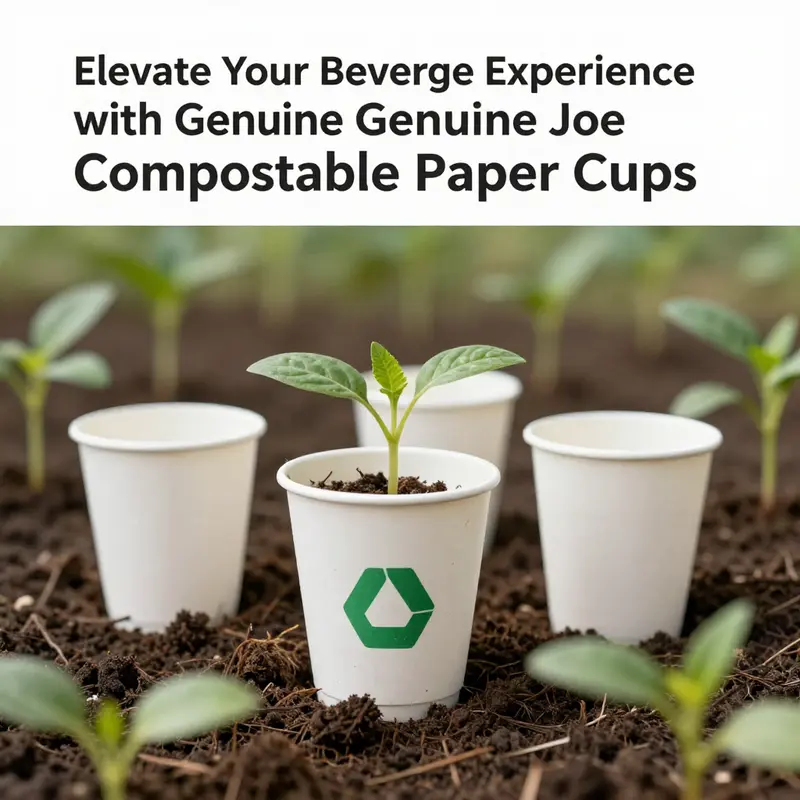
Choosing compostable paper cups represents a practical step toward lowering everyday waste impacts. These single-use cups are engineered to break down under controlled composting conditions, replacing long-lived plastics and multilayer materials. When designed and certified correctly, they shrink landfill volume, cut reliance on fossil-derived coatings, and support circular material flows. This chapter examines the environmental trade-offs, the manufacturing and end-of-life pathways that determine real-world benefits, and the certification systems that verify claims.
At the core of environmental performance is material selection. High-quality compostable cups use fibers from responsibly managed forests or recycled paper sources. These renewable fibers store carbon during tree growth and reduce the need for virgin plastics. A compostable paper cup typically uses a plant-derived lining or a special biodegradable laminate instead of traditional polyethylene. That change matters: conventional plastic liners persist for centuries. Biodegradable linings, by contrast, are designed to break into harmless organic matter in industrial composting, helping to return carbon and nutrients to soils rather than locking them into waste streams.
Manufacturing choices influence carbon footprint and resource use. Sourcing pulp from certified, sustainably managed forests reduces deforestation risks. Efficient production minimizes energy and water consumption. Many modern facilities capture process heat, optimize pulping methods, and manage effluents to limit chemical discharge. Compared with the lifetime environmental cost of reusable cups, single-use compostable cups often require less water and fewer detergents across many use cycles. For businesses that cannot feasibly wash and reuse thousands of cups each day, compostable disposables can reduce municipal water demand and avoid concentrated chemical runoff associated with high-volume washing.
Material durability during use does not have to conflict with compostability. A well-designed compostable cup incorporates a double-thickened biodegradable laminate for pressure resistance. That ensures hot and cold beverage performance while preserving safety and preventing leaks. Sturdy bases and rolled rims improve user comfort and reduce spills, which in turn lowers waste from damaged or unusable cups. The better a disposable cup performs, the lower the chance it will be discarded prematurely. Durable, reliable single-use items reduce the rate of immediate discard and help keep compostable streams clean.
End-of-life handling is where potential benefits are realized. Compostable cups require appropriate composting infrastructure to decompose as intended. Industrial composting facilities provide the high temperatures, controlled moisture, and microbial activity necessary to transform the cup into carbon dioxide, water, and biomass within a defined timeframe. When cups enter such systems, they do not contribute to persistent plastic pollution. However, if compostable cups are landfilled or incinerated, their environmental advantages shrink. Landfills lack oxygen and microbial conditions for rapid biodegradation, so materials degrade slowly and may produce methane without recovery systems. Incineration recovers energy but loses the material’s potential to return nutrients to soil.
Waste management realities vary widely by region. A thorough environmental analysis recognizes that compostable products are not a universal solution. Their net benefit depends on the availability of industrial composting, clear collection systems, and user behavior. Municipalities with active organics programs get the most value from compostables. Conversely, areas without such programs may see compostable cups diverted to mixed waste, where they offer little advantage over conventional alternatives. To close that gap, labels and outreach must make proper disposal intuitive. Clear instructions on cups and at points of sale help users place items in the correct stream. Complementary infrastructure, like dedicated collection bins and composting drop-off points, ensures the material follows the intended path.
Certification plays a critical role in giving buyers confidence. Third-party verification confirms the material will biodegrade under specified conditions and that no toxic residues remain. Rigorous certification also enforces testing for disintegration, biodegradation rates, and ecotoxicity. Certifications that target industrial composting guarantee the product will break down safely in commercial facilities. This removes ambiguity from marketing claims and helps procurement teams select products that meet regulatory expectations and corporate sustainability goals.
Beyond biodegradability, certification bodies assess ingredient sourcing and manufacturing practices. Certifications tied to specific environmental criteria can include chain-of-custody requirements. These rules ensure that the fiber in a compostable cup originates from responsibly managed forests or certified recycled sources. Such provisions reduce the risk of greenwashing and promote supply chain transparency. When businesses choose certified items, they support suppliers who invest in sustainable forestry and traceability systems.
Even with proper certification, label clarity matters. A credible compostability label should specify the environment for which the product is certified. The distinction between industrial compostability and home compostability is crucial. Industrial facilities achieve temperatures and conditions home piles typically cannot. A cup certified for industrial composting will not reliably break down in a backyard compost bin. Transparent labeling on packaging and at the point of sale avoids confusion and increases correct disposal.
Compost quality is another important outcome. Certified compostable cups are tested to ensure they do not introduce harmful substances into finished compost. Tests measure residual fragments and assess whether the final compost can safely contact plants and soil. When cups meet these standards, their end-of-life processing yields a usable soil amendment. High-quality compost supports soil structure, water retention, and plant health, closing the loop between disposable product use and regenerative resource cycles.
Trade-offs remain. Composting requires energy and logistics. Transporting material to central facilities and managing process inputs uses resources. The environmental calculus must weigh these costs against benefits like reduced plastic pollution, lower long-term landfill volumes, and avoidance of persistent microplastics. Lifecycle assessments that include production, transport, use, and disposal provide the most reliable comparison. Organizations committed to sustainability should review such analyses before making procurement decisions. They should also consider local composting availability and customer behavior when choosing between reusable systems and compostable disposables.
Practical steps amplify benefits. First, procure cups carrying recognized industrial compostability certification. Second, implement clear collection systems and signage at venues. Dedicated bins for food waste and compostables reduce contamination. Third, partner with local organics haulers or composting facilities to ensure the collected material is processed. Fourth, train staff and inform customers about correct disposal. Small investments in education and infrastructure significantly improve composting success rates.
Complementary products and accessories also help. Using compostable lids, napkins, and cup holders maintains a consistent waste stream and simplifies processing. For example, choosing an eco-friendly recyclable pulp cup holder supports composting and reduces mixed-material contamination. Such accessories should match the compostability profile of the cups to avoid introducing non-compostable elements into the organics stream. Where compostable lids are unavailable, favoring recyclable or easily separable materials reduces processing complexity and helps maintain compost quality.
Finally, companies should request documentation. When evaluating suppliers, ask for certification numbers, test reports, and chain-of-custody records. Verify claims through certifier databases. Transparent suppliers will provide access to documentation and explain the limits of certifications. This due diligence protects brand reputation and ensures that sustainability investments yield intended outcomes.
Adopting compostable paper cups aligns procurement with circular economy principles. When manufactured from sustainable fibers, processed responsibly, and disposed into industrial composting systems, these cups return nutrients to soil and avoid long-term pollution. Certification ensures that claims are verifiable. But the full environmental promise depends on aligned systems: sourcing, product design, collection, and processing. Businesses that coordinate these elements gain measurable benefits. They reduce landfill burden, support responsible forestry, and provide convenient, hygienic solutions for their customers.
For organizations exploring compostable options, consider a pragmatic checklist: prefer certified industrial-compostable cups; match accessories and lids to compostability standards; invest in signage and collection infrastructure; partner with local compost processors; and verify documentation. These actions move compostable cups from a well-intentioned choice to a truly effective one. When properly integrated into operations, compostable disposables can be a powerful tool for reducing environmental harm while preserving the convenience many customers expect.
More detail on the specific industrial compostability certification referenced earlier is available from the certifying body’s official resource. This external reference clarifies testing standards and the conditions under which products are accepted into industrial composting programs: https://www.tuv.com/en-uk/services/food-and-packaging/sustainability-certification/ok-compost-industrial
Additionally, businesses can complement cup choices with sustainable accessories such as an eco-friendly recyclable pulp cup holder to reduce mixed-material contamination and streamline compost processing.https://greendispopack.com/product/eco-friendly-recyclable-pulp-2-4-cups-coffee-take-away-cup-holder/
Sustainable Service, Lasting Impressions: Market Pathways for Compostable Paper Cups in Foodservice
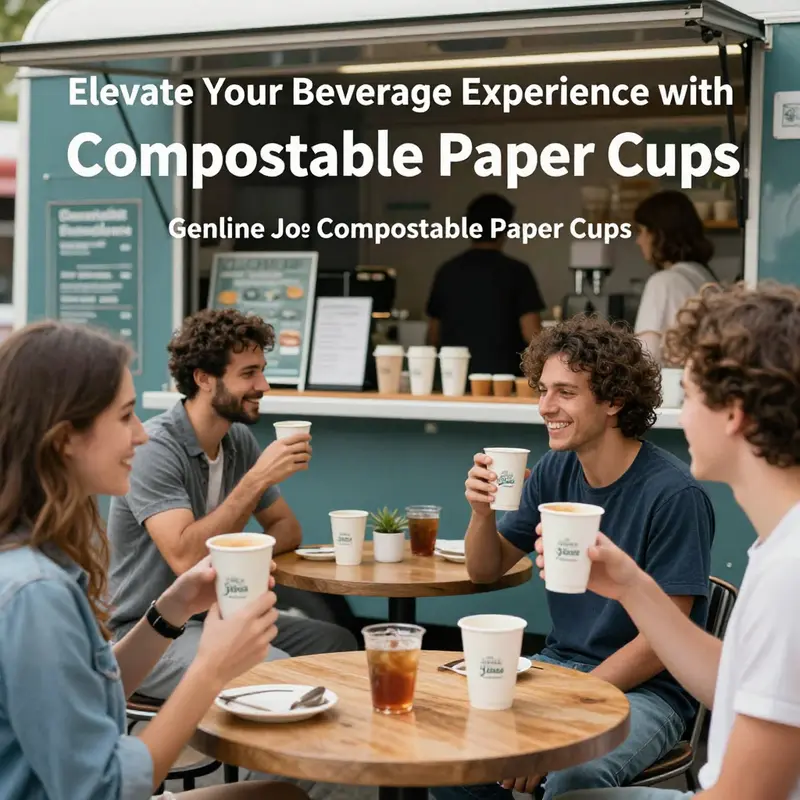
A shift toward sustainability quietly shapes the everyday choices customers make in cafes, at events, and in office settings. It is not only a mood shift but a practical recalibration of what counts as responsible service. In markets where customers judge brands by what they throw away as much as by what they serve, compostable paper cups designed for hot and cold beverages have become more than a convenience. They are a statement about values, process, and a willingness to invest in waste streams that align with broader environmental goals. In this landscape, hospitality operators increasingly seek solutions that perform reliably, look professional, and still support a lighter footprint when the cup reaches a composting facility. The result is a growing acceptance of disposables that can be broken down in industrial facilities, reducing long term landfill burden and reinforcing a brand narrative centered on stewardship and accountability. The logic is straightforward: a cup that serves great coffee and tea while fitting into a certified end of life pathway helps businesses delight customers without undermining the planet they rely on for future turnover. As this approach tightens, operators measure success not only by margins and speed but also by the clarity and credibility of their environmental story. It is this combination of performance, safety, and responsibility that makes compostable cups a practical choice for today’s service environments rather than a niche option for specialty shops alone.
The practical appeal begins with performance that matches or exceeds conventional disposables. A cup built for both hot and cold beverages must resist pressure without bending or leaking, and the reliable barrier between drink and hand must hold even as steam rises and conditions shift during transport. A double thickened laminate of a food grade barrier provides that peace of mind. It helps the cup withstand the heat of a long pour and the chill of iced drinks while preserving a clean, hygienic drinking edge. The rim of the cup is crucial here; a smooth, burr free edge with polished contours reduces discomfort and the risk of nibbling at torn fibers during mid sip. Rolled edges further reduce tearing risk and boost user comfort, so customers experience a confident feel from the first touch to the last swallow. In markets that prize speed and convenience, that sense of reliability translates directly into repeat business and favorable word of mouth.
Durability and stability matter as much as safety. In takeaway settings, cups must resist tilting and minimize leaks as they travel from bar to curb. A thickened base and a spiral bottom design contribute to a steady stance on uneven surfaces, from crowded countertops to car trunks. These structural choices matter when staff juggle multiple drinks for a crowd, when a lid snaps into place, or when a tray bounces along a hallway between the kitchen and the service line. Beyond everyday handling, the high temperature tolerance across a broad range ensures that hot beverages stay safe to hold far enough into the commute or event timeline. In practice, that means operators can confidently offer hot coffee or tea during busy hours without the fear of awkward spills or compromised safety. Some models also offer microwave friendly guidelines, which can support quick recirculation or reheating in back of house settings while remaining mindful of end of life disposal.
End of life is not an afterthought in today’s strategic conversations. Compostable cups belong to a family of products that are designed to break down in industrial composting streams, which are increasingly integrated into municipal waste management plans. Certifications such as recognized standards for compostability signal that a product aligns with defined criteria for disintegration and safe transformation into compost. Operators who pursue these credentials are able to communicate a credible story to customers who value transparency and measurable impact. The credibility of a compostable cup rests not only in the material composition but also in the applied standards and the facilitation of an orderly waste stream. When a consumer deposits a cup in the appropriate facility, the chance of diversion from landfill is higher if the product lineage is clear and verifiable. This alignment with established compostability benchmarks gives cafes and event organizers a tangible edge in sustainability storytelling, a factor increasingly valued by sustainability teams and corporate buyers alike.
Market adoption across the service spectrum remains strongest where hot beverages are central and brand identity is closely tied to responsible practice. Coffee shops and tea houses, with their daily turnover and steady flow of regulars, find these cups to be an essential part of the eco friendly image that resonates with long time patrons and curious new customers alike. The ability to serve piping hot drinks without concerns about rim safety or leakage reinforces a sense of professionalism that customers notice. In more diverse food service settings, including casual cafes and sit down restaurants that emphasize green practices, compostable cups provide a consistent option that reduces end of life ambiguity. They pair well with other eco minded choices—recyclable or compostable lids, sleeve options that minimize waste, and packaging that speaks to a cohesive sustainability strategy. The office delivery space reveals another compelling use case: teams seeking reliable take away solutions for daily coffee rounds or catering moments find that compostable cups streamline cleanup and reassure attendees that sustainability is integrated into the event design rather than bolted on as an afterthought. Seasonal promotions also benefit. In winter campaigns, for instance, a sustainability message can be framed around reducing waste during the peak holiday period, encouraging customers to participate in a program that makes a tangible difference during a typically high consumption season.
A practical advantage for buyers lies in the balance between eco friendly materials and operational convenience. The use of renewable plant based materials supports business efforts to reduce environmental footprints while maintaining the quick cleanup associated with disposables. The cup that is easy to handle, comfortable to drink from, and simple to dispose of in the right stream aligns with staff routines and customer expectations alike. That alignment matters, because the most effective sustainability interventions in hospitality are those that do not complicate service or slow down throughput. In other words, success comes not from a single commitment but from a consistently reliable experience across the guest journey. A clear advantage arises when these cups are offered in standard sizes that match popular drink servings. This common sizing minimizes waste from mismatched lids and reduces the need for extra inventory, which in turn simplifies both procurement and waste management for operators who want to scale their sustainable offerings. A practical example occurs when a cafe uses a consistent 8 to 12 ounce range; staff can train quickly, menus stay coherent, and customers recognize the same experience across different days and events.
To aid procurement decisions, many operators look for clear signals about value and practicality. An economical option that does not compromise performance can help small cafes and larger chains alike meet sustainability targets without triggering unwelcome compromises on taste or temperature control. The right option offers a predictable cost per cup while still delivering the confidence of a strong barrier against leaks and a rim that remains comfortable through multiple sips. In this context, a widely available choice that combines cost effectiveness with dependable performance can become a backbone of a greener serving program. The internal marketplace for these cups also benefits from assortment flexibility. A suite of sizes and configurations can address diverse menu needs, from a robust 10 to 12 ounce hot beverage line to smaller portions for sample tastings or promotional events. In practice, this flexibility supports brand consistency across channels, from in store purchases to catered events and corporate meetings.
The procurement decision is also shaped by a straightforward end of life narrative. Cafes and catering teams increasingly emphasize products that can be diverted from landfill through industrial composting pathways. Certification signals provide confidence that the cup aligns with established standards, which many buyers see as a form of risk mitigation. When a supplier can point to a credible end of life story and an accessible disposal route, it becomes easier to communicate value to customers, staff, and partners who care about the lifecycle of their purchases. The story of a cup that performs well in service and then contributes positively to waste management outcomes resonates in marketing materials, the cafe’s environmental reports, and in social media narratives where customers want to share responsible consumption with peers.
For readers exploring affordability and availability in the market, a widely used option can be found in outlets that emphasize eco minded disposable solutions. A practical way to compare value is to consider not only the price per cup but the overall lifecycle benefits, including heat tolerance, leak resistance, and end of life outcomes. When these factors align, operators can confidently promote a sustainable service model without sacrificing the guest experience. To further explore a practical procurement option that balances price and performance, you can examine an entry in the supplier catalog that highlights an 8 oz single wall cup designed to meet basic service needs while maintaining a focus on environmental credentials. This example demonstrates how a single product category can deliver a concrete environmental story while remaining accessible to a wide array of buyers. For more information, visit the product page online.
The broader message for managers and buyers is clear. Compostable cups that combine robust performance with credible end of life processes enable service teams to deliver the guest experience they value while contributing meaningfully to waste reduction goals. The market continues to evolve as green product certifications become more standardized and as facilities for industrial composting expand, making it increasingly practical for operators to include these cups as a core component of their social responsibility strategy. The result is not merely compliance with a policy objective but a reputational advantage that can elevate a brand within a competitive landscape. When customers see a business that consistently prioritizes responsible choices, their confidence in the overall experience grows. They are more likely to return, to recommend the venue, and to perceive sustainability as an integral part of the service. That perception translates into repeat visits, higher overall satisfaction, and a brand narrative that stands up to inquiry from media, investors, and community partners. In this way, the market for compostable cups becomes a proxy for a broader commitment to responsible operations, quality guest service, and sustainable growth.
For those seeking additional context on technical specifications and certification pathways, external sources offer deeper dives into the standards that guide compostable products and how facilities implement end of life processes. For example, a comprehensive overview of material safety, barrier performance, and certification criteria can be found in external reference materials and product listings.
Final thoughts
In conclusion, Genuine Joe Compostable Paper Cups represent a smart choice for beverage service providers committed to safety, customer satisfaction, and sustainability. With their durable design, food-safe materials, and significant environmental benefits, these cups are ideal for bubble tea shops, catering services, restaurants, and more. By integrating Genuine Joe cups into your operations, you not only enhance your service offerings but also contribute to a greener planet, aligning with consumer expectations and emerging global standards. Make the switch today and showcase your commitment to environmental responsibility!