
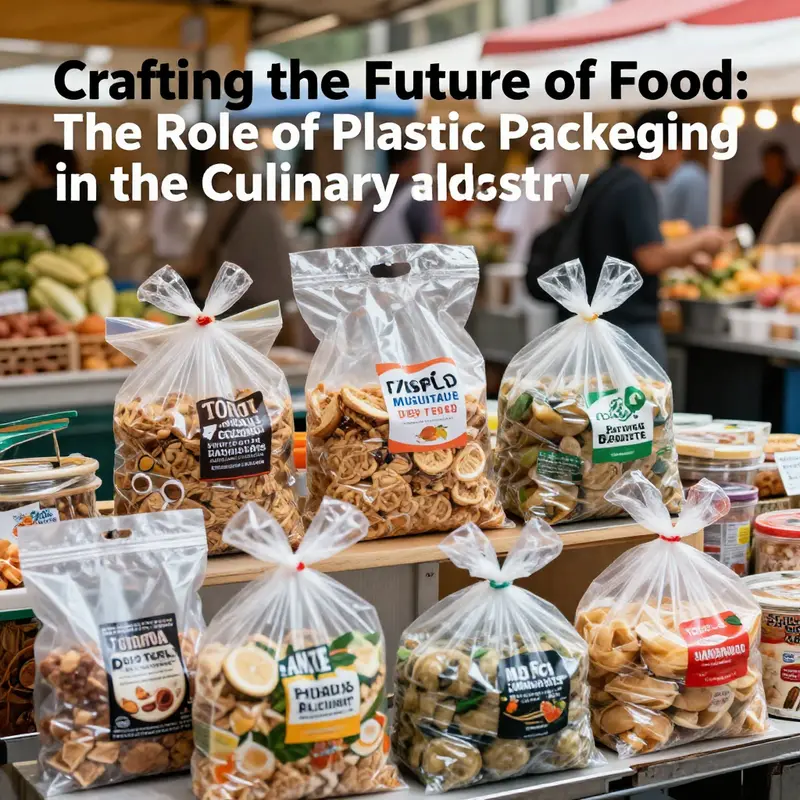
Food packaging has emerged as a critical aspect of the culinary landscape, enabling safe transportation and preservation of delicious delights from bubble tea to gourmet entreés. As food businesses ranging from vibrant bubble tea shops and catering services to upscale restaurants and corporate procurement teams strive for excellence, the demand for tailored packaging solutions becomes paramount. This article delves into the world of food packaging plastic bags manufacturers, illuminating key manufacturing techniques, current market trends, regulatory standards, and the increasing emphasis on sustainability. Each chapter unwraps the intricate dynamics of food-grade packaging, empowering your brand with the insights needed to make informed decisions in your packaging strategy.
Melt, Form, and Protect: The Precision Craft Behind Food-Grade Plastic Bag Manufacturing
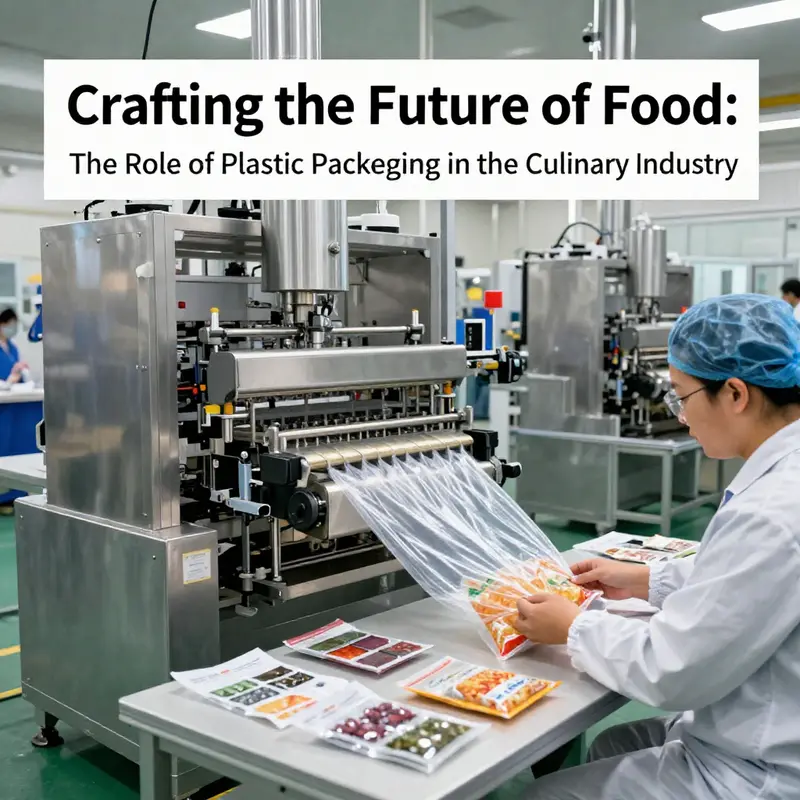
The production of food packaging plastic bags is a study in precision, where every stage—from the selection of raw materials to the final seal—affects safety, barrier performance, and functional reliability. In the modern packaging landscape, a bag is more than a container; it is a controlled environment that must protect freshness, prevent contamination, and withstand the mechanical demands of handling, storage, and transport. The narrative of its making begins with raw materials chosen for their consistency, safety, and processability, and it proceeds through a tightly choreographed sequence of extrusion, forming, printing, coating, converting, and rigorous quality control. The goal is not merely to produce a flexible film but to create a reliable packaging solution whose performance is reproducible across millions of units. In this quest, the materials science of polyethylene (PE) and polypropylene (PP) becomes the foundation, while process engineering translates that foundation into a tangible, safe product for the food chain. The choices at the outset—whether to use low-density polyethylene (LDPE), high-density polyethylene (HDPE), or a co-extruded multilayer configuration—determine barrier properties, sealability, and consumer-facing features. Additives are blended with the resin to enhance slip, prevent blocking during winding, stabilize against heat and light, and sometimes impart antimicrobial relevance. These ingredients are carefully dosed to preserve food safety and maintain compatibility with printing inks and adhesives used later in the process. In many modern operations, the resin blend and additive package are selected to align with regulatory expectations for food contact materials. The manufacturing journey continues with a well-tuned extrusion system that first liquefies the resin. An extruder heats the material to high temperatures—typically around 200°C—until it becomes a molten, homogeneous melt. The molten polymer then flows through a circular die to form a continuous tube, which is immediately inflated with compressed air to create a bubble. As the bubble ascends, it cools and solidifies into a flat, tubular film that can be flattened and wound onto large rolls. The control of temperature profiles, air pressure, cooling rates, and draw-down speed is central to achieving uniform thickness, consistent mechanical properties, and stable film for downstream conversion. The resulting film is not merely wider or longer; it is engineered for dimensional stability and surface characteristics that will translate into reliable printing and sealing in later steps. In many facilities, the final film can weigh several tens of kilograms per roll, and a single roll may yield tens of thousands of bags depending on width, thickness, and forming efficiency. For instance, a typical large-scale operation might produce film rolls weighing up to about 158 kilograms, with enough material in a single run to manufacture approximately 35,000 individual bags. Those numbers are not just statistics; they reflect the scale at which precision must be maintained to ensure consistent performance across mass production. Once the film is formed, the next phase is printing and barrier enhancement. High-resolution printing is most often performed with flexographic or gravure presses, using inks that are certified for food contact and designed to resist smudging and abrasion during handling. The printing step is more than branding; it is a critical interface with the consumer and the product’s safety information. For bags that require heightened barrier properties—whether to reduce moisture transmission, limit oxygen ingress, or shield contents from UV exposure—multilayer films can be produced. This is achieved through co-extrusion, where multiple layers of different polymers are combined into a single film, or through dry lamination, where printed films are bonded to barrier layers. These multilayer architectures are not arbitrary; they are carefully designed to balance seal strength, stiffness, transparency, and barrier performance against the target food product and its shelf life. In all cases, the integrity of the adhesive bonds and the absence of residual solvents are subjects of ongoing scrutiny. The manufacturing team must monitor potential contaminants that could migrate from inks or adhesives into the food or compromise the film’s barrier performance. The process then moves to converting the film into finished bags. Automated converting lines trim the film to the desired width, form heat seals along the edges, and cut or perforate the web into individual bags. The resulting shapes can vary widely—from stand-up pouches and zip-lock variants to flat-bottom or gusseted configurations—each with its own sealing patterns and functional attributes. The sealing step is a core determinant of bag performance: seal temperature, dwell time, and pressure must be calibrated to the specific resin, film thickness, and coating layers. If the seal is too weak, it may fail during filling or handling; if it is too strong, it can cause delamination or compromise opening performance. The conversion equipment is guided by sophisticated controls that ensure consistency across shifts and batches. In a well-embedded quality culture, inline inspection technologies are employed to detect deviations in dimensions, misregistration of prints, and seal integrity in real time. Vision sensors scan the surface for print defects or misalignment, while laser gauges measure thickness and width with micrometer precision. The data stream from these sensors feeds into a closed-loop control system that can adjust temperature, pressure, or line speed to prevent defective bags from progressing to the next stage. This real-time monitoring is not a luxury; it is a necessity, given the scale of production and the stringent expectations around hygiene, safety, and regulatory compliance. Throughout the plant floor, automation is a driving force. Robotic pick-and-place systems, servo-driven laminators, and digitally controlled extruders collectively push toward faster run speeds without sacrificing quality. The emphasis on automation also serves a hygienic objective: closed systems, minimal human contact with the product, and controlled environments reduce the risk of contamination and ensure consistent, repeatable performance. Even with such automation, human oversight remains essential. Operators rely on standardized operating procedures and regular calibration schedules to confirm that sensors, conveyor timings, and sealing stations are aligned with the latest material specifications and regulatory requirements. The broader regulatory landscape—governed by food safety authorities and guided by industry standards—places a premium on traceability, material declarations, and performance testing. Manufacturers must maintain records that demonstrate compliance with food contact material guidelines, document resin sources, and verify the absence of harmful migrants. The industry continually evolves as new polymers, barrier technologies, and recycling targets reshape what is possible. A modern plant may operate multiple lines with flexible configurations to switch quickly between different film formulations, thicknesses, or bag styles in response to changing market demands. This level of adaptability is essential as consumers and retailers press for better barrier performance, reduced material usage, and safer, more sustainable packaging options. In considering sustainability, many facilities pursue strategies such as optimizing gauge control to minimize waste, recycling scrap film back into the process, and prioritizing resins with lower environmental footprints. The interplay between performance and sustainability is a live conversation in the production queue, guiding choices about co-extrusion structures, laminates, and the role of recycled content without compromising food safety or barrier efficacy. The capacity to offer a spectrum of film formulations—ranging from simple single-layer LDPE to complex multilayer structures—enables manufacturers to serve a broad array of food products. From a consumer standpoint, the packaging must perform reliably in real-world conditions: it must seal against spills, protect fragrance and freshness during distribution, and present clear, legible information that helps shoppers make informed choices. Behind this product-level assurance lies a chain of processes and standards, all tuned to converge on one outcome: safe, high-quality packaging that supports food integrity from production line to kitchen. As the industry looks toward further integration of sustainable materials and more transparent supply chains, there is growing interest in packaging ecosystems that can accommodate recycled content while maintaining film clarity, seal strength, and barrier performance. A plant may increasingly harness flexible manufacturing to blend traditional resin streams with newer, more sustainable options, allowing a seamless response to market trends without sacrificing the rigorous controls that underwrite food safety. For professionals tasked with designing and operating these lines, the challenge is not only to master the chemistry of the resin but to orchestrate a precise sequence of mechanical actions that preserve film uniformity, prevent contamination, and deliver a finished bag that performs under diverse handling conditions. In this sense, the manufacturing techniques described here become a narrative of reliability: a story of how melt, bubble, bond, and seal translate into packaging that protects, informs, and travels across the global food system. The dialogue between materials science and process engineering is continuous, with innovations in additive packages, barrier layers, and printing chemistry converging on better-performing, more stable bags. To understand how these elements fit together in practice, many facilities adopt a holistic view of their production line—seeing the film through the lens of its end use and recognizing that each stage contributes to the final product’s safety and utility. This perspective also opens room for cross-pollination with related packaging streams, including eco-friendly and recyclable formats, where lines can be retooled to accommodate different substrates without compromising cleanliness, integrity, or user experience. For readers curious about broader packaging choices beyond plastic films, consider a related exploration of sustainable packaging options that sometimes intersect with plastic film capabilities, such as kraft paper-based packaging solutions. See the discussion at disposable-octagonal-box-restaurant-food-kraft-paper-packaging. External considerations continue to shape the industry’s trajectory, and ongoing dialogue with technical bodies and standard-setting organizations helps ensure that modern plastic bag production remains aligned with safety, quality, and environmental stewardship. For those seeking deeper technical grounding, a comprehensive overview of modern plastic bag manufacturing practices is available through PlasticsEurope, which offers detailed guidance on sustainable and efficient production methods. https://www.plasticsEurope.org/en/
null
null
From Standards to Shelf: The Regulatory Roadmap for Food Packaging Plastic Bag Manufacturers
Regulatory framework and compliance strategy
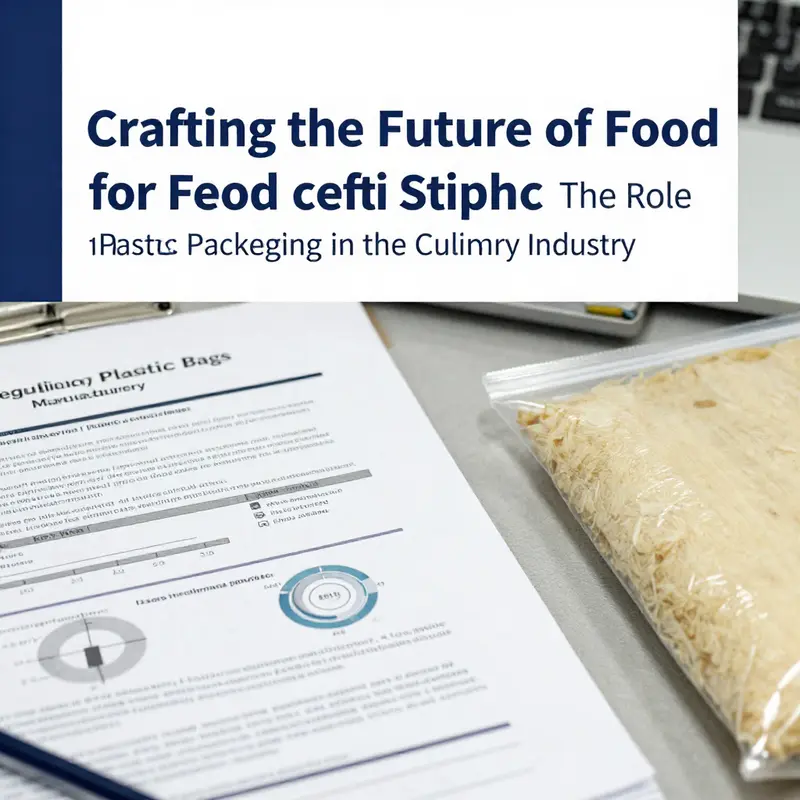
Manufacturers of food packaging plastic bags operate at the intersection of food safety, materials science, and environmental policy. In China, the legal and technical framework that governs this field is comprehensive and prescriptive. It requires companies to meet clear safety thresholds for materials, additives and processing residues, to document and verify compliance, and to adapt rapidly as international markets and domestic environmental policies evolve. For a manufacturer aiming to supply food-grade bags to retailers, restaurants, or exporters, understanding and mapping these requirements into every stage of design, production and distribution is essential.
At the foundation sit the national food-contact material standards. These set baseline safety requirements for any material that will touch food. The general safety standard defines migration limits for contaminants such as heavy metals and plasticizers. It also sets microbiological benchmarks and mandates transparent labeling. A companion standard focuses specifically on plastics, listing acceptable polymer types and prescribing physical and chemical performance tests. Together, these core standards determine which resins, additives and processing aids are eligible for use in food-contact bags. They also require manufacturers to measure and control parameters such as residual solvent, volatile content and extractables that might transfer into food.
Beyond the core standards, the regulatory landscape includes product-specific rules. Bags designed for high-temperature processes, such as hot filling or sterilization, must meet higher temperature-resistance thresholds and stronger seal performance. Composite films and multilayer structures must demonstrate appropriate barrier properties without relying on prohibited substances. If a manufacturer wishes to market a product as “biodegradable” or “compostable,” the claim must be supported by standardized testing and certification, using nationally recognized methods that describe both degradation rates and eco-toxicity outcomes. Labels that claim environmental benefits without substantiation invite scrutiny and regulatory action.
Exporters face an additional tier of obligations. European, American and Japanese food-contact regulations differ in scope and detail. Complying domestically is necessary but not sufficient for cross-border trade. The European framework, for example, requires conformity with broad food-contact rules and may impose specific migration limits for certain substances. The U.S. system uses lists of permitted food-contact substances and can demand different test methods. Manufacturers are best served by aligning material selection and testing protocols with the strictest target-market requirements, thereby reducing rework and ensuring smoother market entry.
Regulatory compliance is not only a matter of passing tests. It is also a systems requirement. Quality management frameworks designed for food safety add institutional rigor. Standards such as ISO 22000 and HACCP provide structured processes for hazard analysis, risk control, traceability and corrective action. For a plastic bag manufacturer, a certified food-safety management system formalizes supplier qualification, material acceptance criteria and in-line process controls. It also makes third-party audits more predictable and reduces the likelihood of non-conformances during customer inspections.
Environmental policy and waste management goals have become integral to regulatory planning. National rules to reduce plastic pollution increasingly restrict single-use, non-degradable plastics in urban areas. These policies create both constraints and opportunities. Constraints appear in the form of phased limits on non-degradable films and bans in specific retail and municipal environments. Opportunities arise in innovation: compostable blends, bio-based resins and circular-material strategies. Manufacturers who invest early in validated degradable formulations or in high-quality recycled-content materials position themselves to meet both regulatory timelines and buyer preferences.
A pragmatic compliance roadmap therefore combines three streams: technical conformity, documented management systems and environmental alignment. Technical conformity requires a disciplined approach to material selection, additive approvals and finished-product testing. This means choosing base polymers and permitted additives that appear on national positive lists and that satisfy migration and extractable limits when used in the intended service conditions. It also means validating processing parameters so that extrusion, lamination and printing do not introduce contaminants or alter migration behavior.
Documented systems deliver traceability and repeatability. Each incoming lot of polymer should be accompanied by certificates of analysis showing origin, additive content and molecular characteristics. Production records must timestamp process conditions and record any deviations. Finished goods should be sampled and tested according to statistically defensible plans. Maintaining a product dossier that ties raw-material certificates, formulation sheets, process logs and test results to each finished SKU simplifies regulatory inspections and helps with customer due diligence.
Environmental alignment requires both verification and transparency. If a bag contains recycled content, the percentage and source must be verifiable. Recycled feedstocks used in food-contact applications must meet higher scrutiny and often require additional testing to demonstrate safe use. If a bag is marketed as compostable, the claim should be certified by an accepted test house to a national or international compostability standard. Clear labeling, including disposal instructions, helps end-users and waste managers route materials correctly.
Third-party testing and certification are critical validation tools. Accredited laboratories performing migration, extractables and physical tests provide objective evidence of compliance. Regular independent testing reduces risk by catching issues early. Manufacturers exporting to multiple jurisdictions often coordinate testing to meet the most demanding regulator’s protocols so that a single test report supports multiple markets. Audits by recognized certification bodies for management systems add further credibility and can shorten procurement timelines with large buyers.
Operationalizing these obligations has practical implications for plant design and supplier relationships. Facilities that produce food-contact films should maintain controlled zones for food-grade materials, with clear separation from areas processing non-food plastics. Equipment cleaning and material changeover procedures must minimize cross-contamination risk. Suppliers of masterbatches, inks and adhesives must be qualified with documented approvals. Substitution of raw materials, even within the same polymer family, should trigger review and revalidation to avoid unintended impacts on migration or physical performance.
Communication with customers and regulators is equally important. Product labels and technical data sheets must state material composition, applicable standards and intended use conditions. Transparent claims reduce disputes and align expectations. When regulations change, proactive notification to customers sustains trust. Manufacturers that publish their testing protocols, certifications and environmental claims make it easier for buyers to include them in their own compliance programs.
Finally, regulatory readiness is a continuous process, not a one-time project. Standards evolve and new scientific evidence can shift allowable limits or test methods. Manufacturers should maintain an active monitoring program to track national regulators and key export markets. Regular training for technical, quality and sales teams ensures consistent implementation of rules across functions. A forward-looking research agenda that explores safer additives, improved barriers and recyclable film constructions turns regulatory constraints into market advantage.
Manufacturers who embed these practices reduce compliance risk and differentiate their brands. They achieve that by integrating the technical requirements of food-contact standards, the organizational discipline of certified management systems and the strategic foresight required by environmental policies. This integrated approach enables reliable supply of safe, lawful and responsible food packaging plastic bags to domestic and international customers.
For manufacturers seeking practical steps, recommended actions include scheduling periodic third-party testing, clearly labeling the material and standards compliance on product packaging, and investing in R&D focused on safe, recyclable or compostable films. Proper documentation—ranging from certificates of analysis to process logs—serves both regulatory audits and commercial enquiries. Maintaining strong supplier qualification processes and segregated production lines for food-grade materials closes the loop between specification and finished product.
Where to go for verification and testing support is an important operational question. Accredited global laboratories provide testing and certification services tailored to food-contact materials. They can translate national standards into test programs and advise on meeting import market requirements. For manufacturers exporting to multiple jurisdictions, leveraging these services ensures testing is recognized across borders and helps align product development with the strictest regulatory expectations. External resource for testing and conformity support: https://www.sgs.com/en/food-contact-materials-testing
Manufacturers that follow this roadmap build resilience. They meet regulators’ demands, satisfy buyers’ audits and respond to environmental policy trends. The result is a product that can travel from factory floor to retailer shelf with confidence—safe for food contact and compliant with evolving rules.
Footprint to Fork: How Sustainability Reforms Shape the Manufacture of Food Packaging Plastic Bags
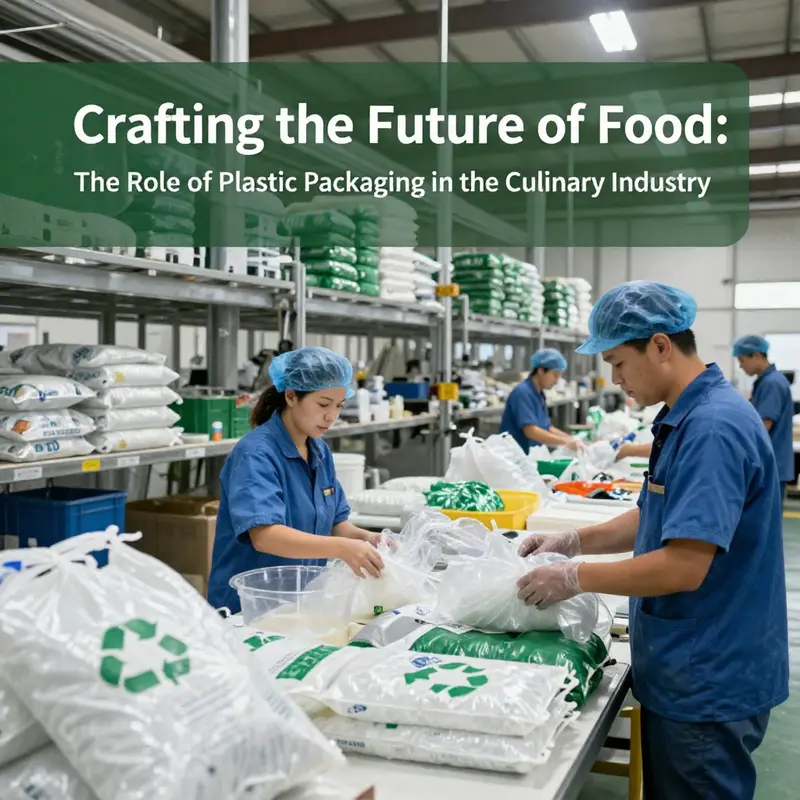
A quiet but persistent transformation is reshaping the world of food packaging plastic bags. It is not driven solely by regulatory pressure or consumer revolt, though both play critical roles. It is a holistic shift that begins with material choice, flows through production and lifecycles, and ends in a redesigned system where waste, energy, and emissions are measured, minimized, and repeatedly reimagined. In this environment, manufacturers must balance the practical demands of food safety, shelf life, and mechanical performance with the equally exacting requirements of sustainability. The result is not a single silver bullet but a cascade of interlocking decisions that can alter the very economics of packaging and the footprint of entire supply chains. What follows is a narrative of how those decisions cohere in practice, and how the industry is reconfiguring itself around the logic of a circular economy without sacrificing the core functions of modern food packaging.
At the heart of sustainable packaging lies material selection. For decades, polyethylene has dominated the landscape of food-grade bags and films because of its durability, flexibility, and moisture resistance. In this material family, high-density polyethylene (HDPE) and low-density polyethylene (LDPE) have become the default choices for everything from grocery bags to food wraps. Yet both forms carry real tradeoffs. HDPE tends to be more readily recyclable and has a strong barrier against moisture, but its heat resistance and gas barrier properties are less than ideal for certain foods and processes. LDPE, with its greater flexibility and toughness, often offers better seal performance and user-friendly handling, yet its recyclability can be more complex due to film blends and multilayer structures. The ongoing quest is to optimize these materials—not just to meet a standard, but to push the envelope on how much of the packaging can be recycled or reprocessed without compromising performance.
A parallel focus is the role of other polymers that can be integrated into packaging systems to close performance gaps. Polyethylene terephthalate (PET) is celebrated for its excellent gas barrier properties, a feature essential for preserving freshness and extending shelf life when used as a film layer or as part of a multilayer structure. However, PET’s recyclability, while robust in many markets, depends on the chain of collection, cleaning, and processing infrastructure. The industry has learned that the best environmental outcomes arise not from a single material but from carefully designed material combinations and end-of-life pathways that align with local recycling capabilities. Polypropylene (PP) has also gained traction for certain hot-fill and microwaveable applications thanks to its high melting point and fatigue resistance. Its recyclability profile, though generally favorable compared with some other plastics, still presents challenges in mixed-waste streams when used in complex multilayer configurations. The overarching lesson is clear: the sustainability payoff grows when designers minimize layers, optimize thickness, and select materials that can be separated, recycled, or reused at scale.
Beyond material choice, the industry is embracing recycling and closed-loop systems as core strategic imperatives. Closed-loop thinking reframes packaging from a disposable end into a reusable or recyclable loop. In practice, this means designing packaging with returnable or easily separable components in mind, investing in cleaning and reprocessing technologies, and coordinating with municipal and private recycling streams to ensure that a given bag or film can be recovered and reintroduced into production with minimal environmental penalty. The role of formal recycling remains prominent, but the conversation increasingly includes the idea of post-consumer collection being integrated with industrial recycling systems. PET, with its strong performance characteristics, often emerges as a preferred candidate for reclaim and reuse in a spectrum of applications, while HDPE continues to serve as a robust workhorse material for injection-m molded or blown films that can be processed in existing recycling streams. The aim is to reduce reliance on virgin resin by increasing the proportion of material that can be recovered, cleaned, and re-fabricated into new packaging or other plastic products.
Alongside recycling, the development of eco-friendly alternatives reflects a broader shift toward materials that align with resource conservation and waste reduction goals. Bioplastics and compostable films, derived from renewable resources, are increasingly discussed as part of a diversified packaging portfolio. Yet they come with caveats. Their performance in food-contact applications can hinge on specialized processing conditions, and their end-of-life behavior is often contingent on industrial composting infrastructure that may not be available in all regions. This is not a repudiation of bioplastics; rather, it is a reminder that sustainability requires context. A material that performs beautifully in a lab or on a shelf must also be compatible with the waste management system of its community. In practice, manufacturers pursue a portfolio approach: a blend of conventional polymers for performance-critical layers and targeted use of alternative materials where the waste system can absorb them. The strategic objective remains consistent—reduce the environmental footprint while preserving the safety and integrity of the food.
Design innovations play a decisive role in driving efficiency and lowering life-cycle impacts. Lightweighting emerges as a recurring theme. Reducing film thickness and optimizing seal designs can deliver meaningful gains in material use without compromising barrier properties or consumer convenience. In many cases, the more subtle but equally important improvements come from smarter multilayer architectures. By engineering barrier layers, tie layers, and surface treatments, manufacturers can achieve the same or better performance with less material. The design task is not simply to minimize plastic; it is to maximize functional value per gram of plastic. This translates into better moisture control, more reliable seals, and fewer premature punctures or tears that lead to waste. In effect, design optimization becomes a central instrument of sustainability because the waste generated during usage and at end-of-life is, in large part, a function of how efficiently the product performs in practice.
Material choice and design do not operate in a vacuum. They are embedded in a broader system of lifecycle thinking, where the environmental performance of packaging is assessed through a lens that includes production energy, transport emissions, use-phase efficiency, and end-of-life handling. Life-cycle assessment (LCA) has become a common language for these conversations. By tracing energy use, water input, greenhouse gas emissions, and waste generation across the entire lifecycle, researchers and practitioners can identify hotspots where improvements yield the largest returns. Sometimes the most impactful changes come not from swapping one polymer for another, but from changing the manufacturing process to reduce energy intensity, implementing renewable energy sources at production facilities, or adopting more efficient logistics to cut fuel use. Each improvement, while seemingly incremental, compounds across millions of bags to deliver tangible environmental benefits.
The push toward standards and transparency strengthens the reliability of these improvements. As producers communicate more openly about material choices, recyclability, and end-of-life outcomes, downstream partners—including brands and retailers—can make informed decisions aligned with their sustainability commitments. This transparency starts with accurate labeling that helps waste streams sort materials correctly and ends with verified performance data that underpins LCAs. The industry increasingly welcomes third-party certification and standardized metrics, not as bureaucratic hurdles but as practical tools that confirm claims and enable apples-to-apples comparisons. When a bag claims recyclability or compostability, stakeholders want to know under what conditions that claim holds true, in which jurisdictions, and how the product should be disposed of by consumers. Clear guidance reduces missteps and reinforces consumer trust, which is essential for broad adoption.
Another dimension of sustainability is the integration of circular economy principles into corporate strategy. Producers are experimenting with take-back and return programs, collaborations with recyclers, and partnerships that streamline the collection and processing of packaging waste. The circular model reframes packaging as a resource that can be looped back into production rather than as a one-way commodity. While implementing such programs requires investment and coordination across multiple actors, the payoff is a more resilient supply chain that is less exposed to volatile resin prices and more capable of adapting to evolving regulatory landscapes. In practice, this means aligning product design, manufacturing, and post-consumer collection so that the entire chain operates with higher resource efficiency and steadier environmental outcomes. The emphasis shifts from short-term cost minimization to long-term risk management that accounts for resource scarcity, regulatory risk, and consumer expectations.
Regulatory and market dynamics also shape sustainability trajectories. Governments around the world are tightening restrictions on single-use plastics and incentivizing recycled-content mandates. Public procurement policies increasingly favor packaging with recycled or rapidly renewable content, while labeling schemes push for more informative consumer guidance on end-of-life options. For manufacturers, these trends function as both a challenge and an opportunity. The challenge is to reform processes quickly enough to stay compliant and competitive. The opportunity lies in differentiating products through sustainability narratives that reflect genuine performance and responsible stewardship. In practical terms, this often means harmonizing product specifications with evolving standards, investing in process modernization, and building collaborations that accelerate innovation without sacrificing reliability or safety.
From the consumer perspective, trust hinges on consistent performance and clear messaging. Bags and films must not only protect food but also reassure buyers that the packaging system aligns with widely held values about environmental responsibility. This is why the industry increasingly emphasizes cradle-to-grave accountability, documenting how materials are sourced, how they travel through the supply chain, and how they are managed after consumption. Labels that communicate recyclability, potential for recovery, and compatible recycling streams reduce confusion and encourage correct disposal. They also provide a tangible link between the product and its broader environmental story, which, in turn, informs consumer choices and brand reputation.
A practical note on pathways forward helps anchor these concepts in real-world outcomes. Consider the growing range of packaging solutions that balance performance with end-of-life compatibility. When a film layer is designed for easier separation, it enhances recyclability in mixed streams. When a heat-sealable layer is engineered to function reliably at lower temperatures, it reduces energy use in processing and transport. When packaging is sized and shaped to maximize fill efficiency and minimize waste, it directly translates into resource savings. The cumulative effect of these micro-optimizations is substantial across entire product categories. And because food safety remains nonnegotiable, all sustainability improvements are measured against strict quality and safety benchmarks. The goal is not to sacrifice shelf life or protection but to realize a more circular, resource-conscious system without compromising the consumer experience.
To illustrate how these principles appear in practice, one can imagine a packaging ecosystem that favors modularity and recyclability. A system might employ a primary bag for each food item that integrates recyclable layers and avoids adhesives or laminates that complicate recovery. Film suppliers, bag manufacturers, and waste management partners collaborate to map how materials flow from production to curbside collection and back into reuse streams. Such collaborations require shared data standards, transparent material declarations, and aligned incentives. When achieved, they yield a more predictable, stable supply chain that can weather shifts in resin pricing, waste quotas, and market demand while maintaining the essential protective function for food.
In weaving together these threads—the science of materials, the logistics of recycling, the economics of process optimization, and the culture of transparency—the industry demonstrates that sustainability is not a moral obligation alone. It is a strategic practice that improves reliability, reduces risk, and enhances brand value. The best-performing manufacturers are those that treat sustainability not as a compliance checkbox but as a core element of product design and corporate strategy. They pursue continuous learning, invest in testing and validation, and stay attuned to the evolving regulatory and consumer landscape. In this sense, sustainability becomes a driver of innovation, a catalyst for smarter manufacturing, and a meaningful way to align packaging with the realities of a resource-constrained world.
For readers seeking a broader technical lens on the materials that underpin these discussions, a foundational resource on PET in food packaging and its sustainability profile offers deeper insight into barrier properties, recyclability, and life-cycle considerations. It serves as a benchmark for comparing different materials and understanding trade-offs in real-world applications: PET in food packaging properties and sustainability (external resource).
To connect these sustainability themes with practical, on-the-ground choices, consider the growing emphasis on alternative packaging formats that reduce plastic reliance while maintaining food safety and convenience. For example, some operators are exploring compostable or paper-based options for specific use cases, alongside standard plastic bags where the recycling infrastructure supports them. The decision matrix becomes less about choosing one material over another and more about designing a packaging system that can be recovered, reused, or efficiently recycled within the local waste framework. In this context, the conversation with stakeholders across the value chain—suppliers, manufacturers, retailers, municipalities, and consumers—becomes essential. It is through these conversations that meaningful improvements in recycling rates, energy efficiency, and material recovery emerge, enabling a transition that preserves both product performance and environmental integrity.
In the end, sustainability in food packaging plastic bags rests on a coherent blend of material science, process engineering, and systemic collaboration. It requires a willingness to redesign products, reframe waste as a resource, and invest in the infrastructure and data capabilities that make circular pathways feasible. The industry is not merely adopting greener practices; it is rethinking the entire logic of packaging—from a disposable endpoint to a reusable, recoverable, and valuable resource. That shift is the practical expression of a broader commitment to healthier ecosystems, safer foods, and a more resilient economy. As manufacturers continue to iterate on materials, designs, and business models, the conversation will likely deepen around how to standardize best practices, quantify benefits with robust metrics, and scale successful pilots into mainstream production. The trajectory is clear: sustainability will remain a fundamental criterion for performance, cost, and competitiveness in the realm of food packaging plastics, shaping what is produced, how it is produced, and how it is ultimately managed at the end of its life.
For readers who want to explore related sustainability discussions in practical terms, a linked resource provides additional context on recyclable packaging materials and broader industry trends: disposable-700ml-kraft-paper-bowl-take-out-octagonal-rectangle-paper-bowl. This example underscores how a shift toward recyclable or compostable packaging components can be framed, tested, and implemented within a broader sustainability strategy that still prioritizes food safety and performance. As the sector evolves, such integrated approaches will likely define the next era of packaging design and manufacturing, where environmental considerations are inseparable from product quality and supply-chain resilience.
Final thoughts
Understanding the intricate world of food packaging plastic bags manufacturers opens up new avenues for food businesses seeking to elevate their offerings. With advanced manufacturing techniques, emerging market trends, adherence to regulatory standards, and a commitment to sustainability, the packaging landscape continues to evolve, aligning with the needs of modern consumers and businesses alike. Ultimately, making informed packaging choices will not only enhance your brand’s presentation but also contribute to the overarching demands for safety and environmental consciousness in our culinary practices.